
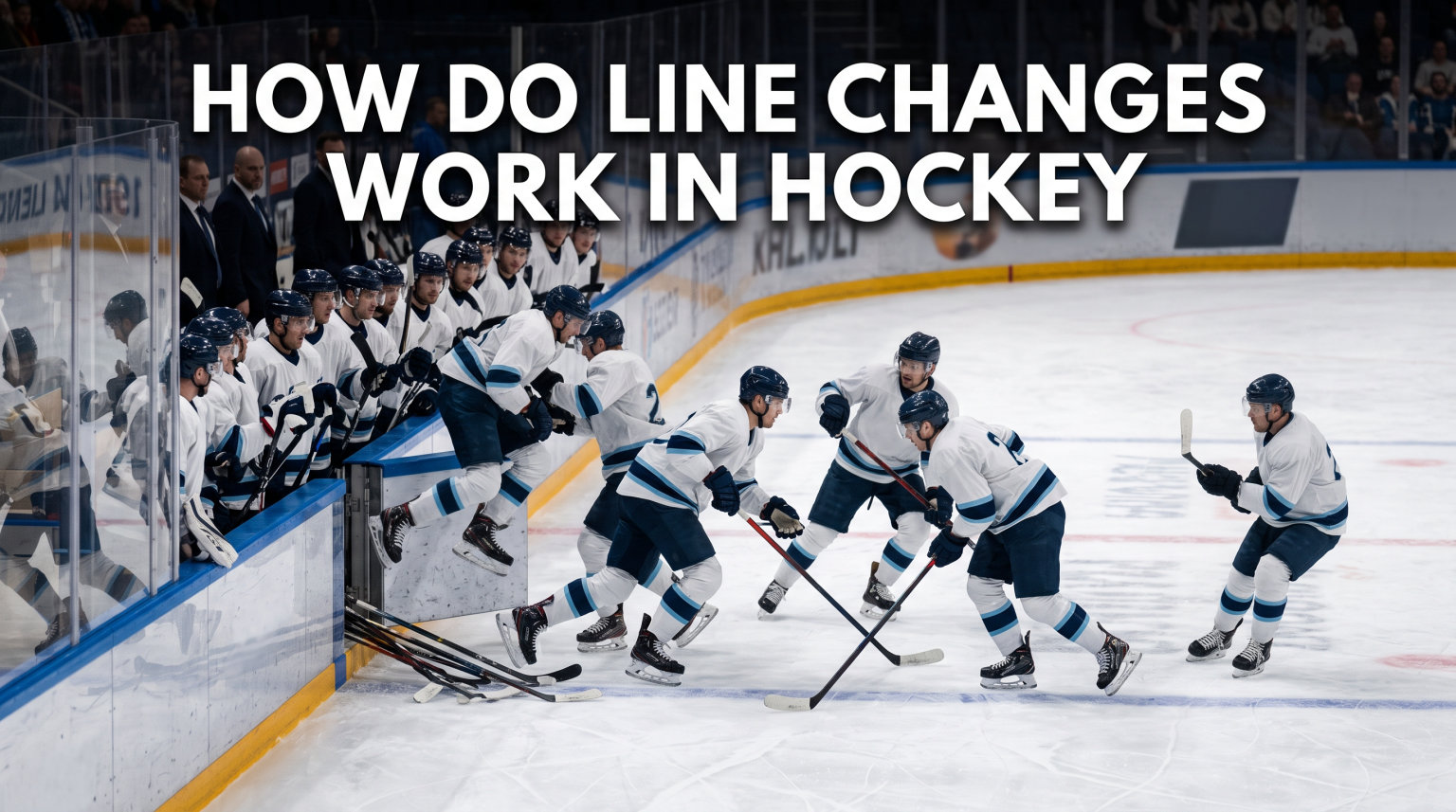
Hockey line changes are the substitutions of players that happen continuously throughout a game to keep athletes fresh and maintain high-intensity play. Unlike many other sports where substitutions only occur during breaks, hockey allows players to swap in and out while the puck is in play. This creates a unique dynamic where fresh legs meet strategic timing, making line changes one of the most important yet misunderstood aspects of the sport.
In this guide, I will explain exactly how do line changes work in hockey, covering everything from the basic mechanics to advanced coaching strategies. Whether you are a new fan trying to follow the game, a youth player learning the ropes, or a parent watching from the stands, understanding line changes will transform how you see the sport.
Table of Contents
What Is a Line Change in Hockey?
A line change is the process of substituting players on the ice during a hockey game. In hockey, players skate in coordinated groups called lines—typically three forwards together and two defensemen as a pair. When these groups get tired, they are replaced by a fresh group from the bench.
The concept is simple: hockey demands 100% effort for short bursts, and nobody can sustain that pace indefinitely. Fresh players bring speed, sharp decision-making, and sustained pressure. Without regular substitutions, the quality of play would deteriorate rapidly as fatigue sets in.
How Do Line Changes Work in Hockey
Line changes work through two primary methods: changing on the fly during live play, or changing during stoppages when the whistle blows. Both methods require precise timing and coordination between players on the ice, those on the bench, and the coaching staff.
The key rule governing all line changes is that teams must never have more than the allowed number of players on the ice at once. For standard play, that means five skaters plus one goalie. When a substitution happens, the exiting player must be within five feet of the bench and not actively involved in the play before the replacement steps on.
Let me break down the two types of changes in detail.
The Two Types of Line Changes
Changing On the Fly
Changing on the fly means substituting players while the game is still in progress. This is the most common type of line change in hockey and happens dozens of times per game. Players wait for the right moment, usually when the puck is moving away from their defensive zone, then skate to the bench for a quick swap.
The critical rule for on-the-fly changes is the 5-foot rule. The player coming off the ice must be within five feet of the bench before the replacement jumps on. If the new player enters the ice too early, or if the exiting player is still engaged in the play, the team risks a too many men penalty.
Here are the key timing considerations for changing on the fly:
- Safe moments: When your team has the puck in the offensive zone, or when the puck is being dumped into the opponent’s zone
- Risky moments: When the opponent has possession in your defensive zone
- Avoid changing: During odd-man rushes, when your goalie has frozen the puck, or when a penalty is about to be called
Communication is essential. Players typically yell “Change!” or tap their stick on the boards to signal teammates. Many teams use the door on the side of the ice where the puck is not, reducing the risk of interference.
Stoppage (Whistle) Changes
Stoppage changes occur when the referee blows the whistle to stop play. This includes after goals, when the puck goes out of play, after an icing call, following a penalty, or when the goalie covers the puck. These changes are more structured and allow both teams to organize their lines.
The procedure for stoppage changes follows a specific order. The visiting team must put their players on the ice first. After the visiting team is set, the home team gets to see who is on the ice and then chooses their lineup accordingly. This is called the home team last change advantage.
Stoppage changes are simpler for beginners because there is no rush. Players have time to coordinate, coaches can give quick instructions, and there is no risk of a too many men penalty as long as teams complete their change before play resumes.
How Do Players Know When to Change Lines?
Players rely on a combination of signals, timing, and situational awareness to know when to change. After playing hockey for years, many of these decisions become instinctive. But for beginners, understanding the specific triggers helps build good habits.
The most common signals that tell a player it is time to change include:
- Time on ice: Most shifts last between 30 to 45 seconds at competitive levels
- Physical fatigue: Heavy breathing, burning legs, or mental fog means you need fresh legs
- Coaching signals: Coaches yell “Change!” or use hand signals from the bench
- Linemates changing: When your linemates head to the bench, you should too
- Puck position: When the puck is heading into the offensive zone or is safely in the opponent’s end
In youth hockey, coaches often control changes more directly, calling out specific lines or using a buzzer system. As players advance, they gain more autonomy to read the game and judge their own energy levels.
How Long Is a Hockey Shift?
The ideal shift length varies by level of play, but the general principle is consistent: get off the ice before you are exhausted. Fresh players are more effective than tired ones, even if the tired player is more talented.
Here are typical shift length guidelines:
- NHL players: 30 to 45 seconds on average, rarely exceeding 60 seconds
- College/junior hockey: 40 to 60 seconds
- High school hockey: 45 to 60 seconds
- Youth hockey (12U-14U): 60 to 90 seconds
- Younger youth (10U and below): 1 to 2 minutes, with more frequent mandatory changes
Special teams play differently. Penalty kill shifts might be shorter (20 to 30 seconds) because the defensive effort is intense. Power play shifts can sometimes be longer if the puck is in the offensive zone and scoring chances are developing.
The key insight from coaches: it is better to change 10 seconds too early than 5 seconds too late. Tired players make mistakes, and a mistake at the end of a long shift often ends up in the back of your net.
When Are Players NOT Allowed to Change?
Certain situations restrict line changes to prevent teams from gaining unfair advantages or to maintain game flow. Understanding these restrictions is crucial for both players and coaches.
Line changes are NOT permitted in the following scenarios:
- After icing the puck: The team that iced the puck cannot change players before the face-off
- Following a false start: If a team delays the face-off, they may lose their change privilege
- During a power play: The penalized team cannot change unless the puck clears their zone or there is a stoppage
- After a penalty call: Teams cannot change during a delayed penalty until the whistle blows
- Goalie changes: Special rules apply when substituting goalies during stoppages
The icing rule is particularly important. When a team shoots the puck from their side of center ice and it crosses the opponent’s goal line without being touched, icing is called. To prevent teams from using icing as a way to get fresh players on the ice during a long shift, the offending team must keep their players on the ice for the ensuing face-off.
The Too Many Men Penalty Explained
The too many men on the ice penalty occurs when a team has more than the allowed number of players (six total, including the goalie) actively participating in the play. This is a bench minor penalty, meaning two minutes in the penalty box with no specific player assigned.
Common causes of this penalty include:
- Jumping on the ice before the exiting player is within the 5-foot zone
- Having too many players touch the puck or engage in the play during a change
- Confusion during stoppages where players do not realize play has resumed
- Goaltender changes where the outgoing goalie delays leaving the ice
The penalty is enforced strictly because extra players create unfair advantages. Even if the extra player does not touch the puck, simply being on the ice during active play can disrupt the opponent’s formation and create scoring chances.
To avoid this penalty, players should practice clean changes: wait until your teammate is on the bench before stepping onto the ice, stay within the change zone, and communicate clearly with teammates.
Line Change Strategy and Matchups
Line changes are not just about managing fatigue—they are a critical strategic tool. Coaches use line changes to create favorable matchups, control game tempo, and exploit opponent weaknesses.
The Home Team Last Change Advantage
The home team last change rule gives the home team a significant strategic edge. During stoppages, the visiting team must put their players on the ice first. The home team then sees who is on the ice and can choose which line to deploy.
Smart coaches use this to create favorable matchups. If the visiting team puts their top scoring line on the ice, the home coach can respond with their best defensive line and shutdown defensemen. This chess match happens dozens of times per game and can significantly impact the outcome.
Strategic Line Change Timing
Beyond the last change rule, coaches manipulate line changes throughout the game to:
- Match strength vs strength: Put your best line against their best line to neutralize top players
- Create mismatches: Get your skill players out against their bottom lines for scoring opportunities
- Manage energy: Shorten shifts when protecting a lead, extend offensive pressure when trailing
- Special teams: Preserve specific players for upcoming power plays or penalty kills
Analytics have transformed line change strategy in the NHL. Teams now track time on ice, shift length, and energy metrics in real-time, making data-driven decisions about when to change and who to send over the boards.
Youth Hockey Line Change Tips
For young players and their parents, line changes can be one of the most confusing aspects of the game. Youth hockey has some unique considerations that make learning proper change technique especially important.
Here are practical tips for youth players:
- Listen for your coach: Many youth leagues use buzzers, horns, or coach calls to signal changes—train yourself to respond immediately
- Watch your linemates: In youth hockey, changing as a unit is critical—if one forward changes, all three should change
- Change quickly: Do not linger on the ice or near the bench—fast changes keep the game flowing
- Stay organized on the bench: Know who you are changing for and be ready to jump when called
For parents watching from the stands, understand that youth coaches often prioritize equal ice time and development over winning. Your child might not always be on the ice during critical moments—that is normal and part of their growth as a player.
Practice line changes during dryland training or scrimmages. The more reps players get, the more natural the timing becomes. Many youth coaches dedicate specific practice time to change drills, teaching players to read situations and execute clean swaps.
Frequently Asked Questions
How are line changes determined in hockey?
Line changes are determined by a combination of shift timing, coaching decisions, and game situations. Players typically change every 30-45 seconds based on fatigue levels and strategic needs. Coaches control changes during stoppages, while players make on-the-fly decisions during live play based on puck position and energy levels.
How do players know when to sub out?
Players know when to sub out through physical signals like heavy breathing and burning legs, auditory cues from coaches yelling Change, visual signals from linemates heading to the bench, and time awareness from the clock or shift length experience. Communication and situational awareness develop with experience.
Why don’t players have to wait for the whistle before changing?
Players do not need to wait for the whistle because hockey is designed for continuous, high-intensity play. Changing on the fly keeps the game fast-paced and allows teams to maintain pressure without stopping. The 5-foot rule ensures changes happen safely without disrupting play.
What happens if a player changes on the fly too early?
If a player changes on the fly too early, the team receives a two-minute bench minor penalty for too many men on the ice. This happens when the entering player steps on before the exiting player is within five feet of the bench, or if both players touch the puck simultaneously during the change.
When are players not allowed to change?
Players cannot change after their team ices the puck, during a delayed penalty call until the whistle blows, during certain stoppages after false starts, or when the referee has signaled no change allowed. These restrictions prevent teams from exploiting stoppages to escape tired shifts.
How often are line changes in hockey?
Line changes happen constantly throughout a hockey game. In the NHL, there are typically 80-100 line changes per team per game, meaning a change occurs roughly every 30-45 seconds of game time. Youth hockey may have fewer changes with longer shifts of 60-90 seconds.
Who calls line changes in hockey?
Both coaches and players call line changes. Coaches control changes during stoppages and signal from the bench during play. Players make individual decisions about when to change based on fatigue, shift length, and game situation. At higher levels, players have more autonomy; in youth hockey, coaches control changes more directly.
How do hockey lines know when to change?
Hockey lines know when to change through verbal communication like yelling Change, non-verbal signals like tapping sticks on the boards, watching linemates for coordinated group changes, monitoring shift length with internal clocks or bench timers, and reading game situations like puck position and possession.
Final Thoughts
Understanding how do line changes work in hockey transforms your appreciation of the sport. What looks like chaos from the stands is actually a carefully choreographed system of fresh legs, strategic timing, and split-second decisions.
The best players are not just skilled skaters—they are masters of the change. They know exactly when to push for another 10 seconds of pressure and when to sprint to the bench for fresh teammates. They communicate clearly, avoid the too many men penalty, and trust their linemates to cover for them during transitions.
Whether you are watching an NHL game in 2026, coaching a youth team, or lacing up your own skates, keep an eye on the benches. The players coming over the boards often determine the outcome just as much as the stars already on the ice. Master line changes, and you will master a fundamental piece of hockey strategy that most fans never fully appreciate.