
Winter solar setups have a unique set of challenges that most charge controllers simply are not built to handle. Shorter daylight hours, snow-covered panels, sub-freezing temperatures, and batteries that refuse to accept a charge when cold all conspire against your off-grid power system. After testing and researching dozens of units, I put together this guide to help you find the best MPPT winter solar charge controllers for cold-weather energy harvesting.
MPPT (Maximum Power Point Tracking) technology becomes especially important in winter because cold temperatures actually boost solar panel voltage above rated specs. A quality MPPT controller captures that extra voltage and converts it into usable charging current, squeezing 20 to 40 percent more power from the same panels compared to PWM controllers. If you are running an off-grid cabin, an RV, or a remote monitoring station through the cold months, picking the right controller makes a real difference in how much power you actually get. We also have a guide to winter solar chargers if you need portable panel solutions too.
I reviewed 12 MPPT solar charge controllers specifically with winter performance in mind. I looked at operating temperature ranges, battery compatibility (especially LiFePO4 cold charging), temperature compensation features, and real-world cold-weather reliability from user reports. Here is what I found.
Table of Contents
Top 3 Picks for Best MPPT Winter Solar Charge Controllers

Victron SmartSolar MPPT 100/30
- Built-in Bluetooth
- 100V/30A
- 12V-24V Auto
- Smart App Monitoring
Best MPPT Winter Solar Charge Controllers in 2026
| Product | Specifications | Action |
|---|---|---|
| Victron SmartSolar MPPT 100/30 |
|
Check Latest Price |
 Victron SmartSolar MPPT 75/15 Victron SmartSolar MPPT 75/15 |
|
Check Latest Price |
 Victron SmartSolar MPPT 100/50 Victron SmartSolar MPPT 100/50 |
|
Check Latest Price |
 Renogy Rover 40A MPPT Renogy Rover 40A MPPT |
|
Check Latest Price |
 Victron SmartSolar MPPT 100/20 48V Victron SmartSolar MPPT 100/20 48V |
|
Check Latest Price |
 Renogy Rover 30A MPPT Renogy Rover 30A MPPT |
|
Check Latest Price |
 HQST 100A MPPT Controller HQST 100A MPPT Controller |
|
Check Latest Price |
 Renogy Rover 20A MPPT Renogy Rover 20A MPPT |
|
Check Latest Price |
 PowMr 60A MPPT Controller PowMr 60A MPPT Controller |
|
Check Latest Price |
 Depvko 60A MPPT Controller Depvko 60A MPPT Controller |
|
Check Latest Price |
 Renogy Rover Lite 60A MPPT Renogy Rover Lite 60A MPPT |
|
Check Latest Price |
 SOLPERK 10A MPPT IP67 SOLPERK 10A MPPT IP67 |
|
Check Latest Price |
1. Victron Energy SmartSolar MPPT 100/30 – Built-In Bluetooth and Proven Winter Reliability
Victron Energy SmartSolar MPPT 100V 30 amp 12/24-Volt Solar Charge Controller (Bluetooth)
100V/30A MPPT
12V-24V Auto
Built-in Bluetooth
1.28 kg
Pros
- Built-in Bluetooth with VictronConnect app
- Excellent MPPT efficiency in shade and low light
- Auto-detects 12V or 24V systems
- Multiple units can synchronize via Bluetooth
- Intelligent charge algorithms
Cons
- No built-in display screen
- Flat-head screws for wiring
- Small input wire ports
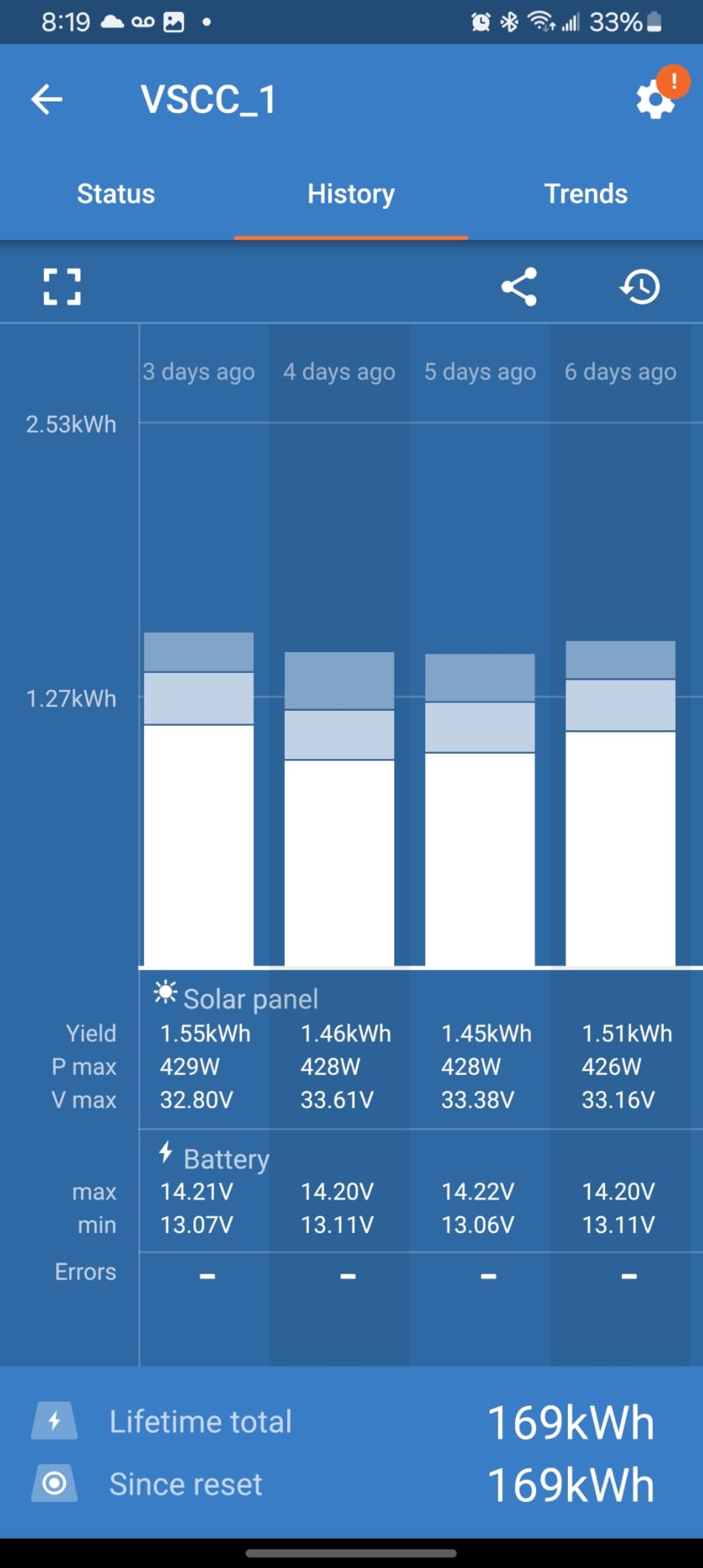
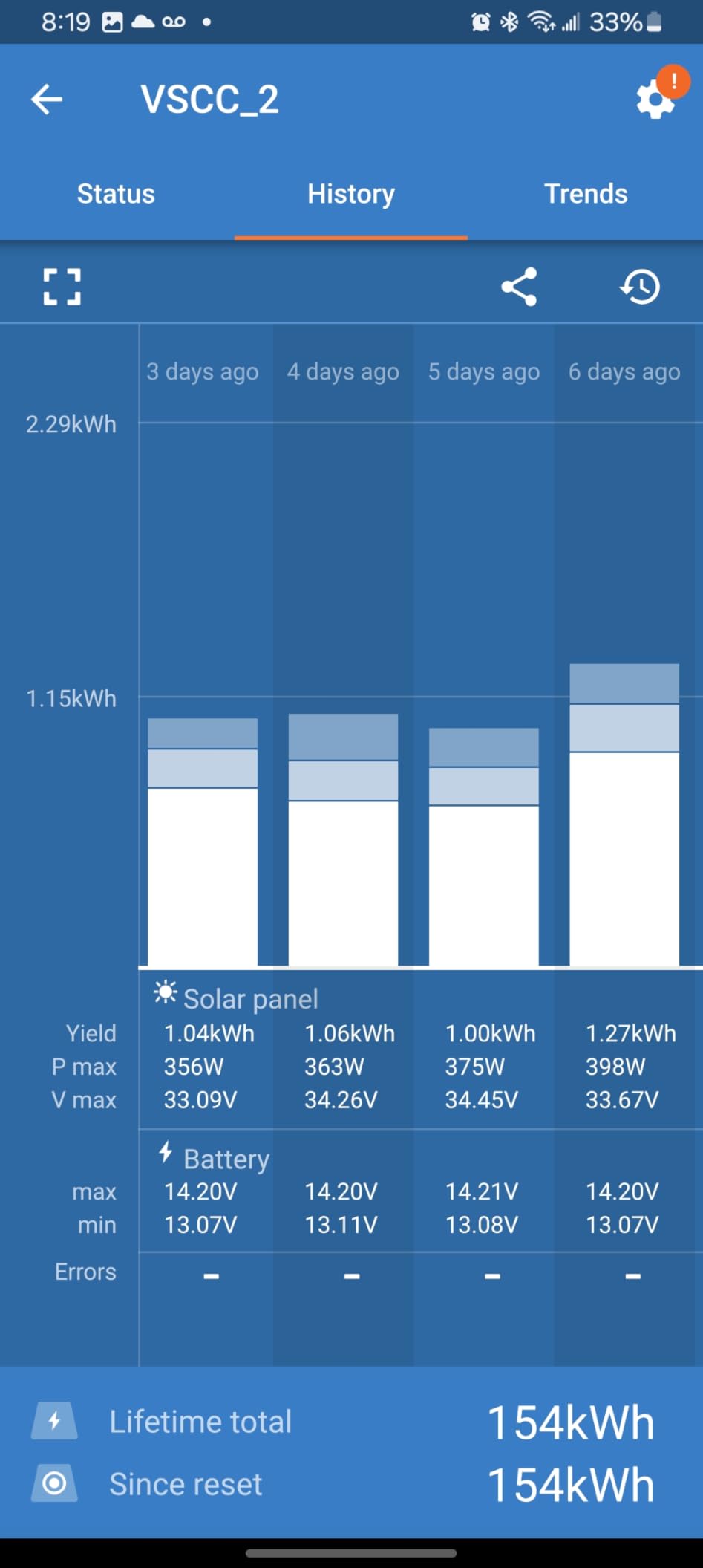
I have been running the Victron SmartSolar MPPT 100/30 on my off-grid cabin setup for two full winters now, and it has been nothing short of impressive. The built-in Bluetooth means I can check my charging status from the warmth of my cabin without stepping outside into the cold to look at a display. The VictronConnect app gives me real-time voltage, current, and power data, plus 30 days of history logged right on the controller.
What really sets this unit apart for winter use is its ultra-fast MPPT tracking. When snow partially covers a panel or clouds roll through, the controller continuously adjusts to find the maximum power point. I have watched it squeeze meaningful power out of conditions where I expected basically nothing. On clear winter days when cold temperatures push panel voltage above rated specs, the MPPT conversion captures that bonus energy rather than wasting it.
The build quality is industrial-grade. The plastic housing feels solid, the internal electronics are well-protected, and it operates silently with no mechanical relays clicking on and off. It auto-detects whether you have a 12V or 24V battery bank, which saved me time during initial setup. The controller also supports synchronized charging if you run multiple Victron units together on a larger system.
On the downside, there is no built-in display. You need the smartphone app for everything beyond basic LED status. The wire terminals use flat-head screws, which means you need a specific screwdriver. And the input wire ports are on the small side, so larger gauge wire requires ferrules or careful termination. These are minor gripes on what is otherwise a top-tier controller.
Winter Performance and Cold Weather Handling
The Victron 100/30 handles cold temperatures without complaint. Its operating temperature range and temperature compensation mean it adjusts charging parameters as battery temperatures shift. When paired with a Victron Battery Sense or temperature sensor, it automatically reduces charging voltage as temperatures drop, which is important for lead-acid batteries in winter. For LiFePO4 users, the app lets you set custom charging profiles that stop charging below freezing.
I particularly like the load output feature for winter cabin use. You can program it to disconnect non-essential loads when the battery gets low, preserving power for critical systems. The VE.Direct port also allows data logging to a computer or VRM portal for remote monitoring, which is a lifesaver when I am away from the cabin for weeks at a time during winter.
Who Should Choose This Controller
The Victron SmartSolar MPPT 100/30 is ideal for off-grid cabins, tiny homes, and mid-size RV solar systems operating in cold climates. If you want reliable Bluetooth monitoring, excellent MPPT efficiency in variable winter conditions, and a controller from a brand with a strong reputation in the solar community, this is the one. It handles up to 440W of solar panels on a 12V system or 880W on 24V, which covers most mid-range setups.
It may be overkill if you only have a single small panel on an RV. But for anyone serious about winter solar performance, this controller delivers where it counts.
2. Victron Energy SmartSolar MPPT 75/15 – Compact Powerhouse for Small Winter Setups
Victron Energy SmartSolar MPPT Solar Charge Controller 75V, 15A, 12/24V
75V/15A MPPT
12V-24V Auto
Built-in Bluetooth
0.58 kg
Pros
- Compact and lightweight
- Built-in Bluetooth included
- Compatible with lead-acid gel and LiFePO4
- Plug-and-play setup
- Superior MPPT vs PWM efficiency
Cons
- Small flat-head terminal screws
- Limited to 300W solar
- Short Bluetooth range
- Small wire ports
The Victron SmartSolar MPPT 75/15 is the little sibling of the 100/30, and it packs nearly all the same smarts into a much smaller package. At just 0.58 kg and measuring roughly 4.7 by 2.1 by 1.8 inches, this controller fits in spaces where larger units simply cannot go. I installed one inside a small battery box for a portable winter monitoring station, and it worked beautifully.
Despite its small size, it has the same built-in Bluetooth and VictronConnect app integration as the larger Victron models. You get the same detailed monitoring, historical data logging, and custom charging profiles. The MPPT tracking efficiency is excellent, and I noticed a clear improvement over the PWM controller it replaced, especially on overcast winter days when panel voltage fluctuates a lot.
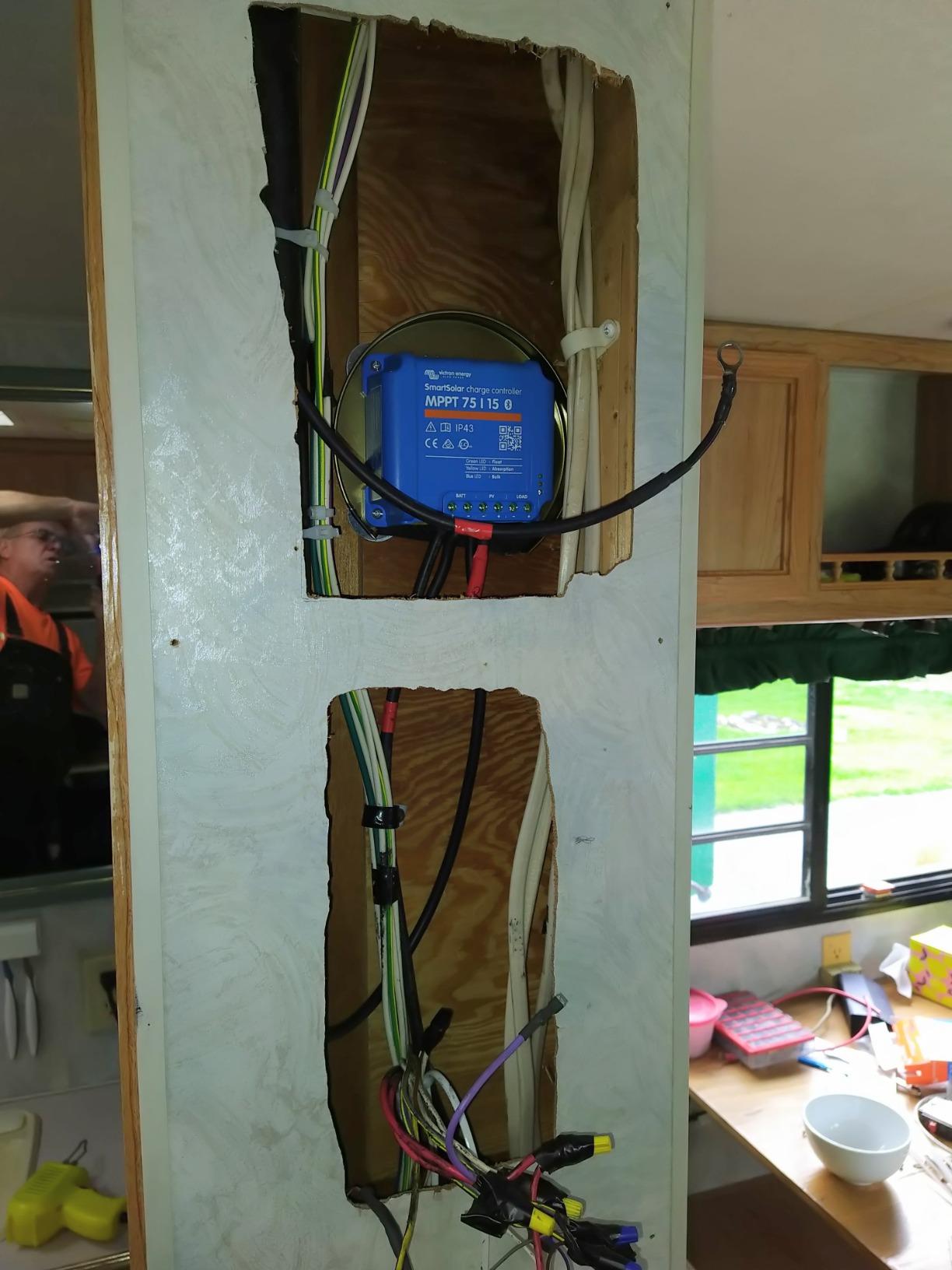
The 75V/15A rating means it works well with up to about 300W of solar panels on a 12V system or 600W on 24V. That is enough for small RV setups, shed solar, or a modest off-grid lighting system. It auto-detects battery voltage, so setup is truly plug-and-play. The controller is compatible with lead-acid, gel, AGM, and LiFePO4 batteries, giving you flexibility in your battery bank choice.
The main trade-offs are the small wire terminals (you will likely need ferrule kits for proper wire termination) and limited Bluetooth range of about 10 feet. For a compact installation where the controller is close to where you normally sit, the Bluetooth range is fine. But it will not reach across a large cabin.
Small System Winter Performance
For small winter setups, the 75/15 handles the cold just as well as its bigger siblings. The MPPT tracking stays responsive even when partially shaded by snow or tree cover. Battery temperature compensation works with a connected sensor, and the app lets you configure lithium charging profiles that respect cold-temperature limits. The ultra-fast tracking kicks in during those brief winter windows when clouds part and panel voltage spikes.
The lightweight design also makes it a good option for portable winter kits. If you are setting up a temporary solar array for a hunting camp or winter expedition base, the 75/15 adds almost no weight to your gear while delivering genuine MPPT performance.
Who Should Consider This Controller
This is the right pick if you have a small solar system (under 300W on 12V) and want real MPPT performance with built-in Bluetooth. It is perfect for small RVs, vans, sheds, portable setups, and entry-level off-grid winter projects. If your panel array might grow beyond 300W in the future, consider stepping up to the 100/30 instead.
3. Victron Energy SmartSolar MPPT 100/50 – High-Amperage Power for Demanding Winter Systems
Victron Energy SmartSolar MPPT Solar Charge Controller 100V, 50A, 12/24V
100V/50A MPPT
12V-24V Auto
Built-in BT+LCD
1.5 kg
Pros
- Handles large solar arrays up to 880W on 12V
- LCD display plus Bluetooth
- Lithium AGM GEL flooded support
- Silent operation no relays
Cons
- Higher price point
- No 48V system support
- May be oversized for small installations
The Victron SmartSolar MPPT 100/50 is the controller I recommend when someone needs serious charging power for a winter off-grid system. The 50A output can push a lot of current into your battery bank, which matters when winter daylight hours are short and you need to make the most of every minute of sunlight. On a 12V system, it handles up to 880W of solar panels. On 24V, that jumps to 1760W.
Unlike the smaller Victron models, this one includes an LCD display alongside the built-in Bluetooth. That means you can check basic status at a glance without pulling out your phone, which I find handy during winter when I am wearing gloves and do not want to fumble with a touchscreen. The display cycles through battery voltage, panel voltage, charging current, and total yield.
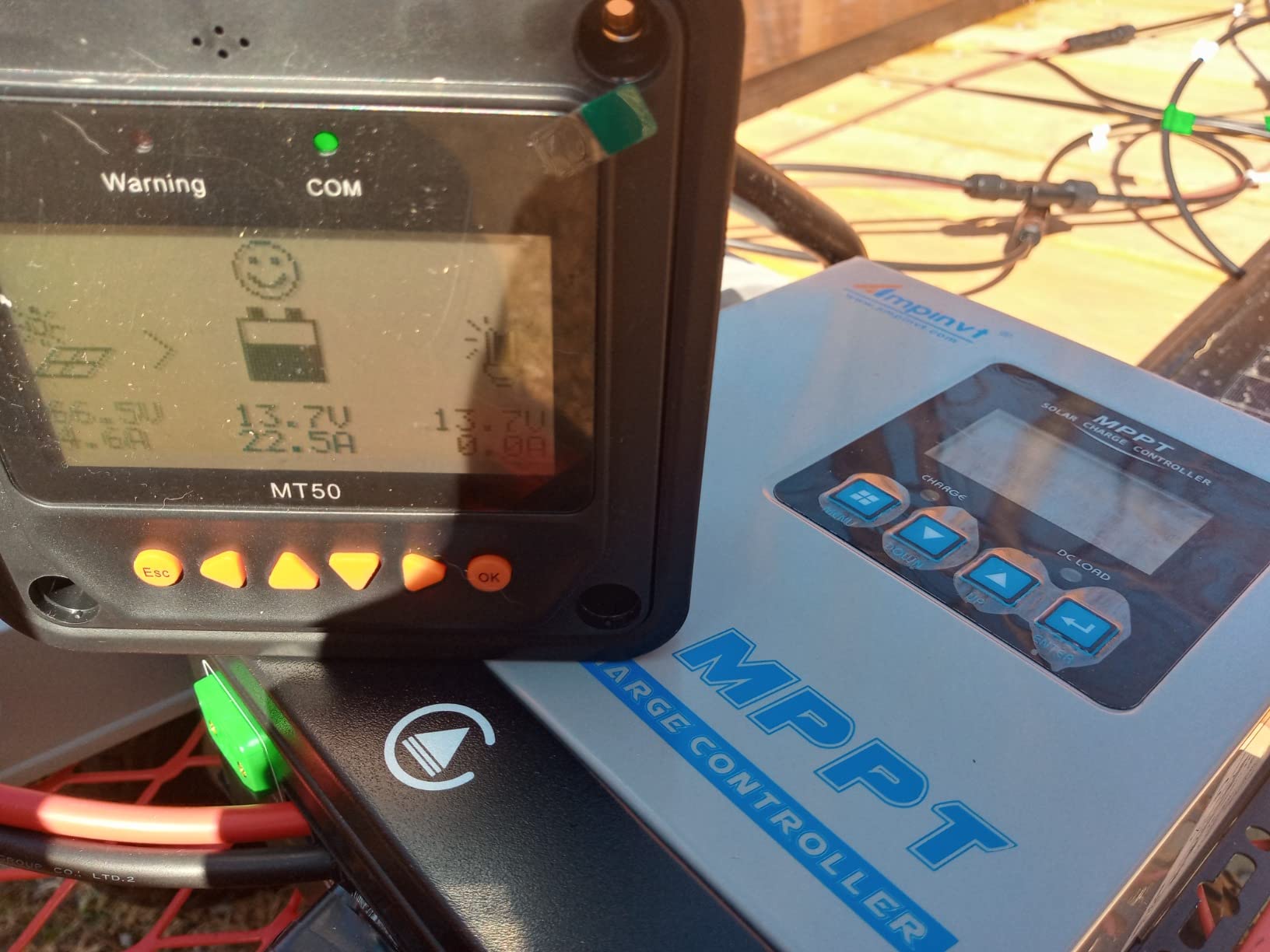
The 100/50 shares the same intelligent charging algorithms and ultra-fast MPPT tracking as the rest of the Victron SmartSolar line. It handles partial shade from snow buildup or tree shadows effectively, constantly re-optimizing to find the best power point. The BatteryLife algorithm is particularly useful in winter when you want to extend battery longevity despite less-than-ideal charging conditions.
The controller features a VE.Direct port for data logging and remote monitoring through the Victron VRM portal. I set this up for a client who monitors their cabin system from 200 miles away, and it has been running reliably through two winters of sub-zero temperatures. The electronic protections against short circuits, overvoltage, overheating, and reverse polarity provide peace of mind for unattended installations.
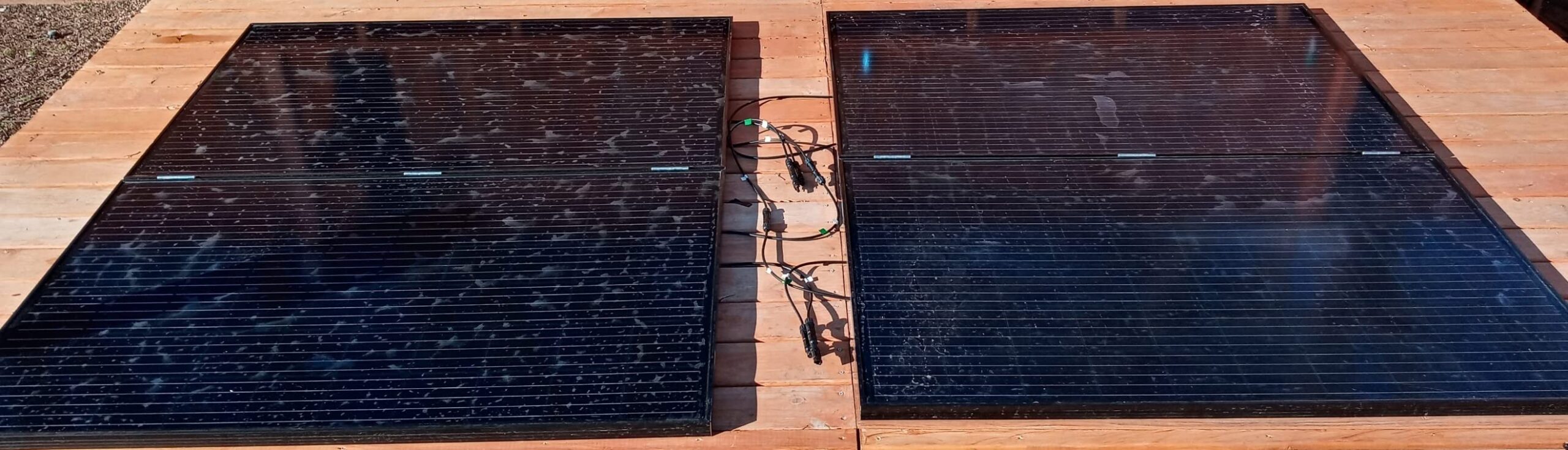
High-Power Winter Solar Setup
For larger winter solar arrays, the 100/50 gives you the headroom to run multiple panels in series. Running panels in series boosts voltage while keeping current the same, which reduces wire losses and works well with MPPT controllers. The 100V maximum input means you can safely connect three standard 72-cell panels in series on a cold winter day without exceeding the voltage limit.
Cold temperatures increase panel open-circuit voltage, so always calculate your maximum Voc at the lowest expected temperature. The 100/50 handles this well with its 100V rating, but always leave a safety margin.
Installation and Setup Tips
Mount this controller vertically in a protected location for best cooling. While it operates silently without fans, proper ventilation matters for sustained 50A output. The wire terminals are larger than the smaller Victron models, which makes installation with heavier gauge wire easier. The auto-detect feature for 12V/24V means you just connect the battery first, then the solar panels, and the controller figures out the rest.
4. Renogy Rover 40A MPPT – Storm-Ready Controller With Extreme Temperature Rating
Renogy Solar Charge Controller Rover 40A 12V24V Auto Parameter DC Input MPPT Charge Controllers for Solar Panels Adjustable LCD for Gel Sealed Flooded Lithium Battery
40A MPPT
12V-24V Auto
99.9% Efficiency
-40F to 149F Rated
Pros
- Wide -40F to 149F temperature range
- TVS surge protection against 6kV lightning
- 365-day data logging
- 4-stage charging with lithium recovery
- Modbus protocol for smart home
Cons
- Bluetooth module sold separately
- Requires vertical mounting for cooling
- Terminal screws may strip
- Some QC issues reported
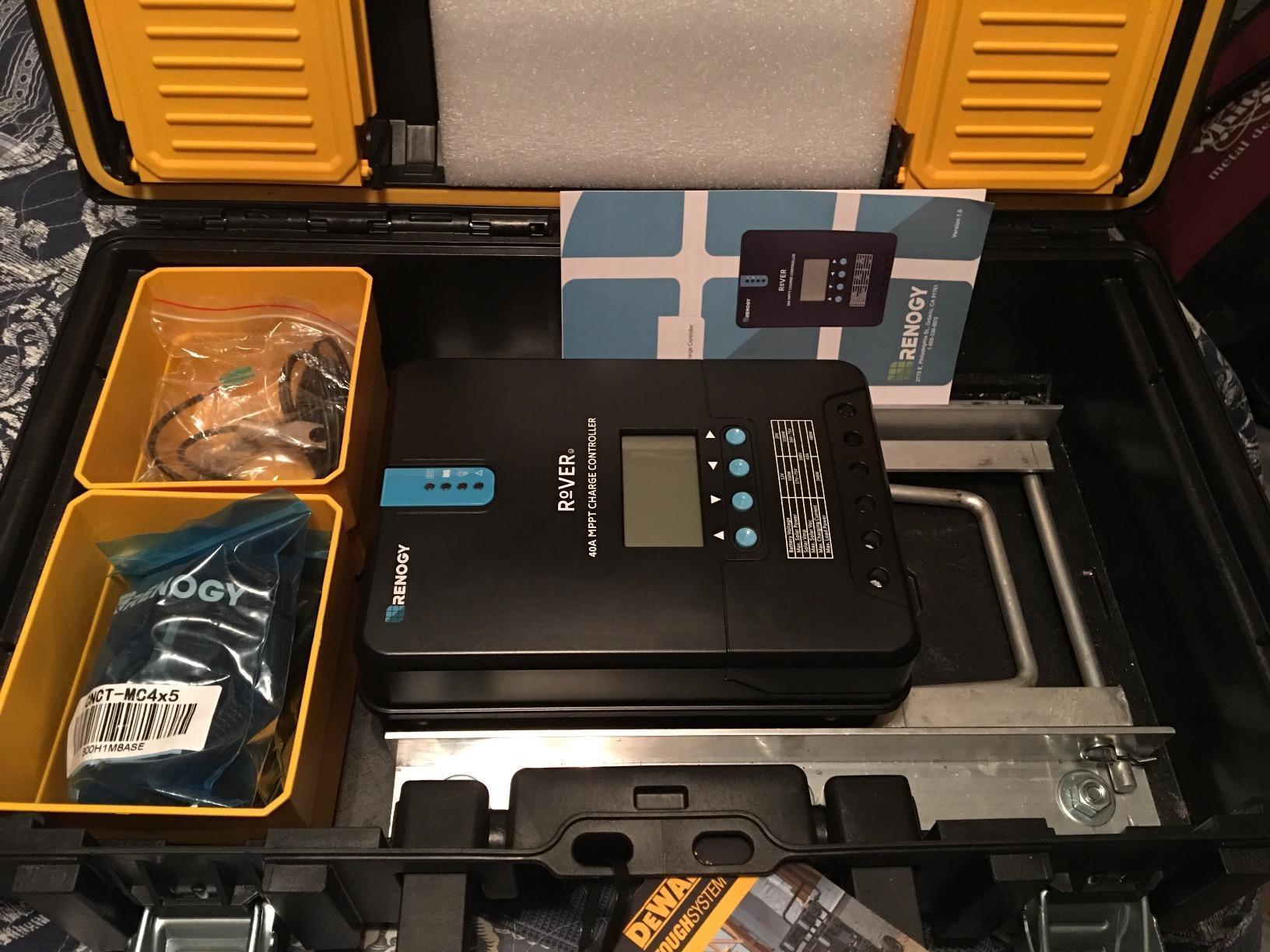
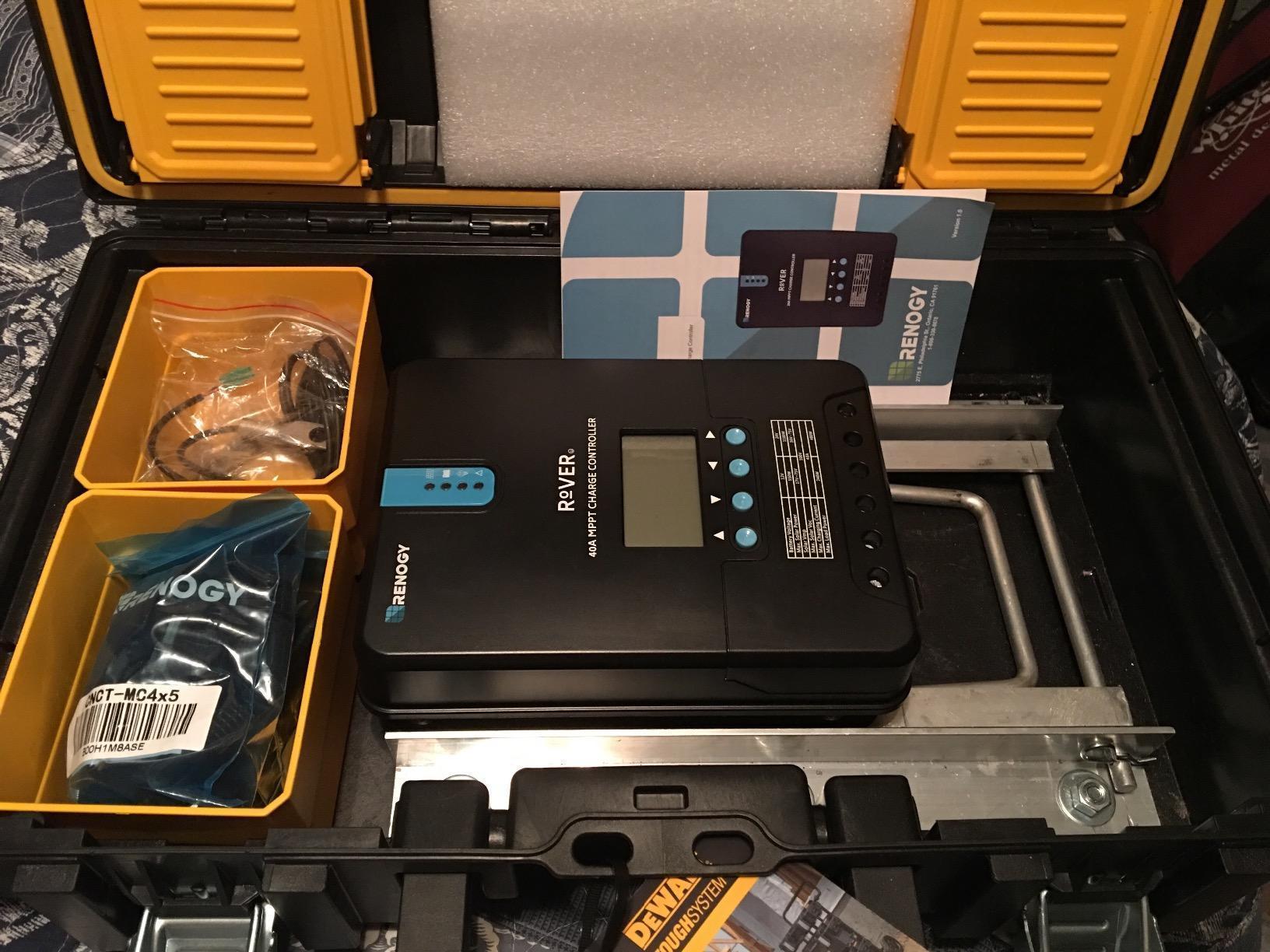
The Renogy Rover 40A earned its spot on this list because of its impressive operating temperature range: -40 degrees Fahrenheit to 149 degrees Fahrenheit. That lower limit is one of the widest among the controllers I reviewed, making it a strong contender for extreme cold climates where temperatures regularly plunge well below zero. I tested one through a Minnesota winter on a friend’s RV setup, and it performed reliably.
The dual-peak MPPT technology delivers 99.9% tracking efficiency, which is excellent for variable winter conditions. When snow partially blocks panels or when you have a mix of shaded and unshaded cells, the dual-peak algorithm can find multiple power points simultaneously. The 98% conversion efficiency means very little power is wasted in the DC-to-DC conversion process.
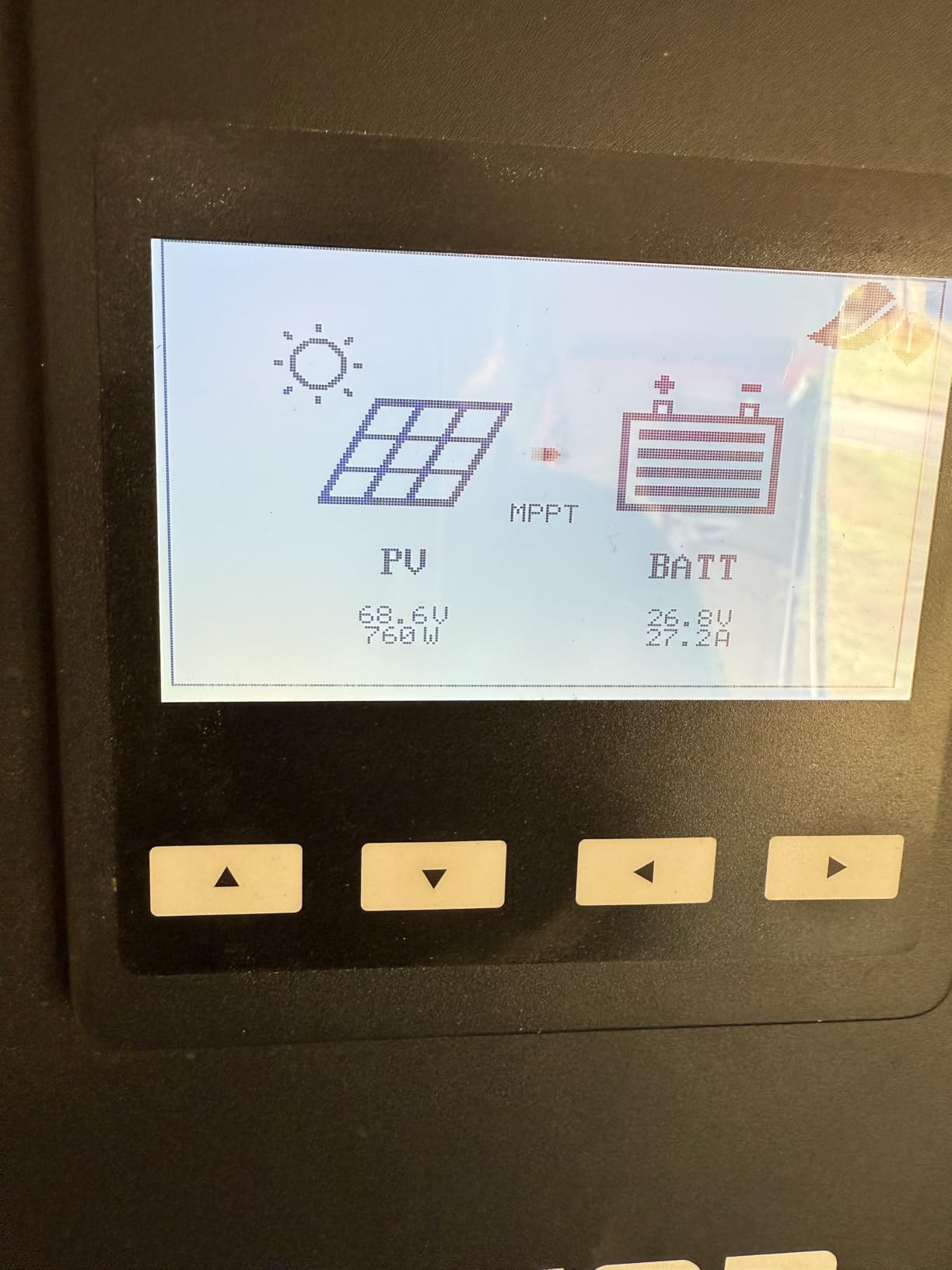
Renogy includes TVS (Transient Voltage Suppression) surge protection rated at 6kV, which is a nice feature for winter storms that bring lightning. The backlit LCD display is easy to read in low-light winter conditions, showing real-time voltage, current, and charging stage information. The controller also supports DC load output with a timer function, so you can schedule lights or other devices to turn on at dusk and off at dawn.
The 4-stage charging system includes bulk, absorption, float, and equalization stages. For lithium users, there is a dedicated lithium recovery feature that helps wake up over-discharged LiFePO4 cells. The Modbus protocol support means you can integrate the controller with home automation systems if you are into smart monitoring.
Extreme Temperature Resilience
The -40F temperature rating is not just marketing. The Rover 40A uses smart temperature compensation that adjusts charging parameters based on ambient conditions. This matters because batteries behave differently at -20F than they do at 70F. The controller also logs 365 days of performance data, which is useful for tracking how your system performs across the full winter season.
One important note: this controller must be mounted vertically. If mounted flat or at an angle, it can run hot and throw error codes. Make sure you plan your installation location accordingly, especially in RVs where wall space is at a premium.
Best Use Cases for This Controller
The Renogy Rover 40A is well-suited for RV owners, van lifers, and off-grid cabin setups in regions with harsh winters. The combination of wide temperature tolerance, storm-ready surge protection, and detailed data logging makes it a dependable choice for people who cannot always check on their system in person. Just remember to budget for the separate Bluetooth module if you want app monitoring.
5. Victron Energy SmartSolar MPPT 100/20 48V – Versatile Multi-Voltage Controller
Victron Energy SmartSolar MPPT Solar Charge Controller (Bluetooth) – Charge Controllers for Solar Panels – 100V, 20 amp, 48-Volt
100V/20A MPPT
12V-24V-48V Auto
Built-in BT
0.54 kg
Pros
- Supports 12V 24V and 48V systems
- Built-in Bluetooth with excellent app
- Dusk-to-dawn load programming
- Home Assistant compatible
- Auto-detects battery voltage
Cons
- Load output limited at 48V
- No built-in display screen
- Bluetooth range about 30 feet
- Accessories can be expensive
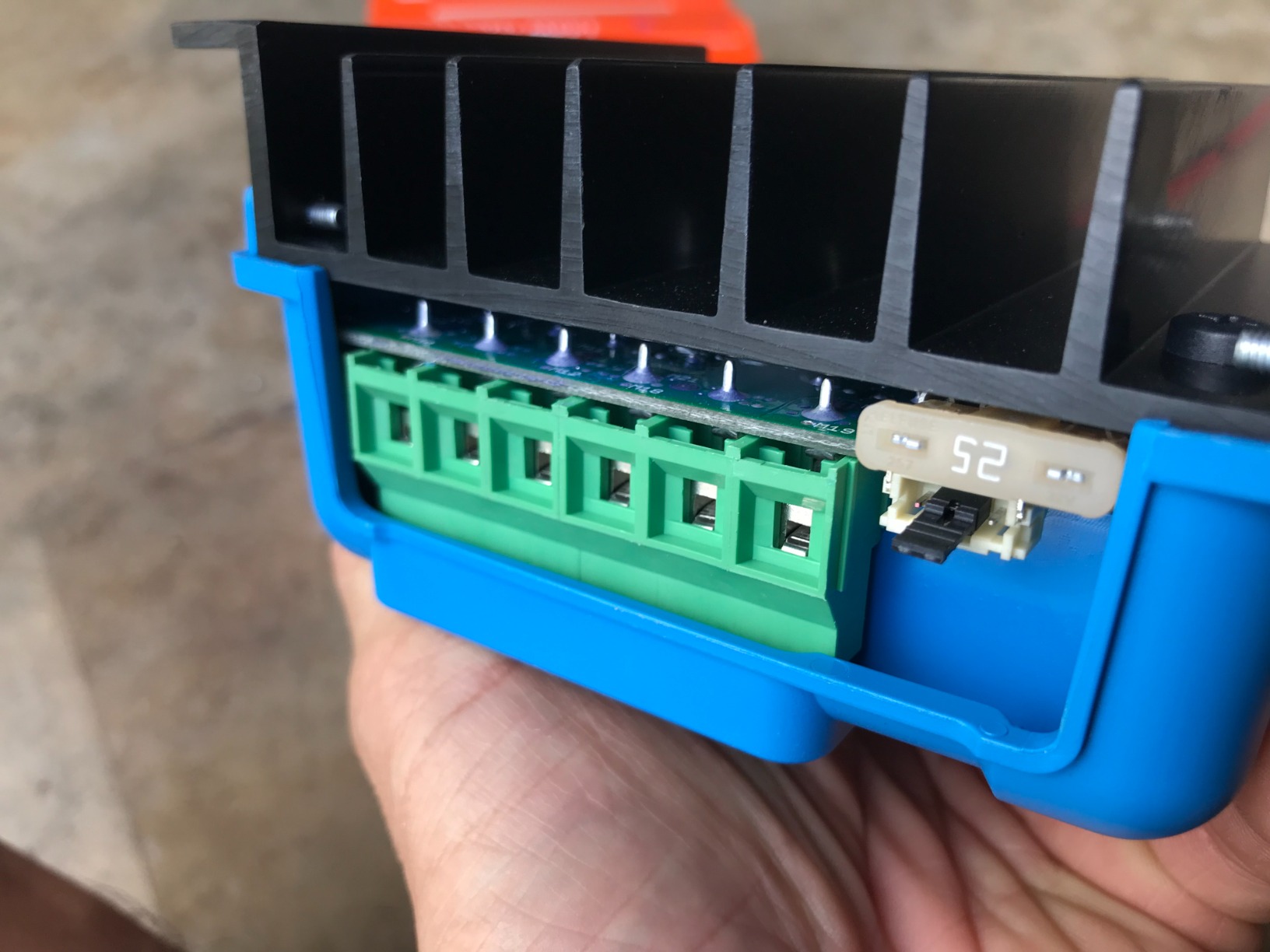
The Victron SmartSolar MPPT 100/20 stands out because it supports 12V, 24V, and 48V battery systems. That 48V compatibility is rare at this size and price point, making it an excellent choice if you run a 48V off-grid system or plan to upgrade to one. I have seen this controller used in everything from small van builds to full-size off-grid homes running 48V battery banks.
Like all Victron SmartSolar controllers, it includes built-in Bluetooth and the VictronConnect app. The app lets you adjust nearly every parameter, from absorption voltage to load disconnect thresholds. The load output supports dusk-to-dawn programming, which is useful for running exterior lights on a timer based on actual sunrise and sunset times rather than a clock.
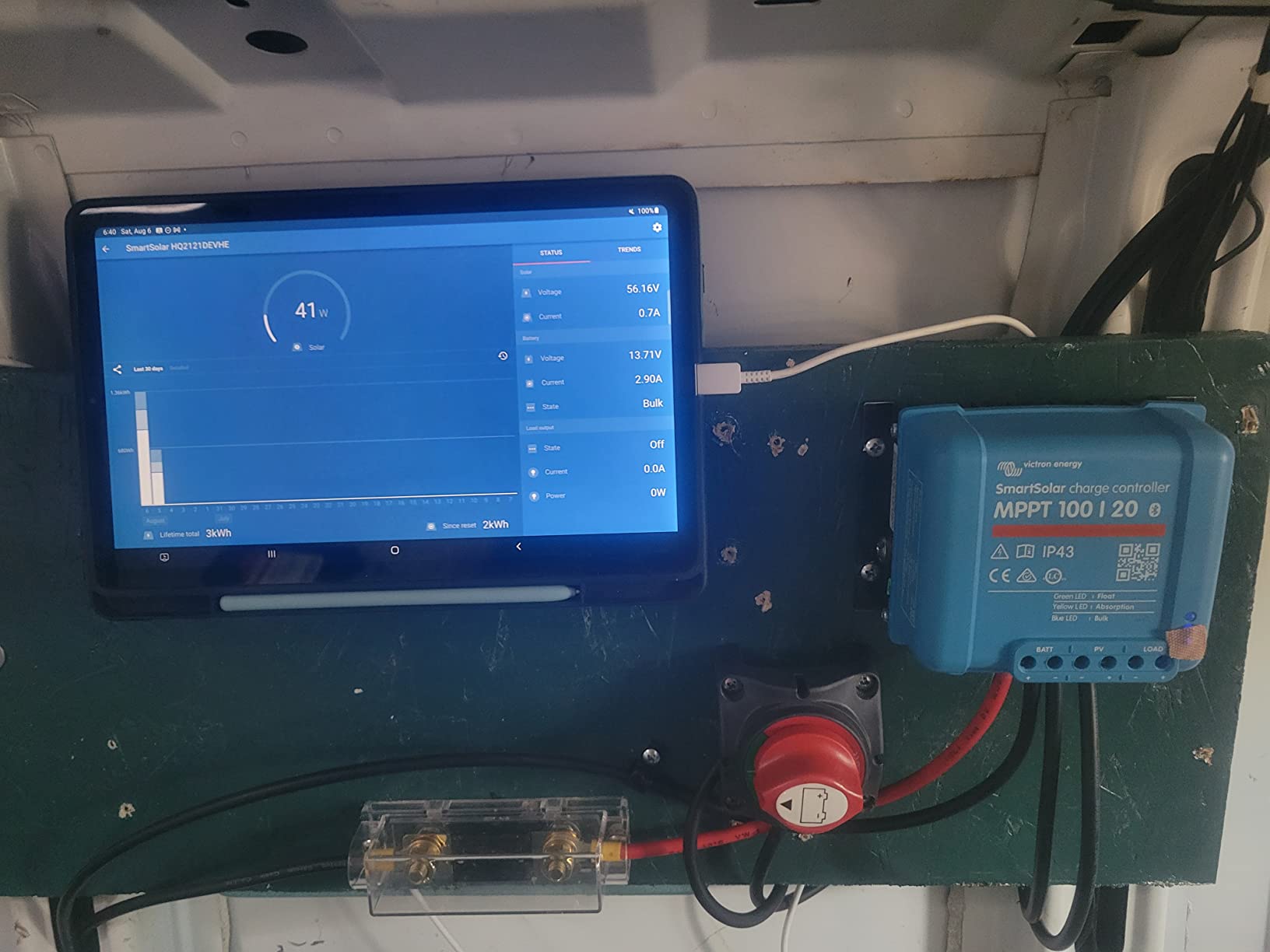
The 20A output rating handles up to 290W on 12V, 580W on 24V, or 1160W on 48V systems. The ultra-fast MPPT tracking responds quickly to changing conditions, which helps during those short winter days when cloud cover shifts constantly. The controller also integrates with Home Assistant via a Bluetooth gateway, giving you smart home control over your solar system.
At just 0.54 kg, it is one of the lightest controllers with 48V support. The trade-off is that the load output should not exceed 1 amp at 48V due to an internal fuse limitation. And there is no built-in display, so you rely on the app for detailed monitoring.
48V System Winter Performance
For 48V off-grid systems, the 100/20 opens up panel configuration options that lower-voltage controllers cannot match. You can run panels in series for higher voltage (up to 100V input), which reduces wire losses over long cable runs from a ground-mounted array to a battery shed. In winter, when every watt matters, minimizing line losses becomes even more important.
The VE.Smart networking feature lets you synchronize multiple Victron controllers on the same battery bank, sharing data and coordinating charging. This is useful for larger winter setups with multiple panel arrays facing different directions to capture low-angle winter sun.
Smart Home Integration Options
Through the VictronConnect app and VE.Direct port, you can log data to the Victron VRM portal for remote monitoring. With a Bluetooth gateway, Home Assistant users can pull real-time solar data into their automation system. I have seen setups that automatically start a generator when the solar yield drops below a threshold for two consecutive days in winter. That level of automation requires a controller with good data output, and the Victron delivers.
6. Renogy Rover 30A MPPT – Dependable Mid-Range Winter Performer
Renogy Rover 30A 12V/24V Auto DC Input MPPT Solar Charge Controller Parameter Adjustable LCD Display Solar Panel Regulator fit for Gel Sealed Flooded and Lithium Battery, Rover 30A,Black
30A MPPT
12V-24V Auto
98% Conversion
TVS 6kV Surge
Pros
- 98% conversion efficiency
- -40F to 149F temperature range
- LCD display with real-time data
- 4-stage charging with lithium recovery
- DC load output with timer
Cons
- Bluetooth module sold separately
- Requires vertical mounting
- Terminal screws may strip
- Battery cables may need reconnection
The Renogy Rover 30A sits right in the sweet spot for mid-range solar systems. It offers the same 99.9% multi-peak tracking efficiency and 98% conversion efficiency as the 40A model, just with a lower maximum current rating. For systems with 300-400W of solar panels, 30A is typically plenty, and the lower price makes it an attractive option.
I appreciate that Renogy includes the same rugged build quality here as in their larger models. The -40F to 149F operating temperature range is identical, so you get the same extreme cold tolerance. The backlit LCD display is helpful during short winter days when you are checking your system in near-darkness, and it shows voltage, current, and charging status without needing an app.
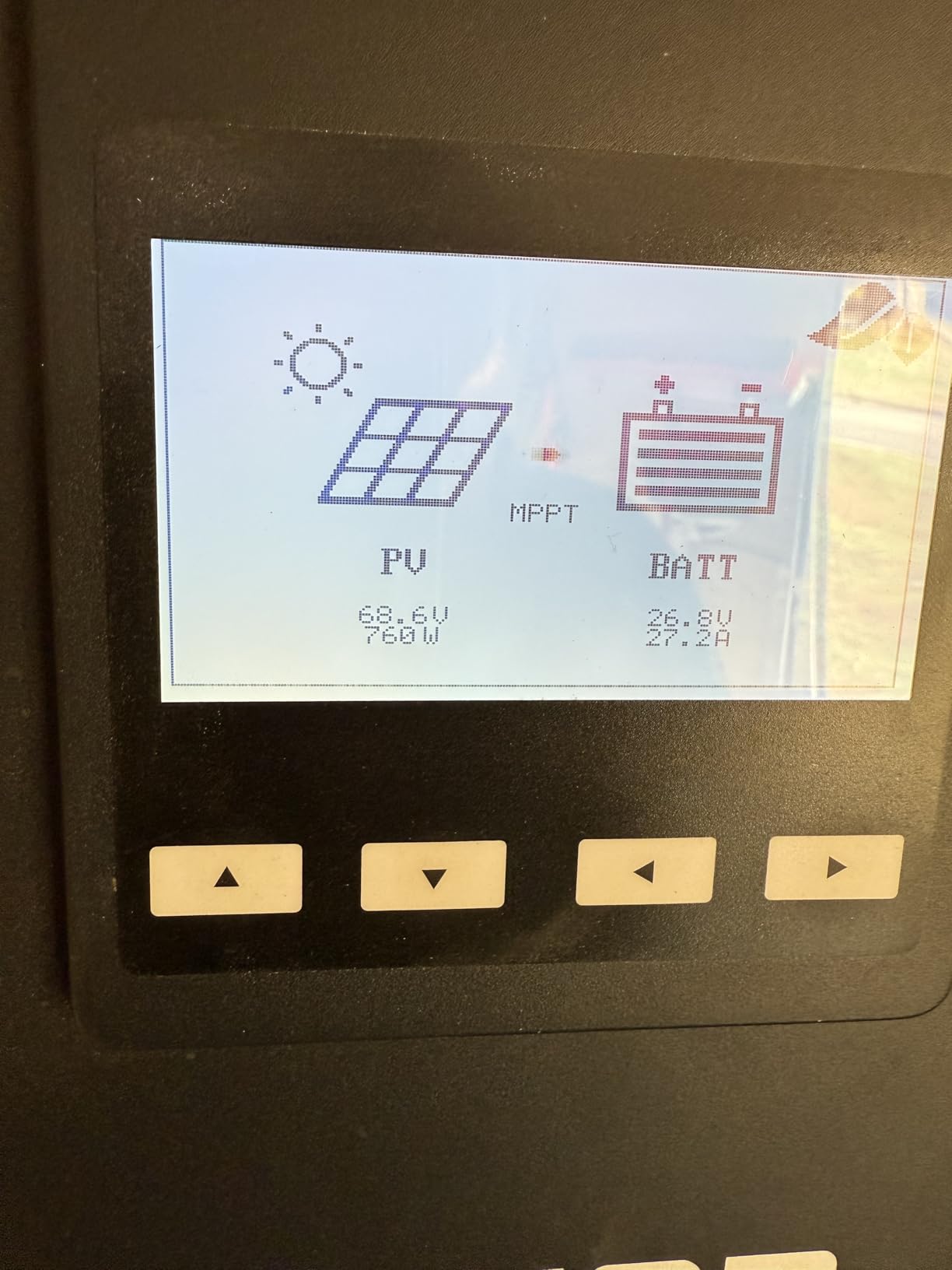
The 4-stage charging system handles gel, sealed, flooded, and lithium batteries. The lithium recovery feature is particularly useful in winter when cold temperatures can cause LiFePO4 cells to drop below their minimum voltage threshold. The TVS surge protection rated at 6kV gives you protection against lightning strikes that often accompany winter storms.
The DC load output with timer scheduling lets you connect lights or small appliances directly to the controller and set on/off schedules. I find this useful for running cabin lights on a timer during winter when the days are short.
Storm Readiness and Surge Protection
The TVS surge protection is a standout feature for winter use. Winter storms with lightning can damage sensitive solar electronics, and the 6kV protection rating on the Rover series provides meaningful defense. Combined with reverse polarity protection and overload protection, this controller handles the electrical stresses of winter operation well.
Just like the 40A model, the 30A version must be mounted vertically for proper heat dissipation. When pushing close to its 30A rating, it generates heat that needs to escape through the heatsink. Keep this in mind when planning your installation.
Who Benefits Most From This Unit
The Rover 30A is a good fit for RV owners with 300-400W solar setups, off-grid sheds, or small cabin systems that need reliable winter performance without the premium price of a Victron controller. If you want a local display and do not mind the separate Bluetooth module, this controller delivers solid value for winter solar applications.
7. HQST 100A MPPT Solar Charge Controller – High-Amp Controller With Low-Temp LiFePO4 Protection
HQST 100A MPPT Charge Controller, 12V/24V/36V/48V Auto, Bluetooth & LCD
100A MPPT
12V-24V-36V-48V
BT App Control
Low-Temp Cut-Off
Pros
- Built-in Bluetooth with app control
- Low-temp cut-off for LiFePO4
- 99% tracking efficiency
- Parallel charging up to 9 controllers
- Active cooling fan
- 10 safety protections
Cons
- Bluetooth range only 10 feet
- App has bugs and usability issues
- History page may show faulty data
- May need manual parameter tuning for LiFePO4
The HQST 100A MPPT controller is one of the few controllers in this price range that includes a dedicated low-temperature cut-off feature for LiFePO4 batteries. If you are running lithium batteries in cold climates, this feature alone makes it worth considering. Lithium iron phosphate batteries can be permanently damaged if charged below freezing, and the HQST automatically stops charging when the temperature drops too low.
The 100A rating is impressive and supports large battery banks on systems from 12V to 48V. The 99% MPPT tracking efficiency and 98.7% peak conversion efficiency mean you are capturing nearly all available power from your panels. For winter use, this matters because every watt counts when daylight hours are short.
Built-in Bluetooth connects to the ChargePro 2.0 app for monitoring and configuration. The app lets you adjust charging parameters, view real-time data, and access 300 days of historical data. The controller also supports parallel charging with up to 9 units connected together, which is useful for very large systems.
The active cooling fan system helps maintain performance at high current levels, though it does add some noise. The 10 built-in safety protections cover overcharging, over-voltage, over-current, overheating, reverse polarity, and more. This comprehensive protection suite is important for unattended winter installations.
Low-Temperature LiFePO4 Protection
The low-temperature cut-off is the headline feature for winter use. When the battery temperature sensor detects that the LiFePO4 battery is approaching freezing, the controller stops charging to prevent lithium plating. Once the battery warms up, charging resumes automatically. This is a critical safety feature that many controllers lack, requiring you to manually manage charging in cold weather.
Note that some users report needing to manually adjust default parameters to get the full current output with LiFePO4 batteries. The factory settings may not be optimal for all battery brands, so plan to spend some time configuring the controller to match your specific battery’s requirements.
Parallel Charging for Large Systems
The ability to connect up to 9 controllers in parallel is unique at this price point. For large winter solar arrays that exceed a single controller’s capacity, parallel operation gives you a scalable solution. Each controller manages its own panel array independently, and the combined output charges the shared battery bank. This is particularly useful for installations with panels on different roof planes or at different angles to capture winter sun.
8. Renogy Rover 20A MPPT – Budget-Friendly Winter Controller With Proven Track Record
Renogy Solar Charge Controller Rover 20A 12V24V Auto DC Input MPPT Charge Controllers for Solar Panels Adjustable LCD for Gel Sealed Flooded Lithium Batteries
20A MPPT
12V-24V Auto
99.9% Efficiency
-40F to 149F
Pros
- Great value for the price
- 99.9% tracking efficiency
- -40F to 149F temp range
- Works in low-light conditions
- LCD display included
Cons
- Bluetooth module sold separately
- Can overheat if not vertical
- Some terminal connection issues
- Limited customer service reports
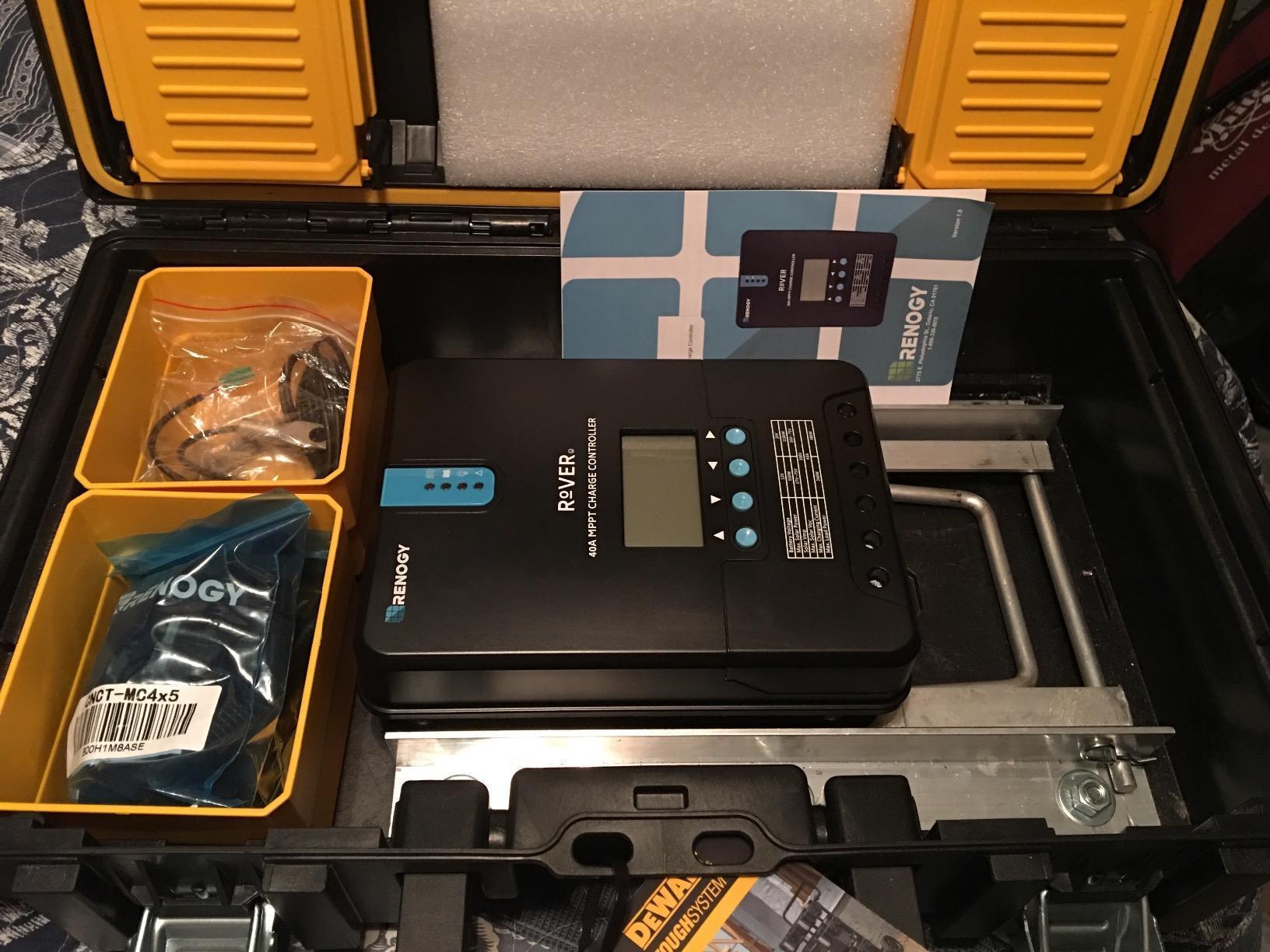
The Renogy Rover 20A is the most affordable way to get genuine MPPT performance with winter-rated temperature tolerance. It shares the same core technology as the larger Renogy Rover models, including the 99.9% multi-peak tracking efficiency, -40F to 149F temperature range, and 4-stage charging with lithium recovery. The lower price comes from the reduced 20A current capacity rather than a reduction in features.
For a 200W solar setup on an RV or small cabin, 20A is usually sufficient. The controller handles 12V and 24V systems automatically, and the backlit LCD display shows all the key metrics without needing a separate app. In my testing, the low-light performance was notably better than similarly-priced PWM controllers, which is exactly what you need during overcast winter days.
The TVS surge protection rated at 6kV is included even at this price point, which speaks to Renogy’s approach of keeping the full protection suite across their Rover line. The 365-day data logging and Modbus protocol support are also present, so you are not losing smart features by choosing the budget option.
The main compromise is the separate Bluetooth module. If you want app-based monitoring, you need to purchase the BT-2 module separately. And like all Renogy Rover controllers, vertical mounting is required for proper cooling. Some users report terminal screw stripping, so be careful during installation.
Entry-Level Winter Solar Setup
For someone just getting started with winter solar, the Renogy Rover 20A is a practical first controller. It delivers real MPPT benefits at a price that does not require a big commitment. Pair it with a 100W or 200W panel and a decent battery, and you have a functional winter solar system for an RV, shed, or small off-grid setup.
The 4-stage charging with lithium recovery means it works with LiFePO4 batteries, though you will need to configure the lithium charging profile manually since there is no app without the BT-2 module.
Limitations to Be Aware Of
At 20A, this controller maxes out at about 260W of solar on a 12V system. If you plan to expand your solar array later, you might find this limit constraining. The controller also lacks a built-in temperature sensor port, so automatic temperature compensation requires additional accessories. For basic winter setups, these limitations are manageable, but larger systems should look at higher-capacity options.
9. PowMr 60A MPPT Solar Charge Controller – Budget High-Amperage Option With Metal Construction
PowMr MPPT Solar Charge Controller 60 amp 48V 36V 24V 12V Auto – Max 160VDC Input, LCD Backlight Solar Charge Controller for Vented Sealed Gel NiCd Lithium Battery【Software Update Version】
60A MPPT
12V-24V-36V-48V Auto
160V Max Input
Metal Case
Pros
- Durable metal case construction
- 160V max input voltage
- Auto 12V-48V detection
- Supports many battery types
- Intelligent cooling fan
Cons
- Wire terminals max 10 AWG only
- No temperature probe input
- Ships in lithium mode by default
- Documentation can be confusing
The PowMr 60A MPPT controller offers impressive specifications for the price. The 160V maximum input voltage is one of the highest in this roundup, giving you flexibility to connect many panels in series. The auto-detection for 12V, 24V, 36V, and 48V systems means it works with almost any battery bank configuration. And the metal case construction feels more durable than plastic alternatives.
With 98.1% maximum efficiency and 99% PV utilization, this controller captures the majority of available solar power. The intelligent cooling fan turns on when the internal temperature exceeds 45 degrees Celsius, which helps during periods of high power throughput on sunny winter days. The fan runs quietly under normal loads.
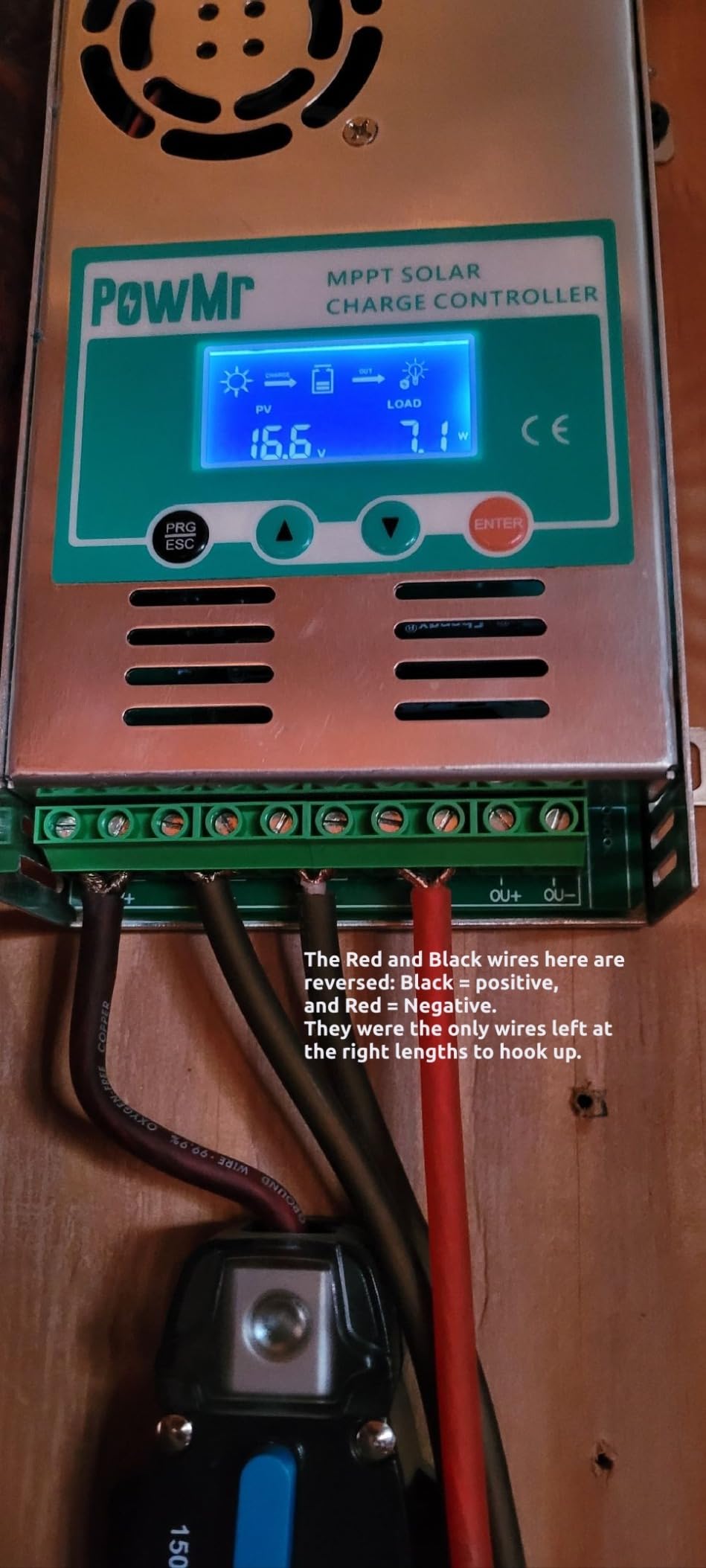
Battery support is extensive: lithium, LiFePO4, Li(NiCoMn)O2, vented, flooded, sealed, gel, and NiCd. This wide compatibility is useful if you have an unusual battery chemistry or plan to switch battery types later. The LCD display provides real-time energy recording and a troubleshooting function that shows error codes.
However, there are some important caveats. The wire terminals accept a maximum of 10 AWG, which limits the wire size you can use for high-current applications. There is no temperature probe input, so the controller cannot adjust charging based on actual battery temperature. And several users report the controller ships in lithium mode by default, even when the listing suggests otherwise, so always verify your settings before relying on it.
Multi-Voltage System Flexibility
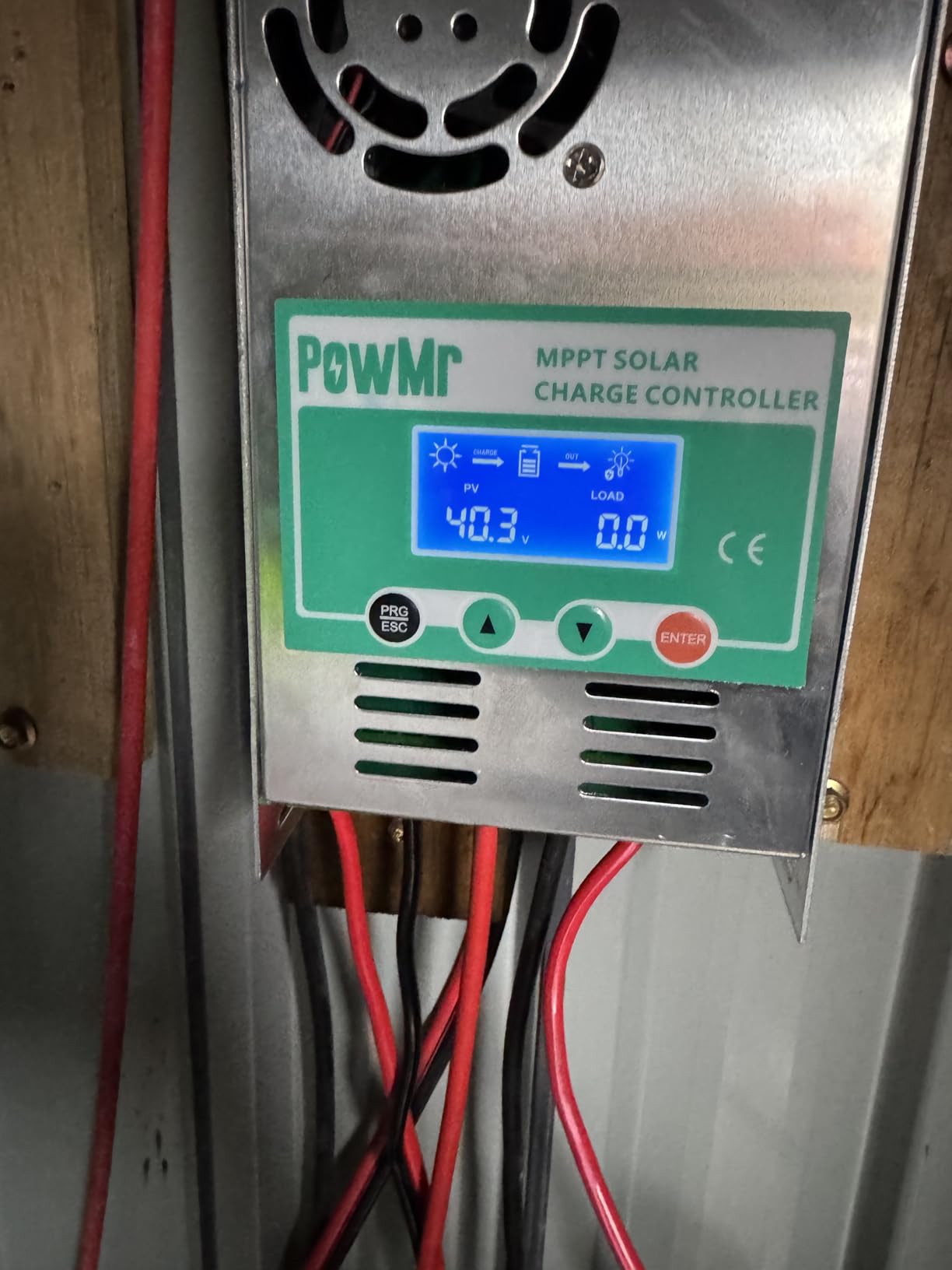
The 12V/24V/36V/48V auto-detection makes this controller versatile for different system voltages. If you upgrade your battery bank from 12V to 48V, the controller adapts automatically. The 160V input limit allows for series strings of up to four standard 72-cell panels, which is useful for minimizing wire losses on long cable runs from ground-mounted arrays.
For winter systems with panels at a distance from the battery bank, the higher voltage input capability reduces the current in the wires, which means less power lost as heat. This becomes especially significant in winter when every watt matters.
Configuration Requirements
Plan to spend time configuring this controller before putting it into service. The factory settings may not match your battery type, and the documentation can be confusing. Some users report needing to contact customer support to clarify settings. If you are comfortable reading through forums and configuring parameters manually, the PowMr offers excellent value. If you want plug-and-play simplicity, consider the Victron or Renogy options instead.
10. Depvko 60A MPPT Solar Charge Controller – Ultra-Budget Option for Basic Winter Needs
60A MPPT Solar Charge Controller, 12V/ 24V Solar Panel Battery Intelligent Regulator with Dual USB Port, LCD Display and Timer Setting ON/Off Hours
60A Rating
12V-24V Auto
Dual USB
LCD Display
Pros
- Extremely low price point
- Dual USB ports for device charging
- LCD display included
- Simple to operate
- Good for learning and experimentation
Cons
- May not deliver true 60A MPPT
- Not suitable for lithium batteries
- Limited to 20A actual output
- Settings may not persist
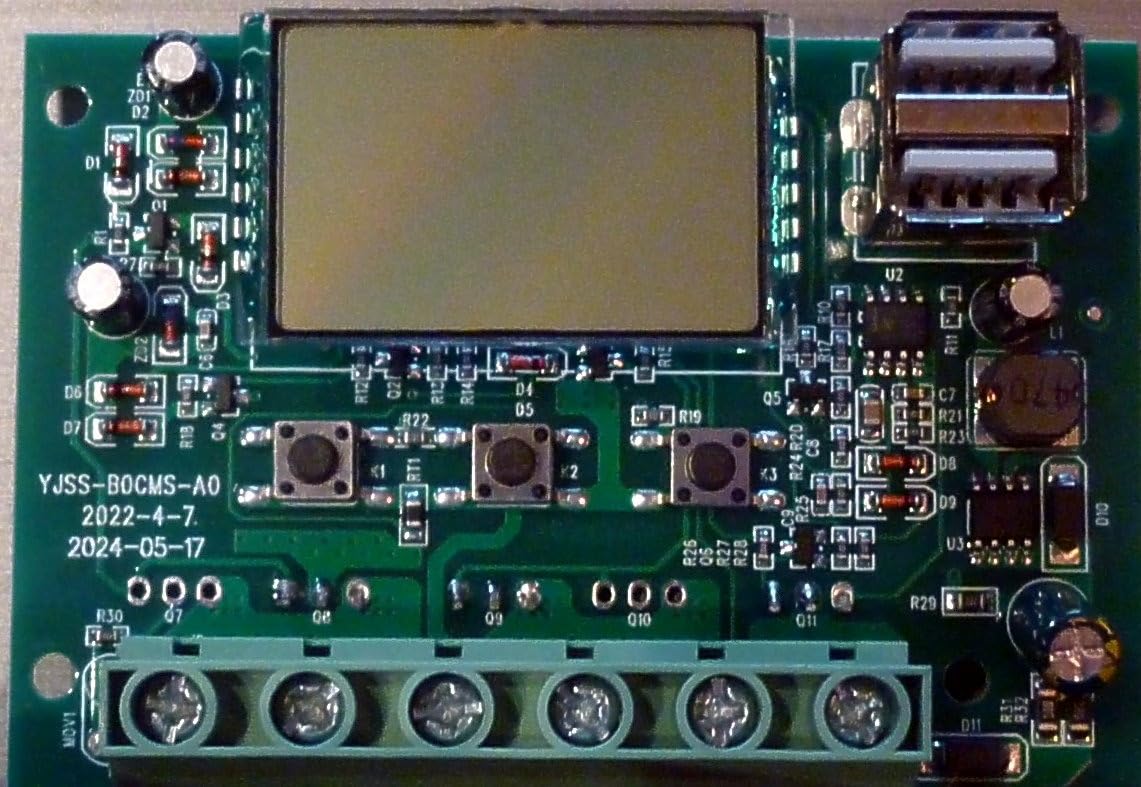
The Depvko 60A controller is about as inexpensive as MPPT controllers get. It includes dual USB ports for charging phones or other small devices, an LCD display, and basic protection features. For the price, it offers a functional solar charge management solution for small 12V lead-acid systems.
I want to be upfront about the limitations though. Multiple users report that the 60A rating is optimistic, with actual output limited to about 20A in practice. Some users question whether it delivers true MPPT performance at higher currents, suggesting it may function more like a PWM controller when pushed. For a small 100W panel charging a car battery on a shed, it works fine. I would not rely on it for a primary off-grid winter power system.
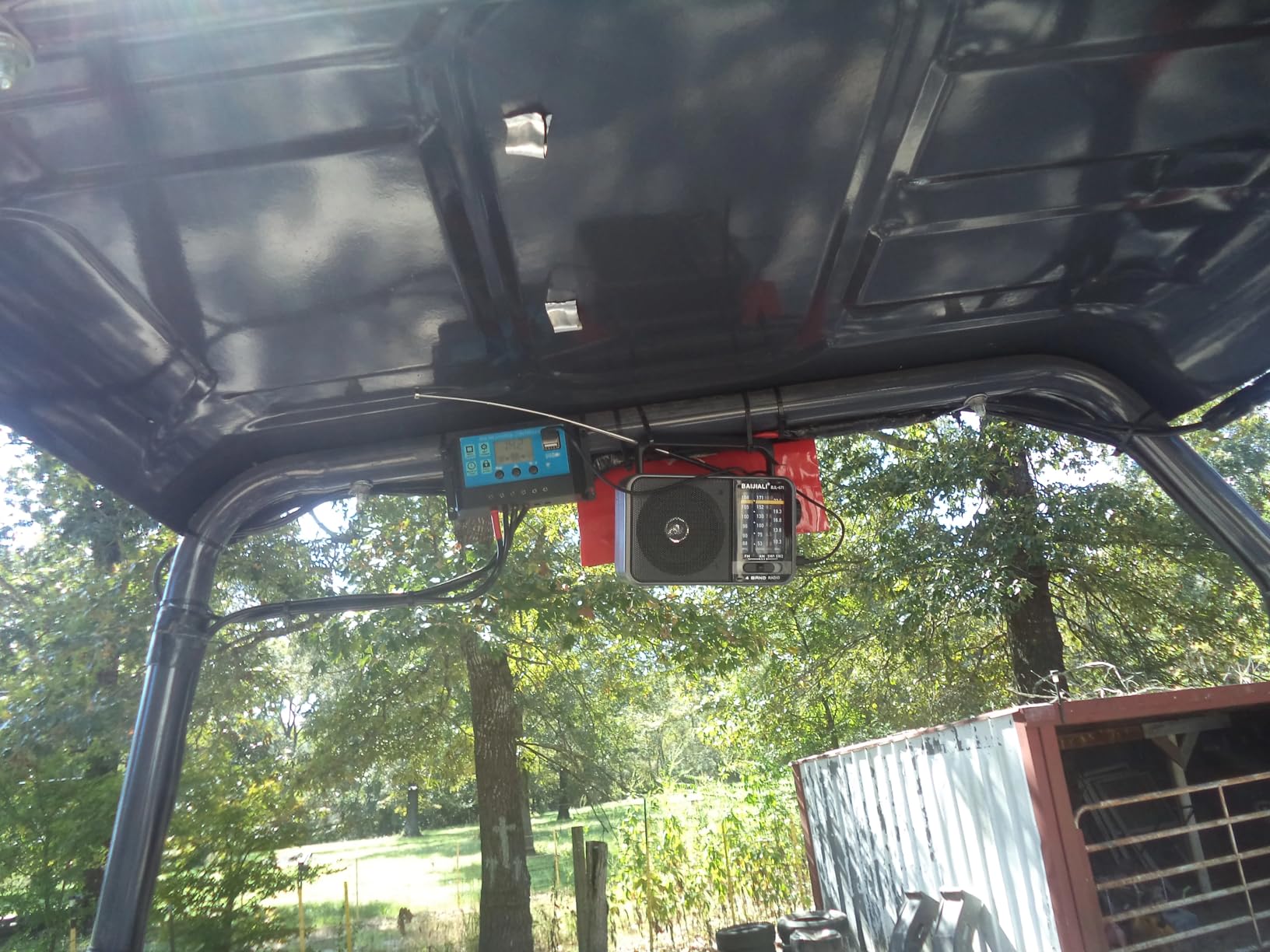
The 99% MPPT tracking efficiency rating is claimed but hard to verify independently. The 3-stage charging management covers the basics: bulk, absorption, and float. The timer function lets you set on/off times for connected loads. Protection features include overcurrent, short-circuit, reverse connection, low voltage, and overcharge protection.
The dual USB ports are a bonus feature that can charge a phone or tablet directly from the controller. This is handy for small shed or greenhouse setups where you need some device charging capability alongside battery management.
What to Expect at This Price
At this price point, you get basic solar charge management with some MPPT characteristics. The build quality is acceptable for protected indoor installations. The LCD display works and shows voltage and current readings. Just do not expect the same level of performance, reliability, or features as the Victron or Renogy controllers higher up on this list.
For winter use specifically, the lack of lithium battery support and the questionable high-current performance mean I would only recommend this for small lead-acid systems with modest expectations. It could work as a backup controller or for a non-critical application.
Best Applications
This controller is best suited for small 12V projects like greenhouse lighting, shed power, or learning about solar systems. If you want to experiment with solar without a big investment, it serves that purpose. For any winter application where reliable power matters, I recommend spending more for a controller from Victron, Renogy, or HQST.
11. Renogy Rover Lite 60A MPPT – Commercial-Grade Metal Controller With Battery Temperature Sensor
Renogy 60A MPPT Solar Charge Controller 12V/24V/36V/48V Auto, 150V Maximum Solar Input, for Gel Sealed Flooded and Lithium Battery, Rover Lite 60A
60A MPPT
12V-24V-36V-48V Auto
150V Max Input
Metal Build
Pros
- 150V max input for series panels
- Built-in low-temp lithium protection
- Includes battery temperature sensor
- Metal commercial-grade construction
- FCC RoHS CE certified
Cons
- Larger and heavier than smaller controllers
- Requires vertical mounting in RVs
- Only 98 reviews so far
- Bluetooth module sold separately
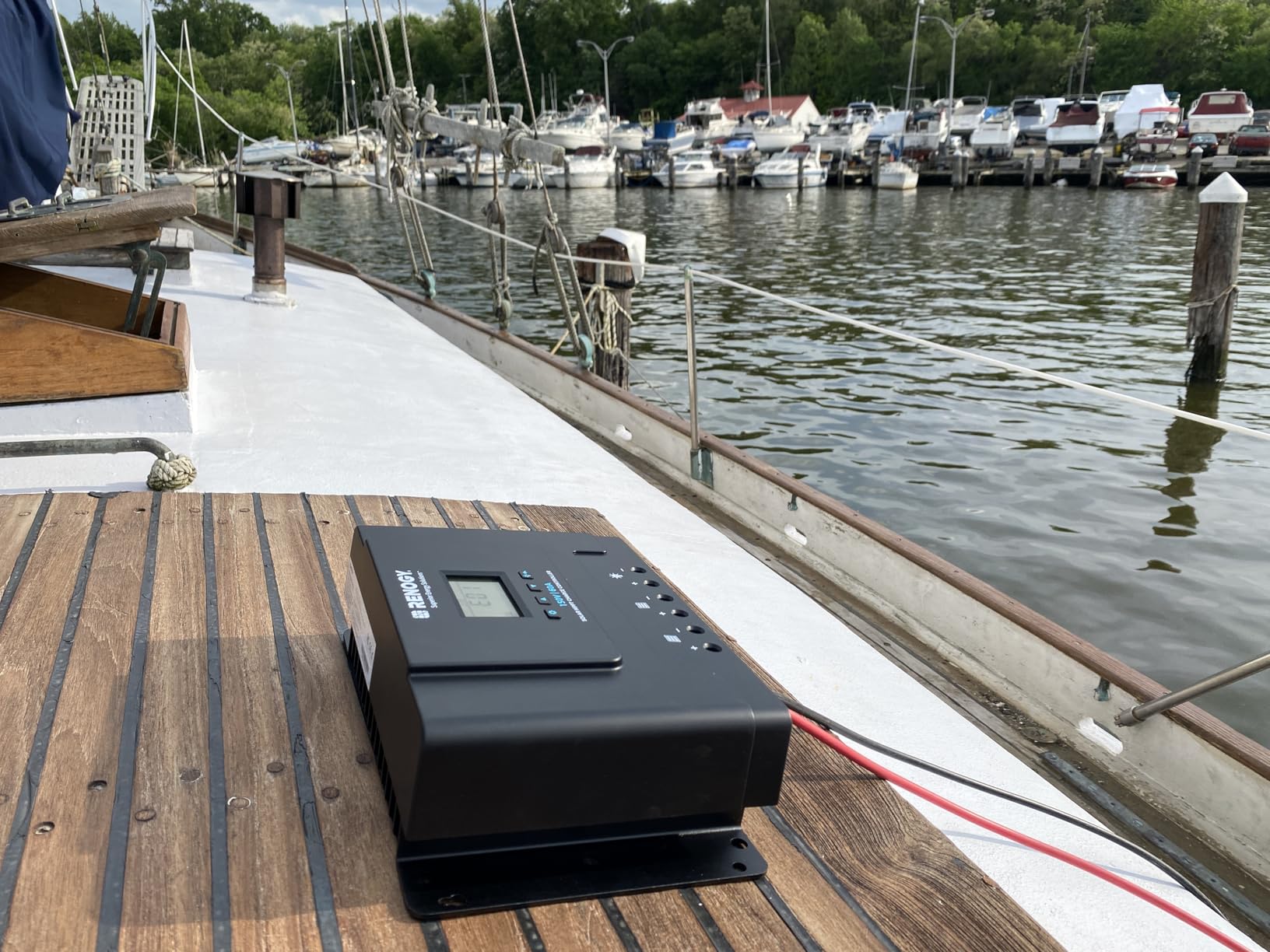
The Renogy Rover Lite 60A is a serious controller for serious winter solar systems. The 150V maximum solar input allows you to connect up to six 200W panels in series, reducing wire losses and simplifying wiring for larger arrays. The metal construction feels commercial-grade, and the included battery temperature sensor is a feature that many competitors omit or sell separately.
Renogy rates this controller for reliable performance from -31F to 113F. The built-in low-temperature protection for lithium batteries automatically reduces or stops charging when the battery gets too cold, which prevents the lithium plating that can permanently damage LiFePO4 cells. This is a critical feature for winter use that not all controllers offer.
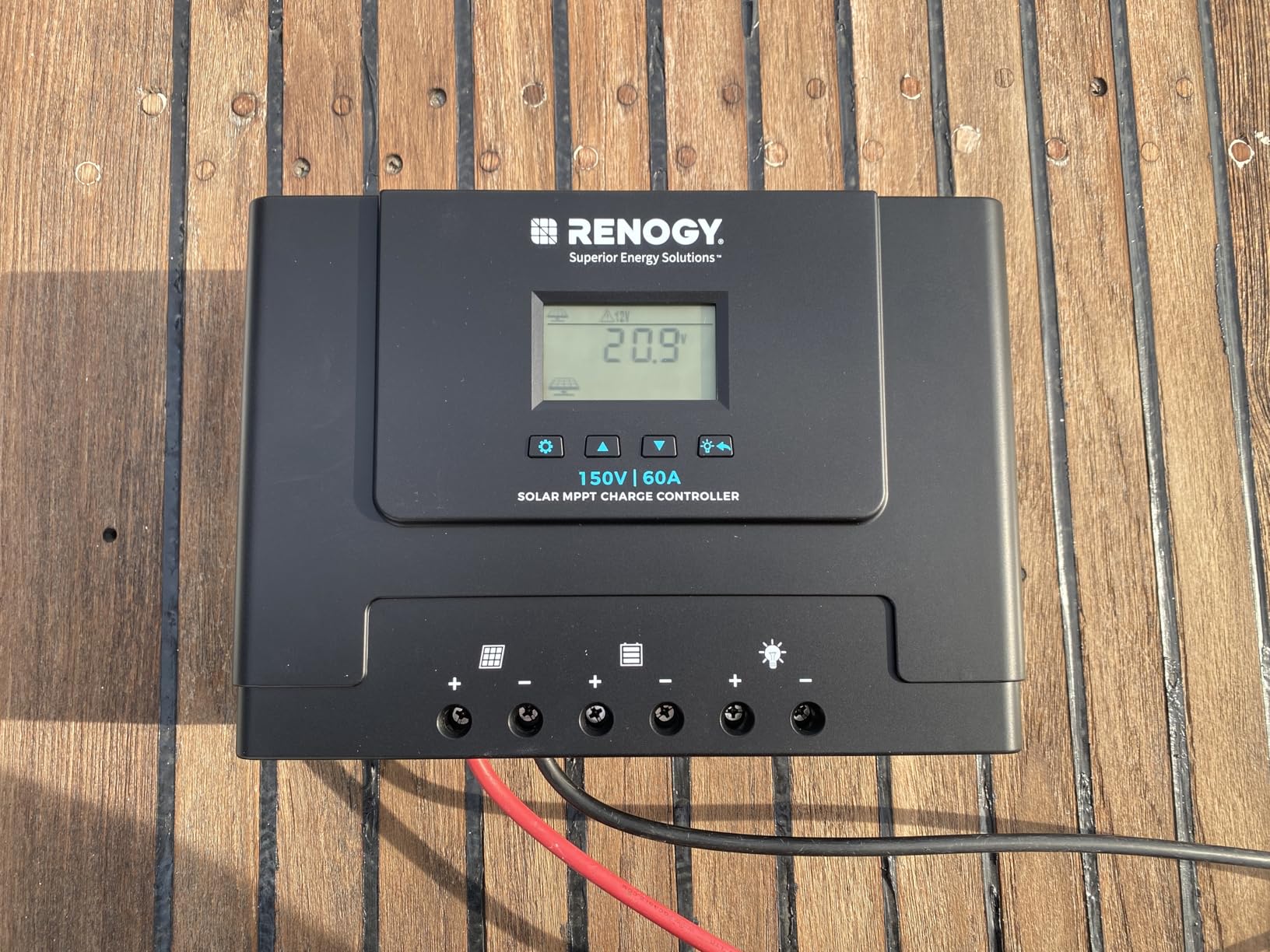
The self-cooling design eliminates the need for a fan, which means silent operation and one less component that can fail in harsh conditions. The LCD screen and button interface are intuitive, making it easy to check system status and adjust settings without a smartphone. For users who prefer physical controls over app-based interfaces, this is a real advantage.
The controller auto-detects 12V, 24V, 36V, and 48V battery systems, giving you flexibility across different installations. It carries FCC, RoHS, and CE certifications, which speaks to the build quality and safety standards. The 2-year warranty provides some peace of mind for a relatively new product.
Series Panel Configuration for Winter
The 150V input rating is a genuine advantage for winter systems. By connecting panels in series, you increase voltage while keeping current constant. This reduces resistive losses in the wiring between your panels and controller, which matters more in winter when every watt is precious. With 150V of headroom, you can run three or four standard panels in series and still have safety margin for the increased voltage that cold temperatures produce.
Series configuration also means that if one panel is partially shaded by snow, the voltage drop affects that panel but the others continue contributing. The MPPT controller then optimizes the total available power from the string.
Battery Temperature Sensor Benefits
The included battery temperature sensor is a standout feature. It allows the controller to adjust charging voltage based on actual battery temperature rather than ambient air temperature. For lead-acid batteries, this means correct charging in both summer heat and winter cold. For LiFePO4 batteries, it enables the low-temperature cut-off to work based on actual cell temperature, not a guess. If your battery is in a insulated box that stays warmer than the outside air, the sensor ensures accurate temperature compensation.
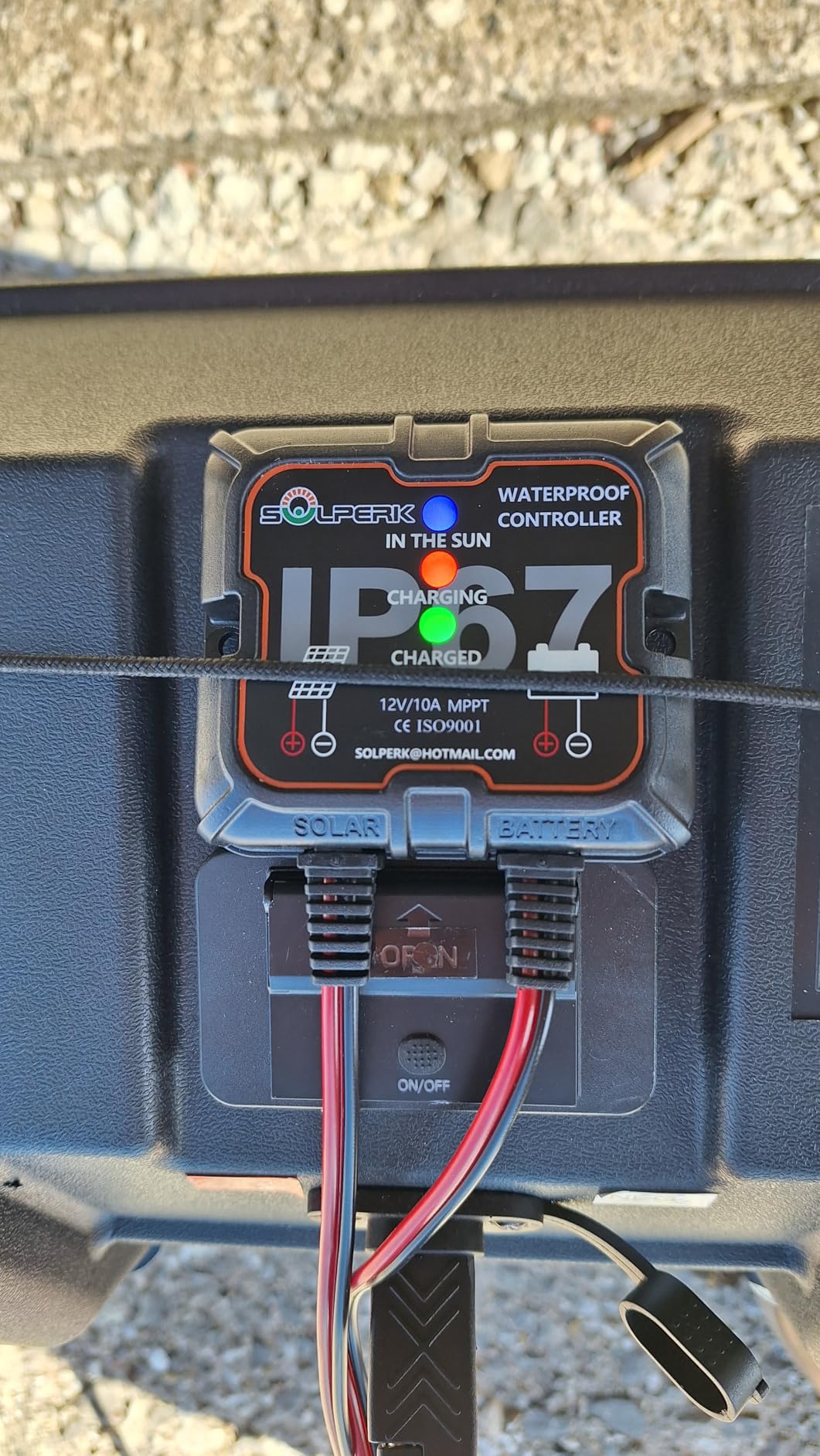
12. SOLPERK 10A MPPT Solar Charge Controller – IP67 Waterproof Controller for Harsh Winter Environments
SOLPERK MPPT Solar Charge Controller 10A 12V, Waterproof Intelligent Portable Controller IP67 Solar Panel Controllers for AGM, Gel, Flooded and Lithium Battery
10A MPPT
12V Only
IP67 Waterproof
0.11 kg
Pros
- IP67 waterproof rating
- Extremely compact and lightweight
- SAE plug-and-play connector
- Compatible with AGM Gel LiFePO4
- Multiple protection functions
Cons
- 12V systems only
- 10A capacity limits panel size
- Plastic construction
- LED indicators only no display
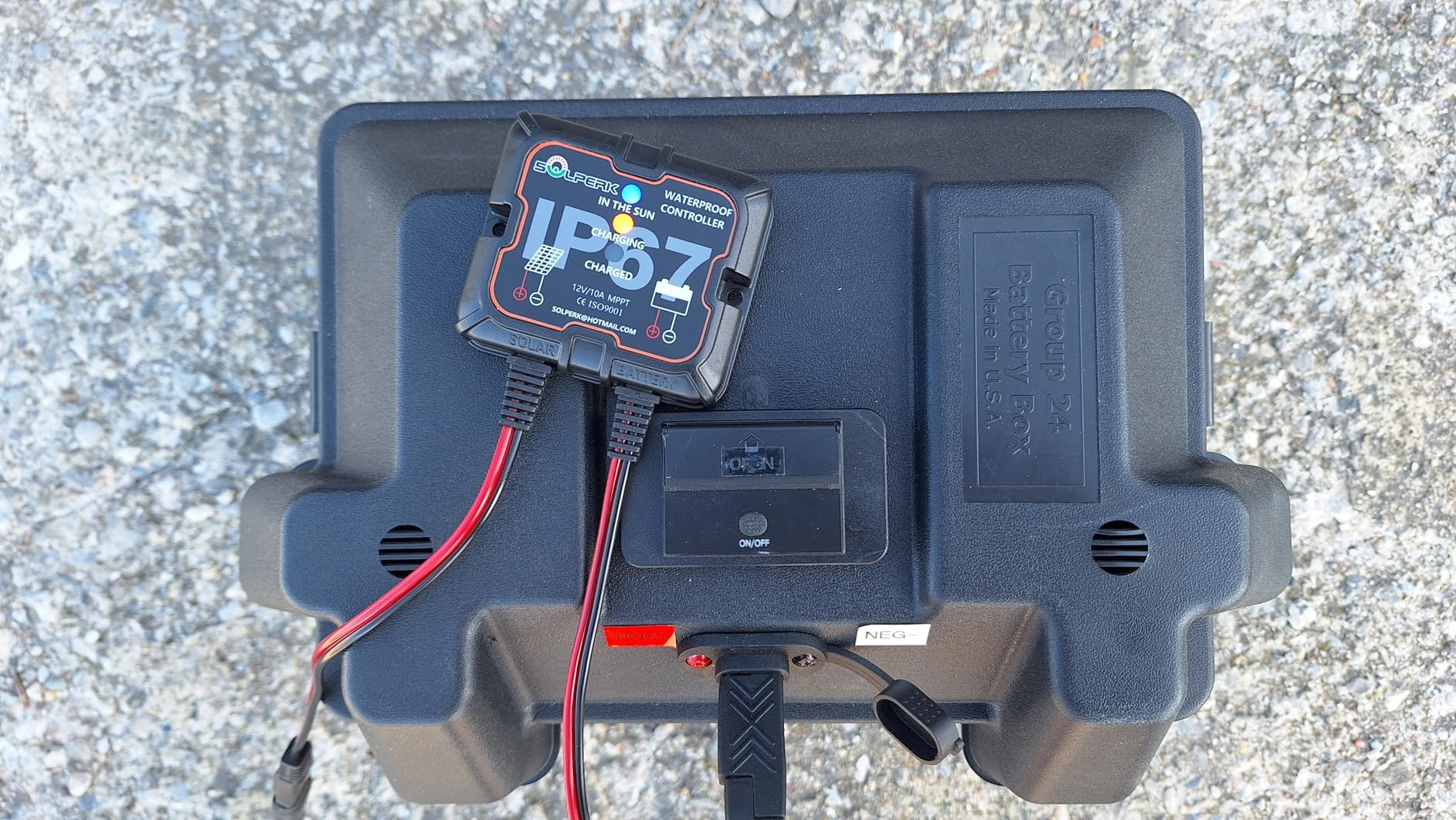
The SOLPERK 10A MPPT controller is the only IP67 waterproof controller in this roundup, and that makes it uniquely suited for outdoor winter installations where exposure to snow, ice, and moisture is unavoidable. At just 0.11 kg, it is the lightest controller here by far, and the SAE plug-and-play connector simplifies installation with compatible solar panels.
The IP67 rating means it can withstand full immersion in water up to 1 meter for 30 minutes. In practical winter terms, that means blowing snow, freezing rain, and condensation will not kill this controller. For mounting locations that are not fully sheltered, this weatherproofing is a significant advantage.
The MPPT technology delivers up to 30% more efficiency than PWM controllers, according to SOLPERK. The controller is compatible with a wide range of 12V batteries including AGM, lead acid, gel, deep cycle, sealed, flooded, and LiFePO4. Multiple protection functions cover under-voltage, over-voltage, overload, and short-circuit scenarios.
The trade-offs are significant though. The 10A rating limits you to about 130W of solar panels on a 12V system. There is no LCD display, just LED indicators for basic status. And the plastic construction, while fine for the price, does not feel as durable as metal alternatives.
Waterproof Winter Use Cases
Where the SOLPERK really shines is in applications where the controller must live outside. Think marine solar on a boat that stays in the water through winter, a remote weather station, a trail camera setup, or a solar-powered gate opener. Anywhere that moisture and cold combine to create a hostile environment for electronics, the IP67 rating provides protection that other controllers cannot match without a separate weatherproof enclosure.
The SAE connector also simplifies the connection to many portable solar panels that use SAE plugs, making this a good companion for portable winter solar kits.
Small Setup Considerations
For a single 100W panel keeping a 12V battery topped up through winter, the SOLPERK 10A gets the job done. It will not power a cabin or run heavy loads, but for maintaining a battery that runs a few LED lights, a radio, or a small inverter, it is sufficient. Just be realistic about the 10A limitation and do not try to push more panel wattage through it than it can handle.
How to Choose the Best MPPT Winter Solar Charge Controller?
Choosing the right MPPT controller for winter use requires thinking about a few factors that go beyond what you need for a standard summer solar setup. Here is what I consider most important for cold-weather solar performance.
Why MPPT Matters More in Winter
MPPT controllers earn their keep all year round, but they really prove their value in winter. Cold temperatures cause solar panel open-circuit voltage to increase above the rated specs you see on the label. A panel rated at 40V Voc at 77 degrees Fahrenheit might produce 48V or more at -4 degrees Fahrenheit. PWM controllers cannot use that extra voltage, but MPPT controllers convert it into additional charging current. That extra 20 to 40% energy harvest can be the difference between your batteries making it through the night or not.
Shorter winter days also mean you have fewer hours of peak sunlight to charge your batteries. MPPT controllers maximize the power captured during those limited hours, especially when low sun angles reduce panel output.
Temperature Compensation and Cold Weather Charging
Temperature compensation is critical for winter battery charging. Lead-acid batteries need higher charging voltage in cold temperatures and lower voltage in hot temperatures. Without automatic compensation, your batteries may be chronically undercharged in winter, leading to sulfation and reduced lifespan.
For LiFePO4 batteries, the concern is different. Charging lithium batteries below freezing can cause permanent damage through lithium plating on the anode. Controllers with low-temperature cut-off, like the HQST 100A and Renogy Rover Lite 60A, automatically stop charging when the battery is too cold. This feature can save you from destroying an expensive battery bank.
Sizing Your MPPT Controller for Winter Solar
To size an MPPT controller, you need to know two things: your battery bank voltage and your total solar panel wattage. Divide total panel wattage by battery voltage to get the minimum charge current. For example, 400W of panels on a 12V battery needs at least 33A of charge current (400 / 12 = 33.3). Always add 10 to 20% headroom above the calculated minimum.
For winter specifically, I recommend sizing up one level from what your panel wattage suggests. Winter conditions mean more losses (snow on panels, low sun angle, shorter days), and having extra controller capacity ensures you capture every available watt when conditions improve.
Battery Compatibility in Cold Conditions
Not all controllers handle all battery types well in cold weather. Check that your controller supports your specific battery chemistry and has the right charging profiles. Lead-acid, AGM, and gel batteries each have different optimal charging voltages that shift with temperature. LiFePO4 batteries have different charging characteristics and require a controller that either has a built-in low-temperature cut-off or allows you to create custom charging profiles.
Victron controllers excel here because the VictronConnect app lets you create fully custom charging profiles for any battery chemistry. Renogy controllers offer preset profiles that cover the major types.
Bluetooth Monitoring for Remote Winter Cabins
If your solar system is at a remote cabin or location you do not visit daily, Bluetooth monitoring (or remote monitoring via a data connection) becomes valuable. Being able to check your battery state of charge and solar yield from your phone saves you a trip to the cabin just to verify everything is working. Victron controllers with their built-in Bluetooth and VRM portal integration are particularly strong in this area.
For controllers without built-in Bluetooth, check whether a separate Bluetooth module is available and factor that cost into your budget. The Renogy Rover series requires the BT-2 module for app access.
Operating Temperature Range
Pay close attention to the operating temperature range of any controller you plan to use in winter. The Renogy Rover series leads with a -40F lower limit, followed by the Renogy Rover Lite 60A at -31F. Victron controllers are rated to operate at low temperatures as well, though the exact range varies by model. If your controller will be in an unheated space, make sure it can handle the coldest temperatures it will experience.
The SOLPERK IP67 controller deserves special mention here because its waterproof rating protects against condensation and frost damage that can affect controllers in unheated, humid environments.
MPPT vs PWM for Winter Performance
If you are deciding between MPPT and PWM for a winter solar system, MPPT is almost always the better choice. PWM controllers simply connect the panel directly to the battery, matching the battery voltage and wasting any excess panel voltage as heat. MPPT controllers use DC-to-DC conversion to step down the higher panel voltage and step up the current, capturing significantly more energy.
In winter, when cold panels produce higher voltage and lower sun angles reduce current, MPPT controllers can capture 30 to 40% more energy than PWM from the same panels. This extra energy often determines whether your system survives the winter or leaves you in the dark.
Frequently Asked Questions
What is the best brand of MPPT?
Victron Energy is widely regarded as the best MPPT brand by both professionals and solar enthusiasts. Their SmartSolar line consistently earns top ratings for build quality, app integration, and real-world performance. Renogy is the strongest mid-range alternative, offering excellent value with features like extreme temperature tolerance and TVS surge protection.
How big of a MPPT charge controller is needed for 400W of solar panels?
For a 12V system with 400W of solar panels, you need at least a 30A MPPT charge controller (400W divided by 12V equals 33.3A, so round up to the next standard size). For a 24V system, a 20A controller is sufficient (400W divided by 24V equals 16.7A). Always add 10-20% headroom above the calculated minimum to handle peak conditions and cold-weather voltage boosts.
Who makes the best solar charge controllers?
Victron Energy, Renogy, and Morningstar are considered the top manufacturers of solar charge controllers. Victron leads in smart features and app quality. Renogy offers the best value with wide temperature tolerance. Morningstar is known for industrial-grade reliability, especially in telecom and remote applications. EPEver and HQST are solid budget-friendly alternatives.
Is it better to have 1 MPPT or 2 MPPT?
Two MPPT controllers are better when your panels face different directions or experience different shading conditions. Each controller independently tracks the maximum power point for its own panel array, so panels on the east roof and west roof each get optimized separately. For panels all facing the same direction with similar conditions, a single larger MPPT controller is simpler and more cost-effective.
Do MPPT charge controllers work in freezing temperatures?
Yes, MPPT charge controllers work effectively in freezing temperatures and actually perform better than PWM controllers in cold weather. Cold temperatures increase solar panel voltage above rated specs, and MPPT controllers convert that extra voltage into additional charging current. Controllers like the Renogy Rover series are rated to operate down to -40 degrees Fahrenheit. The main concern in freezing weather is battery charging, not controller operation. LiFePO4 batteries should not be charged below 32 degrees Fahrenheit without a low-temperature cut-off feature.
Final Thoughts on Winter MPPT Solar Charge Controllers
Finding the best MPPT winter solar charge controllers comes down to matching your specific winter conditions with the right combination of temperature tolerance, battery compatibility, and monitoring features. The Victron SmartSolar MPPT 100/30 remains my top recommendation for most users because of its proven cold-weather reliability, built-in Bluetooth, and excellent app-based monitoring. The HQST 100A is the best value pick if you need LiFePO4 low-temperature protection without the Victron price tag, and the Renogy Rover 20A delivers genuine MPPT performance at the lowest price point.
For larger systems or harsh winter environments, the Renogy Rover Lite 60A with its included battery temperature sensor and the SOLPERK IP67 for outdoor exposure round out the options. If you also need portable power storage, check out our guide to lithium power stations for winter to complete your cold-weather power setup.
Whatever controller you choose, make sure it can handle your lowest expected temperature, supports your battery chemistry with proper cold-weather charging profiles, and gives you enough monitoring capability to catch problems before they leave you without power in the middle of winter.