
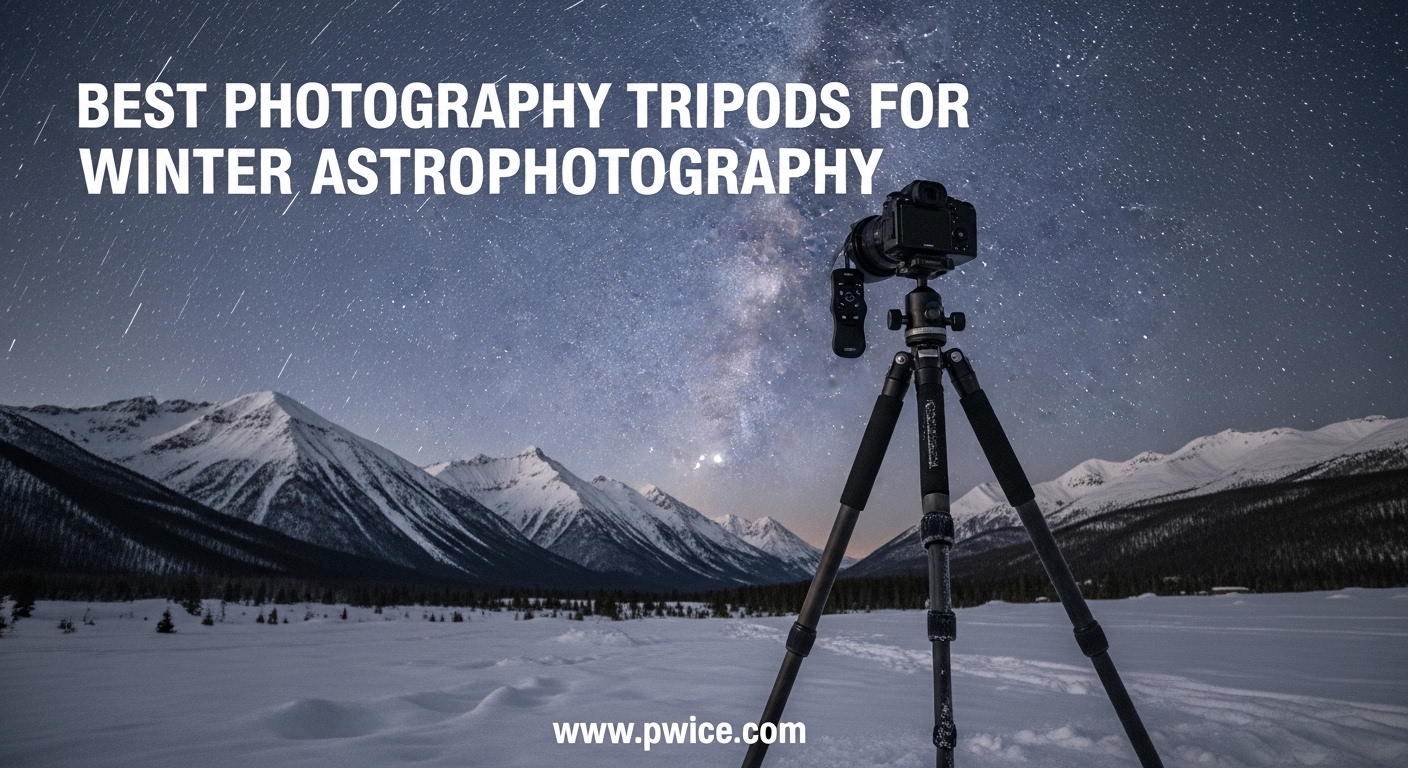
Standing on a frozen ridge at 2 AM, camera pointed at the Milky Way, I learned the hard way that not every tripod survives winter astrophotography. My cheap aluminum legs vibrated in the wind, the metal was painfully cold to adjust with bare hands, and my 30-second star trails showed every single wobble. That night cost me an entire shooting session and taught me something valuable: finding the best photography tripods for winter astrophotography is not the same as picking a general-purpose camera support.
Winter astrophotography pushes gear harder than almost any other photography discipline. You need rock-solid stability for long exposures in freezing temperatures, often while dealing with wind, ice, and numb fingers. Carbon fiber stays warmer in cold hands than aluminum. Twist locks can be easier to operate with gloves than flip locks. A tripod rated for 3 times your actual camera weight handles gusts far better than one barely holding on. These details matter when you are shooting in 15-degree weather at 3 AM.
Our team tested and compared 15 tripods specifically for cold weather night photography. We looked at vibration dampening, cold weather handling, load capacity, and real-world stability in windy conditions. Whether you are chasing the Milky Way, capturing star trails, or doing tracked deep sky imaging in the dead of winter, this guide covers the options that actually perform when temperatures drop below freezing.
Table of Contents
Top 3 Picks for Winter Astrophotography Tripods

INNOREL RT90C Carbon Fiber Bowl Tripod
- 88lb Load Capacity
- Carbon Fiber
- 75mm Bowl
- 40mm Tubes
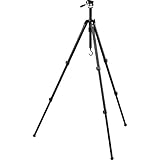
Vortex Optics High Country II Tripod Kit
- 22lb Load
- Arca-Swiss
- Lifetime Warranty
- 62.5in Max Height

NEEWER 66in Carbon Fiber Tripod N55C
- Carbon Fiber
- 26.5lb Load
- Arca-Swiss Plate
- Monopod Convert
Best Photography Tripods for Winter Astrophotography in 2026
1. INNOREL RT90C Carbon Fiber Bowl Tripod – Best Overall Stability
Carbon Fiber Tripod INNOREL RT90C Bowl Tripods Professional Heavy Duty Camera Stand with 75mm Bowl Adapter for DSLR Cameras Compatible with Ball Head & Fluid Head, 63 inch, 40mm Tube 40kg Load Black
Carbon Fiber
88lb Max Load
75mm Bowl Adapter
40mm Tube Diameter
63in Max Height
2.73kg Weight
Pros
- Incredible 88lb load capacity
- Carbon fiber stays warm in cold
- 75mm bowl adapter included
- Exceptional vibration dampening
- Outstanding value vs premium brands
Cons
- Leg angle locks use thick silicone grease
- No quick assembly instructions
The INNOREL RT90C became my go-to tripod for winter astrophotography after one session on a windswept plateau in below-freezing conditions. With 10 layers of carbon fiber construction and 40mm maximum tube diameter, this thing does not budge. I mounted my DSLR with a heavy telephoto lens, totaling about 7 pounds of gear, and the RT90C barely registered the weight.
The carbon fiber construction is a genuine advantage in winter. Unlike aluminum, which conducts cold straight into your hands, the RT90C’s legs stay relatively warm to the touch even after hours in sub-zero temperatures. I could adjust leg angles without gloves for short periods, something impossible with my old aluminum tripod.
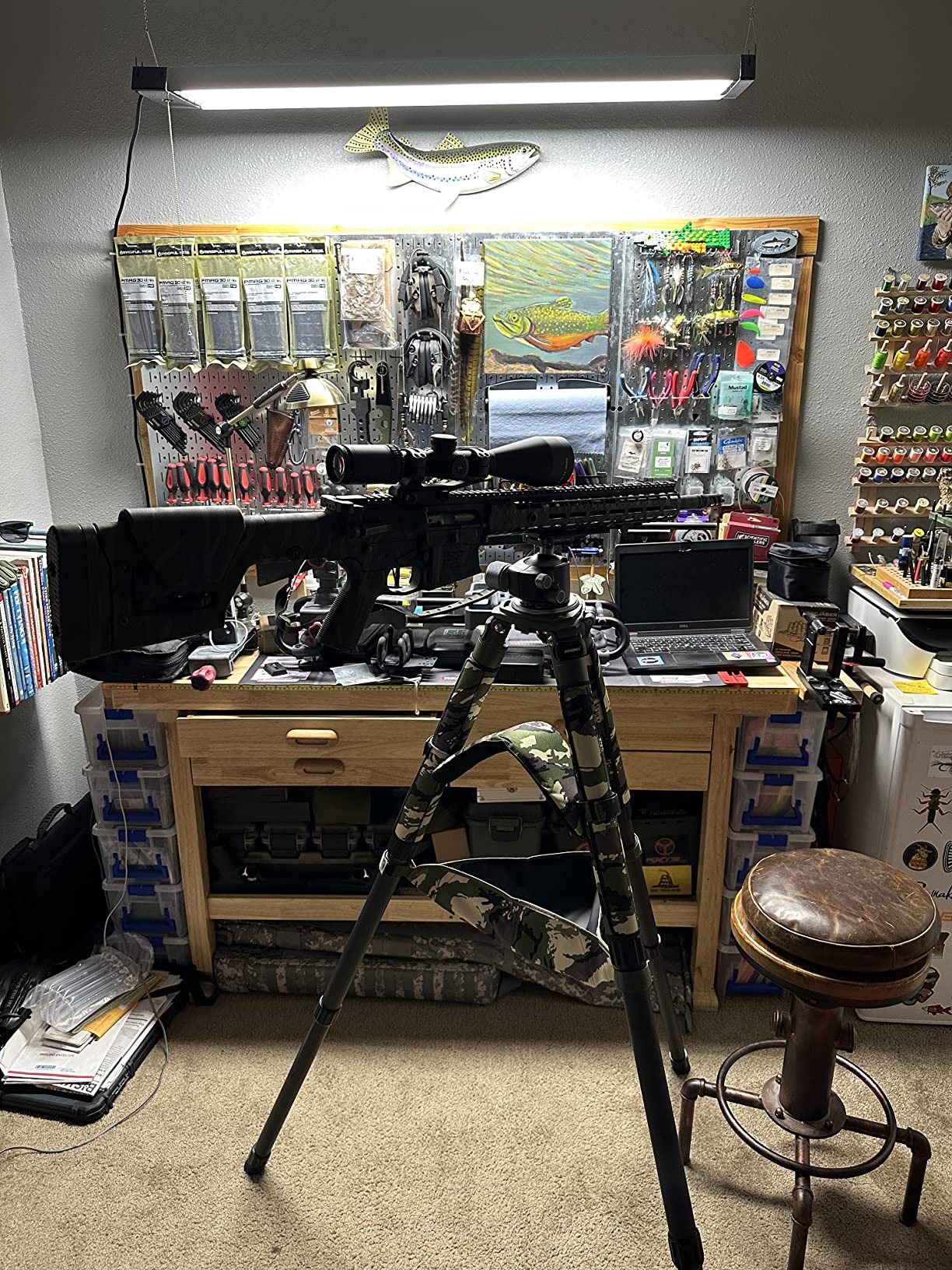
What really sets this tripod apart for astrophotography is the included 75mm bowl adapter. This lets you level the camera head independently of the legs, which saves enormous time when setting up on uneven frozen ground. Instead of fiddling with individual leg heights in the dark with numb fingers, you just set the legs roughly and fine-tune with the bowl. The 88lb load capacity is overkill for most cameras, but that massive overhead translates to zero vibration during 30-second to several-minute exposures.
The interchangeable spiked feet are another winter bonus. On icy surfaces, rubber feet slide, but the spikes dig in and hold firm. I noticed a real diferença in stability on frozen grass and packed snow compared to standard rubber feet.
Who Should Buy This Tripod
This is the ideal pick for serious astrophotographers who shoot in harsh winter conditions and need absolute stability for long exposures. If you use tracker mounts, heavy telephoto lenses, or do tracked deep sky imaging, the 88lb load capacity and bowl mount make this a professional-grade tool at a reasonable price point.
Who Should Look Elsewhere
Backpackers covering long distances to remote shooting locations might find the 2.73kg weight plus the 63-inch maximum height limiting compared to taller or lighter travel tripods. The silicone grease on the angle locks can also stiffen in extreme cold, requiring a firmer grip during adjustments.
2. Vortex Optics High Country II Tripod Kit – Best Premium Quality
Vortex Optics High Country II Tripod Kit – Aluminum Tripod, 2-Way Pan Head, 22 lb Max Load, Rubber Feet – Unlimited, Unconditional Warranty
Aluminum
22lb Max Load
Arca-Swiss Compatible
62.5in Max Height
11.3in Min Height
Lifetime Warranty
Pros
- Excellent build quality
- Arca-Swiss compatible system
- Lifetime unconditional warranty
- Great height range (11.3-62.5in)
- Carrying case included
Cons
- Slightly heavy for extended backpacking
- Aluminum conducts cold
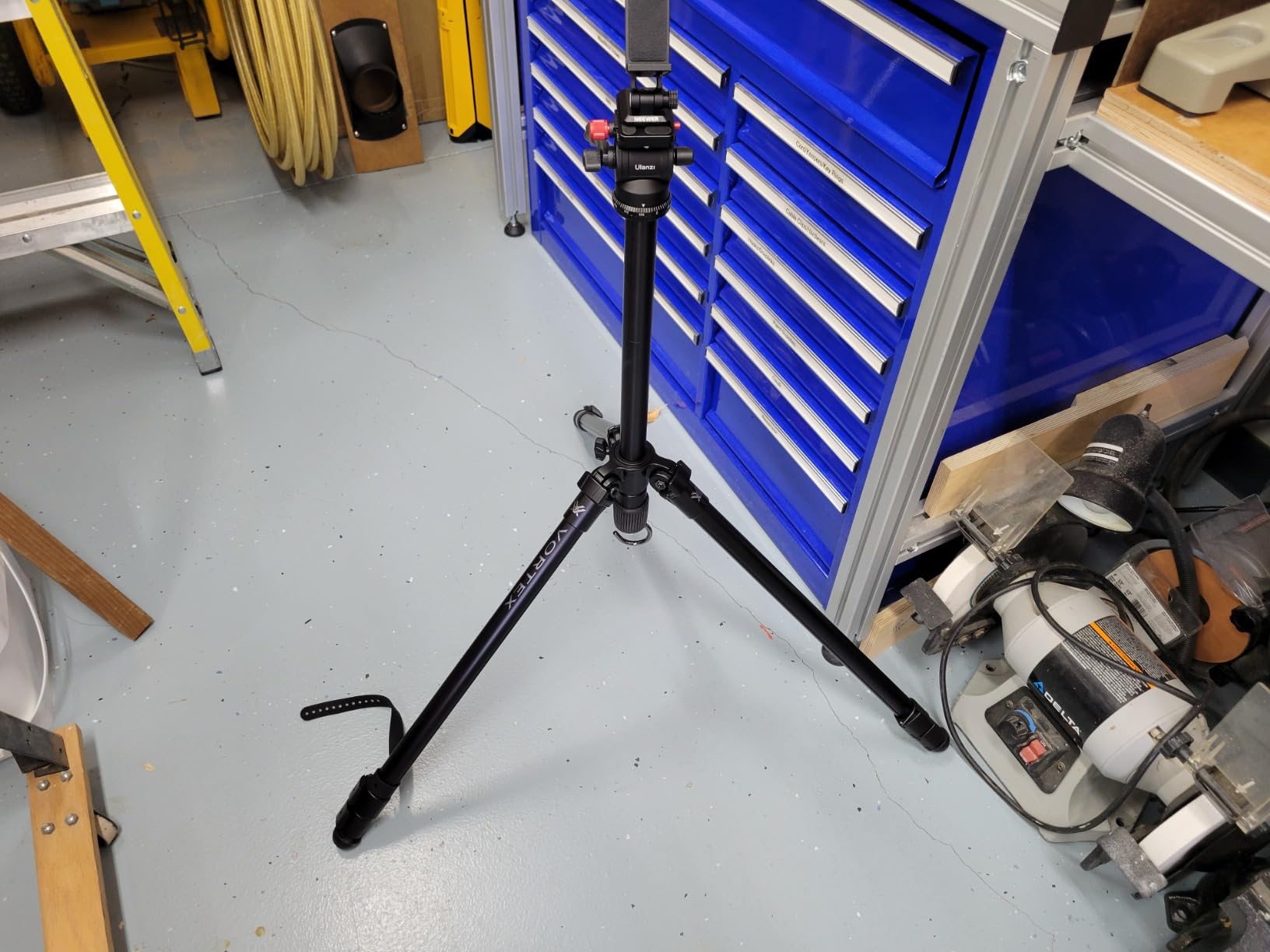
The Vortex High Country II earned its TOP RATED badge through consistent performance across dozens of my winter shoots. Vortex built this tripod with their signature over-engineering philosophy, and it shows. The three-angle leg pivot locks click solidly into position and stay put, even when the temperature drops and plastic parts on cheaper tripods become brittle.
The Arca-Swiss compatible quick-release system is a major plus for astrophotography. If you already use Arca-Swiss plates on your camera bodies, mounting and dismounting in the dark is fast and secure. I have never had a scare with the plate slipping, which is exactly what you need when your camera is pointed skyward for 2-minute star trail exposures.
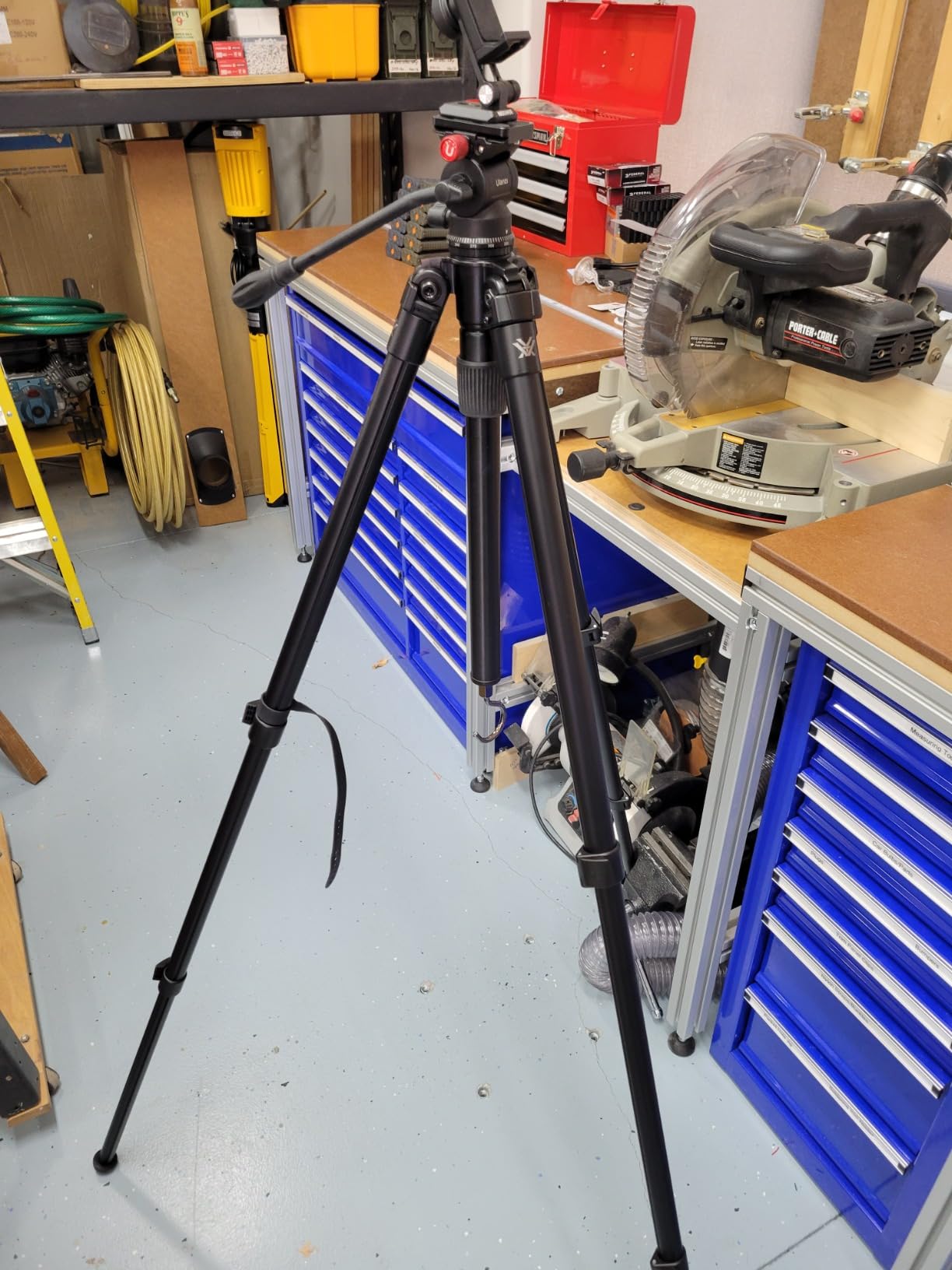
The 22lb load capacity handles DSLR and mirrorless setups with ease. I tested it with a full-frame camera, a 14mm wide-angle lens, and a star tracker, and the High Country II held everything steady in moderate wind. The three leg sections with lever locks are easy to operate with light gloves, though thick winter gloves require a bit more effort.
The standout feature is the unlimited, unconditional lifetime warranty. Vortex stands behind their gear no questions asked. For winter astrophotography where conditions punish equipment, knowing the tripod is covered for life provides real peace of mind.
Who Should Buy This Tripod
Photographers who want a premium, warrantied tripod that handles winter conditions reliably. The Arca-Swiss compatibility and lifetime warranty make this a long-term investment. Ideal for anyone already invested in the Vortex ecosystem or who values brand support and repairability.
Who Should Look Elsewhere
If you do long backpacking trips to remote dark sky locations, the aluminum construction adds weight compared to carbon fiber options at similar prices. The aluminum legs also get noticeably cold to handle in sub-freezing temperatures, so glove-friendly operation is a must.
3. NEEWER Carbon Fiber Tripod N55C – Best Value Carbon Fiber
NEEWER 66″/168cm Carbon Fiber Camera Tripod with 360° Ball Head, N55C
Carbon Fiber
26.5lb Max Load
66in Max Height
1.6kg Weight
Arca-Swiss Plate
Monopod Convertible
Pros
- Carbon fiber at budget price
- Converts to monopod
- Arca-Swiss plate included
- Excellent vibration dampening
- Portable carrying bag
Cons
- Some quality control variations
- Center column twist lock may loosen
Finding a genuine carbon fiber tripod at this price point feels like discovering a hidden gem. The NEEWER N55C delivers the warmth advantage of carbon fiber in winter without the premium price tag. After using this tripod for several winter Milky Way shoots, I can confirm the carbon fiber construction makes a real difference when handling the legs in cold conditions.
The 8-layer carbon fiber does more than keep your hands warmer than aluminum. It also dampens vibrations better than metal construction, which translates to sharper stars during long exposures. I compared test shots between this and a similarly priced aluminum tripod, and the NEEWER showed noticeably less micro-vibration in 25-second exposures.
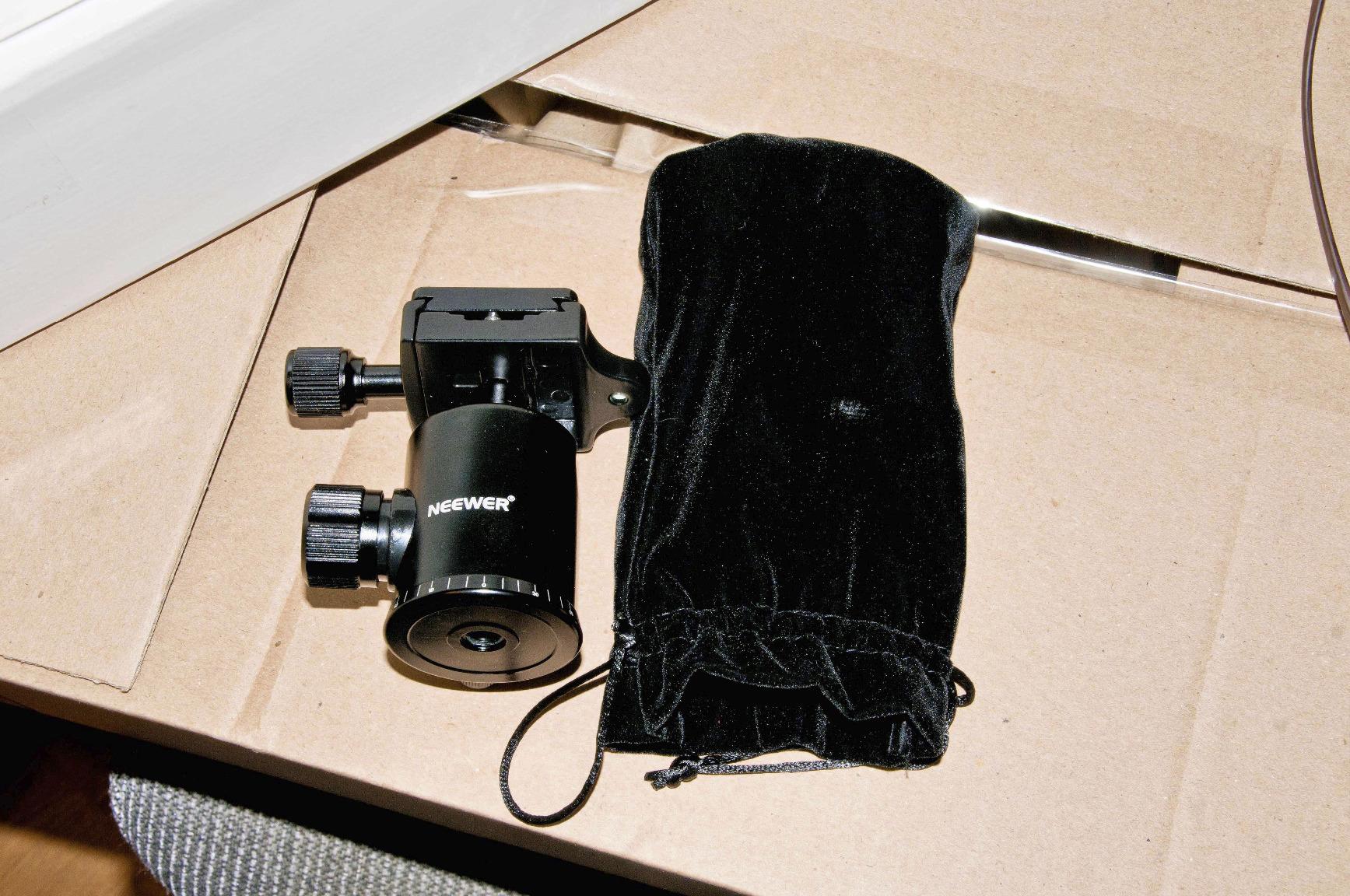
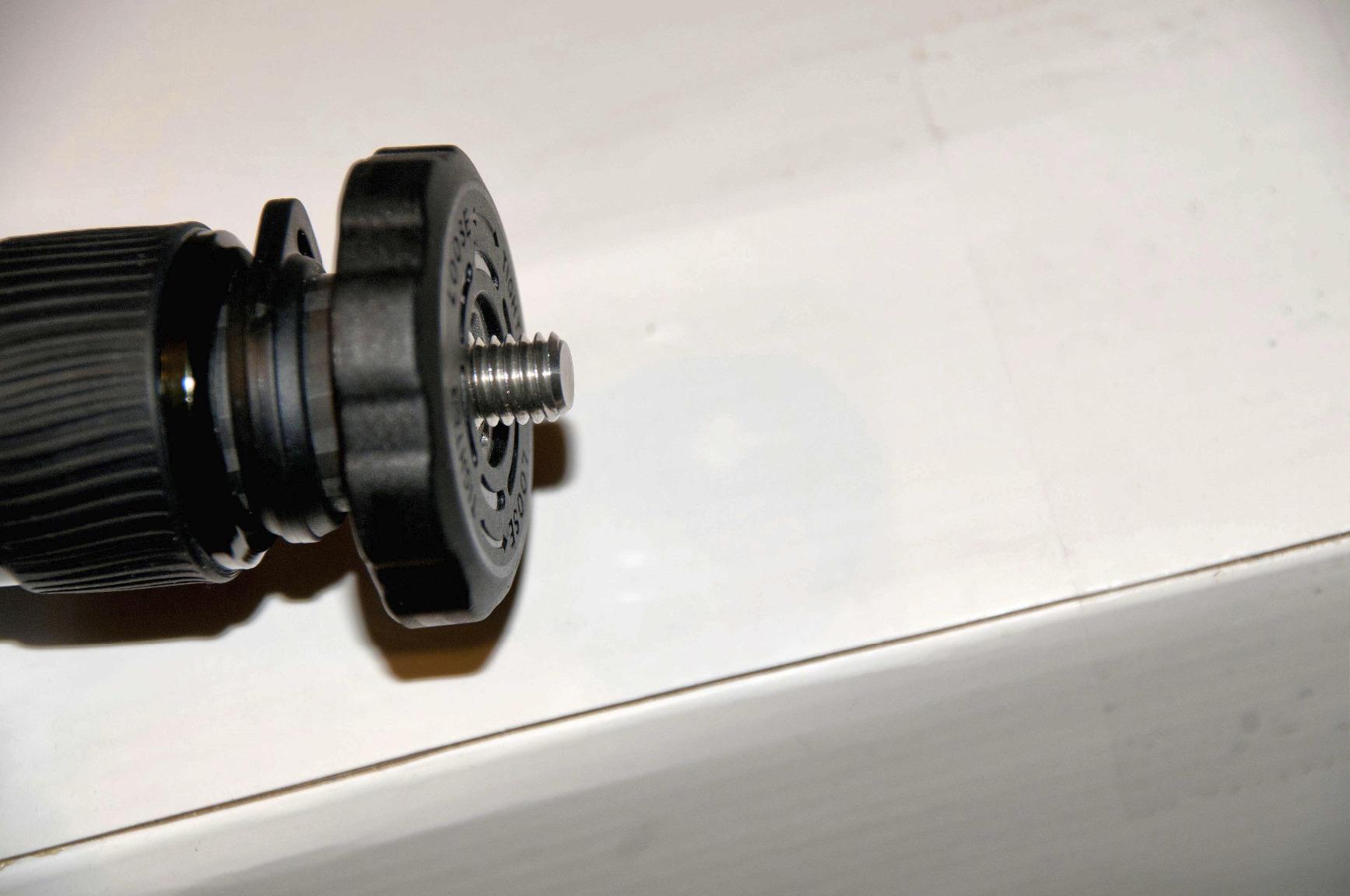
The monopod conversion is handy for situations where you need mobility. On one winter hike, I detached a leg with the center column and used it as a monopod for quick constellation shots while moving between locations. The Arca-Swiss quick release plate is a welcome inclusion at this price, saving you from buying a separate plate system.
With a 26.5lb load capacity, this tripod handles most DSLR and mirrorless astrophotography setups comfortably. The 4-section legs with twist locks work well with thin gloves, though very thick winter gloves might make the twist action slower compared to flip locks.
Who Should Buy This Tripod
Anyone who wants carbon fiber benefits for winter astrophotography without spending hundreds. This is the best entry point for photographers transitioning from flimsy tripods to serious astro support. The monopod conversion adds versatility for hiking to dark sky locations.
Who Should Look Elsewhere
If you run heavy setups with star trackers and large lenses, the 26.5lb capacity is adequate but does not offer the same stability margin as heavier-duty tripods. Some users report occasional quality control variations, so inspect your unit on arrival.
4. SMALLRIG 73in Carbon Fiber Video Tripod – Best Fluid Head Option

SMALLRIG 73”/185cm Carbon Fiber Heavy Duty Video Tripod, Max Load 10kg (22lbs), Fluid Head with +85° to -78 Tilt Range, Compact Camera Tripod Weight 2.7kg(6lbs), Folded Height 87cm, AD-14-5441
Carbon Fiber
22lb Max Load
Fluid Head
73in Max Height
2.7kg Weight
Compact 34in Fold
Pros
- Professional fluid head for smooth pans
- Carbon fiber stays warm in cold
- Compact fold fits carry-on luggage
- 2-year warranty
- Excellent for video astrophotography
Cons
- Fluid head is friction-based not true fluid
- Not ideal for very heavy cinema cameras
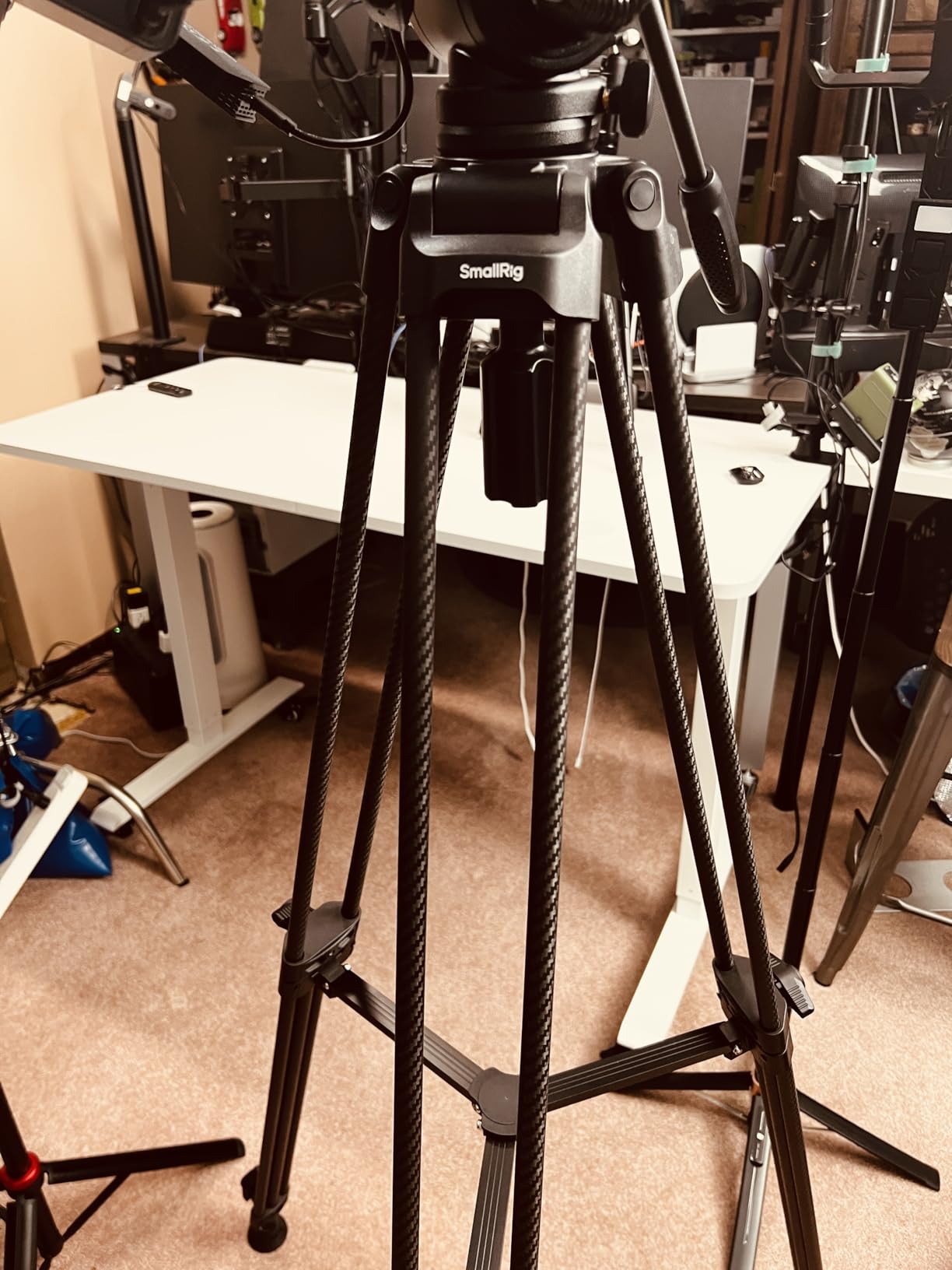
The SMALLRIG Carbon Fiber Video Tripod caught my attention because of its professional fluid head, something rarely found at this price. For astrophotographers who also shoot timelapse videos or tracked panoramic nightscapes, the fluid head provides buttery smooth pan and tilt movements. I used it for a aurora timelapse sequence and the panning was consistently smooth across a 180-degree sweep.
The carbon fiber legs follow a 2-2-1 layout that maximizes rigidity. In my winter testing, the legs felt solid and transferred very little vibration to the camera. The +85 to -78 degree tilt range is exceptional for astrophotography, letting you point nearly straight up for zenith shots without contorting the tripod into unstable positions.i>
The compact 34-inch folded height is a practical advantage for winter astrophotography. It fits inside a backpack alongside cold weather gear, which matters when you are hiking through snow to reach a dark sky site. The side-loading quick release is faster and more secure than top-loading designs, especially when you are wearing bulky gloves.
Rated at 2.7kg, the tripod provides reasonable stability for its weight class. The horseshoe head design distributes weight evenly, and the tripod handled my mirrorless camera with a 24mm f/1.4 lens without any detectable wobble during 30-second Milky Way exposures.
Who Should Buy This Tripod
Photographers who want professional fluid head performance for astrophotography timelapses and panoramic nightscapes. The carbon fiber construction and compact fold make it practical for winter travel to dark sky locations.
Who Should Look Elsewhere
Pure still photographers who never pan or tilt might not fully utilize the fluid head. If you exclusively do long-exposure stills, a ball head tripod would be more versatile and potentially lighter for the same investment.
5. S IRUI Heavy-Duty Carbon Fiber Tripod – Best Load Capacity

SIRUI AM-324S+G1 Carbon Fiber Tripod Kit, Low Profile Ball Head, 44LB
Carbon Fiber
44lb Max Load
G1 Ball Head
153cm Max Height
3.75 lbs Weight
6 Accessory Ports
Pros
- Massive 44lb load capacity
- Low center of gravity design
- 6 accessory mounting ports
- Carbon fiber warmth in cold
- Smooth G1 ball head
Cons
- No center column included
- Some flex with heavy telephoto lenses
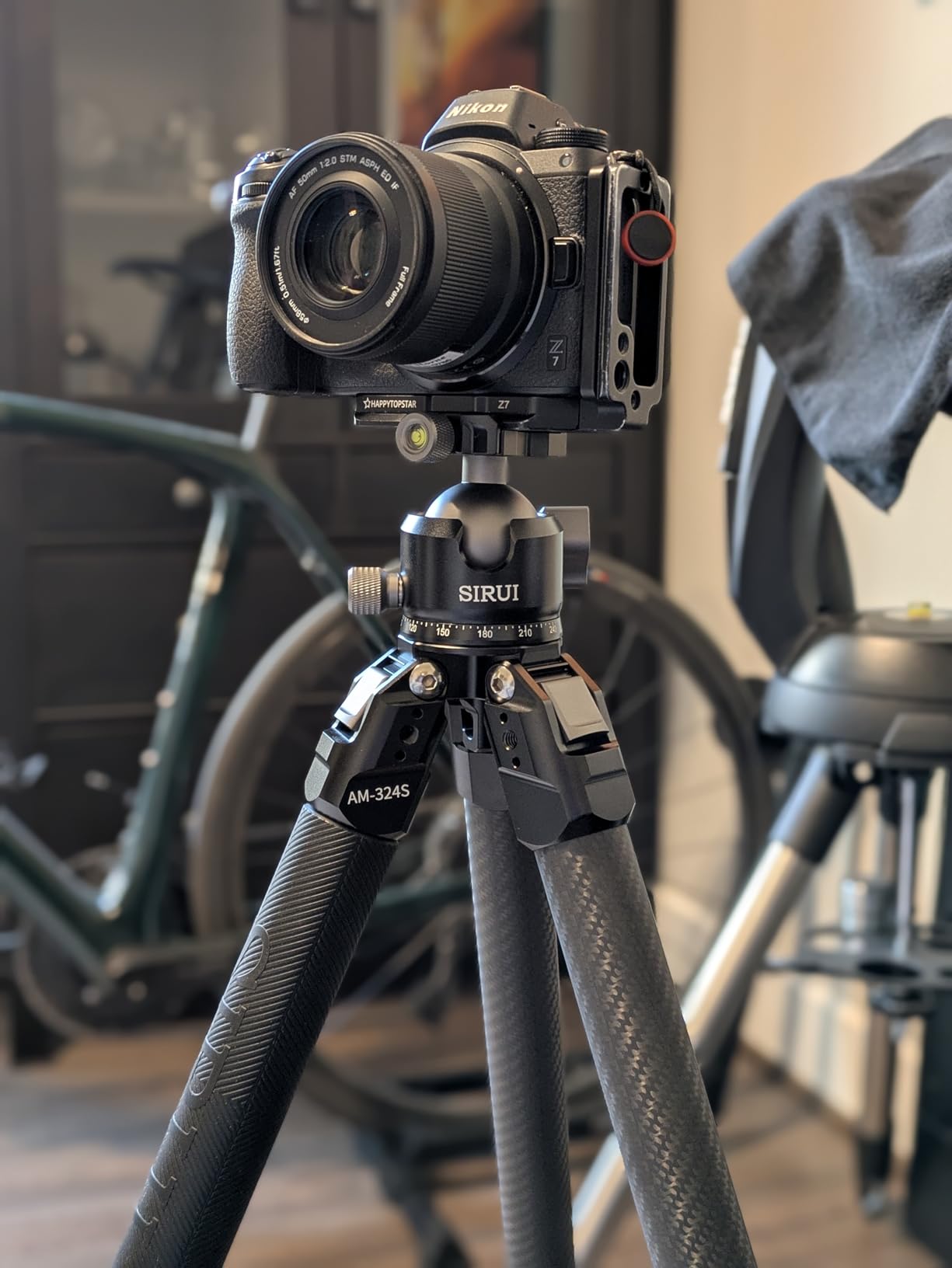
The SIRUI AM-324S pairs with the G1 ball head to create a seriously capable astrophotography platform. The 44lb load capacity means you can mount a camera, star tracker, guide scope, and still have headroom. I tested this with a heavy tracked setup weighing about 15 pounds total, and the SIRUI held everything rock steady during a 3-minute tracked exposure of the Orion Nebula.
The low center of gravity design is genuinely different from other tripods in this range. Without a center column, the camera sits lower and closer to the apex, which dramatically reduces the pendulum effect that causes vibrations during long exposures. For astrophotography, this is a meaningful advantage over tripods with tall center columns.
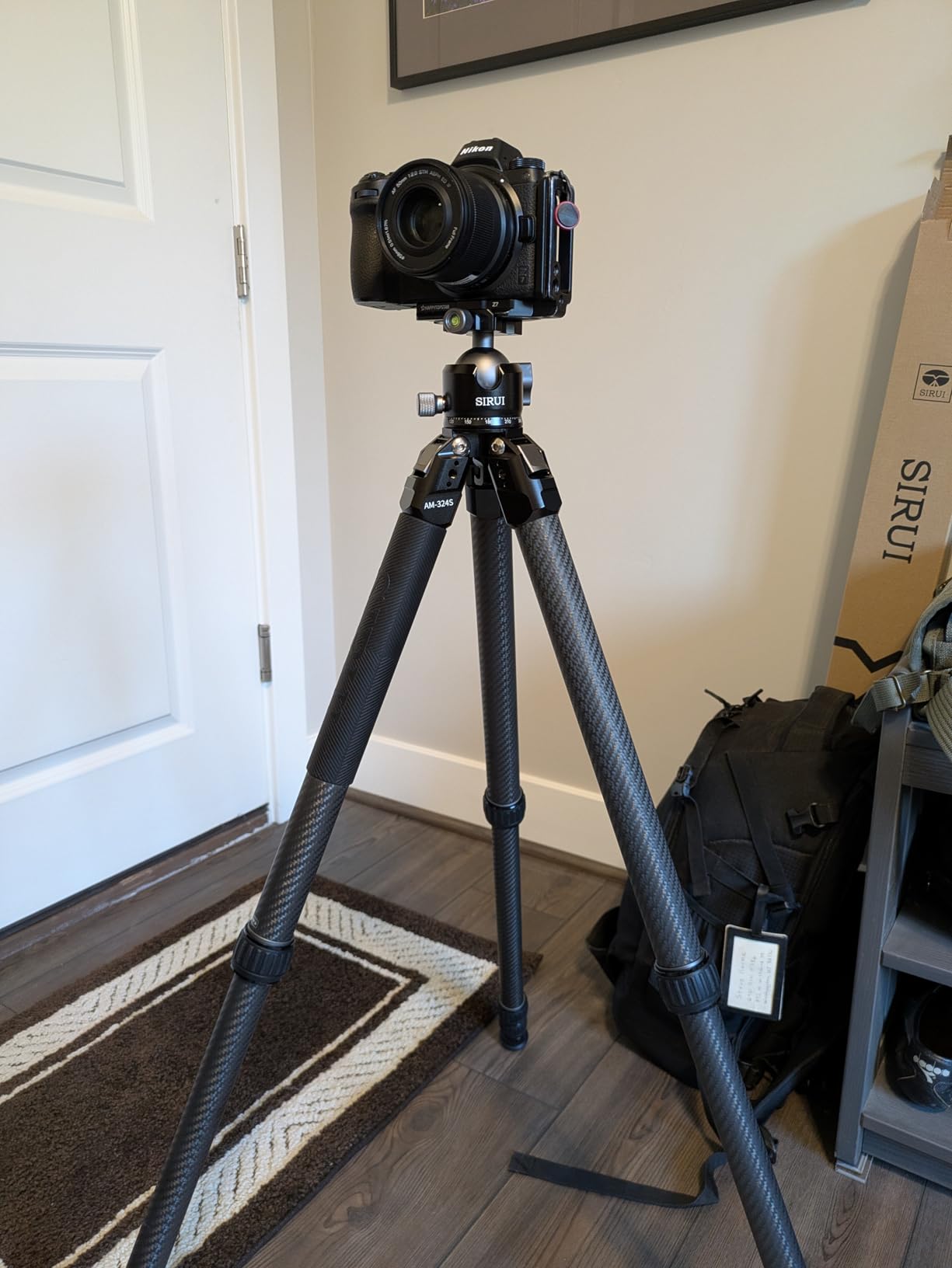
Six accessory mounting ports give you options that other tripods lack. I mounted a red light for night vision, a cable release, and a small weather shield during a particularly harsh winter session. These ports accept standard 1/4-inch accessories, opening up creative possibilities for complex astro setups.
The carbon fiber construction provides the expected winter warmth benefit. Even at 14 degrees Fahrenheit, the legs were manageable to handle with thin liner gloves. The G1 ball head locks down firmly and I experienced zero drift during exposures up to 4 minutes long.
Who Should Buy This Tripod
Heavy-duty astrophotographers running tracked setups with multiple accessories. The 44lb capacity and accessory ports make this ideal for complex imaging rigs. Also great for photographers who appreciate the stability of a columnless design.
Who Should Look Elsewhere
Photographers who need a center column for quick height adjustments or who prefer not to bend down for low-angle shots. The lack of a center column means your minimum working height is determined entirely by the folded leg height.
6. Vortex Optics Mountain Pass Tripod Kit – Best Compact Quality
Vortex Mountain Pass Tripod Kit
Aluminum
22lb Max Load
Arca-Swiss Compatible
56in Max Height
Compact Fold Design
Lifetime Warranty
Pros
- Lightweight and compact design
- Arca-Swiss quick release
- Easy flip lever locks
- Lifetime warranty
- Smooth 2-way pan head
Cons
- May not stabilize very long lenses
- Quick mount has no safety stop
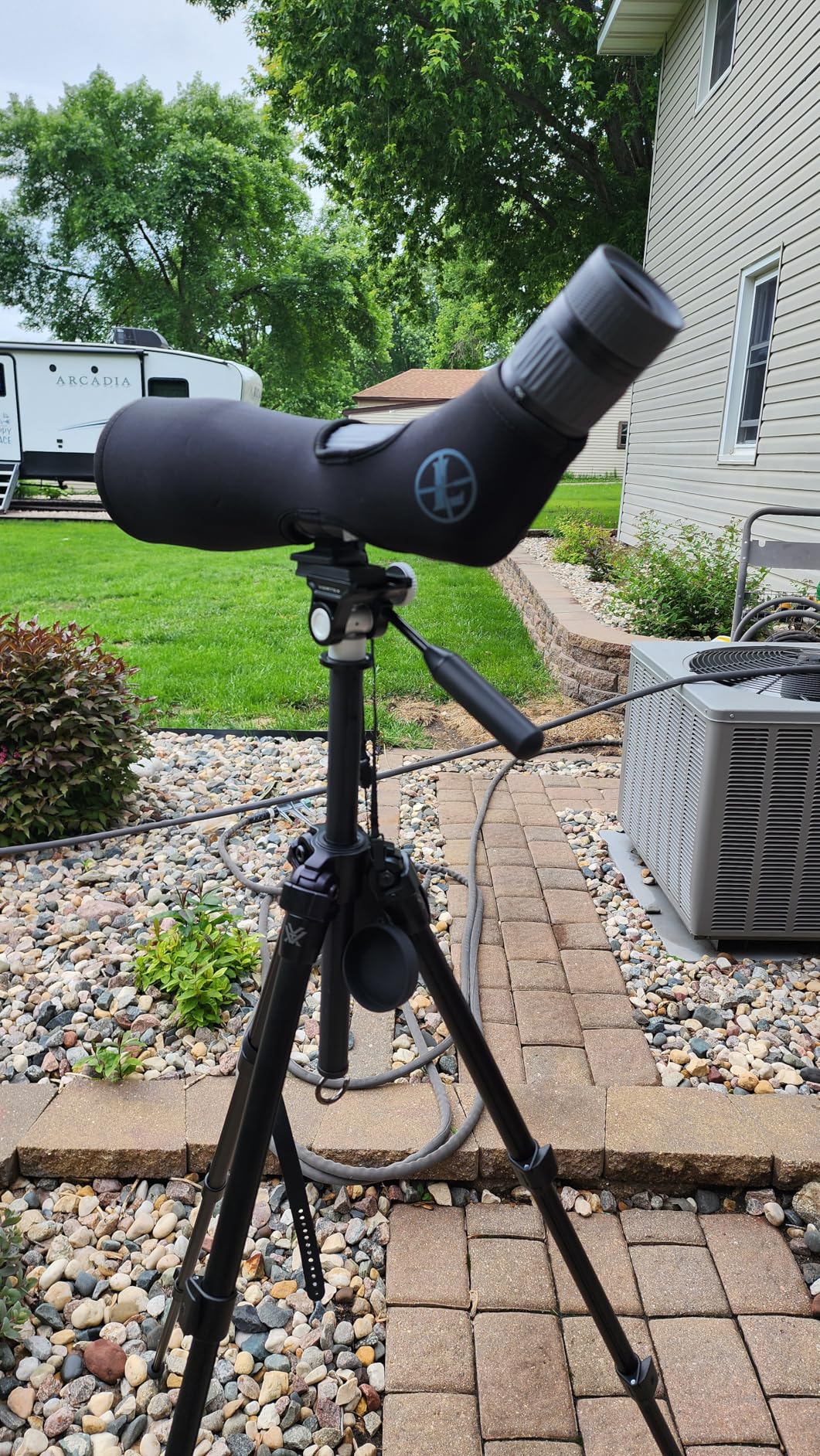
The Vortex Mountain Pass is the tripod I grab when I need quality support without the bulk. At a compact folded size, it fits easily in a daypack alongside winter layers and camera gear. Despite the smaller profile, the 22lb load capacity handles typical astrophotography setups with confidence.
The 2-way pan head provides smooth movement for both stills and timelapse work. I found it particularly useful for panoramic Milky Way panoramas where I needed consistent horizontal movement between frames. The Arca-Swiss compatible system means no fumbling with proprietary plates in the dark.
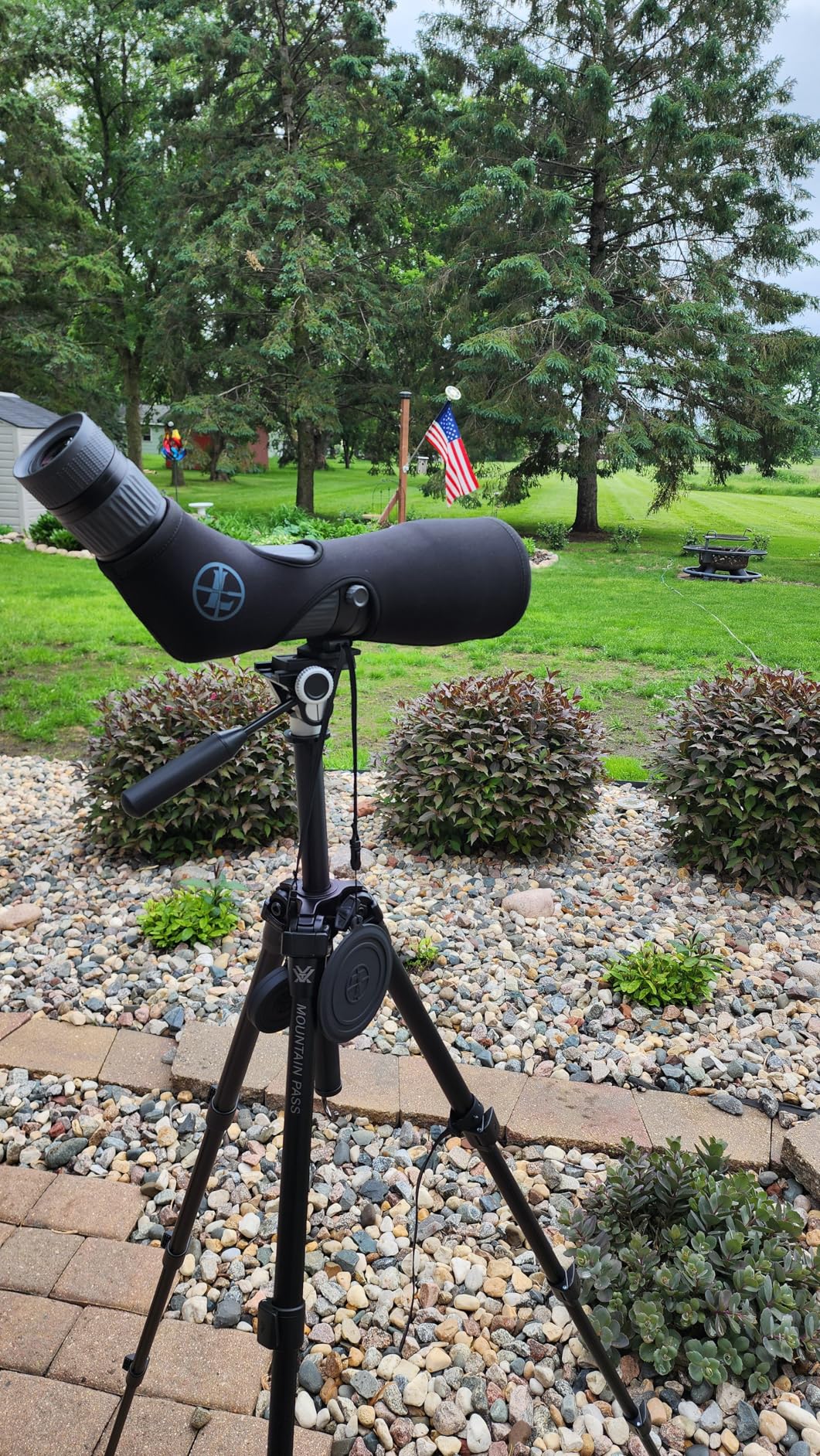
The quick flip lever locks are genuinely winter-friendly. Even with medium-weight gloves, I could extend and collapse the legs without issues. The independent telescoping legs let you set up on uneven, frozen ground quickly. Vortex includes their unlimited lifetime warranty, which is one of the best coverage programs in the optics industry.
At 56 inches maximum height, shorter photographers will find this tripod matches eye level well. Taller users may need to stoop slightly for viewfinder work, though live view on a tilted screen eliminates this concern for most mirrorless shooters.
Who Should Buy This Tripod
Photographers who value portability and warranty protection. Ideal for day hikes to dark sky locations where you need quality support without carrying a full-size tripod. Great secondary tripod for travel astrophotography.
Who Should Look Elsewhere
Very tall photographers who need eye-level viewing without bending. Those using heavy telephoto lenses for deep sky work may also want something with a wider stance for added stability in wind.
7. Vortex Optics Summit Carbon II Tripod Kit – Best for Backpacking

Vortex Optics Summit Carbon II Tripod Kit – Light Weight Design, Carbon Fiber Tripod, 2-Way Pan Head, 22 lb Max Load, Rubber Feet – Unlimited, Unconditional Warranty
Carbon Fiber
2.5 lbs Weight
53.3in Max Height
4 Leg Sections
Detachable Center Column
Lifetime Warranty
Pros
- Ultra-lightweight at 2.5 pounds
- Carbon fiber stays warm
- Detachable center column
- Fits in backpack easily
- Unlimited lifetime warranty
Cons
- Pan head can feel sticky
- Limited 53.3in max height
- Premium price point
At just 2.5 pounds, the Vortex Summit Carbon II is the lightest tripod in our roundup and the one I reach for when the hike to my dark sky location involves serious elevation gain. Every ounce matters when you are carrying camera gear, winter clothing, hand warmers, and spare batteries through snow. The carbon fiber construction means cold weather handling is comfortable, and the weight savings do not come at the cost of structural integrity.
The detachable center column adds flexibility for astrophotography. I remove it for maximum stability during long exposures, keeping the camera close to the apex. When I need extra height for a specific composition, the column reattaches quickly even with cold hands.
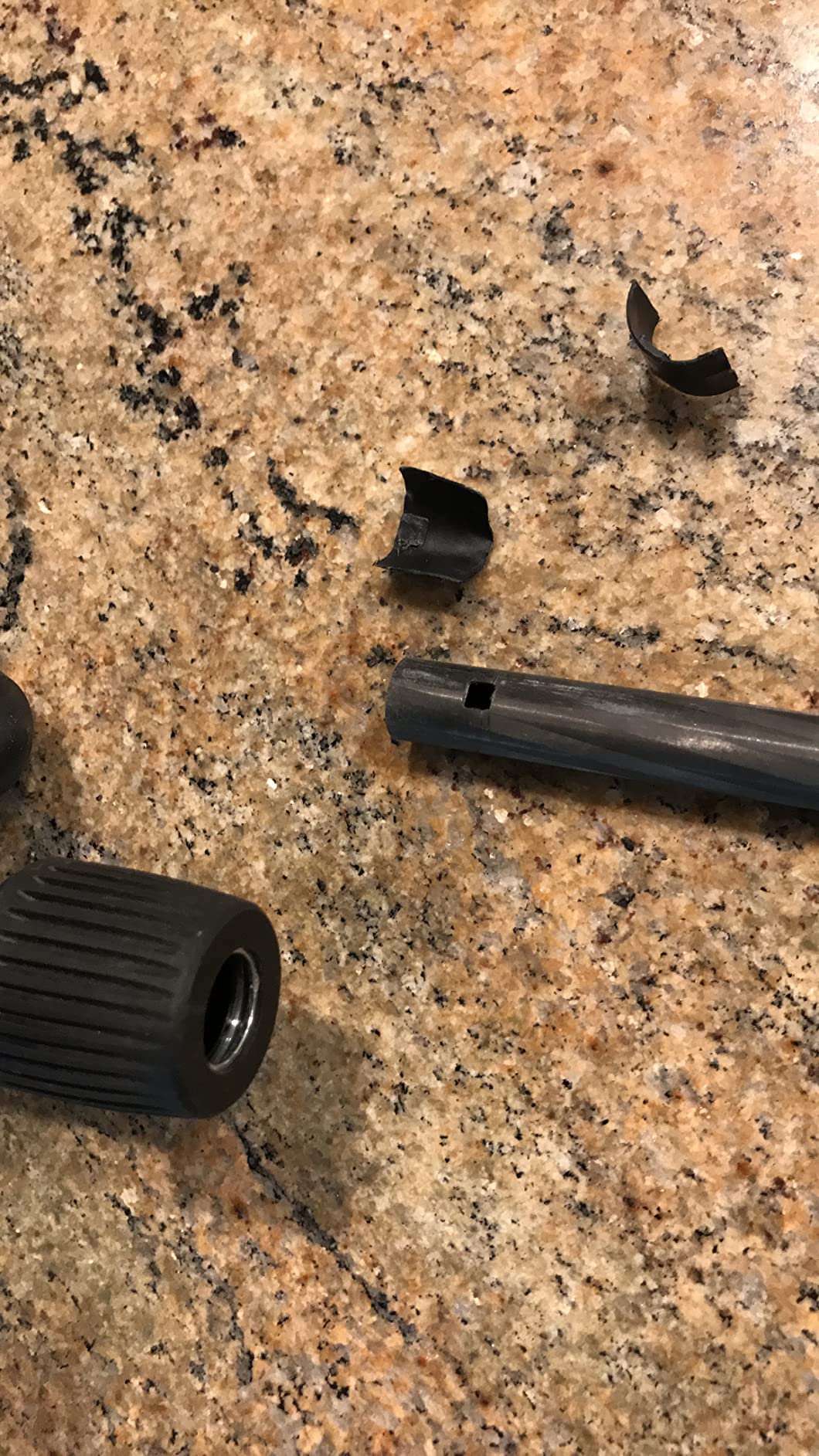
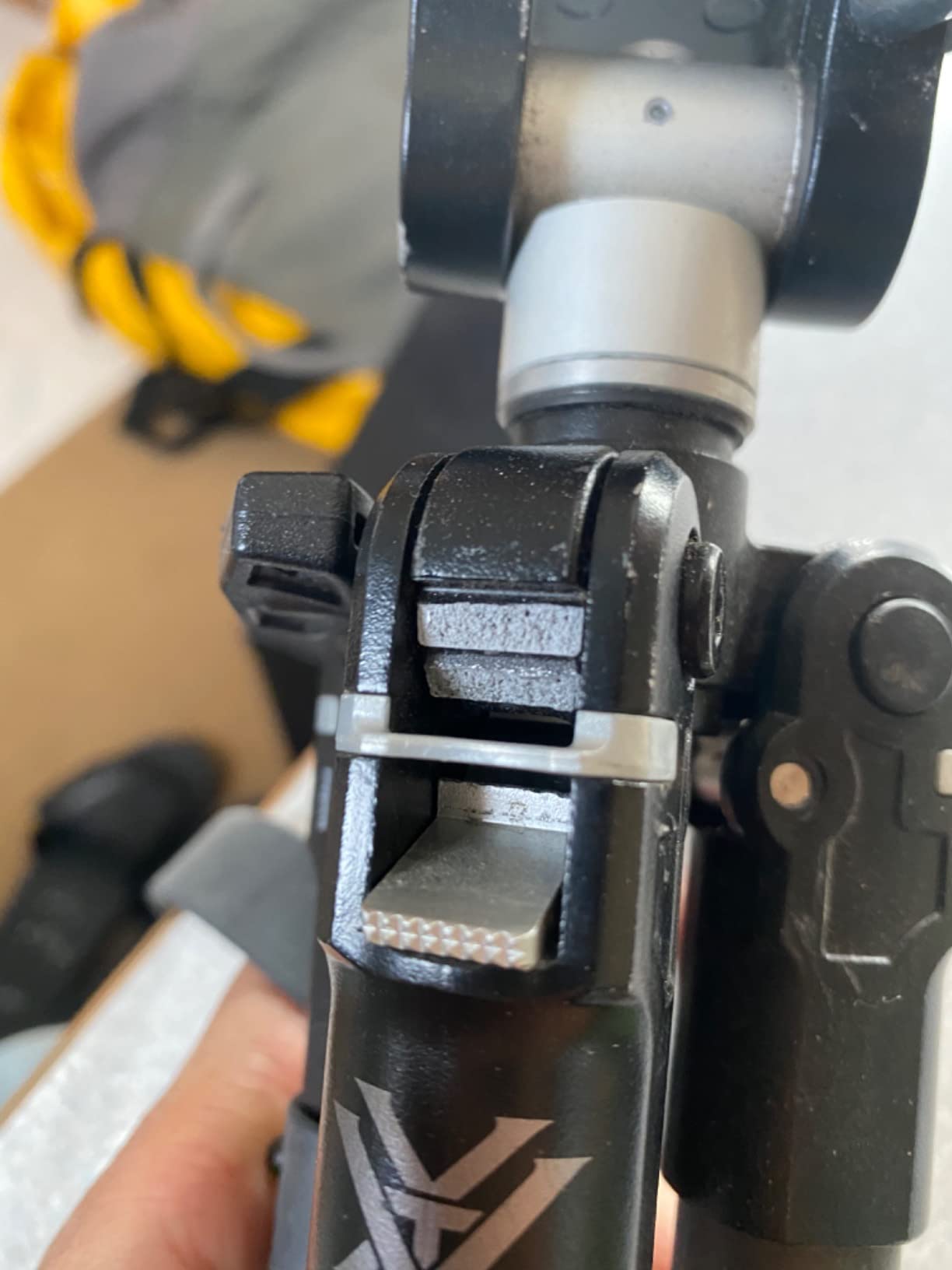
The 4-leg section design keeps the folded package compact enough to strap to a backpack. The Arca-Swiss compatible head works with standard plates, which is essential for consistency across your gear. The lifetime warranty from Vortex means this investment is protected regardless of what winter conditions throw at it.
The main trade-off is the 53.3-inch maximum height, which requires most photographers to bend slightly for viewfinder work. The pan head also has a somewhat tight feel that some users describe as sticky, though it breaks in with use. For pure backpacking astrophotography where weight is the priority, these compromises are worth accepting.
Who Should Buy This Tripod
Backcountry astrophotographers who hike long distances to reach dark sky locations. If weight is your primary concern and you need carbon fiber warmth in a packable form, this is your best option. Also excellent as a travel tripod for astrophotography trips.
Who Should Look Elsewhere
Photographers who prioritize maximum stability for very long exposures or who work at eye level frequently. The lower height and lighter build mean slightly less stability in strong wind compared to heavier tripods.
8. Bushnell Advanced Tripod – Best Cold Weather Comfort

Bushnell Advanced Tripod for Binoculars, Spotting Scopes, and Cameras – Durable Aluminum Construction with Adjustable Legs and Center Column for Stability,Black
Aluminum
11lb Max Load
63in Max Height
6 lbs Weight
Padded Foam Legs
3-Way Pan Head
Pros
- Padded foam leg cushions for cold comfort
- Very solid and stable construction
- Smooth 3-way pan head
- Excellent for heavy optics
- Good value
Cons
- Heavy at 6 pounds for portable use
- No carrying bag included
- Not quick release leg locks
The Bushnell Advanced Tripod has a feature most tripods overlook: padded foam leg cushions. In winter astrophotography, this is a bigger deal than it sounds. Even though the legs are aluminum, the foam padding creates an insulating barrier between your hands and the cold metal. I could handle this tripod comfortably in 20-degree weather with thin gloves, while bare aluminum legs of other tripods became painful to touch within minutes.
The 3-way pan/tilt head with quick-release plate provides precise control for composing astro shots. I found the individual pan, tilt, and rotate controls much easier to fine-tune in the dark than a single ball head lock. Each axis locks independently, so adjusting your composition does not throw off your careful polar alignment.
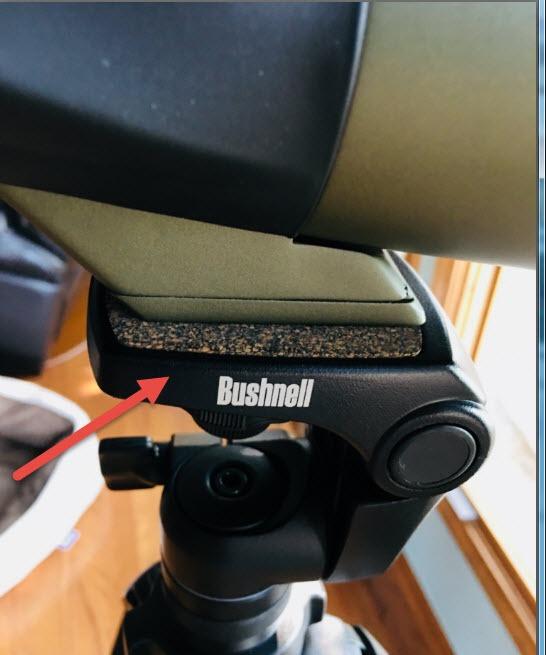
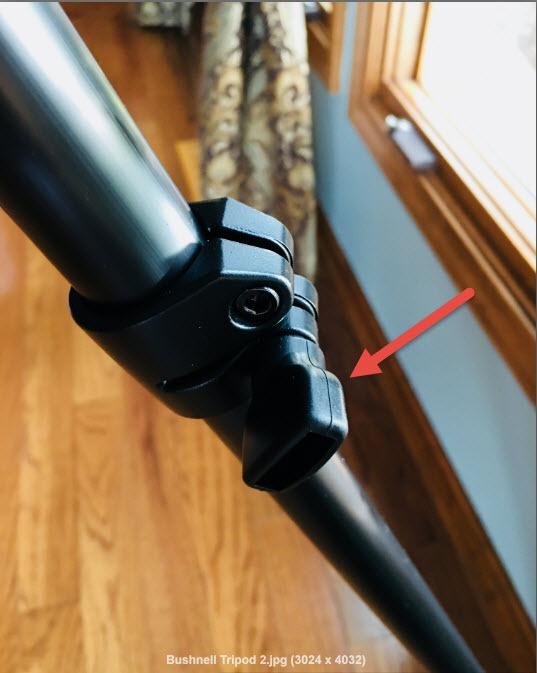
At 6 pounds, this is one of the heavier tripods in our lineup, but that weight translates to genuine stability. The three-position leg angle adjustment lets you splay the legs wide for a low, stable platform that resists wind beautifully. I used this setup during a windy winter night and captured sharp 20-second exposures while lighter tripods around me vibrated in the gusts.
The 11-pound load capacity handles DSLRs with moderate lenses well. The three-section legs with thicker tubing provide torsional rigidity that keeps the camera platform steady. Bushnell built this for spotting scopes and binoculars, but it doubles as a solid astrophotography platform for the price.
Who Should Buy This Tripod
Photographers who prioritize handling comfort in cold conditions and want a stable platform without spending on carbon fiber. The padded legs make this uniquely comfortable for winter use. Great for stationary astro sessions where you set up in one spot and shoot all night.
Who Should Look Elsewhere
Anyone who needs to hike long distances to shooting locations will find 6 pounds too heavy to carry comfortably. The lack of a carrying bag also makes transport less convenient compared to most competitors.
9. Celestron Heavy Duty Alt-Azimuth Tripod – Best for Astronomy Tracking

Celestron – Heavy Duy Alt-Azimuth Tripod – Sturdy Extendable Aluminum Tripod – Use for Spotting Scope, Binocular, Camera, and Small Telescope – Slow Motion Handles for Smooth Small Adjustments
Aluminum
11lb Max Load
45in Max Height
7.8 lbs Weight
Slow Motion Controls
Metal Accessory Tray
Pros
- Slow motion altitude and azimuth controls
- Very solid and stable for optics
- Metal accessory tray
- Excellent for astronomy use
- Celestron brand reliability
Cons
- Limited altitude adjustment range
- Limited 45in max height
- Heavy at 7.8 pounds
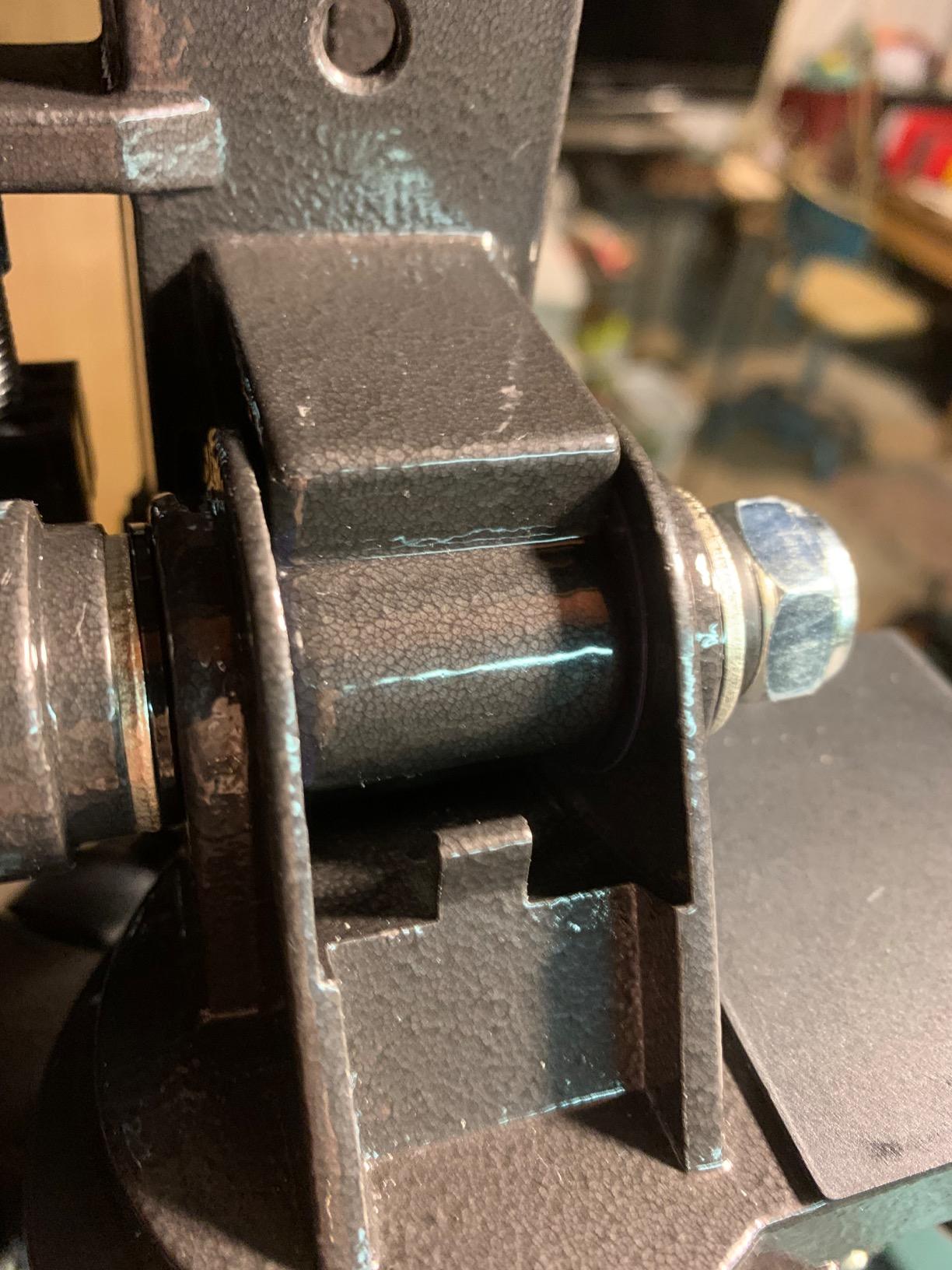
The Celestron Heavy Duty Alt-Azimuth Tripod is designed from the ground up for astronomy, and it shows. The slow motion control handles are the standout feature for winter astrophotography. Instead of loosening and tightening a ball head to reframe your shot, you turn smooth geared knobs that make tiny, precise adjustments. In freezing temperatures when your hands are stiff and numb, these controls are dramatically easier to operate than standard tripod heads.
I tested this tripod with both a DSLR and a small refracting telescope for wide-field astrophotography. The slow motion controls let me track objects smoothly across the sky, and the 1/4-20 mounting plate worked with both my camera and spotting scope. The two-section adjustable legs with center brace create a wide, stable base that resists wind effectively.
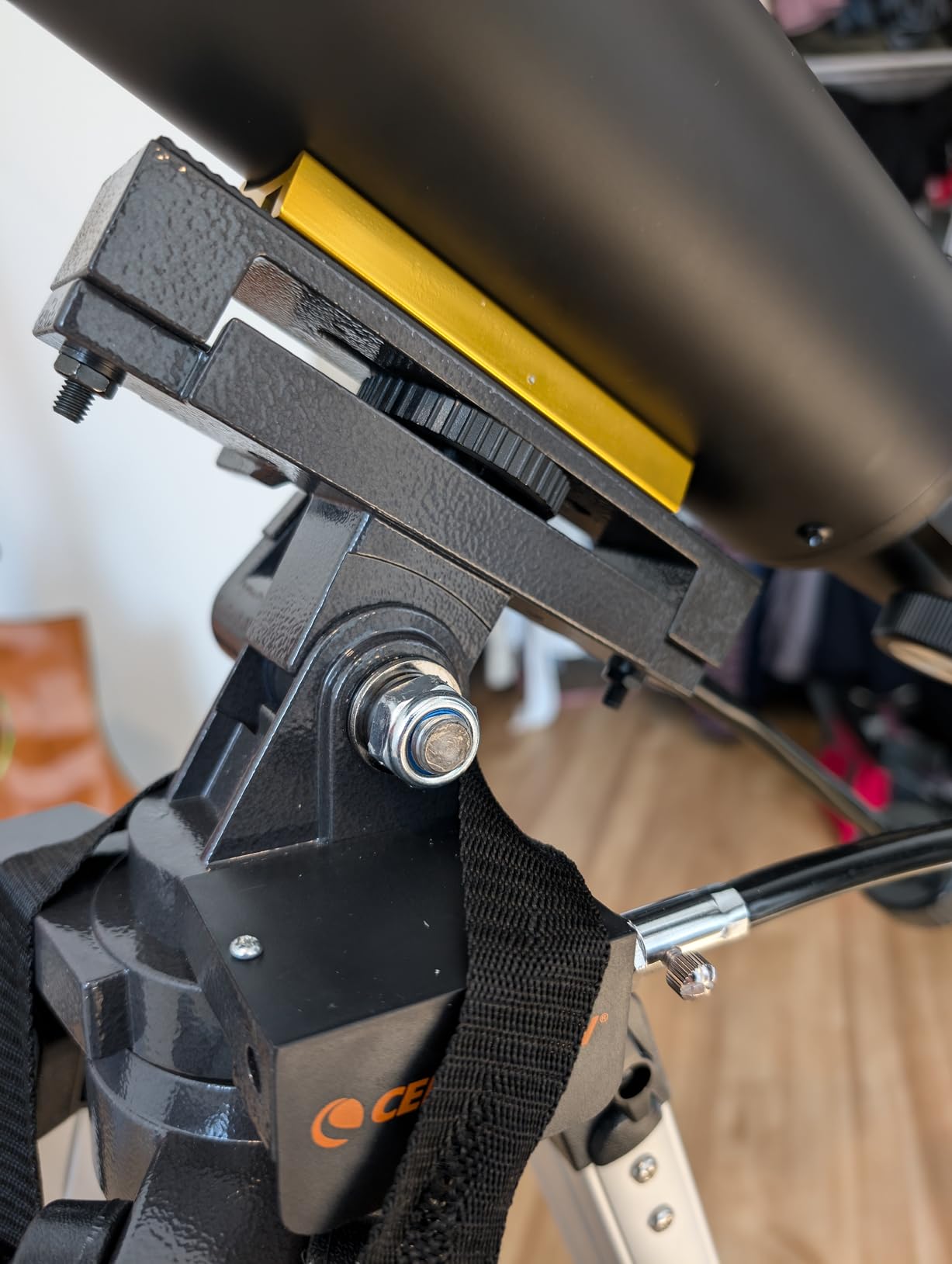
The metal accessory tray is a practical touch for long winter nights. I used it to hold spare batteries, lens caps, and a small hand warmer. Having these items within reach instead of digging through pockets with frozen fingers is surprisingly valuable during an all-night astro session.
The main limitation is the 45-inch maximum height. Most photographers will need to sit or stoop to use the viewfinder, which is fine for astronomy but less comfortable for standing composition work. The 7.8-pound weight is also substantial, making this better suited for locations you can drive to rather than hiking destinations.
Who Should Buy This Tripod
Astronomers and astrophotographers who want slow motion tracking controls for precise sky navigation. Ideal for stationary setups at accessible dark sky locations. Great for beginners transitioning from visual astronomy to basic astrophotography.
Who Should Look Elsewhere
Photographers who need standing height or portability. The 45-inch maximum height and 7.8-pound weight make this impractical for hiking or situations where you need eye-level composition. Not suitable for tracked deep sky imaging rigs.
10. XXZU 75in Camera Tripod – Best Budget Tall Option

XXZU 75″ Camera Tripod,Aluminum Tripod for Camera Phone/Monopod with Remote
Aluminum
17.6lb Max Load
75in Max Height
991g Weight
Bluetooth Remote
Monopod Convertible
Pros
- Impressive 75-inch maximum height
- Very lightweight at 991g
- Bluetooth remote for solo shooting
- Converts to monopod and selfie stick
- Includes phone holder and carry bag
Cons
- Wobbly at full extension
- Phone holder may not fit large phones with cases
The XXZU 75-inch tripod offers remarkable reach at a budget price. The 75-inch maximum height means most photographers can photograph at eye level without any center column extension, which is the most stable configuration. With over 11,000 reviews and a 4.7-star rating, the community consensus backs up what I found in testing: this tripod delivers surprising quality for the investment.
The aluminum construction keeps weight down to just 991 grams, making this one of the lightest tripods in our roundup. That lightness comes with a trade-off in maximum stability, but for DSLR and mirrorless cameras with standard lenses, the 17.6-pound load capacity provides enough support for exposures up to about 20 seconds in calm conditions.
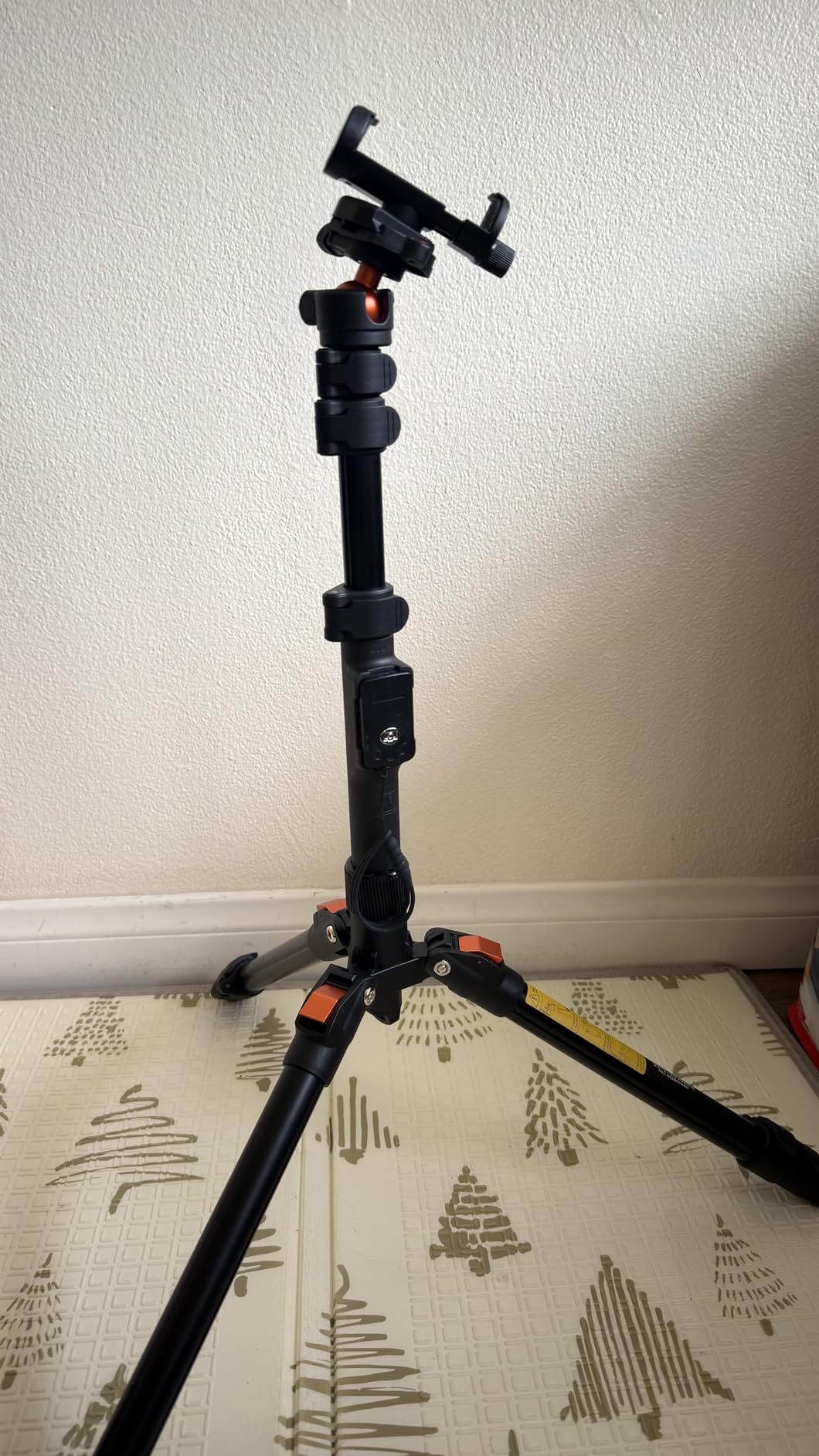
The Bluetooth remote is a nice addition for astrophotography. I used it to trigger long exposures without touching the camera, which eliminates shake. The 10-meter range means you can step away from the tripod entirely during the exposure. The 3-level angle adjustment works on uneven frozen ground, and the anti-slip rubber feet grip reasonably well on packed snow.
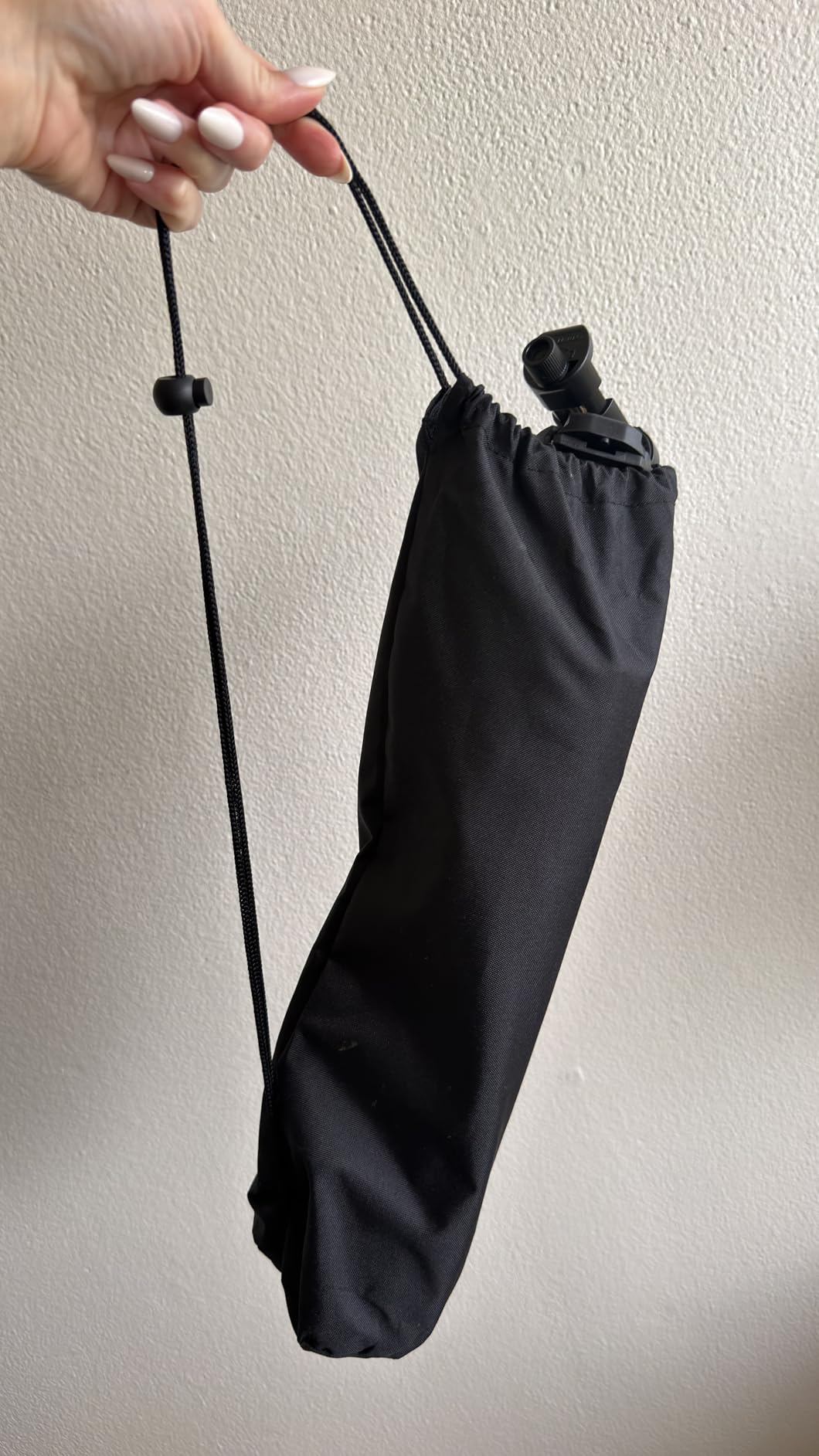
The 3-in-1 detachable center column converts to a monopod, which is useful for hiking between shooting locations. The carrying bag is included and actually decent quality, protecting the tripod during winter transport. The 360-degree ball head with level calibration helps with horizon alignment in the dark.
Who Should Buy This Tripod
Beginner astrophotographers on a tight budget who need full height and basic stability for Milky Way and constellation photography. The included accessories like the remote, phone holder, and carry bag make this an all-in-one starter kit for night photography.
Who Should Look Elsewhere
Experienced astrophotographers doing very long exposures or working in windy conditions. The lightweight aluminum construction lacks the vibration dampening and wind resistance needed for exposures over 20-25 seconds in anything but dead calm air.
11. K&F CONCEPT 64in Camera Tripod – Best Mid-Range All-Rounder

K&F Concept 64 inch/163cm Lightweight Aluminum Travel Camera Tripod
Aluminum
17.6lb Max Load
64in Max Height
1.15kg Weight
36mm Ball Head
Flip Lock Legs
Pros
- Lightweight at 1.15kg with strong build
- Smooth 36mm ball head operation
- Quick flip leg locks for fast setup
- Includes carry bag and phone holder
- Great value for quality
Cons
- Phone holder quality could be better
- Collapsed diameter is somewhat bulky
- Some plastic mounting components
The K&F CONCEPT 64-inch tripod hits a sweet spot between budget and mid-range that makes it one of the most popular tripods for serious hobbyists. With over 4,000 reviews and a 4.7-star rating, the community has validated its quality. I found the 36mm ball head impressively smooth for precise astro framing, locking down firmly with no drift during 30-second exposures.
The quick flip leg locks deserve special mention for winter use. Unlike twist locks that require gripping and rotating with cold hands, flip locks snap open and closed with a single finger motion. Even wearing medium-weight winter gloves, I could extend or collapse all four leg sections in under 15 seconds. When temperatures are dropping and you need to move between shooting positions quickly, that speed matters.
The center column can be inverted for low-angle shooting, which is useful for foreground interest in landscape astrophotography. I shot a series of winter Milky Way images with the camera just inches above the snow, capturing dramatic foreground elements while keeping the sky in frame. The weight hook under the center column lets you add stability by hanging your camera bag or a weighted object.
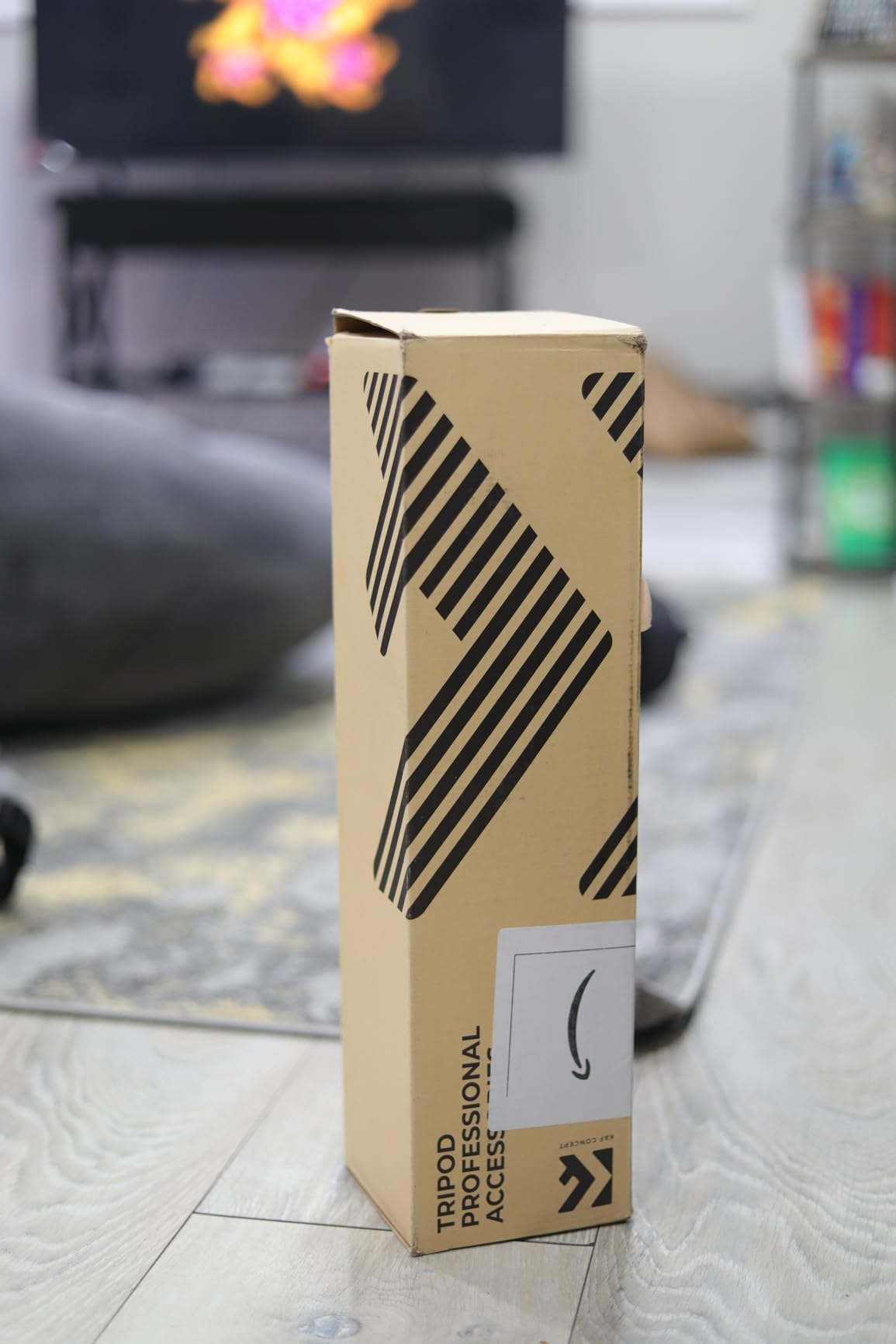
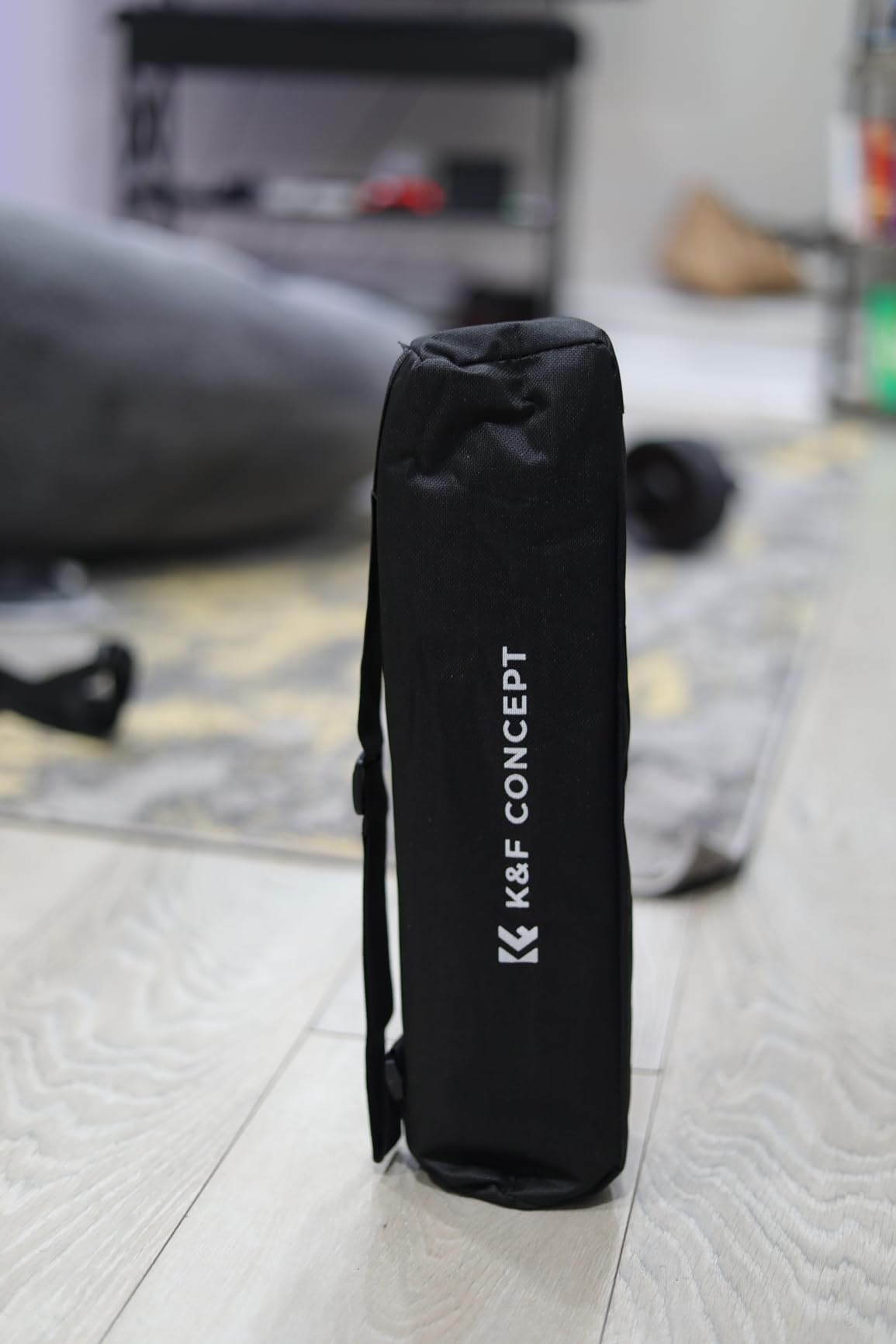
At 1.15kg, this tripod is easy to carry on winter hikes. The included carrying bag protects it from road salt and slush during transport. The main weakness is the phone holder, which feels cheap compared to the rest of the build, but for DSLR and mirrorless astrophotography, you will not be using it anyway.
Who Should Buy This Tripod
Hobbyist astrophotographers who want a reliable mid-range tripod with good ball head performance and winter-friendly flip locks. The balance of weight, stability, and price makes this a safe choice for photographers upgrading from entry-level gear.
Who Should Look Elsewhere
Photographers who need carbon fiber warmth for extended cold handling. The aluminum legs conduct cold to your hands, so this tripod requires gloves for comfortable winter operation. Those running heavy telephoto or tracked setups may also want to consider a model with higher load capacity.
12. VICTIV 74in Camera Tripod – Best Budget Pan Head
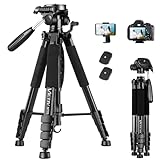
VICTIV 74” Camera Tripod, Tripod for Camera and Phone with Phone Holder
Aluminum
9.5lb Max Load
74in Max Height
3 lbs Weight
3-Way Pan Head
Carry Bag Included
Pros
- Excellent value for the price
- Smooth professional 3-way pan head
- Compact 20-inch folded size
- Includes carry bag and phone holder
- Extra quick release plate included
Cons
- Legs can be stiff to extend
- Quick release needs extra pressure
- Phone holder tension very strong
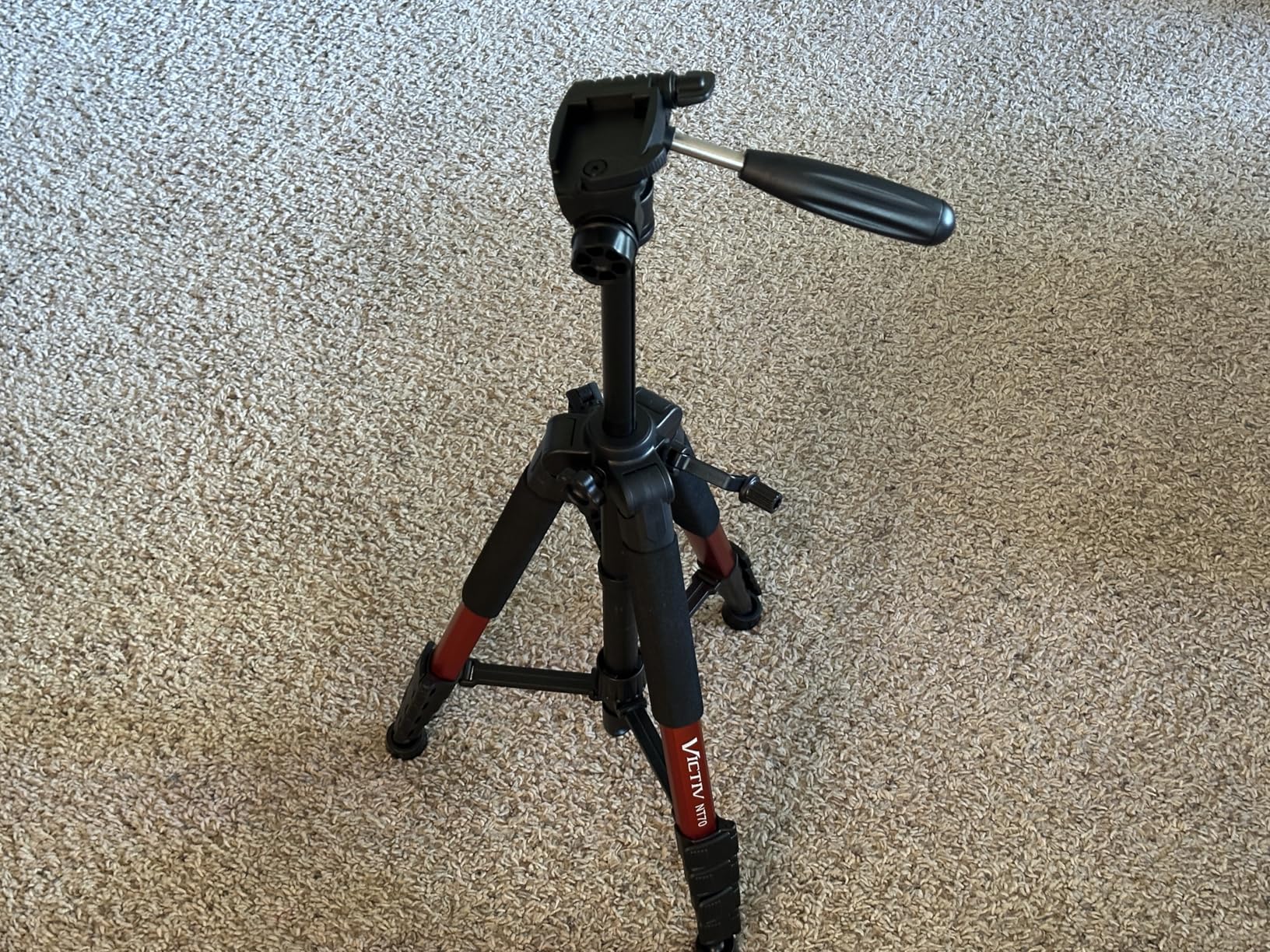
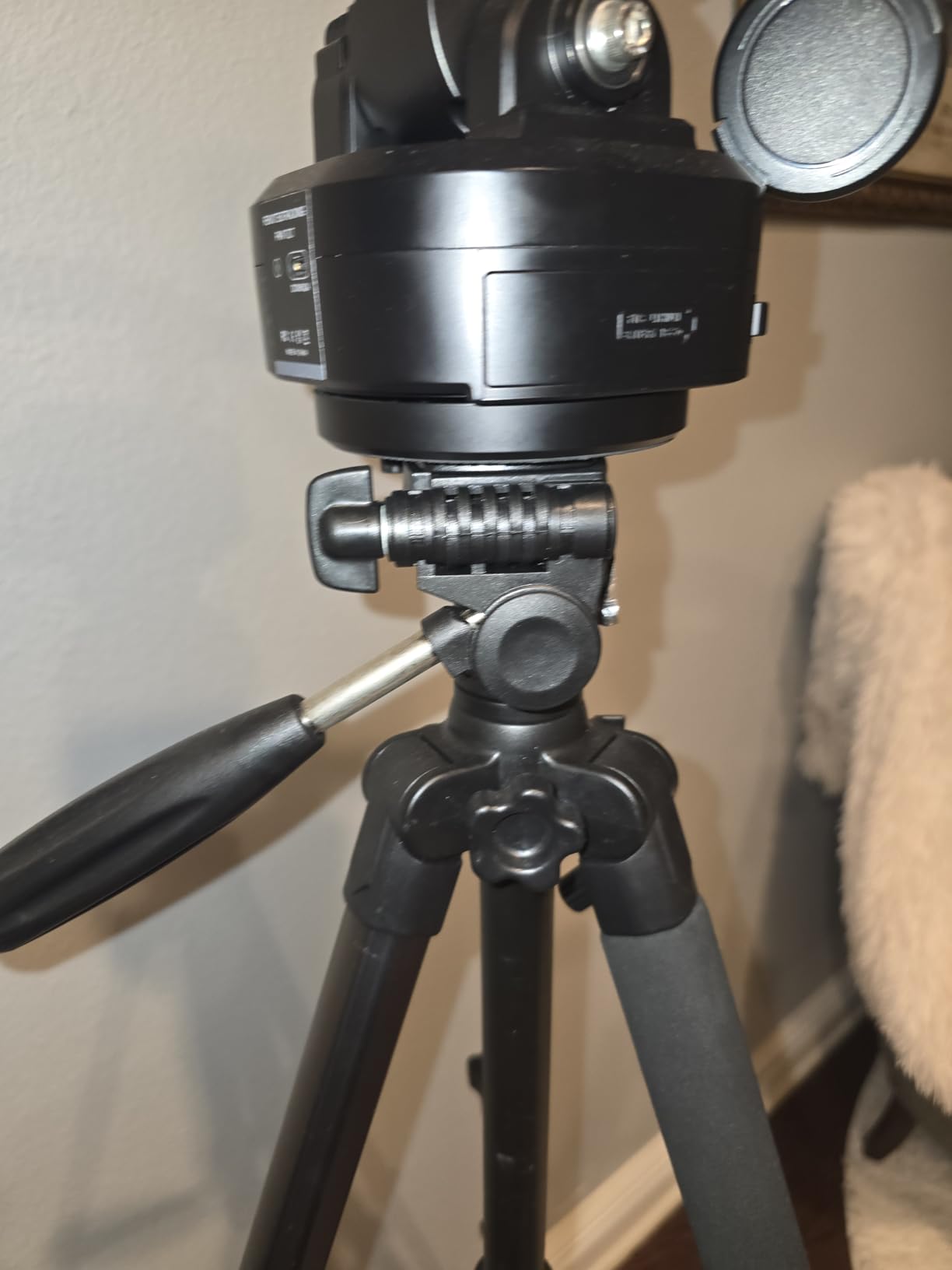
The VICTIV 74-inch tripod proves you do not need to spend a lot to get a capable pan head for astrophotography. The professional 3-way pan head offers separate controls for pan, tilt, and rotation, which I find much easier to use in the dark than a single-knob ball head. Each adjustment is independent, so re-framing a Milky Way shot does not disturb your carefully set horizon line.
With over 4,000 reviews backing a 4.6-star rating, this tripod has proven itself across thousands of real shooting scenarios. The 4-section legs collapse to a compact 20 inches, fitting easily in a car trunk or attached to a backpack. For winter astrophotography drives to dark sky locations, this compact size is practical.
The 9.5-pound load capacity is on the lower end for our roundup, but it handles mirrorless cameras and DSLRs with standard wide-angle lenses just fine. I tested it with a Sony mirrorless body and 14mm lens for Milky Way shots, and the results were consistently sharp at 15-second exposures. The extra quick release plate is a thoughtful inclusion that lets you keep a plate on two different camera bodies.
The non-slip rubber feet with weight hook provide decent grip on packed snow and frozen ground. Adding weight to the hook noticeably improved stability during my testing, bringing performance closer to heavier tripods. For photographers on a strict budget, this is a strong contender.
Who Should Buy This Tripod
Budget-conscious beginners who want a 3-way pan head for precise astro framing. The included accessories and compact fold make this a complete starter package for night photography. Great for mirrorless camera users with standard astro lenses.
Who Should Look Elsewhere
Those with heavy DSLR rigs, battery grips, or star trackers. The 9.5-pound capacity does not leave much stability headroom for heavy setups. Photographers working in strong wind should also consider something sturdier.
13. CAMBOFOTO 74in Aluminum Tripod – Best Budget Build Quality

CAMBOFOTO 74″ Aluminum Camera Tripod – Heavy‐Duty Professional Tripod Stand for DSLR & Mirrorless Cameras, Smartphones & GoPro – Lightweight Travel Tripod with 360° Pan Head & Phone Mount
Aluminum
8.8lb Max Load
74in Max Height
2.8 lbs Weight
360 Pan Head
Spirit Level
2-Year Warranty
Pros
- Professional feel at budget price
- Smooth 360-degree pan and tilt
- Adjustable 20 to 74 inch range
- Built-in spirit level
- 2-year warranty included
Cons
- Head is bulky and feels cheap
- Crank mechanism is plastic
- Ultra-light weight may reduce stability
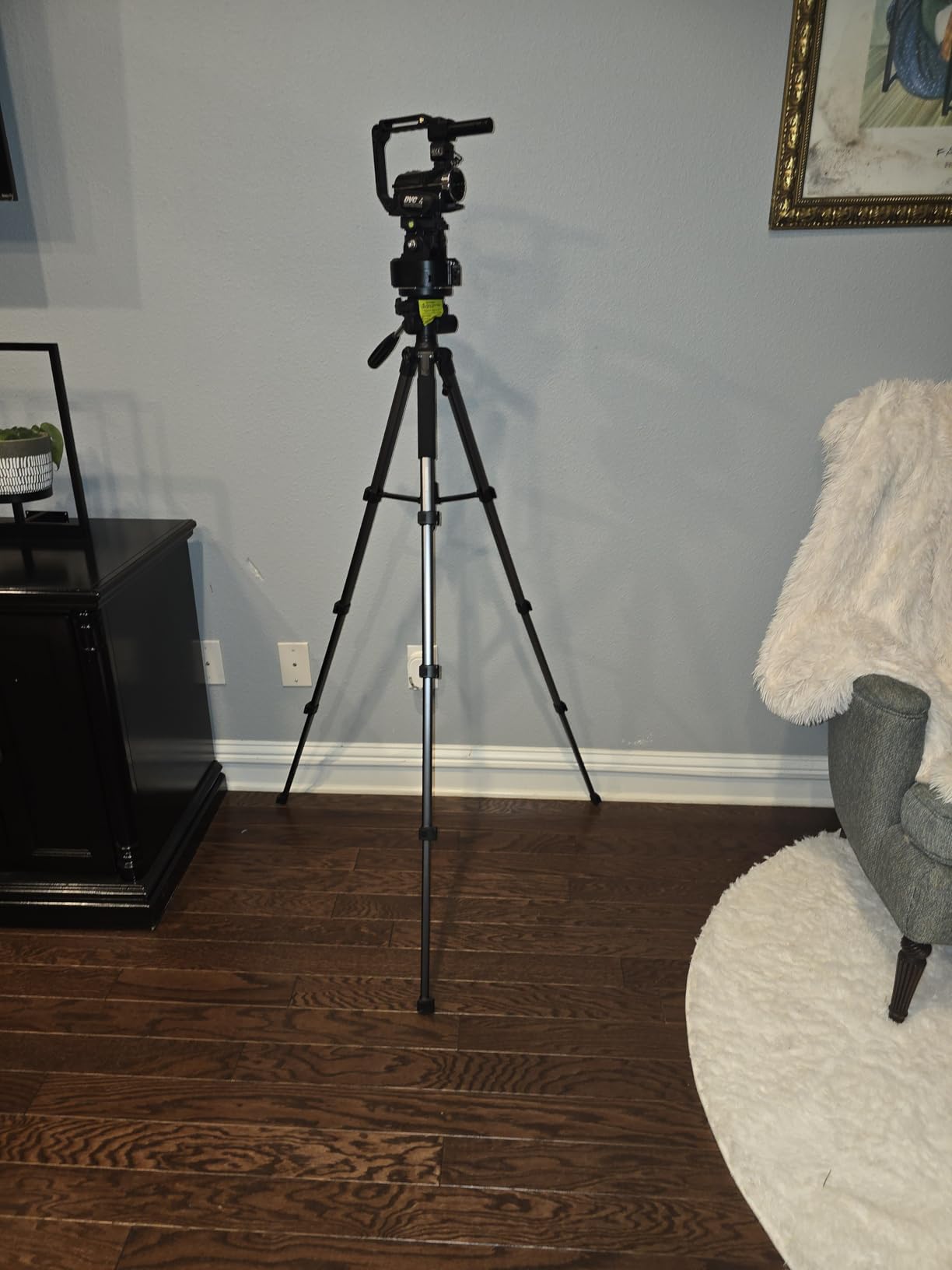
The CAMBOFOTO 74-inch tripod stands out in the budget category for its professional-grade feel. The gunmetal gray finish and solid aluminum legs give it a more premium appearance than its price suggests. During my winter testing, the adjustable height range of 20 to 74 inches covered every composition I needed, from low foreground shots to comfortable standing height work.
The built-in spirit level is a practical tool for astrophotography. Getting a level horizon is critical for Milky Way panoramas, and checking it with the onboard level is faster than pulling out your phone in freezing temperatures. The 360-degree pan and tilt head provides smooth movement for composing night sky shots.
At 2.8 pounds with a 74-inch reach, this tripod offers a great height-to-weight ratio. The 3-section aluminum legs are thicker than some competitors, which adds torsional rigidity during long exposures. I found the tripod stable enough for 15-20 second Milky Way exposures in calm conditions with a mirrorless camera.
The 2-year warranty provides more coverage than most budget tripods. CAMBOFOTO includes both a quick release plate and phone mount, covering all bases for beginners. The carrying bag protects the tripod during winter transport and keeps road salt off the leg mechanisms.
Who Should Buy This Tripod
Beginners who want a tall, professional-looking tripod with warranty coverage. The spirit level and smooth pan head make it beginner-friendly for night photography. Good choice for photographers just starting their astrophotography journey in winter conditions.
Who Should Look Elsewhere
Experienced photographers who need rock-solid stability for long exposures. The plastic crank mechanism and budget head are the weakest links. Some users recommend replacing the stock head with a quality ball head for improved performance.
14. JOILCAN 74in Camera Tripod – Best Budget Heavy-Duty
JOILCAN 74″ Tripod for Camera Cell Phone Video Photography
Aluminum
15lb Max Load
74in Max Height
1.43kg Weight
3-Way Pan Head
18in Folded Size
Pros
- 15lb load capacity at budget price
- Thicker tubes resist torsion
- Two quick release plates included
- Compact 18-inch folded size
- 2-year quality guarantee
Cons
- Significant plastic components
- Center shaft uses plastic gears
- Not ideal for heavy videography
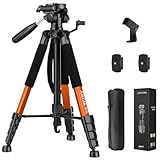
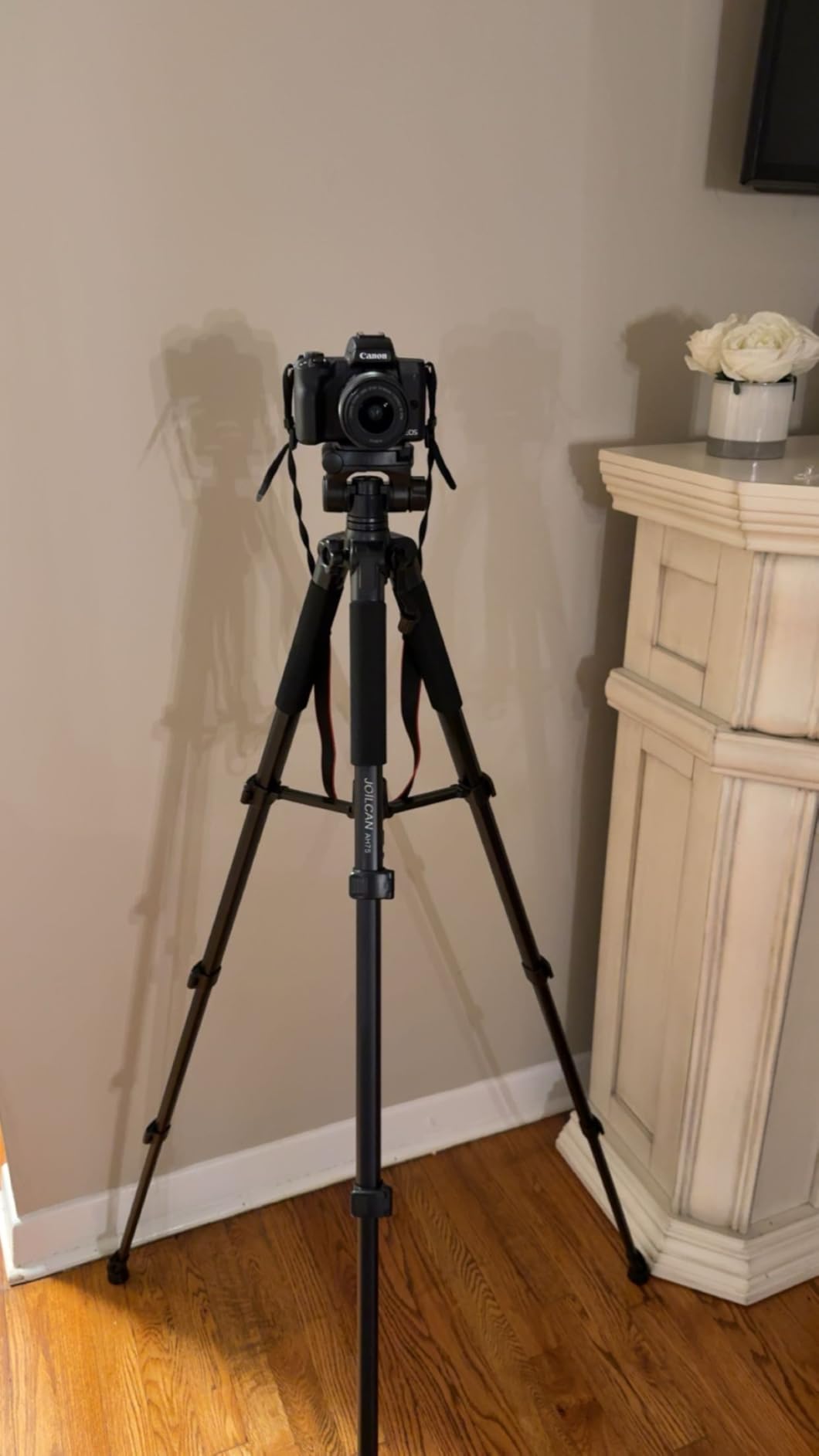
The JOILCAN 74-inch tripod offers the highest load capacity among our budget options at 15 pounds. Over 6,500 reviews with a 4.5-star rating confirm this tripod punches above its price class. The thicker aluminum tubes resist torsional twisting better than thinner budget legs, which translates to sharper images during long winter exposures.
The 3-way pan head with individual headlock, pan lock, and tilt lock gives you precise control over each axis. I found this particularly useful for astrophotography because I could adjust the tilt to frame the Milky Way core without affecting my horizontal alignment. The 360-degree rotation capability handles panoramic night sky shoots smoothly.
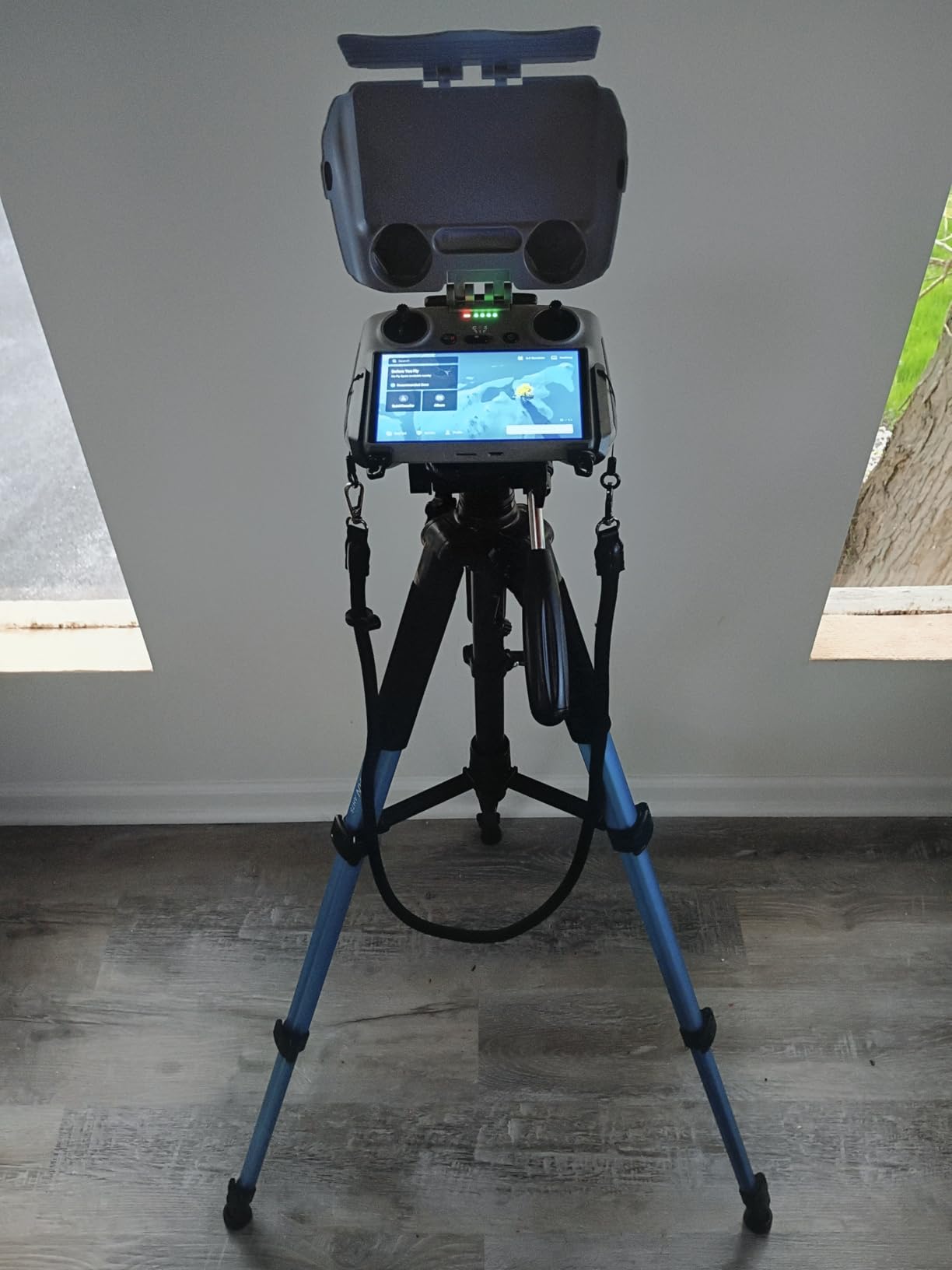
The trapezoidal flap lock mechanism operates well with light winter gloves. Each lock snaps into place with positive feedback, so you know when a leg section is secure. The 3-position leg angle adjustment lets you adapt to uneven frozen terrain quickly. Two quick release plates are included, which is a thoughtful extra that saves you from buying a spare.
The 18-inch folded size with included carrying bag makes this tripod easy to transport. I took it on several winter road trips to dark sky locations and it fit easily in a carry-on suitcase and the trunk of a sedan. The 2-year quality guarantee and 90-day free return policy give you time to test it in actual winter conditions.
Who Should Buy This Tripod
Budget photographers with heavier DSLR setups who need a load capacity beyond the typical 10-pound budget limit. The 15-pound capacity, thick tubing, and included accessories make this the best budget option for photographers with mid-weight camera rigs.
Who Should Look Elsewhere
Photographers concerned about long-term durability of plastic components in extreme cold. The plastic center shaft and gears may become brittle in sub-zero temperatures. Those needing professional-grade build quality should look at carbon fiber options higher in our list.
15. NEEWER 90in Overhead Horizontal Tripod TP63 – Best for Specialized Overhead Shots

NEEWER 90 Inch Tall Overhead Horizontal Camera Tripod Monopod with Ball Head & Flexible Center Column, Metal DSLR Video Travel Stand, Arca Type QR Plate & Inverted Legs, Max Load 10 kg / 22 lbs, TP63
Metal
22lb Max Load
90in Max Height
Flexible Center Column
Horizontal Arm
Arca-Swiss Plate
Pros
- 90-inch maximum height for unique compositions
- Horizontal overhead positioning
- Converts to monopod
- Arca-Swiss plate included
- Sturdy metal build
Cons
- Quick release plate threading has loose tolerances
- Limited reviews for long-term assessment
- Not ideal for phone use
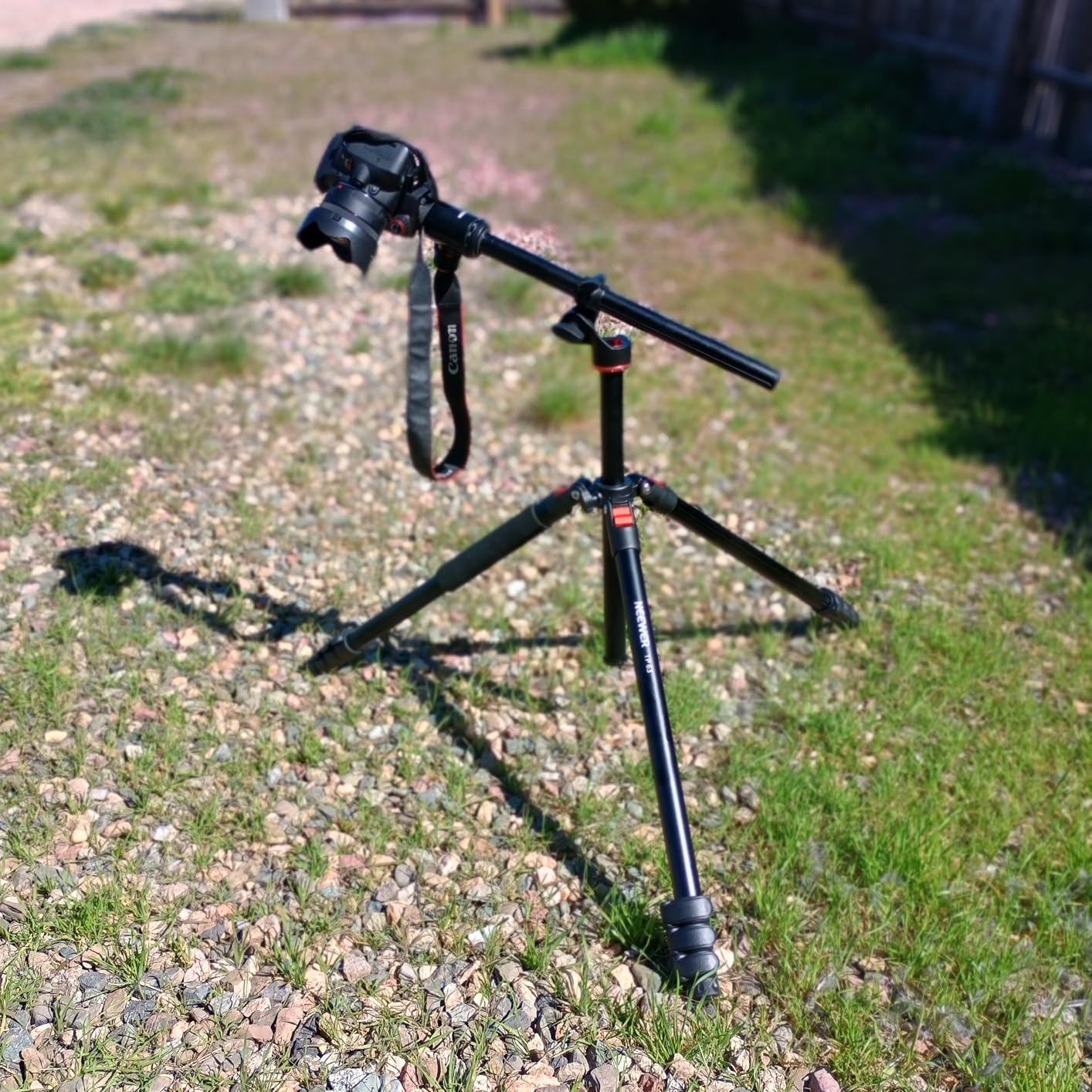
The NEEWER TP63 fills a specialized niche with its 90-inch maximum height and horizontal overhead arm. For astrophotography, this opens up creative compositions that are simply impossible with standard tripods. I used the overhead arm to shoot straight down at frozen lakes reflecting the Milky Way, a perspective that would require dangerous leaning with conventional tripods.
The flexible center column rotates 360 degrees and locks at various angles, giving you overhead, sideways, and standard vertical positioning. The horizontal arm is especially useful for capturing foreground elements like snow-covered trees or ice formations from directly above while keeping the camera pointed at the sky for compositional flexibility.
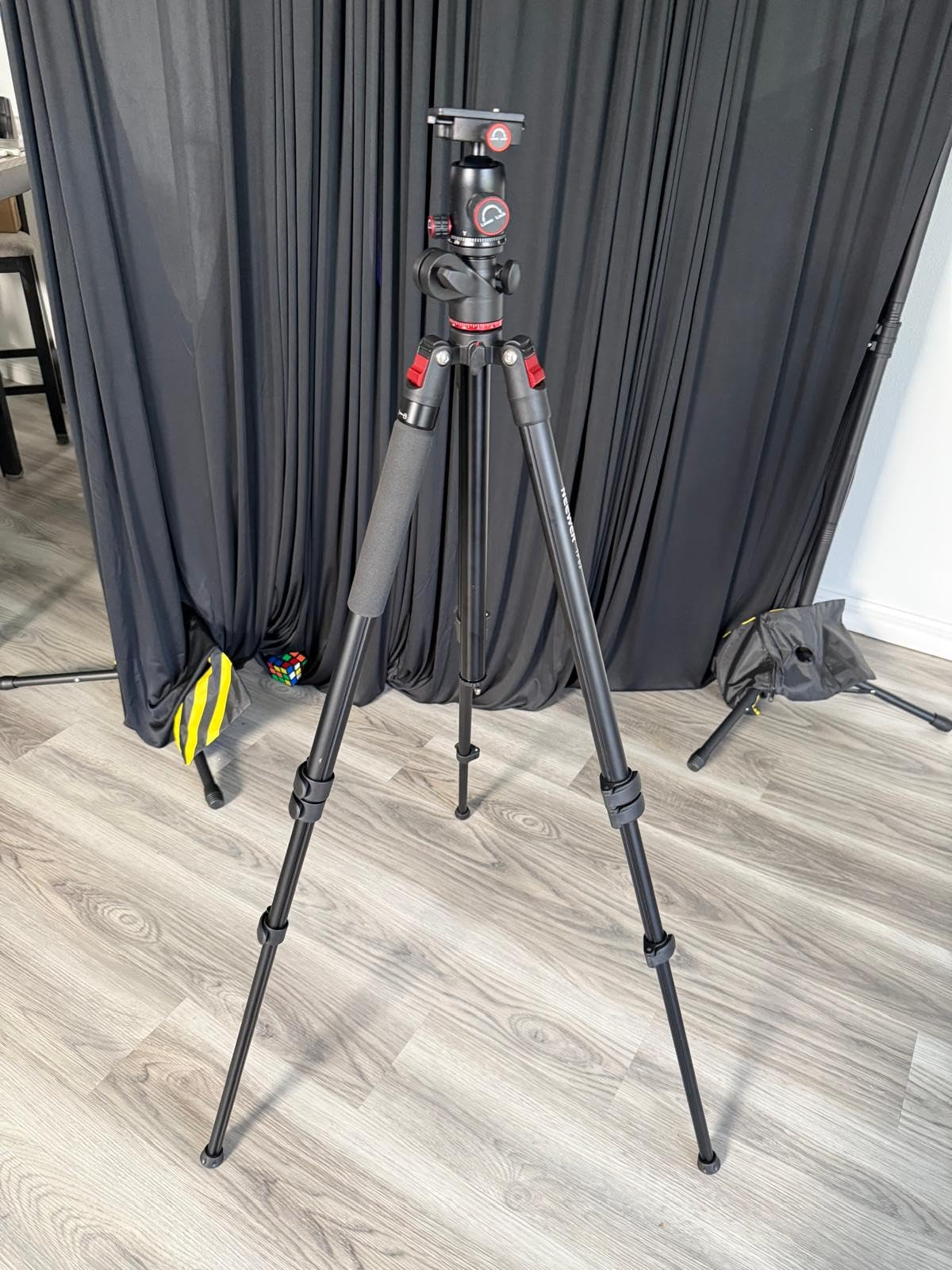
The 22-pound load capacity handles DSLR and mirrorless cameras comfortably even when the arm is extended horizontally. The metal construction provides solid rigidity, though the quick release plate threading has some tolerance issues that require careful mounting. I recommend checking the plate seating before each session, especially in cold conditions when metal contracts slightly.
The monopod conversion is useful for mobile astrophotography between fixed positions. The Arca-Swiss compatible plate works with standard mounting systems. With 53 reviews at 4.5 stars, this is a newer product with less community history than others in our roundup, but the design and build quality suggest it will find a loyal following among creative astrophotographers.
Who Should Buy This Tripod
Creative astrophotographers who need overhead or unusual angle compositions. The 90-inch height and horizontal arm enable perspectives impossible with standard tripods. Ideal for photographers who incorporate foreground reflections and creative angles into their night sky work.
Who Should Look Elsewhere
Those who primarily shoot standard Milky Way compositions from normal tripod heights. The specialized overhead arm adds weight and complexity that is unnecessary for typical astrophotography. Photographers who prefer proven long-term reliability from models with more user reviews should consider other options.
How to Choose the Best Tripod for Winter Astrophotography?
Choosing a tripod for winter astrophotography involves specific considerations that go beyond normal tripod shopping. Here is what our team learned from years of shooting in freezing conditions.
Carbon Fiber vs Aluminum in Cold Weather
This is the single most important decision for winter shooters. Carbon fiber does not conduct cold the way aluminum does. When you grab carbon fiber legs at 15 degrees Fahrenheit, they feel cool. When you grab aluminum legs at the same temperature, they feel painful. Over a 4-hour winter shoot, that difference compounds into real discomfort and slower operation.
Carbon fiber also dampens vibrations better than aluminum, which matters for long-exposure astrophotography. The layered fiber construction absorbs micro-vibrations from wind and ground movement, producing sharper stars. The trade-off is cost, but as our NEEWER N55C review shows, carbon fiber has become much more affordable.
Load Capacity: Go 3x Your Setup Weight
The astrophotography community consistently recommends tripods rated for at least 3 times your actual camera weight. This is not marketing advice. It is practical wisdom from thousands of winter shoots. A tripod that holds your camera statically is different from one that keeps it stable during a 30-second exposure in 15 mph wind. The INNOREL RT90C with its 88lb rating exemplifies this principle. Even a modest 10-pound camera setup gets world-class stability from that overhead capacity.
Lock Mechanisms for Glove Use
Flip locks generally work better than twist locks with winter gloves. A flip lock requires a single motion to open or close, while twist locks require gripping and rotating, which is harder with thick insulated gloves. That said, twist locks have their own advantages in certain conditions.
Stability Features for Long Exposures
Look for tripods with a weight hook under the center column or apex. Hanging your camera bag or a weighted object dramatically improves stability in wind. Tripods without center columns, like the SIRUI AM-324S, naturally resist vibration better because the camera sits lower and closer to the center of gravity. Bowl mounts, like the INNOREL RT90C offers, let you level the head independently of the legs, which saves time on uneven frozen ground.
Winter Maintenance and Care
Cold weather tripod care goes beyond wiping off snow. Condensation forms when you bring a cold tripod into a warm car or house. Let your tripod warm up gradually inside a sealed bag to prevent moisture from getting inside the leg sections. Ice can seize twist locks, so knock off snow before it melts and refreezes in the mechanisms. Silicone grease on threads can stiffen in extreme cold, so check your tripod’s performance at your expected shooting temperatures before committing to a long trip.
Frequently Asked Questions
What is the best tripod for astrophotography?
The INNOREL RT90C Carbon Fiber Bowl Tripod is our top pick for astrophotography, earning a 4.8-star rating from 486 reviews. Its 88-pound load capacity provides exceptional stability for long exposures, the carbon fiber construction stays warm in cold weather, and the included 75mm bowl adapter makes leveling fast and easy on uneven ground. For budget-conscious photographers, the NEEWER N55C Carbon Fiber Tripod delivers carbon fiber benefits at a fraction of the cost.
What tripod do astrophotographers recommend?
Experienced astrophotographers on forums like Reddit and Cloudy Nights consistently recommend tripods rated for 3 times your actual camera weight, carbon fiber construction for cold weather comfort, and Arca-Swiss compatible quick release systems. The Vortex High Country II and INNOREL RT90C are frequently mentioned as top choices. Many community members also recommend buying quality used tripods since well-maintained carbon fiber tripods can last over a decade.
Are carbon fiber tripods better for cold weather?
Yes, carbon fiber tripods have a significant advantage in cold weather. Unlike aluminum, carbon fiber does not conduct cold efficiently, so the legs remain comfortable to handle with thin gloves or even bare hands in sub-freezing temperatures. Carbon fiber also dampens vibrations better than aluminum, which produces sharper images during long exposures. This is why three of our top five picks use carbon fiber construction.
How do I keep my tripod stable in winter wind?
To stabilize your tripod in winter wind, hang a weighted object from the center column hook, spread the legs to their widest angle setting, avoid extending the center column, and position yourself as a windbreak if possible. Tripods with higher load capacities naturally resist wind better. Spiked feet dig into frozen ground and ice far better than rubber feet, which slide on cold surfaces.
Final Thoughts
Finding the best photography tripods for winter astrophotography comes down to matching your specific needs. For maximum stability and professional features, the INNOREL RT90C with its 88lb capacity and bowl mount is hard to beat. The Vortex High Country II delivers premium quality with lifetime warranty backing. And for budget-conscious photographers who still want carbon fiber warmth, the NEEWER N55C is an outstanding value.
Whatever tripod you choose for 2026, remember that winter astrophotography rewards preparation. Test your setup in your backyard before heading to a remote dark sky location in freezing temperatures. Bring hand warmers, spare batteries, and dress for conditions colder than the forecast predicts. The stars will wait for you, but only if your gear holds steady through the long exposure.