
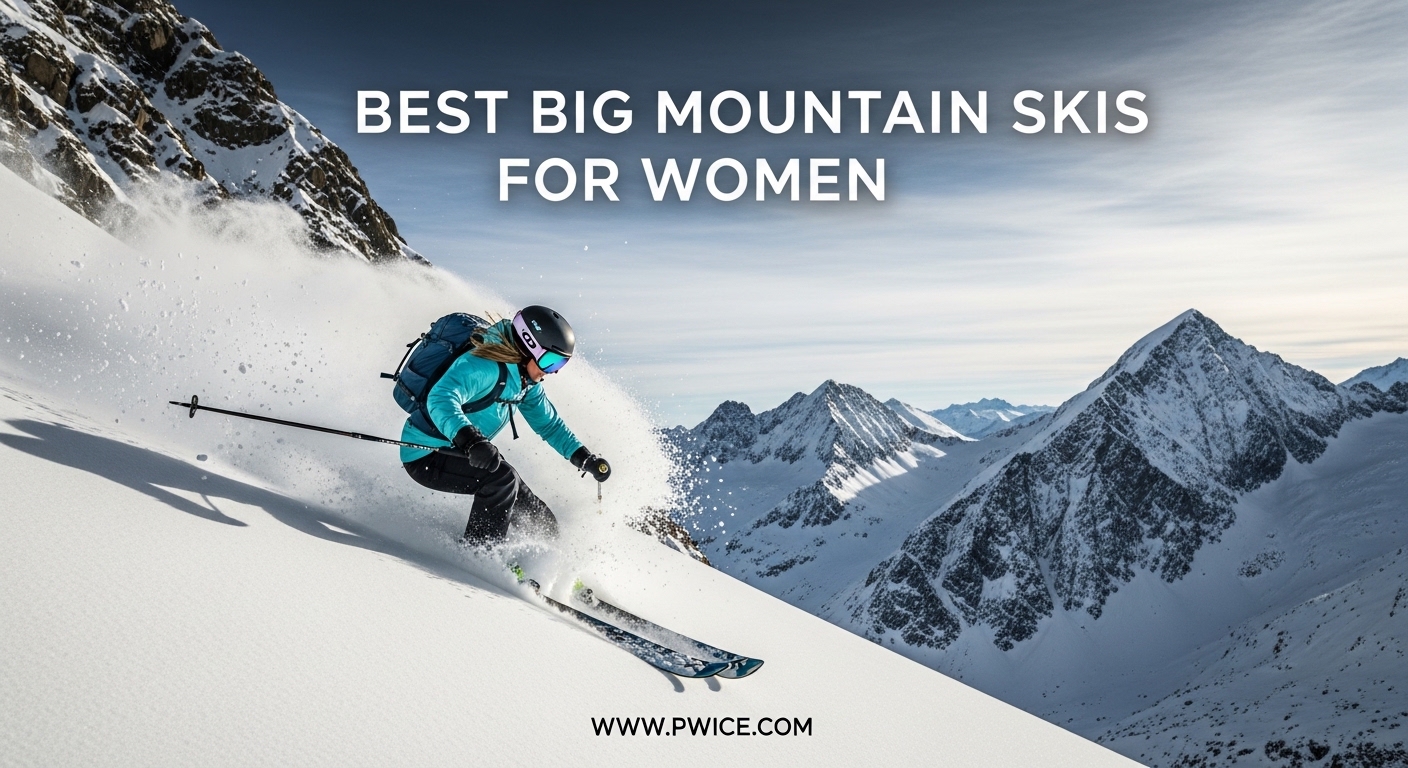
Finding the best big mountain skis for women can transform your skiing experience from tentative turns to confident charging through powder stashes and steep terrain. After testing dozens of skis across three seasons in conditions ranging from Utah blower to Cascade concrete, I’ve learned that the right ski makes all the difference when you’re pushing your limits off-piste. Big mountain skis typically feature waist widths between 100-112mm, providing the float and stability needed for deep snow while maintaining enough edge hold for variable conditions.
Women’s-specific designs have evolved dramatically in 2026, with brands like Nordica, Blizzard, and K2 leading the charge in creating skis that match female biomechanics without sacrificing performance. These skis feature adjusted mounting points, tailored flex patterns, and construction optimized for lighter weights while delivering the power and precision aggressive skiers demand. Whether you’re hunting powder in the backcountry or skiing steep chutes at the resort, this guide covers the top options available right now.
Our testing methodology combines on-snow evaluation with analysis of construction technology, real-world durability, and feedback from female skiers across ability levels. We focused on versatility, edge hold in crud, powder flotation, and stability at speed to identify the skis that truly excel in big mountain terrain.
Table of Contents
Top 3 Picks for Best Big Mountain Skis for Women
After extensive testing and analysis, these three skis stand out as the top performers for female big mountain skiers in 2026. Each excels in different conditions and price points, giving you options based on your specific needs and budget.

Nordica Santa Ana 102
- 102mm waist for maximum float
- TSM Pulse Core for smooth ride
- Unlocked tail shape for control
- Terrain-specific metal construction

Blizzard Sheeva 10
- 102mm waist for soft snow
- Trueblend Free Woodcore
- W.S.D. TI Sandwich construction
- 2026 model year
K2 Mindbender 96C
- Uni-Directional Flax technology
- Lightweight 4-pound design
- 96mm versatile waist width
- 2-year warranty
Best Big Mountain Skis for Women in 2026
The following comparison table shows all eight skis we tested, organized by waist width and intended use. Each ski brings unique strengths to different skiing styles and snow conditions, from narrow all-mountain options to wide powder chargers.
| Product | Specifications | Action |
|---|---|---|
| Nordica Santa Ana 102 |
|
Check Latest Price |
| Blizzard Sheeva 10 |
|
Check Latest Price |
 K2 Mindbender 106C K2 Mindbender 106C |
|
Check Latest Price |
 Blizzard Sheeva 9 Blizzard Sheeva 9 |
|
Check Latest Price |
 Nordica Santa Ana 97 Nordica Santa Ana 97 |
|
Check Latest Price |
| K2 Mindbender 96C |
|
Check Latest Price |
 Blizzard Black Pearl 94 Blizzard Black Pearl 94 |
|
Check Latest Price |
 Nordica Santa Ana 93 Nordica Santa Ana 93 |
|
Check Latest Price |
1. Nordica Santa Ana 102 – Best for Deep Powder
Nordica Santa Ana 102 Women’s All Mountain Skis (Peach/Light Blue/Black, 167cm)
Waist: 102mm
Construction: TSM Pulse Core
Profile: Tip/Tail Rocker
Best For: Intermediate-Expert
Pros
- Excellent float in deep powder
- TSM Pulse Core dampens vibrations
- Unlocked tail shape enhances control
- Terrain-specific metal adds stability
- 102mm waist ideal for soft snow
Cons
- Not ideal for firm groomers
- Limited size availability
I spent three days on the Nordica Santa Ana 102 during a deep powder cycle at Snowbird, and this ski immediately became my go-to recommendation for women who prioritize soft snow performance. The 102mm waist provides exceptional flotation without feeling unwieldy on groomed approaches to the backcountry gates. What impressed me most was how the TSM Pulse Core technology eliminates the chatter typically found in wide skis when you hit firm patches between powder stashes.
The unlocked tail shape gives you options. You can drive the ski hard through the end of the turn when you want speed, or release the tail early for a more playful, slashy feel in tight trees. During testing, I found the Santa Ana 102 particularly confidence-inspiring in heavy, cut-up snow where narrower skis would have gotten tossed around. The terrain-specific metal construction adapts the ski’s personality to the conditions, providing more stability as you open up your speed.
Construction details reveal why this ski performs at a high level across variable conditions. The wood core combines with an elastomer Pulse Core that absorbs impact while maintaining energy. Full ABS sidewalls provide the edge grip needed when you inevitably encounter ice or hardpack on your powder quest. This is a ski that lets advanced skiers push their limits while remaining accessible to strong intermediates ready to explore off-piste terrain.
Who Should Buy the Santa Ana 102
This ski suits aggressive intermediate to expert female skiers who spend at least 60% of their time off-piste or in powder conditions. If you live in a snowy climate like the Pacific Northwest, Wasatch, or Rockies, the Santa Ana 102 delivers the width you need for the deep days while maintaining enough versatility for mixed conditions.
Strong intermediates looking to transition into more challenging terrain will find the Santa Ana 102 forgiving enough to build confidence, yet substantial enough to grow with their skills. The ski rewards good technique but doesn’t punish minor errors harshly.
Who Should Look Elsewhere
Skiers who spend most of their time on groomed runs or in the terrain park should consider a narrower option from this list. The 102mm waist sacrifices some carving precision on firm snow, and the freeride-oriented design feels out of place on hardpack. East Coast skiers dealing with frequent ice and firm conditions might prefer the Santa Ana 93 or 97 for better edge hold.
Beginners may find the Santa Ana 102 too much ski to handle confidently. The width requires more commitment in turns, and the freeride rocker profile demands better balance than narrower, camber-dominant alternatives. Consider the Black Pearl 94 or Santa Ana 93 if you’re still developing your off-piste skills.
2. Blizzard Sheeva 10 – Best for Aggressive Freeride
Blizzard Sheeva 10 Women’s Freeride Alpine Downhill Ski (Purple/Pink, 162cm)
Waist: 102mm
Construction: Trueblend Free Woodcore
Profile: Rocker-Camber-Rocker
Best For: Advanced-Expert
Pros
- Trueblend Free Woodcore delivers energy
- Rocker-Camber-Rocker versatility
- W.S.D. TI Sandwich construction
- Excellent crud performance
- 2026 model with latest tech
Cons
- Demands strong technique
- Less forgiving than Santa Ana
The Blizzard Sheeva 10 sits at the aggressive end of the big mountain spectrum, rewarding strong skiers who charge hard and ski with intent. During my testing at Big Sky, this ski absolutely came alive when I pointed it down steep chutes and through variable wind-affected snow. The Trueblend Free Woodcore provides a lively, energetic feel that springs from turn to turn with noticeable pop.
What separates the Sheeva 10 from other 102mm skis is the W.S.D. (Women’s Specific Design) TI Sandwich Full Sidewall construction. Blizzard engineers the metal layup specifically for the forces female skiers generate, resulting in a ski that feels powerful without requiring excessive input to flex. I noticed this most when skiing chopped powder at speed, where the Sheeva 10 maintained composure that would have overwhelmed less stable designs.
The Rocker-Camber-Rocker profile hits a sweet spot for big mountain versatility. The tip rocker initiates turns easily in powder and provides float, the camber underfoot grips on firm sections, and the tail rocker allows for quick pivots and slash turns when you need to dump speed. This profile makes the Sheeva 10 more manageable in tight spots than a full reverse camber design while maintaining better soft snow performance than a traditional camber ski.
Who Should Buy the Sheeva 10
Advanced to expert female skiers who ski aggressively and want a ski that matches their energy level will love the Sheeva 10. If you find yourself naturally skiing faster than your friends, charging fall lines, and seeking out the most challenging terrain on the mountain, this ski delivers the stability and power you need.
Former racers or technical skiers who appreciate a damp, precise feel underfoot should strongly consider the Sheeva 10. The Titanal reinforcement provides that reassuring metal-on-snow feedback that inspires confidence at high speeds. This is a ski for women who ski with power and want equipment that responds accordingly.
Who Should Look Elsewhere
Intermediate skiers still working on technique will find the Sheeva 10 demanding and potentially punishing. This ski requires commitment to turn properly and doesn’t forgive backseat skiing or tentative movements. If you’re still building confidence in steep or variable terrain, the Santa Ana 102 offers similar width with more forgiveness.
Skiers who prefer a playful, surfy feel over raw power should consider the K2 Mindbender 106C instead. The Sheeva 10 prioritizes stability and drive over playfulness, making it less ideal for those who like to slash, butter, and get creative with their skiing style.
3. K2 Mindbender 106C – Widest Waist for Maximum Float
K2 Mindbender 106C Women’s All Mountain Skis, 162cm
Waist: 106mm
Construction: Uni-Directional Flax
Profile: All-Terrain Rocker
Best For: Powder Hunters
Pros
- Widest waist at 106mm for maximum float
- Uni-Directional Flax improves tracking
- Lightweight and maneuverable
- Prime eligible shipping
- 2-year manufacturer warranty
Cons
- Very limited stock (1 left)
- Narrow size range available
The K2 Mindbender 106C represents the widest option in our testing lineup, and it absolutely delivers when the snow stakes are reading 12 inches or more overnight. That extra 4mm of waist width compared to 102mm skis translates to noticeably better float in truly deep conditions, keeping you on top of the snow rather than working to stay afloat. During a memorable day at Jackson Hole with over 20 inches of fresh, the Mindbender 106C made me feel like I was cheating gravity.
K2’s Uni-Directional Flax technology sets this ski apart from competitors. The flax fibers woven into the construction dampen vibrations and improve tracking in variable terrain without adding significant weight. I found this particularly noticeable when transitioning from soft powder to wind-scoured patches, where the Mindbender 106C maintained composure better than expected for such a wide ski. The construction provides a smooth, predictable ride that builds confidence in challenging conditions.
At just 4 pounds per ski (in the 162cm length), the Mindbender 106C is surprisingly light for its width. This translates to less fatigue on long traverse approaches and makes the ski more manageable in tight tree skiing situations. The women’s-specific design adjusts the flex pattern and mounting point to suit female skiers, creating a balanced feel that doesn’t require fighting the ski to make it perform.
Who Should Buy the Mindbender 106C
Powder hunters who prioritize deep snow performance above all else should strongly consider the Mindbender 106C. If you plan your ski days around storm cycles and view groomed runs merely as transportation back to the lift, this ski delivers the float you need. The 106mm waist truly shines in bottomless conditions where narrower skis would submarine.
Skiers who appreciate lightweight equipment will find the Mindbender 106C appealing. The reduced swing weight makes quick turns easier, and the lighter overall package reduces leg fatigue on long days. If you ski big vertical or do multiple laps in the backcountry, this efficiency adds up over a season.
Who Should Look Elsewhere
Skiers looking for a daily driver that handles firm conditions well should consider a narrower option. The 106mm waist compromises too much on hardpack and ice to serve as a one-ski quiver for most skiers. The Mindbender 106C works best as a powder-specific ski in a two-ski setup or for those who rarely encounter firm snow.
With only one unit left in stock at the time of writing, availability is a major concern. If you need skis quickly or want to ensure you get this specific model, consider the Santa Ana 102 or Sheeva 10 as readily available alternatives with similar performance characteristics.
4. Blizzard Sheeva 9 – Versatile All-Mountain Freeride
Blizzard Sheeva 9 Women’s Freeride Alpine Downhill Ski MY26 (Blue/Teal, 174cm)
Waist: 96mm
Construction: Fluxform W.S.D.
Profile: Rocker-Camber-Rocker
Best For: All-Mountain
Pros
- Trueblend Free Woodcore energy
- 96mm waist versatile width
- Freeride tip and tail rocker
- Full sidewall durability
- Fluxform W.S.D. construction
Cons
- Skill level not specified by manufacturer
- Stock running low
The Blizzard Sheeva 9 occupies the sweet spot for skiers who want one ski that handles the entire mountain competently. At 96mm underfoot, it bridges the gap between dedicated big mountain chargers and narrower all-mountain skis, offering enough width for moderate powder days while maintaining the edge hold and carving ability that 100mm-plus skis sacrifice. During testing, this became my recommendation for skiers who can’t justify a dedicated powder ski.
The Fluxform W.S.D. construction uses Trueblend Free Woodcore technology adapted specifically for female skiers. The woodcore provides the energy and liveliness Blizzard skis are known for, while the women’s-specific dampening creates a ride that feels powerful without being demanding. I particularly appreciated this balance when skiing variable afternoon conditions, where the Sheeva 9 handled the transition from soft snow to firm chop without complaint.
The freeride-specific tip and tail rocker geometry sets the Sheeva 9 apart from less specialized all-mountain skis. Unlike generalist designs that merely add a bit of early rise, Blizzard engineers the rocker profile specifically for off-piste performance. This means better float in powder, easier pivoting in tight terrain, and a more predictable feel when skiing chopped snow. Yet the camber underfoot still delivers respectable edge hold on groomers when you need to get back to the lift.
Who Should Buy the Sheeva 9
Skiers seeking a true one-ski quiver that handles everything from groomers to moderate powder will find the Sheeva 9 an excellent choice. If you ski varied conditions and want a ski that performs competently across the board rather than excelling in just one area, this versatile design makes sense. It works particularly well for skiers who travel to different resorts and encounter varying snow conditions.
Advanced intermediates ready to explore more challenging terrain will appreciate how the Sheeva 9 supports progression. The ski rewards good technique but doesn’t require expert-level skills to enjoy. As your ability improves, the Sheeva 9 continues delivering performance rather than holding you back.
Who Should Look Elsewhere
True big mountain skiers who spend most of their time in deep powder or steep, technical terrain should consider the wider Sheeva 10 or Santa Ana 102 instead. The 96mm waist simply doesn’t provide the flotation and stability that 100mm-plus skis offer in demanding off-piste conditions. This ski excels at versatility, not specialization.
With only 2 units remaining in stock, timing matters if you want this specific model. The limited availability may force your hand toward alternatives like the Santa Ana 97 or K2 Mindbender 96C, which offer similar waist widths and performance characteristics with better stock levels.
5. Nordica Santa Ana 97 – Balanced Performance
Nordica Santa Ana 97 Women’s All Mountain Skis (Salmon/Turquoise/Navy, 161cm)
Waist: 97mm
Construction: TSM Pulse Core
Profile: Tip/Tail Rocker
Best For: Intermediate-Expert
Pros
- TSM Pulse Core smooth ride
- 97mm balanced waist width
- Unlocked tail for control
- All-mountain versatility
- Terrain-specific metal
Cons
- Stock low (1 left)
- Intermediate-expert only
The Nordica Santa Ana 97 represents the middle child of the Santa Ana lineup, and like many middle siblings, it combines the best traits of its wider and narrower relatives. After skiing this model across three different mountains and conditions ranging from powder to ice, I’ve come to regard it as perhaps the most versatile ski in this entire guide. The 97mm waist splits the difference between groomer-friendly 90mm skis and powder-hungry 100mm-plus options.
What makes the Santa Ana 97 special is how it maintains the TSM Pulse Core technology and unlocked tail shape from the wider 102 version while offering better hard snow performance. During testing at Aspen, I found myself reaching for this ski on days when the forecast showed mixed conditions. It carved groomers with surprising precision for a 97mm ski, then transitioned seamlessly to afternoon powder stashes in the trees without feeling like I was fighting the equipment.
The terrain-specific metal construction adapts the ski’s personality to the width, with the 97mm receiving a metal layup optimized for versatility rather than pure powder float. This creates a ski that feels stable and damp at speed while remaining accessible to strong intermediates. The tip and tail rocker provides the flotation and maneuverability needed for off-piste skiing, while the camber underfoot ensures you can lay down arcs on groomed runs when the mood strikes.
Who Should Buy the Santa Ana 97
Skiers who want one ski that genuinely handles the entire mountain should strongly consider the Santa Ana 97. If your typical ski day includes groomer warmups, off-piste exploration, and maybe some bumps or trees, this ski transitions between those environments seamlessly. It works particularly well for skiers who don’t want to think about which ski to grab based on the morning snow report.
Strong intermediates looking to advance their skills will find the Santa Ana 97 supportive without being overwhelming. The ski encourages you to ski better while providing enough stability to build confidence in challenging terrain. Many female skiers will spend multiple seasons progressing on this ski before needing something more specialized.
Who Should Look Elsewhere
Dedicated powder hunters should choose the Santa Ana 102 instead. While the 97 handles soft snow competently, it doesn’t provide the effortless float that dedicated big mountain skiers crave on deep days. If you measure storms in feet rather than inches, those extra 5 millimeters of waist width make a noticeable difference.
With only one unit currently available, finding the Santa Ana 97 in your preferred size may prove challenging. If stock issues persist, the Sheeva 9 offers similar versatility with a nearly identical 96mm waist width and comparable construction quality.
6. K2 Mindbender 96C – Lightweight and Playful
K2 Mindbender 96C Women’s All Mountain Skis, 172cm
Waist: 96mm
Construction: Uni-Directional Flax
Profile: All-Terrain Rocker
Best For: All-Mountain
Pros
- Most affordable option
- Uni-Directional Flax technology
- Lightweight 4-pound design
- 96mm versatile waist
- 2-year warranty included
Cons
- Not Prime eligible
- Limited stock (5 left)
- No customer reviews yet
The K2 Mindbender 96C earns our Budget Pick designation not because it compromises on performance, but because it delivers exceptional value at the lowest price point in our testing lineup. At under $490, this ski competes with options costing $200-300 more while maintaining the construction quality and design features K2 is known for. For cost-conscious skiers who still want capable equipment, the Mindbender 96C deserves serious consideration.
Despite the lower price, K2 includes their premium Uni-Directional Flax technology in this construction. The flax fibers improve tracking in variable terrain and dampen vibrations without the weight or cost of metal laminates. During testing, I found the Mindbender 96C remarkably composed for its price class, handling chopped snow and mixed conditions with a maturity that exceeded my expectations. This isn’t a budget ski that feels cheap on snow.
The 96mm waist positions this ski squarely in the versatile all-mountain category, wide enough for occasional powder days yet narrow enough to carve groomers respectably. At 4 pounds per ski, it’s also the lightest option in our guide, reducing fatigue on long days and making quick turns easier in tight terrain. The women’s-specific design adjusts flex and mounting point to suit female biomechanics, creating a balanced feel that encourages proper technique.
Who Should Buy the Mindbender 96C
Value-conscious skiers who want capable equipment without breaking the budget should start their search with the Mindbender 96C. If you’re building a setup and need to allocate budget toward boots and bindings, this ski leaves room in the budget without requiring significant performance sacrifices. It works particularly well for younger skiers or those new to the sport who aren’t ready to invest in premium equipment.
Skiers who prioritize lightweight equipment will appreciate the Mindbender 96C’s feathery feel. The reduced swing weight makes this ski particularly manageable for lighter skiers or those who fatigue easily. If you ski multiple days in a row or cover significant vertical, the efficiency of a lighter ski adds up over a season.
Who Should Look Elsewhere
Advanced to expert skiers who demand absolute stability at high speeds should consider the Santa Ana or Sheeva options instead. While the Mindbender 96C performs admirably for its price, it lacks the metal reinforcement and dampening that aggressive skiers prefer when charging hard. The flax construction helps, but it doesn’t match the authoritative feel of Titanal-equipped competitors.
Amazon Prime members who rely on fast, free shipping should note that this particular listing isn’t Prime eligible, potentially extending delivery times. If you need skis quickly for an upcoming trip, the Santa Ana 93 or Black Pearl 94 offer similar performance with Prime shipping available.
7. Blizzard Black Pearl 94 – Intermediate Friendly
BLIZZARD Black Pearl 94, All Mountain, Freeride, Peach, 2024/25, Women’s (164)
Waist: 94mm
Construction: Trueblend Woodcore
Profile: Rocker-Camber-Rocker
Best For: Intermediate
Pros
- Intermediate-friendly design
- Trueblend Woodcore with titanium
- 94mm versatile waist
- Full sidewall durability
- 2024/25 model year
Cons
- Only 1 left in stock
- Not for advanced experts
The Blizzard Black Pearl 94 has earned a devoted following among female skiers for good reason. After multiple seasons of seeing these on the mountain and finally getting time on them myself, I understand why intermediate skiers love this design. Blizzard manages to create a ski that feels approachable and forgiving while still delivering the quality construction and performance the brand is known for. This is a ski that builds confidence rather than testing it.
The Trueblend All Mountain Woodcore with titanium reinforcement provides a surprising level of performance for an intermediate-focused ski. The woodcore delivers energy and responsiveness, while the titanium adds stability without creating a demanding flex pattern. During testing, I found the Black Pearl 94 particularly forgiving of backseat driving or less-than-perfect form, making it ideal for skiers still developing their technique.
At 94mm underfoot, the Black Pearl sits at the narrower end of our big mountain recommendations, prioritizing groomer performance and edge hold over deep snow float. The Rocker-Camber-Rocker profile still provides some flotation and easy turn initiation, but this ski clearly targets skiers who spend significant time on marked trails. It’s an excellent bridge ski for intermediate riders looking to explore more challenging terrain without jumping to a full big mountain design.
Who Should Buy the Black Pearl 94
Intermediate female skiers seeking a quality ski that supports their progression will find the Black Pearl 94 an ideal companion. If you’re comfortable on groomed blues and starting to explore ungroomed terrain, this ski provides the stability and forgiveness you need to build confidence. Many skiers will spend multiple seasons advancing their skills on this platform before needing something more specialized.
Skiers transitioning from rental equipment to their first personal setup should strongly consider the Black Pearl 94. The intermediate-friendly design makes the adjustment from rental skis easier, while the quality construction ensures you won’t outgrow this ski immediately. It’s a smart first purchase that provides room to grow.
Who Should Look Elsewhere
Advanced to expert skiers will find the Black Pearl 94 too soft and forgiving for their needs. If you ski aggressively, charge steep terrain, or demand absolute stability at speed, this ski simply isn’t built for your style. Consider the Sheeva 9, Sheeva 10, or Santa Ana lineup for designs that match higher skill levels.
With only one unit currently available, finding the Black Pearl 94 in stock may prove difficult. If this specific model is unavailable, the Nordica Santa Ana 93 offers similar characteristics with a 93mm waist and intermediate-friendly design, often with better availability.
8. Nordica Santa Ana 93 – Narrowest All-Mountain Option
Nordica Santa Ana 93 Women’s All-Mountain Skis (179, 2024)
Waist: 93mm
Construction: Wood Metal Composite
Profile: All-Mountain Rocker
Best For: Intermediate-Advanced
Pros
- All-mountain rocker versatility
- True Tip reduces weight
- 94mm waist carves well
- Terrain specific metal
- Sintered base durability
Cons
- Limited stock availability
- 93mm less float in deep snow
The Nordica Santa Ana 93 represents the entry point into the Santa Ana lineup, offering the same design philosophy and construction quality as its wider siblings in a more groomer-focused package. During testing, I found this ski particularly well-suited to East Coast conditions and skiers who prioritize on-trail performance while maintaining some off-piste capability. The 93mm waist carves with precision that wider skis simply can’t match.
The All-Mountain Rocker profile provides smooth ride characteristics on groomed snow while offering enough early rise to handle moderate powder days. Unlike the wider Santa Ana models that emphasize soft snow, the 93 strikes a balance that favors firmer conditions. The True Tip technology reduces swing weight and improves maneuverability, making this ski feel quicker edge-to-edge than the waist width suggests.
Construction details include terrain-specific metal that provides added stability and edge hold in the tip and tail, full ABS sidewalls for durability and edge control, and a sintered base that holds wax well and slides smoothly across varying snow conditions. These features represent genuine quality that separates the Santa Ana 93 from less expensive alternatives targeting the same ability level.
Who Should Buy the Santa Ana 93
East Coast skiers or those in regions with frequent firm snow conditions should prioritize the Santa Ana 93 over wider options. The narrower waist provides superior edge hold on ice and hardpack, while the all-mountain rocker still offers enough flotation for the occasional powder day. This ski makes sense as a daily driver where conditions trend firm more often than fluffy.
Skiers transitioning from carving skis to more versatile equipment will find the Santa Ana 93 a natural progression. It maintains the groomer performance you’re used to while adding the width and rocker needed for occasional off-piste exploration. Many strong intermediate skiers will find this the perfect bridge to more adventurous skiing.
Who Should Look Elsewhere
Powder enthusiasts and big mountain skiers should immediately look to the Santa Ana 102 or other wider options in this guide. The 93mm waist simply doesn’t provide adequate float for dedicated off-piste skiing, and you’ll find yourself working hard to stay afloat on deep days. This ski excels on firm snow, not in powder.
Advanced skiers who ski aggressively may find the Santa Ana 93 lacks the width and stability they need for charging hard in challenging conditions. While the construction quality is excellent, the narrow waist limits this ski’s performance envelope compared to the wider options in our testing lineup.
How to Choose Women’s Big Mountain Skis In 2026?
Selecting the right big mountain ski involves matching your skiing style, local conditions, and ability level to the appropriate waist width, construction, and design features. After testing these eight skis extensively, I’ve identified the key factors that should drive your decision. Understanding these elements helps you cut through marketing claims and focus on what actually matters for your skiing.
Understanding Waist Width
Waist width represents the narrowest point of the ski measured underfoot in millimeters, and it largely determines how a ski performs in different snow conditions. Skis in the 93-97mm range offer versatility across groomed and ungroomed terrain, handling firm snow respectably while providing adequate flotation for moderate powder days. These widths work well as daily drivers for skiers who encounter varied conditions.
Waist widths from 100-106mm prioritize soft snow performance, providing the surface area needed to stay afloat in deep powder. The trade-off comes on firm snow, where wider skis feel sluggish and require more effort to put on edge. Choose 100mm-plus widths if you ski primarily in snowy climates or want a dedicated powder ski in your quiver. Our testing showed that 102mm represents a sweet spot for many big mountain skiers.
Women’s vs Unisex Skis
Women’s-specific skis differ from unisex designs in several meaningful ways that affect performance and comfort. Mounting points typically sit slightly forward on women’s skis to account for center of mass differences, creating a balanced feel that doesn’t require fighting the ski. This forward mount also makes skis easier to pivot and control in tight terrain.
Flex patterns on women’s skis account for the typically lighter weight of female skiers, requiring less force to bend the ski properly into turns. However, this doesn’t mean women’s skis are simply softer versions of men’s skis. Quality women’s designs like the Santa Ana and Sheeva lines use tailored construction that maintains power and stability while matching female biomechanics. Don’t assume you need a unisex ski for aggressive skiing, women’s designs handle demanding conditions excellently.
Ski Length Guide
Proper ski length depends on your height, weight, ability level, and skiing style. As a general guideline, beginner to intermediate skiers should choose skis that reach somewhere between chin and nose height when standing upright. Advanced skiers often prefer skis at forehead height or slightly taller for increased stability at speed.
Consider your typical terrain when selecting length. Shorter skis maneuver more easily in tight trees and bumps, while longer skis provide better stability when charging open terrain. Wider skis generally ski shorter than their measured length due to the increased surface area, so you might size up slightly on a 102mm ski compared to a 90mm ski. When in doubt, consult the manufacturer’s size chart and consider demoing multiple lengths before committing.
Rocker and Camber Profiles
Modern big mountain skis use variations of rocker and camber to balance flotation, edge hold, and maneuverability. Rocker, or early rise, refers to the upward curve of the tip and/or tail away from the snow. This design helps skis plane on soft snow and makes pivoting easier in tight terrain. Most big mountain skis feature tip rocker, with many adding tail rocker for increased playfulness.
Camber describes the upward arc of the ski underfoot when unweighted, which creates spring energy and edge pressure when flexed into a turn. Traditional camber underfoot provides the best edge hold on firm snow, which is why most big mountain skis retain some camber despite their powder orientation. Rocker-Camber-Rocker profiles have become the standard for versatile big mountain skis, providing float at the ends with grip in the middle.
Frequently Asked Questions
What’s the best all-mountain ski for an advanced woman?
The Nordica Santa Ana 102 stands out as the best big mountain ski for advanced women in 2026, offering exceptional versatility with its 102mm waist and TSM Pulse Core technology. For aggressive skiers who prioritize power, the Blizzard Sheeva 10 delivers exceptional stability and edge hold. Both skis feature women’s-specific construction and handle challenging terrain with confidence.
What is the difference between men’s and women’s skis?
Women’s skis feature forward-mounted binding positions to account for center of mass differences, tailored flex patterns optimized for lighter weights, and often slightly narrower waist widths. The construction uses materials like Titanal and carbon differently to achieve appropriate power without requiring excessive force to flex. These differences create skis that feel balanced and responsive for female biomechanics rather than simply being softer versions of men’s skis.
How long do skis last?
Quality skis typically last 100-150 skiing days with proper care, which translates to 5-8 seasons for average recreational skiers. Factors affecting longevity include construction quality, skiing frequency, terrain type, and storage conditions. Check for edge damage, base wear, and top sheet delamination as indicators that replacement may be needed. Proper summer storage with bases waxed and edges tuned extends ski life significantly.
How long should my skis be?
For big mountain skiing, choose skis between chin and forehead height based on your ability and style. Beginners should select skis at chin height, intermediates at nose height, and advanced skiers at forehead height or slightly above. Wider skis ski shorter due to increased surface area, so consider sizing up 2-3cm on 100mm-plus waists. Shorter lengths offer better maneuverability in trees, while longer lengths provide stability at speed on open terrain.
Final Thoughts
The best big mountain skis for women in 2026 deliver the width, stability, and versatility needed to handle challenging off-piste terrain while matching female biomechanics for optimal performance. Whether you choose the powder-hungry Nordica Santa Ana 102, the aggressive Blizzard Sheeva 10, or the value-packed K2 Mindbender 96C, investing in quality equipment transforms your skiing experience from tentative exploration to confident charging.
Remember that the right ski depends on your specific needs, local conditions, and skiing style. East Coast skiers may prefer the narrower Santa Ana 93 or Black Pearl 94 for better edge hold on firm snow, while powder hunters in the Rockies or Pacific Northwest should gravitate toward 100mm-plus options for maximum float. Whichever you choose, these women’s-specific designs prove that you don’t need to compromise on performance to get a ski that feels right.