
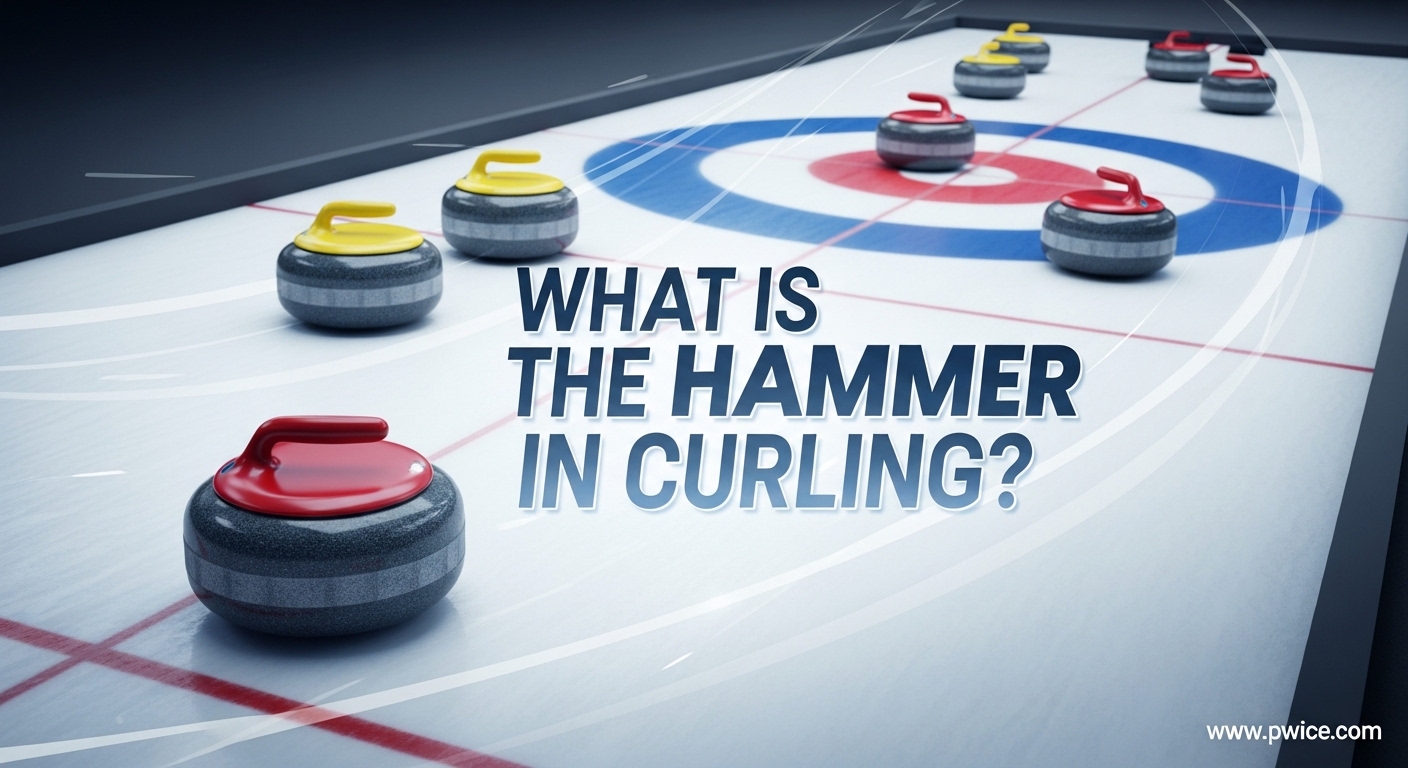
If you have ever watched curling during the Winter Olympics and heard commentators mention the hammer, you might have wondered what they were talking about. The hammer in curling is the last stone advantage – the right to throw the final stone of an end. This seemingly simple rule creates one of the most fascinating strategic elements in all of sports.
I remember the first time I watched curling with my grandfather. He kept saying, “Red has the hammer” as if it were the most important thing in the world. Turns out, he was right. Understanding the hammer is essential to appreciating why curling is often called “chess on ice.”
In this guide, I will explain what is the hammer in curling, how teams get it, and why it can make or break a game. Whether you are a casual Olympic viewer or thinking about trying curling yourself, this concept will change how you watch the sport forever.
Table of Contents
What is the Hammer in Curling?
The hammer in curling is the advantage gained by delivering the last stone in an end. Think of it like having the final move in a chess game – you get to see everything your opponent has done before making your play. In curling terms, this means the team with the hammer throws the sixteenth and final stone of each end.
The term “hammer” comes from the expression “to hammer home” – meaning to finish something decisively or put the final nail in the coffin. When a team has the hammer, they have the power to “hammer home” their strategy and force a favorable outcome. This etymology perfectly captures the pressure and finality of that last stone.
During each end, teams alternate throwing stones down the sheet toward the house – the circular target area. With eight stones per team in traditional four-person curling, the hammer team always gets that crucial sixteenth throw. This final stone can be used to score multiple points, knock out opponent stones, or set up a defensive position that prevents the other team from scoring.
Having the hammer does not guarantee victory, but it dramatically improves your odds. Statistics show that teams with the hammer score in approximately 75-80% of ends at the competitive level. This advantage is so significant that teams will sometimes sacrifice scoring a single point just to keep the hammer for the next end.
How is the Hammer Determined?
The process for determining who gets the hammer varies depending on whether you are playing a casual club game or a championship match. Understanding these differences helps explain why you might see different procedures during Olympic broadcasts versus local league play.
The Last Stone Draw (LSD)
In championship curling, including the Olympics and World Championships, the hammer is decided by the Last Stone Draw. Before the game begins, each team delivers a single stone to the button – the center of the house. The team whose stone finishes closest to the exact center gets to choose whether they want the hammer or prefer to give it to their opponent.
The LSD requires precision and nerves of steel. Teams typically send their most accurate player, often the skip, to deliver this crucial shot. The stone must stop in the four-foot circle or closer to count. If both teams’ stones stop at equal distances, they throw again until someone wins the draw.
Interestingly, the winner of the LSD often chooses to give away the hammer and take the second-to-last stone instead. This strategic choice allows them to position their stones first and potentially force the hammer team into difficult decisions later in the end.
Hammer Flow Between Ends
Once the first end begins, the hammer moves between teams based on what happens. The basic rule is simple: the team that does NOT score in an end gets the hammer for the next end. This creates a natural back-and-forth that keeps games competitive.
If the hammer team scores two or more points, they lose the hammer for the next end. This makes sense strategically – they used their advantage to score big, so now the other team gets a chance to respond. If the non-hammer team scores – called a steal – they keep the hammer for the next end since they won without that advantage.
Club leagues often use a simple coin toss to decide the first hammer, saving time and keeping things casual. But the flow between ends remains the same regardless of competition level.
Why the Hammer Matters In 2026?
The hammer matters because knowledge is power in curling. When you throw the last stone, you have complete information about every other stone on the ice. You know exactly where your opponent’s stones sit, how many guards protect them, and what shots are available.
This full knowledge allows the hammer team to execute with precision. They can play a draw to the button knowing exactly how much weight and curl they need. They can call a takeout shot with confidence about which opponent stone to remove. They can even choose to play a guard that completely blocks the opponent’s path to scoring.
Scoring Expectations
Professional curlers view the hammer as an opportunity to score multiple points. A single point with the hammer is often considered disappointing – you had the advantage and only managed one score. Teams typically aim for two points or more when they possess the hammer.
The math supports this aggressive approach. In championship play, teams score an average of 1.6 points per end when they have the hammer. Compare that to about 0.4 points per end without the hammer, and you see why controlling this advantage is crucial to winning strategy.
Without the hammer, a team’s goal shifts from scoring to limiting damage. They try to force the hammer team to score only one point, or better yet, prevent them from scoring at all. This defensive mindset creates fascinating tactical battles as each team tries to control the ice.
The Mental Game
Beyond the numbers, the hammer carries psychological weight. Throwing the final stone with the game on the line creates immense pressure. Olympic medal hopes have been won and lost on that last delivery. The skip holding the hammer knows the entire match might come down to their next shot.
This pressure can work both ways. Some players thrive under the spotlight, executing perfect shots when it matters most. Others crumble, seeing their stone slide past the house or crash into a guard they meant to avoid. The hammer separates champions from contenders.
Blank Ends and Hammer Retention
A blank end occurs when neither team scores any points. All eight stones from each team are thrown, but none remain in the house to count. When this happens, the hammer stays with the same team for the next end.
This rule confuses many beginners, but the logic becomes clear when you understand strategy. If the hammer team cannot score multiple points, they might intentionally blank the end to keep their advantage. It is better to score zero and keep the hammer than score one and give the advantage away.
When to Blank
Teams typically choose to blank an end in two situations. First, when the ice conditions make scoring multiple points unlikely – perhaps the rocks are not curling as expected or the surface is running faster than normal. Second, late in the game when preserving the hammer for a crucial final end matters more than adding a single point to the scoreboard.
The blank end requires skill to execute properly. The hammer team must remove their own stones from the house while avoiding opponent rocks. They essentially play against themselves to ensure no points are counted.
Watching for intentional blanks adds another layer of enjoyment to curling broadcasts. Once you understand what to look for, you will notice skips calling for their own stones to be removed, sacrificing immediate points for future advantage.
What is a Steal in Curling?
A steal occurs when the team without the hammer scores points in an end. This is the nightmare scenario for the hammer team – not only did they fail to capitalize on their advantage, but their opponent actually scored against them.
Steals happen when the non-hammer team builds a strong position early in the end, placing guards and drawing stones behind them. The hammer team cannot remove all these threats with their eight stones, and the non-hammer team finishes with stones closer to the button than anything the hammer team managed.
Getting stolen on is psychologically devastating. You had every advantage and still gave up points. Multiple steals in a game usually mean defeat, as the opponent accumulates points while keeping the hammer advantage for themselves.
Professional teams work hard to avoid steals. Their skip might call more aggressive shots early in the end to prevent the opponent from building an untouchable position. Sometimes this aggression backfires, but the alternative – allowing a steal – is usually worse.
The Hammer in Mixed Doubles
Mixed doubles curling, which made its Olympic debut in 2018, uses a modified hammer system. Each team throws only five stones per end instead of eight, with one player throwing the first and fifth stones while their partner throws the second, third, and fourth.
The team with the hammer in mixed doubles gets the fifth and final stone – still the last shot advantage, just with fewer total stones in play. This creates faster, more tactical games where each shot carries even more weight.
Positioned Stones and Power Play
Mixed doubles adds another wrinkle: two stones are positioned before play begins. One stone sits at the back of the four-foot circle, and another guards it at the edge of the house. The team with the hammer decides which side of the sheet these stones sit on.
The power play option allows the team with the hammer to move these positioned stones to the side of the sheet, creating different angles and strategies. Teams can use this once per game, typically saving it for a crucial moment when they need to manufacture a scoring opportunity.
These modifications make mixed doubles hammer strategy distinct from traditional team curling. The shorter ends mean less sweeping and more emphasis on pure shot-making. The positioned stones create immediate tactical situations that team curling lacks.
Frequently Asked Questions
How do they decide who gets the hammer in curling?
In championship play, teams use the Last Stone Draw (LSD). Each team delivers one stone to the button before the game, and whoever gets closest to the center chooses whether to take the hammer or give it to their opponent. In casual club play, a simple coin toss often decides the first hammer. After the first end, the team that does not score gets the hammer for the next end.
Is the hammer worth more in curling?
The hammer is not worth points directly – it is a strategic advantage. However, teams with the hammer score an average of 1.6 points per end in championship play, while teams without it score about 0.4 points per end. Professional teams consider scoring just one point with the hammer disappointing, as the advantage should yield multiple points.
What is the advantage of the hammer in curling?
The hammer gives a team three key advantages: throwing the final stone with complete knowledge of all other stone positions, the ability to react to opponent strategy rather than predict it, and the statistical probability of scoring in 75-80% of ends at competitive levels. The last stone can be used to score multiple points, remove opponent stones, or prevent scoring entirely.
Why did China get the hammer in the 9th and 10th end?
This refers to a specific Olympic match where China retained the hammer through a combination of blank ends and steals. When an end is blanked (no points scored), the hammer stays with the same team. If a team without the hammer scores – called a steal – they keep the hammer for the next end. This sequence allowed China to maintain last stone advantage through multiple crucial ends.
Conclusion
What is the hammer in curling? It is the last stone advantage that transforms curling from a simple game of stone-throwing into a chess match on ice. Understanding the hammer changes how you watch every end, as you suddenly see the strategic battles unfolding before each shot.
The next time you watch curling during the Winter Olympics or a local bonspiel, pay attention to which team has the hammer. Watch how they use that final stone differently than their opponent. Notice when teams choose to blank an end rather than score. Appreciate the pressure on the skip delivering that crucial sixteenth stone.
The hammer represents everything that makes curling fascinating: strategy, pressure, precision, and the constant tension between offense and defense. Once you grasp this concept, you will never watch curling the same way again.