
Understanding what is the crease in hockey confuses even seasoned fans. I remember watching a playoff game where a crucial goal got waved off because a player barely touched the blue paint. Everyone at the party started arguing about whether the call was right.
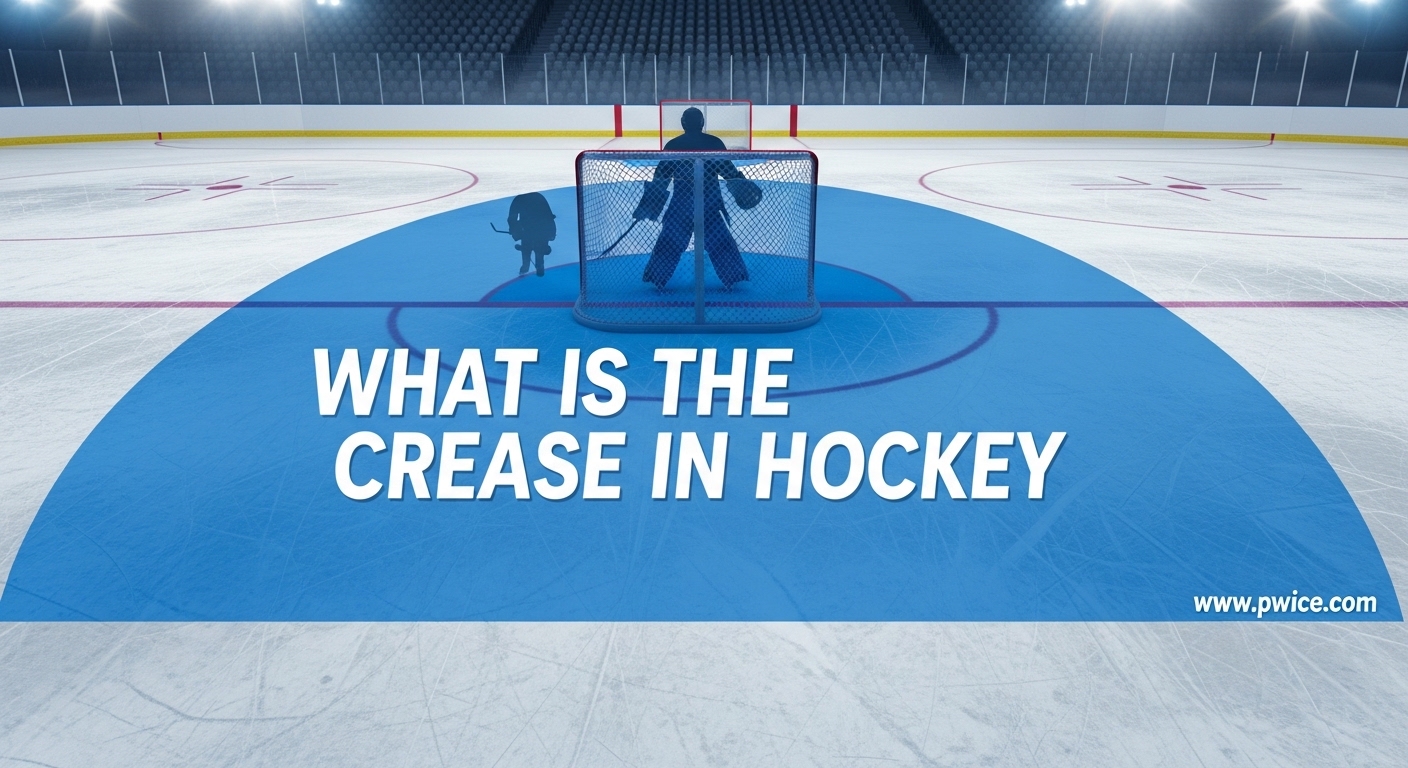
The crease in hockey is a semi-circular blue painted area directly in front of each goal. In the NHL, it measures 8 feet wide and extends 4 feet deep from the goal line, bordered by a red line that makes it visible to players and referees. This protected zone serves as the goaltender’s workspace and establishes boundaries for player contact.
In this guide, I will explain everything you need to know about the hockey crease. You will learn the exact rules, why they exist, and how they have evolved over the years.
Table of Contents
What Is the Crease in Hockey?
The crease represents one of the most important zones on the ice surface. It is the blue semi-circle you see in front of every net, often called “the paint” or “the blue paint” by players and broadcasters.
The crease extends outward from the goal line in a semi-circular shape. The NHL specifies an 8-foot width with a depth of 4 feet from the goal line to the outer edge. A red 2-inch border surrounds the blue area, creating a clear visual boundary that everyone can see during fast-paced action.
USA Hockey uses slightly different dimensions for youth and amateur play. Their crease runs 6 feet wide with a 4-foot depth. International play under IIHF rules matches the NHL 8-foot width but sometimes varies in competitive levels.
The name “crease” comes from cricket. Early hockey borrowed the term from cricket pitches where creases marked specific zones. The name stuck even as hockey developed its own distinct identity.
Physical Description of the Goal Crease
Ice crews paint the crease before every game using special paint that adheres to ice. The blue coloring helps everyone track where the goalie operates versus where skaters can move freely.
The red border serves multiple purposes. It helps referees determine when players cross into the protected zone. It also marks where face-offs occur after certain stoppages in play.
The crease includes the space above the ice surface extending up to the height of the goal frame. This vertical space matters for goalie interference calls when players contact goaltenders above the ice level.
Why Does the Crease Exist?
The crease exists primarily to protect goaltenders from dangerous contact. Goalies concentrate on tracking pucks and making saves. They cannot defend themselves against charging players while focused on the play.
Without the crease, attacking players could camp directly in front of the net and block the goalie’s movement. They could also charge into goalies while pretending to play the puck. The crease creates a safety bubble that referees enforce strictly.
The protected zone also ensures fair scoring opportunities. It prevents teams from obstructing goalies through physical presence rather than skill. This balance keeps games competitive and protects player safety.
The Goaltender’s Workspace
Think of the crease as the goalie’s office. It is where they establish position, challenge shooters, and control rebounds. Goalies need predictable space to execute their techniques effectively.
Most goalies use the crease as a reference point for positioning. They track their depth relative to the crease line to optimize their angle against shooters. Moving too far out exposes the net to quick passes. Staying too deep reduces reaction time.
Experienced goalies develop spatial awareness of the crease without looking down. They feel the ice texture change where the paint sits and sense the red border under their skates. This kinesthetic awareness helps them track position during chaotic scrambles.
Can Players Enter the Crease?
Yes, players can enter the crease under specific circumstances. The rules distinguish between incidental entry and intentional presence that affects play.
An attacking player may enter the crease if pushed in by a defender. The referee allows play to continue if the player makes no attempt to play the puck or interfere with the goalie while in the blue paint. This “momentum” exception prevents penalties when players have no control over their movement.
Players can also skate through the crease during normal play if they avoid contact with the goaltender. Brief presence while circling the net or pursuing a puck does not automatically create a violation. The key factor is whether the player interferes with the goalie’s ability to make a save.
When Goals Get Disallowed
If an attacking player enters the crease and scores, the goal typically gets waved off. The referee signals no goal immediately and the play resumes with a face-off outside the zone.
This rule applies even if the goalie had no chance to make the save. The NHL and other leagues enforce strict liability for crease presence. If you are in the paint when the puck crosses the line, the goal does not count.
Video review can overturn these calls in some situations. If replay shows the player was forced into the crease by defensive contact, the goal may stand. The officials examine whether the player had any opportunity to avoid the blue paint.
Time Limits for Crease Presence
No specific rule limits how long a player can stand in the crease. However, referees whistle play dead quickly when attacking players occupy the zone without purpose.
Defensemen face different standards. They can fight for position in front of their own net more aggressively. The rules allow defensive crease presence because those players protect their goalie rather than obstructing them.
Goalie Interference Explained
Goalie interference represents one of the most debated calls in hockey. It occurs when a player contacts the goaltender inside or outside the crease in a way that prevents them from playing their position.
The NHL uses a “no harm, no foul” standard in modern officiating. If contact occurs but the goalie still makes the save, play continues. If the contact prevents a save and a goal scores, officials disallow the goal and may assess a penalty.
Referees have significant discretion with interference calls. They judge whether contact was avoidable, whether the goalie was in their crease, and whether the player made a reasonable effort to stop. These split-second decisions often generate controversy.
Penalties for Crease Violations
Direct crease violations typically result in goals being disallowed rather than penalties. However, aggressive contact with goalies earns two minutes for goaltender interference.
Repeat offenders or intentional collisions can draw major penalties and game misconducts. The league reviews dangerous contact for potential suspensions, especially when goalies suffer injuries.
Defensive players who push opponents into their own goalie can cause interference calls against their team. This creates strategic complexity for defensemen battling in front of the net.
The 1999 Rule Change and the Gretzky Rule
The crease rules changed dramatically after one of the most controversial Stanley Cup Finals moments in history. On June 19, 1999, Brett Hull scored the Cup-winning goal for the Dallas Stars against the Buffalo Sabres.
Hull had his skate in the crease when he scored. Under the rules at that time, any attacking player in the crease before the puck automatically invalidated a goal. The goal should not have counted.
Referees allowed the goal to stand, sparking outrage from Buffalo fans and management. The incident highlighted problems with strict crease enforcement that had frustrated players and officials throughout the 1990s.
What Is the Gretzky Rule?
The “Gretzky rule” refers to the 1999-2000 NHL rule changes that relaxed crease enforcement. These changes allowed goals when attacking players entered the crease if they did not affect the play or interfere with the goalie.
Wayne Gretzky had advocated for such changes throughout his career. He argued that strict crease rules created unfair disallowed goals when players barely touched the paint. The media nicknamed the reform after him.
The modern rule allows referees to use judgment. If a player skates through the crease without contacting the goalie or affecting their ability to save, the goal can stand. This discretionary standard remains in place 2026.
Clearing the Crease: Defense Techniques
Defensemen must master crease clearing to protect their goalies effectively. This skill separates elite defensive players from average ones.
Legal clearing involves body positioning rather than overt physical contact. Defensemen establish front net position and use their hips and shoulders to move attacking players out of the dangerous scoring area. They stay on their feet and avoid cross-checks or slashes that draw penalties.
Effective crease clearing requires anticipation. The best defensemen read plays developing and move to intercept passes before they reach the net front. They clear space early rather than reacting after opponents establish position.
Net Front Battles
The area directly in front of the crease sees the most intense physical battles. Forwards try to screen goalies and tip shots. Defensemen work to move them out without taking interference penalties.
Strength and leverage matter more than outright force. Defensemen use their stick to establish position and their body to seal off opponents. They battle for the space between the hash marks and the crease where most goals get scored.
Communication helps defensemen coordinate crease coverage. They call switches and alerts to ensure someone always protects the net front. Leaving the crease exposed creates easy scoring chances for opponents.
Quick Reference: Crease Violations
Understanding crease rules becomes easier with clear examples. Here is what officials look for when making calls.
Player in crease with puck scores: No goal. The referee waves it off immediately and holds their hands out to signal no score.
Player pushed into crease by defender: Play continues or goal stands if scored. The contact was not voluntary, so no penalty applies.
Incidental contact with goalie: Referee discretion. If the goalie makes the save, play continues. If the contact prevents a save, no goal.
Intentional contact with goalie: Goaltender interference penalty. Two minutes in the box and potential review for misconduct.
Defenseman clears crease aggressively: Legal if using body position. Penalty if using stick checks or punches.
Goalie plays puck outside trapezoid: Delay of game penalty. This separate rule prevents goalies from handling the puck in corners.
Frequently Asked Questions
Can a player enter the crease in hockey?
Yes, players can enter the crease in hockey under specific conditions. Players pushed into the crease by opponents, those skating through without affecting play, or defensemen protecting their goalie may enter without penalty. Attacking players who enter voluntarily and interfere with the goalie will have goals disallowed and may receive penalties.
Can you be in the crease and score a goal?
Generally, no. If an attacking player is in the crease when the puck enters the net, the goal gets disallowed under standard rules. However, exceptions exist for players pushed into the crease by defenders or those who entered without affecting the goalie’s ability to make a save. The referee uses discretion based on whether the crease presence impacted the play.
What is the Gretzky rule?
The Gretzky rule refers to NHL crease rule changes implemented in 1999-2000 that relaxed strict enforcement. Named after Wayne Gretzky who advocated for reform, these changes allow referees to use judgment when attacking players enter the crease. Goals can stand if the player did not interfere with the goalie’s ability to make a save, replacing the previous strict liability standard where any crease presence automatically disallowed goals.
How long can you stay in the crease in hockey?
No specific time limit exists for crease presence in the rulebook. However, referees stop play quickly when attacking players occupy the crease without purpose. Defensemen can remain in the crease longer while protecting their goalie and clearing opponents. The key factor is not time but whether the player’s presence interferes with goaltending.
Conclusion
Understanding what is the crease in hockey helps fans appreciate the game’s nuances. The blue semi-circle represents more than paint on ice. It protects goaltenders, ensures fair competition, and creates strategic battles that define hockey’s identity.
The rules have evolved from strict liability to discretionary judgment. Modern officiating balances player safety with competitive fairness, allowing exciting plays while maintaining goalie protection.
Whether you are a new fan learning the sport or a player studying positioning, mastering crease rules deepens your hockey knowledge. Watch how elite players navigate the blue paint during your next game. You will see these rules in action every shift.