
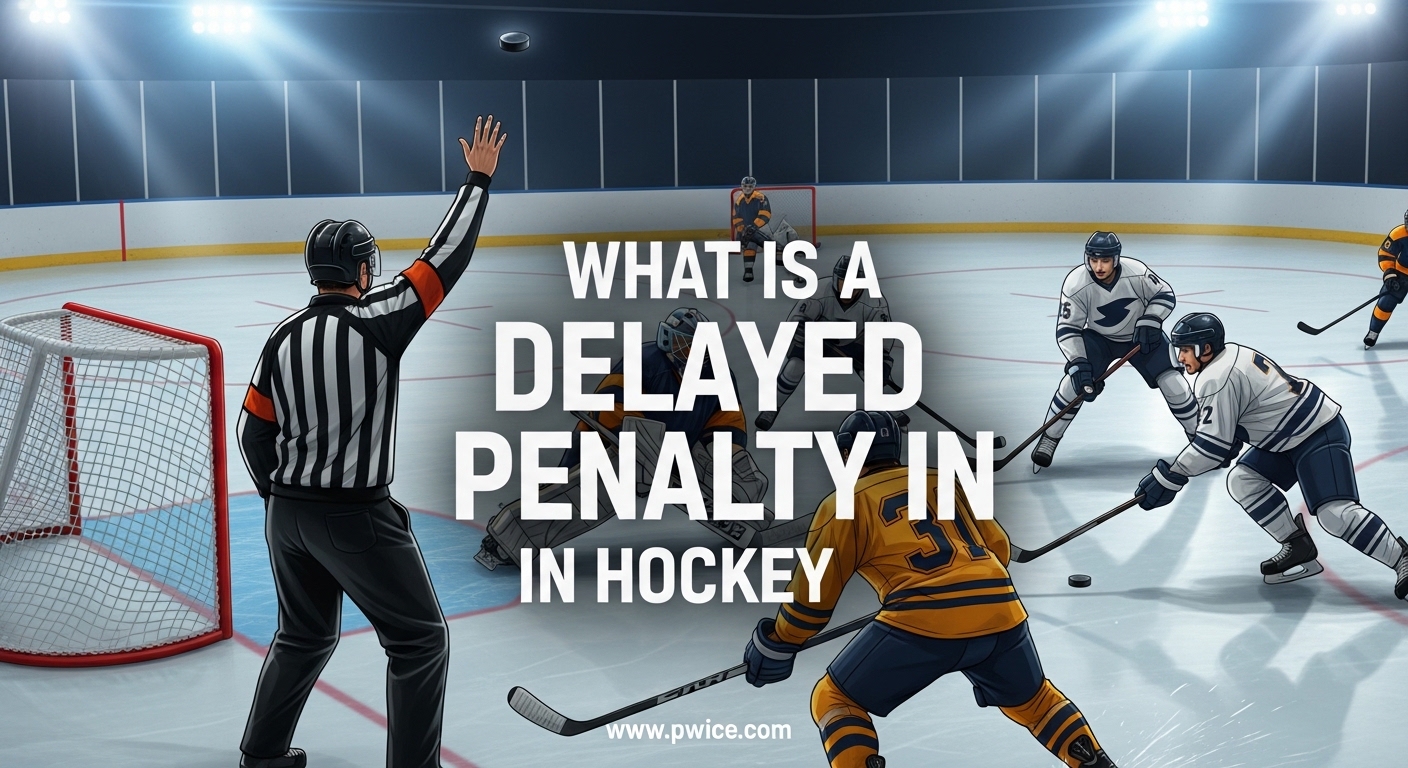
There’s nothing quite like that moment in a hockey game when you see the referee’s arm shoot straight up in the air. The crowd roars, players scramble, and suddenly the game shifts into a unique strategic situation. This is the delayed penalty, one of hockey’s most fascinating rules that creates some of the most exciting moments in the sport.
Understanding what is a delayed penalty in hockey transforms how you watch the game. I’ve watched hundreds of games over the years, and seeing fans’ confusion when this situation arises is common. Let me break down everything you need to know about this rule, how it works, and why it matters for both players and fans.
Table of Contents
What Is a Delayed Penalty in Hockey?
A delayed penalty in hockey is a penalty call where play continues because the non-offending team maintains puck possession, allowing them a temporary advantage until the offending team gains control. When a player commits an infraction but the opposing team has the puck, the referee signals the penalty but doesn’t stop play immediately.
This rule exists to prevent penalizing the team that was just fouled. Stopping play right away would punish the victim of the infraction by killing their offensive momentum. Instead, hockey gives them a chance to complete their attack.
The key elements that define a delayed penalty include: an infraction committed by a player whose team doesn’t have possession, the referee raising their arm to signal the penalty, play continuing until the offending team touches the puck, and the whistle blowing only when the penalty is officially enforced.
The Referee Signal
When you see the referee extend one arm straight above their head, that’s the delayed penalty signal. It’s distinctive and impossible to miss once you know what to look for. The arm stays raised until the whistle blows, creating visual tension for everyone watching.
This signal tells players, coaches, and fans that a penalty has been called but play hasn’t stopped yet. I’ve noticed newer fans often confuse this with an icing signal or other calls, but the delayed penalty arm is always straight up, not pointing or waving.
How Does a Delayed Penalty Work?
The mechanics of a delayed penalty follow a specific sequence that every hockey fan should understand. Here’s exactly what happens on the ice:
Step 1: The Infraction Occurs
A player commits a penalty against an opponent. This could be tripping, hooking, holding, or any other infraction. The key factor is that the penalized team’s players don’t have control of the puck when the foul happens.
Step 2: The Referee Signals
The official spots the penalty and immediately raises their arm straight up. Play continues without interruption. The non-offending team maintains possession and can continue their offensive attack.
Step 3: Play Continues
The team with the puck has a unique opportunity. They know a penalty is coming, so they can take extra risks. The offending team must avoid touching the puck at all costs, which creates strange dynamics on the ice.
Step 4: The Whistle Blows
Play stops the moment any player from the offending team touches the puck or gains control. This includes catching the puck with their hand, kicking it, or making any contact. The whistle then sounds, and the penalty is officially recorded.
Step 5: Faceoff and Enforcement
After the whistle, the teams line up for a faceoff in the offending team’s defensive zone. The penalized player heads to the penalty box, and the power play begins.
This entire sequence usually happens within 5-15 seconds, though I’ve seen rare instances where it extends longer when the attacking team maintains exceptional control.
Why Do Teams Pull the Goalie on a Delayed Penalty?
This is where things get really interesting. During a delayed penalty, the attacking team has a massive strategic opportunity: they can pull their goalie for an extra attacker without any risk.
Here’s why this works: the opposing team cannot score during a delayed penalty. Even if they gain possession of the puck and shoot it into the empty net, the goal wouldn’t count. The whistle would blow the moment they touch the puck, and play would stop before any shot could be legally taken.
This creates a temporary 6-on-5 advantage where the attacking team can flood the offensive zone with extra skaters. I’ve seen coaches pull their goalie the instant they see the referee’s arm go up, giving their team an even larger manpower advantage than a typical power play.
The strategy involves quick puck movement, sustained pressure in the offensive zone, and taking calculated shooting chances that teams wouldn’t normally attempt. It’s high-risk, high-reward hockey at its finest.
When Coaches Make This Decision
Most coaches will pull the goalie automatically during a delayed penalty, but there are exceptions. If the puck is in the defensive zone or the play is chaotic, some coaches prefer to keep the goalie in until better positioning is established.
The decision also depends on game situation. In a close game late in the third period, coaches might be more aggressive. Earlier in the game or with a comfortable lead, they might play it more conservatively.
What Happens If You Score on a Delayed Penalty?
This is one of the most exciting outcomes in hockey. When the non-offending team scores during a delayed penalty, the goal counts, but the penalty itself is wiped out completely.
Here’s what this means in practical terms: the team that scored gets credit for the goal on the scoreboard. The penalized player does NOT serve time in the penalty box. No power play is awarded. Play resumes with a faceoff at center ice, just like after any regular goal.
I’ve seen many confused fans wonder why the penalized player doesn’t still have to go to the box. The logic is that the penalty was never officially enforced because play never stopped due to the offending team gaining possession. Since the goal ended the play sequence, the penalty is essentially cancelled.
This creates an incredible incentive for attacking teams to score quickly during delayed penalties. They know that a goal not only puts points on the board but also completely eliminates the penalty time the other team would have served.
Faceoff Location After Goal
When a goal is scored during a delayed penalty, the ensuing faceoff takes place at center ice. This differs from the standard faceoff location after a penalty is enforced, which would typically be in the offending team’s defensive zone.
This center-ice faceoff gives both teams a neutral restart to the play, with no lingering advantage from the penalty situation.
Strategic Advantages During a Delayed Penalty
The delayed penalty creates unique tactical opportunities that smart teams exploit. I’ve studied countless game situations, and the teams that consistently capitalize on these moments share specific strategies.
Offensive Tactics
The most effective offensive approach involves sustained puck possession in the offensive zone. Players cycle the puck along the boards, work give-and-go plays, and take extra risks with passes they wouldn’t normally attempt.
Shooting strategy also changes. With an extra attacker and no fear of a counterattack (since the whistle blows the moment the other team touches the puck), players can fire from odd angles and take shots that would normally be considered dangerous.
Point shots with traffic in front become especially effective. The defense can’t clear rebounds, and the chaos created by an extra attacker often leads to scoring chances.
Defensive Considerations
The team that committed the penalty faces a unique challenge: they must avoid the puck at all costs while still trying to defend their net. I’ve seen players literally skate away from loose pucks during these sequences.
Defensive positioning becomes more about blocking shooting lanes and staying between attacking players and the net than actually trying to gain possession. It’s a bizarre defensive stance that only occurs in this specific situation.
Common Mistakes to Avoid
Many teams make the mistake of overpassing during delayed penalties. With the extra attacker and the excitement of the situation, players sometimes try to make the perfect play instead of simply getting the puck to the net.
Another common error is failing to recognize the delayed penalty signal quickly enough. I’ve seen teams continue playing normally for several seconds before realizing they have a man advantage, wasting precious seconds of the opportunity.
Defensively, the biggest mistake is accidentally touching the puck too early. Smart defenders will let the puck slide past them rather than make contact, extending the advantage period for the attacking team.
Special Scenarios and Edge Cases
Hockey rules have their complexities, and delayed penalties come with several unique situations that even experienced fans might not fully understand.
What Happens If You Ice the Puck on a Delayed Penalty?
During a delayed penalty, icing is waived off. If the team in possession of the puck (the non-offending team) ices the puck, play continues. The whistle doesn’t blow, and the delayed penalty remains in effect.
This makes sense logically since the offending team hasn’t gained possession. The icing call would normally result in a faceoff in the defensive zone, but during a delayed penalty, the priority is letting the non-offending team complete their advantage.
Multiple Penalties During Delayed Calls
What happens if another penalty occurs during a delayed penalty? The situation can get complicated, but here’s the basic rule: additional penalties to the same team are recorded but the delayed penalty status continues with the first call.
If players from both teams commit penalties, the referee may assess offsetting penalties and the delayed penalty situation may be nullified entirely, resulting in a faceoff.
Own Goal Scenarios
Can you score on your own net during a delayed penalty? This is extremely rare, but if a player from the offending team accidentally puts the puck in their own net during the delayed penalty sequence, the goal counts for the attacking team.
The logic is that the offending team “gained possession” by touching the puck, which should have ended play. Since they touched it and it went in their own net, the goal is awarded to the attacking team.
Overtime Considerations
Delayed penalty rules remain the same in overtime, but the strategic calculus changes. With 3-on-3 overtime, pulling the goalie creates a 4-on-3 situation that’s even more advantageous than in regulation play.
However, the risk is also higher since overtime is sudden death. Coaches must weigh the opportunity against the possibility of giving up a scoring chance if the delayed penalty doesn’t result in a goal.
Frequently Asked Questions About Delayed Penalties
Why do they pull the goalie on a delayed penalty?
Teams pull the goalie during a delayed penalty because the opposing team cannot score until they touch the puck. This creates a risk-free opportunity to add an extra attacker (6-on-5) and increase scoring chances without any danger of giving up a goal.
What happens if you ice the puck on a delayed penalty?
Icing is waived off during a delayed penalty. If the team with puck possession ices the puck, play continues because the offending team has not gained possession. The delayed penalty remains in effect until the offending team actually touches the puck.
Can you score on your own net during a delayed penalty?
Yes, in rare cases if a player from the offending team accidentally puts the puck in their own net during a delayed penalty, the goal counts for the attacking team. The logic is that by touching the puck, they’ve ‘gained possession’ which should end the delayed penalty.
How long does a delayed penalty last?
A delayed penalty lasts from the moment the referee raises their arm until the offending team gains possession of the puck. Typically this takes 5-15 seconds, but there’s no time limit. The delayed penalty continues as long as the non-offending team maintains puck possession.
What’s the difference between a delayed penalty and a regular penalty?
A delayed penalty allows play to continue when the non-offending team has puck possession, giving them an advantage. A regular penalty results in immediate stoppage of play. The delayed penalty creates strategic opportunities like pulling the goalie for an extra attacker that don’t exist with regular penalties.
Conclusion
The delayed penalty is one of hockey’s most unique rules, creating strategic moments that you won’t find in any other sport. Understanding what is a delayed penalty in hockey adds a new layer of appreciation for the game’s complexity and the quick decisions players and coaches must make.
Next time you’re watching a game and see that arm go up, you’ll know exactly what’s happening. Watch for the extra attacker coming onto the ice, notice the defenders skating away from loose pucks, and appreciate the tactical chess match playing out in real time.
These moments often lead to the most exciting goals of the game, combining skill, strategy, and the unique rules that make hockey such a dynamic sport. Whether you’re a new fan or a seasoned follower, the delayed penalty is one rule that always delivers drama.