
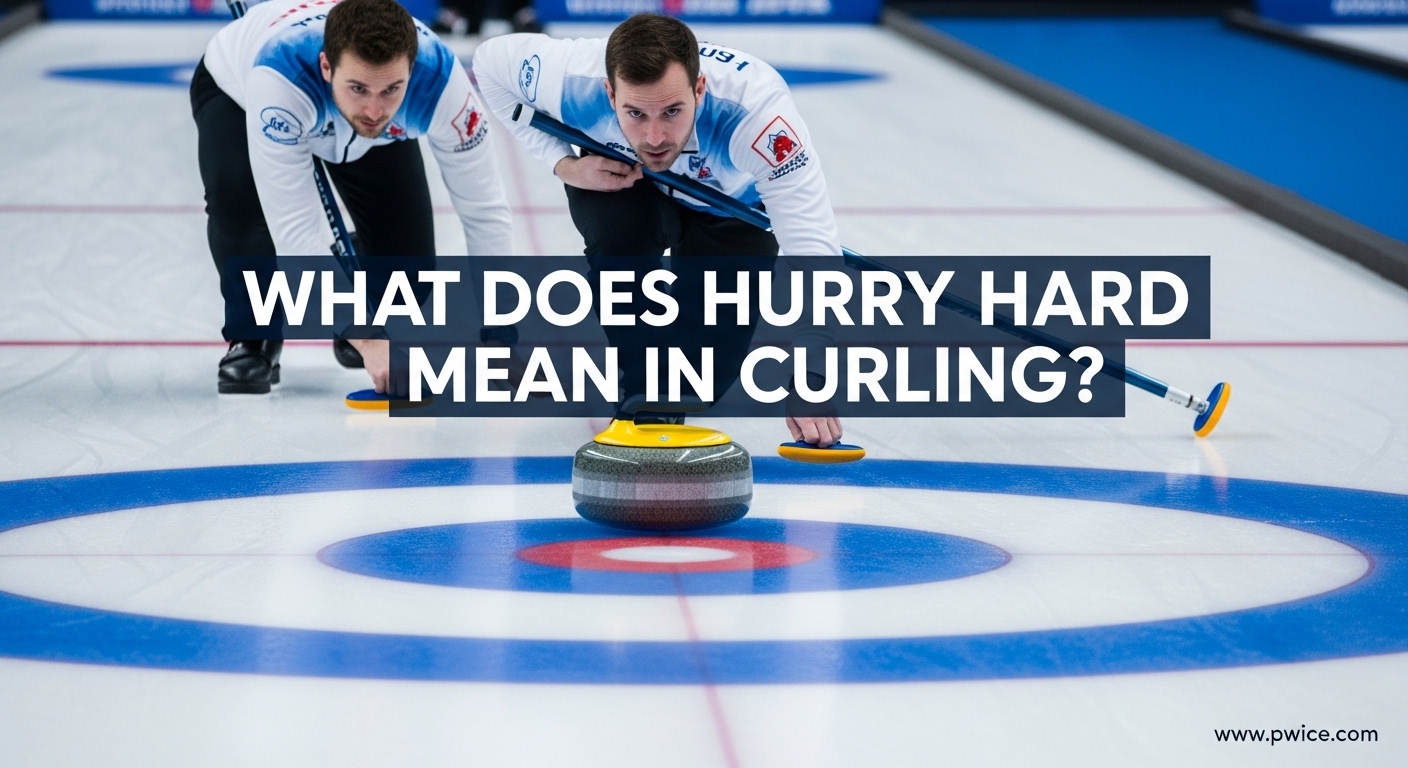
If you have ever watched curling during the Winter Olympics, you have probably heard someone scream “hurry hard” at the top of their lungs. It is one of the most iconic sounds in the sport. But what does this phrase actually mean?
In this guide, I will explain everything you need to know about this classic curling command. You will learn who says it, why it matters, and the fascinating physics behind why sweepers frantically brush the ice in front of sliding stones.
Table of Contents
What Does Hurry Hard Mean in Curling?
“Hurry hard” is a command shouted by the skip (team captain) to instruct the sweepers to sweep the ice as intensely and quickly as possible in front of a moving stone. The phrase combines two distinct instructions: “hurry” tells the sweepers to move fast, while “hard” tells them to apply maximum pressure with their brushes.
When sweepers hear this call, they immediately begin vigorous sweeping. This action can extend the stone’s travel distance by up to five meters and help it maintain a straighter path. Proper sweeping often means the difference between scoring a point and missing the target entirely.
The phrase has become deeply embedded in curling culture. Some consider it traditional, while others view it as old school. Either way, it remains one of the most recognizable calls in the sport.
Who Says Hurry Hard and When
The skip is the only person who calls “hurry hard.” As the team strategist, the skip stands at the far end of the ice sheet and watches each stone’s trajectory after it is released. They must quickly read the ice conditions, judge the stone’s speed, and determine whether sweeping will help.
The call comes at a critical moment. If the stone is traveling too slowly to reach the target (called the house), the skip yells “hurry hard” to maximize distance. If the stone is already moving too fast, the skip might shout “off” or “whoa” instead, telling sweepers to stop brushing.
Timing matters enormously in curling. A split-second delay in calling “hurry hard” can cost a team the end. That is why you see skips screaming at full volume, sometimes repeating the phrase several times as the stone glides down the ice.
The Science Behind Sweeping
Sweeping might look like simple housework, but it involves sophisticated physics. When a curler vigorously sweeps in front of a stone, the brush creates friction against the ice surface. This friction generates heat, which melts a microscopic layer of ice directly in front of the stone.
This thin film of water acts as a lubricant, reducing drag on the granite stone. With less resistance, the stone maintains its momentum longer and travels farther. Studies and practical experience show that effective sweeping can add three to five meters to a stone’s final distance.
Sweeping also affects the stone’s curl (the curved path it takes). By sweeping on one side of the stone more than the other, sweepers can slightly straighten or guide the rock’s trajectory. This gives teams another tool for precise shot-making beyond just the initial throw.
History and Tradition of the Phrase
The phrase “hurry hard” dates back to curling’s early days in Scotland. The sport began on frozen ponds in the 16th century, and communication methods evolved alongside the equipment. Originally, curlers used corn straw brooms or brushes made from natural materials.
Those early brooms were loud. The swishing sound of straw against ice meant teams had to yell loudly just to be heard over the noise. Modern carbon fiber brushes are much quieter, but the tradition of shouting remains deeply ingrained in curling culture.
Some contemporary teams have moved toward alternative communication methods. You might hear “hurry” without the “hard,” or see teams using hand signals. However, “hurry hard” persists as the sport’s most famous command, especially during televised events where its dramatic effect adds to the entertainment value.
Other Common Curling Commands
While “hurry hard” gets the most attention, it is just one of several vocal commands used during a curling match. Understanding these related terms helps you follow the action better whether you are watching on television or attending your first live game.
OFF: This command tells sweepers to stop sweeping immediately. The skip shouts “off” when the stone is traveling too fast or when continued sweeping would send the rock past the target. You will often hear this right after “hurry hard” as the stone approaches its final position.
WHOA: Similar to “off,” this tells sweepers to stop and also conveys urgency. It might indicate the stone is severely overweight (curling terminology for too much speed) or heading in a dangerous direction.
HURRY: A lighter version of “hurry hard.” This tells sweepers to sweep with moderate intensity. The skip uses this when the stone needs some assistance but does not require maximum effort.
YES: An affirmative command encouraging continued sweeping. Unlike “hurry hard” which demands intensity, “yes” simply confirms that the current sweeping should continue at its present level.
Why Do Curlers Yell Instead of Using Radios?
Many newcomers to curling wonder why teams do not use wireless earpieces or radios instead of shouting across the ice. The practice seems archaic in an age of Bluetooth technology. There are actually several good reasons for maintaining traditional vocal communication.
First, curling maintains strong traditions rooted in its Scottish heritage. The sport values etiquette, sportsmanship, and historical continuity. Yelling commands connects modern players to centuries of curling history. Changing this would alter the character of the game.
Second, the acoustics of curling rinks actually work reasonably well for shouting. The long, narrow sheets of ice carry sound effectively, and experienced sweepers learn to distinguish their skip’s voice from background noise. Radios would introduce potential technical failures and battery concerns during critical matches.
Third, the visible shouting adds to curling’s unique appeal. The dramatic vocal commands create tension and excitement that silent communication would eliminate. Television broadcasts benefit from these audible cues that help viewers understand when something important is happening.
Frequently Asked Questions
Why do curlers say hurry hard?
Curlers say ‘hurry hard’ because the skip (team captain) needs the sweepers to sweep as intensely and quickly as possible in front of a moving stone. This vigorous sweeping creates friction that melts a thin layer of ice, reducing drag and allowing the stone to travel farther—sometimes up to five meters more than without sweeping. The command helps the stone reach its target position in the house.
What does ‘hurry hard’ mean?
‘Hurry hard’ is a curling command that means ‘sweep fast and with maximum pressure.’ The word ‘hurry’ tells sweepers to move their brushes quickly, while ‘hard’ instructs them to apply heavy downward pressure. Together, these actions create maximum friction on the ice surface to help the stone glide farther and straighter.
What are the terms used in curling?
Common curling terms include: Hurry Hard (sweep intensely), OFF (stop sweeping), Whoa (stop urgently), Hurry (sweep moderately), Yes (continue sweeping), Skip (team captain/strategist), Sweepers (players who brush the ice), House (the target area), End (a round of play), Button (center of the house), Hack (footrest for delivery), and Hog Line (line the stone must cross).
How hard is it to learn curling?
Curling is relatively easy to learn but difficult to master. Most beginners can deliver a stone down the ice within their first session. However, reading the ice, understanding strategy, and mastering the precise weight (speed) and turn (rotation) of throws takes years of practice. Many clubs offer learn-to-curl programs that teach basics in a single evening, making it an accessible sport for newcomers.
Conclusion
Now you know exactly what does hurry hard mean in curling and why this phrase has become so iconic in the sport. The next time you watch a match, you will understand that those loud shouts represent sophisticated strategy, physics, and tradition all working together.
If you are curious about trying curling yourself, look for a local club offering learn-to-curl sessions. Most facilities provide all the equipment you need, and you will get to experience the unique thrill of both shouting commands and gliding stones across the ice. Understanding the terminology before you go will give you a head start on appreciating this fascinating winter sport.