
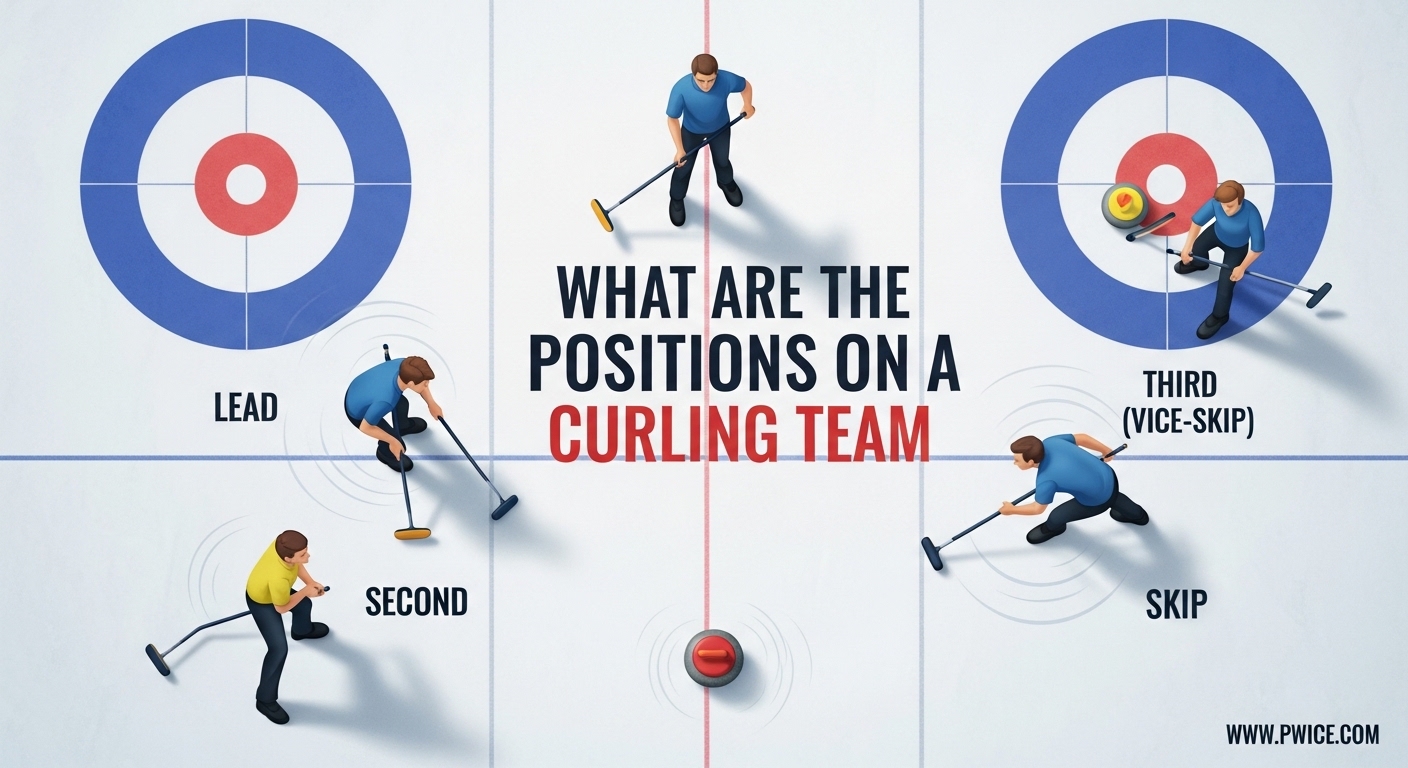
A curling team consists of four players, each with distinct responsibilities and throwing order: the lead, the second, the third (also called the vice or vice-skip), and the skip who serves as team captain. Understanding these positions is essential whether you are learning to play, watching Olympic curling, or joining your first club league.
Each position requires specific skills and contributes differently to team strategy. The throwing order matters because earlier players set up the frame, while later players must respond to the evolving situation. In this guide, I will explain exactly what each position does and how they work together during a game.
Table of Contents
What Are the Positions on a Curling Team?
The four positions on a curling team follow a specific throwing sequence. Here is how they break down:
- Lead – Throws the first two stones of each end
- Second – Throws stones three and four
- Third (also called Vice-Skip or Mate) – Throws stones five and six
- Skip (team captain) – Throws the final two stones (seven and eight)
Teams may also carry an alternate player who can substitute if a team member cannot continue. This structure remains consistent across competitive curling, club play, and Olympic competition, though mixed doubles follows a different format with only two players per team.
The Lead Position
The lead throws the first two stones of every end and specializes in placing guards. Guards are stones positioned in front of the house to protect scoring rocks or block opponent access. Because these initial shots establish the foundation for the entire end, accuracy matters enormously.
Lead players need exceptional draw weight control. They must place stones at precise distances without knocking existing rocks out of position. A good lead consistently hits the target broom with the exact weight called by the skip.
Sweeping responsibilities fall heavily on leads. When not throwing, leads sweep teammates’ stones with intensity. This position demands excellent physical fitness since leads sweep more than anyone else on the team. The combination of precise throwing and vigorous sweeping makes lead a demanding role for beginners and experienced players alike.
The Second Position
The second throws the third and fourth stones of each end. Traditionally, seconds specialized in takeouts, powerful shots designed to remove opponent stones from play. Modern curling has blurred these lines somewhat due to rule changes, but seconds still need strong hitting ability.
Seconds must balance power with precision. While they need enough weight for effective takeouts, they also require decent drawing skills for situations calling for finesse shots. The 5-rock free guard zone rule, implemented in 2026, means seconds sometimes throw draws behind existing guards rather than pure takeouts.
Like leads, seconds do extensive sweeping when not throwing. Their sweeping duties continue until they step into the hack for their own deliveries. Successful seconds combine physical stamina for sweeping with technical versatility for varied shot requirements.
The Third (Vice-Skip) Position
The third, also known as the vice-skip or simply the vice, throws the fifth and sixth stones of each end. This position bridges the setup phase and the closing phase of team strategy. Thirds must execute complex shots including raises, runbacks, and delicate draws.
The vice-skip serves as the skip’s strategic assistant. When the skip prepares to throw the final stones, the third holds the broom as the target and helps read ice conditions. This partnership requires strong communication and mutual trust between the skip and third.
Thirds sweep less than leads and seconds because their throwing position comes later in the order. However, they still contribute to sweeping duties between their own shots. Many thirds eventually graduate to skip as they develop strategic thinking and leadership skills.
The Skip Position
The skip functions as team captain, strategist, and final stone thrower. This position carries the heaviest responsibility since the skip determines every shot call and throws the last two stones when games often hang in balance. The skip stands in the house at the far end, directing play and holding the broom target for teammates.
Strategic thinking defines successful skips. They must read ice conditions, anticipate opponent moves, and adjust tactics based on score and remaining ends. Skip decisions determine whether teams play aggressively for multiple points or defensively to protect leads.
Skips rarely sweep because they need clear sight of stone paths and must focus on shot calling. When skips do throw, no one holds the broom for them, they aim at stationary targets in the house. Experience typically determines skip selection, with longer-tenured curlers usually filling this role.
Understanding the Throwing Order
Throwing order follows a logical progression from setup to execution. Leads establish guards and positioning. Seconds and thirds build on this foundation with takeouts and draws. The skip finishes with stones that respond to everything that came before.
Teams alternate throws with opponents throughout each end. If your lead throws first, the opposing lead throws second. This alternating pattern continues through all sixteen stones. The skip who throws last enjoys the hammer advantage, delivering the final stone of the end with opportunity to score multiple points or force a blank.
Hammer possession rotates between teams each end regardless of scoring. Understanding when you have hammer influences which position throws at critical moments in close games.
Sweeping Responsibilities by Position
Sweeping duties distribute unevenly across positions. Leads and seconds sweep the most since they throw early and have more time between their shots. Thirds sweep less frequently but still contribute throughout ends. Skips rarely sweep stones because they must remain positioned in the house for strategic observation.
Two teammates sweep each delivered stone simultaneously. The player closest to the stone calls weight guidance while both apply maximum brushing pressure. Effective sweeping requires coordination, communication, and significant upper body strength over the course of a two-hour game.
Modern broom technology and sweeping technique have evolved considerably. Players now understand that sweeping both polishes the ice surface and can actually straighten stone trajectory through friction-induced melting patterns.
How to Choose Your Curling Position
New curlers often wonder which position suits them best. The answer depends on your natural strengths and what aspects of the game appeal to you. Leads need steady accuracy and patience for placement shots. Seconds require power and versatility. Thirds need strategic awareness plus technical precision. Skips need leadership and tactical thinking.
Most beginners start as leads or seconds because these positions involve more sweeping and fewer complex shot calls. This allows new players to learn ice reading and stone delivery fundamentals before taking strategic responsibility. As skills develop, players often progress through positions toward skip.
I recommend trying multiple positions during your first season. Club leagues often allow rotation, giving you experience in each role. Pay attention to which responsibilities energize you and which drain you. Some players love the physical intensity of lead sweeping. Others prefer the mental challenge of skip strategy. Finding your fit improves both your performance and enjoyment of the sport.
Position switching is completely normal in curling. Even competitive teams sometimes adjust roles based on performance, injuries, or strategic experiments. No position carries permanent seniority. The best teams put players where their strengths serve the collective goal.
Frequently Asked Questions
What are the roles on a curling team?
A curling team has four roles: Lead throws first two stones and specializes in guards; Second throws stones three and four with focus on takeouts; Third (Vice-Skip) throws stones five and six and assists with strategy; Skip acts as captain, throws final two stones, and makes all tactical decisions. Each position has distinct sweeping responsibilities and skill requirements.
What is the most important position in curling?
The skip is generally considered the most important position because they function as team captain, make all strategic decisions, and throw the final stones when games are often decided. However, every position matters. A weak lead who misses guards creates problems no skip can solve. Strong teams need quality at all four positions to succeed.
What is the captain of a curling team called?
The captain of a curling team is called the skip. The skip stands in the house at the far end, determines every shot call, holds the broom target for teammates, and throws the final two stones of each end. The third or vice-skip sometimes assists with strategy and holds the broom when the skip throws.
How many players are on a curling team?
A traditional curling team has four players: lead, second, third, and skip. Teams may also designate an alternate player who can substitute if needed. Mixed doubles curling uses only two players per team. Olympic and competitive curling follows the four-player format for standard team events.
Can you switch positions in curling?
Yes, position switching is allowed and common in curling. Club players often rotate positions between games or seasons to develop well-rounded skills. Competitive teams sometimes adjust roles based on performance, strategy changes, or player availability. There are no rules preventing position changes during a tournament or season.
What position should a beginner play in curling?
Beginners typically start as leads or seconds. These positions allow new players to focus on fundamentals like stone delivery and sweeping while learning from experienced teammates. The lead and second positions involve more physical sweeping and less strategic decision-making, providing a gentler learning curve for understanding ice conditions and team dynamics.
Conclusion
Understanding what are the positions on a curling team transforms how you watch and play this strategic sport. Each role, from lead through skip, contributes unique skills at specific moments in every end. Whether you prefer the precision of lead guards, the power of second takeouts, the versatility of third playmaking, or the captaincy of skip strategy, curling offers positions that match different personalities and abilities.
If you are new to curling, start by trying different positions at your local club. Pay attention to what feels natural and what challenges you to grow. The best curlers have often played every position, giving them perspective that improves their primary role. Your curling journey begins with understanding these four positions. Your next step is stepping onto the ice to find where you belong.