
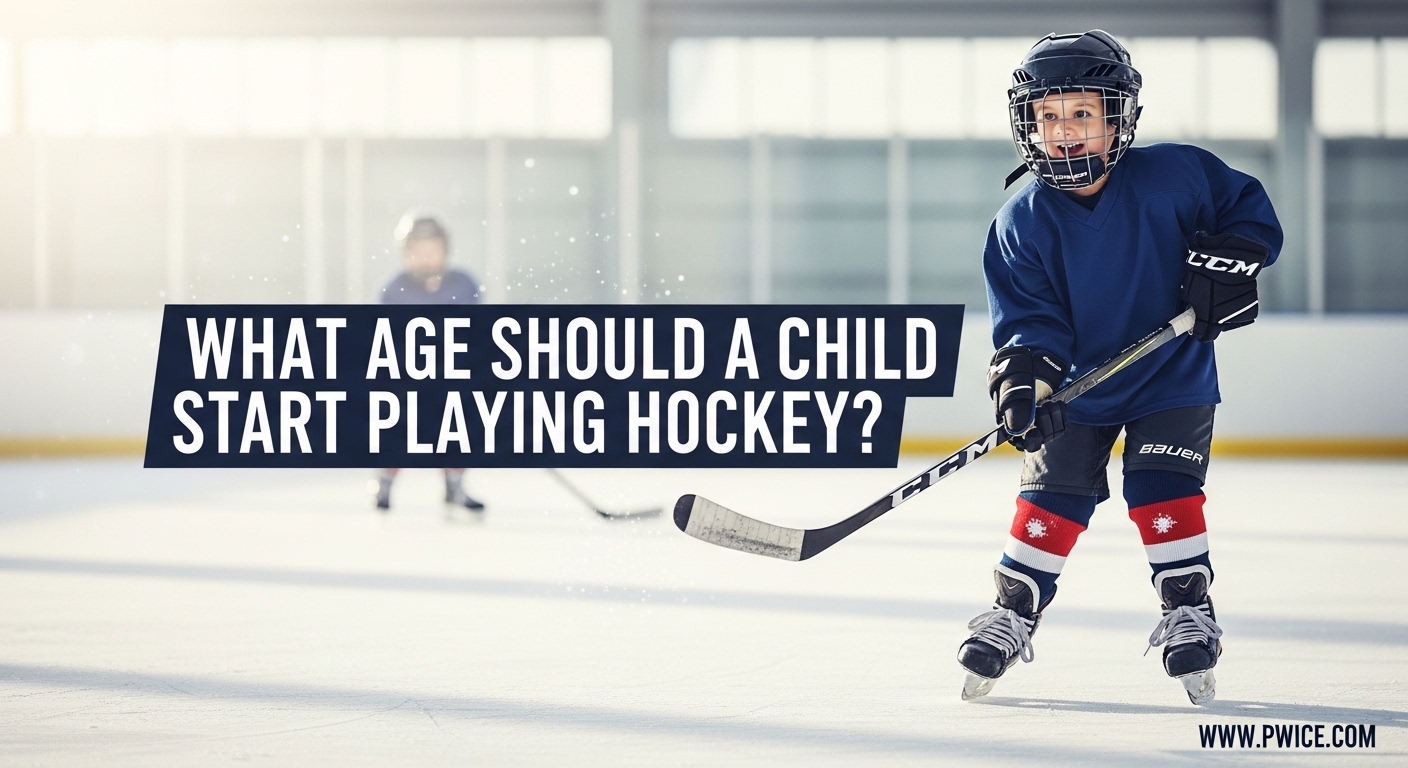
Deciding when to enroll your child in hockey can feel overwhelming. Every parent wants to give their kid the best shot at success without pushing too hard too soon. I have talked to dozens of hockey parents and coaches over the years, and the same questions come up repeatedly.
What age should a child start playing hockey? Is earlier always better? Will my child fall behind if we wait? This guide cuts through the confusion with clear, age-specific recommendations based on USA Hockey and Hockey Canada guidelines, plus real experiences from families who have been there.
Table of Contents
Quick Answer: What Age Should a Child Start Playing Hockey?
Children can begin organized hockey at age five. Most skating programs accept children as young as three for learn-to-skate classes. Starting at three builds foundational skills in a fun, low-pressure environment. Starting at five works perfectly fine too, and many children who begin at this age catch up quickly.
The key distinction many parents miss: organized hockey and skating lessons are different programs with different age requirements. You do not need to choose between them. Most families start with skating at three or four, then transition to hockey programs at five or six.
Age-by-Age Breakdown: What to Expect at Each Stage?
Every child develops at their own pace. These age ranges reflect typical program structures, but individual readiness matters more than birth date. Use these guidelines as a framework, then adjust based on your child.
Ages 3-4: Learn to Skate Foundations
At three and four, children are building basic motor skills that translate to the ice. Programs for this age focus on getting comfortable in skates, falling safely, and standing up independently. Many rinks offer parent-tot classes where you skate alongside your child.
Do not expect hockey skills at this stage. The goal is familiarity with the ice and basic skating mechanics like marching and gliding. Sessions are typically 30 minutes or less to match short attention spans. Equipment is minimal: a helmet, skates, and warm gloves.
From my conversations with hockey parents, the families who started at three consistently mention one thing: patience. One dad told me his son cried through the first four sessions but was begging to go back by week six. The early exposure paid off when organized hockey started at five.
Ages 5-6: Introduction to Organized Hockey
Five is the magic number most hockey associations use for organized programs. USA Hockey and Hockey Canada both structure their entry-level programs around this age. At five, children join what many rinks call Hockey Tots, Learn to Play, or 6U (6 and under) programs.
These programs use the cross-ice format, meaning kids play on half or quarter of a full rink. Smaller spaces mean more puck touches, more goals, and more fun. The American Development Model (ADM) that USA Hockey promotes emphasizes station-based training: kids rotate through skill drills in small groups.
Practices focus on skating, stopping, turning, and basic stickhandling. Games are informal with no scorekeeping. Most programs run one session per week, lasting 45-60 minutes. This is where children learn that hockey is fun, not just where they learn hockey skills.
Ages 7-8: Building Skills and Team Play
By seven and eight, most children have developed the physical coordination and attention span for more structured instruction. USA Hockey 8U programs introduce more complex skills like backward skating, puck control while moving, and basic positioning.
Teams often practice twice weekly and play cross-ice or half-ice games. The emphasis remains on development over winning, but children start understanding team concepts. They pass more intentionally, support teammates, and handle basic systems.
This is also the age where you will start noticing which children started early versus those who began at five or six. Here is the reality: the gap is smaller than you think. Children who started skating at three or four have an edge in comfort on ice, but athletic kids who start at seven often close that gap within a season.
Ages 9+: Competitive Pathways Emerge
Nine is when youth hockey typically shifts from pure development to more competitive structures. Full-ice games become standard. Travel teams form with tryouts. The recreational versus competitive split becomes meaningful.
For families seeking a recreational path, house leagues continue offering low-pressure environments. For those pursuing competitive hockey, travel teams demand more time and travel commitment. USA Hockey recommends that children in this age range play multiple sports rather than specializing in hockey year-round.
Research consistently shows that early specialization increases injury risk and burnout. Kids who play soccer in fall, hockey in winter, and baseball in spring often develop better overall athleticism and stay in sports longer. The multi-sport approach builds diverse movement patterns and reduces overuse injuries common in single-sport athletes.
Is My Child Ready for Hockey? The Complete Checklist
Age matters, but readiness matters more. A five-year-old who cannot follow simple instructions will struggle more than a prepared six-year-old. Use this checklist to assess your child beyond their birth certificate.
Physical Readiness Indicators
Can your child balance on one foot for five seconds? This single-leg stability translates directly to skating mechanics. Can they hop, skip, and run without tripping frequently? Basic coordination prevents frustration on ice. Can they hold a crouch position, similar to a squat? Hockey skating requires bent knees and low center of gravity.
Stamina matters too. Hockey sessions run 45-60 minutes for young children. If your child tires after 20 minutes of activity, they may need more time before starting. Can they put on basic equipment independently? While parents help with skates and helmets, children who can dress themselves have an easier time.
Perhaps most importantly: can they fall and get back up without tears? Falling is constant in beginner hockey. Children who treat falls as normal bounce back faster and enjoy the experience more. If your child melts down after minor tumbles on grass, ice will be even harder.
Emotional and Social Readiness
Does your child separate comfortably from you for activities? Hockey programs require parents to stay in designated areas, not on the ice or bench. Children who cling or cry when separated may need more time. The rink environment is cold, loud, and unfamiliar. Kids need confidence to handle it alone.
Can they follow two-step instructions? Coaches need kids who can process “skate to the blue line and stop.” Children still struggling with multi-step directions may find hockey overwhelming. Do they handle frustration without melting down? Missing the puck, falling, and losing happen constantly in beginner hockey.
The most important indicator: do they want to be there? Forced participation rarely works in youth sports. Children who show genuine interest in hockey, who ask about skating, who enjoy watching games, will progress faster and happier than those pushed into it.
Red Flags: When to Wait
Certain signs suggest delaying hockey enrollment regardless of age. If your child shows extreme fear of the ice or rink environment, forcing participation can create lasting negative associations. If they cannot handle basic group dynamics like taking turns, the team environment may frustrate them.
Children with significant motor delays or balance issues might benefit from physical therapy or other sports first. Hockey is demanding physically, and struggling excessively can hurt confidence. If your child is currently in a high-stress period, like adjusting to school or dealing with family changes, consider waiting until things stabilize.
Another red flag: parental pressure. If you are pushing hockey because you played, or because friends are enrolling, pause and assess. The best hockey experiences start with child-driven interest.
Learn to Skate vs Learn to Play: Understanding the Difference
Many parents confuse these programs, but they serve different purposes. Knowing which your child needs saves money and prevents frustration. Each program builds specific skills that prepare children for the next stage.
Learn to Skate programs teach pure skating fundamentals: forward skating, backward skating, stopping, and edges. These classes include figure skaters, hockey players, and recreational skaters. Instructors teach proper technique regardless of skating discipline. Most rinks offer classes starting at age three. Expect 6-8 weeks of weekly sessions to build basic competency.
Learn to Play programs assume basic skating ability. Children should be able to skate forward confidently and stop before enrolling. These programs add hockey-specific skills: stickhandling, passing, shooting, and basic game concepts. Most require children to be at least five years old. The focus shifts from individual movement to puck interaction.
Hockey Tots bridges the gap for younger children (typically ages 3-6). These programs combine basic skating instruction with hockey equipment and fun activities. Some innovative programs start with three weeks in sneakers on the floor, then transition to three weeks on ice. The hybrid approach builds comfort before adding ice complexity.
My recommendation: start with learn-to-skate at three or four, then transition to learn-to-play or Hockey Tots at five. This progression builds skills sequentially rather than overwhelming children with too many new elements at once. Jumping straight to hockey without basic skating often leads to frustration and dropout.
It Is Never Too Late: Starting Hockey at 8, 10, or Even Older
Here is the anxiety I hear most from parents: “My child is seven and has never skated. Is it too late?” The answer is absolutely not. I have seen children start at eight, ten, even twelve and develop into excellent players. The late starter narrative creates unnecessary fear in hockey families.
Forum discussions with hockey parents reveal a consistent pattern. Children who start later often catch up within one to two seasons if they are athletic and motivated. One parent shared that their son started at six with zero skating experience and was playing at level with peers by age eight. Another reported their daughter began at ten and made the high school varsity team by fourteen.
The key factors for late starters are interest and athleticism, not prior experience. An eight-year-old who plays soccer and wants to try hockey will adapt faster than a reluctant five-year-old with skating lessons. Older children have better body awareness, longer attention spans, and more patience for instruction. They also understand the commitment required.
Hockey associations accommodate late starters through beginner programs that group children by skill, not age. House leagues specifically welcome new players at any age. The competitive disadvantage you fear rarely materializes in practice. What matters is dedication, not the age on the birth certificate.
What about starting as a teenager? Even then, options exist. Many rinks offer adult beginner classes that accept older teens. High school club teams sometimes welcome new players. The window for enjoying hockey never fully closes. I spoke with a parent whose son started at fifteen after watching the Olympics. He played recreationally through college.
Frequently Asked Questions
Can my 3 year old play hockey?
Three-year-olds are generally too young for organized hockey programs, which typically start at age five. However, many rinks offer learn-to-skate classes for three-year-olds that focus on getting comfortable on ice in a fun, low-pressure environment. These parent-tot classes teach basic balance and falling safely, not hockey skills.
Is 7 too late to start hockey?
Seven is not too late to start hockey. Many children begin at this age and catch up to peers within one to two seasons. Older starters often have better coordination and longer attention spans, which accelerates their progress. Hockey associations offer beginner programs grouped by skill level rather than age.
What age did Gretzky start playing hockey?
Wayne Gretzky started skating at age two on a homemade backyard rink in Brantford, Ontario. He began playing organized hockey at age six. While Gretzky had exceptionally early exposure, most professional players started between ages five and seven, proving that starting at these standard ages still allows for elite development.
Should my child learn to skate first or start hockey immediately?
Most children benefit from learning to skate first, typically starting at ages three or four. Pure skating programs build foundational skills without the added complexity of stickhandling and equipment. After developing basic skating ability, children can transition to hockey programs at age five or six with greater confidence and success.
How do I know if my child is ready for hockey?
Look for physical signs like balancing on one foot, basic coordination while running, and stamina for 45-minute activities. Emotional readiness includes separating comfortably from parents, following two-step instructions, and handling frustration without extreme reactions. Most importantly, your child should show genuine interest in participating rather than being pushed into the sport.
What Age Should a Child Start Playing Hockey: Final Thoughts
The question of what age should a child start playing hockey has a nuanced answer. Organized programs welcome children at five. Skating foundations can begin at three. But readiness trumps age every time.
Start with skating lessons if your child is three or four and showing interest. Enroll in organized hockey at five if your child is ready physically and emotionally. If your child is six, seven, or eight and has never skated, do not worry. They can still begin and thrive.
The best age to start hockey is the age when your child is ready, interested, and able to have fun. Everything else builds from there.