
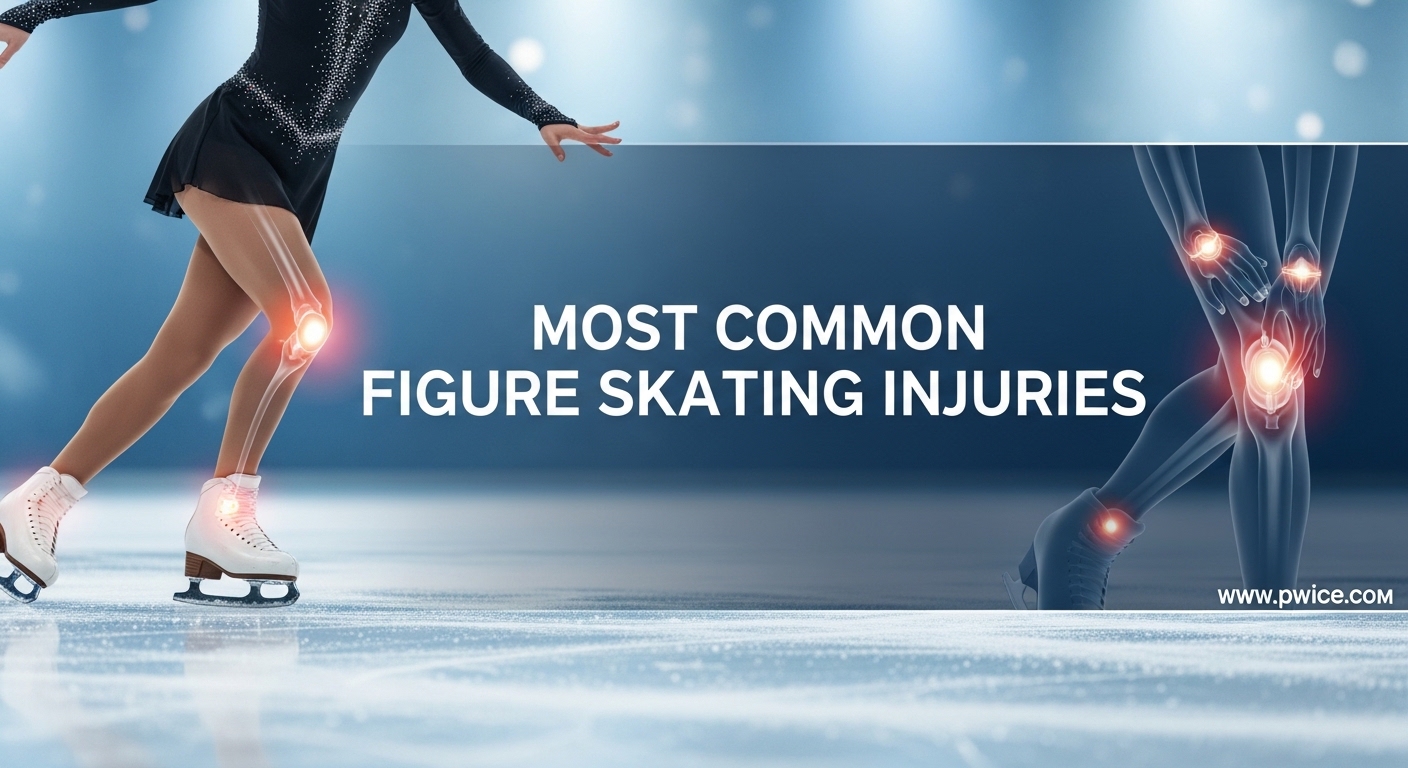
Figure skating demands incredible athleticism, combining explosive jumps, graceful spins, and precise edge work on a surface with minimal friction. Every time a skater lands a jump, their body absorbs forces equivalent to seven to eight times their body weight. This unique combination of repetitive high-impact landings and rotational stress creates specific injury patterns that every skater, parent, and coach should understand.
The most common figure skating injuries include ankle sprains (the most common traumatic injury), patellar tendinitis also known as jumper’s knee (the most common overuse injury), stress fractures, Achilles tendonitis, and lace bite from improperly fitted boots. Research published by the National Institutes of Health confirms that lower extremity injuries dominate the sport, with overuse conditions becoming increasingly prevalent as skaters advance to higher competitive levels.
Understanding these injury patterns helps skaters recognize early warning signs and implement preventive strategies before minor discomfort becomes a season-ending condition. Whether you are a recreational skater, a competitive athlete, or a parent supporting a young skater’s dreams, knowing what injuries to watch for and how to prevent them is essential for longevity in this beautiful but demanding sport.
Table of Contents
Most Common Figure Skating Injuries: Overuse vs Traumatic
Figure skating injuries generally fall into two distinct categories: overuse injuries that develop gradually from repetitive stress, and traumatic injuries that occur suddenly from falls or accidents. Both types can sideline a skater, but they require different prevention strategies and treatment approaches.
Overuse injuries typically develop over weeks or months as repetitive jumping, spinning, and edge work place cumulative stress on specific body parts. These injuries often start as mild discomfort that skaters try to skate through, eventually progressing to pain that limits performance. Traumatic injuries happen instantaneously during a fall, collision, or failed jump landing, causing immediate pain and often requiring immediate medical attention.
The distribution between these categories shifts as skaters advance. Beginners experience more traumatic injuries from falls as they learn basic skills. Competitive skaters face higher rates of overuse injuries as training volumes increase and technical demands intensify. Understanding this distinction helps skaters and coaches tailor prevention strategies to their specific level and training schedule.
Overuse Injuries in Figure Skating
Overuse injuries account for a significant portion of figure skating medical visits, particularly among competitive skaters training twenty or more hours per week. These conditions develop when the body cannot recover adequately between training sessions, leading to tissue breakdown that outpaces the body’s repair mechanisms.
Patellar Tendinitis (Jumper’s Knee)
Patellar tendinitis, commonly called jumper’s knee, ranks as the most prevalent overuse injury across all figure skating disciplines. This condition affects the tendon connecting the kneecap to the shinbone, which absorbs tremendous force during jump landings. The repetitive stress from daily jump practice causes microscopic tears in the tendon tissue that accumulate faster than they heal.
Symptoms typically include pain at the front of the knee, just below the kneecap, that worsens with jumping activity. Many skaters first notice discomfort during takeoffs or landings, with pain often decreasing during warmup but returning intensified after cool-down. The condition frequently affects both knees simultaneously, though one side often experiences more severe symptoms.
Skaters performing triple and quadruple jumps face the highest risk due to the increased landing forces these elements generate. Growth spurts during adolescence compound this risk, as the patellar tendon struggles to adapt to rapidly changing bone lengths. Early intervention with activity modification, targeted strengthening exercises, and proper landing technique instruction can prevent this condition from becoming chronic.
Stress Fractures
Stress fractures represent the most common overuse injury specifically among female single skaters, according to epidemiological research. These tiny cracks in bone develop from repetitive submaximal forces that individually would not cause injury but cumulatively overwhelm the bone’s remodeling capacity. The foot and lower leg bones bear the brunt of these repetitive landing forces.
Common locations include the navicular bone in the midfoot, the metatarsals in the forefoot, and the tibia in the shin. Skaters typically experience a gradual onset of pain that worsens during activity and improves with rest. Unlike traumatic fractures that cause immediate, severe pain, stress fractures often start as vague aching that skaters dismiss as normal training discomfort.
Female skaters face elevated risk due to several interrelated factors including low energy availability from restricted nutrition, menstrual irregularities affecting bone density, and the aesthetic pressures of the sport encouraging low body weight. The female athlete triad, consisting of low energy availability, menstrual dysfunction, and decreased bone mineral density, significantly increases stress fracture susceptibility. Early recognition and comprehensive treatment addressing both the bone injury and underlying nutritional factors are essential for full recovery.
Achilles Tendonitis
Achilles tendonitis plagues figure skaters due to the unique demands of skating boots and the repetitive plantarflexion required for takeoffs. The Achilles tendon connects the calf muscles to the heel bone and endures constant stress from the ankle extension used in jump takeoffs and the constriction from stiff skating boots. This combination of mechanical loading and external compression creates ideal conditions for tendon irritation.
Skaters typically experience pain at the back of the heel or along the tendon, often most severe when first putting on skates or after prolonged training sessions. Morning stiffness that improves with movement represents an early warning sign that many skaters ignore. The condition frequently coexists with Haglund’s deformity, a bony enlargement on the back of the heel that skate boots rub against.
Boot fit plays a critical role in both development and resolution of Achilles tendonitis. Boots that are too stiff, improperly molded, or poorly fitted increase pressure on the tendon insertion. Professional boot fitting, strategic use of gel pads or heel lifts, and gradual break-in of new boots can prevent this condition. Once symptoms develop, treatment requires reducing jumping volume, targeted eccentric strengthening exercises, and sometimes boot modifications.
Lace Bite
Lace bite represents a uniquely skating-specific injury that occurs when tight laces compress the tendons and soft tissues on the front of the ankle. The tibialis anterior tendon, which runs down the front of the shin and across the ankle, becomes inflamed from pressure exerted by tightly tied skate laces. This condition causes localized pain, swelling, and sometimes visible indentation along the laces’ path.
The condition typically develops after breaking in new boots or when skaters overtighten laces to compensate for boots that have softened with use. Competitive skaters performing multiple daily sessions are particularly susceptible, as the cumulative hours of lace compression exceed the tissue’s tolerance. The pain often intensifies during deep knee bends and jump takeoffs when ankle flexion increases pressure on the inflamed area.
Prevention and treatment focus on distributing lace pressure more evenly. Techniques include using different lacing patterns that skip eyelets over the tender area, adding padding under laces, or using specialized lace bite pads. Some skaters benefit from boots with softer tongues or custom modifications to the tongue area. Addressing lace bite promptly prevents chronic inflammation that can require extended time off ice.
Shin Splints and Hip Strains
Medial tibial stress syndrome, commonly called shin splints, causes pain along the inner edge of the shinbone from repetitive stress on the connective tissues surrounding the tibia. Figure skaters develop this condition through repetitive jump landings, edge work vibrations, and the constant pounding of footwork sequences. The condition often signals early warning of more serious bone stress injury and should never be ignored.
Hip injuries including labral tears, hip flexor strains, and gluteal tendinopathy result from the extreme range of motion required for spirals, split jumps, and rotational positions. The hip joint endures tremendous rotational forces during spins and jump entries while simultaneously requiring flexibility for split positions and arabesques. Muscle imbalances between the hip flexors and gluteal muscles commonly contribute to these injuries.
Both conditions respond well to early intervention including activity modification, targeted strengthening, and technique correction. Shin splints often indicate a need for technique evaluation to ensure skaters are not landing with excessive force or improper alignment. Hip injuries frequently reveal muscle activation patterns that off-ice training can address before they progress to more serious structural damage.
Traumatic Injuries in Figure Skating
While overuse injuries develop gradually, traumatic injuries strike suddenly and often dramatically. Falls are an inherent part of learning and performing figure skating elements, and even experienced skaters cannot eliminate fall risk entirely. Understanding the common traumatic injuries helps skaters prepare for emergency response and recognize when immediate medical care is necessary.
Ankle Sprains
Ankle sprains represent the single most common traumatic injury in figure skating across all skill levels and disciplines. The rigid skating boot provides substantial support, but the combination of unstable landing positions, catching an edge unexpectedly, and the height involved in jump attempts creates perfect conditions for ankle injury. Lateral ankle sprains, where the foot rolls outward stretching or tearing the ligaments on the outside of the ankle, occur most frequently.
The severity of ankle sprains ranges from mild Grade I injuries involving stretched ligaments to severe Grade III tears requiring surgical intervention. Skaters often report hearing or feeling a pop at the moment of injury, followed by rapid swelling and difficulty bearing weight. Attempting to continue skating after a significant sprain risks both worsening the ligament damage and causing secondary injuries from compensation patterns.
Proper rehabilitation is essential for full recovery and prevention of chronic ankle instability. Many skaters return to skating before complete ligament healing, leading to recurrent sprains that progressively damage the ankle’s stabilizing structures. Comprehensive rehabilitation should restore not only ligament integrity but also proprioception, the ankle’s ability to sense position and make automatic corrections that prevent future injury.
Knee Injuries
The knee joint faces extraordinary demands in figure skating, absorbing rotational forces during spin entries, stabilizing during edge work, and cushioning explosive jump landings. These complex loading patterns create risk for several serious knee injuries including ACL tears, meniscal tears, and patellar dislocations. Unlike overuse conditions that develop gradually, these traumatic knee injuries often occur during a single catastrophic event.
ACL tears typically happen during jump landings when the knee twists while the foot remains planted, or during awkward catches of an edge that force the knee into abnormal positions. The audible pop, immediate swelling, and sensation of instability are hallmark signs that require immediate medical evaluation. Meniscal tears frequently accompany ACL injuries or occur independently from similar twisting mechanisms.
Recovery from significant knee injuries often extends six to twelve months, representing a substantial portion of a competitive skater’s career. Modern rehabilitation protocols emphasize restoring not just basic function but the specific demands of skating including rotational stability, impact absorption, and proprioceptive control. Some skaters successfully return to full competitive levels after major knee injuries, though the psychological recovery from fear of re-injury can present equal challenges to the physical rehabilitation.
Fractures
Fractures in figure skating most commonly affect the wrist, forearm, and ankle bones, though any bone can break from a severe fall. The natural instinct to extend arms during a fall creates wrist fracture risk, particularly in less experienced skaters who have not yet learned to fall safely. Upper extremity fractures often occur during step sequences, unexpected catches of toepicks, or attempts to break falls during jump misses.
Ankle fractures differ from sprains in mechanism and severity. While sprains involve ligament damage, fractures indicate bone integrity compromise that often requires immobilization and sometimes surgical intervention. The rigid skating boot can actually mask ankle fracture symptoms initially, as the boot provides external stability that allows some skaters to continue skating with undiagnosed fractures.
Facial and head fractures, while less common than extremity injuries, represent serious concerns particularly in pairs skating where lifts and throw jumps create fall hazards from significant heights. Proper protective equipment and rigorous safety protocols during pairs elements are essential for preventing these potentially life-altering injuries.
Head Injuries and Concussions
Head injuries in figure skating range from minor bumps to traumatic brain injuries requiring immediate emergency care. Concussions, which are traumatic brain injuries caused by impact or whiplash forces, can occur from falls onto the ice, collisions with other skaters, or contact with boards surrounding the rink. The hard, unforgiving ice surface creates significant risk even from falls that might cause minimal injury on softer surfaces.
Concussion symptoms include headache, dizziness, confusion, memory problems, balance difficulties, and sensitivity to light or noise. Unlike many other injuries where pain indicates severity, concussions can cause subtle symptoms that skaters dismiss as merely feeling off. Continuing to skate with a concussion risks second impact syndrome, a potentially fatal condition where a second head injury occurs before the first has healed.
Return-to-play protocols for concussions require gradual progression through stages of increasing activity intensity, with mandatory medical clearance required before full training resumption. Many skating organizations now mandate baseline concussion testing for competitive skaters, allowing comparison of post-injury cognitive function to pre-injury normal levels. Recognition and appropriate management of head injuries has improved dramatically in recent years, though underreporting remains a concern.
Wrist and Shoulder Injuries
Wrist injuries including sprains and fractures occur when skaters extend their arms to break falls, a natural protective reflex that transmits impact forces through the wrist joint. Colles fractures, breaks of the radius bone near the wrist, are particularly common in older skaters whose bone density may not withstand forces that younger bones absorb. Proper falling technique training emphasizes tucking arms and rolling through falls rather than extending rigid arms.
Shoulder injuries in figure skating include rotator cuff strains, shoulder separations, and less commonly, dislocations. These injuries typically result from falls onto an outstretched arm or from the arm being pulled during lifts in pairs skating. The repetitive overhead arm positions required for spiral sequences and some spin variations can also contribute to rotator cuff overuse and impingement.
Prevention focuses on teaching safe falling techniques early in a skater’s development and maintaining adequate shoulder strength and flexibility. For pairs skaters, proper lift technique that protects both partners and clear communication protocols reduce shoulder injury risk. Once injured, shoulder rehabilitation must restore both the strength and the neuromuscular control required for the complex arm positions skating demands.
Discipline-Specific Injury Patterns
Different figure skating disciplines create distinct injury profiles based on their unique technical demands. Understanding how injury risks vary between singles, pairs, and ice dance helps skaters and coaches implement targeted prevention strategies appropriate to their specific discipline.
Singles Skating
Single skaters, particularly those competing at advanced levels, face the highest rates of overuse injuries due to the repetitive jump training required. Female single skaters demonstrate particularly elevated stress fracture rates, likely related to the technical demands combined with body composition pressures in the sport. The quadruple jump era has intensified these demands, with male skaters particularly susceptible to hip and knee injuries from these high-impact elements.
Back injuries become increasingly common as singles skaters advance, resulting from the combination of jump landing forces and the back flexibility required for positions like Biellmann spins and layback spins. The rotational forces generated during these elements place tremendous torque on the spinal structures. Core strengthening and proper technique that distributes forces evenly become essential for long-term spinal health.
Pairs Skating
Pairs skating introduces additional traumatic injury risks from lifts, throws, and side-by-side elements where synchronization failures can cause collisions. The female partner faces particular risk from throw jumps, where incorrect timing or technique can result in falls from significant heights onto the hard ice surface. Head injuries and fractures represent serious concerns in this discipline.
Both partners risk hand and arm injuries from grip failures or awkward catches during lifts and twists. The male partner experiences substantial loading through the shoulders and back during overhead lifts, creating risk for acute injuries from failed attempts or overuse injuries from repetitive training. Communication failures between partners often contribute to injury-causing mistakes.
Prevention in pairs skating emphasizes developing trust and communication before attempting high-risk elements, rigorous safety protocols during training, and knowing when to abandon elements that are not working rather than forcing dangerous completions. Protective equipment including headgear during throw jump training has become more accepted in recent years.
Ice Dance
Ice dance eliminates jump-related injury risks but introduces other challenges including repetitive stress from pattern dances, extreme flexibility requirements, and close partner contact that can transmit forces between skaters. Ice dancers frequently experience hip and groin injuries from the deep knee bend positions and sustained turn sequences that characterize the discipline.
Lower back pain is prevalent among ice dancers due to the posture requirements and the need for extreme flexibility in lifts and dance holds. The discipline’s emphasis on continuous movement with minimal recovery periods creates sustained cardiovascular and muscular demands that differ from the intermittent high-intensity bursts of singles and pairs skating.
Ice dancers benefit from prevention strategies emphasizing hip mobility work, core stabilization for the sustained positions required, and partner communication to ensure forces are distributed safely between both skaters. The reduced impact loading compared to jump disciplines often allows ice dancers to maintain competitive careers longer, though overuse injuries can accumulate over extended careers.
How to Prevent Figure Skating Injuries In 2026?
Prevention represents the most effective strategy for managing figure skating injuries, as many conditions that end seasons or careers are entirely avoidable with proper preparation and training practices. Research consistently shows that well-designed prevention programs significantly reduce injury rates across all skating disciplines and skill levels.
Proper Boot Fit and Equipment
Professional boot fitting stands as perhaps the single most important injury prevention investment a skater can make. Boots that are too stiff, too soft, incorrectly sized, or improperly molded to the foot create numerous injury risks including lace bite, Achilles tendonitis, stress fractures, and ankle instability. Skaters should work with experienced fitters who understand the unique demands of figure skating boots.
Boot stiffness ratings should match the skater’s level and body weight. Recreational skaters typically require stiffness ratings between fifteen and twenty, while competitive figure skaters need ratings between twenty and thirty to provide adequate support for jump landings. Boots that are too stiff for a skater’s level prevent necessary ankle movement and create compensatory injuries, while boots that are too soft fail to provide adequate landing support.
Blade placement and sharpness also influence injury risk. Incorrect blade mounting affects balance and edge control, increasing fall risk. Dull blades require skaters to work harder for edge grip, potentially causing compensatory muscle strains. Regular blade maintenance and professional mounting adjustments as boots break in are essential preventive measures.
Warm-Up and Cool-Down Routines
Proper warm-up prepares the body for skating’s specific demands by increasing tissue temperature, improving joint lubrication, and activating the neuromuscular system. An effective warm-up includes five to ten minutes of light cardiovascular activity followed by dynamic stretching and movement patterns that mimic skating positions. Jumping jacks, leg swings, walking lunges with rotation, and arm circles prepare the major muscle groups for session demands.
Cool-down helps initiate recovery by gradually lowering heart rate and beginning the clearance of metabolic byproducts from intense training. Gentle static stretching after skating maintains flexibility that jumping and edge work can tighten. Foam rolling and self-massage techniques address muscle adhesions before they develop into chronic tightness that alters movement patterns.
Many injuries occur during the first minutes of a session when tissues are cold or during late-session fatigue when technique deteriorates. Building buffer time for adequate warm-up and recognizing when fatigue compromises safety allow skaters to avoid these high-risk periods.
Off-Ice Strength and Conditioning
Off-ice training builds the physical capacity that supports on-ice performance and injury resistance. Targeted strength training should address the specific demands of skating including single-leg stability for landing control, core strength for spin positions and jump rotation, and hip strength for knee alignment during landings. A well-designed program corrects muscle imbalances before they cause overuse injuries.
Plyometric training off the ice teaches proper landing mechanics with lower impact forces than repetitive jump training on ice. Skaters who develop excellent landing technique through box jumps, depth jumps, and other plyometric exercises translate that skill to on-ice jumps with reduced injury risk. This approach also allows technique work when ice time is limited or when managing minor on-ice injuries.
Periodization of off-ice training ensures that strength and conditioning complement rather than compete with on-ice demands. The highest injury risk often occurs during training camp periods when skaters suddenly increase both on-ice and off-ice training volumes simultaneously. Gradual progression and built-in recovery days allow tissue adaptation without breakdown.
Progressive Skill Development
Rushing into advanced elements before mastering prerequisite skills significantly increases injury risk. Every jump builds upon fundamental movement patterns learned in basic skills and single jumps. Skaters who attempt double jumps without solid single jump technique, or triple jumps without consistent doubles, force their bodies to compensate with unsafe movement patterns that cause both acute and overuse injuries.
Proper technique instruction from qualified coaches ensures that skaters develop biomechanically sound movement patterns from the start. Bad habits ingrained early become increasingly difficult to correct as skaters advance and the forces involved multiply. Regular video analysis helps identify technique issues before they cause injury or become deeply ingrained habits.
The use of harness systems and crash pads during jump training allows skaters to attempt new elements with reduced fall risk. These training aids should be used strategically, not indefinitely, to ensure skaters develop the confidence and technique to perform elements independently. Knowing when to step back from an element that is not working, rather than forcing dangerous attempts, is an essential safety skill.
Rest and Recovery
Adequate recovery time between training sessions allows the body to repair the micro-damage that exercise causes. Without sufficient recovery, tissue breakdown accumulates faster than repair, leading to overuse injuries. The competitive culture of figure skating often pressures skaters to train through fatigue and minor pain, but this approach predictably leads to more serious injuries that require far more time away from training.
Sleep quality and quantity profoundly affect recovery capacity. Growth hormone release during deep sleep phases drives tissue repair, making adequate sleep essential for athletes training at high volumes. Skaters should prioritize seven to nine hours of quality sleep, particularly during intensive training periods and competition seasons.
Active recovery techniques including light activity, massage, compression, and contrast water therapy can enhance recovery between sessions. Skaters should view these practices not as luxuries but as essential training components that enable consistent high-quality practice. Recognizing the difference between normal training fatigue and early overuse injury symptoms allows timely intervention before minor issues become major problems.
Nutrition and Energy Availability
Proper nutrition supports both performance and injury prevention by providing adequate energy for training and the building blocks for tissue repair. Low energy availability, where caloric intake is insufficient relative to training demands, impairs bone formation, reduces muscle protein synthesis, and compromises immune function. Female skaters are particularly at risk due to aesthetic pressures in the sport that encourage restrictive eating patterns.
Calcium and vitamin D intake are essential for bone health in a sport that subjects skeletal structures to repetitive high-impact loading. Skaters should consume adequate dietary calcium or supplement appropriately under medical supervision. Vitamin D testing and supplementation may be necessary, particularly for indoor athletes with limited sun exposure.
Hydration affects tissue quality and performance. Even mild dehydration impairs muscle function and concentration, increasing both overuse and traumatic injury risk. Skaters should maintain hydration throughout training sessions and address the unique challenges of cold rink environments where thirst sensations may be reduced despite ongoing fluid losses.
Treatment Approaches for Figure Skating Injuries
When injuries occur despite prevention efforts, appropriate treatment ensures the fastest, safest return to skating. Understanding basic treatment principles helps skaters respond effectively in the immediate aftermath of injury and make informed decisions about when professional medical care is necessary.
The RICE Method
The RICE protocol, Rest, Ice, Compression, and Elevation, provides the foundation for immediate self-treatment of acute injuries. Rest prevents further damage to injured tissues and allows healing processes to begin. Complete rest from skating is often necessary for acute injuries, though some conditions permit modified activity that does not stress the injured area.
Ice application reduces pain, inflammation, and bleeding in injured tissues. Fifteen to twenty minute applications with barriers between ice and skin prevent cold injury. Compression with elastic bandages limits swelling, which can impede healing and cause secondary tissue damage. Elevation above heart level when possible further reduces swelling by promoting fluid drainage.
While RICE remains appropriate for immediate self-care, current sports medicine understanding recognizes that complete rest beyond the acute phase can delay recovery. Early controlled mobilization, once acute inflammation subsides, promotes tissue healing and prevents the strength and range of motion losses that extended immobilization causes.
When to Seek Medical Attention
Certain symptoms indicate that self-treatment is insufficient and professional medical evaluation is necessary. Inability to bear weight on a lower extremity, visible deformity suggesting fracture or dislocation, severe swelling that does not respond to initial treatment, and symptoms of concussion all warrant immediate medical evaluation. Delaying care for serious injuries often extends recovery time and can lead to permanent impairment.
Overuse injuries that do not improve with one to two weeks of activity modification require professional assessment. Persistent pain that worsens with activity, night pain that disrupts sleep, and pain that localizes to specific bony points may indicate stress reactions or fractures that need imaging studies. Early diagnosis of these conditions allows less invasive treatment than delayed recognition requires.
Skaters should establish relationships with sports medicine professionals who understand figure skating’s unique demands. General practitioners without sports medicine training may advise unnecessarily conservative restrictions or prematurely clear skaters for activity. Sports medicine physicians, physical therapists, and athletic trainers familiar with skating can provide appropriate guidance for both treatment and return-to-activity decisions.
Physical Therapy and Rehabilitation
Physical therapy plays essential roles in both injury treatment and prevention. Therapists address the immediate injury through manual therapy, therapeutic exercise, and modalities that promote healing. Equally importantly, they identify contributing factors such as muscle imbalances, movement pattern dysfunctions, or equipment issues that predisposed the skater to injury.
Rehabilitation progresses through phases from protection and healing through restoration of range of motion, strength, proprioception, and finally sport-specific function. Skaters should not return to full training until they have met objective criteria demonstrating readiness, not merely when pain subsides. Premature return increases re-injury risk and can convert acute injuries to chronic conditions.
Physical therapists can design maintenance programs that address individual risk factors even after injury resolution. Many skaters benefit from ongoing preventive physical therapy that identifies and corrects emerging issues before they cause injury. This proactive approach is particularly valuable for competitive skaters with intensive training schedules.
Return-to-Sport Protocols
Returning to skating after injury requires gradual progression that allows the healing tissue to adapt to increasing demands. Immediate return to pre-injury training volumes often causes re-injury or new compensatory injuries. Structured return protocols specify criteria for progressing through stages from basic skating skills through complex elements and finally to full training.
Mental preparation is as important as physical readiness for return to skating. Fear of re-injury commonly affects skaters returning from significant injuries, particularly those involving falls. Working with sports psychologists or mental performance coaches can help skaters rebuild confidence and commit fully to elements without protective hesitation that actually increases fall risk.
Communication between the skater, coach, and medical team ensures that return decisions consider all relevant factors. Coaches need to understand any ongoing restrictions or modifications required. Medical providers need feedback on how the skater tolerates progressive loading. The skater must honestly report symptoms rather than hiding discomfort to accelerate return timelines.
Frequently Asked Questions
What is the most common injury in figure skaters?
Ankle sprains are the most common traumatic injury in figure skating, while patellar tendinitis (jumper’s knee) is the most common overuse injury. According to research from the National Institutes of Health, ankle sprains account for the majority of acute skating injuries, particularly during jump landings and edge work. Patellar tendinitis develops from repetitive jumping and affects skaters across all disciplines, with rates increasing significantly at competitive levels.
Is figure skating a high risk sport?
Figure skating carries moderate to high injury risk depending on the discipline and level. The sport involves forces of 7-8 times body weight during jump landings, hard ice surfaces, and sharp blade edges. However, proper training, equipment, and technique significantly reduce injury rates. Recreational skaters face lower risk than competitive athletes attempting advanced elements. While serious injuries occur, they are less common than in contact sports or high-speed skiing disciplines.
How do figure skaters not get injured?
Figure skaters prevent injuries through proper warm-up routines, professional boot fitting, off-ice strength training, and progressive skill development. Adequate rest between sessions and proper nutrition support tissue recovery. Learning correct falling techniques reduces traumatic injury severity. Regular physical therapy and addressing minor discomfort before it becomes serious also helps. Even with these measures, some injuries are unavoidable given the sport’s physical demands.
What is jumper’s knee in figure skating?
Jumper’s knee, medically called patellar tendinitis, is inflammation of the tendon connecting the kneecap to the shinbone. In figure skating, it results from repetitive jump landings that generate forces equivalent to 7-8 times body weight. Symptoms include pain at the front of the knee below the kneecap, particularly during takeoffs and landings. The condition is especially common among skaters learning triple and quadruple jumps and during periods of intensive competition preparation.
When should I see a doctor for a skating injury?
Seek medical attention for inability to bear weight, visible deformity suggesting fracture, severe swelling that does not improve with rest and ice, head impact with concussion symptoms, or pain that persists beyond one to two weeks of self-treatment. Numbness, tingling, or loss of circulation require immediate care. Pain that wakes you at night or significantly worsens during activity may indicate stress fractures or other serious conditions needing professional evaluation.
Conclusion
Understanding the most common figure skating injuries empowers skaters to train smarter, recognize warning signs early, and take proactive steps to protect their long-term health. From the ankle sprains that affect beginners learning basic skills to the stress fractures that challenge elite competitors, each injury type has specific prevention strategies that significantly reduce risk.
The investment in proper equipment, professional coaching, off-ice conditioning, and adequate recovery pays dividends through longer, healthier skating careers. While figure skating’s physical demands inevitably create some injury risk, the majority of skating injuries are preventable with appropriate preparation and training practices.
Take injury prevention seriously from your first days on the ice, and you will enjoy this remarkable sport for years to come. When injuries do occur, respond promptly with appropriate treatment and respect the recovery process. Your body is your most important piece of skating equipment, treat it accordingly.