
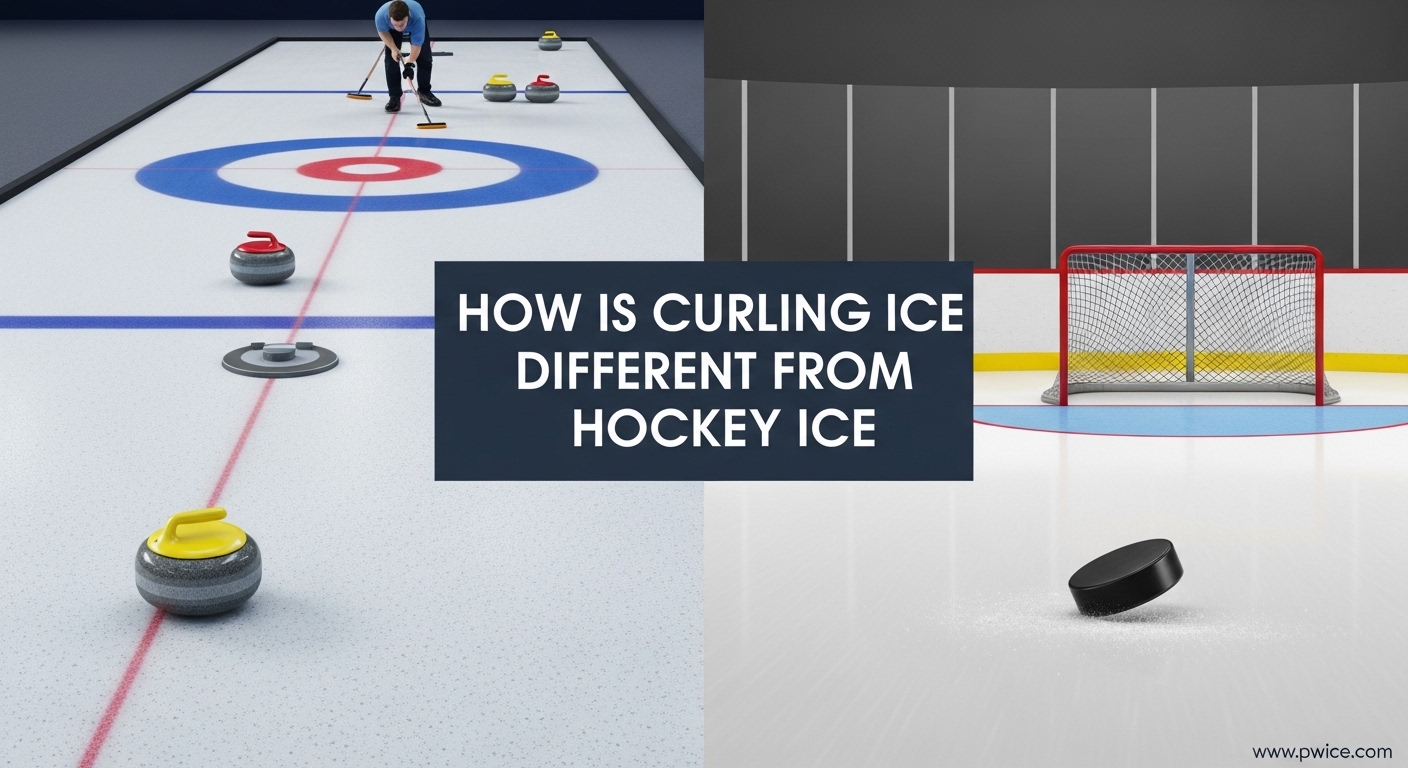
When you watch curling at the Winter Olympics, the ice looks pretty much like any other rink surface. But looks are deceiving. How is curling ice different from hockey ice? The differences are dramatic and essential to how the sport works. While both sports happen on frozen water, the preparation, maintenance, and physics involved are worlds apart.
Our team spent weeks researching ice preparation techniques, interviewing ice makers, and studying the science behind both surfaces. What we discovered changed how we watch both sports. The ice beneath those 44-pound granite stones is actually one of the most precisely engineered surfaces in all of sports.
Whether you are a casual fan wondering about the strange brooms and shouting, or someone considering trying curling yourself, understanding the ice makes the sport much more fascinating. Let us break down exactly what makes curling ice unique.
Table of Contents
Is Curling Ice the Same as Hockey Ice?
No, curling ice is not the same as hockey ice. While both are frozen water surfaces, they differ in four fundamental ways:
- Texture: Curling ice has a pebbled, bumpy surface while hockey ice is smooth and flat
- Temperature: Curling ice is kept around 23°F, slightly warmer than hockey ice
- Water quality: Curling ice uses purified or distilled water; hockey ice uses regular water
- Flatness tolerance: Curling ice must be level within 0.005 inches, hockey ice allows more variation
These differences are not just preferences. They are requirements that make each sport possible. A hockey puck would bounce unpredictably on pebbled curling ice. A curling stone would barely move on smooth hockey ice. The surfaces are engineered for completely different physics.
What Is Pebbling and Why Does Curling Need It?
Pebbling is the signature feature that separates curling ice from all other ice surfaces. The process involves spraying tiny droplets of water across the ice sheet using a specialized device called a pebbling can. These droplets freeze instantly, creating thousands of tiny bumps across the playing surface.
Professional ice makers apply two coats of pebbles before competition. The first coat creates the base texture. The second coat adds height and consistency. The result is what ice technicians call an “orange peel texture” – a surface covered in frozen water droplets called asperities.
Why go through all this trouble? Physics. A 44-pound curling stone sliding on perfectly smooth ice would create significant friction through suction and contact with the flat surface. The pebbles reduce the actual contact area between the stone and ice to just the tiny running band on the stone’s bottom. This reduction in contact area dramatically lowers friction, allowing the stone to glide 150 feet with a gentle push.
The pebbles also create the curl – that curved path stones travel as they slow down. As the stone moves, it catches pebbles on one side of its running band, creating asymmetric friction that causes rotation and curve. Without pebbles, there would be no curl, and the strategic heart of the game would disappear.
Water Quality: The Hidden Difference
Walk into any hockey rink and the ice probably started as regular tap water. Walk into a curling club and you will find sophisticated water purification systems. This difference matters more than most people realize.
Curling ice demands distilled or highly purified water for two reasons: clarity and consistency. Regular water contains dissolved minerals, air bubbles, and impurities that create weak spots and visual cloudiness in the ice. When water freezes, air bubbles get trapped, creating inconsistent density throughout the sheet.
For curlers, any inconsistency is a problem. A stone traveling over an air bubble pocket might catch an edge and deviate from its path. Professional ice makers monitor PH levels carefully, keeping the water slightly acidic to prevent mineral deposits. Many facilities use reverse osmosis systems or commercial purification processes similar to the Jet Ice system used at Olympic venues.
The result is crystal-clear ice that lets players see the markings beneath and delivers perfectly consistent stone behavior from one end of the sheet to the other. Hockey ice can tolerate some cloudiness and variation because pucks slide rather than rely on precise friction physics.
Flatness and Precision Requirements
Here is a number that illustrates how precise curling ice is: 0.005 inches. That is the maximum variation allowed across an entire curling sheet. For context, that is about the thickness of a sheet of paper. Hockey ice tolerates much more variation because skates cut into the surface and pucks slide on top of it.
Achieving this flatness requires laser leveling equipment. Ice makers scrape the surface with specialized machines that measure elevation constantly, removing high spots and filling low ones. The process takes days, not hours.
Why does such precision matter? Imagine delivering a stone toward a target 150 feet away (the house). If the ice slopes even slightly, gravity pulls the stone off line. A 0.01 inch slope across the sheet could move a stone several inches off target by the time it reaches the house. In a sport where millimeters matter, that is unacceptable.
The throwing circles, hack lines, and hog lines must also be perfectly positioned. These markings are painted on the floor beneath the ice or embedded in the surface, and they guide every shot in the game. Precision ensures fair competition where skill, not ice variation, determines the winner.
Temperature Control: Finding the Sweet Spot
Curling ice lives at a very specific temperature: approximately 23 degrees Fahrenheit. That is slightly warmer than typical hockey ice, which usually runs between 18-22°F depending on the arena. This small difference has big consequences.
Warmer ice is actually harder to maintain. It is closer to melting, so any heat from lights, crowds, or equipment affects it more. Ice makers monitor temperature constantly, adjusting refrigeration systems throughout competitions. At the Olympics, dedicated ice technicians work around the clock maintaining conditions.
The warmer temperature serves a purpose: stone behavior. Colder ice makes stones travel faster and slide farther. Warmer ice creates more friction and slower play. Championship ice makers fine-tune temperature to achieve what curlers call “good draw weight” – the ideal speed where stones travel the full sheet in 25-28 seconds with a gentle push.
This temperature requirement creates challenges for arena conversions. When curling comes to town and takes over a hockey arena, crews spend 4-5 days adjusting the entire building’s refrigeration and humidity systems. The ice must be raised to curling temperature slowly to prevent cracking. Foam boards replace hockey boards. The transformation is labor-intensive and precise.
How Is Curling Ice Different From Hockey Ice: Complete Comparison
Let us put these differences side by side for easy reference. This comparison shows exactly how curling ice vs hockey ice breaks down across every major characteristic:
| Characteristic | Curling Ice | Hockey Ice |
|---|---|---|
| Surface Texture | Pebbled with frozen droplets (orange peel texture) | Smooth and flat |
| Water Type | Distilled or purified water | Regular tap water |
| Flatness Tolerance | 0.005 inches maximum variation | 0.25+ inches acceptable variation |
| Temperature | ~23°F (warmer) | ~18-22°F (colder) |
| Preparation Time | 4-5 days for competition ice | 1-2 days |
| Maintenance Frequency | Every 2-3 games (re-pebble and scrape) | Between periods (resurface with Zamboni) |
| Markings | Throwing circles, house, hog lines, hacks | Face-off circles, goal creases, blue/red lines |
| Primary Friction Type | Wet friction (pebble contact) | Solid friction (blade/puck contact) |
The surface texture difference is the most obvious. When you look closely at curling ice, you see tiny bumps reflecting light differently than the mirror-like finish of hockey ice. This pebble pattern is unique to curling and essential to the sport.
Water quality creates the biggest hidden difference. Distilled water for curling costs more and requires equipment, but eliminates the air bubbles and mineral variations that could affect stone paths. Hockey ice can handle imperfections because skates cut grooves and pucks slide on top.
The flatness tolerance shows how precision-focused curling is. That 0.005 inch requirement is fifty times stricter than hockey ice standards. Laser leveling equipment and skilled ice makers achieve this through careful scraping and filling over multiple days.
Temperature management differs significantly too. Curling’s warmer ice requires more precise climate control because it is closer to the melting point. Air humidity, building temperature, and even crowd size affect curling ice more dramatically than hockey ice.
Stone Physics: Why the Bottom Matters
A curling stone is not just a heavy rock. It is a precisely engineered object designed to interact with pebbled ice in specific ways. Understanding the stone explains why the ice must be pebbled.
Each stone features a concave bottom with a narrow running band around the outer edge. This design leaves the center of the stone’s bottom raised slightly above the ice surface. When placed on smooth ice, only that thin running band makes contact.
On pebbled ice, the magic happens. The running band contacts the tops of the pebbles, not the flat ice between them. This reduces the contact area to a tiny fraction of what it would be on smooth ice. Less contact area means dramatically less friction. A 44-pound stone can glide 150 feet on a gentle push because it rides on those tiny pebble contact points.
The concave bottom also creates the curl. As the rotating stone moves forward, the front of the running band hits pebbles and slides over them asymmetrically. This causes the stone to drift sideways – the curl that gives the sport its name. Without pebbles, this asymmetric friction would not occur, and stones would travel straight.
Elite curling stones come from Ailsa Craig, a small Scottish island, where unique granite provides the ideal density and durability. Each stone costs around $1,000 and lasts decades with proper care. The running band can be refinished when it wears down, but the body of the stone continues delivering consistent performance on properly prepared ice.
The Sweeping Science
If you have watched curling, you have seen players frantically sweeping in front of moving stones. This is not just for show – it is precise physics in action that only works on pebbled ice.
When a sweeper moves a broom briskly across the ice in front of a stone, two things happen. First, the friction from the broom head generates heat. Second, that heat temporarily melts the tiny tops of the pebbles in the stone’s path. This creates a thin film of water that the stone slides across with reduced friction.
The effect is immediate and dramatic. A stone that would stop short of the target will glide further with good sweeping. A stone curving too much can be straightened by sweeping one side more than the other. The reduction in friction from wet pebbles versus dry ones can add 6-8 feet to a stone’s travel distance.
This mechanism requires pebbled ice. On smooth hockey ice, sweeping would not create the same localized melting effect. The physics depends on those tiny asperities being present to melt and refreeze. This is why curling cannot be played on regular ice surfaces – the sweeping that controls the game simply would not work.
Frequently Asked Questions
Is curling ice the same as hockey ice?
No, curling ice is not the same as hockey ice. Curling ice has a pebbled, bumpy surface created by spraying frozen water droplets, while hockey ice is smooth and flat. They also differ in temperature (curling ice is warmer at around 23°F), water quality (curling uses distilled water), and flatness precision (curling ice must be level within 0.005 inches).
What is pebbling at curling?
Pebbling is the process of spraying tiny water droplets onto curling ice that freeze into small bumps called asperities. Ice makers apply two coats using a pebbling can, creating an orange peel texture. These pebbles reduce friction between the curling stone and ice, allowing the 44-pound stone to glide 150 feet. The pebbles also create the curl effect that curves the stone’s path.
What is special about curling ice?
Curling ice is special because of its pebbled surface, extreme flatness requirements (within 0.005 inches), use of purified water, and precise temperature control at 23°F. The pebbled texture allows stones to slide with minimal friction while creating the curl effect. The precision requirements make it one of the most carefully prepared surfaces in sports.
How do curlers not slip on the ice?
Curlers wear special shoes with different soles on each foot. The sliding shoe has a smooth Teflon or stainless steel surface that glides easily over the pebbled ice during delivery. The grip shoe has a rubber sole that provides traction for stability and sweeping. The pebbled texture actually helps grip compared to smooth ice, making it easier to walk on than you might expect.
Can you curl on hockey ice?
You cannot properly curl on standard hockey ice. The smooth surface would create too much friction for curling stones to glide effectively. Without pebbles, stones would not curl (curve) and sweeping would not work to control speed and direction. Arena conversions require 4-5 days to raise the ice temperature, add pebble texture, and paint curling-specific markings like the house and hog lines.
Why is curling ice pebbled and not flat?
Curling ice is pebbled rather than flat because the tiny bumps reduce friction between the stone and ice surface. A curling stone has a narrow running band on its concave bottom that rides on top of the pebbles, minimizing contact area. Without pebbles, the stone would create too much friction on flat ice and would not glide the full sheet. The pebbles also create the asymmetric friction that makes stones curl (curve) as they travel.
Conclusion
How is curling ice different from hockey ice? The differences run far deeper than surface appearance. From the pebbled texture that enables stone movement to the laser-leveled precision that ensures fair competition, curling ice represents one of sports’ most technically demanding surfaces.
The next time you watch curling at the Olympics or visit a local club, appreciate the invisible engineering beneath the players’ feet. Those tiny frozen droplets, purified water molecules, and precise temperature controls make every shot possible. Hockey ice prioritizes speed and durability for skates and pucks. Curling ice prioritizes precision and physics for 44-pound stones that must travel true.
Whether you are a new fan trying to understand the sport or a curious observer wondering about the shouting and sweeping, the ice itself tells the story. It is a surface designed for physics, strategy, and millimeter precision – and that makes all the difference.