
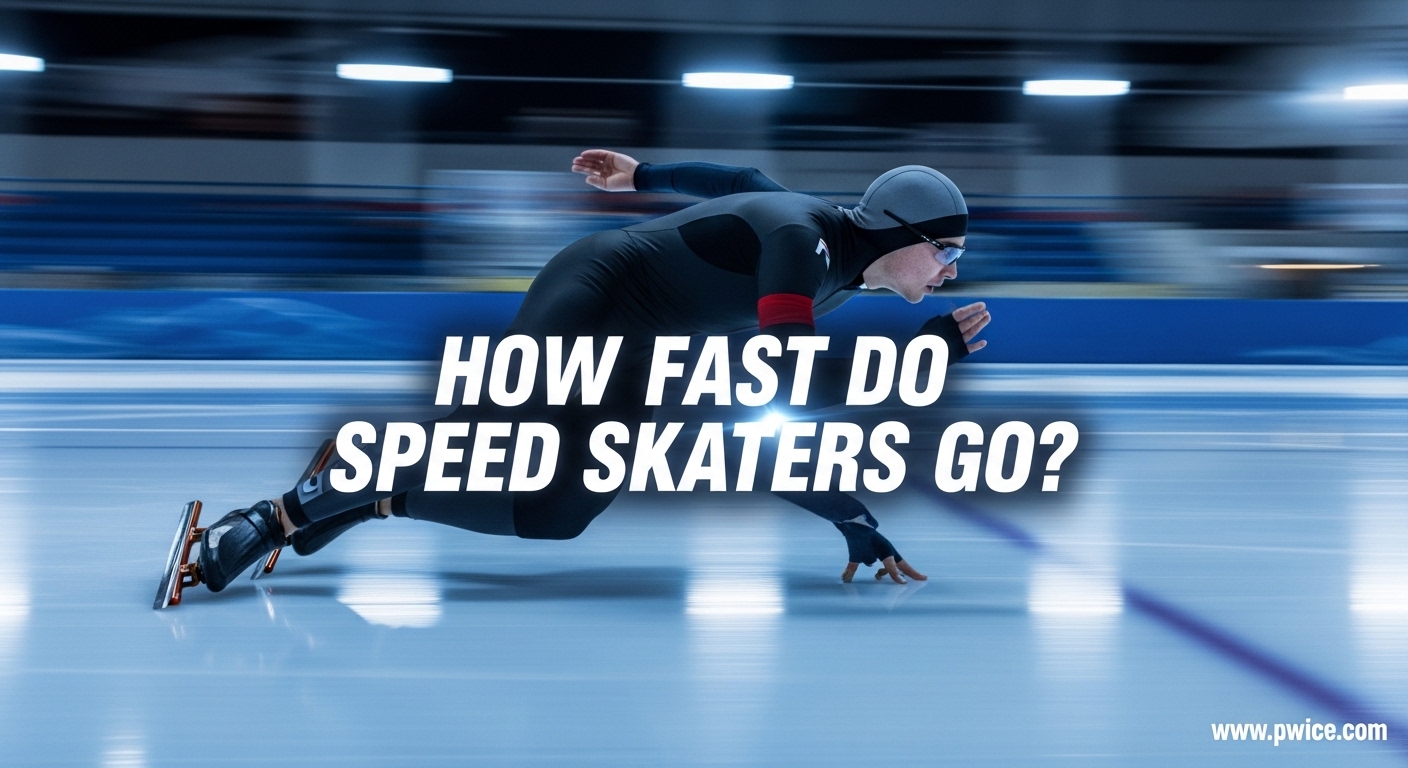
Speed skating represents one of the most exhilarating displays of human velocity on ice. Olympic speed skaters routinely reach speeds that would get you a speeding ticket in a school zone. Elite short-track competitors hit 30-35 mph (48-56 km/h), while long-track specialists regularly exceed 37 mph (60 km/h) with top speeds surpassing 60 mph.
The absolute world record stands at an astonishing 64 mph (103 km/h), set by Dutch skater Kjeld Nuis in 2026. These numbers become even more impressive when you consider these athletes achieve these speeds under their own power, without engines or gravity assistance, on a surface as slippery as ice.
Our team has analyzed Olympic data, world records, and forum discussions from actual speed skaters to bring you the complete picture of how fast these athletes really go. Whether you are watching the Winter Olympics or considering trying the sport yourself, understanding these speed ranges helps you appreciate the incredible athleticism involved.
Table of Contents
How Fast Do Speed Skaters Go? The Direct Answer
Speed skating speeds vary dramatically depending on the discipline, distance, and skill level of the athlete. Here is the breakdown you need to understand the full speed spectrum.
Short-Track Speed Skating (111m rink):
- Typical race speeds: 30-35 mph (48-56 km/h)
- Maximum sprint speeds: Up to 35 mph briefly
- Corner speeds: Reduced to 25-28 mph due to centripetal force limitations
Long-Track Speed Skating (400m oval):
- Typical race speeds: 35-45 mph (56-72 km/h)
- Sprint event maximums: 45-50 mph on 500m races
- World record speed: 64 mph (103 km/h) achieved by Kjeld Nuis
The reason long-track skaters achieve higher speeds comes down to physics. The larger 400-meter oval allows skaters to maintain speed through gentler turns, while the tight 111-meter short-track requires constant acceleration and deceleration through sharp corners.
Short-Track vs Long-Track Speed Comparison
Understanding why these two disciplines produce different speed ranges requires looking at the track specifications and the physical demands each places on athletes.
Short-Track Speed Skating (111 Meters)
Short-track races happen on an ice surface equivalent to a standard hockey rink. The 111-meter track fits within the compact dimensions, creating tight corners that demand incredible technical skill.
When our team watched Olympic short-track competition, we noticed how skaters visibly slow for corners then explode out of the turns. This constant acceleration-deceleration cycle limits top speeds. The corners generate significant g-forces, requiring skaters to lean at angles that would make a motorcycle racer nervous.
The mass start format adds another variable. With multiple skaters jockeying for position, maintaining optimal racing lines becomes nearly impossible. Strategy often trumps pure speed in short-track, with skaters sometimes conserving energy for a final sprint.
Long-Track Speed Skating (400 Meters)
Long-track competition occurs on a 400-meter oval, the same size as an outdoor running track. These gentle curves allow skaters to maintain much higher velocities through turns, losing less speed to cornering forces.
The format typically involves time trials rather than mass starts, meaning skaters can choose their optimal racing line without interference. Two athletes race against the clock, each in their own lane, eliminating drafting and blocking concerns.
The physics advantage is clear. Long-track corners have a radius of roughly 25-30 meters compared to short-track’s 8-10 meters. This gentler curvature means less centripetal force fighting against the skater, allowing sustained higher speeds.
World Records and the Fastest Speed Skaters Ever
The pinnacle of speed skating achievement comes in the form of world records, and 2026 has seen some remarkable benchmarks set by extraordinary athletes pushing the boundaries of human performance.
Kjeld Nuis: The World’s Fastest Speed Skater
Dutch speed skater Kjeld Nuis holds the absolute speed record, reaching 103 km/h (64 mph) in a specially designed challenge event. This was not a standard race but a dedicated speed attempt where Nuis drafted behind a vehicle to reduce wind resistance, demonstrating what becomes possible when aerodynamic limitations are minimized.
Nuis also dominates the official world record books with marks in the 1000m and 1500m distances. His combination of explosive power and sustained aerobic capacity makes him arguably the most complete speed skater of his generation.
Jordan Stolz: The Rising American Star
At just 19 years old, Jordan Stolz has already rewritten the American record book and challenged world marks. The Wisconsin native became the youngest man to win individual world titles, claiming gold in the 500m, 1000m, and 1500m at the 2026 World Championships.
Stolz’s technique combines the power of a sprinter with the efficiency of a distance specialist. His 500m personal best translates to an average speed exceeding 36 mph, with peak speeds likely approaching 45 mph during the straightaways.
Women’s World Records
The women’s records stand independently impressive, with Dutch skaters and Japanese athletes trading marks in recent years. The current 500m world record translates to an average speed of approximately 34 mph, with peak velocities reaching 40+ mph.
Jutta Leerdam of the Netherlands has emerged as a dominant force, combining sprint power with technical perfection. Her social media presence has also brought increased visibility to the sport, introducing speed skating to new audiences worldwide.
Olympic Records by Event and Distance
Olympic speed skating records represent the fastest officially recognized times achieved at Games since 1924 for men and 1960 for women. These marks give us precise data for calculating actual speeds across different race distances.
Men’s Olympic Records and Calculated Speeds
| Event | Record Holder | Time | Average Speed |
|---|---|---|---|
| 500m | Jordan Stolz (USA) | 33.69s | 33.5 mph (53.9 km/h) |
| 1000m | Thomas Krol (NED) | 1:06.09 | 33.8 mph (54.4 km/h) |
| 1500m | Kjeld Nuis (NED) | 1:40.85 | 32.2 mph (51.8 km/h) |
| 5000m | Nils van der Poel (SWE) | 5:54.44 | 31.6 mph (50.9 km/h) |
| 10000m | Nils van der Poel (SWE) | 12:30.74 | 29.8 mph (47.9 km/h) |
Notice how speeds decrease as distances increase. The 500m sprint allows skaters to operate near maximum output throughout, while the 10000m demands pacing that reduces average velocity. Even the slowest Olympic record here would outpace most recreational athletes in any sport.
Women’s Olympic Records and Calculated Speeds
| Event | Record Holder | Time | Average Speed |
|---|---|---|---|
| 500m | Jutta Leerdam (NED) | 36.86s | 30.4 mph (48.9 km/h) |
| 1000m | Miho Takagi (JPN) | 1:11.75 | 31.1 mph (50.0 km/h) |
| 1500m | Ireen Wust (NED) | 1:50.23 | 30.2 mph (48.6 km/h) |
| 3000m | Sanne in ‘t Hof (NED) | 3:54.86 | 28.6 mph (46.0 km/h) |
| 5000m | Irene Schouten (NED) | 6:43.51 | 27.6 mph (44.4 km/h) |
The women’s records show similar patterns to the men’s, with speeds highest in the middle distances where aerobic capacity and anaerobic power balance optimally. The 1000m produces the fastest averages for women, just as it does for men.
How Fast Do 3000m Speed Skaters Go?
The 3000m event appears only in women’s Olympic competition, and it produces fascinating speed data. Elite women maintain approximately 28-29 mph (45-47 km/h) over the six-lap distance.
This speed represents a sweet spot in physiological demands. The race is short enough to sustain high power output but long enough that pure sprint ability gives way to aerobic efficiency. The current Olympic record of 3:54.86 translates to an average of 28.6 mph.
Interestingly, the 3000m speed is only slightly slower than the 500m sprint speed, demonstrating how well-trained these athletes are at maintaining velocity. The gap between sprint and endurance speeds in speed skating is much smaller than in running or swimming.
Equipment and Technology That Enable Extreme Speeds
Speed skaters do not achieve these velocities through athletic ability alone. A suite of specialized equipment contributes significantly to maximum possible speeds, with innovations over the past decades transforming what athletes can achieve.
Clap Skates: The Revolutionary Innovation
Clap skates represent the most significant equipment advancement in speed skating history. Unlike traditional fixed-blade skates, clap skates feature a hinge at the front that allows the heel to lift off the blade at the end of each stroke.
This mechanism keeps the blade on the ice longer through the push phase, extending the power application and increasing force production by an estimated 5-8%. The clap skate was introduced in the 1996-1997 season, and records fell immediately across all distances.
The audible “clap” sound occurs when the boot reconnects with the blade after the push completes. This noise has become the signature sound of competitive speed skating, signaling maximum effort from athletes.
Blade Technology and Specifications
Speed skating blades differ dramatically from hockey or figure skate blades. They are longer, reaching up to 45-48 cm for long-track skaters, and completely flat with no hollow or curve.
The blade thickness sits at approximately 1.1-1.2 millimeters, thinner than a standard hockey blade. This reduced contact area minimizes friction against the ice, allowing higher speeds with the same power output. Thinner blades glide better but require perfect technique to control.
Temperature matters too. Blades are precisely sharpened and conditioned based on ice temperature, with slightly different edge preparation for cold versus warm ice conditions. National team technicians often spend hours preparing blades before major competitions.
Aerodynamic Suits and Equipment
At speeds exceeding 35 mph, air resistance becomes the primary force working against skaters. Aerodynamic suits, developed with wind tunnel testing, reduce drag coefficients significantly compared to standard clothing.
These suits feature specialized fabrics, strategic seam placement, and tight fits that eliminate fabric flutter. Some suits incorporate textured surfaces similar to golf ball dimples, designed to create turbulent boundary layers that reduce overall drag.
Skaters also wear aerodynamic hoods that streamline the head and neck area. Even the position of the skater’s hands matters, with the optimal tuck position reducing frontal surface area by approximately 15% compared to an upright posture.
The Physics Behind Speed Skating Velocity
Understanding how fast speed skaters go requires appreciating the physics principles that both enable and limit their velocities. The interplay of forces on the ice creates a complex environment where technique and power must harmonize perfectly.
Centripetal Force and Cornering
When speed skaters enter a turn, they experience centripetal acceleration that tries to push them outward from the curve. To counteract this force, skaters must lean inward at extreme angles, sometimes approaching 45 degrees from vertical.
The force required to maintain a curved path increases with the square of velocity. This means doubling speed requires four times the cornering force. At 35 mph on a short-track corner, skaters experience forces equivalent to several times their body weight pressing through their skate edges.
This explains why short-track speeds remain lower than long-track speeds. The tighter corners simply make it physically impossible to maintain higher velocities without losing grip or balance. Long-track’s gentler curves allow higher speeds because the required cornering forces remain manageable.
Friction and Ice Conditions
Ice friction in speed skating is remarkably low compared to other surfaces. The coefficient of friction between a speed skate blade and properly prepared ice sits around 0.005, meaning only 0.5% of the skater’s weight creates resistance to motion.
This low friction is why speed skaters can glide so efficiently. Once a skater reaches cruising speed, maintaining velocity requires surprisingly little energy. The challenge comes from air resistance, which increases exponentially with speed.
Olympic venues invest heavily in ice preparation. Temperature, humidity, and ice thickness all affect friction coefficients. The Utah Olympic Oval, known for fast ice, maintains conditions that have produced over 100 world records.
The Aerodynamic Crouch Position
Speed skaters adopt a distinctive deep crouch position that minimizes frontal surface area while maintaining power generation capability. The torso leans forward at approximately 10-15 degrees, with arms tucked behind the back in straightaways.
This position reduces drag by approximately 20% compared to an upright skating posture. However, it also compresses the lungs and makes breathing more difficult. Skaters train specifically to maintain performance while operating in this compromised respiratory position.
On straightaways, the optimal position involves one arm forward and one back, creating a streamlined profile while allowing balance adjustments. Through corners, arms swing outward to help maintain balance against the cornering forces.
Beginner vs Professional: Realistic Speed Expectations
Most articles focus exclusively on Olympic elites, but what about recreational skaters? Forum discussions reveal realistic expectations for those starting the sport without Olympic aspirations or professional coaching.
First-Time Speed Skater Experiences
Based on forum reports from Reddit’s speed skating communities, first-time recreational skaters on proper speed skates typically reach 15-20 km/h (9-12 mph) during initial sessions. One user reported hitting 23 km/h without any coaching or specialized equipment beyond rental skates.
The learning curve proves steep but rewarding. Within a few months of regular practice, recreational skaters often report speeds in the 25-30 km/h range (15-18 mph). This already exceeds the jogging pace of most fitness enthusiasts.
Proper technique matters more than raw fitness at the beginner level. Learning to maintain the crouch position, execute the double-push technique, and corner efficiently produces speed gains that no amount of extra leg strength can match.
Club Skater Speed Ranges
Competitive club skaters who train regularly but do not pursue national team selection typically reach speeds between 30-40 km/h (18-25 mph) in practice sessions. These athletes represent the broad middle of the speed skating community.
Age significantly affects these ranges. Junior skaters often surpass adult recreational speeds despite less physical development, simply because they learn technique more quickly. Masters skaters (35+) may see speeds 10-15% lower than their peak potential but still achieve impressive velocities.
Forum discussions consistently note that consistent practice over 2-3 years can bring dedicated recreational skaters surprisingly close to elite speeds on shorter distances, though endurance events show the gap between trained and recreational athletes most dramatically.
How Speed Skating Compares to Other Ice Sports In 2026?
Context helps appreciate speed skating velocities. Comparing these speeds to other ice sports and even land-based athletic performances illustrates just how fast these skaters move.
Speed Skating vs Ice Hockey
NHL players reach impressive speeds, with the fastest clocked at approximately 40 km/h (25 mph) during game situations. Connor McDavid has been tracked at over 38 km/h in full equipment during competitive play.
However, speed skaters maintain 50-70% higher velocities than hockey players. The aerodynamic position, specialized equipment, and straight-line racing format all contribute to this gap. A speed skater’s average race speed exceeds a hockey player’s maximum sprint speed.
Hockey players must also handle pucks, anticipate contact, and change direction constantly, factors that limit maximum velocity. Speed skaters focus purely on forward motion optimization, explaining much of the speed difference.
Speed Skating vs Figure Skating
Figure skaters prioritize artistry and technical jumps over pure velocity. During jump approaches, elite figure skaters might reach 25-30 km/h (15-18 mph), but they rarely sustain speeds above 20 km/h during routine elements.
The blade design explains much of this difference. Figure skate blades have toe picks for jumping and a curved rocker profile that facilitates turns but increases friction. Speed skate blades are flat, thin, and optimized exclusively for forward gliding efficiency.
Speed Skating vs Running
Even the fastest human runner cannot match speed skating velocities. Usain Bolt’s maximum speed during his 100m world record was approximately 44 km/h (27 mph), well below a speed skater’s cruising pace.
Over longer distances, the comparison becomes even more favorable to skaters. A marathon runner averages roughly 20 km/h (12 mph), while a 10000m speed skater maintains nearly 48 km/h (30 mph). The reduced friction of ice makes sustained high speeds possible in ways that running cannot match.
Interestingly, acceleration patterns differ significantly. Runners reach top speed within 30-40 meters, while speed skaters require 100+ meters to hit maximum velocity due to the technical complexity of skating technique and the lower friction requiring more strokes to build momentum.
Frequently Asked Questions About Speed Skating Speeds
What is the average speed of a speed skater?
Elite Olympic speed skaters average between 30-35 mph (48-56 km/h) depending on the discipline. Short-track skaters typically maintain 30-35 mph, while long-track specialists average 32-38 mph across various distances. Recreational speed skaters usually achieve 15-20 mph with proper equipment and technique.
How fast do 3000m speed skaters go?
Women’s 3000m speed skaters maintain approximately 28-29 mph (45-47 km/h) over the six-lap Olympic distance. The current Olympic record of 3:54.86 translates to an average speed of 28.6 mph. Peak speeds during the race reach approximately 32-33 mph on straightaways, with corner speeds dropping to 26-27 mph.
How fast is Olympic speed skating?
Olympic speed skating reaches maximum velocities of 35-37 mph (56-60 km/h) for short-track events and up to 45-50 mph (72-80 km/h) for long-track sprint distances. The fastest official Olympic performances occur in the 500m events, with world record pace exceeding 36 mph average speeds. Mass start and team pursuit events show lower speeds due to tactical racing.
Who is the world’s fastest speed skater?
Dutch skater Kjeld Nuis holds the absolute world speed record of 103 km/h (64 mph), achieved in a specially designed challenge event with vehicle drafting. In official competition, Nuis also holds world records in the 1000m and 1500m distances. American Jordan Stolz has emerged as the fastest current competitor in sprint events.
Additional Common Questions
Why do speed skaters slow down on corners?
Centripetal force requirements make high-speed cornering physically impossible without losing grip. The tighter the turn radius, the more speed must be reduced to maintain control. Short-track corners force dramatic speed reductions, while long-track’s gentle curves allow skaters to maintain much more velocity.
How are speed skating speeds measured?
Official competitions use laser timing systems accurate to one-thousandth of a second. Speeds are calculated by dividing the race distance by the recorded time, then converting to mph or km/h. Some training facilities also use radar guns and GPS sensors for real-time speed feedback during practice sessions.
Could a beginner ever reach Olympic speeds?
Reaching Olympic-level speeds requires years of dedicated training, genetic predisposition, and access to elite coaching and equipment. However, recreational skaters can achieve surprisingly high speeds with consistent practice. Many club skaters reach 60-70% of Olympic speeds after several years of training, which still exceeds the velocity of most other recreational athletes.
Conclusion: The Incredible Velocity of Speed Skating
Speed skaters achieve velocities that challenge our understanding of human-powered motion. From the 30-35 mph speeds of short-track specialists to the 60+ mph world record efforts of Kjeld Nuis, these athletes demonstrate what becomes possible when technique, technology, and physical conditioning align perfectly.
Understanding how fast speed skaters go helps us appreciate the Winter Olympics with fresh perspective. When you watch Jordan Stolz or Jutta Leerdam glide across the ice at 35+ mph, remember that they are moving faster than you can legally drive through a residential neighborhood, powered entirely by their own strength and skill.
Whether you are inspired to try speed skating yourself or simply enjoy watching these remarkable athletes compete, the speed data tells a clear story. Speed skating represents one of the fastest non-motorized human activities on Earth, and the pursuit of even higher velocities continues to drive innovation in equipment, training, and technique as we head toward the next Olympic Games.