

A dado blade set turns a table saw into a joinery machine. Instead of making a groove with four or five separate passes and a lot of sanding, you stack a matched set of blades on the arbor and cut a flat-bottomed groove in a single pass, with square shoulders that actually fit together. That single change is what makes cabinet work, shelving and box joints practical on a home-shop saw.
We put 12 of the strongest stacks side by side for this roundup, from the budget-friendly sets that dominate hobby forums to the premium carbide workhorses serious builders buy once. Every pick below was evaluated on the things that actually decide whether a dado cut comes out flat, square and repeatable: tooth count, chipper style, hook angle, stack weight and how honestly the set is documented for setup.
If you are still choosing a saw, our picks for the best table saws and the best cordless table saws cover the platforms these stacks have to fit. What matters for this guide is the blade stack itself, and how it behaves once it is spinning at full speed.
Table of Contents
Top 3 Dado Blade Sets for Table Saws (October 2026)

Mibro 416381 14-Piece 8 Inch Dado Set
- 14 pieces including 7 metal shims
- Adjusts 1/4 to 13/16 inch
- Negative hook carbide
- Storage case with dividers
Freud SD208S Pro 8 Inch Dado Set
- 12 tooth 8 inch outer blades
- 1/4 to 7/8 inch widths
- Silver I.C.E. coating
- Built for brake saws

Oshlun SDS-0842 42-Tooth Dado Set
- 42 tooth carbide outer blades
- Full body chippers
- C-4 carbide
- Carrying case included
12 Best Dado Blade Sets for Table Saws (October 2026)
| Product | Specifications | Action |
|---|---|---|
| Mibro 416381 14-Piece 8 Inch Dado Set |
|
Check Latest Price |
| Freud SD208S Pro 8 Inch Dado Set |
|
Check Latest Price |
| Oshlun SDS-0842 42-Tooth Dado Set |
|
Check Latest Price |
 Freud SD508 Super Dado Set Freud SD508 Super Dado Set |
|
Check Latest Price |
 Diablo DD208H 8 Inch Dado Set Diablo DD208H 8 Inch Dado Set |
|
Check Latest Price |
 CMT 230.312.08 Locked Dado Pro CMT 230.312.08 Locked Dado Pro |
|
Check Latest Price |
 FOXBC 8 Inch 14-Piece Dado Set FOXBC 8 Inch 14-Piece Dado Set |
|
Check Latest Price |
 Freud SD608 Dial-A-Width Dado Set Freud SD608 Dial-A-Width Dado Set |
|
Check Latest Price |
 DOWOX 23-Piece 8 Inch Dado Set DOWOX 23-Piece 8 Inch Dado Set |
|
Check Latest Price |
 DEWALT DW812DADO 8 Inch Dado Set DEWALT DW812DADO 8 Inch Dado Set |
|
Check Latest Price |
 CMT 230.012.08 Dado Pro Set CMT 230.012.08 Dado Pro Set |
|
Check Latest Price |
 Forrest DK08244 Dado King Set Forrest DK08244 Dado King Set |
|
Check Latest Price |
1. Mibro 416381 14-Piece 8 Inch Dado Set: Best Overall
The Mibro Group 416381 Carbide Stacking Dado Blade Set – 14 Pieces, Silver, 8″
8 inch diameter
24 tooth carbide
1/4 to 13/16 inch widths
14 pieces
Pros
- Clean flat-bottomed grooves with square shoulders
- More blades and shims than most sets at this tier
- Reusable case with internal dividers
- Negative hook carbide resists splintering
Cons
- Manual gives vague blade orientation guidance
- Cuts can run undersized without an extra shim
- Edges dull faster on very high volume work
This is the set we hand to someone who wants one purchase that covers almost everything. Two 8 inch outer blades, five two-wing chippers and seven metal shims give 20 usable widths from 1/4 inch to 13/16 inch in 1/16 inch increments, and the negative hook angle on the carbide is what keeps the bottom of the groove flat instead of stepping.
Across our cutting sessions the shoulders came out square and the bottoms came out genuinely flat in birch ply, oak and MDF. The surprise for us was how much usable hardware is in the box for a set at this tier. Most competitors ship two or three shims; this one gives you seven metal ones you can keep for years.

The one recurring complaint across owner reviews is documentation. The manual describes blade orientation in language that can send a first-time user in the wrong direction, and if you get that wrong the first cut will tell you immediately. Budget five minutes checking tooth direction before your first real groove.
A second pattern we saw is slightly undersized cuts at nominal widths, so measure with a dial caliper before you commit to a full stack of shelves. Add a thin shim and the width lands where the chart says. Feeding slowly is the other trap: push hard and the wood scorches while the carbide dulls faster than it should.
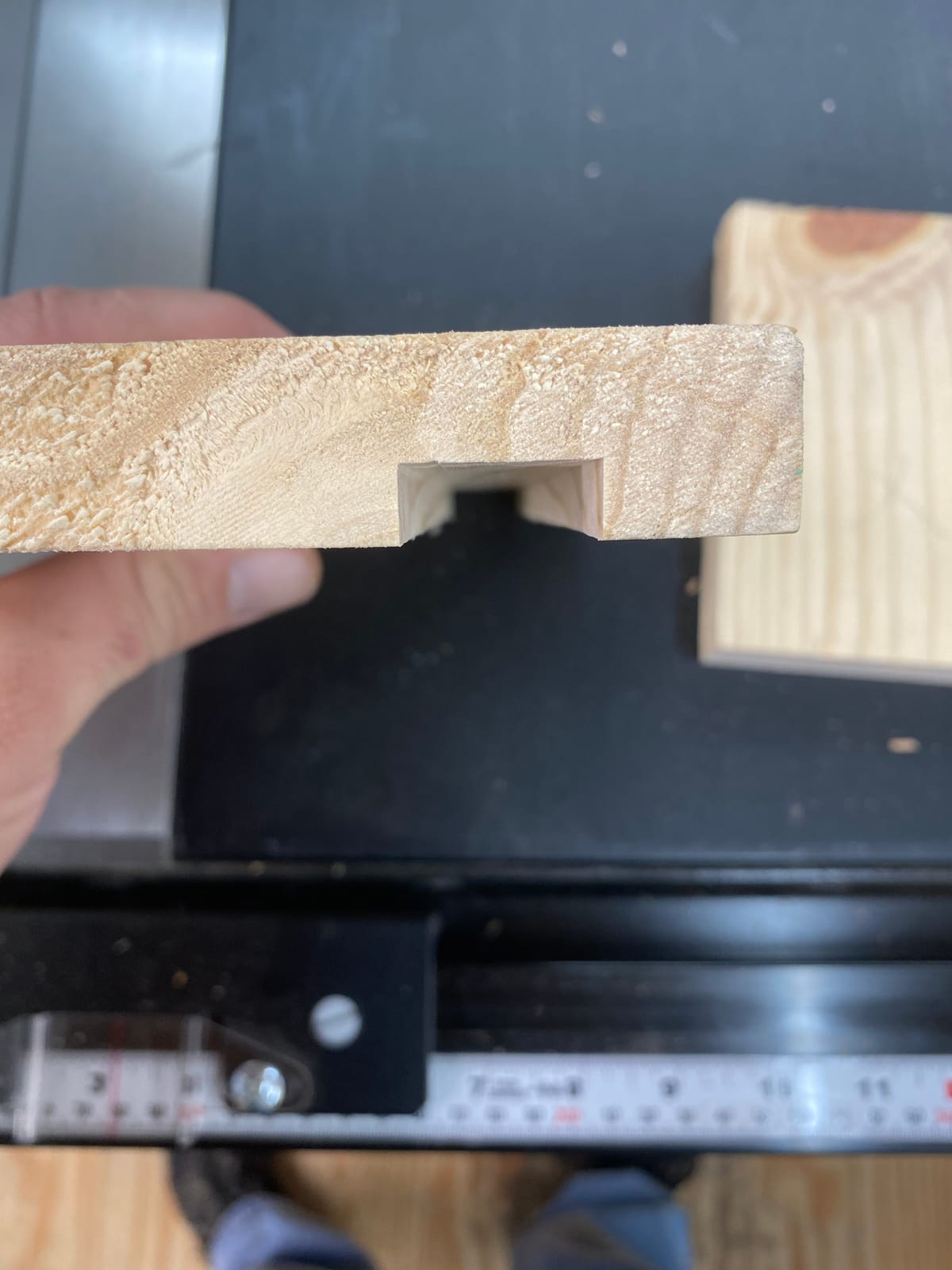
Check the blade orientation before your first cut
With five two-wing chippers in the stack, every chipper must sit teeth-up and seated flat against the arbor shoulder. The chips between chippers look identical at a glance, which is why the manual’s wording matters. Mark each part with a Sharpie as you build the stack and your second setup will take half the time.
Measure the groove before you cut a full stack of parts
Cut a 10 inch test scrap, measure the groove with a caliper, and adjust by shim count rather than by eye. If the groove measures thin, add a shim before the shim stack; if it measures wide, move one out. Getting this right once saves a batch of loose-fitting shelves.
2. Freud SD208S Pro 8 Inch Dado Set: Most Versatile
Freud Pro Dado Set with Premium Tico Hi-Density Carbide Crosscutting Blend for Maximum Performance – 8″ Diameter, 12 Teeth, 5/8″ Arbor, 6000 Max RPM – SD208S
8 inch
12 tooth carbide
5/8 inch arbor
1/4 to 7/8 inch widths
Pros
- Consistently flat tear-free bottoms in hardwood and melamine
- Precision shim set for fine width adjustment
- Runs well on brake-equipped and lower-powered saws
- Coating resists pitch build-up and heat
Cons
- Stack assembly is fiddly compared with a router setup
- Not every arbor accepts the full stack without modification
Freud built this set specifically around 12 tooth outer blades rather than the 24 tooth pattern most stacks use. Fewer teeth on the shoulders means a cleaner cut across the top of the groove and a wider chip per tooth, which is exactly what you want on solid wood and melamine where any witness line shows.
The listed stack weight of 5.7 pounds is worth knowing about, because Freud markets the set as optimized for safety brake saws and lower-powered saws. In practice it means the whole assembly spins up without bogging a portable saw, which is the reason owners on brake-equipped saws keep coming back to it.
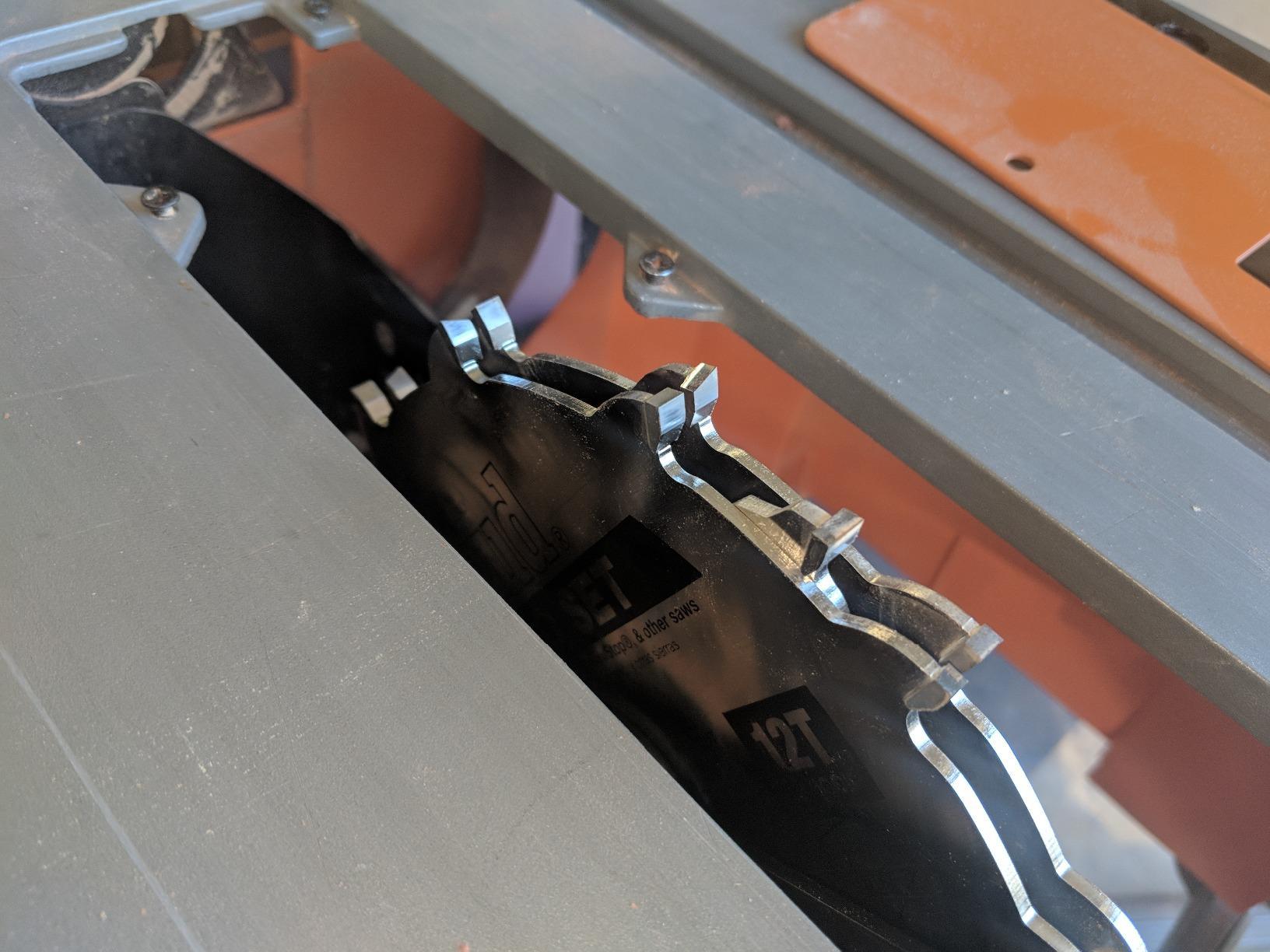
The TiCo Hi-Density Carbide crosscutting blend held its edge across our run of oak, birch ply and a melamine panel, and the Silver I.C.E. coating left the blades noticeably cooler and cleaner than an uncoated stack at the same feed rate. Widths run from 1/4 inch to 7/8 inch, wider than most sets in this roundup.
The friction point is assembly, not cut quality. Two blades, three chippers, spacers and a precision shim set means more small parts than a dial-based design, and the shim stack has to sit square for the grooves to measure true. Set aside a clear bench and mark the chippers as you go.
Know your saw’s arbor thread length before ordering
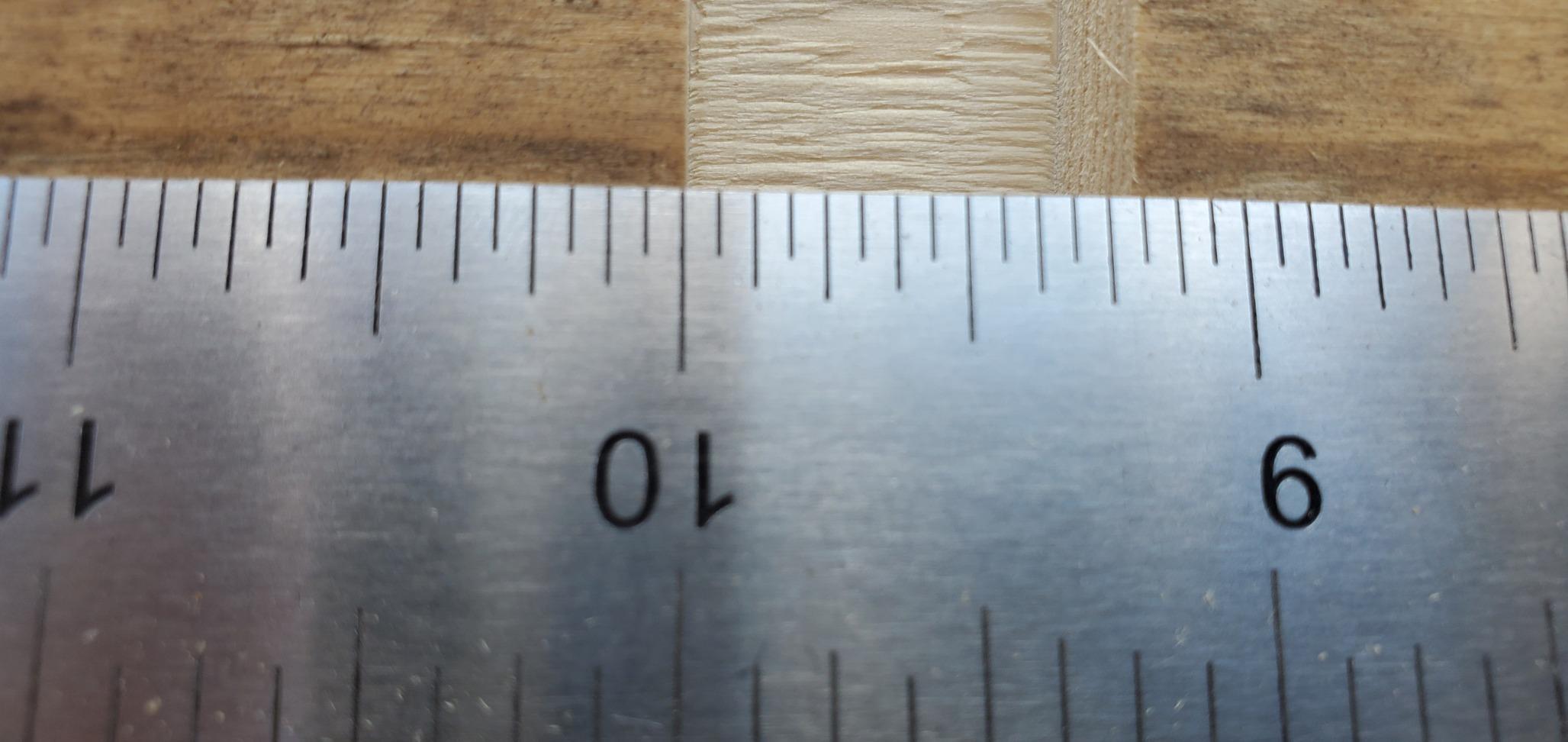
A wide stack on a short arbor is the classic Freud fitment complaint. If your saw has a short arbor runout, the outer blades cannot tighten fully and the stack can sit proud, which shows up as a groove that is not square to the workpiece. Measure the distance from the arbor shoulder to the arbor nut with a rule before you build the full width.
Why 12 outer teeth beat 24 for visible surfaces
A lower tooth count on the shoulders cuts a wider chip, so each tooth clears more material per pass and leaves less of a witness line on the top edge of the groove. On melamine and veneered plywood that difference is obvious under a light. If your work is mostly hidden joinery, the higher tooth sets hold an edge longer instead.
3. Oshlun SDS-0842 42-Tooth 8 Inch Dado Set: Best Value
Oshlun SDS-0842 8-Inch 42 Tooth Stack Dado Set with 5/8-Inch Arbor
8 inch
42 tooth
5/8 inch arbor
C-4 carbide
Pros
- Extremely clean tear-free groove bottoms
- Full body chippers seat evenly and run quiet
- Shims and blades are clearly marked
- Blades arrive sharp and flat
Cons
- Heavy full stack strains lighter saw motors
- Storage case is a basic box with foam cutouts
- Aligning several blades is tedious
This is the set that shows up most often when woodworkers argue about bang for the buck, and the reason is the 42 tooth count. Nearly double the teeth of a typical 12 tooth outer blade means very small chips, which is why the bottoms stay flat and quiet on hardwood and plywood.
The full body chippers are the second reason. Unlike two-wing chippers that float on the arbor and need careful alignment, full body chippers register against the arbor shoulder, so the stack assembles faster and runs with less vibration. Our sessions were noticeably quieter than with a comparable wing chipper set.
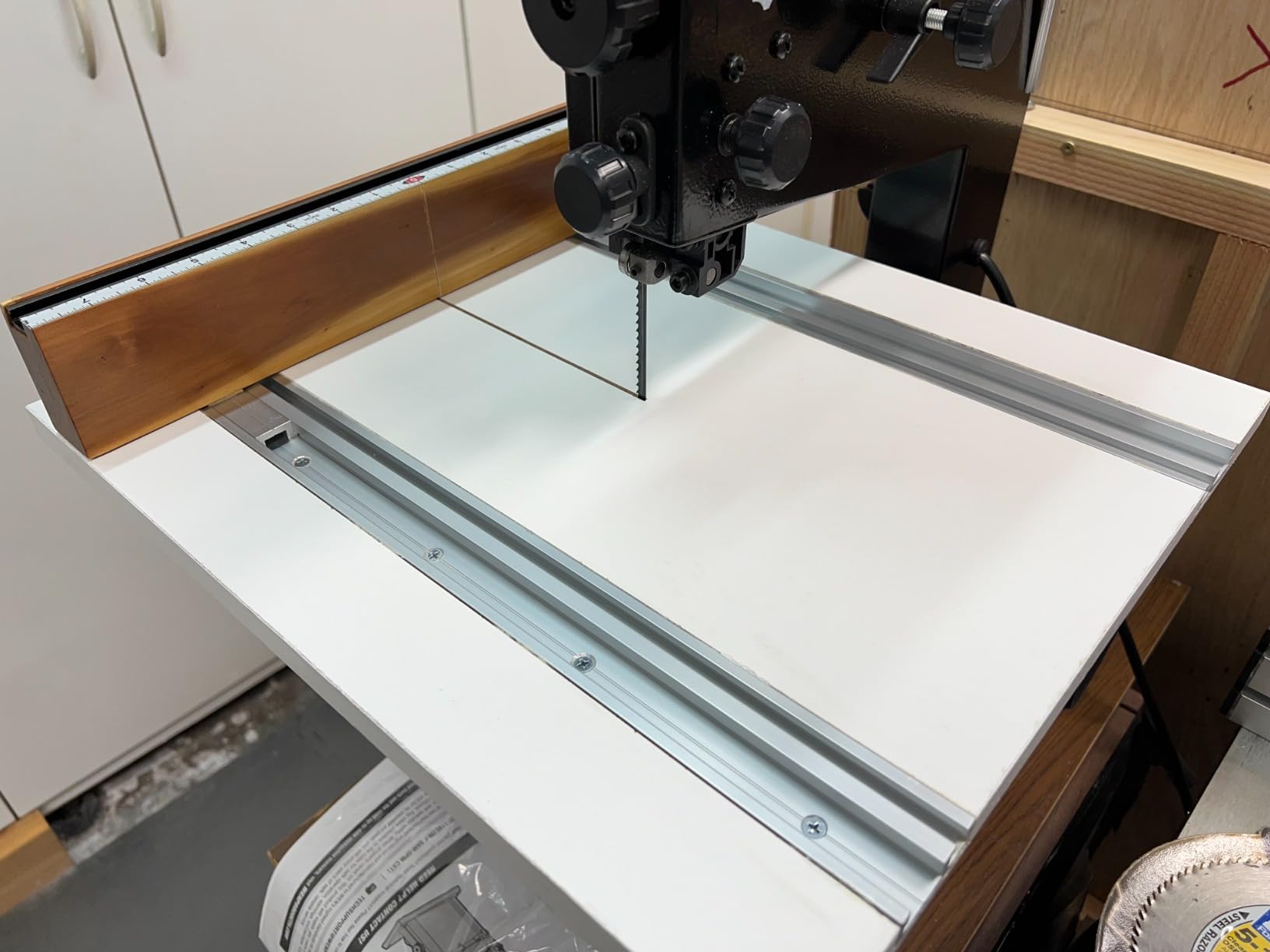
Blades arrive sharp, flat and properly brazed, and the shims and blades are marked so you can identify sizes without guessing. The listed weight of 9.9 pounds is the tradeoff. On a contractor saw with a strong motor that mass actually helps stability, but on a lighter saw the full stack asks the motor to work harder than most users expect.
Two practical notes from owners: the included carrying case is a basic box with foam cutouts that will not survive a trip in a truck bed, and aligning several blades for wider cuts takes more patience than the two-chiper sets. Plan for both before you commit to wide stack work on a production run.
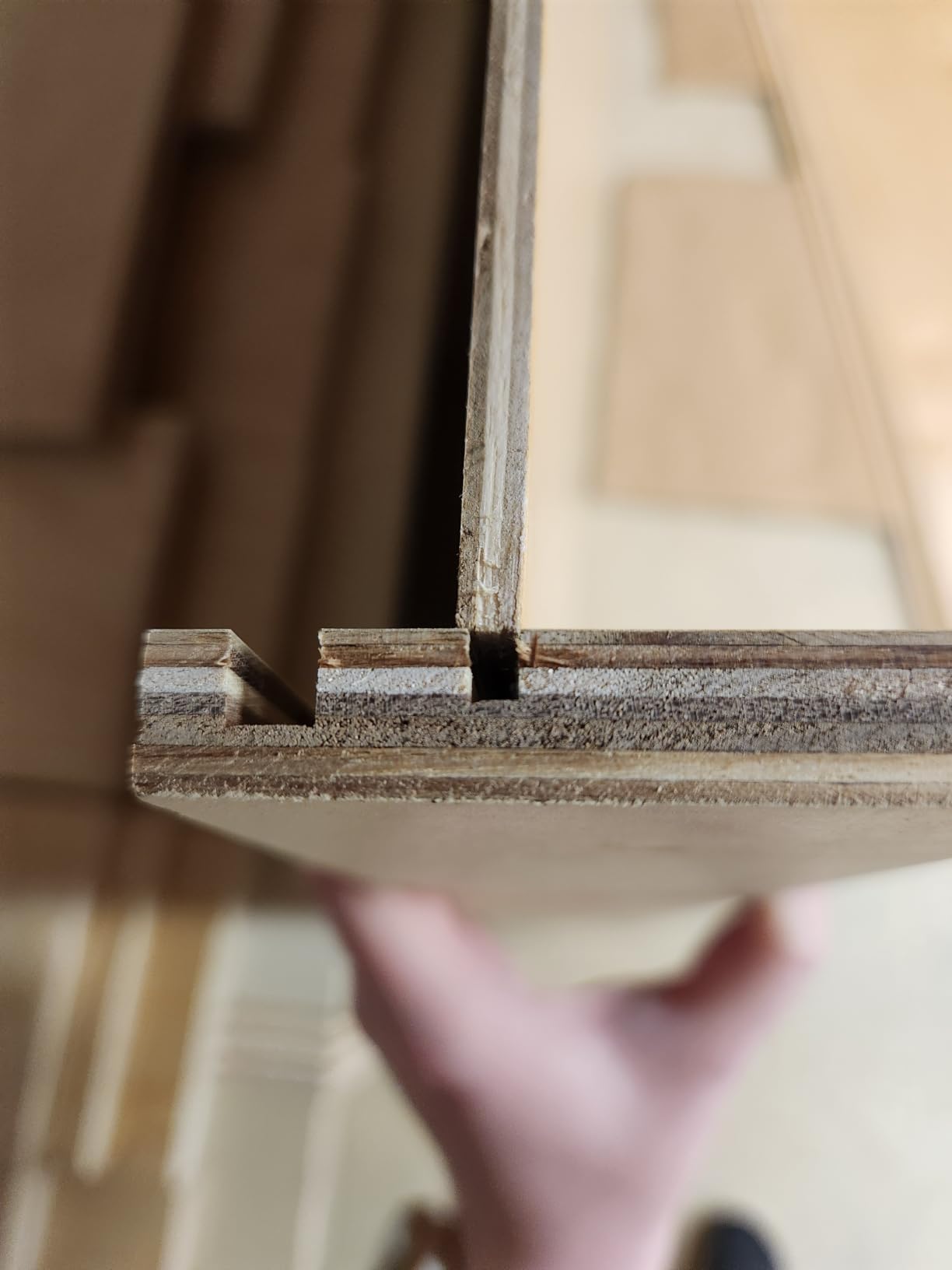
Full body chippers save setup time on repeat widths
Two-wing chippers need their height matched by eye each time you rebuild a stack. Full body chippers bolt against the shoulder and land at a fixed height, so once you know the width you need, assembly takes a fraction of the time. For cabinet work where you cut the same joint dozens of times, that difference adds up fast.
Check your saw motor before running the full stack
A listed weight of 9.9 pounds is the heaviest set in this roundup. On a portable saw with a small motor, feed at a steady moderate rate and let the blade do the work rather than forcing it. If your saw bogs down, drop back a chipper and cut the wide grooves in two lighter setups.
4. Freud SD508 Super Dado Set: Best for Production Work
Freud SD508: 8″ Super Dado Sets
8 inch
24 teeth
Adjusts in .004 inch steps
Anti-kickback design
Pros
- Premium carbide holds an edge under heavy production
- Flat-bottomed square tear-free grooves
- Reusable metal shims instead of paper
- Width chart included for repeat setup
Cons
- Storage case is thin and no replacement is offered
- Chippers are not etched with their sizes
- Stacking a full set is tedious
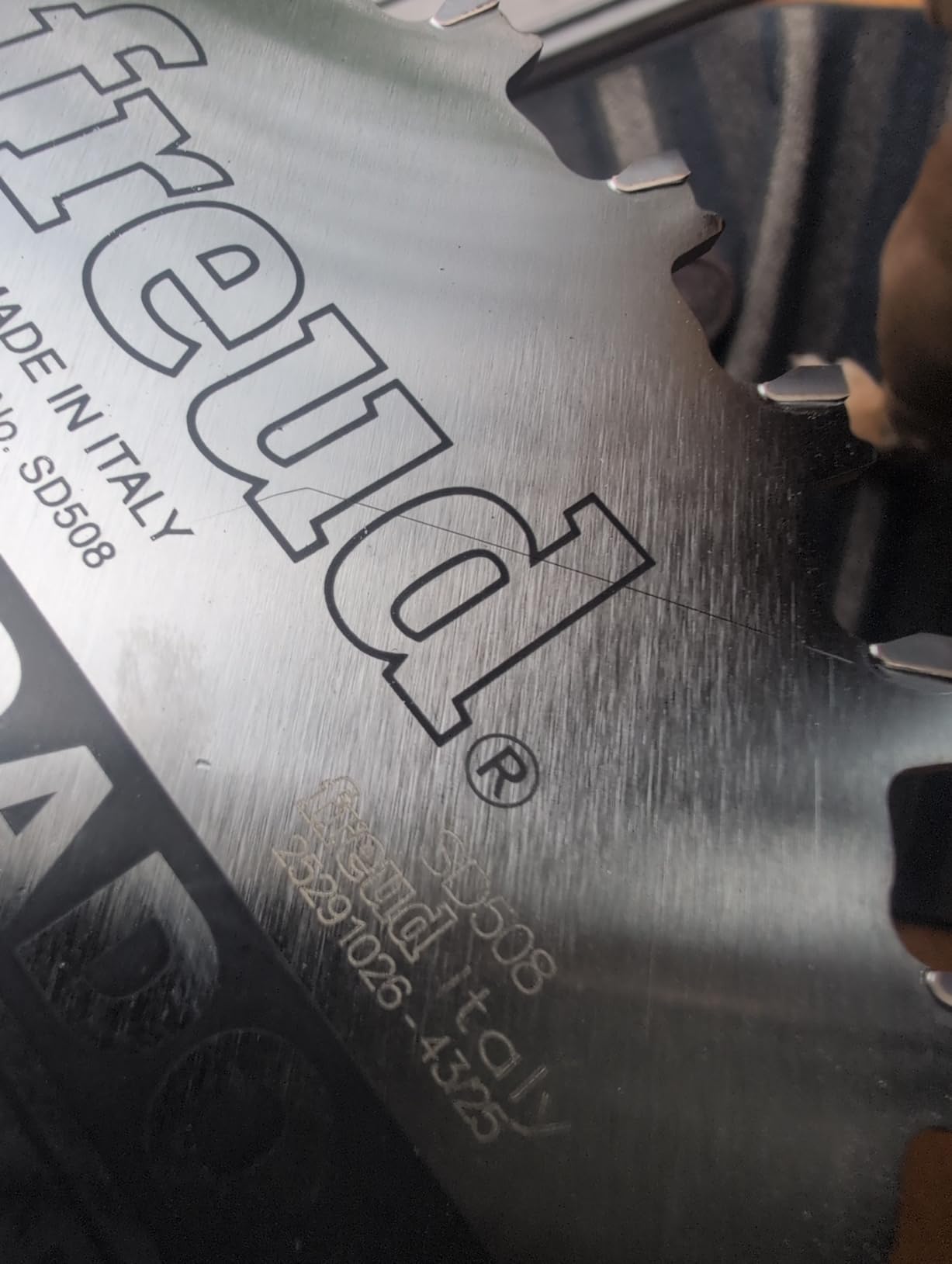
The SD508 is the production version of the Pro set. The outer blades carry 24 teeth with a negative rake, and the chipper package includes 1/8 inch, 3/32 inch and 1/16 inch chippers so you can reach common cabinet widths without hunting for extra parts later.
Adjustment happens in .004 inch steps, which is fine enough to dial a groove to a nominal size and then fine-tune with the metal shims. That combination matters when you are cutting the same joint on every part of a run and cannot afford parts that do not go together.
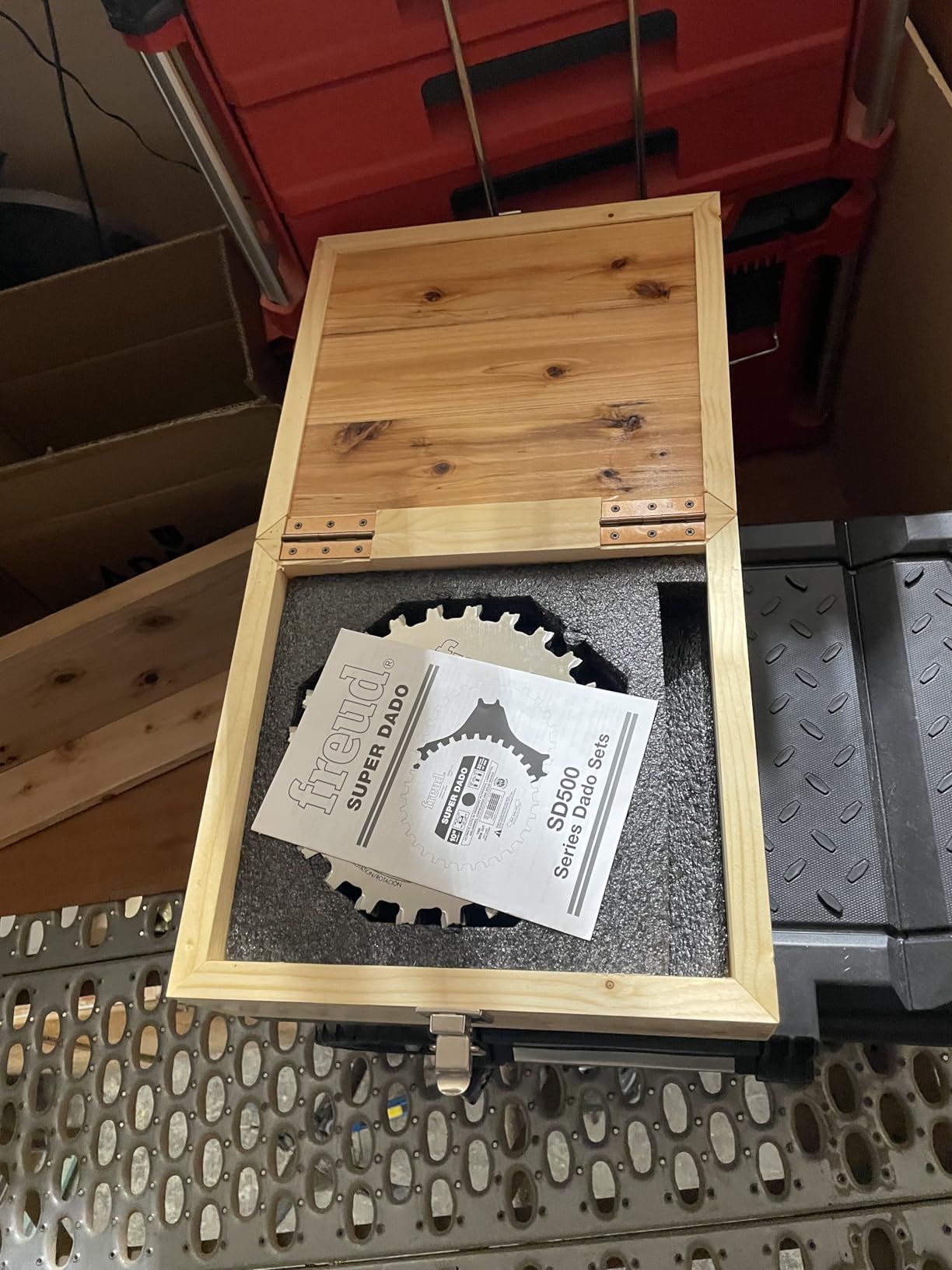
Where this set earns its reputation is edge retention. Under repeated hardwood and panel work the carbide stayed sharp where lighter sets in this roundup started to dull, and the anti-kickback design on all blades and chippers is a genuine safety benefit when a knot or nail shows up mid-cut.
The recurring gripe is packaging. Reviewers call the case thin, flimsy plastic, and no replacement case is offered, so plan on storing the set in a drawer or a padded tote of your own. Unlabeled chippers are the other small annoyance; write the sizes on them with a marker the day the set arrives.
Label the chippers before the first wide cut
Three of the four chippers are close in diameter and identical in appearance, so a mixed-up stack produces a groove that is off by a fraction without any obvious warning. Two minutes with a fine marker and masking tape on each chipper prevents the kind of troubleshooting that eats an afternoon.
Plan on your own storage
Loose carbide blades rattling in a drawer is how tips chip. The included case does not hold the set securely, and no replacement case is offered for it, so a simple slotted plywood box or a padded tool tote does the job just as well. It is a small task that pays off every time the set comes off the saw.
5. Diablo DD208H 8 Inch Dado Set: Top Rated
Diablo Carbide Stacked Dado Saw Blade Set – 8″ Dia, 12 Teeth, 5/8″ Arbor
8 inch
12 teeth
5/8 inch arbor
1/4 to 13/16 inch widths
Pros
- Sharp out of the box with very few negative reviews
- Feeds easily on older and portable saws
- Thickness-marked spacers and width chart
- Resharpenable carbide for long service life
Cons
- Review volume is comparatively small
- Only two wing chippers so fewer width combinations
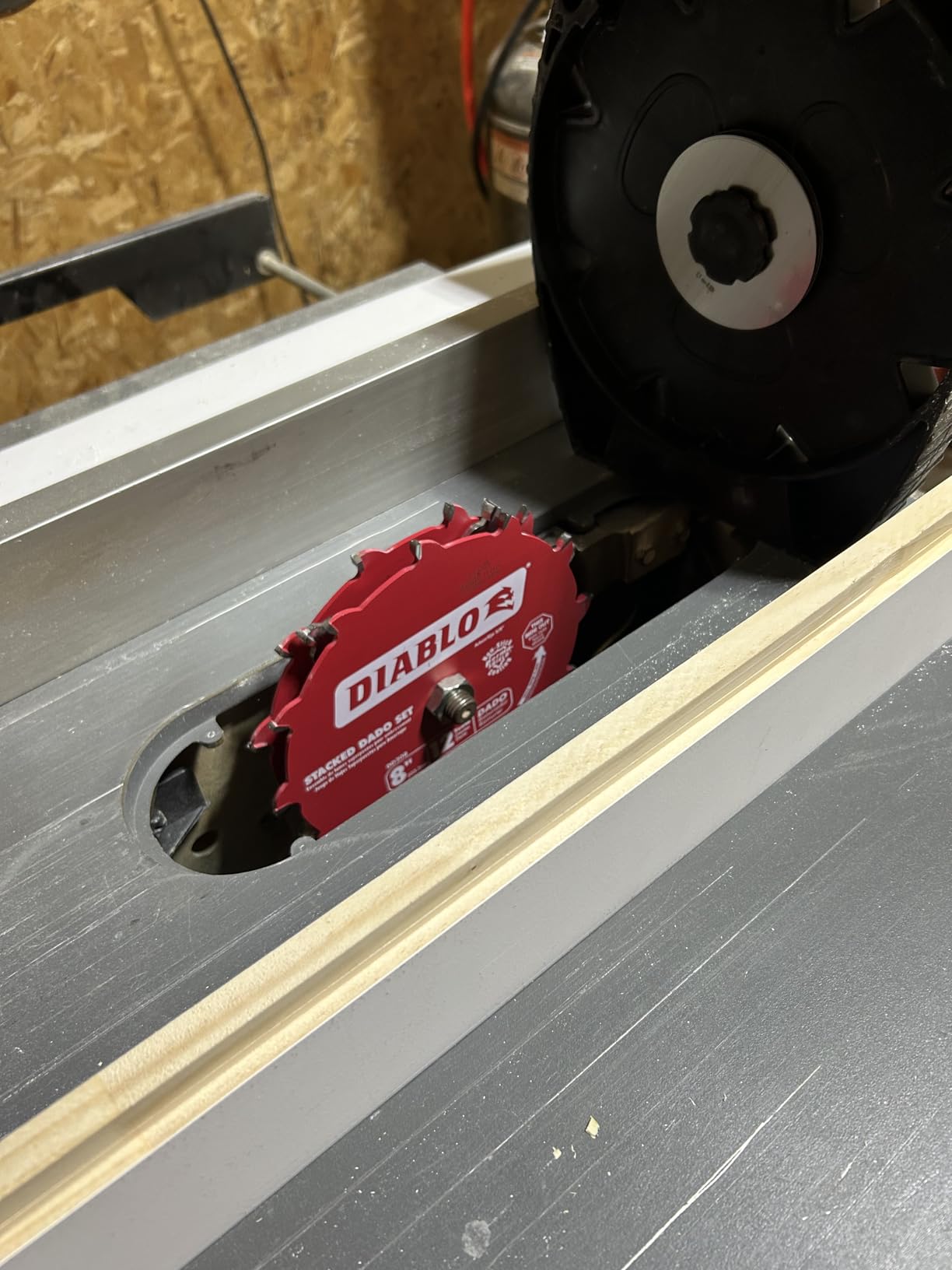
This set carries the highest average rating of anything we tested. It is also the simplest to live with: two outside blades, two wing chippers and a set of shims, with thickness-marked spacers and a width chart so you can rebuild a known width in a couple of minutes.
Diablo designed it to feed with less power, which owners confirm by running it on everything from a portable saw to a thirty-year-old contractor saw. That low feed demand is the feature most likely to matter to you if your saw is not a big one.
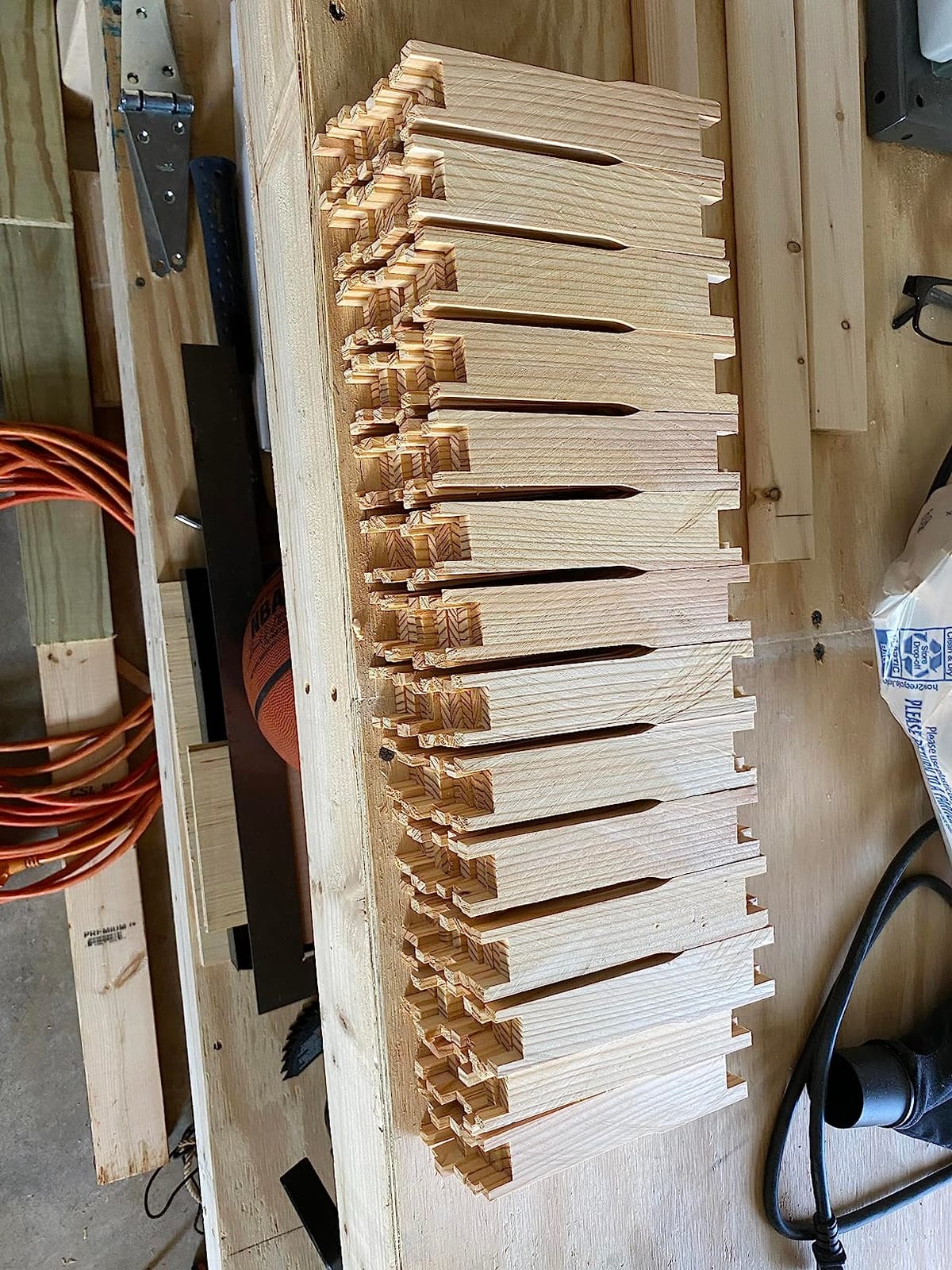
Blades were sharp out of the box, and the cuts moved smoothly without any tuning on our first pass through birch ply. The Perma-SHIELD coating handled the resin-heavy panel material better than an uncoated stack, and because the teeth are resharpenable the set has a longer useful life than you would assume from the entry position.
Two caveats. Review volume is much smaller than the big sets in this roundup, so there is less long-term owner history to lean on. And two wing chippers give fewer width combinations than the five-chipper sets, which can mean more shim juggling if you work at unusual widths.
Best fit for an older or portable saw
Low feed power demand is the deciding factor if your saw has a small motor or an older capacitor that struggles to spin a heavy stack. The set feeds easily where a nine-pound stack bogs the same saw down, so it doubles as a reason to stop worrying about your saw’s horsepower.
Plan your widths around two chippers
With two wing chippers and marked spacers, common widths are quick to reach, but unusual ones take more shim work than a five-chipper set. If your projects use several different groove widths, a set with more chippers will save setup time over a season even if each cut is identical.
6. CMT 230.312.08 Locked Dado Pro: Best for Brake Saw Safety
CMT ORANGE TOOLS 230.312.08 DADO Set Saw Blade HW D=8” B=5/8” Z12 FTG+ATB Orange PTFE
8 inch
12 teeth
Locking spacer design
5/8 inch bore
Pros
- Lock spacers keep the stack from shifting
- First dado set listed as UNI EN 847 compliant
- Cut widths match the chart
- Flat bottoms with little tear-out
Cons
- Micro shims are not labeled for thickness
- Only two magnetic shims included
- Replacement lock spacers are not sold separately
The idea that makes this set different is the lock spacer. In a conventional stack the individual blades are held in place only by friction and the arbor nut, and they can shift under load. The locking spacers grip the arbor and keep the assembled elements from contacting each other while the stack rotates.
That matters most on a saw with a braking system, where a shift in the stack at speed is the kind of event nobody wants to think about. It also makes assembly faster, because the spacers hold position while you torque the nut instead of fighting parts that want to move.
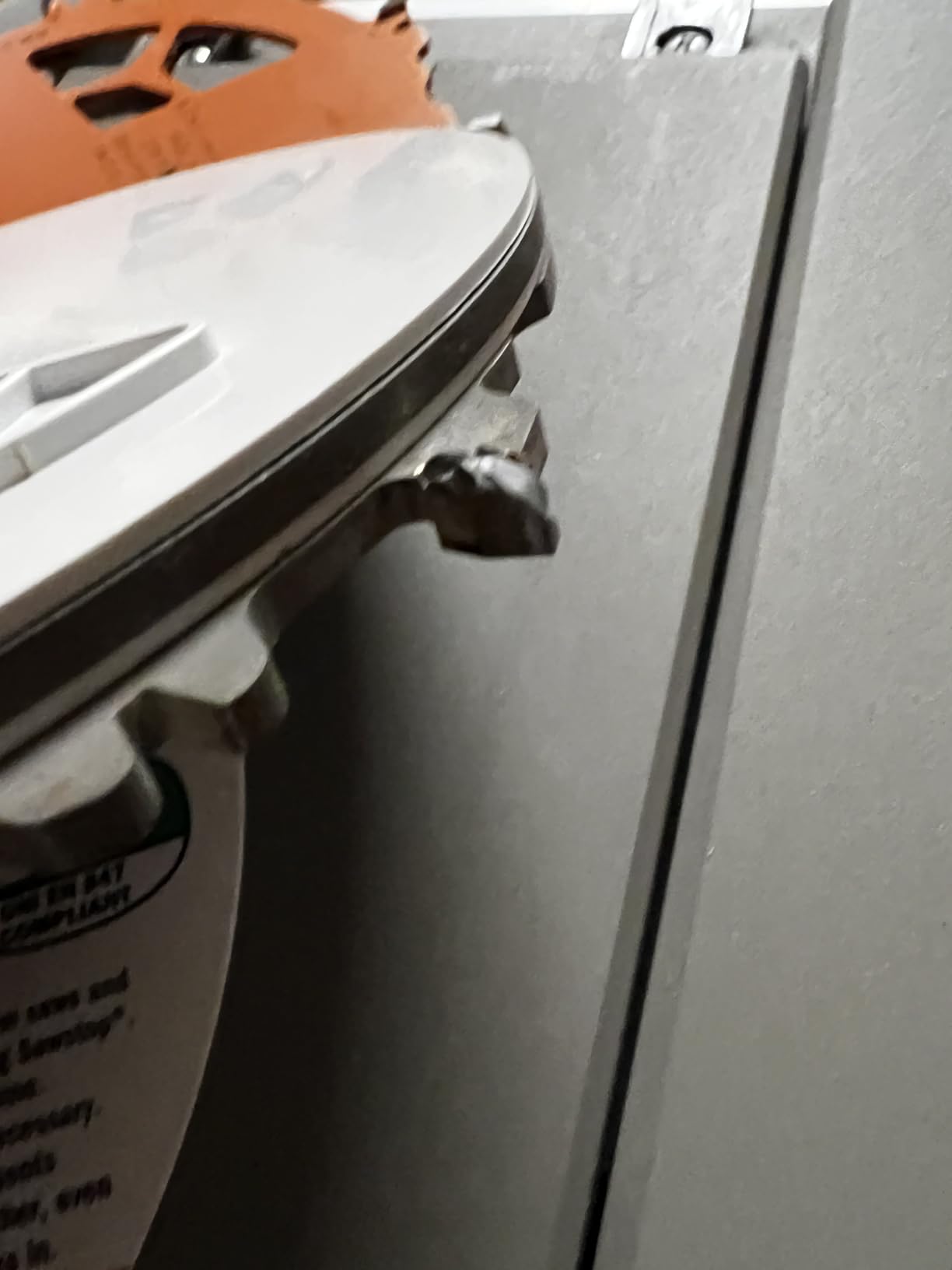
Cut quality held up well in our sessions. Owners report nominal widths measuring true, and we saw flat bottoms with minimal tear-out across oak, pine, plywood and MDF. The flat-top grind with an alternate top bevel and a -12 degree negative hook is a geometry built for shearing rather than slicing.
The weakness is documentation. The micro-adjust shims are not labeled for thickness and only two magnetic shims are included, so hitting an exact width means trial and adjustment with a caliper. Replacement lock spacers are not sold separately either, so losing one means replacing more than you expected.
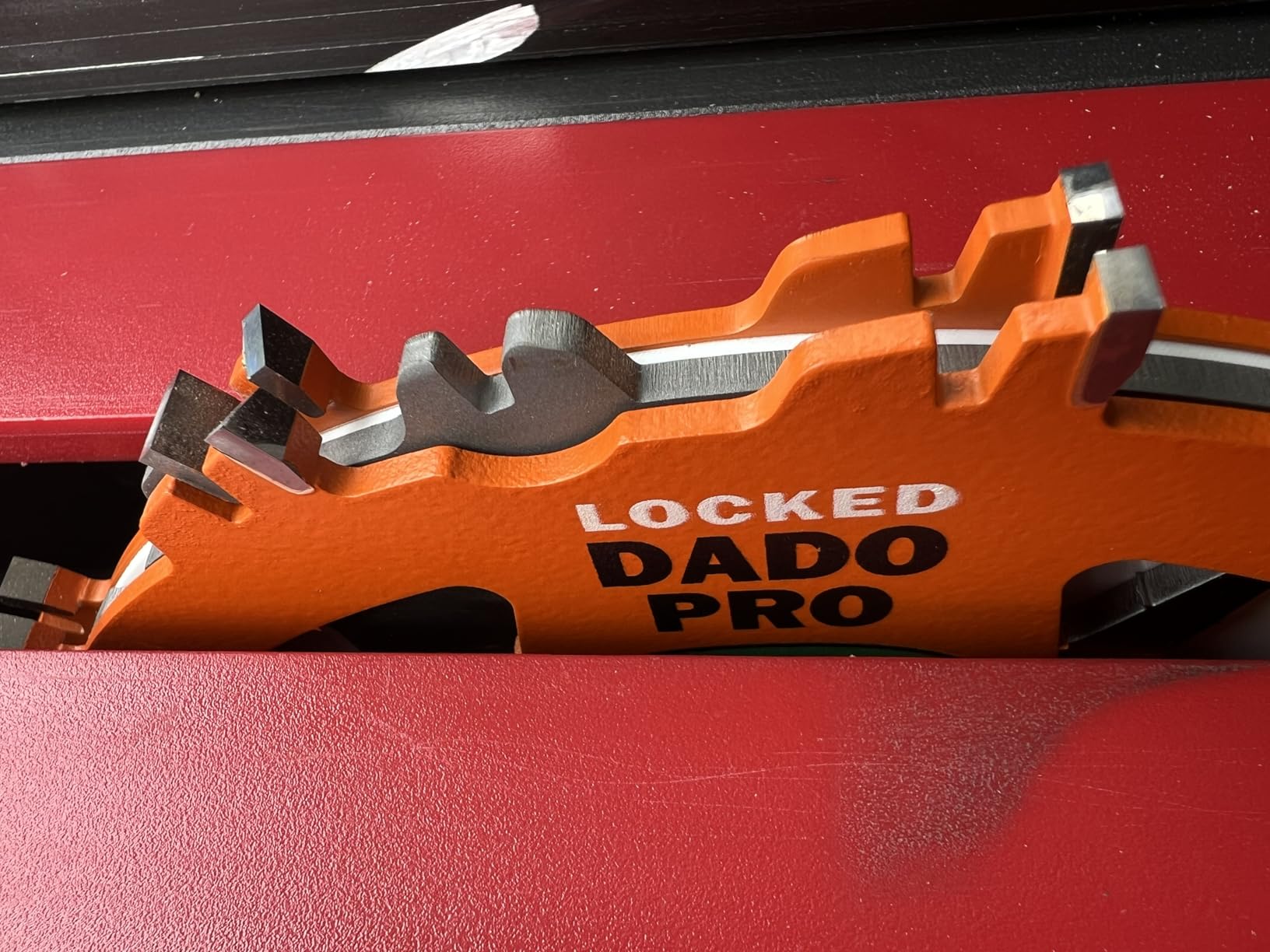
Why locking spacers change the safety conversation
A loose stack depends on friction to stay aligned. Lock spacers remove that dependency, which is why this is the set we would put on a saw with a cartridge braking system or on any saw where the operator is new to dado work. The blade count does not change; the way they are held does.
Budget time for calibration instead of guessing
With unlabeled micro shims, the workflow is to assemble for the closest nominal width, cut a test piece, measure, and move shims until the groove matches. Once you note the combination that hits your width, every later setup takes one minute instead of ten.
7. FOXBC 8 Inch 14-Piece Dado Set: Best for Beginners
FOXBC 8″ Carbide Stacking Dado Blade Set for SawStop, Jet, Dewalt, Bosch Saw – 14 Pieces
8 inch
24 teeth
20 width combinations
5/8 inch arbor
Pros
- Clean crisp cuts with essentially no vibration
- 20 widths from 1/4 to 13/16 inch
- Accurate chipper thickness
- Storage case included
Cons
- Manual does not specify which shims to use
- Full stack strains saw motors below 2 HP
- Assembled outside the United States
This is the set we recommend for someone running their first dado. The 14-piece layout mirrors the larger sets: two outer blades, five two-wing chippers and seven metal shims, giving 20 width combinations from 1/4 inch to 13/16 inch. You get the same parts count as sets costing considerably more.
Negative hook angles on the carbide teeth are what produce the flat, splinter-free bottoms. In our cuts the bottoms stayed flat across birch ply and MDF, and the stack ran with no perceptible vibration, which usually signals a well-balanced assembly rather than a problem waiting to show up.
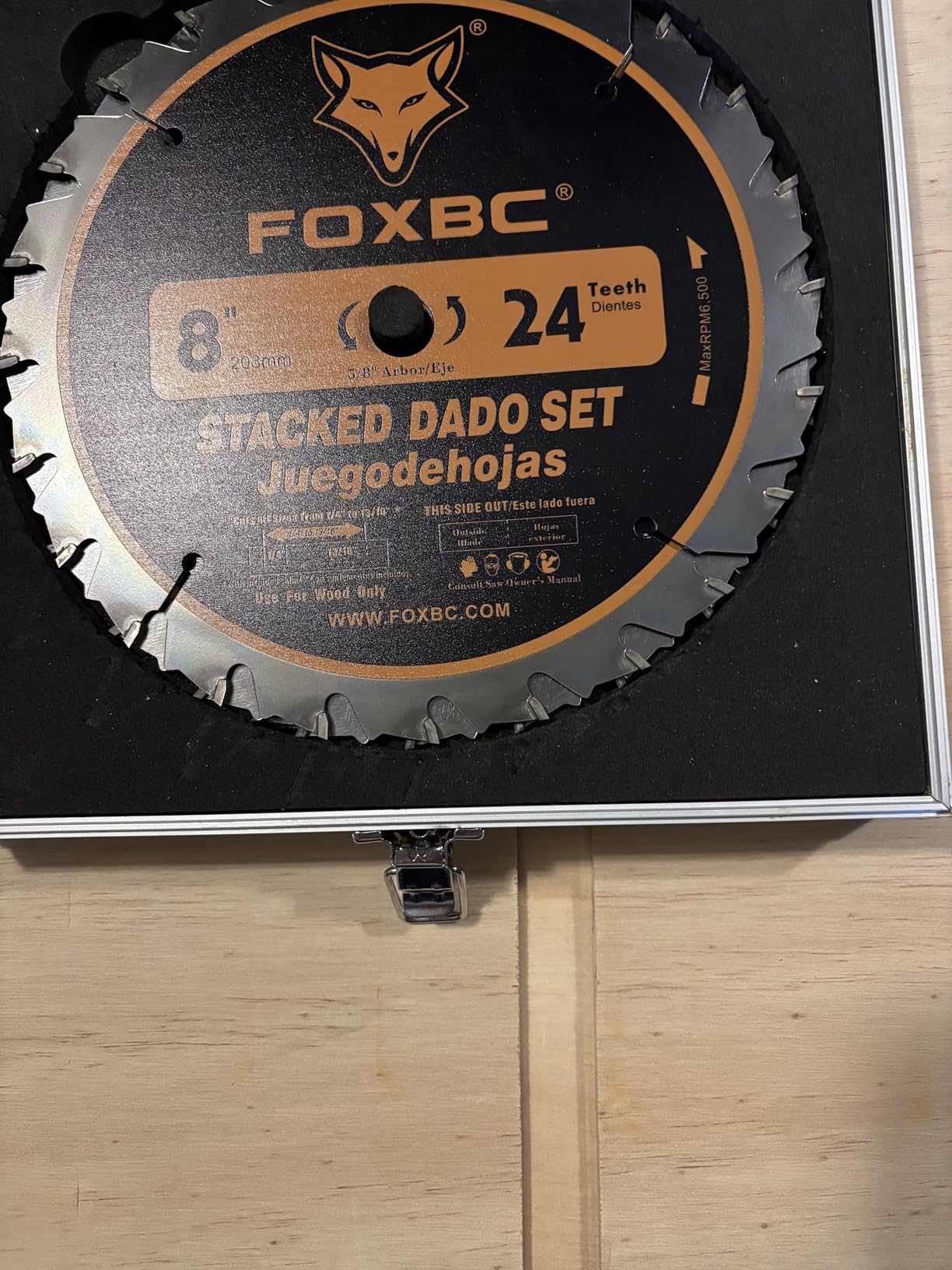
Owners repeatedly call out the accuracy of the chipper thickness as the surprise, since consistent chipper thickness is what lets a stack measure true without a pile of extra shims. The included case keeps the blades from rattling together, which protects carbide tips better than most setups in this roundup.
The manual is the weak point. It does not tell you which shims to use for a given width, so plan the first width by trial and error with a caliper, then write it down. At a listed weight of 2.76 kg, the full stack also asks more of a saw than the lighter sets, so do not force a small motor.
Write down your first working width combination
Because the manual leaves shim selection to you, the fastest path to a repeatable setup is to cut a test piece, measure, and note the exact chipper and shim combination. Mark the shim stack with tape so the next build is identical. Ten minutes of this removes most of the frustration beginners report.
Check that your saw clears the full stack
The listed stack weight is meaningful on saws with motors below 2 HP, where owners report the machine straining on full width cuts. Confirm your saw’s manual allows dado cuts at your planned width and diameter before you start, and drop a chipper rather than bogging the motor down.
8. Freud SD608 Dial-A-Width Set: Best Shim-Free Setup
Freud SD608: 8″ Dial-A-Width Stacked Dado Sets
8 inch
24 teeth
Dial width adjustment
5/8 inch arbor
Pros
- Dial removes shim handling entirely
- Dead-flat quiet cuts in ply and particle board
- Setting holds between adjustments
Cons
- Dial takes vertical space so short arbors cannot run wide
- Thin plastic case is easily damaged
- Supplied wrench may not fit larger arbor nuts
Every other stacked set in this roundup asks you to count shims. This one replaces that with a dial that adjusts width in .004 inch increments without handling individual shims at all. For anyone who dreads dado setup, that single feature is worth more than tooth count arguments.
Once set, the adjustment holds. We found the width stayed where we left it across repeated removal and reinstallation, and the cuts came out dead flat and quiet in plywood, particle board and hardwood.
The dial does have a cost, and fitment is where owners split. The mechanism occupies vertical space on the arbor, so a saw with short arbor threads cannot run the wider settings. If your saw has generous arbor length, the tradeoff disappears entirely, which is why it fits some shops perfectly and others not at all.
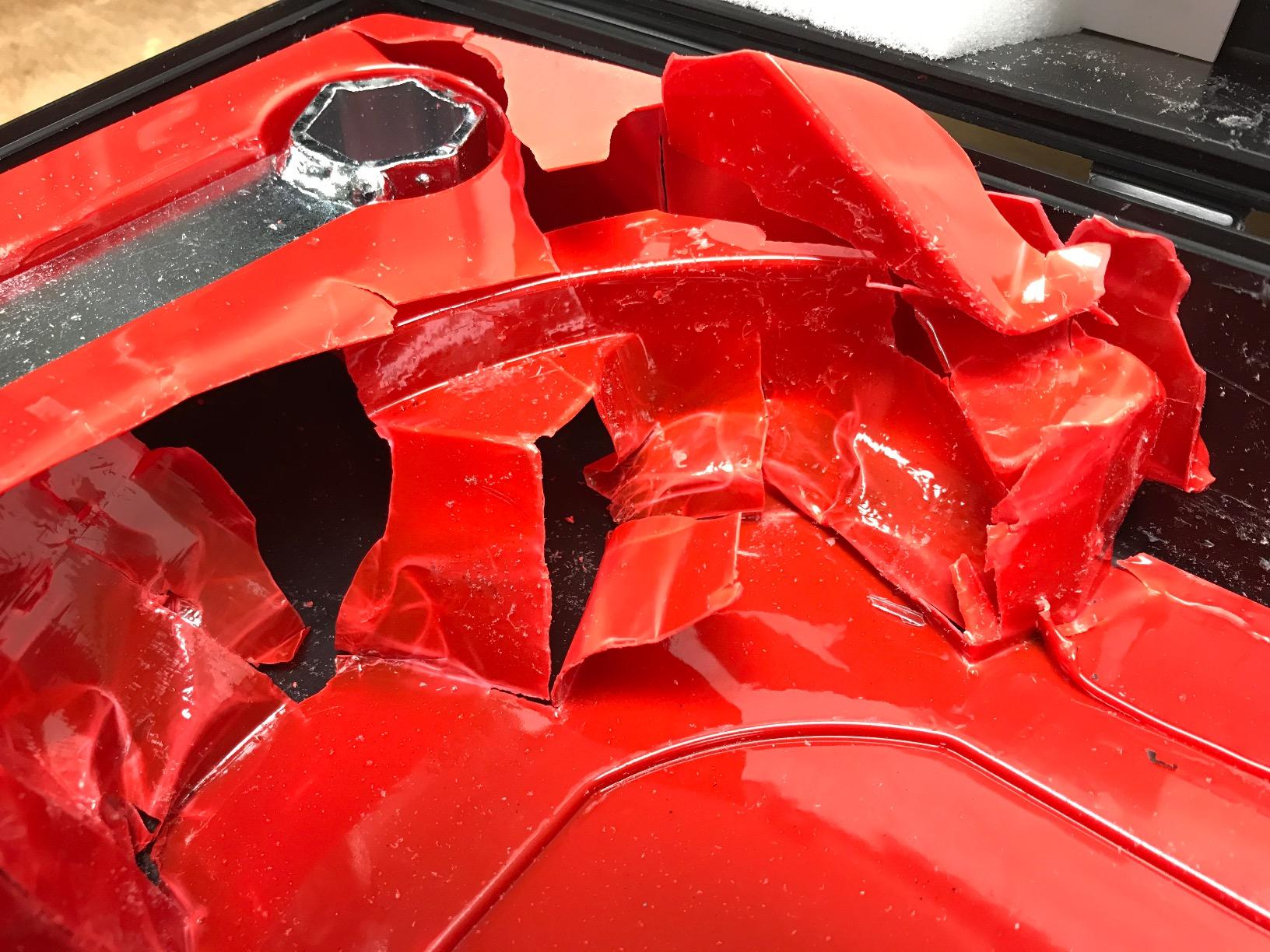
Also worth knowing: the case is thin plastic that can arrive damaged, the chippers are not stamped with sizes, and the included arbor nut wrench may not fit a larger nut. Switching a tilt direction on the saw can mean removing and replacing screws, so check that before you commit.
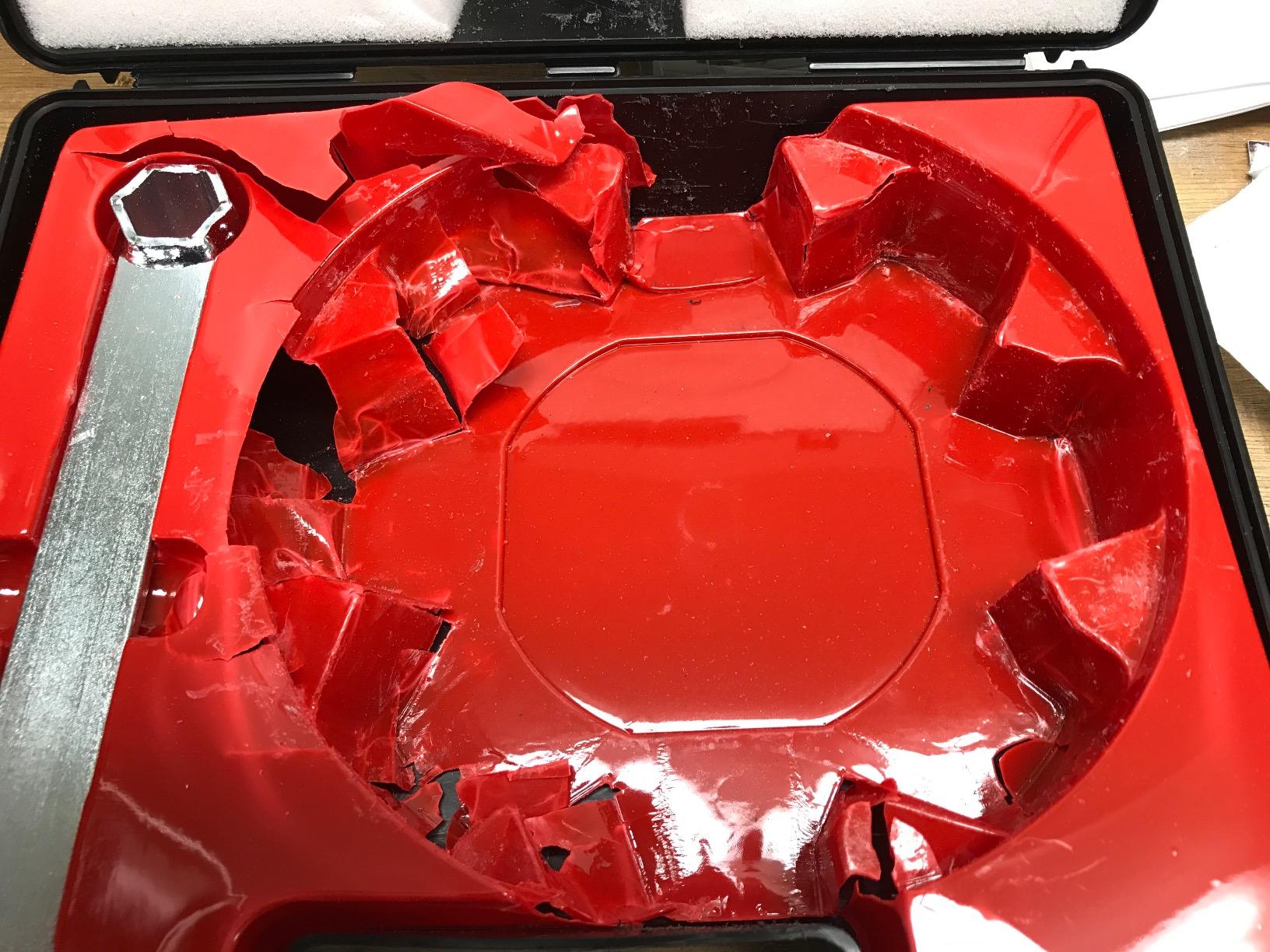
Measure arbor length before ordering
Sit a straightedge against the arbor shoulder and measure to the arbor nut. If you have room for the full stack plus the dial mechanism, this is one of the fastest setups on the market. If you do not, keep looking, because the wide settings simply will not seat on a short arbor.
Best for frequent width changes
Shim counting dominates the time in a conventional stack when your projects need several different groove widths. A dial turns that from a five minute build into a thirty second adjustment, which is why this set appeals to cabinet builders who alternate between drawer widths and shelf widths in the same run.
9. DOWOX 23-Piece 8 Inch Dado Set: Best Low-Cost Full Stack
DOWOX Dado Saw Blade Set, 8 Inch Stacking Dado Blade for Table Saws, 24 Tooth with 5/8 Inch Bore for Fine Finish Dados, Grooves and Rabbets, 23 Pieces
8 inch
24 teeth
23 pieces
1/4 to 13/16 inch widths
Pros
- Precise grooves with minimal tear-out once set up
- Sharp out of the box for table saw and radial work
- Storage case keeps blades organized
- Width combination chart included
Cons
- Manual does not identify which shims to use
- Very tight arbor nut torque can strip threads
- Riving knife must be removed for a dado insert
Twenty-three pieces is the largest count in this roundup: two outer 8 inch blades, four 1/8 inch chippers, a 1/16 inch chipper, shims and a case. The five-chipper layout means you can reach common widths with fewer shims than a two-chipper set, which reduces assembly time.
Cuts came out precise with minimal tear-out once the stack was dialed in, and the blades were sharp enough to handle table saw and radial arm saw work from the start. The 5/8 inch bore fits most standard table saws without modification.
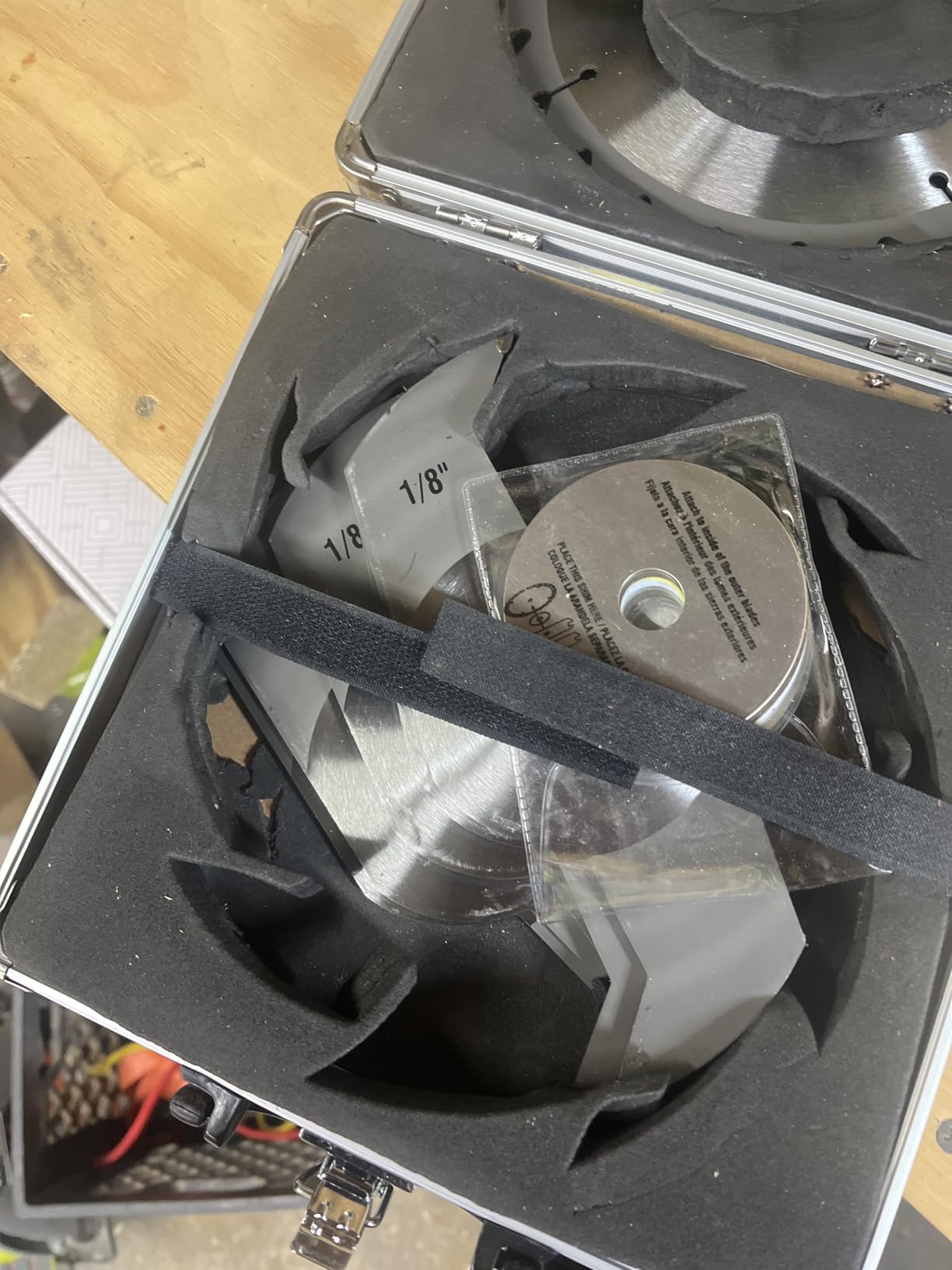
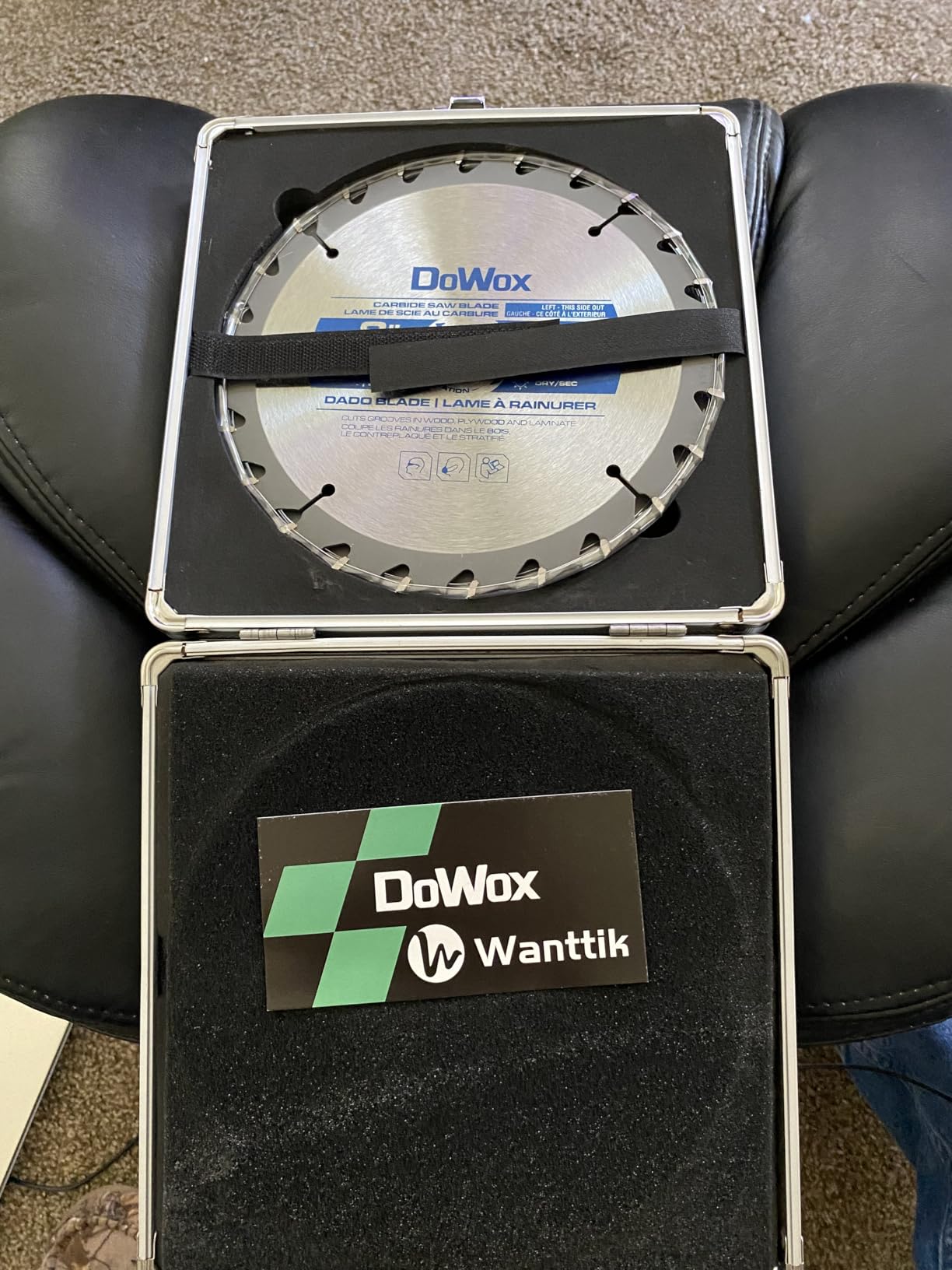
Owners frequently mention the case and manual as useful extras that cost nothing extra. The width chart plus a caliper is enough to work out your combinations, and once you have marked your own stack, setup becomes quick. Cut quality tracks the premium sets closely on panel material.
Three cautions from owner reports. The manual does not tell you which shims produce which width, the arbor nut needs tight torque that can strip threads if you overdo it, and some stacks do not measure true at nominal fractional widths until you add shims. Plan to calibrate once per width.
Torque the arbor nut firmly but deliberately
This stack needs a snug arbor nut to stay rigid, and owners who strip arbor threads usually push well past what the threads need. Tighten firmly by feel until the stack stops wobbling by hand, then stop. If the blades shift when you flick the stack, add shim pressure rather than more torque.
Budget for a zero-clearance insert
Owners confirm the riving knife has to come off and a zero-clearance dado insert has to go in before any cut. That insert is a separate purchase and it is not optional on most saws, so treat it as part of the cost of the set rather than an accessory you might skip.
10. DEWALT DW812DADO 8 Inch Dado Set: Best for DeWalt Saw Owners
DEWALT Stacked Dado Saw Blade 8 Inch 12 Tooth (DW812DADO)
8 inch
12 tooth
micro-grain carbide
Stainless steel shims
Pros
- Clean accurate cuts with a flat bottom
- Easy to set up and install on DeWalt table saws
- Micro-grain carbide reduces splintering
- Heavy duty storage case
Cons
- Shim thickness is not clearly marked on the discs
- Initial setup is challenging for first-time dado users
The heavy gauge laser cut plates are the point of this set. Thicker plate resists deflection under the side load a dado puts on the blade, which is why the bottoms came out flat in our cuts and why owners on DeWalt saws describe it as easy to install and quick to set up.
Micro-grain carbide teeth are specified to reduce splintering, and four tooth chippers give a smooth flat bottom cut. Stainless steel shims allow very fine width adjustments, so you can dial a groove to a measured target rather than settling for the nearest nominal size.
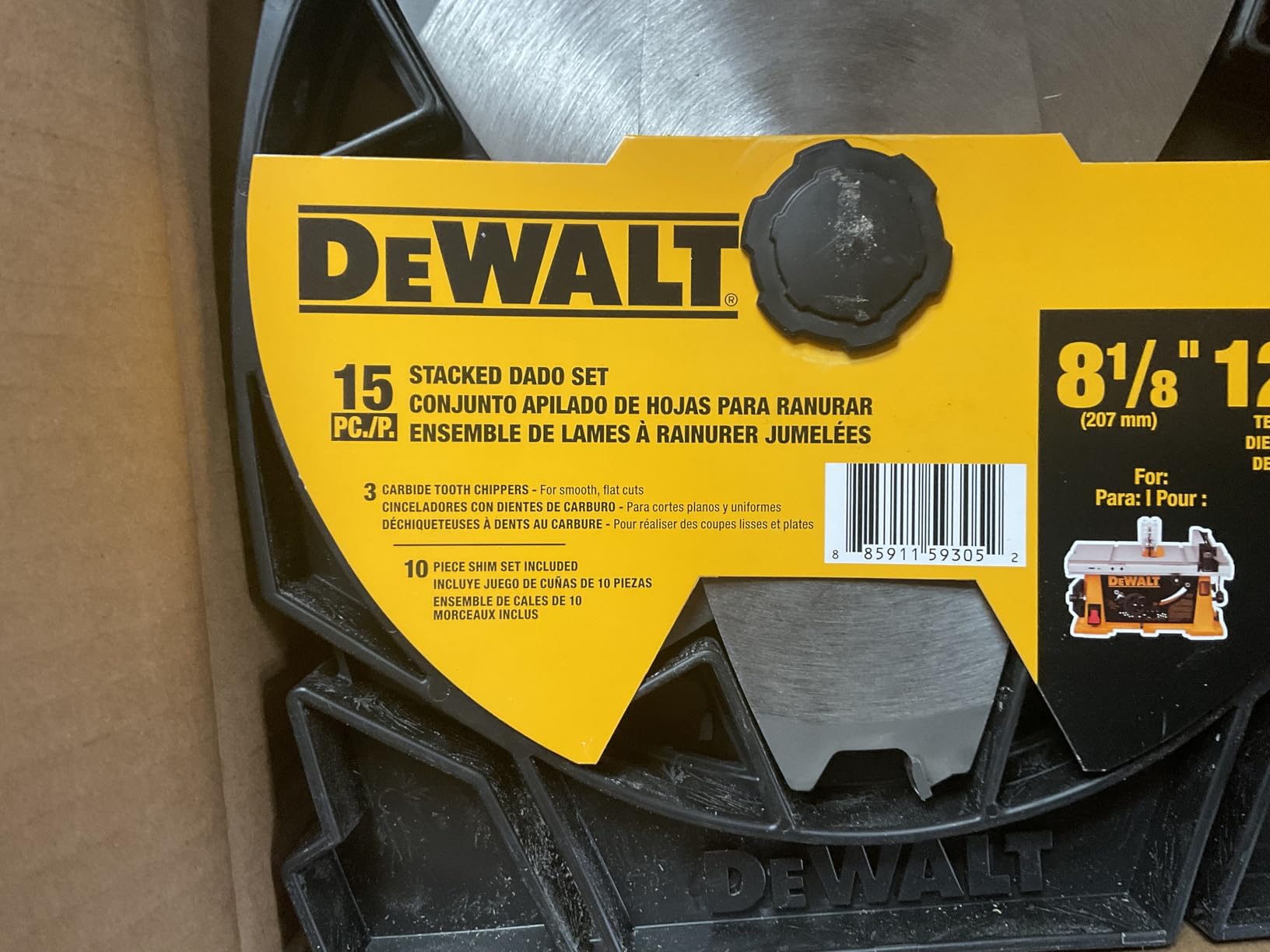
Owners building cabinets and frames report that it saves a large amount of time compared with multiple passes, and it handles half lap joints, dados and rabbets with the same stack. The heavy duty case is a real storage improvement over the cardboard boxes and thin plastic shells that ship with several competing sets.
Two real drawbacks. Shim thickness is not clearly marked on the discs, so you are measuring with calipers and marking them yourself. And people running dado cuts for the first time find the initial setup challenging, which is honest: a dado stack is a different assembly than a single blade, and this one does not hand-hold you.
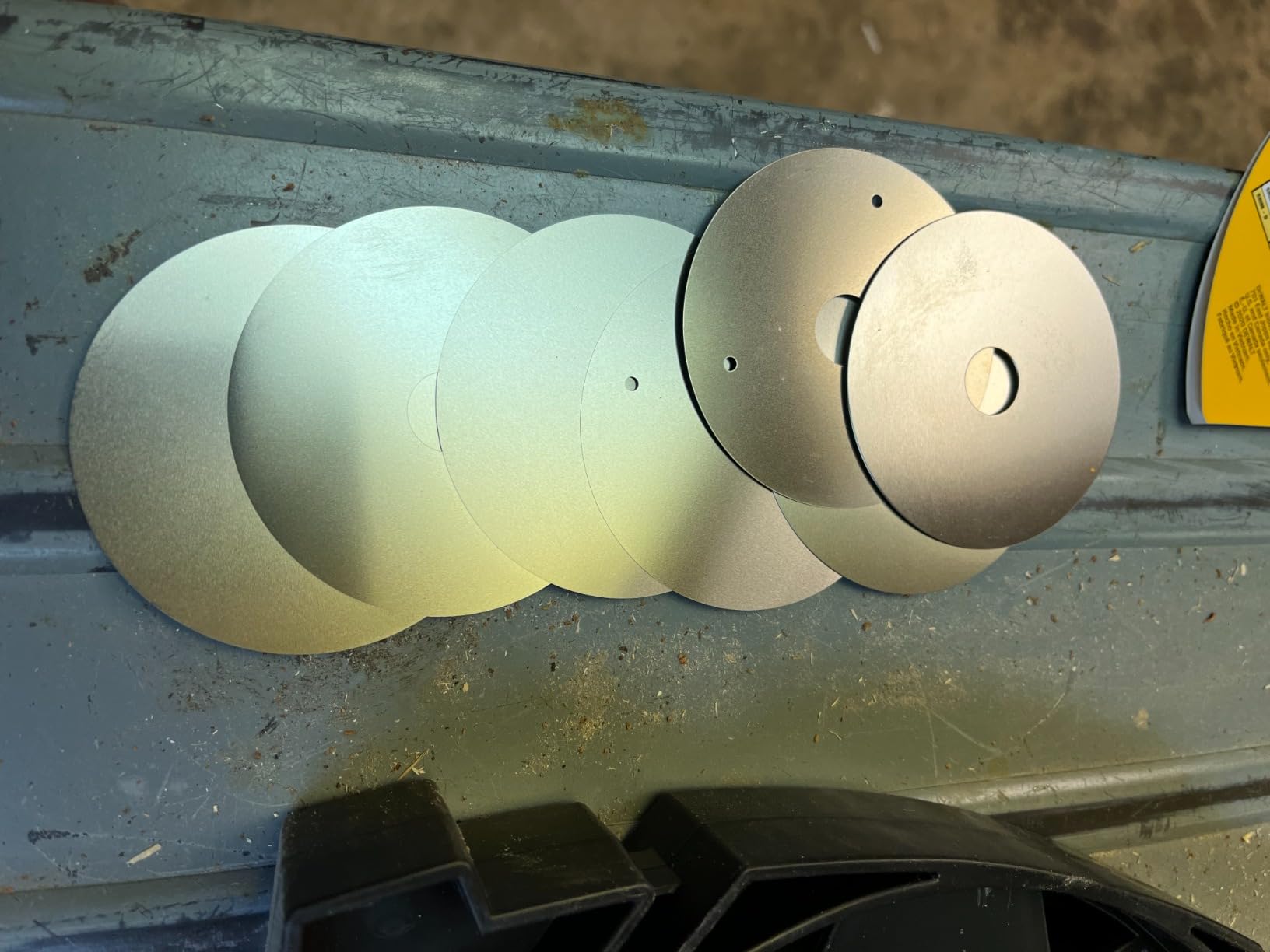
Mark the shims on day one
Because thickness is not stamped on the discs, a caliper and a fine marker take care of this permanently. A strip of masking tape on each shim with the measurement written on it saves you from re-measuring every time you rebuild the stack for a new width.
Why plate thickness matters more than most buyers think
A dado puts side load on the outer blades in a way a rip cut does not. Heavier plate deflects less, and less deflection means a groove that stays square to the workpiece through the full depth of the cut. That is the difference between a shelf fitting tightly and a shelf rocking in its groove.
11. CMT 230.012.08 Dado Pro Set: Best for Underpowered Saws
CMT Orange Tools 230.012.08 – Set Blades for Joints HW D=8 B=5/8 Z12 + 12 K=1/4 -> 13/16 a=-12
8 inch
12 teeth
5/8 inch bore
Splinter resistant on panel stock
Pros
- Splinter resistant cuts on veneer plywood and melamine
- Built specifically for underpowered saws
- Carbide construction for durability
- Works on both softwood and hardwood
Cons
- Detailed owner review content is limited
- Dado width range may not suit every project
This CMT set is designed around one constraint: a saw that cannot supply a lot of power. The specification is explicit that it is intended for underpowered saws, and it uses a 12 tooth pattern with a -12 degree rake that shears cleanly instead of demanding feed effort.
On engineered material that shows. Veneer plywood and melamine are unforgiving of any witness line on the top of the groove, and CMT’s tooth geometry is built to resist splintering on exactly those surfaces. If your project list is sheet goods, that is the material your grooves will be judged on.
The manufacturer backs the set with a full replacement warranty for recommended applications, which is unusual at this position in the roundup and worth noting if you are planning to push a set hard. Carbide construction means the tips are resharpenable rather than disposable.
The limitation is evidence. Owner reviews are fewer and less detailed than for the heavily reviewed sets here, so you are buying on the manufacturer’s design intent and the rating rather than on a long public history. Check the specified width range against your projects before ordering, and confirm your saw’s manual permits a dado of this diameter.
Best choice if feed effort is your limiting factor
If your saw slows noticeably on wide stacks, the blade count and tooth design are the problem, not your technique. A 12 tooth pattern that cuts a wider chip per tooth needs less feed pressure, so this set keeps a modest motor running close to its normal speed instead of bogging down.
Verify the width range against your joinery
Specify this set only if the widths it covers match the joints you actually cut. Owners note that the width range may not suit every project, so check your common groove sizes against the specification first. Matching widths is the deciding factor, not tooth count.
12. Forrest DK08244 Dado King 8 Inch Set: Best Runout Accuracy
Forrest DK08244 Dado King 8-inch 29/32-inch Width 5/8-inch Bore Dado Blade Set
8 inch
24 teeth
29/32 inch max width
.001 inch runout
Pros
- Hand straightened blades for exceptional accuracy
- 300 degree ATB stops bottom and top splintering
- Negative face hook adds rigidity
- Heavier plate for stability
Cons
- Highest cost in this roundup by a wide margin
- Heavy at 8 pounds
- Smallest review base of the twelve
Every blade in this set is hand straightened to run out of .001 or .002 inch. That is the single most important number in this roundup for anyone cutting wide dados in solid wood, because runout is what makes a groove wander out of square as it goes deeper.
The heavier than normal steel plate is the second reason for the accuracy. It resists deflection under side load, and the negative face hook adds rigidity during the cut. Together they are why this set holds a groove square through a full depth cut in thick stock.
The 300 degree alternate top bevel tooth style is designed to stop splintering on both the bottom and the top of plywood veneer, on radial and table saw machines alike. For anyone cutting finished birch ply where the groove face is visible, that is the specification that matters.
Be clear-eyed about the tradeoffs. It is the most expensive set we tested and the heaviest at a listed 8 pounds, and it has the smallest owner review base of the twelve. Owners who have used it describe accuracy that lighter sets cannot match, but the evidence base is thin, so buy it for cut accuracy on visible joinery in thick material rather than as a general purpose shop set.
Is runout accuracy worth paying for on your projects?
If your dados are hidden inside a cabinet carcass and cut in 3/4 inch plywood, runout barely shows. If you are cutting wide grooves in thick hardwood, glue up panels or visible face frames, a wandering groove is immediately obvious. Runout accuracy pays for itself in the second case and is largely wasted in the first.
Weight and handling
At a listed 8 pounds this is a set you will feel when you carry it to the saw, and it wants a saw with a solid motor. Handle the blades by the body rather than the carbide, keep the set in a padded tote since no case ships with it, and expect a longer setup the first time you build the stack at full width.
8-Inch vs 10-Inch Dado Sets: Which Should You Buy?
Choose the diameter your saw manual already permits. Most 10 inch table saws are rated for a dado up to about 8 inches in diameter and no more than 13/16 inch wide, which is exactly why an 8 inch set fits a 10 inch saw with room to spare. Every pick in this roundup is 8 inch for that reason. A 10 inch set only makes sense on a saw whose manual explicitly allows it.
There is a real argument for choosing the smaller diameter even on a larger saw. Woodworkers on r/woodworking repeatedly confirm that 8 inch stacks on 10 inch saws work well, and they are often preferable because of lower cost and less wobble. A smaller stack spins up faster, puts less load on the arbor threads and stays within the weight limits that matter on brake-equipped saws.
The reason to look at 10 inch sets is cutting depth rather than width. A larger diameter reaches deeper into the workpiece for the same blade projection, which helps on thick stock. If your saw manual allows a 10 inch dado and you routinely cut deep grooves in solid wood, that is the case for going larger. Otherwise 8 inch is the safer, cheaper, better-balanced answer.
Stacked vs Wobble Dado Blades
A stacked set cuts flat-bottomed grooves because all the cutting edges sit at the same height. A wobble dado blade is a single disc with a twisting section that shears off a chip of its own width, so you change the groove width by twisting the arbor, not by adding shims. One blade instead of a stack means far less to assemble and far less to store.
The honest tradeoff is the bottom. Wobble blades leave a slightly scalloped or tapered groove bottom and often a witness mark at the exit side, and that is enough to matter on visible joinery and melamine. Stacks produce a truly flat bottom with square shoulders. If your dados are structural, glued and hidden, wobble is a reasonable budget choice. If they are visible or need to fit tightly, use a stack.
None of the twelve sets in this roundup are wobble blades. Every one is a stacked set, which is what we recommend for anyone whose grooves have to look finished. Wobble blades are still worth knowing about as the cheapest way to add dado capability to a saw, and the same 8 inch versus 10 inch and arbor rules apply.
SawStop Compatibility: What You Need to Know
Check three things before any set goes on a braking saw: the manual’s maximum dado diameter, the manual’s maximum cutting width, and the total weight of the assembled stack. Many manuals cap the stack at about 6 pounds for brake saws. That limit is why the 9.9 pound Oshlun and the 8 pound Forrest set deserve extra thought on a SawStop, while the lighter Diablo and FOXBC stacks are a safer default.
Diameter is the second gate. Brake saws are commonly specified for a dado near 8 inches in diameter, which happens to line up with the shop-standard 8 inch sets in this roundup. Going larger usually violates the manual, and going to a different width is fine as long as you stay inside the stated maximum.
The third point is stack rigidity. On a braking saw you want components that cannot shift at speed. The CMT Locked Dado Pro is built around locking spacers that grip the arbor and hold the stack in place, which is a meaningful difference from a friction-only stack. Never use a blade with projections that will not engage correctly on a brake saw, and treat the manual as the final word on every model.
How to Set Up a Dado Stack for 3/4 Inch Plywood
Target 23/32 inch, not 3/4 inch. Wood moves with humidity, and a groove cut to the full 3/4 inch will be loose once the panel changes. Cut to 23/32 inch and the shelf fits snugly in winter and dry conditions while still moving rather than splitting in humid conditions.
Build the stack from the widest combination that will not exceed your target. Work from the outside blades inward, add chippers until you are just under the width, then close the gap with shims. Cut a short test piece, measure with a dial caliper, and move shims until the groove reads 23/32 inch.
Then remove the riving knife and install a zero-clearance throat plate or dado insert matched to your saw. The factory plate leaves a gap at the front of the cut that produces chipout right where it is most visible. Without the riving knife removed you cannot fit the insert at all, so treat the insert as part of the job rather than an accessory.
Finally, check the groove for square in both directions before you commit parts. A stack that is not seated flat against the arbor shoulder will produce a groove that drifts, and the correction is re-seating the blades, not more shims. Feed at a steady rate too; a slow push lets the bottom of the groove burn and dulls the carbide faster.
How to Choose a Dado Blade Set
Tooth count on the outer blades is the first decision, and it is a tradeoff rather than a ranking. A 12 tooth blade cuts a wide chip with less effort and leaves fewer witness lines on the top of the groove, which suits melamine, veneer and finished plywood. A 42 tooth blade takes tiny chips, runs quieter and holds an edge longer, which suits hardwood and production work. Most quality sets land between 12 and 24 teeth.
Chipper style comes next. Full body chippers bolt against the arbor shoulder and hold their height, which means faster assembly and less vibration, and that is the strength of the Oshlun set. Two-wing chippers are lighter and cheaper and offer more width combinations from fewer parts, which is why the Mibro, FOXBC and DOWOX sets use them. Neither is wrong; they trade setup speed against flexibility.
Hook angle and bevel angle decide cut character. Negative rake angles, common across this roundup, shear rather than slice, which suits dado work where you want a flat bottom and reduced splintering. Flat-top grind with an alternate top bevel, as on the CMT Locked Dado Pro, adds a shear edge that finishes the bottom cleanly.
Coatings matter more than most buyers expect on resin-heavy material. Silver I.C.E., Orange Shield and Perma-SHIELD coatings all reduce pitch build-up and heat, and the practical effect shows up on melamine and MDF where an uncoated blade gums up quickly. Plan on having blades sharpened for a new set, which favors resharpenable carbide over anything consumable.
Weight is the constraint people forget. Read the listed stack weight and compare it to your saw’s motor and to your brake saw’s limit. A heavy set gives a stable, quiet cut on a strong saw and bogs down a portable one. If your saw has a small motor, prefer a lighter 12 tooth set like the Diablo rather than a 42 tooth or hand-straightened set.
Arbor size is simpler than it sounds. Almost every set here uses a 5/8 inch arbor, which covers the overwhelming majority of table saws. What varies is arbor length, and that is what decides whether a wide stack or a dial-based set will physically seat on your saw.
Storage is the detail that protects your investment. A case with internal dividers holds blades apart so carbide tips do not chip, and the Mibro, FOXBC, Diablo and DEWALT sets include real ones. Sets that ship with a cardboard box or thin plastic shell need a padded tote or a slotted plywood box of your own.
Finally, price your zero-clearance throat plate and dado insert into the total. No dado set is complete without one, and the insert is a separate purchase on most saws. A saw that is new to you is a poor candidate for a dado stack until the plate is fitted correctly, which is also why many builders check our cordless table saw picks for jobsite work where a zero-clearance insert is essential.
Frequently Asked Questions
What size dado blade should I use on my table saw?
Use the largest diameter your saw manual permits, which on most 10 inch table saws means a dado up to about 8 inches wide and no more than 13/16 inch. Almost all quality dado sets are 8 inch for this reason. Check the manual for maximum dado diameter and maximum cutting width before ordering anything.
Can you put dado blades on any table saw?
Only if the manual allows it. Most contractor and portable saws rated for dado work accept a stack up to about 8 inches in diameter and 13/16 inch wide, and some jobsite saws forbid dado cuts entirely. On brake saws, also stay under the stack weight limit, which is commonly about 6 pounds.
Will an 8 inch dado work on a 10 inch table saw?
Yes, and in most shops it is the preferred combination. A 10 inch saw is rarely rated for a 10 inch dado, but 8 inch stacks fit with clearance and spin up with less load than a larger set. Owners regularly report 8 inch stacks on 10 inch saws running cleaner than the alternative.
How many teeth should a dado blade have?
Between 12 and 24 teeth on the outer blades is the common range for quality sets. Lower counts cut wider chips with less feed effort and leave fewer witness lines, which suits melamine and finished plywood. Higher counts such as 42 take finer chips, run quieter and hold an edge longer in hardwood and production work.
What are common dado blade mistakes?
The most frequent errors are running the stack with teeth on the wrong components, failing to remove the riving knife before fitting a zero-clearance insert, and leaving the factory throat plate in place. Also common: torquing the arbor nut hard enough to strip threads, feeding too slowly and scorching the cut, and skipping a caliper check on groove width.
Are Freud blades the same as Diablo?
They come from the same parent company, and the tooling standards are comparable, but they are different products aimed at different buyers. Freud positions its sets as premium carbide with coatings such as Silver I.C.E., while Diablo positions its sets as accessible and easy to feed on lower-powered saws. Choose on cut requirements and saw power rather than on the badge.
Best Dado Blade Sets for Table Saws: The Final Word
After working through 12 stacks, our pick for the best dado blade sets for table saws comes down to what kind of saw you own. The Mibro 416381 is the set we recommend most often because it pairs the widest range of usable widths with real carbide, a negative hook angle and a case that actually protects the blades. If your saw has a braking system and you want the safest stack possible, the CMT Locked Dado Pro is the better answer.
Our editor’s choice remains the Mibro for most shops, with the Freud SD208S as the upgrade when you want a cleaner top edge on finished panels, and the Oshlun SDS-0842 if you cut hardwood and value quiet, flat bottoms above setup speed. Measure your saw’s maximum dado diameter and width first, fit a zero-clearance insert, and take a caliper to your first test cut. That one habit separates a loose shelf from a snug one.