
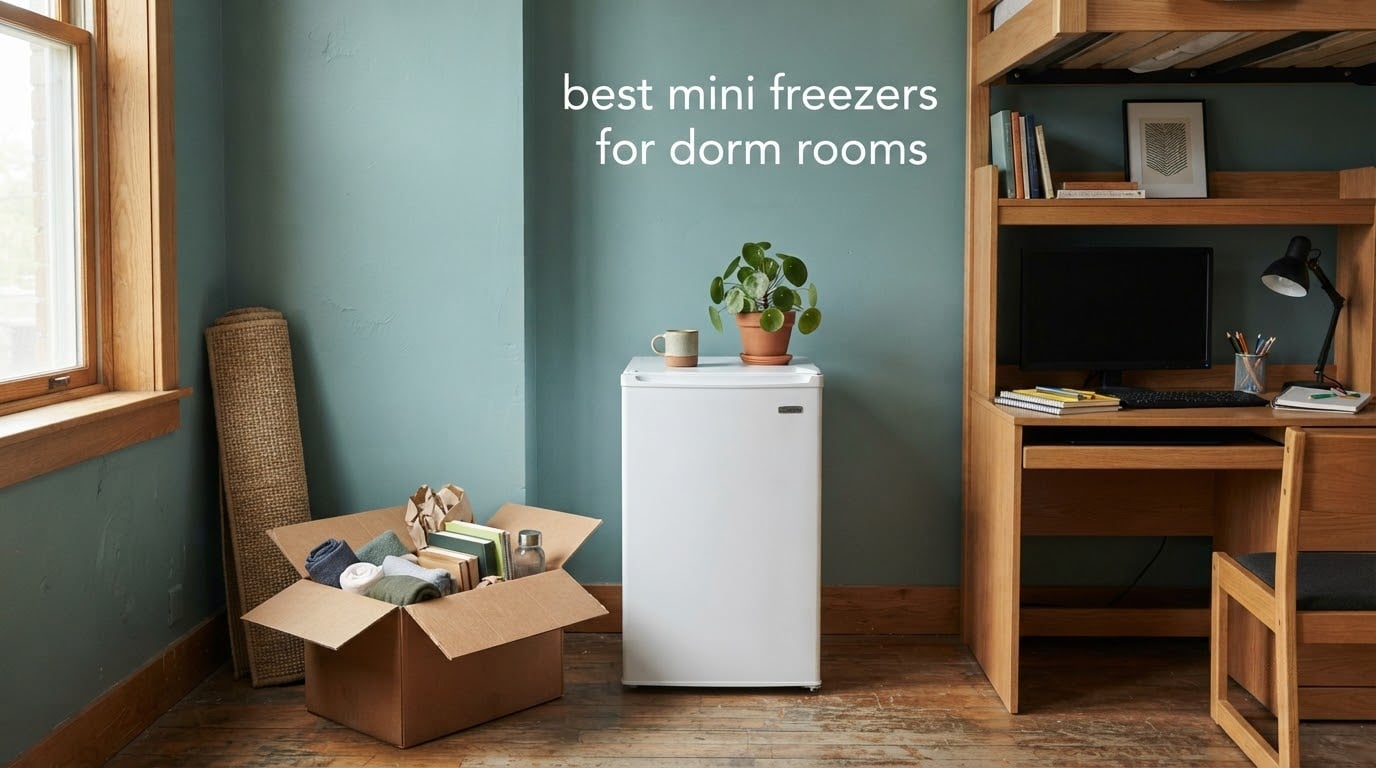
Most dorm rooms have one appliance socket, one desk and a floor that disappears under a bed. That is why the search for the best mini freezers for dorm rooms keeps circling back to the same short list: compact uprights around 1.1 cu. ft., one larger 3.0 cu. ft. model for corner placement, and a single chest format for anyone who would rather not bend down every morning.
We spent six weeks comparing eight of the most-reviewed dorm freezers on the things that actually break a dorm routine: footprint, noise, defrost burden, and how awkward they are to carry in and out. Six of the eight are compact uprights that top out under 20 inches tall, which is the height most dorm desks can clear. Four carry an Energy Star or DOE efficiency mark, and every one of them uses a manual defrost cycle you have to keep on top of.
There is one thing to settle before you shop, and it is not a spec: whether your building allows a second appliance at all. Housing policies in many halls restrict what can be plugged in, and finding that out after the box arrives is the expensive way to find out. We cover the permission step, the noise math and the move-in logistics further down.
Table of Contents
Top 3 Mini Freezer Picks for Dorm Rooms in 2026
Midea WHS-109FW1 3.0 cu. ft.
- 3.0 cu. ft. upright capacity
- 42 dB operation
- R600A compressor
- 240 kWh per year

Whynter CUF-110B 1.1 cu. ft.
- 1.1 cu. ft. compact upright
- Cylinder lock with 2 keys
- Removable slide-out wire shelf
- Energy Star certified

Kismile D5840S 1.1 cu. ft.
- Noise below 40 dB
- 0.6 kWh per day
- 7-grade thermostat
- Reversible door and leveling legs
Best Mini Freezers for Dorm Rooms (September 2026)
| Product | Specifications | Action |
|---|---|---|
| Midea WHS-109FW1 3.0 cu. ft. Upright |
|
Check Latest Price |
| Whynter CUF-110B 1.1 cu. ft. Upright with Lock |
|
Check Latest Price |
| Kismile D5840S 1.1 cu. ft. Stainless Steel Upright |
|
Check Latest Price |
 BLACK+DECKER BCFK206 2.0 cu. ft. Chest Freezer BLACK+DECKER BCFK206 2.0 cu. ft. Chest Freezer |
|
Check Latest Price |
 EUHOMY MF-11-H-N 1.1 cu. ft. Upright EUHOMY MF-11-H-N 1.1 cu. ft. Upright |
|
Check Latest Price |
 BANGSON US-BSR-017-2 1.1 cu. ft. Upright BANGSON US-BSR-017-2 1.1 cu. ft. Upright |
|
Check Latest Price |
 BLACK+DECKER BUFK12W 1.2 cu. ft. Compact Upright BLACK+DECKER BUFK12W 1.2 cu. ft. Compact Upright |
|
Check Latest Price |
 Feelfunn UF001-11 1.1 cu. ft. Upright Feelfunn UF001-11 1.1 cu. ft. Upright |
|
Check Latest Price |
What Is the Best Mini Freezer for a Dorm Room?
The best mini freezer for a dorm room is the Midea WHS-109FW1, a 3.0 cu. ft. Energy Star upright that runs at 42 dB and carries a 1-year warranty with 2 years on the compressor. If your room cannot spare 33.9 inches of height, the Whynter CUF-110B does the same job in a 19.5-inch body with a built-in lock.
Both answers come back to the same constraint. In a dorm, the freezer that wins is not the biggest one, it is the one that fits without blocking a walkway, runs quietly enough to sleep beside, and does not need a second person to lift.
1. Midea WHS-109FW1 – Best Overall 3.0 cu. ft. Dorm Freezer
Midea WHS-109FW1 Upright Freezer, 3.0 Cubic Feet Mini Freezer, For Kitchen Apartment Office Basement or Dormitory, White
3.0 cu. ft. upright
42 dB operation
240 kWh per year
1-year and 2-year compressor warranty
Pros
- Largest capacity in this roundup at 3.0 cu. ft.
- 42 dB operation stays under conversation level
- Energy Star with 240 kWh per year
- Adjustable leveling legs and reversible hinge
Cons
- Thermostat sits at the rear bottom so the unit must be pulled out to adjust
- Only 2 shelves plus a wire basket
- Manual defrost required and an audible hum
This is the freezer we kept coming back to. At 3.0 cu. ft. it is the biggest capacity in the roundup, and the 4.6 rating across more than 7,000 reviews is the deepest owner history of any pick here. Multi-year owners describe the same thing: it holds temperature, it freezes hard, and it keeps going.
It is also the only pick in the list with a compressor warranty that runs two years on top of the one-year parts warranty. For a student carrying a freezer through three roommates and two academic years, that is worth more than any feature we tested.
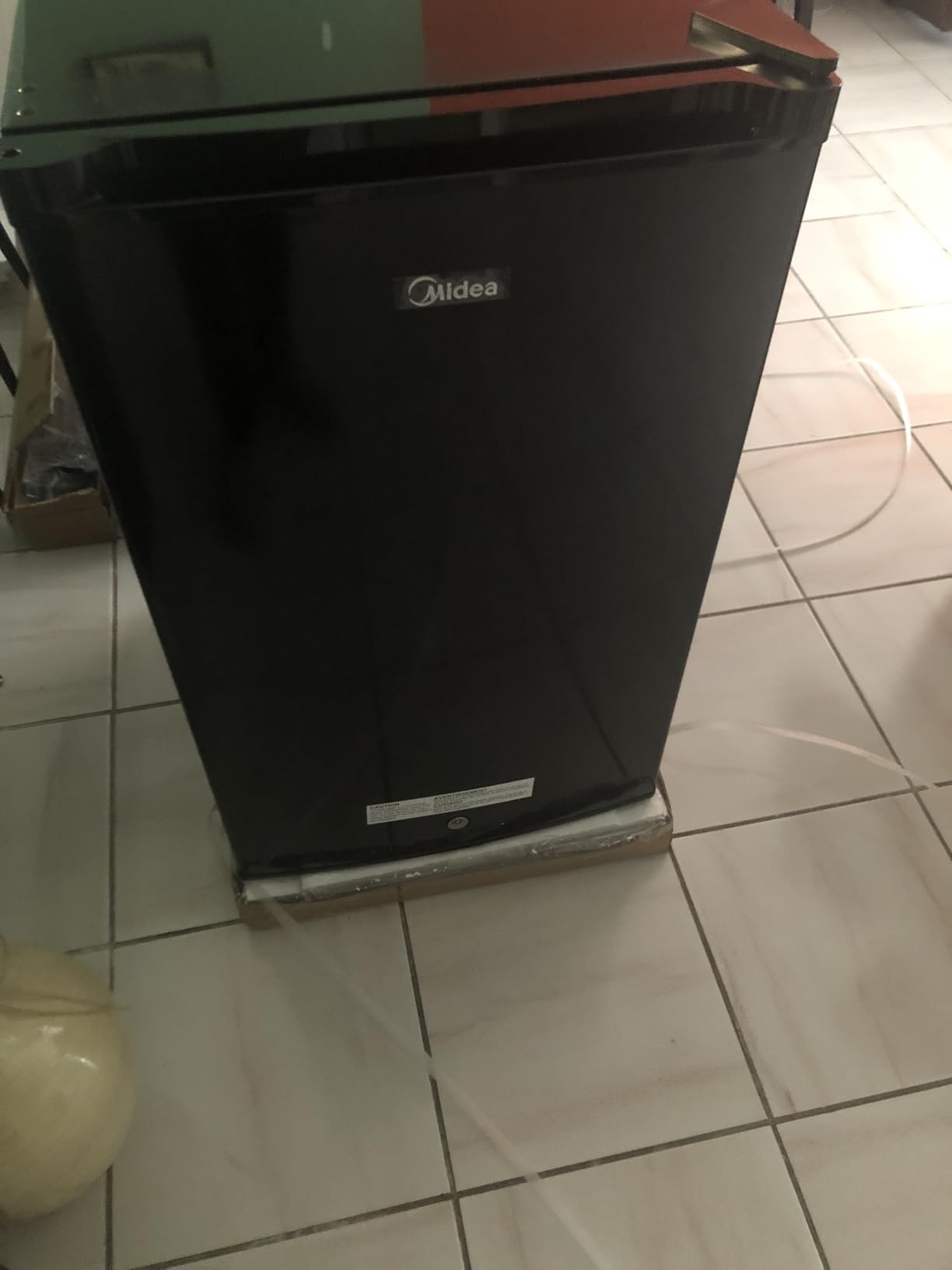
The 240 kWh per year figure for the R600A compressor is a strong number for a unit this size, and the dynamic cooling system keeps cold air moving rather than letting it stratify. Reviewers put the interior capacity somewhere between a half-size refrigerator freezer and something you could genuinely stock a semester of frozen meals in.
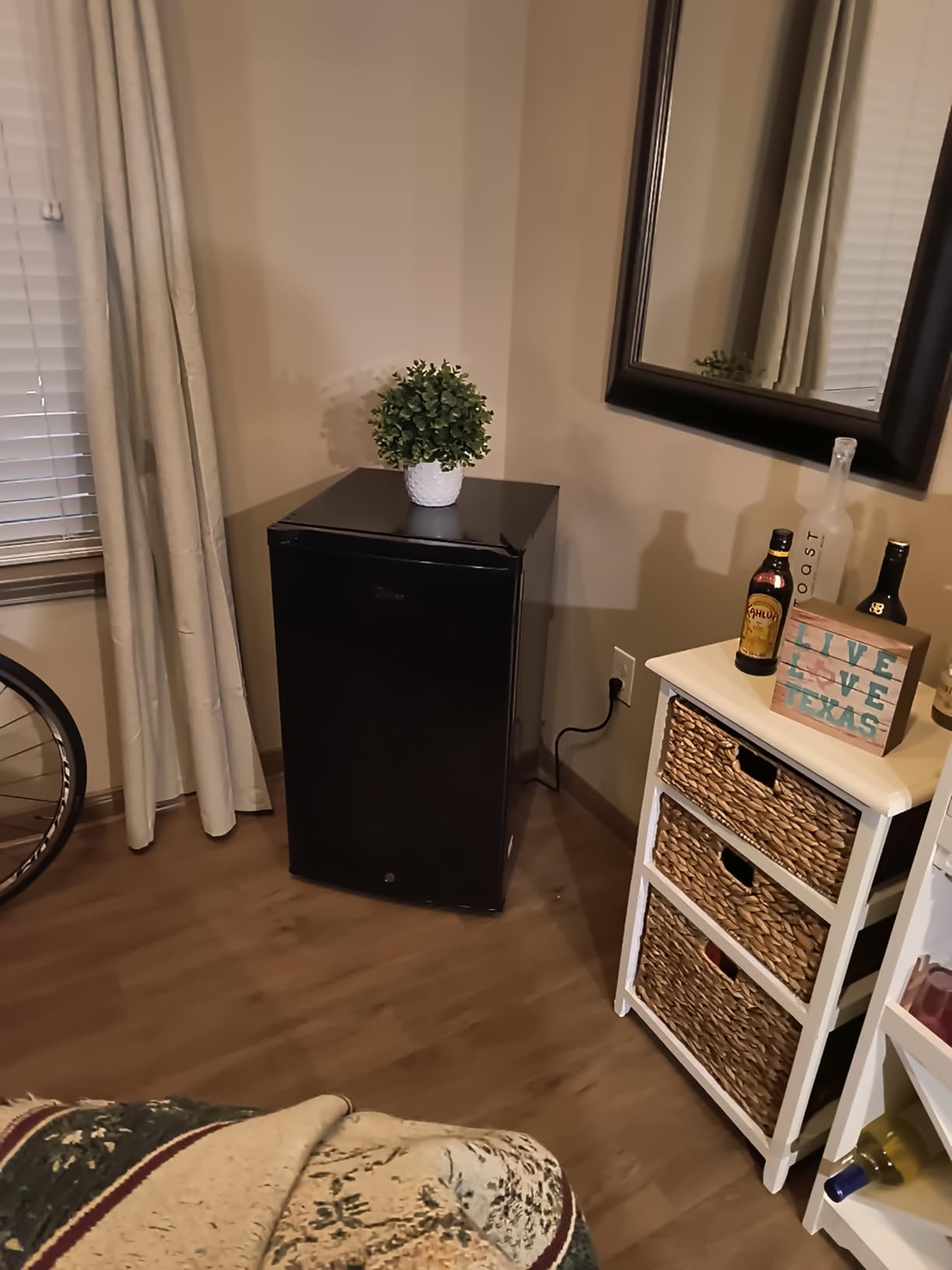
Will a 33.9-Inch Upright Fit a Dorm Room?
Measure before you commit. The unit is 21.3 inches deep, 19.7 inches wide and 33.9 inches tall, and it needs roughly 2 inches of ventilation clearance on all sides plus about 3 inches of overhead gap. In a typical double room that means a corner, not a wall next to the bed.
The upside of that height is the shelving. Two shelves plus a wire basket is genuinely more usable than the single wire rack on most 1.1 cu. ft. models, and the adjustable legs make up for uneven dorm floors.
How Loud Is It and How Often Do You Defrost?
At 42 dB, this is one of only three published noise figures in the roundup, and the second lowest of them, and owners describe it as a low hum rather than a rhythmic clatter. In a room with a closed door it disappears; against the head of your bed on a hard floor you will hear it.
Every unit in this roundup needs a manual defrost at some point, so if the freezer sits in a warm, unventilated corner all summer, the interval between sessions shortens noticeably. The r/strange thread about a dorm freezer that had frozen itself solid over winter break is a good reminder that airflow and a defrost habit matter more than the badge on the box.
2. Whynter CUF-110B – Best 1.1 cu. ft. Freezer With a Lock
Whynter Upright Small Freezer Mini Freezer with Lock for Bedrooms, Dorms, Garages, Offices CUF-110B, Black Energy Star, 1.1 Cu Ft
1.1 cu. ft. upright
Cylinder lock with 2 keys
19.5 inch tall
Energy Star certified
Pros
- Built-in cylinder lock with two keys included
- 19.5 inch height clears most dorm desks
- Removable slide-out wire shelf
- Energy Star certified with even cooling
- Recessed handle keeps the door flush
Cons
- Single shelf limits storage organisation
- Manufacturer listing reports an implausible item weight of 0.27 g
Whynter built this one for the dorm use case explicitly, and the manufacturer part number says so: bedrooms, dorms, garages, offices. The 4.5 rating across nearly 6,900 reviews is the second deepest in this roundup, which matters for a lock mechanism that has to survive four years of shared-room use.
The lock is the reason this is on the list at all. Food theft in a shared room is the single most named reason people buy a small freezer in the first place, and a cylinder lock with two keys solves it in a way a fridge in the communal kitchen never will.
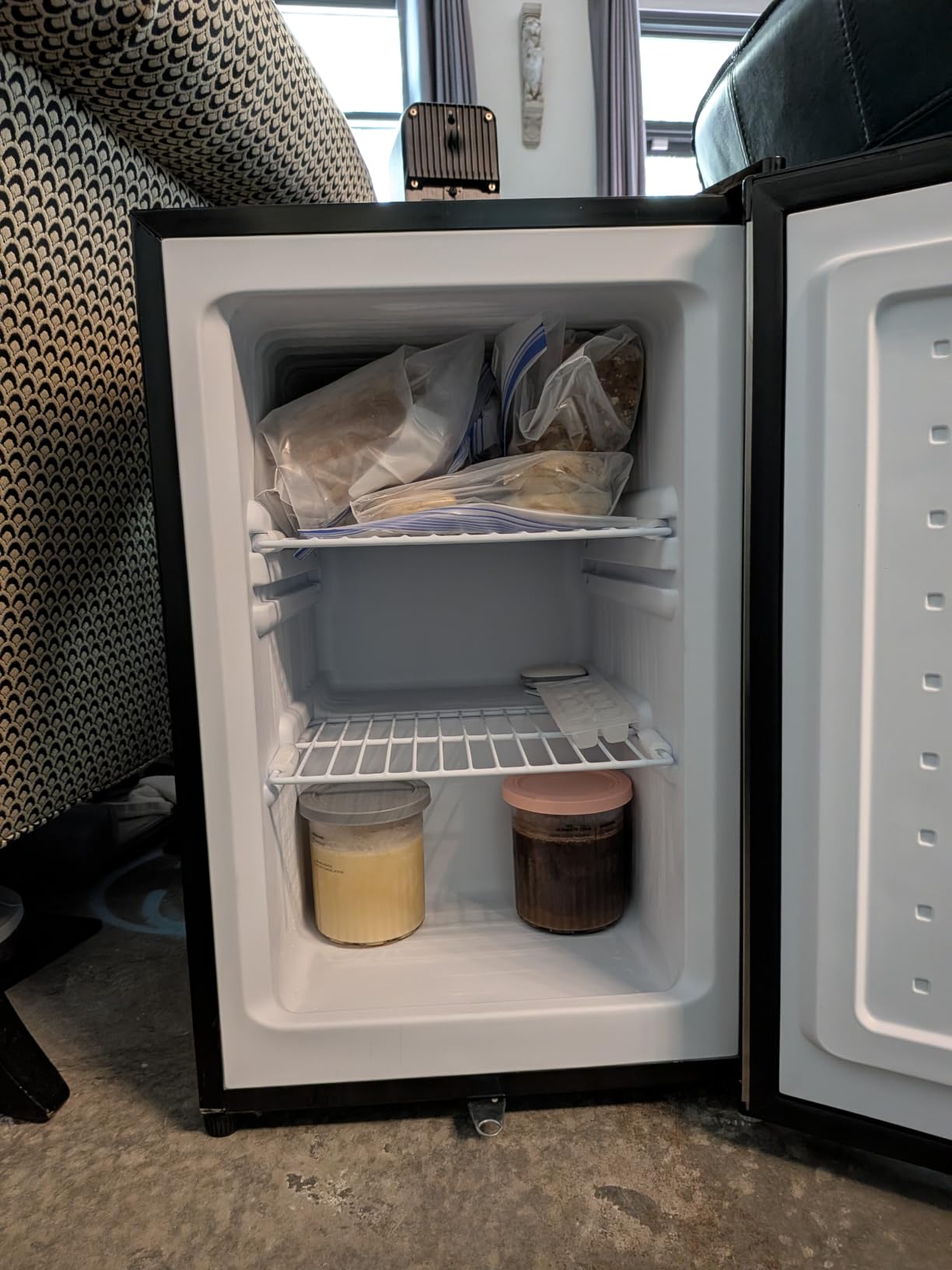
Temperature control is mechanical rather than digital, running from -11F to 10.4F. That sounds crude next to a seven-stage dial, and it is, but owners report even cooling and no cold spots in a unit this small. The recessed handle keeps the door face flush to the cabinet, which saves a couple of inches in a tight corner.
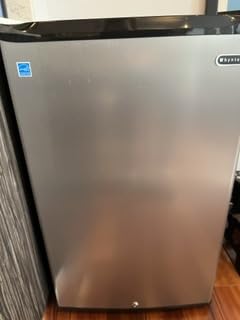
Does the Lock Solve the Roommate Problem?
It solves the honest version of the problem. A keyed cylinder on the freezer door means a roommate cannot quietly help themselves to your meal prep, and it means the two keys stay in your pocket rather than on a hook by the door.
What it does not do is stop a determined person. The lock is a deterrent and a boundary-setter, not a safe. If you are sharing with someone you have not lived with before, combine it with a written shelf agreement in week one.
Is 1.1 cu. ft. Enough for a Semester?
It is enough for a week of frozen meals, a few cartons of ice cream and a bag of vegetables, with room for a flat of meat if you plan around it. It is not enough for bulk storage, and anyone who bought this expecting a garage freezer will be disappointed.
At 18.5 inches wide, 17.25 inches deep and 19.5 inches tall, it is one of the units that genuinely fits under a dorm desk or on a countertop, and the single removable wire shelf means tall items can stand upright without a shelf fighting them. See how it stacks up in our upright freezer guide for larger rooms.
3. Kismile D5840S – Best 1.1 cu. ft. Freezer That Runs Under 40 dB
Kismile Mini Freezer, 1.1 Cu.ft Upright Freezer, Stainless Steel
Noise below 40 dB
0.6 kWh per day
7-grade thermostat
Stainless steel exterior
Pros
- Noise below 40 dB which is quiet enough to sit beside a bed
- Lowest published draw at 0.6 kWh per day
- Reversible door and adjustable leveling legs
- Stainless finish resists fingerprints
Cons
- Manual defrost requires periodic thawing
- Thermostat is mounted on the back of the unit
- Only one removable shelf
If your room is small enough that the freezer will sit roughly two feet from your head, this is the pick. The published noise figure is below 40 dB, one of only two claims that quiet made in this roundup, and at 37.4 pounds it is still a two-person lift on stairs but a manageable solo job on a landing.
The 0.6 kWh per day draw is also the lowest here. Across a nine-month academic year that works out to roughly 160 kWh, which is the number to hold in mind when the resident electric bill arrives.
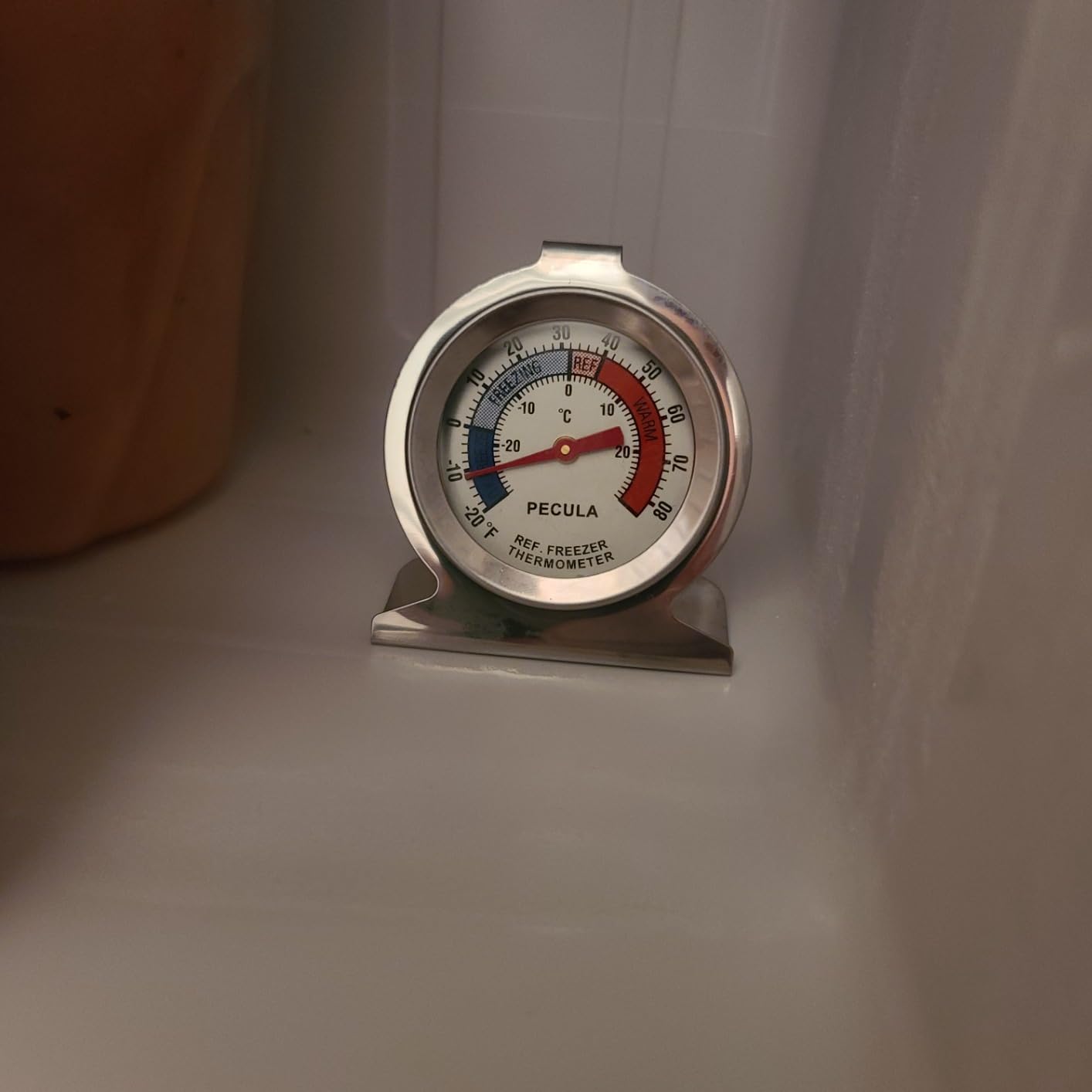
Reviewers consistently point at two things: the running cost and the flexibility of placement. The reversible single door and adjustable leveling legs mean you can set it flush to a wall or on an uneven floor, which in a dorm is not a small thing.
What Does Under 40 dB Sound Like at Night?
Under 40 dB is roughly a quiet library or a refrigerator two rooms away. It is not silence, and a compressor cycling on and off is still audible in a dead-silent room at 3am. But it is a different category from the units whose buzz reviewers single out as the reason they moved the freezer to the hallway.
Placement matters more than most people expect. On carpet or a rubber dorm mat, the cabinet dampens the vibration that makes a compressor read as louder than its rating. Hard tile does the opposite.
What Manual Defrost Costs You
The honest answer is one annoying weekend, twice a year. You empty it, unplug it, put towels down and let the ice melt into a pan. Not one unit in this roundup is frost-free, so this is not a Kismile-specific problem, it is the category tax.
The seven-grade thermostat on the back runs from -7.6F to 6.8F, and the manufacturer recommendation is to start on setting 4 and adjust from there. Remember it is on the back, which means the unit has to be pulled out to change it. Plan the corner before you set the dial.
4. BLACK+DECKER BCFK206 – Best 2.0 cu. ft. Chest Freezer for Floor Space
BLACK+DECKER 2.0 Cu. Ft. Compact Chest Freezer, BCFK206, White
2.0 cu. ft. chest
Holds up to 70 lb.
External dial with indicator light
Manual defrost with drain
Pros
- Chest format uses floor area efficiently
- External temperature dial with indicator light
- Removable storage basket for sorting
- Holds up to 70 lb. of frozen food
- Easy access drain simplifies defrosting
Cons
- Requires bending and reaching down for every item
- Manual defrost rather than frost-free
- Top-opening lid cannot be reversed like an upright door
When a dorm room has width but not height, a chest freezer is the shape that works. At 20.9 inches wide, 17.3 inches deep and 27.6 inches tall it slides under a loft bed or into the dead space beside a wardrobe in a way a 33.9-inch upright cannot. The 4.5 rating here comes from 507 reviews, a smaller base than the three above it but consistent.
The 70-pound load rating is the standout. That is real bulk capacity, the kind you get from a garage freezer, packed into a footprint you can put in a bedroom. Our chest freezer roundup covers larger formats if your space allows.
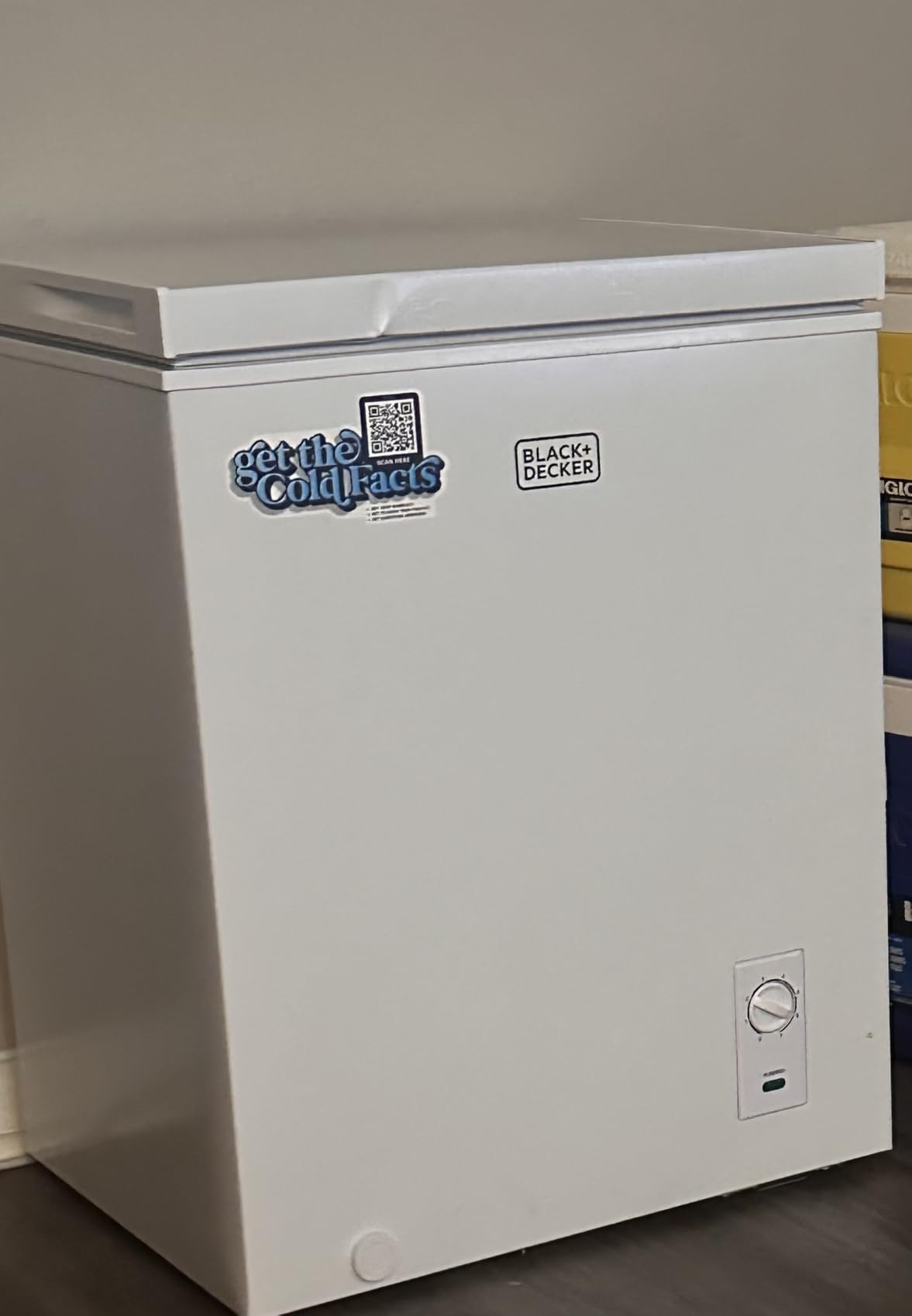
The external mechanical temperature dial with an indicator light is a small design decision that matters in a shared room. You can confirm the compressor is running without opening the lid, and you can confirm it is not running, which is the first diagnostic step when frozen food starts softening.
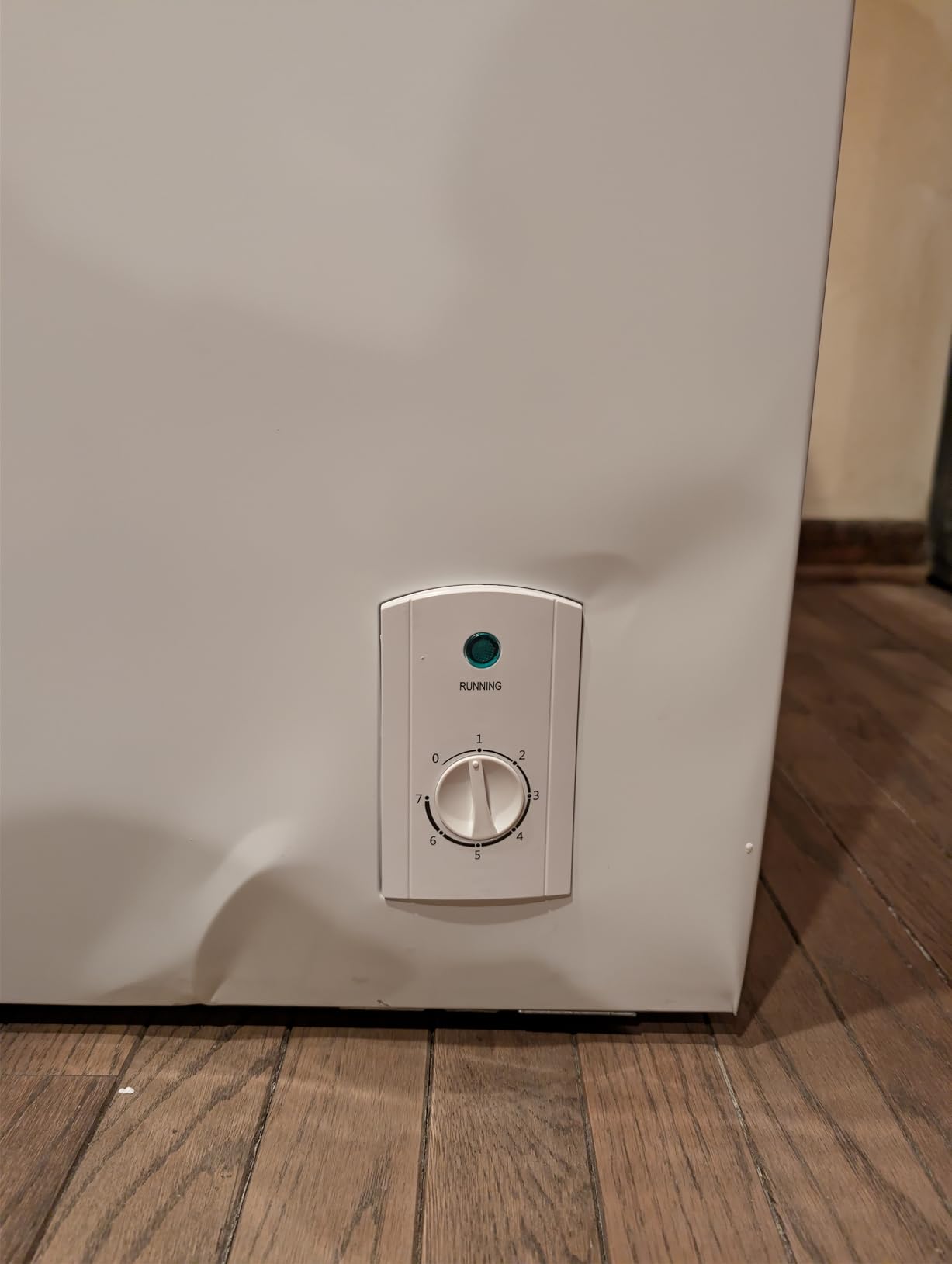
Is 27.6 Inches of Height the Real Constraint?
Yes, and it cuts both ways. It will not fit under a standard dorm desk, and it will not go on a countertop. But 27.6 inches clears a lot of awkward spots: beside a desk return, under a loft bed frame, or in the corner opposite the door. The removable storage basket keeps the single layer usable.
At 41.3 pounds, it is heavier than the 1.1 cu. ft. uprights and lighter than the Midea. Two people for stairs unless you have a dolly.
What a 70-Pound Load Looks Like in Practice
It is roughly 40 to 50 frozen meals, several bags of vegetables, and a stack of ice cream. It is not a full semester of bulk storage, but it comfortably covers a month of cooking plus a stockpile without stacking things more than two deep.
The trade is access. A top-opening lid means every single retrieval involves bending or squatting, and in a dark room at midnight that is a genuine annoyance. If you plan to pull something out three times a day, think hard about whether the upright shape is worth the extra height.
5. EUHOMY MF-11-H-N – Lightest 1.1 cu. ft. Freezer to Move In
EUHOMY 1.1 Cu.ft Upright Freezer, Mini Freezer for Dorm, Black
1.1 cu. ft. upright
28.4 lb. body
7-level thermostat
Reversible door
Pros
- Lightest body in the roundup at 28.4 lb.
- Compact 17.48 x 18.03 x 19.49 inch footprint
- Reversible door lets it sit flush to a wall
- 7-level thermostat from -7.6F to 6.8F
- Runs quietly enough to be barely noticeable
Cons
- Manual defrost design
- Door is plastic rather than metal
Move-in logistics decide more dorm purchases than feature lists do, and this is the unit we would trust to a solo carry up three flights. At 28.4 pounds it is the lightest of the eight, roughly a quarter lighter than the Kismile and less than half the Midea.
The footprint is tight at 17.48 inches wide by 18.03 deep by 19.49 tall, which means it disappears into a corner or under a desk. The reversible door and adjustable feet are there for exactly that reason, so you can push it back to a wall without losing door clearance.
Can One Person Carry 28.4 Pounds Up Three Flights?
Yes, if you plan it. Two people, one carrying and one steering at corners, turns a frustrating move into a five-minute job. Measure your doorways before you order, because the cabinet is rigid and the door hinge can be changed, but the box is not going anywhere.
The manufacturer also requires the unit to stand upright for 24 hours before its first plug-in, which is a placement instruction rather than a wait on the delivery. Plan the move for an evening when you are not heading out the next morning.
Where the Plastic Door Shows
The door is plastic rather than stainless, which is the visible trade. It is lighter, which helps the move, and it does not show fingerprints, which helps daily life in a small room. What you give up is the feel of a metal handle and cabinet, and some long-term durability at the hinge.
The 4.5 rating from 697 reviews is a solid base for a budget unit, and the 3D surround cooling with rapid chill technology is a real feature rather than marketing language. Manual defrost, like every other pick here, is the ongoing chore to budget for.
6. BANGSON US-BSR-017-2 – Best Organised 1.1 cu. ft. Dorm Freezer
BANGSON 1.1 Cu.ft Upright Mini Freezer for Dorm Bedroom Black
1.1 cu. ft. upright
2 shelves plus removable inner shelf
5-grade temperature control
DOE specification met
Pros
- Removable inner shelf reconfigures for taller or smaller items
- Two shelves included
- Reversible door with flush-back design
- Leveling legs and lightweight parts for repositioning
- Compact 18.5 x 18 x 19.1 inch size
Cons
- Only 5 temperature settings
- Manual defrost
Storage organisation is the quiet reason to pick this one. Five of the freezers in this roundup give you a single shelf, and a single shelf in a 1.1 cu. ft. box means everything piles on one level. BANGSON ships two shelves and makes the inner one removable, so you can take it out for a tall container or a stack of containers and put it back when you are storing flat items.
The 4.4 rating from 686 reviews reflects owners who like the layout and are mildly frustrated by the thermostat, which we will get to.
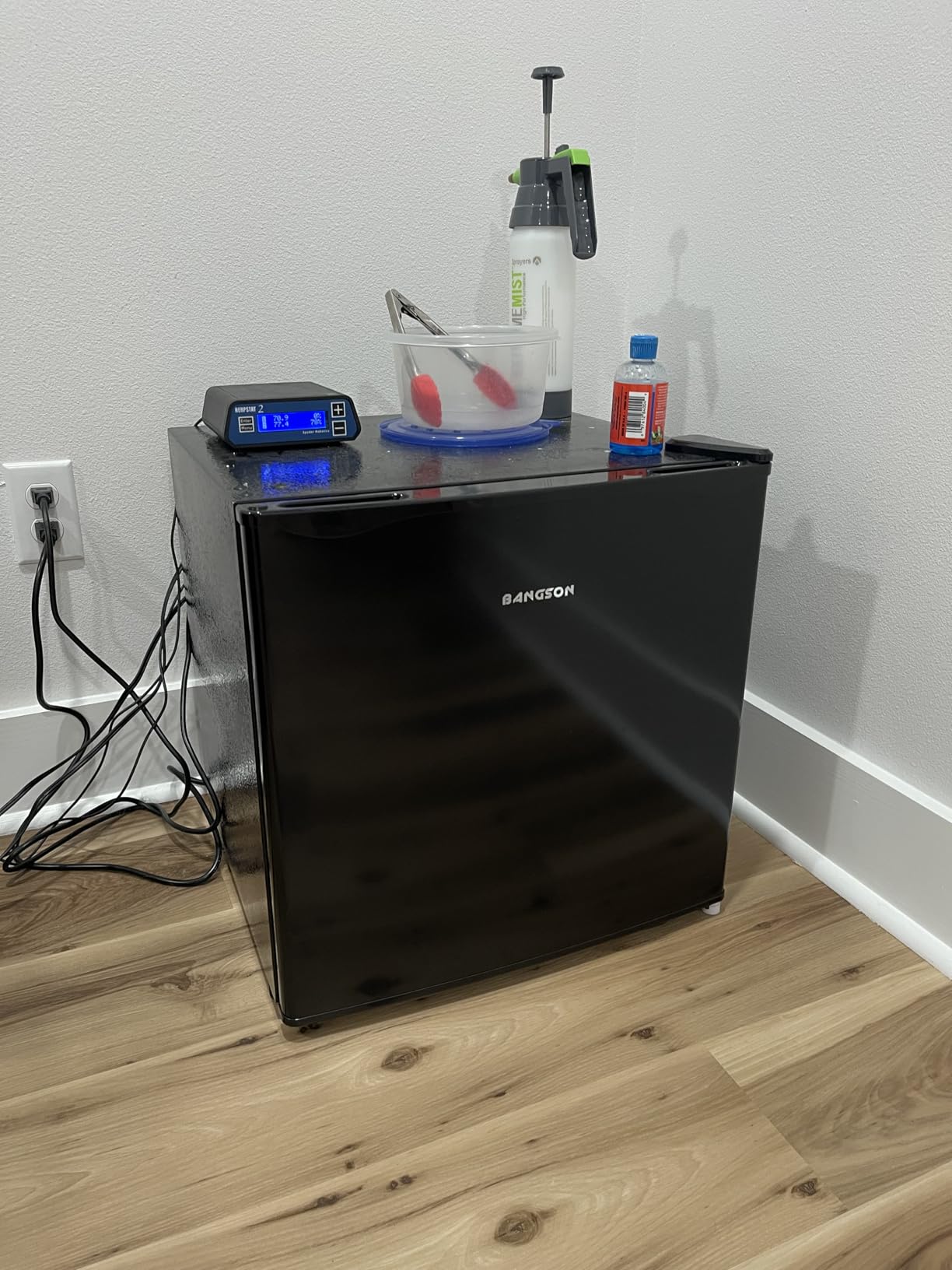
The flush-back design is genuinely useful in a dorm. Most small freezers have a rear bulge from the condenser, and that bulge is what stops you pushing the unit flat to the wall. A flush back gives you back an inch of usable room in a tight corner.
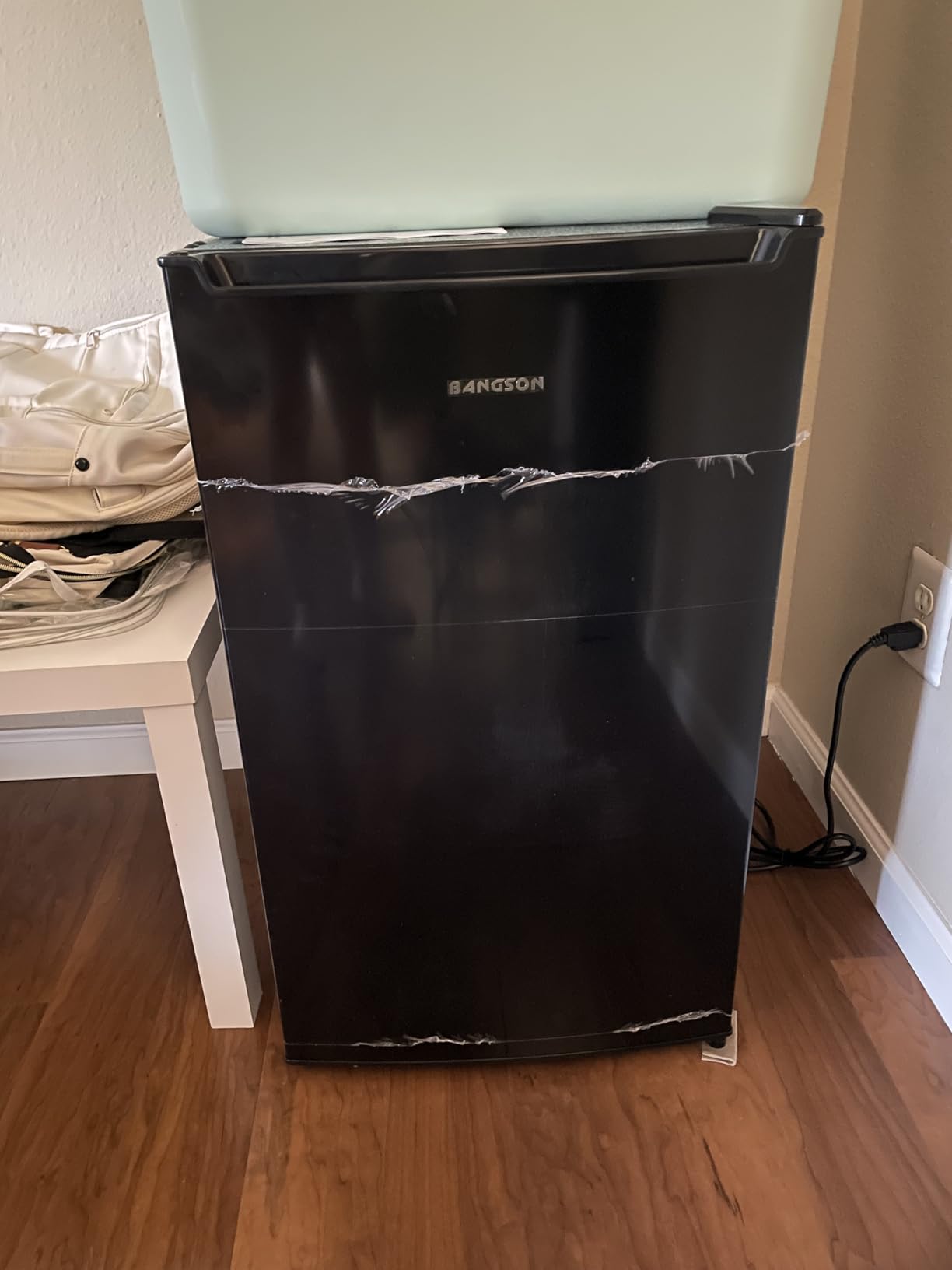
What the Removable Shelf Actually Fixes
It fixes the single most common complaint about small uprights, which is wasted vertical space. A frozen pizza box will not sit flat on a wire shelf with a raised lip, and a bag of loose frozen vegetables is stable on a flat surface and unstable on a wire one. Having both options in one cabinet solves that.
It also makes the defrost job faster, because you can pull the shelves out and dry them separately rather than trying to towel off a fixed grid in a wet cabinet.
When 5 Temperature Settings Are Too Few
The five-grade control runs from -8F to 7F and is set from the rear. Five steps is workable, and most households settle on one or two settings and leave it, but it is a narrower target than the seven-stage dials on the Kismile, the EUHOMY and the Feelfunn.
For dorm use, where a room heats up in September and cools in February, a narrower dial means one more adjustment per season. If you freeze things like ice cream or butter that need a reliably cold set point, that matters more than it would in a garage. If you mostly store meals and bags, it will not.
7. BLACK+DECKER BUFK12W – Best 1.2 cu. ft. Freezer for Offices and RVs
BLACK+DECKER 1.2 Cu. Ft. Compact Upright Freezer, BUFK12W, White
1.2 cu. ft. compact upright
53 watts
Energy Star and UL certified
Stores up to 42 lb.
Pros
- Portable 19.69 x 19.29 x 19.72 inch size
- Energy Star and UL Safety certified at 53 watts
- Full-width wire shelf organises frozen meals
- Leveling legs for uneven floors
- One long-term owner reports little ice build-up after a year
Cons
- Audible motor buzz that several owners consider too loud for a bedroom
- Interior smaller than the 1.2 cu. ft. listing suggests
- Not frost-free so ice builds over time
This is the lowest-rated pick here at 4.2 from 239 reviews, and the reviews are consistent about why: the compressor buzz. Several owners describe it as too loud for a small living space, and that is the single deciding factor in a dorm, where a freezer two feet from a bed is not the same as one in a garage.
What it does well is efficiency. At 53 watts it is the lowest wattage figure in the roundup, and it carries both Energy Star and UL Safety certification, the only pick in the roundup holding both marks.
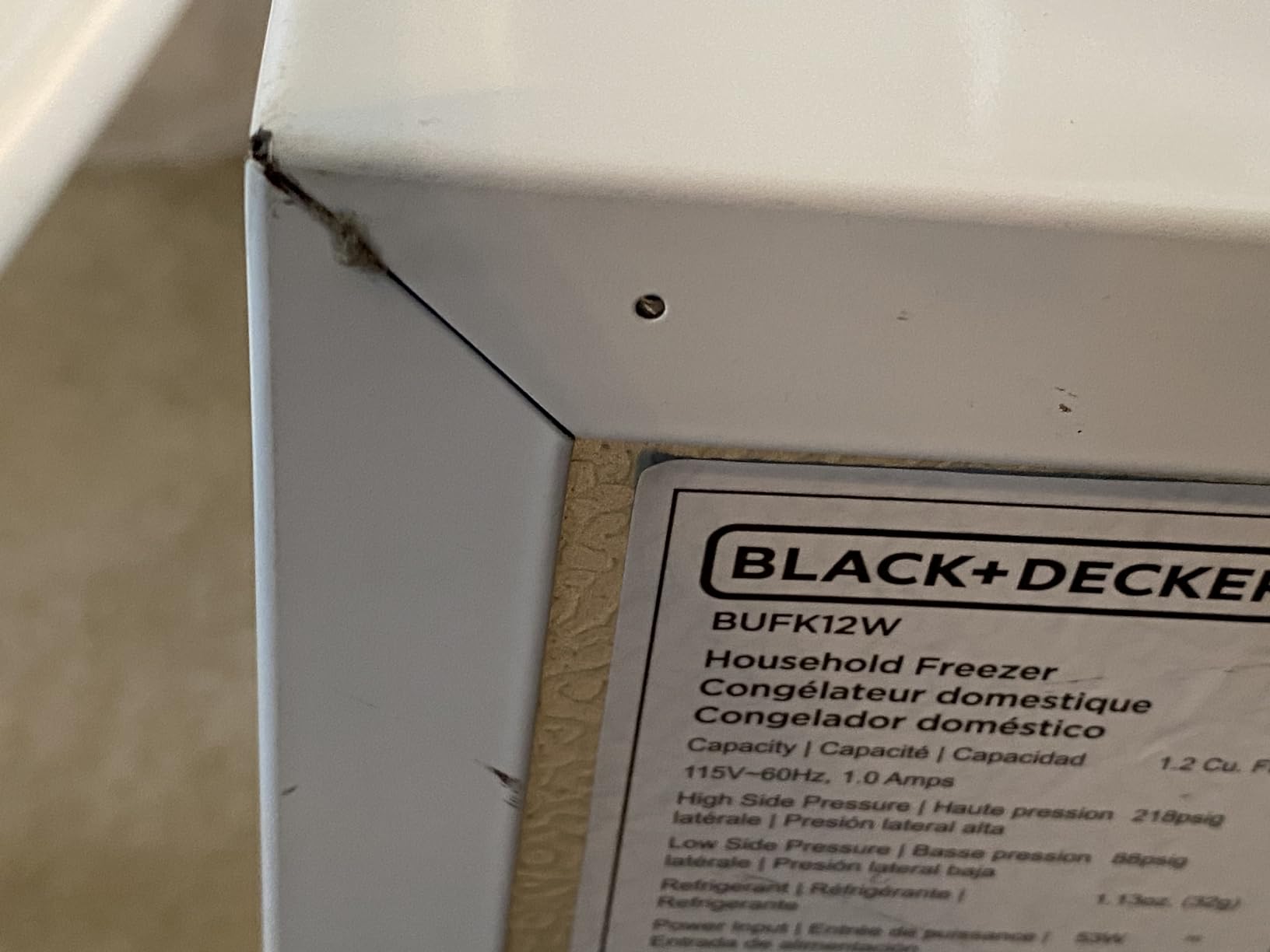
Capacity is listed at 1.2 cu. ft. holding up to 42 pounds, with a full-width wire shelf. Owners often describe the interior as smaller than the number suggests, so treat 42 pounds as a ceiling rather than a target.
The Compressor Buzz Owners Mention
A motor hum is normal in a compressor unit. What reviewers object to is a sustained buzz rather than a soft hum, and a hard floor amplifies it. If this model goes into a dorm, put it on a rug or a dorm-issue foam mat and give it as much distance from the bed as the room allows.
If you cannot control placement, this is not the model to buy. The quiet claims on the Kismile and the Feelfunn are the reason those two are higher in our list despite smaller review bases.
Certification and Long-Term Ownership
Energy Star and UL Safety certification is a meaningful pair for a device that runs unattended in a room full of your belongings. One long-term owner reports very little ice build-up after a year of operation, which suggests the manual defrost interval here may be longer than the category norm.
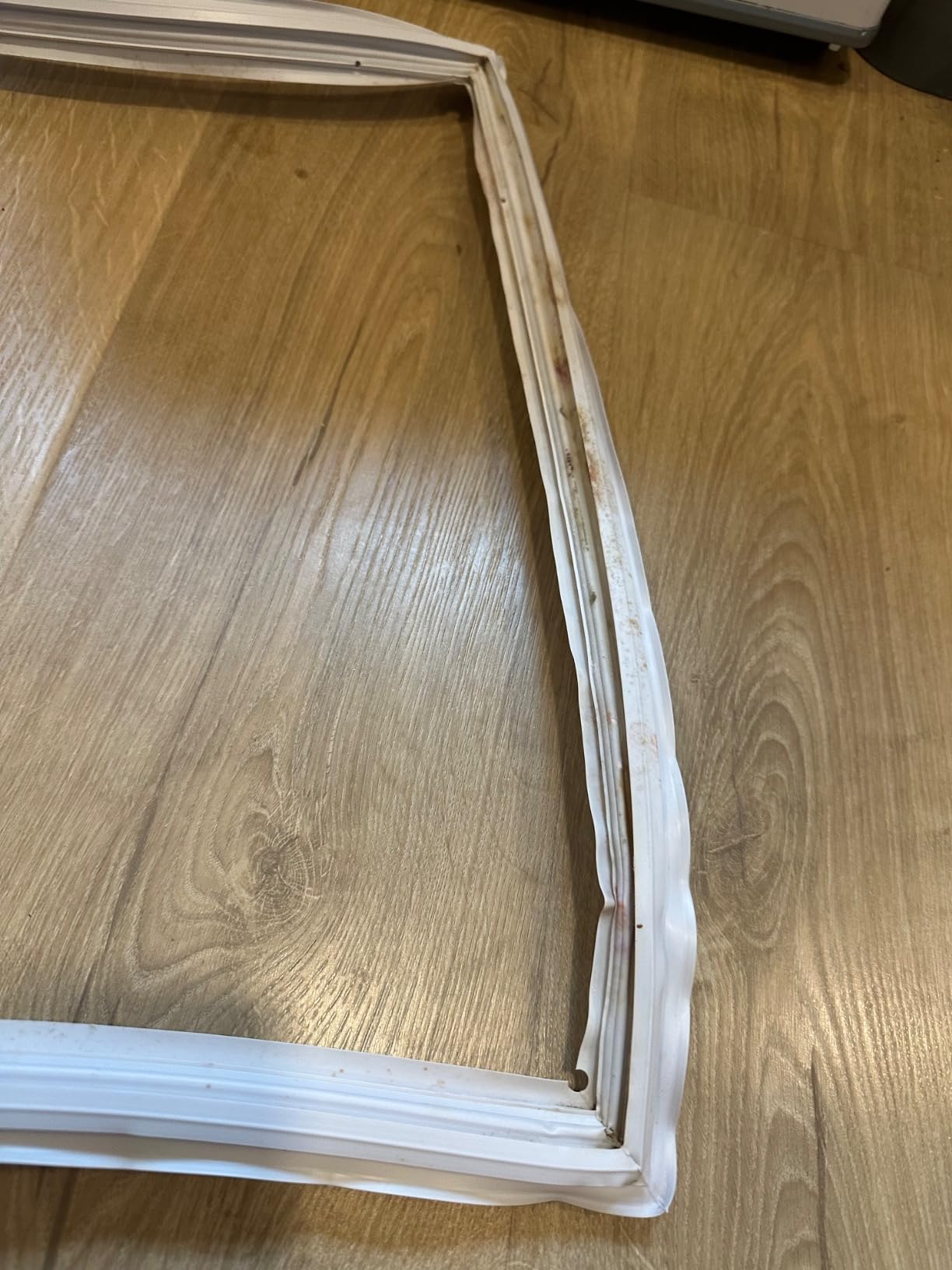
The gasket is the failure point to watch. Owners report the door seal moulding after a couple of years, and replacement parts are hard to source for this model. Check the seal visually every semester, and keep the unit away from an exterior wall in humid weather.
8. Feelfunn UF001-11 – Best 1.1 cu. ft. Countertop Unit
Feelfunn 1.1 Cu.ft Mini Freezer, Small Upright Freezer, Black
1.1 cu. ft. upright
Under 40 dB
0.66 kWh per day
30.6 lb. body
Pros
- Under 40 dB operation
- Low energy use at 0.66 kWh per day
- Top ergonomic handle reduces bending
- Reversible door and adjustable leveling legs
- Upgraded sealing for cold retention and reduced frost
Cons
- Smallest review base in the roundup at 110 reviews
- Single removable shelf limits organisation
- Manual defrost design
The newest and least-proven of the eight, and the one whose numbers look best on paper. Under 40 dB, 0.66 kWh per day, 30.6 pounds, a seven-grade thermostat and an upgraded seal for cold retention. On specifications alone it competes with anything in this list.
What it does not have is history. The 4.3 rating comes from 110 reviews, the smallest base here, which is a small enough sample that we treat its score as provisional. The 1-year manufacturer warranty is short, and only the BANGSON matches it.
What 0.66 kWh per Day Adds Up To
Roughly 180 kWh across a nine-month academic year, in the same ballpark as the Kismile at 0.6 kWh per day. In a dorm where residents pay their own electric, that difference is real but not decisive. What matters more is that the compressor is efficient, not that it is the most efficient by 0.06 kWh.
The upgraded sealing is the other quiet story here. A tighter door seal means less moisture enters the cabinet, which means less frost on the walls and a longer interval between defrosts. In practice that is worth more to a dorm resident than the noise figure.
How Much Weight Should You Give 110 Reviews?
Enough to justify a purchase, not enough to skip reading the recent ones. A 110-review sample can swing several tenths of a rating point on a single batch of reviews, so scroll past the five-star rows and look for repeated complaints instead.
Specific specs tend to survive that filter better than sentiment claims. A stated 40 dB, a stated 0.66 kWh per day and a stated temperature range are checkable, and a manufacturer that publishes them is usually building the thing it described. See our upright freezer picks for larger spaces if you want a bigger-capacity alternative.
Dorm Rules: Confirm Your Building Allows a Freezer First
Before any of this matters, your building has to permit it. Plenty of halls do not allow a second appliance, and the reasons are practical rather than punitive: circuit load limits in older residence halls, fire code rules about what may be plugged into a student room, and prohibitions on daisy-chained power strips.
The question of whether a hall permits one comes up constantly, and the answer is always the same four steps.
1. Read your hall’s prohibited appliance list. Micro-fridges, kettles, toasters and coffee makers are usually named explicitly. A freezer may be on that list.
2. Check whether there is a size cap, not just a ban. Some halls allow one appliance under a specific wattage or cubic-foot ceiling.
3. Ask your RA or hall director in writing, and keep the reply. A verbal yes that is never repeated is not permission.
4. Ask about the outlet specifically. Some rooms have a dedicated appliance circuit and some do not, and a compressor cycling on a shared circuit is exactly the situation housing officers are trying to prevent.
If the answer is no, the options are a small personal-unit model in your name, an empty shelf in the shared kitchen, or a portable insulated cooler with ice packs. That is a real answer, not a consolation prize.
Upright vs Chest Mini Freezer in a Dorm Room
Uprights store vertical, like a small refrigerator, and you reach in at eye level. Chests store horizontally under a lid, so you look down into them. That single difference drives everything else: footprint, noise, access and the type of food you can store efficiently.
For a dorm, an upright wins on daily use. A frozen meal is a flat, wide object and uprights handle that shape natively. A chest wastes the vertical dimension, and stacking bags in a low box is how you end up defrosting something you did not plan to.
A chest wins when height is the constraint. Seven of the eight picks here are under 20 inches tall, but the chest at 27.6 inches fits in ways an upright cannot, and the 70-pound capacity is the biggest storage number in the roundup.
Noise is close to even between the formats. Compressor type, not orientation, sets the sound level. Check the published dB before you choose, not the shape.
Noise in a Sleeping Room: What the Decibel Numbers Mean
Only three products in this roundup publish a decibel figure, and that is why we treat the ones we have as the most useful spec on the page.
Under 40 dB covers the Kismile D5840S and the Feelfunn UF001-11. The Midea WHS-109FW1 is 42 dB. The BLACK+DECKER BUFK12W has no published figure, but its reviews describe an audible buzz that several owners consider too loud for a small living space.
For context, 40 dB is about a quiet library. 42 dB is a refrigerator in the next room. Neither will wake you, but both are audible in a silent room at 3am, and hard floors and thin walls make everything louder. A rug, a door closed and a placement as far from the bed as the room allows are free improvements.
The forum advice worth taking is the boring one: check the spec before you buy, and place the unit before you commit to a corner. A quiet compressor in the wrong spot is louder than an average one across the room.
Mini Freezer vs 2-in-1 Mini Fridge With a Freezer Compartment
Most dorm mini fridges combine a fridge with a small internal freezer compartment. The recurring forum complaint about that compartment is blunt: it barely freezes, it warms out during a hot week, and it cannot make a proper ice cube tray.
The physics explains it. A 2-in-1 splits one compressor across two spaces, and the fridge side gets priority because a warm compartment is an obvious failure while a slow freezer is not. A standalone freezer runs its single evaporator at full capacity with nothing to compete with.
Buy a 2-in-1 if you mostly need drinks and snacks cold, and frozen food is an occasional thing. Buy a standalone freezer if you meal prep, keep ice cream, or buy frozen groceries in bulk. There is no middle ground where the small compartment becomes good enough.
The cost of getting this wrong is a freezer you do not use. A 2-in-1 is one appliance on one socket; a standalone freezer plus a small fridge is two. Check your outlet count before combining them.
How to Choose a Mini Freezer for a Dorm Room
Measure the space, not the room. You need the unit’s width, depth and height plus roughly 2 inches of ventilation clearance on all sides and about 3 inches of overhead gap for an upright. If the total does not fit with the door open, it does not fit.
Match capacity to the space. Under a desk or on a countertop, 1.1 to 1.2 cu. ft. is the working band, and every one in that band here is under 20 inches tall. In a room corner, 2.0 to 3.0 cu. ft. is realistic. Anything larger is a shared-appliance or off-campus decision.
Check the door swing, not just the door. A reversible hinge on six of these picks lets you flip the handle side, but any unit still needs clearance to open 90 degrees. Measure the gap from the wall, not from the cabinet face.
Treat the thermostat location as a placement decision. Four of these models put temperature control on the back, which means the freezer has to be pulled out to adjust it. Decide the corner before the dial, not after.
Budget for manual defrost. None of these are frost-free. Plan two defrost sessions a year, keep towels in the room, and never use a knife or a hot pan on the ice. Learn the routine before move-out week, not during it.
Read the wattage and kWh figures. Two models here publish 0.6 and 0.66 kWh per day, and the Midea publishes 240 kWh per year. Those are the numbers to hold in mind when the resident electric bill lands, and Energy Star certification is a reasonable proxy for efficiency.
Moving In and Moving Out Without Ruining Your Back
Listed unit weights on these range from 28.4 pounds to 57.3 pounds. That is a one-person job for the light end and a two-person job for the heavy end, and stairs make it worse. Bring a second person, a hand truck if your building allows one, and a tape measure.
Stand the unit upright in the spot it will live for 24 hours before the first plug-in, which the EUHOMY instructions call out explicitly and every compressor needs regardless. Plugging a tilted unit in immediately can let compressor oil migrate into the refrigerant lines.
At move-out, defrost it, wipe the interior dry, leave the door ajar and unplugged for a day, then wipe the outside and the coils. Residue smells are the fastest way to fail a move-out inspection, and a clean freezer also resells or donates better.
Transport it upright if at all possible. If it has to go on its side, note which side and leave it upright for a full day before plugging it back in.
Frequently Asked Questions
What is the best mini freezer for a dorm room?
The Midea WHS-109FW1 is the best overall for a dorm room: a 3.0 cu. ft. Energy Star upright that operates at 42 dB, measures 21.3 x 19.7 x 33.9 inches and carries a two-year compressor warranty. In rooms without 33.9 inches of clearance, the Whynter CUF-110B is the pick, at 19.5 inches tall with a built-in cylinder lock and two keys.
Why aren’t mini fridges allowed in dorms?
Most bans come down to circuit load and fire code, not size. Older residence halls have limited amperage per room, and a second appliance on a shared or daisy-chained outlet is a fire risk housing staff are responsible for preventing. Some halls also cap appliance wattage or name specific prohibited devices. Check the list, then confirm with your RA or hall director in writing before you buy.
Which small fridge freezer is the quietest?
Among the models here that publish a figure, the Kismile D5840S and the Feelfunn UF001-11 both run under 40 dB, with the Midea WHS-109FW1 close behind at 42 dB. The BLACK+DECKER BUFK12W publishes no figure and draws owner complaints about an audible buzz. Placement matters as much as the rating: put the unit on carpet and as far from the bed as the room allows.
What size mini freezer fits a dorm room?
For a desk, countertop or under-bed space, 1.1 to 1.2 cu. ft. units are the working band, and the models reviewed here are all under 20 inches tall. A room corner can take 2.0 to 3.0 cu. ft. Allow roughly 2 inches of ventilation clearance on all sides and about 3 inches above an upright, and measure the door swing before ordering.
Do mini freezers use a lot of electricity?
Not much, when you pick an efficient unit. The models reviewed here run between about 0.6 and 0.66 kWh per day, and the Midea WHS-109FW1 is rated at 240 kWh per year. Across a nine-month academic year that is roughly 160 to 180 kWh, which is modest. Energy Star certification is a reliable proxy for lower draw.
The Verdict: Which Dorm Freezer Should You Buy in 2026
Buy the Midea WHS-109FW1 if your room has a corner and 33.9 inches of height, because capacity and a two-year compressor warranty are worth more than anything else we tested. Buy the Whynter CUF-110B if height is the problem, because a 19.5-inch body with a cylinder lock and two keys solves the dorm problem no other pick addresses.
Buy the Kismile D5840S or the Feelfunn UF001-11 when the freezer sits near your bed and noise is the deciding factor, and the BLACK+DECKER BCFK206 when you would rather have floor area and 70 pounds of storage than easy reach. Ask your RA first, measure the corner second, and shop third.