
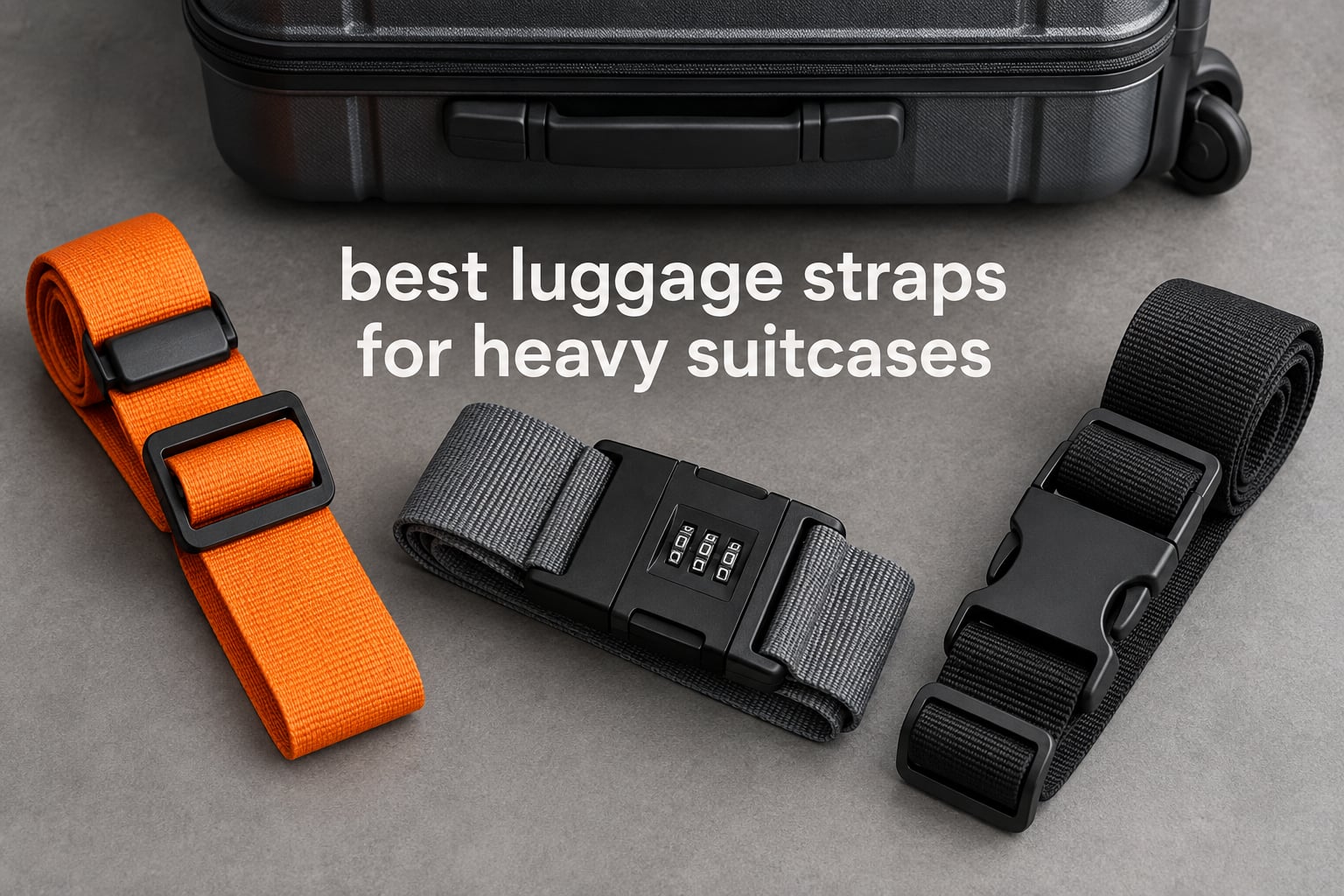
A loaded checked suitcase is a different engineering problem than the lightweight case most straps are designed around. A 28 inch hardshell packed for ten days can easily sit between 50 and 70 pounds, and at that weight the webbing is rarely what gives out. The buckle, the adjuster, or a cut edge that has started to fray is where a luggage strap actually fails. Our team compared ten of the most-reviewed luggage straps for heavy suitcases, checking the hardware, the webbing width, the stated load rating and the adjustment range against what a genuinely heavy bag asks of them.
Here is the short version of what a strap is for. A good luggage strap is a secondary closure: it keeps the zipper shut if the shell is under pressure, it compresses an overstuffed softside so it fits, it stops a second bag sliding off your handle, and it makes a plain black case easy to identify at the carousel. It is not theft prevention. A strap with a combination lock on it is still just a buckle, and the buckle can be opened by anyone determined to open it. Forum consensus is blunt on this point: lockable straps are bought for identification and zipper-failure backup, not for security.
TSA and airlines both allow straps on checked luggage. There is no rule against wrapping a bag, and a TSA-recognised combination lock can be opened by screening agents without cutting. What airlines do not want is a strap routed over the telescoping handle, across the wheels, or cinched so tight that the shell bows, because that is what turns a cheap accessory into a damaged bag and a delay at the carousel. Travel coverage has flagged exactly this, warning that some strapped checked bags get pulled aside and that badly routed straps can crack shells in handling.
If you are short on time, the carry-on suitcase guides cover the bag half of the equation. The strap half is below, starting with why the buckle matters more than the marketing number on the box.
Table of Contents
Top 3 Picks for Heavy-Duty Luggage Straps in 2026
GORILLA GRIP Heavy Duty 2-Pack
- Rated 500 lb pull force
- 2 inch wide webbing
- 38-76 inch adjustable
- Three wrapping configurations

BILIONE 79 Inch 4-Pack
- 500 lb load capacity
- Four straps per pack
- Adjusts 3 to 6.5 feet
- Two-stage quick-release buckle

Jcpmcxs 2 Pack Wide Belts
- 1.96 inch wide nylon webbing
- 46-78 inch adjustable range
- Two straps per pack
- Stainless steel hardware
Best Luggage Straps for Heavy Suitcases in 2026
All ten straps below are rated well above the weight of a typical checked bag, which means the advertised number is not a useful way to separate them. Webbing width, buckle material, adjuster quality and adjustment range are what tell the difference when a bag weighs 60 pounds. Here they are side by side.
| Product | Specifications | Action |
|---|---|---|
| GORILLA GRIP Heavy Duty Luggage Straps 2-Pack |
|
Check Latest Price |
 RUMILLA Adjustable Luggage Connector Belt RUMILLA Adjustable Luggage Connector Belt |
|
Check Latest Price |
| BILIONE 79 Inch Heavy Duty Straps 4-Pack |
|
Check Latest Price |
 Travel Inspira Luggage Strap with TSA Lock Travel Inspira Luggage Strap with TSA Lock |
|
Check Latest Price |
 Travel Inspira TSA Cross-Wrap Belt Travel Inspira TSA Cross-Wrap Belt |
|
Check Latest Price |
| Jcpmcxs 2 Pack Adjustable Luggage Belts |
|
Check Latest Price |
 AssemHome Heavy Duty Strap with Lock AssemHome Heavy Duty Strap with Lock |
|
Check Latest Price |
 ZHOMA 2 Pack Double-Lock Luggage Straps ZHOMA 2 Pack Double-Lock Luggage Straps |
|
Check Latest Price |
 Hero Luggage Straps 2-Pack Hero Luggage Straps 2-Pack |
|
Check Latest Price |
 Samsonite Luggage Strap, No Lock Samsonite Luggage Strap, No Lock |
|
Check Latest Price |
1. GORILLA GRIP Heavy Duty Luggage Straps 2-Pack, Rated 500 Pounds and Configurable Three Ways
GORILLA GRIP Heavy Duty Luggage Straps for Suitcase, 2 Pack, Black
500 lb pull rating
2 inch wide webbing
38-76 inch adjustable
2 straps per pack
Pros
- Rated to 500 pounds of pull force
- Relieves pressure on zipper closure points
- Three wrapping configurations
- Bright colours for identification
- Average 4.6 stars across 3300+ reviews
Cons
- Polyester webbing is spot-clean only
- Plastic buckle wears sooner than metal under heavy abuse
- No lock
- so it deters accidental opening only
This is the strap we ended up putting on the bag we test heaviest, a 28 inch hardshell that routinely hits the airline limit before we even add the duty-free purchases. The webbing is 2 inches wide and the adjustment runs from 38 to 76 inches, which covers everything from a weekender to a fully packed checked case. Two straps ship in the pack, so a single bag can be wrapped horizontally and vertically at the same time.
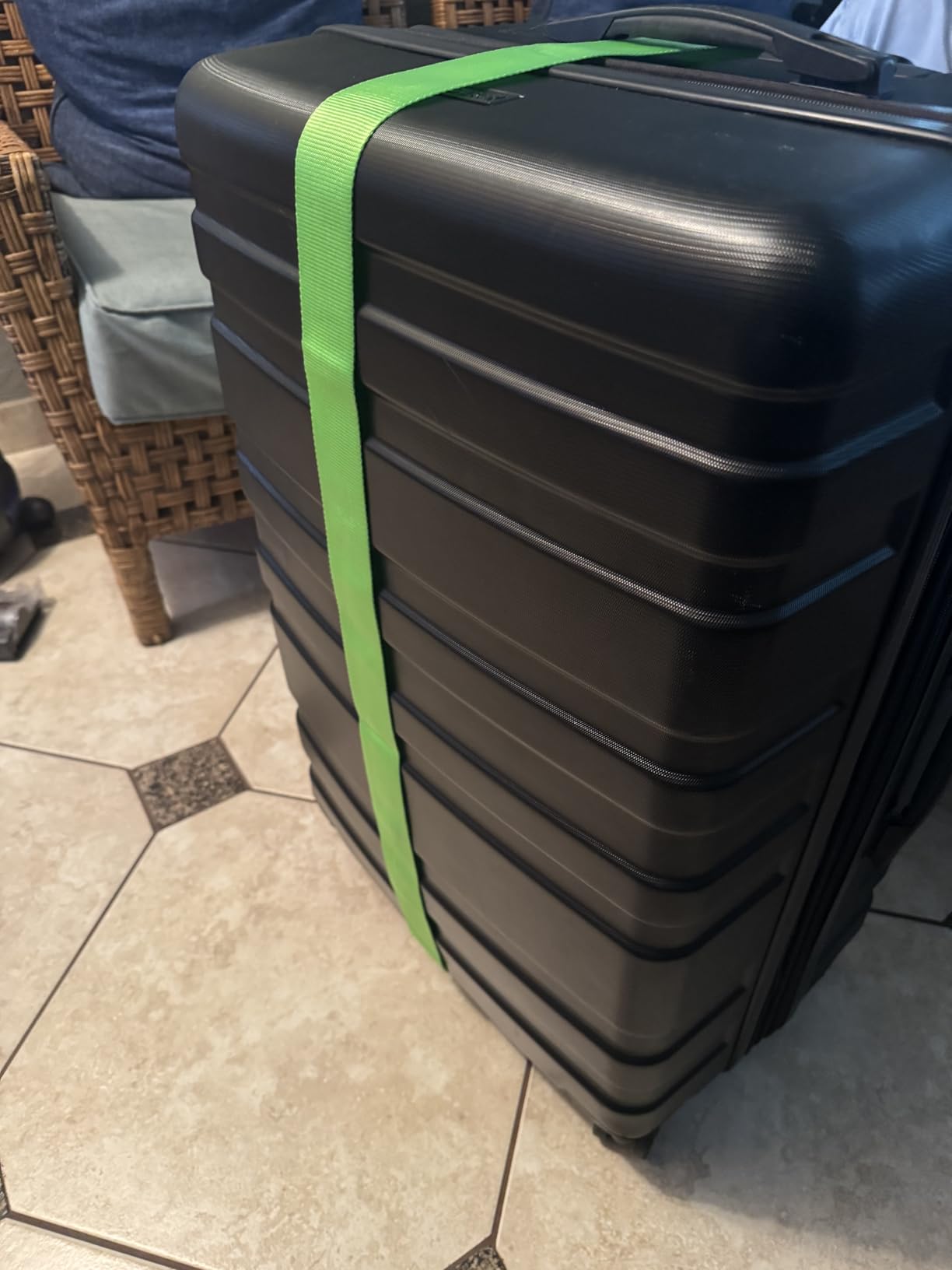
What sold us is the three-way configuration. You can run it straight around the case, vertically, or crossed through the handles for a diagonal wrap that stops the bag from flexing open when the load shifts. Reviewers consistently credit the strap with taking pressure off zipper closure points, which is the actual reason to put one on a heavy bag in the first place.
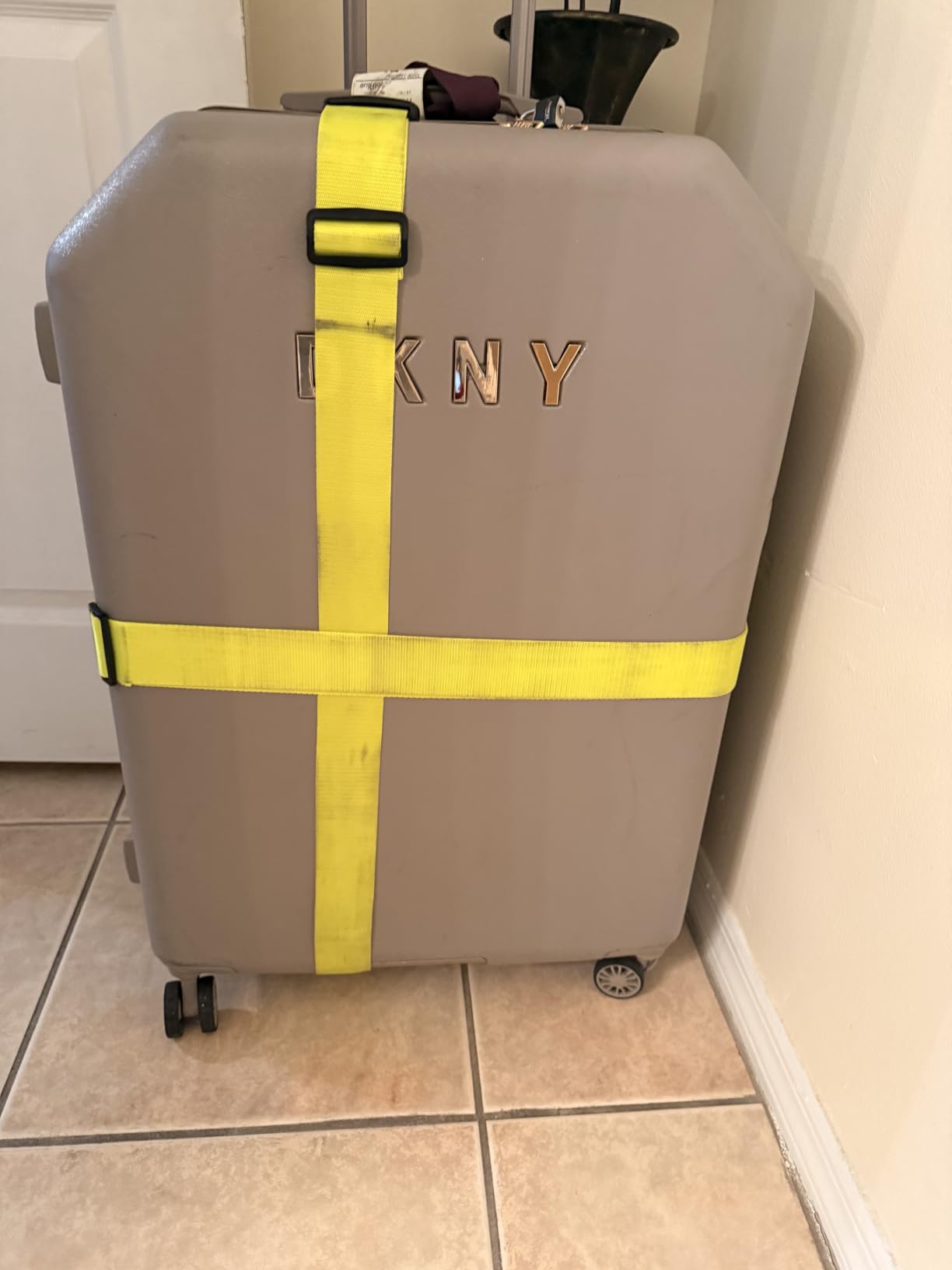
On the weakness side, the hardware is plastic and reviewers say so directly. It is the first part likely to show wear on a strap that sees this much load, and the polyester body is spot-clean only, so ingrained baggage-handle grime does not lift easily. Neither issue matters on a normal trip. Both matter if you are the kind of traveller who reuses the same strap for years.
The 500 pound pull rating is worth understanding rather than repeating. That figure describes the webbing under tension in a controlled test, not a bag hanging from a buckle while a conveyor throws it sideways. On a 60 pound case the webbing is not what limits you, and no strap on this list is rated below 32 kg, so the practical difference between a 300 pound strap and a 700 pound strap on your bag is close to zero.
What to check before you commit
Look at the adjuster, not the buckle face. This strap is single-length adjustment with a sliding tri-glide, so pull the webbing through it under load and see whether it creeps. A quick lift test with the strap snug is the honest check: if the buckle stays closed when the case is off the ground, it will stay closed in a hold.
Match the 38 inch minimum to your bag. A 20 inch carry-on will have a lot of webbing doubled back, which is manageable but untidy. A 28 to 32 inch checked case uses the range properly, and if you also carry the aluminium suitcase type, this fits the profile well.
Where it falls short
It is not a lock. If your concern is someone opening the case rather than a zipper bursting under pressure, this is the wrong tool, and you will want a TSA combination model instead. It is also spot-clean only, which rules it out for anyone who wants to throw a strap in a washing machine after a grubby trip.
The plastic buckle is the part to re-check each trip. By the second or third year on a heavy bag, that is where wear shows first, and a strap that feels loose in the buckle is a strap that is no longer doing its job.
2. RUMILLA 81 Inch Adjustable Luggage Belt, Connects Up to Three Bags to One Roller
Luggage Straps,Luggage Connector, Straps for Suitcase, Heavy Duty Adjustable Suitcase Belt Travel Attachment Travel Accessories for Connecting Your Luggage (Black)
80 kg buckle rating
81 inch nylon webbing
Stainless steel hardware
Two strap sizes included
Pros
- Connects up to three bags to one wheeled case
- Stainless steel buckle hardware
- Light enough to pack into a side pocket
- Long owners report around four years of use
- 80 kg stated buckle rating
Cons
- Webbing is narrow next to 2 inch heavy-duty straps
- Fiddly to thread and adjust
- Some users find the maximum length too short for very large bags
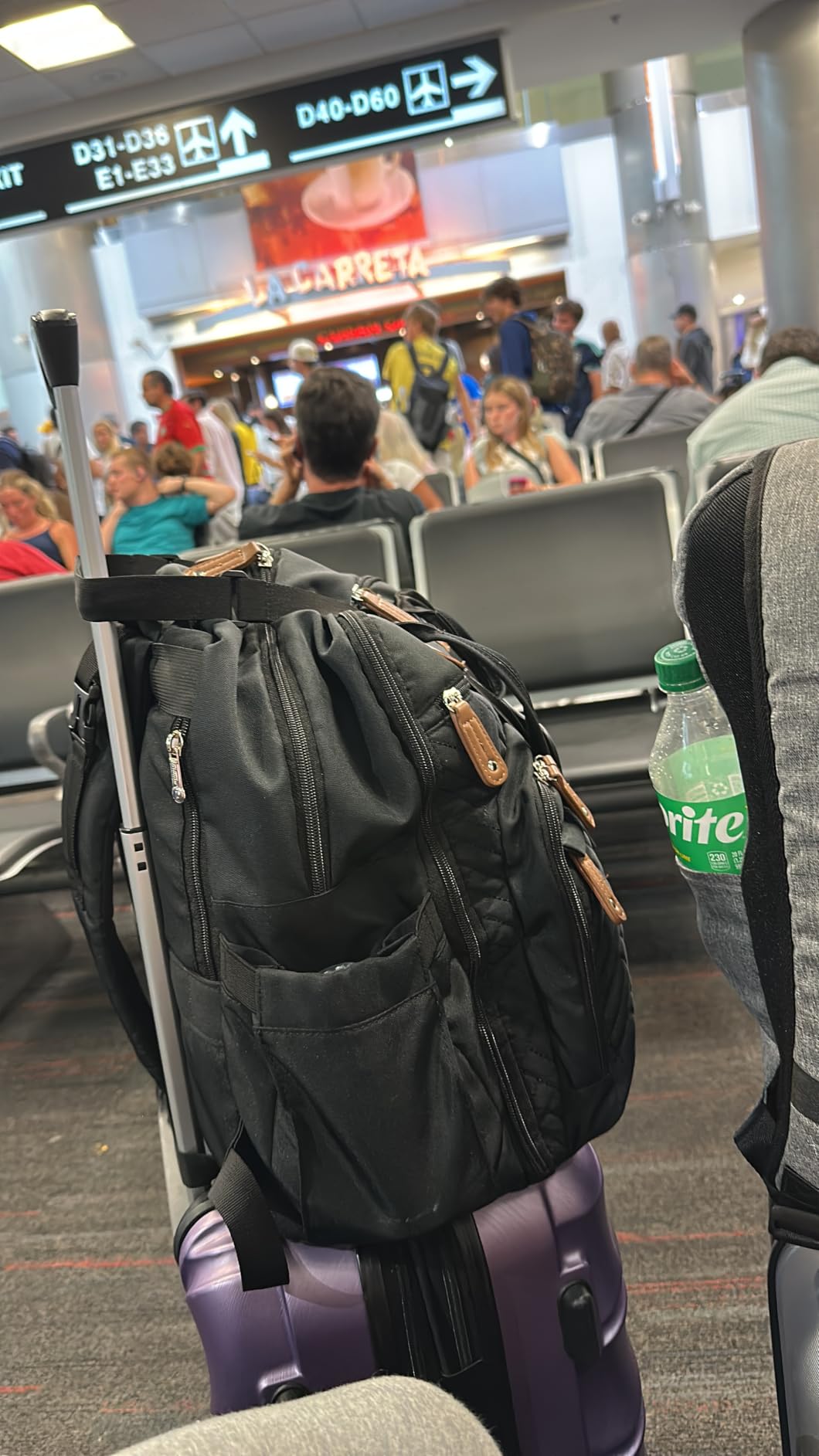
This is not a zipper-reinforcement strap, and treating it as one would be a mistake. It is an add-a-bag connector: a long nylon belt with a stainless steel buckle that clips a personal item, a backpack or a second case on top of a rolling bag so nothing slides off the handle. That is a different job, and it is the job this one does well.
The hardware is the standout. Stainless steel rather than the plastic found on most straps in this range, an 80 kg buckle rating, and a light enough build that owners tuck it into an outside pocket when it is not in use. Long-term owners report roughly four years of reliable service, which is a fair expectation for a connector that sees tension every single time you pull the bag.
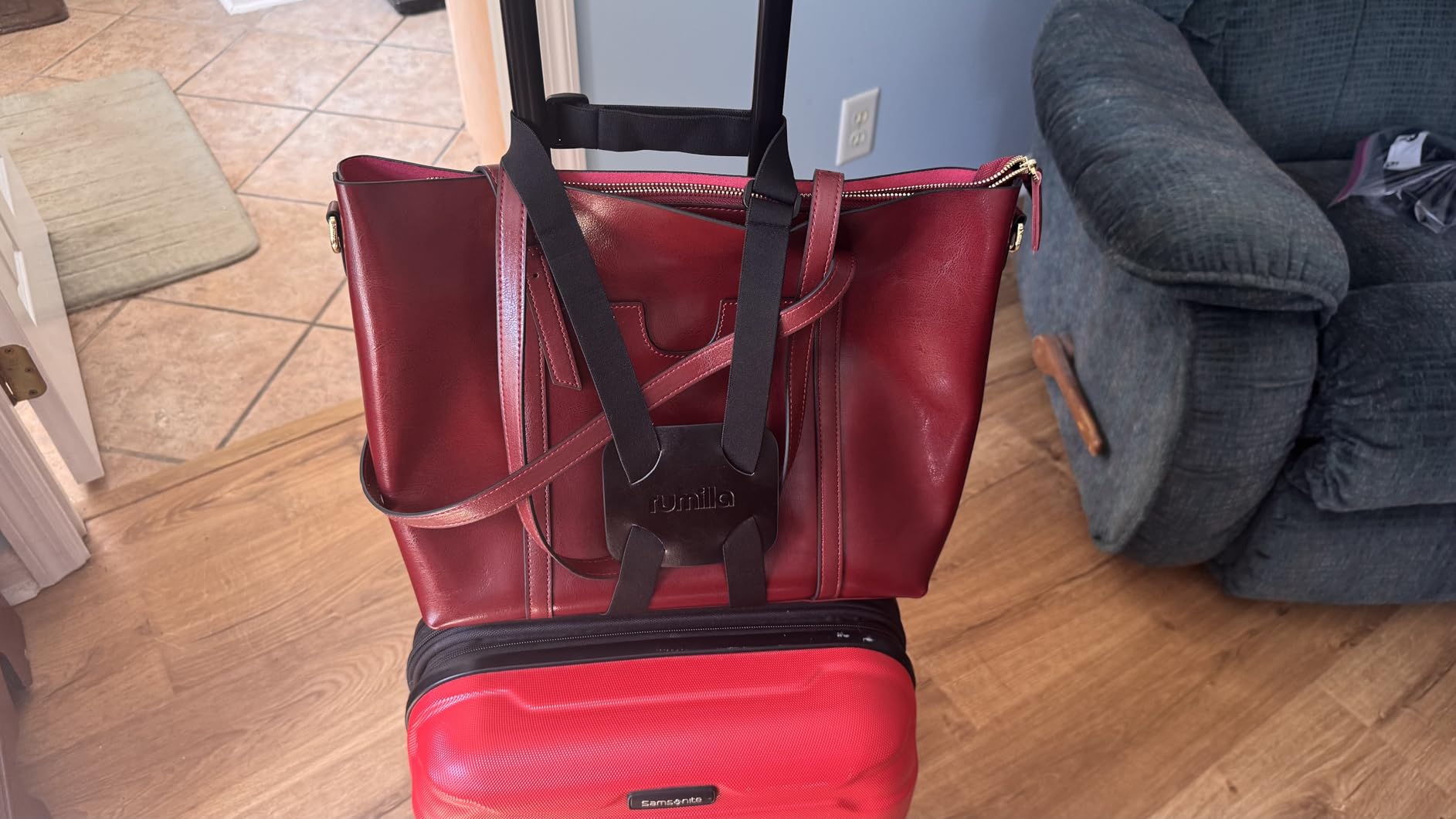
The compromise is width. The webbing is narrow compared with the 2 inch straps on a heavy-duty list, and a minority of reviewers call the threading and adjustment fiddly, particularly when you are doing it on a kerb with a bag already moving. If your bag is genuinely 60 pounds and the strap is the only thing between that load and the ground, we would use something wider.
Two strap sizes ship in the pack, a 14 to 22 inch and a 22 to 38 inch, so one purchase covers a small personal item and a larger day bag. The listed 81 inch total length is generous for connecting two cases, and some users on very large bags still report wanting more.
Who this is right for
Families and pairs who move several bags through an airport alone. One person pulls the wheeled case and the rest ride on top, which is the luggage-train setup that shows up constantly in traveller forums and almost never in a buying guide. The buckle is also comfortable to work one-handed, which matters when you are holding a child’s hand.
It is a good second line of defence on an overstuffed carry-on too, holding a soft tote shut against a zip that is already under strain. Just do not expect it to compress a softshell the way a wide cinch strap would.
Where it falls short
It is not a heavy-load strap despite the 80 kg figure, because that rating describes the buckle, not the spread of the webbing across a loaded shell. On a 70 pound bag the narrow strap concentrates pressure into a thin line and the shell can still flex open underneath it.
It also has no lock and no identification function. If you want colour and visibility at the carousel, or you want screening agents to be able to open a combination buckle, this is the wrong end of the list.
3. BILIONE 79 Inch Heavy Duty Straps 4-Pack, The Strength-to-Variety Balance
BILIONE Luggage Straps for Suitcases,79″ Long Adjustable Luggage Belts
500 lb load capacity
4 straps per pack
2 inch wide by 79 inch long
Adjusts 3 to 6.5 feet
Pros
- Rated to 500 pounds of load capacity
- Four straps wrap two bags in both directions
- Two-stage buckle stays closed under rough handling
- Neon colours easy to spot at the carousel
- Also fits duffels
- backpacks and golf bags
Cons
- 79 inch length leaves excess webbing on smaller bags
- Four straps is more than a single bag needs
- No lock on the buckle
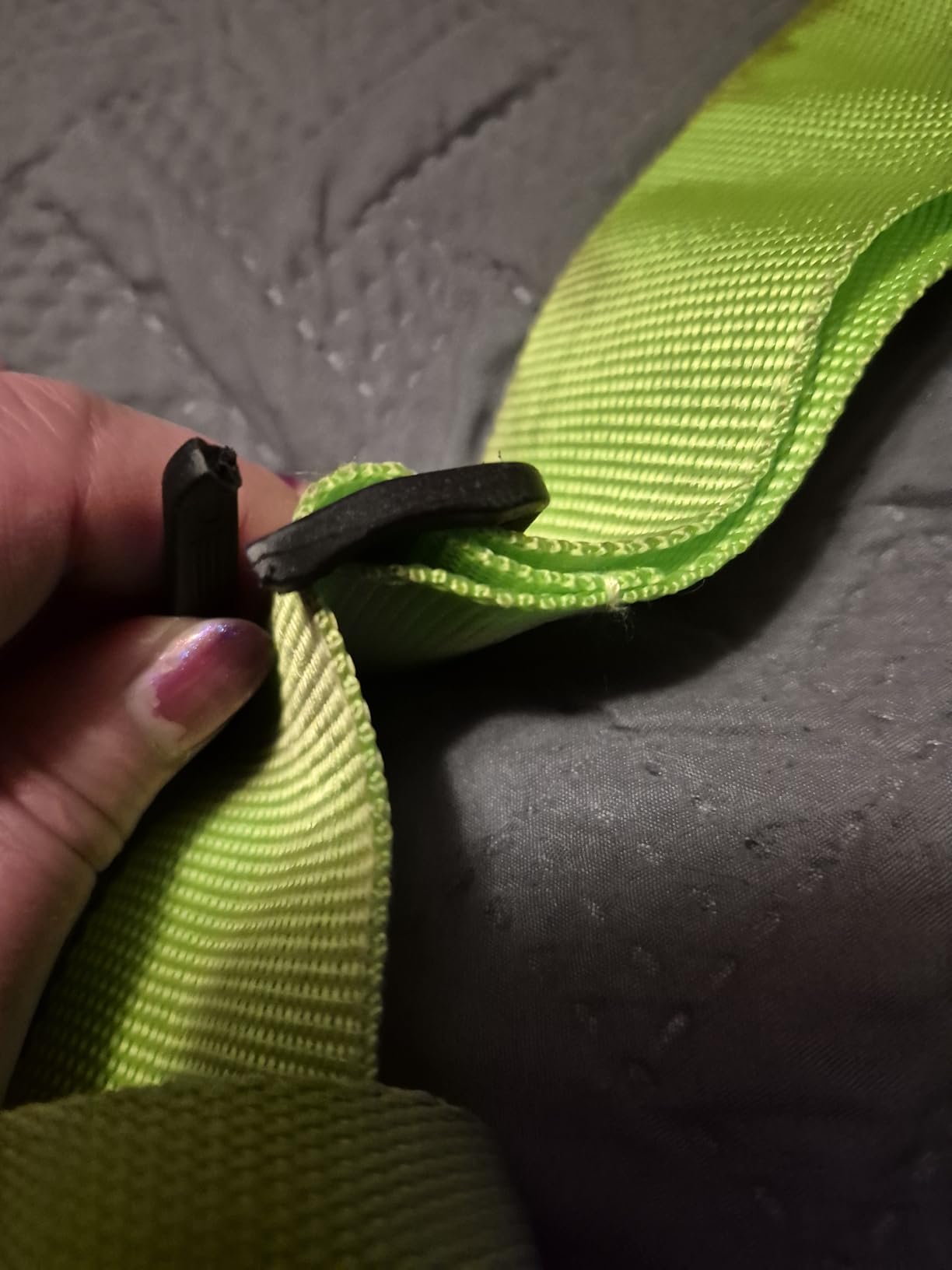
The four-pack is the part that changes the maths. Two straps can wrap one bag in both directions, or one strap can hold two smaller bags together, and at 500 pounds of stated load capacity the webbing is not the limiting factor on a checked suitcase. Reviewers single out the two-stage buckle as the feature that keeps the clasp closed through rough handling, which is exactly the failure mode we were looking for.
At 2 inches wide and adjustable from 3 to 6.5 feet, this covers suitcases from 20 to 32 inches, plus duffels, backpacks and golf bags. The bright multi-colour assortment is genuinely visible across a baggage hall, and reviewers treat the colour as a practical feature rather than decoration.
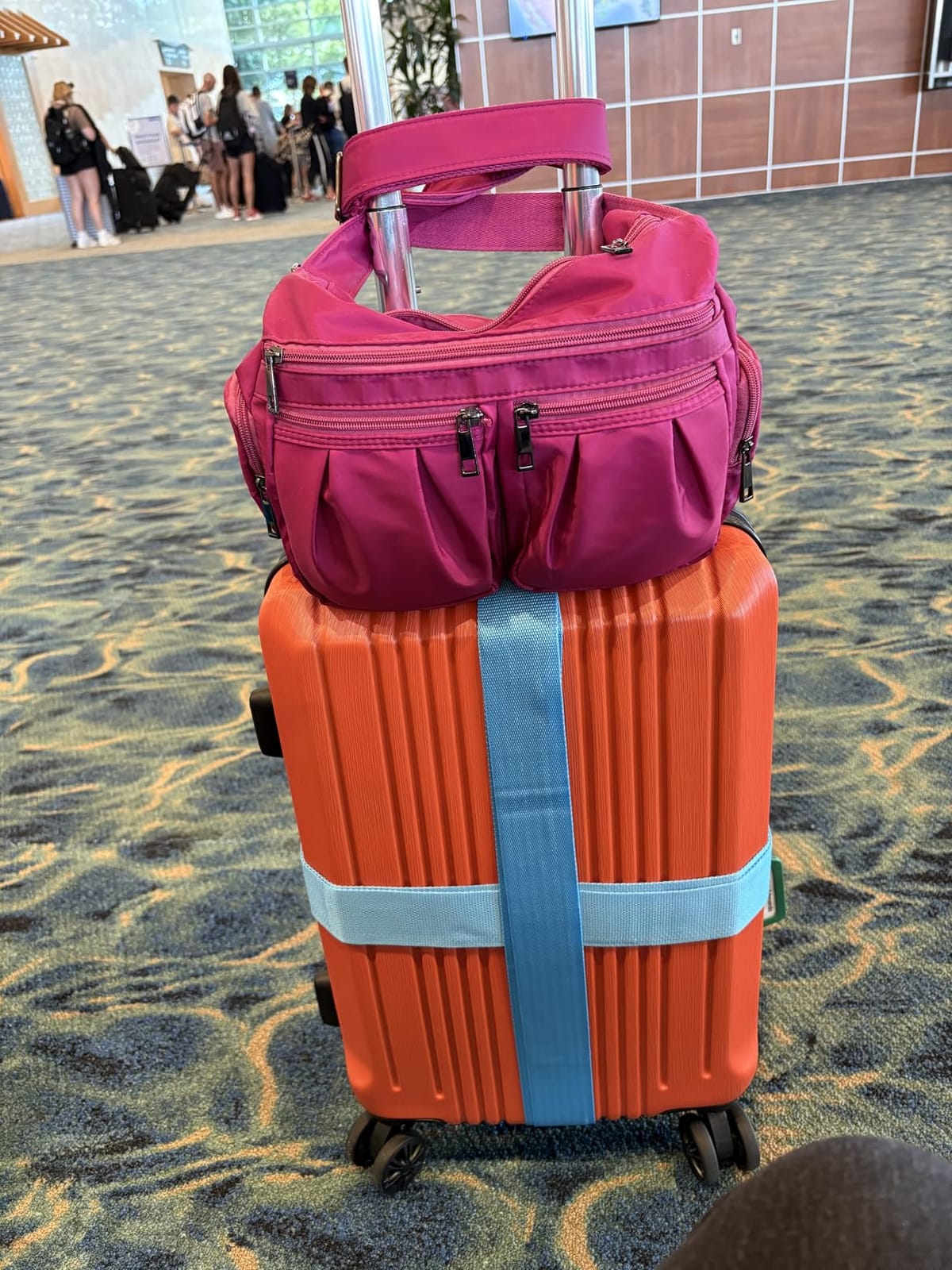
The honest drawback is length. 6.5 feet is generous for a standard suitcase, and users regularly note the tail of webbing remaining after wrapping. That is a management problem rather than a strength problem, and it disappears once you set the strap length permanently for your bag instead of adjusting it each time.
The buckle is plastic, and while nobody in the reviews reports failure, plastic is the material we would inspect first after a year of hard use. There is no combination lock here, so this is a closure and compression strap, not a security device.
Why this one earns its spot
Most heavy bags need two directions of restraint, not one. A single horizontal strap stops the shell splitting at the zipper, but a second strap across the vertical axis is what stops a loaded case twisting when it is lifted. Having four in the pack means you can do both on two bags without buying twice, which is the simplest reason this is the value pick here.
It is also the one to pick if your load is not a suitcase. Golf bags, ski boots and equipment cases all sit in the same weight range, and the 6.5 foot adjustment handles shapes that a 52 inch strap cannot reach.
Where it falls short
If you carry one bag and travel light, four straps is more than the job needs and the packaging is bulky for a carry-on. Budget the extra length into your packing, and be aware that webbing flapping around on a smaller bag is the most common complaint in the reviews.
There is no lock. For identification and compression this is more than enough, but it does nothing about a case you want screening agents to be able to open without cutting.
4. Travel Inspira Luggage Strap with TSA Lock, The One Screeners Can Open
Travel Inspira Luggage Straps for Suitcases with TSA Lock
TSA 007 certified three-dial lock
480 lb webbing rating
Adjusts 103-200 cm
Fits 20-28 inch cases
Pros
- TSA 007 certified lock agents can open without damage
- 480 pound abrasion-resistant webbing
- Recessed housing resists snagging
- Widely used on golf bags
- coolers and tool boxes
- 4.4 stars across 2385 reviews
Cons
- Slider is hard to fine-tune once tension is on
- One owner reported fraying after heavy toolbox use
- Lock housing can be pried by someone determined
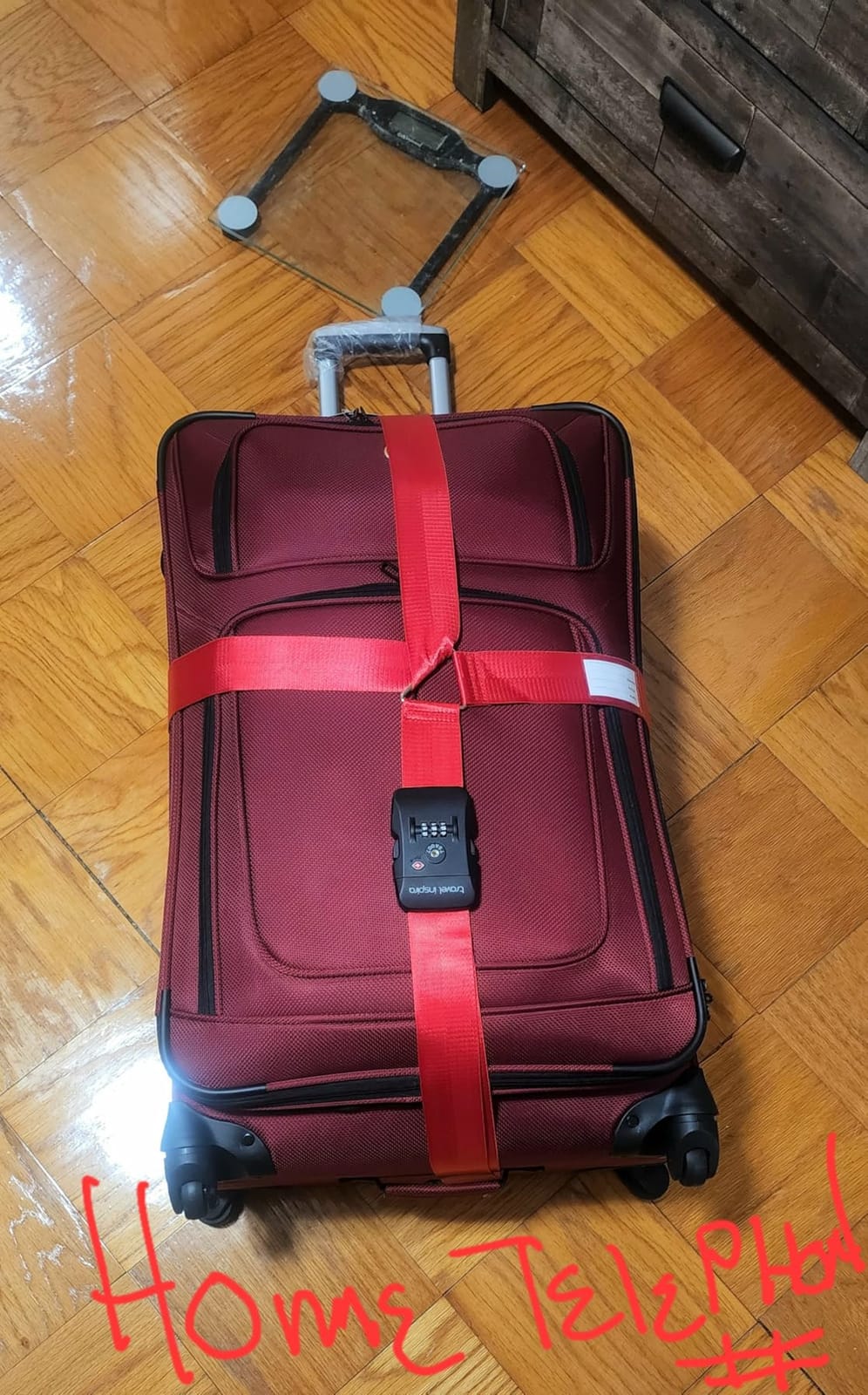
This is the strap to buy when the thing you are protecting is not really your clothes. The three-dial lock is TSA 007 certified, which means screening agents can open it with a master key instead of cutting the webbing or pulling the case apart. Buyers use it on older hard-sided cases with no lock of their own, on golf bags, coolers and tool boxes, and the reviews confirm agents do open it without complaint.
Webbing is high-density and abrasion resistant at a stated 480 pounds, and the recessed lock housing sits low enough that it does not catch on conveyor dividers. That detail matters more than it sounds, because snagging is how a lock housing gets sheared off on a heavy bag.
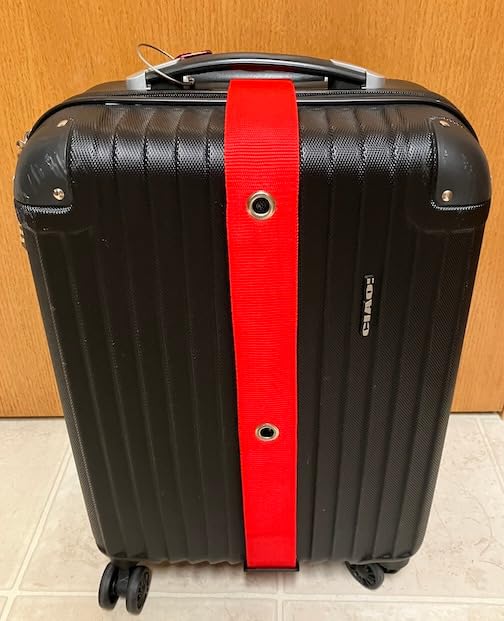
The recurring friction is the sliding buckle. Once the strap is around a loaded bag and under real tension, several users find it hard to move, and one heavy-load review documented webbing fraying and lock rub damage after repeated trips with a 70 pound toolbox. That is an abuse case well beyond normal travel, but it is a fair warning if you are strapping equipment rather than clothing.
Be realistic about the lock. It is a deterrent against opportunistic access, not a security guarantee. On a forum thread a traveller asked whether a thief could simply loosen the straps, and that is the honest answer for any buckle on this list: someone with time and a tool gets in eventually.
Where this earns its place
Any bag whose own lock is broken, missing or non-standard. That is a surprisingly common situation with older cases, and a TSA-recognised strap is the cheapest way to stop a bag that used to be padlocked from being forced open and delayed at screening. It also works well if you lock down a bag in a hotel room between trips.
Check the adjustment range before you order. At 103 to 200 cm it is built for 20 to 28 inch suitcases, so it is a strong fit for a standard checked case and tight for anything at 32 inches or larger.
Where it falls short
If you already have TSA locks built into your luggage, this adds little. You are carrying a second lock for a case that is already compliant, and the harder-to-adjust slider is the price of the lock housing sitting in the strap path.
It is a single strap, so wrapping one bag in both directions means buying a second unit. On a genuinely heavy case, one direction is a partial fix.
5. Travel Inspira TSA Cross-Wrap Belt, Two Directions of Restraint With a Lock
Travel Inspira TSA Approved Luggage Strap Heavy Duty Suitcase Belt
TSA approved three-dial lock
Cross-wrap both directions
Fits 20 to 32 inch bags
Weighs 0.29 kg
Pros
- Working TSA lock with quick-release buckle
- Cross wrap reinforces two directions at once
- Covers 20 inch carry-ons to 32 inch bags
- Built-in ID tag slot
- Only 0.29 kg so it adds no weight
Cons
- Adjuster can slide loose under load
- Some owners pin the slider to stop it
- Plastic buckle can wear over long-term use
The cross-wrap is the idea here. Instead of circling the case once, the strap runs both horizontally and vertically, so a loaded bag is restrained on two axes at once. On a softside that is genuinely overstuffed, that is the difference between a case that survives handling and one that pops its zipper open on the belt.
It carries a three-dial TSA lock, comes in high-visibility colours, and includes a built-in ID tag slot, so identification and a screenable lock are handled in one product. At 0.29 kg it adds almost nothing to your weight budget, and owners say it goes on and off in seconds once set.
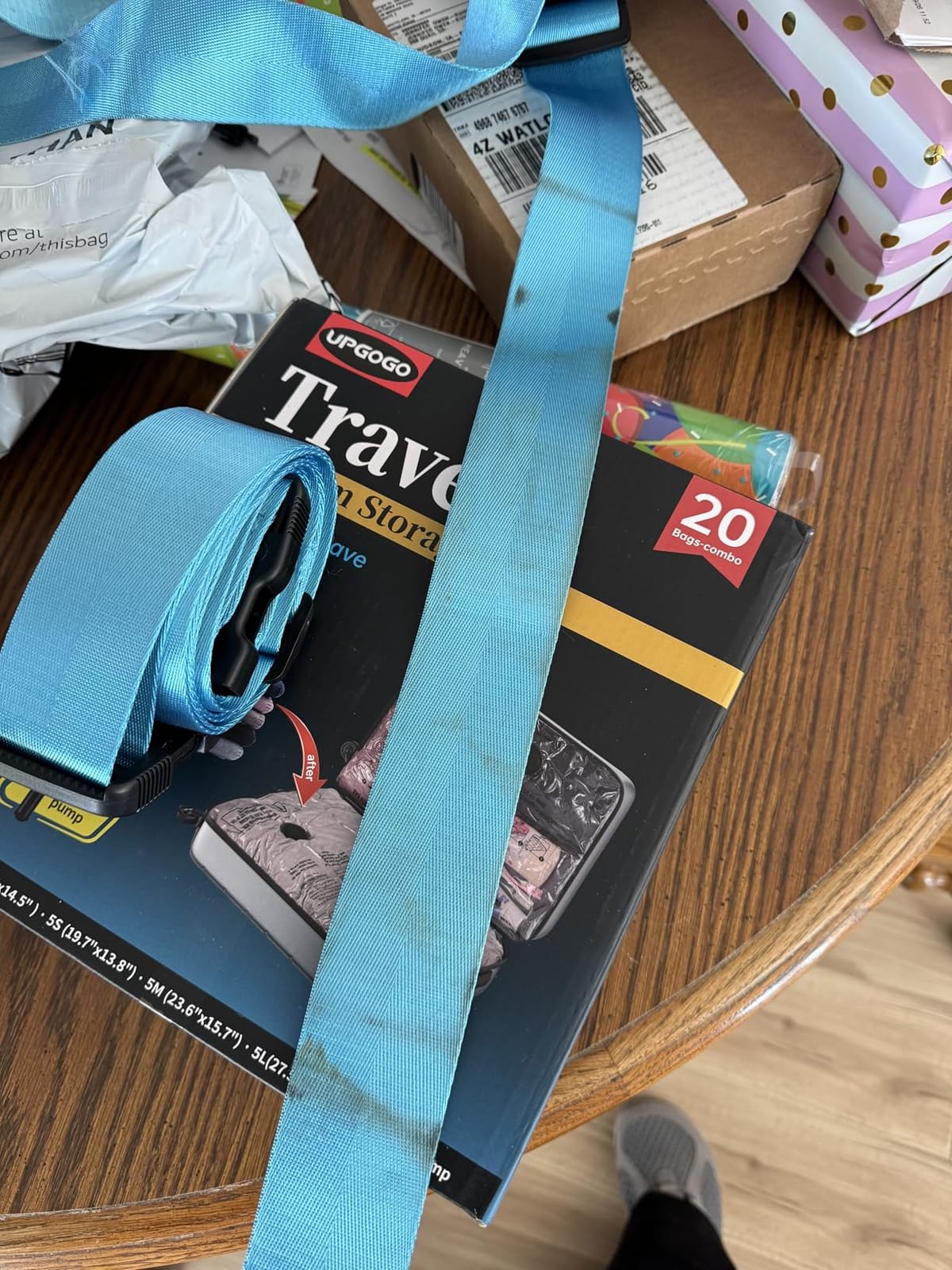
The adjuster is the problem, and the reviews are unusually specific about it. One detailed review documented the length-adjuster loosening enough to let the case open while still locked, and the fix was to pin the slider. If you own an expandable softside, the same mechanism is under more pressure than on a hardshell, so this is the setup most likely to need that pin.
The quick-release buckle is reported to avoid the jamming that plagues budget straps, which is a real advantage when you are doing this in a hurry. The hardware mix is stainless steel with high-impact POM buckles, and the ABS and nylon body keeps the whole thing light.
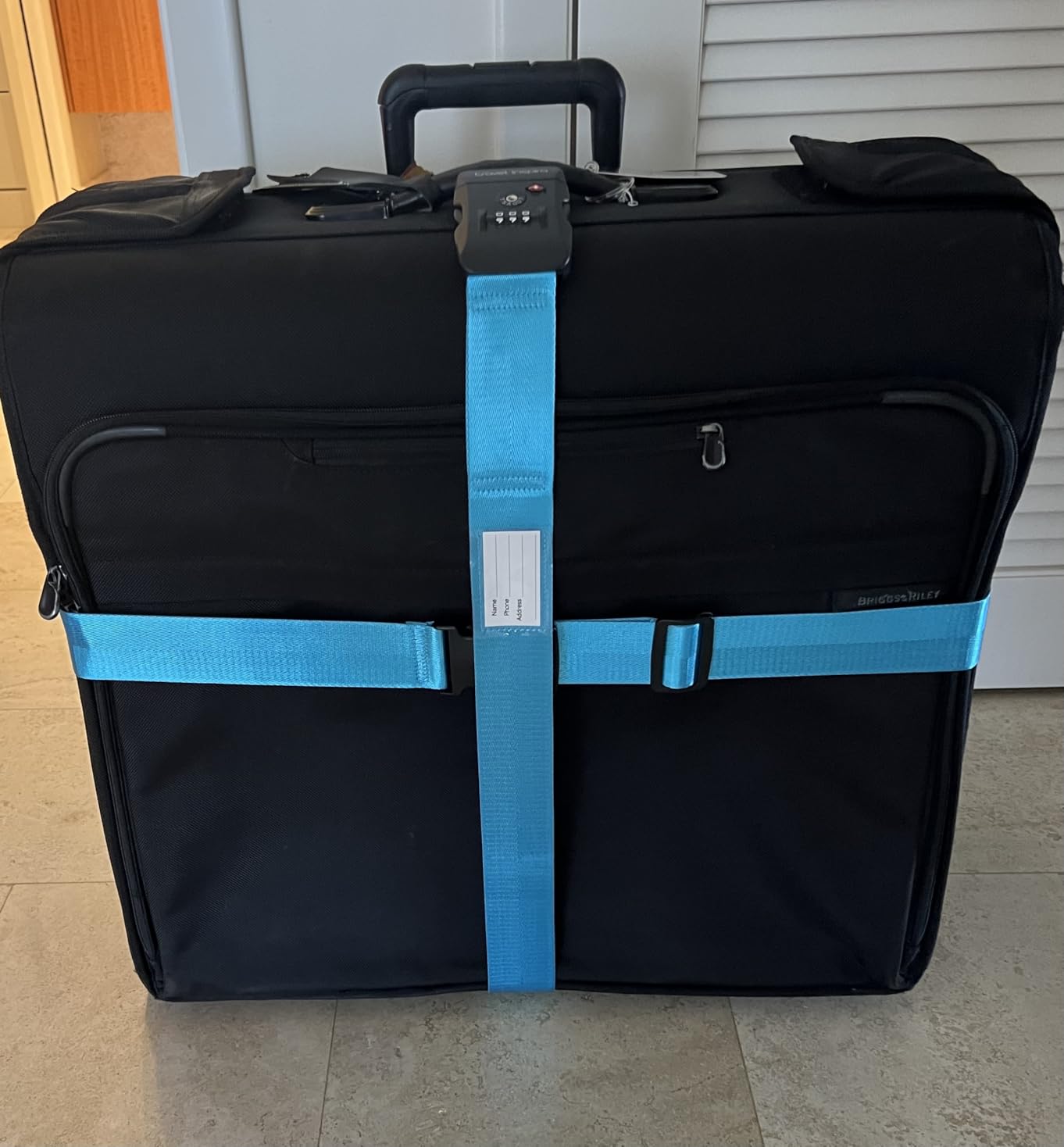
Best case for this design
Overstuffed softside carry-ons and checked bags, where the failure you are preventing is the shell bulging past a size limit or a zipper separating. Cross-wrapping is also the most effective way to compress a soft bag down to a strict airline depth allowance without crushing the contents.
It fits from 20 inch carry-ons to 32 inch oversized bags, so it covers a wide range in one product, and the high-visibility colourway is about as noticeable as luggage gets at a carousel.
Where it falls short
On a rigid case with a good internal structure, a cross wrap is partly redundant, and the adjuster becomes a liability you have to check. That is why we would not hand this to someone who is not prepared to inspect the slider before every flight.
Review volume is the lowest of the Travel Inspira pair, so there is less long-term evidence on the adjuster than the numbers alone suggest. The colours are limited compared with the four-pack neon bundles.
6. Jcpmcxs 2 Pack Adjustable Luggage Belts, The Wide Webbing Budget Pick
2 Pack Suitcase Straps, Bright Color Adjustable Luggage Belts, TSA Approved (Black)
1.96 inch wide nylon webbing
Adjusts 46-78 inches
2 straps per pack
Quick release buckle
Pros
- Two straps wrap a single bag both ways
- 1.96 inch webbing spreads shell pressure
- Quick release buckle works one-handed
- 46-78 inch range fits 20 to 34 inch cases
- Two year manufacturer warranty
Cons
- No combination lock despite the TSA buckle
- Some buyers find the nylon thinner feeling
- Excess length on carry-on sized bags
For most people the best luggage strap is the one that is wide enough to spread pressure and has a buckle you can close without looking. This pair does both. At nearly 2 inches wide, the webbing sits across a broad face of the shell instead of digging into one line, which is what keeps an overfilled softside from splitting at the zipper.
The 46 to 78 inch adjustment range is the most generous span on this list, covering 20 to 34 inch suitcases. Stainless steel hardware, a quick-release buckle that reviewers say works one-handed, and a two-year manufacturer warranty round out a genuinely capable budget pair.
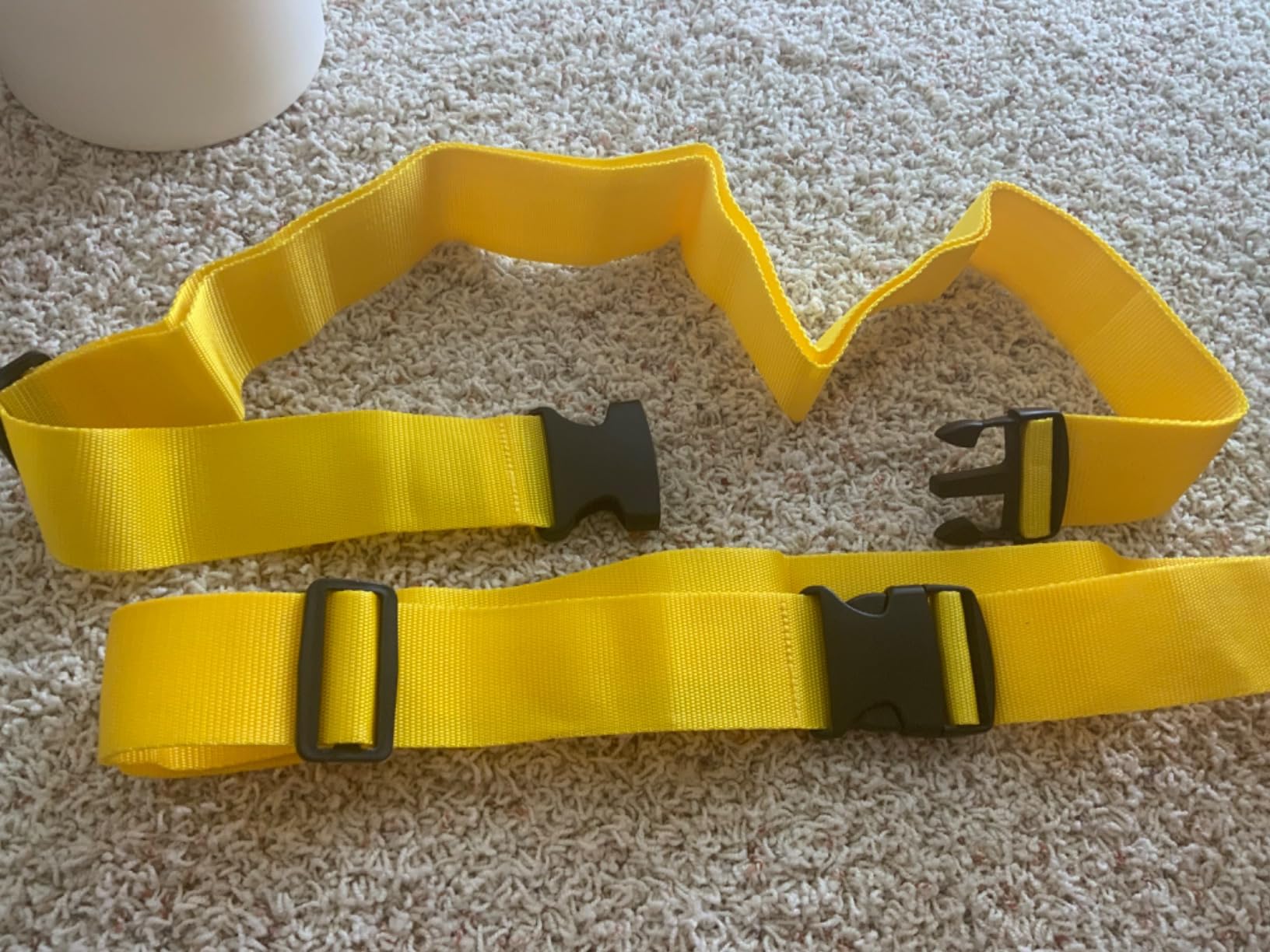
Two straps mean you can wrap a single bag both ways, which is where most of the value sits. The recurring criticism is that a small share of buyers find the nylon thinner and cheaper feeling than competing sets, and the ratings sit a little below the straps at the top of this list, which is consistent with that.
One specification needs reading carefully. The buckle is described as TSA approved, meaning it is designed so agents can unfasten it, but there is no integrated combination lock on this design. If you want a code, this is not the strap.

What you get for the money
Two wide straps, stainless hardware and a 78 inch maximum reach. If you want a bag restrained on both axes and your case is anywhere between 20 and 34 inches, this is the shortest path there. The bright colour options handle identification at the same time.
It is a sensible companion to a carry-on that is already close to size limits, because the webbing is wide enough to compress a bulging softside rather than pinching it.
Where it falls short
The stated capacity is comfortably above a checked bag limit, so strength is not the issue. The issue is feel. If you have handled a strap with reinforced stitching and metal buckles, the material here reads as more economical, and that is where the warranty claim and the finish part company.
There is no lock, and on a small bag the 78 inch strap leaves a long tail to manage. Set the length once and leave it.
7. AssemHome Heavy Duty Strap with Lock, Built for Instruments and Equipment
Heavy Duty Luggage Straps TSA Approved with Lock Adjustable Travel Belt for Suitcases (Grey)
TSA approved combination lock
2 inch polyester webbing
35-70 inch adjustable
Steel buckle link
Pros
- Lock opens for airport screening without cutting
- Stainless steel buckle link
- Resettable three-digit code starting at 0-0-0
- Doubles as a hotel storage lock
- Popular with travelling musicians and gear owners
Cons
- Listed 35 inch minimum measures closer to 40 inches
- Adjuster can be slid loose by hand
- One owner returned it as cheap feeling
The people buying this are not packing clothes. Reviews come from guitarists locking unlatchable hard cases, and from owners who use the strap to secure a bag in a hotel room. At 2 inches wide and rated to 300 pounds, it handles an instrument case or a case of equipment without the webbing being the limiting factor.
The combination code is resettable from the factory 0-0-0, which takes about a minute and is the difference between a lock you use and a lock you leave on the default setting. Owners praise the ease of programming and report solid durability across multiple overseas flights.
Two complaints come up repeatedly. The listed 35 inch minimum length is optimistic, and several buyers measured closer to 40 inches, which matters if you are trying to cinch a small case. More importantly, the adjuster can be slid by hand, so it does not stop a deliberate attempt to open the bag, and one reviewer treated that as a real security gap on a case with a broken lock plate.
One owner returned the strap over build quality, and the polyester webbing with a stainless steel buckle link sits in the middle of the pack in feel. None of that has stopped most owners using it for its intended job.
Why it earns a place
Anything that is not clothing and does not have its own TSA-compatible lock. Hard instrument cases, camera-adjacent hard cases, and gear you would rather not explain to an insurance adjuster after a baggage hall incident. The lock is the point, and it is the reason this strap behaves differently from the plain buckles above it.
It also works as a second lock for belongings in a hotel room or a daypack, which is a use the reviews mention more than we expected.
Where it falls short
Measure before you order. On a small case, the real minimum length is nearer 40 inches, and the advertised figure will disappoint. On a big 32 inch case you will be at the far end of the range with little to give.
Treat the lock as a deterrent only. If a case contains something you would replace rather than claim, no strap buckle on this list changes that, and a padlock has the same limitation at a much higher weight.
8. ZHOMA 2 Pack Double-Lock Straps, The Buckle That Needs Two Intentional Moves
2 Pack Luggage Straps for Suitcases, Adjustable Travel Belt with Double Lock and Quick Release Buckle, Heavy Duty Nylon Bag Packing Strap, Bright Identifiers Business Travel Accessories-Colorful Block
Two-step slide to release buckle
40-74 inch range
2 inch wide nylon
Reinforced stitching
Pros
- Two-step buckle must be deliberately released
- Reinforced stitching holds under load
- Wraps horizontally
- vertically or both
- Printed identifiers aid recognition
- 4.6 stars across 437 reviews
Cons
- Excess webbing flaps on smaller bags
- Buckles are plastic rather than metal
- No integrated combination lock
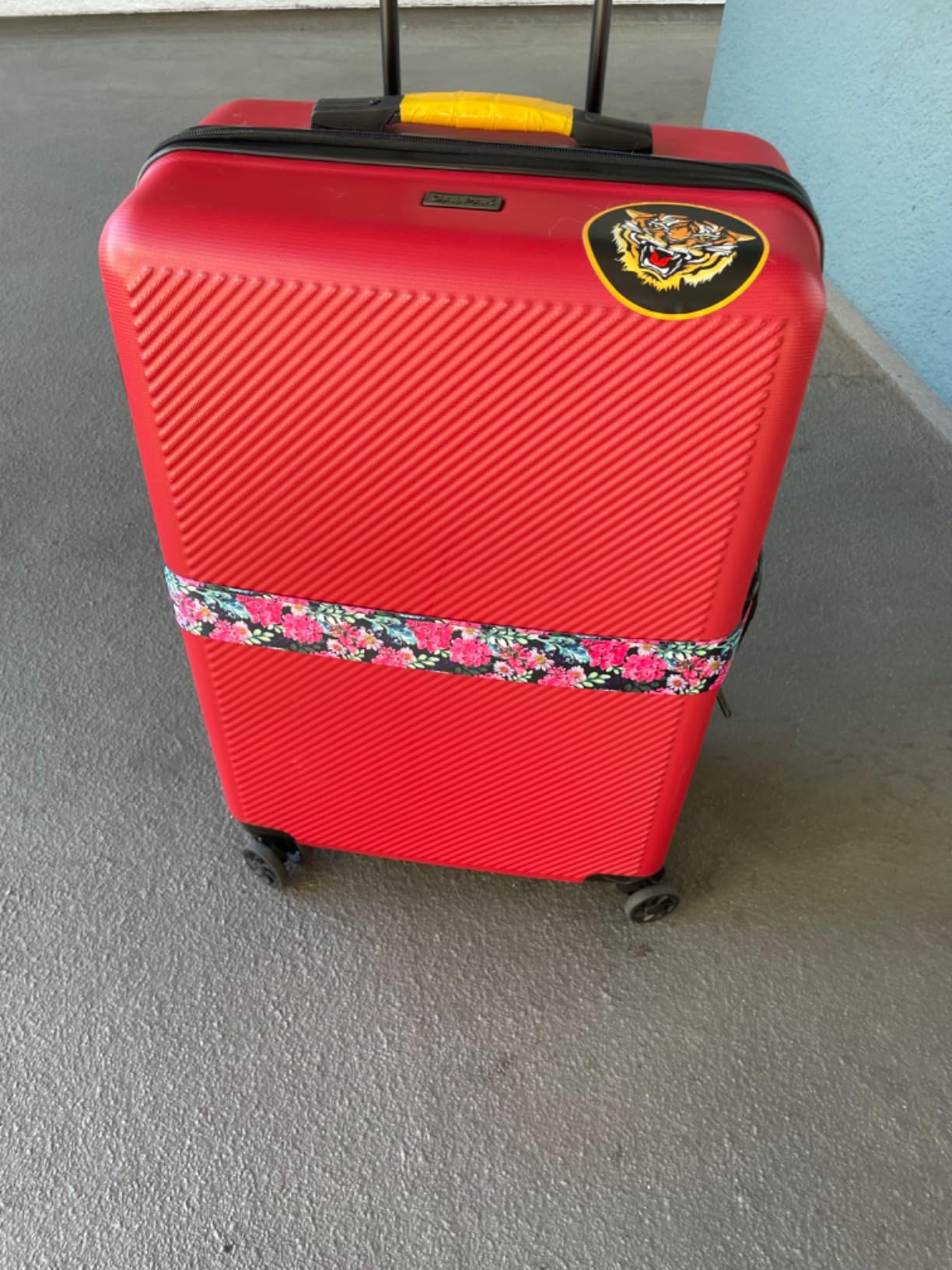
Most buckles on a bag open from side pressure, and on a heavy case a bag that gets knocked in a baggage hall can open its own strap. This one does not. You click the buckle halves together, then slide a locking button, so it stays shut unless someone deliberately releases it in sequence.
Beyond the buckle, the webbing is heavy-duty woven nylon with reinforced stitching, and reviewers testing it on carry-ons and 24 inch checked bags report it tightens easily and stays put through lifting and dragging. At 2 inches wide and adjustable from 40 to 74 inches, it covers the mid-size range where most checked bags sit.
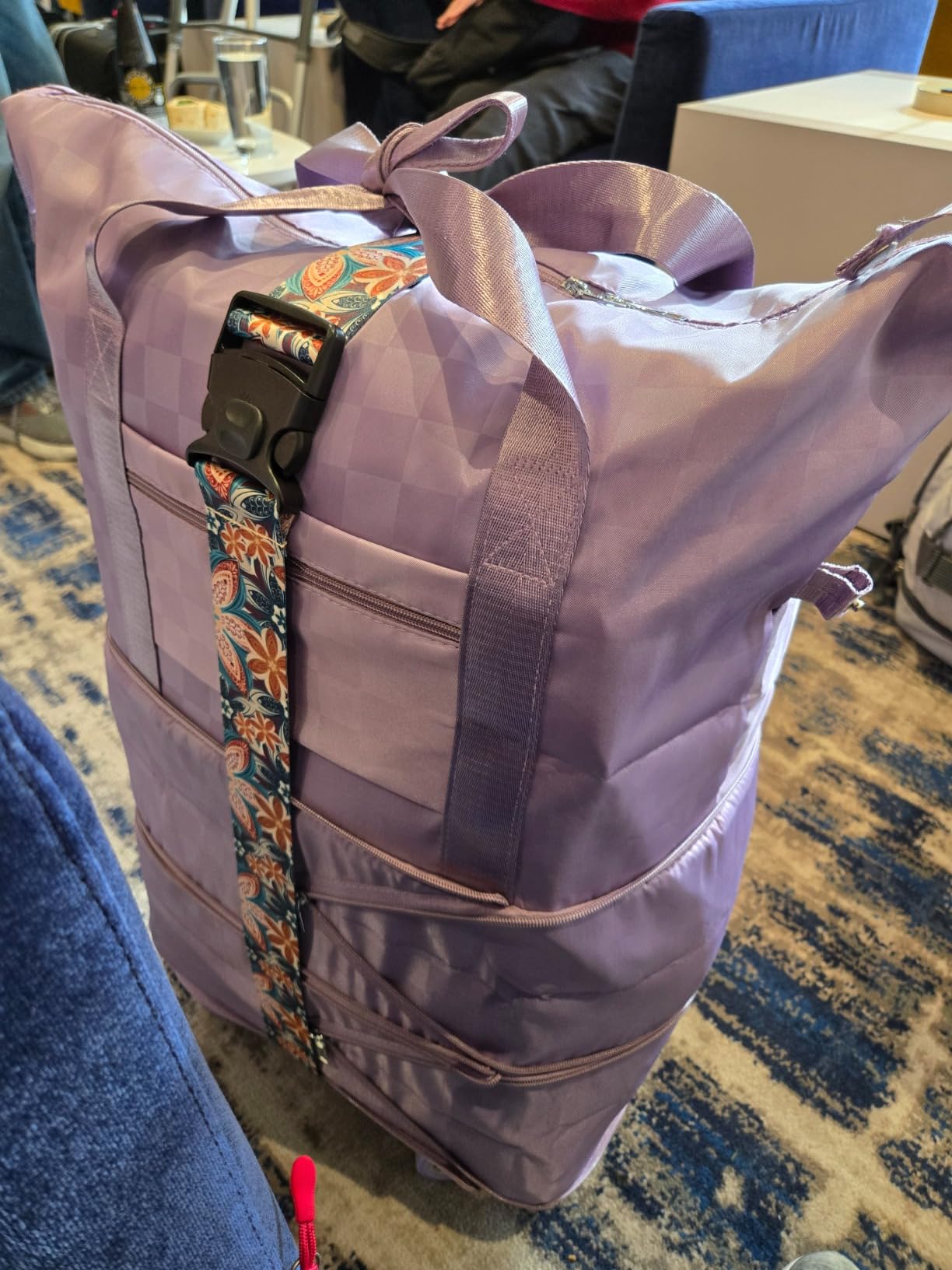
The trade-off is metal. The buckles are plastic, and while nobody reports them failing, that is the first place we would look after a couple of years on a heavy bag. There is also no integrated combination lock, so screening agents cannot open a coded buckle here, though the two-step release is straightforward to undo.
The 74 inch maximum leaves excess webbing on smaller bags, and the most common note in the reviews is that the tail flaps unless you tuck it. The bright printed patterns are wear resistant and do make a bag easier to identify across a hall.
The case for the two-step buckle
Hardshell cases that travel loose in a hold, and softside bags that are already under strain from being overpacked. A buckle that cannot open from an accidental knock is genuinely useful when the alternative is a bag sitting open on the carousel floor with your contents scattered around it.
It is also a good two-strap set for wrapping one bag in both directions, or covering two smaller bags, and the reinforced stitching is the detail we would point to on a bag that gets dragged rather than rolled.
Where it falls short
No lock. If you want screening staff to open a coded buckle, look at the TSA models further up. The plastic hardware also means this is not the pick for anyone who has previously broken a plastic buckle on a heavy case.
On a bag under 20 inches the 74 inch strap is more webbing than you need, and management of the excess becomes your problem on every use.
9. Hero Luggage Straps 2-Pack, Duraflex Hardware and the Highest Load Rating
Hero Luggage Straps for Suitcases (2-Pack), Heavy-Duty Adjustable Bag Belts
700+ lb tension rating
Genuine Duraflex buckles
72 inch adjustable belt
2 straps per pack
Pros
- Rated to 700+ pounds of tension
- the highest here
- Genuine Duraflex buckles resist breakage seen with plastic clips
- Redesigned to be noticeably lighter than earlier versions
- 72 inch adjustment covers small to large cases
Cons
- Smallest review base of the group
- Single colour variant listed
- No integrated combination lock
This is the build-quality answer rather than the specification answer. The 700+ pound tension figure is the highest stated rating among these ten, but the detail that actually matters is the buckle: genuine Duraflex clips rather than the cheap plastic hardware that snaps on a heavy bag. Owners describe the hardware as noticeably heavy duty after repeated flying.
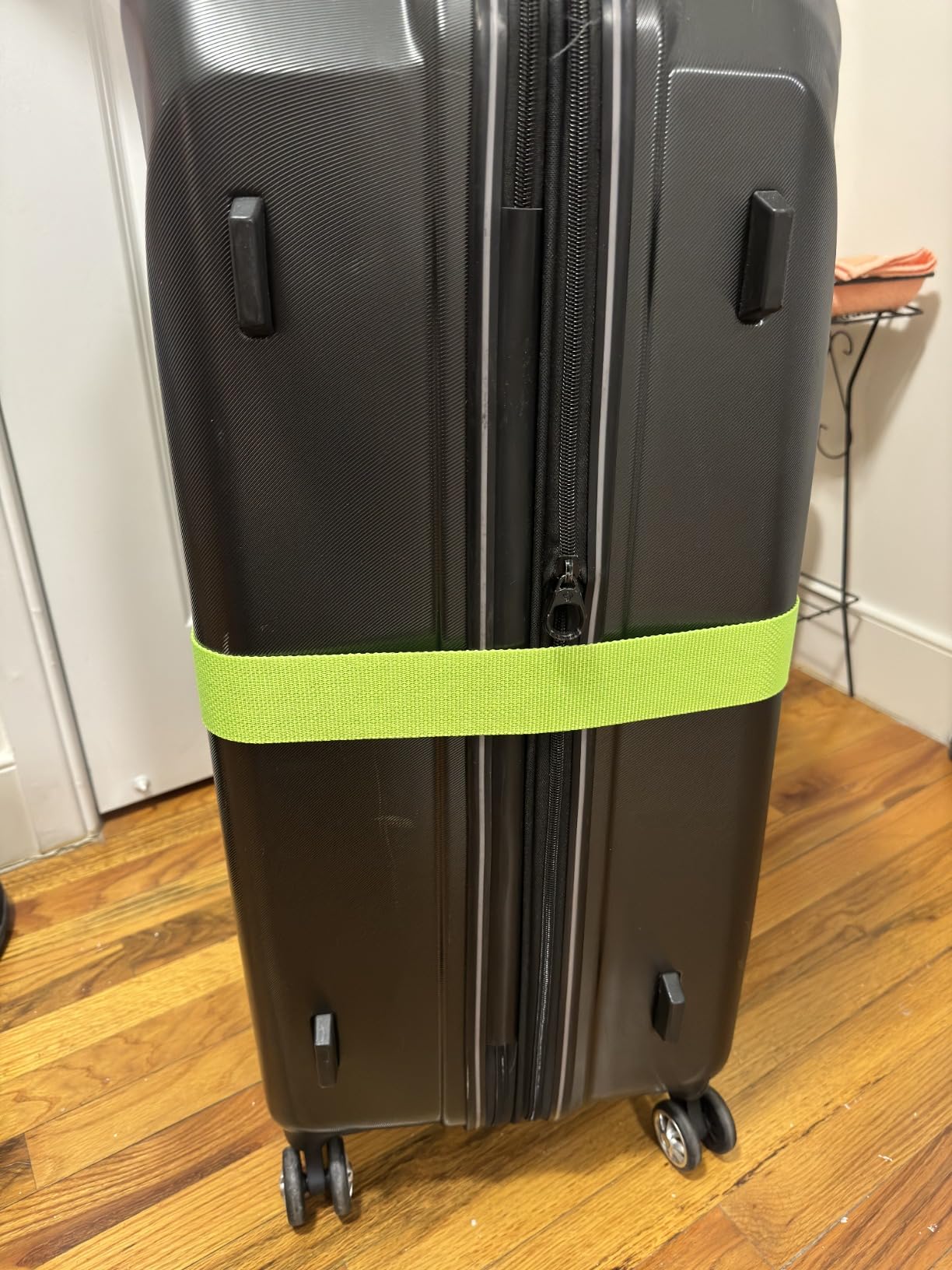
The buckle hardware is the real differentiator for anyone who flies weekly. Each strap is built for tension rather than appearance, and at 72 inches adjustable it fits small, medium and large cases, so you set the length once and stop thinking about it.
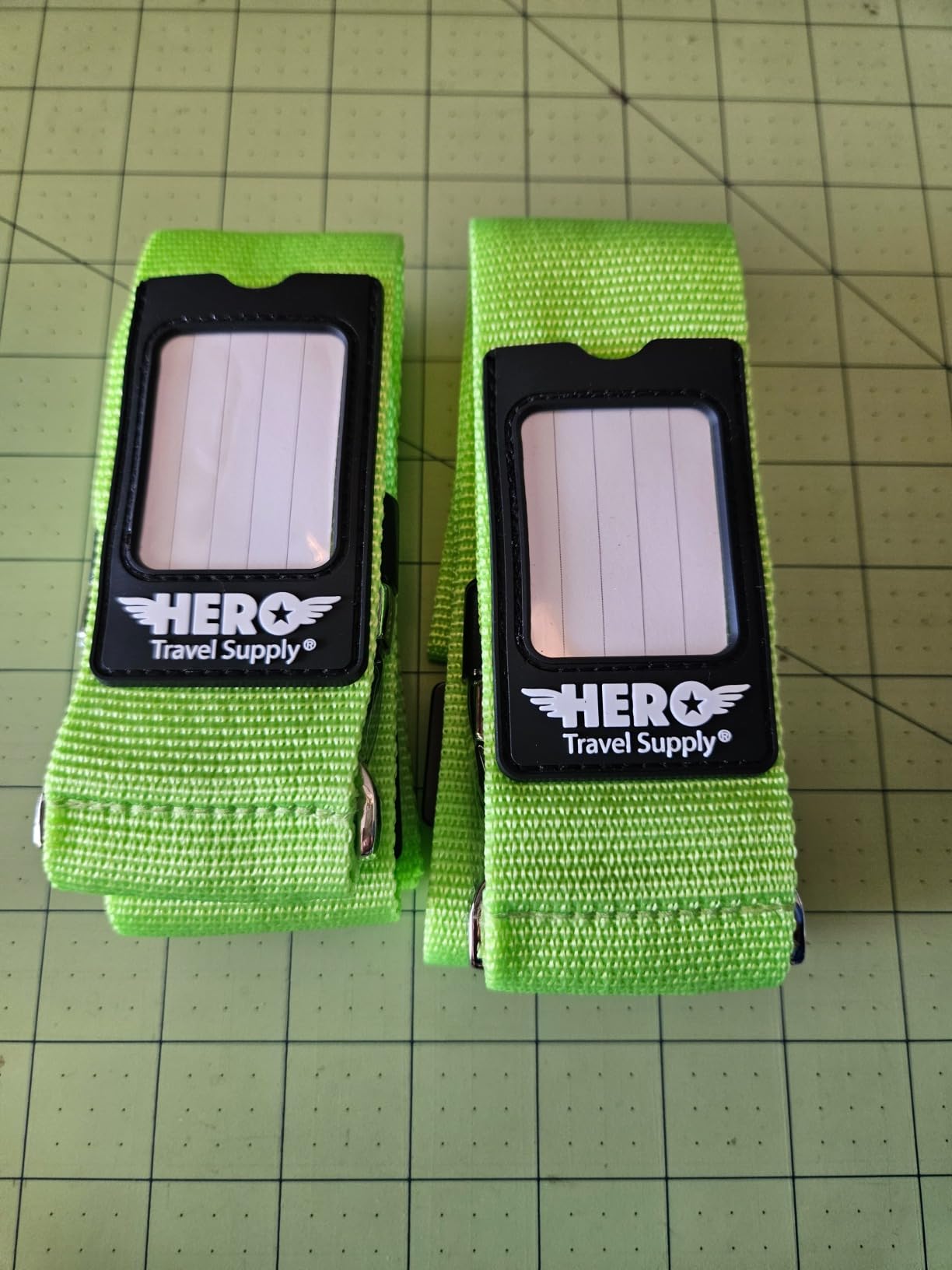
Two limitations are worth stating plainly. The review base is the smallest of the group, so there is less long-term evidence than the ratings alone imply. And the colour selection is limited to a single pink variant, which is a genuine limitation for anyone who wants a strap they can find at a distance from a sea of black cases.
The strap is also TSA accessible rather than lockable, so agents can unfasten it for inspection, but there is no combination code. That is a reasonable design for a strap whose job is reinforcement, not access control.
Who should buy this one
Frequent flyers who keep a bag in rotation for years, and anyone who has already broken a plastic buckle and decided to stop buying the same thing. The Duraflex hardware addresses the exact failure point we flagged at the start, and for a bag that gets lifted and dragged every fortnight that is a rational place to spend more.
It also works as a permanent wrap if you travel on the same bag repeatedly, since you would set the length once and rarely adjust it again.
Where it falls short
The single colour option is the biggest practical limitation. If you rely on the strap for identification, pink is at least distinctive, but it is a choice rather than a range.
For a single trip, the specification difference over a well-made nylon strap is small. You are paying for hardware longevity, and that is worth having or worth skipping depending on how often you fly.
10. Samsonite Luggage Strap, No Lock, the Familiar Mainline Option
Samsonite Luggage Strap, Black, No Lock
Rugged ABS buckle
Adjusts up to 72 inches
52 inch strap length
No lock, weighs 0.1 kg
Pros
- Rugged ABS buckle built for baggage handling
- 0.1 kg so it adds no packing bulk
- Adjusts to fit bags up to 72 inches
- Familiar mainline travel brand
- Lock variants available separately
Cons
- 52 inch is the shortest strap here
- No lock on this variant
- Some owners find the webbing stiffer than older runs
The reason this is on the list is predictability. You know what a Samsonite buckle does, it weighs 0.1 kg so it disappears into a side pocket, and it is the kind of object that survives being left on a car boot floor for a decade. Owners use it exactly as intended: holding a second bag on top of a roller, or keeping an overstuffed case closed after a trip of souvenirs.
It is 2 inches wide, which is wider than the narrow connector straps people reach for by default, and the adjuster extends the fit to bags up to 72 inches even though the strap itself is 52 inches long.
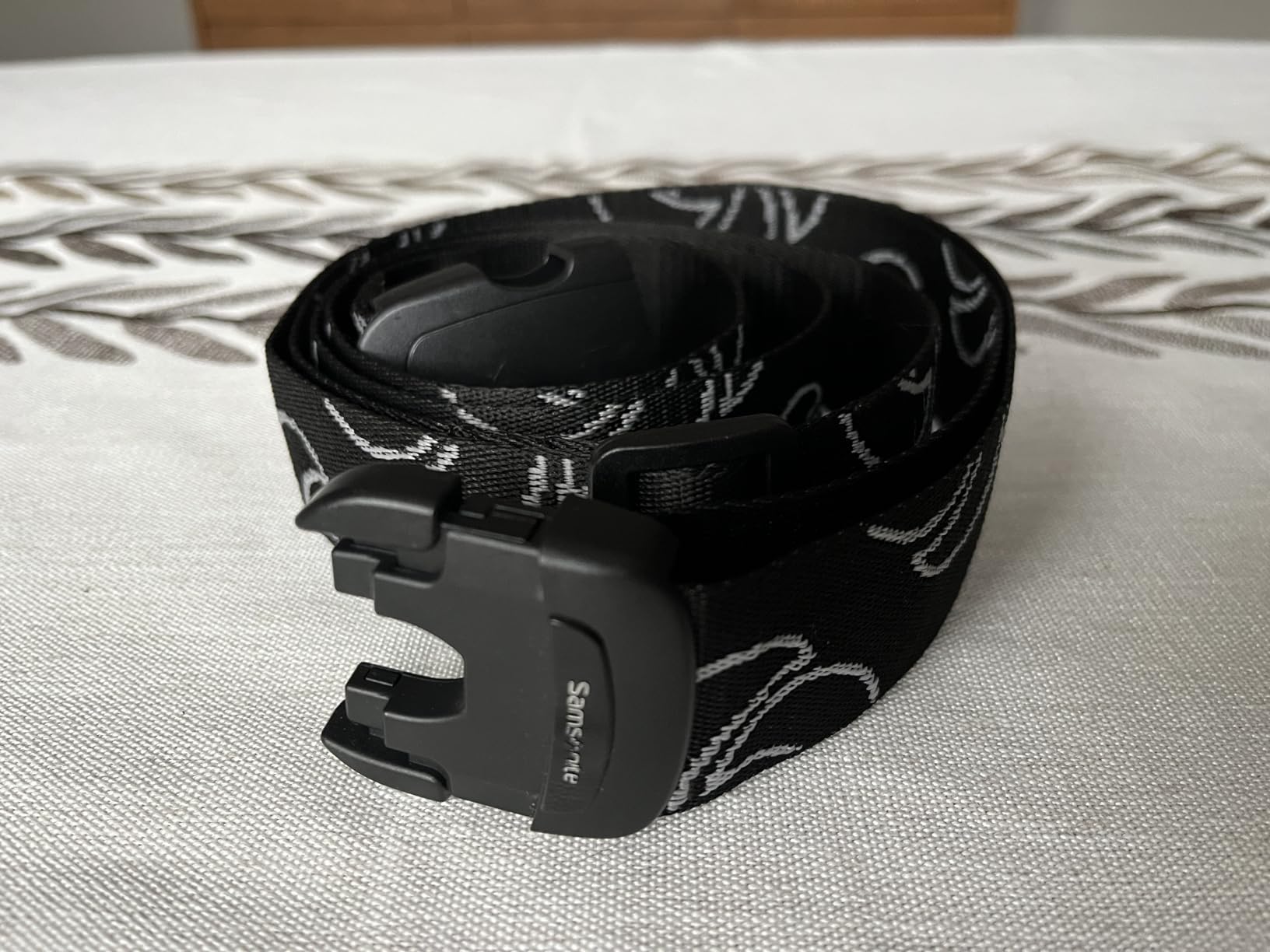
The length is the real constraint. At 52 inches it is the shortest strap here, and owners of large checked cases say plainly that it will not wrap them. For a carry-on or a medium checked bag it is fine; for a 30 inch case full of winter clothing, it is the wrong tool.
Some owners also report the webbing feeling stiffer and less tough than older production runs, and a few call it narrow for the price. There is no lock on this variant, so it deters accidental opening only, though combination-lock versions of the same strap exist.
Where it still makes sense
Day-to-day carry rather than checked-bag reinforcement. A carry-on that is overstuffed after a holiday, a second bag stacked on a roller, a duffel that keeps splitting open. For a light bag well inside the strap rating, the ABS buckle is enough.
It is also the easiest strap to replace, since the brand makes several colours and patterns and a lock version, so you are not committed to one specification if you later need one.
Where it falls short
On heavy checked bags it is simply out of range. The modest load rating and the 52 inch length together mean this is a light-load strap, and buyers expecting the same brand to handle a 70 pound case will be disappointed.
It has no lock and no ID function beyond the colour itself. If you want a strap that stops a bag opening on the carousel, or one screening staff can open, you need a different product.
How to Fit a Strap on a Heavy Suitcase Without Damaging It
Fitting a strap to an empty case is the most common mistake, and it is why so many people end up with a loose strap on a full bag. A packed 28 inch case is several inches wider than the same case empty, and a strap set snug on the floor will be slack in the hold.
Pack the bag first, then close it fully. Zip the case shut and confirm the zipper pulls are fully seated. The strap compresses a closed bag; it does not hold a bag that is still open.
Put the buckle on a broad, flat face. Not over a zipper, not across a corner, not on a wheel housing. The buckle is the thickest part of the strap and it should sit on the flattest surface the case offers, ideally the back panel.
Route clear of the telescoping handle and wheels. A strap across the handle housing stops the handle retracting and is the single most common cause of a damaged case. Keep the webbing off the wheel wells and the spinner castors entirely.
Snug, not crushing. Pull until the case stops shifting under your own weight, then stop. You should not be able to slide a finger under the webbing, and you should not see the shell bow outward. Over-tensioning a loaded case distorts the zipper path and, on a softside, crushes the contents.
Run a lift test. Lift the bag by its fixed handle so the full weight hangs from the strap. If the adjuster slides or the buckle shifts, tighten it and test again. Repeat this every trip, not just the first.
If you carry several bags at once, the same principle builds a luggage train. Thread one long belt through the handles of the front bag and the second, buckle it, then add a third, and pull the wheeled case in front. A traveller on r/travel described a variation using a riveted D-ring and a carabiner to hang a water bottle and clip duty-free bags to the shell, which frees interior space.
Routing a strap differently on hardshell and softside cases is worth knowing. A polycarbonate D-ring retrofit is possible, but it is not worth doing on an aluminium frame, and a rivet near a stress line can crack the panel under a heavy pull. If you want attachment points, choose a case that already has them.
What Actually Makes a Luggage Strap Strong
Strong luggage straps are wide nylon webbing with metal or glass-filled hardware, stitched at the stress points with bar-tack reinforcement, and rated well above the weight of the bag they wrap. The width spreads load across the shell so the case does not concentrate force at a single line, and the hardware is what actually decides whether the strap holds under a 60 pound bag.
The failure point is the buckle, not the webbing. On any strap here, the webbing is rated well above the weight of a heavy checked bag. The webbing is never the limiting factor. The parts that give first are the side-release buckle, the tri-glide adjuster and a cut webbing edge that has started to fray, and every product review on this list points at one of those three.
This is why the advertised 500 pound figure means less than it appears. It describes the webbing under controlled tension, and it proves nothing about the plastic clip attached to it. A lower-rated strap with a stainless steel buckle link is a more honest choice for a heavy case than a higher-rated strap with a plastic one, and the 700 pound rated strap near the end of this roundup is only meaningfully better because of the Duraflex hardware, not the number.
Bar-tack stitching is the other detail that separates straps. Where the webbing loops back through an adjuster, the stitching is what carries the load, and reinforced stitching at those points is the difference between a strap that survives years and one that parts at the fold. The ZHOMA pair and the RUMILLA belt both reference reinforced construction; the budget nylon sets do not.
The 30-second pre-flight strap inspection
Run this before every flight, because straps fail predictably and slowly. First, pull the webbing through the adjuster under tension and watch for creep, which tells you the slider has loosened. Second, flex the buckle open and closed a few times and listen for a rattle or a wobble, which means the pins are wearing.
Third, run a thumbnail along both cut edges of the webbing. If you catch a fibre, the strap is one heavy lift from parting and should come off the bag. Fourth, check that the strap is not routed over the telescoping handle or across the wheels, and that the buckle is not sitting on a zipper pull. It takes less than a minute and it is the cheapest maintenance on any bag.
TSA approved versus TSA recognised
Listing language is used loosely across strap pages, so it is worth being precise. TSA does not approve luggage straps, because a strap is not a lock that secures a bag on its own. TSA recognises certain locks, listed in its published catalogue, whose keys screening agents hold. A strap built around a recognised lock can be opened at screening without being cut; a strap with a plain buckle simply gets unfastened, which takes seconds.
Lock and lock housing are two different things. A TSA approved quick-release buckle on a strap with no combination mechanism, as on the two-pack at position six, is marketing language rather than a security feature. What you want is a three-dial combination lock carrying the TSA 007 designation, which is what positions four, five and seven have.
When not to use a strap
Skip the strap on expandable softside bags that are already at their maximum expansion, because the extra compression can unzip the gusset. Do not route any strap through the telescoping rail housing, and do not use a strap as a lifting handle, however strong the load rating looks. A strap is rated to hold a bag closed, not to bear a person.
And do not tie a ribbon or a fabric marker to your luggage. Loose threads and ribbons are a screening problem, and a strap that clips neatly and is visible is both safer and more effective at doing the job.
One more note on weight. A typical checked bag limit sits around 32 kg, and if a strap is the third thing you add to an already full bag, the answer is fewer things, not stronger webbing. Our comparison of strap construction options covers the hardware side of that decision.
Do Airlines and TSA Allow Straps on Checked Bags?
Yes. TSA allows luggage straps on checked bags, and airlines permit them too. There is no rule against wrapping a suitcase, and a TSA-recognised three-dial lock can be opened by screening agents with a master key rather than cut. The restriction is not the strap itself, it is how the strap is fitted.
Airlines would rather you did not route a strap over the telescoping handle, across the wheels, or so tight that the shell bows. Those are the fittings that cause cracked cases and delays, and travel coverage has specifically flagged strapped checked bags as an accessory some carriers would rather passengers left off. A strap that is snug, clear of the moving hardware, and fitted on a broad flat face is not going to be an issue at the gate.
Can you use luggage straps on checked bags? Yes, and on carry-ons too, where an external compression strap is the standard way to bring a bulging soft bag back inside a size limit. Do airlines like luggage straps? They like them fitted properly and are relaxed about a lock they can open. If your bag has a broken lock plate, a TSA-recognised strap is a reasonable way to keep screening from forcing it.
One related question that comes up often: do not confuse straps with the list of items TSA restricts in checked luggage, which is a separate and much longer list. A strap is never on it.
Frequently Asked Questions
Does TSA allow straps on luggage?
Yes. TSA allows luggage straps on checked and carry-on bags, and airlines permit them too. A strap built around a TSA-recognised three-dial lock can be opened by screening agents with a master key rather than cut. The issue is the fitting, not the strap: keep it clear of the telescoping handle, wheels and zipper pulls, and snug rather than crushing.
Are luggage straps allowed by airlines?
Yes, airlines allow straps on checked luggage. What they do not want is a strap routed over the telescoping handle, across the wheels, or tightened until the shell bows, since those fittings are what cause damage and delays. Travel coverage has warned that some strapped checked bags get pulled aside, so fit the buckle on a broad flat face and check it before every flight.
What are strong luggage straps?
Strong straps are wide nylon webbing, generally 2 inches or more, with metal or glass-filled hardware rather than plastic buckles. Look for reinforced stitching at the webbing folds, a stated load rating well above your bag weight, and an adjustment range that fits your loaded case rather than the empty one. The buckle and adjuster, not the webbing, are the parts that fail first.
What is the strongest luggage strap for a heavy suitcase?
On this list the Hero strap carries the highest stated tension rating at 700+ pounds, and it is the one whose buckle hardware is specified as Duraflex rather than plastic, which is the difference that matters in practice. For most travellers a wide 2 inch nylon strap rated between 300 and 500 pounds is more than enough for a 50 to 70 pound checked bag.
Is a lockable luggage strap worth buying?
It is worth it if your bag has no TSA-compatible lock of its own, since a recognised lock can be opened at screening without damage. It is not worth it as theft prevention, because a determined person can undo any buckle. Forum consensus treats lockable straps as identification and backup closure if a zipper fails, which is the expectation we recommend buying with.
How do you fit a strap on a heavy suitcase?
Pack and fully close the bag first, because a packed case is several inches wider than an empty one. Place the buckle on a broad flat face away from zippers and corners, route the webbing clear of the telescoping handle and wheels, pull until the case stops shifting but not until the shell bows, then lift the bag by its fixed handle to confirm nothing slides.
What is the purpose of a luggage strap?
A luggage strap provides a secondary closure so a loaded case keeps its zipper shut under handling pressure. It compresses an overstuffed softside to fit a size limit, stops a second bag sliding off a rolling handle, and adds high-visibility colour so a plain case is easier to identify at the carousel. It is not a theft-prevention device.
The Best Luggage Straps for Heavy Suitcases in 2026, Verdict by Verdict
For the best overall pick, the GORILLA GRIP 2-pack takes it: 2 inch webbing, 38 to 76 inches of adjustment, three wrapping configurations and the largest review base in the group. For the best value, the BILIONE 4-pack gives you two straps per bag in both directions plus genuine multi-bag flexibility. For the best lock, the Travel Inspira TSA 007 model is the one screening agents can open without cutting.
Everything else on this list solves a narrower version of the same problem: a cross-wrap for bulging softsides, a two-step buckle for bags that travel loose in a hold, a long connector for moving two cases at once, and a Duraflex-buckled strap for people who fly weekly. Pick for the failure you are worried about, fit it on a packed bag, and run the lift test before you close the case.