
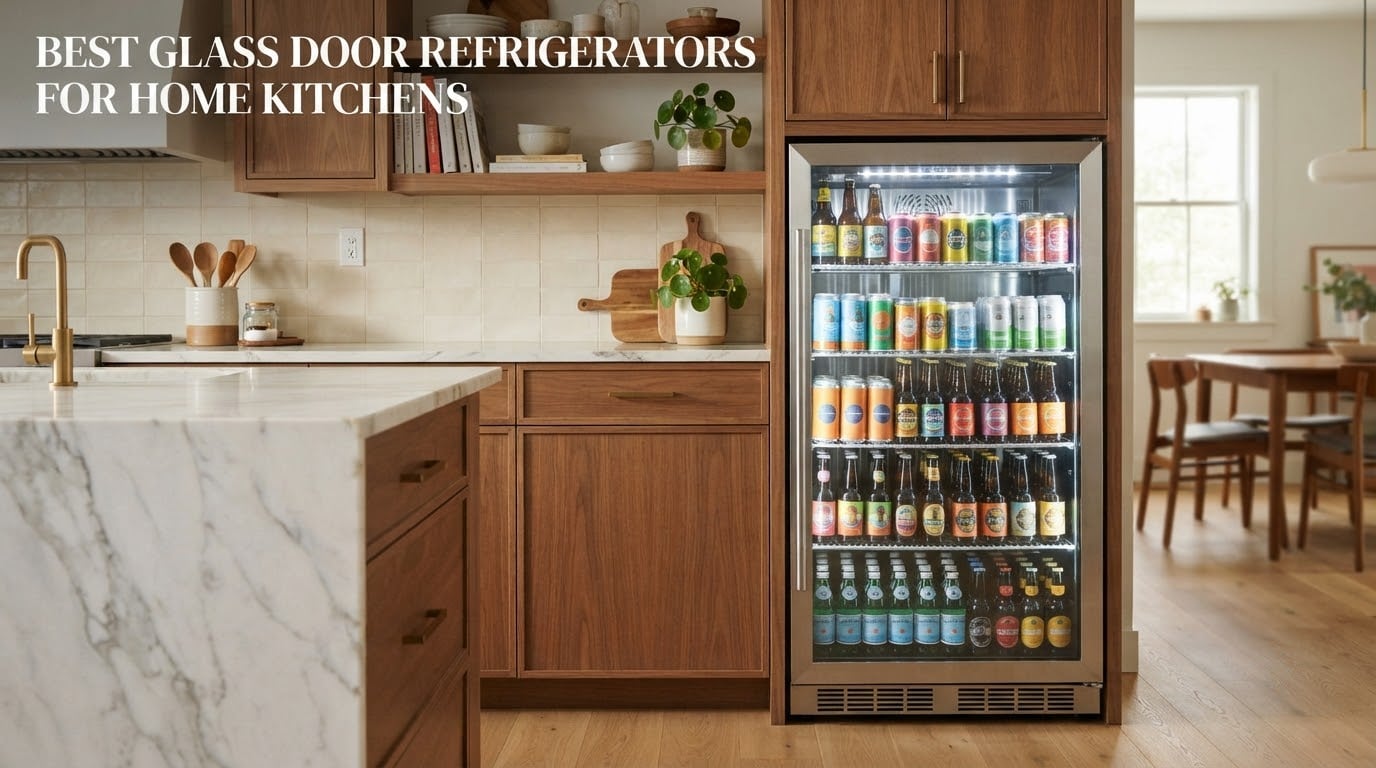
A glass door refrigerator is a cold-storage appliance whose door, or doors, are made from tempered or low-iron glass instead of an insulated solid panel, so you can see the contents without opening it. The cabinet still runs a normal vapor-compression cycle. What changes is the barrier: a glass pane transfers more heat than an insulated door, so the compressor works longer to hold the same temperature.
One thing has to be cleared up first, because the results for this category are a mess. A glass door refrigerator arrives in three very different forms. There is the full-size glass-door French door that replaces your main kitchen refrigerator, the 24-inch built-in or panel-ready column that fills a cabinet bay during a remodel, and the home-bar beverage cooler that holds drinks at drink temperature rather than food temperature.
A fourth category gets pushed hard in these results, the commercial reach-in merchandiser, and it is the reason people buy the wrong class of appliance and then wonder why it will not cool in a warm kitchen. This roundup covers household units only, and every one of the ten below is built for domestic voltage and domestic duty. We cross-referenced published specifications against thousands of owner reviews, weighting real-world fit at roughly 70 percent and feature differentiation at 30 percent. We did not run lab tests, and where a read comes from specifications and owner history rather than our own instruments, we say so.
One note before the picks. None of these ten replaces a solid-door family refrigerator, and we will not pretend otherwise. Every one is a second appliance: a bar station, a pantry column, a wine and beverage cabinet, or a display piece for an open-plan kitchen. If you want to see your drinks and still run your main fridge on solid doors, this list is exactly what you need. If you want a full replacement unit, start with our French door refrigerator guide first.
Table of Contents
Top 3 Picks for the Best Glass Door Refrigerator in 2026

hOmeLabs 120-Can Cooler
- 120 cans in 3.2 cu ft
- Digital control to 34F
- Whisper quiet compressor

Antarctic Star 68-Can Fridge
- 1.7 cu ft counter footprint
- 40F to 61F thermostat
- Reversible glass door

Best Glass Door Refrigerators (September 2026)
Every model below with the specs that separate them. This is the table we used to narrow the field before writing a word of individual reviews.
| Product | Specifications | Action |
|---|---|---|
| hOmeLabs 120-Can Cooler |
|
Check Latest Price |
| Antarctic Star 68-Can Fridge |
|
Check Latest Price |
| EUHOMY 130-Can Cooler |
|
Check Latest Price |
 Electactic 4.5 Cu Ft Cooler Electactic 4.5 Cu Ft Cooler |
|
Check Latest Price |
 Velieta 24 Inch Dual Zone Velieta 24 Inch Dual Zone |
|
Check Latest Price |
 Feelfunn 126-Can Fridge Feelfunn 126-Can Fridge |
|
Check Latest Price |
 FoMup 200-Can Fridge FoMup 200-Can Fridge |
|
Check Latest Price |
 BODEGA 15 Inch Wine Cooler BODEGA 15 Inch Wine Cooler |
|
Check Latest Price |
 Honeywell 116-Can Cooler Honeywell 116-Can Cooler |
|
Check Latest Price |
 Ca’Lefort 15 Inch Cooler Ca’Lefort 15 Inch Cooler |
|
Check Latest Price |
1. hOmeLabs 120-Can Cooler – The Deepest Owner Base in the Category
hOmeLabs Beverage Refrigerator and Cooler, 120 Cans Capacity, 3.2 Cu Ft
3.2 cu ft, 120 cans
34F digital set point
288 kWh per year
68.3 pounds
Pros
- Holds 120 cans in a 3.2 cu ft cabinet on three removable wire shelves
- Cools down to 34F with an easy-touch digital control and display
- Whisper-quiet compressor that suits bedrooms and offices
- Compact 17.3 by 18.9 by 33.3 inch footprint fits narrower rooms
- Reinforced glass door with white LED lighting
Cons
- Freezerless
- so no dedicated frozen storage
- Wire shelves rather than solid
- so small bottles can tip through
- Single door limits access to the back of the interior
This is the one with the longest public track record in the group: roughly 6,900 reviews averaging 4.5 stars, and a category rank at the top of display refrigerators. That volume of owner feedback matters more to me than any single specification, because a glass door fridge lives or dies on whether the seal holds and the compressor keeps cycling quietly, and thousands of people have already answered that.
The cabinet is 3.2 cubic feet and holds up to 120 standard cans across three removable chrome wire shelves. The digital control pulls the set point down to 34 degrees, cold enough for most craft beer and sparkling water, and the reinforced glass door carries a stainless frame with a white LED light inside.
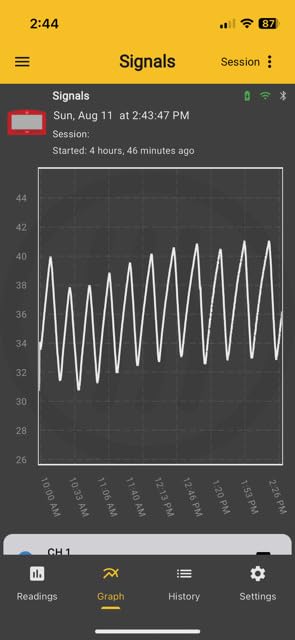
At 288 kilowatt hours a year it is not the most efficient cabinet here, and that is the cost of the glass. Owners in bedrooms, offices, and dorms back up the whisper-quiet compressor claim, automatic defrost handles the frost a glass door tends to pull in, and the unit is UL specification met for household use.
The real compromise is the shelf material. Wire is cheap, durable, and easy to clean, but it lets small bottles and slender craft cans tip through the gaps if you load them carelessly. If your drinks are mostly standard cans in 12-packs, you will not notice.
What to check before you order
Measure twice, because the listed 17.3 by 18.9 by 33.3 inch dimensions do not include airflow space or door swing. If it goes under a counter, check the toe kick clearance, since a unit that breathes through the base needs that opening clear.
Think about weight too. At 68.3 pounds it is not a two-person lift, and moving it into a finished room means planning the doorway route first.
Who should skip it
Skip it if frozen food is part of your storage plan, because the configuration is freezerless and you will end up buying a separate chest freezer. Skip it if you are storing opened wine, since there is no humidity control and 34 degrees is colder than most reds want.
Skip it if condensation is your top worry in a genuinely humid climate. This is a glass door like any other, so it sweats, and nothing on this page solves that outright.
2. Antarctic Star 68-Can Mini Fridge – The Smallest Footprint That Still Looks the Part
Antarctic Star Beverage Refrigerator Cooler 68 Can, Mini Fridge with Glass Door for Beer Drinks Wine,Freestanding Small Fridge with Electronic Temperature Control for Home and Bar,1.7 cu.ft
1.7 cu ft, 68 cans
40F to 61F thermostat
35.5 pounds
16.3 by 16.9 by 22.2 inches
Pros
- Compact 1.7 cu ft body fits on counters under cabinets and in media rooms
- Double-pane tempered glass door with an airtight seal
- Digital thermostat from 40F to 61F with a readable display
- Two adjustable glass shelves handle different bottle shapes
- Reversible door and key lock add placement flexibility
Cons
- Some owners report it will not cool below roughly 50F
- Compressor is louder than the quiet claim suggests
- Interior light is manual rather than door-activated
- A few units arrived missing rear leveling feet
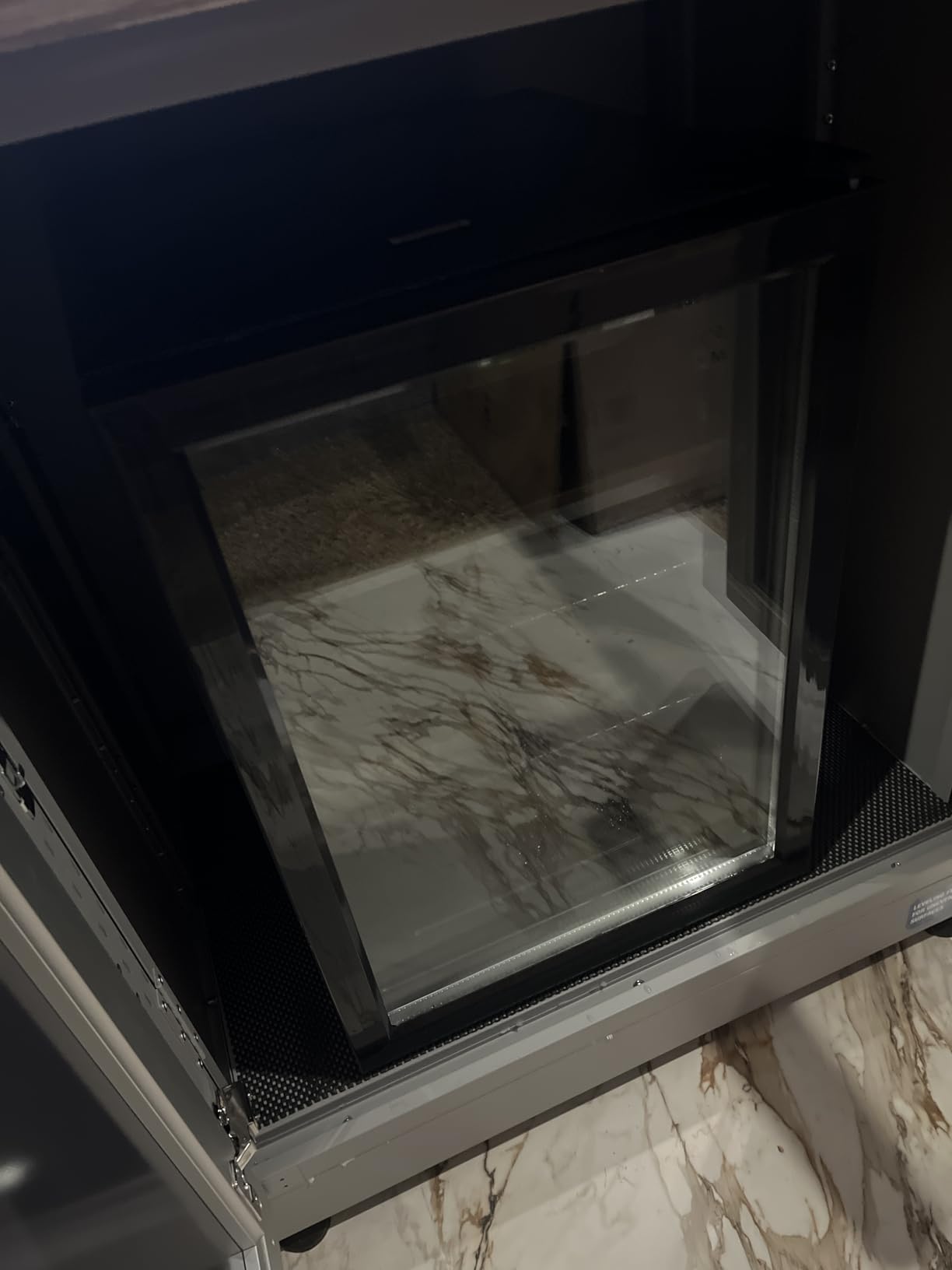
This is the unit for the constraint that kills most people before they reach temperature specs, which is space. At 16.34 inches deep, 16.93 wide, and 22.24 tall, it is genuinely a countertop appliance. It will sit under a cabinet, inside a media console, or on a bar cart, and it looks like furniture rather than a garage spare.
It holds up to 68 standard cans on two adjustable glass shelves, and glass shelves are a real upgrade over wire for bottles. The digital thermostat covers 40 to 61 degrees, and the double-pane tempered door carries an airtight seal. The door is reversible and there is a key lock, which matters if the unit lives in a shared space.
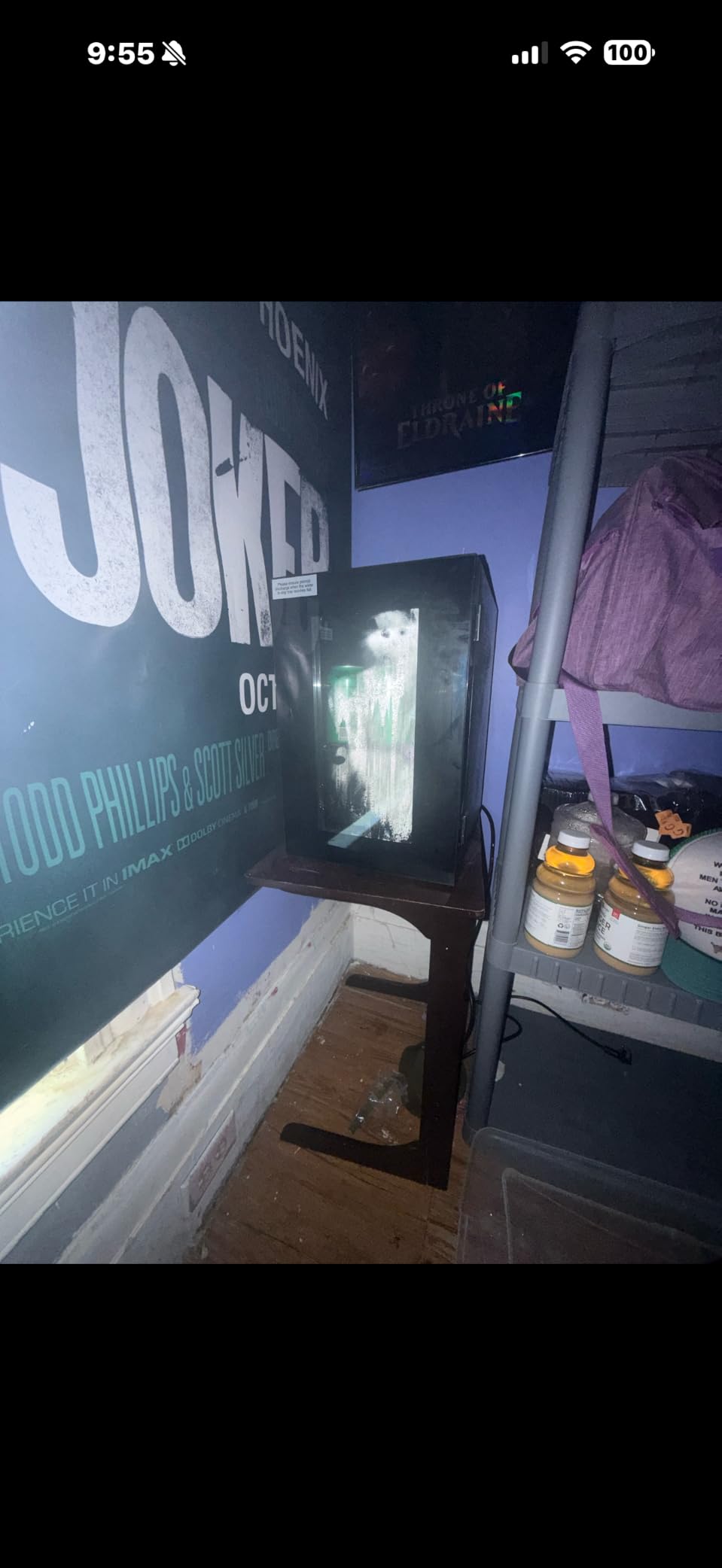
Two caveats sit right next to that feature list. A recurring minority of owners report a temperature floor around 50 degrees, fine for cold drinks and wrong for anything needing real chilling, and several describe the compressor as louder than the quiet wording implies in a small cabinet on an open counter.
There is also a category point. The manufacturer is explicit that this is a beverages-only cabinet and not intended for fresh food storage, which is the right way to think about all ten units on this page. The blue LED light is manual rather than door-activated.
What to check before you order
Check what you plan to put in it. At 1.7 cubic feet with two shelves, tall craft cans and full-size wine bottles fight for the same space, and the can count is a best case achieved with tight packing.
Check the room temperature. A small compressor cabinet in a hot kitchen fights to hold its set point, and that is where the 50 degree reports come from.
Who should skip it
Skip it if it goes in a bedroom or quiet home office, because compressor noise sounds out of proportion in a small cabinet and reviewers do mention it. Skip it if you plan to store anything perishable, since 40 degrees is a beverage number, not a food number.
Skip it if you are filling a large cabinet opening, because there are better 15-inch and 18-inch options here for the same general idea.
3. EUHOMY 130-Can Cooler – The Most Cans in a Narrow Body
EUHOMY 130 Can Mini Fridge, Beverage Refrigerator with Glass Door, Black
3.2 cu ft, 130 cans
37F to 61F touchscreen
0.69 kWh per day
36 dB operation
Pros
- Holds up to 130 cans with five removable shelves across five positions
- Precise 37F to 61F touchscreen control with an LED display
- Air circulation fan plus compressor keeps temperatures even top to bottom
- Double-layer UV-blocking glass door
- Low energy draw at about 0.69 kWh per day
Cons
- Beverage-only design with no freezer compartment
- Interior is dark despite the touchscreen panel
- Manufacturer advises leaving it upright 24 hours before first use
Where the first two units trade capacity for footprint, this one goes the other way. In a body just 17.8 inches wide and 30.9 inches tall, it holds up to 130 standard cans on five removable shelves sliding across five positions, and it holds the number one sales rank in its category among the models we reviewed.
The detail that actually matters is the air circulation fan paired with the compressor. A tall glass-door cabinet without a fan develops a gradient, cold at the bottom and warm at the top, and drinks on the top shelf come out lukewarm. Owners consistently report even cooling, and the 37 to 61 degree touchscreen gives finer control than a mechanical thermostat.
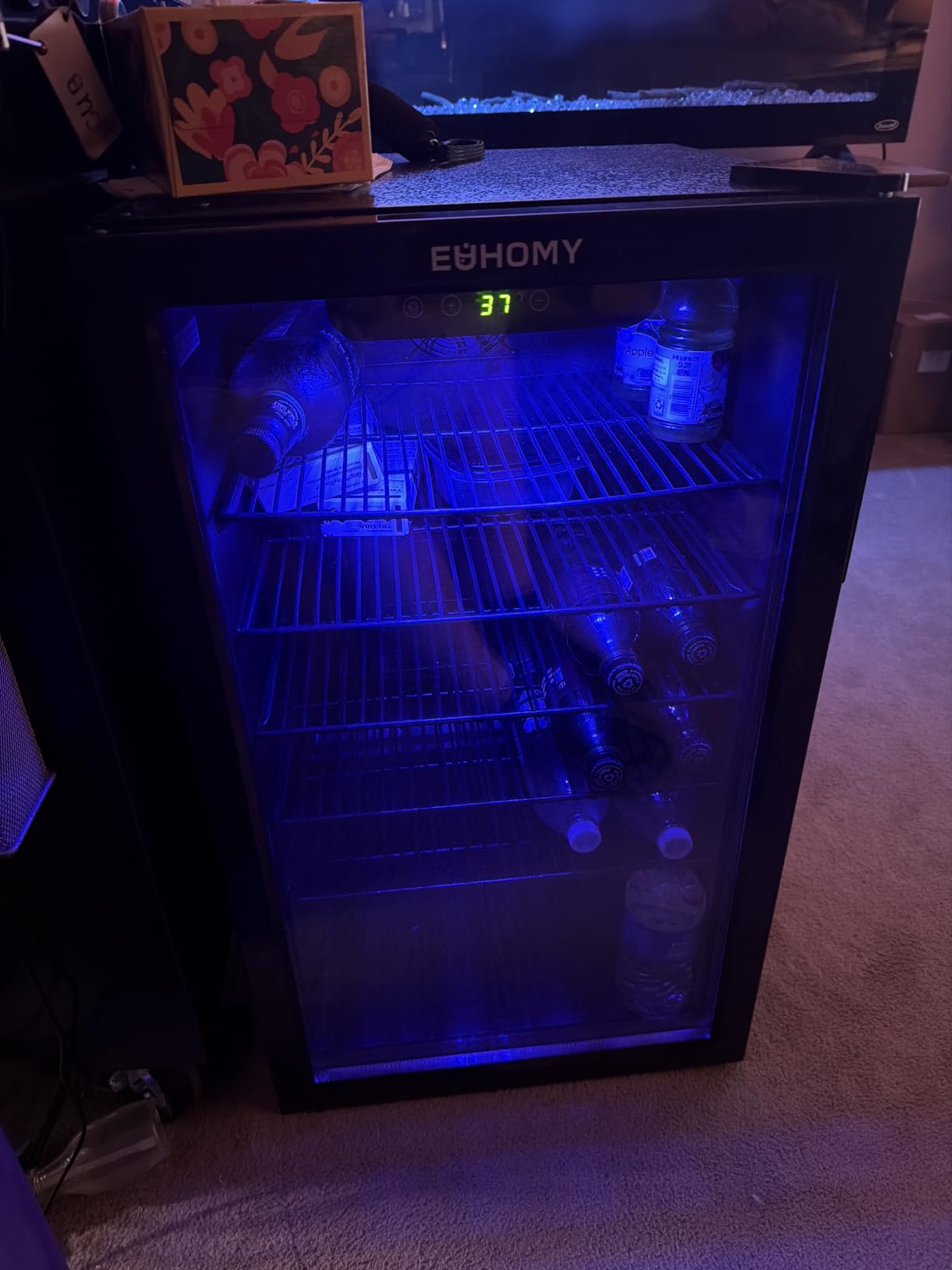
On running cost this is the standout. At about 0.69 kWh per day, roughly 252 kWh a year, it is the lowest draw we saw from a cabinet this size, and the double-layer UV-blocking glass door working alongside high-density foam insulation is why. Thirty-six decibels is quiet enough for an office or a bedroom wall.
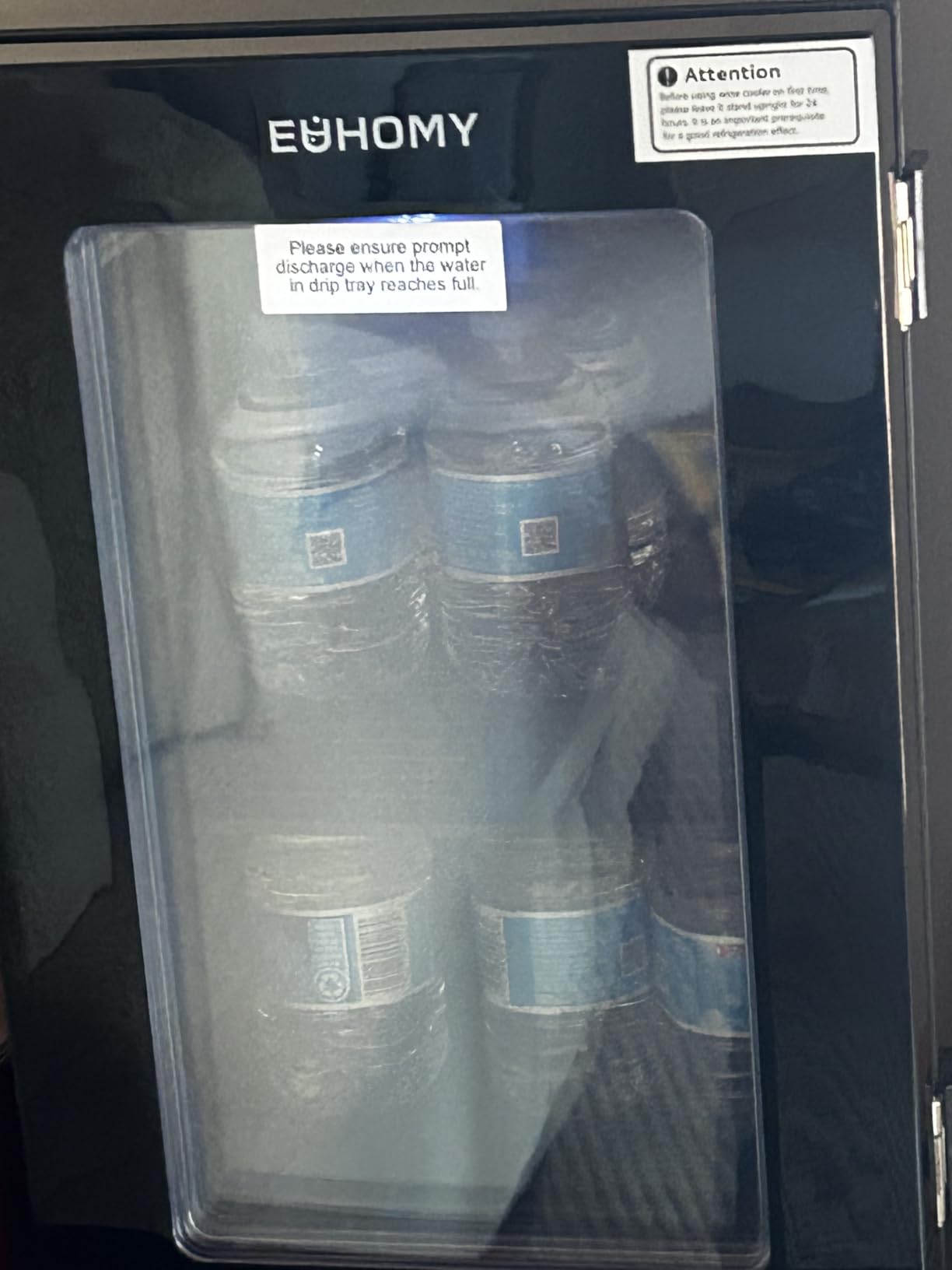
The trade-off is light. Owners still describe the interior as dark despite the touchscreen display, which is a design choice rather than a fault. The door is reversible, the handle is built in, the feet adjust, and the manufacturer asks that you leave the unit upright for 24 hours before first use.
What to check before you order
Check the 18.5 inch depth against your wall. A freestanding glass-door cabinet can sit closer than a solid-door fridge, but it still needs rear airflow or it will run warm.
Check the shelf count against your drink mix. Five shelves is a lot of adjustment, but shelves do not span the full cavity in most compact designs, so tall bottles in the back corners will not clear.
Who should skip it
Skip it if the appeal is a lit display cabinet, because the dark interior is the weakest part of this unit and there are better choices for a bar you actually look at. Skip it if you want a freezer compartment.
Skip it if you need to store food. Reviewers are clear this is not rated for fresh foods, and UV-blocking glass protects your drinks from light, not your groceries from spoilage.
4. Electactic 4.5 Cu Ft Cooler – Wine and Bulk Cans in the Same Cabinet
Electactic Wine Cooler 37 Bottle Freestanding Fridge with Stainless Steel Reversible Glass Door, 145 Can Beverage Refrigerator Quiet Compressor for Home Kitchen Bar, 4.5 Cu.ft Silver
4.5 cu ft, 37 bottles or 145 cans
32F to 61F range
190.5 kWh per year
59.7 pounds
Pros
- Dual-purpose capacity for 37 wine bottles or up to 145 cans
- Wide 32F to 61F range covers whites sparkling and reds
- Airtight glass door helps protect wine from vibration
- Adjustable chrome racks with LED interior lighting
- Works as built-in or freestanding
Cons
- Manual defrost requires periodic thawing
- Wine rack spacing is shallow so magnum bottles may not fit
- Cans on wire shelves can tip while loading
- Some units reported noisier than expected
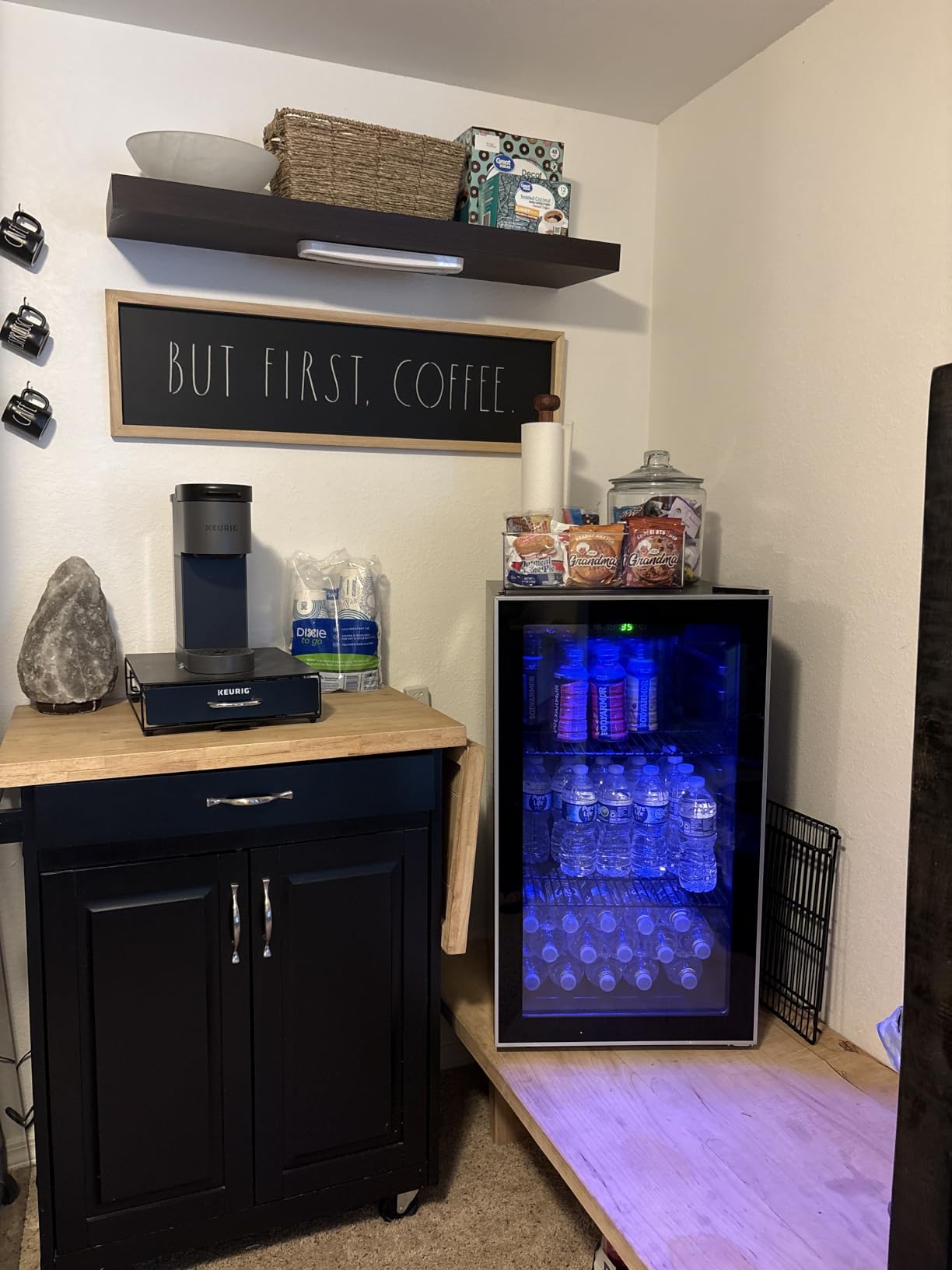
Most dual-purpose cabinets in this category are a marketing trick. This one is not. In 4.5 cubic feet it holds 37 standard wine bottles or up to 145 cans, and the 32 to 61 degree range is wide enough to cover sparkling, whites, and light reds in the same cabinet if you split the shelf configuration.
The door is a genuine selling point for wine rather than a beverage unit with a window. An airtight glass seal is what keeps cork from drying out and reduces vibration transfer that ages wine prematurely, which is a different problem from stopping cans from sweating. The compressor is described as high-performance with constant even cooling, and the reversible door puts the hinge wherever your room allows.
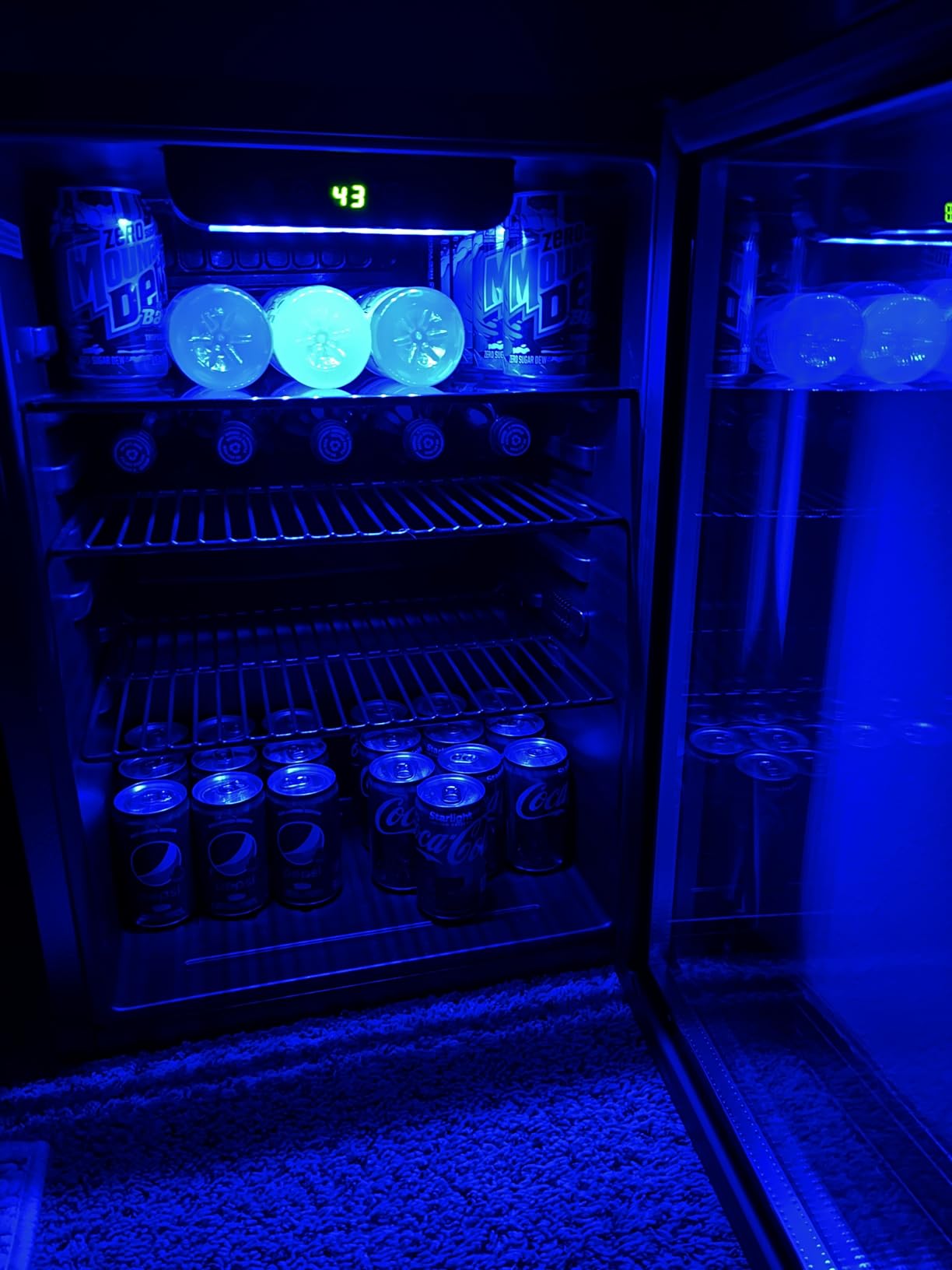
It is also the most efficient cabinet of the ten by a wide margin. At 190.5 kWh a year it draws roughly a third less than the average glass-door unit here, because more cubic feet means the compressor amortizes its runtime across a larger load. At 21.85 inches deep and 20.28 wide it is deeper than the two compact units above, so it needs real floor space.
Owners like the flexibility and report the same two costs. Defrost is manual, so you will be thawing periodically if you run it cold, and the wine rack spacing is shallow enough that larger or magnum bottles will not always clear.
What to check before you order
Check whether you are buying one appliance or two. If you have a real wine collection, a dedicated dual-zone wine cooler serves you better, and there is a 30-bottle option further down. If you host parties and want one cabinet for both cases of wine and beer, this is the right shape.
Check the shelf material for your mix. Three glass shelves and one wire shelf are included, and the wire one is where cans tip during loading, so put cans low and bottles high.
Who should skip it
Skip it if you will open and close it constantly, because manual defrost means ice buildup you handle by hand. Skip it if you want a display effect in a bright room, since the 31.5 inch height and deep cabinet sit better in a pantry or bar alcove.
Skip it if you have an alcove shorter than 32 inches. This is a full-size compact cabinet, and nearly 22 inches of depth means it projects out of a shallow recess.
5. Velieta 24 Inch Dual Zone Cooler – The Widest Built-In Cabinet Here
Velieta Wine and Beverage Refrigerator, 24 Inch Dual Zone Fridge with Glass Door, Built-In Cooler with Powerful and Quite Cool System/18 Bottles and 88 Cans Capacity Bverage Cooler
4.24 cu ft, 24 inch width
Two independent zones
162.2 kWh per year
103.6 pounds
Pros
- Two independently controlled zones for wine and canned drinks
- Beverage zone reaches 35F while the wine zone spans 41F to 64F
- Fan circulation keeps the interior odor-free
- Front-vent design supports built-in and freestanding installs
- Safety door lock and smart touch panel
Cons
- Large 24 inch footprint demands substantial space
- Several owners report compressor noise above the quiet description
- No interior light that switches on with the door
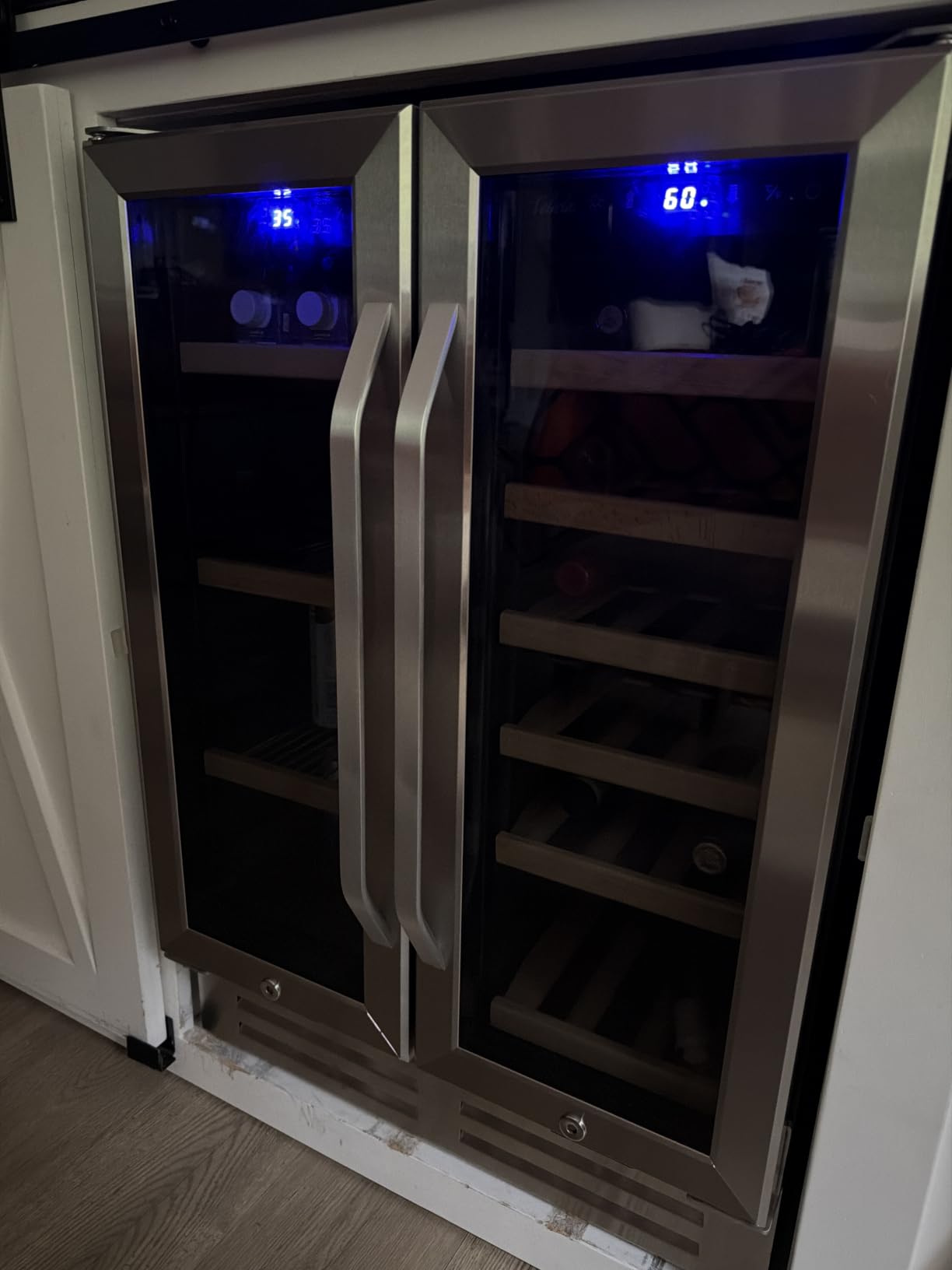
This is the only unit here with two genuinely independent temperature zones, and that earns it a place even though its 24 inch cabinet is far larger than everything else on the list. The upper beverage zone runs 35 to 50 degrees. The wine zone runs 41 to 64. You are not asking one thermostat to compromise between a beer and a bottle of burgundy.
In practice that means a cabinet holding 20 standard Bordeaux bottles alongside 88 standard cans, with nine removable wire shelf positions to rearrange between the two jobs. The fan circulation system is what keeps a tall cabinet like this from developing its own internal temperature zones inside each section, and owners credit it with keeping the interior free of odors.
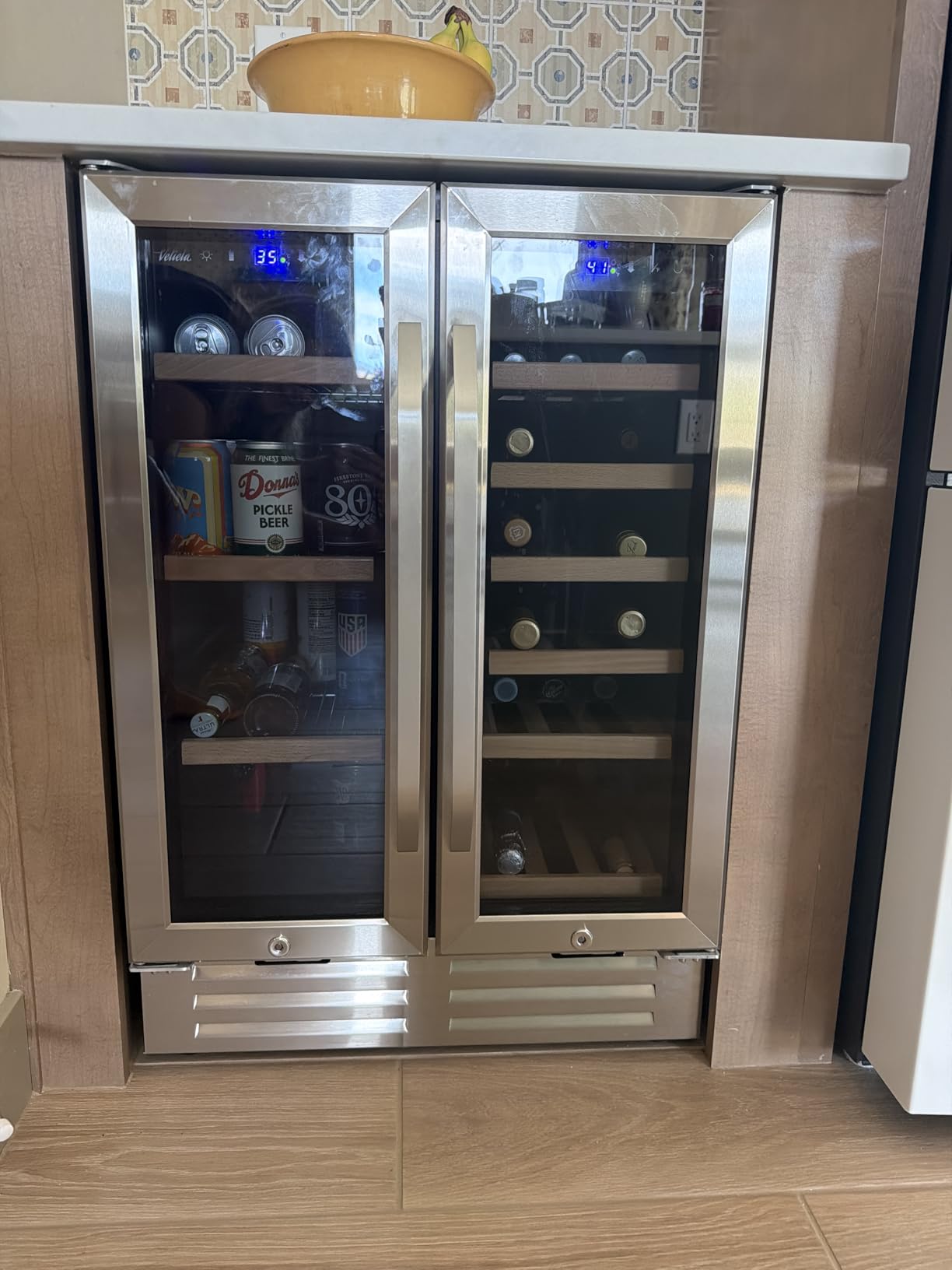
Two engineering details make it a real appliance rather than a novelty. The front vent design means the same cabinet works built into an under-counter opening or standing freestanding, which is unusual at this width. And at 162.2 kWh a year it is the lowest energy figure of the ten, because a 4.24 cubic foot cabinet holds a large load against a modest compressor.
It uses R-600A hydrocarbon refrigerant and carries ETL and DOE markings. The safety lock matters in a shared space, and the smart touch panel with blue LED ambient lighting is what gives it the look of a bar fixture rather than an appliance.
What to check before you order
Measure the space with real intent. The cabinet is 25 inches deep, 24.4 wide, and 76.2 tall at 103.6 pounds, which is a two-person job with an appliance dolly. A front-vent cabinet can be built in, but the opening still needs to be a true 24 inch bay on a level floor.
Check the door swing against your wall. At this height and depth the door opens wide, and a tight galley kitchen can put the handle straight into a wall. Measure the swing, not just the footprint.
Who should skip it
Skip it if you only store one thing. A single-zone 4.5 cubic foot cabinet holds more of a single category for the same floor space, and paying for two zones you do not use is wasted cabinet.
Skip it if ceiling height or doorway width is the limiting factor, because a 76 inch tall cabinet does not split into sections. Several owners also report compressor noise above the quiet description, which a cabinet this size amplifies in an open plan.
6. Feelfunn 126-Can Refrigerator – The Best Glass for Glare and Condensation
Feelfunn 126 Can Beverage Refrigerator, Glass Door Mini Fridge, 3.2 Cu.Ft
3.2 cu ft, 126 cans
Double layer LOW-E glass
34F to 64F control
36 dB operation
Pros
- Holds up to 126 cans with four adjustable removable shelves
- Consistent cooling that chills drinks without freezing them
- Double-layer LOW-E glass improves insulation and cuts glare
- Quiet 36 dB operation
- Owners report no condensation forming on the outside of the cabinet
Cons
- Wire shelf grates bow under the weight of full 12-packs
- Temperature display sits low and is hard to read from above
- Blue display light is bright at night with no dimming control
- Interior light does not switch on with the door
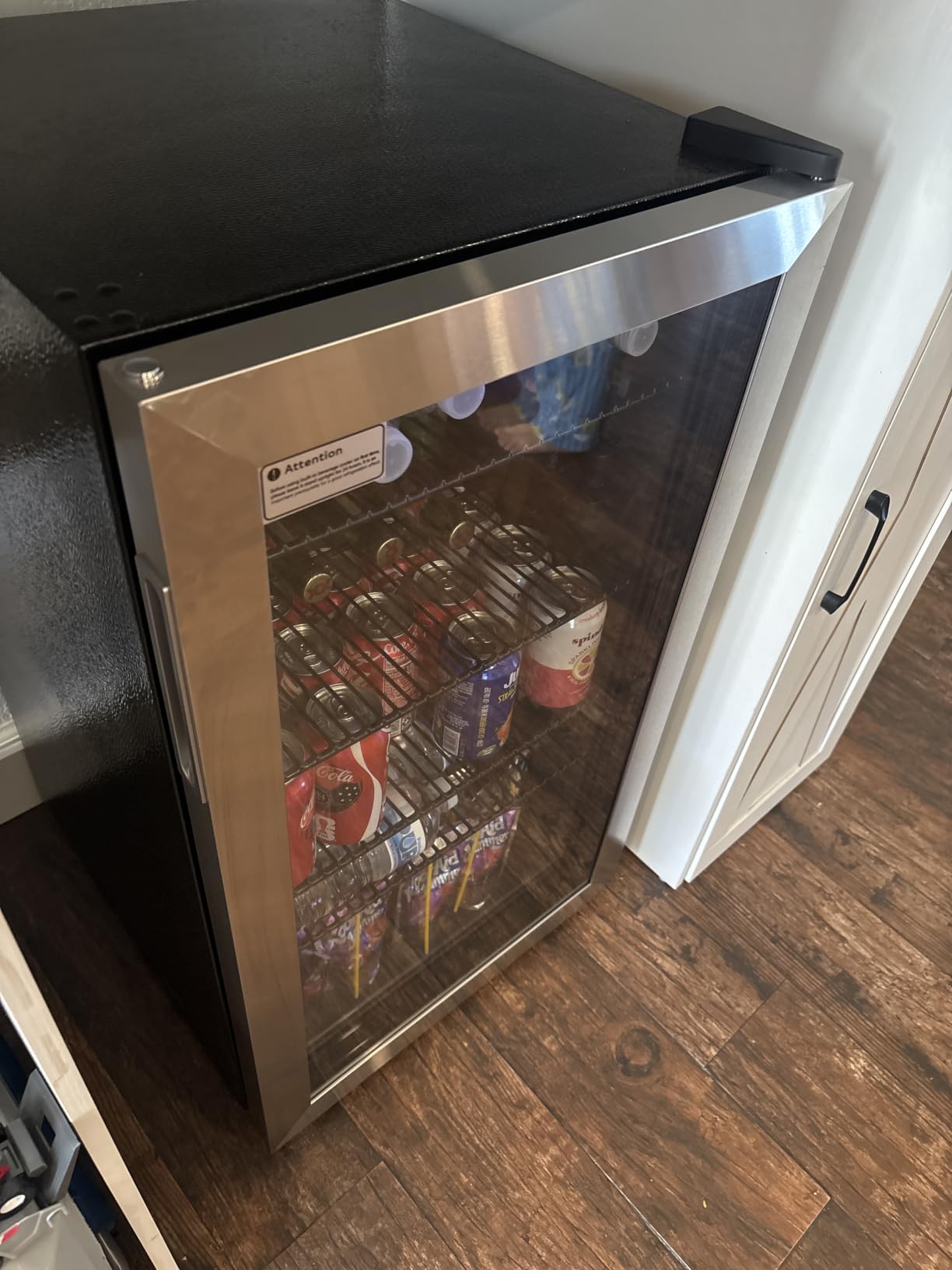
The most interesting thing here is not capacity, it is the glass. Double-layer LOW-E glazing was developed to control solar heat gain, and on a refrigerated cabinet it does two jobs: it cuts the heat load through the pane, which reduces compressor workload, and it tames the glare that makes cheaper glass unreadable in a lit room.
That coating shows up in owner feedback in a way I did not expect. The most cited praise is not the 126-can capacity, it is that drinks stay chilled without freezing and that the unit is quiet at 36 decibels, which is not something most glass-door coolers can claim.
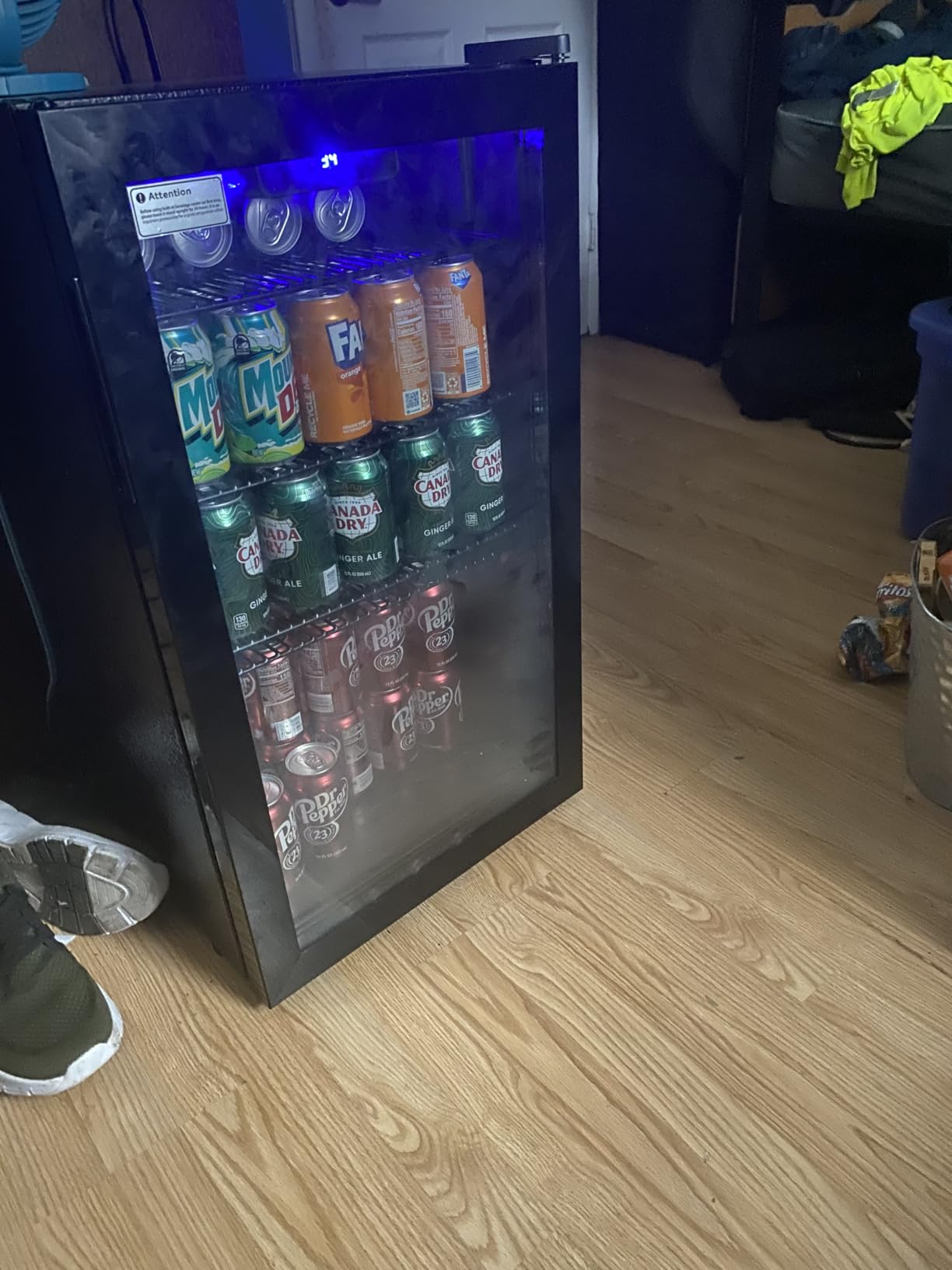
The digital control covers 34 to 64 degrees with 3D air circulation and a rotary scroll compressor, and the reversible door with adjustable feet means it works under a counter or standing alone. Owners also mention no condensation forming on the outside of the cabinet, the most common complaint elsewhere on this page, and that is a direct benefit of better glazing plus a tight seal.
The weak points are unglamorous. The wire shelf grates bow under the weight of full 12-packs, the temperature display sits low so you look down to read it, and the blue display light is bright at night with no dimming control, which matters in a bedroom.
What to check before you order
Check the shelf weight against your habit. If you load every shelf to capacity and leave it that way, the bowing grates show up within a year, and glass shelves hold weight better but reduce the can count.
Check the location for direct light. LOW-E glass helps a great deal, but no coated glass eliminates glare entirely, and a cabinet facing a window still catches reflections.
Who should skip it
Skip it if you want the door to control the interior light, because the light is manual. Skip it if you are on a strict energy budget and glass quality is not your deciding factor, because at 288 kWh a year this is one of the higher-draw cabinets here despite the coating.
Skip it if you need a wine rack or dual-zone layout. This is a beverage-only cabinet with wire shelves and no temperature partitioning to work with.
7. FoMup 200-Can Fridge – The Largest Capacity in the Roundup
24″ 200-Can Beverage Fridge, Under Counter/Freestanding with Glass Door
4.9 cu ft, 200 cans
37F to 65F control
Rapid cooling in 40 minutes
Under 38 dB
Pros
- Largest capacity here at up to 200 cans with three removable shelves
- Rapid cooling that reportedly reaches target temperature in about 40 minutes
- Dual-fan interior design cools faster and more evenly
- Very quiet operation that is masked by background noise
- Temperature memory restores settings after a power interruption
Cons
- Only reaches about 37 to 40F which is not colder
- Wire shelves are widely spaced so upright cans are unstable while loading
- On and off button does nothing since the unit must be unplugged
- Door reversal requires contacting the manufacturer
When we asked which unit here holds the most, the answer is 200 standard cans in a 4.9 cubic foot cabinet. That is enough for a wedding reception, a workshop crew fridge, or a man cave that doubles as a bar, and nothing else on this list reaches it.
The dual-fan interior separates it from a big empty box. Two fans push air across the cabinet rather than relying on convection alone, and owners report faster and more even cooling than single-fan units of the same size. The 40 minute rapid cooling figure lines up with buyer reports after a room-temperature start, and the compressor runs under 38 decibels.
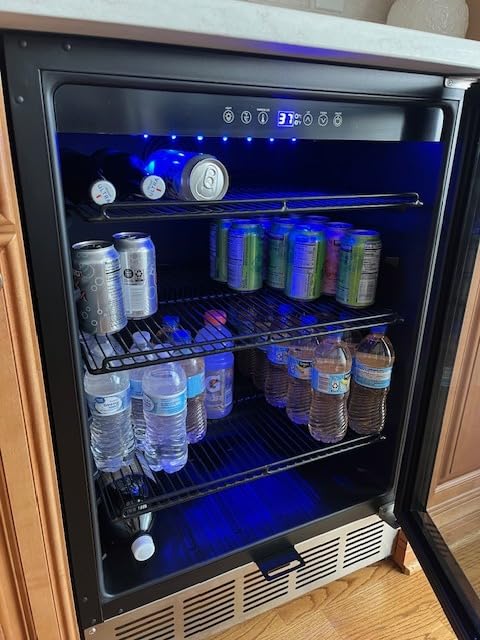
Useful details at this size: temperature memory restores your set point after a power interruption instead of resetting to factory, magnetic door seals and a safety lock hold the cold in, and the large digital display with interior LED lighting means you are not guessing at the temperature. Energy use is 175 kWh a year, efficient for 4.9 cubic feet, with R-600A refrigerant.
The complaints deserve attention. A small number of owners report leakage and eventual failure after a year or more, and the 483-review base is thinner than the leaders here, so the long-term record is not yet proven. The on and off button reportedly does nothing, so a true power down requires unplugging.
What to check before you order
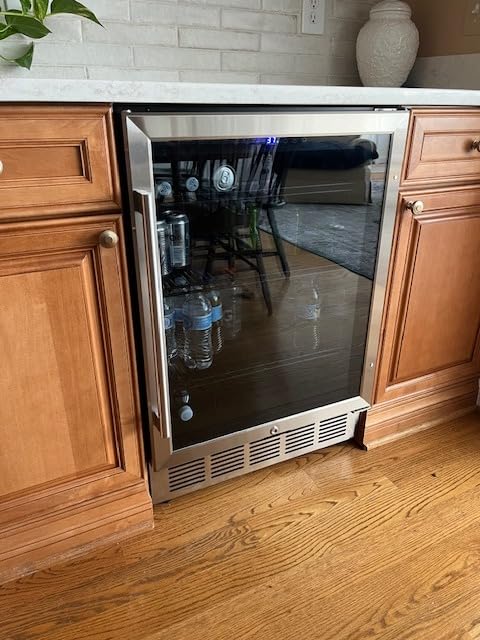
Check floor space and door swing together. The unit is 22.63 inches deep, 23.42 wide, and 34.25 tall, and a single door that wide opens across most of the front face, which is exactly what the wide shelf spacing makes awkward.
Check your expectation of cold. This unit bottoms out around 37 to 40 degrees, a proper drink temperature but not refrigerator-cold. It is a dispenser, not a chiller.
Who should skip it
Skip it if longevity outranks everything else. The thin review base and the leakage reports are a real signal, and you should read the recent negative reviews yourself before committing to a cabinet this large.
Skip it if you plan to flip the door hinge yourself, because reversal requires contacting the manufacturer rather than a simple flip.
8. BODEGA 15 Inch Wine Cooler – The 30-Bottle Built-In Wine Cabinet
BODEGA 15 Inch Wine Fridge, 30 Bottle Dual Zone Wine Cooler, 41-72℉ Compressor Wine Refrigerator with Tempered Glass Door, Built-in or Freestanding Wine Cooler for Home Kitchen Bar (3.2 cu.ft).
3.2 cu ft, 30 bottles
Dual zone 41F to 72F
Blocks 99 percent of UV
15 inch width
Pros
- Independent upper and lower zones for reds and whites at separate temperatures
- Fits a 15 inch cabinet opening for a true built-in installation
- Double-glazed tempered glass blocks 99 percent of UV rays
- Five removable wood-look shelves that accommodate champagne bottles
- Front air vent supports built-in and freestanding setups
Cons
- Wine-only format and not designed for bulk canned beverages
- Lowest average rating here at 4.2 stars with 10 percent one-star reviews
- 14.96 inch width leaves little clearance for door swing in tight cabinetry
- LED display brightness is not adjustable
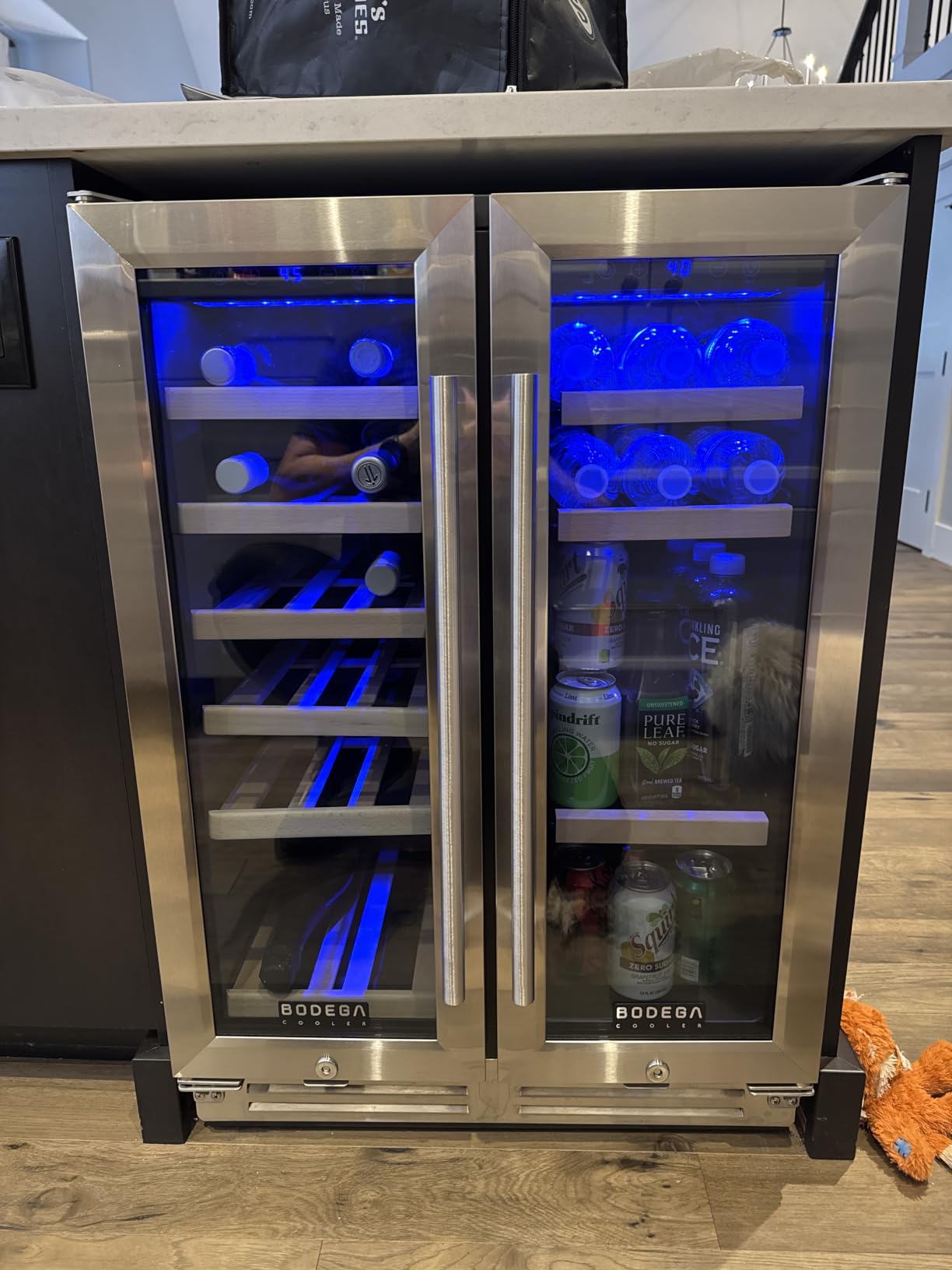
This is the one to buy if you are filling a 15 inch cabinet bay during a remodel. At 14.96 inches wide, it is a genuine built-in width rather than a freestanding unit you hope will look built in, and the front air vent plus feet that extend up to 2 inches are what make that installation work in a real cabinet box.
The dual zones are why wine people like it. Temperature runs from 41 to 72 degrees in one degree increments, with independent upper and lower control, and the glass is double-glazed tempered in a 304 stainless frame blocking 99 percent of UV rays, which is the specific protection that matters for long-horizon storage.

Five removable wood-look shelves take 30 standard 750ml bottles and are spaced to accommodate champagne formats, a detail that separates a real wine cabinet from a converted beverage cooler. Compressor cooling with built-in air circulation runs as low as 42 decibels, and temperature memory plus a key lock make sense for a cabinet that is part of your cabinetry.
It also has the lowest average rating of the ten, at 4.2 stars with 10 percent one-star feedback, and the most common complaints concern temperature consistency across the cabinet and fit within tight openings. That last one is a measurement issue, not a defect.
What to check before you order
Check opening width and door swing together. A 14.96 inch cabinet in a 15 inch bay leaves under half an inch of tolerance per side, and the door still has to open outward into the room or the adjacent cabinet run.
Check your collection size honestly. Thirty bottles is a modest collection, and the 22.44 inch depth means it projects further into the room than a shallow built-in would.
Who should skip it
Skip it if you want to store cans, since this is a wine-only format with wood-look shelves. Skip it if UV protection is not the priority, because you are paying for a glass specification a beverage cabinet does not need.
Skip it if cabinet vibration bothers you, because a compressor unit inside cabinetry transmits some movement through the frame.
9. Honeywell 116-Can Cooler – The Thermoelectric Option for Silent Rooms
Honeywell Beverage Refrigerator and Cooler, 116 Can Mini Fridge with Glass Door for Soda Beer or Wine for Office or Bar with Adjustable Removable Shelving, Commercial Grade
3 cu ft, 116 cans
Thermoelectric cooling
288 kWh per year
68.2 pounds
Pros
- Holds a steady 34F verified with independent temperature logging
- Very quiet during operation and many owners forget it is running
- Glass front displays cans label-out for easy selection
- Slide-out plastic-coated shelves adjust in 2 inch increments
- Recovers temperature quickly after the door opens
Cons
- Bottom shelf is only about half depth because of the compressor compartment
- Wire shelves sag visibly when fully loaded
- Blue interior light is dim and top-mounted so lower shelves stay dark
- Cool-down from room temperature takes about a full day
This is the odd one out in the lineup and the reason we included it. Every other unit here uses a compressor and this one uses thermoelectric cooling, which has no compressor cycle to hear. Owners describe it as so quiet they forget it is running, which is a genuinely different experience from a 36 or 38 decibel compressor cabinet in a bedroom or home office.
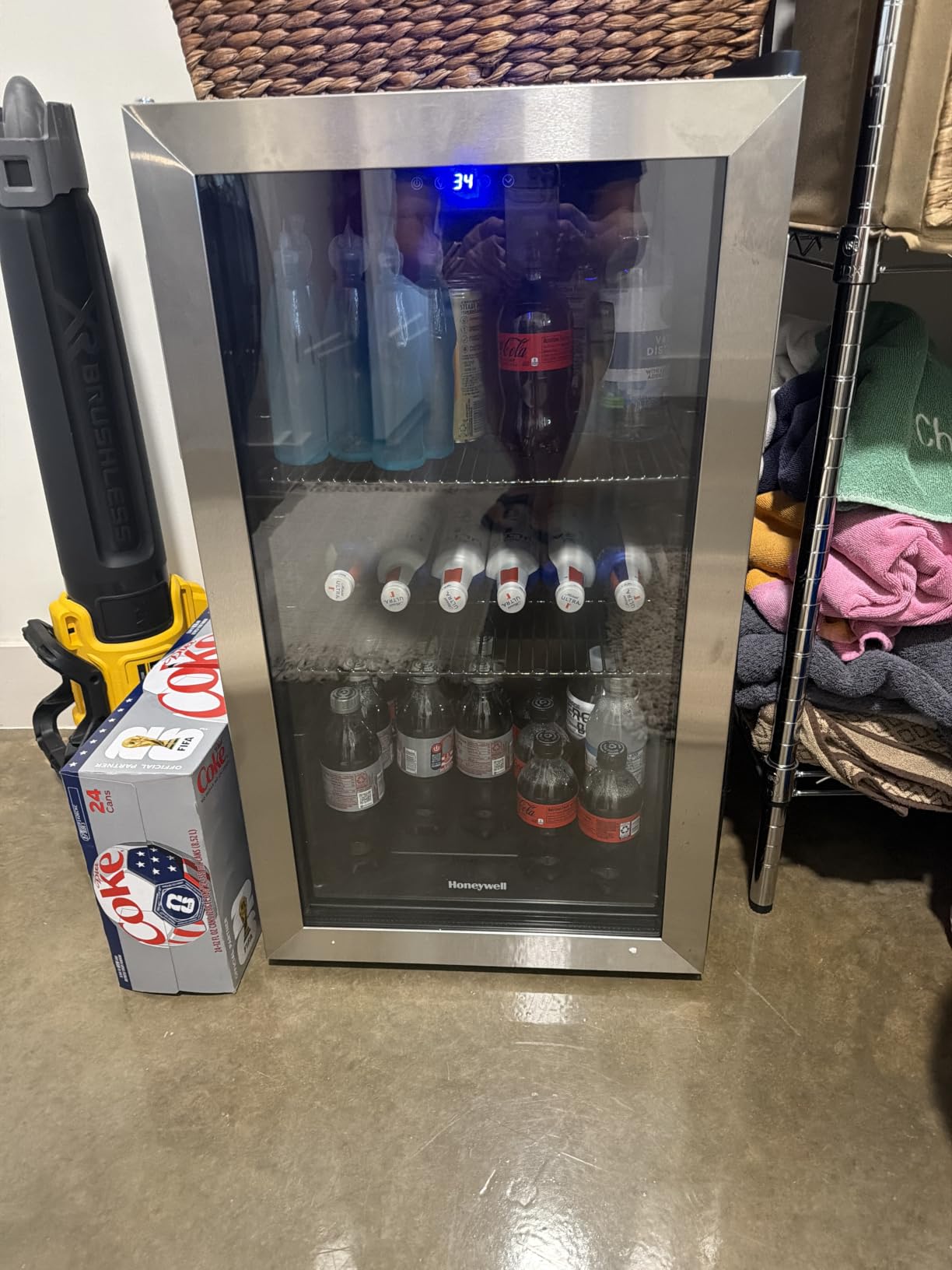
The temperature result is the surprise. Reviewers report a steady 34 degrees verified with independent temperature logging, and fast recovery after a door opening. It holds 116 cans in a 3 cubic foot cabinet rated for undercounter placement, and the rear-mounted fan frees up top shelf space.
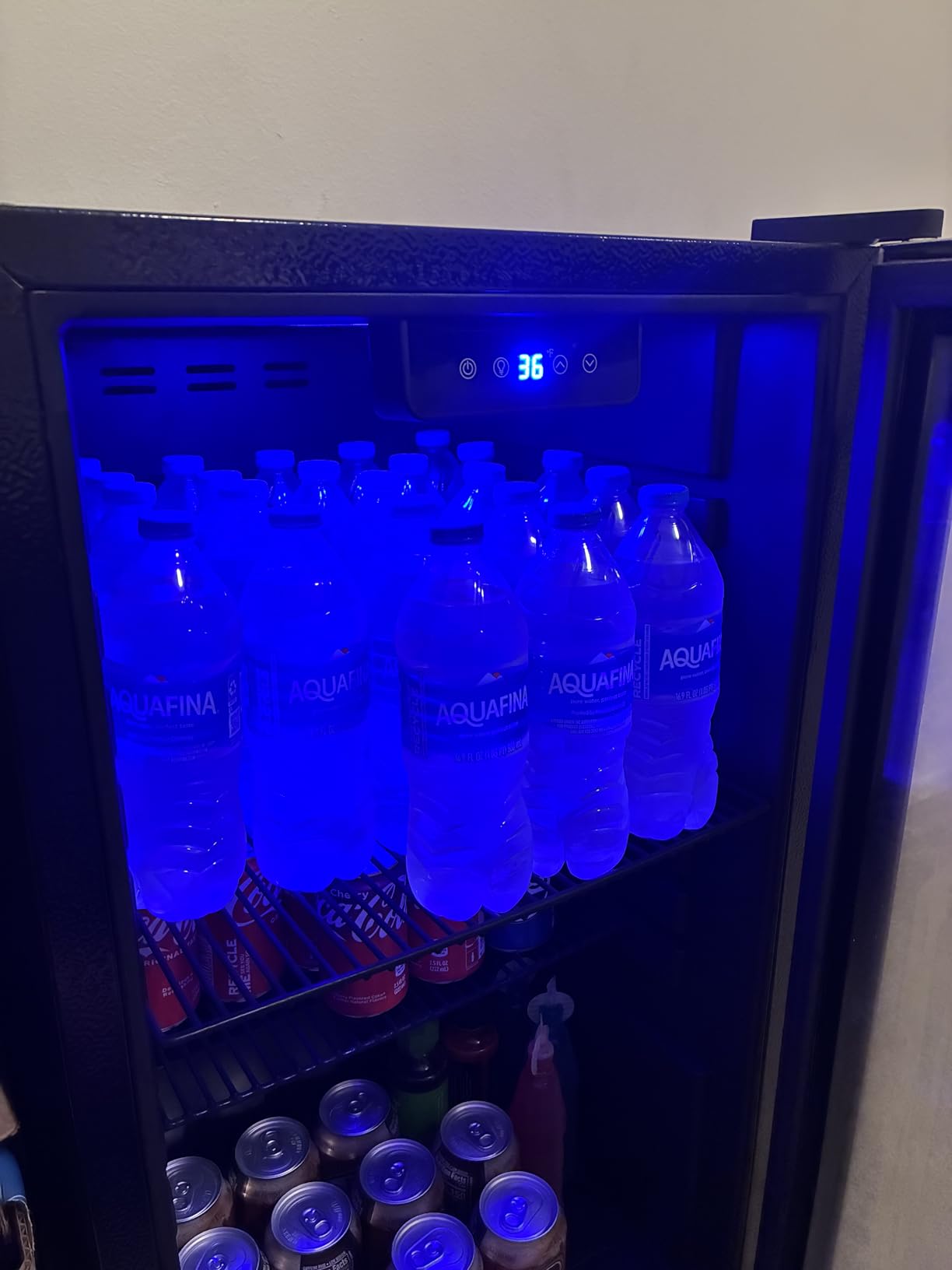
Physical details that matter in a tight space: at 17.3 inches deep, 18.9 wide, and 33.1 tall it matches the compact class, the door is reversible with screw-hole plugs included, the legs adjust for uneven floors, and the electronic lock, digital thermostat panel, and interior LED are all present. It is UL specification met with a 1 year warranty.
The limitations follow from the cooling method and the layout. Cool-down from room temperature takes about a full day, so this is a unit you switch on in advance, and because the thermoelectric module sits at the bottom, the lowest shelf is only about half depth, which drops the real can count below the rated figure.
What to check before you order
Check the ambient temperature of the room. Thermoelectric cooling moves heat across a temperature difference, and that difference shrinks as the room warms, which is why a compressor always outperforms it in a hot kitchen. Climate controlled, it is excellent.
Check what you are loading. The half-depth bottom shelf and the sagging wire shelves both worsen under heavy loads, so accept a smaller footprint on the bottom row.
Who should skip it
Skip it if you will use it in a warm or variable-temperature space, since the cooling margin is the whole design and it runs out first. Skip it if you need to load and use it the same day.
Skip it if you want bright interior lighting. The blue light is dim, top-mounted, and manual, and for a display piece in a lit room that matters more than silent running does.
10. Ca’Lefort 15 Inch Cooler – The Narrow Built-In With Compressor Cooling
Ca’Lefort 15 inch Beverage Refrigerator, 100 Can Beverage Fridge
3 cu ft, 100 cans
34F to 54F at plus or minus 1F
15 inch width
Built-in or freestanding
Pros
- 15 inch body fits standard under-counter cabinetry for a built-in look
- Compressor cooling holds 34F with plus or minus 1F accuracy in warm rooms
- Double-layer tempered UV-protected glass in a brushed stainless frame
- Reversible door with concealed hinges opens either way
- Three adjustable shelves plus three-color LED interior light
Cons
- Upper temperature limit of 54F is narrower than competing units
- Smallest review base here at 242 reviews so durability is less proven
- Wire shelves let small bottles tip
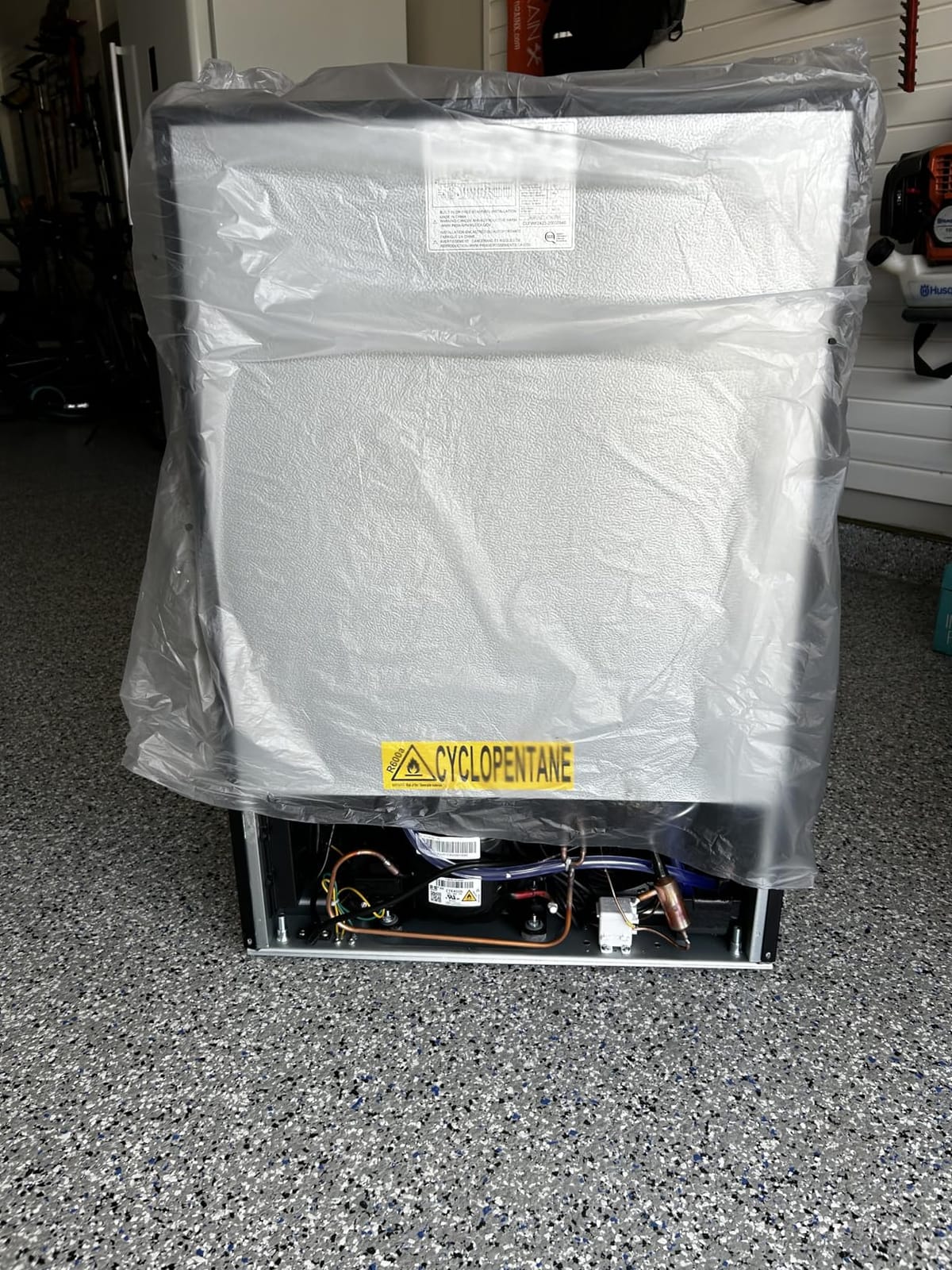
- Requires 24 hours upright before first use
If your cabinetry has 15 inch openings and you do not want to give up compressor cooling to get them, this is the unit. The manufacturer is explicit that the advanced compressor system holds more stable performance than thermoelectric coolers in warm rooms, and the 34 to 54 degree range is set with plus or minus 1 degree accuracy, tighter control than anything else in the built-in class here.
The styling separates it from other narrow built-ins. A brushed stainless finish and a double-layer tempered UV-protected glass door make it read as a fitted appliance rather than a cooler dropped into a hole, and the concealed hinges on the reversible door mean it looks the same whether it opens right or left.
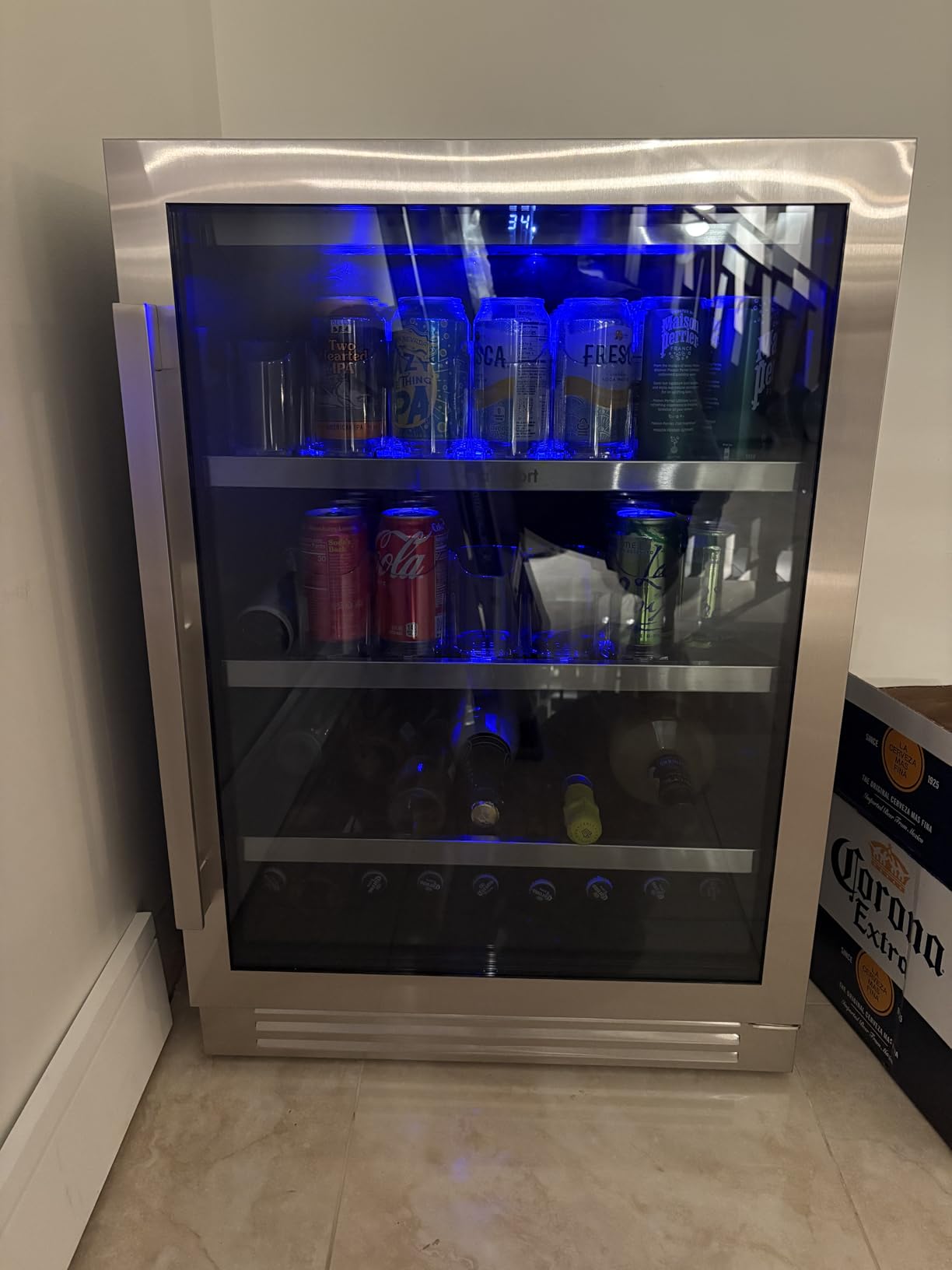
Capacity is 100 standard 12 fluid ounce cans across three adjustable shelves, and the touch controls with three-color LED light let you match the cabinet to the room. It is rated for built-in or freestanding installation, so the same unit works in a wet bar, a pantry column, or a garage workshop.
Two things give us pause. The 54 degree ceiling is narrower than competing units, making it a beverage range rather than a flexible one, and at 242 reviews this is the smallest owner base in the roundup, so the long-term durability picture is genuinely unknown rather than proven.
What to check before you order
Check the opening and the swing again. At 14.8 inches wide and 34 inches tall in a 15 inch bay the tolerance is tight, and concealed hinges help appearance but not the arc the door needs to open.
Check the 24 hour upright requirement against your install date. A remodel finishing on Friday does not mean a loaded fridge on Saturday.
Who should skip it
Skip it if you want a proven long-term record, because 242 reviews is not enough history for a durability call. Skip it if you need to hold wine, since this is a beverage cabinet with wire shelves and no zoning.
Skip it if you want the widest temperature range, since the 34 to 54 degree window is deliberately narrow and the 4.5 cubic foot dual-purpose unit is a better fit.
Glass Door vs Solid Door: How to Decide
Choose glass when visibility is the point. If the unit is a bar station, a wine cabinet, a pantry column, or a display piece in an open-plan kitchen, seeing what is inside is the entire reason you are spending more. You open the door less, so less cold air escapes, and the lit interior becomes part of the room.
Choose solid when it is your main refrigerator. For a family kitchen holding a week’s groceries, panel efficiency and keeping light out of the cabinet outweigh the aesthetic benefit. Start with a solid-door guide like our counter-depth French door roundup and treat the list here as your second appliance.
Compressor cooling beats thermoelectric in anything warm. A thermoelectric unit moves heat across a temperature difference that shrinks as the room warms, which is why the Honeywell is quiet but slow. A compressor has a much larger margin, so take the compressor in a kitchen, garage, or pool house.
Buy for the space, not the can count on the box. Advertised capacities are best case achieved with tight packing. Compact cabinets lose real volume to the cooling module, wide wire shelves let cans tip, and shallow wine racks refuse magnum bottles. We publish the rated figures because they are the industry standard, and we flag where owners report the gap.
Front ventilation decides built-in versus freestanding. A unit that breathes out through the front grille can sit inside a cabinet box. One that vents out the back needs clearance behind it and will not tuck into a tight bay. The four built-in-capable options here have front vents, and adjustable feet are what make the installation level.
Glass coating is where the efficiency gap is won. Standard tempered, double-pane, low-iron, and LOW-E coated glass are different products, and coated options transfer less heat into the cabinet, which means less compressor runtime and less glare. That is why 175 kWh on the large FoMup and 190.5 kWh on the Electactic both beat the 288 kWh compact average here.
Treat review volume as the reliability signal, not the brand name. Nearly every unit on this page carries a 1 year manufacturer warranty, so the warranty does not separate them. What separates them is how many people have lived with the unit long enough to report on it, which is why we weighted our ranking the way we did. And do not buy a commercial reach-in for a home kitchen: those are continuous-duty machines with different temperature bands, power expectations, and noise profiles, which is why they show up all over these results.
Frequently Asked Questions
What are the disadvantages of glass door refrigerators?
The main drawbacks are condensation, higher energy use, light and heat reaching stored food, and a door surface that fingerprints fast. Glass transfers heat better than an insulated solid panel, so the compressor runs longer to hold temperature, and in humid air the cold inner surface drops below the dew point and sweats. A glass door is also usually a second appliance rather than a main family refrigerator, and glass shelves and gaskets need more regular cleaning.
Are glass door fridges less efficient?
Yes, generally. A glass pane is a worse insulator than a foam-backed solid door, so the compressor has to run longer to hold the same set point. In the units reviewed here, annual energy use ranged from about 162 kWh on the largest dual-zone cabinet to 288 kWh on several compact models. Coated glass such as LOW-E, better gaskets, and a larger insulated volume narrow the gap, but the running cost stays above a comparable solid-door model.
What are the benefits of a glass door fridge?
You see what you have without opening the door, so you open it less and less cold air escapes. The interior stays lit, which lets the unit work as a display or bar station, and it becomes a design feature in an open-plan kitchen. For wine, a sealed glass door with UV filtering protects bottles from light and helps keep corks from drying. Glass doors also make a cabinet feel larger because the contents are visible rather than hidden.
Is a glass door refrigerator good for a home kitchen?
As a secondary appliance, yes. As the main family refrigerator, usually no. A glass door makes the most sense for a home bar, a pantry column, a wine cabinet, or a built-in display unit where visibility is the point and the cabinet runs cool drinks rather than food. For a primary kitchen refrigerator, a solid door is more efficient, keeps light out of the cabinet, and handles a week’s groceries better.
Why does my glass door refrigerator sweat condensation?
Condensation is usually a climate problem, not a defect. The cold inner surface of the glass drops below the dew point of the surrounding air, so moisture in a warm or humid room condenses on the pane and runs down to the frame. You can reduce it by leaving clearance on the sides and back, keeping the door gasket clean so the seal is tight, and placing the unit away from sun-facing walls and other heat sources. Coated glass and anti-condensation heating elements help but do not eliminate it.
Final Verdict
The best glass door refrigerator for most home kitchens is the hOmeLabs 120-Can Beverage Cooler, because it pairs the deepest owner track record in the category with a footprint that fits an ordinary room and a compressor quiet enough for a bedroom. It is not exotic, and that is the recommendation.
Buy the EUHOMY 130-Can if you want the most drinks in the least space and care about the energy bill. Buy the Velieta 24 Inch Dual Zone if wine and cans genuinely need separate temperatures and you have the floor space. Buy the BODEGA 15 Inch if a remodel is underway and there is a 15 inch cabinet bay to fill.
Whatever you choose, measure the door swing before you order, keep your main family refrigerator on solid doors, and expect condensation in a humid room. That is the honest picture of the best glass door refrigerator choices for 2026, and it is why the right use for every unit on this page is the second appliance, not the only one.