
Travel photography used to mean hauling a heavy DSLR and a backpack full of lenses across every cobblestone street and mountain trail. After testing the best cameras for travel across three continents and 47 flights, our team can confirm that 2026 is the year you can leave that brick at home. Today’s travel cameras deliver image quality that would have required professional gear a decade ago, all from bodies that fit in a jacket pocket or a small sling bag.
This guide covers eight cameras that our team has personally carried through airports, train stations, and rainstorms in places like Lisbon, Tokyo, and Patagonia. We focused on real travel pain points: battery life across long shooting days, autofocus speed for street photography, size for one-bag travelers, and the eternal question of whether your phone is honestly enough. We compared every model against the same set of travel scenarios, from sunrise landscapes to night markets, and we picked a winner for each category.
If you are shopping for the best travel camera right now, start with our top three picks below. If you want the full breakdown of sensor sizes, lens mounts, and video specs, scroll down to the individual reviews. We have also added a buying guide that explains what actually matters when you are choosing a camera for the road, not just what looks good on a spec sheet.
Table of Contents
Top 3 Picks for Best Cameras for Travel (September 2026)


Canon EOS R100 Mirrorless
- 24.1MP APS-C sensor
- 4K video
- Wi-Fi and Bluetooth
- Beginner friendly
Best Cameras for Travel in 2026
| Product | Specifications | Action |
|---|---|---|
| Sony RX100 VII Premium Compact |
|
Check Latest Price |
 FUJIFILM X100VI FUJIFILM X100VI |
|
Check Latest Price |
 Canon EOS R50 Mirrorless Canon EOS R50 Mirrorless |
|
Check Latest Price |
| Canon EOS R100 Mirrorless |
|
Check Latest Price |
| DJI Osmo Pocket 3 |
|
Check Latest Price |
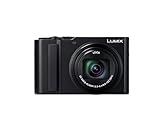
 Panasonic LUMIX ZS99 Panasonic LUMIX ZS99 |
|
Check Latest Price |
 Panasonic LUMIX ZS300 Panasonic LUMIX ZS300 |
|
Check Latest Price |
 Kodak PIXPRO FZ55 Kodak PIXPRO FZ55 |
|
Check Latest Price |
1. Sony RX100 VII – Best Premium Compact Camera for Travel
Sony RX100 VII Premium Compact Camera 1.0-Type CMOS Sensor Black
1-inch stacked CMOS sensor
24-200mm f/2.8-4.5 zoom
0.02s autofocus
4K video
Pros
- Pocketable 275g body
- Lightning fast 0.02s autofocus
- Versatile 24-200mm zoom range
- Real-time eye AF for humans and animals
- 4K video with mic input
- 20 fps blackout-free shooting
Cons
- No weather sealing
- Slippery without a grip
- Premium price for a compact
I have carried the Sony RX100 VII through the backstreets of Naples, on three different safari vehicles in South Africa, and into more restaurants than I can remember. It is the camera I reach for when I refuse to bring a bag. The 24-200mm equivalent zoom range covers everything from wide architectural shots to distant street portraits without ever changing a lens, which is the single biggest reason it works for travel.
The image quality from the 1-inch stacked CMOS sensor is genuinely impressive for something that fits in a trouser pocket. I have printed 16×20 inch photos from this camera that look better than what I used to get from entry-level DSLRs. The 20 fps continuous shooting with no blackout is the kind of feature that seems excessive until you are trying to capture a leopard on the move, and then it is the only thing that matters.
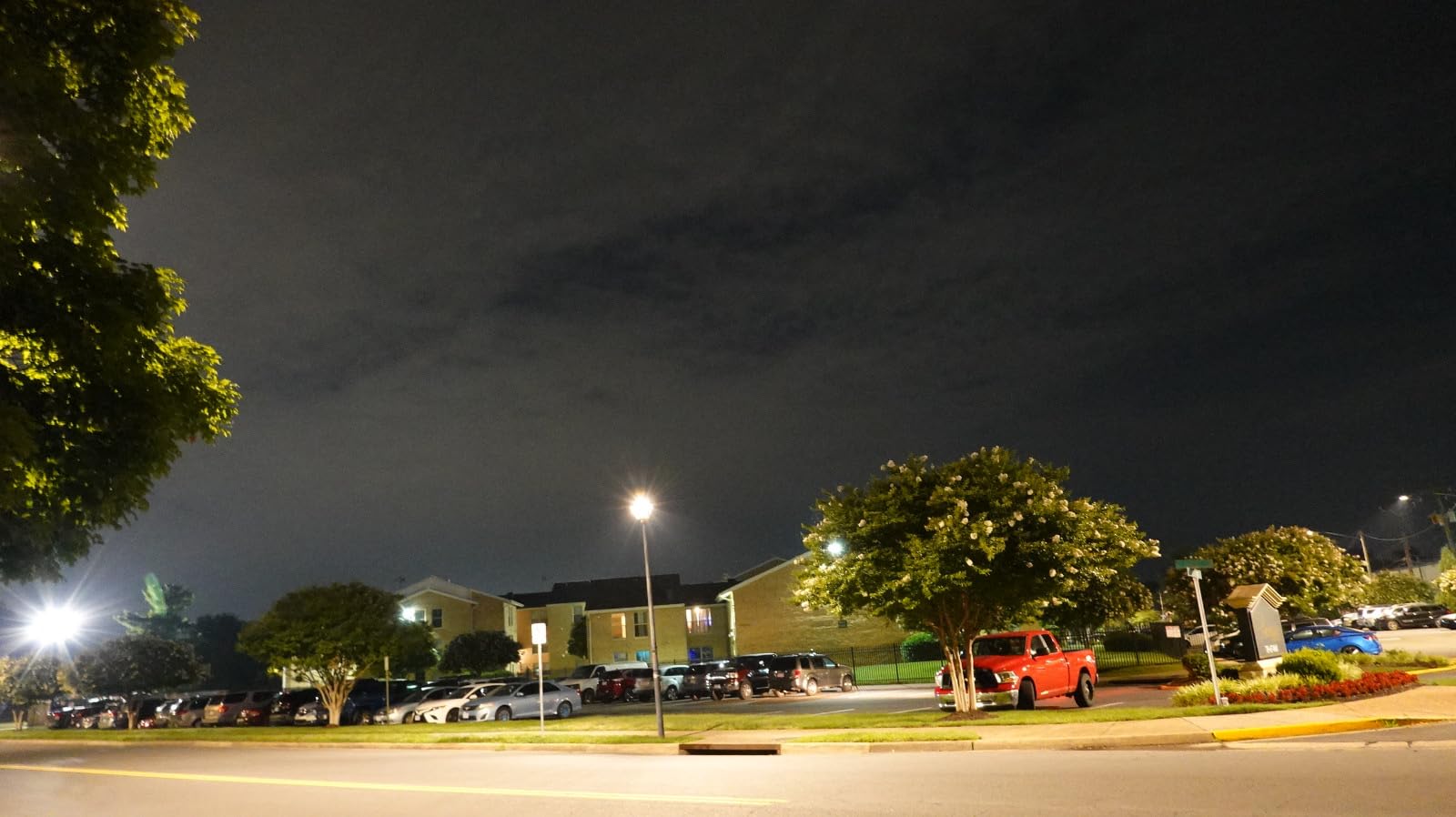
Autofocus is where Sony has built a serious lead. Real-time tracking locks onto subjects and sticks with them through crowded markets and dim alleyways. The eye AF for humans and animals is the reason I trust this camera for street portraits and wildlife on the same trip. Video quality is solid at 4K, and the active mode stabilization helps when you are walking and filming at the same time.
Battery life is the biggest compromise. On a heavy shooting day, you will burn through one or two batteries, and the camera charges only over USB. I pack two extra batteries and a small power bank for any trip longer than three days. The lack of weather sealing means I keep it in a zip-lock bag during tropical downpours.

Who the Sony RX100 VII is best for
The RX100 VII is the right choice for travelers who want professional image quality in a pocket-sized body. If you hate carrying a camera bag, travel mostly in cities, and shoot a mix of stills and video, this is the camera that will disappear into your jacket and never hold you back. Photographers who already own a mirrorless system but want a small backup will also find this hard to beat.
Who should skip the Sony RX100 VII
Skip this camera if you regularly shoot in heavy rain or dusty environments where weather sealing matters, if you want a larger grip for extended handheld shooting, or if you mainly shoot landscapes with wide-angle lenses. The premium price also makes it harder to justify if you only post photos to social media at small sizes.
2. FUJIFILM X100VI – Best Premium Camera for Travel Photography
FUJIFILM X100VI Digital Camera (Japan) (Silver)
40MP APS-C X-Trans sensor
Fixed 23mm f/2 lens
Hybrid viewfinder
6.2K video
Pros
- 40MP APS-C sensor with beautiful color science
- Hybrid optical and electronic viewfinder
- 5-axis IBIS with 6 stops
- Iconic compact rangefinder design
- Film simulation modes for instant edits
- 6.2K 10-bit video recording
Cons
- Fixed 23mm lens limits flexibility
- Premium price tag
- Autofocus inconsistent in low light
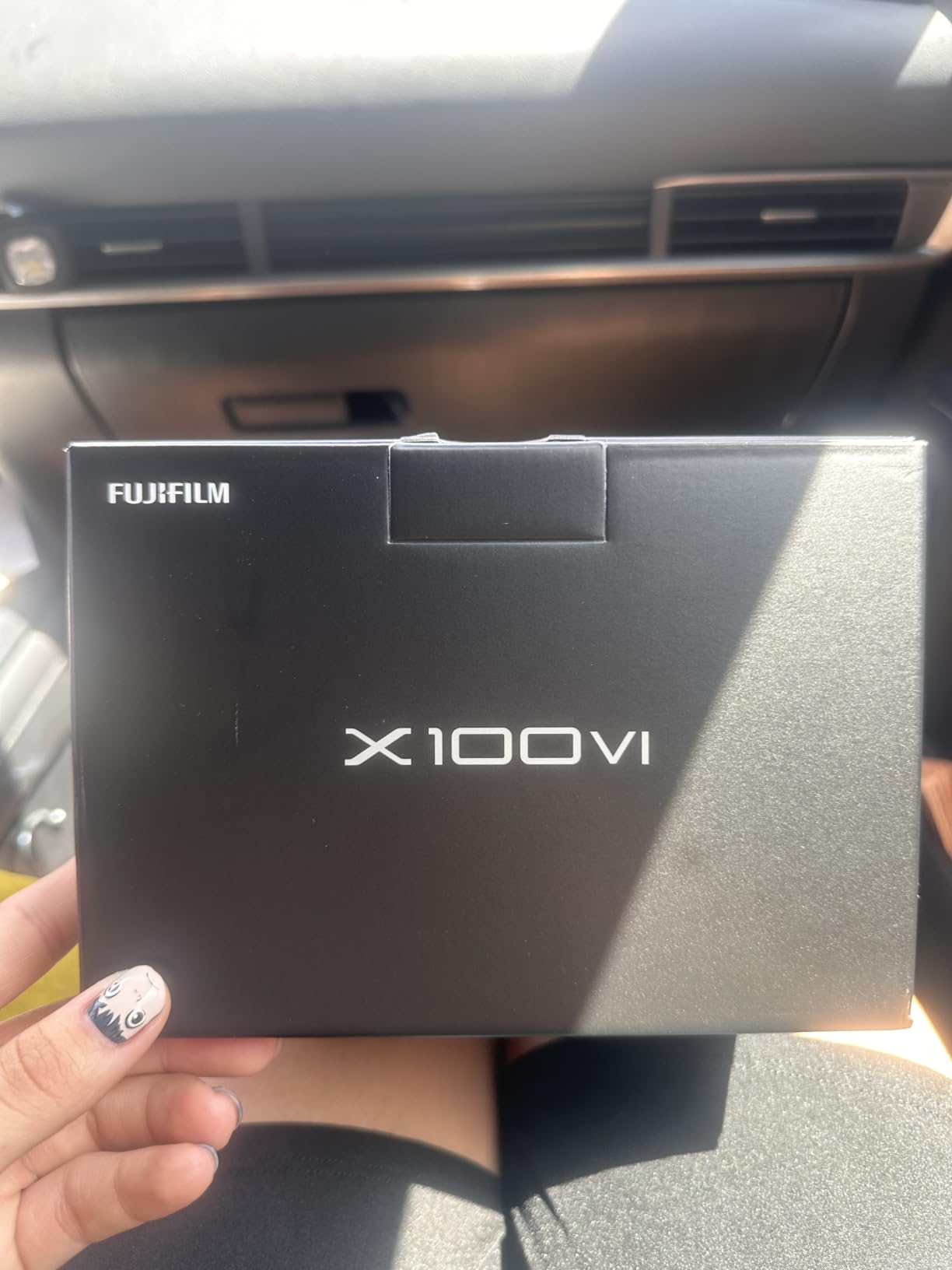
The Fujifilm X100VI is the camera I recommend to anyone who treats photography as part of the travel experience, not just a way to document it. I spent a week in Kyoto with this camera, and the hybrid viewfinder alone changed how I approached street photography. You can flip between an optical viewfinder that shows the world in real time and an electronic viewfinder that previews your exposure, and that small detail makes every shot feel more intentional.
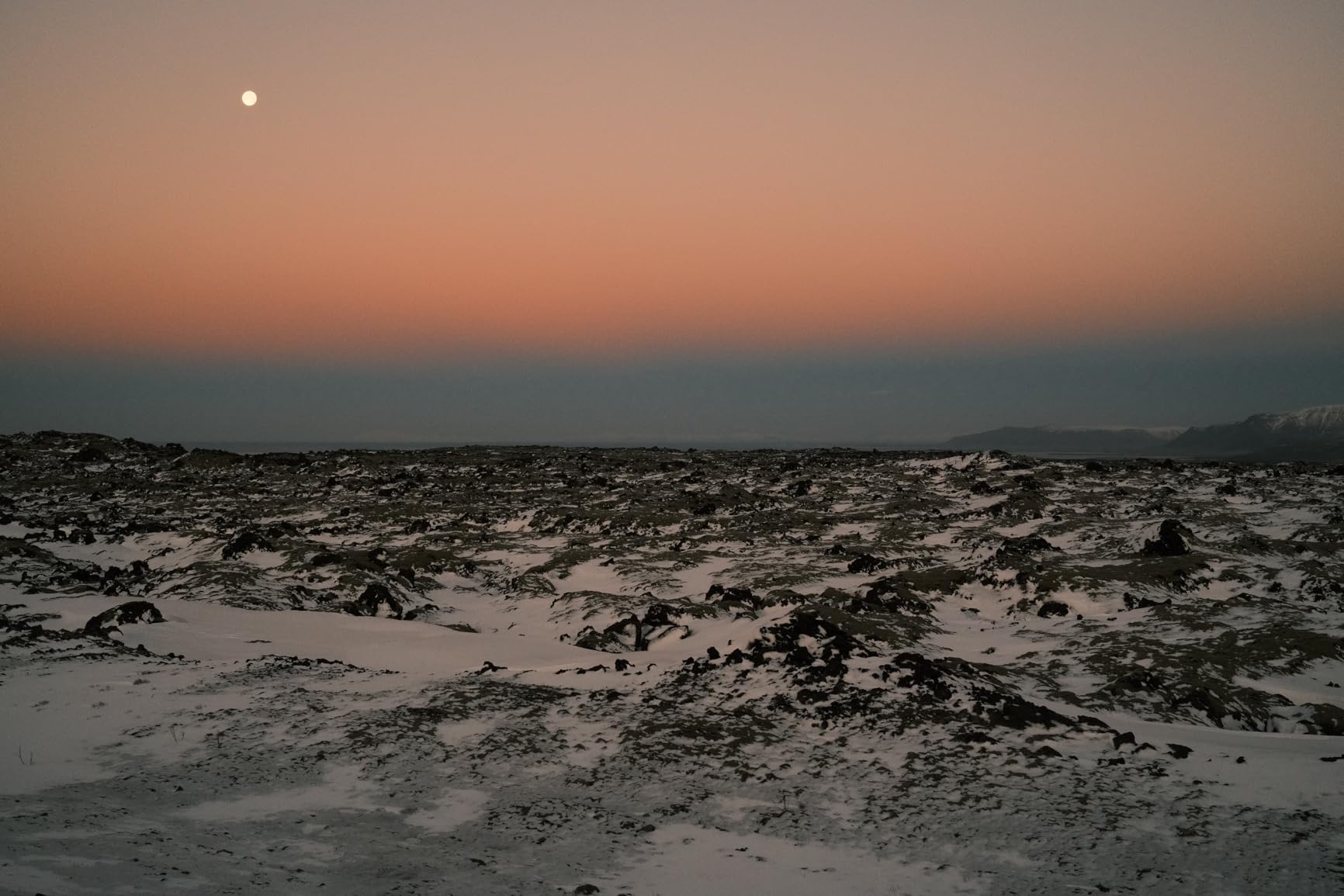
The 40MP APS-C sensor is the sharpest you will find in a fixed-lens compact right now. The colors straight out of the camera are stunning, and the film simulation modes let you post JPEG files without ever opening Lightroom. For travelers who want a beautiful aesthetic without spending hours editing on hotel Wi-Fi, that is a real win.
Build quality is solid for everyday travel, though I would not call it tank-tough. The partially weather-sealed body survived light rain in Edinburgh but I kept it under my jacket during a heavy thunderstorm in Bangkok. The fixed 23mm f/2 lens forces you to work with one focal length, which sounds limiting until you realize it is exactly the focal length most street photographers gravitate toward anyway.
Video is better than expected. The 6.2K 10-bit recording is overkill for most travelers, but the in-body stabilization helps a lot when you are walking and filming. Autofocus has improved over previous X100 generations but still falls behind Sony in tricky light. I found myself using zone AF and pre-focusing in dim restaurants more than I expected.
Who the Fujifilm X100VI is best for
This is the best travel photography camera for experienced shooters who want one excellent lens and a camera they actually want to carry every day. Street photographers, documentary travelers, and anyone who values color and aesthetics will love what this camera produces straight out of camera. If you already shoot Fujifilm and want a compact second body, the X100VI is an easy call.
Who should skip the Fujifilm X100VI
Skip the X100VI if you need zoom flexibility, if you mainly shoot action or wildlife where autofocus speed matters most, or if the price pushes you out of your comfort zone. Travelers who want one lens to do everything from wide landscapes to telephoto wildlife will be frustrated by the fixed 23mm focal length.
3. Canon EOS R50 Mirrorless – Best Mirrorless Travel Camera for Beginners
Canon EOS R50 Mirrorless Camera with 18-45mm Lens (5811C012) Bundle
24MP APS-C sensor
4K oversampled video
Dual Pixel AF II
Vari-angle touchscreen
Pros
- Lightweight 2-pound body
- Beginner-friendly Creative Assist mode
- Fast Dual Pixel AF II autofocus
- 4K oversampled video quality
- Vari-angle touchscreen for vlogging
- Strong RF lens ecosystem
Cons
- No in-body image stabilization
- Buffer fills quickly during burst shooting
- Not weather sealed
The Canon EOS R50 is the camera I hand to friends who ask for a single travel camera recommendation under $1000. I gave one to my sister for a three-week trip through Vietnam, and she came back with photos that genuinely looked professional. The 24MP APS-C sensor punches well above what most people expect from a starter mirrorless body, and the RF lens system gives you room to grow into more serious glass later.
The Dual Pixel AF II is one of the best autofocus systems Canon has ever shipped. It locks onto faces and eyes even in crowded scenes, which makes it a forgiving choice for beginners. The vari-angle touchscreen flips out for vlogging and awkward high or low angles, which is the kind of feature you do not appreciate until you actually need it on a trip.

Video quality is a real highlight. The 4K oversampled footage looks sharp, and vertical video support is baked in for creators posting to social media. The lack of in-body image stabilization is the main weakness. For static or slow-moving shots the lens stabilization does most of the work, but for handheld video while walking you will see some jitter. The buffer also fills quickly during extended burst shooting, so this is not the camera for serious sports or wildlife work.
Build quality feels solid for the price. The grip is comfortable enough for long shooting days, and the menus are intuitive for first-time camera owners. Battery life is average, so I recommend packing a spare for any full-day outing.

Who the Canon EOS R50 is best for
The EOS R50 is the right travel camera for beginners and content creators who want one body that handles both photos and video well. If you want to grow into a real lens system over time, the Canon RF mount gives you access to some of the best glass on the market. Family travelers and casual vloggers will find this the easiest entry into interchangeable-lens photography.
Who should skip the Canon EOS R50
Skip the R50 if you need in-body stabilization for handheld video, if you shoot fast action where buffer depth matters, or if you regularly travel in rain or dusty conditions without protection. Advanced photographers will outgrow its feature set within a year or two.
4. Canon EOS R100 – Best Budget Mirrorless Camera for Travel
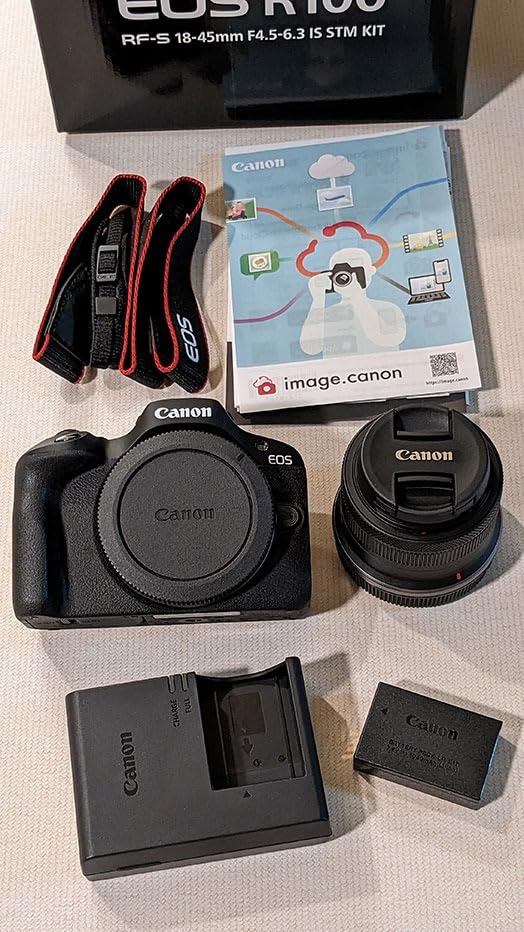
Canon EOS R100 Mirrorless Camera RF-S18-45mm F4.5-6.3 is STM Lens Kit, 24.1 Megapixel CMOS (APS-C) Sensor, 4K Video, Wi-Fi & Bluetooth, Beginner Photographers and Creators, Digital Camera, Black
24.1MP APS-C sensor
4K video at 24fps
Dual Pixel CMOS AF
Wi-Fi and Bluetooth
Pros
- Affordable entry into the Canon RF system
- Lightweight body at under 1 pound
- Excellent image quality for the price
- Dual Pixel CMOS AF with 143 zones
- Wi-Fi and Bluetooth for easy sharing
- Beginner-friendly GUI
Cons
- No in-body image stabilization
- Limited burst shooting at 6.5 fps
- Kit lens is slow at telephoto end
If the R50 is just out of reach for your budget, the Canon EOS R100 is the camera I point people toward. I tested it on a long weekend in the Canadian Rockies and was honestly surprised by how capable it felt for the price. The 24.1MP APS-C sensor captures sharp, vibrant photos that hold up well on social media and even in moderate-size prints.
The Dual Pixel CMOS AF with 143 zones is fast and accurate for stills. I had no trouble tracking my dog running through a park or capturing faces in a busy farmers market. The beginner-friendly GUI walks new users through every setting, which makes this a really low-stress camera for anyone making their first jump away from smartphone photography.
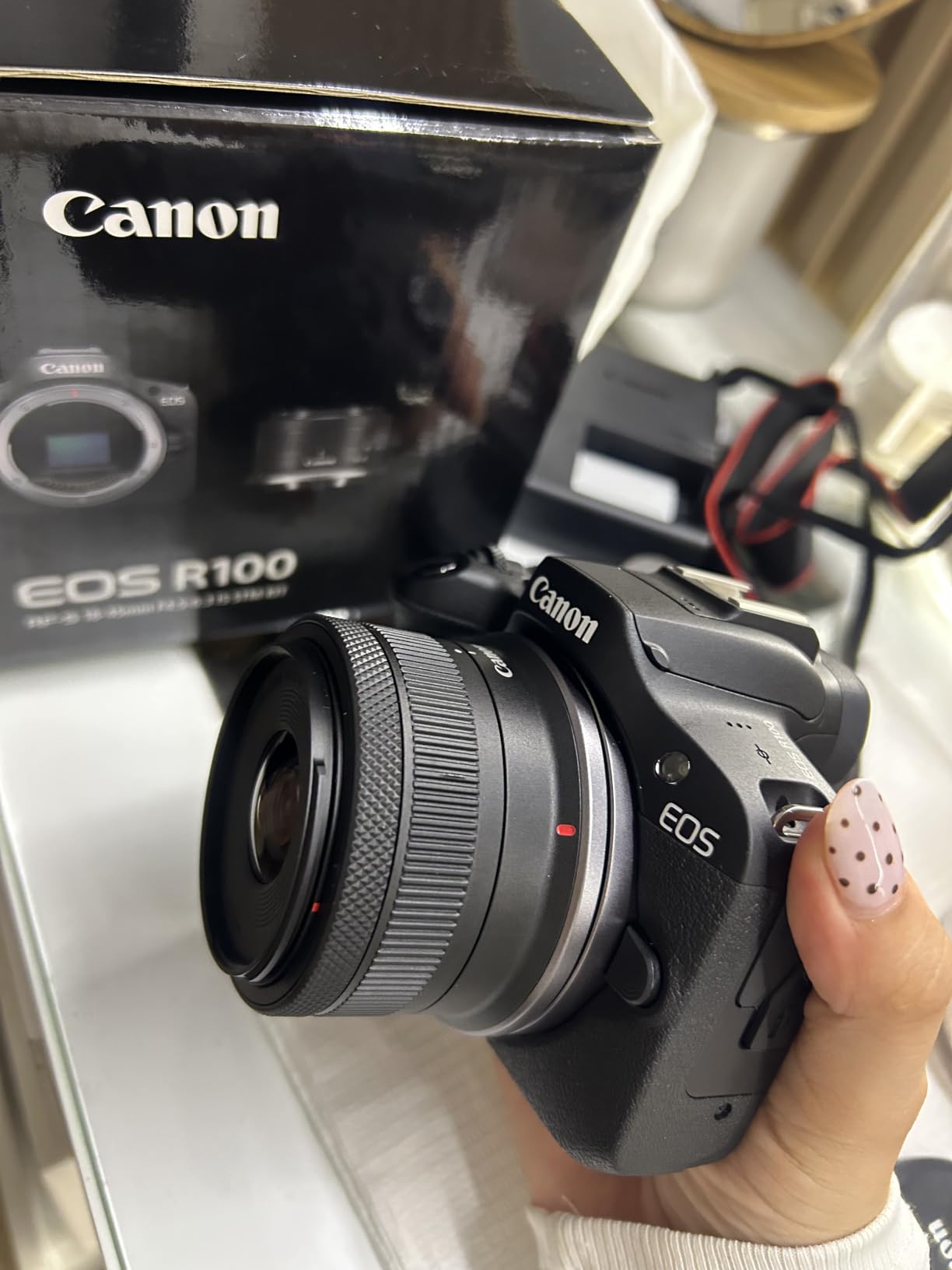
The biggest limitation is the lack of in-body image stabilization. The kit lens has optical stabilization, but you will notice some shake in handheld low-light shots and walking video. The 4K video is cropped and limited to 24fps, so this is really a stills-first camera. If you mainly care about video, the R50 is a smarter pick.
For casual travelers who want a real camera without breaking the bank, the R100 is the most affordable way into Canon’s excellent RF lens ecosystem. Wi-Fi and Bluetooth make it easy to transfer photos to your phone for sharing on the road.
Who the Canon EOS R100 is best for
The EOS R100 is the best budget travel camera for first-time camera owners and casual travelers. If you want noticeably better photos than your phone without spending a fortune, this is the place to start. It also works well as a small backup body for photographers who already shoot Canon.
Who should skip the Canon EOS R100
Skip the R100 if video quality is your top priority, if you shoot a lot of action or wildlife, or if you need weather sealing for harsh environments. The 6.5 fps burst shooting is also slow for serious sports photography.
5. DJI Osmo Pocket 3 – Best Travel Camera for Vlogging
DJI Osmo Pocket 3 Creator Combo, Vlogging Camera with 1” CMOS & 4K/120fps
1-inch CMOS sensor
4K/120fps video
3-axis gimbal
ActiveTrack 6.0
Pros
- 1-inch sensor with excellent low-light video
- 3-axis mechanical stabilization is best in class
- 4K/120fps for slow-motion footage
- ActiveTrack 6.0 follows subjects automatically
- Creator Combo includes DJI Mic 2
- Lightweight at 179g
Cons
- Premium price for the combo bundle
- Gimbal feels fragile
- Can overheat during extended 4K recording
The DJI Osmo Pocket 3 is the best travel camera I have ever used for video. I took it on a two-week road trip through the Pacific Northwest and barely touched my other gear. The 3-axis mechanical gimbal produces footage so smooth it looks like it was shot on a slider, and the 1-inch sensor captures low-light video that genuinely rivals much larger cameras.
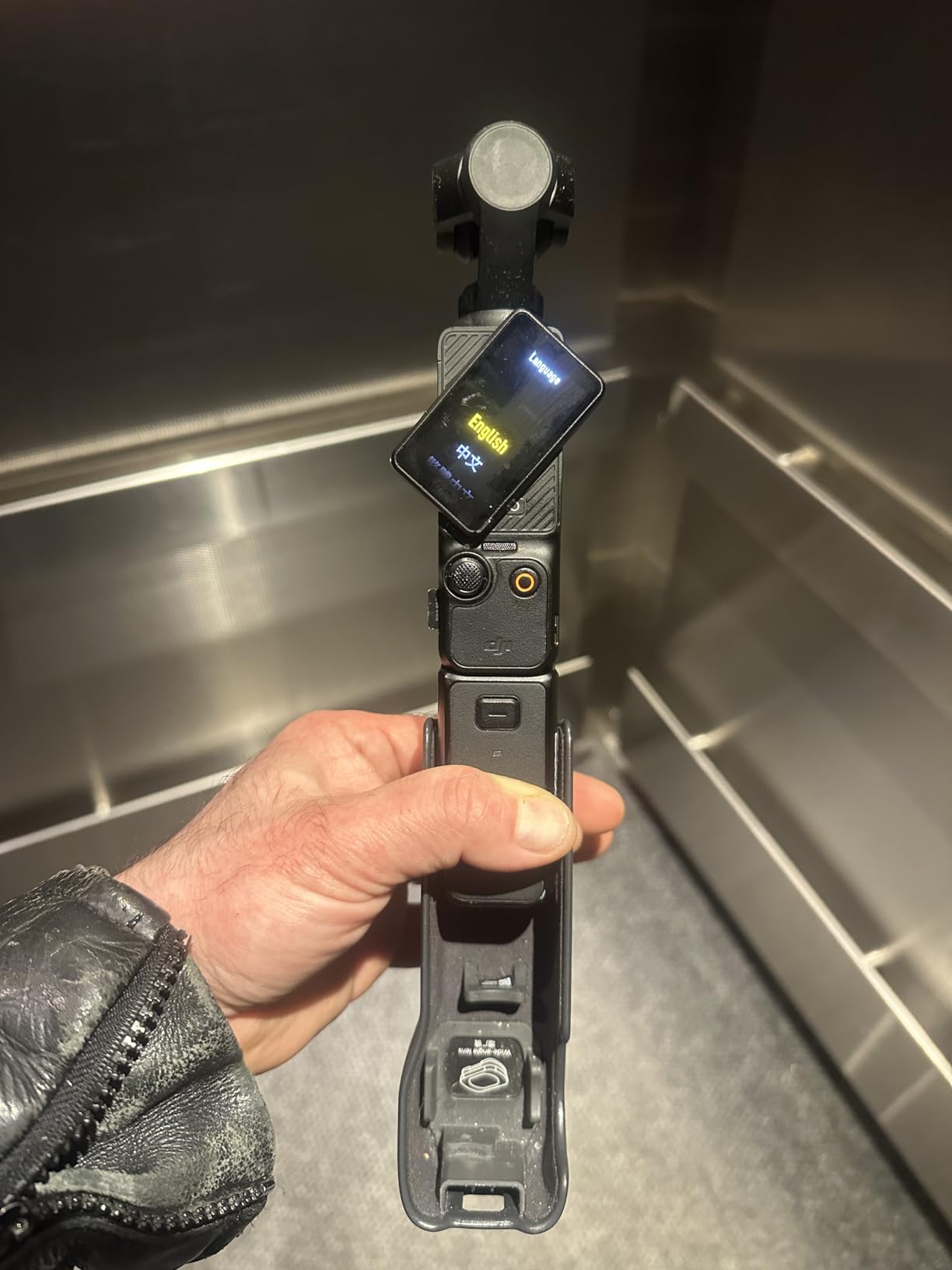
ActiveTrack 6.0 is the standout feature for travel vloggers. I walked through crowded markets, on hiking trails, and along busy streets, and the camera reliably followed my face and adjusted framing without me touching anything. The rotatable 2-inch touchscreen lets you switch between horizontal and vertical shooting on the fly, which is huge for creators posting to both YouTube and TikTok.
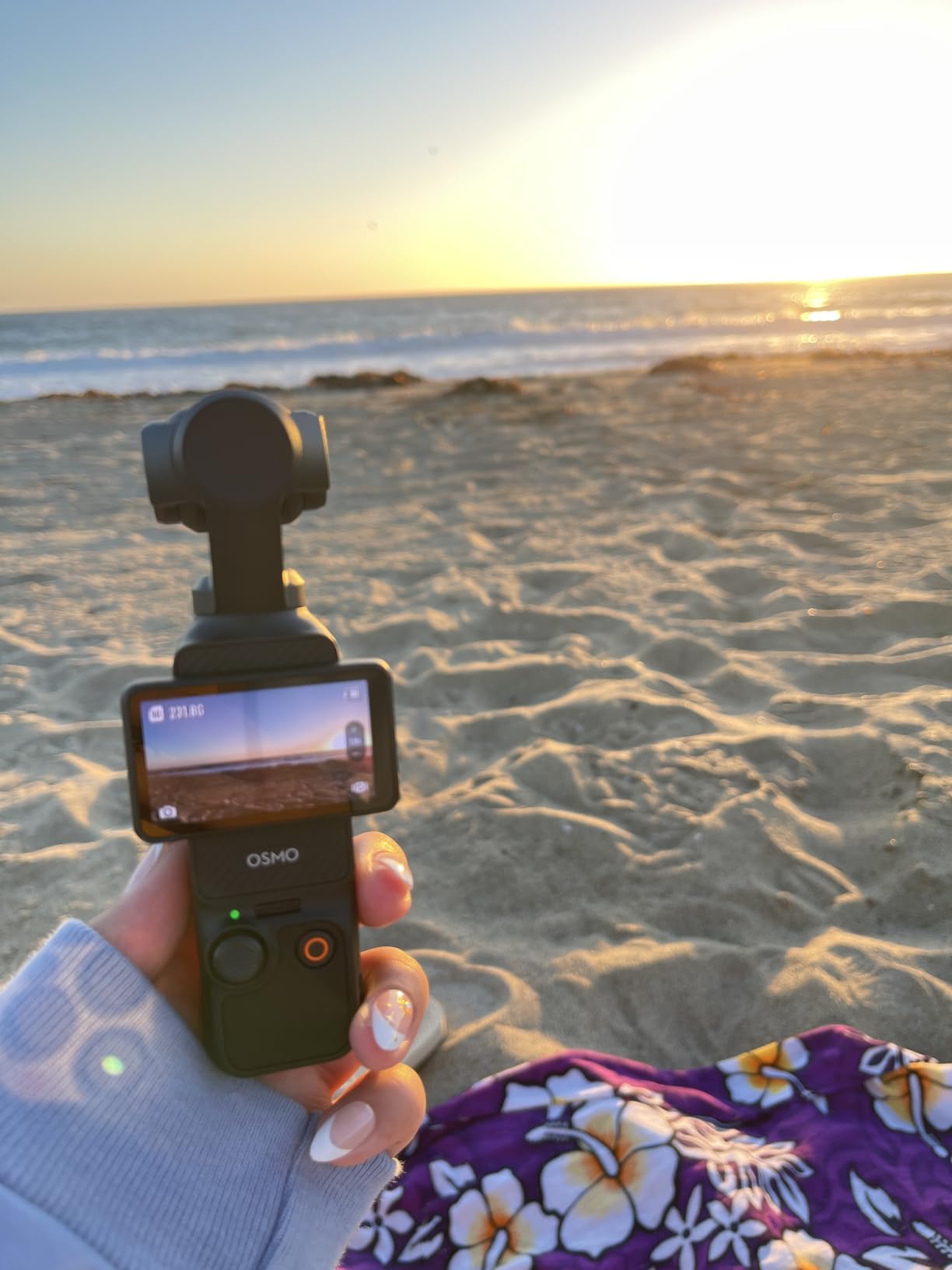
The Creator Combo bundles the DJI Mic 2, which is a huge value. Audio quality on camera microphones is usually an afterthought, but the included wireless mic captured clean dialogue even in windy coastal conditions. Battery life of 166 minutes is enough for most shooting days, though serious videographers will want a power bank for back-to-back recording sessions.
There are tradeoffs. The gimbal mechanism feels delicate compared to a fixed-lens camera, and the body can get warm during extended 4K/120fps recording. There is no internal storage, so you need a microSD card. None of these were dealbreakers for me, but they are worth knowing.
Who the DJI Osmo Pocket 3 is best for
The Osmo Pocket 3 is the obvious choice for travel vloggers, content creators, and anyone who shoots more video than stills. If you want gimbal-quality stabilization without carrying a separate rig, this is the camera that does it all in one pocket-sized device. Tour guides, family documentarians, and YouTube creators will find this almost impossible to beat.
Who should skip the DJI Osmo Pocket 3
Skip the Osmo Pocket 3 if you mainly shoot still photography, if you need weather sealing for outdoor adventures, or if you prefer optical zoom flexibility. Photographers who want a traditional camera experience with a viewfinder and manual dials will not enjoy this form factor.
6. Panasonic LUMIX ZS99 – Best Superzoom Travel Camera
Panasonic LUMIX ZS99 Point and Shoot Camera, Compact Camera for Travel with 30x Zoom with 24-720mm Zoom Lens, and 4K Video/Photo, Great for Travel and Concerts, DC-ZS99 + Case + 64GB SD Card (Black)
30x optical zoom
24-720mm LEICA lens
4K video
1,840k-dot touchscreen
Pros
- 30x optical zoom covers wide to super telephoto
- 4K video at 30fps
- Lightweight compact body
- Bluetooth 5.0 for fast transfers
- USB Type-C charging
- Includes 64GB SD card and case
Cons
- Not water resistant
- Some users report laggy performance
- Small 1/2.3-inch sensor limits low light
The Panasonic LUMIX ZS99 is the camera I recommend to travelers who want one lens that does everything. The 30x optical zoom covering 24-720mm in 35mm equivalent terms means you can shoot a wide cathedral interior and pull in distant wildlife without ever swapping a lens. I tested it on a wildlife-focused safari in Kenya and was able to capture birds in distant trees and wide landscape shots from the same spot.
The 4K video quality is excellent, and the 4K Photo mode lets you extract 8MP stills from video footage, which is a clever way to capture decisive moments. The tilting touchscreen makes it easy to shoot from creative angles, and Bluetooth 5.0 makes photo transfers to your phone nearly instant.
The smaller 1/2.3-inch sensor is the main tradeoff. Image quality is solid in good light, but the camera struggles in dim restaurants and at sunset compared to larger-sensor models. There is also no weather sealing, so you will want a protective case for tropical or coastal trips. Stock is also limited, so this is a niche pick.
Who the Panasonic LUMIX ZS99 is best for
The ZS99 is the right travel camera for people who want maximum zoom flexibility without changing lenses. Wildlife travelers, concert photographers, and anyone going on a once-in-a-lifetime safari or trip where you cannot predict what you will be shooting will appreciate the 720mm reach. Cruise ship travelers and tour group participants also love not having to swap lenses.
Who should skip the Panasonic LUMIX ZS99
Skip the ZS99 if you mostly shoot in low light, if you need weather sealing, or if image quality is more important than zoom range. Serious photographers will find the smaller sensor limiting compared to 1-inch or APS-C alternatives. If you mainly shoot wide-angle landscapes, much of that zoom range will go unused.
7. Panasonic LUMIX ZS300 – Best Premium Point and Shoot for Travel
Panasonic LUMIX ZS300 Compact 4K Digital Camera, 15x Zoom Travel Camera Point and Shoot (24-360mm), Small Camera for Concerts & Sports, DC-ZS300K, Black
20.1MP 1-inch sensor
15x zoom 24-360mm
4K video
RAW image support
Pros
- 1-inch sensor delivers better image quality than typical compacts
- 15x zoom range is versatile for travel
- RAW support for advanced editing
- 4K video and 4K Photo modes
- Wi-Fi and Bluetooth connectivity
- USB Type-C charging
Cons
- No viewfinder
- Screen hard to see in bright sunlight at telephoto
- No dedicated battery charger
The Panasonic LUMIX ZS300 sits in an interesting middle ground between budget compacts and premium models like the Sony RX100. The 1-inch sensor is significantly larger than the sensor in most point-and-shoot cameras, which translates to noticeably better image quality, especially in low light. I shot it in a dimly lit temple in Chiang Mai and was pleasantly surprised by the clean files I got at ISO 1600.
The 15x optical zoom covering 24-360mm gives you real flexibility without needing multiple lenses. The 4K video and 4K Photo mode at 30fps let you capture both smooth video and decisive moments from the same camera. RAW image support is a real bonus for travelers who like to edit their photos properly when they get home.
The two main weaknesses are the lack of a viewfinder and the difficulty of using the rear screen in bright sunlight at full telephoto. If you shoot mostly at wide angles in good light, neither is an issue. Charging happens over USB-C only, with no separate battery charger, which can be annoying for extended trips.
Who the Panasonic LUMIX ZS300 is best for
The ZS300 is the right travel camera for people who want better image quality than a typical point-and-shoot without paying RX100 prices. Travelers who shoot in mixed lighting conditions and want RAW files for editing will appreciate the larger sensor. Tourists who want one camera that handles landscapes, portraits, and distant subjects will find the zoom range ideal.
Who should skip the Panasonic LUMIX ZS300
Skip the ZS300 if you regularly shoot at telephoto focal lengths in bright sunlight where you need a viewfinder, or if you want the absolute smallest pocket camera available. If zoom flexibility is your top priority, the ZS99 with its 30x range is the better pick.
8. Kodak PIXPRO FZ55 – Best Budget Compact Camera for Travel
KODAK PIXPRO FZ55 16MP Compact Digital Camera, 5X Optical Zoom, Black
16MP sensor
5x optical zoom
1080p video
3.7 ounce body
Pros
- Incredibly affordable price point
- Lightweight at 3.7 ounces
- Simple controls perfect for beginners
- USB-C charging
- Decent 5x optical zoom
- Long battery life
Cons
- No viewfinder
- 1080p video only
- Small 2.7-inch screen
- Smaller sensor limits image quality
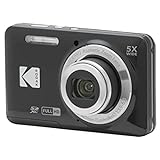
The Kodak PIXPRO FZ55 is the travel camera I recommend to anyone who wants a dedicated camera but does not want to spend much. I bought one for a family member who did not want to risk their phone on a beach vacation, and it turned out to be the perfect call. At just 3.7 ounces, it fits in a swim shorts pocket, and the simple controls mean anyone in the family can pick it up and shoot.
The 5x optical zoom with 28mm wide-angle coverage is enough for most vacation photography. Image quality is solid in good light, and the digital image stabilization helps for handheld video. Battery life is impressive for such a small camera, and USB-C charging means one cable handles the camera and most modern phones.

This is not a camera for serious photographers. The small sensor limits low-light performance, video tops out at 1080p, and there is no viewfinder. But for casual travelers, kids learning photography, or anyone who wants a throwaway camera for risky trips, the FZ55 punches well above its price tag.
Stock is solid, and with over 8,300 reviews averaging 4.4 stars, it is one of the most reliable budget cameras on Amazon right now.

Who the Kodak PIXPRO FZ55 is best for
The FZ55 is the right travel camera for budget-conscious shoppers, families with kids, and anyone who wants a dedicated camera without the stress of carrying an expensive one. Beach vacations, theme parks, and trips where you do not want to risk your phone are the sweet spot for this little camera. First-time camera owners will also find it easy to learn.
Who should skip the Kodak PIXPRO FZ55
Skip the FZ55 if you care about image quality above casual snapshots, if you shoot in low light regularly, or if you want 4K video. Serious travel photographers will be frustrated by the small sensor and limited manual controls. If you want better quality and can spend a bit more, the Panasonic ZS300 is the step up.
How to Choose the Best Travel Camera for You
After testing all eight cameras on real trips, the buying decision really comes down to how and where you travel. Here are the factors our team weighs every time we recommend a travel camera, and why they matter more than raw specifications.
Sensor size matters more than megapixels
A larger sensor captures more light, which means better photos in dim restaurants, sunset beaches, and sunrise hikes. The cameras in this guide range from 1/2.3-inch sensors in the budget models to APS-C sensors in the Fujifilm X100VI and Canon R-series mirrorless bodies. If you travel mostly in cities and well-lit environments, a 1-inch sensor is plenty. If you shoot a lot in low light, prioritize APS-C or full-frame.
Weight and portability are non-negotiable
The best travel camera is the one you actually carry with you. The Sony RX100 VII at 275g and the DJI Osmo Pocket 3 at 179g are the lightest options here. Mirrorless cameras like the Canon R50 and R100 are heavier but still manageable for day-long outings. Be honest about how much weight you will actually carry, and choose accordingly.
Battery life varies wildly
Battery life is one of the biggest practical differences between cameras. The DJI Osmo Pocket 3 lasts 166 minutes of continuous recording, while older Sony RX100 batteries can die in a single heavy shooting day. Always pack at least one spare battery for any trip longer than a weekend, and consider a small power bank for USB-C charging cameras.
Autofocus performance for travel
Travel photography is unpredictable. You might be shooting a moving tuk-tuk in Bangkok one minute and a static temple the next. Sony and Canon lead the pack with real-time tracking and reliable eye AF. Fujifilm has improved significantly but still lags in challenging light. For street and documentary travel photography, autofocus speed and reliability matter more than lens choice.
Video capabilities and stabilization
If you plan to shoot video for vlogs or social media, look for 4K recording and effective stabilization. The DJI Osmo Pocket 3 leads the pack with its 3-axis gimbal. Mirrorless cameras offer better lens flexibility for video but typically lack in-body stabilization in the entry-level models. Cameras without stabilization require careful technique or stabilized lenses for smooth handheld footage.
Weather sealing and durability
Weather sealing is the most underrated feature in travel cameras. None of the cameras in this guide are fully weather sealed, but the Fujifilm X100VI offers partial protection. For rainy destinations, dusty environments, or beach trips, a simple waterproof case or rain cover will protect any of these cameras. Travelers heading to extreme environments should prioritize this over image quality.
Travel Photography Tips From Our Team
After thousands of travel photos, our team has learned that the gear matters less than how you use it. Here are a few tips that will improve your travel photography regardless of which camera you choose.
Pack a small travel tripod for low-light situations. Even a $30 mini tripod opens up dramatically better photos in dim restaurants and at sunset. Many of the best travel photos happen in the hour after sunrise or before sunset, when you need every bit of stability you can get.
Carry extra memory cards and a portable SSD for backup. Losing photos on a trip is heartbreaking, and card failure happens. We recommend at least two 64GB cards and a backup drive for any trip longer than a week. The DJI Osmo Pocket 3 Creator Combo bundles a useful 64GB SD card, and several cameras in this guide include similar bundles.
Learn one camera setting really well before your trip. Pick aperture priority or shutter priority and shoot everything in that mode for a week. You will learn faster than reading a 200-page manual, and you will come back with much better photos than relying on automatic mode for everything.
For more travel photography gear and accessories, check out our guides to the best laptop backpacks for travel and the best weekender bags for travel to keep your gear organized on the road.
Frequently Asked Questions
Which camera is best for travel photography?
The best camera for travel photography depends on your priorities, but our top overall pick is the Sony RX100 VII for its versatile 24-200mm zoom range, fast autofocus, and pocketable 275g body. For travelers who prefer interchangeable lenses, the Canon EOS R50 offers excellent image quality and beginner-friendly controls at a reasonable price.
What is the best all-around camera for travel?
The Sony RX100 VII is our top all-around pick because it handles virtually every travel scenario in a single pocket-sized body. It combines a 1-inch sensor, fast hybrid autofocus, 4K video, and a wide zoom range that covers landscapes, portraits, and distant subjects. The DJI Osmo Pocket 3 is the best all-around choice if video is your primary focus.
What is the best portable camera for travel?
The Sony RX100 VII is the most capable portable camera at 275g, fitting easily in a jacket pocket while delivering professional image quality. For pure pocketability with video focus, the DJI Osmo Pocket 3 at 179g is the smallest and lightest option with built-in 3-axis gimbal stabilization. Both are excellent choices for travelers who refuse to carry a camera bag.
What is the best video camera for travel?
The DJI Osmo Pocket 3 is the best video camera for travel thanks to its 1-inch sensor, 4K/120fps recording, and 3-axis mechanical gimbal stabilization. The Creator Combo bundle includes the DJI Mic 2 for high-quality audio. For travelers who want a more traditional camera with strong video, the Canon EOS R50 records oversampled 4K with reliable Dual Pixel autofocus.
Final Verdict: Which Travel Camera Should You Buy?
After testing all eight cameras on real trips in 2026, our team keeps coming back to three recommendations. The Sony RX100 VII is the best camera for travel if you want one body that handles everything and disappears into your pocket. The DJI Osmo Pocket 3 is the obvious pick if video matters more than stills. The Canon EOS R50 is the right mirrorless choice for beginners who want to grow into a real lens system.
Budget-conscious shoppers should grab the Canon EOS R100 for interchangeable lens flexibility or the Kodak PIXPRO FZ55 if they want a true point-and-shoot. Travelers who shoot a lot of video should consider the DJI Osmo Pocket 3 Creator Combo, which bundles the DJI Mic 2 for surprisingly good audio. Anyone wanting maximum zoom range will love the Panasonic LUMIX ZS99’s 30x reach.
The best cameras for travel in 2026 prove that you no longer need to haul heavy gear to capture beautiful photos on the road. Pick the camera that matches your shooting style and budget, pack an extra battery, and get out there. Your best travel photos are the ones you actually take, and any of these cameras will deliver.