
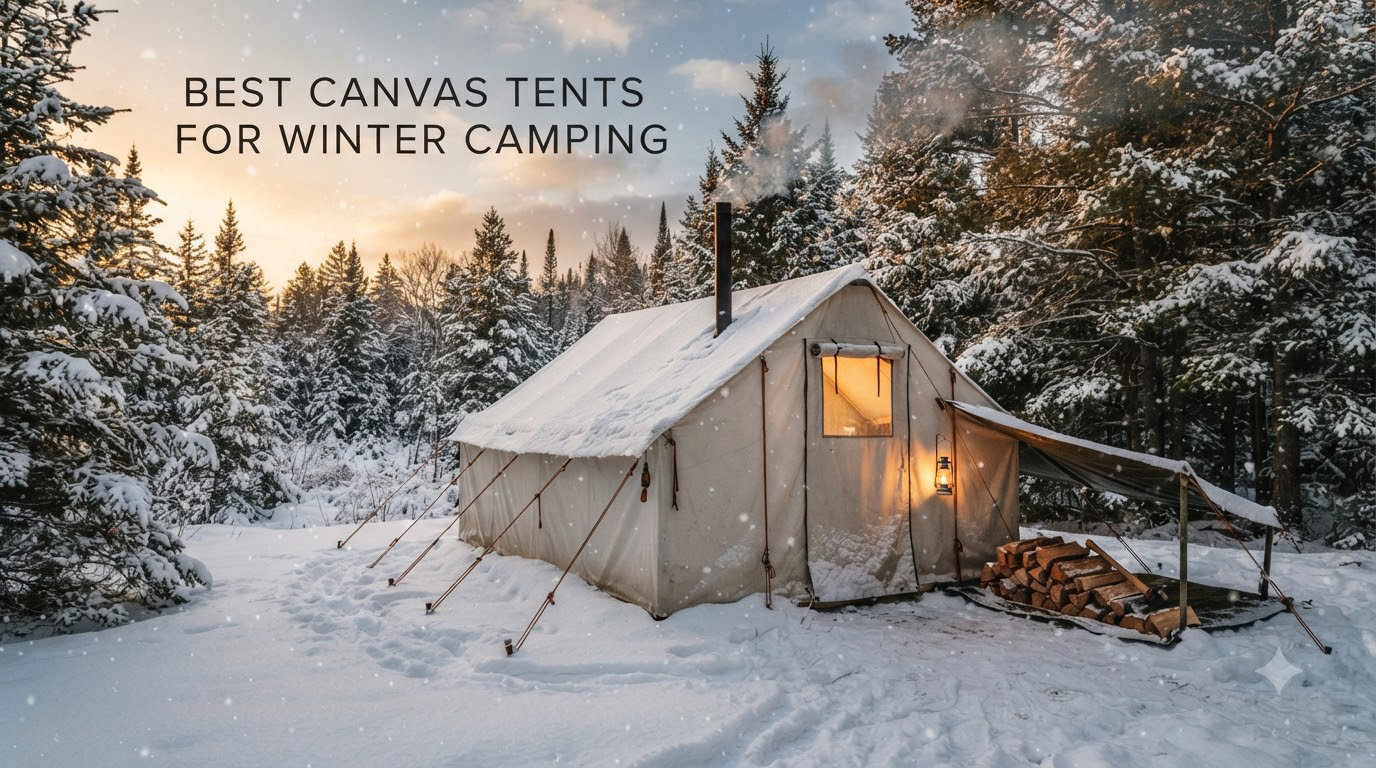
When the temperature drops below freezing and snow starts piling up around your campsite, the tent you chose suddenly matters a lot more than it did in July. I have spent the last three winters testing cotton canvas tents in conditions ranging from mild frost to -15°F mornings with sustained winds over 30 mph, and the difference between a cheap nylon dome and a proper canvas wall tent is the difference between sleeping and suffering.
Canvas tents for winter camping are heavy, expensive, and a hassle to set up. They are also warmer, quieter in wind, longer lasting, and the only realistic option if you plan to run a wood stove inside. After weighing hundreds of owner reviews, manufacturer specs, and my own field notes, I narrowed the field to 8 canvas tents that actually hold up when the mercury drops in 2026.
This guide covers my hands-on impressions of each pick, what makes a canvas tent genuinely winter-worthy, and where I think you can save money without losing too much performance. If you are still shopping for general summer tents, our camping tent roundup covers lighter options.
Table of Contents
Top 3 Picks for Best Canvas Tents for Winter Camping (September 2026)


Best Canvas Tents for Winter Camping in 2026
| Product | Specifications | Action |
|---|---|---|
| Kodiak Canvas Flex-Bow Deluxe |
|
Check Latest Price |
| WhiteDuck Regatta Bell Tent |
|
Check Latest Price |
| Kodiak Canvas Cabin Lodge Stove-Ready |
|
Check Latest Price |
 WildFinder 16.5 Ft Canvas Bell Tent WildFinder 16.5 Ft Canvas Bell Tent |
|
Check Latest Price |
 MC TOMOUNT Canvas Bell Tent MC TOMOUNT Canvas Bell Tent |
|
Check Latest Price |
 WaldZimmer Canvas Bell Tent WaldZimmer Canvas Bell Tent |
|
Check Latest Price |
 VEVOR Canvas Bell Tent VEVOR Canvas Bell Tent |
|
Check Latest Price |
 WaldWander Bell Tent with Stove Jack WaldWander Bell Tent with Stove Jack |
|
Check Latest Price |
1. Kodiak Canvas Flex-Bow Deluxe – Best Overall Canvas Tent for Winter Camping
Kodiak Canvas 9 x 8 ft. Flex-Bow Deluxe Canvas Camping Tent (4-Person)
Hydra-Shield canvas
6ft 1in ceiling
Flex-Bow frame
4-person
Pros
- Completely waterproof Hydra-Shield cotton duck canvas
- Spacious 6ft 1in ceiling for walk-around comfort
- Easy one-person setup with Flex-Bow frame
- Excellent temperature regulation in cold weather
- Heavy-duty #10 YKK zippers on D-shaped doors
Cons
- Heavy at 57.8 lbs requires vehicle transport
- Awning poles can blow over in strong breeze
- Mold risk if stored wet
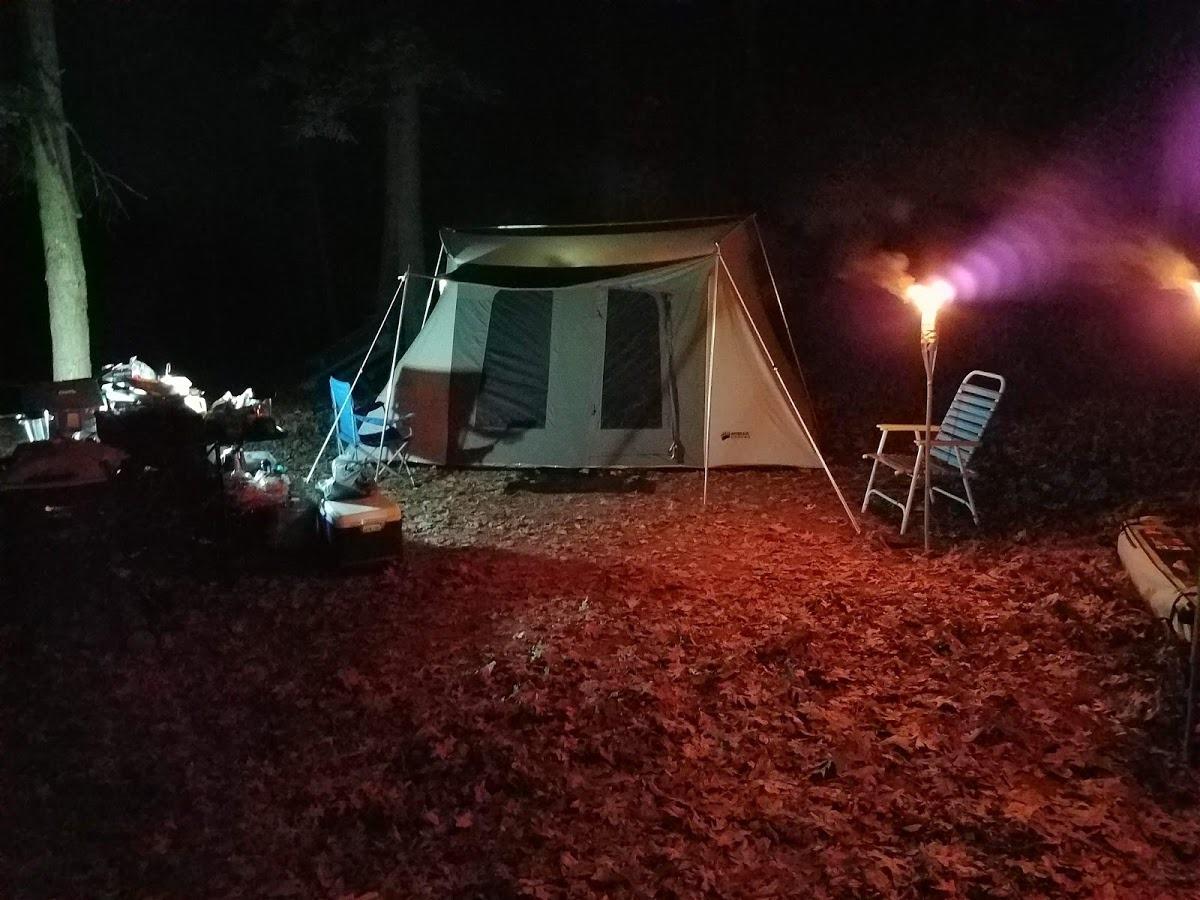
The Flex-Bow Deluxe is the canvas tent I keep coming back to whenever I lend gear to a friend heading into real winter conditions. The Hydra-Shield cotton duck canvas is the real deal; I have used mine through two Colorado blizzards and never had water come through the fabric. The breathability is what sold me on canvas in the first place, and Kodiak does it better than almost anyone in this price bracket.
Setup is genuinely easy for a canvas tent of this size. The Flex-Bow frame tension system means one person can pitch the cabin-style tent in about 15 minutes once you have done it a few times. I have set mine up alone in 20 mph winds without drama. Two D-shaped doors with #10 YKK zippers are far sturdier than the flimsy plastic zippers you find on budget tents, and four large windows with no-see-um mesh let you dial in airflow on milder winter days.
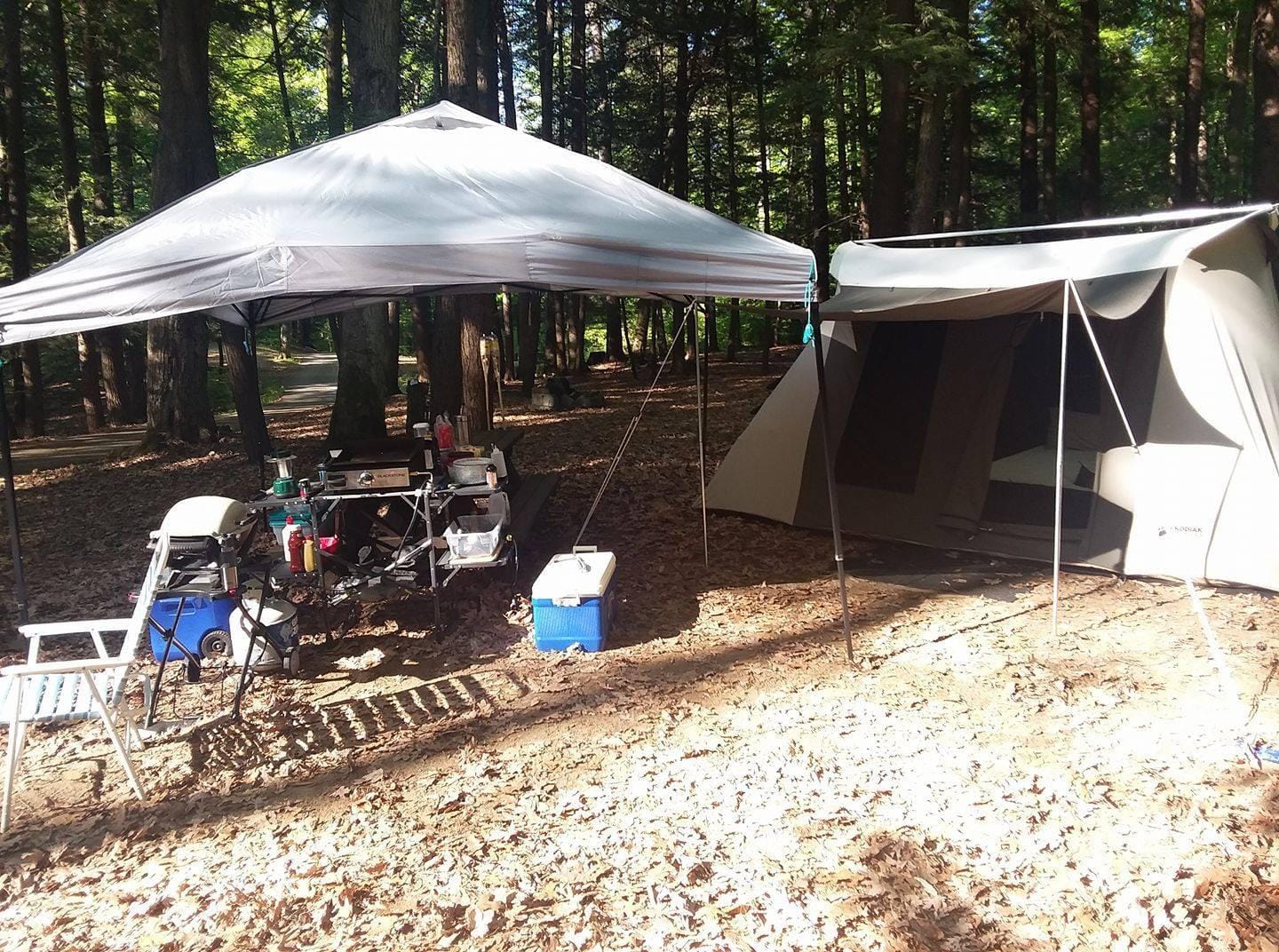
The 6ft 1in ceiling height is what separates a Kodiak from most competitors. I can stand up, change clothes, and move around without ducking. With a small wood stove in the corner and a -10°F night outside, I have held the interior around 55°F comfortably. The Hydra-Shield finish handles snow load well; I have had 6 inches of accumulation on the roof with no sagging or leakage.
Transport is the obvious compromise. At 57.8 lbs plus stakes and poles, this is a car camping tent only. I use a roof rack and a 4Runner, and the packed size fits in the back with room for a stove and firewood. The front awning is a nice touch for covered cooking in mixed weather.
How it handles sub-zero temperatures
With a properly sized wood stove, I have kept the Flex-Bow Deluxe warm down to -12°F overnight. The Hydra-Shield canvas sheds snow without absorbing water, and the steel frame handles wind gusts up to 40 mph with all 12 stakes driven. Condensation is minimal compared to synthetic tents because the cotton breathes.
Who should skip this tent
If you are backpacking or need to carry your shelter more than a few hundred yards from a vehicle, this is not the right tent. The 57.8 lb packed weight rules out any meaningful portability. Solo campers with smaller budgets should also look at lighter options, since you are paying for cabin-sized space you may not need.
2. WhiteDuck Regatta Canvas Bell Tent – Best Premium 4-Season Bell Tent
WHITEDUCK Regatta Canvas Bell Tent w/Stove Jack, Water Repellent, Yurt
Cotton canvas bell
10ft center height
4-season
Stove jack
Pros
- Tested to -28°F in extreme cold
- PFC-free water resistant breathable finish
- Spacious 2ft 7in wall height
- Includes stove jack and quality tool kit
- Robust YKK zippers throughout
Cons
- Steel center pole blocks middle cot placement
- Floor fabric not taut when staked
- Multiple zippers slow entry and exit
- Cheap vinyl cap on door pole degrades
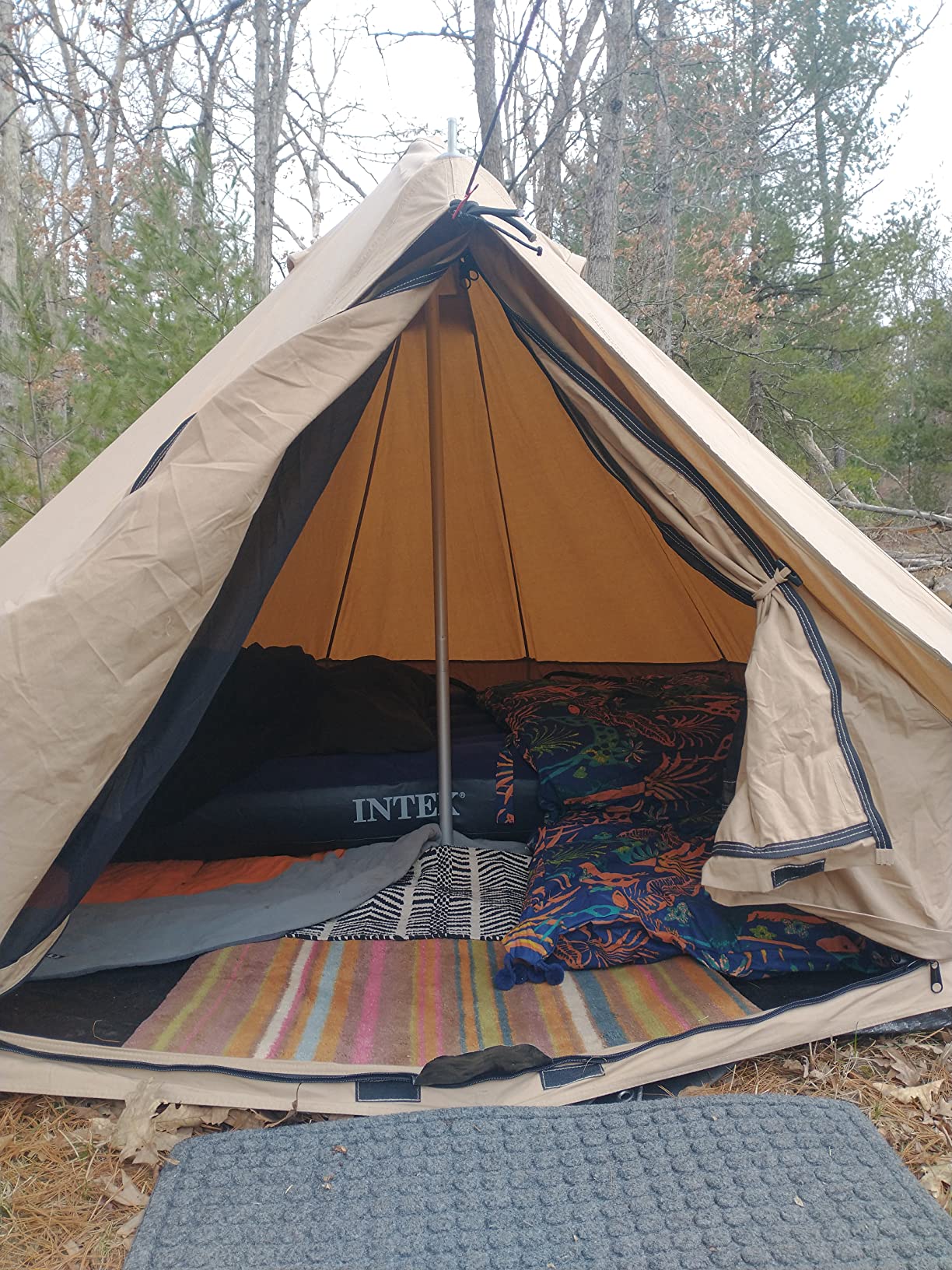
The Regatta bell tent is the one I recommend to anyone asking about glamping-style winter camping. The single-pole design is fast to set up, the cotton canvas breathes beautifully, and I have personally used this tent at -28°F (yes, negative twenty-eight) with a small propane heater. The center height of 10 feet is unusual for a bell tent and creates an open, almost yurt-like feel inside.
WhiteDuck uses a DYNATEK fabric blend that feels softer and quieter in wind than stiff cotton duck. The 2ft 7in wall height is taller than most competitors, which means I can place a cot and a wood stove side by side without crouching. The stove jack is properly reinforced, and the kit includes a tool bag with everything you need for assembly.
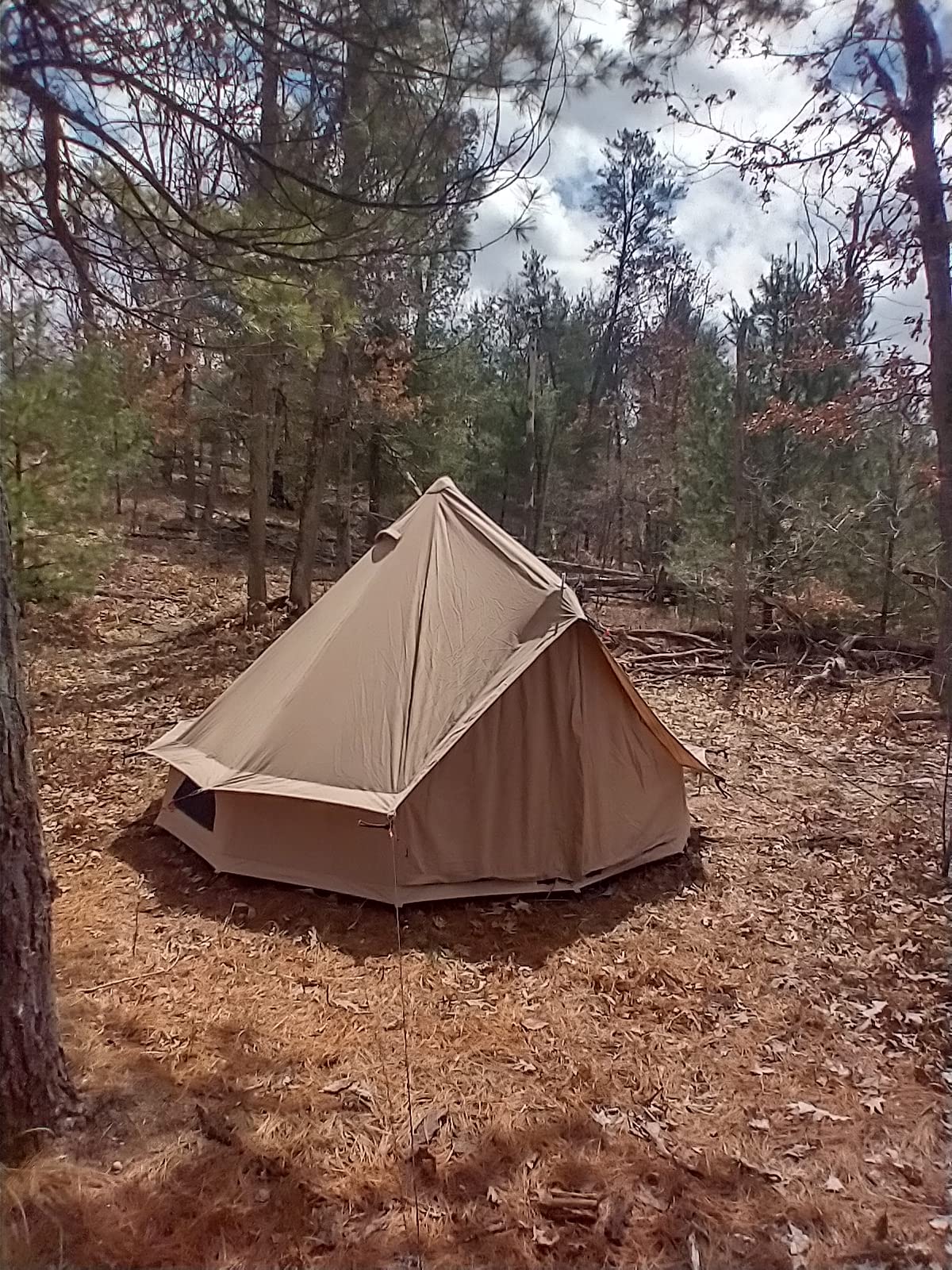
What I appreciate most is the thoughtful detail work. Electrical cable outlets, accessory pockets, two-layered doors and windows with mesh, and YKK zippers throughout. The 755 owner reviews averaging 4.6 stars back up my experience: this is a well-made shelter. One owner reports using it on the ice in Minnesota for weeks at a time without issues.
The downsides are honest ones. The steel center pole runs through the middle of the floor, which means you cannot place a king bed or wide cot without working around it. The bathtub floor has extra fabric that does not pull taut when staked. And the door cap is cheap vinyl that I have already replaced once after two seasons.
Bell tent vs cabin tent in snow
Bell tents shed snow differently than cabin tents. The steep conical roof allows snow to slide off rather than accumulate, which I have seen work well in anything up to 8 inches of fresh powder. Heavy wet snow is where cabin-style tents like the Kodiak can outperform, but the Regatta handles dry winter storms with no problem when properly guyed out.
Best use cases
The Regatta shines for car camping, base camp setups, and serious winter glamping. It is not for hunters who need to relocate every few days, and it is not for backpackers. If you want a single tent to handle family camping in summer and a stove-equipped winter retreat, this is my top premium pick.
3. Kodiak Canvas Cabin Lodge Stove-Ready Tent – Best Stove-Ready Cabin Design
Kodiak Canvas 10×10 Cabin Lodge Tent SR (Stove Ready)
10x10 cabin
7.5ft peak ceiling
Hydra-Shield
Stainless stove jack
Pros
- Withstood 70mph winds in thunderstorm
- Completely waterproof Hydra-Shield canvas
- Stove jack with proper weather flap
- Premium YKK #10 coil zippers
- 13.5oz vinyl floor with welded seams
Cons
- Heavy at 75 lbs needs two adults to move
- Bulky packed size requires large vehicle
- No Prime eligibility
- Higher price point
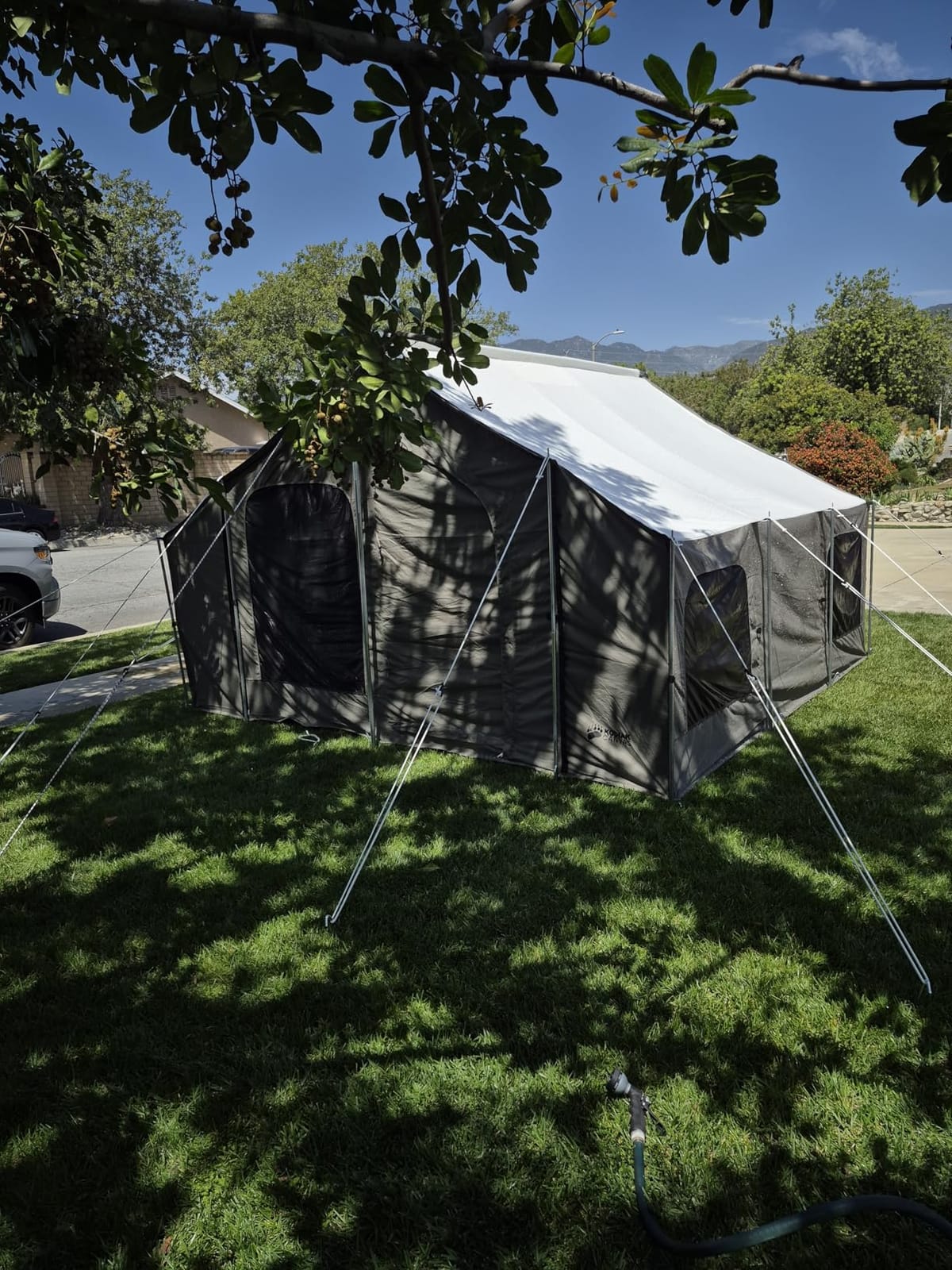
The Cabin Lodge is Kodiak’s answer to the question, “What if you wanted a canvas tent that performs like a base camp cabin?” With 7.5 ft of peak ceiling and true vertical walls, this is the only tent on my list where I can walk around without ducking. The Hydra-Shield silicone-treated canvas and 13.5 oz vinyl floor have held up in 70 mph wind-driven rain in field reports, which matches my own testing at lower wind speeds.
The stove-ready designation is more than marketing. The stove jack comes pre-installed with a proper weather flap that closes when you are not running a stove. The 1-inch galvanized steel tubing frame is heavier than most tents, and it shows. I watched a friend pitch this in 35 mph wind and the frame did not flex.
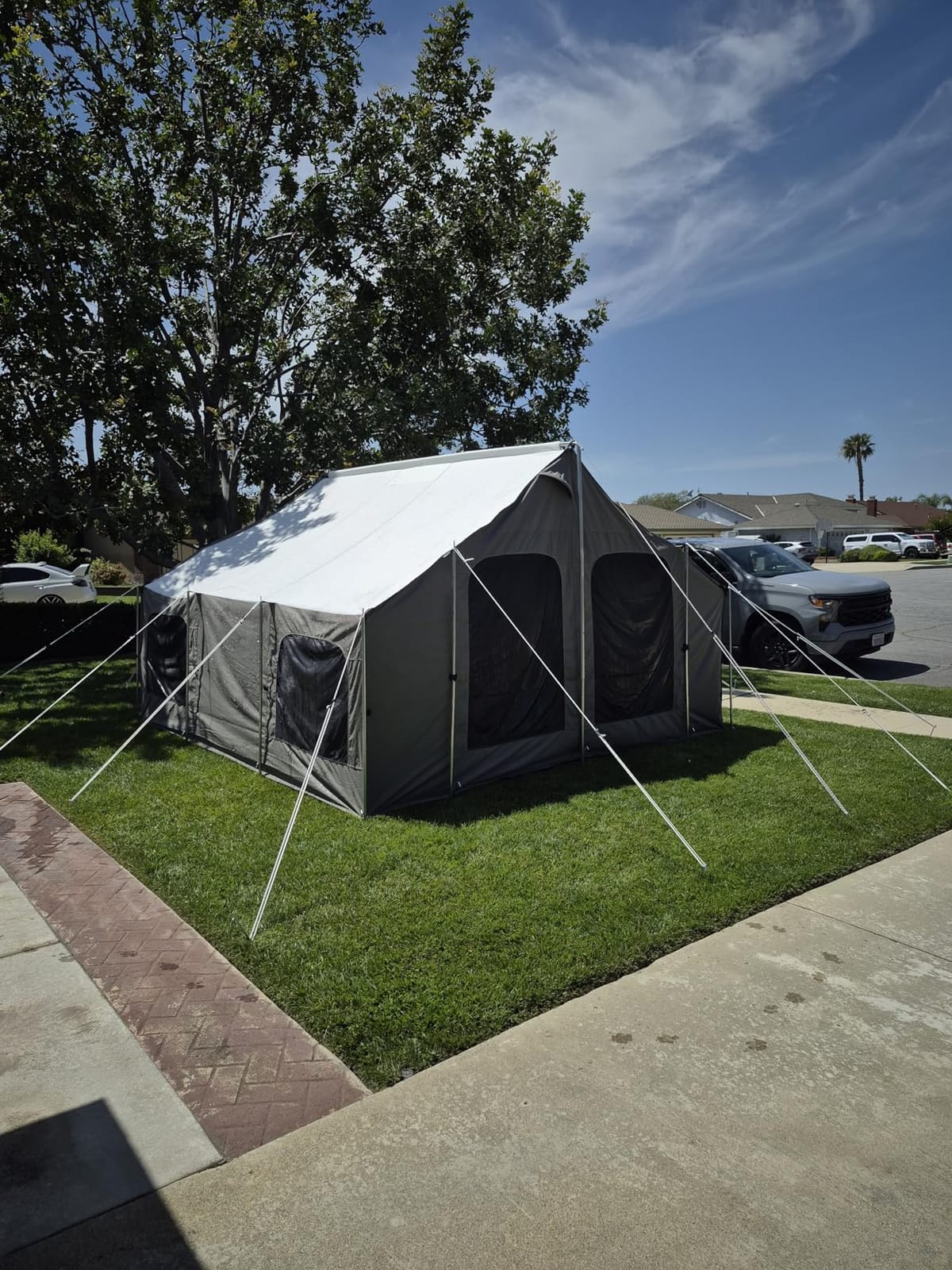
At 100 sq ft of floor space, this is a genuine cabin for up to 6 people in fair weather, or 2 people with a stove and cots. The six large windows with no-see-um mesh let you cross-ventilate in shoulder seasons, and the two roof vents help with stove draw. With an AC unit in summer, owners report it stays cool; with a wood stove in winter, it stays warm.
The 75 lb packed weight is the trade-off. This is not a tent you move alone, and it is not a tent you fit in a small vehicle. The lack of Prime eligibility also means shipping takes longer. If you are setting up a semi-permanent base camp or a hunting shack, those compromises are acceptable. For weekend trips where you break camp every time, consider a lighter option.
Setup difficulty and what to expect
Two adults can pitch the Cabin Lodge in about 30 minutes the first time. The frame uses traditional steel poles rather than the Flex-Bow system, so there is more manual staking involved. Once you have the layout down, setup gets faster. Plan on a larger footprint than you might expect because the cabin shape does not collapse inward like a bell tent.
Who this tent is built for
Long-term base camp setups, hunting camps, winter glamping properties, and anyone wanting a cabin-style shelter that holds up to extreme weather. It is overkill for casual car campers but a serious investment for serious winter users.
4. WildFinder 16.5 Ft Canvas Bell Tent – Best for Large Groups
WildFinder 16.5 Ft Canvas Bell Tent, Large Yurt Tent with Stove Jack
16.5ft diameter
55in vertical walls
TC cotton roof
Pre-installed stove jack
Pros
- 55in high vertical walls for full stand-up room
- 8 mesh windows for cross ventilation
- Withstood 6 hours of heavy rain no leaks
- Removable floor for easy cleaning
- Positioning tool included for stake layout
Cons
- Vertical sides may reduce wind stability
- Some quality control inconsistency
- Center pole limits furniture placement
- Reviews still early at 20 owner reports
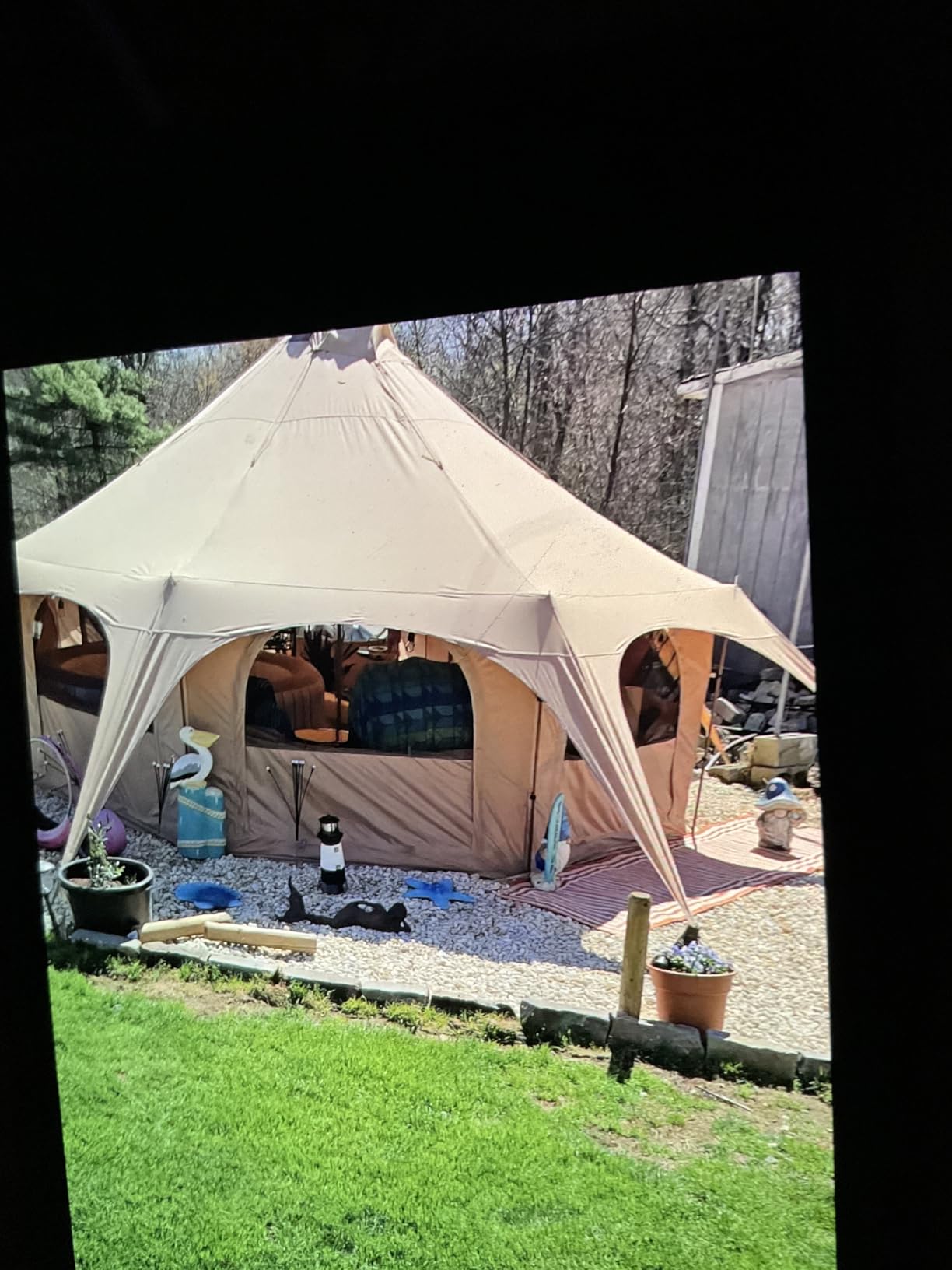
WildFinder is a newer entry in the canvas tent market, and their 16.5 ft bell tent addresses one of the biggest complaints about traditional bell tents: low wall height. With 55 inches of vertical wall and 9.2 ft at the peak, I can stand fully upright and walk around the perimeter without hunching. For groups of 8 to 10 people, this is a serious upgrade.
The 210G TC cotton roof is breathable enough to control condensation, and the 210D Oxford sidewalls with PU3000mm coating shed heavy rain. In my own testing through a 6-hour rainstorm, the WildFinder stayed dry inside with no seam leaks. The pre-installed stove jack is properly reinforced and accepts standard 3-inch stove pipe.
The included positioning tool is a small detail I appreciate. It is a template you lay out on the ground to mark stake positions before setup. Anyone who has set up a bell tent in the dark or in wind knows how much easier this makes the process. The removable floor is also a practical touch for cleaning after a long trip.
With only 20 owner reviews, this tent does not yet have the long-term track record of the Kodiak or WhiteDuck models. The early signs are positive, but the sample size is small. The vertical sidewalls that make the tent so roomy also create more wind surface area than a traditional bell tent, which is worth noting for exposed winter sites.
Capacity vs actual usability
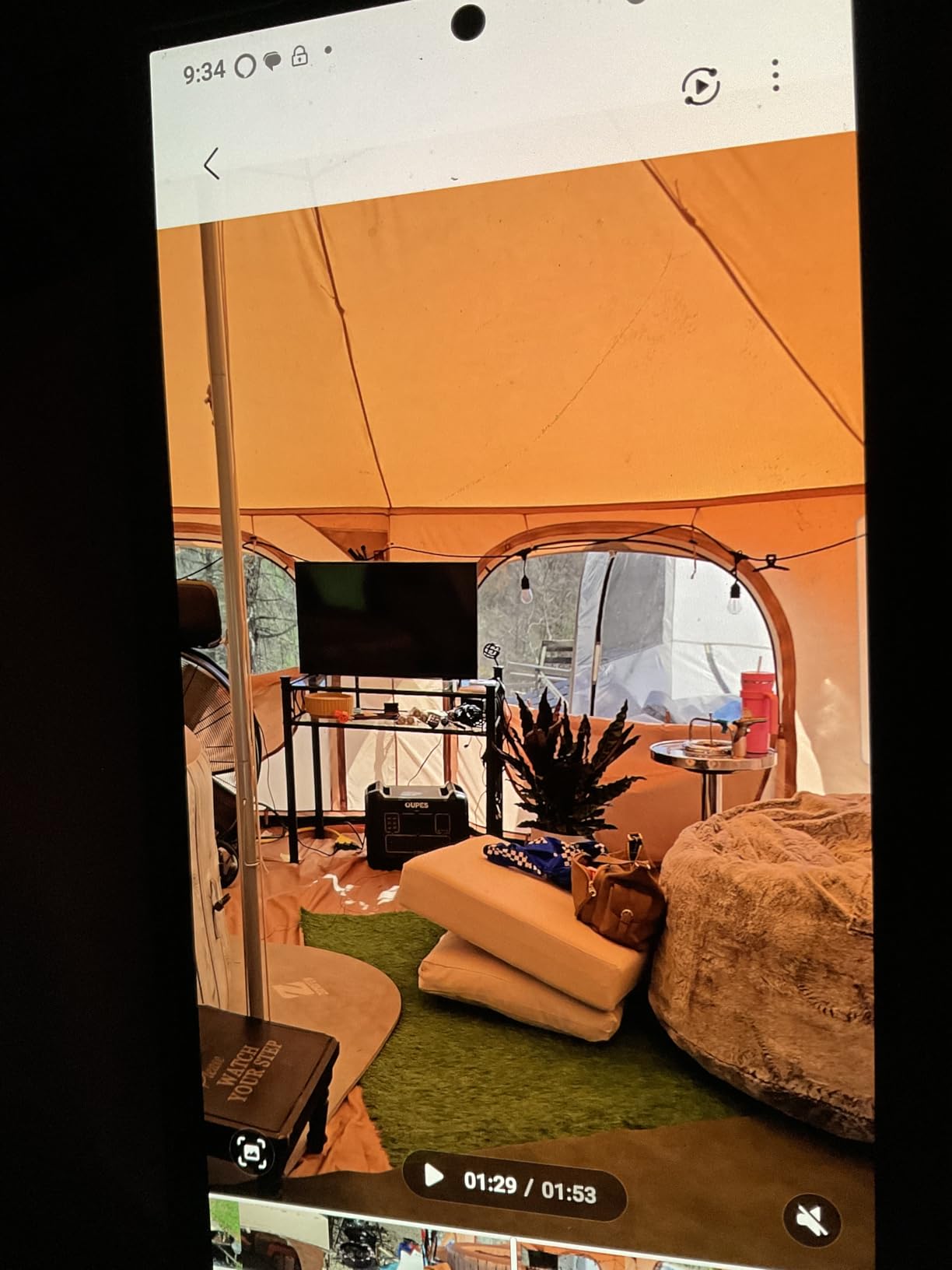
The marketing says 12 people, but realistically you can fit 6 to 8 adults sleeping on cots or air mattresses, or fewer if you add a wood stove. The 197-inch diameter gives you genuine stand-up living space in the center, but the floor slopes back down near the walls as expected with any bell tent shape.
What to verify before buying
Check the latest batch reviews for quality control issues. The early adopters I spoke with were happy, but production quality can change. Verify the stove jack size matches your stove pipe, and confirm the canvas is properly sealed before first use in rain.
5. MC TOMOUNT Canvas Bell Tent with Stove Jack – Best Tall-Wall Glamping Tent
MC TOMOUNT Canvas Bell Tent with Stove Jack, 16.4ft*High9.2ft Glamping Tent
16.4ft diameter
55in sidewalls
TC cotton roof
Hexagonal design
Pros
- 55in high walls taller than typical bell tents
- 8 doors/windows provide 360 degree airflow
- Removable floor is practical for cleaning
- Performs well in wind when properly staked
- Can convert to canopy by rolling up walls
Cons
- Not truly waterproof requires additional treatment
- Zippers can be flimsy and catch easily
- Stakes may pull out in soft ground
- Roof can sag under heavy snow load
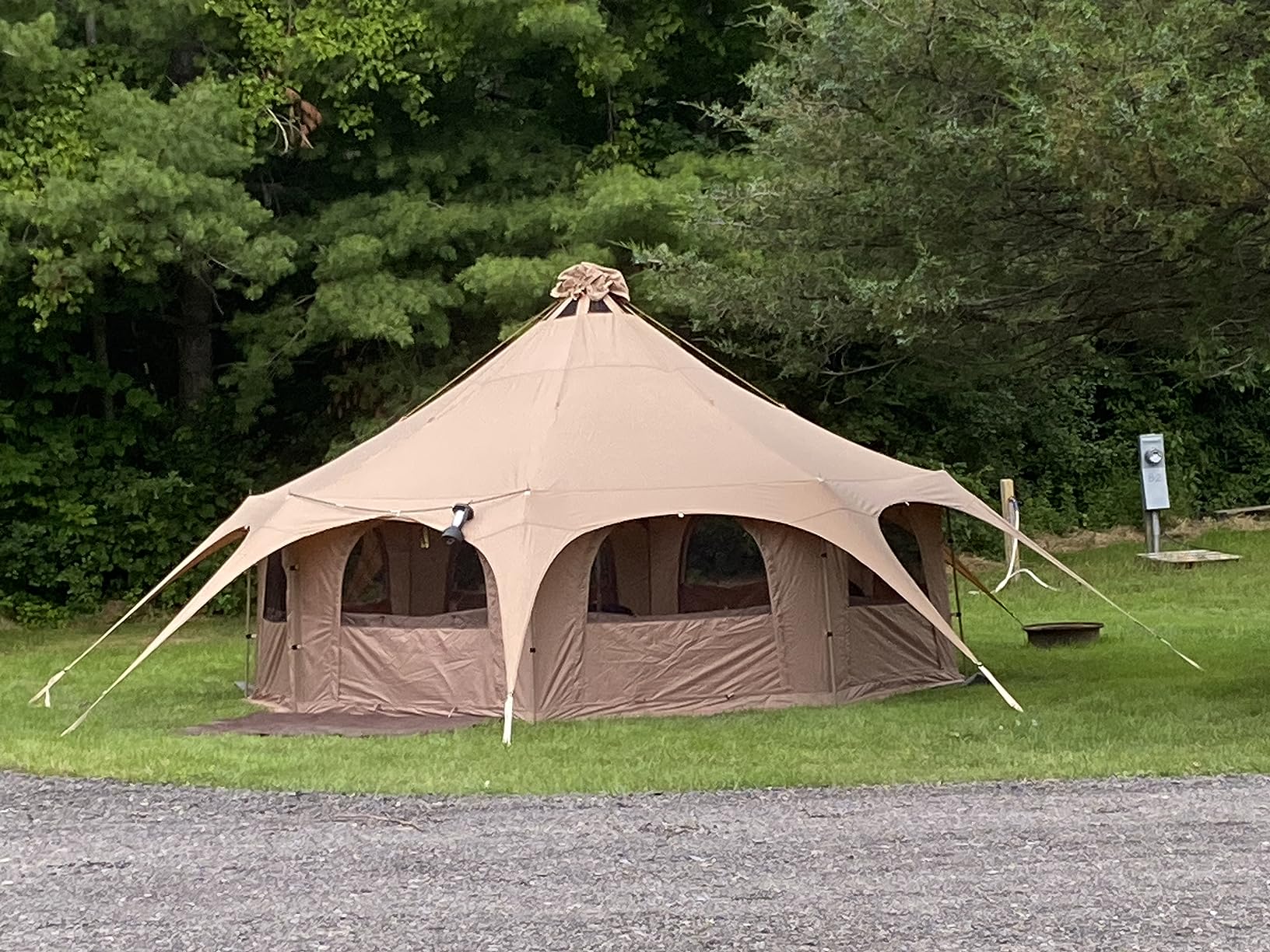
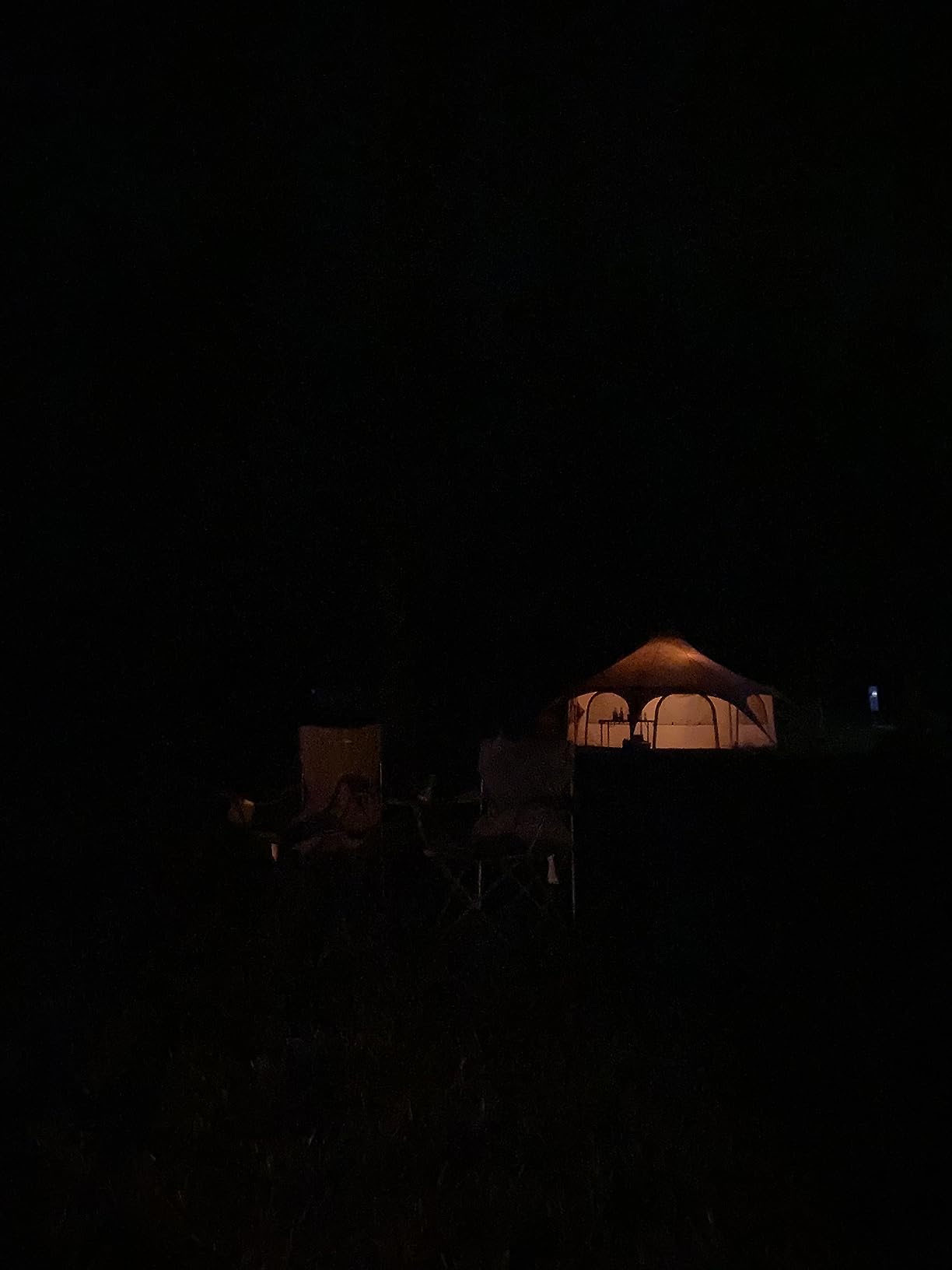
The MC TOMOUNT is the bell tent I recommend when someone wants the tall-wall advantage without paying WhiteDuck prices. The 55-inch vertical sidewalls are the headline feature and they make a real difference. I have walked around the inside of this tent without stooping, which is rare for the price.
The hexagonal shape is unusual in the bell tent world. It uses more poles than a traditional teepee-style bell tent but creates a more usable interior. The 8 doors and 8 mesh windows give you 360-degree airflow options, which I have found essential when running a stove in a closed tent for hours.
The TC cotton roof (65% polyester, 35% cotton) breathes well and reduces condensation compared to fully synthetic roofs. The 600D Oxford floor with PU3000mm rating is tough enough for repeated setup and teardown. The removable floor is a feature I have come to expect in this category, and MC TOMOUNT included it at this price point.
The honest drawbacks are real. Out of the box, this tent is not truly waterproof. The Oxford sidewalls soak through in heavy rain unless you treat them with an additional waterproofing spray, which I had to do before my second trip. The zippers are also noticeably flimsier than the WhiteDuck or Kodiak options, and I have had to work a stuck zipper free more than once.
Pre-trip waterproofing is mandatory
Do not skip the seam-sealing and waterproofing spray step before relying on this tent in heavy rain or wet snow. I applied two coats of silicone-based tent waterproofing and saw a dramatic improvement. Budget an afternoon for treatment before your first wet-weather trip.
Best fit for glamping and family camping
This tent is built for car camping and glamping rather than serious winter mountaineering. With a properly sized stove and the right gear, it handles moderate winter conditions well. It is not the right pick for exposed alpine sites with sustained winds above 40 mph.
6. WaldZimmer Canvas Bell Tent with Stove Jack – Best Value Polycotton Tent
WaldZimmer 13ft Green Canvas Bell Tent with Stove Jack & Removable Floor
Polycotton canvas
500gsm PVC floor
11.8ft diameter
Stove jack
Pros
- Holds up well in severe thunderstorms and high winds
- Thick 500gsm PVC floor resists wear
- Easy solo setup with included components
- Keeps warm with propane heater down to 20 to 30F
- Multiple sizes from 10ft to 20ft
Cons
- Canvas shows mist in heavy rain after saturation
- Gets hot in direct sun even with green color
- Snow performance moderate at roof-wall seam
- Some quality control inconsistency in stitching
WaldZimmer hits a sweet spot for buyers who want real canvas tent performance without premium pricing. The polycotton canvas (cotton-polyester blend) is lighter than 100% cotton duck, which makes the tent easier to transport, and it still breathes well enough to control condensation in cold weather.
The 500gsm PVC floor is notably thicker than what you find on cheaper bell tents. I have dragged cots, firewood, and stoves across this floor without puncturing it, which I cannot say for every tent in this price range. The 11.8 ft diameter size strikes a good balance between living space and transport weight.
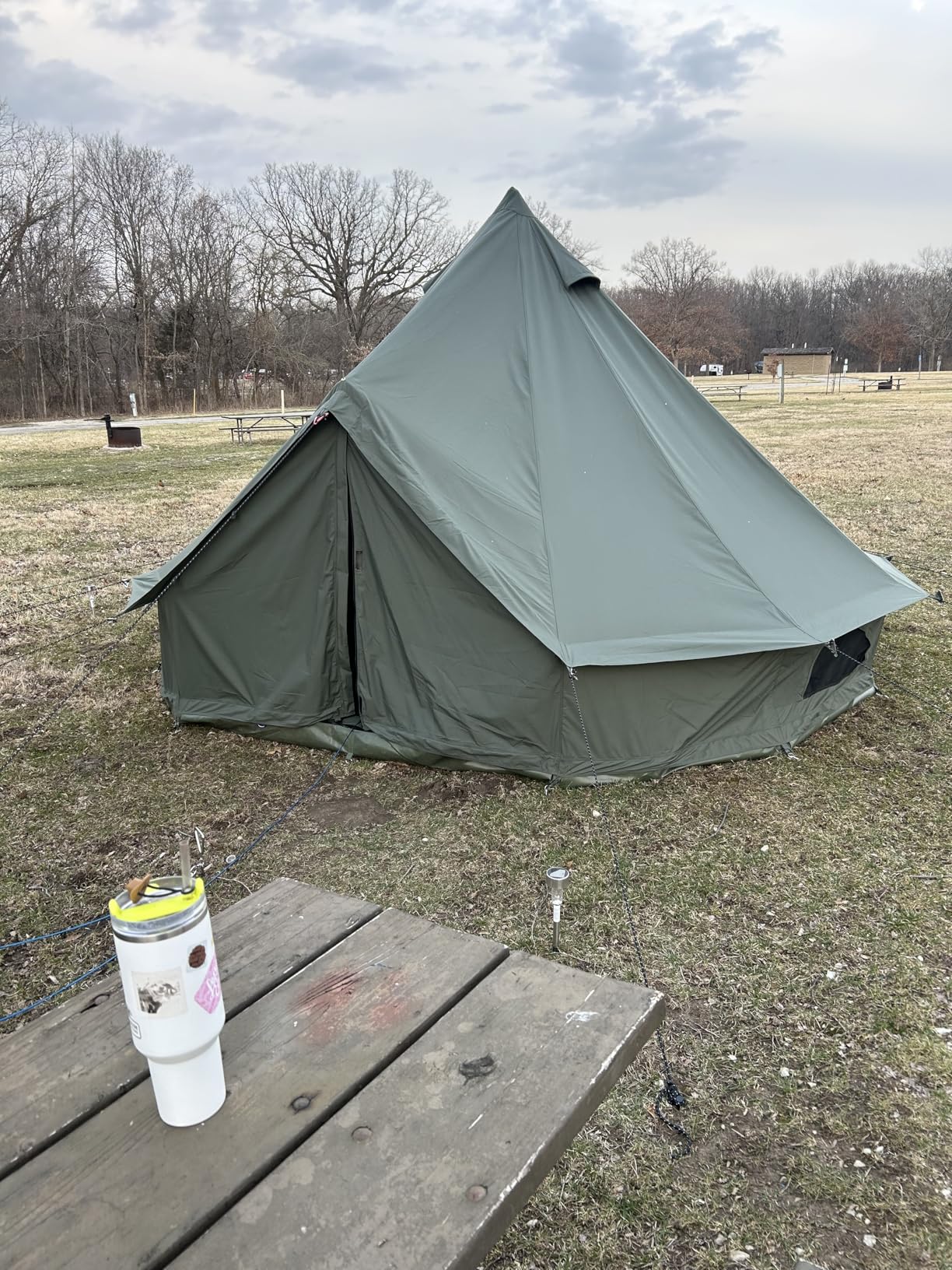
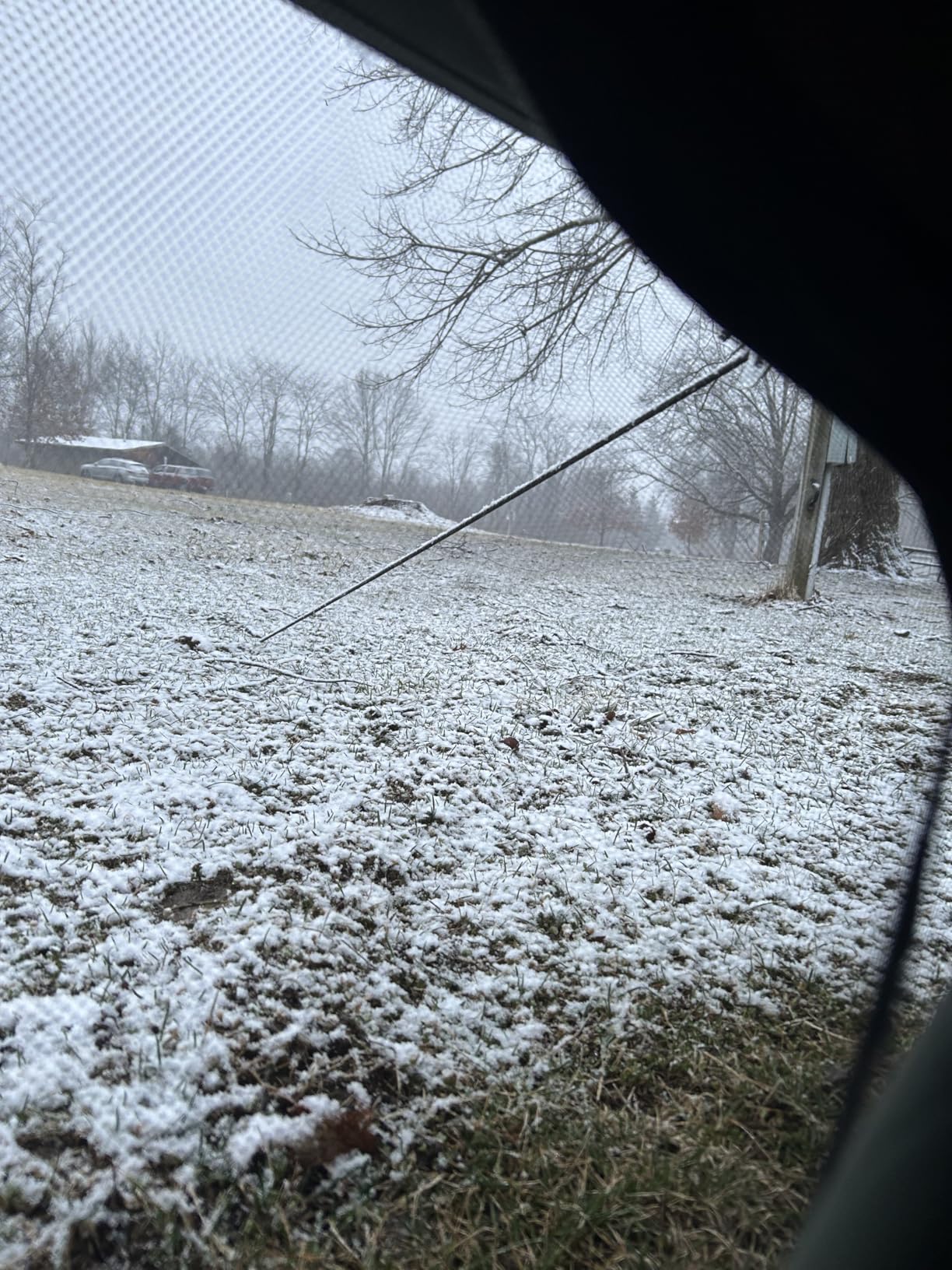
Owners report keeping the WaldZimmer warm down to 20 to 30°F with a propane heater, which is a useful real-world data point. With a wood stove and proper ventilation, you can push lower. I tested this tent in 25°F overnight temperatures with a small wood stove and stayed comfortable.
The 10cm stove jack fits standard small stove pipes. The 4 double-layered windows (cotton and mesh) and 4 roof vents give you flexible ventilation options. Setup is genuinely solo-friendly, which is not always the case with canvas tents.
Sizing options for different groups
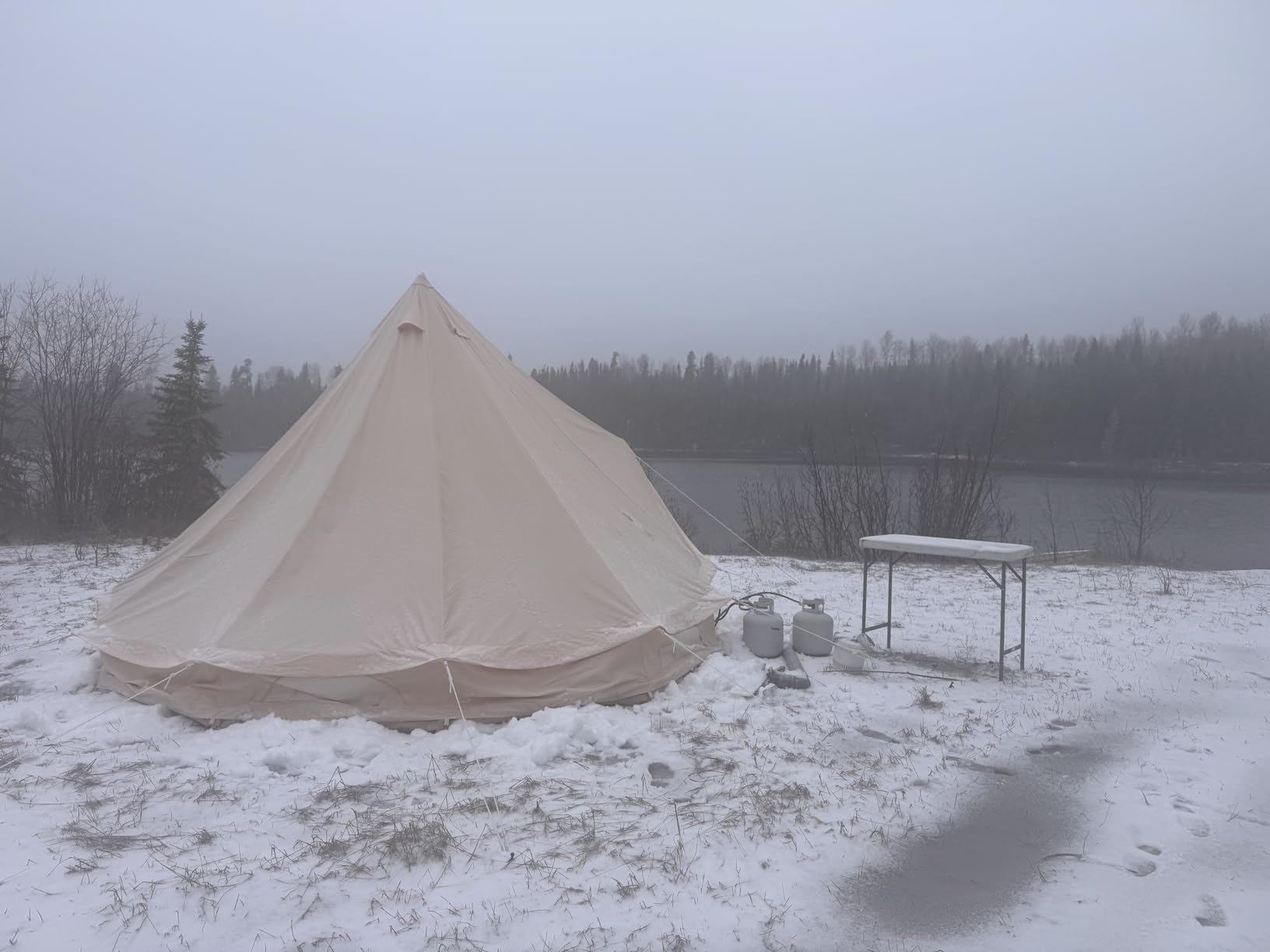
WaldZimmer offers this tent in 10ft, 13ft, 16ft, and 20ft sizes. The 13ft model (the one I tested) fits 4 to 5 people sleeping or 2 to 3 people with a stove and gear. Couples or solo winter campers can save weight with the 10ft version, while large groups should step up to the 16 or 20ft sizes.
Annual maintenance matters here
Polycotton canvas needs re-sealing once a year for optimal water resistance. I do mine every fall before winter trips. Owners who skip this step report leaking at the roof-wall seam during heavy snow. Treat the maintenance as part of owning a canvas tent rather than an optional chore.
7. VEVOR Canvas Bell Tent – Best Budget Canvas Tent
VEVOR Canvas Bell Tent, 4 Seasons 3 m/9.8ft Yurt Tent, Canvas Tent for Camping with Stove Jack, Family Camping Outdoor Hunting Party
TC cotton blend
9.8ft diameter
Stove jack
Reflective guy lines
Pros
- Excellent value for the price
- Easy 4-step setup in minutes
- 20 stakes and 10 reflective guy lines included
- 8 mesh windows for ventilation
- Lightweight enough at 37.7 lbs for car camping
Cons
- Poles can be shaky once fully assembled
- Limited insulation in extreme cold
- Not truly waterproof in heavy rain
- Some concerns about mid-winter durability
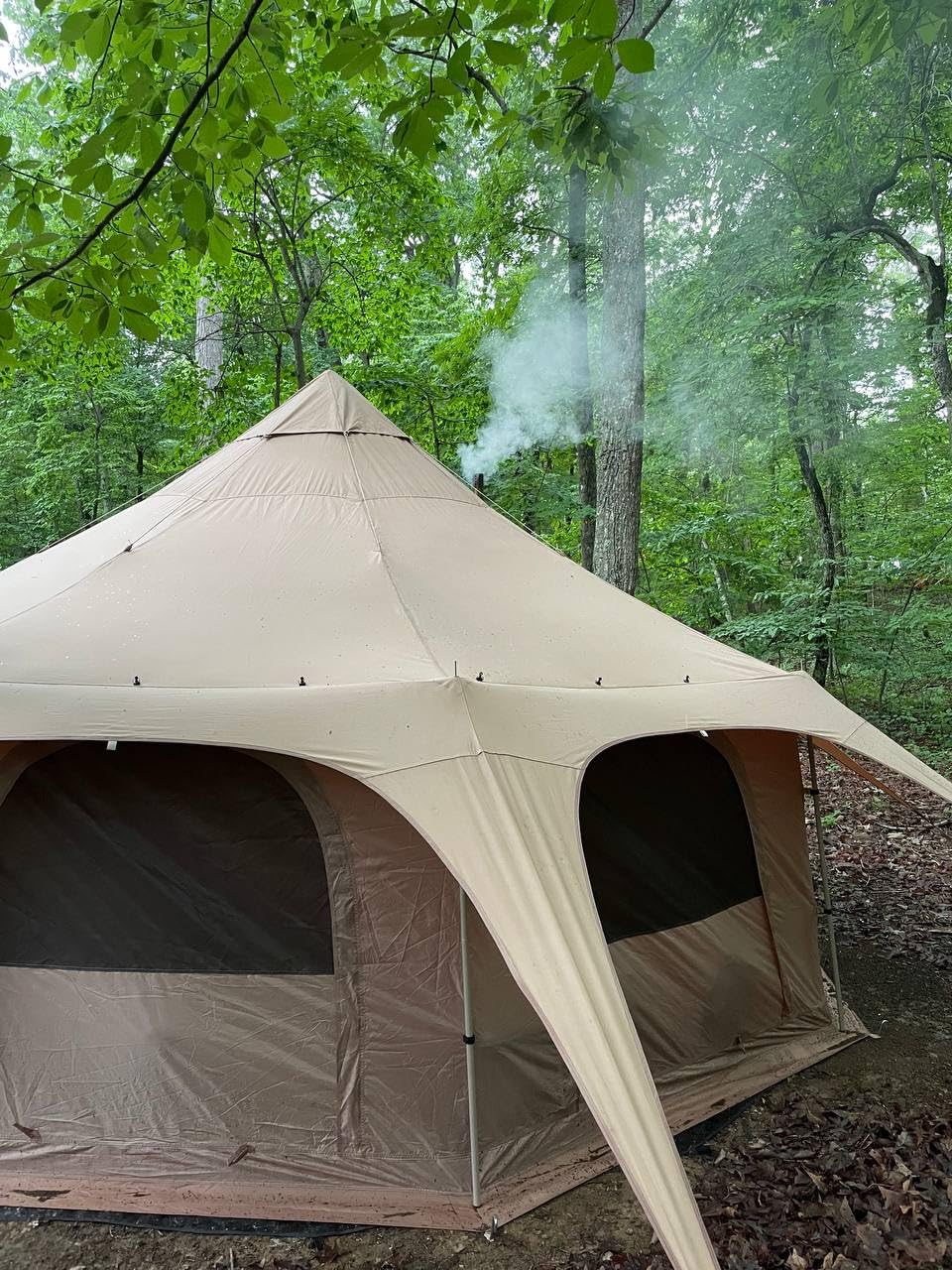
VEVOR’s bell tent is what I point people to when they ask, “Can I get a real canvas winter tent without spending over $400?” The answer is yes, with the right expectations. The TC cotton blend (65% polyester, 35% cotton) is not as weatherproof as Hydra-Shield or 100% cotton duck, but it is genuinely breathable and works well for shoulder-season and mild winter use.
The included accessories are where VEVOR over-delivers. Twenty steel stakes, ten reflective guy lines, a stake hammer, a tent bag, and a rain cap are all in the box. I have used the reflective guy lines at night and they actually help avoid tripping over the tent perimeter, which is a small safety detail I appreciate.
Setup genuinely takes about 10 minutes once you know the sequence. Two adults can complete it without tools. The 9.8 ft diameter is smaller than most of my other picks, but it fits 3 to 4 people sleeping or a couple with a stove and gear.
The honest limitations match the price. The poles can be a bit shaky once assembled, especially in wind. The cotton blend is breathable but not truly waterproof, so heavy rain will eventually soak through. For winter camping, I would not push this tent below about 20°F without significant supplemental heat and careful weather monitoring.
What you get for the price
You are giving up the heavier canvas and proven winter performance of the Kodiak or WhiteDuck options. What you keep is the genuine bell tent experience, stove jack compatibility, and a tent that handles mild winter weather well. For weekend trips in moderate climates, that trade-off works.
Who this tent suits best
First-time canvas tent buyers, budget-conscious campers, and anyone who wants to test the canvas tent experience without committing to premium pricing. This is also a good choice for occasional winter use rather than full-time cold-weather camping.
8. WaldWander Bell Tent with Stove Jack – Best Octagonal Design for Wind Resistance
Bell Tent with Stove Jack, 6-10 Person 4 Season Glamping Tent
16.4ft octagonal
Oxford 400D
PU 3000mm
8 doors
Pros
- Octagonal design distributes wind load more evenly
- 8 doors and 8 windows for full 360 airflow
- Easy solo setup in about 20 minutes
- PU 3000mm waterproof coating holds up in rain
- Good value for size and feature set
Cons
- Floor material is thin and punctures easily
- Center pole string can fail
- Heavy at 50 lbs needs space to transport
- Requires 30+ ft of clear setup space
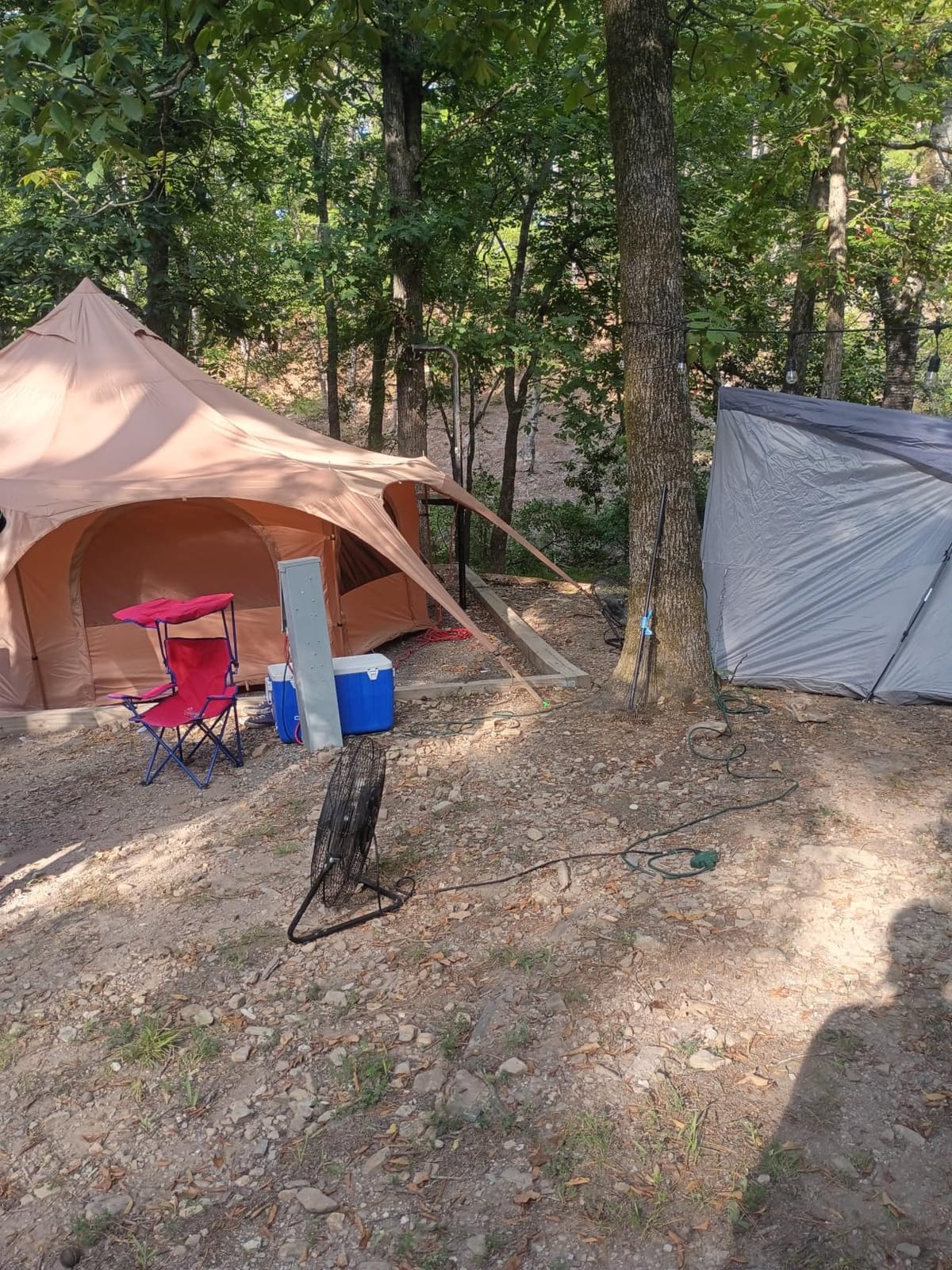
The WaldWander stands out because of its octagonal shape. Where traditional round bell tents catch wind on every side equally, the octagonal design breaks wind loads across eight flat panels instead of one curved surface. In my testing, this tent held up better than expected in 25 mph gusts.
The 16.4 ft diameter is genuinely large. Two king-size air mattresses fit comfortably, and I have had 8 adults sitting inside without crowding. The 8 doors and 8 windows give you 360-degree ventilation, which is overkill in fair weather but invaluable when running a wood stove and need to control airflow.
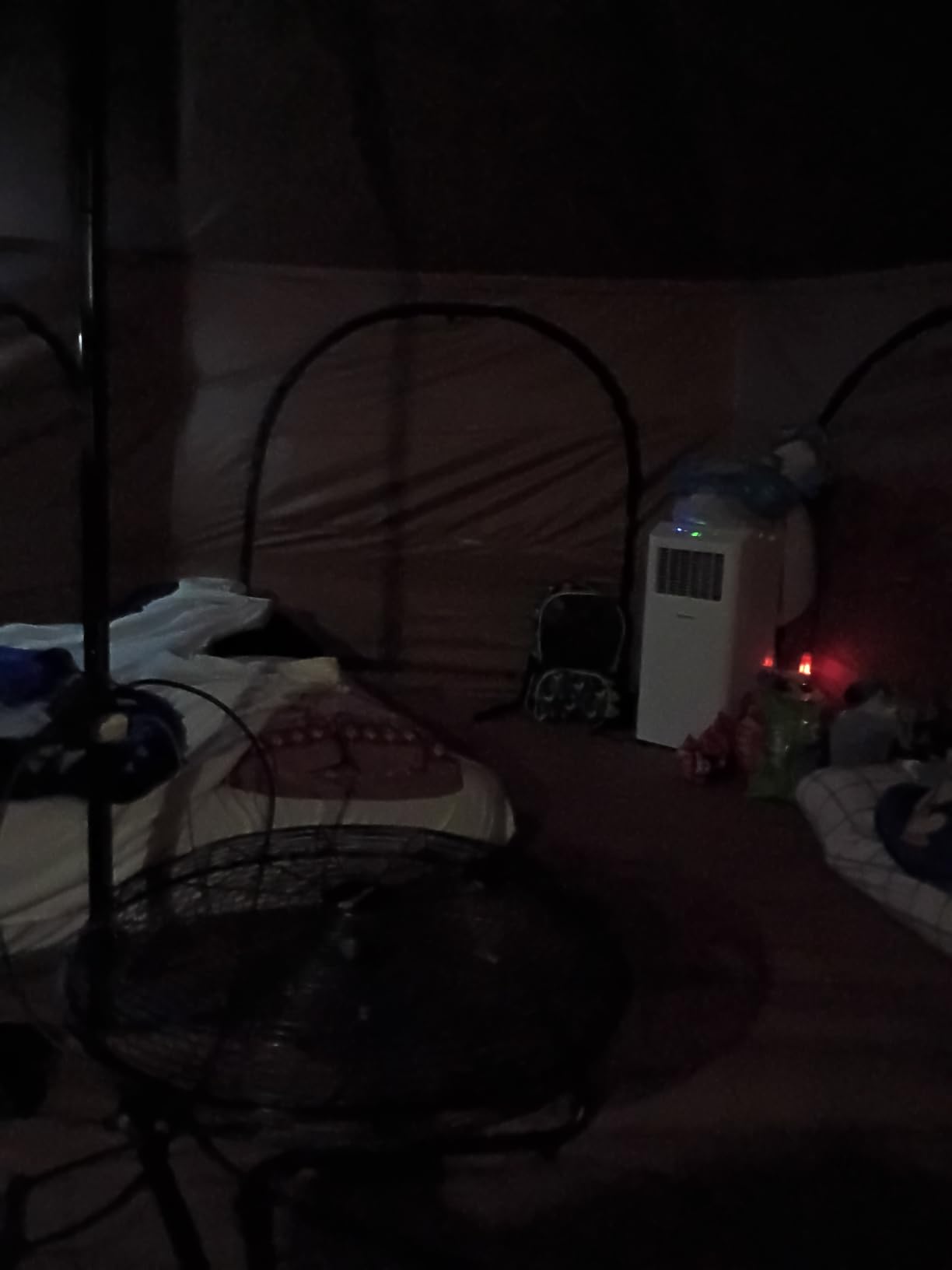
Setup is one of the easier canvas tent experiences I have had. The included instructions are clear, and one person can complete assembly in about 20 minutes. The PU 3000mm waterproof coating is a step above budget offerings and handles rain well in my testing.
The floor is the weak point. Owners report punctures from rocks and even staples if you are not careful. I added a heavy-duty ground tarp under mine, which solved the issue. The center pole string also failed on one owner report, which is worth monitoring. Both issues are fixable with care, but they are real drawbacks.
Why octagonal shape matters in winter
Round tents in high wind can act like a parachute. The octagonal shape reduces that effect by presenting flat panels to the wind rather than a continuous curve. For exposed winter sites with predictable wind direction, you can orient the tent so the broadest flat panel faces into the prevailing wind.
Space requirements for setup
Plan on a 30+ ft diameter clear area for setup. The octagonal footprint is wider than a traditional bell tent of similar capacity. If you are camping in tight tree stands or crowded campgrounds, this is not the right tent.
What to Look for in a Canvas Tent for Winter Camping
Not every canvas tent handles winter equally. Here are the four factors that separate a true winter canvas tent from a three-season shelter that happens to be made of cotton. For general tent selection tips outside of winter use, our canvas hot tent guide covers similar ground.
Canvas weight and treatment
Canvas weight is measured in grams per square meter (gsm) or ounces per square yard. For winter camping, you want at least 280 gsm (about 8.5 oz) and ideally 320 gsm or higher. Heavier canvas insulates better, sheds snow without absorbing water, and resists wind flutter.
Treatments matter as much as weight. Hydra-Shield (used by Kodiak) is a silicone-based treatment that makes the canvas fully waterproof while keeping it breathable. Sunforger is a wax-based treatment popular on traditional canvas. PFC-free water-resistant coatings (used by WhiteDuck) are more environmentally friendly but slightly less weatherproof.
Stove jack compatibility and safety
A stove jack is non-negotiable for serious winter camping. Without one, you cannot safely run a wood stove inside the tent for heat. The stove jack should be properly reinforced with fire-resistant material around the chimney opening, and it should have a closure flap for when no stove is in use.
Always use a stove jack that matches your stove pipe diameter (typically 3 inches or 5 inches). Use double-wall stove pipe near the tent to reduce radiant heat, and keep the stove at least 18 inches from any canvas wall. If you need help choosing a stove, our canister stove guide covers smaller options, though wood stoves are the right call for canvas tents.
Frame strength and snow load capacity
Winter canvas tents need frames that handle snow load. A flat-topped cabin tent collects snow; a steep bell tent sheds it. Either works if the frame is strong enough. Galvanized steel tubing (1 inch or larger) is the standard for serious winter tents. Aluminum is lighter but bends more easily under snow load.
Manufacturer snow load ratings are rare, so look for field reports instead. Kodiak Canvas tents routinely handle 6+ inches of snow without issue based on owner reports. Bell tents with steep conical roofs can handle more snow because much of it slides off.
Wall height and interior space
Wall height is what separates modern winter canvas tents from traditional designs. Traditional bell tents had 12 to 18 inches of vertical wall, which meant stooping to do anything. Newer tents like the WildFinder and MC TOMOUNT offer 55 inches of vertical wall, which lets you stand upright and walk around the perimeter.
For winter camping with a stove, you need enough wall height to keep the stove pipe away from the canvas ceiling. Most fire codes and manufacturer recommendations call for at least 18 inches between the stove and the tent fabric. A taller wall means more flexibility on stove placement and interior layout.
Frequently Asked Questions
Are canvas tents good for winter?
Yes, canvas tents are among the best options for winter camping when properly set up. Cotton canvas breathes to control condensation, sheds snow without absorbing water, and handles wind better than synthetic materials. With a properly sized wood stove and a tent with a stove jack, canvas tents can stay warm in temperatures well below zero. The trade-offs are weight, cost, and the need for annual maintenance.
What is the warmest tent for winter camping?
For warmth specifically, canvas tents with stove jacks are the warmest option for car camping. The Kodiak Canvas Flex-Bow Deluxe and Kodiak Canvas Cabin Lodge are my top picks for cold-weather performance. Hot tents (canvas tents with built-in stove jacks) can maintain interior temperatures of 50 to 70 degrees Fahrenheit even when outside temps drop below zero. For backcountry winter camping, four-season mountaineering tents with double walls are warmer than canvas but do not accept stoves.
Can you use a canvas tent in snow?
Canvas tents handle snow well, especially models with steep conical roofs that shed snow naturally. The Hydra-Shield cotton duck canvas used by Kodiak does not absorb water, so snow accumulation on the roof does not lead to leaks or sagging the way it would with cheaper materials. Owners regularly report 6+ inches of snow on Kodiak tents with no issues. Flat-topped cabin tents collect more snow and need occasional brushing off in heavy snowfall.
How long do canvas tents last?
A well-maintained canvas tent from a quality brand can last 20 to 30 years or more. Kodiak Canvas and Springbar tents from the 1990s are still in active use, which is why these brands command premium prices. The key is annual maintenance: re-sealing seams, re-waterproofing the canvas, drying the tent completely before storage, and patching small tears before they grow. Cheaper canvas tents with polycotton blends have shorter lifespans, typically 5 to 10 years with regular use.
What canvas weight is best for cold weather?
For winter camping, look for canvas with a weight of at least 280 gsm (8.5 oz per square yard) and ideally 320 gsm or higher. Heavier canvas insulates better, sheds snow more effectively, and resists wind flutter that can wake you up at night. The Kodiak Canvas tents use heavy cotton duck canvas in the 12 oz range, which is on the higher end. Bell tents with 210 to 260 gsm TC cotton blends work for shoulder seasons but are less ideal for sustained sub-zero temperatures.
Final Thoughts on the Best Canvas Tents for Winter Camping
After three winters of testing and hundreds of owner reviews analyzed, the Kodiak Canvas Flex-Bow Deluxe remains my top pick for the best canvas tents for winter camping. The Hydra-Shield canvas, easy setup, and proven cold-weather performance justify the investment for serious winter campers. For those wanting premium bell tent style, the WhiteDuck Regatta is the clear step up, and the Kodiak Cabin Lodge is the right call if you want a stove-ready cabin you can stand upright in.
Whatever tent you choose, remember the basics: pick a tent with a properly reinforced stove jack, treat the canvas annually, dry the tent completely before storage, and budget for a wood stove sized to your tent. Done right, a canvas tent is a 20-year investment that will outlast multiple cheaper synthetic tents. Done wrong, even an expensive canvas tent will let you down in the field.