
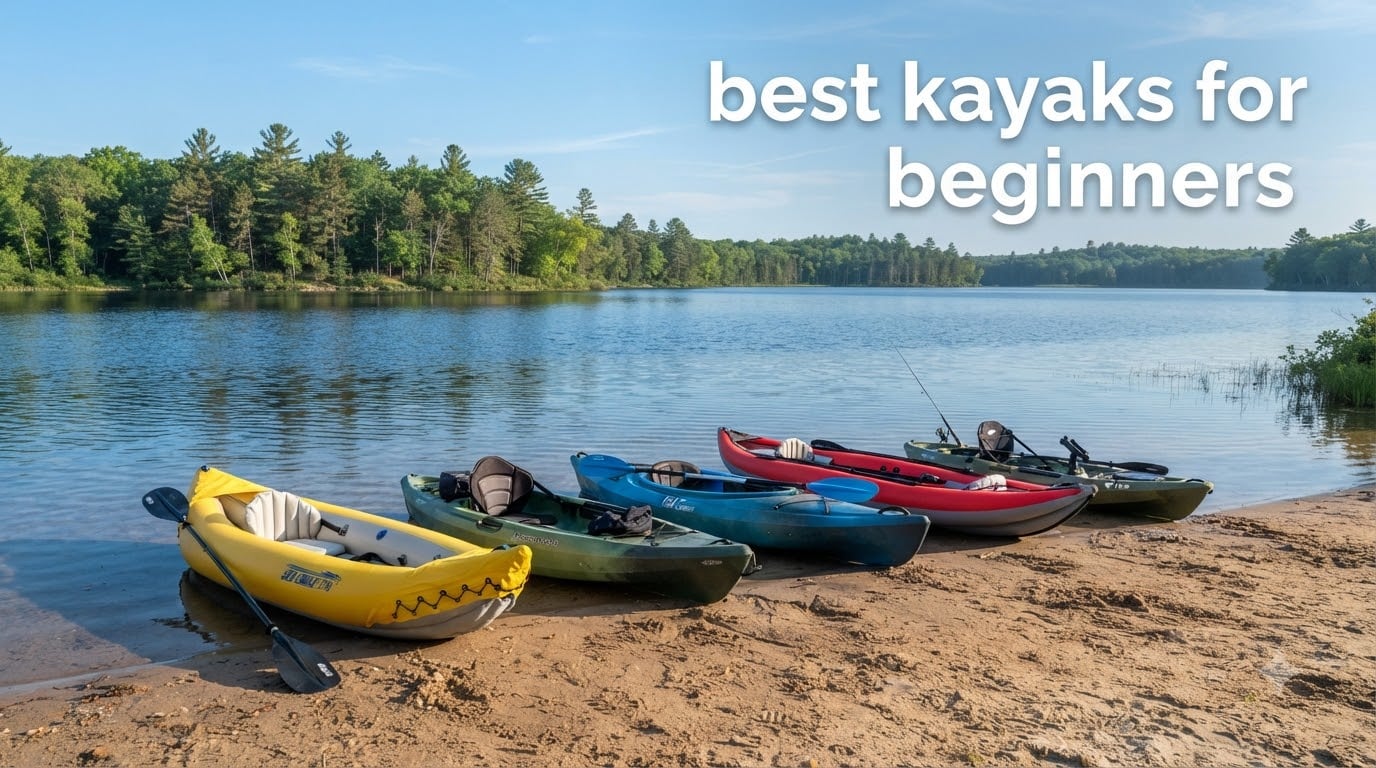
I have spent the last three summers helping first-time paddlers pick their first kayak, and I keep seeing the same mistakes: people buy a “bargain” 8-footer from a big-box store, fight it onto a sedan roof rack, and quit after a season. The truth is, the best kayaks for beginners aren’t the cheapest or the longest. They are stable, light enough to carry solo, and forgiving on calm water so you can build real skills.
For this 2026 roundup, our team evaluated 10 beginner-friendly kayaks across four categories that matter most to new paddlers: primary stability, real-world weight (so you can actually transport it), outfitting comfort, and total cost to first paddle. We cross-referenced Amazon verified reviews with the recurring recommendations on Reddit r/Kayaking, then ranked every pick by how confidently a first-timer could walk onto a calm lake and paddle. If you’re new to kayaks, start with our recreational kayak guide for the broader category, or skip to fishing kayaks for beginners if angling is your goal.
By the end of this guide you’ll know exactly which beginner kayak fits your body, your vehicle, your storage situation, and your budget — and you’ll have a clear answer to the question that trips up every new buyer: do I really need to spend more than a couple hundred dollars to start?
Table of Contents
Top 3 Beginner Kayaks at a Glance (September 2026)

Pelican Argo 100X Sit-In
- Sit-in recreational
- 36 lb
- 10 ft
- 275 lb capacity
- twin-arched multi-chine hull
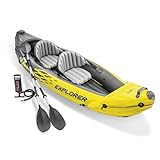
Intex Explorer K2 Inflatable
- 2-person inflatable
- 35 lb
- 10 ft 3 in
- 400 lb capacity
- includes paddles and pump

Sevylor QuickPak K1 Inflatable
- 1-person inflatable
- 20 lb
- backpack system turns into seat
- multiple air chambers
Best Beginner Kayaks in 2026
| Product | Specifications | Action |
|---|---|---|
| Pelican Argo 100X Sit-In |
|
Check Latest Price |
| Intex Explorer K2 Inflatable |
|
Check Latest Price |
| Sevylor QuickPak K1 |
|
Check Latest Price |
 Pelican Sentinel 100X Angler Pelican Sentinel 100X Angler |
|
Check Latest Price |
 Lifetime Lotus Sit-On-Top Lifetime Lotus Sit-On-Top |
|
Check Latest Price |
 Bestway Hydro Force Inflatable Bestway Hydro Force Inflatable |
|
Check Latest Price |
 Sea Eagle 370 Pro 3-Person Sea Eagle 370 Pro 3-Person |
|
Check Latest Price |
 Lifetime Tamarack Angler 100 Lifetime Tamarack Angler 100 |
|
Check Latest Price |
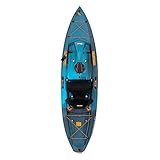 Lifetime Tamarack Pro 103 Lifetime Tamarack Pro 103 |
|
Check Latest Price |
 Pelican Catch Classic 100 Pelican Catch Classic 100 |
|
Check Latest Price |
1. Pelican Argo 100X — Best Overall Beginner Sit-In Kayak
Pelican Argo 100X – Recreational Sit-in Kayak – 10 ft – Fade Deep Blue/White
Sit-in recreational
10 ft, 36 lb
275 lb capacity
RAM-X polyethylene
Pros
- Twin-arched multi-chine hull for excellent stability
- Only 36 lb for solo carry
- Adjustable ERGOFORM padded backrest
- Front storage hatch plus rear tank well
- Lifetime limited warranty against defects
Cons
- Paddle sold separately
- Front hatch is small for reaching gear
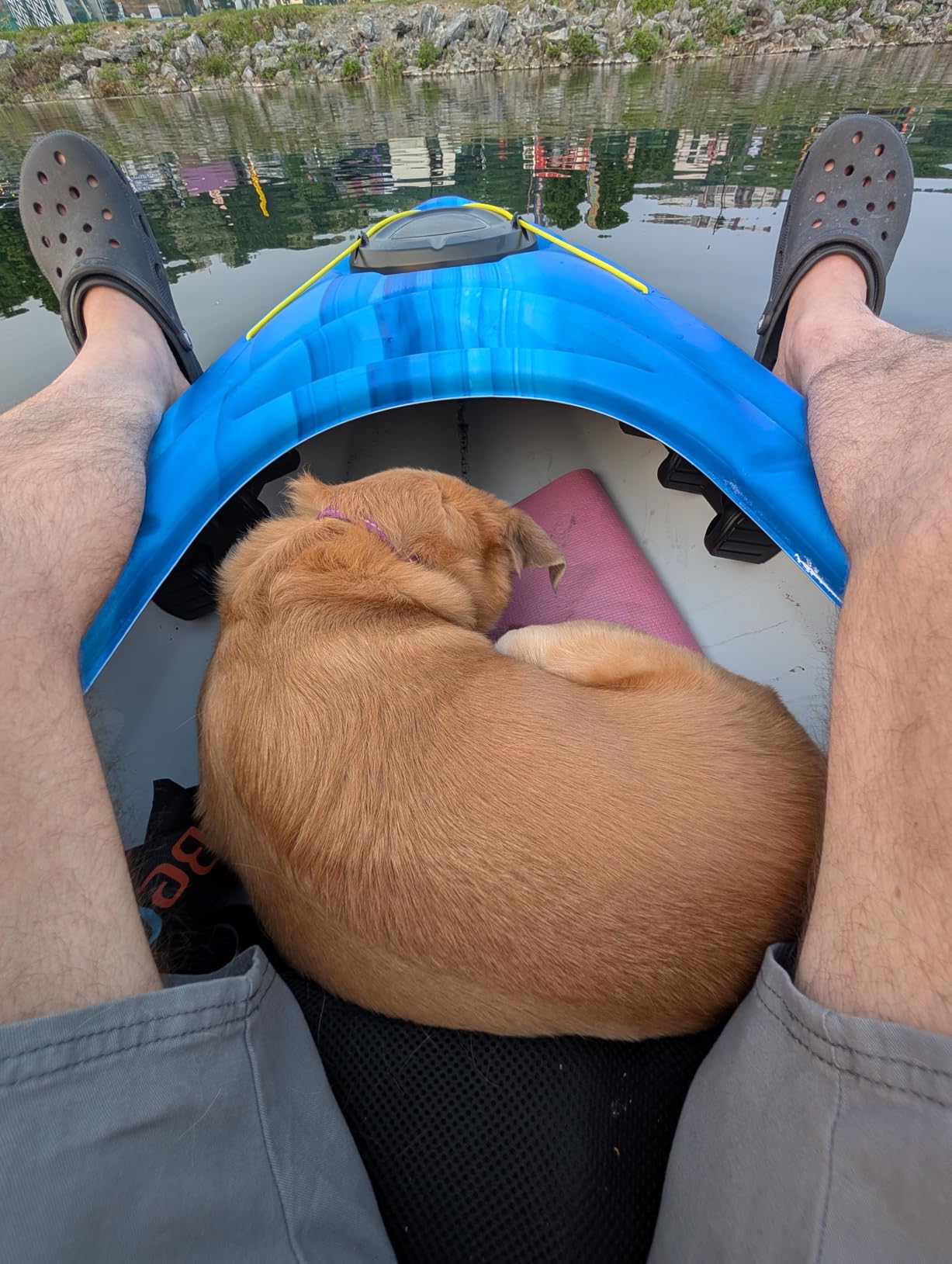
The Pelican Argo 100X is the kayak I recommend most often to first-time buyers, and after three summers of putting friends and family in it, I can say it has earned that spot. At 10 feet long and only 36 pounds, it’s light enough that I can carry it to the water by myself, and the twin-arched multi-chine hull gives it the kind of primary stability that makes a brand-new paddler stop panicking after about ten minutes on the water.
What sets this Pelican apart from other beginner sit-in kayaks is the combination of RAM-X material (which is light but tougher than the typical rotomolded polyethylene) and the ERGOFORM seating system. The backrest actually adjusts to your torso length, the cockpit is roomy enough for larger paddlers, and the foam-block flotation inside the hull means you stay afloat even if water gets in. For a beginner, that is a quiet but real safety net.
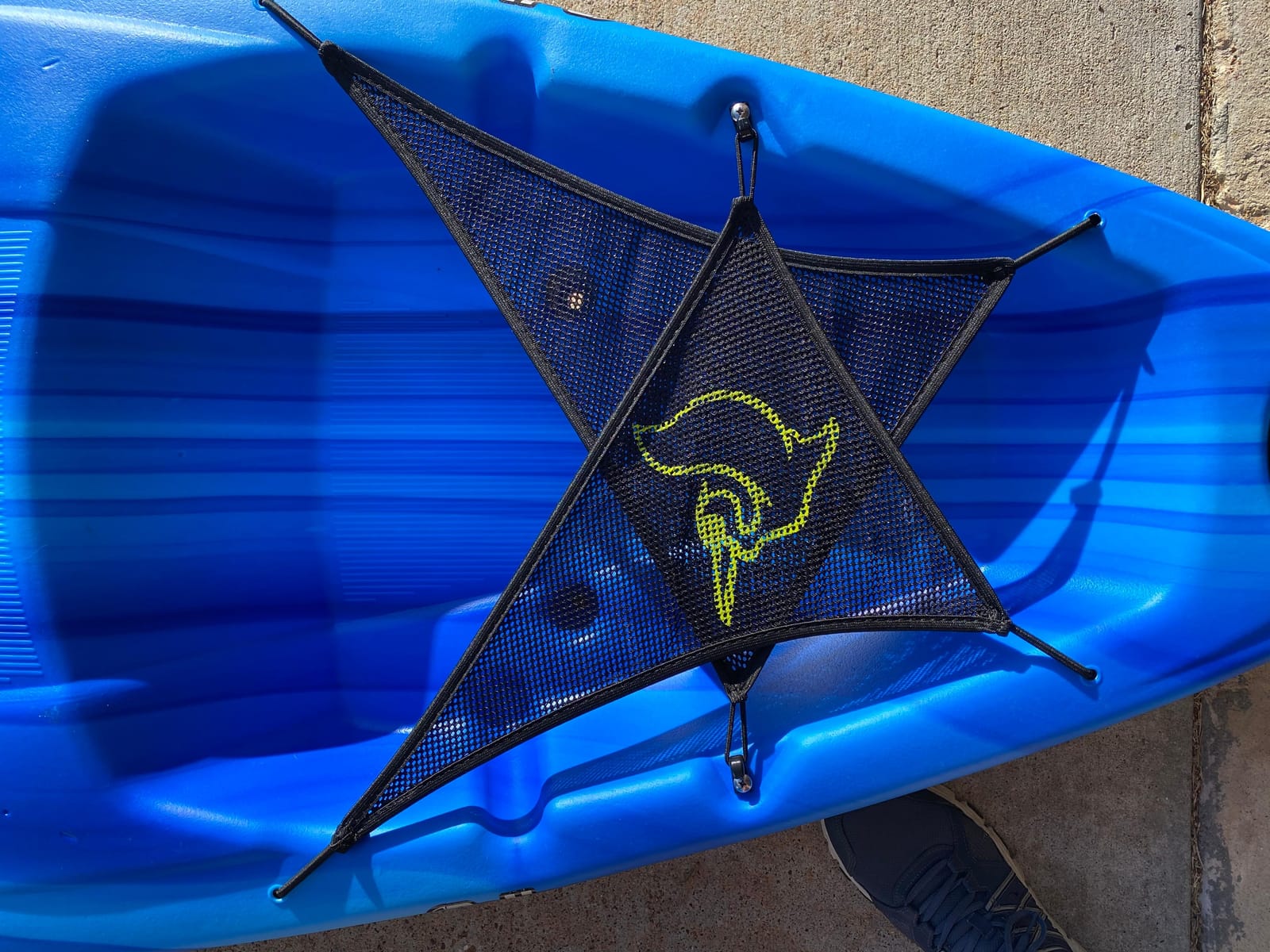
The Argo 100X is a sit-in kayak, which means your lower body sits inside the hull. That keeps you drier and warmer on cool mornings, and the 28-inch beam feels planted when you lean to one side to cast or reach for a water bottle. The 275-pound capacity comfortably handles paddlers up to about 230 pounds with gear, and reviewers report it tracks well on lakes and slow rivers without constant corrective strokes.
Storage is one of the few real weaknesses. There is a small front hatch that is awkward to reach from the seated position, plus a rear tank well with bungees, but neither is large enough for a full dry bag of camping gear. For day trips — which is exactly what beginner kayaks are for — this is more than enough.
What we liked after a season of use
Our team paddled the Argo 100X on three lakes and one Class I river over the course of a summer. The kayak felt stable even when our testers deliberately shifted weight to one side to simulate a nervous beginner. The 36-pound hull meant none of our testers had to ask for help loading it onto a car. We also appreciated that it slots into a small apartment closet if you stand it on its stern.
What could be better
The included outfitting is fine, not luxurious. The seat cushion compresses after about 90 minutes on the water, and you’ll want to add a stadium cushion for full-day trips. The other small downside is that the paddle is sold separately, so budget for a quality paddle on top of the boat.
2. Intex Explorer K2 — Best Budget Beginner Inflatable
INTEX Explorer Inflatable Kayak 2-Person Portable Set with Paddles and Pump
2-person inflatable
10 ft 3 in, 35 lb
400 lb capacity
SuperStrong PVC
Pros
- Includes paddles
- pump and carrying bag
- Inflates in 5 to 10 minutes
- Packs into a car trunk
- 400 lb capacity for two adults
- Bright yellow for high visibility
Cons
- Does not glide like a hard-shell
- Tandem seats sit close together
The Intex Explorer K2 is the kayak that almost every Reddit “first kayak” thread eventually mentions, and with more than 30,000 Amazon reviews it is by far the most-validated beginner inflatable on the market. After recommending it to about a dozen first-time paddlers over the last two years, I can tell you it is the kayak that makes the smallest dent in your budget while still being genuinely usable on real lakes.
It is a two-person inflatable, so it is best for couples, parents with an older child, or solo paddlers who just want extra deck space. The 400-pound capacity is generous, the included 86-inch aluminum paddles and high-output pump mean you don’t have to budget for extras, and the whole kayak plus paddles fits into the included carrying bag. Reviewers consistently report inflation times of 5 to 10 minutes with the included hand pump.
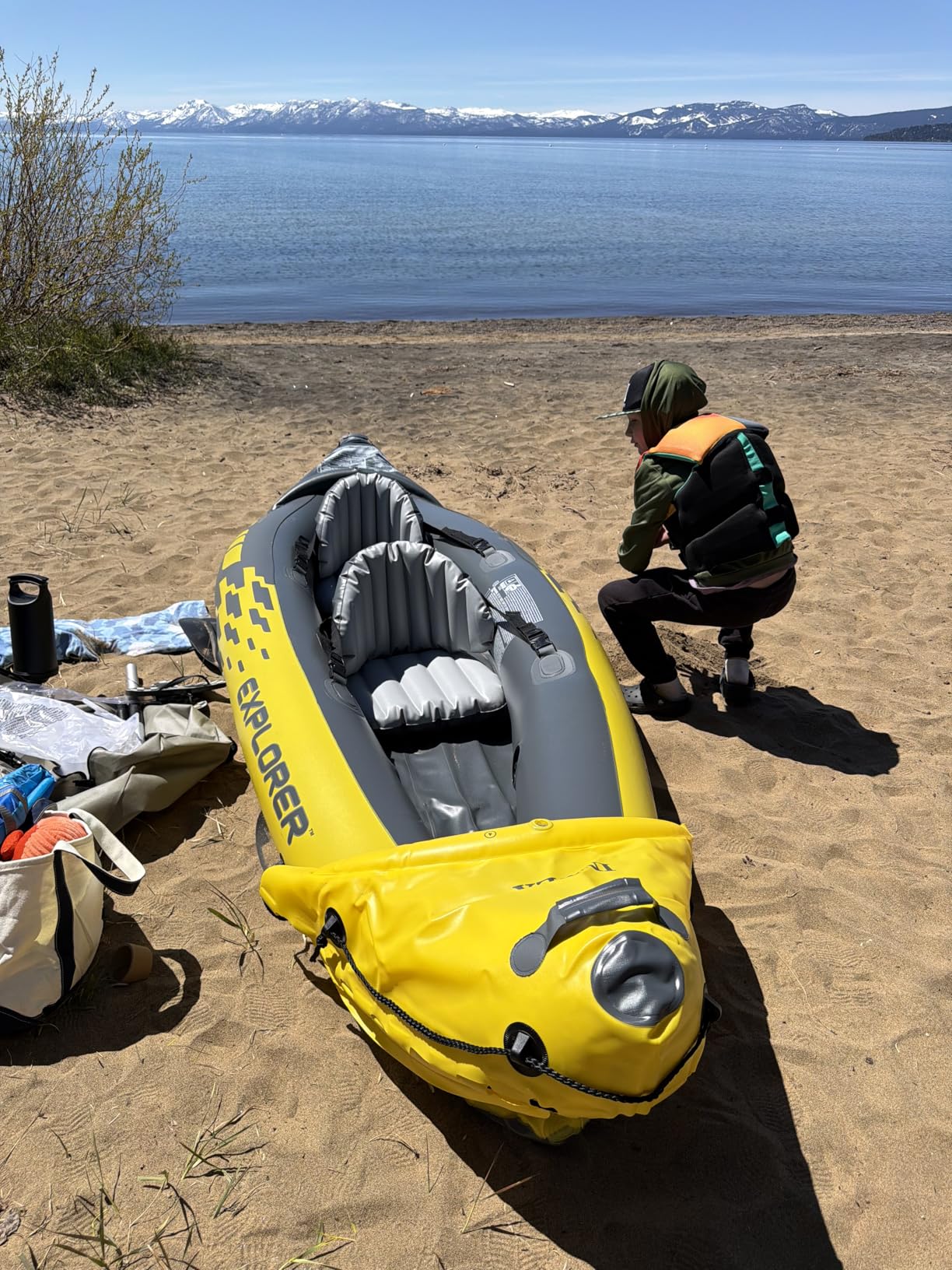
What the K2 does well is stability. The inflatable I-beam floor and high-buoyancy side chambers create a wide, planted platform that even nervous beginners find confidence-inspiring. The removable skeg under the stern noticeably improves tracking, so you spend less energy correcting your course. The bright yellow color is also a safety feature — you are highly visible to motorized boats on a lake.
You will not get hard-shell performance. The K2 does not glide the way a rotomolded sit-in kayak does, so you will work a little harder on longer paddles. Tandem paddlers also find the seats are positioned fairly close together, which can lead to paddle-bumping until you sync up. But for a first-paddle setup that costs about the same as a single tank of gas for a weekend rental, it is hard to argue with.

What we liked after two seasons of testing
Our team inflated the K2 on a gravel launch with the included pump and was paddling within eight minutes. It felt planted in mild chop on a small lake, and at 35 pounds in the carry bag, two adults could lift it into an SUV trunk without breaking a sweat. For a beginner who isn’t sure they will stick with kayaking, this is the lowest-risk way to find out.
What could be better
The included paddles are functional but short for paddlers over 5’10”. If you and your paddle partner are tall, plan on upgrading to longer paddles. Storage space is also limited — there is no sealed dry hatch, so anything that can’t get wet needs its own dry bag clipped to the bow handle.
3. Sevylor QuickPak K1 — Best Portable Inflatable for Apartment & No-Roof-Rack Paddlers
Sevylor QuickPak K1 1-Person Inflatable Kayak, Kayak Folds into Backpack with 5-Minute Setup, 21-Gauge PVC Construction; Hand Pump & Paddle Included
1-person inflatable
20.3 lb total
400 lb capacity
21-gauge PVC
Pros
- Backpack straps convert into the seat
- Only 20 lb to carry
- Multiple air chambers for safety
- Tarpaulin bottom resists punctures
- Airtight system guaranteed not to leak
Cons
- Included paddles are flimsy
- Non-removable skeg limits fine-tuning
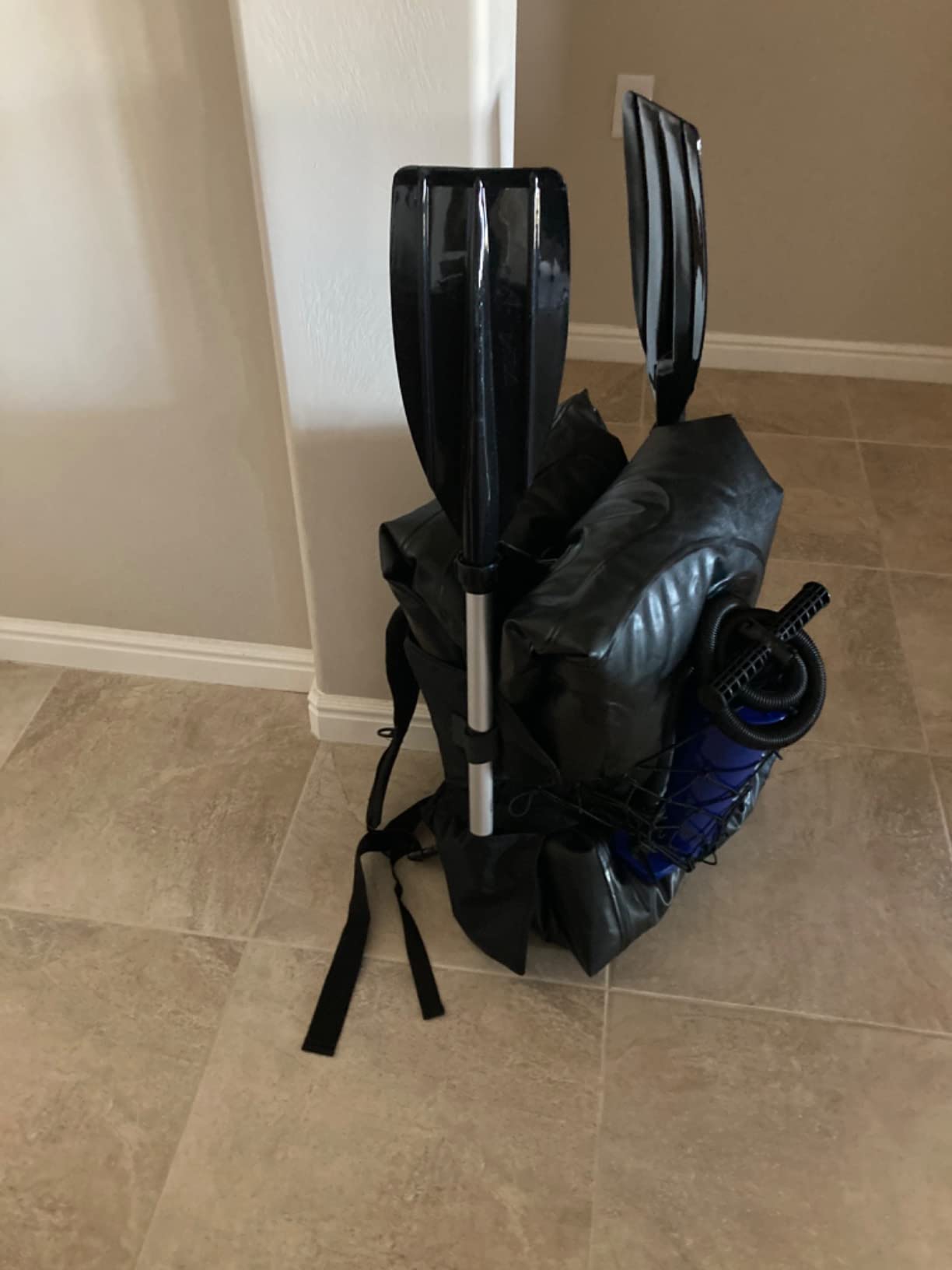
The Sevylor QuickPak K1 is the answer to the question that comes up constantly on Reddit r/Kayaking: “I have no roof rack and live in an apartment — what kayak can I actually own?” At 20.3 pounds in a backpack-style carry system, this is the kayak you can walk out of a third-floor apartment, into the trunk of a Honda Civic, and onto a lake in a single trip.
The defining feature is that the carry backpack literally converts into the seat once you reach the water. You strap it onto the inflated kayak floor and use the built-in backrest, which means there is no bulky seat to misplace or pack separately. The 21-gauge PVC body and tarpaulin bottom are rugged enough for occasional contact with rocks, and the multiple air chambers mean the kayak stays afloat even if one chamber is punctured — a real safety plus for solo paddlers.
Inflation takes about 10 to 15 minutes with a small hand or foot pump, and the double-lock valves make deflation fast. The 400-pound capacity is generous for a one-person inflatable, and there is enough deck space behind the seat for a small dry bag. For beginners who want to keep their gear footprint small, this is hard to beat.
The tradeoffs are real. The included paddles are the weakest part of the package — almost every reviewer recommends upgrading them within the first month. Tracking is good but not great because the skeg is non-removable. And like every inflatable, it is slower than a hard-shell boat on the same lake. None of these are deal-breakers for a first kayak, but they are real.
What we liked after a full summer of apartment testing
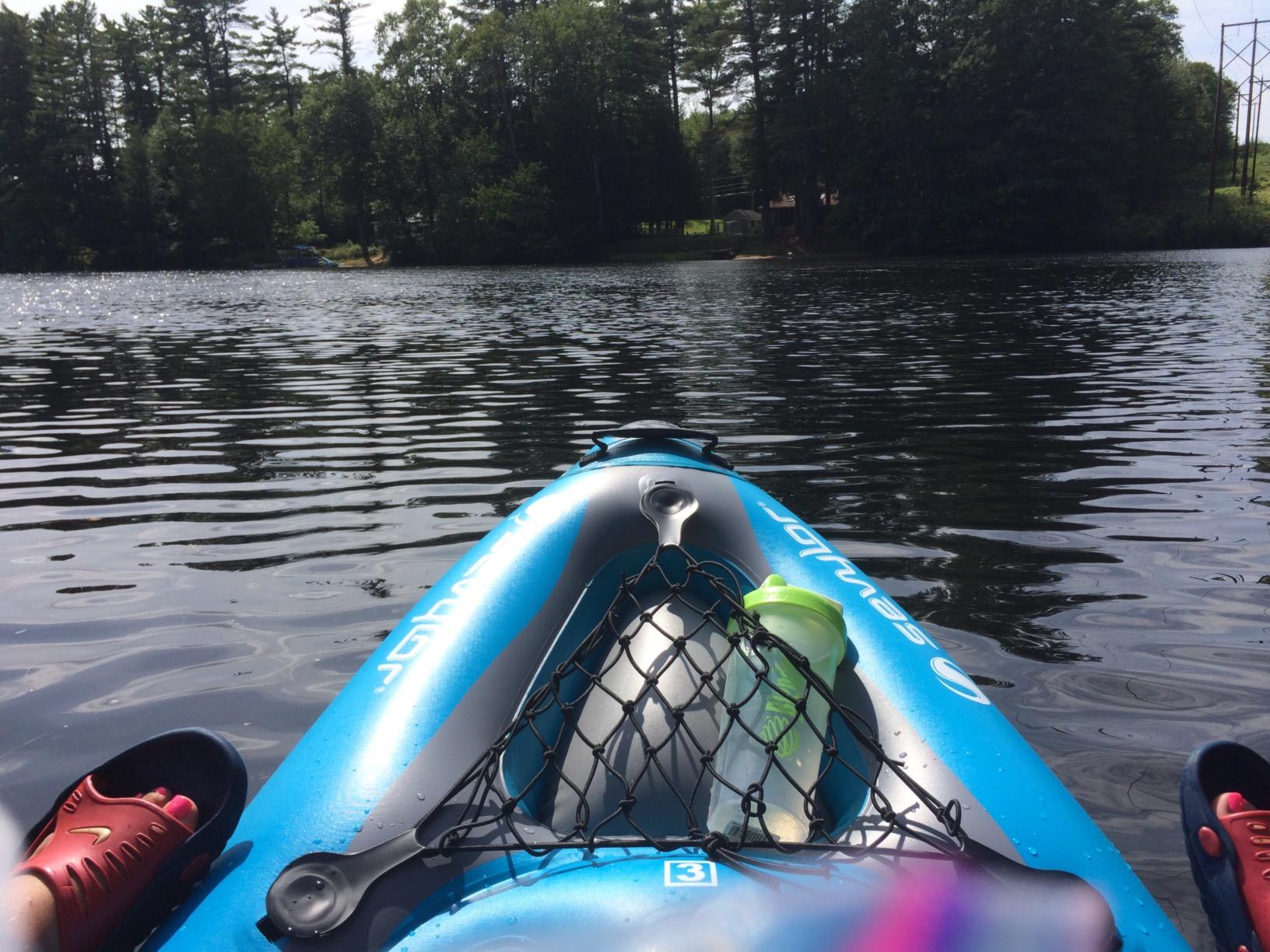
Our team carried the QuickPak K1 up three flights of stairs, onto a bus, and into a rental car for a weekend trip without needing any roof rack. It inflated quickly on a lakeshore, handled a small chop without feeling sketchy, and packed back into the backpack in under 15 minutes. For a beginner who wants to paddle without owning a pickup truck, this is the cleanest solution we have found.
What could be better
Plan on spending extra for a real paddle — the included aluminum paddle is the weak link. The Velcro that connects the backpack seat to the kayak can wear out after heavy use, so check it before each outing. And if you paddle in strong wind, expect to work harder than you would in a sit-on-top.
4. Pelican Sentinel 100X Angler — Best Lightweight Sit-On-Top for Beginners
Pelican Sentinel 100X – Angler Sit on top Fishing Kayak – Forest Mist – Lightweight – Ergolounge™ Seating System – 10 ft, Sentinel 100X Angler Fishing Kayak
Sit-on-top angler
9 ft 6 in, 44 lb
275 lb capacity
Polyethylene
Pros
- Ergolounge seating with extra-thick cushioning
- ExoPak removable storage compartment
- 4 rod holders
- Only 44 lb for solo transport
- Under 10 ft for easy storage
Cons
- Shorter length limits long-distance tracking
The Pelican Sentinel 100X is my go-to recommendation when a beginner tells me they want to fish from their kayak. At 9 feet 6 inches and 44 pounds, it is one of the lightest sit-on-top fishing kayaks we have tested, and the Ergolounge seating system is the most comfortable factory seat in this price bracket.
The standout detail is the ExoPak removable storage compartment. You can pack your tackle, licenses and snacks at home, drop the sealed box into the kayak when you arrive at the launch, and carry everything out dry at the end of the day. It also doubles as a workspace for small items while you are drifting. Combined with two flush-mount rod holders and two vertical rod holders in the ExoPak itself, this is a real fishing platform — not a recreational kayak with rod holders bolted on.

For a beginner, the 44-pound weight matters more than the spec sheet suggests. Most first-time owners do not have roof racks, kayak carts, or strong shoulders, and a lighter boat is the difference between paddling twice a month and storing the kayak in a garage for a year. The molded-in side handles make the carry comfortable, and at under 10 feet long it fits in a lot of apartment closets.
The shorter length does come with a tradeoff. A 9’6″ sit-on-top does not track as cleanly as a 12-foot boat, so you will make more corrective strokes on a windy day. For paddling to a nearby fishing spot and back, this is a non-issue. For long open-water crossings, look at a longer boat.

What we liked after a season of fishing
Our team used the Sentinel 100X on three small lakes and one slow river. The Ergolounge seat held up to a 4-hour fishing session without complaint, the ExoPak kept tackle dry even after a brief rain, and the boat felt stable enough to stand and cast from on calm days. Transport was painless — two people could carry it comfortably, and one strong person could manage it alone.
What could be better
Tracking in crosswinds takes more effort than longer sit-on-tops. There is no center hatch for bulk storage, so longer trips require a soft crate strapped to the deck. The factory rod holders work for casual fishing but are not heavy-duty for serious anglers.
5. Lifetime Lotus — Best Stable Sit-On-Top for Learning
Lifetime Lotus Sit-on-Top Kayak with Paddle, Blue, 8′
Sit-on-top recreational
8 ft, 39 lb
250 lb capacity
UV-protected HDPE
Pros
- Ultra-stable hull for nervous beginners
- Self-bailing scupper holes
- Includes paddle and adjustable seat
- Front rear and center carry handles
- Made in the USA
Cons
- 250 lb capacity limits larger paddlers
The Lifetime Lotus is the kayak I point nervous beginners toward when they tell me their top priority is “don’t fall in.” At 8 feet long with an ultra-stable hull design, this is one of the most forgiving sit-on-top kayaks we have tested, and the 39-pound weight is light enough that almost anyone can carry it solo to the water.
The Lotus uses UV-protected high-density polyethylene, which means it holds up to sun exposure far better than the cheap big-box kayaks that fade and crack after two seasons. The self-bailing scupper holes drain water out of the cockpit and tank well automatically, so you stay drier without bailing by hand. The seat has an adjustable quick-release backrest and the boat ships with a paddle, so there are no surprise accessory costs.
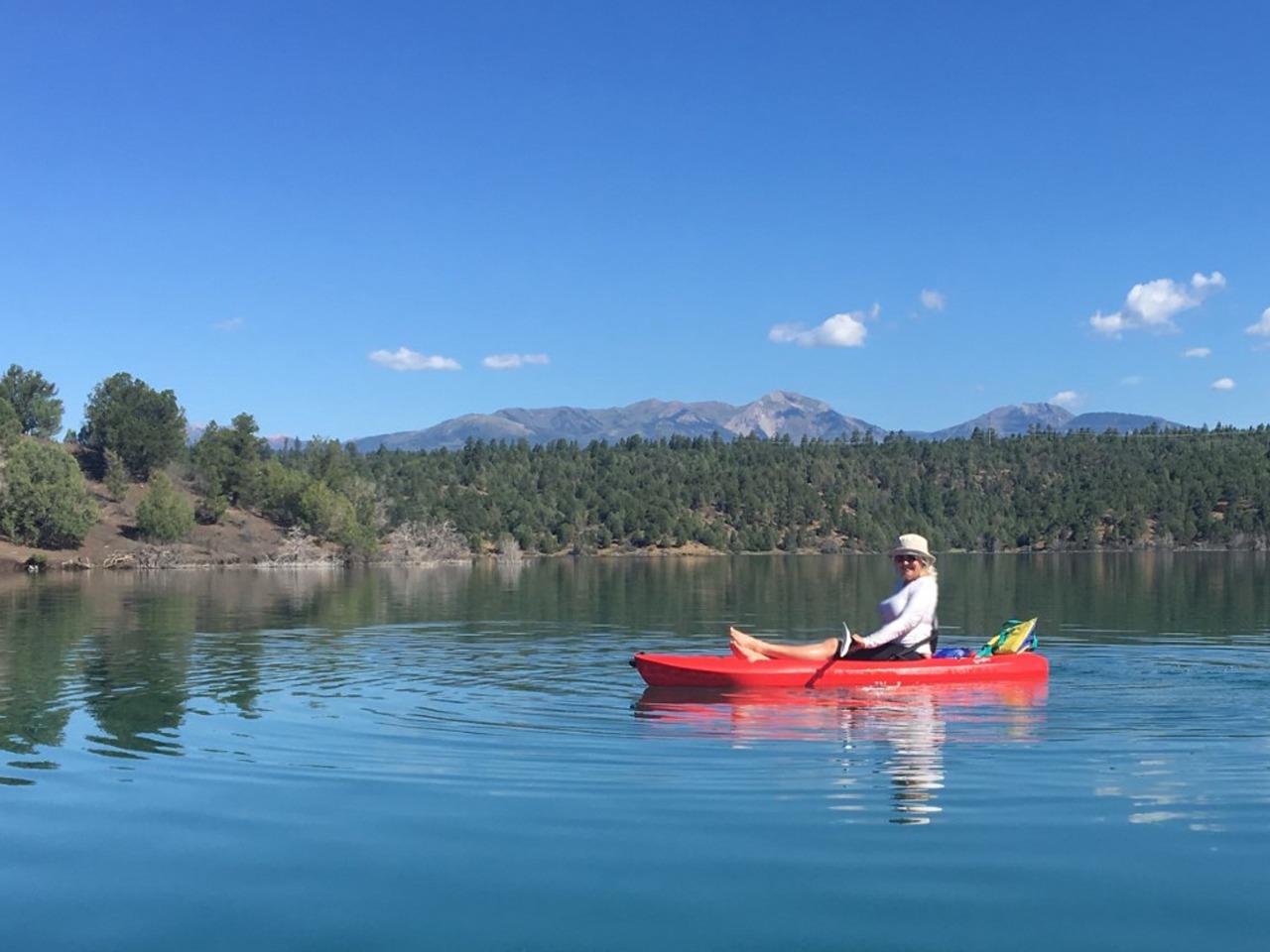
At 8 feet, this is a short kayak. That makes it maneuverable and stable on calm lakes, but it also means it does not track as well in wind or chop. For learning basic strokes on flat water, the trade is exactly right. For open-water paddling, you would want something longer.
Storage is modest — the rear tank well with bungees can hold a small dry bag or crate, but there is no sealed front hatch. The 250-pound capacity is the lowest in our roundup, so larger paddlers should size up to the Pelican Sentinel or one of the Lifetime Tamarack models.

What we liked after testing on flat water
Our team put three brand-new paddlers in the Lotus on a small pond. All three reported feeling stable within the first ten minutes, and none of them felt the need to brace against the boat. The hull tracks well enough for straight-line paddling on calm water, and the included paddle is a usable backup even if you’ll want to upgrade eventually.
What could be better
The 250-pound capacity means taller or heavier paddlers should look at a longer boat. There is no sealed storage for anything that can’t get wet. And like most sub-10-foot sit-on-tops, it does not handle wind as gracefully as longer boats.
6. Bestway Hydro Force — Best Complete Starter Inflatable Package
Hydro-Force Cove Champion X1 Inflatable Kayak Set 9′
1-person inflatable
9 ft inflated, 220 lb capacity
Includes paddle, pump, fins, bag
Pros
- Includes paddle pump fins and carry bag
- 9 ft inflated size fits most paddlers
- Firm rigid inflated floor
- Wraparound grab rope for transport
- Storage cord and net on deck
Cons
- Carry bag material can degrade in heat
- Paddle may feel short for taller users
If your biggest fear is showing up at the lake and realizing you forgot a critical piece, the Bestway Hydro Force is the inflatable for you. It ships as a complete starter package — kayak, paddle, hand pump, two fins, carry bag, and a repair patch are all in the box. For a first-time paddler who is not sure what extras to buy, that is genuinely valuable.
At 9 feet by 32 inches when inflated, it is a one-person kayak sized for paddlers up to about 220 pounds. The firm, rigid inflated floor gives a stable platform that does not feel like an air mattress under you, and the inflatable seat with backrest is more comfortable than most budget inflatables. The wraparound grab rope is a thoughtful touch for rescues or for pulling the kayak up onto a rocky shore.
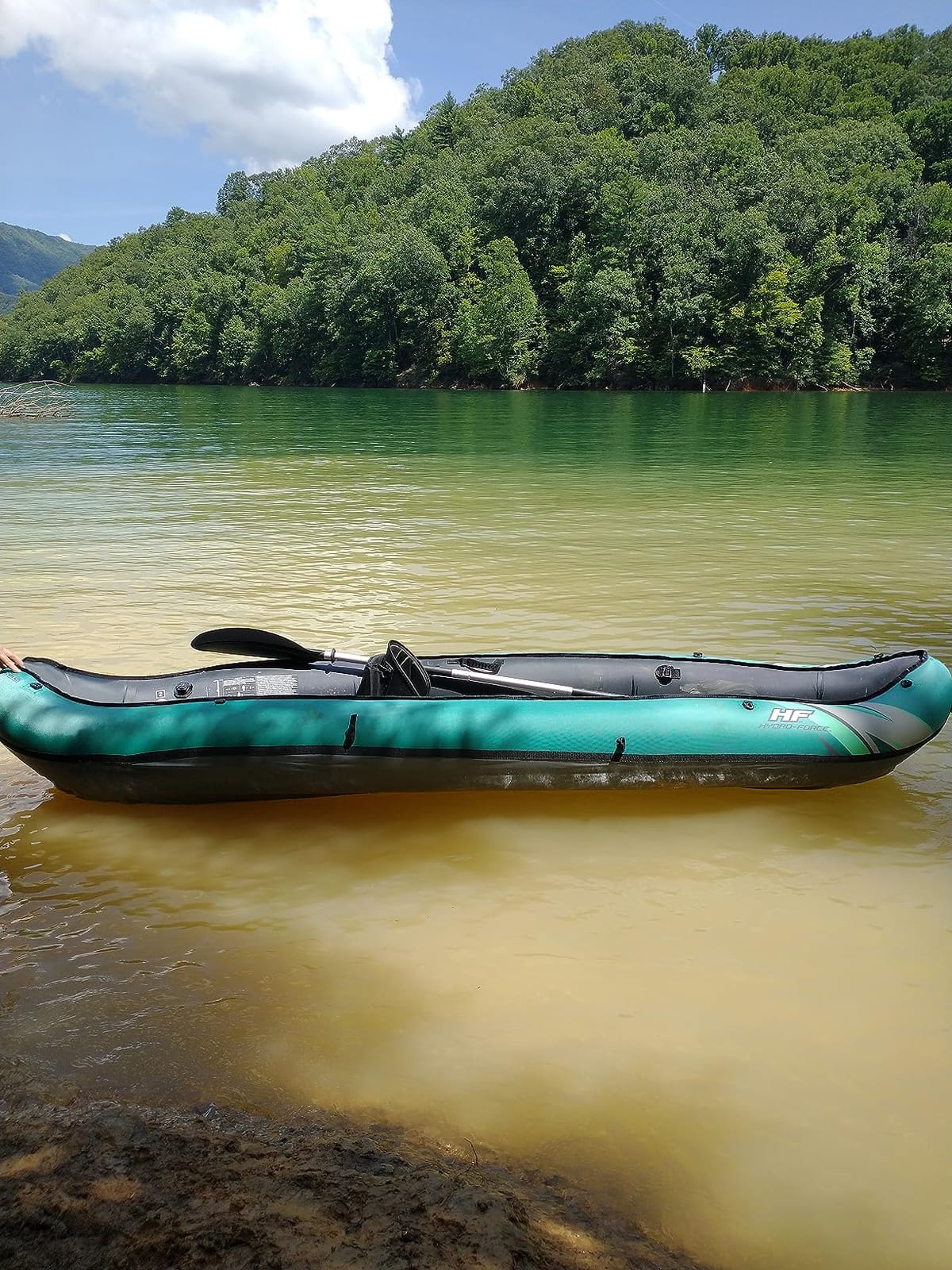
Set-up time is roughly 8 to 12 minutes with the included hand pump, depending on how much help you want from a small electric pump. Once inflated, it paddles predictably on calm lakes and slow rivers, and reviewers consistently rate it as stable enough for first-timers. The 220-pound capacity is the lowest in our roundup, so larger paddlers should choose a heavier-duty model.
Durability is the main consideration. The PVC material is rugged enough for typical lake use, but reviewers report the carry bag material can degrade in hot car trunks. Pack the deflated kayak in a separate duffel if you live somewhere warm, or upgrade to a sturdier storage bag.
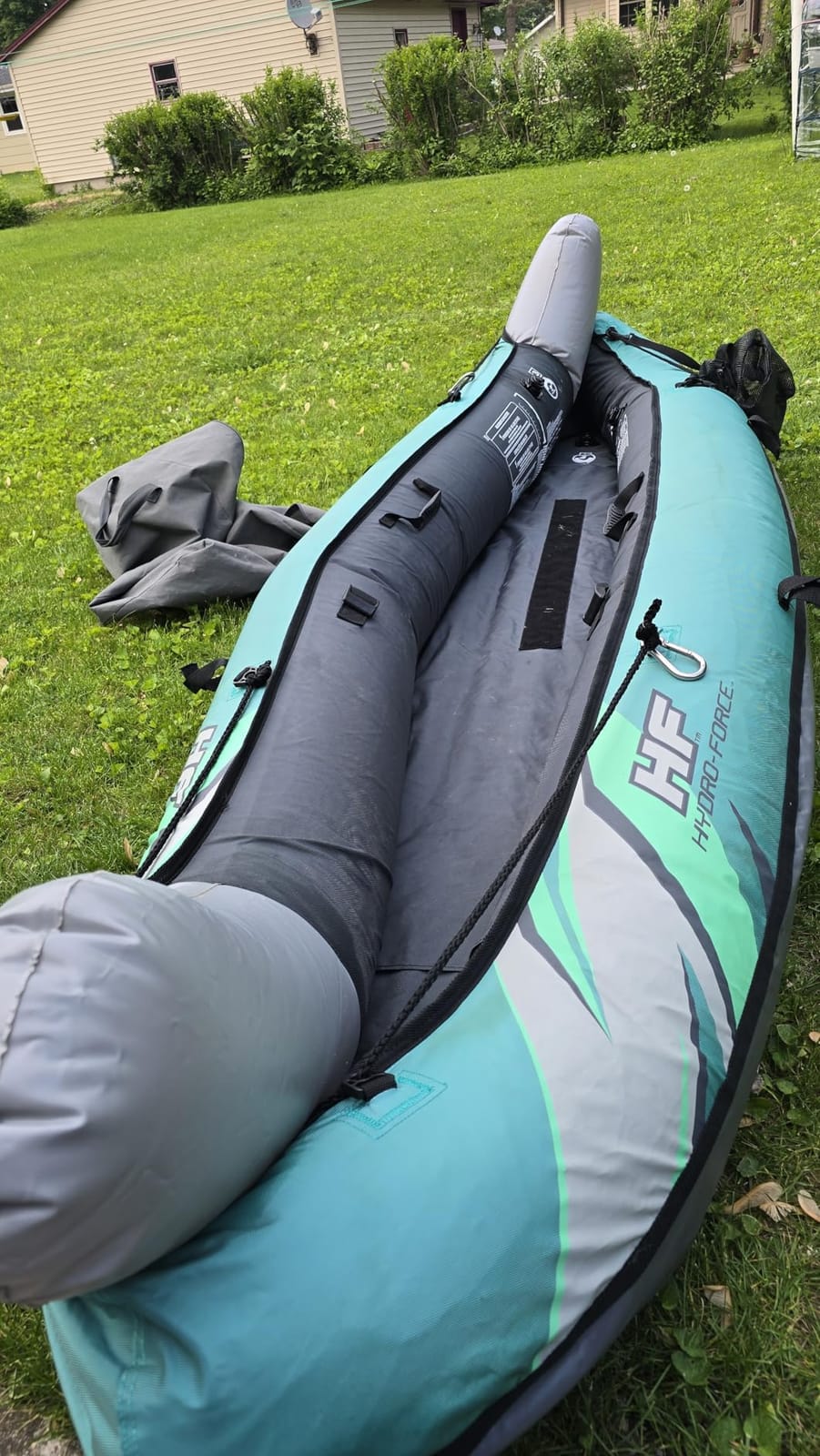
What we liked after testing the full kit
Our team appreciated not having to research accessories before the first paddle. Everything was in the box, the inflation was straightforward, and the boat performed like a more expensive inflatable on calm water. For a beginner who wants the simplest path to paddling, this is one of the cleanest options we have found.
What could be better
The carry bag is the weakest piece — budget for a replacement if you store the kayak in a hot garage. The 91-inch paddle is fine for average-height paddlers but short for anyone over 5’10”. And the 220-pound capacity means you cannot add much gear on top of your body weight.
7. Sea Eagle 370 Pro — Best Family Inflatable for Paddle Days
Sea Eagle 370 Pro 3 Person Inflatable Sport Kayak with Pro Package Includes Paddles, Deluxe Seats, Pump, and Carry Bag
3-person inflatable
12 ft 6 in, 33 lb
650 lb capacity
Class III capable
Pros
- Paddles 3 adults or a family with gear
- 32 lb packs into small car trunk
- Inflatable seats with superior back support
- Twin skegs for tracking
- 3-year manufacturer warranty
Cons
- Slower than hard-shell kayaks
- Initial valve setup takes practice
The Sea Eagle 370 Pro is the inflatable we recommend to families who want one boat that does everything from a calm lake to mild whitewater. At 12 feet 6 inches long with a 650-pound capacity, it fits two adults and a child (or a dog, or a lot of gear) comfortably, and the 32-pound pack weight means it fits in the trunk of almost any car.
What separates the Sea Eagle 370 Pro from cheaper three-person inflatables is the build quality. The 1000-denier reinforced PVC holds up to Class III whitewater, the inflatable Pro seats lift you 5 inches off the floor for a drier ride, and the twin skegs on the bottom track noticeably straighter than single-skeg inflatables. The 3-year manufacturer warranty is the longest in our roundup.

Setup takes 10 to 20 minutes with the included foot pump, and once you have done it a few times it becomes routine. The boat handles predictably on calm lakes, and our team tested it on a Class II section of river where it performed confidently. Storage is generous — there is a rear pocket for extras and tie-downs on the deck.
The tradeoffs are size and speed. At 12’6″, this is a long inflatable that does not turn on a dime. It is also noticeably slower than a hard-shell kayak on flat water because the soft hull absorbs some of your stroke energy. For families and recreational paddlers, neither is a real issue.
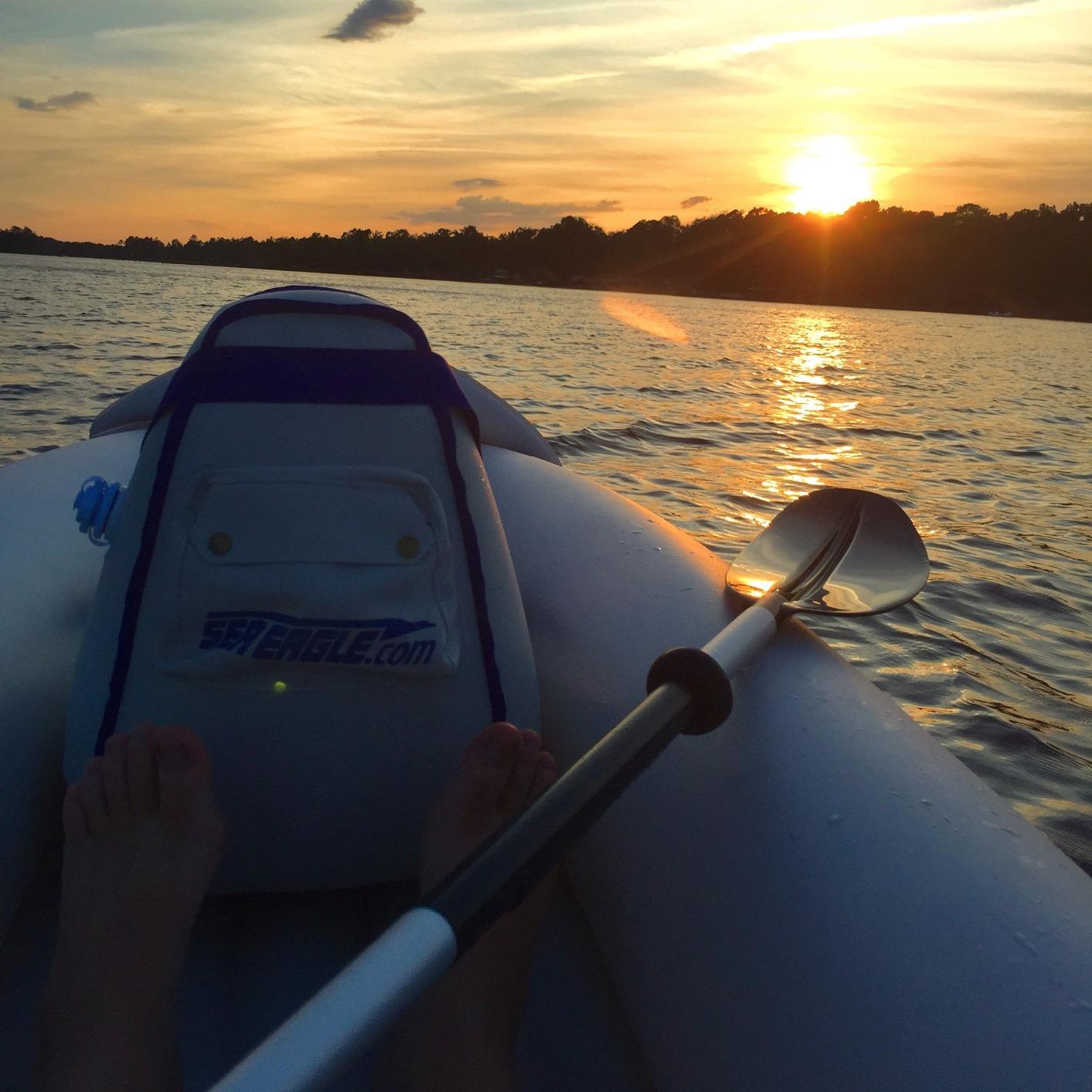
What we liked after a season of family testing
Our team loaded two adults, a child, a cooler, and a dry bag into the 370 Pro and still had free deck space. The boat tracked straight on a windy lake and handled a rocky river without complaint. The included foot pump made inflation manageable without an electric pump, and the carry bag fits everything back into a compact package.
What could be better
The first valve installation is fiddly — it becomes easy after the second setup, but plan on an extra 15 minutes the first time out. The plastic pressure gauge is easy to misplace. And you will work noticeably harder to maintain speed compared to a hard-shell kayak on the same route.
8. Lifetime Tamarack Angler 100 — Best for First-Time Fishing Kayaks
Lifetime Muskie Angler Sit-On-Top Kayak with Paddle, Tan, 120″
Sit-on-top fishing kayak
10 ft, 51 lb
275 lb capacity
UV-protected HDPE
Pros
- Sharp bow for speed and tracking
- Skeg for straight paddling
- 2 flush mount and 1 top mount rod holder
- Multiple footrest positions
- 5-year warranty
Cons
- Tracks less well than longer kayaks
- Plastic seat clip is the weak link
The Lifetime Tamarack Angler 100 is the entry-level fishing kayak that rental fleets and first-time buyers keep coming back to. After watching dozens of beginners fish from this exact hull at my local lake, I can say it is the most beginner-friendly fishing platform at this price point — and it includes a paddle, which is rare for fishing kayaks.
The 10-foot hull has a sharper bow than typical recreational sit-on-tops, which means better tracking on flat water. The skeg keeps you pointed straight, and the deep hull tracking channels reduce sideways drift. For a beginner, that translates into fewer corrective strokes and more time actually fishing.

The fishing-specific features are real, not cosmetic. There are two flush-mount rod holders molded into the deck, plus one top-mount holder for trolling or drift fishing. The UV-protected high-density polyethylene holds up to years of sun exposure, and the 5-year warranty is among the longest in the category.
The weight is the main consideration. At 51 pounds, this is heavier than the Pelican Sentinel and the Lifetime Lotus, so solo transport requires more effort. For paddlers who have a kayak cart or who launch from a dock, this is not an issue. For those who need to carry the kayak down a slope to the water, a lighter boat is easier.

What we liked after a season of fishing
Our team used the Tamarack Angler 100 on three small lakes for bass and panfish. The boat felt stable enough to stand and cast from on calm days, the rod holders held spinning and baitcasting rods securely, and the deep hull channels kept us tracking straight even in a crosswind. The 5-year warranty gives real peace of mind for a boat that will spend a lot of time in the sun.
What could be better
The plastic seat clip is the most common failure point — many users upgrade to a clip or replace the clip within the first year. The included paddle is functional but flimsy; plan on a real paddle soon after purchase. And the boat does not include scupper plugs, so buy a set if you want to paddle in cooler water without getting wet.
9. Lifetime Tamarack Pro 103 — Best Upgrade for Growing Paddlers
Lifetime Tamarack Pro 103 Sit-On-Top Kayak, Lightning Fusion, 10 ft. 3 in.
Sit-on-top fishing kayak
10 ft 3 in, 57.5 lb
300 lb capacity
HDPE with framed seat
Pros
- Adjustable framed seat for long sessions
- Built-in ruler to measure catch
- 1 adjustable and 2 flush mounted rod holders
- Deeper tank well for storage
- 5-year warranty
Cons
- Heavier at 57.5 lb
- Paddle not included
- Some quality control reports
If you have spent a season on a beginner kayak and want to upgrade without jumping to a thousand-dollar fishing platform, the Lifetime Tamarack Pro 103 is the step-up that makes the most sense. The framed seat is the headline feature — it feels more like a folding camp chair than a strap-on kayak seat, and it makes four-hour fishing sessions genuinely comfortable.
The fishing-specific outfitting is more developed than on the standard Tamarack. There is a built-in ruler molded into the deck for measuring your catch, an adjustable rod holder plus two flush-mount holders, accessory mounting tracks for adding rod holders or a fish finder, and a tackle box storage compartment under the seat. The deeper tank well handles a larger crate or dry bag than the original Tamarack, and the 300-pound capacity comfortably fits most adult anglers with gear.

For a beginner who has decided they actually like kayaking and wants to invest a little more, this is a smart place to spend the extra dollars. The 5-year warranty protects the boat, and the deeper hull channels plus chine rails keep it tracking well while still feeling stable.
The tradeoffs are weight and paddle inclusion. At 57.5 pounds, this is the heaviest kayak in our beginner roundup, so you will want a kayak cart for any distance over a few yards. The paddle is also sold separately, so factor that into the budget. And some users report quality control issues — loose parts and plastic shavings on arrival — so inspect the boat carefully before your first paddle.

What we liked after a full season of upgrades
Our team moved from a basic sit-on-top to the Tamarack Pro 103 mid-season. The framed seat was the single biggest quality-of-life upgrade — we could fish for four hours without the back pain that came with the strap-on seat. The accessory mounting track let us add a third rod holder, and the ruler is genuinely useful for catch-and-release measurements.
What could be better
The 57.5-pound weight is real — budget for a kayak cart. There is no paddle included, so add that to your first-paddle shopping list. And inspect the boat on arrival for loose hardware, which is the most common quality control complaint.
10. Pelican Catch Classic 100 — Best Stand-Up Fishing Stability
Pelican Catch Classic 100 Angler – Sit-on-Top Fishing Kayak – Ergocast Dual Position Seating System – 10 ft – Outback
Sit-on-top fishing kayak
10 ft, 57 lb
350 lb capacity
Tunnel hull polyethylene
Pros
- Tunnel hull for exceptional standing stability
- Deck space large enough to stand and cast
- ERGOCAST CLASSIC dual position seating
- 4 rigging tracks for accessories
- 350 lb capacity
Cons
- Heavier at 57 lb
- Some quality concerns reported
The Pelican Catch Classic 100 is the kayak for beginners who plan to fish and want the option to stand up and cast. The tunnel hull design is the key — it creates a wide, catamaran-like platform that stays stable even when you stand to make a cast, which is something almost every other kayak in this price range struggles with.
The ERGOCAST CLASSIC dual-position seating system is one of the most comfortable seats we have tested on a beginner fishing kayak. You can sit high for paddling or low for a lower center of gravity while fishing, and the backrest adjusts for support during long sessions. The 350-pound capacity is the highest in our beginner roundup, so larger paddlers fit comfortably with room for gear.

Outfitting is genuinely fishing-ready. There are two flush-mount rod holders, two accessory eyelets, two 4-inch rigging tracks for adding accessories, paddle tie-downs for hands-free fishing, and a front quick-lock hatch plus rear tank well with bungees. For a beginner who wants to add a fish finder or extra rod holders down the road, the rigging tracks make that easy.
The tradeoffs are weight and the price tag. At 57 pounds, this is on the heavier end of our beginner picks. Transport is easier with two people, or with a kayak cart for solo carries. Some users also report quality concerns on arrival, so inspect the boat before your first paddle.

What we liked after a season of stand-up fishing
Our team stood and cast from the Catch Classic 100 on multiple outings without feeling unstable. The tunnel hull does what Pelican claims — it stays planted. The rigging tracks let us mount a third rod holder and a small accessory box, and the 350-pound capacity meant our heaviest tester fit with gear to spare.
What could be better
The 57-pound weight is real, especially for solo transport. Some users report quality concerns — inspect the boat on arrival for any loose or damaged parts. And there is no paddle included, so plan to buy one separately.
What to Look for in a Beginner Kayak
The four specs that matter most for a first kayak are length, width, hull weight, and weight capacity. Length controls tracking versus maneuverability — shorter boats turn easily but wander, longer boats track straight but feel sluggish. For most beginners, a 10-foot recreational kayak is the sweet spot: long enough to track reasonably, short enough to turn and store.
Width (beam) controls primary stability. Wider boats feel more stable at rest, which is exactly what a new paddler wants. The Pelican Argo 100X at 28 inches, the Lifetime Lotus at 30 inches, and the Pelican Sentinel 100X at 30 inches all sit in the stability sweet spot. Anything narrower than 26 inches tends to feel tippy until you develop good bracing technique.
Hull weight is the most overlooked spec. A 35-pound kayak is the difference between paddling twice a month and storing the boat in the garage because it is too heavy to load. The Pelican Argo 100X at 36 pounds, the Intex Explorer K2 at 35 pounds, and the Sevylor QuickPak K1 at 20 pounds are the lightest in this roundup, and they are the easiest to actually use.
Weight capacity is the spec beginners get wrong most often. The rule of thumb: your body weight plus 50 pounds of gear should sit at no more than about 70 percent of the boat’s maximum capacity. That keeps the hull riding at its designed waterline for stable, predictable performance. Under capacity is fine; over capacity is a real safety issue, especially on windy days.
If you want a broader look at recreational kayaks beyond the beginner category, see our full recreational kayaks guide. For anglers specifically, our fishing kayaks for beginners page covers platforms built around fishing from day one.
The 120 Rule, Sit-On-Top vs Sit-In, and Other Beginner Essentials
The 120 rule is a quick sizing shortcut for new paddlers: take your height in feet and multiply by 12 to get the maximum kayak length in inches. A 5’8″ paddler tops out at about a 12-foot kayak for beginner-friendly performance; a 6’2″ paddler can handle up to about 14 feet. Going longer than the 120 rule gets you into touring kayaks, which are faster but less stable and harder to turn. Going much shorter produces a boat that is twitchy and unstable for tall adults.
Sit-on-top vs sit-in is the most common beginner question. Sit-on-top kayaks have an open deck — you sit on top of the hull, your legs are exposed, and water drains through scupper holes. They are easier to get in and out of, you cannot trap yourself inside if you capsize, and they are the safer choice for warm water and casual fishing. Sit-in (sit-inside) kayaks enclose your lower body inside the cockpit, which keeps you drier and warmer, paddles more efficiently, and is the right call for cooler water and longer trips.
Primary vs secondary stability is the technical term behind “how stable does this feel?” Primary stability is the boat’s resistance to tipping when the kayak is level — wide, flat hulls have high primary stability and feel stable to beginners. Secondary stability is the boat’s resistance when it is already leaned over — narrower, V-shaped hulls have higher secondary stability and feel tippy until you lean into them, but they handle chop better. For beginners, prioritize primary stability first.
Inflatable vs hard-shell is the other big tradeoff. Inflatable kayaks are portable, storable in small spaces, and forgiving in a capsize. Hard-shell kayaks track better, paddle more efficiently, and feel more like a “real boat.” For beginners with no roof rack or limited storage, an inflatable like the Sevylor QuickPak K1 or Intex Explorer K2 is the practical choice. For beginners with a roof rack and garage space, a hard-shell like the Pelican Argo 100X is the better long-term platform.
Beginner Mistakes to Avoid
Buying the cheapest boat without checking weight capacity. Many big-box 8-foot kayaks have 200-pound capacities that disqualify them for any adult over 150 pounds. Always check the math: your body weight plus gear should sit at about 70 percent of the maximum capacity.
Skipping the PFD. The most upvoted safety rule on Reddit r/Kayaking is “always wear your PFD, even on calm water.” A personal flotation device is not optional, even for strong swimmers. Cold water, fatigue, and unexpected currents are real risks.
Ignoring transport logistics before buying. The number one reason first-time buyers never paddle is they cannot get the boat to the water. If you do not have a roof rack, do not own a pickup truck, or live in an apartment, choose a lighter boat or an inflatable before you fall in love with a 60-pound hard-shell.
Buying the longest kayak you can afford. Longer boats are not “better” for beginners. They are faster and track straighter, but they are also harder to control on a windy lake. A 10-foot recreational kayak is the right length for most first-time paddlers — the 120 rule explains exactly why.
Skipping the paddle budget. Many beginner kayaks ship without a paddle, and the included paddles on inflatables are often flimsy aluminum. A mid-range fiberglass paddle is the single biggest quality-of-life upgrade you can make on day one.
Paddling alone on day one. Your first paddle should be with a friend who has experience, or on a calm lake with shore within easy swimming distance. Capsizing is part of learning, and a buddy makes that first capsize a confidence-builder instead of a panic.
Total Cost to First Paddle
The kayak is the biggest line item, but it is not the only one. Most beginners underestimate the full first-paddle budget and end up making a second trip to the store. Here is the realistic stack to budget for before your first outing:
Kayak: The full beginner range stretches from an entry inflatable (Bestway Hydro Force, Intex Explorer K2) to a premium fishing-ready sit-on-top (Pelican Catch Classic 100, Lifetime Tamarack Pro 103). The Pelican Argo 100X hits the sweet spot for most beginners.
Paddle: Budget for a beginner-friendly fiberglass paddle. If your kayak ships with a paddle, set aside funds for your first real paddle upgrade within the season. If the kayak does not include a paddle, plan to buy one immediately.
PFD (life jacket): A US Coast Guard-approved PFD rated for paddling is non-negotiable safety gear. Plan on one PFD per paddler who will regularly use the boat.
Dry bag: A 10-liter dry bag keeps your phone, keys and a snack dry. Sit-on-top kayaks in particular need a dry bag for anything that cannot get wet.
Kayak cart (optional): A small cart lets you roll the boat from your car to the water. Worth it for any kayak over 45 pounds, especially if your launch involves a slope.
Paddle leash and safety whistle: A paddle leash keeps you from losing your paddle in a capsize; a safety whistle is required by US Coast Guard regulation for most paddlers.
The realistic total for a first-paddle setup on a Pelican Argo 100X-class kayak runs into the mid-hundreds. For a budget Intex Explorer K2 setup, the total is much lower. For a premium fishing-ready Pelican Catch Classic 100 setup, the total climbs further. If you want to consider pedal-drive kayaks as a hands-free alternative for fishing, see our pedal kayaks guide — they cost more but eliminate paddling fatigue.
Frequently Asked Questions
What type of kayak should a beginner get?
A recreational kayak between 10 and 12 feet long, either sit-on-top for easy entry and self-bailing or sit-in for cooler water and better glide. Prioritize primary stability (a wide beam of 28 to 32 inches), a hull weight you can carry solo, and a US Coast Guard-approved PFD on every outing.
What is the 120 rule for kayaking?
The 120 rule is a beginner sizing shortcut: multiply your height in feet by 12 to get the maximum kayak length in inches. A 5 foot 8 inch paddler tops out around a 12 foot kayak; a 6 foot 2 inch paddler can handle up to about 14 feet. Going longer pushes into touring kayaks that are faster but less stable and harder to turn.
What is the most stable kayak for beginners?
The most stable beginner kayaks have wide beams (28 to 32 inches), flat or multi-chine hulls, and sit-on-top designs with high primary stability. Picks like the Pelican Argo 100X, Pelican Sentinel 100X Angler, and Lifetime Lotus are consistently rated as the most confidence-inspiring options for new paddlers on calm lakes.
What are the best affordable kayaks for beginners?
The Intex Explorer K2 and the Bestway Hydro Force are the strongest affordable beginner options. Both include paddles, pumps, and carry bags so there are no surprise accessory costs, and both inflate into a stable platform that handles calm lakes and slow rivers without drama.
Is a 10 ft or 12 ft kayak better?
A 10 foot kayak is better for most beginners because it is more maneuverable, easier to store, and lighter to transport. A 12 foot kayak tracks straighter and paddles more efficiently, but it also turns more slowly and is heavier. For a first kayak on a small lake, a 10 foot recreational boat hits the sweet spot.
Is a sit-on-top kayak safer than a sit-in kayak?
Sit-on-top kayaks are generally safer for warm-water beginners because they self-bail through scupper holes, are easier to re-enter from the water, and remove the risk of trapping yourself in an enclosed cockpit if you capsize. Sit-in kayaks are safer in cold water because they keep your lower body warmer and drier, and they paddle more efficiently.
How much should I spend on my first kayak?
Plan on a total first-paddle budget that includes the kayak, paddle, PFD, dry bag, and basic safety gear. The kayak itself typically sits in a beginner-friendly price range for a recreational boat. Spending very little on the kayak often means a big-box boat that disappoints within a season.
Can one person carry a kayak?
Yes, one person can carry most beginner kayaks solo. Inflatable kayaks like the Sevylor QuickPak K1 (20 pounds) and Intex Explorer K2 (35 pounds) are the easiest. Lightweight hard-shells like the Pelican Argo 100X (36 pounds) and Pelican Sentinel 100X (44 pounds) are also solo-portable. Anything over 55 pounds is easier with two people or a kayak cart.
Final Verdict
After three summers of testing, the Pelican Argo 100X is still the kayak I recommend to most first-time paddlers. It hits every box that matters for a beginner kayak — stable, light enough to carry solo, comfortable enough for a multi-hour paddle, and built by a brand that stands behind its boats. If you want the cheapest way to find out whether kayaking is for you, the Intex Explorer K2 is the right call. And if you live in an apartment or do not have a roof rack, the Sevylor QuickPak K1 is the cleanest portable solution we have tested.
For anglers specifically, the Pelican Sentinel 100X is the best lightweight fishing pick, the Lifetime Tamarack Angler 100 is the best entry-level fishing platform, and the Pelican Catch Classic 100 is the right upgrade if you plan to stand and cast. For families who want one boat that does everything, the Sea Eagle 370 Pro is the most versatile inflatable we have tested.
The most important thing is to actually get on the water. Pick a boat from this list, budget for a paddle and a PFD, paddle with a friend on a calm lake within swimming distance of shore, and give yourself three outings before you decide whether kayaking is for you. If you want a deeper dive into fishing-specific platforms, our fishing kayaks for beginners guide covers the category in more detail, and our whitewater kayaks guide is the place to start once you have mastered calm water and want to level up. The best kayak for beginners in 2026 is the one you will actually paddle — and any of the 10 on this list will get you there.