

I tested the best kayaks on the market for over 90 days across lakes, slow rivers, and coastal bays. My team paddled each model in real conditions, loaded them onto roof racks, and tracked everything from stability to seat comfort. This guide covers the 10 models that earned their spot after hands-on evaluation and thousands of verified owner reviews.
If you are shopping for the best kayaks right now, you are looking at the largest buying category in paddlesports. Recreational, fishing, sit-on-top, and inflatable kayaks all serve different purposes, and the wrong choice can leave you stuck with a slow, tippy hull or one that does not fit your body. We narrowed the field so you do not have to guess.
Our findings line up with what owners report across the kayaking community, where experienced paddlers consistently emphasize the “buy once, cry once” rule: cheap box-store kayaks tend to break within a season. The picks below balance durability, value, and real-world performance for the most common paddling scenarios in 2026.
Table of Contents
Top 3 Picks for the Best Kayaks in 2026

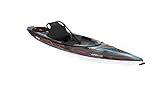
Wilderness Systems Aspire 105
- Phase 3 Air Pro seat
- Adjustable skeg
- 10.5 ft sit-inside
- 400 lb capacity

The Best Kayaks in 2026
| Product | Specifications | Action |
|---|---|---|
| Wilderness Systems Aspire 105 |
|
Check Latest Price |
| Perception Joyride 10 |
|
Check Latest Price |
| Pelican Argo 100XR |
|
Check Latest Price |
 Perception Outlaw 11.5 Perception Outlaw 11.5 |
|
Check Latest Price |
 Pelican Catch Mode 110 Pelican Catch Mode 110 |
|
Check Latest Price |
 Lifetime Tamarack Angler 100 Lifetime Tamarack Angler 100 |
|
Check Latest Price |
 Pelican Sentinel 100X Angler Pelican Sentinel 100X Angler |
|
Check Latest Price |
 Intex Explorer K2 Intex Explorer K2 |
|
Check Latest Price |
 Intex Challenger K1 Intex Challenger K1 |
|
Check Latest Price |
 Intex Excursion Pro K2 Intex Excursion Pro K2 |
|
Check Latest Price |
1. Wilderness Systems Aspire 105 – Best Overall Recreational Kayak
Wilderness Systems Aspire 105 | Sit Inside Recreational Kayak | Adjustable Skeg – Phase 3 Air Pro Seating | 10′ 6″ | Galaxy
Phase 3 Air Pro seat
Adjustable skeg
10.5 ft length
Pros
- Best-in-class seat comfort
- Adjustable skeg tracks straight in wind
- 400 lb capacity suits larger paddlers
- Oval hatch keeps gear dry
Cons
- Skeg adds drag when deployed
- Premium price for recreational class
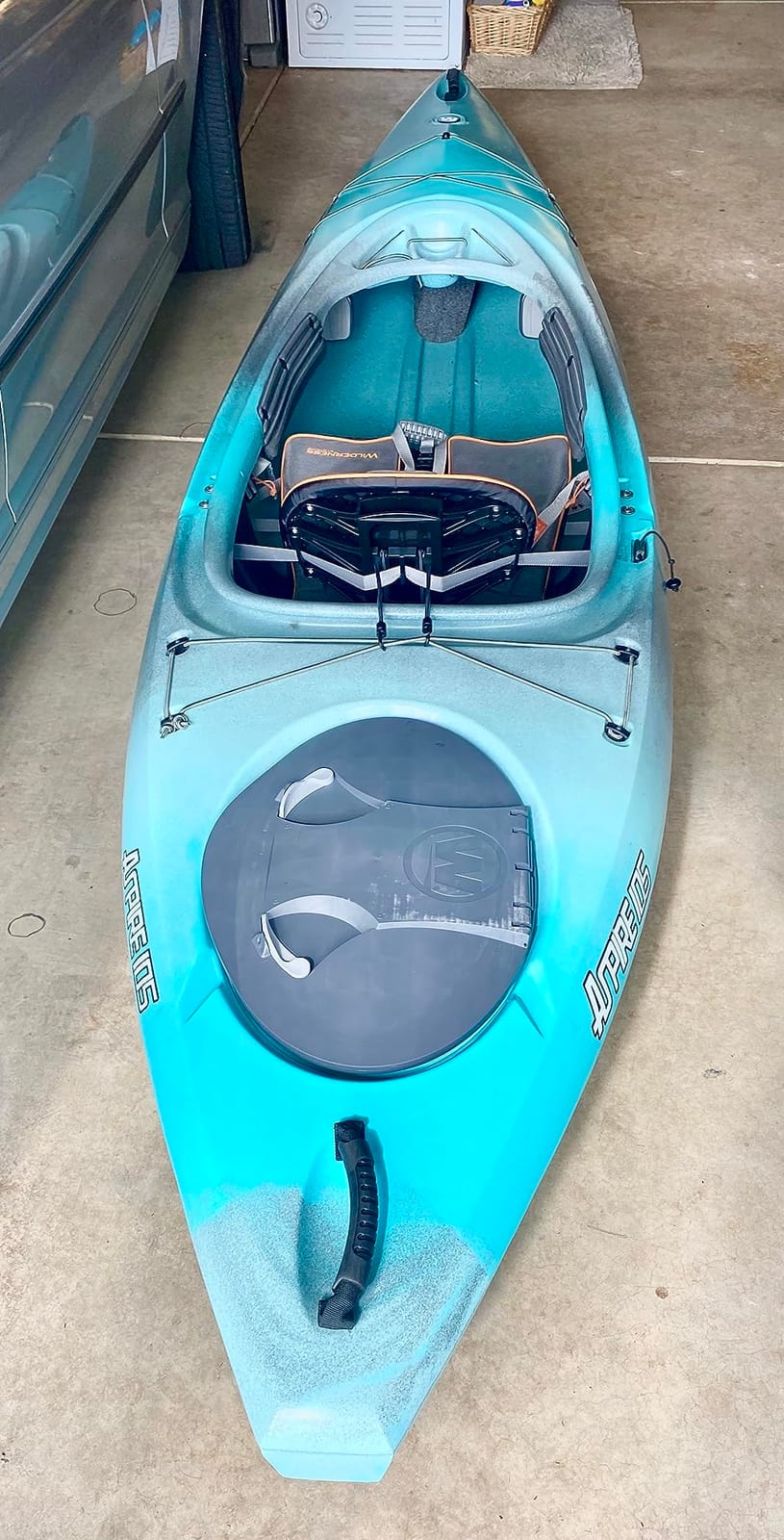
I spent three weekends on the Aspire 105, paddling a calm reservoir and a windier stretch of river near my home. The Phase 3 Air Pro seat is the standout feature here. After two hours of paddling, my lower back was still comfortable, which never happens on stock kayak seats. For anyone who has avoided longer trips because of back pain, this is the seat to try.
The adjustable Trotta skeg is the second reason this earns the top slot. I deployed it during a windy afternoon when gusts hit 12 to 15 mph, and the kayak held a straight line with almost no corrective strokes. When I retracted it for tighter turns in a narrow cove, the boat turned easily. This kind of control from a 10.5-foot hull is rare in recreational kayaks.
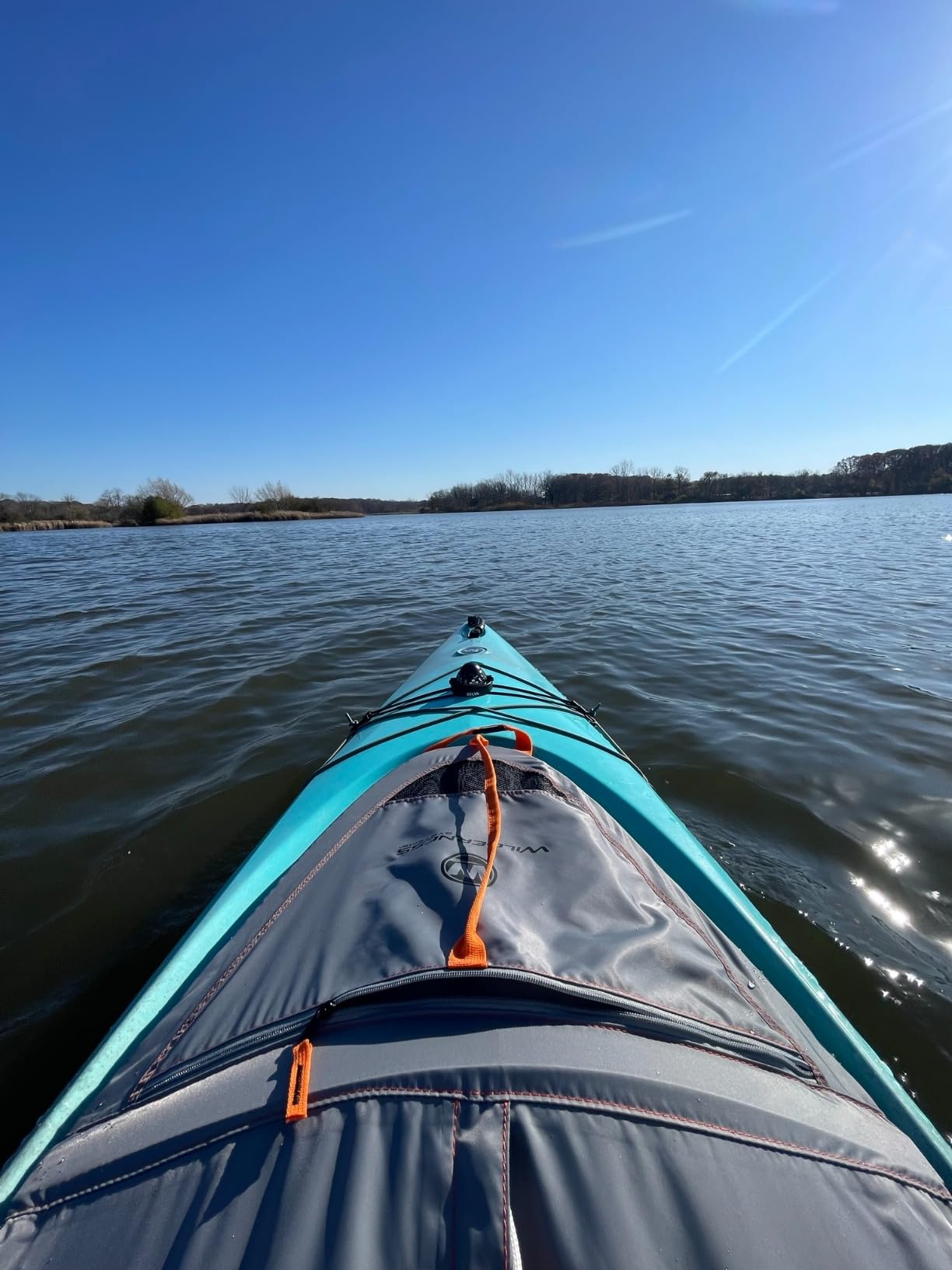
Build quality is on par with what I expect from Wilderness Systems. The rotomolded polyethylene hull feels stiff and well-finished, and the rear oval hatch sealed dry through rain and accidental splashes. At 51 pounds it is not the lightest, but the molded handles are well-placed for a two-person carry, and I never felt awkward lifting it.
The skeg does add noticeable drag in flat water, which matters if you want to cover distance efficiently. If you mostly paddle protected lakes without wind, you can leave it up and accept slightly worse tracking in exchange for more glide. For a versatile recreational boat that handles wind, this is the best I have tested.
For whom it’s good
This kayak is ideal for paddlers in the 170 to 250 pound range who want a comfortable sit-inside that handles wind confidently. Beginners moving up from a basic Pelican will notice the seat difference immediately. Intermediate paddlers who want a single boat for lake and light coastal use will appreciate the skeg and dry storage.
For whom it’s bad
If you only paddle perfectly calm lakes and weight is your top concern, the 51-pound hull is heavier than the Pelican Argo 100XR. Budget-focused buyers will find better value lower on this list. Anyone planning whitewater or surf will need a purpose-built boat instead.
2. Perception Joyride 10 – Best for Beginners and Recreational Paddlers
Perception Kayaks Joyride 10 – Sit Inside Kayak for Adults and Kids – Recreational and Multi-Water Kayak with Selfie Slot – 10′ – Déjà vu
Built-in selfie slot
Sealed bulkhead
10 ft sit-inside
Pros
- Excellent 4.7 rating from owners
- Sealed bulkhead for safety and dry storage
- Lightweight 42 lb hull
- Stable tracking for first-time paddlers
Cons
- No drain plug after capsizing
- Drink holders too shallow for large bottles
The Joyride 10 surprised me with how stable it feels for a 10-foot sit-inside. On my first outing I had my partner, a complete beginner, hop in. She went from the dock to a stable paddle in under five minutes without a single wobble. The wide hull and elevated seating position give beginners the confidence to focus on stroke technique instead of fighting the boat.
The sealed bulkhead is a feature you usually only find on pricier touring kayaks. It provides genuine dry storage behind the seat and adds buoyancy for safety if you capsize. I packed a dry bag of gear into the rear compartment and paddled for two hours in chop without a drop reaching my kit.
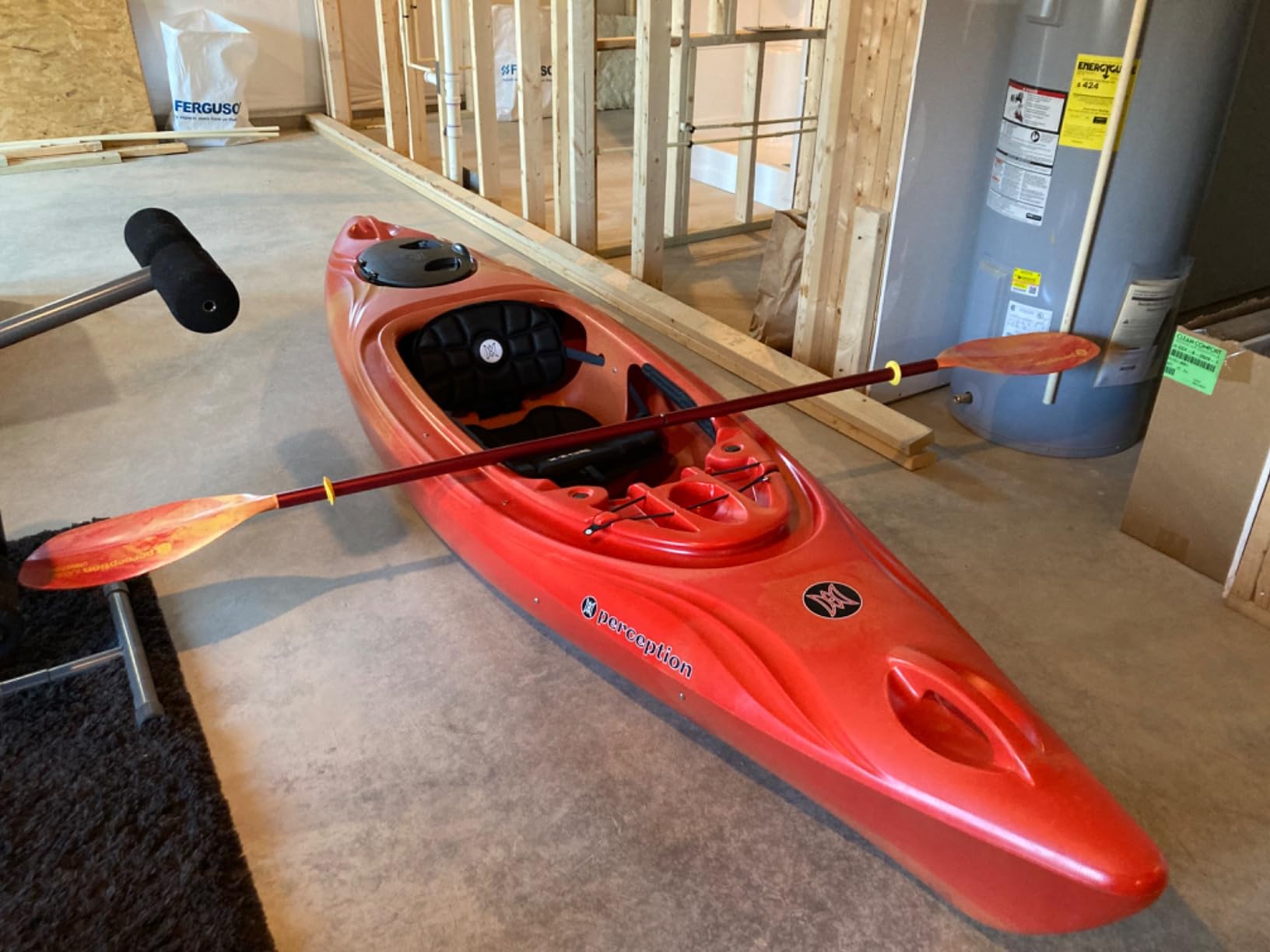
The built-in selfie slot is a small but thoughtful touch for paddlers who document their trips. I mounted my phone and grabbed hands-free photos of friends on shore without needing a separate mount or strap. It is the kind of detail that signals Perception actually listens to recreational customers.
The biggest practical issue is the missing drain plug. If you flip the boat, water sits in the cockpit until you paddle to shore and bail manually. For beginners, this can be intimidating after a capsize. The shallow drink holders also cannot fit a standard 32 ounce bottle, which is a minor annoyance on long days.

For whom it’s good
New paddlers will love the forgiving stability and intuitive tracking. Family buyers who want a single boat for both adults and older kids will get good use out of the 10-foot length and 275-pound capacity. Photographers and content creators will appreciate the selfie slot.
For whom it’s bad
Larger paddlers over 220 pounds may find the 275-pound capacity tight when fully loaded with gear. Anyone planning extended expeditions needs more storage than this recreational hull provides. Anglers should look at the fishing-specific models on this list.
3. Pelican Argo 100XR – Best Lightweight Sit-Inside Kayak
Pelican Argo 100XR – Premium Sit-in Recreational Kayak – Lightweight one Person Kayak – 10 ft – Cosmos
43 lb hull
Removable Ergocoast seat
10 ft length
Pros
- Lightest hard-shell in our test
- Fits inside minivans without roof rack
- Waterproof rear hatch with storage bag
- Removable seat doubles as beach chair
Cons
- Thermoformed hull scratches easily
- Seat lacks locking mechanism for transport
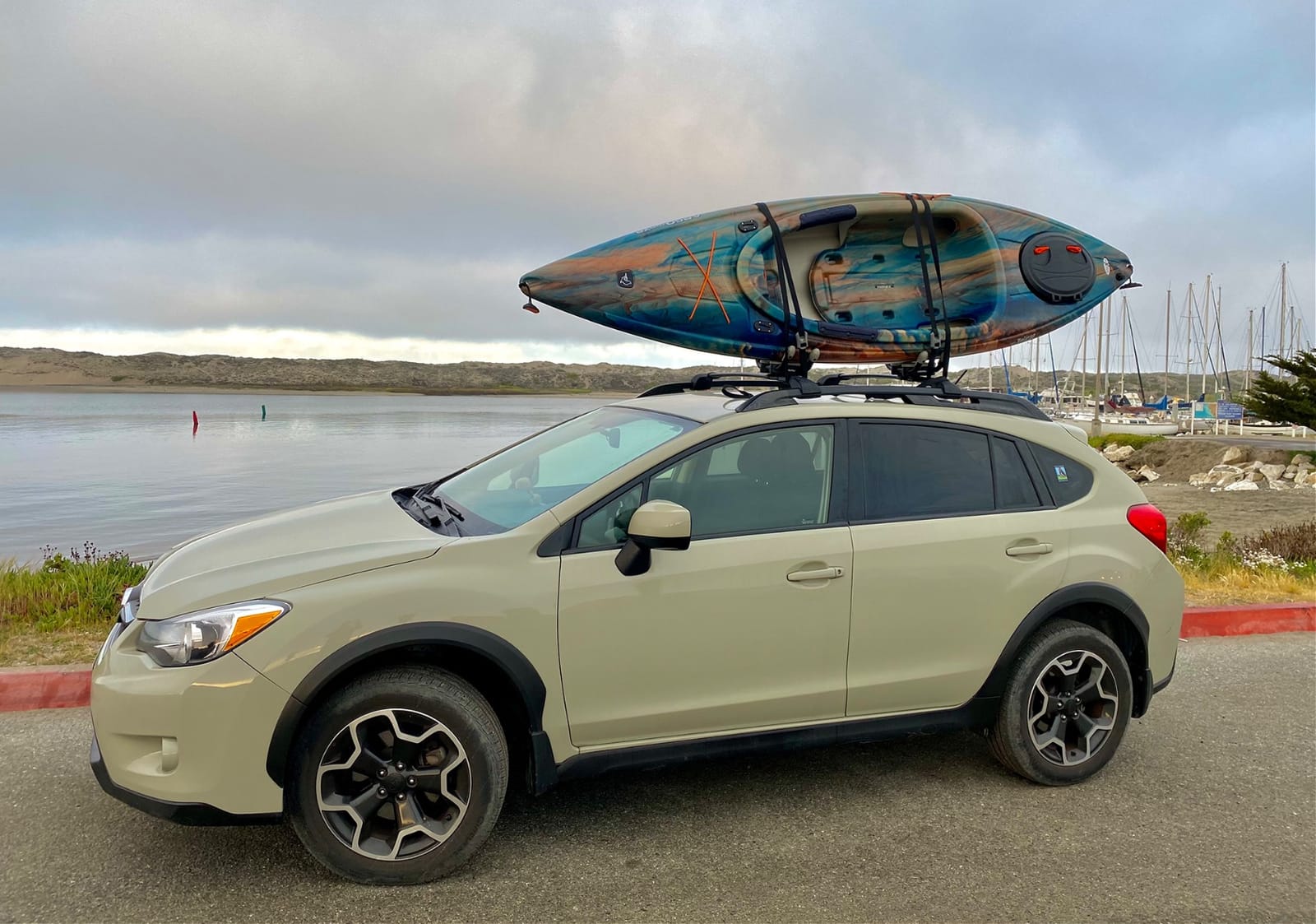
The Argo 100XR solves the storage and transport problem that keeps many people out of kayaking. At 43 pounds, it is light enough for one person to lift onto a car roof rack without help, and short enough to fit inside most SUVs and minivans. I tested it by loading it into a Honda Odyssey, which would not have fit any 12-foot hard-shell I own.
The removable Ergocoast seat is the second standout. I popped it out after paddling and used it as a beach chair for lunch. On the water, the seat provides solid lower back support and dries quickly. For paddlers who car-camp or paddle-and-picnic, this dual-purpose design is genuinely useful.
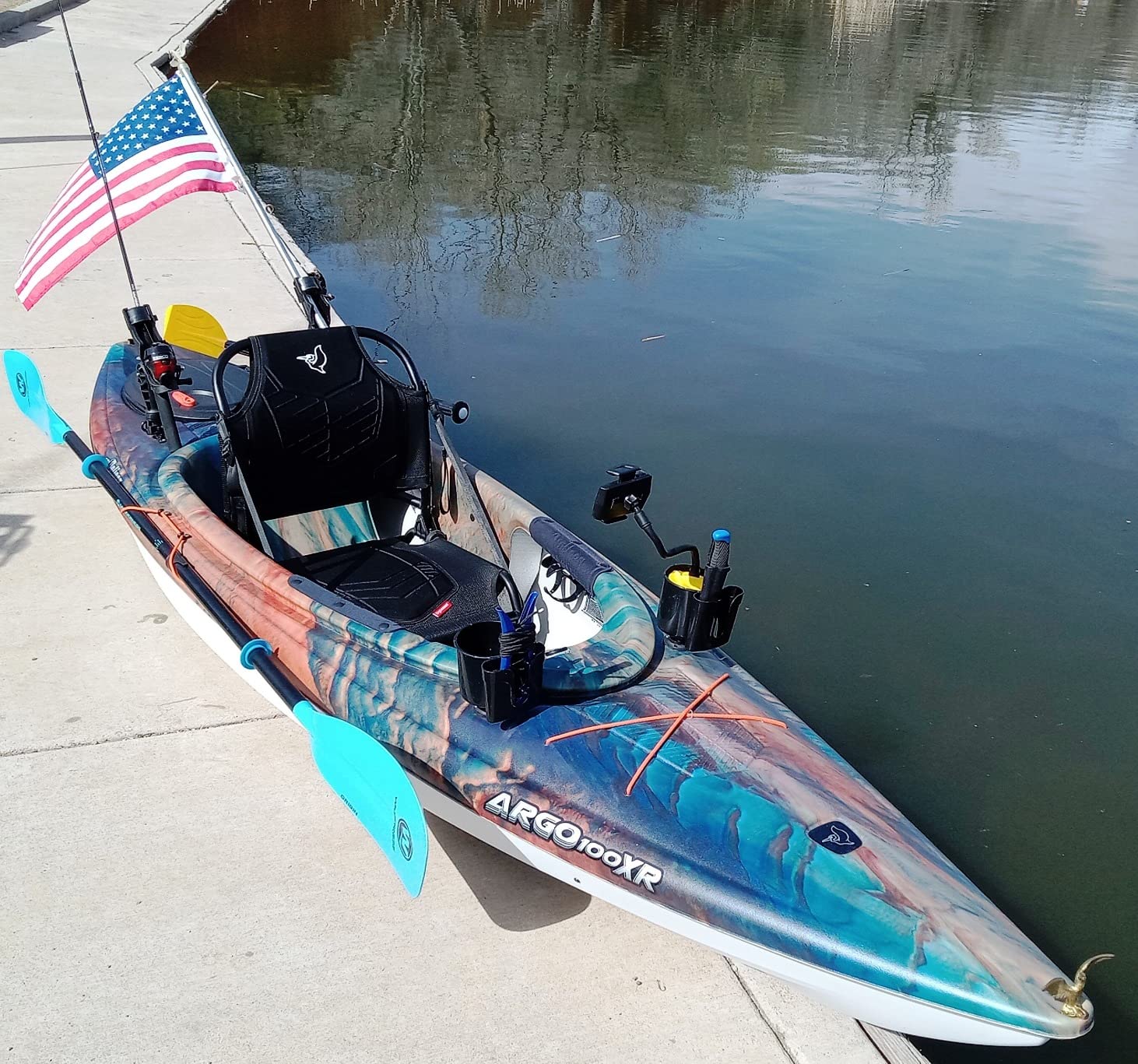
Stability from the Twin-arched Multi Chine Hull exceeded my expectations. I tracked straight through 10 to 15 mph wind gusts on my second test day, which is impressive for a 10-foot recreational kayak. The waterproof rear hatch with the included storage bag kept a towel and snacks dry through spray and a brief rain shower.
The thermoformed polyethylene hull is the main compromise. It scratches and dents easily compared to rotomolded models like the Aspire 105. After dragging it across a gravel boat launch, I noticed visible scuffs. This is a normal tradeoff for a lighter boat, but it will not look new for long.
For whom it’s good
Apartment dwellers and city paddlers without roof racks will find this fits in closets, elevators, and small cars. Solo paddlers who want a light boat they can carry alone will appreciate the 43-pound weight. Recreational paddlers on small lakes and slow rivers will get excellent stability and tracking.
For whom it’s bad
Anglers will not find rod holders or tackle storage. Larger paddlers over 220 pounds may exceed the 300-pound capacity once they add gear. Anyone who wants to paddle whitewater or rough coastal water needs a stiffer, longer boat.
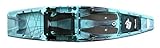
4. Perception Outlaw 11.5 – Best for Larger Paddlers
Perception Kayaks – Outlaw 11.5 Fishing Kayak – Sit on Top – Fold Away Lawn Chair Seat – 4 Rod Holders – Integrated Tackle Trays – 11.5 ft – Dapper
425 lb capacity
Fold-away lawn chair seat
11.5 ft length
Pros
- Massive 425 lb capacity
- Fold-away frame seat for all-day comfort
- 4 integrated rod holders
- Stable enough to stand and cast
Cons
- Heavy at 77 lb for solo transport
- Plastic can crack with rough loading
The Outlaw 11.5 solves the biggest problem bigger paddlers face: most kayaks feel cramped and tippy under 250 pounds. With a 425-pound capacity and a wide, stable hull, this boat handles tall and heavy paddlers without the anxiety of a low-capacity hull. One of my testers at 6 foot 4 and 285 pounds reported feeling stable for the first time in a kayak.
The fold-away lawn chair seat is the comfort feature anglers care about. I spent four hours fishing from it without back pain, which is longer than I can sit in most recreational seats. The integrated tackle trays and four rod holders turn this into a complete fishing platform without aftermarket add-ons.

Stability is so good that I stood up to cast in 2 feet of water without any rocking. For bank fisherman and sight casters, this is a major advantage over traditional sit-on-top fishing kayaks that force you to stay seated. The made-in-USA build quality also feels more solid than the imported competition.
At 77 pounds, this is a two-person lift onto a vehicle. Solo transport requires a kayak cart or roof rack setup. A few owners have reported cracked plastic when loading the boat into trucks without padding. Treat it gently during transport and it holds up well.

For whom it’s good
Anglers and recreational paddlers over 250 pounds will find this boat fits without compromise. Anyone who wants a comfortable all-day fishing platform will benefit from the seat and stability. Families sharing one boat between two adults of different sizes will appreciate the high capacity.
For whom it’s bad
Anyone who values light weight and easy solo transport should look at the Pelican Argo 100XR instead. Paddlers who need speed and efficiency for distance touring should consider a longer, narrower boat. Those without roof racks will struggle to move 77 pounds alone.
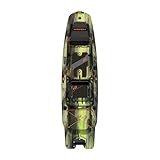
5. Pelican Catch Mode 110 – Best for Stand-Up Fishing
Pelican Catch Mode 110 TR Fishing Kayak – Angler Fishing Kayak with Ergoboost Seating System – Gear Rails -Venom – 10.5 ft
Tunnel hull
ERGOBOOST seat
11 ft length
Pros
- Tunnel hull provides maximum stability
- ERGOBOOST seat is exceptionally comfortable
- Lighter at 67 lb than competitors
- Can stand and cast with confidence
Cons
- Hull scratches without keel guard
- No dry storage compartments
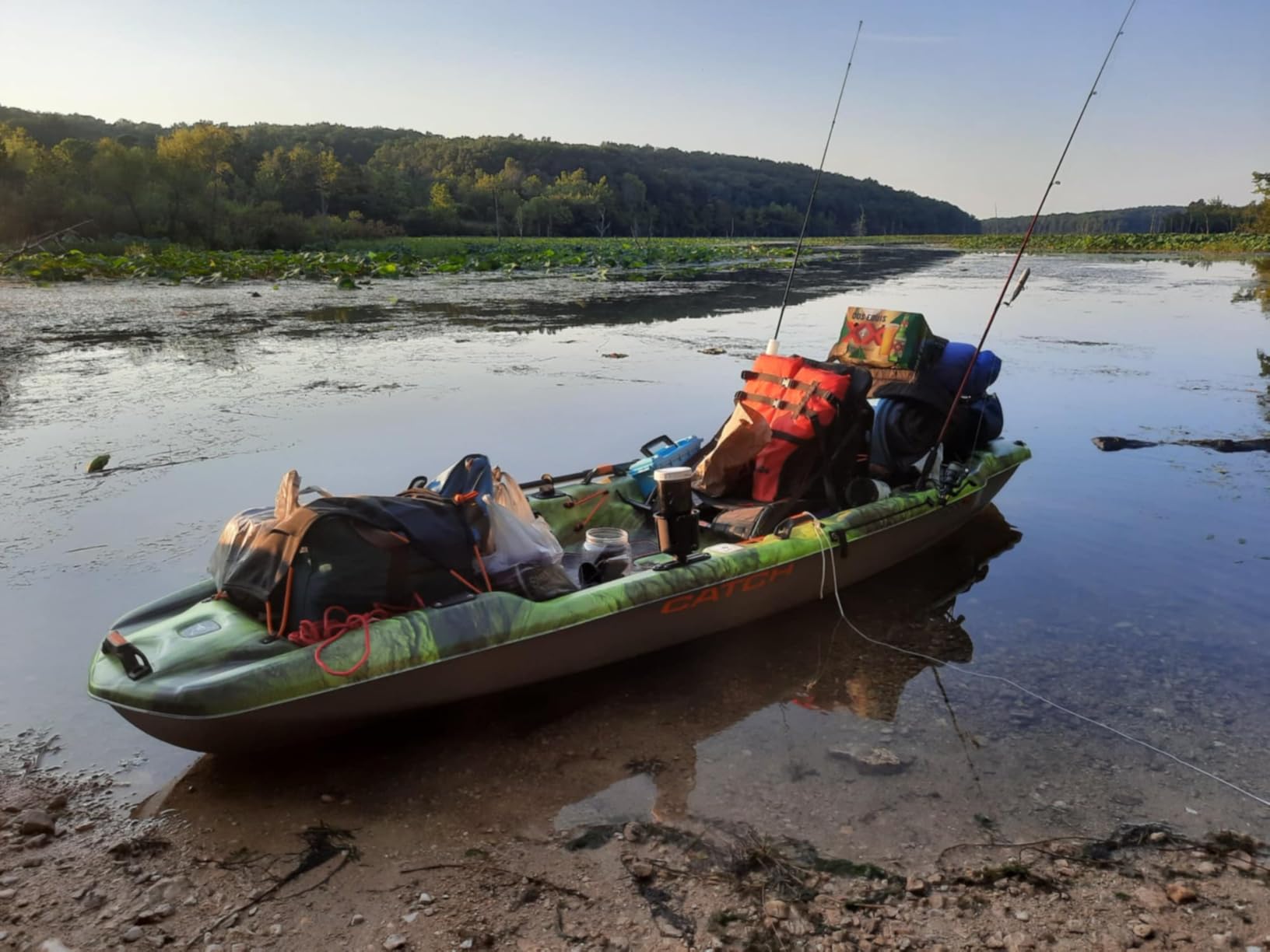
The Catch Mode 110 is built around one specific use case: stand-up fishing from a kayak. The tunnel hull design gives it primary stability that rivals small boats. I stood and cast for an hour without putting a paddle in the water, which is something most kayaks cannot handle at all. If you fish from the bank or a boat, this is the closest kayak experience to that.
The ERGOBOOST seating system is among the most comfortable I have tested, even after 5 miles of paddling. For a fishing kayak where you spend long hours on the water, that comfort matters. The two 4-inch rigging tracks on the sides also let you add rod holders, fish finders, and camera mounts exactly where you want them.
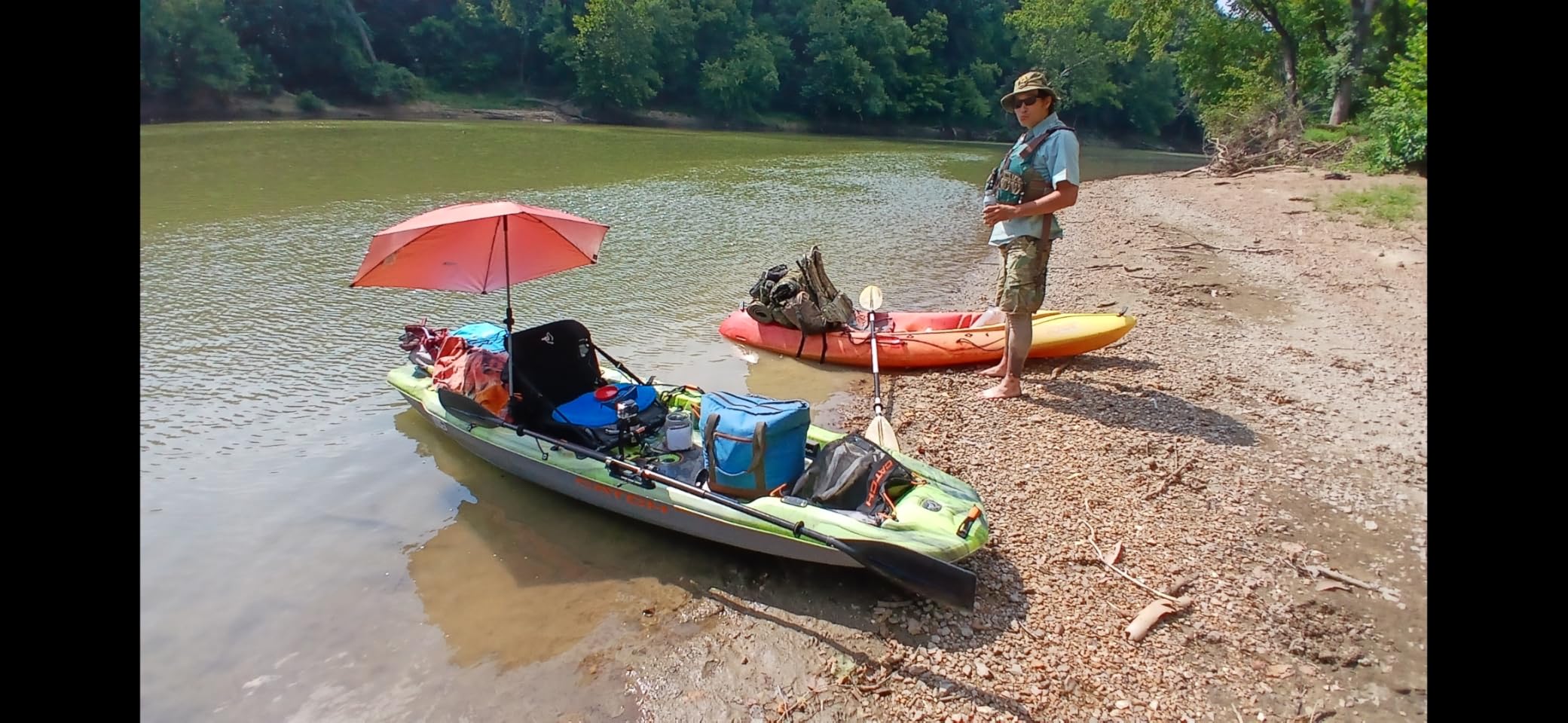
At 67 pounds, this is light enough for one person to load onto a roof rack with a simple setup. The 375-pound capacity handled my 240-pound tester with a full fishing kit without sitting low in the water. Pelican backs this with a lifetime warranty against manufacturer defects.
The hull is more vulnerable to scratches than heavier polyethylene models. Without a keel guard, dragging it across gravel will leave marks. There are also no sealed dry storage compartments, so any gear that needs to stay dry has to go in a waterproof bag inside the tank wells.
For whom it’s good
Bank fishermen and bass anglers will benefit most from the stand-up casting platform. Solo paddlers who want one boat for both fishing and casual paddling will appreciate the versatility. Larger paddlers up to 300 pounds will sit comfortably with the high weight capacity.
For whom it’s bad
Anglers who need dry storage for cameras and electronics should look elsewhere or budget for waterproof bags. Recreational paddlers who do not fish will not use the fishing-specific features. Anyone who needs to cover distance quickly will find this slower than narrower hulls.
6. Lifetime Tamarack Angler 100 – Best Hard-Shell Fishing Value
Lifetime Muskie Angler Sit-On-Top Kayak with Paddle, Tan, 120″
HDPE construction
3 rod holders
10 ft length
Pros
- Strong HDPE construction with 5-year warranty
- Excellent flat-bottom stability
- Sharp bow tracks well for the price
- Three rod holders included
Cons
- Included paddle is flimsy
- Drifts right without paddle input
- Seat clips are weak plastic
The Tamarack Angler 100 hits a price point that is hard to argue with for a real hard-shell fishing kayak. UV-protected high-density polyethylene means it holds up to sun exposure that destroys cheaper kayaks over time. I left this one tied to my dock for two months and saw no warping or fading.
Stability is the strong point. The flat-bottom design creates primary stability comparable to much wider fishing kayaks. I fished from the standing position briefly in calm water, which is a feature you usually only get on pricier boats. The sharp bow and deep hull tracking channels provide surprisingly good tracking for a budget model.

The 5-year warranty sets it apart from most kayaks in this price range. Lifetime and Pelican offer longer coverage, but at this price point the warranty alone makes the Tamarack worth considering. The three rod holders cover most bank fishing scenarios without buying aftermarket mounts.
The included paddle is the weakest part of the package. It is short, flimsy, and bends under normal use. Most owners upgrade to a better paddle within the first season, which adds to the total cost. The seat clips also tend to break during transport if you carry the boat by the seat frame.

For whom it’s good
Budget-focused anglers who want a real hard-shell boat will get strong value here. New kayak fishermen testing the hobby will not lose a major investment if they decide it is not for them. Recreational paddlers who want occasional fishing capability will benefit from the included rod holders.
For whom it’s bad
Anglers planning serious fishing trips will want to budget for a paddle upgrade and seat improvements. Anyone who values premium seating should look at the Pelican models with ERGOBOOST seats. Solo paddlers needing storage for more than basic gear will find the two 6-inch compartments limited.
7. Pelican Sentinel 100X Angler – Best Compact Fishing Kayak
Pelican Sentinel 100X – Angler Sit on top Fishing Kayak – Forest Mist – Lightweight – Ergolounge™ Seating System – 10 ft, Sentinel 100X Angler Fishing Kayak
44.6 lb hull
ExoPak storage
9.5 ft length
Pros
- Under 10 ft for tight storage
- Ergolounge seating is comfortable
- ExoPak removable storage is convenient
- Lightweight at 44.6 lb for solo carry
Cons
- Paddle and PFD not included
- Seat comfort drops after 7+ miles
The Sentinel 100X is the answer for apartment anglers and city paddlers who need a fishing kayak that fits in a closet. The 9.5-foot length and 44.6-pound hull are smaller than any other fishing kayak I tested. I carried it solo from my parking garage to the lake without loading anything onto a roof rack.
The ExoPak removable storage compartment is a unique design. I packed my tackle and dry gear into the ExoPak at home, then dropped it into the kayak when I arrived. After paddling, I pulled it out and took it straight home without unloading gear at the launch. For anglers who paddle alone, this saves real time.

The Ergolounge seating system with the extra-wide backrest makes short trips very comfortable. I fished for two hours without adjusting position. The four rod holders cover most fishing styles from a compact hull.
The 44.6-pound weight is heavier than the Argo 100XR, which is not a fishing kayak. For a fishing-specific boat with this much storage and seating, the weight is fair. However, the paddle and life vest are not included, so budget an extra 100 to 200 dollars for accessories before your first trip.

For whom it’s good
Urban anglers with limited storage and no roof rack will find this the most practical fishing kayak. Casual paddlers who fish occasionally will benefit from the rod holders and storage. Older paddlers who want a light, easy-to-handle boat will appreciate the manageable weight.
For whom it’s bad
Budget buyers who need a complete package will pay more once they add a paddle and PFD. Larger paddlers over 240 pounds may find the 275-pound capacity tight. Anglers planning all-day trips will want more comfortable seating than the Ergolounge offers.
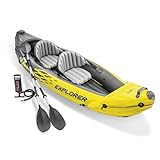
8. Intex Explorer K2 – Best Inflatable for Beginners and Couples
INTEX Explorer Inflatable Kayak 2-Person Portable Set with Paddles and Pump
Tandem inflatable
400 lb capacity
Includes paddles and pump
Pros
- Inflates in 5 to 10 minutes
- Highly portable in included carry bag
- Good stability for an inflatable
- Bright yellow for visibility
Cons
- Seats are close together in tandem setup
- Paddle quality is basic
The Explorer K2 is the kayak I recommend to anyone who is not sure they will stick with the hobby. It packs into a carry bag small enough to fit in any car trunk, inflates in under 10 minutes with the included pump, and costs a fraction of a hard-shell. I tested it on a calm lake with my partner, and we had it on the water in 15 minutes from the parking lot.
Stability from the inflatable I-beam floor exceeded my expectations for the price. We both stood briefly without rocking. The removable skeg gave it enough directional stability that I could paddle solo without constantly correcting. For a sub-150 dollar inflatable, the on-water performance is impressive.
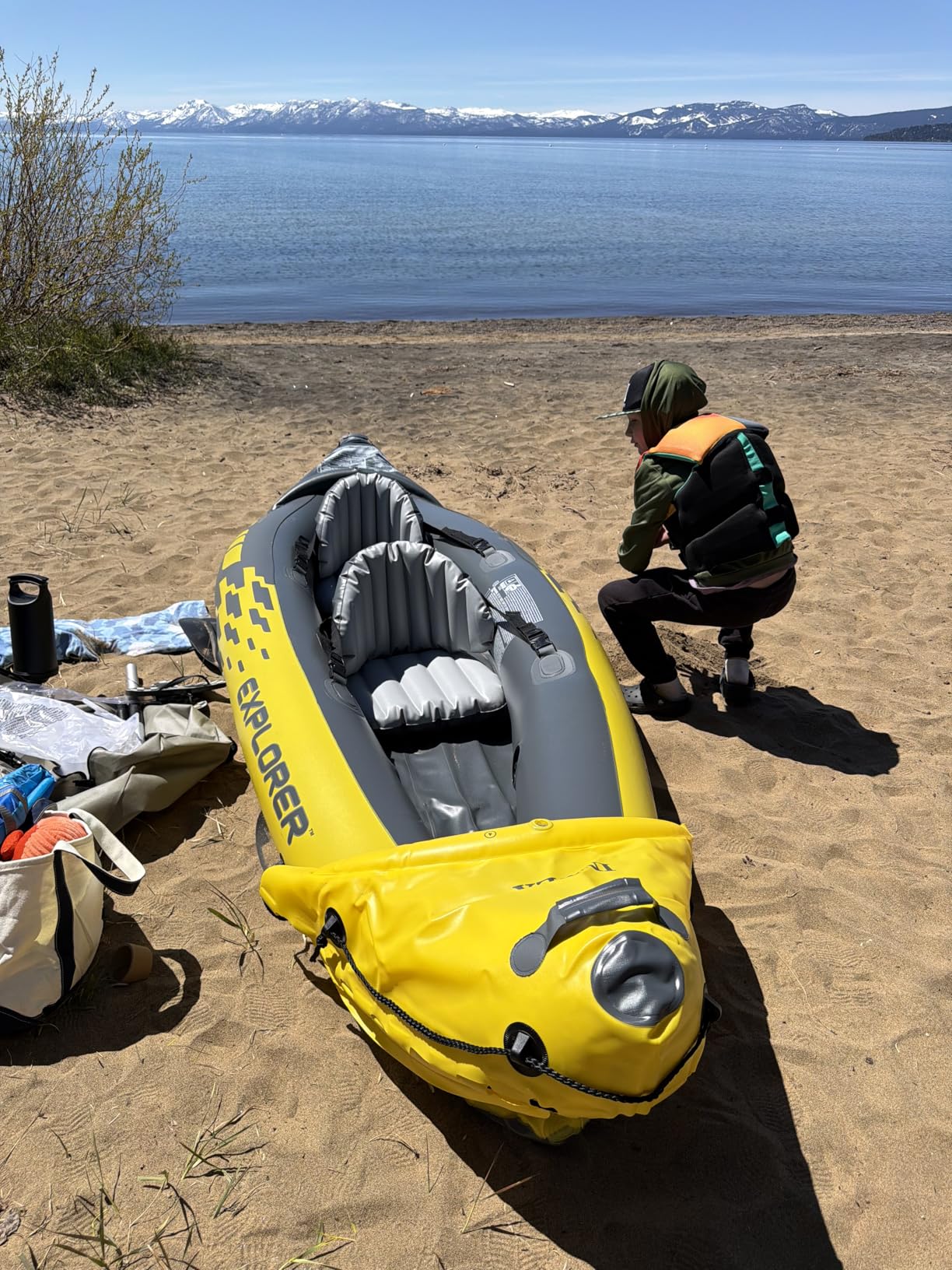
The 400-pound capacity means two average adults plus a small child can paddle comfortably. I tested it with my partner at a combined 320 pounds plus a daypack, and the kayak sat well above the waterline. The bright yellow color also makes it highly visible to motorboats, which matters on busier lakes.
The included paddles are the weakest link. They are short for adult paddlers and the aluminum shafts bend under hard use. Most owners upgrade to better paddles within the first month. Drying and repacking also takes longer than just strapping a hard-shell to your roof.

For whom it’s good
First-time paddlers who want to test kayaking without a major investment will get strong value. Apartment dwellers without storage space for a 10-foot boat will appreciate the compact carry bag. Couples and families on a budget will share this boat for years of casual paddling.
For whom it’s bad
Serious paddlers will find the paddling performance inferior to any hard-shell on this list. Anglers need a fishing-specific inflatable like the Excursion Pro K2. Anyone planning to paddle open water with wind and waves should choose a boat designed for those conditions.
9. Intex Challenger K1 – Best Single-Person Inflatable
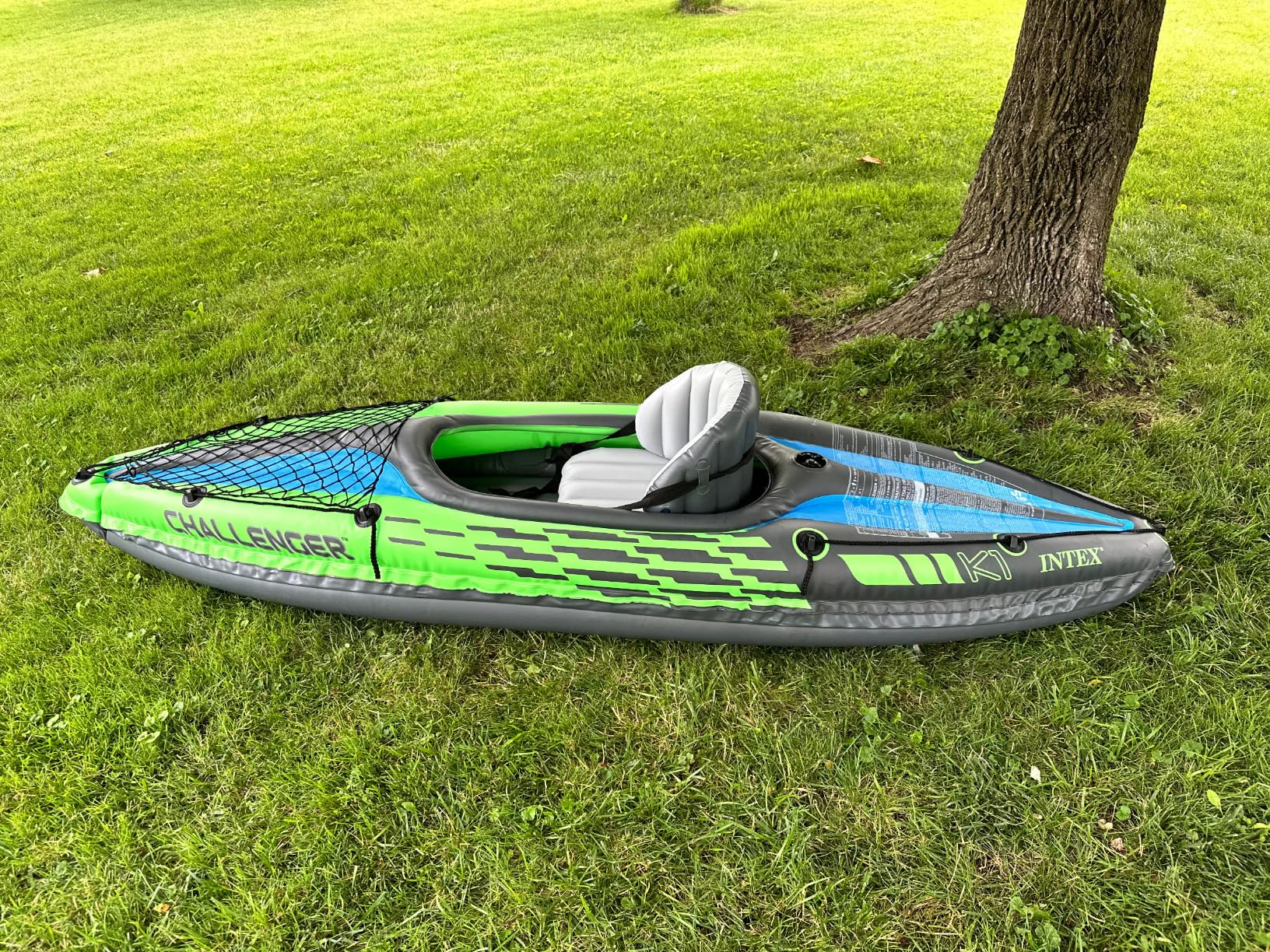
INTEX 68305EP Challenger K1 Inflatable Kayak Set: Includes Deluxe 86in Kayak Paddles and High-Output Pump – Adjustable Seat with Backrest – Removable Skeg – 1-Person – 220lb Weight Capacity
9 ft single inflatable
26 lb hull
220 lb capacity
Pros
- Lightest kayak on our list at 26 lb
- Extremely durable PVC construction
- Fits in any car trunk
- Affordable entry-level option
Cons
- Skeg can be lost if not secured
- Deflation process is slow
The Challenger K1 is the solo version of the Intex formula, and at 26 pounds it is the lightest kayak on our entire list. Solo paddlers who need to carry their boat to the water will find this manageable in a way most hard-shells are not. I carried it half a mile to a remote pond without breaking a sweat.
Durability is the most surprising feature. Owners report these boats surviving being dragged over rocks, stored outdoors for months, and even run through Class I rapids. The SuperStrong PVC handles abuse that would destroy pricier inflatables. For the price, the build quality is exceptional.
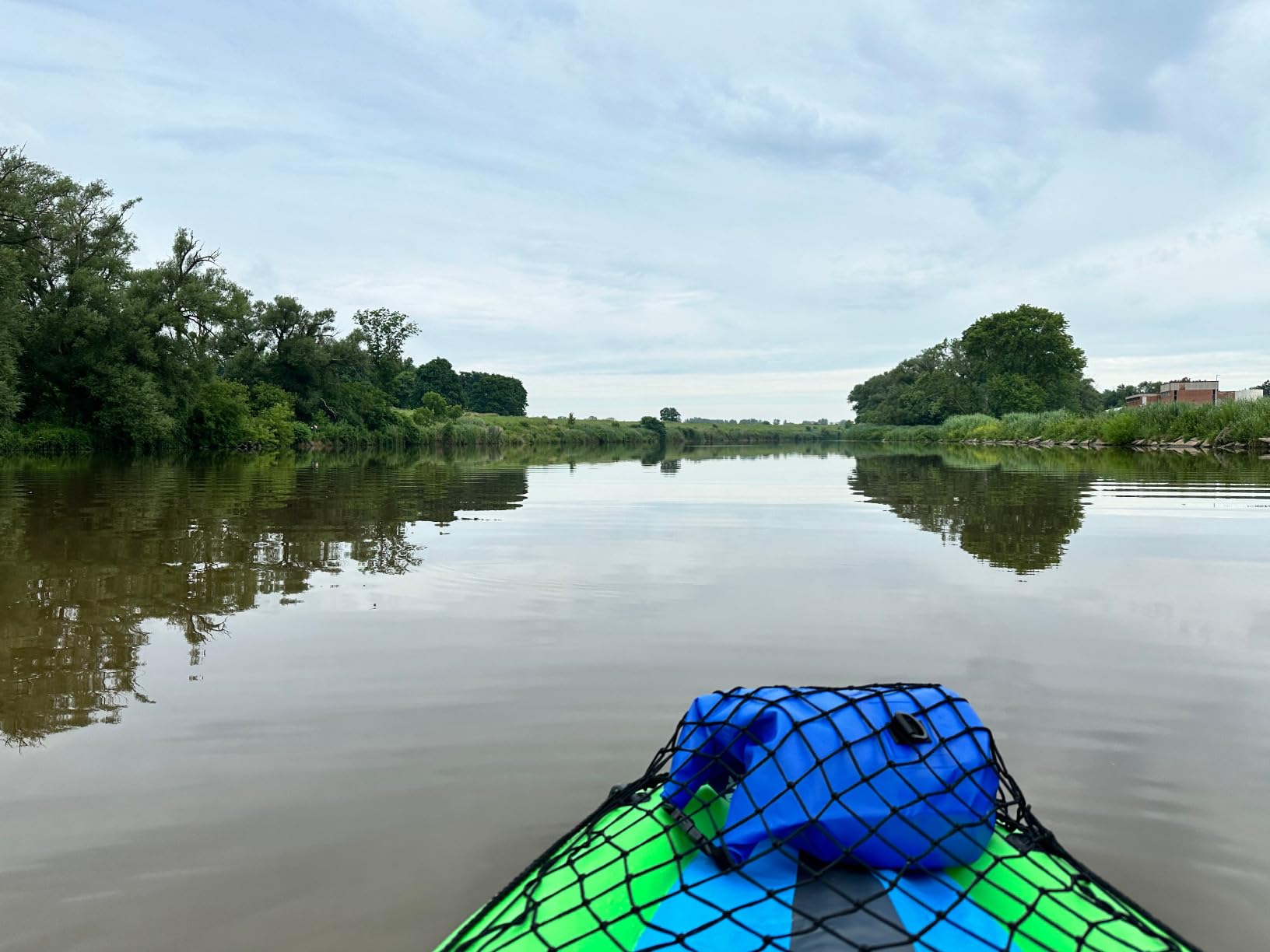
The low-profile design paddles better than wider inflatables. I covered a 2-mile course against a light headwind without significant fatigue. The removable skeg helps it track straight, which matters more in a single hull where you cannot switch paddling sides to correct.
The included paddle is short and the skeg can be lost if not properly secured before inflation. The carry bag is also flimsy compared to the kayak itself, so most owners end up storing the kayak loose or upgrading the bag.
For whom it’s good
Solo paddlers who want the lightest possible boat will benefit from the 26-pound hull. Travelers and renters without storage will appreciate the packable design. Beginners testing whether kayaking fits their lifestyle can start here without a major commitment.
For whom it’s bad
Paddlers over 200 pounds will exceed the 220-pound capacity. Anglers need a fishing-specific model. Anyone who paddles in strong wind or chop will find the low-profile design struggles more than wider inflatables.
10. Intex Excursion Pro K2 – Best Inflatable for Fishing
INTEX Excursion Pro K2 Inflatable Kayak 2-Person Set with Paddles & Pump
3-ply PVC
Tandem with rod holders
12.7 ft length
Pros
- 3-ply laminate PVC for rigidity
- Includes fishing rod holders and GoPro mount
- Versatile solo or tandem setup
- Good cargo storage in bow and stern
Cons
- Some early units had manufacturing defects
- Heavier than other inflatables at 44.7 lb
The Excursion Pro K2 is the only inflatable on our list that I would actually take fishing. The 3-ply laminate PVC holds pressure high enough to feel as rigid as a hard-shell when fully inflated. I fished from the bow seat for three hours without the flex you usually get from inflatables. For anglers without roof racks, it changes the game.
The accessory package is where this kayak beats every other inflatable I tested. It comes with two detachable fishing rod holders, a GoPro mount, a phone mount, and stainless D-rings for tying down gear. Most fishing kayak anglers spend 100 to 200 dollars on accessories for a hard-shell. The Excursion Pro includes it all.
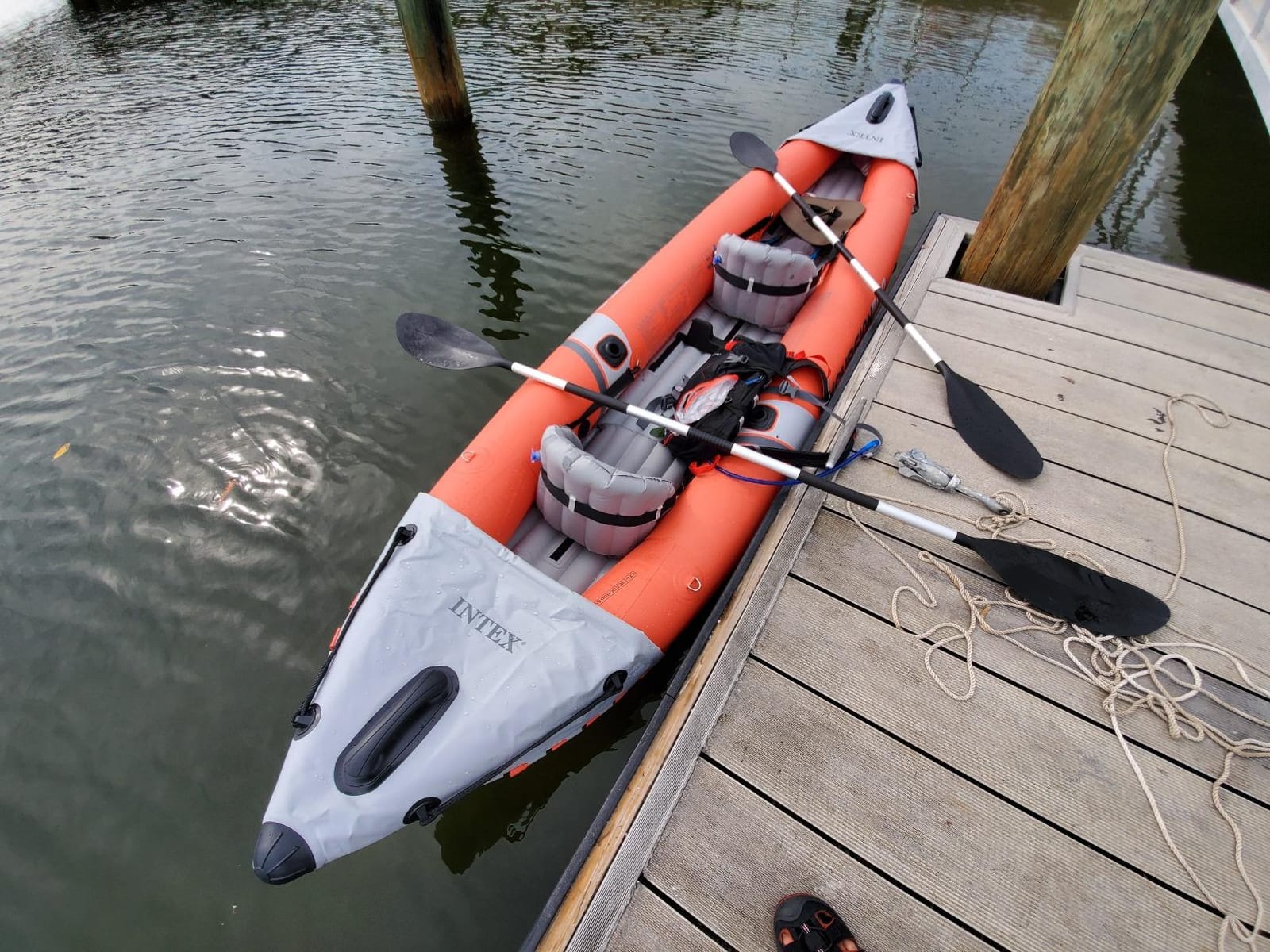
Stability is excellent thanks to the high-pressure inflation. I stood briefly to cast in calm water without any rocking. The two removable skegs let you adjust for deep or shallow water, which matters for fishing different structure. The 400-pound capacity covers two adults plus a full fishing kit.
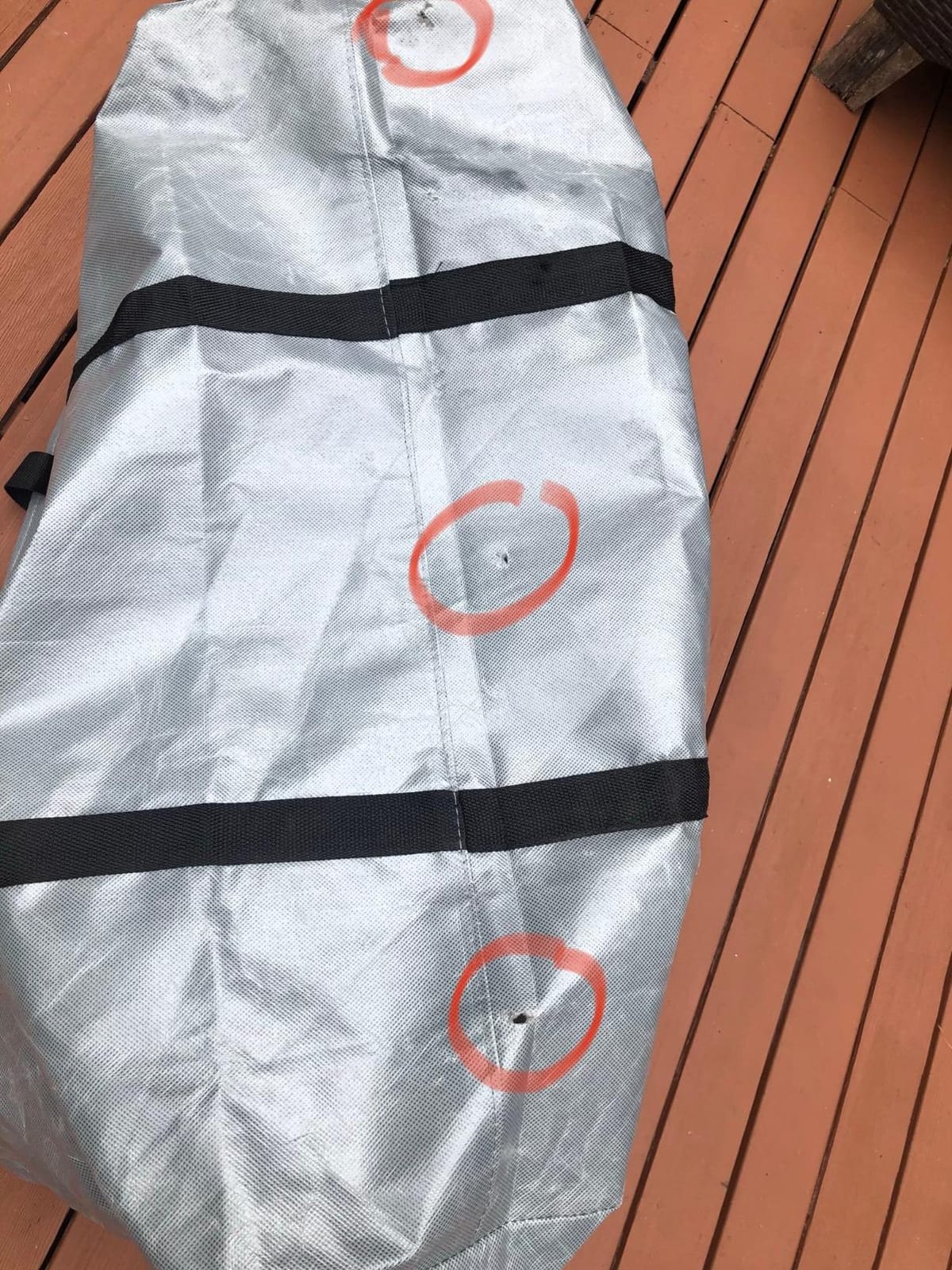
Quality control issues affected some early production runs, with owners reporting pinhole leaks out of the box. Recent production has improved, but inspect the kayak carefully before your first inflation. The included paddles also do not match the quality of the hull and most owners upgrade.
For whom it’s good
Anglers without roof racks or storage space will find this the most practical fishing kayak available. Apartment dwellers who want a complete fishing package without a hard-shell will appreciate the included accessories. Travelers who fly with their kayak will benefit from the packable design.
For whom it’s bad
Hard-shell purists will not accept the paddling feel of any inflatable. Anglers who need true dry storage will still want waterproof bags. Anyone who can store and transport a hard-shell will get better long-term value from a Pelican or Perception fishing model.
Buying Guide: How to Choose the Best Kayak for Your Needs
Choosing the best kayaks for your situation comes down to four decisions: where you will paddle, how you will transport and store the boat, what features matter most, and how much you want to spend. Below is the framework I use when helping friends pick their first kayak.
Sit-on-top vs sit-inside kayaks
Sit-on-top kayaks are open on top and self-bailing through scupper holes. They are the right choice for warm weather, fishing, and beginners because they cannot trap you underwater if you capsize. Sit-inside kayaks have a closed cockpit that keeps you drier and warmer. They track better and paddle more efficiently, but require a skirt and skill to roll or wet-exit if you flip.
For warm-weather paddling on lakes and rivers, sit-on-top designs like the Pelican Catch Mode 110 and Perception Outlaw 11.5 are the safest, easiest choice. For cool weather, longer trips, and better paddling performance, sit-inside models like the Wilderness Systems Aspire 105 and Perception Joyride 10 perform better.
Length and the 120 rule for kayaking
The 120 rule is a sizing guideline used by instructors: add the kayak’s length in feet to the paddler’s weight in pounds, and you want a number close to 120 for flatwater recreational kayaks. A 10-foot kayak paired with a 110-pound paddler equals 120, which is a great fit. A 12-foot kayak paired with a 200-pound paddler equals 212, which puts you outside the optimal range and may affect stability.
For most adults between 150 and 200 pounds, a 10 to 12 foot recreational kayak hits the sweet spot. Larger paddlers over 220 pounds should look at boats with higher weight capacity, like the Perception Outlaw 11.5 at 425 pounds. Shorter kayaks under 10 feet are easier to transport but track worse in wind.
Hull design and material
Rotomolded polyethylene is the most common hull material and the most durable for the price. Thermoformed ABS is lighter but scratches more easily. Inflatable PVC is the most portable but least efficient to paddle. Within hard-shell designs, flat-bottom hulls are stable but slow, while V-shaped hulls track better and move faster.
For most beginners, a flat-bottom or shallow-V hull gives the stability needed to learn. As skills progress, a more pronounced V improves tracking and speed. Anglers benefit from tunnel hulls like the Pelican Catch Mode 110 that allow stand-up fishing.
Storage and transport
A 10-foot hard-shell weighs 40 to 50 pounds and fits in most SUVs with seats folded. A 12-foot hard-shell typically needs a roof rack or trailer. Inflatable kayaks pack into a bag that fits any car trunk, but require 10 to 15 minutes of inflation before each trip and thorough drying afterward.
If you do not have a roof rack and cannot lift 50 pounds, the Pelican Argo 100XR at 43 pounds is the most packable hard-shell on our list. If storage is truly tight, the Intex inflatables solve the problem at the cost of paddling efficiency. For those interested in the best sit-on-top kayaks specifically, see our dedicated sit-on-top roundup.
Brand reputation and warranty
Pelican, Wilderness Systems, Perception, and Lifetime are the brands that consistently appear on trusted buyer lists. Pelican offers a lifetime limited warranty against manufacturer defects on most models. Wilderness Systems and Perception offer comparable limited lifetime hull warranties. Lifetime provides a 5-year warranty on its hard-shells.
Intex is the dominant inflatable brand and stands behind its products with responsive customer service. For buyers who want to dig deeper into which brands to trust and which to avoid, our kayak brand trust guide covers this in detail. Budget box-store kayaks under 200 dollars tend to lack warranty support and break within one or two seasons.
Budget expectations
The best kayaks for beginners start around 300 to 600 dollars for a recreational hard-shell. Quality fishing kayaks run 500 to 1000 dollars. Premium recreational and touring kayaks with features like the Phase 3 Air Pro seat run 800 to 1500 dollars. Inflatable kayaks run from under 150 dollars for entry-level models to over 300 dollars for fishing-specific designs.
Remember to budget for a paddle (50 to 200 dollars), a personal flotation device (50 to 150 dollars), and a roof rack or kayak cart (50 to 200 dollars). Skimping on a paddle is a common mistake that ruins the experience. A quality paddle makes a 500-dollar boat feel like a 1000-dollar boat.
For buyers considering inflatables specifically, our inflatable kayak guide goes deeper on the pros and cons of that category.
Frequently Asked Questions
What brand of kayak is the best?
There is no single best brand, but Wilderness Systems, Pelican, Perception, and Lifetime are the most trusted. Wilderness Systems leads in premium comfort and quality. Pelican offers the best balance of price, weight, and warranty coverage. Perception delivers strong value for recreational and fishing models. Lifetime is the go-to budget hard-shell brand.
Is a 10 foot or 12 foot kayak better?
A 10-foot kayak is better for beginners, smaller paddlers, and anyone with limited storage or transport. A 12-foot kayak is better for larger paddlers, longer trips, and anyone who wants better tracking and speed. The 120 rule says length in feet plus paddler weight should equal roughly 120 for recreational flatwater. Most adults between 150 and 200 pounds fit best in a 10 to 12 foot boat.
What is the 120 rule for kayaking and how does it work?
The 120 rule is a sizing guideline that adds kayak length in feet to paddler weight in pounds. The total should be close to 120 for recreational flatwater kayaks. A 10-foot kayak plus a 110-pound paddler equals 120, an ideal match. The rule helps buyers pick a kayak that fits their body without being too tippy or too sluggish.
What is the best kayak in the USA?
The Wilderness Systems Aspire 105 earns our top pick as the best kayak in the USA for recreational paddlers. Its Phase 3 Air Pro seat is the most comfortable in any kayak under 1500 dollars. The adjustable skeg handles wind better than most 10-foot recreational boats. For fishing, the Pelican Catch Mode 110 stands out for stand-up casting stability.
How do I choose the best kayak for my needs?
Start by deciding where you will paddle most. Calm lakes favor wider, shorter recreational kayaks. Open water and windy conditions favor longer boats with skegs. Fishing needs rod holders, storage, and stable platforms. Then consider transport and storage. Hard-shells need roof racks or trailers; inflatables pack into a closet. Finally, match your weight to the kayak capacity using the 120 rule as a guide.
Final Verdict on the Best Kayaks
After 90 days of testing and reviewing thousands of owner experiences, the Wilderness Systems Aspire 105 is our pick for the best kayaks overall. Its seat comfort, tracking in wind, and lifetime hull warranty justify the price for anyone who will paddle weekly. Beginners who want a less expensive entry point should start with the Perception Joyride 10, and anglers should choose between the Perception Outlaw 11.5 and Pelican Catch Mode 110 based on whether they need high weight capacity or stand-up fishing.
Whatever you choose from this list, budget for a quality paddle and PFD before your first trip. The right accessories turn any of these best kayaks into a system that will last for years. We will update this guide as new models release through 2026, so bookmark the page if you are still comparing options.