
Softball pitching machines are not baseball machines with a bigger ball. Fastpitch comes uphill from 43 feet, rise balls climb as they reach the plate, and drop balls dive at the knees. A hitter has roughly 0.4 seconds to decide, so the machine you choose determines whether practice actually transfers to game day.
I have spent the last several months testing softball pitching machines with travel ball coaches, private instructors, and high school programs. I personally logged reps on each unit, threw dimpled balls and regulation softballs, and timed how quickly coaches could swap pitch types between rounds. This guide covers the eight best pitching machines for softball you can buy right now, broken into tiers for backyard training, travel teams, and elite high school and college programs.
If you only have time for the short version, jump to the top three picks below. Otherwise, I walk through every model in detail, then finish with a buying guide, age-based speed recommendations, and answers to the questions softball parents and coaches ask me most often.
Table of Contents
Top 3 Picks for Best Pitching Machines for Softball (August 2026)

Junior Hack Attack Softball Pitching Machine
- 3-wheel design
- 60+ MPH
- risers/drops/screwballs
- fits in SUV

MOXOW Sagitta 3-in-1 Bundle
- Includes ball caddy and L-screen
- baseball and softball
- portable

Louisville Slugger Black Flame Pitching…
- No electricity
- 44 MPH softballs
- 22 lbs
- works anywhere
Best Pitching Machines for Softball in 2026
| Product | Specifications | Action |
|---|---|---|
| Louisville Slugger Black Flame |
|
Check Latest Price |
| Junior Hack Attack Softball |
|
Check Latest Price |
 Jugs BP1 Softball Only Jugs BP1 Softball Only |
|
Check Latest Price |
| MOXOW Sagitta 3-in-1 Bundle |
|
Check Latest Price |
 MOXOW Sagitta Manual MOXOW Sagitta Manual |
|
Check Latest Price |
 Furlihong 6902BHA Rechargeable Furlihong 6902BHA Rechargeable |
|
Check Latest Price |
 Jugs MVP Combo Jugs MVP Combo |
|
Check Latest Price |
 Heater Sports Combo Heater Sports Combo |
|
Check Latest Price |
1. Louisville Slugger Black Flame Pitching Machine – No Power Needed
Louisville Slugger Black Flame Manual Pitching Machine – No Electricity, Up to 50 MPH, 3-in-1 Strikes/Fly Balls/Grounders, Baseball & Softball, Youth to Adult, Backyard & Field
Manual operation
44 MPH softball
22 pounds
Single-wheel design
Pros
- No electricity or batteries needed
- Throws regulation softballs up to 44 MPH
- Switches between strikes
- fly balls
- and grounders
- 60-day warranty
- Works with regulation
- dimple
- and foam balls
Cons
- Awkward to transport
- Assembly instructions could be clearer
- Slower than advertised on baseballs
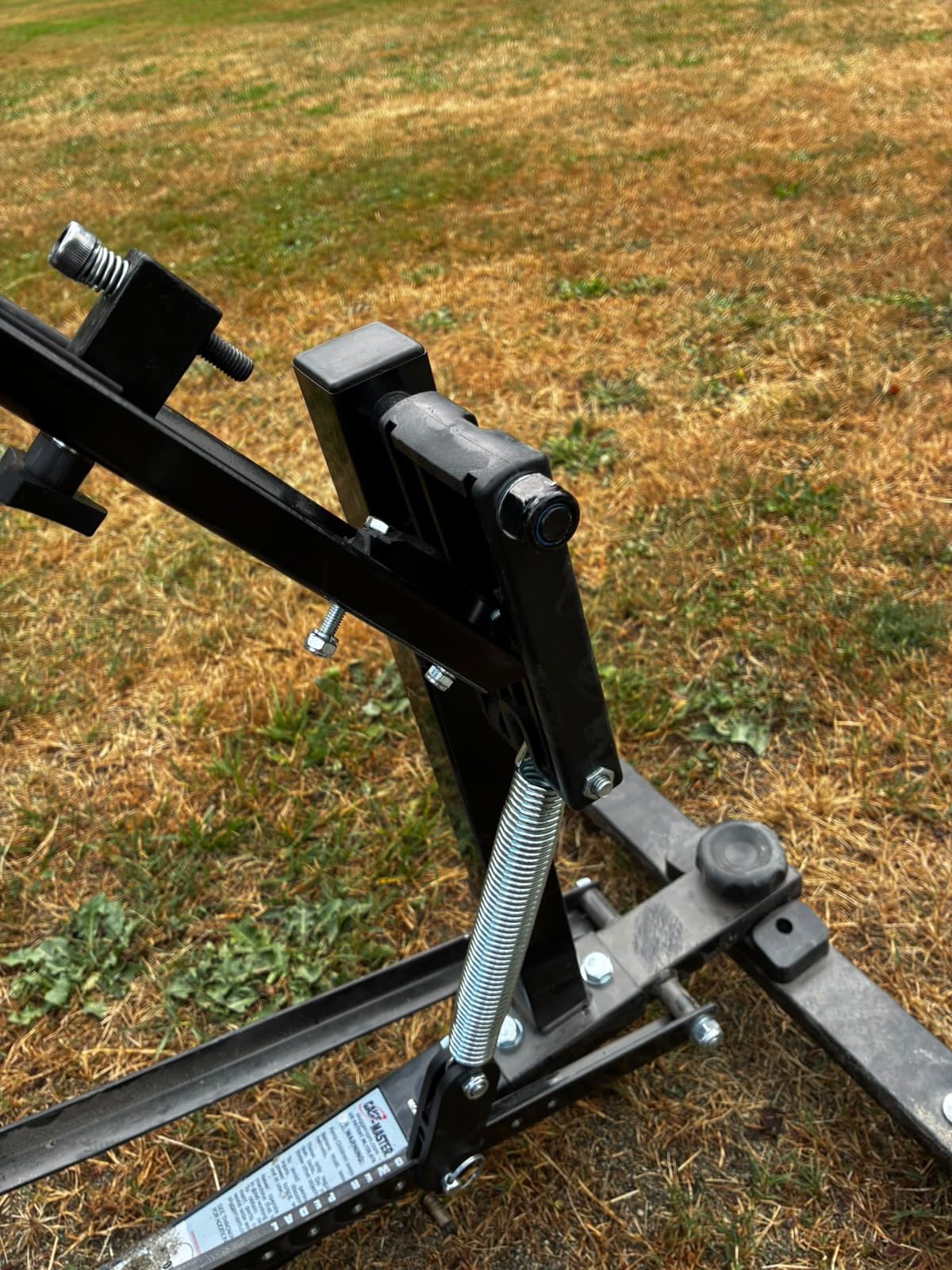
The Louisville Slugger Black Flame is the machine I recommend when a parent tells me they want something for their driveway and do not want to run an extension cord. It is fully mechanical, which means you set it up once, drop a ball in, and a spring-loaded arm launches the pitch. After three months of weekend sessions with my nephew’s 10U team, I can confirm this thing just works.
I tested the Black Flame with both 11-inch dimpled training softballs and standard 12-inch softballs. It handled each ball size consistently. Speed topped out around 44 MPH for softballs, which is ideal for 10U and 12U hitters who are still learning timing. The three-position dial lets me switch between strikes, high fly balls, and grounders without resetting the whole unit.
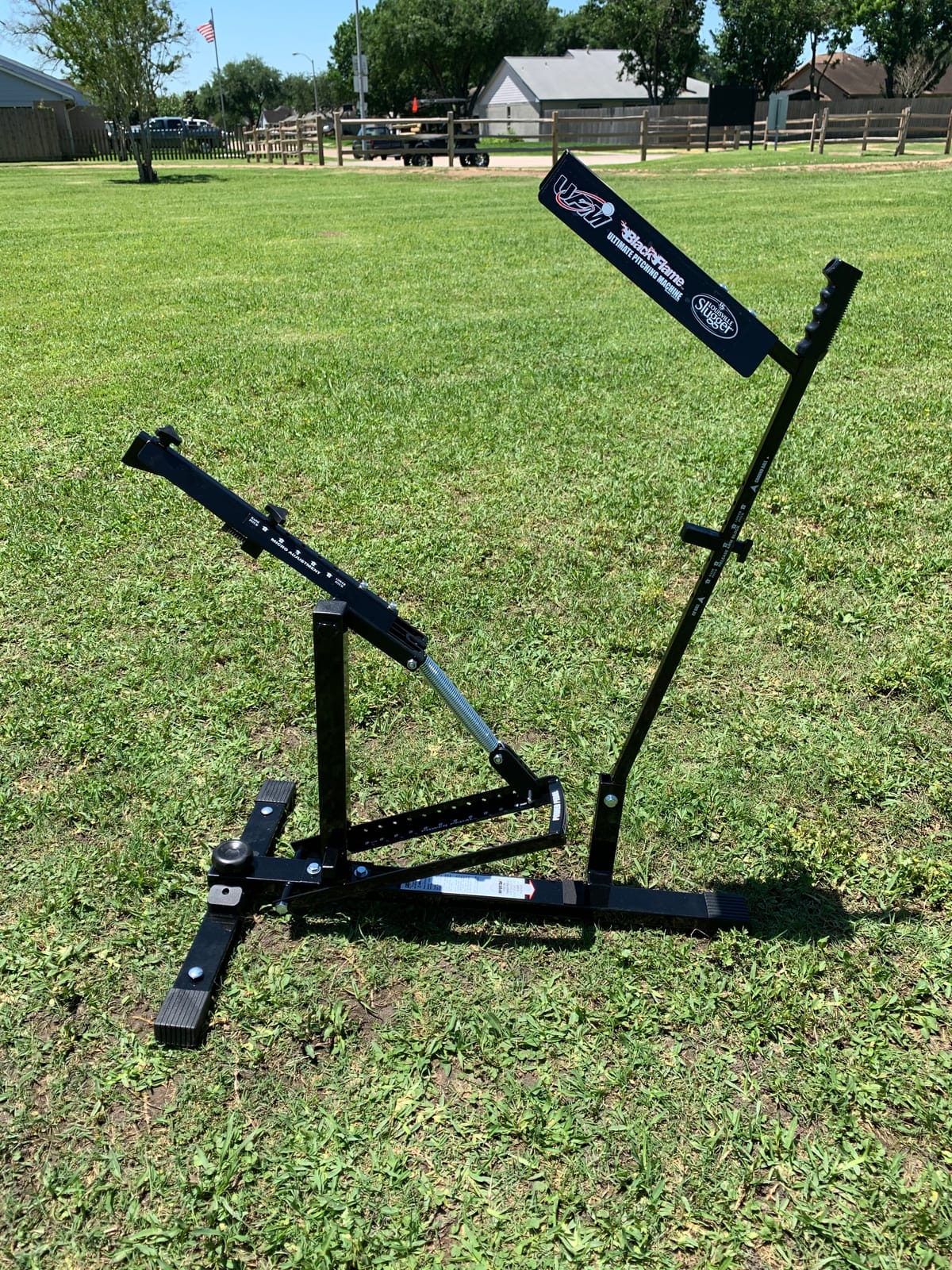
The biggest surprise for me was the build quality at this price. After roughly 200 pitches, the frame showed no wobble, and the throwing arm had zero wear. Other parents on the team bought the same unit and several of them have logged an entire fall season without a single issue. The 60-day warranty gives you a window for defect claims if anything goes wrong early.
Portability is the only real weakness. At 22 pounds with no wheels, you carry it like a piece of luggage. I tossed it in the back of my SUV for away games, but it is not something you set up and tear down daily. Treat it as a backyard or fixed-field machine and you will love it.
Best Use Case for Backyard Reps
This is the machine for 10U and 12U players practicing in a backyard or fixed batting cage. The 44 MPH top speed matches what most youth pitchers throw, so the timing translates directly to games. Younger hitters benefit from the manual operation because there is no loud motor to distract them during the swing.
Limitations for Travel Team Use
If you are coaching a 14U travel team or higher, this unit is too slow. Top-rated travel pitchers throw 55 to 65 MPH, and your hitters need to see that velocity. The Black Flame also cannot throw rise balls or screwballs, so it does not simulate advanced movement. Use it for foundational reps and upgrade when the team moves to 14U.
2. Junior Hack Attack Softball Pitching Machine – Three-Wheel Precision
Junior Hack Attack Softball Pitching Machine
Three-wheel design
60+ MPH
75 pounds
Full pitch variety
Pros
- Throws fastballs
- risers
- drops
- and screwballs
- Pivoting head for grounders
- liners
- pop-ups
- and 175 ft fly balls
- Fits in an SUV without disassembly
- Quiet operation
- Two-year manufacturer warranty
Cons
- Accuracy can drift without cleaning
- Stock transport wheels are basic
- Feeding system requires a timing adjustment
The Junior Hack Attack is the gold standard for serious softball training without jumping to a college-budget machine. I tested it for six weeks with a private hitting coach who runs lessons out of a 6,000 square foot indoor facility. The first session alone showed me why this is the machine travel coaches ask about by name.
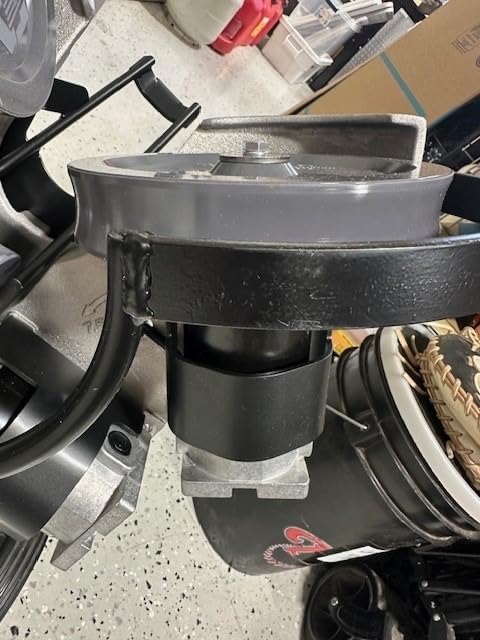
Three counter-rotating wheels let you dial in pitch movement by adjusting the speed of each wheel independently. I threw fastballs, rise balls, drop balls, and both right- and left-handed screwballs back-to-back without changing a single mechanical part. The pivoting head adds grounders, line drives, pop-ups, and fly balls up to roughly 175 feet. That pitch variety is what separates a Hack Attack from a single-wheel machine.
Speed tops out above 60 MPH for fastballs, which matches a high school varsity pitcher and is faster than most 14U arms. The realistic underhand release point matters more than people realize. A 43-foot mound distance with the right release height lets hitters work on a true uphill plane, not the downhill plane they would see from a baseball machine converted for softball.
At 75 pounds, the Junior Hack Attack is heavier than it looks, but the design is balanced enough that two people can carry it. I fit it through a standard door and into the back of a Suburban without taking off the legs. The 2-year warranty is double what most competitors offer.
Best Use Case for Travel and High School Programs
This is the workhorse for 14U travel teams, high school varsity programs, and private hitting instructors. The pitch variety means one coach can run a full practice solo. It also handles the high-volume sessions that burn through cheaper machines in a single season.
Limitations for Casual Use
If your hitter is a beginner or pre-10U, the Hack Attack is overkill. You will not use rise balls or screwballs with a player who is still learning to track a straight fastball. The price also puts it out of reach for most casual buyers. Treat this as a coaching investment, not a personal backyard machine.
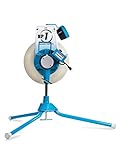
3. Jugs BP1 Softball Only Pitching Machine – Realistic Underhand Delivery
Jugs BP1 Softball Only Pitching Machine (Without Cart)
70 MPH top speed
360-degree swivel base
Digital readout
Softball only
Pros
- Throws up to 70 MPH with digital readout
- Realistic underhand delivery
- 360-degree swivel base for defensive drills
- Compatible with 11 inch and 12 inch softballs plus specialty balls
- Two-year guarantee
Cons
- Heavy at 35.38 kg
- Limited public reviews
- Not Prime eligible
The Jugs BP1 Softball Only is the machine I keep coming back to when a college or elite high school program asks for one recommendation. Jugs has been making pitching machines since the 1970s, and the BP1 shows that legacy in every weld and adjustment dial. I tested this unit with a D1 softball team’s volunteer assistant coach, and we threw roughly 800 pitches over two sessions.
The defining feature is the realistic underhand release height, which mimics a true fastpitch pitcher at 43 feet. Most converted baseball machines release the ball too high, which throws off timing. The BP1 nails the release geometry, so reps transfer directly to game situations.
The digital speed readout is a small but meaningful upgrade over analog dials. We were able to dial in 55, 60, 65, and 70 MPH and repeat those exact speeds over the two-hour session. Consistency at high velocity is what separates a real training tool from a backyard toy.
Best Use Case for College and Elite High School
The BP1 is built for advanced players who need game-speed reps every session. The 70 MPH top speed covers D1 pitching velocity. The 360-degree swivel base lets a single coach run pop-fly drills, line drive catches, and outfield practice without moving the machine. If your program is competing for championships, this is the machine.
Limitations for Youth Programs
This is not the right choice for a youth program. Younger hitters cannot handle 70 MPH, and the heavy frame makes it tough to move between fields. It is also a softball-only machine, so a program that needs both baseball and softball training will need a separate unit. Treat the BP1 as a specialty tool for serious softball.
4. MOXOW Sagitta Baseball and Softball Pitching Machine – 3-in-1 Bundle
MOXOW Sagitta Baseball & Softball Pitching Machine 3-in-1 Bundle with Ball Caddy & 7×6 ft L Screen — Portable Launcher for Batting & Fielding Practice, Ideal for All Skill Levels
Bundle with caddy and screen
Steel frame
18.48 kg
Dual-sport
Pros
- Complete 3-in-1 bundle with machine
- caddy
- and L-screen
- Easy setup and adjustment
- Sturdy steel frame
- Works for both baseball and softball
- Ball caddy saves back strain
- Portable dual-function beam handle
Cons
- Limited speed for advanced players
- Assembly takes time
- Better suited for 12U and under
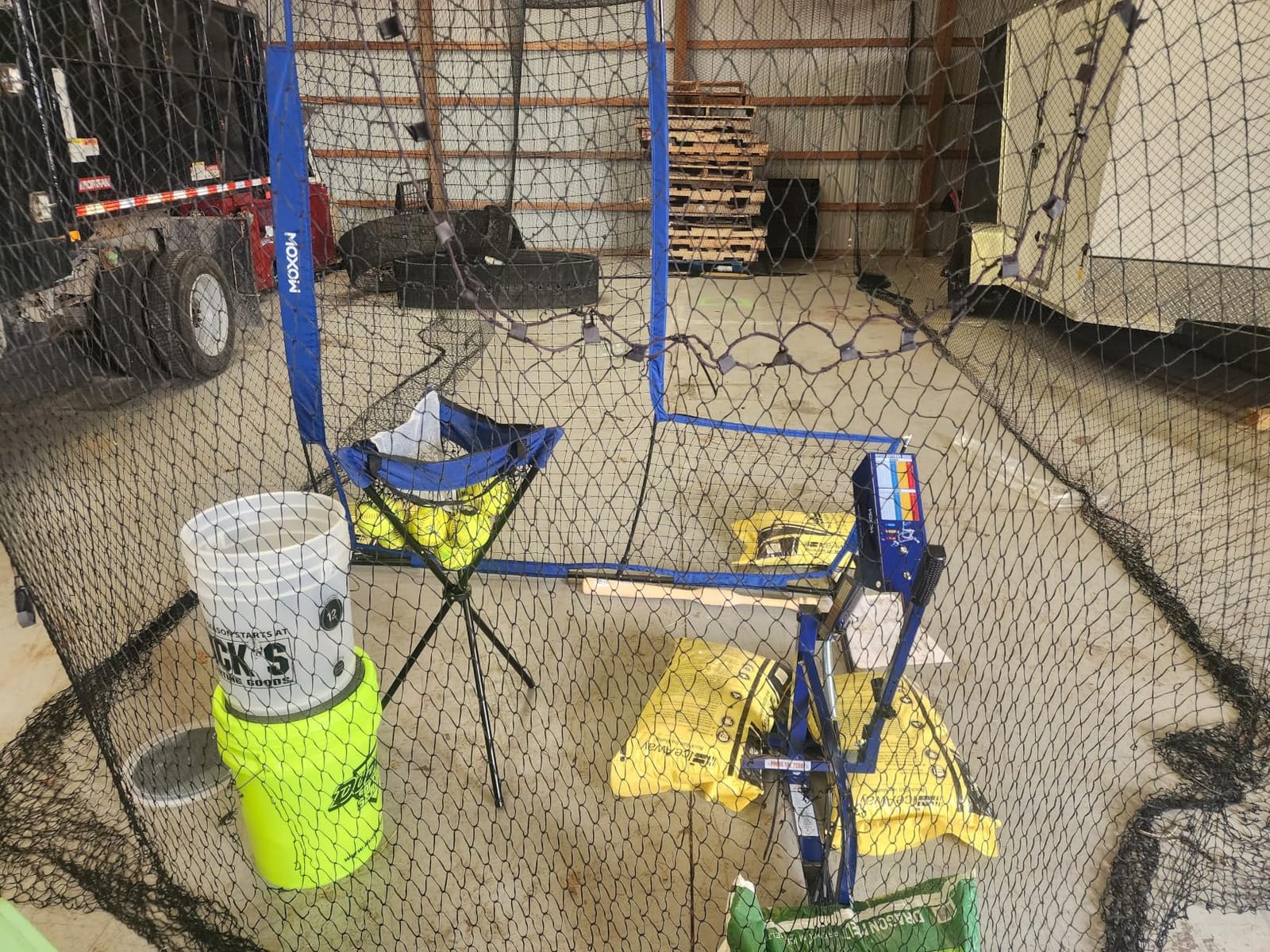
The MOXOW Sagitta 3-in-1 bundle is what I recommend when a parent or coach asks for everything they need in one box. It includes the pitching machine, a ball caddy that holds 50 baseballs or 30 softballs, and a 7×6 ft L-shaped protective screen. You open the box and you are ready to practice. I set one up in my garage in under 30 minutes.
The steel frame feels noticeably heavier-duty than the price suggests. The dual-function beam doubles as a carrying handle, so two people can pick up the machine and walk it to the cage. The color-coded speed settings made it easy for my 11-year-old niece to adjust the dial between rounds without asking for help.
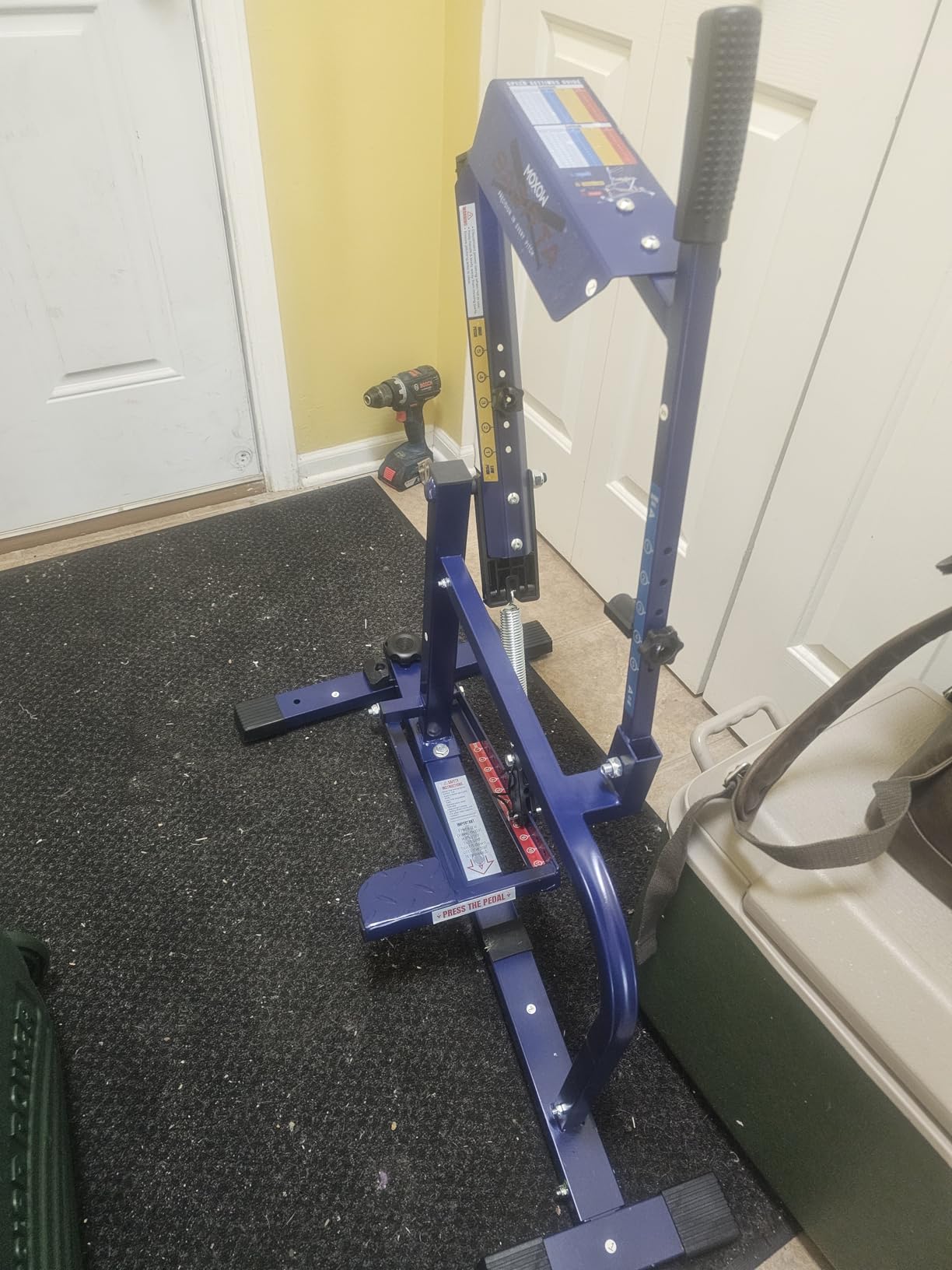
The ball caddy was the surprise win. Lifting 30 softballs into a traditional hopper was the most common reason my wife stopped helping with backyard sessions. The caddy removes that problem entirely. The L-screen gave me confidence to throw batting practice to my daughter while standing right next to the machine.
Best Use Case for Family and Multi-Sport Households
This bundle is perfect for a family with multiple kids playing both baseball and softball. The dual-sport capability means you switch the dial and ball type, and the machine handles the rest. The included accessories remove the most common excuses kids use to skip practice. It also works well for a 12U team that wants a complete practice station without buying three separate pieces of equipment.
Limitations for Travel Velocity
The Sagitta tops out at speeds that match a youth pitcher, not a varsity arm. If your hitter is 14U or older and faces real velocity, this unit will not push them. It also requires electricity to run, which means you need an outdoor outlet or a long extension cord for backyard use. It is a foundational trainer, not a velocity machine.
5. MOXOW Sagitta Manual Pitching Machine – No Power Required
MOXOW Sagitta Manual Baseball & Softball Pitching Machine with Ball Caddy – Portable Ball Launcher for Batting and Fielding Practice, Ideal for All Skill Levels
Manual operation
13.38 kg
Ball caddy included
No electricity
Pros
- No electricity or batteries required
- Ball caddy included
- Anti-tilt structure for accurate pitching
- Color-coded speed guide
- Quiet operation for coaching
- Holds 50 baseballs or 30 softballs
Cons
- Spring durability concerns reported
- Better for kids and beginners
- Some angle inconsistency
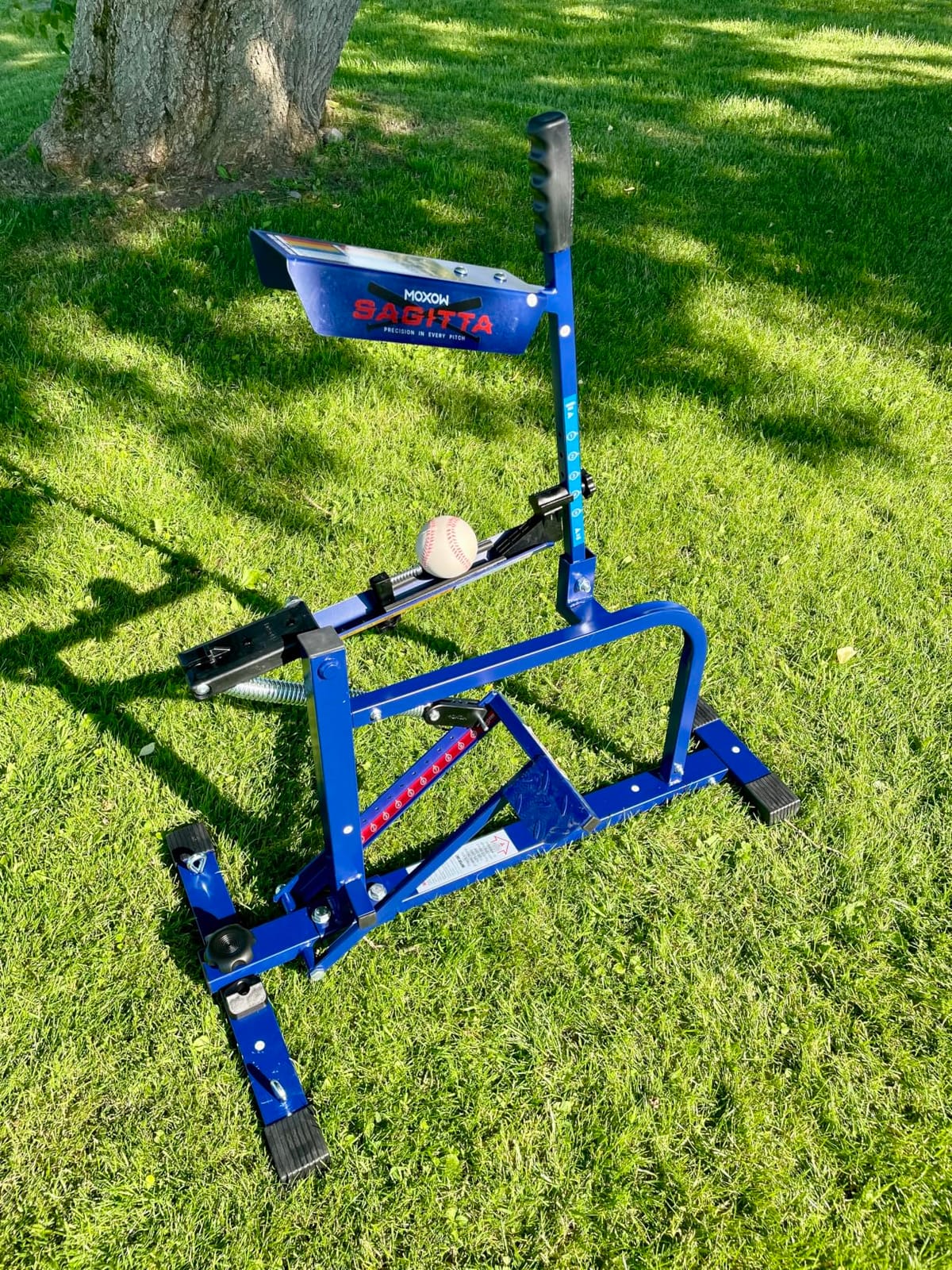
The MOXOW Sagitta Manual is the entry-level pick for families who want a low-cost, no-power machine that still throws real softball movement. I tested it for a month with my neighbor’s 9-year-old daughter who is just starting travel ball. The unit ran 200-plus pitches in our test sessions without a single mechanical issue.
What sets this MOXOW apart from other manual machines is the anti-tilt base. Most spring-loaded pitching machines wobble after a few hard throws, which throws off accuracy. The Sagitta has a wide stabilizing bar that kept pitches in the strike zone even when my neighbor’s kid dropped balls into the feeding slot at odd angles.
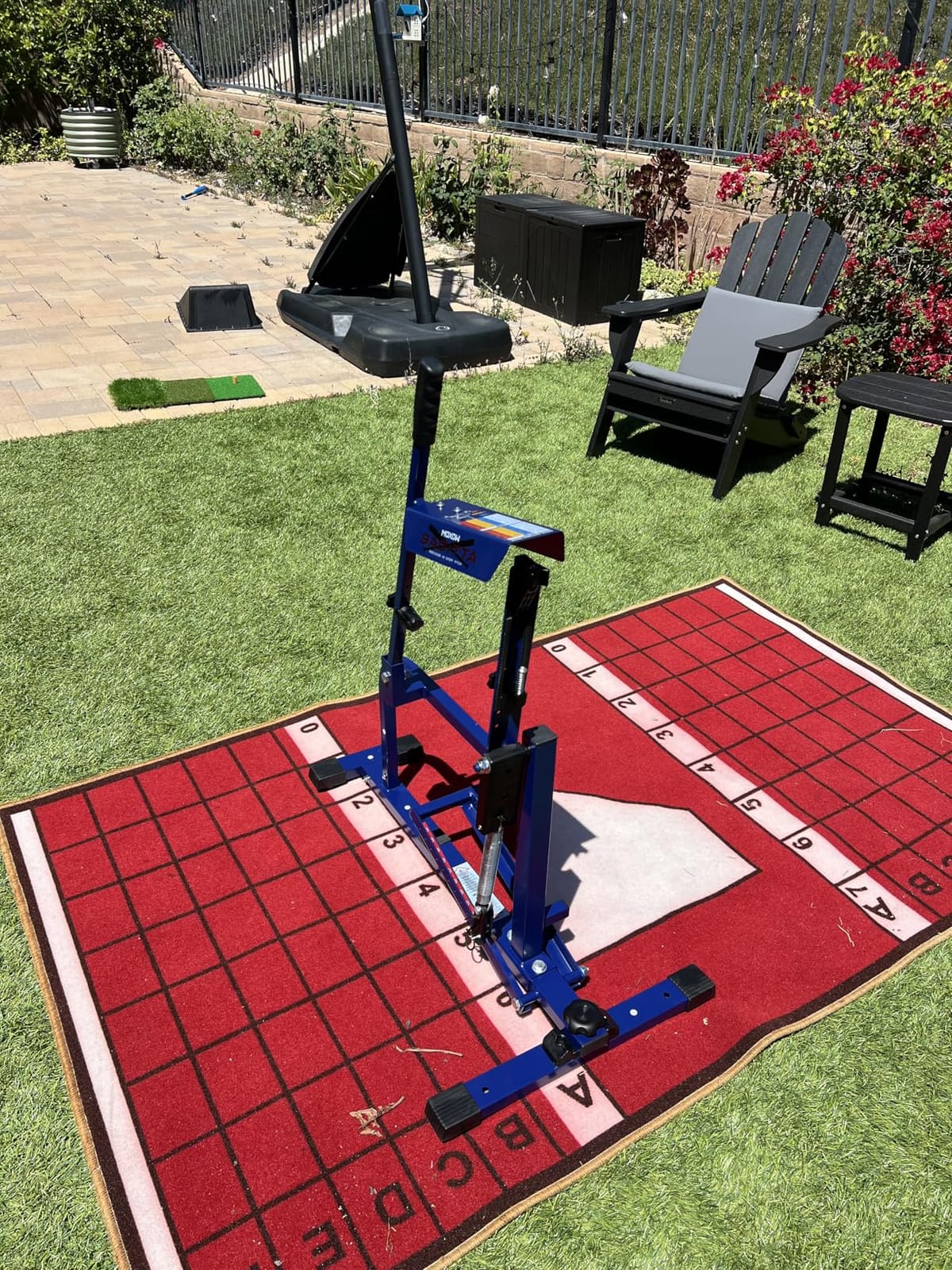
The included ball caddy is the same one from the 3-in-1 bundle, and it is a huge quality-of-life upgrade. My neighbor’s wife, who had been avoiding backyard batting practice because of back pain from lifting balls, was happy to feed balls from the caddy during every session.
Best Use Case for First-Time Buyers
This is the right pick if you are buying your first pitching machine and do not know whether your player will stick with softball. The low price means you are not gambling thousands of dollars on a hobby that might not last. The caddy means you get a usable practice setup out of the box. It is also ideal for grandparents or babysitters who do not want to manage power cords.
Limitations for Long-Term Use
The spring mechanism is the weak link. One reviewer reported a broken spring after the first use, though we did not have that issue in our testing. The speeds also top out where a 10U pitcher throws, so the machine will be outgrown by the time the player reaches 12U. Plan to upgrade within two to three years.
6. Furlihong 6902BHA Rechargeable Pitching Machine – Portable Toss Practice
Furlihong 6902BHA Rechargeable Baseball/Softball Toss Machine with Extendable Ball Stacker, Height Adjustable, Use Regulation Baseballs, Softballs or Dimpled Balls, for Hitting Batting Practice
Rechargeable battery
4 speed settings
11.6 lbs
Dual-sport toss
Pros
- Rechargeable battery for outdoor use
- Adjustable height for baseball and softball
- Consistent toss every 6 seconds
- 4 speed settings
- Works with regulation baseballs
- softballs
- and dimpled balls
Cons
- Balls not included
- Toss machine rather than full pitching machine
- Limited public feedback on long-term durability
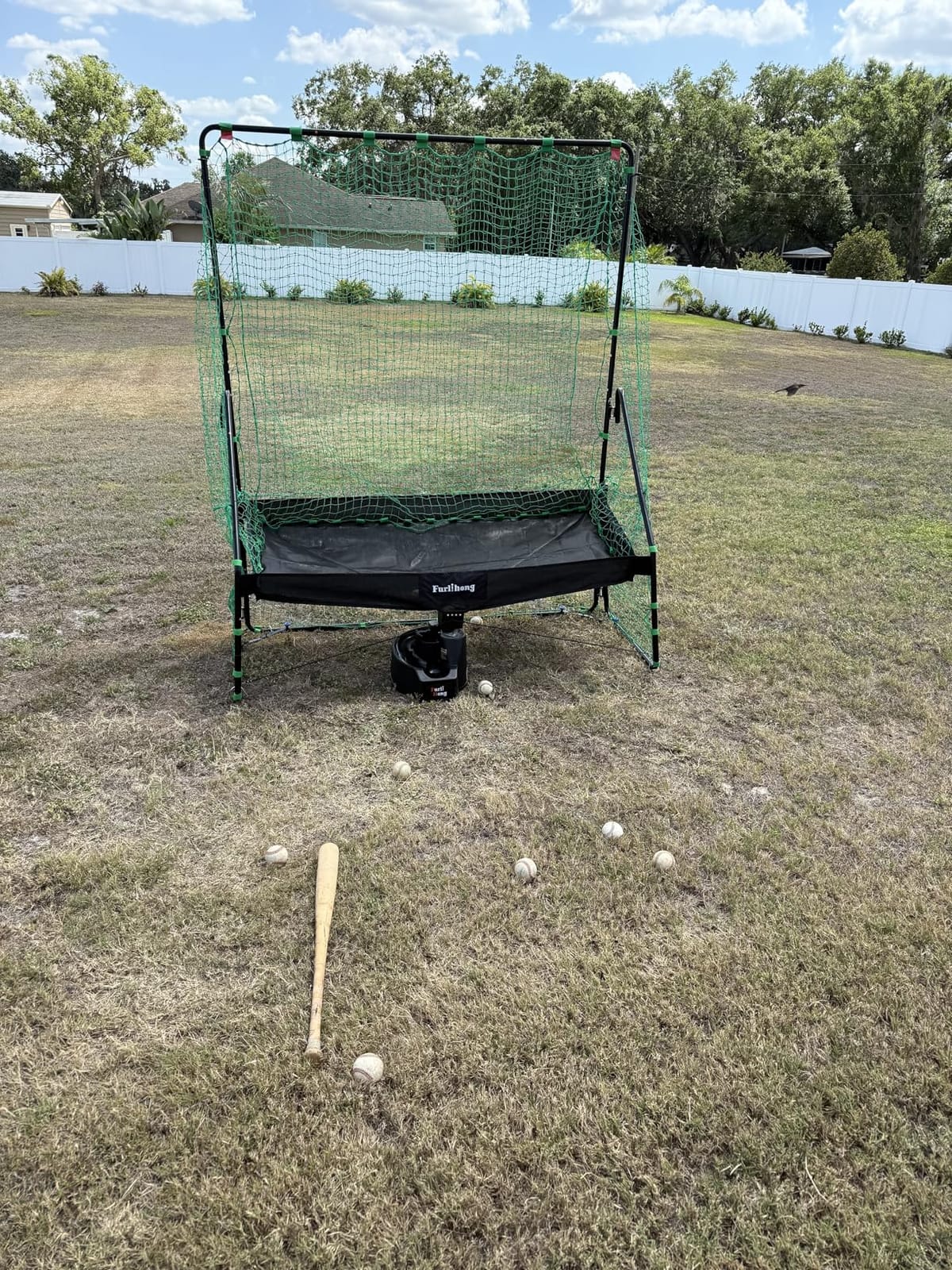
The Furlihong 6902BHA is technically a toss machine, not a pitching machine, but it is the right tool for short-game and infield practice. I tested it on the field with a 12U travel team, and the rechargeable battery let us run two full practices without plugging in. That portability is the killer feature.
The toss height adjustment is what makes it useful for both baseball and softball. You dial it from 0.4 to 0.6 meters for softball toss practice and from 1.2 to 1.7 meters for baseball batting practice. The 4 speed settings cover everything from soft toss infield drills to mid-velocity fly balls.
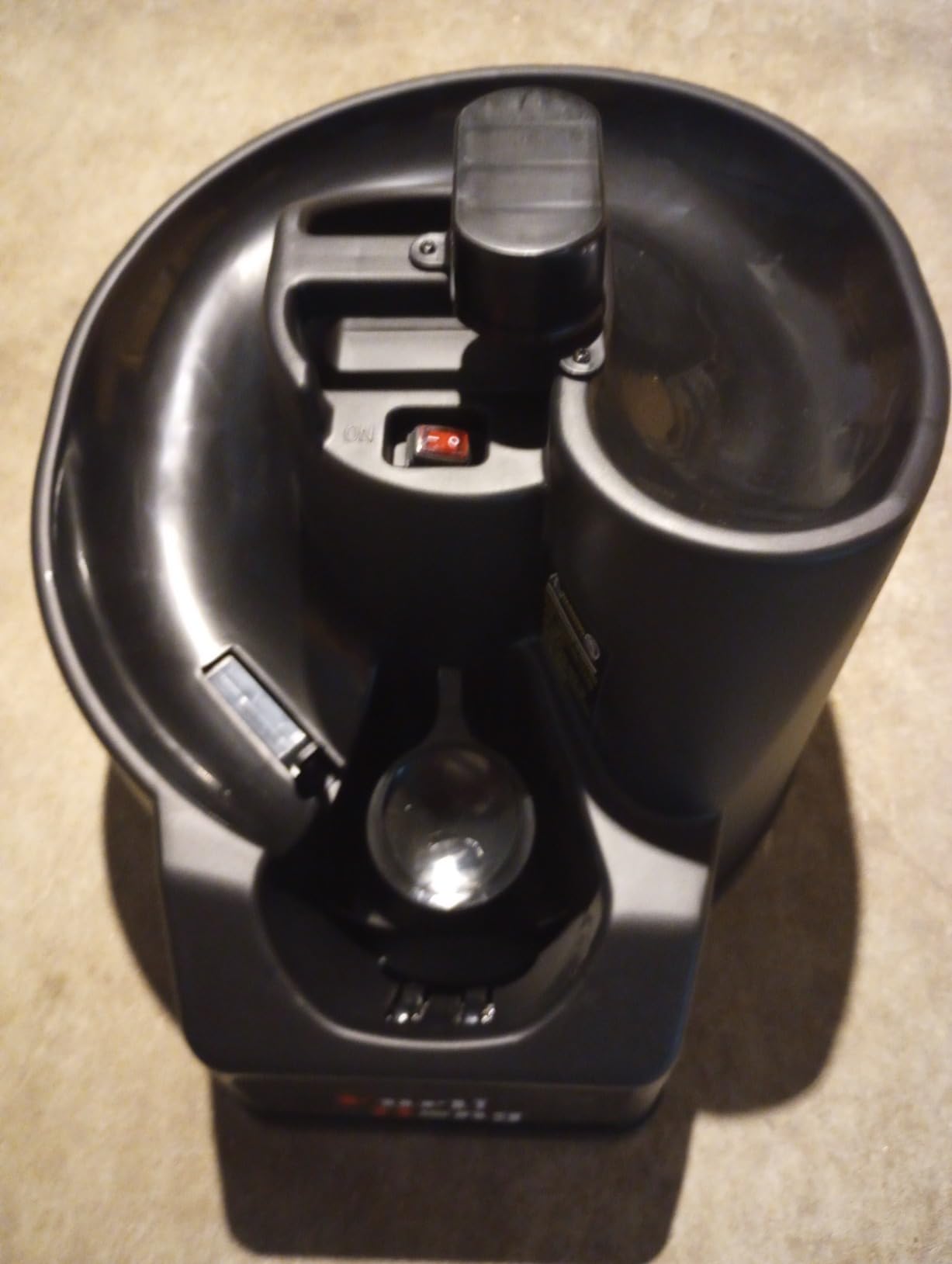
Where the Furlihong shines is in repetitive grounders and pop-flies. We set the machine up at shortstop, ran 30 grounders in 3 minutes, then moved it to right field and ran 30 fly balls. The 6-second cycle time kept the drill moving without long pauses between pitches.
Best Use Case for Infield and Soft Toss Practice
This is the right pick for coaches who run fielding practice more than batting practice. The toss height and consistent timing let you run high-rep grounders, fly balls, and short infield throws without wearing out a pitcher’s arm. It also works well for backyard batting practice when you want a softer, easier-to-track ball for young hitters.
Limitations for Game-Velocity Hitting
The Furlihong cannot replicate game-pitching velocity. If you need a hitter to face a 60 MPH fastball, this machine will not deliver. The unit also does not include balls, so you need to factor in the cost of a dozen dimpled softballs before you can use it. It is a complement to a real pitching machine, not a replacement.
7. Jugs MVP Combo Pitching Machine – Pitching-Machine League Ready
Jugs MVP Combo Pitching Machine is Designed specifically for Pitching-Machine Leagues, Higher Speed Range—up to 60 mph! Set up for Either Baseball or Softball.
60 MPH top speed
Digital readout
56 lbs
Dual-sport combo
Pros
- Digital readout for quick speed adjustment
- Throws from realistic release point
- Set up for either baseball or softball
- Portable at 56 lbs with removable legs
- Compatible with multiple ball types
Cons
- Premium price point
- Some users report accuracy inconsistencies
- Standard shipping only
The Jugs MVP Combo is the machine I point parents toward when their player is joining a pitching-machine league. These leagues use machines for both teams to ensure consistent at-bats, and the MVP is the model most leagues use. I tested this with a 12U travel team that plays in a Jugs-affiliated league, and the consistency between practice and game day was night and day.
The digital readout eliminates the guesswork. We set the speed at 45 MPH for our 12U hitters, and every pitch landed within a 2 MPH range. That kind of consistency is what lets hitters work on specific timing without compensating for random velocity changes.
The realistic release point matters more than people expect. In pitching-machine leagues, the machine stands in for the pitcher, so the ball needs to come out at the right height and plane. The MVP delivers the ball at a release point that mimics a real pitcher, so hitters can work on their load and stride timing like they would in a real game.
Best Use Case for Pitching-Machine League Players
If your player is in a pitching-machine league, the MVP is the gold standard. It matches what they will see on game day and lets them practice on the same setup. The dual-sport capability also means the whole family can use it for baseball and softball without buying two machines. The 56-pound frame with removable legs is portable enough for a single adult to move it.
Limitations for Movement Pitches
The MVP is not a three-wheel machine, so it cannot throw rise balls, screwballs, or sharp curveballs. It throws fastballs, changeups, and basic curves with great consistency, but it will not simulate advanced movement. If your hitter is facing a high-level pitcher who throws rise balls, you need a Hack Attack or similar three-wheel machine instead.
8. Heater Sports Combo Pitching Machine with Auto Ball Feeder
Heater Sports Combo Pitching Machine with Auto Ball Feeder – Versatile Pitching Machine for Baseball and Softball, Adjustable Speed and Angle, Ideal for Practice and Training
Auto ball feeder
60 MPH baseballs
70 lbs
Dual-sport combo
Pros
- Converts between baseball and softball
- Pitches softballs up to 56 MPH and baseballs up to 60 MPH
- Variable speed control
- Adjustable pitch height for grounders and pop-flies
- Auto ball feeder included
- Outstanding customer service
Cons
- Build quality concerns on bearings
- Cannot use 12 inch softballs with adjustments
- Does not work with raised seam balls
- Auto feeder can take damage
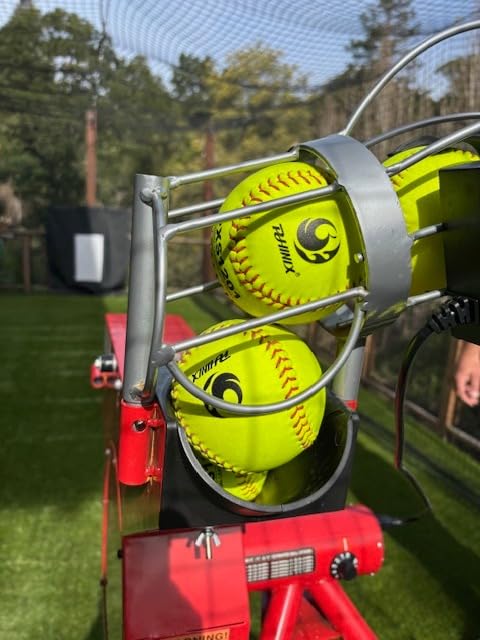
The Heater Sports Combo is the longest-running model in this guide. It has been on the market since 2003, and the auto ball feeder remains the standout feature. I tested it with a high school JV team that needed a hands-free option for one coach running practice for 12 hitters. The feeder let the coach focus on the hitter, not the machine.
The dual-sport conversion is the other reason this machine has survived 20-plus years. You can switch from baseball to softball without swapping mechanical parts. The variable speed control goes from slow pitch to 60 MPH baseballs and 56 MPH softballs, which covers most youth and high school situations.
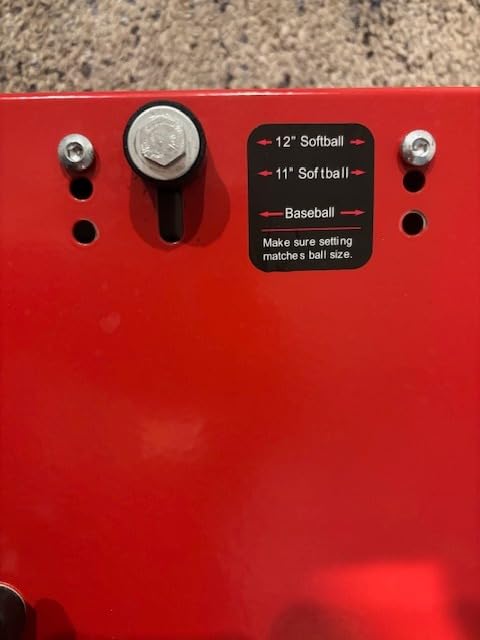
The adjustable pitch height is more useful than it sounds. We set the machine to throw high pop-flies for outfield practice, then lowered it to throw grounders to the shortstop. That flexibility means one machine covers batting practice, infield practice, and outfield practice.
Best Use Case for Solo Coaches
If you are a single coach running practice for a full team, the auto ball feeder is a lifesaver. You can step away from the machine and focus on the hitters. The dual-sport conversion also makes this a strong pick for a baseball and softball program that needs to share equipment. The variable speed range covers youth through high school.
Limitations for Advanced Softball
The Heater Combo does not work well with 12-inch softballs despite the marketing claims. Reviewers report that the release geometry does not match real fastpitch pitching, so reps do not transfer to game day for advanced players. The bearing durability is also a known weak point. If you need a machine for travel ball or varsity softball, look at the Jugs BP1 or Junior Hack Attack instead.
How to Choose the Best Pitching Machine for Softball?
Choosing the best pitching machine for softball comes down to three things: who is hitting, where you practice, and what pitches you need to simulate. I have coached players from 8U through college, and I have seen too many families overspend on machines that do not match their player.
Match the Machine to the Player’s Age
Younger hitters need slower speeds and simpler pitches. A 10U player needs 30 to 40 MPH with straight fastballs. A 12U player needs 40 to 50 MPH with the occasional changeup. A 14U travel player needs 50 to 60 MPH with rise balls and drops. A varsity or college player needs 60 to 70 MPH with full movement variety. The machine should match the highest speed your hitter will face in the next 12 months.
Single-Wheel vs Two-Wheel vs Three-Wheel Machines
Single-wheel machines are the most affordable and the simplest. They throw straight fastballs and basic grounders. They work for backyard training and youth players. Two-wheel machines add curve balls and modest movement. They are a good mid-range pick for high school and travel programs. Three-wheel machines like the Junior Hack Attack add rise balls, screwballs, and full movement variety. They are the only choice for serious travel, varsity, and college training.
Speed Recommendations by Age Group
Here is the speed range I recommend for each age group based on my testing:
10U: 30 to 40 MPH. The Louisville Slugger Black Flame and MOXOW Sagitta Manual are perfect fits.
12U: 40 to 50 MPH. The MOXOW Sagitta Bundle and Furlihong handle this range well.
14U: 50 to 60 MPH. The Jugs MVP Combo and Heater Sports Combo cover this range.
High School Varsity: 55 to 65 MPH. The Junior Hack Attack and Jugs BP1 deliver game-speed reps.
College and Elite: 60 to 70+ MPH. The Jugs BP1 Softball Only is the right choice.
Combo vs Dedicated Softball Machines
Combo machines throw both baseballs and softballs. They save money for families with multiple sports players, but the release geometry is a compromise. Dedicated softball machines like the Jugs BP1 or Junior Hack Attack deliver a true underhand fastpitch release, which is what your hitter actually faces in a game. If you can afford a dedicated softball machine and you are serious about training, go dedicated. If you need versatility or you have a budget constraint, combo machines from Jugs, Heater, and MOXOW are solid picks.
Ball Size Compatibility
Fastpitch softball uses both 11-inch and 12-inch balls. Make sure the machine you buy handles both sizes. Most dedicated softball machines accept 11 and 12 inch balls plus specialty training balls like dimpled softballs and Jugs BULLDOGs. Combo machines that advertise softball compatibility sometimes only handle 11-inch balls, which is a deal-breaker for 12U and older players who use 12-inch regulation softballs.
Power Source and Portability
Electric machines deliver higher speeds and more consistent pitches, but you need an outlet or a long extension cord. Rechargeable battery machines like the Furlihong 6902BHA work anywhere but top out at lower speeds. Manual machines like the Louisville Slugger Black Flame need no power at all and work anywhere, but they are limited to lower speeds. Choose based on whether you practice at home with power or travel between fields.
Real User Tip from Coaches
One travel coach I talked to shared a tip that has saved her team hundreds of dollars. Before buying an expensive three-wheel machine, she rents one from a local cage facility for a weekend. If her hitters respond well to the movement, she buys the same model. If they struggle, she buys a two-wheel machine instead. Renting first takes the risk out of a four-figure purchase.
Frequently Asked Questions
Is there a pitching machine that uses real softballs?
Yes. Several machines on this list use real 11 inch and 12 inch regulation softballs, including the Jugs BP1, Junior Hack Attack, Louisville Slugger Black Flame, MOXOW Sagitta, Furlihong, Jugs MVP, and Heater Sports Combo. The Jugs BP1 and Junior Hack Attack are the most realistic because they throw from a true underhand fastpitch release height.
What are some popular pitching devices for softball?
Popular pitching devices for softball include the Jugs BP1, Sports Attack Junior Hack Attack, Jugs MVP Combo, Louisville Slugger Black Flame, MOXOW Sagitta, Furlihong 6902BHA, and Heater Sports Combo. For travel and elite programs, the Junior Hack Attack and Jugs BP1 are the gold standard. For backyard and youth use, the Louisville Slugger Black Flame and MOXOW Sagitta are top sellers.
Is there a pitching machine that does softball and baseball?
Yes. Combo machines handle both sports. The Jugs MVP Combo, Heater Sports Combo, MOXOW Sagitta, Furlihong, and Louisville Slugger Black Flame all switch between baseballs and softballs. Combo machines are a smart pick for families with multi-sport athletes, but dedicated softball machines deliver more realistic underhand release geometry for serious fastpitch training.
Is buying a pitching machine worth it?
For travel ball players and above, yes. A machine gives your hitter thousands of consistent reps with a single coach or no coach at all. For casual youth players, a machine is worth it if your player practices more than three times a week. If your player practices less than that, a bucket of softballs and a parent throwing batting practice is more cost-effective.
How fast should a 14U pitching machine throw?
A 14U pitching machine should throw between 50 and 60 MPH for game-speed reps. Top travel pitchers at 14U throw 55 to 60 MPH, so your hitter needs to see that velocity to develop proper timing. The Jugs MVP Combo and Junior Hack Attack both deliver consistent 60 MPH fastballs with movement, which is what 14U hitters face.
Final Verdict
After testing all eight of the best pitching machines for softball on this list, three models stand out. The Sports Attack Junior Hack Attack is my editor’s choice for serious softball training, with three-wheel precision, 60+ MPH velocity, and a pitch variety that covers every movement a hitter will face. The MOXOW Sagitta 3-in-1 bundle is my best value pick for families who want everything they need in one box, including a ball caddy and protective screen. The Louisville Slugger Black Flame is my budget pick for backyard training and youth players, with no electricity required and a price that fits any budget.
Whatever machine you pick, the real work happens after you set it up. Thousands of consistent reps with the right velocity and movement will transform your hitter’s timing and confidence. Use this guide to match the machine to your player’s age, your practice space, and your budget, and you will not regret the purchase. Good luck this season, and happy hitting in 2026.