
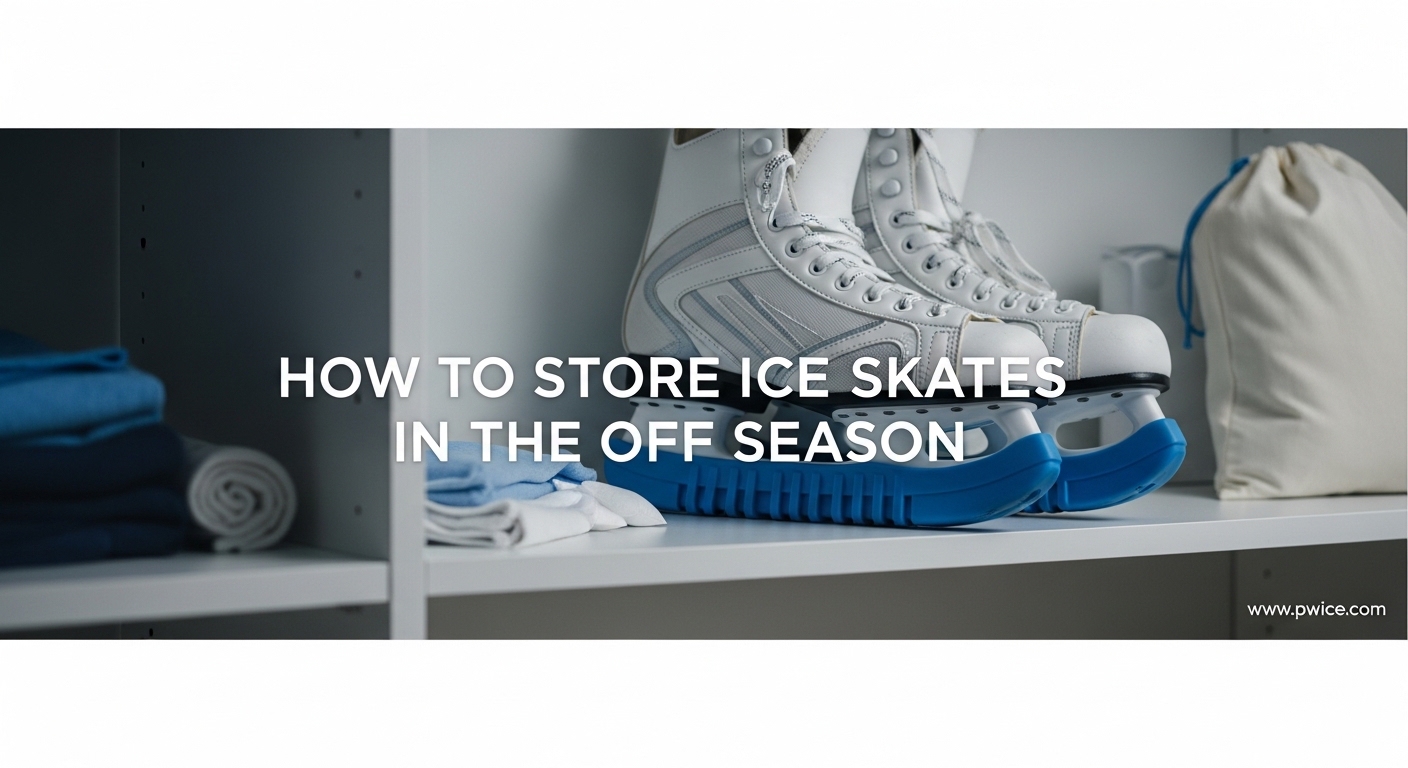
To store ice skates in the off season, dry the blades completely with a towel, remove the insoles to air dry, wipe down the boots, cover the blades with soft soakers (not hard guards), and store them in a cool, dry place away from direct heat and humidity. I have stored my own skates this way for over a decade, and the blades remain rust-free while the leather boots stay supple and crack-free.
Your ice skates represent a significant investment. Whether you spent $150 on recreational skates or $800 on high-performance figure skates, improper off-season storage can destroy that investment in just a few months. Rusted blades, cracked leather, and degraded mounting hardware are all preventable with the right storage routine.
In this guide, I will walk you through every step of preparing your skates for months of storage. You will learn the critical difference between blade soakers and hard guards, how to condition leather boots, where to store your skates for maximum protection, and what monthly checks you should perform during the off-season.
Table of Contents
Quick Answer: How to Store Ice Skates in the Off Season
Here is the complete process in five simple steps:
- Dry completely: Wipe blades with a microfiber cloth until no moisture remains. Dry the boots and remove insoles.
- Apply blade protection: Slide soft blade soakers over the blades. Never use hard guards for storage.
- Condition leather (if applicable): Apply a light coat of leather conditioner to prevent cracking.
- Choose the right location: Store in a climate-controlled area, never in garages, attics, or cars.
- Check monthly: Inspect for rust, moisture, or pests during the off-season.
Follow these steps and your skates will be ready to hit the ice when the season returns.
Pre-Storage Preparation: Cleaning and Drying Your Skates
Proper preparation is what separates skates that last for years from those that deteriorate over a single summer. The 30 seconds you spend drying your skates after the final skate of the season will save you hundreds of dollars in blade replacements and boot repairs.
Step 1: Dry the Blades Thoroughly
Moisture is the enemy of ice skate blades. Even a tiny amount of water left on the steel will cause oxidation and rust during storage. Rust does not just discolor your blades; it eats away at the metal, creating pits that make sharpening difficult and skating unsafe.
Use a clean, dry microfiber cloth or cotton towel to wipe every surface of the blade. Pay special attention to the bottom edge, the sides, and the mounting area where the blade attaches to the boot. Run your finger along the blade after wiping; if it feels even slightly damp, dry it again.
Some experienced skaters recommend using two towels: one for the initial wipe-down to remove most moisture, and a second dry towel for the final polish. I have found this two-towel method especially helpful in humid climates.
Step 2: Remove and Dry Insoles
The insoles inside your skates trap moisture from sweat and ice melt. Leaving them in during storage creates a humid environment inside the boot that promotes mold, mildew, and deterioration of interior padding.
Pull the insoles completely out of both skates. Set them aside to air dry separately for at least 24 hours before storage. If your insoles are removable and washable, consider giving them a gentle cleaning with mild soap and water, then letting them dry completely.
With the insoles removed, reach inside the boot with your hand and feel for any damp spots. Wipe down the interior with a dry cloth if needed.
Step 3: Loosen or Remove Laces
Tight laces stored under tension for months can stretch permanently and lose their elasticity. They can also create pressure points on the boot that distort the shape over time.
Completely remove the laces from your skates, or at minimum, loosen them completely so the eyelets are not under stress. This allows the boot to relax into its natural shape and prevents lace creases from setting into the tongue area.
Inspect your laces while you have them out. If they are frayed, worn, or losing their aglets (the plastic tips), replace them now so your skates are ready when the season starts.
Step 4: Wipe Down the Boots
The exterior of your boots accumulates dust, ice residue, and body oils from your hands during use. These contaminants can degrade boot materials over time, especially leather.
Use a slightly damp cloth to wipe down the entire boot exterior, including the sole and heel. Follow immediately with a dry cloth to remove any remaining moisture. For leather boots, this is also the perfect time to apply conditioner (which we will cover in the next section).
Blade Protection: Soakers vs Hard Guards for Storage
This is where many skaters make a critical mistake that ruins their blades. The choice between blade soakers and hard guards for storage is not optional; one will protect your blades while the other will destroy them.
Why Hard Guards Are Wrong for Storage
Hard guards, also called walk guards or skate guards, are the rigid plastic covers you wear when walking off the ice. They are essential for protecting edges when walking on concrete or tile, but they should never be used for storage.
Hard guards trap moisture against the blade. Any residual water, even microscopic amounts, gets sealed inside the plastic shell where it cannot evaporate. Over weeks or months of storage, this trapped moisture causes rust and pitting that permanently damages your blade edges.
I learned this lesson the hard way when I stored my hockey skates with hard guards one summer. When I returned in fall, the blades were covered in orange rust that required professional grinding to remove, and the edges never felt the same again.
Why Blade Soakers Are the Right Choice
Blade soakers, also called soft guards or blade covers, are fabric sleeves that slide over the blades. They are typically made from cotton, terry cloth, or microfiber material that absorbs any remaining moisture while allowing air circulation.
Unlike hard guards, soakers breathe. They wick away residual moisture rather than trapping it. They also protect the blades from accidental bumps and scratches during storage while keeping dust and debris off the edges.
Quality soakers have an absorbent inner layer and a decorative outer layer. Some feature elastic or drawstring closures to keep them securely in place. Choose soakers that fully cover the blade from toe pick to heel.
Soakers vs Hard Guards Comparison
| Feature | Blade Soakers | Hard Guards |
|---|---|---|
| Moisture handling | Absorbs and wicks moisture | Traps moisture against blade |
| Air circulation | Allows airflow to prevent rust | Seals out air, creates humid environment |
| Best use | Storage and transport | Walking off-ice only |
| Rust prevention | Excellent | Poor (causes rust) |
| Material | Soft fabric (cotton, microfiber) | Rigid plastic |
| Storage safety | Safe for long-term storage | Never use for storage |
Optional: Light Blade Oiling for Long-Term Storage
Some skaters and skate technicians recommend applying a light coating of oil to blades before long-term storage. This creates a protective barrier that repels moisture and prevents oxidation.
If you choose to oil your blades, use a light machine oil like 3-in-1 oil or a specialized blade oil. Apply a small amount to a clean cloth, then wipe the blade lightly to leave a thin film. Do not use WD-40 as it can be too harsh and may damage some blade finishes.
The oil debate is contentious in skating communities. Some swear by it for humid climates, while others find quality soakers provide sufficient protection. I oil my blades when storing for more than three months, but skip it for shorter breaks.
Boot Care and Conditioning Before Storage
While blade rust is the most visible storage damage, boot deterioration can be just as costly. Leather boots especially need attention before they sit unused for months.
Leather Boot Conditioning
Leather is skin, and like your own skin, it dries out and cracks without proper moisture. During the skating season, the oils from your hands and the flexing of the material help keep leather supple. In storage, leather can become brittle and develop cracks that weaken the boot structure.
Apply a quality leather conditioner to the exterior of leather boots before storage. Use a small amount on a soft cloth and work it into the leather in circular motions. Pay special attention to flex points around the ankles and any areas that look dry or stressed.
Let the conditioner absorb for several hours or overnight, then buff away any excess with a clean cloth. The leather should feel supple, not greasy. Do not use heavy wax polishes meant for dress shoes; they can seal in moisture or create a surface that attracts dust.
Synthetic Boot Care
Many modern hockey and recreational skates use synthetic materials that do not require conditioning. However, these materials can still benefit from cleaning and inspection.
Wipe down synthetic boots with a damp cloth to remove dirt and salt residue. Inspect the material for any cuts, tears, or separation from the sole. Synthetic boots stored in hot locations can warp or delaminate, so proper storage location is especially important for these materials.
Checking Mounting Screws
The screws that attach your blades to the boots can loosen over time due to vibration and temperature changes. Loose mounting screws compromise skate performance and safety.
Before storage, check each mounting screw with the appropriate screwdriver (usually a Phillips head). Tighten any loose screws, but do not overtighten as this can strip the threads. If a screw keeps loosening, apply a small amount of thread-locking compound before tightening.
While you have the screwdriver out, visually inspect the mounting surface for any cracks in the sole or separation between the blade holder and boot. Address any issues now rather than discovering them when you are eager to skate next season.
Storage Location and Environment Recommendations
Where you store your skates matters as much as how you prepare them. The right environment prevents rust, preserves boot materials, and keeps your skates ready for action.
Ideal Storage Conditions
The perfect storage location is cool, dry, and stable. Aim for temperatures between 60 and 75 degrees Fahrenheit with relative humidity below 50 percent. Avoid locations with large temperature swings, which cause condensation that leads to rust.
Good air circulation helps prevent the stagnation that promotes mold and rust. Do not seal skates in airtight plastic bags or containers unless you include desiccant packets to absorb moisture.
Store skates upright when possible, either hanging by their laces or placed on a dedicated skate stand. Upright storage helps boots maintain their shape and allows air to circulate inside the boot cavity.
Places to Avoid
Based on forum discussions and my own experience, here are locations that will damage your skates:
- Garages: Temperature extremes, humidity fluctuations, and potential exposure to vehicle exhaust and chemicals make garages unsuitable for skate storage.
- Attics: Extreme heat in summer can warp boots and delaminate soles. Temperature swings cause condensation.
- Basements (unfinished): Damp basements are rust factories. Even slightly humid basement air will find its way to your blades.
- Cars: Never store skates in a vehicle. The greenhouse effect creates extreme heat that destroys boot structure and adhesive bonds.
- Bathrooms: High humidity from showers creates a moist environment that promotes rust and mold.
- Sheds and exterior storage: Unheated sheds experience temperature extremes and often have humidity issues.
Climate Control Solutions
If you live in a humid climate or lack ideal storage space, you can create a microclimate for your skates. Place silica gel desiccant packets or a small container of uncooked rice in your skate bag to absorb excess moisture.
Replace desiccant packets every few months or recharge them according to manufacturer instructions if they are reusable types. Check them during your monthly maintenance visits.
For very humid environments, consider storing skates in a closet with a small dehumidifier or moisture absorber. This protects not just your skates but other stored items as well.
Storage Container Options
While dedicated skate bags are convenient for transport, they are not always ideal for long-term storage. Standard skate bags can trap moisture and lack ventilation.
For off-season storage, consider these alternatives:
- Mesh storage bags: Allow air circulation while keeping dust off your skates.
- Open shelving: Store skates on a closet shelf where air can circulate freely.
- Skate stands: Dedicated stands hold skates upright and separated, preventing damage and promoting airflow.
- Plastic bins with ventilation: If you must use a sealed container, drill small ventilation holes and include desiccant packets.
Monthly Maintenance During the Off-Season
Storage is not a set-it-and-forget-it process. Monthly check-ins during the off-season catch problems early and ensure your skates remain in top condition.
Month-by-Month Checklist
| Month | Actions to Take |
|---|---|
| Month 1 (End of season) | Complete full preparation: dry, condition, soakers on, store in location |
| Month 2 | Check blades for rust spots, inspect soakers for dampness, verify storage environment |
| Month 3 | Deep inspection: check boot condition, mounting screws, replace desiccant if used |
| Month 4 | Quick visual check, air out skates briefly if humidity detected |
| Month 5 | Blade wipe-down with clean cloth, check for any pest activity |
| Month 6 (Pre-season) | Complete return-to-use inspection, sharpen blades if needed, condition leather |
Mark your calendar with these check-in dates. Each inspection takes only five minutes but can save you from discovering a rusted blade on the first day of the new season.
Signs of Trouble to Watch For
During your monthly checks, look for these warning signs:
- Orange or brown spots on blades: Early rust formation. Wipe with a cloth and apply light oil if discovered.
- Damp soakers: Indicates moisture is present. Dry soakers completely and check storage environment humidity.
- White powder on leather: Mold or mildew beginning. Clean with leather cleaner and improve ventilation.
- Musty smell: Moisture inside the boot. Remove insoles and air out skates completely.
- Loose mounting: Blade wiggles in holder. Tighten screws or consult a skate technician.
If you discover any of these issues, address them immediately. Small rust spots can be cleaned; large rust damage requires blade replacement.
Common Storage Mistakes to Avoid
After years of skating and talking with other skaters, I have seen the same storage mistakes ruin good equipment repeatedly. Here are the errors you must avoid.
Mistake 1: Storing with Hard Guards
This cannot be said often enough. Hard guards trap moisture and cause rust. I have seen $600 figure skate blades destroyed in six weeks because someone stored them with hard guards. Use blade soakers exclusively for storage.
Mistake 2: Incomplete Drying
Skaters often wipe the blade once and call it done. One wipe is not enough. Water hides in the blade mounting area, along the edges, and in microscopic surface imperfections. Take the extra 30 seconds to dry thoroughly.
Mistake 3: Storing in Extreme Temperatures
Your car trunk seems convenient, but summer heat can reach 150 degrees Fahrenheit inside a closed vehicle. That heat melts boot adhesives, warps soles, and damages blade temper. Never store skates in any location where you would not comfortably sit.
Mistake 4: Ignoring Monthly Checks
Problems caught early are problems solved easily. A tiny rust spot wiped away in month two is nothing. That same spot left to grow becomes a pitted blade requiring expensive replacement. The five-minute monthly check is non-negotiable.
Mistake 5: Using Airtight Plastic Bags
Sealing skates in a plastic garbage bag seems like protection from dust, but it traps any residual moisture against the equipment. If you must use a bag, ensure it breathes or include fresh desiccant packets.
Return-to-Use Checklist: Getting Your Skates Back on the Ice
When the off-season ends and you are ready to skate again, do not just grab your skates and head to the rink. A proper return-to-use inspection ensures safety and performance.
Pre-Ice Inspection
Remove the soakers and examine the blades in good light. Look for any rust spots, pitting, or discoloration. Run your finger along the blade edges; they should feel smooth and consistent.
Check the boots for any cracks, separation, or material degradation. Flex the ankles gently to ensure the boots still have proper support. Inspect the mounting area where blade meets boot for any gaps or cracks.
Reinstall the insoles if you removed them for storage. Ensure they sit flat and do not bunch or fold.
Blade Preparation
If you applied oil before storage, wipe the blades clean with a cloth before skating. Oil on the ice creates a slipping hazard and can transfer to the rink surface.
Blades need sharpening after long-term storage even if they were sharp when stored. The edge degrades slightly over time, and storage can cause microscopic nicks. Plan for a sharpening session before your first serious skate.
Check the toe picks on figure skates for any damage. The picks take abuse during jumps and spins; ensure they are intact and properly aligned.
Boot Check
Relace your skates with fresh laces if the old ones show wear. Thread the laces through all eyelets properly, checking that each eyelet is secure in the boot material.
For leather boots, apply a light conditioner before the first use. The leather may have dried during storage even in climate-controlled conditions.
Do a fit check. Try on your skates and stand in them. Your feet should feel secure without pressure points. If the skates feel loose or tight in new places, investigate before hitting the ice.
Frequently Asked Questions
How to store ice skates long term?
For long-term storage of ice skates, first dry the blades completely with a microfiber cloth and remove the insoles to air dry separately. Cover the blades with soft fabric soakers, never hard guards. Store the skates in a cool, dry location with stable temperature between 60-75 degrees Fahrenheit and humidity below 50 percent. Avoid garages, attics, basements, and cars. Check on your skates monthly for signs of rust or moisture.
Should you store ice skates in soakers?
Yes, you should store ice skates in blade soakers. Soakers are soft fabric covers that absorb residual moisture and allow air circulation, which prevents rust. Never store skates in hard guards, as these trap moisture against the blade and cause oxidation and pitting over time.
Should you oil ice skate blades?
Oiling ice skate blades before storage is optional and depends on your climate and storage duration. A light coating of machine oil like 3-in-1 oil can provide extra rust protection, especially in humid climates or for storage longer than three months. Apply oil sparingly with a cloth. If you oil blades before storage, wipe them clean before returning to the ice.
Can you store ice skates in the garage?
No, you should not store ice skates in the garage. Garages experience temperature extremes, humidity fluctuations, and potential chemical exposure from vehicles. These conditions promote rust on blades and can warp or damage boot materials. Store skates in a climate-controlled area of your home such as a closet or bedroom.
How do I prevent rust on ice skate blades during storage?
Prevent rust by thoroughly drying blades with a clean cloth until no moisture remains, then covering them with blade soakers that absorb any residual dampness. Store skates in a cool, dry location with humidity below 50 percent. Consider using desiccant packets in your storage container and check blades monthly for early rust spots that can be wiped away before they worsen.
Conclusion
Knowing how to store ice skates in the off season protects your investment and ensures you are ready to skate when the ice returns. The process is straightforward: dry thoroughly, protect with soakers, condition leather, choose the right location, and check monthly. These simple steps take less than ten minutes initially and five minutes per month, yet they preserve equipment worth hundreds of dollars.
Remember the two most critical rules: never store skates with hard guards, and never store them in locations with temperature extremes or high humidity. Everything else is secondary to these fundamentals.
With proper off-season storage, your skates will serve you well for many seasons to come. When the temperature drops and the rinks reopen, you will be glad you took the time to store them right.