
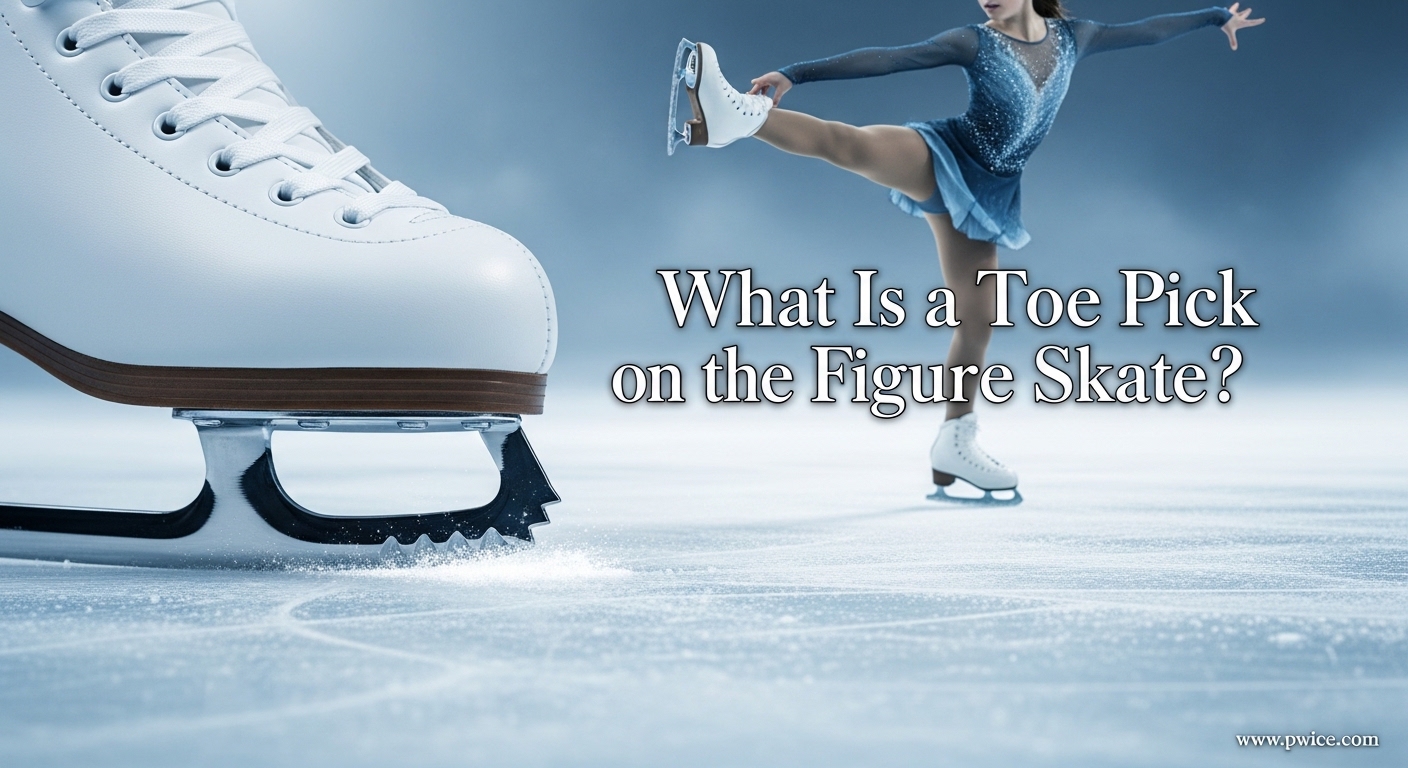
A toe pick is a set of serrated, sawlike teeth at the front of a figure skate blade. These jagged ridges may look intimidating to beginners, but they serve essential functions that make figure skating possible.
If you have ever watched a figure skater launch into a jump or stop suddenly with precision, you have seen toe picks in action. Understanding what toe picks are and how they work will help you appreciate the sport and avoid the dreaded face-plant that sends many beginners to the ice.
In this guide, I will explain exactly what toe picks do, why figure skates have them, and how to work with them rather than against them. Whether you are a curious spectator or a new skater tired of tripping, this article has you covered.
Table of Contents
What Do Toe Picks Do?
Toe picks serve multiple critical functions in figure skating. They are not just decorative elements added to look fierce, they are precision tools that skaters rely on for every jump, many spins, and certain footwork elements.
Jump Takeoffs and Landings
The primary purpose of toe picks is to help skaters push off the ice for jumps. When a skater performs a toe-assisted jump like a toe loop, flip, or lutz, they dig the toe pick into the ice and use it as a lever to launch themselves into the air.
Without this traction and purchase on the ice, skaters could not generate the height needed for triple and quadruple jumps. The toe pick acts like a sprinter’s starting block, providing the grip necessary for explosive takeoffs.
During landings, toe picks also play a role in controlling the descent. Skaters touch down with the toe pick first on certain jumps, which helps absorb impact and maintain balance as they transition back to the blade edges.
Spin Stability
While most spins rely primarily on blade edges, toe picks help with certain spin variations and entries. Skaters use toe picks to push into spins and to maintain position during difficult variations.
The toe pick can also serve as an anchor point when skaters need to adjust their rotation speed or center their spin position. Advanced skaters develop an intuitive sense of when to engage the toe pick for spin assistance.
Footwork and Choreography
Ice dancers and choreographers incorporate toe picks into footwork sequences for dramatic effect. A quick toe pick tap can accent a beat in the music or add percussive rhythm to a routine.
Skaters also use toe picks for pivots, spread eagles, and other choreographic movements that require precise control over their position on the ice. The toe pick essentially gives skaters a third point of contact with the ice beyond their inside and outside edges.
Stopping Techniques
Toe picks can be used for specific stopping techniques, though beginners should approach this carefully. The toe pick stop involves digging the toe picks into the ice to create friction and halt movement quickly.
This technique requires proper posture and weight distribution to execute safely. Done incorrectly, a toe pick stop can send you tumbling forward, which explains why so many forum discussions focus on avoiding toe pick trips.
Figure Skates vs Hockey Skates: Understanding the Difference
The most visible difference between figure skates and hockey skates is the presence of those serrated teeth at the front of the blade. Hockey skates have a smooth, continuous blade from toe to heel with no toe pick at all.
Why the Different Designs?
Hockey players need speed, agility, and the ability to stop quickly in any direction. Their smooth blades allow for rapid direction changes and hockey stops that spray ice in spectacular fashion.
Figure skaters need lift, precision, and the ability to execute complex aerial maneuvers. The toe pick provides the essential traction for these skills, even though it creates a tripping hazard that hockey players find maddening when they try figure skates.
This design difference explains why hockey players transitioning to figure skates struggle significantly with toe picks. Their muscle memory is trained to use the entire blade surface aggressively, which causes immediate toe pick catches on figure skates.
Can You Skate Without Toe Picks?
For recreational skating where you only glide forward and perform basic moves, toe picks are not strictly necessary. Many recreational skaters using rental skates with smaller toe picks or no toe picks at all enjoy skating without ever engaging the front teeth.
However, if you want to learn proper figure skating technique, toe picks become essential. You cannot perform regulation jumps or advanced footwork without them. The toe pick transforms the skate from a gliding tool into a platform for athletic artistry.
Types of Jumps That Use Toe Picks
Not all figure skating jumps use toe picks, but the ones that do are among the most common jumps in competition and practice. Understanding which jumps require toe pick assistance helps skaters prepare properly.
Toe-Assisted Jumps
The toe loop, flip, and lutz all rely on the toe pick for takeoff. In each of these jumps, the skater reaches back with one foot, plants the toe pick into the ice, and uses that anchor point to spring into rotation.
The toe loop is the simplest toe-assisted jump and often the first one beginners learn. The flip and lutz require more precise edge control before the toe pick entry, making them more advanced skills.
Edge Jumps
Edge jumps like the salchow, loop, and axel do not use toe picks for takeoff. Instead, these jumps rely entirely on the momentum and spring from the blade edges.
However, even edge jumps may involve toe picks during landings or in combination sequences where skaters transition quickly between jumps. The toe pick remains a constant companion even when not directly used for the main takeoff.
Do All Figure Skates Have Toe Picks?
While most figure skates have toe picks, the size and prominence of those teeth varies significantly depending on the skating discipline. Ice dancers, in particular, use blades with smaller, less intrusive toe picks.
Ice Dance Blades
Ice dancers perform intricate footwork close to their partners, often with rapid direction changes and close body positions. Large toe picks would create collision hazards and interfere with the flowing movements that define ice dancing.
Dance blades feature toe picks that are significantly smaller than those on standard freestyle blades. These reduced teeth still provide some assistance for turns and stops but stay out of the way during complex partner work.
Synchronized Skating Blades
Synchronized skaters, who perform in teams of eight to sixteen, also use blades with moderate toe pick sizes. These skaters need toe pick functionality for jumps and spins while maintaining the ability to skate in tight formation with teammates.
The specific blade design depends on the level and style of the team, with higher-level teams sometimes using blades closer to freestyle specifications for more demanding elements.
Beginner Tips: How to Avoid Tripping on Your Toe Pick In 2026?
If you are new to figure skates, the toe pick is probably your biggest enemy. Those teeth that elite skaters rely on for triple jumps will send you face-first into the ice if you are not careful.
The good news is that avoiding toe pick trips is entirely possible with proper technique. The bad news is that it requires breaking habits that feel natural to beginners.
Master the Knee Bend
The most important technique for avoiding toe pick trips is maintaining a deep knee bend. When your knees are properly bent, your weight stays centered over the middle of your blade rather than drifting toward the toe.
Beginners often stand too straight, which shifts weight forward and causes the toe pick to contact the ice. Think of skating with soft, shock-absorbing knees rather than stiff, straight legs.
Practice gliding with your knees bent at approximately a ninety-degree angle. This may feel exhausting at first, but it is the foundation of safe skating on toe pick blades.
Weight Distribution Matters
Your weight should rest primarily over the middle to back third of your blade during normal skating. The rocker, or curved profile of the blade, keeps your toe pick raised slightly when your weight is properly distributed.
Leaning forward is the most common cause of toe pick trips. Keep your shoulders back, your core engaged, and your center of gravity over your skating foot.
When learning to stroke forward, push from the side of the blade rather than reaching forward with your toe. The toe pick should only touch the ice when you intentionally use it for specific techniques.
Common Beginner Mistakes
Many beginners try to walk on the ice rather than glide. Walking motions naturally engage the toe pick and cause stumbles. Focus on pushing and gliding rather than stepping.
Another common error is looking down at your feet. This tilts your weight forward and brings the toe pick closer to the ice. Keep your head up and look in the direction you want to travel.
Some beginners attempt to cover or remove their toe picks to avoid tripping. This is never recommended, as the toe pick is essential for proper skating technique. Instead, learn to work with the toe pick through proper posture and technique.
The Adjustment Period
Most beginners report tripping frequently during their first one to two sessions on figure skates. This is completely normal and does not mean you are failing at skating.
Hockey players transitioning to figure skates often face the steepest learning curve because their muscle memory works against them. If you come from a hockey background, expect a longer adjustment period and consider working with a coach to retrain your movement patterns.
With consistent practice, proper knee bend and weight distribution will become automatic. Within a few weeks, you will wonder why the toe pick ever seemed intimidating.
Toe Pick Maintenance and Care
Toe picks require minimal maintenance, but understanding how they interact with blade care will help you keep your skates in optimal condition.
When you take your skates for sharpening, the professional will work around the toe pick. The main blade edges need regular sharpening to maintain their grip on the ice, while the toe pick itself rarely requires modification.
If your toe pick becomes damaged from hitting hard surfaces or improper storage, consult a professional skate technician. Attempting to file or grind the toe pick yourself can ruin the blade geometry and make jumps unsafe.
Always use hard skate guards when walking off the ice. These protect not just your blade edges but also the toe pick from concrete, metal stairs, and other damaging surfaces.
The History of Toe Picks
Toe picks have not always been part of figure skating. Early ice skate blades were simple metal runners with no teeth at all. The innovation of the toe pick transformed figure skating from a gliding activity into the athletic art form we recognize today.
The first toe picks appeared in the early twentieth century as skaters began experimenting with jumps. These early toe picks were modest teeth compared to the aggressive picks on modern freestyle blades.
As jumping became more central to competitive figure skating, toe pick designs evolved to provide better traction and stability. The modern toe pick represents decades of refinement by blade manufacturers working with elite skaters.
Today, toe pick design continues to evolve with variations like the k-pick, which features a specific geometry favored by some jump specialists. These innovations reflect the ongoing relationship between equipment technology and athletic achievement in figure skating.
Frequently Asked Questions
What is the purpose of a toe pick on figure skates?
A toe pick provides traction for jump takeoffs, stability for spins, and assistance with certain footwork elements and stopping techniques. The serrated teeth dig into the ice to give skaters the purchase they need to launch into jumps and control their movements with precision.
What does a toepick do?
A toepick helps figure skaters push off the ice for jumps like toe loops, flips, and lutzes. It also assists with spin entries, choreographic movements, and certain stopping techniques. The teeth provide grip that blade edges alone cannot deliver.
Do ice dancers have toe picks?
Yes, ice dancers have toe picks, but they are significantly smaller and less prominent than those on freestyle figure skates. Dance blades feature reduced toe picks that stay out of the way during partner work while still providing some functionality for turns and movements.
Why do I keep tripping on my toe pick?
Tripping on toe picks usually happens because of improper posture. Standing too straight, leaning forward, or walking instead of gliding causes weight to shift toward the front of the blade. Keep your knees bent and your weight centered over the middle of the blade to avoid toe pick contact.
Do hockey skates have toe picks?
No, hockey skates do not have toe picks. Hockey blades are smooth from toe to heel, which allows for the speed, agility, and quick direction changes needed in hockey. This difference explains why hockey players often struggle when trying figure skates for the first time.
Conclusion
A toe pick is a set of serrated, sawlike teeth at the front of a figure skate blade that enables jumps, assists spins, and provides traction for advanced footwork. While beginners may view toe picks as trip hazards, they are actually precision tools that make figure skating possible.
By maintaining proper knee bend, keeping your weight centered over the blade, and practicing proper technique, you will soon move from tripping over your toe picks to using them confidently. Whether you dream of triple jumps or simply want to skate without falling, understanding and respecting your toe picks is the first step.
Now that you know what toe picks are and how they work, it is time to get on the ice and put this knowledge into practice. Bend those knees, keep your head up, and enjoy the journey.