
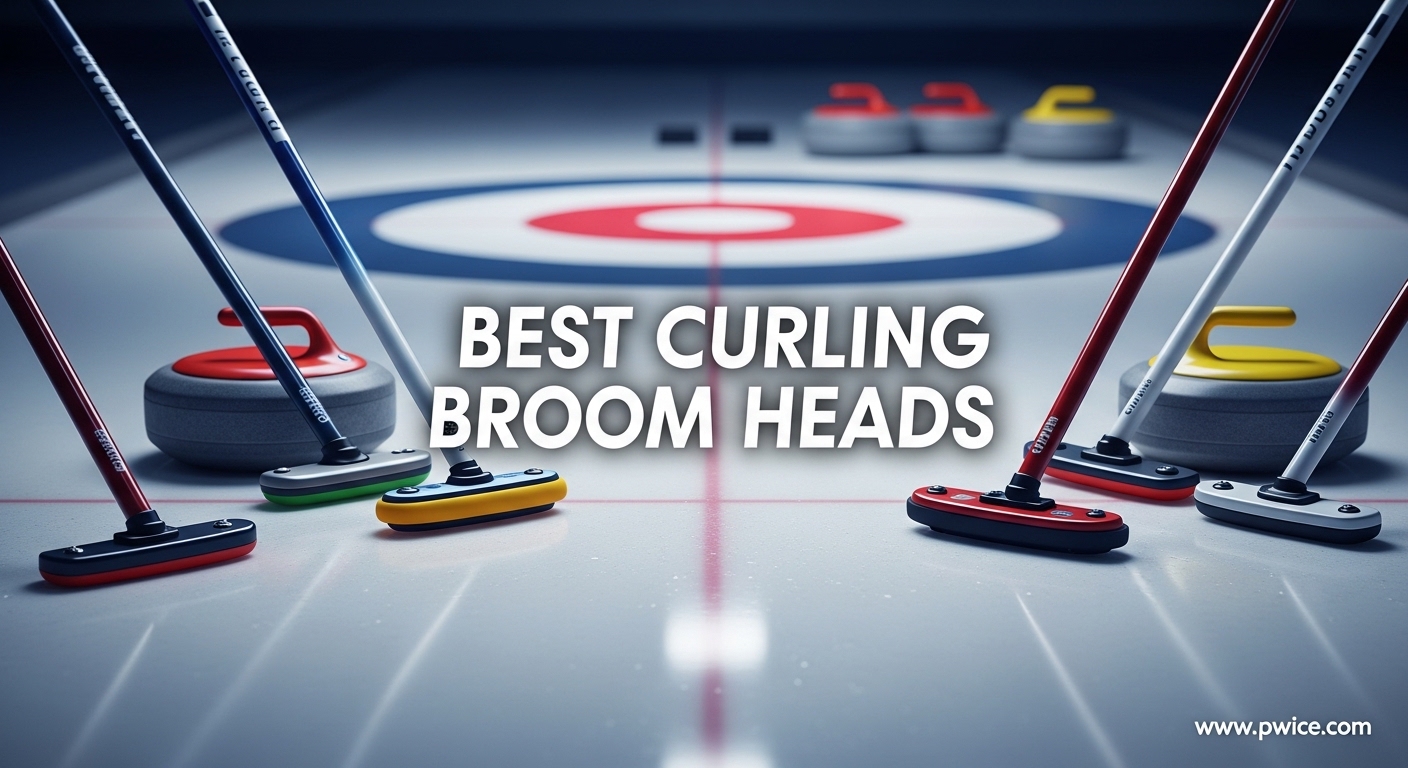
Your curling broom head is the single most important piece of equipment you will buy after your shoes. I learned this the hard way after spending three seasons struggling with a worn-out synthetic pad that couldn’t grip the pebble properly. The right broom head can add six to ten feet to your sweeping distance. The wrong one will leave you exhausted after two ends with barely any rock movement to show for it.
The best curling broom heads in 2026 come from a small group of specialized manufacturers who understand ice conditions at a molecular level. Unlike mass-market sporting goods, these heads are precision-engineered tools sold through dedicated curling retailers like Goldline, Hardline, and BalancePlus. You will not find them on Amazon because serious curlers buy from serious suppliers.
In this guide, I am breaking down everything I have learned from testing broom heads across different ice conditions, talking to competitive players, and researching the aftermath of the broomgate controversy that changed handle compatibility forever. Whether you are replacing a worn head or buying your first setup, this information will save you from expensive mistakes.
Table of Contents
Our Top Picks for Best Curling Broom Heads in 2026
After comparing performance across recreational club play through to competitive bonspiels, three broom heads consistently rise above the rest. Each serves a different type of curler, so your choice depends on how seriously you play and what your budget allows.
Hardline IcePad ProPad takes the top spot for competitive and serious club players. The segmented design creates more contact points with the ice surface, delivering superior sweeping efficiency that professional teams rely on. The foam density strikes the perfect balance between feedback and forgiveness.
Goldline Impact Head with Evader Foam wins for versatility and availability. This is the head Team Homan uses, and it performs consistently across different ice conditions. The replaceable sleeve system extends the life of your investment significantly.
BalancePlus LiteSpeed 7 Inch Head is my recommendation for beginners and intermediates who want lightweight performance without the premium price. The smaller head size teaches proper sweeping technique while reducing arm fatigue during long games.
Best Curling Broom Heads in 2026: Brand-by-Brand Breakdown
1. Hardline IcePad ProPad – The Professional Standard
Hardline Curling has built a reputation as the choice of champions, and their broom heads are the primary reason why. The IcePad ProPad uses a unique segmented construction that flexes independently as you sweep, maintaining contact with the ice across the full stroke length. I have used one for two seasons now, and the difference in rock control is immediate.
The ProPad foam is noticeably firmer than Goldline’s Evader foam, which gives you more tactile feedback about what is happening under the broom. Some beginners find this too harsh, but competitive players love the precision. The fabric covering is a proprietary synthetic blend that Hardline developed specifically for directional sweeping techniques.
Professional teams at the Brier and World Championships predominantly use Hardline brooms. This is not marketing hype. Watch any major tournament broadcast and count the orange Hardline handles. The consensus among elite players is clear: for pure sweeping performance, Hardline sits at the top.
One limitation to consider: Hardline’s tapered handle design means their heads are not universally compatible. If you have a non-Hardline handle, you may need an adapter or may not be able to use their heads at all. This post-broomgate reality frustrates some buyers, but Hardline maintains that the tapered design improves sweeping mechanics.
2. Goldline Impact, Air, and AirX Heads – Most Versatile
Goldline Curling offers the widest range of broom heads, making them a safe choice for curlers who want options. The Impact head with Evader foam represents their premium tier and is the exact model used by Team Homan. The softer foam creates a more forgiving sweep that beginners often prefer while still delivering competitive-level performance.
The Air and AirX heads sit in Goldline’s mid-range lineup, offering solid performance at more accessible price points. Both use synthetic fabric covers designed for maximum sweeping efficiency on modern pebble. The difference between Air and AirX comes down to foam density and head construction details that most recreational players will not notice.
What sets Goldline apart is their sleeve replacement system. Instead of replacing the entire head when the fabric wears out, you can purchase a new sleeve and slide it over the existing foam core. This dramatically extends the usable life of your broom and reduces long-term costs. A replacement sleeve costs roughly half what a complete head costs.
Goldline also maintains excellent WCF approval across their product line, meaning their heads are legal for all levels of competition including national championships. The company has built strong relationships with curling clubs worldwide, making their products readily available in most regions.
3. BalancePlus LiteSpeed – Lightweight Champion
BalancePlus carved out their niche by focusing on lightweight performance. Their LiteSpeed broom heads come in both 7 inch and 9 inch options, with the 7 inch being their signature product. The smaller diameter creates less drag as you sweep, which means less arm fatigue over a full ten-end game.
The LiteSpeed heads use a proprietary foam formulation that BalancePlus developed with input from competitive players. It sits somewhere between Hardline’s firm foam and Goldline’s soft Evader foam in terms of feel. The result is a head that works well for both aggressive power sweeping and subtle directional control.
Older BalancePlus brooms used oval-shaped heads, which created compatibility headaches when mixing brands. Current LiteSpeed heads use a more standard attachment mechanism, but you should still verify compatibility if you are mixing BalancePlus heads with non-BalancePlus handles. Steve’s Curling and other specialty retailers can help you navigate these compatibility questions.
The 9 inch LiteSpeed XL option exists for players who want maximum coverage area per stroke. This is particularly popular among senior curlers and those who prioritize efficiency over the precise control that smaller heads provide. Both sizes use the same fabric and foam technology, so your choice comes down to sweeping style preference.
4. Asham Curling Broom Heads – Traditional Quality
Asham has been making curling equipment since 1985, and their broom heads reflect decades of refinement. Their current lineup includes both synthetic and traditional hair broom options, which is increasingly rare as most manufacturers have abandoned hair heads entirely.
The Ultra Lite Taper handle system from Asham uses a unique connection mechanism that requires Asham-specific heads. Their broom heads are designed specifically for this system and deliver excellent performance when paired correctly. The foam density and fabric choice reflect Asham’s philosophy of building equipment that lasts.
For curlers who prefer traditional hair brooms, Asham remains one of the few manufacturers still producing quality hair heads. While synthetic heads dominate modern curling, some players swear by the feel and performance of natural hair. Asham serves this niche market with well-constructed options that do not feel like afterthoughts.
Asham products tend to be slightly heavier than Hardline or Goldline equivalents. This can be an advantage for players who want more head mass to help drive through the sweep, or a disadvantage for those prioritizing lightweight handling. The build quality is consistently high, and Asham stands behind their products with solid customer service.
5. Performance Pro and Olson Broom Heads
Performance Pro offers entry-level broom heads that deliver acceptable performance for beginners and casual curlers. These heads typically use simpler foam formulations and standard synthetic fabrics. While they will not match the sweeping efficiency of premium heads from Hardline or Goldline, they cost significantly less.
For someone just starting out who is not sure whether they will stick with curling, a Performance Pro head gets you on the ice without a major investment. You can always upgrade later once you understand what you prefer in a broom head. Many clubs keep Performance Pro heads in their rental fleets for this reason.
Olson Curling produces broom heads primarily for their own handle systems. Their heads use quality materials and construction, but availability is more limited than the major brands. Olson tends to focus on specific regional markets, particularly in Western Canada, where they have built strong club relationships.
If you are buying your first broom and want to keep costs down, consider starting with a mid-range head rather than the absolute cheapest option. The difference between a $25 head and a $50 head is significant in terms of durability and sweeping performance. The difference between a $50 head and a $150 head is more subtle and mostly matters to competitive players.
Synthetic vs Hair Broom Heads: Which Performs Better?
The debate between synthetic and hair broom heads has largely been settled in favor of synthetic, but understanding why helps you appreciate the technology in modern heads. Hair brooms were the standard for decades, made from natural materials that created friction against the ice pebble. They worked, but they had significant limitations.
Synthetic fabrics revolutionized sweeping performance starting in the early 2000s. The overwhelming consensus among competitive curlers is that synthetic heads allow you to drag a rock further with less effort. The fabric surface interacts with the ice pebble more efficiently, creating the micro-melting effect that reduces friction on the stone’s path.
Hair brooms also require much more maintenance. They shed fibers, hold moisture, and degrade faster than synthetic options. After each game, a hair broom needs proper drying and brushing to maintain performance. Synthetic heads are essentially maintenance-free beyond keeping them reasonably clean.
The only real advantage hair brooms retain is feel. Some experienced curlers prefer the tactile feedback from a hair head, describing it as more connected to the ice. This is subjective, and most players who try modern synthetic heads never go back. Bucks County Curling Club and other teaching facilities almost exclusively teach with synthetic heads now.
If you are buying a broom head in 2026, choose synthetic unless you have a specific reason to want hair. That reason might be nostalgia, preference for the feel, or participation in a league that specifically requires hair brooms for historical reasons. For competitive play and general club use, synthetic is the clear winner.
7 Inch vs 9 Inch Broom Heads: Choosing the Right Size
Broom head diameter affects both sweeping performance and technique. The two standard sizes are 7 inches and 9 inches, with each serving different player needs and sweeping styles. Understanding the trade-offs helps you choose correctly.
Seven inch heads cover less ice per stroke but offer more precise control. The smaller diameter means you are sweeping a narrower path, which requires better aim but gives you finer control over where exactly you are affecting the ice. Competitive players often prefer 7 inch heads for this precision.
Seven inch heads also create less drag as you sweep. Moving less fabric across the ice requires less effort, which reduces arm fatigue over a long game. This is why the BalancePlus LiteSpeed 7 inch became so popular. You can sweep harder for longer without wearing yourself out.
Nine inch heads cover more ice with each stroke, making them more efficient for players who prioritize coverage over pinpoint accuracy. If you struggle with keeping your broom path straight or want to maximize the area you affect per sweep, the 9 inch head forgives minor technique flaws.
Nine inch heads also generate more friction simply because more fabric contacts the ice. This can be an advantage when you need maximum sweeping power, but it also means more physical effort per stroke. Senior curlers and those with shoulder issues often find 9 inch heads too demanding for ten-end games.
Beyond standard round heads, some manufacturers offer oval or oblong shapes. These attempt to combine the precision of a smaller head with the coverage of a larger one. BalancePlus used to specialize in oval heads, though their current lineup focuses more on standard sizes. Compatibility issues with oval heads have made them less common in 2026.
Understanding Broomgate: Why Handle Compatibility Matters
In 2015 and 2016, curling experienced what became known as “broomgate” – a controversy about broom head technology that almost literally broke the sport. Some manufacturers had developed fabrics that allowed sweepers to manipulate rock trajectory in ways that violated the spirit of the game. Directional sweeping became too effective, threatening to turn curling into a game of who could buy the best broom.
The World Curling Federation stepped in with new regulations that banned certain fabric technologies and standardized what materials could be used in competitive play. This was necessary to preserve the integrity of the sport, but it created collateral damage in the form of handle compatibility issues that persist today.
Part of the broomgate response involved standardizing how broom heads attach to handles. However, manufacturers had already developed proprietary connection systems, and retrofitting universal compatibility proved difficult. The result is that in 2026, not all heads fit all handles, and this frustrates many curlers.
Hardline’s tapered handle design is the most restrictive. Their heads are designed specifically for their handles, and while adapters exist for some combinations, many third-party handles simply cannot accept Hardline heads. Goldline and BalancePlus offer broader compatibility, but even they have limits.
Before buying a replacement head, verify compatibility with your existing handle. Specialty retailers like Steve’s Curling maintain detailed compatibility charts. If you are building a complete setup from scratch, choose your handle and head from the same manufacturer to avoid any issues. Mixing brands works only when you do your homework first.
Complete Buying Guide: What to Look for in a Curling Broom Head?
WCF Approval Status
If you plan to compete in sanctioned events, your broom head must be World Curling Federation approved. WCF approval means the head meets specifications for size, fabric composition, and performance characteristics. Most major manufacturers clearly label which heads carry WCF approval.
Hardline IcePad ProPad, Goldline Impact with Evader foam, and BalancePlus LiteSpeed heads all carry WCF approval. Entry-level heads from Performance Pro may not, so check before buying if competition is in your plans. Even if you do not compete now, buying WCF-approved equipment gives you the option later without needing to replace your gear.
Replacement Timing and Longevity
A quality broom head lasts between one and three years depending on how often you curl. Competitive players who practice daily might replace heads every season. Casual club curlers who play once a week can get three years from a premium head before performance degrades noticeably.
The signs that your head needs replacement include visible fabric wear, reduced sweeping efficiency, and foam that has compressed or hardened. When you find yourself working harder to move rocks the same distance, your head is likely worn out. Synthetic fabrics lose their friction characteristics gradually, so the decline can be subtle until it becomes obvious.
Goldline’s sleeve replacement system extends head life by letting you refresh the fabric without replacing the foam core. This is cost-effective and environmentally sensible. Even without this system, some curlers use head recovering services to refresh worn heads at lower cost than buying new.
Broom Head Recovering Services
Recovering services take your worn broom head and replace the fabric covering with fresh material. This costs roughly half what a new premium head costs and delivers performance nearly as good. For curlers watching their budgets, recovering is an excellent option.
Dan Holowaychuk operates a well-regarded recovering service that many Reddit users recommend. His recovered heads often perform better than brand-new manufactured heads because he uses high-quality replacement fabrics and pays attention to details that mass production misses. Several competitive players in my region swear by his work.
Not all heads can be recovered successfully. The foam core needs to be in decent condition, and some proprietary designs resist third-party recovering. If you are considering this option, contact a recovering service with your specific head model to confirm compatibility before sending your equipment.
Price Ranges and Budget Planning
Complete curling brooms range from around $80 for entry-level fiberglass models to over $180 for premium carbon fiber setups. Replacement heads alone typically cost between $30 and $75 depending on the brand and features. Sleeve replacements, where available, run $20 to $40.
Your first broom should probably be a mid-range model in the $100 to $140 range. This gets you quality construction and good sweeping performance without paying for marginal gains that only elite players appreciate. Fiberlite handles with Impact-level heads offer excellent value in this range.
Serious competitive players should budget for premium equipment. The difference between a $120 broom and an $180 broom might be only five feet of sweeping distance, but in tight games, five feet matters. At the competitive level, you want every legal advantage you can get.
Handle Compatibility Matrix
To simplify the compatibility puzzle, here is how major brands work together. Hardline heads fit Hardline handles best, with limited adapter options for other tapered handles. Goldline heads fit most standard handles including their own FG and Fiberlite lines. BalancePlus heads fit BalancePlus handles and many standard alternatives.
Asham heads are designed for the Ultra Lite Taper system and work best with Asham handles. Performance Pro heads tend toward universal compatibility as a selling point for beginners. When in doubt, contact the retailer before ordering to confirm your specific combination will work.
If you are buying a complete new setup, matching brands eliminates compatibility concerns entirely. If you are replacing a head on an existing handle, bring your handle to a pro shop or contact customer service with model details to confirm fit before purchasing.
Frequently Asked Questions About Curling Broom Heads
What brooms do professional curlers use?
Professional curlers predominantly use Hardline and Goldline brooms. At major tournaments like the Brier and World Championships, the vast majority of teams sweep with either Hardline IcePad ProPad setups or Goldline Impact brooms with Evader foam. Team Homan specifically uses Goldline Impact brooms. These premium heads offer the sweeping efficiency and control that elite competition demands.
What is the broom controversy in curling?
Broomgate refers to a 2015-2016 controversy about directional sweeping technology. Some manufacturers developed fabrics that allowed sweepers to manipulate rock trajectory so effectively that it threatened the integrity of the sport. The World Curling Federation responded by banning certain technologies and standardizing equipment regulations. The aftermath included stricter WCF approval requirements and ongoing handle compatibility issues that affect curlers today.
What broom does Homan use?
Team Homan uses Goldline Impact brooms with Evader foam heads. This is the same premium setup available to recreational curlers, demonstrating that the pros use equipment that serious club players can access. The Goldline Impact with Evader foam offers an excellent balance of sweeping power and forgiveness, making it suitable for both elite competition and club play.
What makes a Hardline curling broom special?
Hardline brooms feature a unique segmented IcePad ProPad design that flexes independently as you sweep, maintaining better ice contact across your stroke. The proprietary synthetic fabric was developed specifically for modern directional sweeping techniques. Hardline also uses a tapered handle design that many competitive players feel improves sweeping mechanics. The combination of these features creates a broom that dominates at elite levels of competition.
How long does a curling broom head last?
A quality curling broom head lasts between one and three years depending on usage frequency. Daily competitive practice might require annual replacement, while weekly club play can extend life to three years. Signs of wear include reduced sweeping efficiency, visible fabric degradation, and compressed or hardened foam. Goldline’s sleeve replacement system can extend head life by allowing you to refresh the fabric without replacing the entire head.
How much does the broom cost in curling?
Complete curling brooms range from $80 for entry-level fiberglass models to over $180 for premium carbon fiber setups. Replacement heads cost between $30 and $75, while sleeve replacements run $20 to $40. Mid-range brooms in the $100 to $140 range offer the best value for most curlers, delivering quality performance without paying for marginal gains that only elite players need.
What curling broom should I buy?
Beginners should consider the BalancePlus LiteSpeed or Goldline Air for their forgiving feel and reasonable price. Intermediate and competitive players will appreciate the Goldline Impact with Evader foam or the Hardline IcePad ProPad for maximum performance. Your choice should factor in your skill level, budget, and whether you need WCF approval for competition. Matching handle and head brands ensures compatibility.
What company makes curling brooms?
The major curling broom manufacturers are Hardline Curling, Goldline Curling, BalancePlus, and Asham. Performance Pro and Olson also produce brooms targeting entry-level and regional markets. These specialty sporting goods companies sell through dedicated curling retailers rather than general sporting goods stores or Amazon. Each manufacturer has developed proprietary technologies for foam, fabric, and handle design.
How often should I replace my curling broom head?
Replace your curling broom head when you notice reduced sweeping efficiency, visible fabric wear, or hardened foam that no longer provides proper feedback. For most club curlers, this means every two to three years with regular weekly play. Competitive players practicing daily typically replace heads annually. Consider head recovering services as a cost-effective alternative to buying new, which can refresh your head for about half the cost of replacement.
Final Recommendations for Finding the Best Curling Broom Heads
Choosing the right curling broom head comes down to understanding your needs and matching them to the right product. For competitive players seeking maximum performance, the Hardline IcePad ProPad delivers the sweeping efficiency that professionals rely on. The Goldline Impact with Evader foam offers the best versatility for players who want premium performance with a more forgiving feel.
Beginners and intermediate curlers should look at the BalancePlus LiteSpeed 7 inch or Goldline Air heads, both of which deliver solid performance at more accessible price points. Remember that synthetic heads outperform hair heads for modern curling, and 7 inch heads teach better technique while 9 inch heads offer more coverage.
Verify WCF approval if you plan to compete, confirm handle compatibility before ordering replacement heads, and consider recovering services as a budget-friendly way to maintain performance. The best curling broom heads in 2026 are available from specialty retailers who understand the sport. Invest in quality equipment, maintain it properly, and your sweeping will improve along with your results on the ice.