
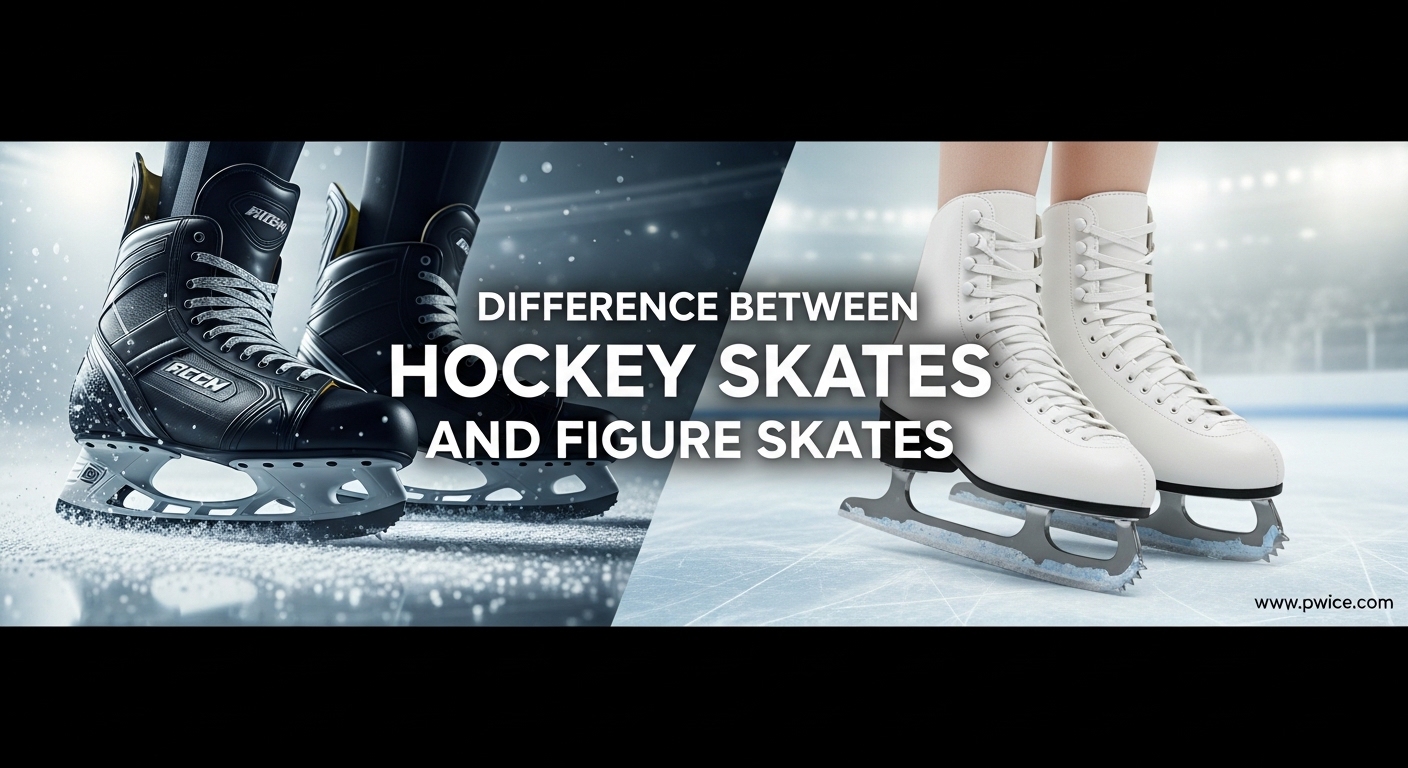
The main difference between hockey skates and figure skates comes down to their design purpose. Hockey skates prioritize speed, agility, and protection with shorter, curved blades and stiff protective boots. Figure skates focus on artistic movement, jumps, and spins with longer blades featuring toe picks and more flexible boots that allow precise footwork.
When I first stepped onto the ice, I had no idea these two skate types were so fundamentally different. After spending time with both recreational skaters and hockey players, I have seen how choosing the wrong skate can make learning harder and even lead to safety issues.
Table of Contents
Quick Comparison Summary
Hockey skates: shorter curved blades for quick turns, stiff protective boots, designed for speed and contact. Figure skates: longer flat blades with toe picks, flexible leather boots, designed for jumps and artistic movement.
This guide breaks down every key difference to help you make the right choice. Whether you are a beginner renting skates for the first time or considering buying your own pair, understanding these distinctions will save you time and frustration on the ice.
Blade Design and Key Differences
The blade is the most obvious difference between hockey skates and figure skates. This single component determines how the skate performs on ice and what movements are possible.
The Toe Pick: Figure Skating’s Signature Feature
Figure skates have a distinctive toe pick at the front of the blade. This serrated metal piece with small teeth allows skaters to grip the ice for jump takeoffs and specific spins.
The toe pick serves a critical function in figure skating. Skaters use it to push off for jumps, execute certain spin positions, and perform technical footwork sequences. Without the toe pick, many figure skating elements would be impossible.
For beginners, the toe pick often causes problems. I have seen new skaters trip over their toe picks repeatedly when learning basic forward glides. Forum discussions consistently mention this as the biggest pain point for first-time figure skate users.
Hockey skates have no toe pick. The blade ends in a smooth curve at both front and back. This design allows hockey players to sprint forward without catching their front edge and to stop suddenly using the blade’s full edge.
Blade Length and Profile
Figure skate blades are noticeably longer than hockey skate blades. This extra length creates a larger contact patch with the ice, providing more stability for gliding and spinning.
The longer blade helps figure skaters maintain balance during one-foot glides and complex spin combinations. It also distributes the skater’s weight over a larger surface area, reducing the pressure on any single point of the ice.
Hockey skate blades are shorter and wider. This design sacrifices some stability for dramatically increased agility. Hockey players need to make quick directional changes, pivot instantly, and accelerate rapidly.
The shorter blade creates a smaller turning radius. A hockey player can execute tight turns and quick crossovers that would be difficult or impossible on longer figure skate blades.
Blade Rocker and Contact Patch
Both skate blades have a rocker, which is the curve along the length of the blade. However, the rocker profile differs significantly between the two types.
Hockey skate blades have a deeper rocker with more curve. The blade touches the ice at a smaller contact patch, allowing for quick edge transitions and agile movements. This design supports the rapid direction changes hockey requires.
Figure skate blades have a flatter rocker profile with a larger contact patch. This provides more stability for gliding and spinning but makes quick turns harder to execute. The flatter profile supports the controlled movements and long edges figure skating demands.
The rocker radius on hockey skates typically ranges from 7 to 10 feet, while figure skate rockers are longer at 7 to 8 feet for singles skaters and even longer for pairs or dance blades. This subtle difference significantly affects how each skate handles on the ice.
Blade Mounting and Construction
Figure skate blades attach to the boot with screws that go through the sole. This allows for precise positioning and occasional blade replacement or adjustment.
Hockey skate blades mount to a blade holder that attaches to the boot. This two-piece construction allows for blade replacement and height adjustment, which matters for players seeking specific performance characteristics.
The blade material also differs. High-end figure skate blades use harder steel for better edge retention during spins and jumps. Hockey skate blades prioritize durability and impact resistance to withstand the physical nature of the sport.
Boot Construction and Ankle Support
The boot design reflects each skate’s intended purpose. Hockey boots prioritize protection and power transfer, while figure skate boots focus on flexibility and artistic expression.
Materials and Construction
Figure skate boots traditionally use leather construction. Premium boots feature multiple layers of leather with varying stiffness zones to allow flexibility where needed while maintaining support in critical areas.
Modern figure boots may incorporate synthetic materials for weight reduction and water resistance. However, leather remains the gold standard for serious figure skaters due to its ability to mold to the foot over time.
Hockey skate boots use composite materials, plastics, and synthetic fabrics. These materials offer excellent protection against impacts from pucks, sticks, and other players. The construction prioritizes durability and lightweight performance over traditional aesthetics.
The difference in materials affects weight significantly. A typical hockey skate weighs less than a comparable figure skate due to advanced composite materials and streamlined design.
Ankle Support and Collar Design
Figure skate boots extend higher up the ankle than hockey skate boots. This design provides additional support for the extreme ankle positions required during spins and jumps.
The high ankle collar helps stabilize the foot during one-foot landings and complex rotational movements. Figure skaters often spend significant time breaking in their boots to achieve the perfect balance of support and flexibility.
Hockey skate boots sit lower on the ankle. This allows for the wide range of motion required for hockey skating, including deep knee bends and aggressive crossovers.
However, the lower cut means less inherent ankle support. Hockey players develop strong ankles through training, and the boot’s design allows for quick lateral movements that a high collar would restrict.
Stiffness vs Flexibility
Figure skate boots have variable stiffness zones. The lower part of the boot remains relatively flexible to allow pointing the toe and deep knee bends. The upper boot provides rigidity for jump landings and spin positions.
Advanced figure skaters need boots with precise stiffness ratings matched to their skill level. Too stiff, and complex footwork becomes impossible. Too flexible, and jump landings become unstable.
Hockey skate boots prioritize consistent stiffness throughout. The rigid boot construction transfers power efficiently from the leg to the ice during strides. This stiffness also provides protection during contact with other players.
The tongue padding differs as well. Hockey skates have thick, protective tongues with lace bite protection. Figure skate tongues are thinner and more flexible, allowing for deeper forward flexion needed in some skating positions.
Performance Comparison
How do these design differences translate to on-ice performance? Each skate type excels in specific areas while presenting limitations in others.
Speed and Acceleration
Hockey skates dominate in speed and acceleration. The shorter blade with deeper rocker allows for powerful push-offs and rapid weight transfers between edges.
A hockey player can go from stationary to full speed in just a few strides. The blade design supports the explosive acceleration needed to chase down pucks or break away from defenders.
Figure skates can achieve impressive speeds but require more time to build momentum. The longer blade creates more friction and drag, making quick acceleration harder.
However, figure skates maintain speed well once gliding. The larger contact patch and flatter rocker create efficient gliding characteristics that suit the artistic nature of figure skating programs.
Agility and Maneuverability
Hockey skates offer superior agility for quick directional changes. The short blade and rounded profile allow for tight turns, rapid pivots, and instantaneous stops and starts.
Hockey players execute crossovers, tight turns, and quick transitions constantly during a game. The skate design supports these movements naturally.
Figure skates sacrifice some agility for stability and control. The longer blade makes tight turns more difficult but provides the stable platform needed for spin entries and jump takeoffs.
Figure skaters can perform elegant turns and edge work, but these movements differ from hockey’s explosive changes of direction. Figure skating emphasizes controlled, flowing movements rather than rapid transitions.
Jumps and Spins
Figure skates are designed specifically for jumping and spinning. The toe pick enables the grip needed for jump takeoffs, while the longer blade provides a stable landing platform.
Figure skaters execute multiple rotations in the air, land on one foot, and transition immediately into spins. The skate design supports these extreme demands with specialized features.
Hockey skates make jumping difficult. Without a toe pick, gripping the ice for takeoff requires compensating techniques that reduce jump height and control.
While hockey players occasionally jump over fallen players or obstacles, these are improvised movements rather than technical jumps. The skate design does not support aerial maneuvers.
Stopping Techniques
Both skate types allow for stopping, but the techniques differ significantly. Figure skates use a variety of stops including the T-stop, snowplow stop, and hockey stop adapted for figure skate blades.
The toe pick can be used for emergency stopping by dragging it along the ice. However, this technique is rough on the ice surface and not recommended for regular use.
Hockey skates excel at the hockey stop, which involves turning perpendicular to the direction of travel and shaving ice with the blade edges. This stop allows players to maintain awareness of the play while stopping quickly.
The shorter blade and aggressive rocker profile make hockey stops more efficient on hockey skates. Players can stop on a dime and immediately accelerate in a new direction.
Backward Skating
Both skate types support backward skating, but with different characteristics. Figure skates allow for elegant backward glides and spins with the longer blade providing stability.
Figure skaters often skate backward while performing footwork sequences or preparing for jumps. The high boot and long blade support controlled backward movement.
Hockey players skate backward extensively while defending. The hockey skate design supports rapid backward acceleration, quick transitions between forward and backward, and defensive maneuvers.
The differences in backward skating reflect each sport’s requirements. Figure skating emphasizes grace and control, while hockey prioritizes speed and tactical positioning.
Which Is Better for Beginners?
This is the question I hear most often from people visiting ice rinks for the first time. The answer depends on your goals, but evidence points toward a clear recommendation for most beginners.
The Case for Figure Skates
Figure skates offer more stability for learning basic balance. The longer blade creates a larger platform that helps beginners stay upright during their first glides.
The flatter rocker profile reduces the tendency to rock forward or backward unexpectedly. This stability helps beginners build confidence before tackling more advanced movements.
Many skating instructors recommend figure skates for young children learning to skate. The stability helps prevent falls and builds foundational skills that transfer to either skate type later.
However, figure skates present challenges. The toe pick causes frequent tripping for beginners who are not yet accustomed to lifting their feet properly. Forum discussions consistently mention this as a major frustration.
The Case for Hockey Skates
Hockey skates offer more freedom and versatility for recreational skating. Without a toe pick to trip over, beginners can focus on basic forward skating without that particular hazard.
The boot design feels more like regular footwear to many beginners. Hockey skate boots resemble athletic shoes, while figure skate boots feel more like high heels with their elevated heel and rigid construction.
Many adult beginners prefer hockey skates for recreational skating. The comfort factor matters for people who just want to enjoy skating sessions without pursuing formal figure skating or hockey.
The downside is the steeper learning curve for basic balance. The shorter blade and deeper rocker make hockey skates feel less stable initially. Beginners may experience more wobbling until they develop ankle strength.
My Recommendation
For most beginners, I recommend starting with figure skates if you have any interest in learning jumps, spins, or formal skating techniques. The stability and design support proper technique development from the start.
If your goal is purely recreational skating or you eventually want to play hockey, hockey skates offer more versatility and comfort. You will need to spend more time developing basic balance, but you avoid the toe pick learning curve.
Consider starting with rentals of both types if possible. Many rinks offer both figure and hockey skate rentals. Spending 30 minutes in each type will help you understand which feels more natural for your body and goals.
Whatever you choose, proper fit matters more than skate type. Your skates should fit snugly with no extra room. Wear thin socks, not thick ones, for better control. Lace your skates as tight as possible without cutting off circulation.
Cost Comparison
Price is a practical consideration when choosing between skate types. Both hockey and figure skates range from affordable beginner models to professional-grade equipment costing hundreds of dollars.
Entry-Level Prices
Beginner figure skates typically start around $80 to $150 for recreational models. These skates feature synthetic materials and basic blades suitable for learning fundamental skills.
Entry-level hockey skates range from $60 to $120 for recreational models. The lower price point reflects simpler construction and materials, though these skates work fine for casual skating and beginner hockey.
Rental skates offer an even cheaper option for trying both types. Most rinks charge $5 to $10 for skate rental, making this an economical way to explore skating before investing in your own equipment.
Intermediate and Advanced Prices
Intermediate figure skates with leather boots and better blades cost $200 to $400. At this level, you get boots that mold to your feet and blades that hold edges better during spins.
Intermediate hockey skates range from $150 to $300. These models offer better protection, lighter weight, and improved performance features for recreational league play.
Advanced and competitive skates in both categories easily exceed $500. Professional figure skates with custom boots and specialized blades can cost $800 or more. High-end hockey skates for competitive players range from $400 to $700.
Additional Costs
Factor in maintenance costs when budgeting. Figure skate blades need regular sharpening, typically every 20 to 30 hours of skating. Hockey skate blades require more frequent sharpening due to the aggressive use they receive.
Figure skates need blade guards for walking off the ice to protect the edges and toe pick. Soakers, which are soft cloth covers, protect blades from rust during storage.
Hockey skates require less delicate care but still need blade protection and occasional boot maintenance. The composite materials hold up well but cannot be repaired like leather figure skate boots.
Transitioning Between Skate Types
Many skaters eventually want to try the other skate type. Understanding the adjustment process helps make the transition smoother and safer.
Switching from Figure to Hockey Skates
Moving from figure skates to hockey skates feels liberating to many skaters. The absence of a toe pick removes the constant awareness needed to avoid tripping.
However, the shorter blade and reduced ankle support create an adjustment period. Your balance will feel off initially as you adapt to the smaller contact patch and deeper rocker.
Backward skating requires particular attention. The techniques you learned on figure skates may not transfer directly due to the different blade profile.
Spend your first sessions focusing on basic glides and stops. Do not attempt advanced movements until you have rebuilt your balance foundation on the new skate type.
Switching from Hockey to Figure Skates
Transitioning to figure skates presents the opposite challenge. The toe pick becomes your biggest obstacle as you learn to lift your feet properly to avoid catching the front teeth.
The longer blade feels more stable initially, but the high boot restricts movement. Many hockey players feel confined by the figure skate boot’s height and stiffness.
Spinning and jumping require learning completely new techniques. The toe pick is essential for these movements but takes practice to use effectively without tripping.
Start with basic forward skating and gradually introduce toe pick awareness. Practice lifting your feet higher when walking and skating to develop the habit of clearing the pick.
General Transition Tips
Take lessons when switching skate types if possible. A coach can spot technique adjustments you need to make and prevent bad habits from developing.
Practice on uncrowded ice during your transition. You will be less stable initially, and open space reduces collision risks while you rebuild your balance.
Be patient with the adjustment process. Most skaters need several sessions to feel comfortable on a new skate type. Do not get discouraged if your first experience feels awkward.
Consider keeping both skate types if you enjoy different skating activities. Many serious skaters own both figure and hockey skates for different purposes.
Maintenance and Care Differences
Proper maintenance extends the life of your skates and ensures safe performance. Each skate type has specific care requirements based on its design and materials.
Blade Care
Both skate types need regular sharpening, but the frequency and technique differ. Figure skate blades require precise sharpening to maintain proper edge geometry for spins and jumps.
Find a sharpener experienced with figure skates, as improper sharpening can ruin blade geometry. The toe pick should never be sharpened or ground down, as this destroys its function.
Hockey skate blades withstand more aggressive sharpening. The deeper hollow used for hockey skates creates sharper edges for quick turns and stops.
Most hockey players sharpen their skates every 8 to 12 hours of ice time. Figure skaters can go longer between sharpenings, typically 20 to 30 hours, unless they notice performance issues.
Boot Maintenance
Figure skate boots need regular conditioning if made of leather. Use leather conditioner to prevent cracking and maintain flexibility in the right zones.
Allow figure skate boots to dry completely between sessions. Remove them from your skate bag and let air circulate. Stuffing with newspaper helps absorb moisture from the interior.
Hockey skate boots require less maintenance due to their synthetic materials. Wipe them down after use and allow them to dry, but you do not need leather conditioner or special treatments.
Check both boot types for loose screws, worn laces, and damage regularly. Address small issues before they become safety hazards or expensive repairs.
Storage Tips
Always use blade guards when walking off the ice. Hard guards protect edges from concrete and other surfaces. Remove hard guards and use soft soakers for storage to prevent rust.
Store skates in a cool, dry place. Avoid leaving them in hot cars or damp basements where materials can degrade and blades can rust.
Loosen laces before storing skates to reduce stress on the boot structure. This simple habit extends boot life significantly.
Frequently Asked Questions
Should a beginner use hockey or figure skates?
Most beginners benefit from figure skates for learning basic balance due to the longer, more stable blade. However, hockey skates offer more comfort and versatility for recreational skating without the toe pick tripping hazard. Try both at a rental rink to see which feels more natural for your goals.
Can figure skates be used for hockey?
Figure skates are not recommended for hockey. The toe pick creates a tripping hazard during quick movements, and the boot offers less protection than hockey skate boots. Additionally, figure skate blades are not designed for the aggressive stops and turns hockey requires.
Are figure skates easier than hockey skates?
Figure skates offer more stability for basic gliding but present challenges with the toe pick. Hockey skates feel more comfortable to many people but require more ankle strength for balance. Neither is universally easier; the difficulty depends on what movements you are trying to learn.
Which ice skates should I get?
Choose figure skates if you want to learn jumps, spins, or formal skating techniques. Choose hockey skates if you want to play hockey or prefer recreational skating with more freedom of movement. Consider your long-term goals and try rentals before buying.
Is it easy to swap from figure to hockey skates?
Switching from figure to hockey skates is generally easier than the reverse. You will need to adjust to the shorter blade and lower ankle support, but you avoid learning to manage the toe pick. Expect several sessions to rebuild your balance on the new skate type.
Do figure skates have a toe pick?
Yes, figure skates have a toe pick at the front of the blade. This serrated metal piece with small teeth allows skaters to grip the ice for jump takeoffs and certain spins. It is the most visually distinctive difference between figure skates and hockey skates.
Final Thoughts
The difference between hockey skates and figure skates reflects their distinct purposes. Hockey skates prioritize speed, agility, and protection with shorter curved blades and stiff composite boots. Figure skates focus on artistic expression with longer flat blades featuring toe picks and flexible leather boots designed for jumps and spins.
Your choice depends entirely on your skating goals. Figure skates offer the stability and features needed for learning technical skills and artistic movements. Hockey skates provide the comfort and freedom recreational skaters often prefer, along with the protection and performance hockey players need.
Start with rentals to experience both types before investing in your own skates. Pay attention to fit above all else, and do not be discouraged if your first sessions feel challenging. Every skater starts somewhere, and the right equipment makes the journey more enjoyable.
Whether you choose hockey skates or figure skates, consistency matters more than equipment. Regular practice builds the skills and confidence that make skating rewarding. Get out on the ice and enjoy the experience.