
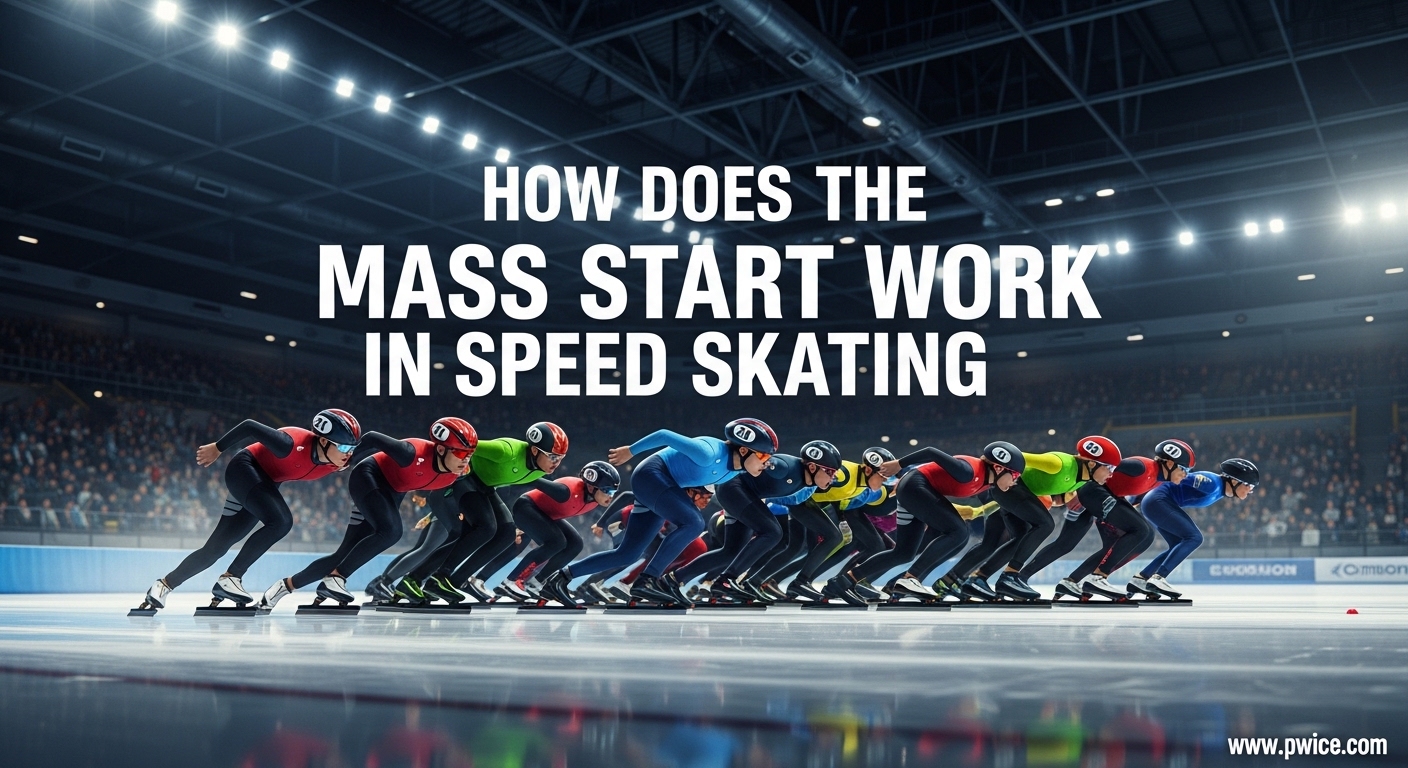
Mass start speed skating is a 16-lap pack race where up to 24 skaters start simultaneously on a 400m oval, competing for sprint points at intermediate laps and the finish line. Unlike traditional pair racing where two skaters race against the clock, mass start brings tactical pack racing to the ice with dynamic positioning and strategic sprints. The format debuted at the PyeongChang 2018 Olympics and has quickly become a fan favorite for its unpredictable finishes and NASCAR-like pack dynamics.
When I first watched mass start at the 2026 Winter Olympics, I was confused by the slow initial pace. The skaters seemed to barely move during that first lap, jostling for position while conserving energy. That initial confusion led me to dig deeper into how this unique format actually works.
Table of Contents
How Does the Mass Start Work in Speed Skating In 2026?
Mass start speed skating combines endurance, strategy, and explosive sprinting into one thrilling race format. Understanding the structure helps you appreciate the tactical decisions skaters make throughout those 16 laps.
The Basic Race Format
The race covers 16 laps on the standard 400-meter oval used in long track speed skating, totaling 6,400 meters. Up to 24 skaters line up across the starting line simultaneously, unlike traditional speed skating where pairs start at intervals. The field gets narrowed to 16 skaters for Olympic finals through semifinal rounds.
I found it helpful to think of this as the speed skating equivalent of a cycling peloton race. Everyone starts together, drafts off each other, and positions matter as much as raw speed.
The Rolling Lap (Neutral Lap)
The first lap is called the “rolling lap” or “neutral lap.” Skaters glide at a relatively slow pace while positioning themselves for the race ahead. No points are awarded during this lap, and skaters cannot attack or break away.
This slow start confuses many first-time viewers. I remember watching my first mass start race and wondering why these world-class athletes were moving so slowly. The answer is pure strategy. Nobody wants to lead early and waste precious energy fighting wind resistance.
The Race Begins
At the end of the first lap, the starting gun fires and the race officially begins. Skaters can now attack, sprint for points, and break away from the pack. The pace immediately increases as competitors vie for position ahead of the first intermediate sprint.
Intermediate Sprints
Sprint points are awarded at the end of laps 4, 8, and 12. The first three skaters across the line at each sprint earn 5, 3, and 1 points respectively. These intermediate sprints create strategic moments throughout the race where positioning becomes critical.
Skaters must decide whether to expend energy contesting these sprints or save everything for the final dash. I noticed watching Beijing 2026 that some athletes targeted every intermediate sprint while others sat in the pack waiting for the final lap.
The Final Sprint
The last lap determines the overall winner and medal positions. The first three finishers earn 60, 40, and 20 points for gold, silver, and bronze. Positions four through seven earn 10, 6, 3, and 1 point respectively. These massive point values mean the final sprint almost always decides the medals regardless of intermediate sprint results.
Mass Start Speed Skating Scoring System
Understanding how points accumulate helps explain the tactical racing we see on the ice. The scoring system rewards consistent performance across all sprints while keeping the final lap decisive.
Intermediate Sprint Points
Points awarded at laps 4, 8, and 12 follow a consistent pattern. First place earns 5 points, second gets 3 points, and third receives 1 point. With three intermediate sprints, a skater who wins all three would accumulate 15 points before the final sprint.
These points matter for final standings even if they cannot override the massive final sprint values. In close races, consistent intermediate sprint performance can mean the difference between medaling and finishing fourth.
Final Sprint Points
The final sprint offers dramatically higher point values that typically decide medal positions. The top seven finishers earn points: 60 for first, 40 for second, 20 for third, 10 for fourth, 6 for fifth, 3 for sixth, and 1 for seventh. Skaters finishing eighth or lower receive zero points.
Because the final sprint awards 60 points for first place, a skater could win two intermediate sprints (10 points) and still lose to someone who scored nothing earlier but wins the finish (60 points). This creates tension throughout the race as leaders must defend their position against fresh challengers.
How the Winner Is Determined
Final standings are determined by total points accumulated across all sprints. If two skaters tie on points, the one who finished higher in the final sprint wins the tiebreaker. This happened in several World Cup races I analyzed, where precise photo finishes decided championship positions.
Strategy and Tactics in Mass Start
The tactical depth of mass start speed skating rivals cycling and auto racing. Watching without understanding these dynamics misses half the excitement.
Drafting and Slipstreaming
Skaters behind the leader experience significantly less air resistance. Research shows drafting can reduce energy expenditure by 20-30% compared to leading. This physics explains why the pack stays together and why breakaways rarely succeed early in races.
I noticed while watching races that the skater in front works significantly harder than those tucked behind. This creates a game of “chicken” where nobody wants to lead until absolutely necessary.
The Peloton and Pack Dynamics
The main group of skaters is called the peloton, borrowed from cycling terminology. Staying in the peloton conserves energy while maintaining position for upcoming sprints. Skaters constantly jockey for prime spots near the front without actually leading.
From my viewing experience, the most dangerous position is at the very back of the peloton. Any small gap opens there, and the skater gets dropped from the pack, losing both drafting benefit and positioning for the next sprint.
Breakaways and Attacks
Occasionally a skater attacks early, trying to build a gap before the final sprint. These breakaways rarely succeed over 16 laps because the peloton can chase down individual riders using draft-assisted teamwork. However, breakaways do succeed when launched at strategic moments when competitors are tired or distracted.
Skaters also make “bluff attacks” to force others to chase and waste energy. This mind game aspect makes mass start fascinating to watch once you understand the psychology involved.
Why the Slow Start Confuses Viewers
Reddit forums revealed this as the most common viewer confusion point. New fans watching mass start for the first time often think the skaters are not trying hard during that opening lap. The reality is pure game theory. Every skater wants someone else to lead and cut the wind.
Someone eventually has to push the pace, usually a skater with a strong finishing sprint who wants to keep the race together. Understanding this “slow start” phenomenon transformed how I watch mass start racing. That initial chess match sets up everything that follows.
Rules, Safety, and Equipment
Mass start has unique safety requirements compared to traditional speed skating due to the pack racing format and potential for contact.
Mandatory Safety Equipment
Helmets are mandatory in mass start competitions, unlike traditional long track events. Many skaters also wear cut-resistant suits and additional padding because falls in a pack can cause serious injuries from skate blades. I noticed watching Olympic coverage that mass start skaters look more like short track athletes than traditional long track racers.
Key Rules and Disqualifications
Body checking, blocking, or deliberately impeding opponents results in disqualification. Skaters must maintain proper lane usage and cannot cross the center line dangerously. False starts earn warnings, with repeated violations resulting in penalties.
The ISU (International Skating Union) officials monitor these races closely because pack dynamics create more opportunities for contact than traditional pair racing.
Mass Start vs Traditional Speed Skating
Understanding the differences between mass start and traditional speed skating helps explain why this format attracts different athletes and audiences.
Pair Format vs Pack Format
Traditional speed skating uses a time trial format where two skaters race against the clock in separate lanes. There is no drafting, no tactics, just pure speed against the clock. Mass start transforms speed skating into a head-to-head tactical sport more like short track or cycling.
The difference extends to athlete backgrounds. Many successful mass start skaters come from inline skating backgrounds where pack racing is standard. Traditional speed skating favors pure time-trial specialists.
Comparison to Other Sports
Forum discussions frequently compare mass start to cycling peloton races. The drafting dynamics, breakaway attempts, and pack psychology share remarkable similarities. Some viewers even compare the pack dynamics to NASCAR racing where drafting and positioning determine success.
I found this comparison helpful when explaining mass start to friends unfamiliar with speed skating. Calling it “NASCAR on ice” or “cycling on skates” gives them an immediate mental framework.
Frequently Asked Questions
How is speed skating mass start scored?
Mass start speed skating uses a points system with sprint points awarded at intermediate sprints (laps 4, 8, 12) and the final sprint. Intermediate sprints award 5-3-1 points to the top three finishers. The final sprint awards 60-40-20 points for the top three positions, plus 10-6-3-1 for positions four through seven. Total points determine final standings.
How does the mass start race work?
Mass start is a 16-lap race on a 400m oval with up to 24 skaters starting simultaneously. After a neutral rolling lap, the race begins with a gun. Intermediate sprints occur at laps 4, 8, and 12 where points are awarded. The final sprint on lap 16 determines medal positions with the highest point values.
How does mass start work?
Mass start speed skating works by having all skaters start together and race 16 laps (6,400m) while competing for sprint points. Skaters draft in a pack to conserve energy, then sprint for points at designated laps. The final sprint awards the most points and typically determines the winner.
What is mass start skate?
Mass start is a speed skating format where multiple skaters (up to 24) race simultaneously in a pack over 16 laps, rather than racing in pairs against the clock. It combines endurance, tactics, and sprinting with a points-based scoring system at intermediate sprints and the finish line.
Why don’t speed skaters go faster in the mass start?
Mass start skaters often start slowly because leading wastes enormous energy fighting wind resistance. Drafting behind other skaters reduces energy expenditure by 20-30%. The tactical game involves waiting for others to lead while conserving energy for crucial sprint points later in the race.
How many laps is mass start speed skating?
Mass start speed skating is 16 laps on the standard 400-meter oval, totaling 6,400 meters. The first lap is a neutral rolling lap where no points are awarded. Sprint points are awarded at laps 4, 8, 12, and the final sprint occurs on lap 16.
Conclusion
Mass start speed skating transforms traditional time-trial racing into a tactical pack battle that rewards strategy as much as raw speed. Understanding how does the mass start work in speed skating helps you appreciate the drafting decisions, sprint timing, and energy conservation that determine Olympic medals. The format’s unique combination of endurance, tactics, and explosive finishes makes it one of the most exciting additions to the Winter Olympics program.
Whether you are watching the Milano Cortina 2026 Games or following World Cup events, knowing the 16-lap structure, points system, and pack dynamics will enhance your viewing experience. The slow start that confuses new viewers is actually the opening move in a 16-lap chess match played at 30 miles per hour on ice.