
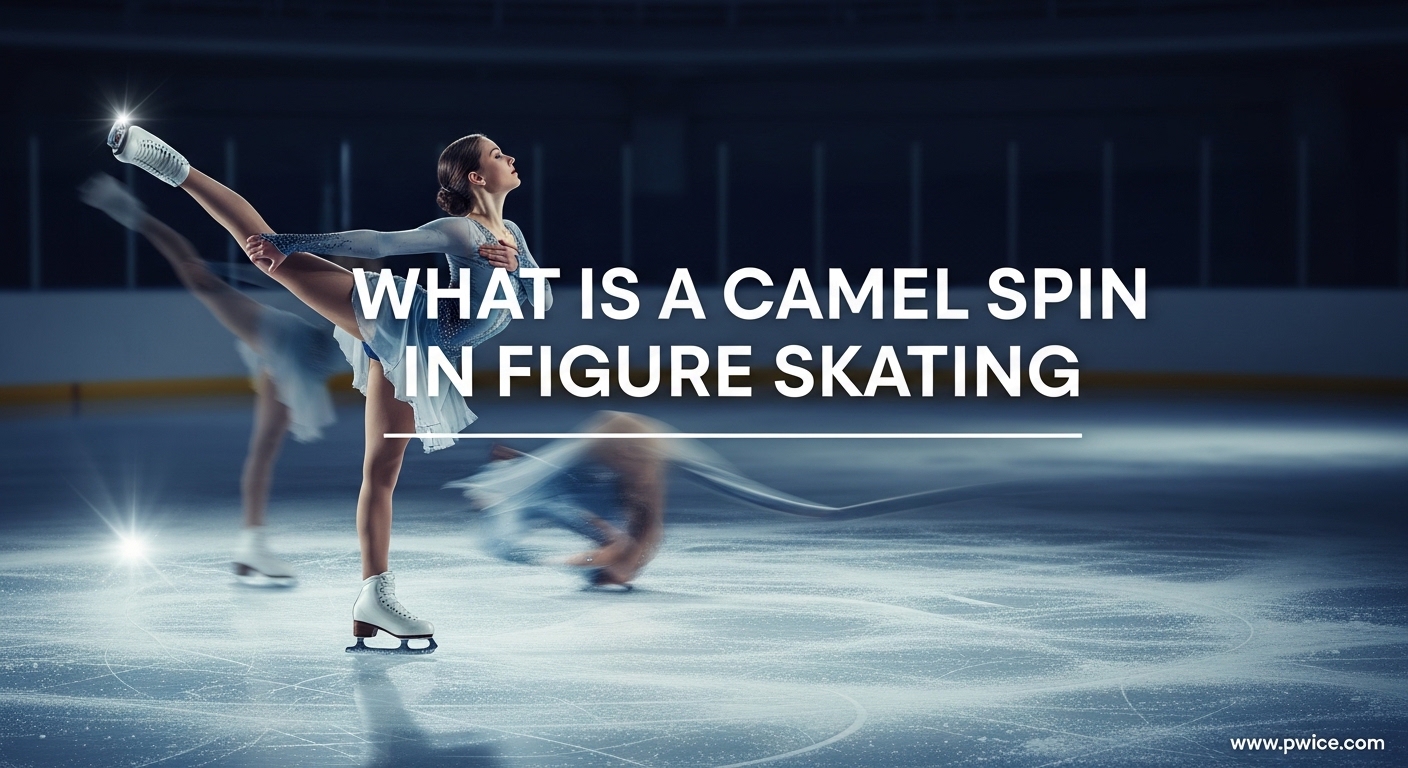
A camel spin (also called a parallel spin) is one of the three basic spin positions in figure skating. The skater balances on one leg while extending the torso and free leg parallel to the ice, creating a horizontal line similar to a ballet arabesque. This elegant position has been a staple of competitive skating since British figure skater Cecilia Colledge first performed it in the 1930s.
I remember the first time I attempted a camel spin. It felt impossibly awkward. My free leg kept dropping, and I could barely hold the position for one rotation. But with practice, this spin becomes one of the most beautiful elements a skater can master.
Table of Contents
What Is a Camel Spin in Figure Skating In 2026?
A camel spin is defined by its distinctive horizontal body position. The skater rotates on a single skating leg while the free leg extends behind at hip level or higher. The torso stretches forward, creating a straight line from fingertips to toe.
The position draws its name from an amusing historical accident. Originally called an arabesque spin or airplane spin, the term “camel” emerged when someone performed the spin incorrectly with an arched back. The hunched silhouette resembled a camel’s hump, and the name stuck. Today, skaters and coaches use “camel” as the standard term, though “parallel spin” remains an accepted alternative name.
The camel spin requires precise body alignment. The skating leg must remain straight with the knee locked. The free leg turns out with the toe pointed. The back arches slightly while the arms extend forward or to the sides. Many coaches describe the ideal position as looking like a “T” shape from the front.
History and Origin
British figure skater Cecilia Colledge invented the camel spin during the 1930s. She was a pioneering skater who pushed technical boundaries, and this spin became her signature innovation. Colledge’s creation transformed from a novel trick into one of the three fundamental positions every competitive skater must master.
American champion Dick Button helped popularize the camel spin in the 1940s and 1950s. He demonstrated that male skaters could execute the position with power and control. Button’s performances showed audiences that the camel spin was not just elegant but also technically demanding.
The most famous variation bears the name of Olympic Champion Dorothy Hamill. In 1976, Hamill popularized the “Hamill camel,” which transitions from a back camel position directly into a back sit spin. This move became so iconic that recreational skaters still ask coaches to teach them “the Dorothy Hamill spin” today.
Under the current ISU Judging System, the camel spin is coded as CSp. Skaters earn base values depending on their level of execution, with features like difficult variations, change of edge, and flying entries adding points to their technical score.
Technique and Execution
Executing a proper camel spin requires understanding the mechanics from entry to exit. Here is the step-by-step breakdown I teach my students.
Step 1: The Entry
Begin from a strong back inside edge. Most skaters enter using a forward outside three-turn that transitions to a backward glide. The entry edge must be deep and controlled, as this determines the spin’s center and speed.
Step 2: Rise and Lock
As you rise from the knee bend, straighten the skating leg immediately. A bent skating leg destroys the position and slows rotation. Lock the knee and engage your core to maintain vertical alignment.
Step 3: Extend the Free Leg
Swing the free leg up and back until it reaches at least hip height. The leg should turn out naturally, not forced. Point the toe and reach through the foot as if trying to touch something behind you.
Step 4: Position the Upper Body
Stretch your arms forward or to the sides at shoulder height. Keep your chin up and eyes focused on the ice ahead. The back should arch slightly, creating a lifted chest position. Think of stretching your sternum forward while your free leg reaches back.
Step 5: Maintain and Exit
Hold the position for at least three rotations to receive credit in competition. To exit, bend the skating knee and bring the free leg down to the ice in a controlled manner. Some skaters transition directly into a sit spin for combination spins.
The biomechanics of a camel spin rely on angular velocity principles. A tight, compact position spins faster, but the extended camel position creates a larger rotation circumference. Skaters must find the balance between extension and controlled speed.
Camel Spin Variations
Once skaters master the basic camel, they can explore numerous variations that add difficulty and visual interest to their programs.
Flying Camel Spin
The flying camel begins with a jump entry rather than a stationary position. The skater takes off from a forward outside edge, performs a half rotation in the air, and lands in the camel position. This variation adds a dynamic element and earns higher difficulty points in competition.
Catch Foot Camel
In this variation, the skater reaches back and grasps the free foot or blade during rotation. The catch foot position creates a tighter, more compact silhouette while demonstrating exceptional flexibility. There are several catch positions: catching the toe, the blade, or wrapping the arm around the leg.
Donut Spin (Hamill Camel)
The donut spin involves bending the free leg and pulling it in toward the torso while rotating. Dorothy Hamill made this famous by transitioning from a back camel into a back sit spin. The move requires core strength and flexibility to maintain rotation while changing positions.
Change Edge Camel
Rather than staying on the back inside edge throughout, the skater switches to a back outside edge mid-spin. This change of edge requires precise balance and earns difficulty features under ISU rules. The position looks nearly identical to observers but feels significantly different to the skater.
Pairs Camel Spin
In pairs skating, both partners perform camel spins simultaneously while holding hands or maintaining close proximity. The pair must synchronize their entries, rotation speeds, and positions to create a matching visual effect.
Learning Tips for Beginners
Based on forum discussions and coaching experience, here are practical tips for skaters learning their first camel spins.
Start with proper blade sharpening. A dull blade makes the back inside edge entry nearly impossible. Many adult skaters particularly struggle with this because they skate less frequently and their blades lose sharpness faster.
Practice the position off-ice first. Lie on your stomach and lift one leg behind you while arching your back. This builds muscle memory for the position without the risk of falling on ice. Hold the position for 10-15 seconds, rest, and repeat.
Most beginners drop their free leg too low. The leg must stay at hip height or higher to count as a proper camel. If your leg sinks below horizontal, you are doing an “airplane” spin, not a camel spin. Focus on lifting from the hip, not just raising the leg.
Keep your chin up and look at the ice ahead of you. Looking down collapses your back arch and causes you to travel off-center. Your arms should stay horizontal with thumbs pointing up. Dropping the arms pulls your upper body down and disrupts the position.
Common mistakes include bending the skating knee, letting the free leg turn in rather than out, and failing to engage the core. Film yourself or ask a coach to identify which error is causing your specific problem.
Many skaters find camel spins harder than sit spins at first. The higher center of gravity makes balance more challenging. Do not get discouraged if your camel spin wobbles or travels initially. Most skaters need several months of consistent practice to hold a centered, stable camel spin for three rotations.
Frequently Asked Questions
What is the hardest spin in figure skating?
The hardest spins in figure skating are typically the Biellmann spin, the donut spin, and complex combinations that include multiple variations. The Biellmann requires pulling the free leg straight up and overhead while spinning, demanding extreme flexibility. However, difficulty varies by skater. Some find the Biellmann easier than a change-edge camel depending on their individual strengths.
Why are they called camel spins?
Camel spins got their name from a mistaken performance. Originally called arabesque or airplane spins, the term emerged when a skater performed the spin with an overly arched back. The humped silhouette reminded observers of a camel, and the name stuck despite the fact that proper execution does not actually resemble a camel.
What trick is forbidden in ice skating?
The backflip is the most famous forbidden trick in figure skating. It was banned by the ISU after Terry Kubicka performed one at the 1976 Olympics. Backflips were deemed too dangerous and did not fit the judging criteria. While not technically a spin, the prohibition reminds skaters that not all technically possible moves are permitted in competition.
How hard is camel spin?
The camel spin ranks as moderately difficult among basic spins. Most skaters find it harder than an upright spin but comparable to or slightly easier than a proper sit spin at first. The extended position creates a higher center of gravity, making balance challenging. With consistent practice, most skaters can achieve a basic camel spin within 3-6 months of dedicated training.
Conclusion
What is a camel spin in figure skating? It is a fundamental position that combines technical precision with graceful aesthetics. From its accidental naming in the 1930s to its status as a required element in 2026 competitive programs, the camel spin represents the balance of artistry and athleticism that defines figure skating.
Whether you are a beginner struggling to hold the position for one rotation or an advanced skater working on a flying camel entry, this spin rewards patience and practice. Focus on your entry edge, keep that skating leg straight, and remember that even Dorothy Hamill started with wobbly first attempts.
The next time you watch competitive skating, pay attention to the camel spins. Notice how each skater brings their own style to this classic position. Some emphasize height and extension. Others focus on speed and centering. All of them are continuing a tradition that began nearly a century ago on a rink in Britain.