
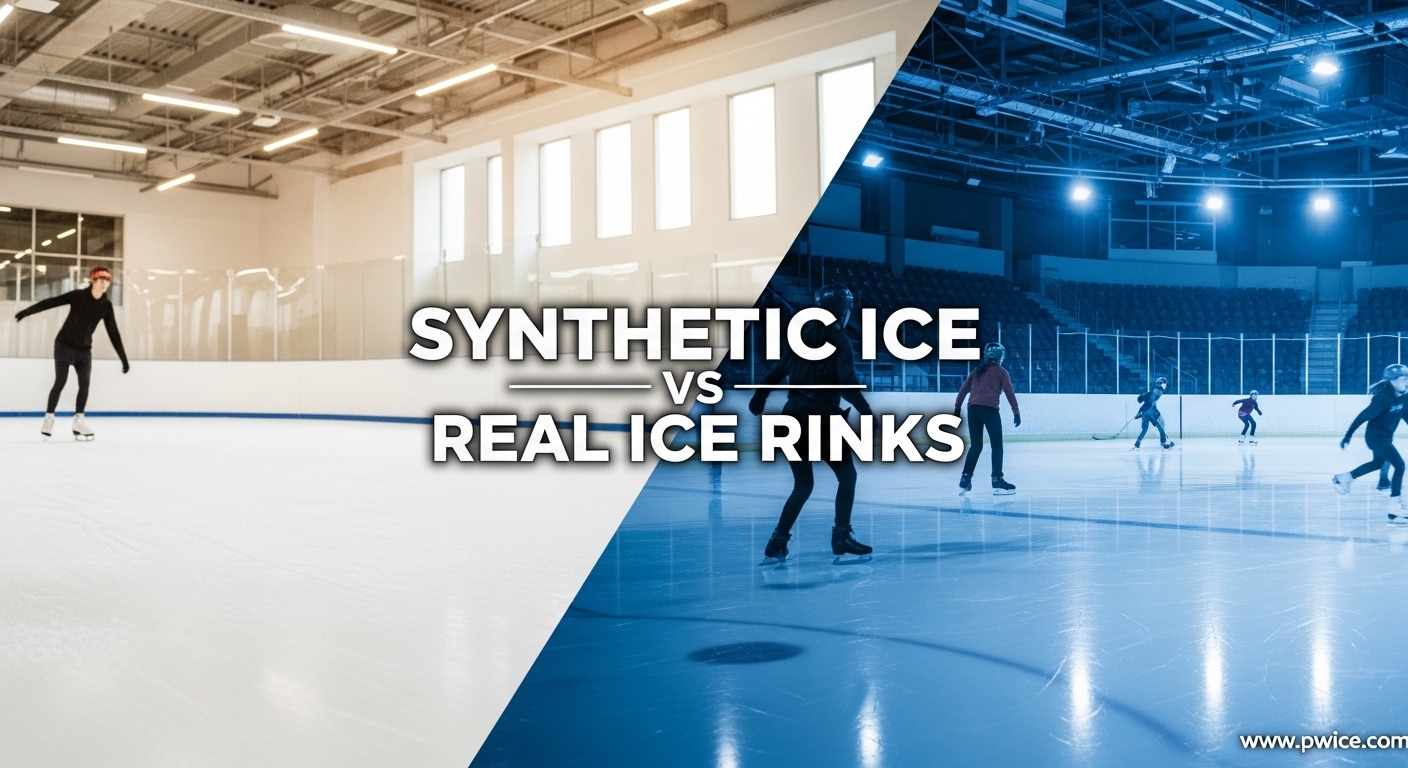
Choosing between synthetic ice vs real ice rinks can feel overwhelming when you’re deciding how to invest your time and money. Our team has spent years researching both technologies, talking to hockey players, figure skaters, and facility managers to understand the real differences. This guide breaks down everything you need to know about synthetic ice panels and traditional refrigeration-free ice surfaces so you can make the right choice for your specific needs.
Whether you’re building a backyard practice area, planning a commercial facility, or simply curious about this high-density polymer technology, we’ve got you covered. Let’s dive into the complete comparison.
Table of Contents
What Is Synthetic Ice and How Does It Work?
Synthetic ice is a specialized ice skating surface made from high-density polymer materials that simulate the glide of real ice without requiring refrigeration or freezing temperatures. These interlocking panels create a seamless skating area that works year-round in any climate.
Modern synthetic ice panels use advanced molecular structures to achieve self-lubricating properties. When skate blades make contact with the surface, the friction generates a thin lubricating film that reduces resistance and allows for gliding. The best products on the market use specially engineered polyethylene compounds that maintain their glide factor even after years of use.
The panel systems typically connect using tongue-and-groove or dovetail interlocking mechanisms. These systems allow for quick installation and can be expanded or reconfigured as needed. Most quality panels measure around 18 inches by 24 inches and are about half an inch thick, providing enough stability for aggressive skating and hockey stops.
Here’s a key question many people ask: Is a synthetic ice rink cold? The answer is no. Unlike real ice rinks that require temperatures around 16-20 degrees Fahrenheit to maintain surface integrity, synthetic ice operates at ambient temperature. You can skate in shorts and a t-shirt in the middle of summer. The surface may feel slightly cooler than surrounding concrete due to its material properties, but there’s no refrigeration involved.
Synthetic Ice vs Real Ice Rinks: The Skating Experience
When comparing the actual skating experience, there’s a measurable difference in friction coefficient between the two surfaces. Real ice offers a glide factor of approximately 0.03-0.04, while quality synthetic ice surfaces typically measure between 0.15-0.20. This means synthetic ice creates roughly 10-15% more resistance than traditional ice.
So is it harder to skate on synthetic ice? The honest answer is yes, it requires more effort. You won’t coast as far after a push, and maintaining speed takes continuous work. However, many hockey players and coaches actually see this as a training advantage. The increased resistance builds leg strength and forces you to develop better technique.
What does skating on synthetic ice feel like? The sensation is similar to skating on real ice that’s slightly soft or has a thin layer of snow on top. Your blades engage with more resistance, and you’ll notice the difference immediately if you’re experienced on real ice. The glide is shorter, and you need to take more strides to cover the same distance.
One Reddit user who has skated on both surfaces for years shared this perspective: “Real ice 1000% – there is no feeling like skating on real ice.” This sentiment echoes what we hear from many experienced skaters. The authentic glide and blade response of refrigerated ice remains unmatched for pure skating pleasure.
However, another skater noted: “Synthetic ice is okay for stick-handling/shooting practice but not for learning real skating skills.” This highlights an important distinction. Synthetic ice serves specific purposes well, particularly for developing puck handling and shooting mechanics when real ice isn’t available.
Edge work presents another challenge on synthetic surfaces. While you can perform crossovers and transitions, the feedback from your blades differs from real ice. The stopping motion requires adjustment too. Hockey stops are possible but require more force and technique refinement.
Benefits of Synthetic Ice Rinks
Despite the differences in skating feel, synthetic ice offers compelling advantages that make it worth considering for many applications. Here are the key benefits our research has identified:
Year-Round Availability in Any Climate
Synthetic ice eliminates weather dependence completely. Whether you live in Florida, Arizona, or the middle of a desert, you can skate 365 days a year. This refrigeration-free ice technology brings ice skating to regions that have never had access before.
No Energy Costs for Refrigeration
Traditional ice rinks consume massive amounts of electricity to maintain freezing temperatures. A standard NHL-sized rink can use 1-3 megawatt-hours of energy daily. Synthetic ice requires zero refrigeration energy, dramatically reducing operational costs and environmental impact.
Installation Flexibility
Synthetic ice panels can be installed indoors or outdoors, on concrete, asphalt, wood, or compacted earth. You can set up a rink in your garage, backyard, basement, or community center. The interlocking system allows for custom sizes and shapes that would be impossible with traditional refrigeration systems.
Low Maintenance Requirements
Unlike real ice that requires resurfacing machines, water systems, and constant monitoring, synthetic ice needs minimal care. Regular cleaning with a broom or mop and occasional panel inspection is usually sufficient. There’s no flooding, no ice shaving buildup, and no Zamboni required.
Quick Setup and Portability
A small synthetic ice rink can be assembled in a few hours. For temporary events, you can install panels in the morning and skate by afternoon. When finished, disassemble and store the panels for future use. This portability makes synthetic ice ideal for seasonal setups or traveling hockey programs.
Cost Effectiveness Over Time
While initial purchase costs exist, the long-term savings from eliminated refrigeration and reduced maintenance create significant value. For home users and small facilities, synthetic ice often becomes the more economical choice within 3-5 years.
Safety and Accessibility
Synthetic ice provides a more forgiving surface for beginners learning to fall. Without the extreme cold of traditional rinks, newcomers can practice longer in comfortable conditions. The consistent surface quality also eliminates the variables of melting, cracking, or soft spots found in outdoor natural ice.
Do synthetic ice rinks work? Absolutely. They function exactly as designed, providing a functional skating surface without refrigeration. The question isn’t whether they work, but rather whether they’re the right solution for your specific skating goals.
Benefits of Real Ice Rinks (2026)
Despite synthetic ice’s advantages, traditional refrigeration-based rinks maintain their position as the gold standard for serious skating. Here’s why real ice continues to dominate competitive and professional environments:
Authentic Skating Experience
Nothing replicates the pure glide and blade feel of real ice. The molecular structure of frozen water creates a unique surface that synthetic materials cannot fully duplicate. As one experienced skater told us, “After getting competent at ice hockey, roller/inline feels similar but synthetic is harder.” Real ice remains the standard against which all alternatives are measured.
Superior Glide and Speed
The low friction coefficient of real ice allows for effortless gliding, explosive acceleration, and sustained speed. Hockey players can generate more power in their strides, and figure skaters can achieve the flow and grace that defines their sport. The energy efficiency of movement on real ice simply cannot be matched.
Ideal for Learning Proper Technique
Beginners learning to skate should start on real ice whenever possible. The authentic response from the surface teaches correct body positioning, edge control, and weight distribution. Skills learned on real ice transfer directly to synthetic surfaces, but the reverse isn’t always true due to the compensation techniques required on artificial surfaces.
Standard for Competitive Training
All competitive skating happens on real ice. NHL games, Olympic figure skating, and every major hockey league operate on refrigerated surfaces. If competitive participation is your goal, training on real ice prepares you for the actual conditions you’ll face.
Better Puck Performance for Hockey
Ice hockey pucks slide, bounce, and behave differently on real ice compared to synthetic surfaces. The weight, glide, and reaction of pucks on refrigerated ice match what players experience in games. This makes real ice superior for developing accurate shooting and passing skills.
Cooling Ambiance
There’s something special about stepping into a cold arena and feeling the crisp air. The authentic atmosphere of a traditional ice rink provides an experience that synthetic alternatives cannot replicate. For many skaters, this environment is part of what makes ice skating special.
Cost Comparison: Synthetic Ice vs Real Ice Rinks
Understanding the financial implications helps clarify which option fits your budget. Here’s a detailed breakdown of costs for both rink types:
Initial Investment
Synthetic ice panels typically cost between $15-40 per square foot depending on quality. A modest home setup of 200 square feet runs $3,000-8,000 for materials. Premium self-lubricating panels with the best glide factor sit at the higher end of this range.
Building a real ice rink requires refrigeration equipment, piping systems, insulated flooring, and professional installation. A small permanent home rink might cost $25,000-75,000. Commercial facilities easily exceed $500,000-2 million depending on size and specifications.
Ongoing Energy Costs
Energy represents the biggest operational difference between these options. A standard home-sized refrigerated rink might add $500-1,500 monthly to electricity bills during operation. Commercial facilities face utility costs reaching $10,000-50,000 monthly.
Synthetic ice requires zero energy for surface maintenance. This elimination of refrigeration costs becomes the primary financial advantage over time.
Maintenance and Upkeep
Real ice demands regular resurfacing, temperature monitoring, and system maintenance. A commercial Zamboni costs $75,000-125,000. Annual maintenance contracts for refrigeration systems run $5,000-20,000. Staff to operate and maintain the facility add significant labor costs.
Synthetic ice maintenance is minimal. You’ll need to replace worn panels eventually, with quality products lasting 8-15 years under normal use. Cleaning supplies and occasional replacement panels represent the primary ongoing expenses.
Blade Sharpening Costs
Here’s a hidden cost many overlook: blade wear. Synthetic ice dulls skate blades faster due to increased friction. While real ice might require sharpening every 15-20 hours of skating, synthetic surfaces demand sharpening every 8-12 hours. At $10-20 per sharpening, frequent skaters spend $200-500 yearly on blade maintenance for synthetic ice versus $100-250 for real ice.
Total Cost of Ownership
Over a 10-year period, a synthetic ice home setup totaling 300 square feet might cost $8,000-15,000 total including initial purchase, replacement panels, and blade sharpening. A comparable refrigerated rink could cost $75,000-200,000 when including installation, energy, and maintenance.
For commercial applications, the gap widens further. Synthetic ice becomes economically advantageous for facilities focused on training rather than competition hosting.
Maintenance Requirements for Each Surface
Understanding the ongoing care each surface requires helps set realistic expectations for ownership. Here’s what maintaining each type of rink actually involves:
Real Ice Maintenance
Refrigerated ice demands constant attention. Temperature controls must maintain surface ice at 16-20 degrees Fahrenheit while air temperature stays around 35-45 degrees. Dehumidification systems prevent fog and condensation. Ice resurfacing happens multiple times daily using specialized equipment that requires trained operators.
Water quality matters significantly. Impurities affect ice clarity and hardness. Most facilities use reverse osmosis or deionized water systems. Regular water treatment and system maintenance prevent issues that could shut down operations.
Refrigeration systems need quarterly inspections, annual refrigerant checks, and periodic component replacement. A typical commercial system costs $15,000-30,000 yearly in maintenance alone.
Synthetic Ice Maintenance
Synthetic panels require minimal daily care. Regular sweeping removes dust and debris that could affect glide quality. Occasional mopping with a mild cleaning solution keeps the surface fresh. UV protection is essential for outdoor installations to prevent panel degradation from sun exposure.
How long do synthetic ice rinks last? Quality high-density polymer panels typically maintain performance for 8-15 years with proper care. Lower-quality products might show significant wear after 3-5 years. Look for panels with solid core construction rather than hollow designs for longevity.
Inspect connections periodically to ensure panels remain properly aligned. Replace individual panels showing excessive wear rather than entire sections. This modular replacement approach extends overall system life while controlling costs.
Environmental Impact Comparison
Environmental considerations increasingly influence rink decisions, especially for municipal and institutional facilities. Here’s how each option impacts the planet:
Energy Consumption and Carbon Footprint
Real ice rinks are energy-intensive facilities. A single NHL-sized rink consumes approximately 1-3 million kilowatt-hours annually. This energy demand creates a carbon footprint equivalent to 200-500 tons of CO2 yearly depending on local electricity sources.
Synthetic ice eliminates refrigeration energy completely. The primary environmental impact comes from manufacturing the polymer panels. However, over a 10-year lifespan, the carbon savings from eliminated electricity use typically offset manufacturing emissions many times over.
Water Usage
Traditional ice rinks use substantial water for ice creation and resurfacing. A commercial facility might use 50,000-200,000 gallons annually depending on size and operating schedule. While many facilities implement water recycling systems, consumption remains significant.
Synthetic ice requires no water for operation. This makes it particularly valuable in drought-prone regions or areas with water usage restrictions.
Refrigerant Concerns
Refrigeration systems rely on chemical coolants that can harm the environment if leaked. While modern systems use improved refrigerants with lower global warming potential, the risk of environmental contamination exists. Synthetic ice eliminates this concern entirely.
Material Sustainability
High-quality synthetic ice panels use recyclable polyethylene materials. At end-of-life, panels can be recycled rather than landfilled. Some manufacturers now incorporate recycled content into new panels, creating a more circular product lifecycle.
For environmentally conscious facilities, synthetic ice offers clear advantages in energy reduction and water conservation. The elimination of refrigeration makes it the more sustainable choice for most applications.
Which Option Is Right for You: Use Cases and Applications
Different situations call for different solutions. Here’s how to determine which surface matches your specific needs:
Home Practice and Training
For home use, synthetic ice often makes more sense. Installation in garages, basements, or backyards is straightforward. The ability to skate whenever you want, regardless of weather or season, maximizes training opportunities. The cost savings are substantial for residential applications.
One skater shared their experience: “5 years of synthetic ice use – not the same as real ice but appreciated for training.” This captures the practical reality. Synthetic ice excels as a training supplement when real ice access is limited.
Hockey Training Applications
Can you play hockey on synthetic ice? Yes, absolutely. Hockey stopping, passing, and shooting all work on quality synthetic surfaces. However, puck behavior differs from real ice. Pucks don’t glide as far, requiring adjustment of passing power and shooting technique.
Synthetic ice works best for stick-handling drills, shooting practice, and dryland training when paired with real ice sessions. Many hockey players use synthetic surfaces for off-season skill maintenance rather than primary training.
Figure Skating Practice
Figure skaters face unique challenges on synthetic ice. Jumps and spins require precise edge control that synthetic surfaces don’t fully replicate. The increased friction affects jump takeoffs and landings differently than real ice.
However, synthetic ice works well for basic movement patterns, choreography practice, and conditioning. Some figure skaters use synthetic panels for off-ice conditioning and routine memorization when ice time isn’t available.
Commercial and Event Applications
For temporary events, seasonal rinks, or facilities in warm climates, synthetic ice provides practical solutions impossible with traditional refrigeration. Shopping centers, festivals, and promotional events benefit from quick installation and elimination of complex infrastructure requirements.
Climate Considerations
If you live in a warm climate without access to refrigerated facilities, synthetic ice becomes your only practical option for regular skating. Conversely, if you’re in a northern climate with abundant natural ice or affordable refrigerated rinks nearby, traditional ice might serve you better for primary training.
Frequently Asked Questions About Synthetic Ice vs Real Ice
Is synthetic ice as good as real ice?
Synthetic ice is not as good as real ice for authentic skating experience, but it serves different purposes effectively. Real ice provides superior glide, less friction, and authentic blade response that synthetic materials cannot fully replicate. However, synthetic ice offers practical advantages including year-round availability, lower costs, and accessibility in any climate. For training supplementation and skill maintenance when real ice isn’t available, synthetic ice performs well.
Is it okay to skate on synthetic ice?
Yes, skating on synthetic ice is completely safe and okay. Quality synthetic ice panels are specifically engineered for skating use with self-lubricating surfaces that allow skate blades to glide safely. The material is stable, provides consistent footing, and many facilities worldwide use synthetic ice for public skating sessions. Just expect more resistance than real ice and adjust your skating technique accordingly.
Does synthetic ice ruin skates or blades?
Synthetic ice does not ruin skates, but it does dull blades faster than real ice. The increased friction coefficient of high-density polymer surfaces causes more wear on blade edges, typically requiring sharpening every 8-12 hours of use compared to 15-20 hours on real ice. This faster dulling is normal and doesn’t damage the skates themselves – it simply means more frequent maintenance to maintain optimal performance.
What are the disadvantages of synthetic ice?
The main disadvantages of synthetic ice include approximately 10-15% more friction than real ice requiring more effort to skate, faster blade dulling necessitating frequent sharpening, different puck behavior for hockey players, less authentic feel for edge work and technique development, and higher initial investment for quality panels. Additionally, performance varies significantly between budget and premium products, making quality research important before purchasing.
Can you hockey stop on synthetic ice?
Yes, you can hockey stop on synthetic ice, though it requires more force and refined technique compared to real ice. The increased friction means your blades bite differently, and beginners may find stopping more challenging initially. Quality synthetic ice with good self-lubricating properties makes hockey stops easier than lower-grade products. With practice, experienced skaters perform hockey stops effectively on synthetic surfaces.
How much does synthetic ice cost compared to real ice?
Synthetic ice panels cost $15-40 per square foot initially, while building a real ice rink requires $25,000-75,000 minimum for home installations or $500,000+ for commercial facilities. However, synthetic ice eliminates ongoing refrigeration costs that can reach $500-1,500 monthly for home rinks or $10,000-50,000 for commercial facilities. Over 10 years, synthetic ice typically costs 60-80% less than refrigerated ice when factoring in energy and maintenance savings.
How long do synthetic ice rinks last?
Quality synthetic ice rinks last 8-15 years with proper maintenance. Premium high-density polymer panels with solid core construction and UV protection for outdoor use tend toward the longer end of this range. Lower-quality hollow-core or budget panels may show significant wear after 3-5 years. Regular cleaning, proper installation, and protection from extreme weather conditions extend panel lifespan. Individual worn panels can be replaced without replacing the entire rink.
Is it harder to skate on synthetic ice?
Yes, skating on synthetic ice is harder than real ice due to approximately 10-15% more friction. You’ll need to take more strides to maintain speed, and gliding distances are shorter. However, many skaters and coaches view this as a training benefit since the increased resistance builds leg strength and forces better technique. Beginners may find the learning curve steeper on synthetic ice, while experienced skaters adapt their skating style to account for the differences.
Final Thoughts: Making the Right Choice
After examining synthetic ice vs real ice rinks across every important dimension, the choice ultimately depends on your specific situation and goals. Neither option is universally superior – each excels in different applications.
Choose real ice if you want the authentic skating experience, are training for competitive play, have reliable access to refrigerated facilities, or prioritize pure skating pleasure over convenience. The unmatched glide and traditional feel of real ice remain the standard for serious skaters.
Choose synthetic ice if you need year-round accessibility, live in a warm climate without local rinks, want home practice capabilities, or prioritize cost savings and environmental sustainability. The practical benefits of refrigeration-free ice technology make skating possible in situations where real ice simply isn’t feasible.
Many serious skaters actually benefit from having access to both. Using synthetic ice for daily practice and skill drills while reserving real ice for technique refinement and game preparation offers the best of both worlds. The friction difference builds strength, and the convenience eliminates excuses for missing practice sessions.
We hope this comprehensive comparison helps you make an informed decision. Whether you choose the authentic glide of real ice or the practical convenience of synthetic panels, the most important thing is getting out there and skating. The ice – real or synthetic – is waiting for you.