
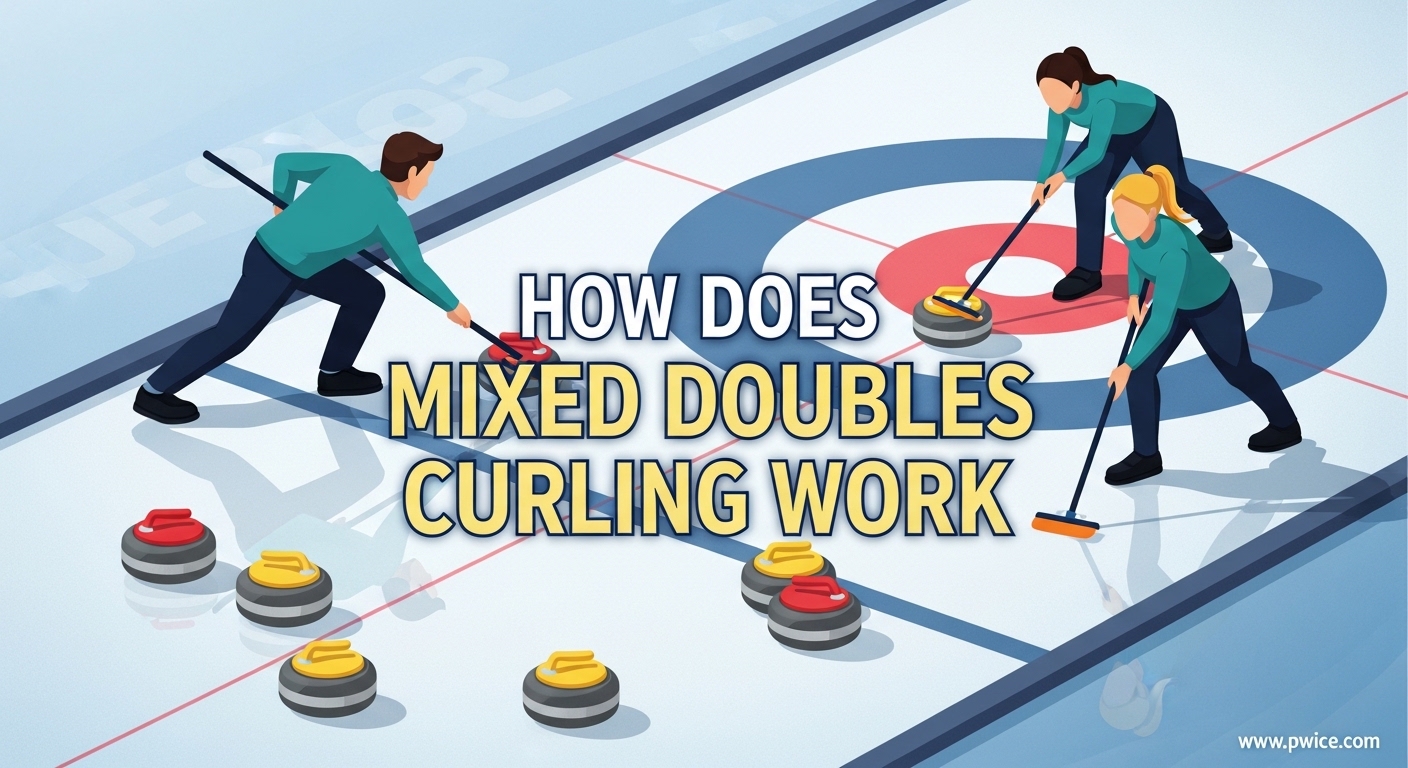
Mixed doubles curling is the fast-paced, strategic variation of traditional curling that has taken the Olympic stage by storm since its debut in 2018. If you have been watching Olympic curling and wondering why the games look different from what you see at your local club, you are probably seeing mixed doubles in action. In this guide, I will explain exactly how does mixed doubles curling work, breaking down the unique rules that make this format both accessible for beginners and fascinating for experienced players.
I have spent time studying the official World Curling Federation rules and watching hours of competitive mixed doubles to understand what makes this format tick. Whether you are a complete beginner curious about trying curling, a traditional curler looking to expand your game, or a fan wanting to better understand what you are watching on TV, this guide covers everything you need to know.
Table of Contents
Quick Summary: 8 Key Rules of Mixed Doubles Curling
Before diving into the details, here are the essential rules that define mixed doubles curling:
- Team size: Two players per team (one male, one female)
- Stones per end: Each team throws 5 stones (not 8 like traditional curling)
- Total ends: Games are 8 ends (not 10 like traditional)
- Positioned stones: Two stones are pre-placed before each end begins
- Throwing order: The player who throws the team’s first stone must also throw their last stone
- No sweepers: There are no dedicated sweepers; players sweep their own stones
- Thinking time: Each team gets 22 minutes of clock time (not 38 like traditional)
- Power play: Teams can use one power play per game to reposition the placed stones
How Does Mixed Doubles Curling Work: The Complete Overview
Mixed doubles curling is a variation of the sport played with two-person teams instead of the traditional four-person teams. Each team consists of one male and one female player, which is why it is called mixed doubles. The format was officially developed by Curling Canada in 2008 and made its Olympic debut at the PyeongChang Winter Games in 2018.
The game follows the same fundamental objective as traditional curling. You want to get your stones closer to the center of the house (the button) than your opponents. However, the reduced team size and several unique rules create a completely different strategic landscape that emphasizes shot-making skill and quick decision-making.
What makes mixed doubles particularly appealing is its accessibility. You only need two people to form a team, games are shorter (typically under 90 minutes), and the format works well for clubs with limited ice time. Our team has noticed that many recreational curlers prefer mixed doubles for weeknight league play because they can get home at a reasonable hour.
Team Composition and Player Roles
Each mixed doubles team has exactly two players: one man and one woman. Unlike traditional curling where players have fixed positions (lead, second, third, skip), mixed doubles players switch roles throughout the game. Both players deliver stones, both players sweep, and both players make strategic decisions.
This dual-role requirement creates an interesting dynamic. You cannot hide a weak delivery by putting someone in a dedicated sweeping role. Every player must be competent at both delivering stones and sweeping effectively. From our observations at club level, successful mixed doubles pairs often develop clear communication patterns to handle the increased workload.
The flexibility of roles also means teams can develop their own throwing arrangements. Some pairs have one player handle all the draw shots while the other focuses on takeouts. Other teams prefer to alternate based on who has the better angle for each specific shot. There is no right answer here, but the best teams we have watched develop consistent patterns that eliminate confusion.
Stone Count and Throwing Order
Each team throws five stones per end in mixed doubles, compared to eight stones per team in traditional curling. This reduction means each stone carries more weight in the outcome. One mistake can cost you the end because you have fewer opportunities to recover.
The throwing order follows a specific pattern that many beginners find confusing at first. Here is how it works:
- The team with the hammer (last rock advantage) chooses which player throws first
- That player throws stones 1 and 5 for their team
- Their teammate throws stones 2, 3, and 4
- The opposing team follows the same pattern, with their first thrower also throwing their last
This rule creates an important strategic consideration. The player throwing first and fifth often faces the most pressure. They deliver the opening stone that sets up the end, and they deliver the final stone that determines who scores. We have seen club championships decided by which player a team chose to throw the critical fifth stones.
The alternating delivery pattern means teams take turns throwing single stones, not pairs like in traditional curling. After you deliver your stone, your opponent delivers theirs, then it comes back to you. This rapid back-and-forth keeps the pace brisk and requires quick thinking between shots.
Positioned Stones: The Key Difference
The positioned stones rule is what truly separates mixed doubles from traditional curling. Before any stones are thrown in an end, two stones are already placed on the ice. These are called the positioned stones or pre-placed stones.
Here is exactly where these stones go:
Position A: One stone sits at the back of the four-foot circle, directly on the center line. This belongs to the team that will throw the first stone of the end.
Position B: One stone sits halfway between the hog line and the front of the house, guarding Position A. This is placed as a corner guard, offset from the center line. It belongs to the team with hammer (last rock advantage).
The hammer team gets to choose which side of the sheet the Position B stone sits on (left or right of center). This choice affects angles for the entire end, so experienced teams think carefully about which player prefers which side.
These positioned stones dramatically change opening strategy. In traditional curling, the first few stones of an end are typically guards or draws to establish position. In mixed doubles, you start with one stone already in scoring position and one guard already protecting it. This setup encourages aggressive play from the very first delivered stone.
Understanding the positioned stones is crucial for anyone learning how does mixed doubles curling work. They create immediate tension in every end and eliminate the slow buildup that sometimes characterizes traditional curling.
The Power Play Rule Explained
Each team gets to use the power play once per game. This is a special option that changes where the positioned stones are placed at the start of an end. Knowing when to use your power play can decide close matches.
When a team declares a power play, the positioned stones move to the side of the sheet. Position A (the stone in the house) moves to the back of the four-foot circle but on one of the sides rather than center. Position B (the guard) moves to the same side, creating a corner setup similar to traditional play.
Teams typically use their power play when they have hammer and want to create a difficult setup for their opponents. The side placement creates different angles and often forces more complex shots. We have analyzed Olympic matches where the power play was used to force opponents into difficult hits or freezes.
The strategic value of the power play depends on your team’s strengths. If your pair excels at precise draws and freezes, the standard centered setup might suit you better. If you have strong hitters who can play the angles created by side placement, saving your power play for a critical moment makes sense.
You must declare the power play before the end begins. Once stones are in motion, you cannot retroactively apply it. This means you need to think ahead and anticipate when the changed setup will give you maximum advantage.
Sweeping Rules in Mixed Doubles
One of the biggest adjustments for traditional curlers moving to mixed doubles is the sweeping situation. There are no dedicated sweepers in this format. Each player must sweep their own stones and their partner’s stones when needed.
The sweeping rules have some specific restrictions that differ from traditional curling:
- Each team can have only one sweeper behind the tee line at a time
- Behind the tee line, only one player (the delivering player) can sweep their own stone
- The non-delivering player can sweep anywhere in front of the tee line
- No player may sweep an opponent’s stone except behind the tee line
These rules create physical demands that differ from traditional curling. You are constantly moving between the hack and the house, sweeping your own stone, then preparing to deliver your next one. The fitness requirements are different, more about quick bursts of activity than sustained sweeping.
From watching club-level play, we have noticed that teams who communicate clearly about sweeping responsibilities make fewer mistakes. Yours truly has seen games lost because both players stopped sweeping thinking the other had it covered, or both tried to sweep and got in each other’s way.
Free Guard Zone and Takeout Rules
The free guard zone rule in mixed doubles works similarly to traditional curling but with one important exception. No stone can be removed from play until at least four stones have been delivered in the end.
However, the positioned stones are excluded from this rule. They can be removed at any time, even with the first delivered stone. This creates interesting tactical choices. You can immediately attack the opponent’s positioned stone in the house, or you can use your first stone to establish your own position.
The four-stone rule means the first few delivered stones of each end usually involve guards and draws rather than takeouts. Once four stones are delivered, the hitting game opens up completely. Teams with hammer often use this transition point to clear out opponent stones and set up a scoring opportunity.
Understanding when the free guard zone protection expires is crucial for timing your aggression. We have seen experienced teams count stones carefully and launch precisely timed attacks as soon as the fourth stone comes to rest.
Scoring System in Mixed Doubles
The scoring in mixed doubles works exactly like traditional curling. After all stones are delivered, the team with the stone closest to the button scores one point. They score additional points for each stone closer to the button than the opponent’s nearest stone.
The maximum points possible in one end is six, which would require having all five of your stones in scoring position plus the positioned stone already in the house. While rare, six-point ends (called big ends) do happen, especially when a team with hammer makes multiple mistakes.
Blank ends are handled differently in some competitions. In official World Curling Federation rules for round-robin play, blank ends are allowed and the hammer passes to the other team. In some tournament formats, you cannot blank an end on purpose, meaning someone must score each end.
The hammer (last rock advantage) carries the same strategic weight as in traditional curling. Having the final stone gives you control over the end’s outcome. Teams without hammer focus on forcing their opponents to score only one point (a force) or stealing points by having more stones in scoring position despite not having last rock.
Game Length and Timing Rules
A standard mixed doubles game consists of eight ends, compared to ten ends in traditional curling. This shorter format means games typically last 60 to 90 minutes, making mixed doubles ideal for television broadcasts and busy club schedules.
Each team receives 22 minutes of thinking time. This is the total time you have to plan and deliver your shots. The clock runs from when the previous stone comes to rest until you release your next stone. When your time expires, you must deliver each remaining stone within a few seconds or forfeit it.
The 22-minute clock creates significant time pressure. You have roughly two minutes per stone on average, but complex decisions or difficult shots can eat up time quickly. Teams that manage their clock well have a real advantage in close games.
If the score is tied after eight ends, teams play an extra end to determine the winner. The extra end follows all normal rules, with the hammer going to the team that had hammer in the eighth end. Some recreational leagues use modified rules where games can end in ties during round-robin play.
Thinking time management is one of the biggest adjustments for players transitioning from traditional curling. In four-person teams, you get rest while three teammates deliver. In mixed doubles, you are constantly involved. We have seen many club-level games lost because teams ran out of time in critical final ends.
Mixed Doubles vs Traditional Curling: Key Differences
Understanding how mixed doubles differs from traditional curling helps clarify why this format requires different skills and strategies. Here is a side-by-side comparison:
| Aspect | Mixed Doubles | Traditional Curling |
|---|---|---|
| Team size | 2 players | 4 players |
| Gender requirement | 1 male, 1 female | No requirement |
| Stones per team per end | 5 stones | 8 stones |
| Total ends per game | 8 ends | 10 ends |
| Positioned stones | 2 pre-placed stones | None |
| Power play option | 1 per game | Not available |
| Sweepers | None (players sweep own) | 2 dedicated sweepers |
| Thinking time | 22 minutes per team | 38 minutes per team |
| Throwing order | Same player throws 1st and 5th | Fixed rotation (lead to skip) |
| Typical game length | 60-90 minutes | 2.5-3 hours |
The table above highlights why mixed doubles appeals to different audiences. If you have limited time, prefer faster action, or struggle to coordinate four schedules, mixed doubles removes those barriers. The format also emphasizes individual shot-making since you cannot rely on teammates to correct your mistakes.
Traditional curling still offers advantages for those who enjoy the social four-person team dynamic and longer strategic battles. Both formats reward skill and strategy, just in different ways. Many serious curlers play both formats throughout the season.
Beginner Strategy Tips for Mixed Doubles
If you are new to mixed doubles curling, these strategy tips will help you avoid common pitfalls and develop good habits from the start. Our team has observed that beginners who follow these principles improve faster and enjoy the game more.
Deciding Who Throws Which Stones
The most frequent question we see from beginners is how to decide which player throws stones 1 and 5 versus stones 2, 3, and 4. There is no universal answer, but here are factors to consider:
Player A throws 1st and 5th (often called the lead/fourth role), while Player B throws 2nd, 3rd, and 4th. The first/fifth player faces opening and closing pressure. The middle player has more shots to deliver but less extreme pressure on any single one.
Some teams put their more consistent, accurate player in the first/fifth spot because those shots often determine the end’s outcome. Other teams prefer their steadier player in the middle to ensure they get through the bulk of stones without major errors. Experiment with both arrangements to find what works for your pair.
When to Choose Hammer vs Positioned Stones
Before each end, the team without hammer chooses whether to keep the hammer or give it up. If you choose to keep hammer, you get the last rock but your opponent places the positioned stone in the house (Position A). If you give up hammer, you place Position A but your opponent gets last rock.
Most of the time, keeping hammer is the right choice. The last rock advantage outweighs having a stone already in the house. However, there are situations where giving up hammer makes sense:
- When you are leading comfortably and want to play defensively
- When the ice conditions favor the team placing the positioned stone
- When you have a significant skill advantage and want to force action
Using Your Power Play Effectively
Save your power play for critical moments. Most teams use it in one of these situations:
- The final end when tied or trailing by one
- An end where you have hammer and need multiple points
- When you sense an opportunity to capitalize on opponent weakness
Using the power play too early wastes its potential impact. We have tracked club-level games where teams used power plays in the third end and then lost close matches in the final ends without that strategic option available.
Communication Between Partners
Mixed doubles requires constant communication. You need to discuss strategy, confirm who is sweeping, and coordinate timing. Develop clear verbal cues for sweeping decisions and shot calls. Vague communication leads to mistakes that cost points.
Practice specific phrases that work for your team. Instead of saying “sweep it” which could mean different things, use “hard” for maximum sweeping, “brushes” for light sweeping, or “off” for no sweeping. Clear language prevents confusion in crucial moments.
Common Beginner Mistakes to Avoid
After observing hundreds of mixed doubles games at the club level, we have identified recurring mistakes that beginners make. Avoiding these will accelerate your improvement and make games more enjoyable.
Time management errors: Beginners often use too much time early in the game and find themselves rushing in final ends. Monitor your clock from the first end. If you are using more than 2.5 minutes per stone on average, you will be in trouble late in the game.
Wrong throwing order: Remember that the player who throws first must also throw fifth. We have seen ends lost because teams switched throwing order mid-end, violating the rules and having stones disqualified.
Misunderstanding the free guard zone: Beginners sometimes try to take out opponent guards with their first few stones, not realizing those stones are protected. Count delivered stones carefully. No takeouts are allowed until at least four stones have been played.
Power play timing: Using the power play in low-leverage ends wastes your single opportunity. Save it for situations where the changed positioning creates genuine advantage.
Sweeping confusion: Behind the tee line, only the delivering player can sweep their own stone. Having both players try to sweep, or having the wrong player sweep, results in burnt stones that must be removed from play.
FAQ: Common Questions About Mixed Doubles Curling
What are the rules for mixed doubles in curling?
Mixed doubles curling uses two-player teams (one male, one female) who each throw five stones per end. Games last eight ends with 22 minutes of thinking time per team. Two stones are pre-placed before each end begins, and the same player must throw their team’s first and last stone.
How does mixed doubles differ from regular curling?
Mixed doubles uses two players instead of four, five stones per team per end instead of eight, and eight ends instead of ten. It features positioned stones, power plays, and no dedicated sweepers. Games are shorter, typically lasting 60-90 minutes compared to 2.5-3 hours for traditional curling.
How does curling scoring work in mixed doubles?
Scoring works the same as traditional curling. The team with the stone closest to the button scores one point, plus additional points for each stone closer than the opponent’s nearest stone. Maximum six points per end. Blank ends pass the hammer to the other team.
How to play double curling for beginners?
Start by finding a partner of the opposite gender and learning the basic delivery. Practice sweeping while moving quickly between shots. Focus on communication to avoid confusion about who sweeps what. Learn the positioned stone placements and understand that the first thrower must also throw last. Begin with casual games at your local club to get comfortable with the faster pace.
Who shoots in Mixed Doubles curling?
Both players shoot in mixed doubles. The player who throws the team’s first stone must also throw their fifth stone. The other player throws stones two, three, and four. Teams decide which player takes which role based on their strengths and the specific situation.
How many rocks does each player throw in mixed doubles curling?
Each team throws five stones per end in mixed doubles, with the same player throwing the first and fifth stones (two stones) and the other player throwing the second, third, and fourth stones (three stones). Across an eight-end game, each player throws 20 stones total.
Is it better to go first or second in curling?
In mixed doubles, going second (having the hammer) is generally preferred because you throw the last stone of the end, giving you control over the final outcome. However, going first allows you to place the positioned stone in the center of the house, which can create scoring pressure. Most teams choose hammer when given the option.
Conclusion: How Does Mixed Doubles Curling Work
Mixed doubles curling offers an exciting, faster-paced alternative to traditional curling that has opened the sport to new audiences worldwide. With two-person teams, pre-placed stones, power plays, and unique throwing order rules, this format creates strategic challenges distinct from the four-person game.
If you have been curious about trying curling but intimidated by the time commitment or team coordination required for traditional play, mixed doubles removes those barriers. Find a partner, head to your local curling club, and give it a try. The format is beginner-friendly, games finish in under 90 minutes, and the learning curve is manageable with practice.
Whether you are watching Olympic mixed doubles or stepping onto the ice yourself, understanding how does mixed doubles curling work enhances your appreciation of this strategic sport. The combination of precise shot-making, quick decision-making, and effective partner communication makes every game an engaging challenge.