
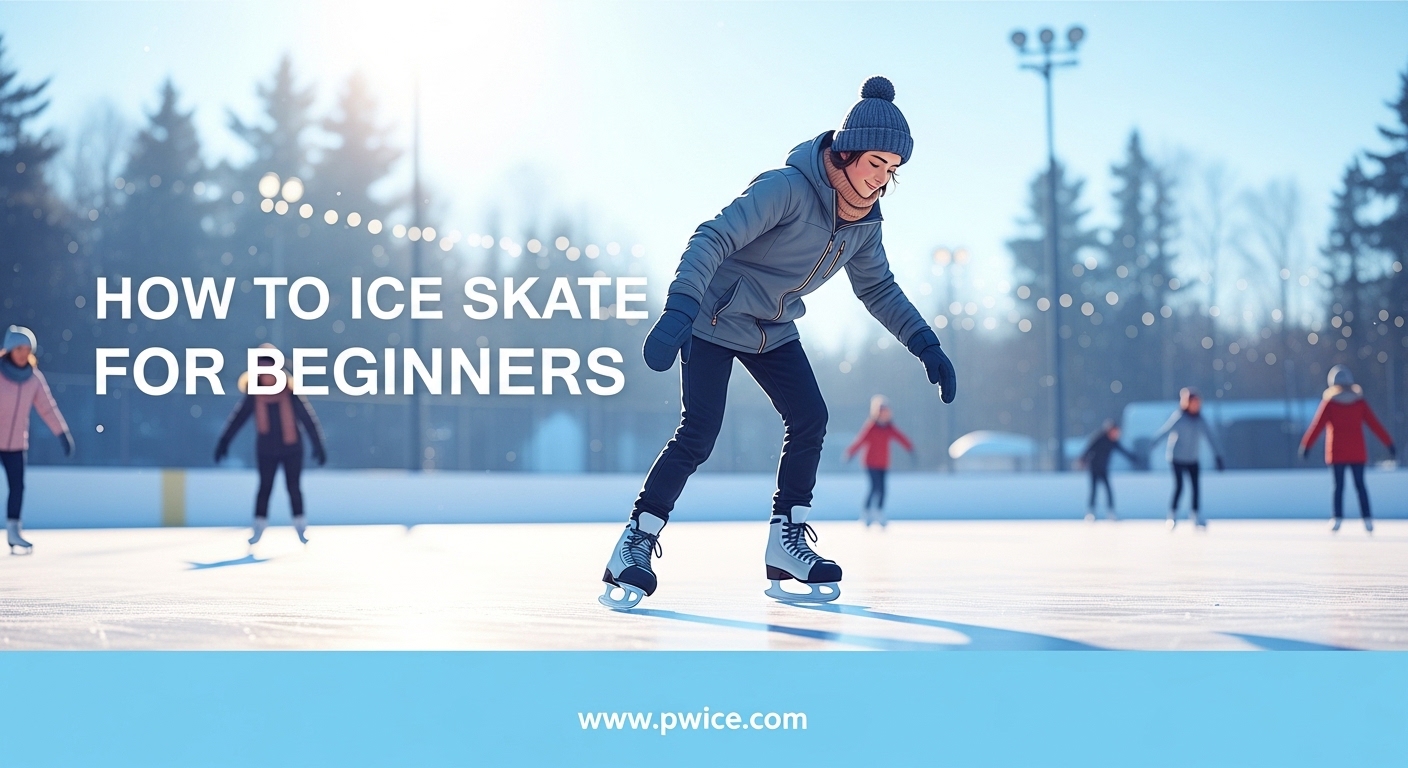
I still remember gripping the barrier so tightly my knuckles turned white. It was my first time ice skating at age 32, and I was convinced everyone at the rink was watching my Bambi-like wobbles. If you are searching for how to ice skate for beginners step by step, I get that nervous feeling completely. That first session taught me something crucial though: ice skating is absolutely learnable at any age, and the fear melts away faster than you would expect.
This guide gives you everything I wish I had known before stepping onto the ice. We will cover exactly what to wear, how to choose skates, twelve progressive steps to build your skills, and how to fall without injury. Whether you are planning a family outing, a first date, or just want to try something new, you will leave this article ready for your first session.
Table of Contents
What to Wear and Bring for Your First Ice Skating Session
Showing up in the wrong clothes can ruin your first experience before you even step onto the ice. The rink temperature typically sits around 50 to 60 degrees Fahrenheit, which feels colder when you are not moving much. Dressing properly keeps you comfortable and helps you focus on learning.
Clothing That Works Best
Wear fitted layers that let you move freely. Loose clothing restricts your movement and catches cold air, while tight jeans limit your ability to bend your knees properly. I recommend athletic leggings or fitted sweatpants paired with a moisture-wicking base layer and a light jacket you can remove if you warm up.
Avoid long scarves, dangling accessories, or anything that could drag on the ice. These create tripping hazards for you and others. A thin hat or ear warmers help since rinks are drafty, but avoid bulky hoods that block your peripheral vision.
Socks Matter More Than You Think
Your sock choice directly affects your comfort and control. Wear long, thin socks that extend above your skate boot. Thick socks create pressure points and reduce your ability to feel the blade. Cotton socks absorb sweat and stay damp, making your feet cold and increasing blister risk.
Some skaters swear by thin nylon dress socks or specialized skate socks. The key is smooth, moisture-wicking material with no bulky seams. I learned this the hard way after my first session left me with sore heels from thick athletic socks bunching up.
Essential Items to Pack
Bring thin gloves or mittens to protect your hands when you fall. Your hands will touch the ice repeatedly as you learn, and bare skin on cold ice stings. Mittens keep fingers warmer, but gloves offer better dexterity for holding the barrier.
Consider a helmet if you are particularly nervous about falls. While most adult beginners skip helmets, they provide genuine confidence for your first few sessions. Bike helmets work fine, though skate-specific helmets offer better coverage. I wore one for my first three sessions and it helped me commit to movements without fear of head injury.
Pack some water and a small snack. Skating works muscles you do not normally use, and you will tire faster than expected. Most rinks have seating areas where you can take breaks and refuel.
Choosing Between Figure Skates and Hockey Skates
Rental rinks typically offer both figure skates and hockey skates, leaving beginners confused about which to choose. The right choice depends on your goals, but one option clearly suits most beginners better.
Figure Skates: Best for Most Beginners
Figure skates feature longer, flatter blades that provide more stability for new skaters. The blade extends past the boot heel and toe, creating a larger contact patch with the ice. A toe pick at the front helps with certain skills but stays out of your way during basic movements.
The boot design offers excellent ankle support with higher sides that help prevent rolling. For adults building ankle strength, this support proves invaluable. The flat blade profile makes balancing easier because it does not rock as easily as hockey skate blades.
Hockey Skates: When They Make Sense
Hockey skates work well if you specifically want to play hockey eventually. The shorter, curved blade allows quick direction changes and acceleration once you have basic skills. However, that same curve makes them less stable for absolute beginners.
The lower boot cut allows more ankle movement for hockey maneuvers but offers less support for wobbly beginners. The blade has no toe pick, which some beginners prefer since catching the pick on the ice can cause trips. I recommend hockey skates only if you have some prior skating experience or plan to join a beginner hockey league immediately.
Getting the Right Fit
Rental skates should feel snug but not painfully tight. Your toes should lightly brush the front of the boot when standing straight, then pull back slightly when you bend your knees. If your toes curl or crunch, the skates are too small.
Lace skates tightly around the ankle area, pulling each cross snug as you work up from the toe. If you can slide fingers under your laces at the ankle, they are too loose. However, keep the top two eyelets slightly looser to allow forward flex for bending your knees. Staff at rental desks can help adjust fit if something feels wrong.
Mental Preparation: Overcoming Fear and Embarrassment
The biggest barrier to learning ice skating is rarely physical ability. It is the fear of falling, the worry about looking foolish, and the anxiety that everyone watches you struggle. Let me assure you: every person on that ice has been exactly where you are.
Normalize the Learning Process
Adult beginners especially feel self-conscious about wobbling and falling. We expect ourselves to look competent immediately, but ice skating requires your body to learn entirely new balance patterns. The Bambi-like experience is universal, temporary, and nothing to apologize for.
Forum discussions from adult beginners consistently reveal the same pattern: session one feels impossible, session three shows progress, and by session five you feel genuinely comfortable. Reddit users in the ice skating community describe their first time as “clinging to the boards for dear life” and “looking like a newborn giraffe.” You are in good company.
Practical Anxiety Management
Arrive early to watch others before your session starts. You will see beginners of all ages struggling, falling, and getting back up. This perspective helps you remember that struggling is part of the process, not a personal failing.
Start at less crowded times if possible. Weekday mornings and early afternoons typically have fewer skaters than weekend evenings. An emptier rink reduces the social pressure and gives you more space to practice falling and getting up without feeling in the way.
Focus on small wins rather than mastering everything. Your goal for session one is simply getting comfortable standing on blades. Forward movement is a bonus. Anything beyond that exceeds expectations.
How to Ice Skate for Beginners: Step-by-Step Guide
This twelve-step progression builds skills sequentially. Master each step before moving to the next. Spend five to ten minutes on every step, and do not worry if some take longer than others.
Step 1: Lace Up Tight and Check Your Fit
Before stepping onto the ice, double-check your skate fit. Walk around the lobby to feel for heel slippage or pressure points. Your heel should stay locked in place when you take steps. Loose skates cause ankle rolling and blisters.
Bend your knees deeply in the lobby. Your toes should pull back from the boot front when you bend. If they stay jammed forward, the skates are too small. If your heel lifts significantly, they are too large or laced too loosely.
Step 2: Enter the Rink Safely
Approach the rink entrance slowly. Most rinks have a rubber mat or carpet at the entry point that can be slippery. Hold the barrier or side wall as you step onto the ice for the first time.
Take small steps, keeping your weight centered over your feet. The transition from solid ground to ice feels strange initially. Your blades will slide slightly with each step until you learn to control them. Move a few feet away from the entrance to avoid blocking other skaters.
Step 3: Find Your Balance at the Barrier
Hold the barrier with both hands and stand still for a moment. Feel how your blades sit on the ice. Notice that staying balanced requires constant micro-adjustments. This is normal and good practice for the muscle control you will need.
Try lifting one hand from the barrier while keeping the other hand holding on. Shift your weight gently from foot to foot. Many beginners feel one leg is stronger or more stable than the other. This awareness helps you compensate as you progress.
Step 4: Practice the Ready Position
The ready position forms the foundation of all skating. Stand with your feet shoulder-width apart or slightly wider. Bend your knees deeply until you feel your weight settle into the balls of your feet, not your heels. Keep your back straight and your head up, looking forward.
Extend your arms out to your sides at shoulder height, palms down. This creates a wider center of gravity and helps with balance. I call this the “airplane position” when teaching friends. Your shoulders should stay aligned over your hips, not leaning forward or back.
Practice this position while holding the barrier. Then try it with just fingertips touching for support. The deeper your knee bend, the more stable you become. Most beginners stand too upright, which actually makes balancing harder.
Step 5: Learn to Fall Safely
Falling is inevitable, so learning proper technique prevents injury. When you feel yourself losing balance, immediately bend your knees into a squat position. This lowers your center of gravity and reduces the distance you fall.
Lean to one side and let yourself drop onto your hip and outer thigh. Keep your chin tucked toward your chest to prevent your head from snapping back. Do not try to catch yourself with your hands behind you, as this causes wrist injuries.
Practice controlled falls while holding the barrier. Intentionally squat and lower yourself to the ice to feel the motion. This removes the fear factor because you control the descent. Falling this way rarely hurts because the thick clothing and natural padding on your hips absorb impact.
Step 6: Practice Getting Up
Getting up gracefully takes practice. From your seated position on the ice, roll onto your hands and knees. Place one foot flat on the ice between your hands, with the knee bent at a right angle.
Push up through that bent leg while keeping your other knee on the ice for stability. Once upright on one knee, bring the second foot up into a stable position. Use the barrier if it is nearby, or press your hands on your thigh for leverage.
Stand up with your knees bent, immediately returning to the ready position. Standing up straight-legged often causes immediate falling again. Practice this sequence several times until it feels natural.
Step 7: Marching on Ice
Marching teaches you to lift and place your blades confidently. Stay near the barrier for support. Lift one foot slightly off the ice, no more than an inch or two, and place it down in front of you. Then lift the other foot and place it in front of that one.
Keep your knees bent throughout the motion. Straightening your legs when lifting causes wobbling. Think of marching in place first, then take tiny forward steps. Each step should be deliberate and controlled.
Try marching without holding the barrier for a few steps, then grab it again. Gradually increase the distance you skate unsupported. This builds confidence in your balance without overwhelming you.
Step 8: Two-Foot Glide
The two-foot glide is your first real skating experience. March forward a few steps to build a little momentum. Then bring your feet together, keeping knees bent, and let yourself glide on both blades.
Hold the glide for as long as your momentum carries you. Feel how the ice supports you when you stay relaxed. Tensing up makes you wobble more. Arms stay out for balance, and eyes look forward, not down at your feet.
Most beginners can hold a two-foot glide for two to three seconds initially. As you practice, you will glide longer. This skill teaches you that balance on ice comes from relaxed posture and bent knees, not rigid stiffness.
Step 9: Scooter Pushes
Scooter pushes introduce the feeling of pushing off one foot while gliding on the other. They mimic the motion of riding a scooter, hence the name. This prepares you for true forward stroking.
Place all your weight on your left foot, keeping that knee bent. Push off with your right foot to the side and slightly back, like a scooter kick. Glide on your left foot while your right foot extends to the side, then bring it back in beside your left.
Practice several pushes on one side, then switch to the other. Most people have a dominant side that feels more natural. Spend extra time on your weaker side to build balanced strength. These pushes develop the muscle memory for generating speed from your blade edges.
Step 10: Forward Swizzles
Swizzles, sometimes called lemons, teach you to use your inside blade edges. Start in a V position with your heels together and toes pointing outward. Press your knees outward and forward, letting your toes glide apart.
When your feet are shoulder-width apart or wider, reverse the motion. Press your toes inward and let your heels glide apart, bringing you back to the starting V position. The movement creates a continuous hourglass or figure-eight pattern on the ice.
This teaches edge control, which is essential for turning and advanced techniques. Swizzles also provide gentle forward propulsion without lifting your feet. Many beginners find this movement easier than scooter pushes initially.
Step 11: Basic Forward Stroking
Forward stroking combines scooter pushes into continuous motion. Push off with your right foot, glide on your left, then push off with your left foot and glide on your right. The pushes alternate, creating smooth forward movement.
Keep your pushes to the side and slightly back, not straight behind you. Pushing straight back causes your hips to twist and destabilizes your upper body. The push should extend your leg outward, then return to center under your body.
Arms swing naturally opposite your legs for balance. When you push with your right foot, your left arm swings forward. This counter-rotation stabilizes your upper body. Do not overthink the arm motion; let it happen naturally as you gain speed.
Step 12: The Snowplow Stop
The snowplow stop is the essential stopping technique every beginner must learn. Start gliding forward on two feet in the ready position. Slowly push your heels outward while keeping your toes pointing slightly inward.
Your blades will scrape against the ice, creating friction that slows you down. The wider you push your heels apart, the faster you stop. Keep your knees bent and your weight centered. Straightening your legs reduces the stop’s effectiveness.
Practice stopping from slow speeds first. Build confidence gradually before trying to stop from faster glides. Once you master the two-foot snowplow, you can progress to one-foot stops and eventually more advanced techniques like the T-stop.
How to Fall Safely and Get Back Up?
Falling correctly prevents injuries and builds the confidence to try new skills. This section expands on the basic technique with additional safety considerations.
Protecting Yourself During Falls
Your instinct when falling backward is to reach back and catch yourself. Resist this impulse. Putting your hands behind you to break the fall causes wrist fractures and sprains. Instead, tuck your chin to your chest and round your back slightly.
If you fall forward, extend your hands in front but land on your forearms and elbows, not your palms. This distributes impact across larger bones. Knee pads help if you are particularly worried, though most adult beginners find them unnecessary with proper technique.
When falling to the side, use your hip and outer thigh as the impact point. These areas have natural padding and fewer vulnerable bones. The thick clothing you wore for warmth now serves as protective gear.
Recovery Position
After falling, take a moment before getting up. Assess whether you are hurt. If you feel fine, roll to hands and knees while keeping your skates flat on the ice to prevent them from sliding out.
If other skaters are near, check that you are not in anyone’s path before rising. Skaters moving at speed may not see you sitting on the ice. The barrier is your safest place to recover if you feel shaken.
Getting up quickly comes with practice. Within a few sessions, you will pop back up automatically without thinking through each step. Until then, take your time and rise methodically.
How to Stop on Ice Skates: The Snowplow Stop
Stopping safely matters as much as moving forward. The snowplow stop works from any speed and gives you immediate control in crowded sessions.
Perfecting Your Snowplow
The snowplow stop works by turning your blades perpendicular to your direction of travel. Start with your weight centered and knees deeply bent. Push your heels apart while rolling your ankles slightly inward.
Your inside edges will dig into the ice, creating friction. The scraping sound tells you the stop is working. If your blades are silent, you are not angled enough. If you catch an edge and trip, you are rolling your ankles too far inward.
Practice stopping at different speeds. Slow glides let you feel the blade edges engaging. Faster glides require more aggressive heel pushing and deeper knee bend to maintain balance. Never try to stop from high speed until you have mastered slow stops.
Common Stopping Mistakes
Leaning back during the stop causes you to fall backward. Your weight must stay centered over the middle of your blades. Keep your shoulders aligned with your hips, not leaning away from the stop direction.
Looking down at your feet disrupts balance. Your head weighs about ten pounds, and dropping it forward shifts your center of gravity. Look straight ahead, trusting your feet to do the work.
Pushing your toes apart instead of your heels creates a split position that does not stop you. Remember: heels out, toes slightly in. This creates the wedge shape that generates stopping friction.
Your First 60 Minutes: What to Expect?
Having a timeline for your first session helps you pace yourself and sets realistic expectations. Here is exactly how to structure your first hour on the ice.
Minutes 0 to 10: Getting Comfortable
Enter the rink and spend your first ten minutes simply standing and walking near the barrier. Try the ready position. Practice controlled falls and getting up two or three times intentionally. This removes the fear of falling and lets you feel stable on the blades.
Minutes 10 to 25: Basic Movements
Focus on marching and two-foot glides. Do not worry about looking graceful. Your goal is gaining confidence lifting and placing your blades. Try short glides from the barrier, holding on again when you need stability. Take breaks if your ankles feel fatigued.
Minutes 25 to 40: Building Confidence
Now attempt scooter pushes and swizzles. These introduce you to using blade edges rather than just flat blades. You will likely fall during this phase, which is completely expected. Get up, shake it off, and continue. This is the most physically demanding part of your first session.
Minutes 40 to 50: Practicing Techniques
Put the pieces together with forward stroking attempts. Try connecting a few pushes into continuous movement. Practice snowplow stops after every few strokes. Your form will not be perfect, but you will feel the rhythm developing.
Minutes 50 to 60: Cool Down and Rest
Finish with easy two-foot glides and simple marching. Let your muscles relax rather than pushing to exhaustion. Hydrate and stretch your calves, ankles, and hips. You used muscles today that have not worked this way before, so expect some soreness tomorrow.
Common Beginner Mistakes to Avoid
Beginners consistently make the same errors that slow their progress. Recognizing these early helps you develop good habits instead of fixing bad ones later.
Looking Down at Your Feet
Your eyes belong on the horizon, not your skates. Looking down shifts your weight forward and rounds your back, making balance harder. It also prevents you from seeing obstacles, other skaters, or the barrier approaching. Trust your feet to be where you put them.
Leaning Back and Stiffening Up
Fear makes beginners lean backward, away from the direction of movement. This actually increases falling risk because your weight moves behind your base of support. Leaning back also straightens your legs, which removes the shock absorption that bent knees provide.
Consciously press your knees forward over your toes when you feel yourself leaning back. This brings your center of gravity back over your blades. Think of sitting back into a chair that is slightly behind you.
Straight Legs Instead of Bent Knees
Locked knees transfer every bump and slide directly to your upper body. Bent knees act as suspension, absorbing movement and keeping you stable. The deeper your knee bend, the more control you have. Most beginners need to bend their knees twice as much as they think necessary.
Holding the Barrier Too Long
The barrier provides security but becomes a crutch if overused. Challenge yourself to release it for a few seconds, then grab it again. Gradually increase the time between holds. Skaters who never let go of the barrier take much longer to develop independent balance.
Incorrect Skate Fit
Rental skates that are too large cause ankle rolling and blisters. Skates that are too small create foot pain that distracts from learning. If your feet hurt severely or your heels lift significantly, return to the rental desk for a different size. Discomfort is normal; pain is not.
Skipping Rest Breaks
Your ankles and lower legs fatigue quickly when learning because stabilizer muscles work overtime. Take breaks every fifteen to twenty minutes. Sitting for five minutes lets these muscles recover and prevents bad form from developing when you are too tired to maintain proper posture.
Rink Etiquette for Beginners
Understanding unwritten rules helps you feel confident in public sessions and keeps everyone safe.
Traffic Flow and Right of Way
Most rinks follow a counter-clockwise traffic pattern during public sessions. Skate with the flow rather than against it. Faster skaters and those practicing skills get the center of the rink. Beginners should stay near the barrier where they feel comfortable.
Skaters already moving have right of way over those entering the ice. Wait for a gap in traffic before stepping onto the rink. Similarly, if you fall, check behind you before getting up to avoid being hit by approaching skaters.
Using the Barrier Respectfully
The barrier supports multiple beginners at once, but be aware of space. Do not camp in one spot if others need to pass. Move along the barrier slowly so you are not blocking others from using it.
If you stop to rest, step off the ice into the seating area. Standing still on the ice creates an obstacle for others. The barrier is for learning support, not socializing.
When to Ask for Help
Rink staff and experienced skaters usually enjoy helping beginners. If you are struggling with something specific, ask. Most rinks also offer beginner group lessons that provide structured learning with professional instruction.
Should You Take Lessons or Teach Yourself?
Both approaches work, and many successful skaters use a combination. Understanding the pros and cons helps you decide what fits your budget and learning style.
Self-Teaching Pros and Cons
Teaching yourself costs nothing beyond rink admission. You progress at your own pace without pressure. Many beginners prefer the privacy of figuring things out without an audience.
However, self-taught skaters often develop inefficient habits that limit progress later. Bad posture, incorrect blade usage, and poor stopping technique become muscle memory that is hard to unlearn. You also miss safety tips that prevent injuries.
Group Lesson Benefits
Group lessons provide structured progression with professional feedback. Instructors spot issues immediately and correct them before they become habits. Lessons also include falling technique, which many self-taught skaters skip until they fall badly.
The social aspect helps too. Learning alongside other beginners normalizes the struggle and creates accountability to keep practicing. Most rinks offer affordable six to eight week beginner courses.
Private Lessons and Hybrid Approach
Private lessons provide one-on-one attention that accelerates learning dramatically. A few private sessions early on build correct fundamentals faster than months of self-teaching. This is the most expensive option but offers the best results.
The hybrid approach works well for many adults. Take one or two private lessons to learn proper stance, falling, and basic movement. Then practice independently for several sessions to build comfort. Return for occasional lessons to refine technique and learn new skills.
Frequently Asked Questions
How to ice skate easily for beginners?
Start with proper clothing and well-fitted skates. Practice the ready position with bent knees and arms out. Begin at the barrier for support, and focus on marching in place before trying to glide. Learning controlled falls early removes fear and lets you progress faster. Take breaks every fifteen minutes to prevent fatigue from ruining your form.
How do you ice skate for the first time?
Arrive early to get comfortable with the rink. Wear fitted layers and gloves. Start by holding the barrier and practicing the ready position with deeply bent knees. Try controlled falls and getting up. Progress to marching, then two-foot glides. Expect to spend your first session just getting comfortable standing and moving slowly.
What should a beginner ice skater do?
A beginner should focus on three things: proper stance with bent knees, learning to fall safely, and building comfort on the ice. Do not worry about speed or looking graceful. Master marching, two-foot glides, and the snowplow stop. Practice for forty-five to sixty minutes, then take a break. Consistency matters more than session length.
What are the mistakes for ice skating beginners?
Common mistakes include looking down at your feet, leaning back when nervous, skating with straight legs, and gripping the barrier too long. Wearing thick socks or loose clothing causes problems too. Skipping rest breaks leads to bad form and fatigue. Finally, using skates that do not fit properly creates pain and instability.
How to prepare for ice skating for the first time?
Dress in fitted layers with long thin socks and gloves. Bring water and a small snack. Arrive early to watch others and reduce anxiety. Rent figure skates for better stability unless you specifically want to play hockey. Consider a helmet for extra confidence. Stretch your ankles, calves, and hips before stepping onto the ice.
Is ice skating good for bone density?
Ice skating provides weight-bearing exercise that helps maintain bone density, particularly in the hips and legs. The impact is low compared to running, making it suitable for people with joint concerns. However, falling risk means those with severe osteoporosis should consult a doctor before skating. The balance challenges also strengthen stabilizing muscles that support bones.
Can ice skating cause plantar fasciitis?
Ice skating can aggravate plantar fasciitis if you have tight calves or poor ankle flexibility. The rigid boots and specific foot positioning put stress on the plantar fascia. Wearing well-fitted skates and stretching your calves before and after skating helps prevent issues. If you have existing plantar fasciitis, consider arch supports or consult a specialist before skating regularly.
What is basic 5 in ice skating?
Basic 5 is a learn-to-skate level in the United States Figure Skating curriculum. It includes forward stroking, backward skating, forward crossovers, backward snowplow stops, and a one-foot spin. Completing Basic 5 means you have moved from beginner to intermediate skating ability. Most adult beginners reach this level after three to six months of regular practice.
How tight should ice skates be?
Ice skates should fit snugly around the entire foot and ankle without causing pain or numbness. Your toes should lightly touch the front when standing straight, then pull back when bending your knees. Laces should be tight enough that you cannot slide fingers underneath at the ankle. The top two eyelets can be slightly looser to allow forward knee bend.
How long does it take to learn ice skating?
Most beginners feel comfortable standing and moving slowly after two to three sessions. Basic skills like stroking and stopping reliably take four to eight sessions. Reaching intermediate level where you skate confidently in crowded sessions typically requires three to six months of weekly practice. Everyone progresses at different rates depending on prior balance sports experience, fitness level, and practice frequency.
Take the Leap: Your Ice Skating Journey Starts Now
You now have everything you need for how to ice skate for beginners step by step. From choosing the right skates to mastering your first snowplow stop, this guide covers the complete progression. The twelve steps we outlined take you from white-knuckle barrier gripping to confident forward movement.
Remember that every skater on the ice started exactly where you are now. The Bambi wobbles, the falls, the nervousness at the rink entrance, all of it is part of the process. What matters is showing up, being patient with yourself, and celebrating small wins along the way.
Book your first session this week while the motivation is fresh. Arrive early, dress properly, and give yourself permission to be a beginner. By your third session, you will wonder why you ever waited so long to try. The ice is calling. See you at the rink.