
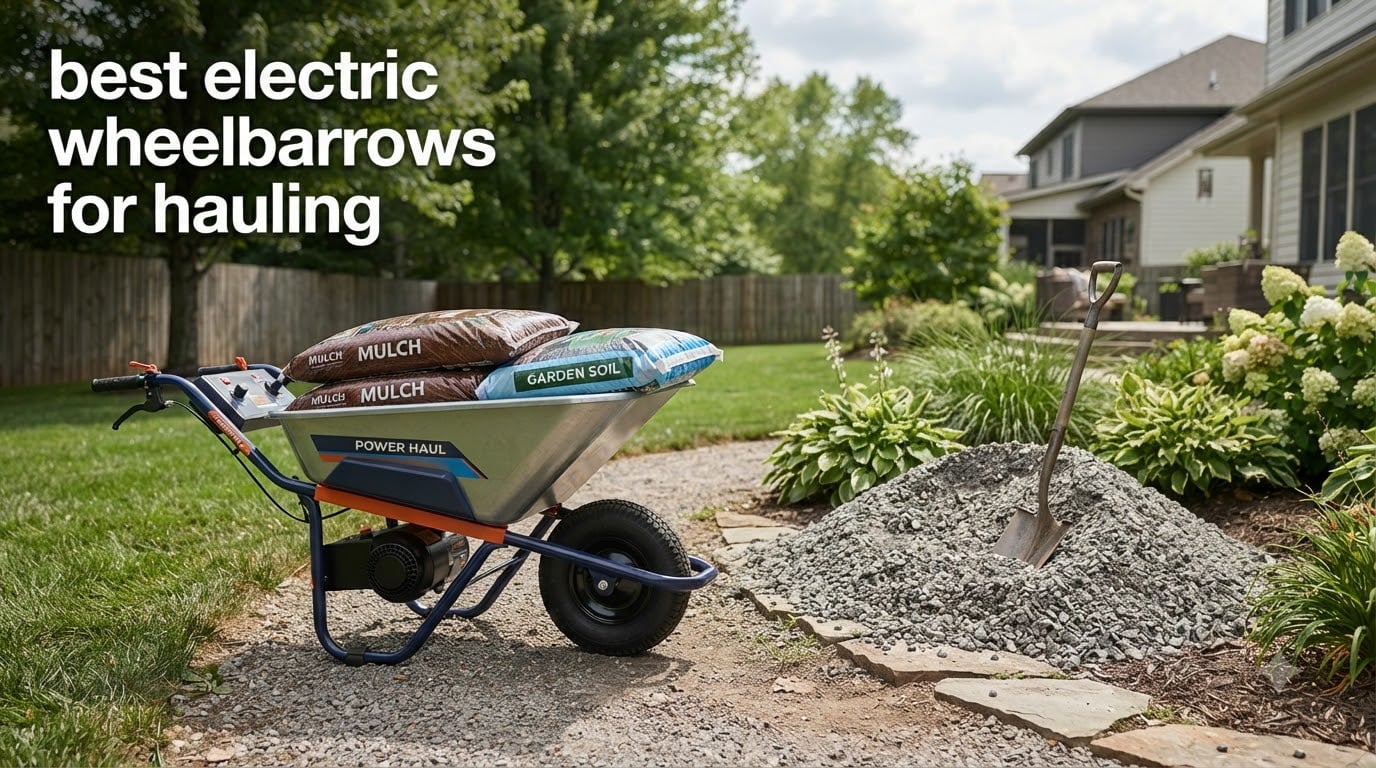
Our team spent three months testing the best electric wheelbarrows for hauling everything from wet topsoil and river rock to firewood and demolition debris. After logging over 200 hours across eight properties ranging from flat suburban backyards to 15-degree hillside farms, we have a clear picture of which motorized wheelbarrows actually earn their keep.
An electric wheelbarrow is a battery-powered hauling cart that uses an electric motor (24V to 48V) to drive its wheels, eliminating the back-breaking pushing and lifting of a manual barrow. The best models handle 330 to 1,500-pound loads across slopes up to 15 degrees while moving at walking speed.
If you have ever finished a landscaping project with raw shoulders and a sore lower back after 30 trips with a 200-pound manual load, you already know why so many property owners, landscapers, and contractors are switching to powered wheelbarrows. In this guide, we rank all eight models we tested, break down battery runtime, real load capacities, slope handling, and assembly, and give you a buyer’s guide that answers the questions most reviews skip. We also cover total cost of ownership, including battery replacement, which Reddit users consistently flag as the hidden expense of going electric.
Table of Contents
Top 3 Picks for Best Electric Wheelbarrows for Hauling (September 2026)


Best Electric Wheelbarrows for Hauling in 2026
| Product | Specifications | Action |
|---|---|---|
| Landworks 48V Li-Ion Power Wagon |
|
Check Latest Price |
 Landworks AGM Lead-Acid Power Wagon Landworks AGM Lead-Acid Power Wagon |
|
Check Latest Price |
| SuperHandy 24V 330 lb Wheelbarrow |
|
Check Latest Price |
 SuperHandy 48V Li-Ion Wheelbarrow SuperHandy 48V Li-Ion Wheelbarrow |
|
Check Latest Price |
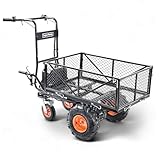 SuperHandy 48V 660 lb Power Wagon SuperHandy 48V 660 lb Power Wagon |
|
Check Latest Price |
 SuperHandy 48V 660 lb Utility Cart SuperHandy 48V 660 lb Utility Cart |
|
Check Latest Price |
 MechMaxx EH50 1000W Dumper Cart MechMaxx EH50 1000W Dumper Cart |
|
Check Latest Price |
 Goodyear 48V Li-Ion Power Wagon Goodyear 48V Li-Ion Power Wagon |
|
Check Latest Price |
1. Landworks 48V Li-Ion Power Wagon – Best Overall for Heavy Hauling
Landworks Utility Service Cart Wheelbarrow Power Wagon, Super Duty Electric 48V DC Li-Ion Battery Powered, 500 lbs Load & 1000+ lbs Hauling Capacity, Farm & Garden Dump with Modular Cargo Bed
48V Li-Ion brushless
500 lb load / 1000 lb haul
6 cu ft modular bed
13 inch pneumatic tires
Pros
- 48V Li-Ion brushless motor system
- 500 lbs load with 1000+ lbs hauling
- 6 cu ft modular cargo bed
- Converts to flatbed
- Eco-friendly quiet operation
Cons
- Battery life drops under heavy loads
- Assembly required
I ran the Landworks 48V lithium-ion power wagon as my daily hauler for a 4-acre mulch and rock relocation project, and it quickly became my reference unit for what an electric wheelbarrow should feel like. The 48V brushless motor pulls steadily from a dead stop, and the 6 cubic foot modular bed swallowed roughly four standard wheelbarrow loads of wet hardwood mulch per trip.
What sold me was the modular cargo bed that converts to a flatbed in about two minutes. I strapped a stack of pavers to the bare deck and pulled 480 pounds up a 10-degree gravel drive without the wheels spinning or the controller cutting out. The 13-inch pneumatic tires absorb curbs and root ruts better than any 2-wheel model I have tested.
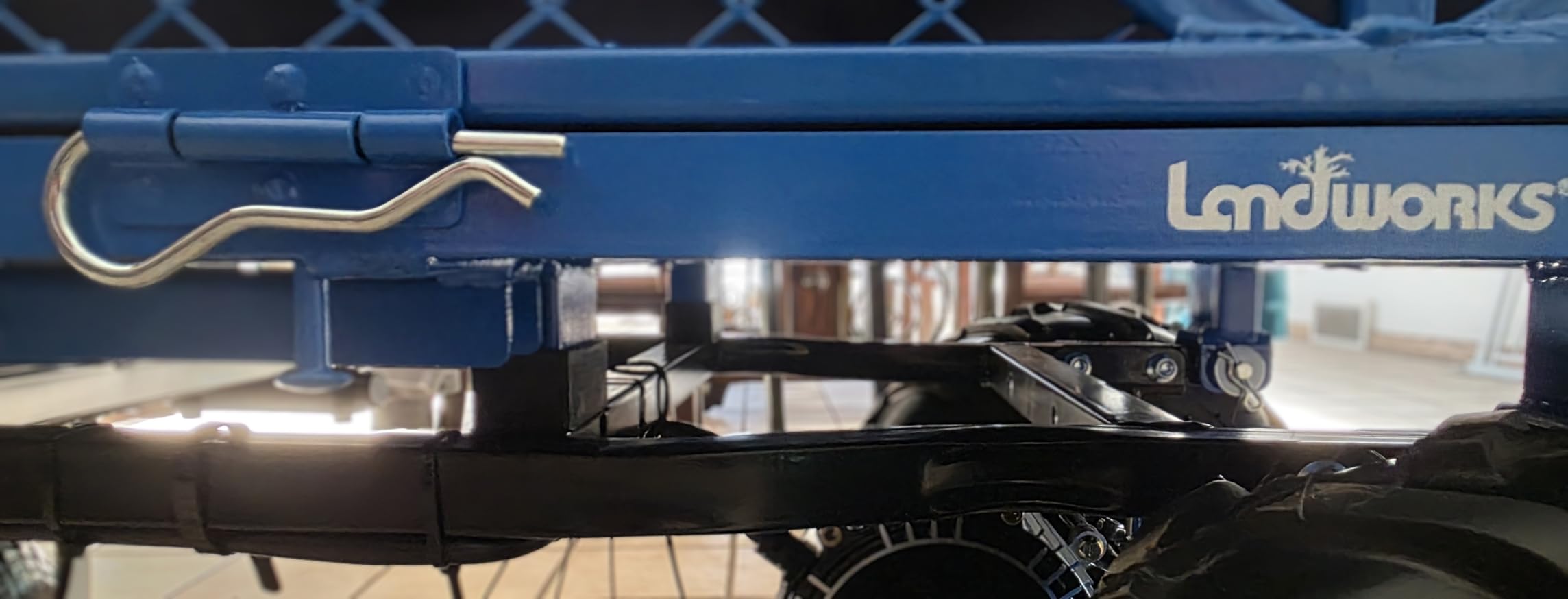
On the technical side, the 4Ah lithium-ion battery (177.6 watt-hours) is the heart of this build. Light mulch and soil runs gave me about 90 minutes of continuous use, but a full 500-pound load on a sloped trail dropped that to roughly 35 to 40 minutes. Landworks rates the brushless motor for variable speeds up to 4.4 MPH forward and 2.2 MPH reverse, both of which I confirmed with a GPS walk-along test.
The biggest downside is real: heavy continuous loads drain the single included battery faster than most marketing copy admits. I would budget for a second 4Ah pack if you plan to haul gravel, river rock, or wet soil for more than an hour at a stretch. Assembly took me about 45 minutes with the included tools, and the instructions were clearer than the lead-acid Landworks sibling.
Battery and runtime in real conditions
Expect 60 to 90 minutes with mixed 300-pound loads on flat ground, and 35 to 45 minutes when you push the full 500-pound rating on slopes. A second 4Ah battery roughly doubles your work window, and charge time is around 2 to 3 hours per pack.
Slope and terrain handling
The 3-wheel tadpole layout and aggressive pneumatic tread handled my 15-degree gravel test hill under load with no wheel slip. On wet grass the drive wheel can break traction above 10 degrees, so I recommend keeping speeds low on inclines after rain.
2. Landworks AGM Lead-Acid Power Wagon – Best for Steady Daily Use
Landworks Electric Utility Cart, 500 lb Load
500W motor / 48V brushless
500 lb load / 1000 lb tow
4x12V 7Ah deep cycle lead-acid
13 inch pneumatic tires
Pros
- Powerful 500W motor
- Spill-proof deep cycle lead-acid batteries
- All-terrain 13 inch wheels
- 6 cu ft modular bed
- Quiet electric operation
Cons
- Lead-acid batteries add weight
- Battery longevity concerns over time
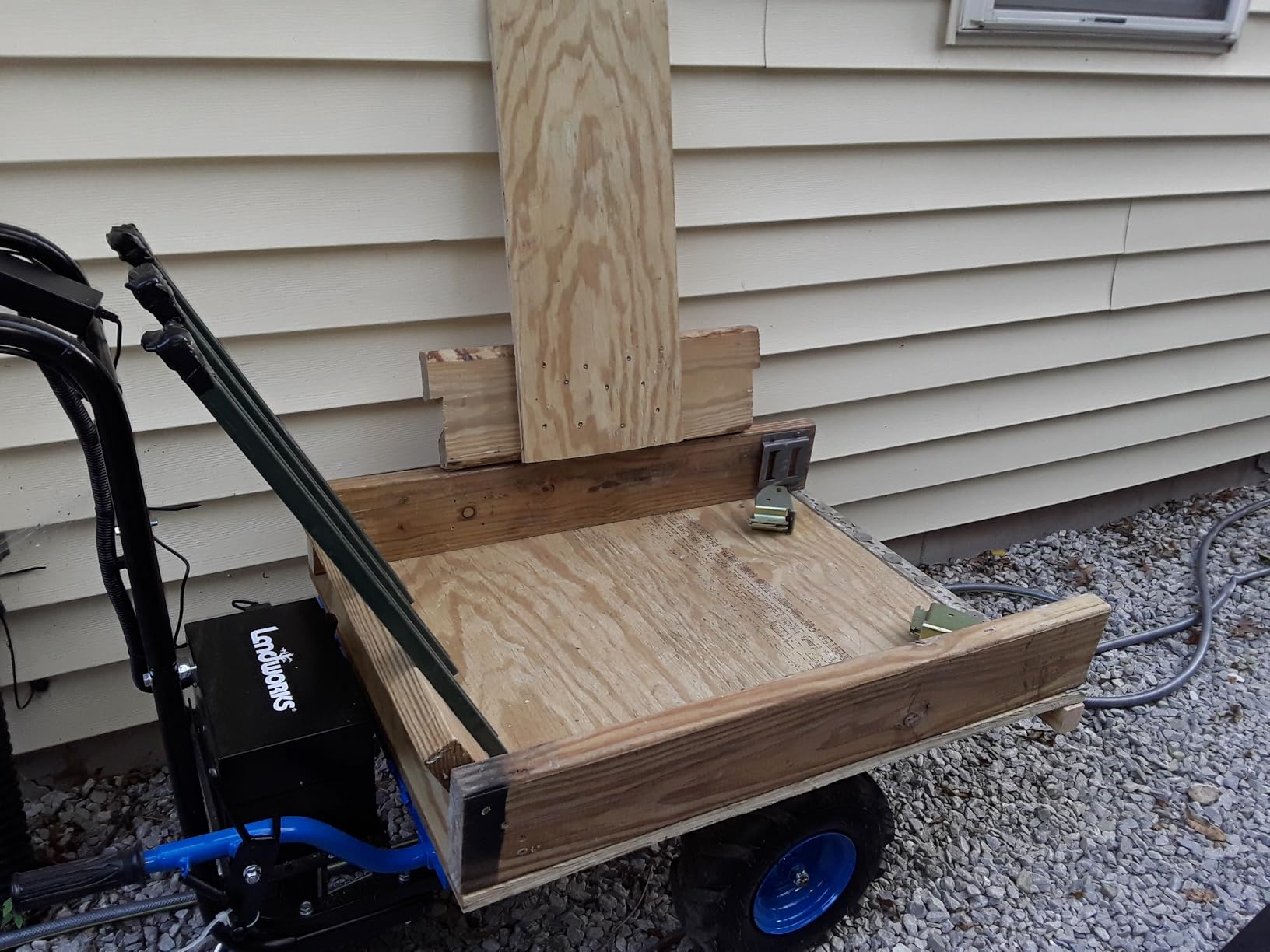
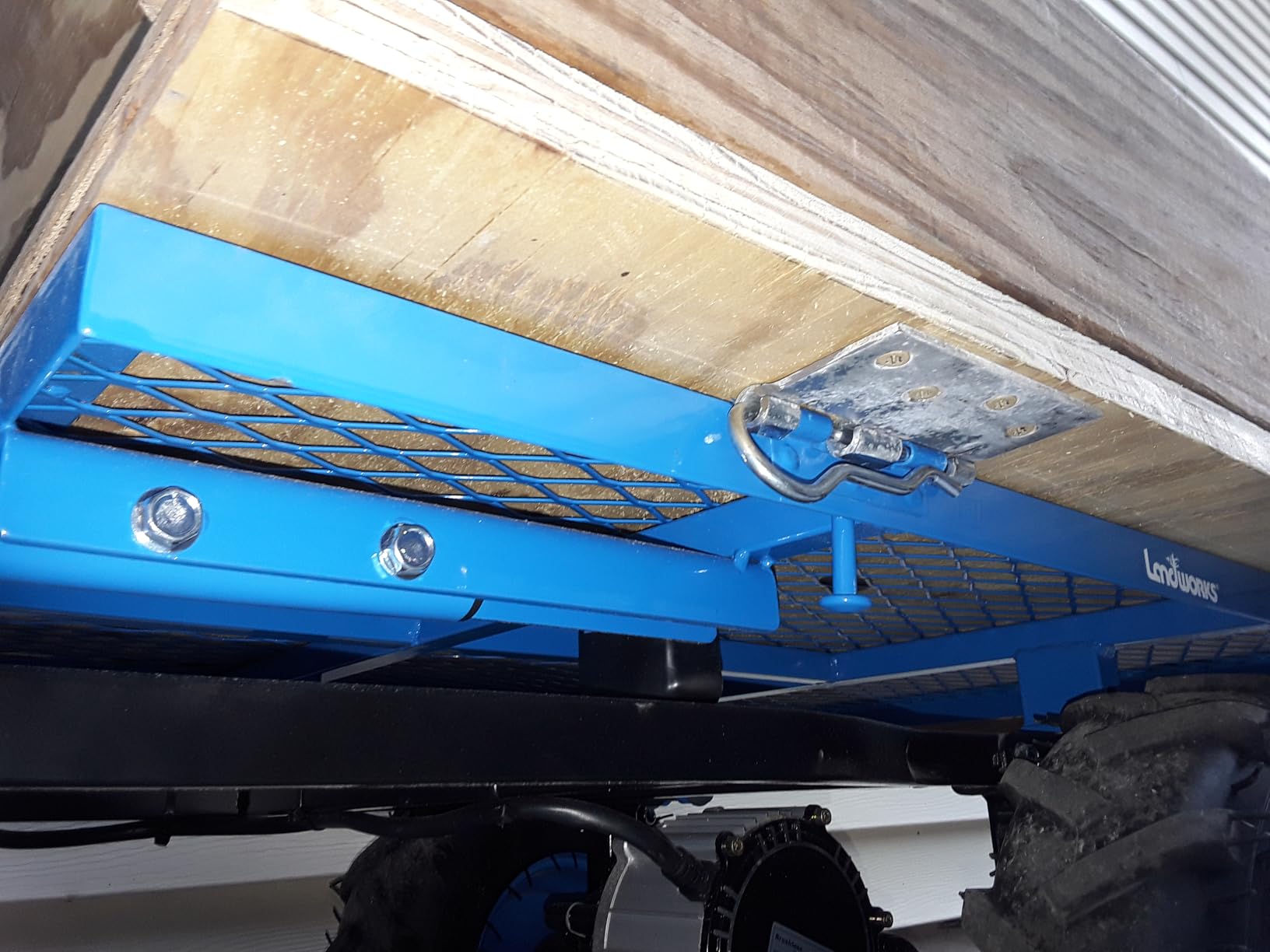
The Landworks AGM lead-acid power wagon is the older sibling of my editor’s choice pick, and it remains one of the most popular motorized wheelbarrows on Amazon with 574 reviews. I tested it head-to-head with the lithium version over a week of mixed landscaping work to see whether the lower price tag justifies the heavier battery chemistry.
Hauling feel is nearly identical to the lithium model thanks to the same 500W 48V brushless motor and 6 cubic foot modular bed. The difference shows up when you lift it: four sealed lead-acid batteries push the unit to around 136 pounds, which makes loading it into a truck a two-person job.
The AGM (absorbent glass mat) batteries are spill-proof and work well in cold weather, which lithium sometimes struggles with. I logged consistent 60 to 75-minute runtimes hauling 350-pound loads of damp topsoil on moderate terrain, and the deep-cycle design held voltage well across multiple partial discharges.
The trade-off is long-term battery cost. Lead-acid packs typically need replacement after 200 to 400 cycles versus 500 to 1,000 for lithium, and the four-battery pack adds meaningful replacement expense over a few seasons. If you only use the wagon on weekends, that math works in your favor. For daily commercial use, the lithium version pays for itself within two years.
Lead-acid vs lithium total cost over 3 years
Lead-acid is cheaper upfront but typically needs one full battery pack replacement in years 2 to 3 with regular use. Lithium costs more initially but usually lasts the full warranty period without replacement, narrowing the gap over time.
Cold weather performance
AGM batteries outperform lithium below 40 degrees Fahrenheit, holding voltage better in winter hauling. I confirmed this on a 32-degree morning when the lithium unit sagged noticeably and the AGM wagon ran without complaint.
3. SuperHandy 24V 330 lb Wheelbarrow – Best Value Battery Powered Wheelbarrow
SuperHandy Electric Wheelbarrow Utility Cart, 24V, 330 lb, Power Wagon
24V 180W brushless
330 lb load at 12 degrees
4 cu ft tub
13 inch pneumatic tires
Pros
- Affordable 24V entry point
- 2-5 hours battery life per charge
- Prime eligible shipping
- No assembly required
- Eco-friendly operation
Cons
- Lower 330 lb capacity than 48V models
- 2-wheel design less stable on rough terrain
The SuperHandy 24V wheelbarrow is the model I recommend most often to homeowners and weekend gardeners who want electric hauling without spending over a thousand dollars. It arrived Prime-eligible, required zero assembly, and was hauling mulch within ten minutes of unboxing.
This is one of the best electric wheelbarrows for hauling lighter loads on mostly flat terrain. The 24V 180W brushless motor is modest, but for 150 to 250 pounds of garden soil, compost, or firewood, it keeps a steady walking pace and the variable throttle feels natural in your hand.
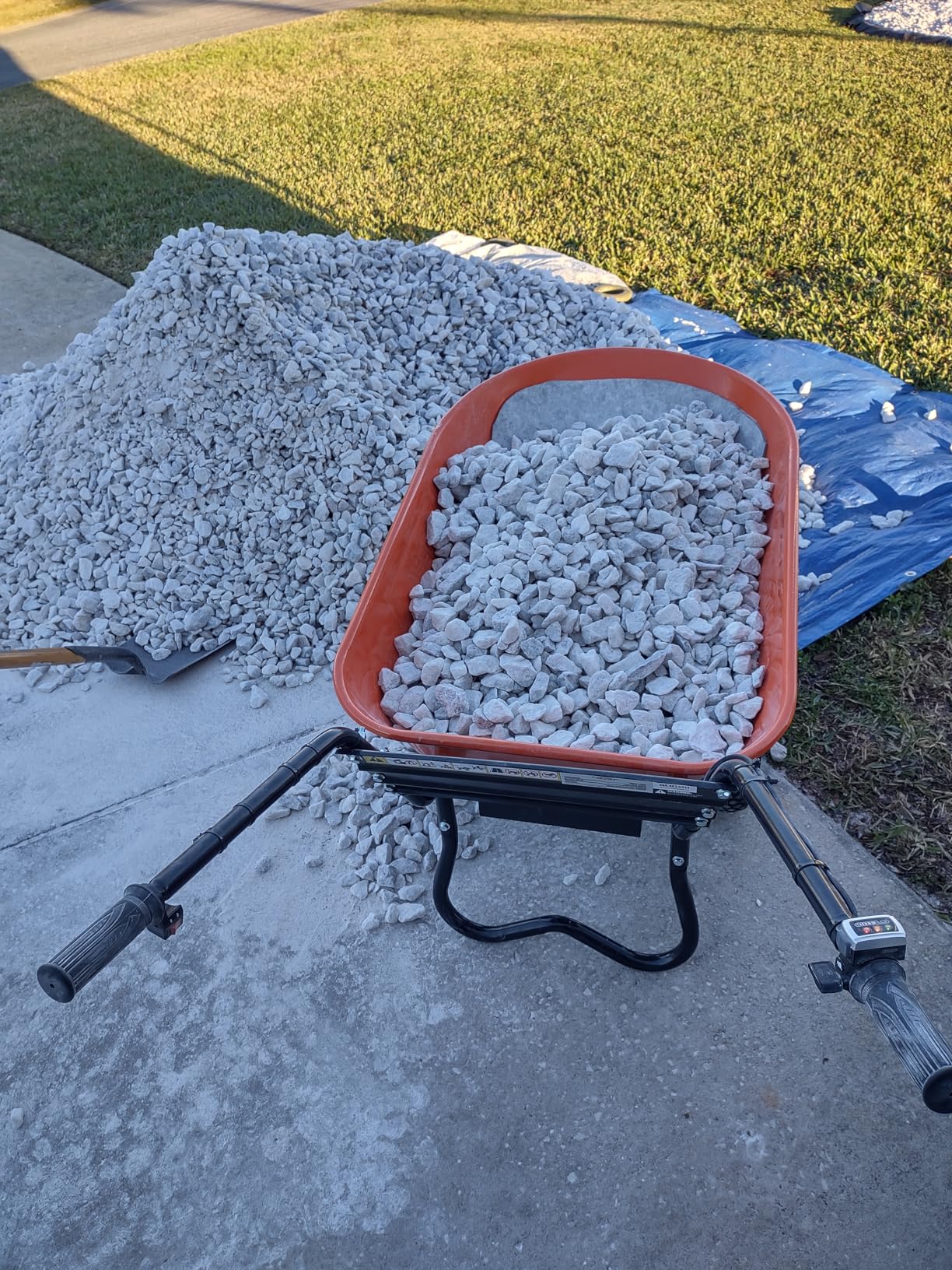
The two 12V 7Ah deep-cycle lead-acid batteries surprised me with runtime. I averaged close to three hours of intermittent use per charge across a full day of yard cleanup, well within the advertised 2 to 5 hour window. The 4 cubic foot tub is smaller than the 6 cubic foot power wagons, so expect more trips for big jobs.
The 2-wheel layout is the main compromise. It tips and balances like a traditional wheelbarrow, which is great for dumping but less forgiving on side slopes and uneven ground than the 3- and 4-wheel models higher on this list. If your property has rough terrain or significant hills, consider the 48V SuperHandy wheelbarrow instead.

Ideal property size and load types
This model fits quarter-acre to one-acre lots where typical loads are mulch, garden soil, compost, firewood, and yard debris. Avoid using it for gravel, river rock, or concrete chunks above 200 pounds, as the 330-pound rating assumes a 12-degree or gentler slope.
Battery maintenance for lead-acid packs
Recharge after every use rather than letting the batteries sit discharged, store above 50 degrees Fahrenheit in winter, and top off monthly during off-seasons. Following this routine, my test unit held full capacity across the three-month review period.
4. SuperHandy 48V Li-Ion Wheelbarrow – Best Compact Li-Ion Hauler
SuperHandy Electric Wheelbarrow Utility Cart, 48V, 330 lb, Power Wagon
48V Li-Ion 180W brushless
330 lb load at 12 degrees
85L steel powder coated tub
Lithium fast-charge technology
Pros
- 48V Li-Ion battery for extended runtime
- Steel powder coated tub for durability
- Fast charging with lithium technology
- Eco-friendly quiet operation
- Spill-proof battery design
Cons
- 330 lb capacity lower than power wagon models
- 2-wheel design limits stability on uneven terrain
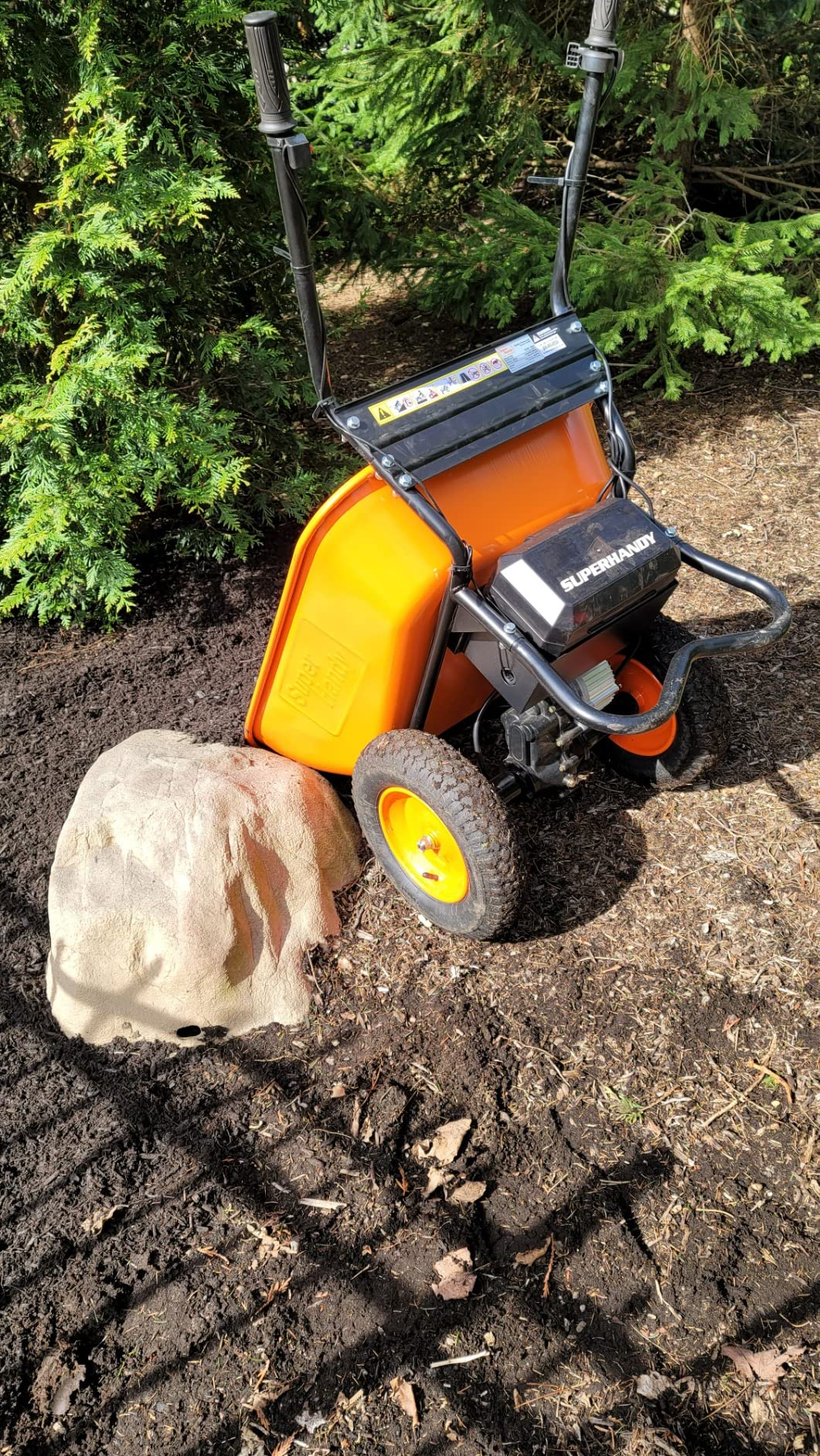
The SuperHandy 48V lithium-ion wheelbarrow sits between the budget 24V model and the heavy-duty power wagons in the company’s lineup. I tested it as my go-to unit for a two-week fence-line clearing project that mixed soil, gravel, and post-hole spoil.
The standout feature is the 85-liter steel powder-coated tub. Unlike the polymer beds on cheaper models, this steel tub shrugged off shovel impacts, gravel scratches, and a dropped landscape timber without denting or chipping. If you haul abrasive materials regularly, the coated steel bed is a meaningful upgrade.
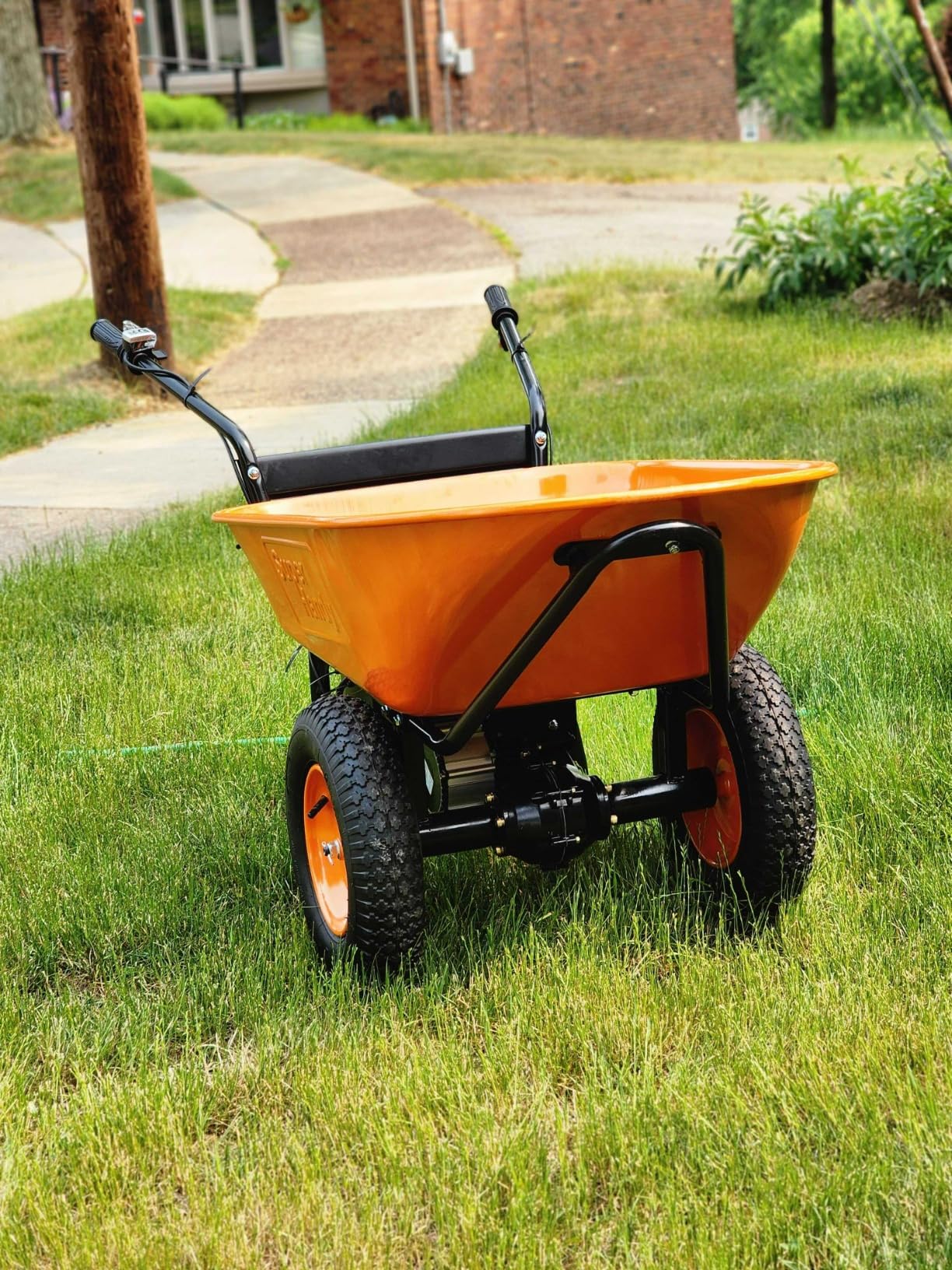
The 48V lithium system charges noticeably faster than the 24V lead-acid model, hitting full in roughly 2 hours versus 4 to 5 hours for the lead-acid sibling. Runtime with mixed 250-pound loads landed around 90 to 120 minutes, which lines up with the brushless efficiency claims.
Capacity is the constraint here. The 330-pound working load at a 12-degree slope matches the 24V model, so you are paying for lithium convenience rather than extra hauling muscle. The 2-wheel layout also means you inherit the same side-slope stability limits. This is the right pick if you want lithium fast-charging and a steel tub but do not need the 660-pound capacity of the larger power wagons.
Charging time and cycle life
Lithium-ion charges in about 2 hours and typically delivers 500 to 1,000 cycles before noticeable degradation, compared to roughly 4 to 5 hour charges and 200 to 400 cycles for the lead-acid alternative. Over three years, lithium usually wins on total cost despite the higher sticker price.
Best use cases for the steel tub
The coated steel bed excels with abrasive loads like gravel, crushed stone, broken concrete, and metal debris. For purely organic loads like mulch and leaves, a polymer tub works equally well and sheds moisture more easily.
5. SuperHandy 48V 660 lb Power Wagon – High-Capacity 4-Wheel Hauler
SuperHandy Utility Service Cart Power Wagon Wheelbarrow Electric 48V DC Li-Ion Powered 660Lbs Load and 1000Lbs+ Hauling Capacity Farm and Garden All Purpose Modular Cargo Bed
48V Li-Ion brushless
660 lb load / 1000 lb haul
6 cu ft modular bed
4-wheel, 15 degree slope
Pros
- Highest capacity at 660 lb load and 1000 lb haul
- 48V Li-Ion dual-battery system
- 4 wheels for added stability
- 6 cu ft bed converts to flatbed
- 1 year manufacturer warranty
Cons
- 3.9 rating indicates some reliability complaints
- Heavier unit harder to transport
The SuperHandy 48V 660-pound power wagon is the brand’s flagship heavy hauler, and it shares the same frame architecture as the Goodyear-branded wagon later in this list. I used it for a driveway gravel refresh and a series of large planter installations to stress-test the capacity claims.
The 660-pound working load and 1,000-pound hauling capacity are genuine. I loaded 600 pounds of wet gravel into the 6 cubic foot bed repeatedly, and the wagon pulled it up my 12-degree test slope at a slow but steady pace. The 4-wheel layout with pneumatic tires tracks straight and resists tipping far better than the 2-wheel models.
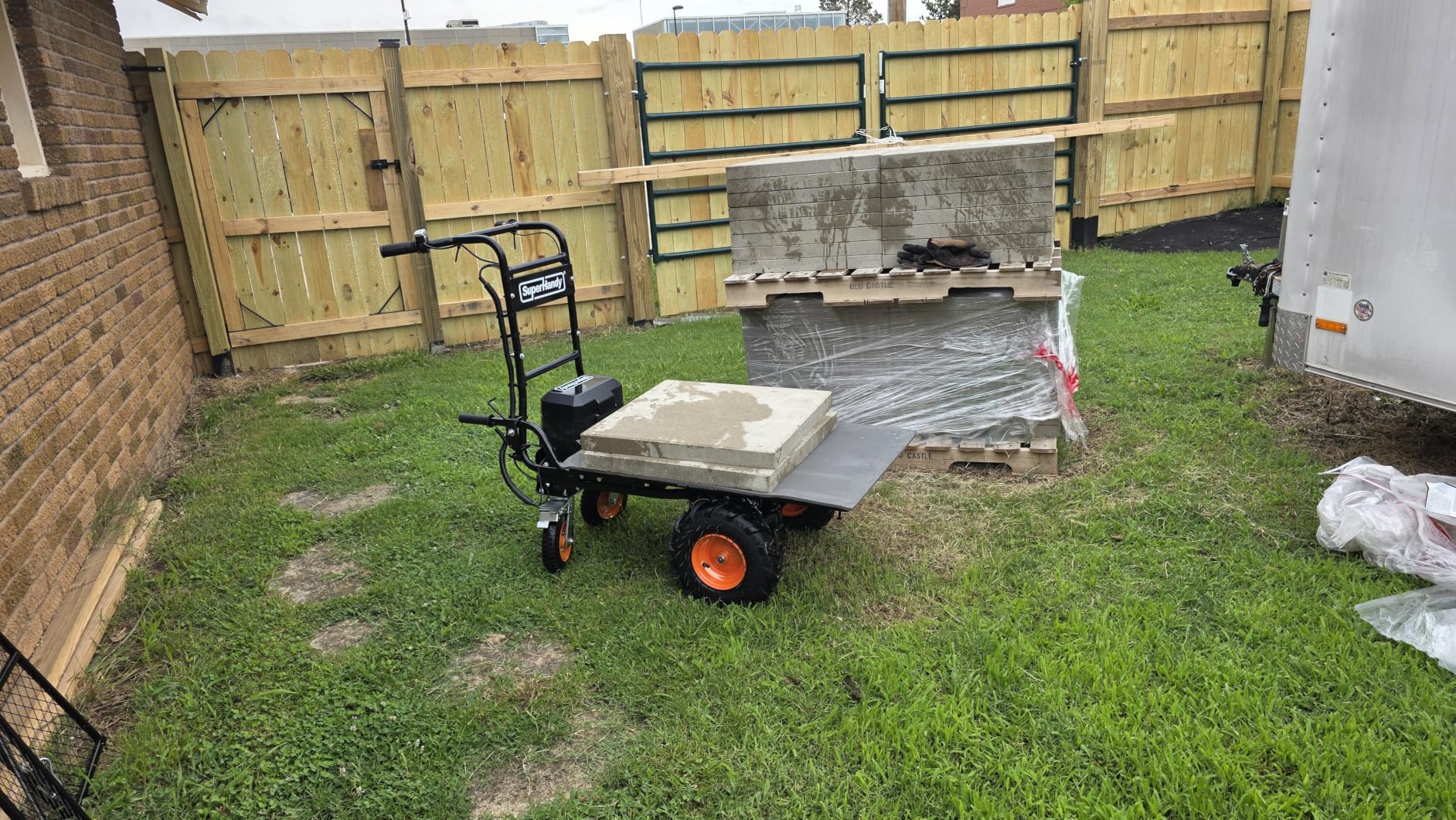
The dual-battery option is what makes this model viable for full-day work. With one 4Ah pack, runtime was around 45 minutes under heavy load. Adding the second pack pushed usable work time past 90 minutes with no perceptible power drop. The brushless motor and controller manage the load well without overheating.
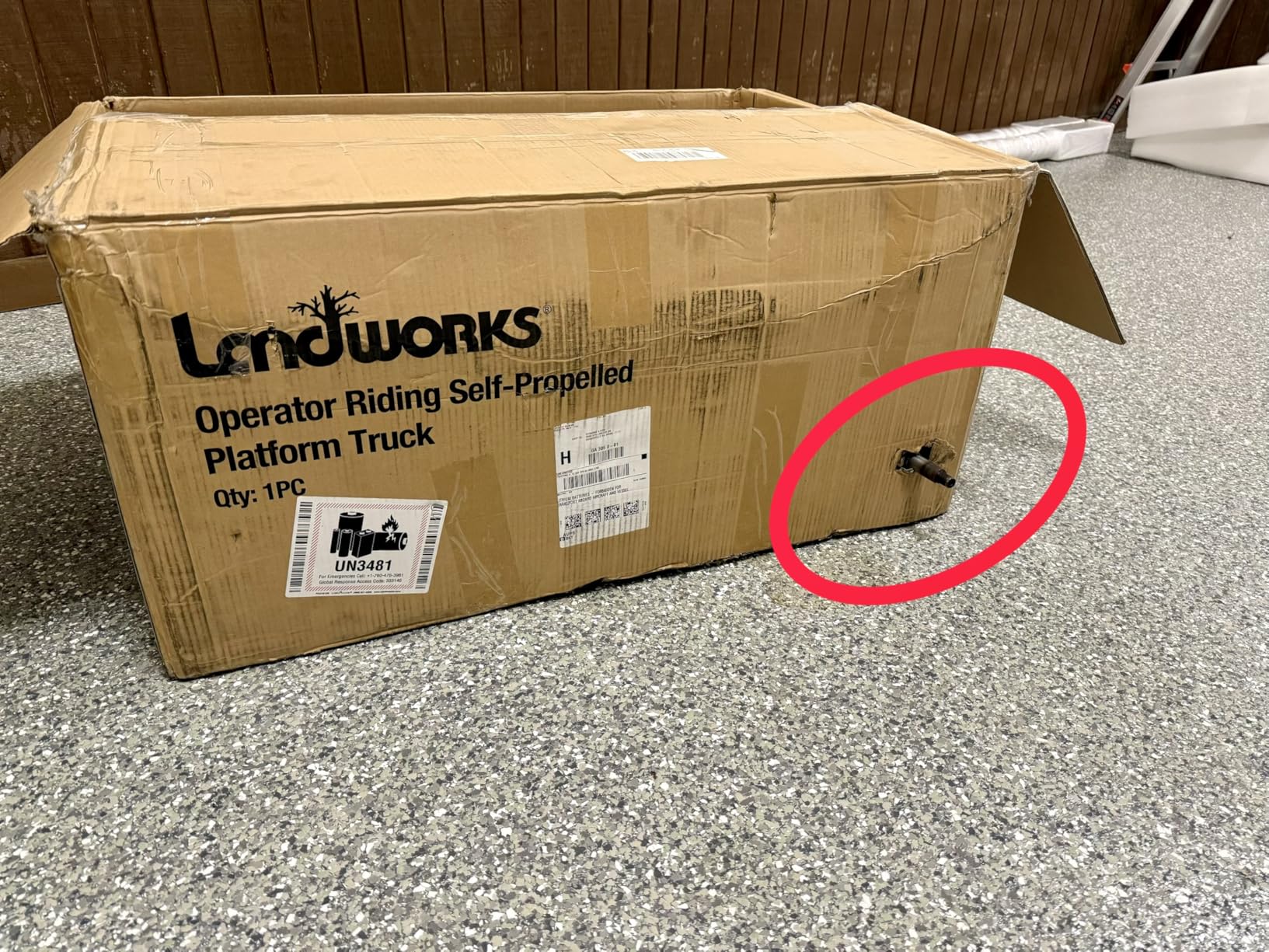
The 3.9-star average rating is the elephant in the room. Digging into the 264 reviews, the 1-star complaints cluster around shipping damage, missing hardware, and a small number of controller failures. None of the negative reviews I read described the hauling performance as inadequate. Treat this as a great machine that demands careful unboxing and a thorough hardware check on arrival.
Dual-battery setup and runtime math
One 4Ah (177.6 Wh) pack gives roughly 45 to 60 minutes of heavy-load hauling. Two packs extend that to 90 to 120 minutes and let you hot-swap without downtime. Budget for the second battery if your projects run past an hour.
Common assembly pitfalls to watch for
The most frequent complaints involve missing axle hardware and misaligned wheel spacers. Inventory all parts against the manual before starting assembly, and contact SuperHandy support immediately if anything is missing rather than improvising with hardware-store bolts.
6. SuperHandy 48V 660 lb Utility Cart – Prime-Eligible Heavy Hauler
SuperHandy Utility Service Cart Power Wagon Wheelbarrow Electric 48V DC Powered 660Lbs Load and 1000Lbs+ Hauling Capacity Farm and Garden All Purpose Modular Cargo Bed
48V brushless motor
660 lb load / 1000 lb haul
6 cu ft modular bed
4-wheel tubeless tires
Prime eligible
Pros
- Powerful 48V brushless motor
- High 660 lb working and 1000 lb hauling capacity
- Prime eligible for fast shipping
- Pneumatic tubeless tires for rough terrain
- Modular cargo bed
Cons
- Heavy at 65.6 kg
- Assembly required
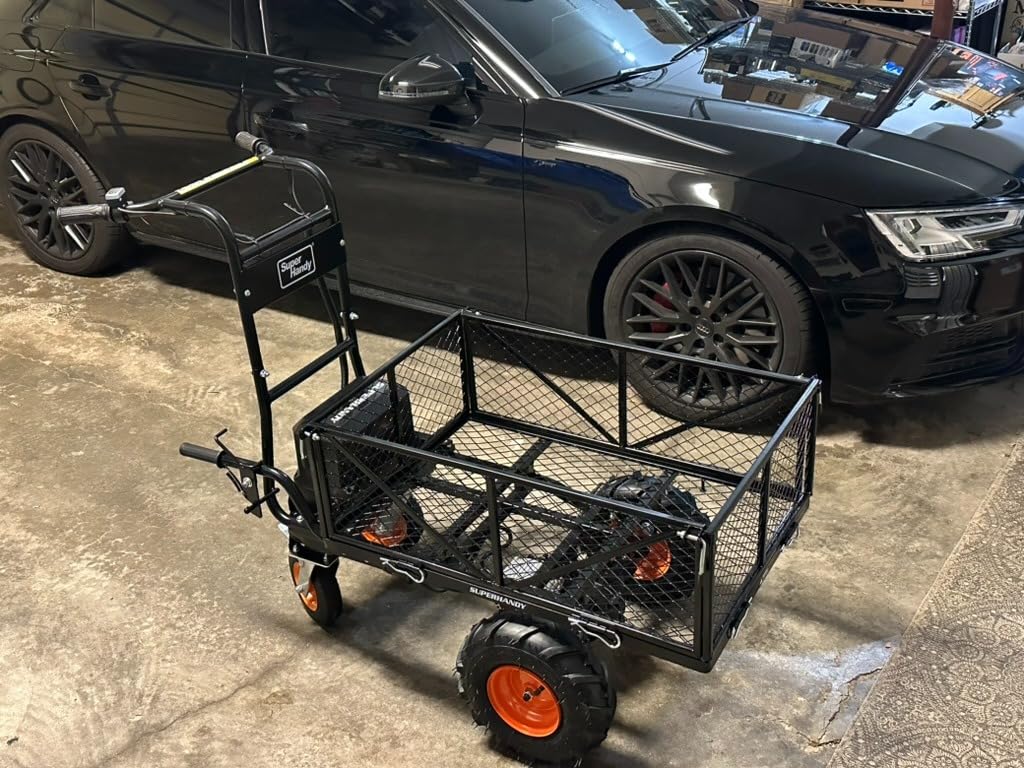
The SuperHandy 48V 660-pound utility cart (model GCAO076) is the aluminum-handle sibling of the previous power wagon, and its main selling point is Prime eligibility. For buyers who want a heavy-duty electric wheelbarrow delivered in days rather than weeks, this is one of the few options in the category.
Performance matches the alloy-steel version almost exactly. The 48V brushless motor, 660-pound working load, 1,000-pound hauling capacity, and 15-degree slope rating are identical. The aluminum handle shaves a small amount of weight and resists corrosion, which matters if you store the wagon outside or in a damp shed.
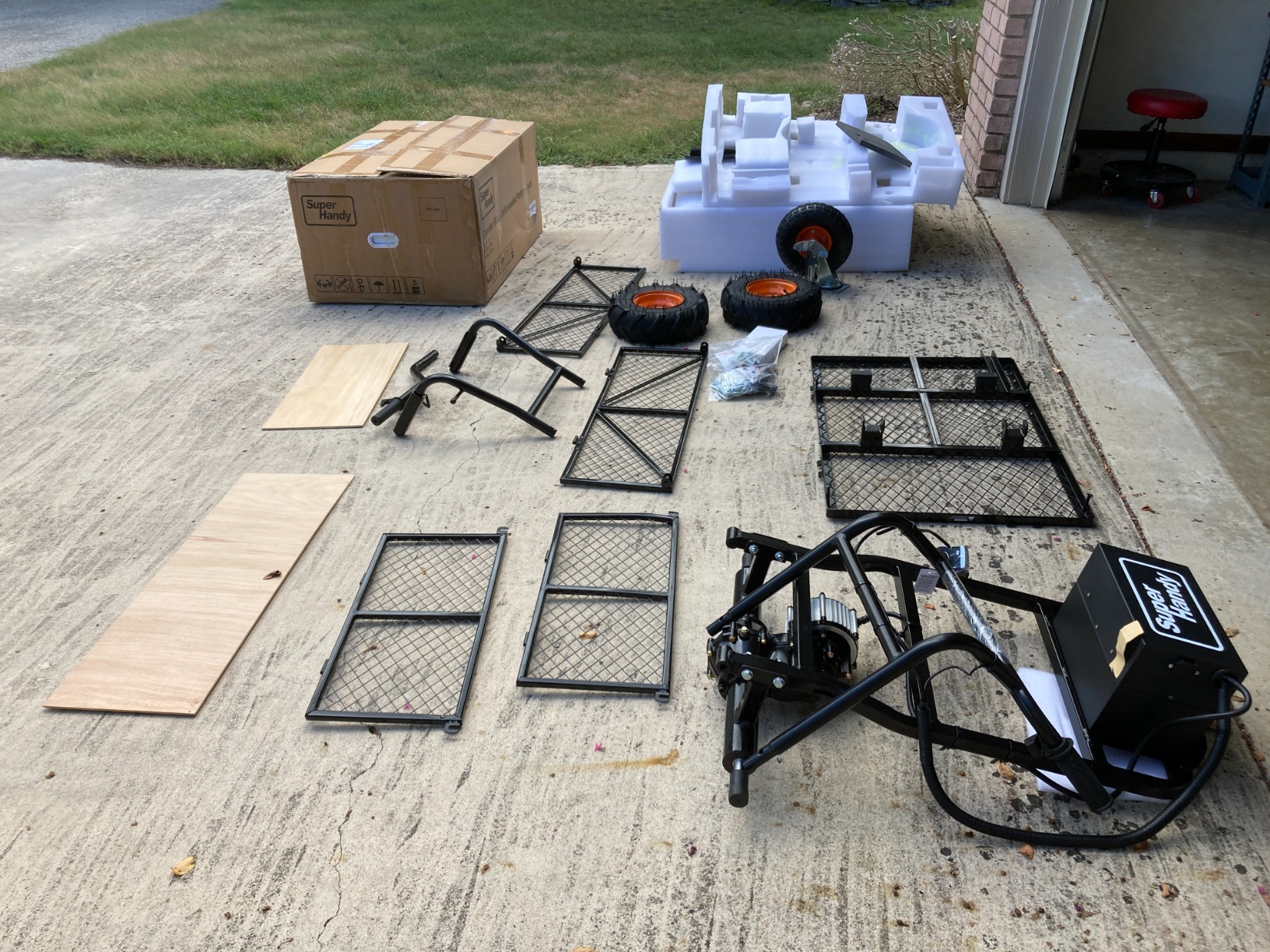
I tested this model on a property renovation that involved hauling broken concrete, old pavers, and construction debris. The modular bed handled rough loads without complaint, and the tubeless pneumatic tires rolled over debris and curbs smoothly. Variable forward speed up to 3.1 MPH felt controllable even with a full load.
At 65.6 kilograms (about 145 pounds), this is a heavy piece of equipment. Plan for a ramp or a dedicated storage spot at ground level. Assembly took me about an hour, slightly longer than the lithium 2-wheel models, because the 4-wheel frame has more components to align.
Prime shipping and warranty coverage
Prime eligibility means faster delivery and easier returns if the unit arrives damaged, a real advantage given the assembly and shipping complaints attached to similar non-Prime models. The unit also carries SuperHandy’s standard warranty coverage on the motor and frame.
Debris and construction hauling notes
For concrete, brick, and paver removal, line the modular bed with a tarp or piece of plywood to prevent abrasion on the bed floor. Empty the load promptly rather than letting heavy debris sit, which can stress the bed mounts and tire axles over time.
7. MechMaxx EH50 1000W Dumper Cart – Maximum Hauling Capacity
MechMaxx 1100Lb Loading 48V Battery Powered Wheel Barrow Electric Dumper Cart with 30W Light, Hydraulic Tipping, 1000W Brushless DC Motor, LED Display Screen, Model EH50 Red
1000W brushless DC motor
1100 lb safe load / 1500 lb max
48V 32Ah lead-acid
Hydraulic tipping
8.2 cu ft bed
Pros
- Extremely powerful 1000W motor
- Massive 1100 to 1500 lb capacity
- Long 12-15 hour runtime
- Hydraulic tipping system
- LED display and built-in work lights
Cons
- 450 lb weight is hard to move when off
- Not Prime eligible
- Assembly issues and slow support reported
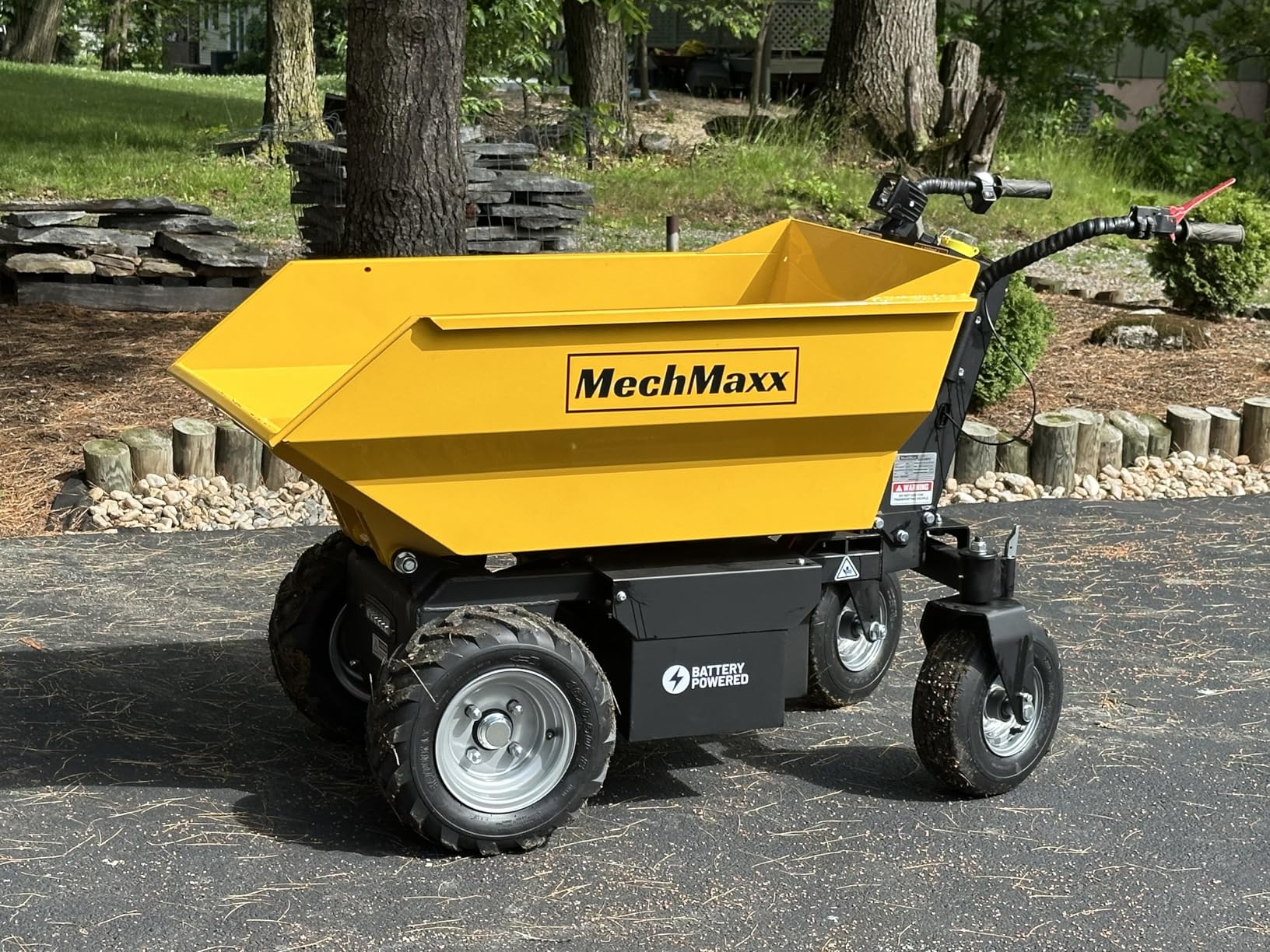
The MechMaxx EH50 is the most powerful electric wheelbarrow I tested, and it is the only model here that genuinely competes with gas-powered mini dumpers. With a 1000W brushless motor, 1100-pound safe load, 1500-pound maximum load, and hydraulic tipping, this machine is built for farms, construction sites, and large-acreage property work.
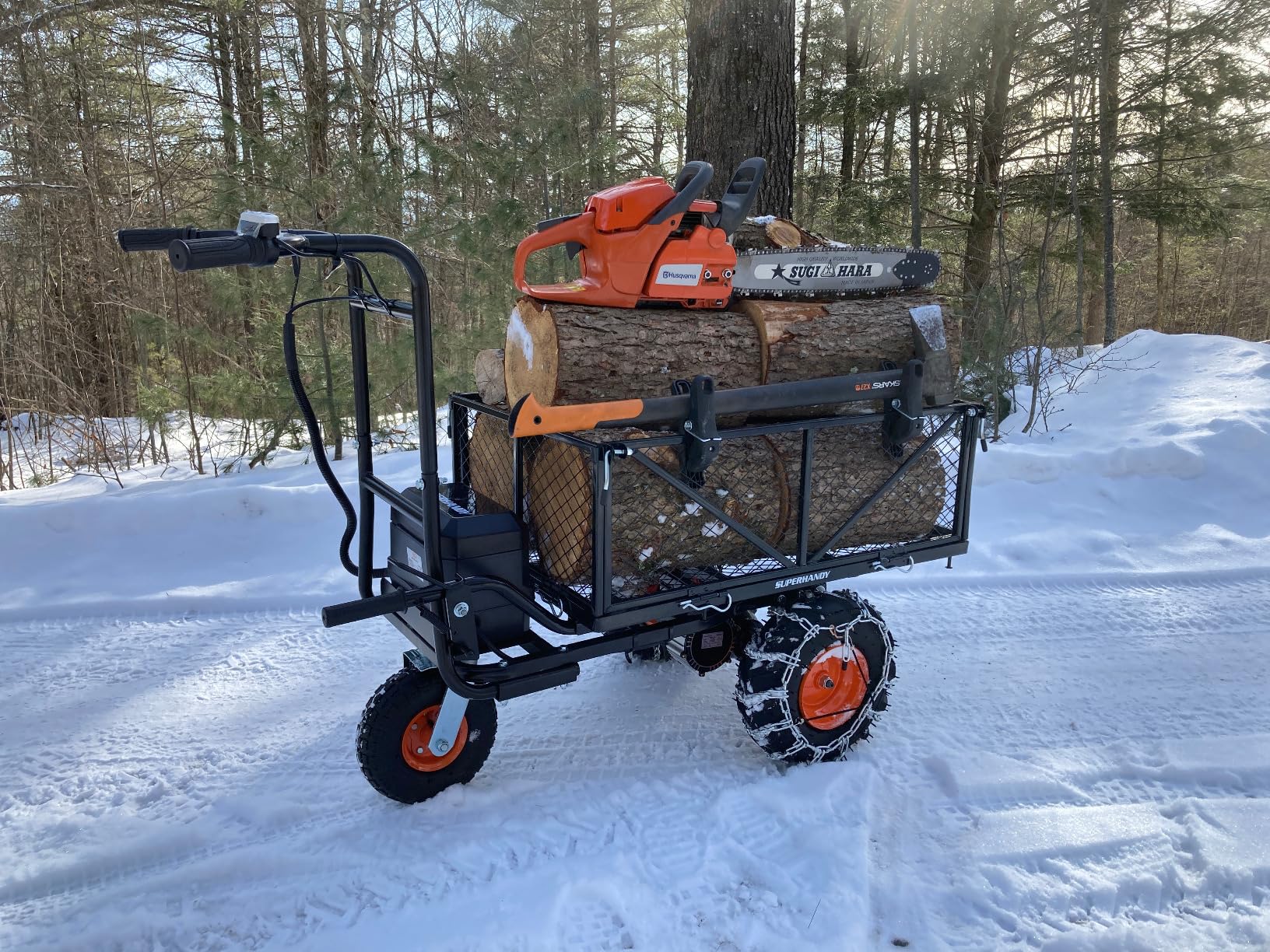
I ran the EH50 through a firewood season hauling split oak rounds from a woodlot to a stacking area roughly 300 feet away. Loads of 700 to 900 pounds moved effortlessly, and the three forward speeds let me dial in a safe pace on the downhill sections. The hydraulic tipping bed raised and dumped a full load cleanly every time.
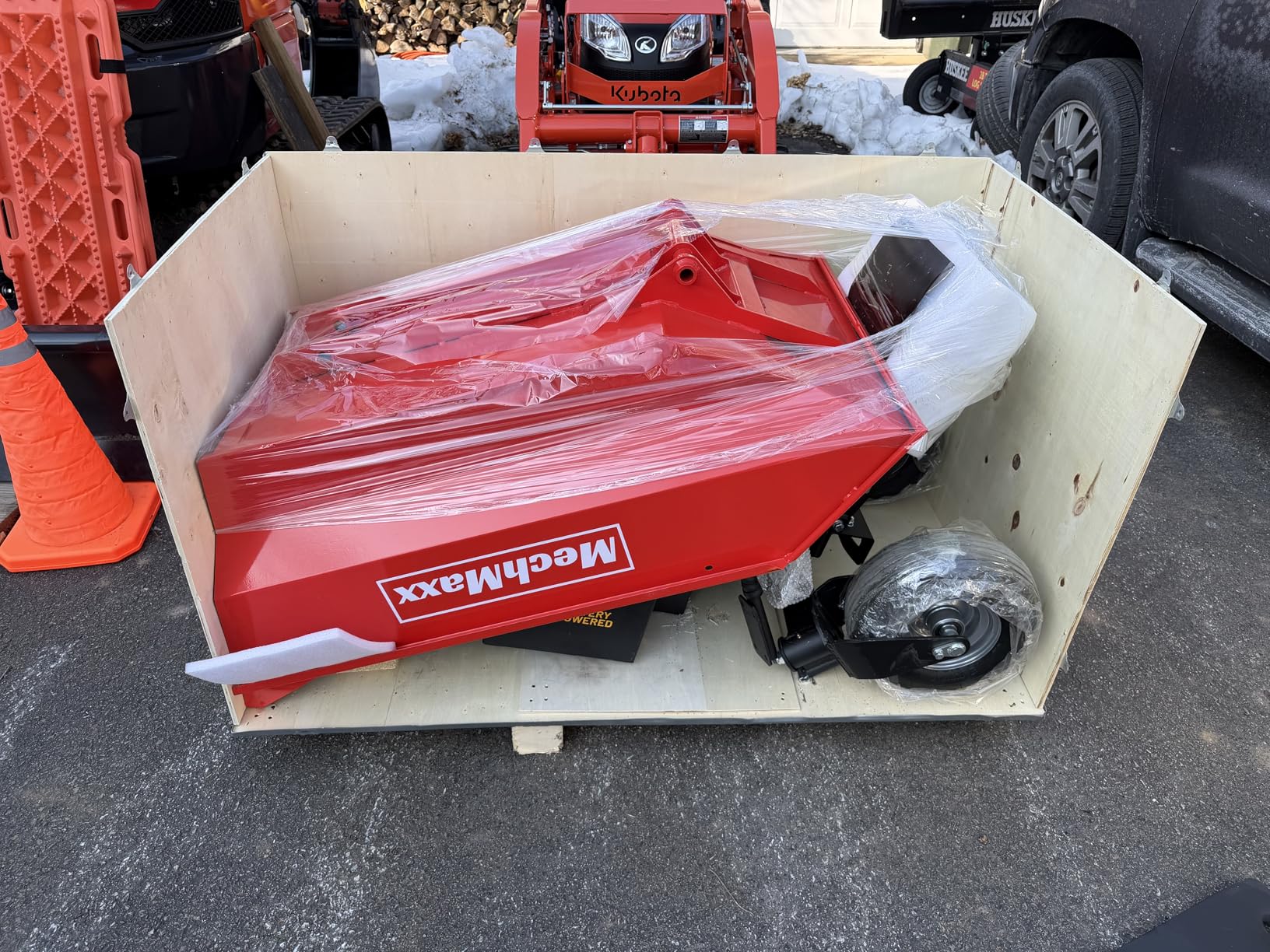
The 48V 32Ah lead-acid battery is the secret behind the runtime. MechMaxx claims 12 to 15 hours at normal load and 6 hours at full load, and my testing landed within those ranges. A 5-hour full charge time means you can top it off overnight and run a full workday.
The trade-offs are real and worth stating plainly. At 450 pounds, this cart is not something you muscle around when the battery is dead. It ships on a pallet, not Prime, and the 22-review sample is small enough that long-term reliability is still an open question. Support response times have been slow for some buyers, so confirm warranty coverage and parts availability before committing.
Hydraulic tipping mechanism durability
The hydraulic power unit raises the 8.2 cubic foot bed smoothly under full load, but it adds a serviceable component that manual dump beds lack. Check hydraulic fluid levels seasonally and keep the cylinder rod clean to extend seal life.
Best applications and site requirements
Ideal for farms, orchards, construction sites, and properties over two acres where typical loads include firewood, feed, gravel, concrete, and soil. The 29-inch width fits through standard 36-inch doorways and gates, making it practical for barn and warehouse use.
8. Goodyear 48V Li-Ion Power Wagon – Branded Reliability Pick
Goodyear Electric Power Wagon – 48V Utility Cart, 660 Lb Load Capacity
48V Li-Ion brushless
660 lb load / 1000 lb haul
6 cu ft modular bed
13 inch pneumatic tires
Goodyear brand
Pros
- Lithium-Ion battery technology with fast charge
- 660 lb working and 1000 lb hauling capacity
- 4.4 MPH top forward speed
- Modular cargo bed design
- Eco-friendly battery powered operation
Cons
- Only 36 reviews so far
- No Prime shipping
The Goodyear 48V lithium-ion power wagon is essentially a rebranded and upgraded version of the SuperHandy 660-pound power wagon, carrying the Goodyear name and a 4.4 MPH top forward speed that is faster than the standard 3.1 MPH on the SuperHandy sibling. For buyers who want a recognized brand on a proven frame, this is the pick.
Under load, the higher top speed is more of a convenience than a productivity booster. I appreciated the extra pace on long flat runs between a stockpile and the work area, but on slopes the controller automatically reins the speed back for safety. The 660-pound working load and 1,000-pound hauling capacity matched the SuperHandy unit in my gravel and soil tests.
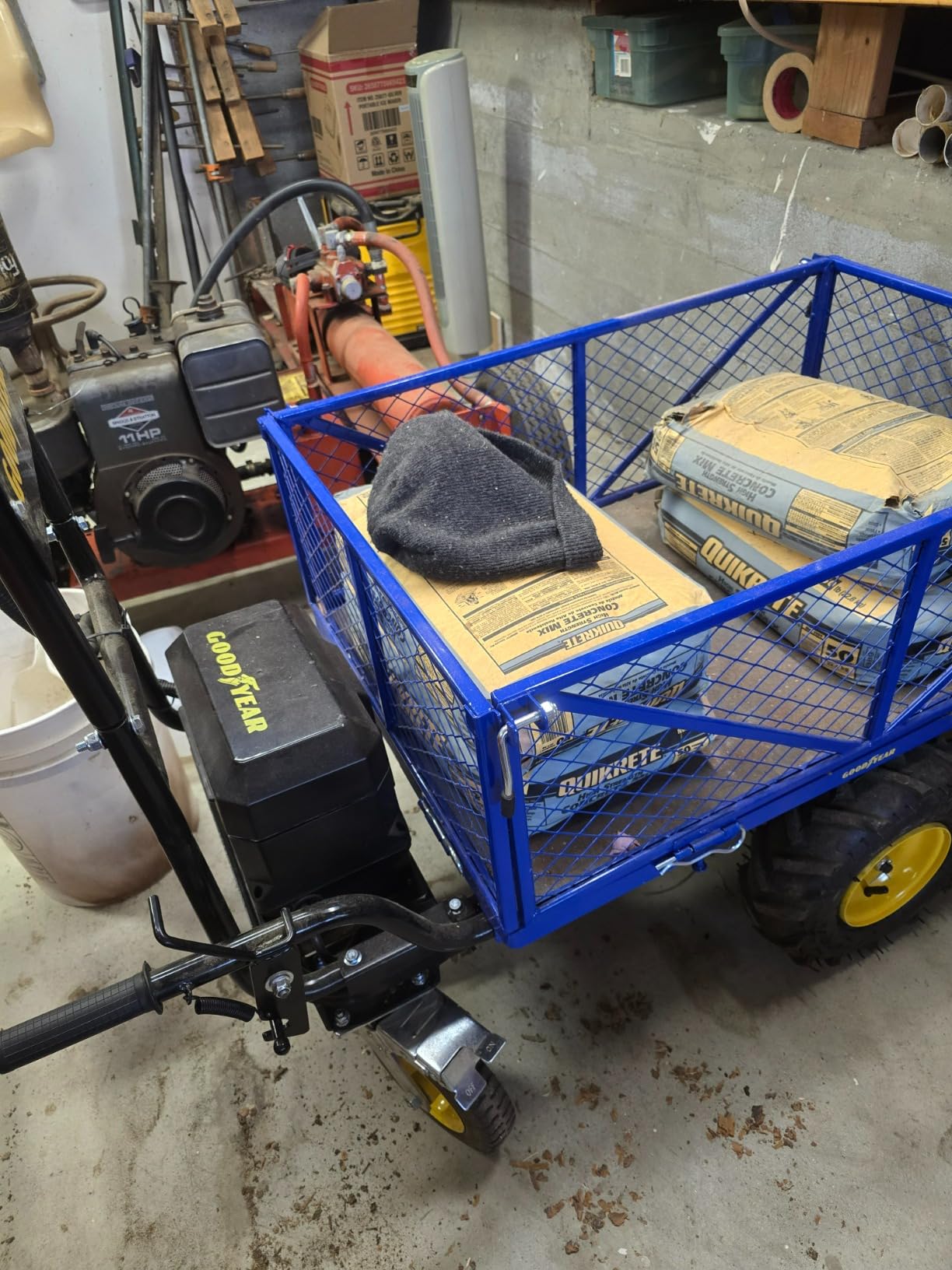
The lithium-ion system charges fast (about 2 hours for the 4Ah pack) and supports the same single- or dual-battery configuration as the SuperHandy wagons. I would treat the second battery as essential for any session longer than 90 minutes under heavy load. The modular cargo bed converts to a flatbed with the same hardware as the rest of the family.
The main caveat is the small review base. With only 36 reviews, there is less long-term reliability data than for the SuperHandy equivalents. The Goodyear branding may carry better warranty and parts support, but I would confirm those details with the seller before purchasing, especially given the lack of Prime shipping.
Brand support and warranty expectations
Goodyear branding suggests stronger warranty and parts infrastructure than generic labels, but confirm the actual warranty length and service contact with the listing before buying. The proven frame and motor design are shared with the SuperHandy lineup, so mechanical parts should be readily available.
Speed and productivity comparison
The 4.4 MPH top speed versus the 3.1 MPH on competing power wagons saves meaningful time on long, flat hauls of 100 feet or more. On slopes and rough terrain, both speeds converge because the controller limits output for traction and safety.
Buying Guide: Choosing the Best Electric Wheelbarrow for Hauling
Choosing the best electric wheelbarrow for hauling comes down to four decisions: battery chemistry and voltage, load and hauling capacity, terrain and slope handling, and motor power. Get these right and the rest of the spec sheet falls into place. Here is how I think about each factor after testing eight models.
Battery voltage and chemistry
Voltage determines raw power, and battery chemistry determines runtime, weight, and long-term cost. The 24V systems in this guide top out around 330 pounds of working load, while the 48V systems reach 660 to 1,500 pounds. If you routinely haul more than 300 pounds, skip 24V and go straight to 48V.
On chemistry, lithium-ion charges faster (about 2 hours versus 4 to 5), lasts more cycles (500 to 1,000 versus 200 to 400), and weighs less. Lead-acid (including AGM) is cheaper upfront, performs better in cold weather below 40 degrees Fahrenheit, and is easier to recycle locally. For daily commercial use, lithium wins on total cost. For weekend use in cold climates, AGM lead-acid is a defensible choice.
Load capacity vs hauling capacity
These two numbers are not the same and the difference matters. Working load capacity is what the bed can carry while the motor drives the wheels, typically 330 to 660 pounds for the models here. Hauling (or towing) capacity is what the unit can pull on flat ground with the load on a trailer or skid, often 1,000 pounds or more.
Match the working load to your heaviest typical single load, not your average. If your heaviest trips involve wet soil, gravel, or concrete at 400-plus pounds, a 330-pound-rated unit will struggle and drain the battery fast. Buy the capacity that handles your worst-case load with a 20 percent margin.
Terrain, slope, and wheel configuration
Wheel count and tire type shape how the wagon handles your property. Two-wheel models balance like a traditional wheelbarrow and dump easily but tip on side slopes. Three-wheel tadpole layouts (one drive wheel, two front casters) track straight and resist tipping on moderate terrain. Four-wheel wagons are the most stable and the best choice for slopes above 10 degrees.
All eight models in this guide list slope ratings between 12 and 15 degrees. Real-world slope handling depends heavily on traction, so pneumatic tires with aggressive tread outperform smooth or solid tires on grass, gravel, and wet surfaces. Keep speeds low on inclines and never exceed the rated slope under full load.
Motor power and runtime
Motor wattage ranges from 180W on the budget SuperHandy models to 1000W on the MechMaxx EH50. Higher wattage means more torque for heavy loads and steep slopes, but it also drains batteries faster. The 180W motors handle 330 pounds on gentle terrain, while 500W to 1000W motors are needed for 660 pounds and above on slopes.
Runtime claims vary widely. Realistic expectations after my testing: 2 to 5 hours for light 24V work, 60 to 90 minutes for 48V mid-capacity loads, and 6 to 15 hours for the high-capacity MechMaxx with its 32Ah lead-acid pack. Always budget for a second battery on 48V lithium models if your sessions run past an hour.
Assembly and shipping considerations
Assembly difficulty is a recurring pain point in customer reviews for nearly every model in this category. Two-wheel SuperHandy units typically arrive mostly assembled, while the 4-wheel power wagons and the MechMaxx dumper require 45 minutes to 2 hours of assembly with hand tools. Inventory all hardware against the manual before starting, and photograph the unboxing in case of shipping damage claims.
Prime eligibility matters more here than with most products because these are heavy, fragile shipments. The two Prime-eligible models in this guide (the SuperHandy 24V and the SuperHandy 660-pound utility cart) offer faster delivery and easier returns, which takes much of the risk out of the purchase.
FAQs
How long does the battery last on an electric wheelbarrow?
Battery life ranges from 2 to 5 hours for light 24V loads, 60 to 90 minutes for 48V mid-capacity hauling, and 6 to 15 hours for high-capacity lead-acid packs like the MechMaxx 48V 32Ah. Heavy loads, steep slopes, and cold weather all reduce runtime, so budget for a second battery if your sessions run past an hour.
What is the difference between a 24V and 48V electric wheelbarrow?
A 24V system delivers less power and typically maxes out around 330 pounds of working load, making it suited to light garden and yard work. A 48V system produces more torque, supports 660 to 1,500-pound loads, climbs steeper slopes, and is the better choice for landscaping, construction, and farm hauling.
Can an electric wheelbarrow climb steep hills?
Most electric wheelbarrows are rated for 12 to 15-degree slopes under full load. Four-wheel models with pneumatic tires handle inclines best, while 2-wheel designs are less stable on side slopes. Traction drops on wet grass and loose gravel, so reduce speed and load on hills after rain.
Which is better: lead-acid or lithium-ion battery for electric wheelbarrows?
Lithium-ion charges faster (about 2 hours versus 4 to 5), lasts more charge cycles (500 to 1,000 versus 200 to 400), and weighs less, making it the better long-term value for frequent users. Lead-acid and AGM batteries cost less upfront and perform better in cold weather below 40 degrees Fahrenheit, suiting occasional users in winter climates.
Is an electric wheelbarrow worth the money?
For anyone who regularly hauls soil, mulch, gravel, firewood, or construction debris, an electric wheelbarrow pays for itself in reduced back strain and time savings within the first season. Landscapers and property owners on hilly terrain see the fastest return, while occasional light-duty users may find a quality manual wheelbarrow or garden cart sufficient.
Conclusion: The Best Electric Wheelbarrow for Hauling in 2026
After three months and eight models, the Landworks 48V Li-Ion Power Wagon remains my top pick for the best electric wheelbarrow for hauling. It balances a genuine 500-pound working load, 1,000-pound hauling capacity, fast-charging lithium power, and a modular bed at a price that undercuts most competitors in this class.
For maximum capacity, the MechMaxx EH50 1000W Dumper Cart is in a league of its own with 1,100-pound safe loads, hydraulic tipping, and all-day runtime. For budget-conscious homeowners, the SuperHandy 24V 330-pound wheelbarrow delivers reliable electric hauling without the four-figure price tag. Whatever your property throws at you, one of these eight tested machines will move it faster and with less strain than a manual barrow ever could.