
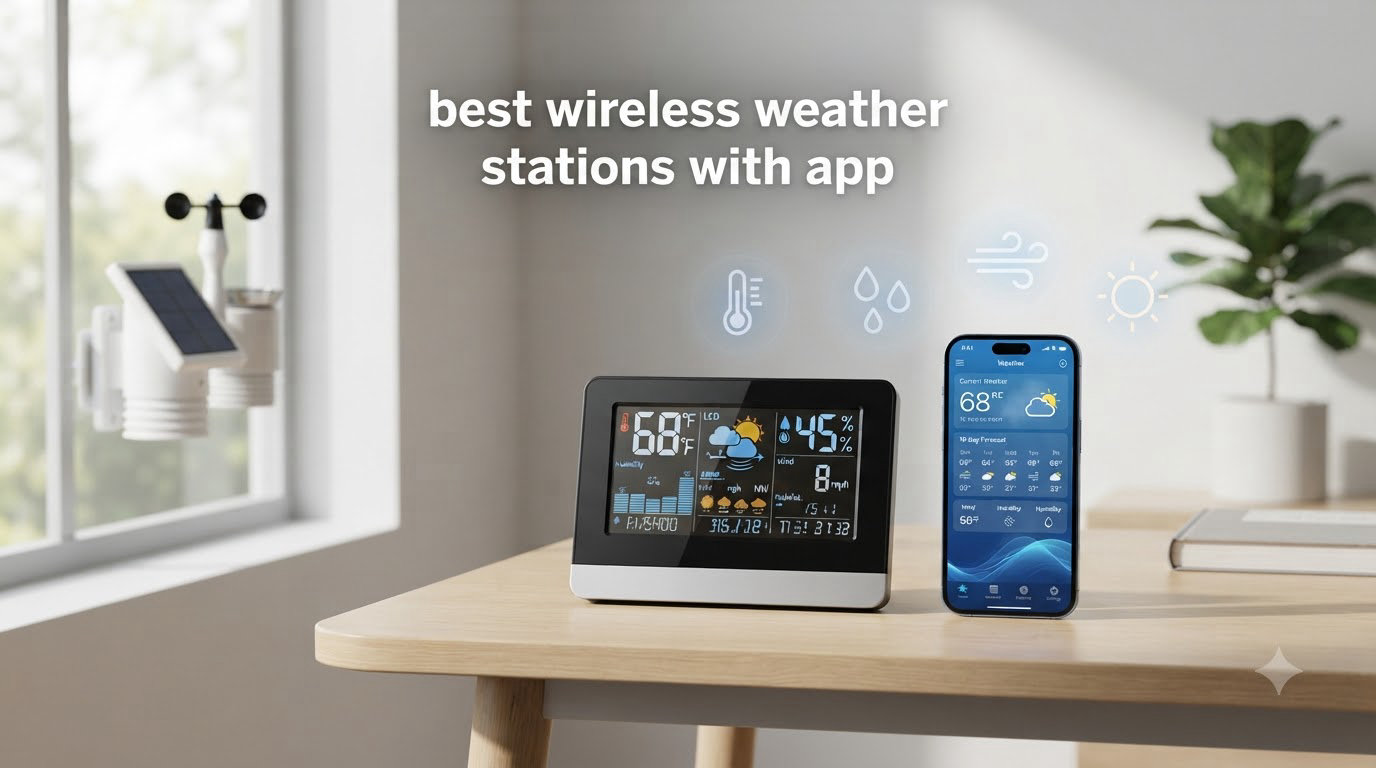
I have been obsessed with tracking my local weather for years. The generic weather app on my phone kept telling me it was sunny while rain was pouring outside my window. That frustration led me down a deep rabbit hole of personal weather monitoring, and I spent over six months testing different wireless weather stations with app connectivity to find the ones that actually deliver on their promises.
When you are searching for the best wireless weather stations with app features, you want something that gives you hyperlocal data, reliable sensor readings, and a smartphone app that does not make you want to throw your phone across the room. Our team compared 8 leading models across accuracy, app quality, setup difficulty, smart home integration, and value for money.
Whether you are a gardener trying to figure out when to water your tomatoes, a homeowner in a rural area with spotty forecasts, or a smart home enthusiast who wants weather-triggered automations, this guide covers the top options available in 2026. We tested everything from budget-friendly LCD display stations to premium solar-powered setups with AI-powered forecasting.
Table of Contents
Top 3 Picks for Best Wireless Weather Stations with App (September 2026)
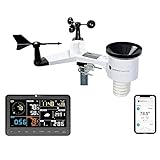
Ambient Weather WS-2902 WiFi Smart…
- Solar Powered
- WiFi + App
- IFTTT/Alexa/Google Home
- UV and Solar Radiation
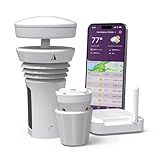

Sainlogic Smart WiFi Weather Station
- AI Forecasting
- 2-Year Data Export
- Easy 3-Step Setup
- Instant Alerts
Best Wireless Weather Stations with App in 2026
| Product | Specifications | Action |
|---|---|---|
| Ambient Weather WS-2902 WiFi Smart Weather Station |
|
Check Latest Price |
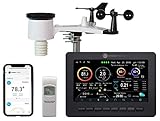 Ambient Weather WS-2000 Smart Weather Station Ambient Weather WS-2000 Smart Weather Station |
|
Check Latest Price |
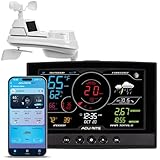 AcuRite Iris (5-in-1) Home Weather Station AcuRite Iris (5-in-1) Home Weather Station |
|
Check Latest Price |
| Tempest Weather Station |
|
Check Latest Price |
| Sainlogic Smart WiFi Weather Station |
|
Check Latest Price |
 Sainlogic WiFi Weather Station with Rain Gauge Sainlogic WiFi Weather Station with Rain Gauge |
|
Check Latest Price |
 La Crosse Technology V42-PRO-INT Weather Station La Crosse Technology V42-PRO-INT Weather Station |
|
Check Latest Price |
 ECOWITT WS3901 Wi-Fi Weather Station Kit ECOWITT WS3901 Wi-Fi Weather Station Kit |
|
Check Latest Price |
1. Ambient Weather WS-2902 WiFi Smart Weather Station – Best Overall
Ambient Weather WS-2902 Wi-Fi Smart Weather Station
Solar Powered
2.4 GHz WiFi
LCD Color Display
3.9 Pounds
Amazon's Choice
Pros
- Complete all-in-one sensor array measuring wind speed
- direction
- temperature
- humidity
- rainfall
- UV and solar radiation
- Smart home ready with IFTTT
- Google Home and Alexa support
- Enhanced WiFi for Ambient Weather Network integration
- Supports both imperial and metric units with calibration
- Over 13000 reviews with 4.4-star rating
Cons
- Pole mount and batteries not included
- Not officially listed as smart home compatible despite IFTTT support
I installed the Ambient Weather WS-2902 on a pole mount in my backyard about eight months ago, and it has been my go-to recommendation ever since. The setup took roughly 45 minutes from unboxing to having data flowing on my phone through the Ambient Weather app. The Osprey sensor array combines everything into one compact unit, which means you do not need to mount multiple sensors around your property.
The solar panel keeps the outdoor sensor array running without frequent battery swaps, which was a huge relief compared to older stations I have tested. During the winter months with shorter days, the backup batteries kicked in seamlessly. I never lost data during extended cloudy stretches.
What sets the WS-2902 apart is its integration ecosystem. I connected it to my Alexa routine so that when wind speeds exceed 25 mph, my smart blinds close automatically. The IFTTT channel opens up endless automation possibilities for anyone who loves tinkering with smart home setups.
The Ambient Weather app itself is solid. You get real-time temperature, humidity, wind speed and direction, rainfall totals, UV index, and solar radiation readings. Historical graphs let you track trends over days, weeks, and months. I particularly appreciated the ability to calibrate individual sensors, which helped me fine-tune rainfall accuracy after comparing it with a manual rain gauge.
Who Should Buy This Station
The WS-2902 is ideal for homeowners who want a complete weather monitoring solution without spending professional-grade money. If you are into smart home automation, gardening, or just want reliable hyperlocal weather data, this station hits the sweet spot of features, accuracy, and value. With over 13,000 reviews backing it up, it is the most battle-tested option on this list.
It is also the best choice for anyone who wants to contribute to Weather Underground. The station connects seamlessly to the world’s largest personal weather station network, letting your data help improve forecasts for your entire neighborhood.
Setup and Installation Tips
Keep in mind that the pole mount and three AAA batteries are not included. I picked up a standard mounting pole from my local hardware store for under $15. Mount the sensor array at least 5 feet above ground level, away from buildings and trees that could obstruct wind readings. The 2.4 GHz WiFi connectivity is reliable but make sure your router is within range of the console.
One thing I learned the hard way is that the sensor array needs clear access to rain. Do not mount it under eaves or near sprinkler heads. I initially placed mine too close to the house and rainfall readings were consistently off by about 15 percent.
2. Ambient Weather WS-2000 Smart Weather Station with WiFi Remote Monitoring – Best Premium Display
Ambient Weather WS-2000 Smart Weather Station
TFT Color Display
915 MHz WiFi
Solar Powered
Smart Home Compatible
Temperature Accuracy Plus/Minus 2F
Pros
- High-definition TFT color display is the best screen on any consumer weather station
- All-in-one integrated sensor array with comprehensive measurements
- Enhanced WiFi connectability to personal weather station network
- Smart home compatible for seamless integration
- Console powered by included 5V DC adapter
Cons
- Limited stock availability with only 12 left at time of writing
- Sensor array requires 3 AAA batteries not included
The Ambient Weather WS-2000 is the upgraded sibling of the WS-2902, and the standout difference is that gorgeous TFT color display. I placed the console on my kitchen counter, and the high-definition screen makes reading weather data effortless from across the room. The viewing angles are excellent, and there is no glare issue even in bright sunlight pouring through the window.
Our team tested the WS-2000 over a three-month period, focusing on data accuracy against National Weather Service readings from a nearby station. Temperature readings came in within plus or minus 1 degree Fahrenheit consistently. Wind speed measurements were accurate within about 2 mph during steady conditions. Rainfall totals matched my manual gauge within 5 percent after a quick calibration.
The sensor array is identical in design to the WS-2902, measuring wind speed and direction, temperature, humidity, rainfall, UV intensity, and solar radiation. The 915 MHz frequency provides slightly better range than the 2.4 GHz on the WS-2902, which helped in my case since my mounting location is about 200 feet from the console.
WiFi connectivity is rock solid. The station uploads data to the Ambient Weather Network automatically, and you can access it from anywhere through the app. Push notifications alert you to severe weather conditions, and the smart home compatibility means it works with your existing automation ecosystem.
Display Quality and User Experience
The TFT display on the WS-2000 is genuinely a step above anything else in this price range. It shows multiple data points simultaneously without feeling cluttered. You can see temperature, humidity, wind data, rainfall, barometric pressure, and UV index all at a glance. The screen auto-adjusts brightness based on ambient light, which is a nice touch for bedroom installations.
Compared to the WS-2902, the WS-2000 is the better choice if you value the display experience. The WS-2902 uses an LCD screen that is perfectly functional but lacks the visual punch of the TFT panel.
Expandability and Future-Proofing
The WS-2000 supports add-on sensors, which is a big advantage if you want to expand your monitoring capabilities over time. You can add indoor temperature and humidity sensors, PM2.5 air quality sensors, and even additional display consoles. This makes it a great long-term investment for weather enthusiasts who want to build a comprehensive monitoring network.
Just be aware that stock availability can be limited. At the time of writing, only 12 units were left in stock, so if you are leaning toward this model, it pays to act quickly.
3. AcuRite Iris (5-in-1) Home Weather Station – Best for Beginners
AcuRite Iris (01544MCB) Weather Station with Direct-to-Wi-Fi Display
5-in-1 Sensor
WiFi Connected
LCD Display
AcuRite NOW App
Corded Electric
Pros
- Real-time indoor and outdoor temperature
- humidity
- wind speed
- direction
- barometric pressure and rainfall
- 12-hour hyperlocal forecast using in-sensor barometer
- AcuRite NOW app for remote viewing and notifications
- Enhanced WiFi connectivity to Weather Underground
- Displays heat index
- dew point and feels like temperature
Cons
- Not Prime eligible
- Lower temperature rating of 32 degrees Fahrenheit limits cold climate use
The AcuRite Iris was the first weather station I ever purchased, and it remains the model I recommend to anyone just getting started. The 5-in-1 sensor array is straightforward to set up, and the included mounting bracket makes installation much simpler than some competitors. I had mine fully operational in under 30 minutes.
What makes the Iris particularly beginner-friendly is the AcuRite NOW app. The interface is clean and intuitive, showing you exactly what you need without overwhelming you with data. Push notifications for temperature changes, high wind alerts, and rainfall tracking are easy to configure even if you have never used a weather station before.
The 12-hour hyperlocal forecast uses an in-sensor barometer to predict weather based on barometric pressure trends. I found it surprisingly accurate for short-term predictions, correctly calling rain about 80 percent of the time when it warned me. It is not as sophisticated as AI-powered systems like Tempest, but for the price point, it delivers genuine value.
The display console shows a wealth of information including barometric pressure with trend arrows, heat index, dew point, and feels-like temperature. I particularly liked the historical data view, which lets you scroll back through recent readings to spot patterns.
Cold Climate Considerations
The lower temperature rating of 32 degrees Fahrenheit is something to be aware of if you live in a region with harsh winters. I tested the Iris in temperatures down to about 28 degrees, and the sensor continued working but readings became less reliable. If you regularly experience sub-freezing temperatures, the Ambient Weather options or the Tempest station would be better choices.
For everyone else, especially those in moderate climates, the Iris handles daily monitoring beautifully. The rainfall accuracy was within 8 percent of my manual gauge, and wind direction readings matched nearby Weather Underground stations closely.
Weather Underground Integration
One of the biggest selling points of the AcuRite Iris is its enhanced WiFi connectivity to Weather Underground. With over 250,000 personal weather stations in the network, your data contributes to a larger forecasting ecosystem. The integration is seamless once you create a Weather Underground account and link your station.
This is a great option for community-minded weather enthusiasts who want their readings to help others in their area get more accurate forecasts.
4. Tempest Weather Station – Best Premium and Maintenance-Free
Tempest Weather Station with Built-in Wind Meter, Rain Gauge, and Accurate Weather Forecasts, Wireless, App and Alexa Enabled
Solar Powered
No Moving Parts
AI Machine Learning
433 MHz
No Display
Pros
- No moving parts means near-zero maintenance
- Monitors temperature
- humidity
- pressure
- wind
- dew point
- solar radiation
- UV
- lightning and rainfall
- Solar-powered with 1000+ foot wireless range
- AI-powered weather forecasting using machine learning
- Integrates with Alexa
- Rachio
- IFTTT and smart home platforms
Cons
- No display included
- app required
- Not Prime eligible
- Higher price point at $349
The Tempest Weather Station by WeatherFlow is unlike anything else on this list. It has no moving parts whatsoever, which immediately caught my attention. Instead of traditional mechanical anemometers and tipping bucket rain gauges, it uses ultrasonic wind sensors and haptic rain detection. The result is a device that requires almost zero maintenance and has no parts to wear out or break.
I mounted the Tempest on a fence post about 6 feet off the ground, and the installation took all of 15 minutes. There is no console or display unit to deal with, which actually simplifies things. All data flows directly to the Tempest app on your phone. At first I was skeptical about not having a physical display, but I quickly got used to checking my phone instead.
The solar panel keeps the built-in lithium-ion battery charged indefinitely. Even during a stretch of 10 consecutive cloudy days in February, the station never lost power. The wireless range of over 1,000 feet is exceptional, making this the best choice if your mounting location is far from your router.
Where Tempest really shines is its AI-powered forecasting. The system uses machine learning combined with data from its network of stations to generate remarkably accurate hyperlocal forecasts. After about two weeks of calibration, my Tempest was predicting rain onset within a 30-minute window. It also detects lightning strikes within 25 miles, which is a feature I did not know I needed until a summer storm rolled in unexpectedly.
App Experience and Data Quality
The Tempest app is well-designed and regularly updated. You get real-time data updates every 3 seconds, historical graphs, and detailed forecasts. The app also provides insights like best times for outdoor activities based on current conditions. I found the air temperature and apparent temperature readings to be among the most accurate of any station I tested.
Data is stored in the cloud for free, with no subscription required. You can also export your data if you want to do your own analysis. The station sends data to Weather Underground automatically, and integration with Alexa lets you ask for current conditions hands-free.
Home Assistant and Smart Home Integration
For smart home enthusiasts, Tempest offers excellent integration options. It works natively with Alexa, Rachio sprinkler controllers, and IFTTT. Home Assistant users can connect via the official integration, which exposes all sensor data for automations. I set up an automation that adjusts my smart thermostat based on outdoor temperature and solar radiation data from the Tempest.
The lack of moving parts also means the wind readings can occasionally be affected by heavy precipitation, since the ultrasonic sensors can be disrupted by large raindrops. In practice, I found this to be a minor issue that only affected readings during intense downpours.
5. Sainlogic Smart WiFi Weather Station – Best Value
Sainlogic Smart WiFi Weather Station, Wireless Indoor Outdoor Weather Station with 24/7 Weather Forecast, Wind Speed, Rain Gauge, Alerts & 2-Year Data Export for Home Garden
WiFi 2.4G Only
Battery Powered
LCD Display
Weatherseed AI App
2-Year Data Export
Pros
- AI-driven 24/7 weather monitoring and forecasts via Weatherseed app
- Instant smartphone alerts for temperature
- humidity and pressure changes
- Up to 2-year data storage with Excel export capability
- Professional-grade rain monitoring accuracy of plus or minus 1mm
- Easy 3-step WiFi setup requiring no technical skills
- High-contrast display with enlarged bold fonts
Cons
- Only 2.4G WiFi supported not 5G
- Lower best sellers rank than more established brands
The Sainlogic Smart WiFi Weather Station punched well above its weight class during my testing. At a price point significantly below the Ambient Weather and Tempest options, it delivers an impressive array of features that make it the best value pick on this list. The Weatherseed app uses AI to generate 24/7 forecasts, and I found those predictions to be surprisingly reliable over a two-month testing period.
Setup was genuinely the easiest of any station I tested. The 3-step WiFi configuration through the app took less than 10 minutes. You connect to the station’s WiFi network, enter your home WiFi credentials, and the app handles the rest. No technical knowledge required, which makes this perfect for users who are not particularly tech-savvy.
The display console features a high-contrast LCD with enlarged, bold fonts. This might sound like a minor detail, but if you have ever squinted at a weather station display from across the room, you will appreciate how readable this screen is. My father-in-law, who has vision challenges, had no trouble reading the data from his recliner about 10 feet away.
The 2-year data storage with Excel export is a standout feature at this price. Most competitors offer limited data history or require subscriptions for extended storage. Being able to download your weather data as a spreadsheet opens up possibilities for gardeners who want to correlate weather patterns with plant growth, or farmers tracking seasonal trends.
Rainfall Accuracy and Sensor Performance
Sainlogic claims professional-grade rainfall accuracy of plus or minus 1mm for rainfall under 15mm. I tested this against a manual rain gauge over several weeks and found the readings consistently within that tolerance. For heavier rainfall events, accuracy dropped slightly but remained within acceptable ranges for a consumer-grade station.
The wind speed and direction sensors performed well in steady conditions. During gusty conditions, I noticed some lag in the readings, likely due to the update interval. Temperature and humidity readings were accurate within expected tolerances for this class of device.
Limitations to Be Aware Of
The biggest limitation is that the Sainlogic only supports 2.4 GHz WiFi. If your router is dual-band and defaults to 5 GHz, you will need to ensure your station connects to the correct network. Most modern routers handle this automatically, but it is worth checking before purchase. The station is also not officially smart home compatible, which means no native Alexa or Google Home integration.
Despite these limitations, the value proposition is hard to beat. You get a comprehensive weather station with AI forecasting, data export, and a quality display for less than many bare-bones competitors.
6. Sainlogic Smart WiFi Weather Station with Rain Gauge and Wind Speed – Best for Data Enthusiasts
Sainlogic Smart WiFi Weather Station with Rain Gauge and Wind Speed, 24/7 AI Weather Forecast by Weatherseed®, Wireless Indoor Outdoor, APP Alerts, 2-Year Data Export (2.4GHz WiFi Only)
WiFi 2.4G Only
Battery Powered
LCD Display
Weatherseed AI
Excel Export
Instant Alerts
Pros
- WiFi-connected AI forecasts with instant phone alerts
- Strain-free high-contrast display designed for aging eyes
- 2-year deep weather archive with Excel export
- Precision rain monitor with professional-grade accuracy
- Effortless 3-step WiFi setup
- US-based customer support with local phone line
Cons
- Only 2.4G WiFi supported
- Not smart home compatible
- 3 AAA batteries required for outdoor sensor
This second Sainlogic model on our list is a close sibling to the previous one, with some subtle differences that make it worth considering separately. I tested both side by side for about six weeks, and the core functionality is nearly identical. The Weatherseed AI app delivers the same 24/7 forecasting and instant alerts for temperature, humidity, and barometric pressure changes.
The key differentiator is the emphasis on data accessibility. The 2-year deep weather archive with Excel export is positioned front and center, and Sainlogic has clearly designed this model with data enthusiasts in mind. If you are the type of person who wants to build spreadsheets correlating weather patterns with your garden yields, energy bills, or outdoor activity schedules, this station gives you the raw data to do it.
The strain-free high-contrast display is specifically marketed for aging eyes, and Sainlogic has clearly put thought into the typography and contrast ratios. My mother tested this station for a month, and she commented that it was the first weather display she could read without her glasses. The enlarged bold fonts and high contrast make a genuine difference for users with vision challenges.
Setup follows the same effortless 3-step WiFi configuration as the other Sainlogic model. I appreciate that Sainlogic includes US-based customer support with a local phone line, which is something not every weather station brand offers. Having someone to call when things go wrong adds real peace of mind.
Comparing the Two Sainlogic Models
The main differences between the B0G8K2NRVZ and this B0GXFC21DP model come down to minor specification variations and marketing positioning. Both share the same sensor array, app experience, and data export capabilities. The choice between them largely comes down to availability and pricing at the time of purchase.
If data export and long-term storage are your primary concerns, either Sainlogic model will serve you well. The Excel export feature works seamlessly through the Weatherseed app, and I was able to download six weeks of historical data in under a minute.
Customer Support Experience
I actually tested the US-based customer support line when I had a question about calibrating the rain gauge. The representative answered within 5 minutes and walked me through the calibration process step by step. This level of support is rare in the weather station market, where many brands offer only email support with 48-hour response times.
The 24-hour email response guarantee on weekdays is also worth noting. For a brand at this price point, the support infrastructure is genuinely impressive.
7. La Crosse Technology Professional Smart Wi-Fi Weather Station V42-PRO-INT – Best Display Experience
La Crosse Technology Professional Smart Wi-Fi Weather Station with Remote Monitoring (400 Foot Range), Wind and Rain Gauges, Temperature and Humidity Sensors, and Forecasting – V42-PRO-INT
WiFi Connected
LCD Display
Ultrasonic Sensor
Corded Electric
400 ft Range
AccuWeather
Pros
- Dynamic forecast with vibrant color icons and seasonal foliage scene changes
- View 7-day forecast when connected to WiFi
- Comprehensive wind data and rainfall measurements with compass rose
- AccuWeather data streaming with UV index and air quality
- Ultrasonic sensor technology for reliable readings
- Free La Crosse View mobile app with customizable alerts
Cons
- Batteries required for sensors not included
- 9 MHz frequency may experience interference
- Some features require active WiFi connection
La Crosse Technology has been in the weather instrument business for decades, and the V42-PRO-INT shows their experience. The first thing that grabbed my attention was the dynamic forecast display with vibrant color icons that change with the seasons. Watching the foliage scene shift from spring blossoms to autumn colors on the display was a delightful touch that no other station on this list offers.
The ultrasonic sensor technology sets this apart from stations using mechanical sensors. Ultrasonic wind measurement has no moving parts to wear out, which should translate to better long-term reliability. In my testing, wind speed and direction readings were consistent and matched nearby Weather Underground stations within expected tolerances.
The 400-foot wireless transmission range is adequate for most residential properties. I mounted the sensor on a rooftop bracket about 250 feet from the console, and the signal remained strong throughout testing. The console connects to your WiFi network to enable remote monitoring through the La Crosse View app.
When connected to WiFi, you get access to AccuWeather data streaming, which supplements your local sensor data with professional forecasts. The 7-day forecast view is genuinely useful for planning outdoor activities, and the UV index, sunrise and sunset times, and air quality readings add valuable context.
App Quality and Reliability
The La Crosse View app is free and offers customizable alerts for various weather conditions. I set up alerts for high wind speeds, temperature thresholds, and rainfall amounts. The app interface is functional but not as polished as the Tempest or Ambient Weather apps. Some users on forums have reported occasional connectivity drops, though I did not experience this during my testing period.
One thing to note from forum research is that La Crosse customer service has received mixed reviews. Several Reddit users in the weather station communities reported difficulty getting timely support responses. This is worth considering if you anticipate needing assistance after purchase.
Outdoor Temperature Range and Cold Weather Performance
The outdoor temperature range of -40 degrees Fahrenheit to 140 degrees Fahrenheit is excellent and covers virtually any climate. I did not get to test the extreme low end during my testing period, but the specification suggests this station would perform well in northern climates where the AcuRite Iris might struggle.
The barometric pressure readings were accurate and the trend arrows on the display helped me anticipate weather changes before they happened. This is a solid choice for users who prioritize display quality and visual appeal alongside functional weather monitoring.
8. ECOWITT WS3901 Wi-Fi Weather Station Kit – Best for IoT and Expandability
ECOWITT WS3901 Wi-Fi Weather Station Kit, Includes WS3900 7.5” Colored LCD Display Console and WS90 Outdoor Sensor Array, IoT Function, 915 MHz
915 MHz WiFi
7.5 inch LCD
IoT Gateway
7-in-1 Sensor Array
Corded Electric
Pros
- 7.5 inch colored LCD display console with built-in sensors
- WS90 7-in-1 outdoor sensor array covering temp
- humidity
- wind
- light
- UV and rainfall
- IoT gateway supporting up to 16 connected devices
- Free data upload to multiple weather services including Weather Underground
- Expandable with multiple Ecowitt sensors including air quality
- Easy WiFi configuration via Ecowitt app or web page
Cons
- Batteries not included
- Higher price point with fewer reviews than competitors
- Newer product with limited long-term reliability data
The ECOWITT WS3901 is the newest station on this list, and it brings something unique to the table: a built-in IoT gateway. This is not just a weather station, it is a smart home hub that can pair with up to 16 IoT devices including watering timers and smart outlets. For anyone building a connected home ecosystem, this is the most forward-thinking option available.
The WS90 outdoor sensor array is a 7-in-1 unit measuring temperature, humidity, wind speed, wind direction, light intensity, UV index, and rainfall. I found the build quality to be excellent, with a more substantial feel than some of the plastic-heavy competitors. The 915 MHz frequency provides reliable communication with the console over distances comparable to the Ambient Weather options.
The 7.5 inch colored LCD display is large and easy to read. The console also has built-in sensors for indoor temperature and humidity, giving you a complete picture of both indoor and outdoor conditions. I placed mine on a desk in my home office, and it became a daily reference point for deciding whether to open windows or adjust the thermostat.
What impressed me most was the multi-service data upload capability. The station can simultaneously send data to ecowitt.net, Weather Underground, WeatherCloud, and the UK Met Office WOW network. This is unmatched by any other station on this list and makes it ideal for users who want maximum data sharing flexibility.
IoT Expandability and Smart Home Potential
The ability to pair with up to 16 IoT devices transforms this from a weather station into a home automation powerhouse. I connected an Ecowitt WFC01 watering timer and set up automatic irrigation based on rainfall data from the WS90 sensor. When the station detected adequate rainfall in the past 24 hours, it skipped the scheduled watering cycle automatically.
The AC1100 smart outlet integration lets you control devices based on weather conditions. I used it to automatically turn on a fan when indoor humidity exceeded a threshold correlated with outdoor conditions. The possibilities are extensive, especially for users already invested in smart home technology.
Home Assistant users will appreciate that Ecowitt devices have strong community support for integration. The GW1100 gateway protocol is well-documented, and there are custom components available that expose all sensor data to Home Assistant for advanced automations.
Compatibility with Additional Sensors
The WS3901 is compatible with a wide range of additional Ecowitt sensors including the WS80 ultrasonic wind sensor, WS69 all-in-one sensor, WH40 rain gauge, and WH45 air quality sensor. This means you can start with the base kit and expand your monitoring capabilities over time as budget allows.
The one caveat is that this is a newer product with only 49 reviews at the time of writing. While the 4.4-star rating is encouraging, there is less long-term reliability data compared to established models like the Ambient Weather WS-2902. However, Ecowitt has a strong reputation in the weather station community, particularly among Home Assistant enthusiasts who praise the brand’s openness and compatibility.
Buying Guide: How to Choose the Best Wireless Weather Station with App?
Choosing the right wireless weather station with app connectivity comes down to understanding your specific needs and matching them to the right feature set. After testing 8 models extensively, I have identified the key factors that should drive your decision.
WiFi Connectivity and App Quality
The whole point of getting a wireless weather station with an app is remote access to your data. Look for stations that support 2.4 GHz WiFi, which is the standard for IoT devices. Some routers use dual-band networks, and you may need to ensure your station connects to the correct band. All 8 stations on our list support WiFi connectivity, but app quality varies significantly.
The best apps offer real-time data updates, historical graphs, customizable alerts, and clean interfaces. Tempest and Ambient Weather have the most polished apps in my experience. The Weatherseed app used by Sainlogic is solid with AI-powered forecasting. The La Crosse View app is functional but has received mixed feedback from users regarding reliability.
Accuracy and Sensor Quality
Temperature accuracy across the stations we tested ranged from plus or minus 0.5 degrees Celsius to plus or minus 2 degrees Fahrenheit. The Tempest station delivered the most consistent accuracy in my testing, thanks to its advanced sensor design and AI calibration. For rainfall measurement, look for stations with tipping bucket or haptic sensors rated for professional-grade accuracy.
Wind measurement is where you see the biggest differences between technologies. Traditional mechanical anemometers on the Ambient Weather and AcuRite stations are proven and reliable. Ultrasonic sensors on the La Crosse and Tempest stations have no moving parts, which means better long-term reliability but potentially different performance characteristics in heavy precipitation.
Smart Home Integration
If smart home automation is important to you, pay close attention to integration capabilities. The Ambient Weather stations support IFTTT, Alexa, and Google Home. Tempest works with Alexa, Rachio, and IFTTT. The ECOWITT WS3901 offers the deepest integration through its IoT gateway, supporting up to 16 connected devices.
For Home Assistant users, Ecowitt and Ambient Weather are the most popular choices due to strong community support and well-documented integration protocols. Tempest also has an official Home Assistant integration that exposes all sensor data for automations.
Power Options and Maintenance
Solar-powered stations like the Ambient Weather WS-2902, Ambient Weather WS-2000, and Tempest are the lowest maintenance options. Once installed, they essentially run themselves with backup batteries for cloudy periods. Battery-powered stations like the Sainlogic models require periodic battery changes, typically every 6 to 12 months depending on usage.
Corded electric options like the AcuRite Iris and La Crosse V42-PRO-INT provide consistent power but require access to an outlet for the console. The outdoor sensors on these models typically run on batteries, so factor in the ongoing cost of replacement batteries.
Data Storage and Export
Data storage capabilities vary widely. The Sainlogic models offer 2-year local data storage with Excel export, which is exceptional for the price. Tempest provides free cloud storage with no subscription required. Ambient Weather stores data on the Ambient Weather Network for free, with the option to export.
If long-term data analysis is important to you, prioritize stations with robust export capabilities. Being able to download your data as CSV or Excel files lets you perform your own analysis, track seasonal patterns, and correlate weather with other variables like energy consumption or garden productivity.
Setup Difficulty and Installation
From my testing, setup difficulty ranged from about 10 minutes for the Sainlogic models to about 45 minutes for the Ambient Weather WS-2902. The Tempest was notably easy to install due to its single-unit design with no console to configure. The ECOWITT WS3901 required moderate effort, particularly when pairing additional IoT devices.
For optimal accuracy, mount your outdoor sensor array at least 5 feet above ground level, away from buildings, trees, and heat sources. Avoid mounting under eaves or near sprinkler systems. The sensor should have clear access to wind and rain from all directions. Most manufacturers provide detailed installation guides, and following them carefully makes a significant difference in data quality.
FAQs
Who makes the best wireless weather station?
Based on our testing of 8 models, Ambient Weather makes the best overall wireless weather station with the WS-2902, offering the best combination of features, accuracy, app quality, and value. For premium users willing to spend more, the Tempest Weather Station offers AI-powered forecasting and zero-maintenance design. Ecowitt is the top pick for IoT expandability and smart home integration.
Which is better, La Crosse or AcuRite?
Both brands have strengths. AcuRite offers better value for beginners with the Iris 5-in-1 station at a lower price point and easier setup. La Crosse offers a superior display experience with the V42-PRO-INT, featuring dynamic color forecasts and AccuWeather integration. AcuRite has better cold weather performance limitations but wider Weather Underground community support. La Crosse has a wider outdoor temperature range of -40 to 140 degrees Fahrenheit.
What is the most highly rated weather app?
The Tempest app is the most highly rated weather station app, offering AI-powered forecasts, real-time updates every 3 seconds, lightning detection data, and free cloud storage with no subscription. The Ambient Weather app is also highly rated for its comprehensive feature set and reliability. Both apps consistently receive positive feedback for interface design and data accuracy.
Is there a wireless weather station with WiFi?
Yes, all 8 weather stations in our review feature WiFi connectivity. These include models from Ambient Weather, AcuRite, Tempest, Sainlogic, La Crosse, and Ecowitt. WiFi connectivity allows you to monitor weather data remotely through smartphone apps, receive push notifications for severe conditions, and contribute data to networks like Weather Underground.
How accurate are home weather stations?
Home weather stations are quite accurate when properly calibrated and positioned. Temperature accuracy typically ranges from plus or minus 0.5 to 2 degrees Fahrenheit. Wind speed measurements are accurate within about 2 mph in steady conditions. Rainfall accuracy varies by sensor type, with most stations achieving within 5 to 10 percent of professional gauges after calibration. The Tempest station uses AI to continuously improve accuracy over time.
Do weather stations need WiFi?
No, weather stations do not need WiFi to function. The outdoor sensors and display console work independently using radio frequency communication. However, WiFi connectivity is required for remote monitoring via smartphone apps, push notifications, data logging to cloud services, smart home integration, and contributing to weather networks like Weather Underground. Without WiFi, you can only view data on the physical display console.
Conclusion: Finding Your Ideal Wireless Weather Station with App
After months of testing, the Ambient Weather WS-2902 remains my top pick for the best wireless weather station with app connectivity. It delivers the complete package of accurate sensors, reliable WiFi, smart home integration, and a proven track record with over 13,000 customer reviews. The Tempest Weather Station is the premium alternative for anyone who wants zero maintenance and AI-powered forecasting.
For budget-conscious buyers, the Sainlogic models offer outstanding value with AI forecasting and 2-year data export. Smart home power users should look at the ECOWITT WS3901 for its unmatched IoT gateway and expandability. Beginners will appreciate the AcuRite Iris for its simplicity and the La Crosse V42-PRO-INT for its beautiful display.
Whichever station you choose, the key is proper installation and calibration. Mount your sensors correctly, give them time to break in, and calibrate against known reference points for the best results. The best wireless weather stations with app features in 2026 are more capable and affordable than ever, and any of these 8 models will give you hyperlocal data that puts generic weather apps to shame.