

A bare metal van loses heat fast, and the metal skin also gives warm interior air a cold place to turn into condensation. The best van insulation kits for winter slow that heat loss, help tame road noise, and give you a more manageable starting point for a heater.
My winter-first shortlist separates materials by job instead of treating every shiny roll as the same thing. Thick fibrous material belongs behind finished walls and ceilings; reflective sheets make more sense at windows or as a radiant layer; a magnetic door cover deals with a draft that wall insulation cannot reach.
I ranked these eight options from the manufacturer and listing specifications, vehicle fit, stated moisture traits, and customer feedback rather than pretending every roll is a complete, pre-cut Sprinter kit. If you sleep in freezing conditions, start with the insulated shell, then close the window and door gaps that can undo that work.
Table of Contents
Our Top 3 Picks for Best Van Insulation Kits for Winter (September 2026)
For a full van conversion, the 3M Thinsulate SM600L roll is my first choice because its listing gives a stated R-value of 5.45 per inch, 1.65-inch thickness, moisture resistance, and FMVSS 302 automotive certification. The TuLeYiLe roll has the same stated thermal figure in a van-specific format, while Maasechs supplies a thinner polyester option with waterproof faces for awkward curves and smaller zones.
None of the reflective picks below should replace a thick fiber layer in a winter van conversion. They are useful additions for window covers, door areas, and radiant management, especially where you need something removable.

Quick Overview: Complete All Best Van Insulation Kits for Winter Comparison (2026)
This quick overview makes the distinction clear: the first three rolls are the candidates for insulated wall, ceiling, wheel-arch, and panel cavities. The remaining products are targeted radiant, window, or door-draft layers that work alongside—not in place of—a primary thermal insulation for vans.
| Product | Specifications | Action |
|---|---|---|
| 3M Thinsulate SM600L |
|
Check Latest Price |
 TuLeYiLe Van Insulation TuLeYiLe Van Insulation |
|
Check Latest Price |
 Maasechs Polyester Insulation Maasechs Polyester Insulation |
|
Check Latest Price |
 SEALTECH 5mm Reflective Roll SEALTECH 5mm Reflective Roll |
|
Check Latest Price |
 LSGCQ Reflective Bubble Roll LSGCQ Reflective Bubble Roll |
|
Check Latest Price |
 YoleShy Reflective Insulation YoleShy Reflective Insulation |
|
Check Latest Price |
 ToLanbbt Reflective Roll ToLanbbt Reflective Roll |
|
Check Latest Price |
 EZIRVLIFE Door Cover EZIRVLIFE Door Cover |
|
Check Latest Price |
1. The 3M Thinsulate SM600L is our best full-shell winter insulation pick
3M Thinsulate SM600L Automotive Camper Van Insulation 60 Inch x 120 Inch (5 Feet x 10 Feet)
SM600L
1.65 inch thick
R 5.45 per inch
Pros
- Automotive certified
- High stated R-value
- Moisture resistant
- Lightweight
- Odor resistant
Cons
- Limited stock
- Review rating is 4.4
The 3M Thinsulate SM600L product is the clearest match for a serious winter camper van insulation build. The listed 60-inch by 120-inch section covers 50 square feet, and the 1.65-inch material has a stated R-value of 5.45 per inch with an RSI figure of 0.96.
That stated rating is why I would put it ahead of thin reflective bubble material for walls and ceilings. The listing also describes moisture resistance, resistance to odors, and lightweight polyester and polypropylene fibers—traits that matter when the van has many deep, irregular voids.
Its FMVSS 302 certification is a meaningful vehicle-specific detail that the generic rolls in this lineup do not list. The 145-review record carries a 4.4 rating, so I would treat the high specification as a strong starting point while keeping expectations grounded in the smaller rating sample than a household best seller.
Forum discussions repeatedly favor removable fiber insulation over spray foam when owners may need access behind a panel later. This product fits that practical concern because the manufacturer says the fibers can be die-cut and heat sealed for door panels, headliners, instrument panels, and van walls.
The SM600L works best behind finished walls, ceilings, and shaped vehicle panels
I would reserve the broad 60-inch material for the main insulated shell, then make paper templates before cutting around ribs, wiring paths, and factory holes. A tight, sensible fit matters more than forcing a single unbroken sheet into every pocket.
For Sprinter, ProMaster, and Ford Transit builds, measure each roof, wall, door, and cavity independently. The listing gives roll coverage, not a promise that one section fits a particular wheelbase or roof height.
The SM600L needs dry metal and managed thermal bridges to perform its role
Moisture resistance is helpful, but it does not repair a leaking roof seam or eliminate condensation from poor ventilation. I would clean and dry the metal before installation and keep the heating, ventilation, and window-cover plan in the same conversation.
Van ribs, exposed metal, windows, and the floor can still feel cold after wall insulation goes in. Pair the fiber layer with fitted window coverage and address the floor separately rather than expecting one wall material to cure every cold surface.
2. The TuLeYiLe roll is a strong van-specific alternative with a stated high R-value
Automotive Camper Van Insulation for Vans Campers Acoustic Thermal Insulation 5 Feet x 10 Feet
44mm thick
R 5.45 per inch
50 sq ft roll
Pros
- Van-specific design
- High stated R-value
- Moisture resistant
- Sound absorbing
- Odor free
Cons
- Only 16 reviews
- Limited stock
The TuLeYiLe Automotive Camper Van Insulation is a five-foot by 10-foot roll made for vans and campers rather than a general building application. It is listed at 44 mm, or 1.65 inches, with a stated thermal performance of R 5.45 per inch and an RSI value of 0.96.
Its material description closely tracks the attributes winter builders seek: lightweight polyester and polypropylene fibers, a protective black non-woven fabric on one side, moisture resistance, and sound absorption. The stated 50-square-foot coverage is enough for a planned zone, not a substitute for measuring an entire conversion.
I like the focus on vehicle use and the offered 10-foot and 20-foot lengths. The available evidence is still limited: its 4.7 rating comes from 16 reviews, so that score should not carry the same weight as a rating formed from hundreds of reports.
For someone choosing between a 3M Thinsulate van kit format and a similar fiber alternative, I would compare the actual cut plan and the installation supplies on hand. The thermal number alone cannot tell you whether the roll will leave enough material for doors, ceiling ribs, and the rear quarter panels.
The TuLeYiLe roll fits winter wall cavities where low weight and sound control matter
This is the kind of flexible material I would consider for interior wall bays, upper cavities, door panels, and the ceiling. Its stated sound absorption is a useful side benefit for road noise, but winter thermal performance remains the reason to choose a thick fibrous layer first.
The black non-woven protective side may make handling friendlier around shaped metal, but the listing does not provide a fitted van-model template. Keep a tape measure and a full panel map close by before committing the roll to a layout.
The TuLeYiLe roll requires caution because its buyer-feedback sample is small
A 4.7 average is encouraging, yet only 16 reviews are reported. I would check the roll as it arrives, verify the stated thickness where it will be compressed behind panels, and confirm there is enough material before trimming large pieces.
The manufacturer describes exceptional moisture resistance and says an additional waterproof layer is not needed. I would still fix water ingress at its source and avoid trapping wet wood, carpet, or debris in the closed-up wall assembly.
3. The Maasechs polyester roll is the flexible choice for narrow panels and curved zones
Maasechs 16in x 33ft Van Insulation, Soundproof Thermal Barrier for Camper Van Conversions for Various Sizes of Rvs and Trucks
1.18 inch polyester
16 in x 33 ft roll
Waterproof faces
Pros
- Flexible for curves
- Waterproof layers
- Sound absorbing
- Easy to cut
- Works in many panels
Cons
- Only 19 reviews
- Narrow 16 inch roll
Maasechs supplies a 16-inch by 33-foot polyester-fiber roll that is 1.18 inches thick. That narrower format is less convenient for a broad roof span, but it is useful when you are filling door panels, wheel arches, wall strips, and other spaces with many contours.
The product description says waterproof non-woven fabric layers sit on both sides of the sound-absorbing fiber core. For winter work, that is a helpful feature for areas where condensation is a concern, though it does not turn an unventilated van into a moisture-free space.
I would put this option ahead of a plain reflective roll when the goal is to create a real cushion of thermal and acoustic material inside a panel. Its listing has a 4.6 rating from 19 reviews, which supports a measured recommendation rather than a claim of broad, long-term proof.
The material is stated to cut with a utility knife or scissors, and the roll format makes small-template work straightforward. That can reduce waste in intricate areas, especially if the van has several doors or wheel wells that do not suit a wide sheet.
The Maasechs roll works best in wheel arches, doors, and narrow wall channels
I would use its 16-inch width as a planning advantage rather than attempt to stretch it across a full ceiling. Make separate templates for each cavity, since factory bracing and cable routing often change from one side of a van to the other.
The stated sound absorption can be welcome around road and engine noise paths. It is not a substitute for a dedicated vibration-damping layer if that is a separate goal, but it can support a quieter insulated cabin.
The Maasechs roll needs a coverage plan before it becomes the main shell material
Because it arrives as a narrow roll, calculate the lengths needed for every zone and leave material for recuts. I would not assume the generic coverage field in a listing replaces a physical measurement of the van’s interior surfaces.
Its 1.18-inch thickness also makes it thinner than the two 1.65-inch fiber options above. If your winter route includes sustained cold, use that difference as a reason to think through the complete wall, window, roof, and floor system.
4. The SEALTECH 5mm roll is the better reflective barrier for a durable secondary layer
SEALTECH Heavy Duty 5mm Reflective Insulation Roll – Premium Foam Core Radiant Barrier for Energy Conservation -Commercial Grade Soundproofing Thermal Shield for Indoor and Outdoor Use (36″ X 25′)
5mm foam core
Fire retardant
95 percent radiant reflection
Pros
- 5mm foam core
- Fire retardant
- Moisture resistant
- Soundproofing
- Commercial-grade materials
Cons
- Not vehicle-specific
- Heavier than bubble material
SEALTECH is a five-millimeter radiant barrier with a virgin polyethylene foam core and engineered foil layers. The listing describes fire-retardant construction, weatherproof and moisture-resistant properties, advanced soundproofing, and 95 percent radiant-energy reflection.
I would treat those traits as a reason to consider it for a secondary layer, a removable panel, or a carefully planned floor and wall assembly—not as the only winter wall insulation. At five millimeters, it does not offer the thick air-trapping fiber layer supplied by the first three products.
The 4.7 rating is based on 183 reviews, giving this pick a larger buyer-feedback pool than the van-specific alternatives. It is described as commercial grade and non-toxic, non-irritating, and non-allergenic, which may matter while cutting material inside a compact build space.
Its product title lists a 36-inch by 25-foot roll and the manufacturer offers three-, five-, and 10-millimeter versions. Confirm the exact variant and amount before planning a full wall, because reflective material choices are sensitive to placement and coverage gaps.
The SEALTECH barrier works best as a tough radiant and acoustic support layer
I would use this foam-core sheet where a reflective, moisture-resistant material is useful and where the extra thickness of a fiber roll is impractical. It can also make sense in removable inserts where a solid sheet is easier to handle than loose insulation.
The fire-retardant foil layers are a specified benefit, but safe installation still means keeping material clear of heat sources and following the van’s appliance instructions. A radiant barrier is part of the shell, not a safety workaround.
The SEALTECH barrier needs an air-space-aware design rather than blind coverage
Reflective products manage radiant energy; fibrous insulation slows conduction by trapping air. The forum feedback behind this guide consistently warns that Reflectix-style material alone is weaker for winter walls, so I would not cover every panel with this and call the van insulated.
Use a thick fiber layer where you have depth, then add a reflective layer where its role is clear. This two-material approach also makes it easier to diagnose condensation or repair a damaged panel later.
5. The LSGCQ bubble roll is a practical wide-sheet choice for winter window covers
Reflective Foil Insulation, Double Reflective Bubble Insulation Sheet, Aluminum Foil Bubble Shield, Radiant Barrier Roll for RV Windows Weatherproofing (47”x 15Ft)
47 in x 15 ft
Double reflective bubble
Waterproof sheet
Pros
- Wide 47 inch sheet
- Waterproof
- Scratch resistant
- Easy to cut
- Includes tape
Cons
- Not primary wall insulation
- May arrive creased
The LSGCQ double-reflective bubble insulation is a 47-inch by 15-foot sheet designed for RV windows, garages, and similar surfaces. Its width is the main appeal for van life: it can cover a broad window opening with fewer seams than narrow utility rolls.
The listing calls out a premium reflective aluminum film layer, a double-sided bubble design, waterproof behavior, a scratch-resistant surface, and included double-sided tape. It also has the deepest customer-feedback base in this roundup, with a 4.6 rating from 1,347 reviews.
I would use it to build measured window inserts, cover a rear-door glass area, or supplement an insulated door panel. Its purpose is convenience and radiant management, not a claimed high R-value for a whole metal wall.
Customers report effective temperature blocking according to the product research, while some reports mention folds or creases from packaging. Plan to inspect and flatten the sheet before making templates, because a crease at an edge can affect the fit of a removable window cover.
The LSGCQ sheet works best for windows and large removable reflective inserts
At 47 inches wide, this roll is better suited to a windshield-style panel or large side window than a 16-inch material. I would trace the glass shape with cardboard first, then leave a small margin for the mounting method rather than cutting directly against the glass.
Its waterproof and scratch-resistant traits make it sensible for a cover that comes in and out through a winter trip. Keep the reflective layer clean and store the finished inserts flat when possible.
The LSGCQ sheet needs a structural insulation partner behind van walls and ceilings
Even a broad double-reflective bubble sheet does not remove the need for thick insulation where the van has open wall cavities. Use a fiber material behind panels for the main thermal resistance, then use this product to reduce cold radiating from glass.
Window coverage is especially useful at night, but ventilation remains important when people sleep inside. If moisture is collecting on glass in the morning, review ventilation habits and leaks rather than adding more reflective sheet alone.
6. The YoleShy sheet is the simplest removable window-insulation option
YoleShy Double Reflective Insulation 48 in X 10 FT RV Window Insulation for Summer Heat Reflective Window Film for Roof, Car, Garage Doors
48 in x 10 ft
Hook and loop fasteners
Double reflective
Pros
- Wide window sheet
- Mounting fasteners included
- Lightweight
- Easy to trim
- Multiple uses
Cons
- Thin 0.16 inch material
- Shipping creases possible
The YoleShy double-reflective insulation provides a 48-inch by 10-foot roll with 12 hook-and-loop fasteners. That included mounting hardware is its strongest practical advantage for people who want seasonal RV window coverage without a permanent adhesive installation.
The product uses double-sided aluminum foil with a vacuum-sealed polyethylene bubble core and is listed at 0.16 inches thick. It is described for windows, roofs, cars, floors, RVs, and other surfaces, but its thin construction makes it a supplemental layer in a winter van conversion.
Its 4.5 rating comes from 703 reviews, a substantial record compared with many vehicle-specific insulation listings. The tradeoff is clear: this is a fast, light, removable product, not the material I would select as the core of an insulated wall.
I appreciate that hook-and-loop mounting allows you to remove a cover for daytime driving or when you need light. Check how the fasteners interact with headliner fabric, paint, and trim in your own van before setting a full set of panels in place.
The YoleShy sheet works best when removable window coverage is the priority
I would choose it for side windows, rear glass, or a simple cut-to-size roof insert where you need to take the panel down often. The 48-inch width can reduce seam count on large openings and makes cardboard templates easier to transfer.
The included 12 fasteners help with a first installation, though the number required will depend on the size and shape of each cover. Test one panel through a cold night before committing to every window.
The YoleShy sheet needs support around edges to limit drafts and light gaps
A reflective panel works better when it fits close to the opening, so do not rely on a loosely hung rectangle. I would focus on edge placement, corner fit, and the gap around door seals before adding another layer to the center.
The listing notes that folding in transit can leave creases. If a crease prevents a flush fit, let the material rest flat and recheck the template rather than forcing an uneven panel into the window.
7. The ToLanbbt 3mm roll is a handy small-area reflective layer with tape included
ToLanbbt Reflective Insulation Roll, 23.6IN x 10FT Double Bubble Wrap Insulation Sheet, Reflective Aluminum Foil 3MM Thermal Shield Radiant Barrier with 60 Pcs Adhesive Tapes for Window RV Attic Wall
3mm bubble core
95 percent heat reflection
60 adhesive tapes
Pros
- Three-layer design
- Easy to cut
- Water resistant
- Tear resistant
- Tapes included
Cons
- Narrow roll
- May arrive creased
ToLanbbt sells a 23.6-inch by 10-foot, three-millimeter reflective bubble roll with aluminum film on both sides. It comes with 60 adhesive tapes, which makes it appealing for quick, small-area projects where cutting and mounting accessories are already in the package.
The manufacturer claims 95 percent heat reflection and describes the material as water resistant, odorless, tear resistant, and resistant to aging. Those are practical attributes for window patches, cabinet backs, small door areas, and other locations where a thicker roll is hard to fit.
The product has a 4.7 rating across 243 reviews, and buyer feedback calls out installation ease and the included tapes. I would use that evidence for what it is: support for a useful small-roll accessory, not proof that a 3-millimeter sheet gives the same winter wall performance as a 44-millimeter fiber material.
The narrow width is both its limitation and its strength. It creates more seams on a large window but wastes less material when you only need to cover irregular strips or build a compact removable insert.
The ToLanbbt roll works best for small windows, cabinet backs, and gap-focused projects
I would reach for this product when a large reflective roll would be awkward or excessive. The soft, lightweight material is specified as easy to cut, making it suited to small templates around doors, storage compartments, and window edges.
Use the included tapes on a clean, dry surface and test a single piece before applying many strips. Adhesive behavior can vary with surface texture and cold conditions, so a careful trial can prevent a failed panel later.
The ToLanbbt roll needs realistic expectations as a thin reflective material
Its 3-millimeter thickness is more than many flimsy foil sheets, but it is still a thin product. I would not install it behind every wall panel as the only answer to winter camping cold.
Reports note possible folded-package creases. For a neat window cover, flatten the material, trace a template, and position joins away from areas where you need a tight seal.
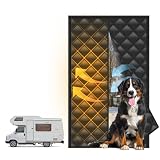
8. The EZIRVLIFE magnetic cover is the direct answer to a cold, drafty van doorway
EZIRVLIFE Camper Insulated Door Cover, RV Insulated Door Cover, RV Insulation, Size 33″ X 80″, Magnetic Thermal Insulated Door Curtain
33 in x 80 in
Cotton filled
Magnetic door closure
Pros
- Cotton insulation
- Hands-free magnetic access
- Waterproof exterior
- Windproof
- No tools needed
Cons
- One fixed size
- Not a permanent wall layer
The EZIRVLIFE Camper Insulated Door Cover does a different job from every roll above: it covers a 33-inch by 80-inch doorway with a cotton-filled, three-layer curtain. Its Oxford-cloth exterior is described as waterproof and windproof, with double stitching and a magnetic fastening design.
This is a good reminder that an insulated shell can still feel cold if air comes through the entry. I would consider a door cover after the main van conversion insulation is complete, especially for a parked winter-camping setup where the door is opened repeatedly.
At 2.92 pounds, it is a substantial soft barrier rather than a film. The 4.7 rating from 69 reviews and customer comments about easy magnetic access make it a sensible targeted option for keeping an entry usable without holding a curtain aside.
The product includes adhesive hooks and built-in Velcro strips for installation. Since it is limited to one stated size, measure the actual finished opening and account for trim, handles, and the route of the magnetic split before deciding it fits.
The EZIRVLIFE cover works best at a regularly used camper or cargo-door opening
The magnetic closure is the feature that separates this from a fixed insulation panel. I would use it where hands-free trips in and out matter, such as during a cold evening when cooking gear and wet clothing move through the door.
The cotton filling and windproof exterior address a draft at the opening, while the waterproof outer fabric adds weather resistance. It is a focused comfort upgrade, not a material to hide inside wall cavities.
The EZIRVLIFE cover needs a precise opening measurement and clean mounting surface
A 33-inch by 80-inch curtain will not fit every van doorway. Check width, height, door-swing clearance, and whether the mounting area is smooth enough for the supplied adhesive components.
For long-term winter living, I would pair it with correctly fitted seals and a full insulation plan. A door curtain can stop a noticeable draft, but it cannot compensate for uninsulated windows, roof metal, or a cold floor.
The right winter van insulation system starts with thick material, dry metal, and measured coverage
The most dependable answer for cold weather is a system: fibrous insulation in accessible cavities, well-fitted window coverage, a draft plan for doors, and ventilation that can move humid air out. The metal body, glass, floor, and exposed ribs all transfer cold differently, so one product cannot solve every part of the van.
Builders in van forums commonly report cold floors, condensation, and the regret of installing something they cannot remove for a repair. That is why I favor a thoughtful layer plan over a single material claim.
Fiber insulation is the primary winter layer because thickness and stated thermal resistance matter
R-value describes resistance to heat flow: a higher stated value means the material resists heat moving through it more strongly. The 3M SM600L and TuLeYiLe listings state R 5.45 per inch, while the Maasechs listing gives thickness and moisture-facing layers but does not provide an R-value.
That difference is useful when comparing materials, but do not add R-values from separate components without understanding how compression, gaps, and metal framing affect the installed assembly. A dense piece squeezed flat behind a panel will not behave the same as a piece installed at its intended thickness.
For winter van life, I would give the deepest accessible wall and ceiling cavities to a thick fiber product. The floor deserves its own plan because it takes foot traffic, supports furniture, and is a frequent source of cold feet in builder discussions.
Reflective sheets are secondary layers because they do not replace thick cavity insulation
Radiant barriers have a clear job when used as window inserts or planned reflective layers. The SEALTECH, LSGCQ, YoleShy, and ToLanbbt products provide reflective surfaces and are easy to cut, but their listed thicknesses make them a different category from the 44-millimeter fiber rolls.
I would use these products to cover glass, make removable night panels, or supplement a deliberate build layer. I would not call a van winter-ready just because every wall has shiny bubble material behind it.
Choose the wide 47- or 48-inch sheets for broad windows and the 23.6-inch ToLanbbt material for small, awkward spots. This keeps seams to a minimum without wasting material where a full-width panel cannot fit.
Moisture control starts with ventilation and leak repair, not a promise from insulation
Hydrophobic or moisture-resistant fibers can be a better choice than materials that retain water, and waterproof faces can protect a roll in a damp panel space. Still, moisture from breathing, wet clothes, cooking, and a roof leak needs a way out or a source repair.
Before closing a wall, I would inspect seams and roof penetrations, dry the steel, and preserve access to wiring or other service points. This approach addresses the common complaint that a permanent layer becomes a headache when a repair is needed.
Watch for morning condensation on windows and exposed metal during the first cold trips. That observation tells you whether to adjust ventilation, window covers, or air movement before sealing more material behind finished panels.
Van measurements determine material quantity because model names alone do not determine surface area
A Sprinter, ProMaster, or Ford Transit name is only the start; wheelbase, roof height, rear windows, cargo-door trim, and cabinetry all change the usable insulation area. Measure the ceiling, each side wall, slider, rear doors, front doors, wheel arches, and every window before ordering or cutting anything.
Then draw a simple cut map that gives wide sections to broad wall or roof spans and saves smaller offcuts for doors and cavities. This is also the most honest answer to how much Thinsulate you need: calculate your own panel area, then add a sensible margin for templates, overlaps, and trimming.
Do not use a generic listed coverage figure as a van-model promise. A complete conversion can need different materials in different zones, and the product records here do not provide pre-cut compatibility for a specific Sprinter, ProMaster, or Transit configuration.
Cold-weather installation works best when the work area and adhesive surfaces are clean and dry
Measure each exposed cavity and window, then make cardboard templates for irregular shapes.
Fix leaks, clean dust and oil from the metal, and let the surfaces dry before applying any tape, fastener, or finished panel.
Place thick fiber insulation in wall, ceiling, door, and cavity zones without crushing it flat behind trim.
Add removable reflective window panels and a door cover only where they solve a known cold-glass or draft problem.
Run a cold-night check for drafts and condensation, then adjust seals and ventilation before closing every serviceable panel.
This sequence follows the concerns that come up most often in builder discussions: avoid trapped moisture, avoid unrepairable layers, and do not neglect the floor or the door gaps. It also prevents the common mistake of adding a thin radiant sheet first and discovering later that the main wall cavities are still empty.
FAQs
What is the best insulation to use in a van?
For a winter van conversion, thick moisture-resistant fiber insulation is the best primary choice for accessible walls and ceilings because it provides stated thermal resistance and fits irregular cavities. In this roundup, 3M Thinsulate SM600L and TuLeYiLe are the fiber products with a stated R-value of 5.45 per inch; reflective sheets are better treated as window or secondary layers.
How do you insulate a van for cold weather?
Measure the van, repair leaks, clean and dry the metal, then put thick fiber insulation in accessible wall and ceiling cavities without compressing it. Add fitted reflective window covers, address door drafts, give the floor its own plan, and maintain ventilation so moisture from people and cooking can leave the van.
How thick should insulation be in a van?
Use the deepest thickness that fits a cavity without crushing the material or blocking trim, wiring, and service access. The fiber options reviewed here are 1.65 inches for 3M SM600L and TuLeYiLe and 1.18 inches for Maasechs; thin reflective sheets serve a different, supplemental role.
How much Thinsulate do I need for a van?
Add the measured area of the roof, walls, doors, and chosen cavities, then allow extra material for templates, complex cuts, and trim. Do not rely on a van name alone: wheelbase, roof height, window count, cabinetry, and exposed metal all change the amount needed.
The 3M SM600L remains the best all-around starting point for winter van insulation
For the best van insulation kits for winter, choose the 3M SM600L or TuLeYiLe fiber roll for the main shell, use Maasechs when a narrow flexible roll fits the work better, and add reflective products only for targeted window and radiant jobs. Measure first, keep the metal dry, and handle drafts and ventilation as seriously as wall insulation for a warmer 2026 build.