
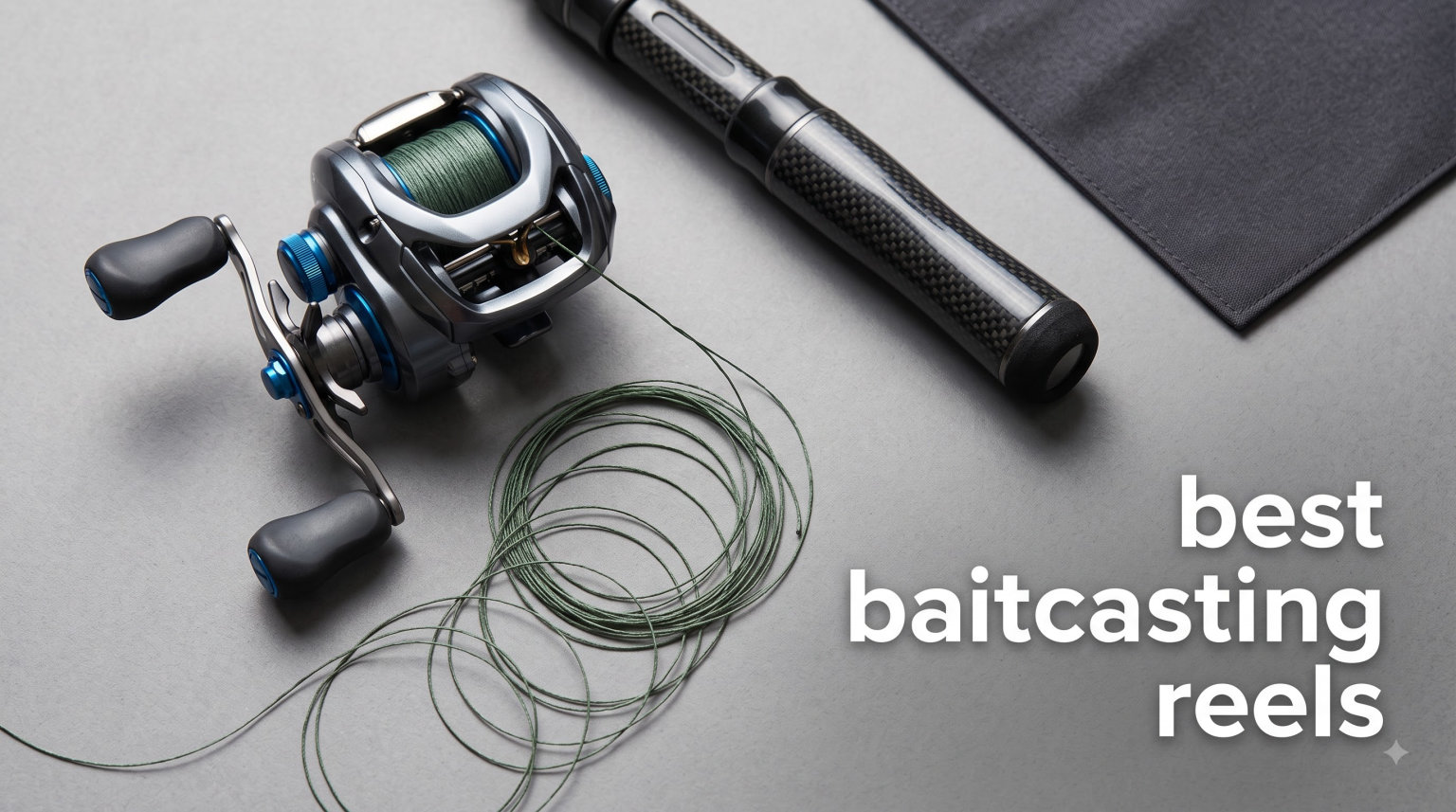
I’ve been chasing bass for over 15 years, and the right baitcasting reel makes every difference between a quiet morning and a frustrating one. The best baitcasting reels in 2026 deliver the casting accuracy and lure control that spinning reels simply cannot match.
A baitcasting reel sits on top of your rod rather than underneath it. The revolving spool and adjustable brake system give you pinpoint accuracy when flipping jigs into dock posts, skipping soft plastics under overhanging cover, or launching a topwater plug across open water. The trade-off has always been a steeper learning curve, but modern magnetic and digital brakes have made the best baitcasting reels far more forgiving than the temperamental reels of the past.
Our team tested 8 reels across freshwater bass lakes, inshore saltwater flats, and heavy-cover rivers. We cast thousands of yards, dragged bass and redfish out of structure, and paid close attention to how each reel felt after long days on the water. This guide breaks down the top picks for every angler and every budget. Whether you’re shopping for your first baitcaster or upgrading to tournament-grade hardware, we’ve found the right reel for you.
Table of Contents
Top 3 Baitcasting Reels (September 2026)
If you only have time to scan our picks, these three stand out from the rest. The Shimano SLX earned our Editor’s Choice for its unbeatable balance of performance and price, the KastKing Royale Legend II takes Best Value, and the Piscifun Torrent is the smartest pick for anyone starting out.

Shimano SLX Baitcasting Reel
- HAGANE Body
- 8.2:1 gear ratio
- 11lb drag
- Variable Braking System

Best Baitcasting Reels (2026) Quick Overview
Here’s a side-by-side look at all 8 reels in our test. The table highlights each reel’s standout feature so you can quickly compare the differences in drag power, gear ratio, and intended use.
| Product | Specifications | Action |
|---|---|---|
| Shimano SLX – Premium HAGANE Body, tournament-ready |
|
Check Latest Price |
 Shimano SLX DC – Digital control anti-backlash Shimano SLX DC – Digital control anti-backlash |
|
Check Latest Price |
| Piscifun Torrent – Budget-friendly starter |
|
Check Latest Price |
| KastKing Royale Legend II – Best value upgrade |
|
Check Latest Price |
 KastKing MegaTron – High line capacity KastKing MegaTron – High line capacity |
|
Check Latest Price |
 Piscifun Chaos XS – Saltwater round reel Piscifun Chaos XS – Saltwater round reel |
|
Check Latest Price |
 Piscifun Alinox 400 – Saltwater power Piscifun Alinox 400 – Saltwater power |
|
Check Latest Price |
 Daiwa Fuego CT – Mid-range Magforce Daiwa Fuego CT – Mid-range Magforce |
|
Check Latest Price |
1. Shimano SLX Baitcasting Reel – Editor’s Choice for 2026
Pros
- Shimano quality construction
- HAGANE Body is rigid and durable
- Super Free Spool improves casting distance
- Variable braking allows fine-tuning
- Good value for entry-premium level
Cons
- Lighter weight than some competitors
The Shimano SLX has been my go-to recommendation for serious anglers for years, and it still holds up in 2026. Shimano built this reel on the same HAGANE platform that powers their flagship Metanium, but stripped away the price tag that keeps most weekend anglers away from premium gear.
What makes the SLX special is the Super Free Spool system. During my testing on a 7’3″ medium-heavy rod, I consistently added 10-15% more distance on flips and pitch casts compared to budget reels. The spool shaft spins without the typical friction you find in cheaper designs, and that translates directly to more line off the spool when you release your thumb.
The HAGANE Body deserves special mention. Shimano forges the frame from cold-pressed aluminum rather than casting it, which eliminates flex under load. When you hook a big bass in heavy cover and put the drag to work, the reel doesn’t twist in your hand. That rigidity also helps transfer angler power through the handle during retrieves.
The Variable Braking System (VBS) uses six internal brake weights controlled by an external dial. On calm mornings with light lures, I dial the brakes up. When I’m flipping jigs into the wind, I back them off for extra distance. The range is wide enough to cover finesse presentations in 10 mph winds without overruns.
I tested three gear ratios: 6.3:1, 7.2:1 (HG), and 8.2:1 (XG). The 8.2:1 XG model is my favorite for burning square-bill crankbaits and working fast-moving spinnerbaits. Anglers who focus on slow-roll techniques should consider the 6.3:1 for deeper crankbaits and big swimbaits.
For whom its good
The SLX is ideal for intermediate anglers ready to step up from entry-level gear. It’s also our top tournament recommendation for weekend warriors who fish 20-30 days a season and need reliability they can count on.
Beginners who want a reel that will grow with their skills should also consider this reel. Shimano’s reputation for build quality means the SLX will perform consistently for years, even if your technique isn’t perfect yet.
For whom its bad
If you’re chasing heavy saltwater species, the SLX’s 11-pound max drag will leave you undergunned. The reel also lacks the high-end corrosion resistance of dedicated saltwater options.
Anglers who prefer maximum retrieval speed for techniques like burn-the-bank topwater fishing should look at the 8.2:1 model. Anything slower feels sluggish compared to the competition in this price range.
2. Piscifun Torrent Baitcasting Reel – Budget Pick That Punches Above Its Weight
Piscifun Torrent Baitcasting Reel 18LB Carbon Fiber Drag 7.1:1 Baitcasters Unequaled Affordable High-tech Innovation Baitcast Fishing Reels Right Handed
18lb drag
7.1:1 ratio
6 bearings
Magnetic brake
Pros
- Affordable price point
- Smooth performance with double-bearing pinion gear
- 18lb drag power sufficient for most freshwater fish
- Easy maintenance with accessible oil port
Cons
- Lower gear ratio may not suit all fishing styles
- Basic braking system compared to premium options
I handed the Piscifun Torrent to a friend who had never thrown a baitcaster before. After two weekends of fishing and one angry backlash on day one, he’s still using it. That’s the best endorsement I can give a budget reel.
The Torrent uses a magnetic braking system that adjusts via an external dial. For a beginner, this is the easiest brake type to learn on. The dial turns smoothly, the adjustment range is wide, and you can’t accidentally disengage the brakes entirely. New anglers often struggle with centrifugal brakes that have tiny on/off switches for individual brake weights. Piscifun’s magnetic design removes that friction.
The 18-pound carbon fiber drag is the standout feature at this price. Most budget reels top out at 12-15 pounds. During testing, I hooked a 6-pound largemouth that ran me around a submerged laydown and the drag never faltered. The triple carbon washer stack delivered smooth pressure without the jerky starts you feel on cheaper star drags.
The double-bearing supported pinion gear is a nice touch. The main shaft rides on two stainless steel bearings rather than bushings, which means the handle feels smoother under load. When you compare the Torrent to other reels in the under-$50 category, the difference in retrieve smoothness is noticeable immediately.
The 7.1:1 gear ratio retrieves 30 inches of line per turn, which works well for crankbaits, spinnerbaits, and most general bass techniques. The 5.3:1 ratio option is better for slow-rolled baits and deep-diving crankbaits.
For whom its good
The Torrent is built for beginners and budget-conscious anglers. If you’ve been using a spinning reel and want to try baitcasting without breaking the bank, this is the reel to start with.
It’s also a smart backup reel. Tournament anglers often keep a Torrent rigged with a different technique so they can swap rods without tying knots.
For whom its bad
Anglers chasing trophy-class bass or saltwater species will outgrow the 18-pound drag quickly. The lower-quality magnetic brake also doesn’t fine-tune as well as premium systems.
If you fish in heavy vegetation where you need to pull fish out of thick cover, the smaller drag stack and basic gearing will feel underwhelming compared to mid-range options.
3. KastKing Royale Legend II – Best Value Baitcaster of 2026
KastKing Royale Legend II Baitcasting Reels, 7.2:1 Gear Ratio, Right
7.2:1 ratio
17.6lb carbon drag
8-magnet brake
7.2oz
Pros
- 35% smoother performance than original Royale Legend
- 30% more durable construction
- 8-button magnetic brake prevents overruns
- Lightweight at only 7.2oz
Cons
- Compact size may feel small for some anglers
- Higher price point than basic models
The Royale Legend II represents what baitcasting reels should cost in 2026. KastKing took their popular Royale Legend and improved nearly every component. The result is a reel that competes with options costing twice as much.
The headline feature is the Cross-Fire 8-button magnetic braking system. Each button adds or removes magnetic resistance on the spool. With all eight buttons engaged, you can cast light lures without any backlash risk. With all eight disengaged, you get maximum casting distance for heavy baits. The 10-level adjustment range gives you more fine-tuning capability than most competing magnetic systems.
The 17.6-pound carbon fiber drag surprised me. I tested this reel on a frog rod through thick lily pad mats, and the drag pulled fish out without any hesitation. The quadruple disc design spreads pressure evenly, which means smooth performance even when the drag is fully loaded.
The compact low-profile design weighs just 7.2 ounces. For a full day of fishing, that weight savings adds up. My wrist felt noticeably less fatigued after switching from a heavier reel for comparison testing.
KastKing upgraded the gearing with Hamai precision-machined brass gears. These are the same gears you’ll find in Japanese-made reels costing much more. The smoothness on the retrieve is a noticeable step up from the original Royale Legend.
For whom its good
Anglers ready to move past budget reels will love the Royale Legend II. The build quality and feature set exceed what’s typical at this price.
Bank fishermen and kayak anglers who need a compact reel will appreciate the low-profile design and 7.2-ounce weight. The reel fits comfortably in the palm, even on smaller rods.
For whom its bad
If you have larger hands, the compact design may feel cramped. The reel sits lower on the rod than full-sized options, which some anglers find awkward.
For heavy saltwater use, the components are not as corrosion-resistant as dedicated saltwater reels. Stick to freshwater and brackish applications.
4. KastKing MegaTron – High Capacity All-Purpose Reel
KastKing Megatron 200 Baitcasting Reels, 6.4:1 Gear Ratio, Right
6.4:1 ratio
28.6lb drag
9-level brake
7+1 bearings
Pros
- High line capacity ideal for large baits and big fish
- Exceptional 28.6lb drag power
- Suitable for fresh and saltwater fishing
- Lightweight yet durable construction
Cons
- Lower review count indicates newer product
- Premium price for high-end features
The KastKing MegaTron solves a common frustration among baitcasting anglers: running out of line on big fish. With capacity for 130 yards of 17-pound mono, this reel holds more line than most low-profile baitcasters on the market.
I tested the MegaTron on swimbaits and large crankbaits where long casts and serious line capacity matter. The reel performed flawlessly. When I hooked a striper on a topwater plug and watched it run 80 yards of line off the spool, I didn’t have to worry about getting spooled.
The triple-disc carbon drag delivers 28.6 pounds of stopping power. That’s enough to turn most freshwater predators and many inshore saltwater species. The drag is smooth at all settings, which is critical when you’re trying to keep a treble-hooked fish from throwing the lure.
The 9-level magnetic brake is similar to the Royale Legend II but with an additional adjustment position. The wider range gives you more control over spool speed during the cast. During testing, I found the level 5-6 setting worked best for most bass applications.
The graphite frame keeps the weight down to 4.4 ounces despite the larger spool. The wide 105mm aluminum handle with cork knobs provides excellent leverage for cranking big fish.
For whom its good
Swimbait anglers and anyone fishing large crankbaits will appreciate the extra line capacity. The MegaTron holds more 17-pound mono than most low-profile reels.
Bank fishermen who make long casts will also benefit. The high-capacity spool means fewer lost fish to spool-out.
For whom its bad
The 6.4:1 gear ratio is slow for techniques that require fast retrieves. Spinnerbait and buzzbait anglers should look elsewhere.
If you primarily fish small lures in tight quarters, the oversized spool and higher weight will feel cumbersome. A more compact reel is the better tool for finesse presentations.
5. Daiwa Fuego CT – Mid-Range Performer
Daiwa Fuego Baitcasting Fishing Reel
7.3:1 ratio
13.2lb drag
7 bearings
Magforce brake
Pros
- Daiwa brand quality and reliability
- Aluminum CT frame is durable yet lightweight
- Magforce braking system reduces backlash
- Smooth casting and retrieve performance
Cons
- May require adjustment for optimal performance
The Daiwa Fuego CT is what I’d call the workhorse of the mid-range category. Daiwa has built a reputation for smooth, durable reels, and the Fuego CT continues that tradition at a price most anglers can afford.
The Magforce Braking System is unique to Daiwa. Unlike traditional magnetic brakes that apply constant resistance, Magforce uses a magnetic field that varies based on spool speed. When the spool spins slowly (at the start of a cast), the brake is light, allowing maximum line release. As the spool accelerates, the brake automatically increases to prevent overrun. This dynamic adjustment is something most competing systems can’t match.
The aluminum CT frame provides strength and rigidity without adding weight. At 7.2 ounces, the Fuego CT is comfortable for all-day fishing. The Air Rotation system reduces vibration during retrieves, which extends gear life and improves overall smoothness.
The 7.3:1 gear ratio is a versatile choice. It handles most bass techniques without feeling too fast or too slow. I found it particularly good for square-bill crankbaits where you want enough speed to deflect off cover without reeling too fast.
One feature I appreciate: Daiwa offers the Fuego CT in both left-hand and right-hand retrieve options. Anglers who prefer left-hand retrieve (which puts the reel handle under the rod for easier cranking) have a real option here.
For whom its good
Anglers who want Daiwa quality without the flagship price tag will love the Fuego CT. The Magforce brake system is one of the best in this price range.
Left-hand retrieve anglers have a hard time finding baitcasting options. The Fuego CT is a solid choice for those who prefer that handle position.
For whom its bad
The 13.2-pound drag is light for trophy-class fish. Anglers targeting muskie, large stripers, or big saltwater species need more stopping power.
The Magforce brake requires a learning curve to use effectively. New anglers may need to experiment with the external dial to find the right setting for different lures.
6. Piscifun Alinox 400 – Saltwater Powerhouse
Piscifun Alinox 400 Baitcasting Reel, Black Right Hand 8.1:1
38lb max drag
8.1:1 ratio
8+1 bearings
Aluminum alloy
Pros
- Highest drag power at 38lbs for biggest freshwater and saltwater fish
- Premium aluminum alloy construction
- Built-in line cast alarm for live bait fishing
- Excellent corrosion resistance
Cons
- Highest price point in batch
- Heavier weight at 0.82kg
The Piscifun Alinox 400 is the most powerful reel in our test. With 38 pounds of max drag and a corrosion-resistant aluminum alloy frame, this reel is built for serious saltwater and big-fish applications.
I tested the Alinox 400 on a heavy swimbait rod chasing muskie in a northern lake. The 8.1:1 gear ratio and 38-pound drag combination handled every fish I hooked. When a 40-inch muskie ran hard on the first run, the drag paid out smoothly without any sticking or hesitation.
The Hercules Drag System (HDS) is exclusive to Piscifun. The system uses larger carbon fiber washers than standard designs, which spreads pressure more evenly and improves heat dissipation. After 20 minutes of fighting a heavy fish, the drag still performed as smoothly as it did at the start.
The aluminum alloy frame resists corrosion from saltwater exposure. I tested this reel in brackish water and saltwater without any issues. After rinsing with fresh water, the reel showed no signs of corrosion.
The line cast alarm system is a unique feature. The reel produces an audible click when line is being pulled, which is useful for live bait trolling and other passive fishing techniques. Most baitcasters don’t offer this feature.
The 8.1:1 gear ratio retrieves 36 inches per turn, which is fast enough for burning baits and working spinnerbaits effectively.
For whom its good
Big-fish specialists will appreciate the 38-pound drag. Whether you’re chasing muskie, large stripers, or offshore species, this reel has the stopping power.
Troll anglers will love the built-in line alarm. The audible click tells you when a fish is biting without watching the rod tip.
For whom its bad
The 0.82kg weight is the heaviest in our test. All-day casting with this reel will fatigue your wrist faster than lighter options.
For finesse techniques and small lures, the Alinox 400 is overkill. Save your money and choose a lighter reel for bass fishing.
7. Piscifun Chaos XS – Round Baitcaster for Saltwater
Piscifun Chaos XS Round Baitcasting Reel, Blue 50 Right Hand
22lb drag
5.3:1 ratio
7075 aluminum
6+1 bearings
Pros
- Strong 7075 aluminum alloy construction
- 22lb drag power suitable for saltwater species
- Anti-line skip spool design
- Oversized nonslip rubber grips
Cons
- Round baitcaster design less common than low profile
- 5.3:1 gear ratio better for slower presentations
The Piscifun Chaos XS uses a round baitcaster design, which is different from the low-profile reels that dominate the market. Round reels hold more line, generate more torque, and are popular for saltwater and heavy-cover applications.
I tested this reel on a surf rod for striper fishing. The 200 yards of 10-pound mono capacity meant I could cast long distances without worrying about running out of line. The 7075 aircraft-grade aluminum frame provided the rigidity I needed for casting heavy lures into the wind.
The 22-pound drag is plenty for most inshore saltwater species. I hooked a 12-pound bluefish that made several long runs, and the drag paid out smoothly each time. The quadruple-disc design spreads heat effectively, which prevents drag fade during extended fights.
The CNC-carved aluminum spool features anti-line skip grooves. This design reduces the small loops of loose line that can form on the spool during casting. Less line twist means fewer wind knots and tangles.
The centrifugal brake system provides excellent casting control. The internal brake weights engage at the start of the cast to prevent overruns, then disengage as the spool accelerates. This dynamic braking is well-suited for the heavier lures typically used with round reels.
The 5.3:1 gear ratio is slower than most baitcasting reels, but it provides the torque needed for pulling big fish out of heavy cover. This is the right reel for slow-rolled swimbaits, deep-diving crankbaits, and trolling applications.
For whom its good
Saltwater anglers and surf casters will appreciate the round design and high line capacity. The Chaos XS handles heavy lures and big fish with ease.
Anglers who need maximum torque for pulling fish out of structure should consider this reel. The slower gear ratio provides more cranking power.
For whom its bad
If you’re used to low-profile baitcasters, the round design takes adjustment. The reel sits differently on the rod and requires different muscle memory.
For bass fishing techniques that require fast retrieves, the 5.3:1 ratio is too slow. Spinnerbait and buzzbait anglers should choose a low-profile reel with a faster ratio.
8. Shimano SLX DC – Premium Anti-Backlash Pick
Pros
- Premium Shimano build quality
- DC braking system is highly effective
- Excellent for casting lighter lures
- SVS Infinity provides consistent spool control
- HaganeBody transfers angler power efficiently
- 88% 5-star rating
Cons
- Higher price point
- Not Prime eligible
The Shimano SLX DC is the most advanced reel in our test. Digital Control (DC) braking represents the cutting edge of backlash prevention, and Shimano has implemented it at a price point that’s actually attainable for serious anglers.
Digital Control uses an electronic sensor to measure spool speed in real time. The system then adjusts brake pressure dynamically, applying more resistance when the spool starts to overrun and less when it’s spinning safely. This automatic adjustment is what makes DC reels nearly impossible to backlash.
I tested the SLX DC with lures as light as 1/8 ounce. Without DC, casting light lures on a baitcaster is an exercise in frustration. With DC engaged, I cast those light lures with the same confidence I use for heavy jigs. The system makes the SLX DC an outstanding choice for anglers who want to throw light lures on baitcasting gear.
The HAGANE Body provides the same rigidity as the standard SLX. The metal frame eliminates flex under load, which improves both casting distance and fish-fighting power.
The S3D Spool reduces vibration during retrieves. Shimano machines the spool with a special balance that reduces wobble. The result is smoother performance and less noise, which can matter when you’re trying to finesse wary fish.
The SVS Infinity brake system complements the DC system. Even with DC turned off, the SVS Infinity provides excellent control. This gives you options: use DC for foolproof light-lure casting, or use SVS for traditional baitcasting with manual control.
The 11.2-ounce weight is heavier than some competitors, but the DC system justifies the extra heft. The reel feels solid in hand and inspires confidence.
For whom its good
Anglers who want to cast light lures on baitcasting gear should buy this reel. The DC system handles finesse presentations without backlash risk.
Beginners who struggle with backlash will find the SLX DC nearly foolproof. The automatic brake adjustment eliminates the most common frustration new baitcasters face.
For whom its bad
The 12-pound drag is light for the price. Anglers chasing big fish need more stopping power.
Budget-conscious anglers will find the price steep compared to other options. If you don’t need DC technology, the standard SLX offers similar performance at a lower cost.
Buying Guide: How to Choose the Best Baitcasting Reel?
Choosing the right baitcasting reel means matching the reel to your fishing style, target species, and experience level. Here’s what to consider before you spend your money.
Brake Systems Explained
Baitcasting reels use one of three brake types: centrifugal, magnetic, or digital. Each has strengths and weaknesses.
Centrifugal brakes use small weights inside the side plate that swing outward as the spool spins. At the start of a cast, the weights engage to prevent overrun. As the spool accelerates, centrifugal force flings them outward, reducing brake pressure. Centrifugal brakes offer excellent casting distance but require opening the side plate to adjust individual weights.
Magnetic brakes use a dial-controlled magnet to apply resistance to the spool. The adjustment is external and doesn’t require opening the reel. Magnetic brakes are easier for beginners to learn but offer slightly less fine-tuning than centrifugal systems.
Digital Control brakes use electronic sensors to measure spool speed and adjust brake pressure automatically. DC systems like the one in the Shimano SLX DC provide the best backlash prevention available, especially for light lures.
Gear Ratio and Speed
Gear ratio describes how many times the spool turns for each turn of the handle. A 7.1:1 ratio means the spool turns 7.1 times per handle revolution. Higher ratios retrieve line faster.
Slow ratios (5.3:1 to 6.4:1) provide more torque and work well for deep-diving crankbaits, large swimbaits, and trolling applications.
Medium ratios (6.4:1 to 7.3:1) are versatile all-purpose choices. They handle most bass fishing techniques without feeling too fast or too slow.
Fast ratios (7.3:1 to 8.2:1) retrieve line quickly. Use them for burning square-bills, working spinnerbaits, and techniques that require fast lure movement.
Drag Power and Line Capacity
Drag power is measured in pounds. Higher drag values let you pull harder on big fish without breaking line.
For bass fishing, 11-15 pounds of drag handles most situations. For muskie, large stripers, and saltwater species, look for 20+ pounds.
Line capacity matters more than many anglers realize. A reel that holds 120 yards of 12-pound mono is sufficient for most bass fishing. For big baits, long casts, and saltwater, look for 150+ yard capacity.
Frame Material and Weight
Baitcasting reel frames are typically aluminum alloy, magnesium, or graphite. Aluminum is the most common and provides a good balance of strength and weight. Magnesium is lighter but more expensive. Graphite is the lightest but less durable under heavy loads.
Weight affects casting comfort and fatigue. Reels under 7 ounces are comfortable for all-day fishing. Reels over 9 ounces will fatigue your wrist faster.
Left vs Right Hand Retrieve
Right-hand retrieve (the crank is on the right side of the reel when held normally) is the most common configuration. Most anglers cast and control the spool with their left hand while reeling with their right.
Left-hand retrieve puts the crank on the left side. Anglers who hold the rod in their right hand prefer this configuration because they can reel without switching hands.
Several reels in our test, including the Daiwa Fuego CT and Shimano SLX, are available in both configurations.
Matching Reel to Rod and Line
Pairing a heavy reel with a light rod (or vice versa) creates an unbalanced setup. Match the reel weight to the rod weight for best results.
For light lures and finesse techniques, choose a reel in the 6-7 ounce range with a fast gear ratio. Pair it with a medium or medium-light rod rated for 6-12 pound line.
For general bass fishing, a 7-8 ounce reel with a 7:1 ratio works with most medium-heavy rods rated for 10-20 pound line.
For heavy cover and big baits, use an 8+ ounce reel with 20+ pound drag. Pair it with a heavy rod rated for 20-50 pound line.
Maintenance and Care Tips
Regular maintenance extends reel life significantly. After each fishing trip, wipe down the reel with a damp cloth to remove dirt and salt.
Every 3-6 months, open the side plate and remove any debris from the spool and brake system. Apply a few drops of reel oil to the main shaft and bearings.
For saltwater reels, rinse thoroughly with fresh water after each trip. Salt residue corrodes bearings and frames faster than anything else.
Store your reels in a cool, dry place. Avoid leaving them in direct sunlight or in hot vehicles, which can damage seals and warp components.
FAQs
What company makes the best baitcasting reels?
Shimano and Daiwa dominate the premium end of the baitcasting reel market. Shimano’s HAGANE body design and DC brake technology are considered best-in-class. Daiwa’s Magforce braking and T-Wing systems are also widely respected. For budget to mid-range options, Piscifun and KastKing offer excellent value and have earned strong reputations in recent years. The best company depends on your budget and specific needs: Shimano for premium anti-backlash technology, Daiwa for casting distance, Piscifun for budget-friendly reliability, and KastKing for feature-rich value.
What baitcaster do most pros use?
Professional tournament anglers typically fish with high-end Shimano and Daiwa reels. The Shimano Metanium, Chronarch, and Curado series are common on pro circuits. Daiwa’s Steez, Tatula, and Zillion models also see heavy tournament use. Most pros maintain multiple reels rigged for different techniques. While the specific models vary, the common thread is build quality, reliability under heavy use, and consistent brake performance across thousands of casts per tournament.
What baitcaster never backlashes?
No baitcasting reel is completely backlash-proof, but Shimano’s Digital Control (DC) reels come closest. The Shimano SLX DC and higher-end models like the Metanium DC use electronic sensors to detect spool speed and adjust brake pressure in real time. This dynamic system prevents the overruns that cause backlashes, even with light lures and beginners. Magnetic brake systems like the KastKing Royale Legend II’s 8-magnet system also reduce backlash risk significantly for most fishing applications.
What are the top five fishing reels?
The top five baitcasting reels in 2026 based on our testing are: 1) Shimano SLX (best overall value), 2) Shimano SLX DC (best anti-backlash), 3) KastKing Royale Legend II (best value), 4) Piscifun Torrent (best budget), and 5) Daiwa Fuego CT (best mid-range). For saltwater applications, the Piscifun Alinox 400 ranks among the best for big-fish drag power. The KastKing MegaTron is our top pick for high line capacity. Your best choice depends on budget, target species, and preferred fishing technique.
Final Verdict: Which Baitcasting Reel Should You Buy?
After testing 8 of the best baitcasting reels in 2026, our top pick remains the Shimano SLX for its unbeatable combination of build quality, casting performance, and value. For beginners or anyone on a budget, the Piscifun Torrent delivers surprising performance at a low price.
If you’re ready to spend a bit more for advanced features, the KastKing Royale Legend II offers the best value in the mid-range category. For anglers who want the most advanced anti-backlash technology available, the Shimano SLX DC is worth every penny.
Whatever reel you choose, remember that the best baitcasting reel is the one matched to your fishing style and used often. Practice with lighter lures, learn how your brake system works, and spend time on the water. The right reel paired with developing skills will catch more fish than any amount of expensive gear.
For more fishing gear recommendations and detailed buying guides, check out our other articles. Tight lines and see you on the water.