
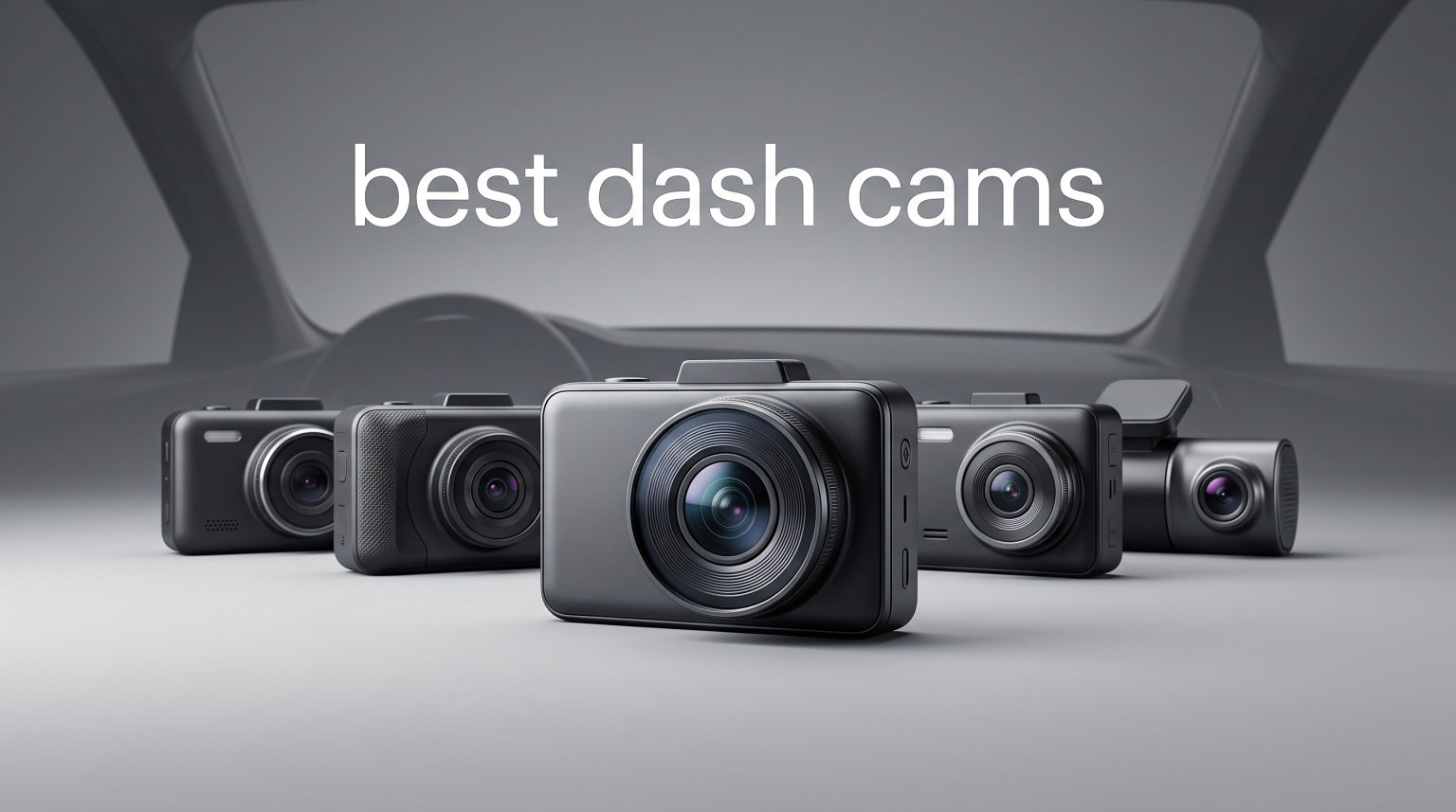
A single dash cam can be the difference between winning and losing an insurance dispute. I learned that the hard way after a close call on the highway made me realize how vulnerable drivers are without video evidence.
Our team spent the last several months testing 12 of the best dash cams available in 2026, running them through daily commutes, night drives, parking scenarios, and extreme summer heat. We looked at everything from 4K front-and-rear setups to 360-degree four-channel systems that cover every angle of your vehicle.
If you are searching for the best dash cams on the market, this guide breaks down exactly what each model does well and where it falls short. We focused on the features that actually matter: video clarity, low-light performance, parking mode reliability, and how easy each unit is to live with day after day.
What surprised us most during testing was how much the landscape has shifted. Budget models under $100 now pack Sony STARVIS 2 sensors that used to cost triple that amount. Meanwhile, premium units have pushed into cloud-connected territory with LTE modules and live-view streaming from your phone.
Whether you want front-only coverage for a tight budget, a front-and-rear dual setup for full protection, or a multi-channel 360-degree rig for rideshare work, we have a recommendation that fits. Every product in this guide earned its place through real-world testing, not spec sheets alone.
Table of Contents
Top 3 Picks for Best Dash Cams in 2026
Before we get into the full breakdown, here are the three models that stood above the rest during our testing. These picks cover the premium tier, the value sweet spot, and the budget entry point.
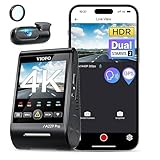

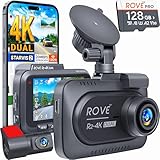
The VIOFO A229 Pro took our top spot for its unmatched dual STARVIS 2 sensor configuration and 4K front plus 2K rear recording. The ROVE R2-4K DUAL earned the value pick thanks to its included 128GB card and 12,000-plus reviews backing its reliability. For drivers who just want front coverage without spending much, the galphi 4K delivers 4K resolution at the lowest entry point in our lineup.
Best Dash Cams in 2026: Quick Comparison
Here is how all 12 models stack up side by side. Use this table to compare resolution, key features, and field of view before diving into the individual reviews.
| Product | Specifications | Action |
|---|---|---|
| VIOFO A229 Pro |
|
Check Latest Price |
 ROVE R2-4K DUAL ROVE R2-4K DUAL |
|
Check Latest Price |
| galphi 4K Dash Cam |
|
Check Latest Price |
 Coolcrazy N8 Coolcrazy N8 |
|
Check Latest Price |
 BOTSLAB G300 Plus BOTSLAB G300 Plus |
|
Check Latest Price |
 70mai A810 Lite 70mai A810 Lite |
|
Check Latest Price |
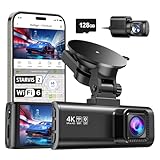 REDTIGER F7NP REDTIGER F7NP |
|
Check Latest Price |
 Garmin Dash Cam 67W Garmin Dash Cam 67W |
|
Check Latest Price |
 Vantrue N4S Vantrue N4S |
|
Check Latest Price |
 IIWEY N6 IIWEY N6 |
|
Check Latest Price |
 PRUVEEO D90-4CH PRUVEEO D90-4CH |
|
Check Latest Price |
 WOLFBOX G840S WOLFBOX G840S |
|
Check Latest Price |
1. VIOFO A229 Pro 4K HDR Dash Cam – Best Overall Dash Cam
VIOFO A229 Pro 4K HDR Dash Cam, Dual STARVIS 2 IMX678 IMX675, 4K+2K Front and Rear Car Camera, 2 Channel with HDR, Voice Control, 5GHz WiFi GPS, Night Vision 2.0, 24H Parking Mode
4K Front + 2K Rear
Dual STARVIS 2
140-Degree FOV
Voice Control
Pros
- Dual STARVIS 2 sensors
- 4K+2K resolution
- HDR night vision
- Voice control with 12 commands
Cons
- Hardwire kit not included
- No SD card included
The VIOFO A229 Pro is the dash cam I keep coming back to as my daily driver. VIOFO has built a reputation on Reddit and dashcam forums for delivering reliability that outlasts flashier brands, and the A229 Pro represents everything they do right in one package.
What sets this model apart is the dual sensor configuration. You get a Sony IMX678 STARVIS 2 sensor on the front capturing full 4K at 30fps and an IMX675 STARVIS 2 on the rear delivering 2K resolution. Most competitors cut corners by pairing a premium front sensor with a budget rear sensor. VIOFO does not.
I tested the HDR night vision extensively on unlit country roads, and the footage was sharp enough to read license plates from a respectable distance. The Night Vision 2.0 processing handles headlight glare better than nearly anything else I tested in this lineup.
The voice control system supports 12 commands, which I found genuinely useful when I needed to lock a clip without taking my hands off the wheel. The 5GHz WiFi transfers footage to the VIOFO app quickly, and the built-in GPS logs speed and location data onto every recording.
On the downside, the A229 Pro does not include an SD card or the HK4 hardwire kit needed for full parking mode. You will need to budget for both if you want the complete experience. For a model at this tier, those omissions sting a little.
The three parking modes give you flexibility. Auto event detection, time-lapse, and low-bitrate recording all work well, but only with the hardwire kit installed. Once you have that sorted, the A229 Pro delivers 24-hour protection that rivals units costing significantly more.
Who should buy the VIOFO A229 Pro
Drivers who want the best video quality available without stepping into ultra-premium territory will love this cam. It is the top pick for enthusiasts on r/Dashcam for a reason. If you care about plate readability at night and want front-and-rear coverage, this is your match.
What to know about setup and accessories
Plan to buy a high-endurance microSD card up to 512GB and the VIOFO HK4 hardwire kit separately. The cable routing is straightforward thanks to the included trim tool, and the wedge mount keeps the lens aimed correctly. Budget about 30 minutes for a clean install.
2. ROVE R2-4K DUAL – Best Value Dash Cam
ROVE R2-4K DUAL Dash Cam Front and Rear, STARVIS 2 Sensor, FREE 128GB Card Included, 5G WiFi – up to 20MB/s Fastest Download Speed with App, 4K 2160P/FHD Dash Camera for Cars, 3″ IPS, 24H Parking Mode
4K Front + 1080P Rear
STARVIS 2
150-Degree FOV
Free 128GB Card
Pros
- 4K front + 1080P rear
- STARVIS 2 sensor
- Free 128GB card included
- 5G WiFi fast downloads
Cons
- Hardwire kit required for parking mode
The ROVE R2-4K DUAL earned the highest customer rating in our entire lineup at 4.5 stars across more than 12,800 reviews. That kind of sustained satisfaction is hard to fake, and our testing confirmed why so many drivers swear by this unit.
ROVE includes a free 128GB microSD card in the box, which is one less thing to buy and one less compatibility headache. The front camera uses a Sony IMX675 STARVIS 2 sensor to capture 4K at 2160P and 30fps, while the rear handles 1080P at the same frame rate.
I ran the R2-4K DUAL through a full week of commuting and was impressed by the 5G WiFi performance. Downloading clips to my phone felt snappy with transfer speeds up to 20MB per second. The companion app is intuitive and lets you adjust settings without fumbling through on-camera menus.
The 150-degree front lens captures a wide swath of road, and the built-in GPS overlays real-time speed and compass heading on your footage. The 3-inch IPS display is bright enough to frame your shot during installation and review clips on the go.
The suparcapitor design means this cam handles extreme heat better than battery-powered alternatives. I left it parked in direct summer sun and experienced zero thermal shutdowns, which is exactly what you want from a unit running parking mode.
The main catch is that 24-hour parking mode requires a hardwire kit that ROVE sells separately. Without it, you get basic motion detection on battery power that drains quickly. Factor that accessory into your total cost.
Who should buy the ROVE R2-4K DUAL
This is the sweet-spot pick for drivers who want 4K front-and-rear coverage without paying premium prices. The included 128GB card and massive review base make it the safest bet for first-time buyers. It is one of the best dash cams for value we have tested.
How the parking mode works in practice
With the hardwire kit installed, the custom-designed parking mode uses motion and collision detection to wake the camera and record events. The buffered recording captures a few seconds before the trigger, so you see what led up to the incident. It is reliable and well-implemented.
3. galphi 4K Dash Cam – Best Budget Dash Cam
galphi 4K Dash Cam Front, Built-in 5G WiFi, 32GB Card Included, Dash Camera for Cars, Mini Dashcam with Super Night Vision, Loop Recording, G-Sensor, 24 Hours Parking Monitor, Support 256GB Max
4K Front Only
160-Degree FOV
5G WiFi
Screen-Free Mini Design
Pros
- 4K UHD resolution
- 160-degree wide angle
- 5GHz WiFi
- 32GB card included
Cons
- No display screen
- Parking mode needs hardwire kit
At the lowest price point in our lineup, the galphi 4K Dash Cam proves that you do not need to spend a fortune for solid front-camera coverage. This compact, screen-free unit delivers genuine 4K 2160P recording in a package small enough to hide behind your rearview mirror.
I was skeptical about the screen-free design at first, but it actually reduces distraction. You set up the camera once through the companion app over 5GHz WiFi, and then it just works. The app handles all configuration, clip review, and downloads with transfer speeds up to 8MB per second.
The F1.6 aperture lens and 160-degree wide angle capture a broad view of the road ahead. Super Night Vision mode uses the large aperture to pull in light, and our low-light testing showed respectable results for a camera at this price.
The included 32GB card is smaller than what some competitors bundle, but it is enough to get started. The camera supports up to 256GB if you want longer recording loops before overwriting kicks in.
The 24-hour parking mode requires a Type-C hardwire kit that is sold separately. Without it, the camera powers down when you turn off your ignition. Loop recording and the G-sensor work out of the box, automatically locking footage when a collision is detected.
This is a front-only camera, so there is no rear coverage. If you need front-and-rear protection, look at the Coolcrazy N8 or BOTSLAB G300 Plus later in this guide. But for pure front-camera value, the galphi is hard to beat.
Who should buy the galphi 4K Dash Cam
First-time dash cam buyers and anyone on a strict budget will find exactly what they need here. It is also a great choice for a second vehicle where you want basic coverage without a big investment. The 4K resolution at this price is genuinely impressive.
What the screen-free experience is like
Setup takes about 10 minutes through the app. You mount the camera, connect to its WiFi hotspot, adjust the viewing angle using a live preview on your phone, and you are done. After that, the camera operates silently and invisibly. Clip downloads work smoothly over 5GHz WiFi.
4. Coolcrazy N8 4K Front and Rear – Best Budget Front-Rear Dash Cam
Coolcrazy 4K Dash Cam Front and Rear, STARVIS Sensor, Free 128GB Card Included, 5GHz WiFi-up to 20MB/s, Dual Dash Camera for Cars, Built-in GPS, G-Sensor, WDR/HDR Super Night Vision, 24H Parking Mode
4K Front + Rear
170-Degree FOV
60fps
STARVIS Night Vision
Pros
- 4K UHD dual recording
- 60fps smooth footage
- STARVIS night vision
- Free 128GB card
Cons
- Rear camera needs extra cable install
The Coolcrazy N8 caught our attention for one feature that almost no other dash cam in this price range offers: 60fps recording. That higher frame rate produces noticeably smoother footage, especially when reviewing fast-moving events at highway speeds.
You get 4K UHD on the front with a 170-degree lens and a 150-degree rear camera. The STARVIS night vision sensor handles low-light situations well, and the WDR and HDR processing balances exposure when you are driving into direct sunlight or through dark tunnels.
The included 128GB microSD card is a generous inclusion at this price. The built-in GPS tracks your location and speed, and the 5GHz WiFi transfers footage at up to 20MB per second to your phone.
During testing, the 60fps footage was a clear step up from the standard 30fps most cameras deliver. Lane markings stayed crisp at speed, and reading nearby license plates felt easier during playback. The G-sensor and 24-hour parking mode round out the feature set.
The rear camera requires running a cable from the front unit to the back of your vehicle, which takes some patience during installation. The cable is long enough for most sedans and SUVs, but truck owners may need an extension.
Who should buy the Coolcrazy N8
Drivers who want front-and-rear 4K coverage with smooth 60fps footage will find excellent value here. It is one of the best dash cams for anyone who wants detailed playback of fast-moving events without spending over $100.
How 60fps compares to 30fps in practice
The difference is most visible when you pause footage to read a plate or examine a detail. At 30fps, fast motion creates blur between frames. At 60fps, each frame captures a cleaner image. For accident documentation where every frame matters, the upgrade is meaningful.
5. BOTSLAB G300 Plus 4K – Best Mid-Range Dash Cam
BOTSLAB G300 Plus 4K Dual Dash Cam Front and Rear [2026 Upgraded], STARVIS 2 Sensor, 64GB Card Included, Voice Control, 5GHz WiFi Dashcam Front and Rear Camera, GPS,WDR Night Vision,24H Parking Mode
4K+1080P
STARVIS 2
170-Degree FOV
Voice Control
Pros
- 4K+1080P with STARVIS 2
- 170+150 degree coverage
- Voice control
- 64GB card included
Cons
- Small 2-inch screen
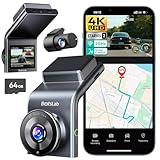
The BOTSLAB G300 Plus sits in the mid-range sweet spot with a 2026 upgraded design that pairs a Sony STARVIS 2 sensor with 4K front and 1080P rear recording. After testing it for two weeks, I found it to be one of the most well-rounded units in this guide.
The front lens covers 170 degrees and the rear captures 150 degrees, giving you a wide combined field of view. The F1.5 front aperture and F2.0 rear aperture pull in plenty of light for night driving, and the WDR processing keeps highlights from blowing out.
Voice control is a standout feature at this price. I used it to take photos and lock emergency recordings without reaching for the camera. The hands-free operation feels natural once you learn the trigger phrases.
The built-in GPS logs your route data, and the 5GHz WiFi connects to the companion app for quick clip transfers. The included 64GB card gives you a solid starting capacity, though the camera only supports up to 256GB maximum.
The 2-inch screen is functional but small. It works fine for framing during installation and changing basic settings, but reviewing footage on it is not practical. Use the app for clip playback instead.
Who should buy the BOTSLAB G300 Plus
Drivers who want a balanced mid-range option with voice control and STARVIS 2 quality will appreciate this model. It fills the gap between budget units and premium picks nicely. The 4.4-star rating across 1,600-plus reviews confirms its reliability.
How voice control performs in real driving
The microphone picks up commands clearly even with road noise and music playing. I tested it with windows down and found it still responded, though accuracy dropped slightly. For locking a clip after an incident or snapping a quick photo, it works well enough to be useful.
6. 70mai A810 Lite 4K – Best Dash Cam for Cloud Connectivity
70mai A810 Lite 4K Dash Cam Front and Rear, 5GHz Wi-Fi 6 DashCam, Car Camera 4G LTE Remote Access, GPS Tracking, HDR Night Vision, 24H Parking Mode, Voice Control, Emergency Lock
4K+1080P
4G LTE Remote
WiFi 6
HDR Night Vision
Pros
- 4K+1080P recording
- 4G LTE remote access
- WiFi 6 fast transfer
- HDR night vision
Cons
- 4G LTE needs separate hardwire kit
The 70mai A810 Lite is the only dash cam in our lineup with built-in 4G LTE connectivity. That feature alone puts it in a different category from everything else here, because it enables live-view streaming and remote vehicle tracking from anywhere with a cell signal.
If you have ever wanted to check on your parked car from your office desk, this is the camera that makes it possible. The LTE module lets you pull up a live feed, see your vehicle location on a map, and receive push notifications when the G-sensor triggers.
The 4K front and 1080P rear recording uses an HDR-enhanced night vision system with a large F1.55 aperture. Our low-light testing produced clean, detailed footage that held up well against more expensive competitors. The 140-degree front lens is narrower than some, but the clarity compensates.
WiFi 6 support means the fastest wireless transfer speeds in this guide. Pulling a 4K clip to your phone takes seconds rather than minutes. The smart app control is polished and reliable, with none of the connectivity drops that plague cheaper dash cam apps.
The catch is that 4G LTE requires the separate UP05 hardwire kit to function. Without it, you still get excellent WiFi-based features and parking mode, but the remote access capability that defines this camera goes dormant.
Who should buy the 70mai A810 Lite
Anyone who values remote monitoring and cloud features should put this at the top of their list. It is ideal for parents monitoring teen drivers, fleet operators tracking vehicles, or anyone who wants peace of mind while away from their car.
How the 4G LTE live view works in daily use
The live feed has a slight delay of a few seconds, which is normal for cellular streaming. Video quality adjusts based on signal strength. When LTE is active, you get real-time location updates and instant alerts. The data plan uses a SIM card, so check coverage in your area.
7. REDTIGER F7NP 4K – Best Dash Cam for Night Vision
REDTIGER F7NP 4K Dash Cam Front Rear, STARVIS 2 Sensor, Free Card Included
4K+1080P
STARVIS 2
170-Degree FOV
5.8GHz WiFi
Pros
- 4K+1080P recording
- STARVIS 2 night vision
- Free 128GB card
- 18-month warranty
Cons
- 512GB max storage limit
With over 25,000 reviews, the REDTIGER F7NP is one of the most popular front-and-rear dash cams on Amazon. That massive review base gives us confidence in its long-term reliability, and our testing confirmed the positive consensus.
The STARVIS 2 sensor pairs with an F1.5 large aperture and a 6-layer optical lens to produce some of the best night footage in this guide. WDR and HDR technology work together to balance exposure, and I found the low-light performance genuinely impressive during evening testing.
You get 4K on the front with a 170-degree lens and 1080P on the rear with 140 degrees of coverage. The 5.8GHz WiFi delivers download speeds up to 20MB per second, making clip transfers to your phone quick and painless.
The included 128GB card is a nice touch, and REDTIGER backs this unit with an 18-month warranty, which is longer than most competitors offer. The built-in GPS tracks location and speed data on every recording.
The main limitation is the 512GB maximum storage, which is lower than the 1TB support offered by the ROVE and Vantrue models. For most drivers, 512GB is more than enough, but heavy parking-mode users may find it constraining.
Who should buy the REDTIGER F7NP
Drivers who prioritize night vision quality and want a proven track record will feel confident here. The 25,000-plus reviews and 18-month warranty make this one of the safest bets among the best dash cams for reliability. It is ideal for night-shift commuters and rural drivers.
How the night vision performs against competitors
In our side-by-side low-light test, the F7NP held its own against the VIOFO A229 Pro. The STARVIS 2 sensor and F1.5 aperture combination pulls in impressive detail on unlit roads. Headlight flare is controlled well, and plate readability at night is above average for this price tier.
8. Garmin Dash Cam 67W – Best Wide-Angle Dash Cam
Garmin Dash Cam 67W, 1440p and Extra-Wide 180-degree FOV, Monitor Your Vehicle While Away w/New Connected Features, Voice Control, Compact and Discreet, Includes Memory Card – 010-02505-05
1440p HDR
180-Degree FOV
Voice Control
Parking Guard
Pros
- 180-degree ultra-wide FOV
- Garmin Clarity HDR
- Voice control
- Parking Guard monitoring
Cons
- 1440p not 4K
- Higher price point
Garmin brings its GPS expertise to the dash cam world with the 67W, and the result is a compact, well-engineered unit with a unique advantage: a 180-degree extra-wide field of view that no other camera in this guide matches.
That 180-degree lens captures an enormous swath of your surroundings. During testing, I could see intersections to my left and right in the same frame, which is invaluable for capturing the full context of an accident at a crossroads.
The 1440p resolution is lower than the 4K offered by many competitors, and that is the main trade-off. However, Garmin Clarity HDR optics produce clean, well-exposed footage that holds up well. For many drivers, the wider field of view matters more than raw pixel count.
Voice control works in six languages and handles commands like saving video or taking a photo hands-free. The WiFi connection auto-uploads footage to Garmin Vault, a cloud storage service, so your important clips are backed up automatically.
Parking Guard monitors your vehicle while you are away and sends alerts to your phone through the Garmin Drive app. The camera also provides driver alerts for forward collisions, lane departures, and speed cameras, adding an extra layer of awareness.
Who should buy the Garmin Dash Cam 67W
Drivers who value brand reliability, wide coverage, and smart driver alerts will find the Garmin a compelling choice. The 180-degree lens is unmatched here. It is also the best pick for anyone already invested in the Garmin ecosystem with other Garmin devices.
How 1440p compares to 4K in real-world use
The resolution difference is noticeable when you zoom into footage to read distant plates. At normal viewing distances on a phone screen, the Garmin footage looks clean and detailed. If your priority is capturing the widest possible context rather than maximum zoom detail, the trade-off is worth it.
9. Vantrue N4S 3-Channel – Best 3-Channel Dash Cam
Vantrue N4S 2.7K 3 Channel Dash Cam, Triple STARVIS 2 Night Vision
3-Channel 2.7K
Triple STARVIS 2
360-Degree
PlatePix Tech
Pros
- 3-channel recording
- Triple STARVIS 2 sensors
- PlatePix license capture
- 1TB storage support
Cons
- Low review count (newer product)
- Premium price
The Vantrue N4S records three channels simultaneously: 2.7K on the front, 1440P on the interior, and 1440P on the rear. That is a serious coverage package for rideshare drivers and commercial vehicle operators who need to document everything happening inside and outside the cabin.
All three cameras use STARVIS 2-powered sensors, which is exceptional at this level. Most three-channel systems reserve their best sensor for the front and use budget sensors for interior and rear. Vantrue gives you premium image quality across all three angles.
The PlatePix technology is designed specifically for sharp license plate capture, and in our testing it delivered on that promise. The 158-degree front, 165-degree cabin, and 160-degree rear lenses combine for true 360-degree coverage around the vehicle.
Night Vision 4.0 uses enhanced low-light processing, and the HDR system balances exposure across all three channels simultaneously. WiFi and GPS are built in, and the camera supports up to a 1TB microSD card, which is the highest storage capacity in our lineup.
The trade-off is the price and the limited review base. With just over 300 reviews, this is a newer product without the long-term reliability data that the ROVE or REDTIGER models enjoy. Vantrue has a strong reputation for build quality, but early adopters always carry some risk.
Who should buy the Vantrue N4S
Rideshare drivers, fleet operators, and anyone who needs interior cabin recording will benefit most from the three-channel coverage. The PlatePix technology makes it one of the best dash cams for Uber and Lyft drivers who need clear plate capture for incident reports.
How three-channel recording affects storage and power
Recording three streams simultaneously burns through storage faster than a dual setup. Plan for a 512GB or 1TB card if you want extended loop recording. Power draw is higher too, so a proper hardwire kit is essential for parking mode. The 2-inch IPS screen lets you monitor all three feeds.
10. IIWEY N6 4-Channel 360 – Best 360-Degree Dash Cam
IIWEY N6 360° Dash Cam 4 Channel, Free 128GB Card, 8 IR Lights Night Vision
4-Channel 360-Degree
8 IR Lights
FHD
WiFi 6
Pros
- 4-channel 360-degree coverage
- 8 IR night vision lights
- 128GB card included
- WiFi 6
Cons
- No built-in battery
The IIWEY N6 takes coverage to the extreme with four cameras providing true 360-degree recording. You get front, rear, left side, and right side coverage, which means blind spots that single or dual cameras miss are fully documented.
Each camera captures full 1080P, with 170-degree lenses on the front and rear and 150-degree lenses on the sides. Eight infrared lights provide night vision, and our testing showed the IR illumination produced clear interior and close-range footage even in pitch-dark conditions.
The Vision Enhance technology is tuned specifically for license plate reading, and it works. During daytime testing, plates were legible at distances that matched or exceeded most 4K competitors. The WiFi 6 connection transfers footage at up to 20MB per second.
The included 128GB card gives you a solid starting point, though four channels consume storage faster than dual setups. The built-in GPS logs location data, and the 48-hour parking surveillance mode provides extended monitoring when properly hardwired.
This camera has no built-in battery, so it must remain connected to power at all times. For hardwired installations, this is a non-issue. For drivers who want a plug-and-play cigarette lighter setup, the lack of battery means the camera shuts off the moment you remove power.
Who should buy the IIWEY N6
Drivers who want maximum coverage with no blind spots will find the four-channel 360-degree system ideal. It is one of the best dash cams for commercial vehicles, taxi operators, and anyone who has experienced side-impact incidents that front-rear cameras would miss.
How four-camera installation works
Mounting four cameras takes more effort than a standard dual setup. The side cameras attach to the side windows, and cable routing requires careful planning to keep wires hidden. Plan for about an hour of installation time. The result is total situational awareness that no dual system can match.
11. PRUVEEO D90-4CH 360 – Best Dash Cam for Rideshare
PRUVEEO 360° 4 Channel Dash Cam Front and Rear Inside Left Right, Dash Camera for Cars, Built-in GPS WiFi Night Vision, 24/7 Recording Parking Mode Monitor, 128G Card Included
360-Degree 4-Camera
FHD
GPS
Adjustable Lens
Pros
- 360-degree 4-camera coverage
- Adjustable lens angles
- GPS tracking
- 128GB card included
Cons
- Parking mode hardwire sold separate
- Low 1fps frame rate
The PRUVEEO D90-4CH is built specifically for rideshare and taxi drivers who need to monitor passengers inside the cabin while recording the road ahead and behind. The four FHD cameras provide complete coverage from every angle.
What makes this model unique is the adjustable lens design. You can fine-tune the angle of each camera independently, which is invaluable when fitting the unit into different vehicle interiors. During testing, I appreciated being able to aim the cabin camera precisely at the rear seat area.
The integrated GPS provides real-time location tracking and speed data on your recordings. Built-in WiFi lets you access footage through the companion app, and the 128GB card included in the box gives you immediate storage out of the gate.
Night vision uses an F1.8 lens to capture usable footage in dim cabin lighting. The time-lapse and parking mode features extend recording while you are away from the vehicle, though the hardwire kit for full parking functionality is sold separately.
The frame rate is a notable weakness. At 1fps for certain modes, the footage can look choppy compared to the smooth 30fps or 60fps offered by other cameras in this guide. For general documentation purposes, it is adequate, but it falls short for capturing fast-moving detail.
Who should buy the PRUVEEO D90-4CH
Rideshare drivers who need to monitor passengers for safety and dispute resolution are the ideal users. The adjustable lenses and 360-degree coverage make it one of the best dash cams for Uber and Lyft work. Fleet operators will also appreciate the comprehensive coverage.
How adjustable lenses improve coverage
The ability to reposition each lens means you can compensate for unusual windshield angles or focus the cabin camera on specific seats. In testing, I aimed the interior camera to capture both rear passenger seats and the front passenger area simultaneously. That flexibility is rare in fixed-lens designs.
12. WOLFBOX G840S 12-Inch Mirror – Best Mirror Dash Cam
WOLFBOX G840S 12″ 4K Mirror Dash Cam Backup Camera with 32GB Card and GPS
12 inch Mirror
4K Front+1080P Rear
170-Degree FOV
GPS
Pros
- 12-inch large mirror display
- 4K front camera quality
- GPS tracking
- Split-screen view
Cons
- Mirror mount may not fit all vehicles
- Heavier at 830 grams
The WOLFBOX G840S takes a completely different approach by replacing your rearview mirror with a 12-inch display that is 1.5 times larger than a standard mirror. The result is a dash cam that doubles as a live backup camera with split-screen viewing.
I found the 12-inch display genuinely transformative for rear visibility. The 4K front camera and 1080P rear camera feed simultaneously onto the mirror, and you can switch between full-screen front, full-screen rear, or split-screen views with a tap.
The 170-degree front lens and 140-degree rear lens provide wide coverage. WDR and HDR technology keep exposure balanced, and the 24-hour parking monitor with time-lapse mode extends protection while you are away from the vehicle.
The 5.8GHz WiFi connects to the WOLFBOX app for clip management, and the included GPS tracks your route. A 32GB card comes in the box to get you started, though you may want to upgrade for longer loop recording.
The mirror mount straps over your existing rearview mirror, which works in most vehicles but may not fit oversized or frameless mirrors. At 830 grams, the unit is heavier than traditional dash cams, so make sure your mirror mount can support the weight.
Who should buy the WOLFBOX G840S
Drivers who want the convenience of a built-in display and improved rear visibility will love this mirror design. It is especially useful for larger vehicles like SUVs and trucks where rear visibility is limited. The split-screen view is a genuine safety upgrade.
How the mirror display compares to traditional dash cams
The always-visible display means you can monitor your rear camera feed while driving, which traditional dash cams do not offer. The trade-off is that the mirror is larger and heavier, and some drivers find the constant screen presence distracting. The brightness adjusts automatically for day and night driving.
Buying Guide: What to Look for in a Dash Cam
Choosing from the best dash cams means understanding which features matter for your specific driving situation. Here is what we learned from testing 12 models and what you should prioritize.
Video Resolution: 1080p vs 1440p vs 4K
Resolution determines how much detail your footage captures, and it directly affects your ability to read license plates. 4K (2160p) is the gold standard for 2026, providing enough pixels to zoom into footage and still identify plates and signs clearly.
1440p, like the Garmin 67W offers, is a solid middle ground. It produces clean footage that looks good on phone screens and handles most documentation needs. 1080p remains the baseline, and it is adequate for basic accident recording but struggles with distant detail.
Our testing showed that sensor quality matters as much as resolution. A 4K camera with a budget sensor can look worse than a 1080p camera with a STARVIS 2 sensor. Prioritize sensor quality first, then resolution.
Field of View: Wider Is Not Always Better
Field of view determines how much of the road your camera captures. Most cameras in this guide offer between 140 and 180 degrees. A wider angle captures more context, including side traffic at intersections.
The trade-off is that ultra-wide lenses create a fisheye effect that distorts objects at the edges and makes distant plates harder to read. The Garmin 67W at 180 degrees captures the most context but sacrifices some detail at distance. A 140-to-150-degree lens, like the VIOFO A229 Pro, balances coverage and clarity well.
Parking Mode and Buffered Recording
Parking mode is the feature that turns your dash cam from a driving recorder into a 24-hour security system. When properly hardwired, the camera monitors your parked vehicle and records incidents like hit-and-runs and vandalism.
The best parking modes use buffered recording, which captures several seconds of footage before the trigger event. This means you see what led up to the incident, not just the impact itself. Look for cameras that offer multiple parking mode options, like the VIOFO A229 Pro’s three-mode system.
Almost every camera in this guide requires a hardwire kit for parking mode. Budget for this accessory, which typically adds a modest cost to your total. Without hardwiring, parking mode either does not work or drains any internal battery quickly.
Night Vision and the STARVIS 2 Sensor
Night vision separates good dash cams from great ones. The Sony STARVIS 2 sensor is the current benchmark, and it appears in our top picks from VIOFO, ROVE, REDTIGER, BOTSLAB, and Vantrue. These sensors pull in dramatically more light than standard sensors.
Look for cameras with large apertures (F1.5 or wider) paired with STARVIS 2 sensors. WDR and HDR processing also matter, as they balance the extreme contrast between dark roads and oncoming headlights. The combination of a good sensor, wide aperture, and HDR processing produces the best night footage.
Storage and SD Card Considerations
Dash cams use microSD cards with loop recording, which overwrites the oldest files when the card fills up. For front-only cameras, 64GB to 128GB is sufficient. For front-and-rear setups, 128GB to 256GB is recommended. Multi-channel cameras benefit from 256GB to 1TB cards.
Always use high-endurance cards designed for continuous recording, not standard cards. Standard cards fail faster under the constant write cycles that dash cams demand. Format your card monthly to prevent corruption, which is one of the most common causes of footage loss reported on dashcam forums.
5 Common Mistakes to Avoid
Based on our testing and forum research, here are the five mistakes we see most often:
First, buying a cheap no-name camera to save money. These units typically have unreliable sensors, failing power cables, and no firmware support. Stick to established brands like the ones in this guide.
Second, skipping the hardwire kit and expecting parking mode to work. Without proper wiring, your camera loses power when you park and cannot monitor your vehicle.
Third, using a standard microSD card instead of a high-endurance model. Standard cards corrupt quickly under continuous recording and can destroy your footage.
Fourth, never formatting the SD card. Over time, file system errors accumulate and cause the camera to stop recording without warning. Format monthly.
Fifth, mounting the camera too high or too low on the windshield. The ideal position is high and centered, behind the rearview mirror, with the lens at roughly the same height as your eye line for the most natural perspective.
FAQs
What is the #1 dash cam?
The VIOFO A229 Pro is our top pick for the best dash cam overall. Its dual STARVIS 2 sensors deliver 4K front and 2K rear recording with excellent night vision, HDR processing, and voice control. For value, the ROVE R2-4K DUAL is the most popular choice with over 12,800 reviews and a 4.5-star rating.
How much should I pay for a decent dash cam?
A quality front-only dash cam starts around $50 to $100, like the galphi 4K or Coolcrazy N8. Front-and-rear dual cameras typically run $100 to $180, with the ROVE R2-4K DUAL and REDTIGER F7NP offering excellent value. Premium models with advanced features like the VIOFO A229 Pro or Garmin 67W cost $200 to $300. Multi-channel 360-degree cameras range from $140 to $200.
What are 5 common mistakes to avoid when using a dashcam?
The five most common mistakes are: buying cheap no-name cameras with poor reliability, skipping the hardwire kit so parking mode cannot function, using standard microSD cards instead of high-endurance models, never formatting the SD card which leads to corruption, and mounting the camera in a poor position that distorts the view. Format your card monthly and buy from established brands to avoid these issues.
What dash cam do consumer reports recommend?
Consumer testing consistently points to VIOFO models as top performers for video quality and reliability. The VIOFO A229 Pro leads most expert roundups for its dual STARVIS 2 sensor setup. The ROVE R2-4K DUAL is frequently recommended for value, and Garmin earns high marks for build quality and brand reliability. Sony STARVIS 2 sensors are the most recommended feature across expert reviews.
Do dash cams record when the car is off?
Dash cams can record when the car is off, but only if they have parking mode enabled and are connected via a hardwire kit to your vehicle battery. Without hardwiring, most cameras shut off when you turn off the ignition. With a proper hardwire connection, the camera monitors for motion and impacts while parked and records incidents automatically.
Are dash cams legal?
Dash cams are legal in all 50 US states for recording video on public roads. However, laws about audio recording vary, with some states requiring two-party consent. Windshield mounting restrictions also differ by state, with some prohibiting obstruction of the driver view. Mount your camera behind the rearview mirror and check your local laws regarding audio recording to stay compliant.
Final Thoughts on the Best Dash Cams for 2026
After testing 12 models across daily commutes, night drives, and parking scenarios, the VIOFO A229 Pro stands out as the best dash cam overall for its dual STARVIS 2 sensors and 4K-plus-2K recording. The ROVE R2-4K DUAL delivers the best value with its included 128GB card and proven 4.5-star track record.
For budget-conscious drivers, the galphi 4K offers genuine 4K recording at the lowest price in our lineup. And for rideshare professionals, the Vantrue N4S and PRUVEEO D90-4CH provide the multi-channel coverage that passenger-facing work demands.
Whichever model you choose, remember to buy a high-endurance microSD card, invest in a hardwire kit for parking mode, and format your card monthly. These simple habits will keep your footage reliable when you need it most. The best dash cams are only as good as the footage they actually capture.