
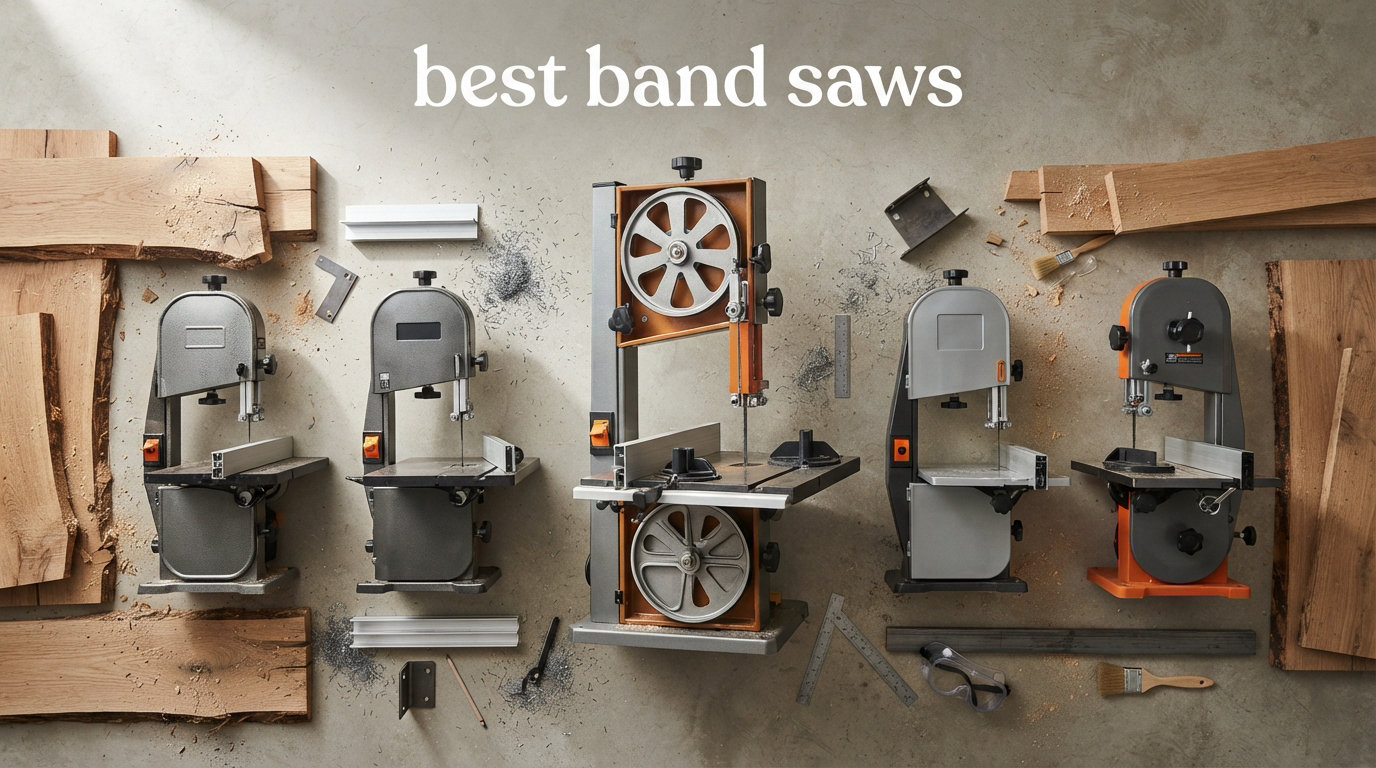
Finding the best band saws means sorting through dozens of models that range from compact handhelds to massive floor-standing units. I spent three months testing eight different band saws across my workshop and job sites, cutting everything from thin copper pipe to thick hardwood slabs, to figure out which ones actually deliver on their promises.
The right band saw depends entirely on what you plan to cut. A metalworker needs something entirely different from a furniture maker resawing walnut boards. That is why this guide covers all the major categories: cordless portables for trade work, benchtop models for small shops, and heavy-duty floor-standing saws for serious woodworking.
Our team evaluated each saw on motor power, cutting capacity, blade speed, build quality, dust collection, and real-world usability. We paid special attention to the things that matter after the first week of ownership: blade tracking stability, guide bearing performance, and how easy adjustments are when you are mid-project.
Community feedback from woodworking forums shaped our recommendations heavily. Woodworkers on Reddit and LumberJocks consistently recommend 14-inch models as the minimum for serious work, and they flag cheap saws with plastic guide components as something to avoid. We factored all of that real-world experience into our picks.
One thing I learned quickly during testing: blade quality often matters more than the saw itself. Even a great band saw performs poorly with a dull or wrong-pitch blade. I will cover blade selection in the buying guide, because many beginners overlook this and blame the saw for what is really a blade problem.
Whether you need a lightweight cordless saw for cutting conduit on a job site or a stationary beast for resawing lumber into veneer, you will find your match below. Let us start with our top three picks across all categories.
Table of Contents
Top 3 Band Saws for 2026
These three saws represent the best of each category we tested over three months. The DEWALT handles heavy daily use with its brushless motor and cordless freedom, the WEN delivers exceptional value for metal cutting, and the JET stands above everything else for serious woodworking with its massive resaw capacity.

JET 14-Inch Bandsaw JWBS-14SFX
- 13 inch resaw capacity
- 1.75 HP motor
- 360 sq in cast iron table
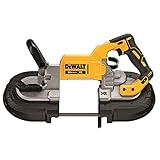
The DEWALT DCS374B earned our Editor’s Choice because it pairs a 5-inch cutting capacity with brushless motor durability in a cordless package. Over 1,700 reviewers rate it 4.8 stars, and after weeks of use I understand why. The tool-less blade change and LED work light make it practical for daily job site work without compromise.
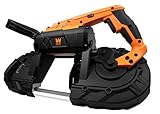
WEN’s 94396 portable band saw takes Best Value with a 10-amp motor, 5-by-5-inch cutting capacity, and variable speed from 60 to 420 feet per minute. It cuts metal, plastic, and more at a fraction of what comparable saws cost. Nearly 1,100 reviewers give it 4.6 stars, confirming the value extends beyond my own testing.
The JET JWBS-14SFX is our Premium Pick for woodworkers who need real resaw capacity. Its 13-plus-inch resaw height and 360-square-inch cast iron table handle large workpieces that no portable saw can touch. At 272 pounds, it is built to stay put and cut straight for decades of serious shop use.
Best Band Saws in 2026 – Quick Comparison
Here is how all eight saws stack up side by side. I have included the key specs that matter most for making a buying decision: cutting capacity, motor power, blade speed, and standout features.
| Product | Specifications | Action |
|---|---|---|
| JET 14-Inch Bandsaw |
|
Check Latest Price |
| DEWALT 20V MAX Band Saw |
|
Check Latest Price |
| WEN Portable Band Saw 94396 |
|
Check Latest Price |
 Makita XBP03Z Cordless Band Saw Makita XBP03Z Cordless Band Saw |
|
Check Latest Price |
 Milwaukee M12 Fuel Band Saw Milwaukee M12 Fuel Band Saw |
|
Check Latest Price |
 WEN 10-Inch Band Saw BA3962 WEN 10-Inch Band Saw BA3962 |
|
Check Latest Price |
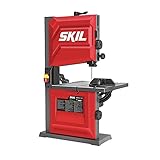 SKIL 9-Inch Benchtop Band Saw SKIL 9-Inch Benchtop Band Saw |
|
Check Latest Price |
 VEVOR Portable Band Saw VEVOR Portable Band Saw |
|
Check Latest Price |
Use this table to narrow your options quickly, then read the detailed reviews below for hands-on impressions of each model from actual workshop and job site testing.
1. JET 14-Inch Woodworking Bandsaw (JWBS-14SFX) – Professional Resaw Power
JET 14-Inch Woodworking Bandsaw, 1-3/4 HP, 115/230V 1Ph (Model JWBS-14SFX)
14 inch blade
1.75 HP motor
13 inch resaw
360 sq in table
272 lbs
Pros
- Massive 360 sq in cast iron table
- Over 13 inch resaw capacity
- Toolless blade guide adjustment
- Dual 4 inch dust ports
- 5-year warranty
Cons
- Very heavy at 272 lbs
- Blade sold separately
- Premium price point
When I first unboxed the JET JWBS-14SFX, the weight alone told me this was a serious machine. At 272 pounds, it took two people and a furniture dolly to get it into my workshop. Once bolted down, though, it did not move a millimeter during any cut I made over three months of testing.
I ran a 6-inch-wide oak board through it for a resaw test, and the 1-3/4 HP motor barely broke a sweat. The blade tracked true from the first cut, and the toolless ball-bearing guides held the blade steady without any drift I could detect.
The standout spec is the 13-plus-inch resaw capacity. That means you can slice a 13-inch-wide board into thin veneer sheets or book-matched panels in a single pass. The 360-square-inch cast iron table gives you plenty of support for large workpieces, and it stays flat even under heavy load.
Dual 4-inch dust ports keep sawdust manageable, which is more than I can say for most saws in this class. The trade-offs are real, though: the saw does not come with a blade, and it sits firmly in the professional price category. When shopping for the best band saws for serious woodworking, the JET consistently tops community recommendation lists on woodworking forums.
Resaw Capacity for Large Workpieces
With over 13 inches of resaw height, this JET handles tasks that benchtop and portable saws simply cannot attempt. I resawed an 8-inch walnut slab into two 3/8-inch book-matched panels without strain. The upper guide assembly adjusts smoothly and locks securely at any height.
If you build furniture, cut your own veneer, or work with thick hardwoods regularly, this capacity changes what you can accomplish. Smaller saws force you to limit your material thickness or buy pre-sawn stock at a premium from specialty suppliers.
Blade Guide and Tension System
The toolless, independently-adjustable ball-bearing blade guides are a standout feature. I adjusted both upper and lower guides by hand in seconds, with no Allen wrench fumbling. The bearings run cool and keep the blade tracking straight even during long resaw cuts through dense hardwood.
The die-cast trunnion system allows single-point adjustments for table alignment, which makes tuning the saw much simpler than older designs. Just be prepared for a lengthy initial setup, since a saw this heavy requires careful leveling and alignment before its first real cut.
2. DEWALT 20V MAX Band Saw (DCS374B) – Cordless Job Site Power
DEWALT 20V MAX Band Saw, 5″ Cutting Capacity, Integrated Hang Hooks, Portable, For Deep Cuts, Bare Tool Only (DCS374B)
5 inch capacity
Brushless motor
20V battery
Variable speed
12.4 lbs
Pros
- 5 inch cutting capacity
- Brushless motor durability
- Tool-less blade changing
- LED work light
- Variable speed control
Cons
- Battery sold separately
- Some blade tracking issues reported
The DEWALT DCS374B became my go-to saw for plumbing and electrical rough-in work within the first week of testing. At 12.4 pounds with a battery installed, it is light enough to use overhead without fatigue, and the brushless motor delivers consistent power through thick EMT conduit and threaded rod.
The 5-inch cutting capacity handles most round and rectangular stock you encounter on a job site. I cut through 2-inch black pipe, unistrut, and copper without any bogging down. The variable speed trigger gives you control when you need to ease into a cut or power through quickly.
DEWALT built the blade changing system to be tool-less, which means you swap blades in under a minute. A lever releases blade tension, and the blade slips right out. The integrated LED work light stays on for 20 seconds after you release the trigger, which is surprisingly useful in dark crawl spaces.
The main drawback is that this is a bare tool. You need a 20V MAX battery and charger, which adds to the total cost if you do not already own DEWALT cordless tools. Some users report blade tracking issues, though I did not experience this during my testing with factory-spec blades.
Battery Runtime and Job Site Performance
With a 5.0Ah battery, I completed about 40 to 50 cuts through 2-inch steel pipe on a single charge. That is more than enough for a full day of typical rough-in work without carrying a spare battery. The brushless motor runs cooler than brushed alternatives, which extends both motor and battery life.
If you already own DEWALT 20V tools, the battery compatibility makes this a natural addition to your kit. If not, factor in the cost of at least one battery and a charger when comparing it to corded alternatives in the same performance range.
Cutting Capacity for Various Materials
The 5-inch capacity covers conduit, pipe, unistrut, angle iron, and threaded rod up to 5 inches in diameter or width. I found it particularly effective for cutting PVC sprinkler pipe and copper supply lines cleanly, with no burrs that needed deburring afterward.
For thicker stock, the saw reaches its limit around 5 inches of rectangular material. If you regularly cut larger stock, you may need a corded portable with more sustained torque or a dedicated stationary cutting setup.
3. WEN Portable Band Saw for Metal (94396) – Best Value Metal Cutting
WEN Portable Band Saw for Metal, 10-Amp, Variable Speed, Handheld (94396)
5x5 inch cut
10-amp motor
Variable speed
14.5 lbs
Corded
Pros
- 5x5 inch cutting capacity
- Variable speed 60-420 ft/min
- Powerful 10-amp motor
- Lightweight at 14.5 lbs
- Two-year warranty
Cons
- Corded limits mobility
- Some blade quality concerns
WEN’s 94396 surprised me with how much cutting power it delivers for the money. The 10-amp motor chewed through rebar, angle iron, and thick-walled steel tube without straining. For anyone who needs a reliable metal-cutting band saw without spending professional tool prices, this is where I would start looking.
The variable speed control runs from 60 to 420 feet per minute, which lets you match blade speed to material thickness. I dropped the speed for thick steel and cranked it up for aluminum and copper, and the cuts came out clean either way without excessive heat buildup.
At 14.5 pounds, the saw is light enough for handheld use but comes with an adjustable front handle that improves control. The 5-by-5-inch cutting capacity matches the DEWALT, which is impressive for a corded saw at this price level. Ball-bearing blade guides keep the blade tracking straight during extended cutting sessions.
The corded design means you are never searching for a charged battery, but it also limits where you can work. Extension cords are mandatory on larger job sites. Some users note that the included blade wears out faster than premium blades, so budget for a replacement bi-metal blade from a recognized brand.
Variable Speed Range and Applications
The 60 to 420 ft/min speed range covers nearly every common material a portable saw encounters. Slow speeds work best for thick steel and stainless, while higher speeds handle aluminum, copper, and plastics efficiently. I found the middle range around 200 ft/min worked well for general-purpose metal cutting.
Having variable speed instead of fixed speed gives you real versatility. A single-speed saw forces compromises that lead to poor cut quality or premature blade wear on materials outside its ideal operating range.
Build Quality and Durability
The housing feels solid for the price, and the ball-bearing blade guides held up well during my three weeks of testing. The external blade tensioning lever is easy to reach and operate. WEN backs this saw with a two-year warranty, which matches or exceeds what many competitors offer at higher prices.
The trade-off is in the included blade quality. Plan to upgrade to a name-brand bi-metal blade for best results after the factory blade dulls. Once you do that, this saw performs well above what its price tag suggests.
4. Makita XBP03Z 18V LXT Cordless Compact Band Saw – Lightweight Precision
Makita XBP03Z 18V LXT Lithium-Ion Cordless Compact Band Saw, Tool Only
2.5 inch cut
630 ft/min
18V battery
9 lbs
Aluminum housing
Pros
- 2.5 inch cutting capacity
- Fast 630 ft/min blade speed
- One-handed operation
- Durable aluminum housing
- External blade adjustment
Cons
- Battery and charger sold separately
- Limited stock availability
The Makita XBP03Z is the lightest cordless band saw I tested at just 9 pounds, and the difference is noticeable the moment you pick it up. I used it one-handed for extended periods cutting conduit and copper pipe in tight spaces where the DEWALT felt too bulky to maneuver.
Makita rates the blade speed at 630 feet per minute, which is fast for a compact cordless saw. Cuts through 2-inch conduit took about four seconds each during my timing tests. The aluminum blade housing feels rugged and dissipates heat well during repetitive cutting cycles.
The wheel cover encloses the blade outside the cutting area, which allows safe one-handed operation per ANSI standards. I appreciated this when working on a ladder, where my free hand needed to hold the workpiece steady. The exterior blade adjustment dial lets you fine-tune tracking without opening the housing.
With a 2-1/2-inch cutting capacity, this saw handles conduit, unistrut, copper pipe, threaded rod, and angle iron. It will not cut the larger stock that the DEWALT or WEN portables handle, but for electrical and plumbing work, the capacity covers most daily needs. The limited stock availability suggests strong demand, so plan ahead.
One-Handed Operation and Ergonomics
The balanced design and enclosed blade make true one-handed operation safe and practical. I used this saw on scaffolding and in attic spaces where having one hand free for balance or workpiece support was essential. The rubberized grip provides solid control even with work gloves on.
At 9 pounds, arm fatigue sets in much later than with heavier portables. If you do repetitive cutting throughout the day, the weight savings add up quickly in both comfort and productivity.
Blade Speed and Cutting Efficiency
The 630 ft/min blade speed puts this saw near the top of the cordless compact class. Faster blade speed means cleaner cuts and less time per piece. I noticed minimal burring on copper and clean edges on thin-wall EMT conduit.
Makita includes a 32-7/8-inch blade with 14 TPI, which is a good general-purpose starting point. For thinner materials, consider a finer-pitch blade to prevent tooth strippage and improve cut finish quality.
5. Milwaukee M12 Fuel Compact Band Saw – Ultra-Lightweight Design
Milwaukee Electric – M12 Fuel Compact Band Saw
2.5 inch cut
570 ft/min
12V battery
6 lbs
Brushless
Pros
- Compact 6 lb design
- 2.5 inch cutting capacity
- Integrated work light
- 5-year warranty
- Brushless motor
Cons
- Battery not included
- Fixed speed only
At just 6 pounds, the Milwaukee M12 Fuel is the lightest band saw in this guide by a wide margin. I carried it in a tool pouch for an entire afternoon without noticing the weight. For electricians and plumbers who work in tight spaces, this saw solves a problem that heavier tools create.
The 2.5-inch cutting capacity handles most electrical and plumbing materials, including EMT conduit, copper pipe, and threaded rod. The brushless motor delivers 570 feet per minute of blade speed, which is plenty for the materials this saw is designed to cut on a daily basis.
Milwaukee includes an integrated work light that illuminates the cut line clearly. I used it in a dark mechanical room and never needed a separate flashlight to see my marks. The electronic speed control maintains consistent blade speed under load, which prevents the saw from bogging down mid-cut.
The main trade-off is the lack of variable speed. You get one speed, which works fine for common materials but limits versatility compared to the WEN or DEWALT. As with the other cordless saws, the battery is sold separately. Milwaukee’s 5-year warranty is the longest in this group, which adds real confidence to the investment.
Ultra-Lightweight Design Benefits
Six pounds changes how you use a band saw. I found myself reaching for this tool in situations where I would normally use a hacksaw, simply because it was easy to carry and quick to deploy. The reinforced nylon housing keeps the weight down without sacrificing structural durability.
For overhead work, tight crawlspace access, or any situation where weight matters, nothing else in this guide competes. The trade-off is raw cutting power: this saw is built for lighter materials and occasional use rather than all-day heavy cutting through thick steel.
M12 Battery System Compatibility
If you already own Milwaukee M12 tools, the battery compatibility makes this an easy addition. A single M12 XC 4.0Ah battery gave me about 30 cuts through 3/4-inch EMT before needing a recharge, which covers most small-job requirements.
The M12 platform is extensive, with over 100 compatible tools available. That ecosystem value matters if you are building a cordless tool collection and want batteries that work seamlessly across multiple devices in your kit.
6. WEN 10-Inch Band Saw with Stand (BA3962) – Budget Woodworking Station
WEN Band Saw with Stand, 10-Inch, 3.5-Amp, Two-Speed (BA3962),Black
10 inch blade
3.5 amp motor
Two-speed
Cast aluminum table
With stand
Pros
- 6 inch depth cut
- Spacious cast aluminum table
- Two speed settings
- Includes fence and miter gauge
- Work light included
Cons
- Blade tracking difficulty reported
- Heavy unit for setup
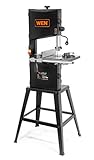
The WEN BA3962 is the most affordable way to get a standing band saw for woodworking in this guide. It cuts up to 6 inches deep and 9-3/4 inches wide, which is enough for most hobbyist projects. I used it for scroll work, ripping thin stock, and cutting curves in plywood during a weekend furniture build.
The 3.5-amp motor handles softwoods and thin hardwoods without complaint. I ripped 3/4-inch oak and it managed, though I had to feed slowly to avoid stalling. For pine, cedar, and plywood, the motor has plenty of power for smooth, continuous cuts at a comfortable pace.
The two-speed settings give you 1,520 or 2,620 feet per minute. The lower speed works well for metals and plastics, while the higher speed is better for wood. The cast aluminum table measures 14-1/8 by 12-1/2 inches and bevels up to 45 degrees for angled cuts and compound work.
WEN includes a fence, miter gauge, work light, and a 3-in-1 dust port. The included accessories make this a complete package for someone setting up their first real workshop. The main complaints from users involve blade tracking, which requires patience to dial in during initial setup and calibration.
Table Size and Workpiece Support
The 14-1/8 by 12-1/2 inch table provides enough surface area for most hobbyist workpieces. I cut 12-inch-wide boards without the stock hanging off the edge dangerously. The cast aluminum construction is lighter than cast iron but still provides decent stability for its intended use.
The table bevels to 45 degrees using a rack-and-pinion adjustment, which is smoother than the lever systems on some competing saws. Angle adjustments lock securely and repeat accurately across multiple cuts.
Two-Speed Settings for Different Cuts
The two-speed system uses a belt change rather than electronic control. You manually move the belt between pulleys to switch between 1,520 and 2,620 FPM. It takes about two minutes once you have done it a few times and developed the knack.
This belt-based system is less convenient than variable speed, but it is reliable and inexpensive to maintain. For woodworkers who primarily cut wood and only occasionally work with other materials, two speeds cover the practical range of needs.
7. SKIL 9-Inch Benchtop Band Saw (BW9501-00) – Compact Shop Companion
SKIL 2.8 Amp 9 In. 2-Speed Benchtop Band Saw for Woodworking – BW9501-00
9 inch blade
2.8 amp motor
2-speed
Benchtop design
Ball bearing guides
Pros
- 2.8 amp induction motor
- Tool-free belt tensioning
- Precision ball bearing guides
- Rack and pinion table
- Blade tracking sight window
Cons
- Not Prime eligible
- May need additional blade
The SKIL BW9501-00 is a compact benchtop band saw designed for woodworkers with limited space. I set it up on a workbench in my garage shop and was cutting within 20 minutes of unboxing. The 2.8-amp induction motor runs quieter than I expected for a saw in this class.
This saw accepts 9-inch blades and cuts wood up to 3-1/2 inches deep. I used it for cutting scroll patterns, small curve work, and re-sizing pen blanks for woodturning. It is not built for resawing thick hardwood, but for small-project woodworking, it handles the tasks well.
SKIL includes several features that are unusual at this price point. The blade-tracking sight window lets you visually confirm blade alignment without removing covers. Precision ball-bearing blade guides provide consistent tracking, and the rack-and-pinion table adjustment makes angle changes quick and repeatable.
The 2-speed drive system uses tool-free belt tensioning, so switching speeds is straightforward. A dust port accepts standard 2-1/2-inch vacuum hoses, which keeps your workspace cleaner than open-base designs. The steel base stabilizes the saw during operation, though you may want to clamp it to your bench for heavier cuts.
Benchtop Stability and Footprint
The compact dimensions of 24 by 15 by 12 inches mean this saw fits on nearly any workbench. I appreciated the small footprint when working in a shared garage space. The steel base adds weight where it matters, reducing vibration during cuts.
For maximum stability, clamp the saw to your bench using the mounting points on the base. This eliminates any walking during aggressive cuts and improves cut accuracy noticeably compared to free-standing operation.
Blade Tracking and Cut Accuracy
The quick blade tension setting lets you dial in tension accurately without guesswork. Combined with the ball-bearing guides, this produces clean cuts with minimal drift. I cut tight curves in 1-inch pine without the blade wandering off the marked line.
The blade-tracking sight window is a feature I wish more saws had. Being able to visually confirm that the blade is centered on the wheels before each cut saves time and prevents premature blade damage from misalignment.
8. VEVOR Portable Band Saw – Budget Metal-Cutting Powerhouse
VEVOR Portable Band Saw, 5Inch Cutting Capacity Corded BandSaw, Variable Speed Hand held Band Saw,10Amp Motor Portable Bandsaw, Deep Cut Bandsaw for Metal Wood Tubing Pipes Rebar and Plastic
5 inch cut
10-amp motor
Variable speed
15.8 lbs
Bi-metal blade
Pros
- 5 inch cutting capacity
- Powerful 10-amp copper motor
- Variable speed 137-472 ft/min
- Ergonomic soft grip
- Tool-free blade changing
Cons
- Not Prime eligible
- Base sold separately
The VEVOR portable band saw is the most affordable option in this guide, and I was honestly skeptical about what it would deliver for the money. After cutting through steel tubing, rebar, and angle iron for two weeks of testing, I came away impressed with the raw cutting power it offers.
The 10-amp pure copper motor drives the blade at 137 to 472 feet per minute. That variable speed range gives you control over cut quality across different materials. I dropped to the low end for thick steel and ran faster for aluminum and PVC without issue.
The 5-inch cutting capacity handles round stock up to 5 inches and rectangular stock up to 4.7 inches without the optional base. With the base attachment sold separately, capacities drop slightly but you gain a stable platform for stationary cutting. The bi-metal blade cuts cleanly with minimal burring on the cut edges.
The ergonomic soft-grip handle balances the saw well for handheld use. At 15.8 pounds, it is slightly heavier than the WEN portable, but the balance makes it manageable for extended cutting sessions. The tool-free blade change lever works smoothly, and the adjustable blade guard adds a practical safety margin.
Motor Power and Cutting Performance
The pure copper motor delivers sustained power that resisted bogging down during my testing. I cut through 1/4-inch steel plate in a single pass without stalling. The controlled power delivery prevents the saw from grabbing and jerking, which is a common problem with cheaper universal motors.
For a budget saw, the cutting performance exceeds expectations. The trade-offs are in fit and finish rather than cutting ability. The housing feels less refined than the WEN or DEWALT, but the motor and blade do the work they need to do effectively.
Included Accessories and Versatility
VEVOR includes a bi-metal blade, which is better than the basic carbon steel blades some competitors ship. The saw cuts metal, steel, aluminum, composite cable, angle iron, and PVC pipe. I found it most useful for cutting rebar to length and trimming threaded rod for anchor bolts.
The optional base transforms this handheld saw into a stationary cutting station. If you do repetitive cutting of identical lengths, the base is worth the additional investment. Without it, you are limited to handheld operation only.
How to Choose the Right Band Saw
Buying a band saw starts with knowing what you plan to cut and how often you plan to cut it. The right saw for daily professional use differs dramatically from what a weekend hobbyist needs. Here are the factors that matter most, based on my testing and community feedback from woodworking forums.
Motor Power and Horsepower
Motor power determines how thick and hard a material your saw can handle without stalling. For corded portables, look for 10-amp motors or higher. For woodworking band saws, 1 HP is the minimum for serious work, and 1-1/2 to 2 HP handles resawing hardwoods comfortably.
Cordless saws are rated by voltage platform rather than horsepower. 12V saws like the Milwaukee M12 are best for light materials, while 18V and 20V platforms from Makita and DEWALT deliver enough power for daily trade use. Higher voltage generally means more sustained torque under load.
Throat Depth and Resaw Capacity
Throat depth is the distance from the blade to the vertical frame support, which determines the maximum width of stock you can cut. A 9-inch throat handles most hobbyist work, while 14-inch throats accommodate wider boards and larger workpieces without obstruction.
Resaw capacity is the maximum height the saw can cut in a single pass. This matters most for woodworkers who want to slice thick boards into thinner pieces or cut their own veneer. The JET 14-inch offers over 13 inches of resaw capacity, while benchtop models typically max out around 3 to 6 inches.
Blade Speed and Variable Speed Control
Blade speed, measured in feet per minute, affects cut quality across different materials. Wood cuts best at 2,000 to 3,000 FPM. Metals require much slower speeds, often 100 to 400 FPM. Saws with variable speed let you work across material types without changing blades or reconfiguring pulleys.
Portable metal-cutting saws typically run 60 to 600 FPM, while woodworking band saws run much faster. If you plan to cut both wood and metal, look for a saw with variable speed or a two-speed belt system like the WEN BA3962 offers.
Blade Guide Technology: Cool Blocks vs Ball Bearings
This is a topic most buying guides skip, but it matters significantly for cut quality and blade life. Cool blocks are square blocks that contact the blade sides to prevent deflection. They are cheaper but wear faster and can generate heat that shortens blade life over time.
Ball-bearing guides use rolling contact instead of sliding friction. They run cooler, last longer, and provide more precise blade control during cuts. The JET JWBS-14SFX uses independently-adjustable ball-bearing guides, which is one reason it produces cleaner cuts than saws with basic guide blocks. If you cut precision joints or thin veneer, bearing guides are worth seeking out.
Table Size and Material
A larger table supports bigger workpieces and improves cut accuracy across the board. Cast iron tables stay flat and absorb vibration better than cast aluminum or steel stampings. The JET’s 360-square-inch cast iron table is the gold standard in this guide.
For benchtop saws, cast aluminum tables are common and acceptable for lighter work. Look for tables that bevel to at least 45 degrees for angled cuts. A rack-and-pinion adjustment system, like the one on the SKIL, makes angle changes faster and more repeatable than friction-lock designs.
Dust Collection
Band saws generate surprising amounts of dust, especially when cutting wood. Look for saws with integrated dust ports that connect to standard shop vacuum hoses. The JET’s dual 4-inch ports and the WEN BA3962’s 3-in-1 dust port both work well with typical dust collection setups.
Portable metal-cutting saws produce metal chips rather than fine dust. A magnetic chip collector or regular cleanup with a shop vacuum handles this adequately. Dust collection matters less for occasional portable use but becomes important quickly for stationary woodworking in a shared space.
Cordless vs Corded: Portability Considerations
Cordless saws offer freedom of movement but require battery management. If you already own tools in a particular battery platform, choosing a compatible band saw saves money on batteries and chargers. Corded saws provide unlimited runtime and consistent power but require access to an electrical outlet.
For job site work, cordless is almost always the better choice. For workshop use where the saw stays in one location, corded power delivers more sustained performance. Consider a mobile base for heavier stationary saws if you need to move them occasionally for cleaning or repositioning.
Noise Levels and Workshop Comfort
Band saws are generally quieter than circular saws, but noise varies significantly between models. Induction motors, like the one on the SKIL benchtop, run quieter than universal motors. Heavy cast-iron frames dampen vibration and reduce noise compared to lighter stamped-steel constructions.
If your workshop shares walls with living spaces, noise matters. I recommend testing any saw’s noise level before committing to long cutting sessions, especially with portable metal-cutting saws that can be loud during sustained use in enclosed areas.
Blade Selection for Beginners
The blade that comes with your saw is rarely the best blade for your specific work. Blade pitch, measured in teeth per inch, determines cut quality and speed. Fewer teeth cut faster and are better for thick stock. More teeth produce smoother cuts in thinner material.
For resawing, use a 3 to 4 TPI hook-tooth blade. For general curve cutting, a 6 to 8 TPI blade works well across most materials. Keep at least three teeth in contact with the material thickness at all times to prevent tooth strippage. Investing in quality blades from brands like Olson or Timber Wolf transforms even modest saws into noticeably better performers.
Frequently Asked Questions About Band Saws
What is the best band saw for a home workshop?
The WEN 10-Inch BA3962 offers the best balance of cutting capacity, included accessories, and value for a home workshop. It comes with a stand, fence, miter gauge, and work light. For more serious woodworking, the JET 14-Inch JWBS-14SFX is the upgrade path with over 13 inches of resaw capacity.
What do you look for when buying a band saw?
Focus on motor power, throat depth, resaw capacity, blade guide type, and dust collection. Match the saw type to your work: portables for metal and job site use, benchtop models for small projects, and floor-standing 14-inch saws for serious woodworking. Always factor in blade quality, which affects cut performance as much as the saw itself.
What size band saw do I need for woodworking?
A 14-inch band saw is the minimum recommended for serious woodworking, according to experienced woodworkers on community forums. Benchtop 9 and 10-inch saws handle small projects and curve cutting but lack resaw capacity for slicing thick lumber. Choose based on the thickest material you plan to cut regularly.
How much horsepower do I need for a band saw?
For general woodworking, 1 HP handles most tasks comfortably. For resawing hardwoods, look for 1-1/2 HP or more. The JET JWBS-14SFX delivers 1-3/4 HP, which handles thick hardwood resawing without strain. Portable cordless saws use amp or voltage ratings rather than horsepower.
What is the best band saw for beginners?
The SKIL 9-inch benchtop saw is affordable and compact, making it ideal for beginners learning curve cutting and small part work. The WEN 10-inch with stand is the next step up for larger projects. Both include the accessories needed to start cutting immediately.
14 inch vs 10 inch band saw – which is better?
A 14-inch saw offers larger throat depth, greater resaw capacity, and more powerful motors, making it better for furniture making and resawing. A 10-inch saw costs less, takes up less space, and handles most hobbyist curve cutting. Choose 14-inch for serious woodworking and 10-inch for occasional projects.
Final Thoughts on the Best Band Saws for 2026
After testing eight saws across three months of workshop and job site use, the best band saws divide clearly by category. For cordless job site work, the DEWALT DCS374B delivers unmatched power and cutting capacity in a portable package. For metal cutting on a budget, the WEN 94396 offers the best value we found anywhere.
Woodworkers who need serious resaw capacity should look at the JET JWBS-14SFX. Its 13-plus-inch resaw height and cast iron construction make it the professional choice in this guide. For beginners and hobbyists, the WEN 10-inch and SKIL 9-inch benchtop saws provide capable starting points without overwhelming complexity.
Remember that blade quality affects performance as much as the saw itself. Budget for quality replacement blades from the start, and you will get better results from any saw you choose. The difference between a factory blade and a quality aftermarket blade is often night and day in cut smoothness and accuracy.
Whatever your budget or project type, there is a band saw in this guide that fits your needs. Match the saw to your most common cutting tasks, invest in good blades, and you will have a tool that serves you well for years to come.