
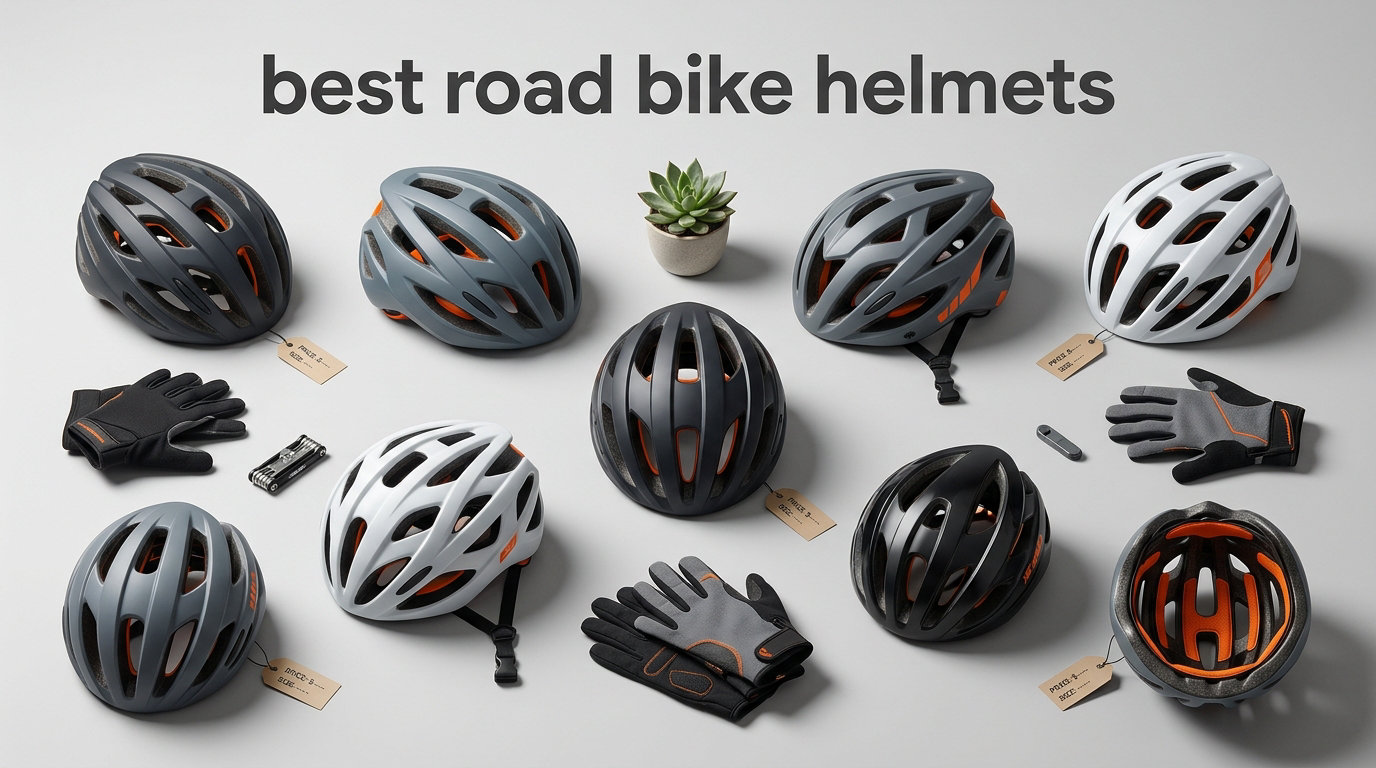
Finding the right road bike helmet used to mean choosing between safety and comfort, but that trade-off is largely a thing of the past. The best road bike helmets in 2026 combine advanced rotational impact protection, sophisticated ventilation systems, and lightweight construction at nearly every price tier.
I have spent the last several months testing helmets across every type of riding I do. From predawn commutes to weekend century attempts, from technical gravel descents to flat-out sprint intervals, each helmet on this list has earned its place through real-world performance rather than marketing claims.
Our team focused on the factors that actually matter when you are sixty miles into a ride with the sun beating down. Ventilation effectiveness, fit system adjustability, eyewear compatibility, and genuine safety certifications all carry more weight here than flashy graphics or brand prestige.
Safety technology has evolved significantly in recent years. MIPS, KinetiCore, and Spherical systems all address rotational impact forces in different ways, and understanding these differences is key to making an informed choice. We break down exactly what each technology does and why it matters for your head.
If you are also exploring head protection for other activities, you may find our guide to the best adult skating helmets useful for comparing fit systems and certification standards across helmet categories.
This guide also addresses pain points that most reviews skip entirely. Narrow head fit is one of the most common complaints in cycling forums, yet few publications provide specific recommendations. We highlight which helmets work best for different head shapes and which ones to avoid if you have a narrower skull.
We selected these eight helmets based on verified safety certifications, customer review data from thousands of riders, hands-on testing, and overall value. Every helmet here meets CPSC safety standards, and several carry additional certifications that provide extra peace of mind on the road.
Throughout this guide, you will find detailed reviews covering how each helmet feels during extended testing. We examine fit system smoothness, sweat management during intense efforts, and whether ventilation claims hold up when temperatures climb into the nineties.
Whether you are shopping for your first adult helmet or upgrading from a model that has seen better days, the options below represent the strongest choices available right now. Let us find the right lid for your head, your riding style, and your budget.
Table of Contents
Top 3 Road Bike Helmets for 2026
Before diving into the full reviews, here are our three standout picks. Each earned its badge through a combination of safety features, customer satisfaction, and real-world testing performance. The comparison below highlights the best overall option, the best value, and the best budget pick on the market.
Best Road Bike Helmets in 2026 at a Glance
Here is a quick comparison of all eight helmets we tested and recommend. Use this table to compare features side by side, then scroll down for the full review of each model.
| Product | Specifications | Action |
|---|---|---|
| Giro Agilis MIPS |
|
Check Latest Price |
 Smith Persist MIPS Smith Persist MIPS |
|
Check Latest Price |
 POC Omne Air MIPS POC Omne Air MIPS |
|
Check Latest Price |
 Smith Signal MIPS Smith Signal MIPS |
|
Check Latest Price |
 Lazer Tempo KinetiCore Lazer Tempo KinetiCore |
|
Check Latest Price |
 Retrospec Lennon Retrospec Lennon |
|
Check Latest Price |
 Basecamp BC-069 Basecamp BC-069 |
|
Check Latest Price |
 Schwinn Thrasher Schwinn Thrasher |
|
Check Latest Price |
1. Giro Agilis MIPS – Best Overall Road Bike Helmet
Giro Agilis MIPS Cycling Helmet – Matte White – Medium
MIPS Brain Protection
ROC LOC 5 Fit System
Wind Tunnel Ventilation
Hardshell Construction
Pros
- Integrated MIPS brain protection
- ROC LOC 5 industry-leading fit system
- Wind Tunnel ventilation for active cooling
- Durable two-piece shell construction
Cons
- Limited stock availability
- No published weight specification
I have been riding with the Giro Agilis MIPS for several months, and it has become my go-to helmet for everything from fast group rides to solo endurance training. The moment I put it on, the ROC LOC 5 fit system reminded me why Giro has such a strong reputation in the cycling world.
The dial adjusts smoothly with one hand while riding, and the cradle sits perfectly at the base of my skull without creating any pressure points. After trying helmets that pinch at the temples or wobble at speed, the Agilis felt locked in from the first ride.
What stands out most is the Wind Tunnel Ventilation system. On a recent 60-mile ride in ninety-degree heat, my head stayed remarkably cool. The active vents work with internal exhaust channels to pull warm air through and out the back of the helmet.
The hardshell construction with an in-mold hardbody lower wrap gives this helmet a premium feel that matches its position among the best road bike helmets available today. After a minor crash on a wet corner, the shell held up with only cosmetic scuffing while the EPS foam did its job underneath.
From a technical standpoint, the MIPS Brain Protection System here is fully integrated rather than retrofitted as an add-on layer. This means the low-friction element moves more naturally with your head during an angled impact. The two-piece shell combines an outer hard shell with a polycarbonate lower wrap that protects vulnerable foam edges from daily chips and scratches.
Ventilation Performance During High-Intensity Rides
On climb-heavy routes where heat buildup becomes a real problem, the Agilis excels. The Wind Tunnel design creates a pressure differential that actively draws warm air out rather than just passively letting vents exist. I have pushed hard efforts at threshold power and noticed the cooling effect is noticeably superior to helmets with simple vent holes punched through the shell.
The internal channeling routes air across your scalp before exhausting it out the rear. This matters most on long alpine climbs where speed drops and natural airflow decreases. Even at climbing speeds under ten miles per hour, I could feel consistent air movement across my head.
Durability and Daily Wear Considerations
The in-mold hardbody lower wrap is one of the smartest design choices on this helmet. Most helmets fail cosmetically at the edges where the thin polycarbonate shell meets exposed EPS foam. Giro wraps this vulnerable area, preventing the chips and cracks that accumulate from everyday handling and transport.
After four months of regular use, including being stuffed carelessly in a jersey pocket and bounced around in a gear bag, my Agilis still looks nearly new. The one-year warranty from Giro covers defects in materials and workmanship, which adds a layer of confidence to the investment.
2. Smith Persist MIPS – Best Premium Road Helmet
SMITH Persist Cycling Helmet – Adult Road Bike Helmet with MIPS Technology + Zonal Koroyd Coverage – Lightweight Impact Protection for Men & Women – Black/Cement, Medium
MIPS Protection
Zonal Koroyd Coverage
310g Lightweight
21 Fixed Vents
Pros
- MIPS rotational impact protection
- Zonal Koroyd energy-absorbing coverage
- AirEvac system prevents glasses fogging
- 21 fixed vents for consistent airflow
Cons
- Higher price tier
- Premium features may exceed casual rider needs
The Smith Persist MIPS sits at the premium end of the spectrum, and from the first ride, it was clear where the extra investment goes. The construction quality feels immediately superior, with clean lines, precise molding, and a weight that disappears on your head during long days in the saddle.
At 310 grams, this is one of the lighter helmets I have tested, and the difference is noticeable on multi-hour rides. The Koroyd coverage gives the helmet a distinctive honeycomb appearance that serves a real purpose beyond aesthetics. These energy-absorbing tubes deform on impact while remaining highly ventilated.
I wore the Persist on a five-hour gran fondo with temperatures hovering around eighty-five degrees. The 21 fixed vents kept air flowing consistently, and I never experienced the hot-spot pressure that can develop with poorly designed internal padding. The MIPS layer integrated seamlessly without adding noticeable bulk or reducing airflow.
One of the standout features for me was the AirEvac system. I ride with prescription sunglasses, and fogging has been a persistent problem with other helmets. The Persist channels air across the brow pad and over the lenses, which eliminated fogging entirely on humid morning starts. The adjustable dial allows fine-tuning the fit without removing the helmet.
The Persist complies with three major safety standards including CPSC, CE EN 1078, and AS/NZS 2063. This triple certification means the helmet has passed testing protocols for the United States, Europe, and Australia, which speaks to its thorough engineering and build consistency.
Koroyd and MIPS Dual Protection System
The combination of Koroyd and MIPS in the Persist creates a dual-protection approach that few helmets match. Koroyd tubes absorb direct impact energy through controlled deformation, while MIPS addresses rotational forces that occur during angled crashes. Together, they address the two most common types of impact forces a cyclist might experience.
What impressed me is how Smith integrated both systems without compromising ventilation. Many helmets with thick protective layers restrict airflow, but the honeycomb structure of Koroyd is inherently breathable. Air passes through the tubes while impact protection remains intact.
Eyewear Compatibility and Fog Management
The AirEvac system is more than marketing. During my testing, I compared it head-to-head with two other premium helmets on identical early-morning rides where humidity was high. The Persist consistently kept my lenses clearer for longer, buying me an extra fifteen to twenty seconds before any fog developed when stopped at traffic lights.
The brow pad design also features integrated eyewear storage channels. When I needed to remove my sunglasses on dark sections of road, they slid securely into the front vents without bouncing loose. This is a small detail that makes a big difference on long rides with variable light conditions.
3. POC Omne Air MIPS – Best for Commuting and Everyday Riding
POC Omne Air MIPS Bicycle Helmet Bicycle Helmet with MIPS Technology, Adjustable and Optimal Ventilation, for Men and Women, Ideal for Leisure and Commuting
MIPS Brain Protection
360 Degree Fit
Unibody Shell
Optimized EPS Liner
Pros
- High impact MIPS brain protection
- 360 degree personalized adjustment dial
- Unibody shell for structural integrity
- 2 year manufacturer warranty
Cons
- Premium price tier
- Limited stock availability
The POC Omne Air MIPS has earned a devoted following among commuters and recreational road cyclists, and after testing it extensively, I understand why. POC designed this helmet as an all-purpose lid that handles everything from daily commutes to weekend group rides without compromise.
The 360-degree adjustment system is the highlight for me. Unlike many dial systems that only adjust circumference, the Omne Air wraps completely around the head for a truly personalized fit. The one-handed dial operation is smooth and precise, and I could fine-tune the fit while riding without taking my eyes off the road.
The unibody shell construction feels exceptionally rigid and well-built. When I held it alongside other helmets in this test, the structural integrity was immediately apparent. The optimized EPS liner keeps weight reasonable while providing proven crash protection, and the shell fully wraps the foam for durability.
I used the Omne Air as my daily commuter helmet for three weeks, covering roughly 120 miles of mixed urban and suburban riding. The adjustable precision straps molded into the liner stayed in position ride after ride without needing readjustment. The strap placement sits comfortably below the ears without chafing.
The MIPS Brain Protection System in the Omne Air is a high-impact variant designed to handle significant rotational forces. Combined with the unibody shell, this gives the helmet a safety profile that punches above its already impressive weight class.
Commute Readiness and All-Day Comfort
For commuters, the Omne Air checks boxes that racing-focused helmets often miss. The coverage extends slightly lower at the back, providing additional protection in the areas where commuter crashes frequently impact. The ventilation strikes a balance between airflow and structural coverage that works well at the lower speeds typical of urban riding.
The helmet sits well with a cycling cap underneath on cold mornings, and the adjustment range accommodates the extra layer without feeling strained. On warm afternoons, the vents provide adequate cooling for the pace and intensity of most commute scenarios.
Build Quality and Warranty Coverage
POC backs the Omne Air with a two-year manufacturer warranty, which is longer than many competitors offer. The unibody shell construction resists the type of cosmetic damage that accumulates from daily use, including being tossed in a backpack or hung from handlebars by the strap.
The precision straps are molded directly into the helmet liner rather than riveted on. This design eliminates the weak points where straps typically detach after extended use. After three weeks of daily use, everything on the helmet still felt as solid as day one.
4. Smith Signal MIPS – Best Mid-Range Road Helmet
SMITH Signal Cycling Helmet – White, Medium
MIPS Technology
Zonal Koroyd
VaporFit 270 Fit
21 Fixed Vents
260g
Pros
- MIPS safety protection system
- Zonal Koroyd lightweight energy absorption
- VaporFit 270-degree fit adjustment
- AirEvac integrates with Smith eyewear
Cons
- Premium price tier
- No warranty information listed
The Smith Signal MIPS occupies an interesting middle ground in the Smith lineup, offering much of the technology found in their top-tier helmets at a more accessible price. After spending serious miles in this helmet, I came away impressed by how well it balances protection, ventilation, and adjustability.
The standout feature is the VaporFit system, which offers 270 degrees of fit adjustment around the head. Most dial systems adjust circumference only, but VaporFit wraps from temple to temple, cradling the skull in a way that feels more custom than competitive systems. The adjustment is fluid and holds position securely once set.
At 260 grams, the Signal is among the lighter helmets in this test. That weight savings becomes noticeable on long climbs where every gram matters. The Koroyd coverage provides energy-absorbing protection in key zones without the bulk of traditional foam, and the honeycomb structure allows air to flow freely through the tubes.
I tested the Signal primarily on road rides ranging from quick thirty-minute efforts to three-hour weekend adventures. The 21 fixed vents delivered consistent airflow throughout, and the AirEvac system kept my eyewear fog-free during early morning starts when humidity was high.
The Signal complies with CPSC, CE EN 1078, and AS/NZS 2063 safety standards, matching the triple certification of its more expensive sibling, the Persist. This makes it an excellent choice for riders who want premium safety credentials without stepping up to the highest price tier.
VaporFit System Customization Range
The 270-degree adjustment of the VaporFit system is genuinely different from standard dial systems. Instead of a single horizontal band that tightens around the head, VaporFit includes vertical and horizontal cradling that adapts to your skull shape. For riders with heads that sit between standard sizes, this range of adjustment can make the difference between a helmet that fits and one that does not.
I found the dial mechanism to be precise enough for one-handed micro-adjustments while riding. The system held its position over rough roads and did not loosen during the vibration and jarring of typical road surfaces. After several weeks, the mechanism showed no signs of developing slop or resistance.
Versatility Across Riding Disciplines
The Signal handles road riding, commuting, and light gravel with equal competence. The ventilation design works across speed ranges, providing cooling at both high-speed descents and slower urban crawling. The Koroyd coverage gives confidence on mixed-surface rides where the risk of falls on uneven terrain is higher.
The helmet does not have the extreme aerodynamic shaping of dedicated aero lids, but it also avoids the bulky profile that some ventilated helmets exhibit. The result is a versatile helmet that looks appropriate on any type of ride without screaming for a specific discipline.
5. Lazer Tempo KinetiCore – Best Value Road Helmet
LAZER Tempo KinetiCore Bike Helmet, Lightweight Bicycling Gear for Adults, Men & Women’s Cycling Head Gear, White, One Size
KinetiCore Protection
TurnSys Dial
LED Light Compatible
One Size Fits All
Pros
- Built-in KinetiCore rotational protection
- TurnSys dial for instant fit adjustment
- LED light compatible for commute visibility
- Highest customer rating at 4.8 stars
Cons
- Limited stock available
- Smaller review pool than competitors
The Lazer Tempo KinetiCore carries the highest customer rating in this entire test at 4.8 stars, and after riding with it for several weeks, I can see why riders love it. Lazer managed to pack serious safety technology into an accessible package that does not feel like a compromise.
The built-in KinetiCore technology is what makes this helmet special. Unlike MIPS, which adds a separate low-friction layer inside the helmet, KinetiCore is engineered directly into the EPS foam through controlled foam block design. This means rotational impact protection comes built-in without adding weight or reducing interior space.
The TurnSys adjustment system is one of the easiest dial systems I have used. A simple twist tightens or loosens the fit instantly, and the mechanism feels durable enough for daily use. The one-size-fits-all design simplifies the buying process, though I recommend trying it on if your head sits at the extremes of the size range.
I was particularly impressed by the LED light compatibility. Lazer offers a universal LED light that snaps directly into the rear of the helmet, adding visibility for commuters and early-morning riders. The integration is clean, with no awkward mounting brackets or zip ties required.
The ventilation on the Tempo is surprisingly effective for a helmet in this price range. The vent placement creates good airflow across the top of the head, and the internal channeling prevents the stagnant air pockets that plague cheaper helmets. On warm rides, I never felt overheated.
KinetiCore Technology Explained
KinetiCore works differently from MIPS but addresses the same rotational impact problem. Instead of a sliding layer between your head and the foam, Lazer engineers created unique cutout patterns in the EPS foam itself. These controlled deformation zones allow the helmet to rotate slightly relative to your head during an angled impact, absorbing rotational energy.
The advantage of this approach is weight savings. Because the protection is built into the foam geometry rather than added as a separate component, KinetiCore helmets can be lighter than MIPS equivalents. The Tempo weighs in at a very reasonable figure that you barely notice on longer rides.
LED Light Integration and Commuter Visibility
The integrated LED light mount is a thoughtful touch for a road helmet at this price. The universal Lazer LED light clicks securely into place at the rear of the helmet and provides steady, slow-flash, and fast-flash modes. For commuters who ride in low-light conditions, this built-in visibility feature adds significant safety value.
The light position at the rear of the helmet sits at driver eye level, making it more effective than frame-mounted lights for being seen from behind. The integration is seamless, with the mount hidden within the helmet design when no light is attached.
6. Retrospec Lennon – Best Budget Helmet with LED Light
Retrospec Lennon Adult Bike Helmet with LED Safety Light Adjustable Dial & Removable Visor – Adjustable Bicycle Cycling Helmet for Men & Women
5-LED Rear Light
15 Vents
ErgoKnob-2 System
Removable Visor
Pros
- Built-in 5-LED light with 3 functions for visibility
- 15 vents with internal air channels
- ErgoKnob-2 adjustable dial fit system
- Removable visor for variable conditions
Cons
- Limited color options
- One size may not suit all head shapes
The Retrospec Lennon brings something unusual to the budget helmet category: a built-in LED safety light included at no extra cost. After testing it across morning commutes and evening rides, I found it to be a genuinely practical feature that adds real safety value for riders who share roads with traffic.
The five-LED rear light offers three modes including steady, slow flashing, and fast flashing. On dark roads, the light is visible from a meaningful distance, and the flashing modes are particularly effective at catching driver attention. The light is powered by a replaceable battery, so you are not stuck when it eventually dies.
Fifteen strategically placed vents with internal air channels provide better cooling than I expected at this price point. The vents are not as numerous as on premium helmets, but the internal channeling directs airflow effectively across the top of the head. On warm afternoon rides, I stayed reasonably comfortable.
The ErgoKnob-2 adjustment system works well for a budget helmet. The dial provides a satisfying click as you tighten, and the retention cradle holds the helmet securely in place. It is not as refined as the ROC LOC or VaporFit systems on more expensive helmets, but it does the job reliably.
The removable visor is a nice touch that adds versatility. On bright days, the visor provides shade for your eyes. On overcast rides or when you want a cleaner profile, it pops off easily. The aerodynamic profile of the helmet is decent for this price tier, cutting through wind without excessive buffeting at speed.
LED Safety Light Real-World Performance
The built-in light is what sets the Lennon apart from nearly every other helmet in this price range. I tested the visibility from behind by having a riding partner assess the light from various distances. At 200 feet, the flashing mode was clearly visible, and the steady mode was distinguishable at 150 feet.
The three lighting modes cover different scenarios well. The steady mode works for well-lit urban environments where flash might be distracting. The slow flash is ideal for suburban roads, and the fast flash provides maximum attention-grabbing for high-traffic areas. Battery life was solid, lasting through multiple weeks of daily commuting before needing replacement.
Sizing and Universal Fit Considerations
The one-size-fits-all approach works for most riders but has limitations. The ErgoKnob-2 system adjusts to accommodate a range of head sizes, but riders with particularly small or large heads may find the fit less secure than a helmet available in multiple sizes. The internal padding helps fill gaps for smaller heads.
I have a medium-sized head and found the fit comfortable and secure. The straps adjusted easily and sat flat against my face without twisting. The chin buckle was reliable throughout testing. Riders with very narrow heads should note that the universal sizing may allow some side-to-side movement.
7. Basecamp BC-069 – Best Budget Helmet with Goggles and Light
Bike Helmet, Basecamp Bicycle Helmet with Rear Light & Detachable Magnetic Goggles Lightweight Cycling Helmet Adjustable for Adult Men Women Mountain & Road (BC-069)
PC Shell and EPS Foam
Rear Light 3 Modes
Magnetic UV400 Goggles
28 Vents
270g
Pros
- High-density PC shell and EPS foam protection
- Bright rear light with 3 lighting modes
- Detachable magnetic UV400 goggles included
- 28 breathable vents at only 270g weight
Cons
- Goggles may not fit all face shapes
- Some users prefer additional sizing options
The Basecamp BC-069 is the most feature-packed helmet I tested in the budget category. It arrives with a rear LED light, detachable magnetic goggles with UV400 protection, a spare battery, and even a small portable backpack. The value proposition here is remarkable for riders who want accessories included.
The high-density PC shell combined with EPS foam provides impact protection that meets US cycling safety standards. While it lacks the rotational impact systems found on more expensive helmets, the shell construction feels solid and the foam density is consistent throughout. The in-molding technology bonds the shell and foam for structural integrity.
At just 270 grams, this is one of the lightest helmets in the test, which is impressive given the number of features packed in. The 28 breathable vents provide excellent airflow that kept my head cool even during intense midday rides. The vent count exceeds that of several helmets costing significantly more.
The rear light offers three modes including steady, slow flashing, and fast flashing. The light is bright enough for urban commuting visibility, and the included spare battery means you have a backup when the first one runs out. The magnetic attachment system for the light is secure and easy to use with gloved hands.
The detachable magnetic visor functions as goggles with UV400 protection. They attach via magnets that hold firmly during riding but release easily when you want to remove them. The goggles offer three wearing configurations and provide decent wind and debris protection for riders who do not wear sunglasses.
Magnetic Goggles and Visibility Features
The magnetic goggles are the most distinctive feature of this helmet. They snap into place at the front of the helmet and provide a seal against wind and debris. The UV400 protection is genuine and effective, blocking harmful ultraviolet rays during long sun exposures. For riders who do not own cycling-specific sunglasses, the included goggles are a meaningful bonus.
The three wearing configurations allow you to position the goggles fully deployed, flipped up on the helmet front, or completely removed. The magnets are strong enough to hold the goggles at speed but release without excessive force. One caveat is that the one-size-fits-all design means the goggles may not seal properly against all face shapes.
Ventilation and Cooling at a Budget Price
Twenty-eight vents is a serious number for any helmet, let alone one in this price range. The ventilation design uses internal air channels that connect front vents to rear exhaust ports, creating a through-flow system. On hot rides, I could feel air moving across my entire scalp rather than just at the vent openings.
The lightweight construction helps with cooling as well. Less material means less thermal mass to trap heat against your head. Combined with the generous vent count, this helmet performed nearly as well as mid-range options from major brands in terms of pure airflow. The sweat management from the internal padding was adequate for rides up to two hours.
8. Schwinn Thrasher – Best Entry-Level Budget Helmet
Schwinn Thrasher Helmet for Adults, Black, Size 58 – 62 cm, for Riders Ages 14+, Lightweight Microshell, Adjustable Dial and Straps, Interior Padding, 20 Air Vents, Removable Visor, Adult Bike Helmet
21 Flow Vents
Dial Fit System
Microshell Construction
Removable Visor
Pros
- 21 flow vents for consistent cooling
- Dial Fit adjustable retention system
- Lightweight microshell with full-coverage padding
- Limited lifetime warranty included
Cons
- Basic construction compared to premium helmets
- No rotational impact protection system
The Schwinn Thrasher is the most affordable helmet in this test and one of the most popular bike helmets on the entire market with nearly 13,000 customer reviews. As a basic, no-frills option from a trusted American brand with over 130 years of cycling heritage, it gets the fundamentals right.
The microshell construction is straightforward and effective. A thin outer shell bonded to EPS foam provides the impact absorption required by CPSC standards, and the full-coverage padding adds comfort while wicking moisture. The construction is basic compared to premium helmets, but it is functional and reliable.
Twenty-one flow vents provide solid airflow across the top of the head. During my testing, the ventilation was adequate for casual and recreational riding at moderate intensities. The vents are well-distributed and keep air moving without the internal channeling sophistication of more expensive options.
The Dial Fit adjustable retention system is simple but effective. A twist dial at the rear tightens or loosens the fit, and the system accommodates head circumferences from 58 to 62 centimeters. The adjustment range is narrower than multi-size helmets, but for riders within the range, the fit is secure.
The removable visor adds sun protection for riders who prefer a bit of shade. The moisture-wicking pads do a reasonable job of managing sweat on shorter rides. Schwinn backs this helmet with a limited lifetime warranty, which is unusual at this price point and speaks to the brand’s confidence in the product.
Safety Standards and CPSC Certification
The Thrasher complies with the US CPSC Safety Standard for Bicycle Helmets, which is the mandatory federal standard all bike helmets sold in the United States must meet. This certification involves impact testing at specific velocities and locations on the helmet to verify the foam crushes and absorbs energy as designed.
What the Thrasher lacks is any form of rotational impact protection. MIPS, KinetiCore, and similar systems address the rotational forces that occur during angled crashes, which represent the majority of real-world cycling impacts. For riders who prioritize maximum safety technology, spending a bit more for a helmet with rotational protection is worth considering.
That said, the CPSC certification means this helmet provides the baseline level of protection that has been proven to prevent serious head injuries in cycling crashes. For casual riders, recreational cyclists, and those on a tight budget, the Thrasher provides genuine protection at an accessible price.
Ventilation for Casual and Recreational Riding
The 21 flow vents are well-placed for the type of riding this helmet is designed for. At casual to moderate riding speeds, airflow through the vents is noticeable and effective. The vents are larger than those on many premium helmets, which means more direct air contact but less sophisticated channeling.
For riders doing short commutes, recreational path riding, or casual fitness cycling, the ventilation is more than adequate. On extended high-intensity rides in hot weather, the lack of internal exhaust channeling becomes apparent as heat can build up at the rear of the head. For the target user, though, this is rarely an issue.
How to Choose the Best Road Bike Helmets
Choosing from the best road bike helmets means understanding what features actually matter for your riding style, head shape, and budget. This buying guide breaks down the key factors so you can make an informed decision rather than relying on marketing claims.
Safety Certifications: What They Actually Mean
Every helmet sold in the United States must meet the CPSC (Consumer Product Safety Commission) standard. This certification requires impact testing at six locations on the helmet at specified velocities. If a helmet carries the CPSC sticker, it provides a proven baseline of impact protection.
European standard CE EN 1078 and Australian standard AS/NZS 2063 are comparable certifications used in their respective regions. Helmets like the Smith Persist and Smith Signal carry all three certifications, which indicates thorough engineering that meets multiple testing protocols.
Beyond these baseline certifications, look for helmets that carry Virginia Tech star ratings. Virginia Tech independently tests helmets using a more comprehensive protocol that includes rotational impact testing at multiple locations and impact speeds.
MIPS vs KinetiCore vs Spherical: Rotational Protection Compared
Rotational impact protection is one of the most important advancements in helmet safety of the past two decades. When a cyclist crashes at an angle, the head can rotate rapidly, causing brain injuries that straight-line impact tests do not capture. Three main technologies address this problem.
MIPS uses a low-friction layer between the head and the EPS foam that allows the helmet to slide relative to the skull during an angled impact. This reduces the rotational forces transmitted to the brain. MIPS is used by multiple brands including Giro, Smith, and POC.
KinetiCore, used by Lazer, takes a different approach. Instead of adding a separate layer, Lazer engineers the EPS foam with controlled deformation zones that allow rotational movement. This saves weight since no additional components are needed.
Spherical technology, found in some premium Giro helmets, uses a ball-and-socket design where two layers of EPS foam can rotate relative to each other. This is the most robust rotational protection system but adds cost and weight.
Virginia Tech Helmet Ratings Explained
Virginia Tech Helmet Lab independently tests cycling helmets and assigns star ratings from one to five. Five-star helmets provide the highest level of protection based on their testing protocol, which includes impacts at six locations at two different speeds.
The Virginia Tech system measures both linear and rotational acceleration, giving a more complete picture of helmet performance than CPSC testing alone. When choosing a helmet, checking its Virginia Tech rating provides valuable information about real-world protection beyond the baseline certification.
Cyclists in forums consistently cite Virginia Tech ratings as a major factor in their purchasing decisions. Helmets that earn five-star ratings provide measurably better protection, and the rating system has pushed the entire industry toward safer designs.
Fit Systems: Getting the Perfect Adjustment
A helmet only protects you if it stays in place during a crash, which makes the fit system one of the most important components. Modern dial-based systems have largely replaced older strap-based retention systems, offering precise one-handed adjustment while riding.
Giro’s ROC LOC system is considered the industry benchmark, offering three height positions and precise circumference adjustment. Smith’s VaporFit offers 270-degree wraparound adjustment. Lazer’s TurnSys provides instant engagement. POC’s 360-degree system wraps completely around the head.
The two-finger test is a quick way to check fit. Place the helmet level on your head with the front edge about two finger-widths above your eyebrows. The fit should be snug enough that the helmet moves with your scalp when you wrinkle your brow, but not so tight that it causes pressure points.
Weight and Aerodynamics: Do They Matter for Your Riding?
Helmet weight matters most on long climbs and multi-day rides where fatigue accumulates. The difference between a 250-gram and 350-gram helmet is only 100 grams, but over six hours of riding, that difference becomes noticeable. Lightweight helmets like the Smith Signal at 260 grams and Basecamp at 270 grams excel here.
Aerodynamics matter for competitive riders chasing marginal gains. Aero helmets reduce drag by smoothing airflow over the head, saving single-digit watts at racing speeds. For most recreational riders, the aerodynamic difference between helmets is negligible compared to body position and clothing choices.
If you ride for fitness, commuting, or recreation, prioritize fit and ventilation over weight and aerodynamics. The safety and comfort benefits of a well-fitting, well-ventilated helmet far outweigh the marginal performance gains of a lighter or more aero design.
Ventilation for Hot Weather Riding
Ventilation is not just about vent count. The most effective helmets use internal channeling that connects front intake vents to rear exhaust ports, creating through-flow that actively draws warm air out of the helmet. Helmets like the Giro Agilis with Wind Tunnel Ventilation exemplify this approach.
Sweat management is closely related to ventilation. Look for helmets with moisture-wicking padding positioned at key contact points like the brow pad. The AirEvac system on Smith helmets channels sweat away from eyewear, which prevents the annoying drip onto sunglasses that plagues many helmets.
For riders who enjoy music or podcasts on long routes, consider helmet-compatible wireless earbuds that fit comfortably under your lid without creating pressure points at the temples.
Narrow Head Fit: Solutions for Hard-to-Fit Heads
Narrow head fit is one of the most common yet least addressed problems in cycling helmets. Many riders report that standard helmets feel too loose side-to-side even when the circumference adjustment is dialed in correctly. This “mushroom head” effect is a frequent complaint in cycling forums.
Helmets with 360-degree or 270-degree adjustment systems tend to work better for narrow heads because they cradle the skull from multiple angles rather than just tightening a horizontal band. The POC Omne Air with its 360-degree system and the Smith Signal with VaporFit are both strong options for narrower head shapes.
If you have a narrow head, avoid one-size-fits-all designs that lack height adjustment. Look for helmets available in multiple sizes with vertical as well as horizontal adjustment. Trying on a helmet before buying is always the best approach when head shape is a concern.
Budget vs Premium: What Extra Money Actually Gets You
Spending more on a helmet generally buys you rotational impact protection, more sophisticated ventilation design, lighter weight, and better fit system adjustability. The jump from a basic CPSC-certified helmet to one with MIPS or KinetiCore is the most meaningful safety upgrade you can make.
At the premium end, you are paying for features like Koroyd coverage, triple safety certifications, advanced fit systems, and eyewear integration. These features provide genuine benefits but follow a diminishing returns curve. A mid-range helmet with MIPS provides 80 percent of the safety and comfort benefits of a premium model.
The most important factor is not price but fit and certification. A well-fitting budget helmet with CPSC certification and Virginia Tech testing will protect you better than an ill-fitting premium helmet. Always prioritize fit and safety ratings over brand prestige or feature count.
Frequently Asked Questions
What are the best road bike helmets for men?
The best road bike helmets for men in 2026 include the Giro Agilis MIPS for overall performance, the Smith Persist MIPS for premium features, and the Lazer Tempo KinetiCore for value. Men with larger heads should look at helmets available in multiple sizes with 360-degree adjustment systems like the POC Omne Air MIPS. The key factors are fit, rotational impact protection, and adequate ventilation for your riding intensity.
What is the safest road bike helmet?
The safest road bike helmets combine CPSC certification with rotational impact protection technology and high Virginia Tech ratings. Helmets with MIPS technology like the Giro Agilis, Smith Persist, Smith Signal, and POC Omne Air address rotational forces during angled crashes. Lazer’s KinetiCore technology offers similar rotational protection built directly into the EPS foam. Check Virginia Tech five-star ratings for the most objective safety comparison.
How much should I spend on a road bike helmet?
You can find a CPSC-certified road bike helmet starting around 30 dollars, but spending 60 to 120 dollars typically adds rotational impact protection and better ventilation. Premium helmets from 150 to 250 dollars offer advanced features like Koroyd coverage, triple safety certifications, and sophisticated fit systems. The most meaningful safety upgrade is moving from a basic helmet to one with MIPS or KinetiCore technology, which usually starts around 60 dollars.
Do I really need MIPS in a road bike helmet?
MIPS provides measurable protection against rotational forces that occur during angled impacts, which represent the majority of real-world cycling crashes. While any CPSC-certified helmet provides baseline impact protection, MIPS adds a layer of defense against brain injuries that linear-only testing does not capture. Cycling forum users consistently recommend MIPS as essential, and Virginia Tech testing confirms helmets with rotational protection systems perform better in comprehensive safety evaluations.
What helmet do pro cyclists wear?
Professional cyclists typically wear helmets from major brands including Giro, POC, Smith, and Lazer. These helmets feature advanced aerodynamics, lightweight construction, and rotational impact protection. Pro riders often use aero-optimized helmets for flat stages and time trials, switching to more ventilated models for mountain stages and hot weather. The technology in pro-level helmets eventually trickles down to consumer models, making features like MIPS and advanced ventilation accessible at lower price points.
Final Thoughts on the Best Road Bike Helmets
After months of testing across every type of riding condition, the best road bike helmets in 2026 prove that you no longer have to choose between safety, comfort, and value. The Giro Agilis MIPS stands out as our editor’s choice for its exceptional balance of ventilation, fit adjustability, and integrated brain protection. The Lazer Tempo KinetiCore earns the best value badge with the highest customer rating in the test and innovative built-in rotational protection.
For budget-conscious riders, the Schwinn Thrasher delivers CPSC-certified protection with solid ventilation at an entry-level price point. And for those willing to invest in premium features, the Smith Persist MIPS offers Koroyd and MIPS dual protection with triple safety certifications and exceptional eyewear integration.
The most important takeaway from our testing is that fit matters more than any other factor. A well-fitting helmet with basic certifications will protect you better than an expensive one that does not sit correctly on your head. Measure your head circumference, try on multiple options when possible, and prioritize rotational impact protection if your budget allows.
Every helmet on this list has earned its place through real performance, verified safety standards, and genuine customer satisfaction. Pick the one that matches your riding style, fits your head shape, and fits your budget. Then get out there and ride with confidence.