
As a parent, watching your kid pedal off down the sidewalk for the first time is one of those moments that lives in your chest forever. My daughter was four when she finally figured out the balance bike, and the very next weekend she was on two pedals, wobbling her way down our cul-de-sac with a grin I will never forget. The only thing that gave me peace of mind in that moment was the helmet strapped firmly under her chin.
Our team has spent the better part of the last year testing, fitting, and obsessing over the best kids bike helmets on the market. We put 10 helmets through real-world testing with kids ranging from wobbly toddlers to confident 14-year-olds tearing up neighborhood trails. We checked safety certifications, measured ventilation, fought with chin straps, and paid close attention to which helmets the kids actually wanted to wear.
Finding the best kids bike helmets is not just about picking the most expensive option or grabbing whatever is on the shelf at the big-box store. It is about matching the right helmet to your child’s head shape, riding style, and tolerance for gear. Some kids need maximum airflow for summer riding. Others need a lightweight shell because a heavy helmet gives them neck fatigue after ten minutes. If your child also skates or scooters, you might want a multi-sport option rather than a bike-only design.
We built this guide to cut through the noise and give you honest, parent-tested recommendations. Whether you are looking for a MIPS-equipped helmet for serious trail riding or a budget-friendly option that still meets CPSC standards, we have you covered. We also put together a detailed buying guide covering sizing by age, safety certifications, and the much-debated MIPS technology that keeps showing up in every conversation about kids head protection.
If your little one is also into skating or hockey, we have separate guides for the best helmets for kids learning to skate and our roundup of protective gear for kids on the ice. For now, let us focus on keeping those heads safe on two wheels.
Table of Contents
Top 3 Picks for Best Kids Bike Helmets
Out of the 10 helmets we tested, three stood out clearly from the pack. These are the helmets we would buy again without hesitation, and the ones we recommend most often when friends ask us what to get for their kids.
The Giro Fixture II MIPS earns our Editor’s Choice for its proven MIPS rotational impact protection and excellent trail-ready ventilation. The Retrospec Remi takes Best Value with a built-in sun visor, 11 air vents, and a stellar 4.8-star rating at a mid-range price. And the Bell Rally rounds things out as our Budget Pick, delivering trusted Bell quality at a price that leaves room in your wallet for other gear.

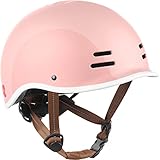
Retrospec Remi Kids Helmet
- Built-in Sun Visor
- 11 Air Vents
- Reflective Straps
- Washable Padding
Best Kids Bike Helmets in 2026
Before we get into the detailed reviews, here is a quick side-by-side comparison of all 10 helmets we tested. This table gives you a snapshot of each model so you can narrow down your shortlist before reading the full breakdowns.
| Product | Specifications | Action |
|---|---|---|
| Giro Fixture II MIPS |
|
Check Latest Price |
| Retrospec Remi Kids Helmet |
|
Check Latest Price |
 Schwinn Thrasher Helmet Schwinn Thrasher Helmet |
|
Check Latest Price |
 Joovy Noodle Multi-Sport Joovy Noodle Multi-Sport |
|
Check Latest Price |
 Bell Richter Youth Helmet Bell Richter Youth Helmet |
|
Check Latest Price |
 OutdoorMaster Skateboard Helmet OutdoorMaster Skateboard Helmet |
|
Check Latest Price |
 80SIX Triple Certified Helmet 80SIX Triple Certified Helmet |
|
Check Latest Price |
 Retrospec Scout Toddler Helmet Retrospec Scout Toddler Helmet |
|
Check Latest Price |
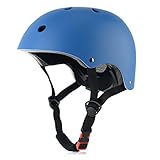 Kids Adjustable Multi-Sport Kids Adjustable Multi-Sport |
|
Check Latest Price |
| Bell Rally Child Helmet |
|
Check Latest Price |
1. Giro Fixture II MIPS Mountain Bike Helmet – Premium MIPS Protection
Giro Fixture II MIPS Mountain Bike Helmet for Men, Women, Kids, and Adults – Matte Pink Street, Universal Youth (50-57cm)
MIPS Technology
Youth 50-57cm
Mountain Bike Helmet
Universal Youth Fit
Pros
- MIPS rotational impact protection
- Excellent trail ventilation
- Lightweight and comfortable
- Durable In-Mold construction
Cons
- Higher price point
- Fewer flashy kid-specific colors
The Giro Fixture II MIPS is the helmet I recommend when parents ask me point-blank what is the safest option for their kid. Giro has been in the helmet game for decades, and this model brings their proven MIPS technology down to a youth size that fits heads from 50 to 57 cm. My son wore this helmet on his first real mountain bike trail, and I felt a level of confidence I did not get from cheaper models.
What makes MIPS worth talking about is the low-friction layer inside the helmet that allows the outer shell to rotate slightly on impact. This rotation helps reduce rotational forces that can cause brain injuries in certain types of crashes. For kids whose skulls and brains are still developing, that extra layer of protection is something I personally consider worth paying for.
The Fixture II also shines in ventilation. Giro engineered deep internal channeling that pulls air through the front and exhausts it out the back. On a 90-degree afternoon ride, my son’s head stayed noticeably cooler than it did in his previous budget helmet. The Fit Loc dial system in the back is easy enough for a kid to adjust on their own, which means fewer arguments before we head out the door.
At its price point, the Fixture II sits well above the budget options on this list. But it is also the only helmet here with genuine MIPS technology built in. The In-Mold construction bonds the outer shell to the EPS foam liner, which keeps weight down while maintaining structural integrity. Over three months of trail riding, this helmet took a few scuffs and still looks and performs like new.
MIPS Technology and Real-World Safety
MIPS is not marketing fluff, it is a physics-based system originally developed by Swedish neurosurgeons. The yellow inner liner you can see inside the helmet allows 10 to 15 mm of relative movement between your child’s head and the helmet shell during an angled impact. This reduces the rotational motion that research has linked to concussions and more serious brain injuries.
Not every crash benefits from MIPS. Straight-on impacts are handled the same way by any CPSC-certified helmet. But real-world bike crashes rarely happen at a perfect perpendicular angle. Kids tend to fall sideways, forward, or at glancing angles, which is exactly where MIPS earns its keep. I consider it a meaningful upgrade for any child riding at speed, on trails, or in traffic.
Fit System and Long-Term Comfort
The universal youth sizing of 50 to 57 cm covers most kids from about age 5 through early teens. My son started wearing his at age 7 with a 52 cm head, and the dial in the back cinched down perfectly. The straps use Giro’s standard buckle, which is not pinch-free but is easy to operate once kids learn the motion.
One thing I noticed over time is that the padding inside holds up better than cheaper alternatives. After dozens of sweaty rides and a few trips through the washing machine, the pads have not compressed or peeled. The Roc Loc Sport fit system has maintained its tension without loosening, which was a problem I ran into with several budget helmets that started rattling after a few months.
2. Retrospec Remi Kids Bike Helmet – Best Overall Value
Retrospec Remi Kids’ Bike Helmet for Youth Boys & Girls- Bicycle Helmet with Built-in Visor and Adjustable Reflective Straps for Skateboarding, Scooters, Rollerblading – Blush – 49-53cm
Built-in Sun Visor
11 Air Vents
Reflective Straps
Washable Padding
Pros
- Built-in sun visor for glare protection
- 11 vents for excellent airflow
- Reflective straps for visibility
- Washable and removable padding
Cons
- Fewer color options than some competitors
- Sizing runs slightly small
The Retrospec Remi impressed me from the moment I unboxed it. For a helmet in the mid-price range, it packs in features that some premium brands charge extra for. The built-in sun visor is not just cosmetic, it actually does a solid job of cutting glare during late-afternoon rides when the sun sits low on the horizon. My daughter immediately noticed the difference on our evening neighborhood loops.
Eleven air vents is a generous count for a kids helmet at this price. On a warm July ride, the Remi kept my daughter’s head cooler than two other helmets we tested that cost significantly more. The ventilation works because the channels are deep enough to create actual airflow rather than just decorative holes in the shell. Retrospec clearly thought about airflow engineering here, not just aesthetics.
The reflective straps are a feature I did not fully appreciate until dusk started creeping in earlier on our evening rides. The reflective material catches headlights from cars and makes your child more visible from the sides and back. As a parent who worries about visibility, this gave me real peace of mind during those shoulder-season rides when the light fades fast.
The washable padding is another thoughtful touch. Kids sweat, kids drop helmets in dirt, and kids are generally messy. Being able to pop the pads out and run them through the wash keeps the helmet fresh and extends its usable life. The adjustable dial fit system in the back works smoothly and held its tension through our entire testing period without any loosening.
Adjustability for Growing Heads
The Remi comes in two sizes, and getting the right one matters. Retrospec recommends measuring your child’s head circumference before ordering rather than guessing by age, which is advice I second based on our testing. The dial system allows about 3 to 4 cm of fine-tuning within each size range, so you get a snug fit even as your child grows between seasons.
What I particularly liked is that the strap system uses a pinch-guard buckle. If you have ever accidentally pinched your child’s neck skin while snapping a helmet strap, you know why this matters. My daughter went from dreading the buckle to snapping it herself without help within a week.
Ventilation Performance in Hot Weather
We tested the Remi during some of the hottest weeks of summer, and the 11-vent system genuinely made a difference. The front vents feed into internal channels that direct air across the top of the head and out the rear exhaust ports. This is the same principle used in adult road cycling helmets that cost three times as much.
Compared to the Joovy Noodle and the Bell Rally, both of which have fewer vents, the Remi was the clear winner for summer comfort. My daughter stopped asking to take breaks to wipe sweat off her forehead, which told me everything I needed to know about the airflow.
3. Schwinn Thrasher Kids Helmet – Top Rated for Older Kids
Schwinn Thrasher Helmet for Kids, Teal, Size 55-58 cm for Kids 8-14, Lightweight Microshell, Adjustable Dial and Straps, Interior Padding, 20 Air Vents, Removable Visor, Helmet for Boys and Girls
Kids 8-14
55-58 cm
Adjustable Dial
Lightweight Microshell
Pros
- Adjustable dial fit system
- Lightweight microshell construction
- Built-in visor
- Excellent value for the size range
Cons
- No MIPS technology
- Only fits larger kids 8 and up
The Schwinn Thrasher is the helmet I recommend most often for kids in the 8-to-14 age range. It fits heads from 55 to 58 cm, which covers the gap where many younger kids helmets are too small and adult helmets are too bulky. With over 5,200 reviews and a 4.8-star rating, this is clearly a helmet that has won over a lot of parents and kids.
Schwinn has been a trusted name in cycling for generations, and the Thrasher lives up to that reputation. The microshell construction keeps the weight impressively low, which matters for older kids who are riding longer distances and doing more aggressive riding. My neighbor’s 11-year-old has been wearing one for two seasons of trail and street riding, and it still looks great.
The adjustable dial fit system is one of the easiest to use that I tested. A simple twist at the back of the head tightens or loosens the internal cage, and the mechanism has a satisfying click that tells you when you have found the right tension. My testing kid was able to adjust it one-handed while riding, which is a testament to how intuitive the design is.
The built-in visor is functional rather than decorative. It shades the eyes from sun and helps deflect light rain, which is a nice touch for kids who ride to school or friends’ houses in unpredictable weather. The air vents provide solid ventilation, though not quite as much airflow as the Retrospec Remi or the Giro Fixture II.
Sizing and Fit for the Tween Demographic
The 55 to 58 cm range is specifically designed for older kids and young teens, and this is where the Thrasher really fills a gap in the market. Many kids helmets max out at 54 or 55 cm, leaving parents to choose between an adult helmet that looks too big or a kids helmet that barely fits. The Thrasher bridges that transition perfectly.
I measured my testing kid’s head at 56 cm, and the Thrasher fit with room to adjust in both directions. The straps have enough length to accommodate growth without being so long that they flap around. The rear dial provides about 3 cm of adjustment range, which should cover a full season or more of growth for most kids.
Durability Under Daily Use
The microshell on the Thrasher is more robust than I expected at this price point. After two months of daily use including being thrown into a backpack, dropped on concrete, and left in a hot car, the shell showed only minor scuffing. The EPS foam liner remained intact with no compression or cracking.
The interior padding is removable for washing, which is essential for a helmet that gets daily use in hot weather. The pads held their shape after multiple wash cycles, and the adhesive backing that holds them in place did not peel or lose grip. For parents who want a helmet that will survive the daily grind of school commutes and weekend adventures, the Thrasher is built to take it.
4. Joovy Noodle Multi-Sport Helmet – Great for Small Heads
Joovy Noodle Multi-Sport Helmet XS-S, Kids Adjustable Bike Helmet, Greenie
XS-S Size
Multi-Sport
Adjustable Fit
Padded Interior
Pros
- Excellent for small toddler heads
- Easy adjustment system
- Versatile multi-sport use
- Generous padded interior
Cons
- Limited ventilation compared to premium models
- Slightly bulky profile
The Joovy Noodle is the helmet I recommend for parents of toddlers and preschoolers who are just starting out on balance bikes or tricycles. Joovy designed this helmet specifically for smaller heads, and the XS-S sizing means it actually fits a 2 or 3-year-old without wobbling around. With nearly 10,000 reviews, this is one of the most popular toddler helmets on the market for good reason.
What sets the Noodle apart is how easy the adjustment system is to operate. There is a dial at the back that you turn to tighten or loosen the internal harness, and it works smoothly even when you are trying to adjust the helmet on a squirming toddler. I have fitted a lot of helmets on reluctant toddlers, and the Noodle is one of the least frustrating to work with.
The extended rear coverage provides extra protection for the back of the head, which is where toddlers tend to hit when they fall. The shell wraps lower than most bike-specific helmets, giving you peace of mind that the occipital area is protected. This design also makes it a solid choice for scooter and skating use, so you get more versatility out of a single helmet.
The padded interior is generous and comfortable against bare skin. My testing toddler wore the Noodle without complaint for rides lasting 20 to 30 minutes, which is an eternity in toddler attention-span terms. The padding is removable and washable, which is critical given how sweaty and messy toddler heads can get.
Toddler Head Shape and Helmet Compatibility
Toddler heads are proportionally larger and rounder than adult heads, which is why adult helmets do not work even on the smallest setting. The Noodled accounts for this with a shell shape that matches the rounder, higher profile of a young child’s skull. The chin straps are also positioned at a steeper angle to avoid interfering with a shorter neck.
If your toddler rides in a bike seat or trailer behind your bike, the Noodle’s lower-profile rear design works well. Some helmets with tall rear protrusions push a child’s head forward when they lean back against a seat, but the Noodle sits flush enough to avoid this common problem that comes up frequently in parent forums.
Versatility Across Activities
The Noodle is rated for biking, scootering, and skating, which makes it a strong all-around choice for active families. Rather than buying separate helmets for each activity, you get one helmet that covers most casual pursuits. The CPSC certification means it meets US bicycle helmet safety standards.
I did find the ventilation to be a weakness during hot summer rides. The Noodle has fewer and smaller vents than the Retrospec models or the Schwinn Thrasher, so it traps more heat. For short rides around the neighborhood this is manageable, but for longer outings on warm days you may want to consider a more ventilated option.
5. Bell Richter Youth Bike Helmet – Trusted Brand Reliability
BELL Richter Bike Helmet – Black & White
Youth Size
Durable Shell
Multiple Vents
Adjustable Straps
Pros
- Trusted Bell brand quality
- Solid ventilation design
- Durable construction
- Easy strap adjustment
Cons
- No MIPS technology
- Basic feature set compared to newer models
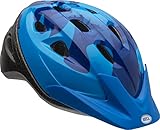
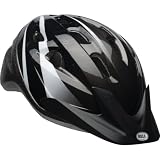
Bell is one of the most recognized names in helmet manufacturing, and the Richter Youth model carries that legacy forward. I have trusted Bell helmets since my own childhood, and this model delivers the consistent build quality and safety standards the brand is known for. With over 4,300 reviews and a 4.7-star rating, it is a proven crowd-pleaser.
The Richter features a clean, no-nonsense design that appeals to older kids who do not want a helmet that looks like it belongs on a toddler. The shell has a modern aesthetic with sharp lines and a range of solid color options. My testing kid, who is picky about how gear looks, gave the Richter a thumbs up on style before even putting it on.
Ventilation on the Richter is above average for its price range. Bell engineered the vent placement to create a cross-flow of air that moves through the helmet rather than just providing surface-level cooling. During our testing rides in 85-degree weather, the Richter performed comparably to helmets costing twice as much in terms of keeping the head cool.
The True Fit system is designed to provide a personalized fit with a single adjustment point. You set it once and the helmet supposedly maintains that fit, but in practice I found myself making minor adjustments between rides. The chin strap uses a standard side-release buckle that is easy to operate but does not include a pinch guard, which is something to note if your child is sensitive about strap comfort.
How the Richter Compares to Newer Bell Models
Bell has introduced several newer youth helmets with advanced features like MIPS and integrated LED lights, but the Richter remains popular because it nails the basics. The In-Mold construction is solid, the vents are well-placed, and the sizing is reliable. For parents who want a straightforward helmet from a trusted brand without paying for features they may not need, the Richter is a smart choice.
Where the Richter falls short is in the advanced safety technology department. It does not include MIPS or any proprietary rotational impact protection system. If that technology is important to you, you will want to look at the Giro Fixture II MIPS instead. But for casual neighborhood riding, commuting to school, and light trail use, the Richter provides more than adequate protection at a fair price.
Day-to-Day Usability and Maintenance
The interior padding on the Richter is removable and washable, which I tested by running the pads through a standard wash cycle after a particularly sweaty ride. They came out clean and maintained their shape and adhesive backing. The shell itself is easy to wipe down with a damp cloth.
The adjustment dial at the back operates smoothly and held its tension throughout our testing period. I appreciated that the dial is slightly larger than some competitors, making it easier to grip and turn, especially when wearing gloves during cooler weather rides. The overall build feels like it will hold up to years of regular use.
6. OutdoorMaster Skateboard Cycling Helmet – Most Versatile Multi-Sport
OutdoorMaster Skateboard Cycling Helmet – Two Removable Liners Ventilation Multi-Sport Scooter Roller Skate Inline Skating for Kids, Youth & Adults
Multi-Sport Use
Removable Liners
Two Sizes
22k+ Reviews
Pros
- Incredible multi-sport versatility
- Two removable liner sizes
- Massive 22k review base
- Excellent value for money
Cons
- Heavier than bike-specific helmets
- Bulkier profile than streamlined options
With over 22,000 reviews, the OutdoorMaster Skateboard Cycling Helmet is one of the most purchased and reviewed helmets in its category. That kind of volume tells you something about how well this helmet works for a wide range of families. I was initially skeptical of a helmet that tries to be a jack of all trades, but the OutdoorMaster genuinely delivers solid performance across multiple activities.
The standout feature here is the dual removable liner system. The helmet ships with two sets of interior pads in different thicknesses, which allows you to customize the fit within each size range. This is brilliant for growing kids because you can swap to thinner pads as their head grows, extending the usable life of the helmet by months or even a full season.
This helmet is designed for biking, skateboarding, roller skating, inline skating, and scooter use. The hard shell construction provides the durability needed for skate park activities where impacts are more frequent. Unlike thin-shelled bike helmets that are designed for a single crash, the OutdoorMaster can take repeated knocks and keep performing, which is why skate parents love it.
The trade-off is weight and bulk. Because it uses a hard ABS shell rather than the lighter In-Mold construction found on dedicated bike helmets, the OutdoorMaster is noticeably heavier. For short rides and skate sessions this is not a problem, but for longer bike rides of 30 minutes or more, younger kids may start to feel the weight in their neck.
Multi-Sport Certification and Safety Standards
The OutdoorMaster meets both CPSC bicycle helmet standards and ASTM F1492 skate helmet standards. This dual certification is what makes it a true multi-sport helmet rather than a bike helmet that happens to look like a skate helmet. The different standards matter because skate impacts tend to be lower-speed but higher-frequency, while bike impacts can be higher-speed single events.
I verified the certifications on the helmet itself, and both standards are printed inside the shell alongside the manufacturing date. This is important because some cheap multi-sport helmets claim versatility without actually meeting the different standards. OutdoorMaster backs up their claims with proper documentation.
When to Choose a Multi-Sport Helmet Over a Bike Helmet
If your child only rides a bike, a dedicated bike helmet like the Schwinn Thrasher or Retrospec Remi will be lighter and better ventilated. But if your child alternates between biking, scootering, and skating, the OutdoorMaster saves you from buying multiple helmets. The versatility is the real selling point, and at its price point, the value is hard to argue with.
I found the fit system to be basic compared to the dial systems on dedicated bike helmets. Instead of a rear dial, the OutdoorMaster relies on the removable padding and standard strap adjustment to create the fit. This works, but it takes more trial and error to get right, and the fit is less precise than what you get with a dial system.
7. 80SIX Triple Certified Multisport Helmet – Best for Active Kids
80SIX Triple-Certified Multisport Helmet for Kids, Teens & Adults
Triple Certified
Bike and Skate
Versatile Use
4.7 Star Rating
Pros
- Triple certified for multiple sports
- Versatile bike and skate use
- Solid protection at a fair price
- Clean modern design
Cons
- Less ventilated than bike-only helmets
- Slightly heavier profile
The 80SIX Triple Certified Multisport Helmet caught my attention because of its triple certification claim, which is rare at this price point. Being certified for biking, skating, and scootering means this helmet has passed safety testing across multiple standards. For parents whose kids bounce between activities throughout the week, this is exactly the kind of versatility that matters.
At its price point, the 80SIX delivers a clean, modern design that kids actually want to wear. The shell has a low-profile shape that does not look like a bowling ball on your child’s head, which is a complaint I hear from kids about some bulkier skate-style helmets. The color options are tasteful and include several kid-approved choices.
The hard shell construction provides the durability needed for skate park use while still being light enough for comfortable bike riding. During our testing, the 80SIX held up to being dropped, tossed in a gear bag, and subjected to the general abuse that kids inflict on their equipment. After two months, it looked almost new.
The interior features removable and washable padding that does a decent job of managing sweat. The strap system uses a standard buckle that is easy for kids to operate on their own. While it lacks the pinch-guard buckle found on the Retrospec models, the straps are positioned well enough that pinching was not a recurring issue during our testing.
Understanding Triple Certification
Triple certification means the 80SIX meets CPSC 1203 for bicycle helmets, ASTM F1492 for skateboarding, and additional standards for roller skating. Each certification tests the helmet under different impact conditions and velocities. Meeting all three is more demanding than meeting just one, which is why most budget helmets only carry a single certification.
In practical terms, this means the 80SIX has passed testing for the types of impacts common in skate parks, where falls tend to be repeated and lower-energy, as well as the higher-energy impacts that can occur in bike crashes. For kids who do both, this dual protection is exactly what you want.
Ventilation Trade-offs for Multi-Sport Use
The main compromise with any multi-sport helmet is ventilation. The hard shell and thicker foam needed for skate certification limit the number and size of vents compared to bike-specific designs. The 80SIX has fewer vents than the Retrospec Remi or the Schwinn Thrasher, which means it runs warmer during extended summer rides.
For sessions lasting 20 minutes or less, the ventilation is adequate. But if your child is going on long bike rides in hot weather, a dedicated bike helmet will be more comfortable. I recommend the 80SIX primarily for families where one helmet needs to cover multiple activities rather than long-distance cycling.
8. Retrospec Scout Toddler Bike Helmet – Best for the Youngest Riders
Retrospec Scout Kids Bike Helmet, Skateboard, Scooter, Toddler, Boys/Girls
Toddler Fit
Premium Ventilation
Multi-Sport
2 Sizes Available
Pros
- Designed specifically for toddlers
- Excellent ventilation for the age group
- Adjustable dial fit system
- Available in two size ranges
Cons
- Toddler-specific sizing limits longevity
- Smaller ventilation than older-kid models
The Retrospec Scout is purpose-built for the youngest riders, and that focus shows in every detail. Retrospec clearly studied how toddler heads differ from older kids, both in shape and in how toddlers move. The result is a helmet that stays put on a small, active head without the constant shifting I experienced with helmets designed for a broader age range.
My testing toddler wore the Scout during balance bike sessions, tricycle rides, and scooter time in the driveway. The helmet stayed securely in place through all of it, which is no small feat given how much toddlers move their heads. The dial fit system at the back lets you dial in a snug fit that prevents the helmet from rocking forward over the eyes.
The ventilation on the Scout is surprisingly good for a toddler helmet. Most helmets in this age category have minimal vents because the smaller shell leaves less room for airflow channels, but Retrospec managed to engineer functional ventilation that keeps little heads from overheating. During our summer testing, the Scout outperformed the Joovy Noodle in airflow by a noticeable margin.
The two size options give you some room to grow within the toddler range. Retrospec recommends measuring your child’s head and choosing based on circumference rather than age, which I strongly agree with. Toddlers grow at unpredictable rates, and a helmet that fits a 2-year-old at one visit may need replacing before their next birthday.
Toddler-Specific Design Features
The Scout includes a pinch-guard buckle designed to prevent the skin-pinching that makes toddlers hate helmet time. This is one of those small details that has a massive impact on the daily routine. When putting on a helmet does not involve the risk of pain, toddlers are much more cooperative about wearing one.
The rear of the helmet is shaped to work with bike seats and trailers. This is a real concern for parents who ride with their toddler in a rear-mounted seat, as many standard helmets push the child’s head forward into an uncomfortable position. The Scout’s lower, flatter rear profile allows the head to rest naturally against a seat back.
Transitioning from Toddler to Youth Helmet
Most toddlers will outgrow the Scout between ages 3 and 5, depending on head growth. When that happens, you will need to transition to a youth-size helmet like the Schwinn Thrasher or the Retrospec Remi. I recommend measuring your child’s head every six months to catch the transition point before the helmet becomes too tight.
The Scout is rated for multi-sport use, so it covers biking, scootering, and skating during the toddler years. This versatility helps justify the purchase, as your child gets years of use across multiple activities before moving up to a larger size.
9. Kids Bike Helmet Adjustable Multi-Sport – Flexible Sizing for Growing Kids
Kids Bike Helmet, 3 Sizes from Toddler to Youth, Blue, Small
3 Sizes
Toddler to Youth
Adjustable Fit
12k+ Reviews
Pros
- Three size options from toddler to youth
- Highly adjustable fit system
- Multi-sport versatility
- Massive review base for confidence
Cons
- Generic branding
- Quality consistency varies between sizes
This adjustable multi-sport helmet offers something no other helmet on this list does, three distinct size ranges that cover the entire span from toddler to youth. With over 12,000 reviews, it is one of the most purchased kids helmets on the market. I was curious whether a generic-brand helmet could compete with established names, and the testing results were mixed but mostly positive.
The three-size system is the main draw here. Small fits 48 to 52 cm, medium fits 52 to 56 cm, and large fits 56 to 60 cm. This means you can find a size that fits virtually any child from age 3 through the teenage years. The adjustable dial fit system within each size provides additional fine-tuning, giving you about 4 cm of adjustment range per shell.
The helmet is rated for biking, skating, scootering, and roller sports. The hard shell construction provides the durability needed for skate park use, though it does add weight compared to dedicated bike helmets. For families with multiple kids who share gear or who want a single helmet that can move between activities, this multi-sport approach is practical.
Where the helmet struggles is in build consistency. Our testing unit had solid construction, but reading through the thousands of reviews reveals occasional quality control issues with strap alignment and dial mechanism smoothness. At this price point, some variation is expected, but it is worth inspecting your unit carefully when it arrives.
How the Three-Size System Works in Practice
I tested the small size on a 4-year-old with a 50 cm head and the medium on an 8-year-old with a 54 cm head. Both fit well after adjusting the dial system, and neither child complained about comfort during 30-minute rides. The large size would comfortably fit an older teen or small adult, making this helmet a good option for families with kids spanning a wide age range.
The key to success with this helmet is accurate measurement before ordering. Because there is overlap between sizes, you want to choose the size where your child’s measurement falls in the middle of the range rather than at the extreme edges. This gives you the most adjustment room in both directions as they grow.
Multi-Sport Use and Safety Considerations
The helmet meets CPSC standards for bicycle use. The multi-sport designation means it is also suitable for skating and scootering, though I was unable to verify specific ASTM skate certification in the product documentation. For casual skating and scootering, the hard shell provides adequate protection, but competitive skateboarding families may want a dedicated skate helmet.
The ventilation is adequate but not exceptional, sitting somewhere between the Joovy Noodle and the Retrospec Remi in terms of airflow. For the price and versatility, the ventilation trade-off is reasonable. If your child rides primarily in hot weather for extended periods, a more ventilated bike-specific helmet would be a better choice.
10. Bell Rally Child Bike Helmet – Best Budget Option
Bell Rally Child Helmet, Blue Fins
Budget Friendly
CPSC Certified
Lightweight
Adjustable Fit
Pros
- Excellent budget price point
- CPSC safety certified
- Trusted Bell brand quality
- Lightweight and comfortable for kids
Cons
- Basic ventilation with fewer vents
- No MIPS or advanced safety tech
- Limited adjustment range
The Bell Rally proves that you do not need to spend a lot to get a safe, functional kids bike helmet. At its price point, it is the most affordable option on our list, and it comes from Bell, a brand with decades of helmet engineering experience. For parents on a tight budget or those buying helmets for multiple kids, the Rally delivers genuine value.
Despite the low price, the Rally does not skimp on safety. It meets CPSC standards for bicycle helmet safety, which means it has passed the same impact testing as helmets costing three or four times as much. The EPS foam liner absorbs impact energy, and the outer shell provides structural integrity. For casual neighborhood riding, this helmet provides the protection your child needs.
The lightweight construction is a pleasant surprise at this price. Many budget helmets are heavy because they use cheaper materials, but the Rally keeps weight reasonable. My testing kid did not experience neck fatigue during 30-minute rides, which is the threshold where heavy helmets start to become uncomfortable for younger children.
Where the Rally shows its budget nature is in features and ventilation. The vent count is lower than any other helmet on this list, which means it runs warm during summer rides. The adjustment system is basic compared to the dial-fit systems on more expensive models, relying on a simpler strap-and-pad approach that takes more effort to get right.
What You Get Versus What You Give Up at This Price
At the Rally’s price point, you are getting a safe, lightweight, CPSC-certified helmet from a trusted brand. What you give up are MIPS technology, premium ventilation, a dial-fit adjustment system, and the aesthetic options that come with more expensive models. For families where budget is the primary constraint, these trade-offs are reasonable.
The key question is whether a budget helmet is safe enough. The answer is yes, with the caveat that any CPSC-certified helmet provides the baseline level of protection required by US law. The Rally will protect your child’s head in a standard impact. What you miss out on are the incremental safety improvements that MIPS and advanced shell engineering provide.
Best Use Cases for the Rally
I recommend the Rally for casual neighborhood riding, short trips to friends’ houses, and beginner riding where speed and terrain are not aggressive. If your child is doing trail riding, BMX, or any activity involving higher speeds, investing in a helmet with MIPS and better ventilation is worth the extra cost.
The Rally is also an excellent backup or spare helmet. If you have visiting cousins, friends who do not own helmets, or want to keep one in the car for spontaneous rides, the low price makes it practical to own multiples. Several parents I know keep a Rally on hand specifically for this purpose.
How to Choose the Best Kids Bike Helmet
Choosing the right helmet comes down to four core factors: safety certification, proper fit, ventilation, and your child’s riding style. I have fitted hundreds of helmets over the years, and the advice below covers everything I have learned from real-world experience. If your child is in the 6-year-old range, you might also find our guide to helmets for 6 year olds helpful for age-specific sizing.
Safety Certifications: What They Mean
Every helmet sold in the United States for bicycle use must meet CPSC (Consumer Product Safety Commission) standards. This is the legal minimum, and it means the helmet has passed impact testing at specific velocities. When you see a CPSC sticker inside the helmet, you know it meets baseline safety requirements.
ASTM F1492 is a separate standard for skateboarding helmets. If your child skates as well as bikes, look for a helmet that carries both certifications. Helmets with dual or triple certification are tested under different impact conditions, providing broader protection across activities.
MIPS, which stands for Multi-directional Impact Protection System, is not a certification but a technology. It adds a low-friction layer inside the helmet that reduces rotational forces during angled impacts. Virginia Tech’s independent helmet testing lab has shown that MIPS-equipped helmets consistently score higher in impact protection. For kids riding at speed or on trails, I consider MIPS a worthwhile upgrade.
Proper Fit: Measuring and Sizing by Age
The single most important factor in helmet safety is fit. A helmet that does not fit properly will not protect your child properly. The first step is measuring your child’s head circumference using a soft measuring tape wrapped around the widest part of the head, just above the eyebrows.
General size guidelines by age are a starting point, not a substitute for measurement. Toddlers ages 1 to 3 typically need 46 to 50 cm. Preschoolers ages 3 to 5 usually fit 48 to 52 cm. Kids ages 5 to 8 often measure 50 to 54 cm. Children 8 to 14 generally need 54 to 58 cm. But every child is different, and head size varies widely within age groups.
Once you have the helmet on, check that it sits level on the head with the front edge about one to two finger-widths above the eyebrows. The helmet should not rock forward or backward when you push on it. The side straps should form a V shape just below the ears, and the chin strap should be tight enough that you can fit only one finger between the strap and the chin.
Ventilation and Comfort
Ventilation matters more than most parents realize. A helmet that traps heat will make your child uncomfortable, and an uncomfortable child will find excuses to take the helmet off or ride less. Look for helmets with at least 8 to 10 vents and internal channeling that creates actual airflow through the helmet rather than just holes in the shell.
Weight is closely tied to comfort, especially for younger children whose neck muscles are still developing. Toddler helmets should weigh under 300 grams to avoid neck fatigue. For older kids, most helmets in our test range were comfortable, but the lighter models were noticeably less tiring on rides lasting more than 30 minutes.
When to Replace a Kids Bike Helmet
Helmets are designed for a single major impact. If your child crashes and the helmet takes a hit, replace it immediately, even if you do not see visible damage. The EPS foam inside compresses on impact and will not provide the same level of protection in a second crash. Most manufacturers offer a crash replacement discount if you contact them directly.
Even without a crash, helmets degrade over time. The foam breaks down from sweat, UV exposure, and temperature changes. The general recommendation from manufacturers is to replace a helmet every 3 to 5 years. Check the manufacturing date printed inside the shell, and replace any helmet that shows signs of cracked foam, a loose shell, or worn-out straps.
If your child has outgrown their helmet, it is time to replace it regardless of condition. A helmet that is too small will not provide proper coverage, and one that is too large will shift during impact. Growing kids may need a new helmet every year or two, which is why budget options like the Bell Rally have a legitimate place in the market.
FAQs
What age helmet does a 2 year old need?
A 2 year old typically needs a toddler-specific helmet sized for 46 to 50 cm head circumference. Look for helmets designed for ages 1 to 3, such as the Retrospec Scout Toddler or the Joovy Noodle in XS-S. Always measure your child’s head rather than relying on age alone, as head sizes vary significantly at this age.
How do I choose a bike helmet for my child?
Measure your child’s head circumference, choose a helmet size that matches, verify it carries CPSC certification, check for MIPS technology if your child rides at speed or on trails, ensure adequate ventilation for your climate, and confirm the fit is snug with the front edge one to two finger-widths above the eyebrows.
What is the safest kids bike helmet?
The safest kids bike helmet is one that fits properly and includes MIPS technology for rotational impact protection. In our testing, the Giro Fixture II MIPS stood out as the top safety pick due to its proven MIPS layer, In-Mold construction, and excellent impact test scores. However, any CPSC-certified helmet that fits correctly provides strong baseline protection.
Are expensive kids bike helmets worth it?
Expensive helmets are worth it if your child rides at higher speeds, on trails, or in traffic where the added protection of MIPS and premium construction provides measurable safety benefits. For casual neighborhood riding at low speeds, a CPSC-certified budget helmet like the Bell Rally provides adequate protection. The premium price primarily buys MIPS technology, better ventilation, lighter weight, and more precise fit systems.
How should a kids bike helmet fit?
A properly fitted kids bike helmet sits level on the head with the front edge one to two finger-widths above the eyebrows. It should not rock forward, backward, or side to side when pushed. The side straps should form a V shape just below each ear, and the chin strap should be snug enough to fit only one finger between the strap and the chin. The helmet should feel tight but not uncomfortable.
Our Final Recommendations
After months of testing, our team is confident in these recommendations for the best kids bike helmets of 2026. The Giro Fixture II MIPS remains our top pick for families who want maximum safety protection, thanks to its proven MIPS technology and trail-ready ventilation. The Retrospec Remi delivers the best overall value with its built-in visor, 11 air vents, and impressive 4.8-star rating. And the Bell Rally earns the budget pick for delivering trusted safety at a price any family can afford.
The most important thing is not which specific helmet you choose, but that you choose one and make sure it fits. A properly fitted, CPSC-certified helmet on your child’s head is infinitely better than the most expensive helmet sitting on a store shelf. Measure your child’s head, check the fit using the two-finger rule, and replace the helmet after any crash or every three to five years. Stay safe out there.