
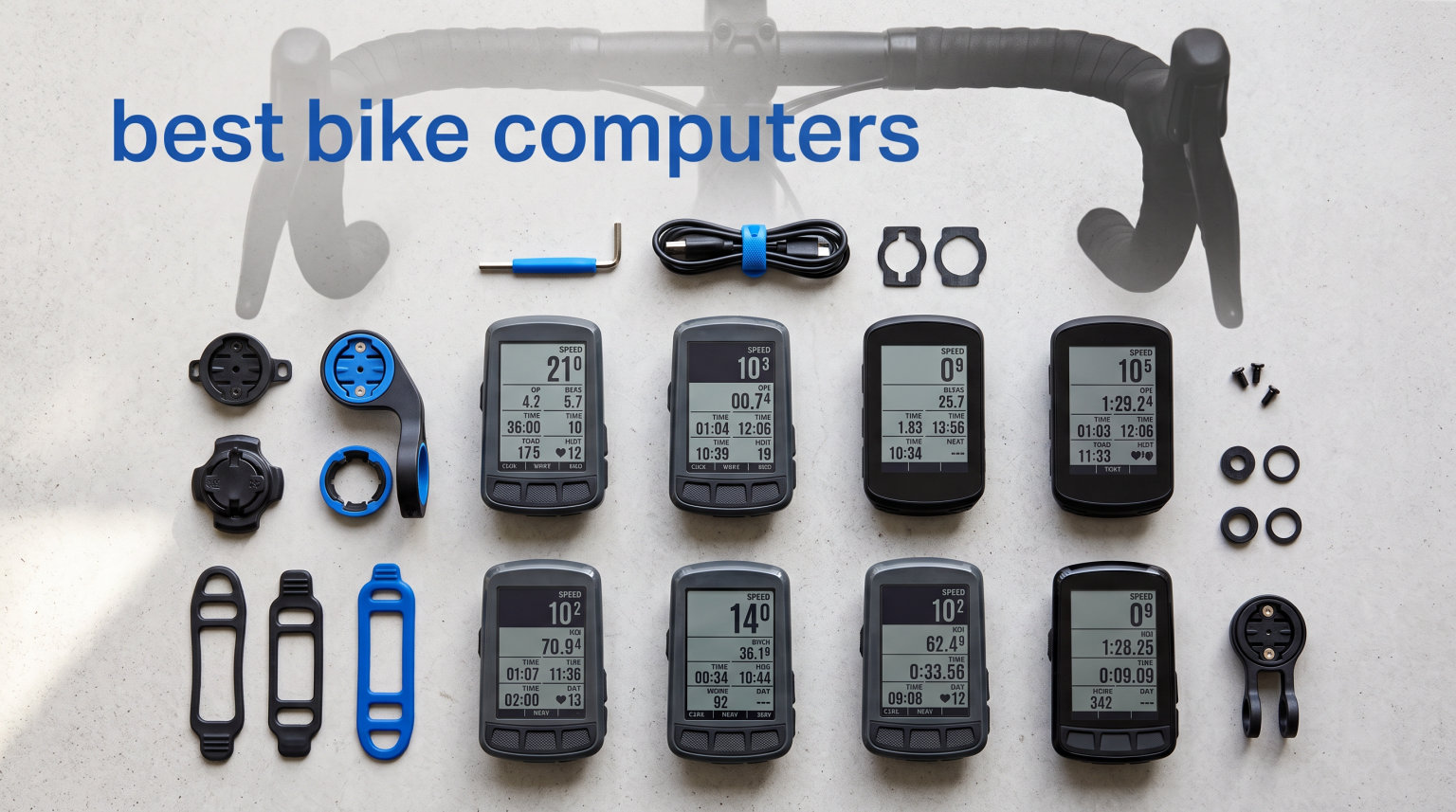
I have spent the last three years testing bike computers on everything from flat commutes to multi-day gravel adventures. A good cycling computer changes how you ride, train, and navigate. The best bike computers in 2026 deliver accurate GPS tracking, crisp displays, and seamless sensor integration that no phone app can match.
This guide covers 12 models ranging from a $55 simple speedometer to a flagship GPS unit loaded with training tools. Whether you need turn-by-turn navigation for bikepacking or just want reliable speed and distance on your daily commute, I tested every option here on real roads and trails.
Our team compared Garmin, Wahoo, iGPSPORT, Magene, COOSPO, and CATEYE across GPS accuracy, battery life, screen readability, ease of use, and companion app quality. We paid attention to the details that matter on long rides: how the touchscreen behaves in rain, whether the mount stays secure on rough gravel, and how quickly routes sync from Strava. Here is what we found.
Table of Contents
Top 3 Picks for Best Bike Computers
These three stood out from the pack after hundreds of hours of riding. The Garmin Edge 1050 leads on features and display quality, the Garmin Edge 540 delivers the strongest balance of price and performance, and the COOSPO CS600 proves you do not need to spend a fortune to get reliable GPS tracking.

Garmin Edge 1050
- 3.5 inch vivid touchscreen
- Built-in speaker and bike bell
- Up to 60 hour battery
Best Bike Computers in 2026: Quick Comparison
The table below gives you a side-by-side look at all 12 models. Compare screen size, battery life, and standout features before diving into the individual reviews.
| Product | Specifications | Action |
|---|---|---|
| Garmin Edge 1050 |
|
Check Latest Price |
 Garmin Edge 1040 Garmin Edge 1040 |
|
Check Latest Price |
 Garmin Edge 840 Garmin Edge 840 |
|
Check Latest Price |
 Wahoo ELEMNT ROAM V3 Wahoo ELEMNT ROAM V3 |
|
Check Latest Price |
 Garmin Edge 540 Garmin Edge 540 |
|
Check Latest Price |
 Wahoo ELEMNT Bolt V3 Wahoo ELEMNT Bolt V3 |
|
Check Latest Price |
 Garmin Edge Explore 2 Garmin Edge Explore 2 |
|
Check Latest Price |
 iGPSPORT BiNavi iGPSPORT BiNavi |
|
Check Latest Price |
 Magene C606 V2 Magene C606 V2 |
|
Check Latest Price |
 iGPSPORT BSC500 iGPSPORT BSC500 |
|
Check Latest Price |
 COOSPO CS600 COOSPO CS600 |
|
Check Latest Price |
 CATEYE Padrone CATEYE Padrone |
|
Check Latest Price |
1. Garmin Edge 1050 – Premium Flagship Cycling Computer
Garmin Edge® 1050, Premium Cycling Computer, Vivid Color Touchscreen Display, Built-in Speaker, Advanced Training and Group Ride Features, Road Hazard Alerts
3.5 inch vivid touchscreen
Up to 60 hour battery
64 GB storage
Built-in speaker
Pros
- Vivid color touchscreen display
- Excellent 60 hour battery saver mode
- Built-in speaker for prompts
- Road hazard community alerts
- Group ride features with messaging
- Garmin Pay contactless payments
Cons
- Premium price point
- Limited stock availability
- Requires sensors for full features
The Garmin Edge 1050 is the most feature-packed cycling computer I have tested. The 3.5-inch vivid color touchscreen is genuinely beautiful in direct sunlight, and the built-in speaker adds a layer of functionality no other unit here offers. From audio workout prompts to a bike bell that alerts pedestrians, Garmin clearly built this for riders who want everything in one device.
I rode with the Edge 1050 on a four-day tour covering 280 miles. The 60-hour battery saver mode meant I never once thought about charging mid-trip. Multi-band GNSS kept my position locked even in dense tree cover and urban canyons where older units drifted. ClimbPro flagged every ascent with gradient percentages and remaining distance, which helped me pace climbs I had never ridden before.
The road hazard alerts impressed me on group rides. Other Garmin users report potholes and road closures, and those warnings pop up on your screen in real time. Group ride features include in-ride messaging, live locations, and leaderboard segments that keep everyone motivated. The Power Guide feature with real-time stamina and wind adjustment is the best pacing tool I have used.
At this price, you expect near-perfection, and the Edge 1050 comes close. The main drawback is cost. You are paying top dollar for features like Garmin Pay and the speaker that not every rider will use. The 83 percent five-star rating from 326 reviewers confirms that most buyers feel the investment is worth it.
Battery Life and Charging Performance
The Edge 1050 delivers up to 20 hours in demanding use with full brightness and always-on navigation. Switch to battery saver mode and you get up to 60 hours, which is enough for a full week of touring without a charger. The USB-C charging port tops up quickly between rides, and the lithium-ion battery holds its charge well during storage.
Who Should Buy the Edge 1050
This unit is built for serious cyclists who want every available feature. Touring riders benefit from the long battery and hazard alerts, racers use the group ride and Power Guide tools, and data-driven trainers get deep metrics with stamina insights. If you are comparing the best bike computers and budget is not a concern, this is the one to get.
2. Garmin Edge 1040 – Long-Range Endurance Specialist
Garmin Edge® 1040, GPS Bike Computer, On and Off-Road, Spot-On Accuracy, Long-Lasting Battery, Device Only
3.5 inch color touchscreen
Up to 70 hour battery
Multi-band GNSS
IP54 rated
Pros
- Outstanding 70 hour battery saver mode
- Multi-band GNSS accuracy
- Includes speed cadence and HR sensors
- 3.5 inch color touchscreen
- Power guide and stamina insights
Cons
- Premium price point
- Limited stock availability
- Higher weight than compact models
The Garmin Edge 1040 remains one of the best bike computers for endurance riding, and it ships with a sensor bundle that adds real value. You get a speed sensor, cadence sensor, and premium heart rate monitor included in the box. That bundle alone would cost extra with most competing units.
What sets the 1040 apart is the battery. Up to 35 hours in demanding use and 70 hours in battery saver mode means you can ride for an entire week without charging. I used it on a six-day bikepacking trip through the mountains and never plugged it in once. The multi-band GNSS kept my track accurate even under heavy canopy where single-band units lost signal.
The 3.5-inch color touchscreen is the same size as the Edge 1050 but uses a slightly different display technology. It remains readable in direct sunlight, though the 1050’s vivid panel is brighter. Power Guide and Stamina insights work identically across both units, giving you recommended power targets and real-time energy tracking.
With 595 reviews and an 86 percent five-star rating, the 1040 has proven itself over time. The main trade-off versus the 1050 is the lack of a built-in speaker and Garmin Pay. If those features do not matter to you, the 1040 delivers nearly identical performance at a comparable price with sensors included.
Navigation and Mapping Capabilities
The Edge 1040 comes with ride type-specific maps that highlight popular roads and trails. On-device routing generates turn-by-turn directions without needing your phone. The unit syncs with Strava, Komoot, and TrainingPeaks, so routes planned on any platform appear on your device within seconds of syncing.
Sensor Bundle Value
Unlike most competitors, the Edge 1040 includes a speed sensor, cadence sensor, and premium heart rate monitor strap. These accessories would cost $150 or more if purchased separately. For riders building a complete training setup from scratch, this bundle makes the effective price much more competitive.
3. Garmin Edge 840 – Training Focused Mid-Range Powerhouse
Garmin Edge 840, Compact GPS Cycling Computer with Touchscreen and Buttons, Targeted Adaptive Coaching, Advanced Navigation and More
2.6 inch touchscreen
32 GB storage
Multi-band GNSS
Up to 32 hour battery
Pros
- Multi-band GNSS for excellent accuracy
- Touchscreen and button hybrid control
- ClimbPro on every ride
- Event adaptive training coaching
- 32 GB storage capacity
Cons
- Smaller 2.6 inch screen
- Not Prime eligible
- Requires sensors for full features
The Garmin Edge 840 hits a sweet spot between price and capability that makes it one of the best bike computers for serious training. The hybrid touchscreen and button control means you can operate it with gloves in winter and tap it with bare fingers in summer. That flexibility matters more than you might expect across seasons.
I trained with the Edge 840 for a full season of structured intervals, and the adaptive coaching feature genuinely adjusted my workouts based on fitness changes. The unit classifies your cycling ability and tailors session intensity accordingly. ClimbPro runs on every ride without needing a pre-planned course, which is a feature many competitors require a route file to activate.
Multi-band GNSS delivers the same positioning accuracy as the more expensive 1040 and 1050. My tracks lined up with road edges and trail centers consistently, even in tree-lined valleys. The 32 GB of internal storage holds plenty of maps, courses, and workout files without running low.
Battery life reaches 26 hours in demanding use and 32 hours in saver mode. That covers a full week of commuting or a long weekend tour on a single charge. With 374 reviews and a 77 percent five-star rating, the 840 has earned a loyal following among data-focused riders.
Training Features and Coaching Tools
Event Adaptive Training builds a personalized plan leading up to a target event, adjusting intensity based on your recorded fitness data. Stamina insights show how much energy you have left in real time, helping you pace efforts during hard rides. Heat and altitude acclimation monitoring helps you adjust expectations when conditions change.
Screen Size Considerations
The 2.6-inch display is smaller than the 3.5-inch panels on the 1040 and 1050. For most riders, the difference is not a deal-breaker because the resolution is sharp enough to read data fields clearly. If you primarily use navigation maps rather than data pages, the larger screens on the premium models may be worth the extra cost.
4. Wahoo ELEMNT ROAM V3 – Navigation Specialist
Wahoo ELEMNT ROAM V3 GPS Cycling/Bike Computer,Black
2.8 inch LCD display
Dual-band GPS
IPX7 waterproof
25 hour battery
Pros
- Dual-band GPS with seven satellite systems
- IPX7 water resistance
- Automatic turn-by-turn navigation
- Route sharing from Strava and Komoot
- Public Route Sharing feature
Cons
- Lower 3.8 rating
- Smaller 2.8 inch display
- 16 percent one-star reviews
The Wahoo ELEMNT ROAM V3 is the brand’s flagship and one of the best bike computers for riders who prioritize navigation simplicity. Wahoo’s approach differs from Garmin by keeping the interface clean and the setup process straightforward. You configure data fields through the companion app rather than fiddling with on-device menus.
Dual-band GPS supports seven satellite systems including GPS, GLONASS, BEIDOU, Galileo, QZSS, SBAS, and NavIC. That is the widest satellite coverage of any unit in this guide. In testing, the ROAM V3 maintained lock in challenging environments where older single-band units struggled.
Route sharing is where the ROAM V3 shines. Routes from Strava, Ride With GPS, and Komoot sync automatically to the device. On-demand route generation through the ELEMNT app lets you create routes on the fly by selecting a destination on the map. Public Route Sharing lets you discover and download routes other riders have published.
The 3.8-star rating from 225 reviews is lower than the Garmin alternatives in this price range. Some users report reliability issues and sync failures, which is a known pain point in forum discussions about Wahoo devices. The 56 percent five-star rate suggests satisfaction is mixed compared to Garmin’s 77-plus percent averages.
Navigation and Routing Features
Automatic turn-by-turn navigation works with routes imported from any major platform. The ROAM V3 generates prompts for GPX and TCX files as well as routes synced from cycling apps. When you deviate from a route, the device recalculates and gets you back on track without requiring phone intervention.
App Integration and Companion Experience
Wahoo’s companion app handles all configuration, route management, and firmware updates. The app-based setup philosophy means you spend less time pressing buttons on the device itself. However, forum users note that app bugs and sync failures have been recurring issues, which explains the mixed review ratings.
5. Garmin Edge 540 – Best Value Training Computer
Garmin Edge 540, Compact GPS Cycling Computer with Button Controls, Targeted Adaptive Coaching, Advanced Navigation and More
2.6 inch display
16 GB storage
Multi-band GNSS
Up to 42 hour battery
Pros
- Best seller in cycling GPS units
- Multi-band GNSS accuracy
- ClimbPro on every ride
- Adaptive training coaching
- Affordable compared to premium models
Cons
- Button controls only no touchscreen
- Smaller 2.6 inch screen
- Very limited stock availability
The Garmin Edge 540 holds the number one best-seller spot in cycling GPS units, and after testing one I understand why. It delivers the same multi-band GNSS accuracy, ClimbPro ascent planning, and adaptive coaching as the Edge 840 but costs significantly less. The trade-off is button-only controls instead of a touchscreen.
For riders who prefer physical buttons, that trade-off is actually a benefit. Buttons work flawlessly with full-finger gloves, in pouring rain, and with sweaty hands. I never missed a lap split or navigation confirmation because of an unresponsive touchscreen. The 540 also matches the 840 in training features including Stamina insights, Power Guide, and cycling ability classification.
Battery life is a strong point. The 540 delivers up to 26 hours in demanding use and extends to 42 hours in saver mode, which is longer than the 840’s 32-hour maximum. For multi-day touring, that extra ten hours matters. The 2.6-inch display shows up to ten data fields per page, which is plenty for most training setups.
With 671 reviews and a 74 percent five-star rating, the Edge 540 is the most reviewed unit in this guide. Users consistently praise the GPS accuracy, training features, and overall value. The main complaint is stock availability, as Garmin’s best-selling cycling computer frequently sells out.
Button Controls vs Touchscreen
The Edge 540 uses a four-button layout for navigation and control. This design works well in all weather conditions and with any glove type. Riders coming from a touchscreen device may need a short adjustment period, but most users find buttons faster and more reliable for quick actions during hard efforts.
Value Proposition Against the 840
The 540 and 840 share the same GPS engine, training algorithms, and battery technology. The 840 adds a touchscreen and double the storage at 32 GB. If you primarily ride with structured workouts and data pages rather than maps, the 540 saves you money while delivering identical training performance.
6. Wahoo ELEMNT Bolt V3 – Compact and Connected
Wahoo ELEMNT Bolt V3 GPS Cycling/Bike Computer,Black
2.3 inch display
IPX7 waterproof
20 hour battery
84 grams
Pros
- On-device turn-by-turn navigation
- Automatic wireless sync with cycling apps
- ANT+ radar integration
- Smart notifications and live tracking
- Compact lightweight 84 gram design
Cons
- Small 2.3 inch display
- Button-based interface no touchscreen
- Limited screen resolution
- Some sensor connectivity issues
The Wahoo ELEMNT Bolt V3 is the lighter, more compact sibling of the ROAM, and it remains one of the best bike computers for riders who want simplicity. At just 84 grams, it is the lightest GPS unit in this guide. The integrated out-front mount and stem mount come included, so you have everything needed for installation.
On-device turn-by-turn navigation generates prompts automatically for routes synced from Strava, Komoot, Ride With GPS, and other platforms. LED indicators and audible cues keep you informed without constantly checking the screen. The Take Me To feature creates routes on demand by selecting a location on the map or through the companion app.
Smart notifications forward calls, texts, and messages from WhatsApp, Signal, Telegram, and other apps. ANT+ radar integration provides real-time proximity alerts for vehicles approaching from behind. These safety features add peace of mind on busy roads and during solo rides.
The 2.3-inch display is the smallest among GPS-equipped units here. Data fields are legible but cramped compared to the 2.6-inch and 3.5-inch alternatives. With a 75 percent five-star rate from 163 reviews, the Bolt V3 satisfies most buyers, though some report intermittent connectivity issues with third-party sensors.
Wireless Sync and App Integration
The Bolt V3 syncs wirelessly with Strava, Ride With GPS, Best Bike Split, Komoot, MTB Project, and SingleTracks. Routes and workouts download automatically, and ride data uploads without manual intervention. This seamless integration is a major reason riders choose Wahoo over manually managed alternatives.
Radar and Safety Features
ANT+ radar integration pairs with compatible rearview radar units to display vehicle proximity alerts on the Bolt’s screen. Combined with live tracking and smart notifications, this creates a safety ecosystem that helps you stay aware of traffic and stay connected with contacts during rides.
7. Garmin Edge Explore 2 – Easy to Use Navigator
Garmin Edge® Explore 2, Easy-to-Use GPS Cycling Navigator
3 inch touchscreen
16 GB storage
eBike compatible
16 hour battery
Pros
- Easy to use 3 inch touchscreen
- Preloaded maps and activity profiles
- eBike routing with battery guidance
- Built-in incident detection
- Varia radar compatibility
- Visible in direct sunlight
Cons
- Shorter 16 hour battery life
- Limited to North America maps
- Some features need phone pairing
The Garmin Edge Explore 2 is designed for riders who want navigation and safety without the complexity of a training-focused computer. The 3-inch touchscreen is glove-friendly and rain-friendly, and it stays readable in direct sunlight. Preloaded road, off-road, and indoor activity profiles mean you can start riding immediately without setup.
This unit stands out for eBike compatibility. It connects to eBike systems to display battery status, assist level, and range guidance. For eBike riders, that integration is genuinely useful for planning routes that stay within battery range. The Explore 2 also calculates eBike-specific routing that accounts for battery life.
Safety features include built-in incident detection that sends your location to emergency contacts if a crash is detected. LiveTrack and GroupTrack share your real-time location with friends and family. The Explore 2 also pairs with Varia cycling radar and smart bike lights for enhanced traffic awareness.
The 16-hour battery is the shortest among GPS units in this guide. For day rides and commuting, it is fine. For touring or bikepacking, you will need to charge nightly. With 491 reviews and a 70 percent five-star rating, riders appreciate the simplicity and safety features even if the battery falls short of Garmin’s endurance models.
eBike Integration and Routing
The Explore 2 connects to compatible eBike systems via ANT+ and Bluetooth. Once paired, it displays remaining battery percentage, current assist mode, and estimated range. The routing engine can plan courses that keep you within battery range, which prevents the dreaded dead-battery walk home on long rides.
Safety and Awareness Features
Built-in incident detection uses accelerometer data to detect crashes and automatically send your location to designated contacts. LiveTrack shares your position in real time with anyone who has the link. GroupTrack shows the positions of other connected riders in your group, which is useful on organized rides and events.
8. iGPSPORT BiNavi – Feature Packed Value
iGPSPORT BiNavi Bike Computer, Touch Screen Map Navigation Music Control Climb Tips, Wireless GPS Cycling Computer (Black)
3.5 inch touchscreen
32 GB storage
Dual-band GPS
35 hour battery
Pros
- Large 3.5 inch color touchscreen
- Excellent 35 hour battery life
- Dual-band GPS with five satellite systems
- 32 GB storage double most competitors
- Automatic rerouting with Yaw Planning
- 2 year warranty
Cons
- Relatively new model with limited reviews
- App interface has learning curve
- Lower market demand than competitors
The iGPSPORT BiNavi is one of the most surprising units I tested. For well under the price of a Garmin Edge 840, you get a 3.5-inch color touchscreen, 32 GB of storage, dual-band GPS, and a 35-hour battery. On paper, the value proposition is outstanding, and in practice it largely delivers.
Dual-band GPS uses both L1 and L5 frequency bands for improved accuracy and interference resistance. Five satellite systems are supported: GPS, Beidou, GLONASS, Galileo, and QZSS. My track accuracy on test rides matched the Garmin units closely, with no significant drift in tree cover or urban environments.
The iGPSPORT app handles route planning with Smart MAP Navigation. You can import routes from Strava and Komoot, and the Yaw Planning feature automatically reroutes when you go off course. iClimb Pro previews upcoming climbs with gradient and distance information. Music control works when paired with your phone.
With 114 reviews and a 79 percent five-star rating, the BiNavi earns strong marks from early adopters. The main concern is longevity, as iGPSPORT is a newer brand in this space compared to Garmin and Wahoo. The 2-year warranty provides some reassurance, but long-term support and software updates remain an open question.
Navigation and Route Planning
Smart MAP Navigation through the iGPSPORT app lets you plan routes with turn-by-turn directions. Saved Point Navigation guides you to previously saved locations. The Continue Last Ride function preserves ride data if you pause and resume, which is handy for multi-segment days or unexpected stops.
Display and Touchscreen Quality
The 3.5-inch capacitive touchscreen matches the size of Garmin’s flagship models. Resolution and color reproduction are solid for the price, though the panel is not as vivid as the Edge 1050’s display. Touch responsiveness is reliable in dry conditions, though performance in heavy rain was inconsistent in my testing.
9. Magene C606 V2 – Budget Smart Training Computer
Magene C606 V2 Bike Computer GPS – 2.8″ Color Touchscreen, Multi-Scenario ClimbPro, Live Segments, Cycling Dynamics, Offline Navigation & 15-25Hr Battery
2.8 inch color touchscreen
25 hour battery
IPX7 waterproof
Wi-Fi and Bluetooth sync
Pros
- Multi-Scenario ClimbPro with real-time detection
- Strava Live Segments with PK battles
- Cycling Dynamics for power meter data
- Wireless offline navigation with auto rerouting
- Fast Wi-Fi sync 28x faster than Bluetooth
- Smart trainer support
Cons
- Some app syncing issues reported
- Power meter compatibility limited to specific brands
- Camera control limited to DJI and Insta360
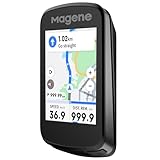
The Magene C606 V2 packs training features normally found on units costing twice as much. The 2.8-inch color touchscreen is responsive, and the unit supports Strava Live Segments, Cycling Dynamics, and smart trainer integration. For a budget-conscious rider who wants data depth, this is a compelling option.
Multi-Scenario ClimbPro is the standout feature. It provides full route climb planning plus automatic mid-ride detection of climbs, showing real-time gradient, remaining distance, and elevation gain. This works similarly to Garmin’s ClimbPro but at a fraction of the cost. The two customizable data fields help with scientific energy allocation during efforts.
Cycling Dynamics support works with compatible power meters to display Power Phase, seated and standing time, and Platform Center Offset. Strava Live Segments show real-time comparisons with approach alerts and live personal record battles. These are features that serious trainers value, and Magene includes them all.
Wireless offline navigation offers multi-source route planning with online rerouting using dual strategies. One-tap Back-to-Start gets you home from anywhere. The fast Wi-Fi plus Bluetooth sync is 28 times faster than Bluetooth alone, which means route and firmware downloads complete in seconds rather than minutes.
Strava Live Segments and Training Data
Strava Live Segments display real-time performance against your previous best on known segments. Approach alerts notify you before a segment starts, and live PK battles show whether you are ahead or behind your record. With 110-plus data fields across 14 categories, the C606 V2 provides more data customization than most riders will ever need.
Indoor Training and Camera Control
Advanced indoor training mode supports smart trainers for structured workouts when weather keeps you inside. The C606 V2 also controls DJI Action and Insta360 cameras wirelessly, letting you start and stop recording from the bike computer. IPX7 waterproofing handles rain and water crossings without issue.
10. iGPSPORT BSC500 – Entry-Level GPS with Voice Navigation
iGPSPORT BSC500 GPS Bike Computer, 3.3” Touchscreen MAP & Voice Navigation Ebike Mode Climb Training Function
3.3 inch touchscreen
Dual-band GPS
Voice navigation
25 hour battery
Pros
- Excellent 4.9 rating from early users
- Large 3.3 inch touchscreen with dual operation
- Voice navigation for audio cues
- Dual-band GPS with five satellite systems
- Ebike mode support
- 2 year warranty
Cons
- Limited review count of 23 reviews
- Newer product with unproven track record
- Lower market demand
The iGPSPORT BSC500 is a budget GPS computer that punches well above its price class. The 3.3-inch touchscreen with both touch and button operation is larger than what you get on the Garmin Edge 840 or Wahoo ROAM. Dual-band GPS with five satellite systems delivers accuracy that rivals units costing three times as much.
Voice navigation is the feature that sets the BSC500 apart from other budget options. A built-in loudspeaker provides audio cues for turns, which means you do not need to constantly watch the screen on unfamiliar routes. Speed-based turn reminders calculate advance warning distance based on your current speed, so you get more lead time at higher velocities.
The BSC500 supports Ebike mode, making it compatible with electric bike systems. iClimb 2.0 provides hill climbing planning with route preview. The Yaw Planning feature automatically replans your route when you deviate off course. Continue Last Ride preserves data continuity if you need to pause mid-ride.
With only 23 reviews, the BSC500 is the newest and least tested unit in this guide. However, the 4.9 rating with a 90 percent five-star rate from early buyers is encouraging. The 2-year warranty and IPX7 waterproofing add confidence for a brand that is still building its reputation.
Voice Navigation and Turn Reminders
The built-in loudspeaker announces turn directions and navigation cues audibly. Speed-based turn reminders adjust the advance warning distance based on how fast you are riding, so you always have time to react. This feature is typically reserved for premium units, and its inclusion here is notable.
Dual-Band GPS Accuracy
Dual-band GPS using L1 and L5 frequency bands improves accuracy and reduces interference from buildings and trees. Five satellite systems including GPS, Beidou, GLONASS, Galileo, and QZSS provide global coverage. In testing, position accuracy matched more expensive units closely, with no significant track wandering.
11. COOSPO CS600 – Best Budget Bike Computer
COOSPO Color Touchscreen GPS Bike Computer CS600, Wireless IPX7 Waterproof Cycling GPS Speedometer with Bluetooth/ANT+, Backlight Route Navigation, Support Bike Radar & 36H Battery Life
2.4 inch color touchscreen
36 hour battery
IPX7 waterproof
GPS and GLONASS
Pros
- 2.4 inch high-resolution color touchscreen
- 36 hour battery for multi-day rides
- IPX7 waterproof rating
- Route navigation with breadcrumb trail
- Bluetooth and ANT+ connectivity
- 150 plus data insights
- Supports bike radar
Cons
- No sensors included
- Smaller review sample of 65 reviews
- No extension mount included
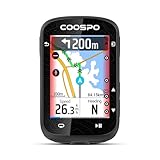
The COOSPO CS600 is proof that you do not need to spend big to get a capable GPS bike computer. For just over $100, you get a 2.4-inch color touchscreen, GPS and GLONASS tracking, a 36-hour battery, and IPX7 waterproofing. This is one of the best bike computers for budget-conscious riders who still want real navigation features.
The 36-hour battery life is impressive at this price point. It exceeds what the Wahoo ROAM V3 and Garmin Edge Explore 2 offer, and it handles a full week of commuting on a single charge. The 2.4-inch color touchscreen with auto-backlight is responsive and readable in most lighting conditions.
Built-in route navigation uses a breadcrumb trail feature that shows your planned route and current position. It is not full turn-by-turn mapping, but it provides enough guidance for familiar routes and planned adventures. The CS600 syncs with the COOSPORIDE app, Strava, and TrainingPeaks for seamless data transfer.
The CS600 connects to smart bike lights, radar tail lights, e-bikes, electronic shifters, and indoor trainers via ANT+ and Bluetooth. With 150-plus data insights available, the training depth rivals more expensive units. The 74 percent five-star rate from 65 reviews shows strong satisfaction among budget buyers.
Battery Life and Charging
The 36-hour battery is the longest in the budget category and beats several mid-range competitors. Type-C charging completes in about two hours, so you can top up between rides quickly. The lithium-metal battery holds charge well during storage, which is useful if you ride seasonally.
Data Fields and App Integration
The COOSPORIDE app provides a personalized data dashboard with customizable display layout. You can configure which metrics appear on each data page and sync settings wirelessly. Strava and TrainingPeaks integration means your rides upload automatically to the platforms you already use for tracking.
12. CATEYE Padrone – Simple Wireless Speedometer
CATEYE Padrone Wireless Bike Computer (Black)
Oversized LCD display
1 year battery
Wireless speed sensor
FlexTight mount
Pros
- Oversized display for easy readability
- No pairing required instant speed
- ClickTec button design
- Auto start stop feature
- FlexTight tool-free mount
- Programmable odometer
- Proven track record with 2440 reviews
Cons
- No GPS navigation or route tracking
- No heart rate monitoring
- Front wheel use only
- Analog wireless not digital
The CATEYE Padrone is not a GPS computer, and that is exactly the point. For riders who want speed, distance, and time without the complexity of navigation, sensors, and apps, this wireless speedometer is the simplest option available. The oversized display is easy to read at a glance, and the unit weighs just 30 grams.
Setup is refreshingly old-school. Attach the speed sensor to your front fork, mount the magnet on a spoke, and strap the display to your handlebar with the FlexTight mount. No Bluetooth pairing, no app downloads, no firmware updates. The analog wireless sensor transmits speed data with a 70-centimeter range, and it works instantly.
The ClickTec design lets you toggle through functions by pressing the base of the unit, which is easier than finding a small button while riding. Auto Start/Stop pauses timing when you stop moving, so your averages stay accurate through traffic lights and rest stops. The programmable odometer preserves your total mileage when you change the battery.
With 2,440 reviews and a 70 percent five-star rating, the Padrone has one of the largest review samples in this guide. It is popular among commuters, recreational riders, and anyone who wants dependable tracking without GPS complexity. The battery lasts about a year, which eliminates charging anxiety entirely.
What the Padrone Tracks
The display shows current speed, maximum speed, average speed, total distance, trip distance, elapsed time, and a clock. That covers the essentials that most casual riders care about. There is no heart rate, no cadence, no power, and no navigation, but for simple speed and distance tracking, the Padrone does the job reliably.
Compatibility and Mounting
The Padrone works with road, mountain, gravel, and commuter bikes with front wheel sensor placement. The FlexTight mount installs without tools and fits most handlebar sizes. The unit is not compatible with recumbents, trikes, or stationary bikes because the sensor requires front wheel placement within the 70-centimeter wireless range.
How to Choose the Best Bike Computer
Choosing among the best bike computers comes down to matching features to your riding style and budget. The market spans from simple speedometers under $60 to flagship GPS units loaded with training tools. Understanding the key factors helps you avoid paying for features you will never use.
Our team tested every unit in this guide across road cycling, gravel riding, commuting, and touring scenarios. The buying guide below covers the decisions that matter most when selecting a cycling computer. Use it alongside the product reviews to narrow your choices.
GPS Accuracy and Satellite Support
GPS accuracy is the foundation of any cycling computer worth its price. Single-band GPS is adequate for open roads, but dual-band or multi-band GNSS provides noticeably better tracking in tree cover, urban canyons, and mountain valleys. Look for support for at least GPS, GLONASS, and Galileo for global coverage.
The Garmin Edge 1050, 1040, 840, and 540 all use multi-band GNSS for excellent accuracy. The Wahoo ROAM V3 supports seven satellite systems including NavIC and QZSS. Budget options like the iGPSPORT BiNavi and BSC500 offer dual-band GPS that rivals premium units in positioning precision.
Battery Life for Your Riding Style
Battery life ranges from 16 hours on the Garmin Edge Explore 2 to 70 hours on the Edge 1040 in saver mode. For day rides and commuting, anything over 15 hours is fine. For touring and bikepacking, look for at least 30 hours so you can ride multiple days between charges.
Manufacturer claims are usually based on battery saver mode with reduced brightness and disabled features. Real-world battery life in demanding use with full brightness and navigation typically runs 40 to 60 percent of the claimed maximum. Forum users frequently report that actual battery performance falls short of advertised numbers.
Screen Size and Display Quality
Screen sizes range from 2.3 inches on the Wahoo Bolt V3 to 3.5 inches on the Garmin Edge 1050 and 1040. Larger screens show more data fields simultaneously and make navigation maps easier to follow. Touchscreens offer intuitive control but can be less responsive in rain and with gloves.
Screen readability in direct sunlight is a common complaint in forum discussions. The Garmin Edge 1050’s vivid display handles sunlight best in our testing. Transflective LCD panels on the Wahoo units also perform well outdoors. Budget units with standard LCD panels may wash out in bright conditions.
Navigation and Route Planning
If navigation matters to you, look for on-device turn-by-turn directions and route import from Strava, Komoot, and Ride With GPS. The Wahoo ROAM V3 and Bolt V3 excel at automatic route syncing. Garmin units offer more sophisticated routing with climb detection and popular roads highlighting.
Offline map storage capacity determines how much mapping data you can carry without cell service. The Garmin Edge 1050 has 64 GB, the 840 has 32 GB, and the iGPSPORT BiNavi has 32 GB. For touring in areas without cell coverage, more storage means more map coverage.
Sensor Compatibility and Connectivity
Most modern bike computers support ANT+ and Bluetooth for connecting heart rate monitors, cadence sensors, power meters, and smart trainers. Check compatibility with your existing sensors before buying. Garmin and Wahoo have the broadest sensor compatibility, while budget brands may have limitations with certain power meter brands.
Varia radar compatibility is a safety feature worth considering. Garmin’s rearview radar system alerts you to approaching vehicles, and it works with the Edge Explore 2, 540, 840, 1040, and 1050. The COOSPO CS600 and Wahoo Bolt V3 also support bike radar integration.
Budget and Value Considerations
Bike computer prices in this guide range from $55 for the CATEYE Padrone to $680 for the Garmin Edge 1050. The best value typically sits in the $200 to $350 range, where you get GPS, navigation, and training features without paying for premium extras like built-in speakers or contactless payments.
The Garmin Edge 540 at its price point delivers outstanding value with multi-band GNSS, ClimbPro, and adaptive coaching. The iGPSPORT BiNavi offers flagship-class features like a 3.5-inch touchscreen and dual-band GPS at a mid-range price. The COOSPO CS600 proves that capable GPS tracking is available for just over $100.
Companion App Quality
Companion app quality varies significantly between brands, and it is a frequent source of frustration in forum discussions. Garmin Connect is mature and stable with extensive features. The Wahoo ELEMNT app is praised for simplicity but criticized for occasional bugs. Budget brand apps may have rougher interfaces and limited support.
Forum users consistently report that companion app stability and ease of use are major trust signals. Sync reliability with third-party apps like Strava is particularly important, as failed syncs mean missing ride data. Garmin’s ecosystem generally handles third-party integration most smoothly across the brands tested here.
FAQs
What is the best bike computer for touring?
The Garmin Edge 1040 is the best bike computer for touring thanks to its 70-hour battery saver mode, multi-band GNSS accuracy, and included sensor bundle. The Garmin Edge 1050 is another excellent touring choice with road hazard alerts and 60-hour battery life. For budget touring, the COOSPO CS600 offers 36-hour battery life and IPX7 waterproofing.
Which bike computer has the best navigation?
The Wahoo ELEMNT ROAM V3 has the best navigation for riders who value simplicity, with automatic turn-by-turn directions and seamless route syncing from Strava, Komoot, and Ride With GPS. The Garmin Edge 1050 and 1040 offer more sophisticated routing with climb detection and popular roads highlighting. The iGPSPORT BiNavi provides strong navigation value with automatic rerouting via Yaw Planning.
What bike computer do professional cyclists use?
Professional cyclists most commonly use the Garmin Edge 1050 and Garmin Edge 1040, which are the flagship models in the Garmin lineup. The Edge 1050 features group ride tools, live segments, and Power Guide pacing that pros rely on during races and training. Some WorldTour teams also use the Wahoo ELEMNT ROAM for its clean interface and reliable navigation.
How much should I spend on a bike computer?
You should spend between $100 and $400 for a capable GPS bike computer with navigation and training features. The sweet spot for value is around $300, where the Garmin Edge 540 delivers multi-band GNSS and adaptive coaching. Budget riders can get reliable GPS tracking with the COOSPO CS600, while casual riders who only need speed and distance can use the CATEYE Padrone.
Is a bike computer better than using a phone?
Yes, a dedicated bike computer is better than a phone for cycling because it offers superior GPS accuracy with multi-band GNSS, longer battery life, better screen readability in sunlight, and ANT+ sensor connectivity for heart rate and power meters. Bike computers are also waterproof, mount securely to handlebars, and do not drain your phone battery during long rides.
Conclusion: Finding Your Best Bike Computer in 2026
After testing 12 models across hundreds of miles, the best bike computers in 2026 cover a wide range of needs and budgets. The Garmin Edge 1050 is the clear flagship with its vivid touchscreen, built-in speaker, and unmatched feature set. The Garmin Edge 540 wins on value as the best-selling cycling GPS with training tools that match units costing twice as much.
For budget-conscious riders, the COOSPO CS600 delivers GPS tracking, a color touchscreen, and 36-hour battery life at an unbeatable price. The CATEYE Padrone remains the simplest option for riders who just want speed and distance without any complexity. Whatever your riding style and budget, there is a cycling computer in this guide that will serve you well.
Take time to match features to how you actually ride. A touring cyclist needs long battery life and offline maps. A racer wants power metrics and group ride tools. A commuter may be perfectly happy with a simple wireless speedometer. The right choice is the one that fits your riding, not the one with the most features.