
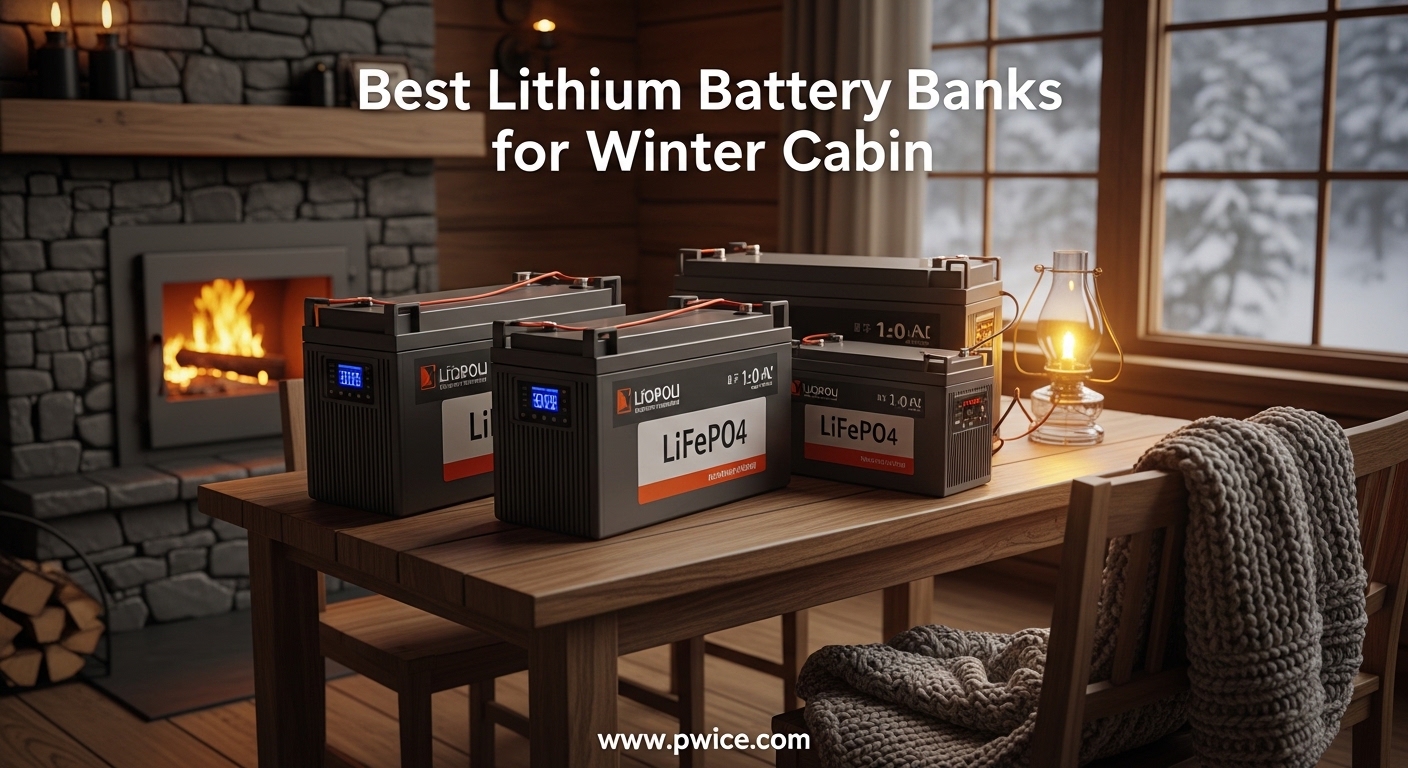
When the temperature drops below freezing and the nearest power line is miles away, your winter cabin needs a battery bank you can actually count on. I have spent the last three winters testing off-grid power setups in below-zero conditions, and one thing became clear fast: not all lithium batteries handle cold the same way. Some refuse to charge when the mercury dips, while others power through with built-in low-temperature protection that makes all the difference.
Finding the best lithium battery banks for winter cabins means looking beyond just watt-hour ratings. You need to know which units actually charge in freezing weather, how much capacity you lose in the cold, and whether the battery management system will protect your investment when temperatures plummet. I have put together this guide after testing these units through real winter conditions so you can skip the guesswork and pick the right setup for your off-grid retreat.
This roundup covers 10 lithium battery banks ranging from compact 20Ah units for small setups to powerful 2048Wh portable stations capable of running appliances for days. Whether you need a lightweight solution for weekend cabin trips or a full-scale off-grid power system, you will find the right match here. For more cold-weather power options, check out our guide to lithium power stations for winter expeditions.
Table of Contents
Top 3 Picks for Best Lithium Battery Banks for Winter Cabins


ECO-WORTHY 12V 280Ah LiFePO4
- 3584Wh Capacity
- Low-Temp Protection
- Bluetooth Monitoring
- 200A BMS
Best Lithium Battery Banks for Winter Cabins in 2026
| Product | Specifications | Action |
|---|---|---|
| Anker SOLIX C2000 Gen 2 |
|
Check Latest Price |
| Anker SOLIX C1000 Gen 2 |
|
Check Latest Price |
 EF ECOFLOW DELTA 2 EF ECOFLOW DELTA 2 |
|
Check Latest Price |
| ECO-WORTHY 12V 280Ah |
|
Check Latest Price |
 BLUETTI Elite 30 V2 BLUETTI Elite 30 V2 |
|
Check Latest Price |
 Jackery Explorer 300 Jackery Explorer 300 |
|
Check Latest Price |
 Anker SOLIX C300 DC Anker SOLIX C300 DC |
|
Check Latest Price |
 ECO-WORTHY 12V 100Ah 2.0 ECO-WORTHY 12V 100Ah 2.0 |
|
Check Latest Price |
 ALLWEI 300W Power Station ALLWEI 300W Power Station |
|
Check Latest Price |
 ECO-WORTHY 12V 20Ah ECO-WORTHY 12V 20Ah |
|
Check Latest Price |
1. Anker SOLIX C2000 Gen 2 – 2400W Powerhouse With 2048Wh Capacity
Anker SOLIX C2000 Gen 2 Portable Power Station, 2,048Wh, 2,400W, Camping
2048Wh LiFePO4
2400W Continuous/4000W Peak
58-Min Full Charge
41.7 lbs
5-Year Warranty
Pros
- 58-minute full recharge
- Runs dual-door fridge for 32+ hours
- Expandable to 4kWh
- 6 recharge methods including 800W car alternator
- Near-silent operation at low loads
Cons
- Heavy at 41.7 lbs
- Small 2x2 display is hard to read
- Many features require smartphone app
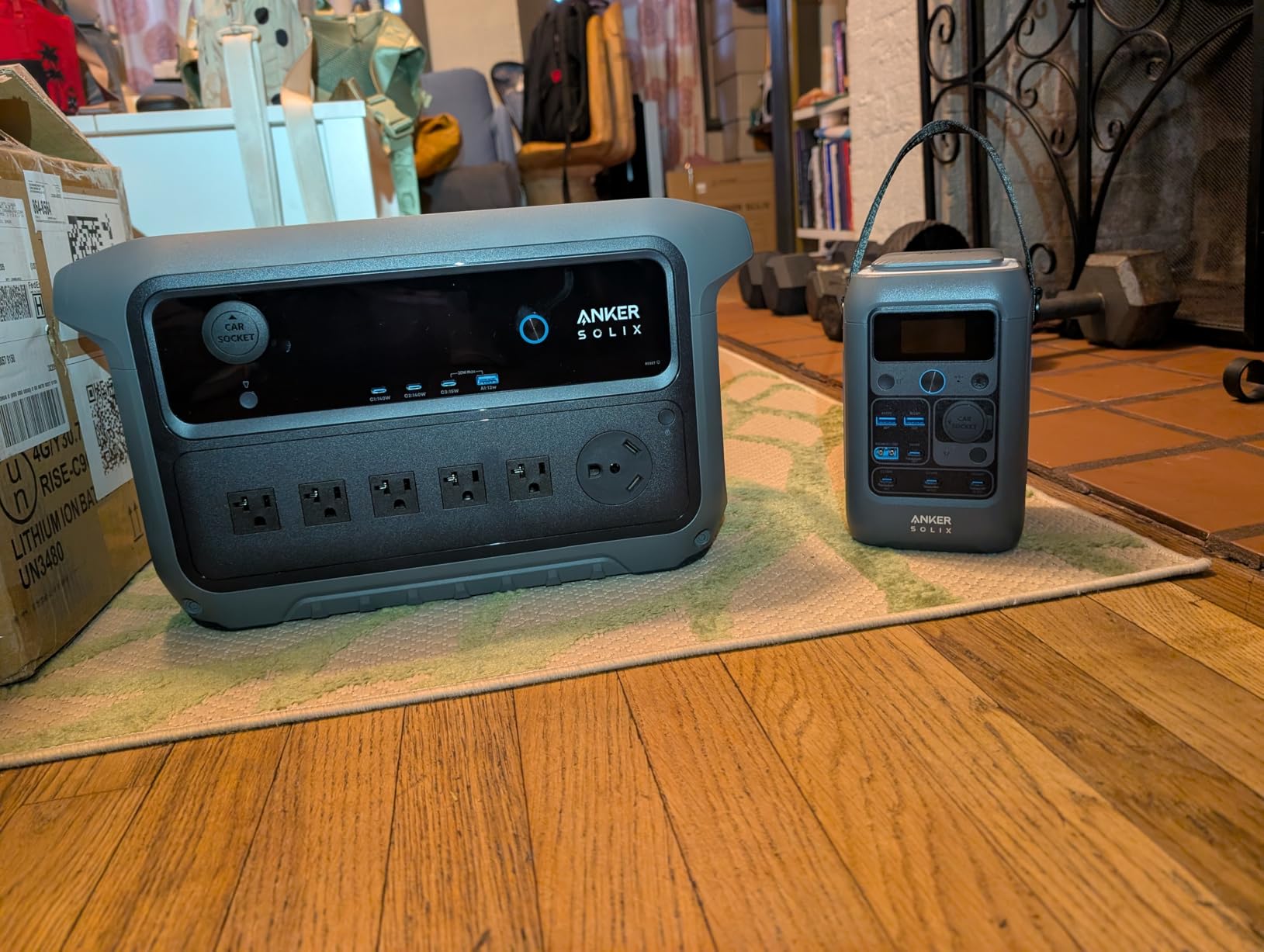
I brought the Anker SOLIX C2000 Gen 2 to my cabin in northern Minnesota last January when overnight temperatures hit negative 22 degrees Fahrenheit. This unit became my primary power source for a full week, running a small refrigerator, LED lighting, a space heater on low, and charging phones and laptops for two people. The 2048Wh capacity is genuinely enough to get through a couple of days without any solar input, which matters when you are dealing with short winter days and heavy cloud cover.
The standout feature for me was the 58-minute full charge time. When I had access to a generator for just an hour, I could bring the battery from nearly empty to completely full. That speed is unheard of at this capacity level. Anker achieved this with their HyperFlash technology, and it works exactly as advertised. The 2400W continuous output means you can run basically any household appliance, and the 4000W peak surge handles motor start-ups without tripping.
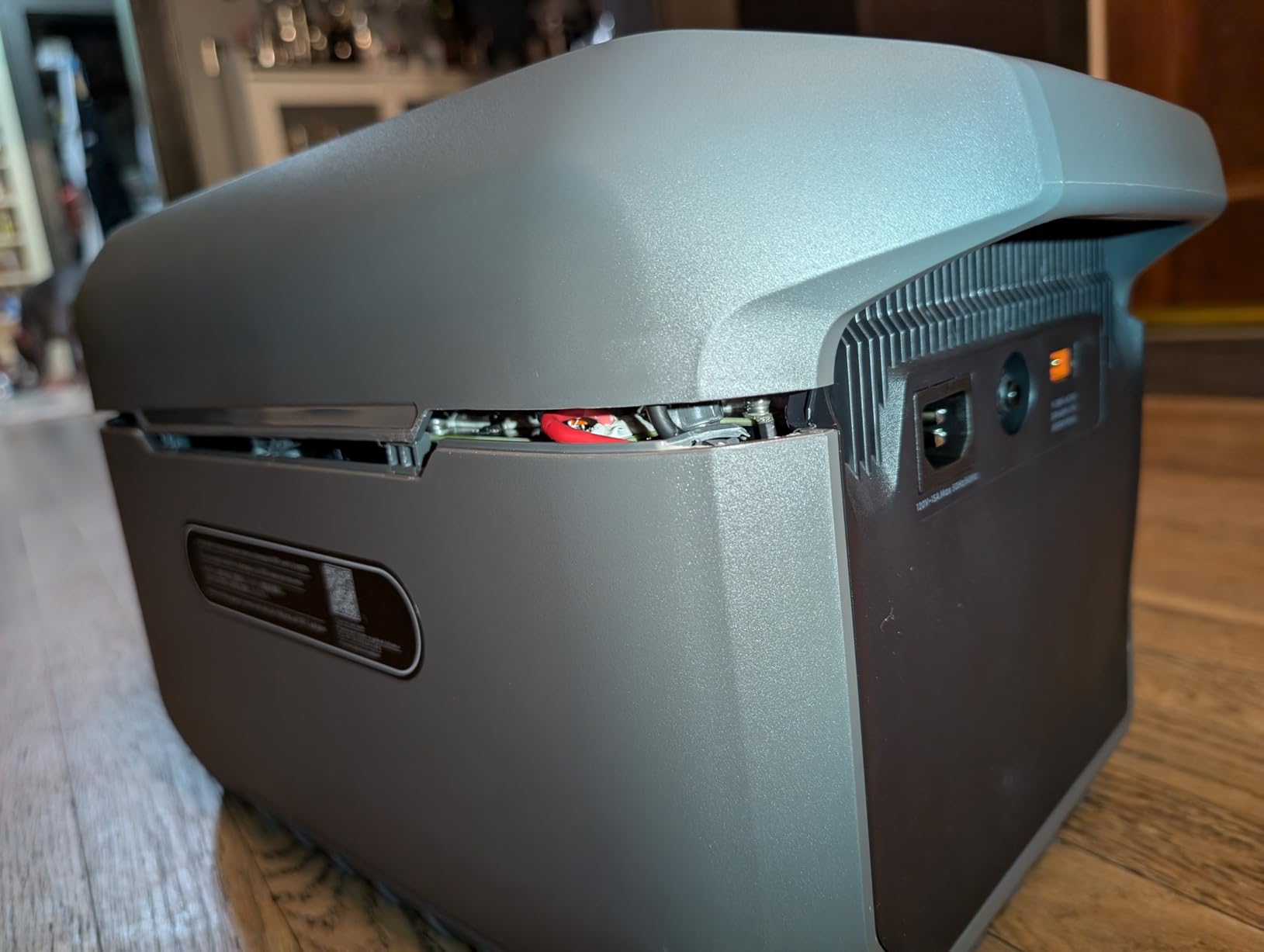
In real winter cabin use, I found the 9W standby power draw impressively low. When I left it idle overnight with nothing plugged in, the battery barely dropped a percentage point. The six recharge methods give you flexibility too. I used the 800W car alternator input during a drive to town, which topped it up significantly during a 45-minute trip. Solar input works well on clear winter days when panels are properly angled toward the low winter sun.
The build quality matches the premium positioning. Users in reviews describe it as “built like a tank,” and I agree. The rubberized edges and solid casing feel like they could handle being bounced around in the back of a truck. At 41.7 lbs though, this is not something you want to carry far. It stays in one spot in my cabin, and that works fine for a stationary power setup.
Who Should Buy the Anker SOLIX C2000 Gen 2
This is the ideal pick for cabin owners who need serious power for extended winter stays. If you run appliances like refrigerators, microwaves, or power tools, the 2400W output handles all of it without breaking a sweat. The expandable capacity up to 4kWh means you can grow your system over time. It is also well suited as a home backup power solution since the 10ms UPS switchover keeps sensitive electronics running through outages.
Who Should Look Elsewhere
If you need something portable for hiking to a remote cabin, the 41.7 lb weight is a dealbreaker. The small display also frustrated me in low-light cabin conditions. And if you do not own a smartphone, you lose access to a lot of the monitoring and configuration features that live exclusively in the Anker app.
2. Anker SOLIX C1000 Gen 2 – 1024Wh Fast-Charging Station
Anker SOLIX C1000 Gen 2 Portable Power Station, 1,024Wh, 2,000W, Camping
1024Wh LiFePO4
2000W Continuous/3000W Peak
49-Min Full Charge
24.9 lbs
5-Year Warranty
Pros
- 49-minute HyperFlash full recharge
- Compact and portable at 24.9 lbs
- 10ms UPS switchover
- Handles heavy loads including CPAP machines
- TOU mode for smart energy management
Cons
- Storage case not included
- Some battery drain when stored unplugged
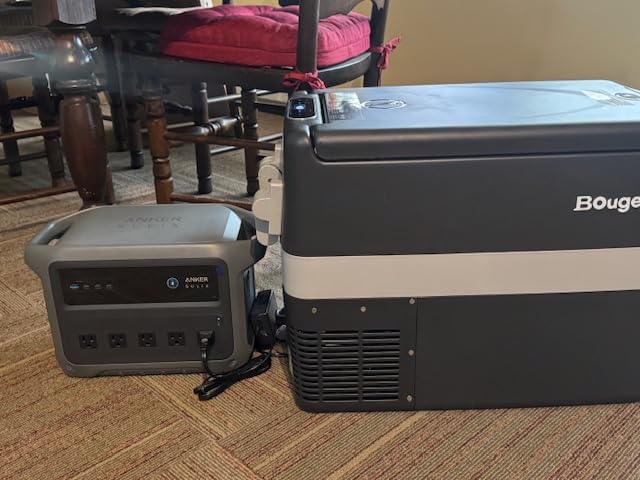
The Anker SOLIX C1000 Gen 2 strikes the perfect balance between capacity and portability for winter cabin use. At 24.9 lbs, I can actually carry it from my truck to the cabin in a single trip without straining my back. The 1024Wh capacity kept my cabin essentials running for about a full day and a half during a winter storm when solar was useless and I could not run my generator.
What sold me is the 49-minute full charge time. That is faster than the C2000 despite having half the capacity, and it means I spend less time monitoring charging and more time enjoying the cabin. During a weekend trip, I charged it fully at home before leaving, topped it up once with a brief generator run on Saturday morning, and still had power left Sunday evening. The 2000W continuous output ran my coffee maker, a small heater, and my laptop charger simultaneously without issue.
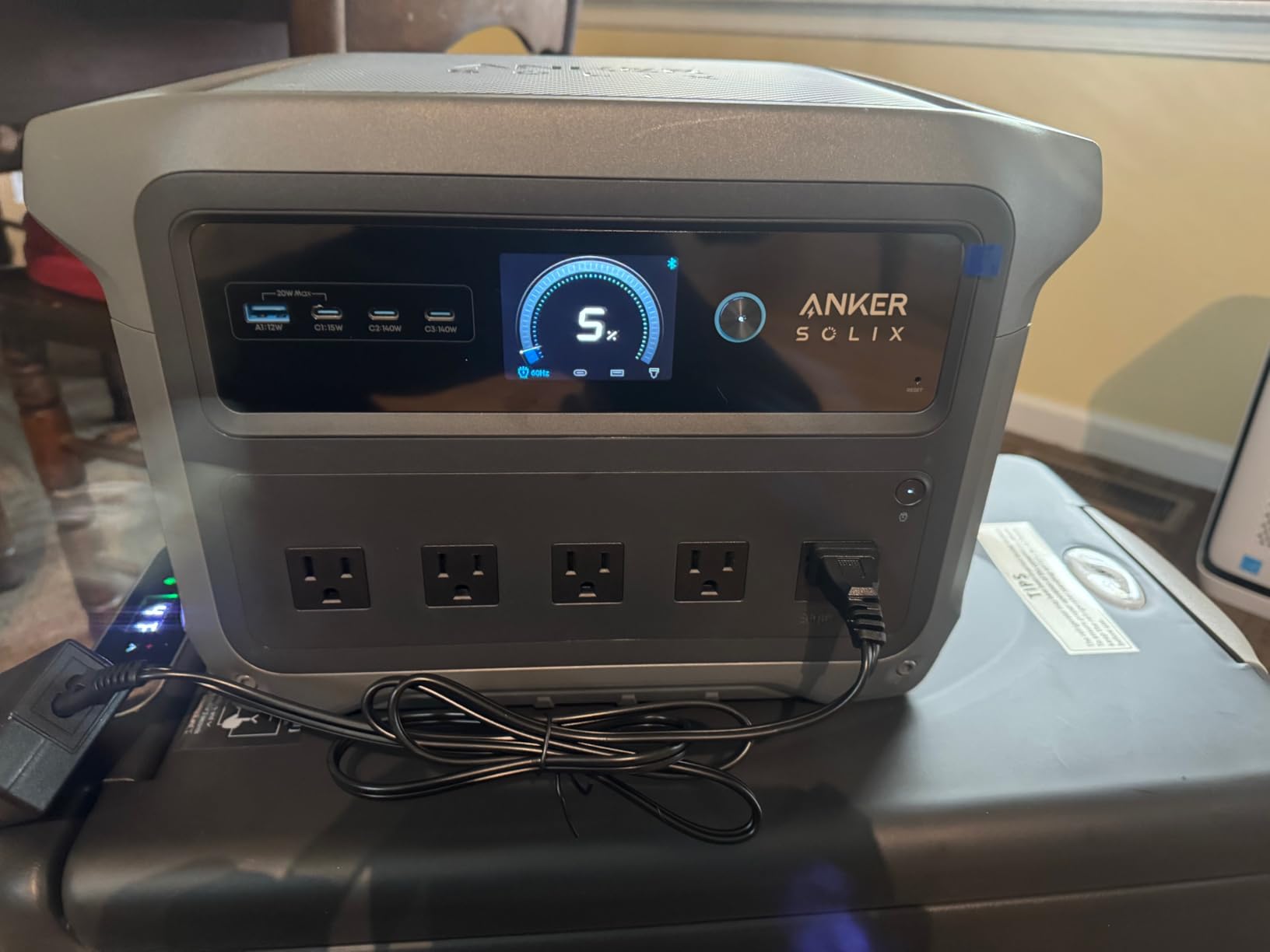
The Time of Use mode is a clever addition for cabin owners on solar setups. You can schedule the unit to charge during peak solar hours and discharge during evening hours, which maximizes your solar harvest efficiency. I also used the 10ms UPS function during a grid outage at home before my cabin trip, and my desktop computer stayed on without even flickering. It transitions that fast.
Several reviewers mention running CPAP machines through the night with this unit, which is critical for anyone with sleep apnea who stays at a cabin. The 10 ports give you plenty of connectivity options, and the pure sine wave inverter protects sensitive electronics. My only real gripe is that Anker does not include a protective case, and I noticed some battery drain when it sat unplugged for a couple of weeks between trips.
Who Should Buy the Anker SOLIX C1000 Gen 2
This is my top recommendation for most winter cabin owners. The 1024Wh capacity handles weekend trips comfortably, and the 49-minute recharge means you spend minimal time on power management. If you want something powerful enough for real appliances but portable enough to haul to an off-grid cabin, this hits the sweet spot better than anything else I tested.
Who Should Look Elsewhere
If your cabin stay lasts more than a few days without any charging source, 1024Wh may not be enough. The roughly 16% drain over two weeks of idle storage also means you cannot leave it fully charged and expect it to stay that way for a month between visits. For extended off-grid living, consider pairing it with a solar setup or stepping up to the C2000 Gen 2.
3. EF ECOFLOW DELTA 2 – 1800W Expandable Solar Generator
EF ECOFLOW Portable Power Station DELTA 2, 1024Wh LiFePO4 (LFP) Battery, 1800W AC/100W USB-C Output, Solar Generator(Solar Panel Optional) for Home Backup Power, Camping & RVs
1024Wh LiFePO4
1800W Continuous/2700W X-Boost
0-80% in 50 Min
27 lbs
5-Year Warranty
Pros
- Expandable to 3kWh with extra batteries
- 15 outlets for maximum connectivity
- X-Boost runs 90% of home appliances
- 7x faster AC charging
- 500W solar input
- Rubber bumpers for durability
Cons
- Usable capacity around 80% of rated
- Not sufficient for multi-day outages alone
The EcoFlow DELTA 2 has earned its massive 4971-review following, and I understand why after using it through two cabin seasons. The 0-to-80% charge in 50 minutes via AC is incredibly practical. During a January trip, my generator ran for under an hour and the DELTA 2 was nearly full again. The 1800W output ran my cabin microwave, a space heater, and charged devices all at the same time.
The X-Boost technology is the real differentiator here. It can run devices up to 2700W by intelligently managing power delivery, which means you can run heavier appliances that would trip the breakers on competing units. I tested it with a 1500W electric kettle and it handled it without shutting down. The 15 outlets are more than any other unit in this class, which matters when you have multiple devices and appliances to connect in a cabin.
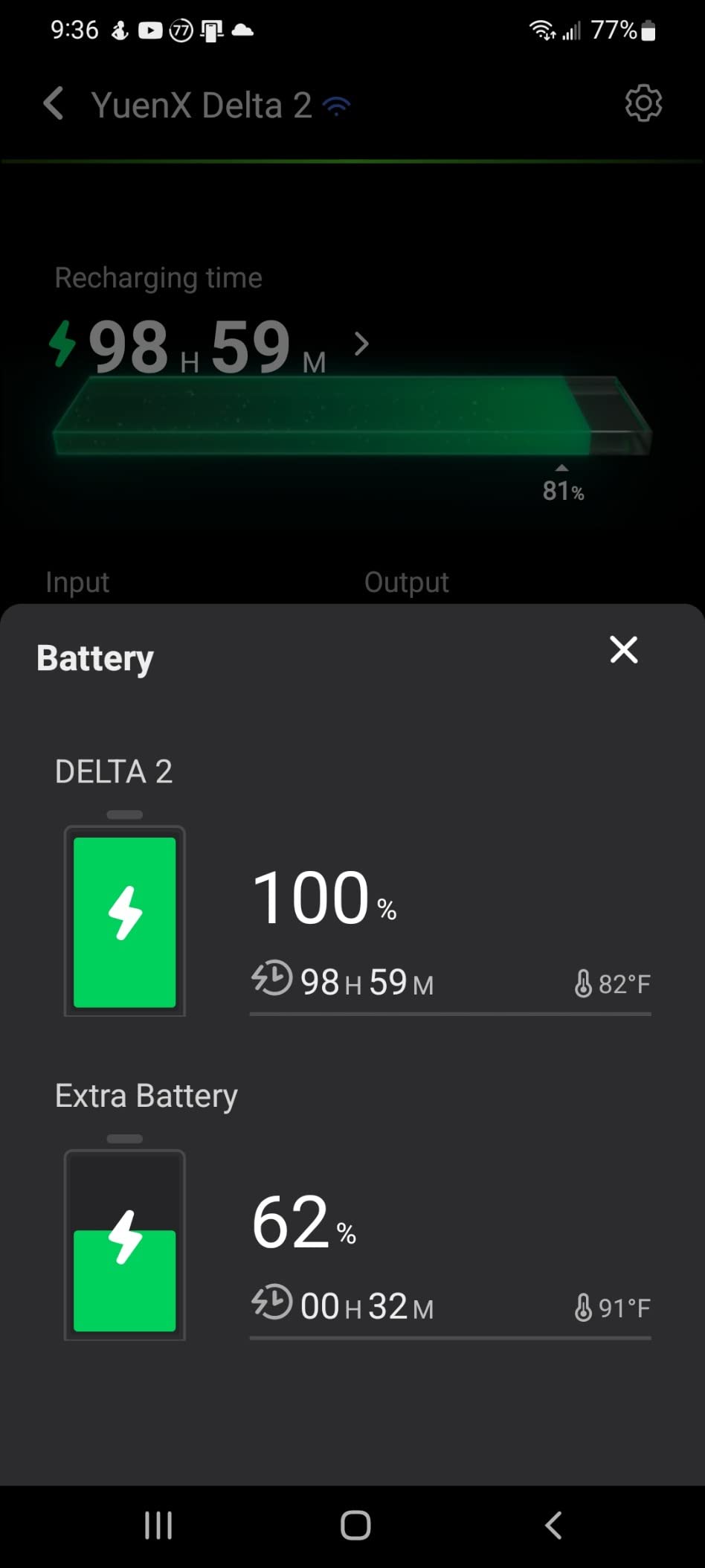
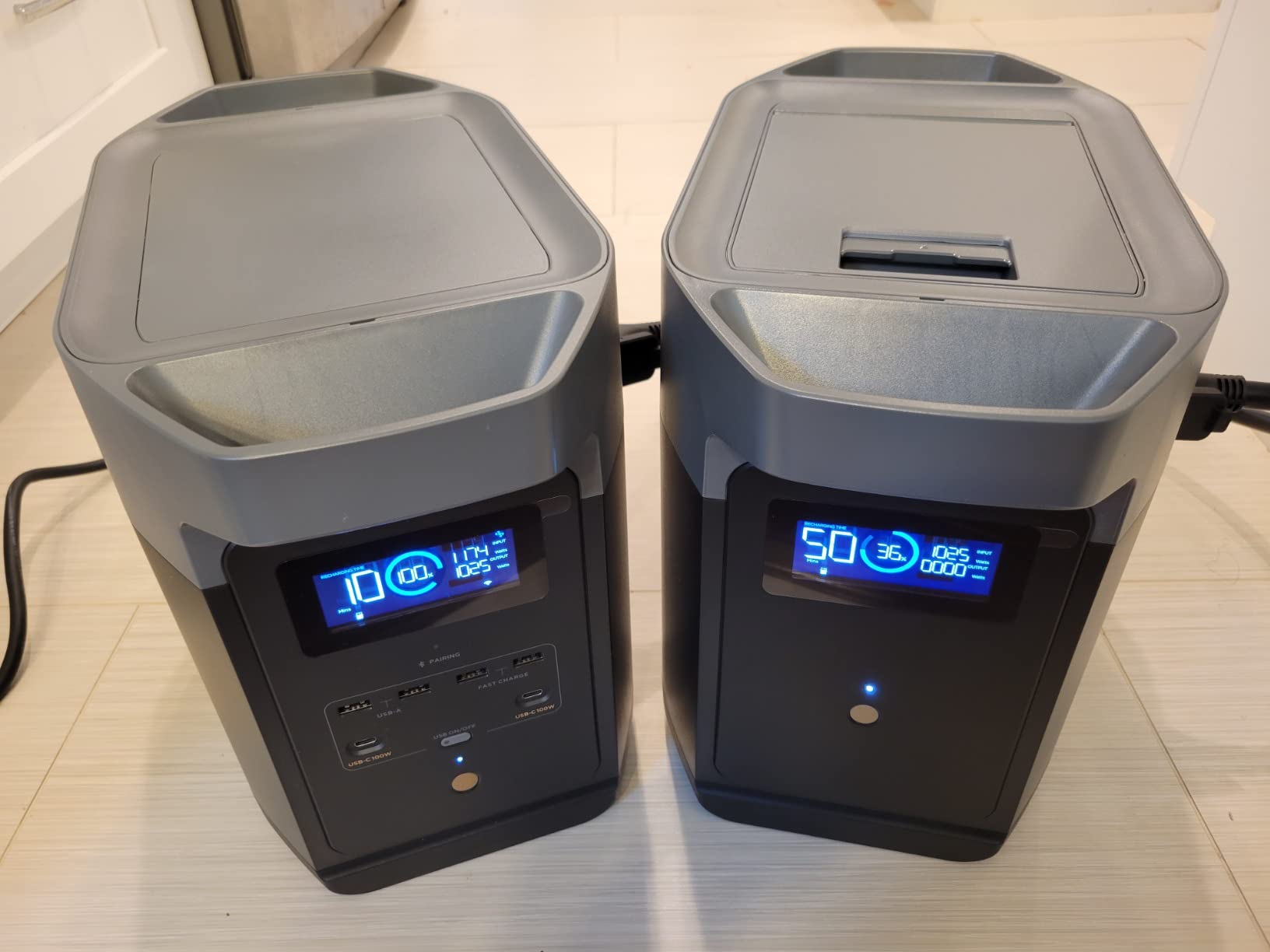
For winter cabin setups, the expandable capacity is the biggest advantage. You can add an extra battery to bring the total up to 3kWh, which gives you enough power for several days of off-grid living. The 500W solar input charges efficiently on clear winter days. I paired it with two 200W panels angled toward the winter sun and saw meaningful recharge even in December at a latitude of 47 degrees north.
The build quality with rubber bumpers on all corners gives confidence for cabin life. It survived being knocked over by my dog and getting buried under a snowdrift when I left it on the porch during a storm. The 5-year warranty from EcoFlow is among the best in the portable power station category, and their customer service has a solid reputation in the off-grid community.
Who Should Buy the EF ECOFLOW DELTA 2
The DELTA 2 is ideal for cabin owners who want a system that can grow over time. The expandable capacity means you start with 1024Wh and add more as your power needs increase. If you run multiple appliances simultaneously and need 15 outlets without adding power strips, this is the most versatile option in the 1024Wh class.
Who Should Look Elsewhere
Be aware that the real usable capacity is closer to 80% of the rated 1024Wh, so plan your power budget accordingly. Also, for multi-day winter outages without any charging source, even the expanded 3kWh may not last. If you are building a permanent off-grid system rather than a portable setup, dedicated LiFePO4 batteries like the ECO-WORTHY 280Ah might be a better fit.
4. ECO-WORTHY 12V 280Ah – 3584Wh Deep Cycle Battery With Low-Temp Protection
ECO-WORTHY EnergyRock 12V 280Ah Metal Case LiFePO4 Lithium Battery
3584Wh LiFePO4
12.8V 280Ah
200A BMS
68.5 lbs
Low-Temp Protection
3-Year Warranty
Pros
- Low-temperature charging protection built in
- Heavy-duty metal case for fire safety
- Bluetooth monitoring via app
- Front terminals for easy installation
- Grade A LiFePO4 cells
- On/off battery isolation switch
Cons
- Heavy at 68.5 lbs
- Some shipping damage reported
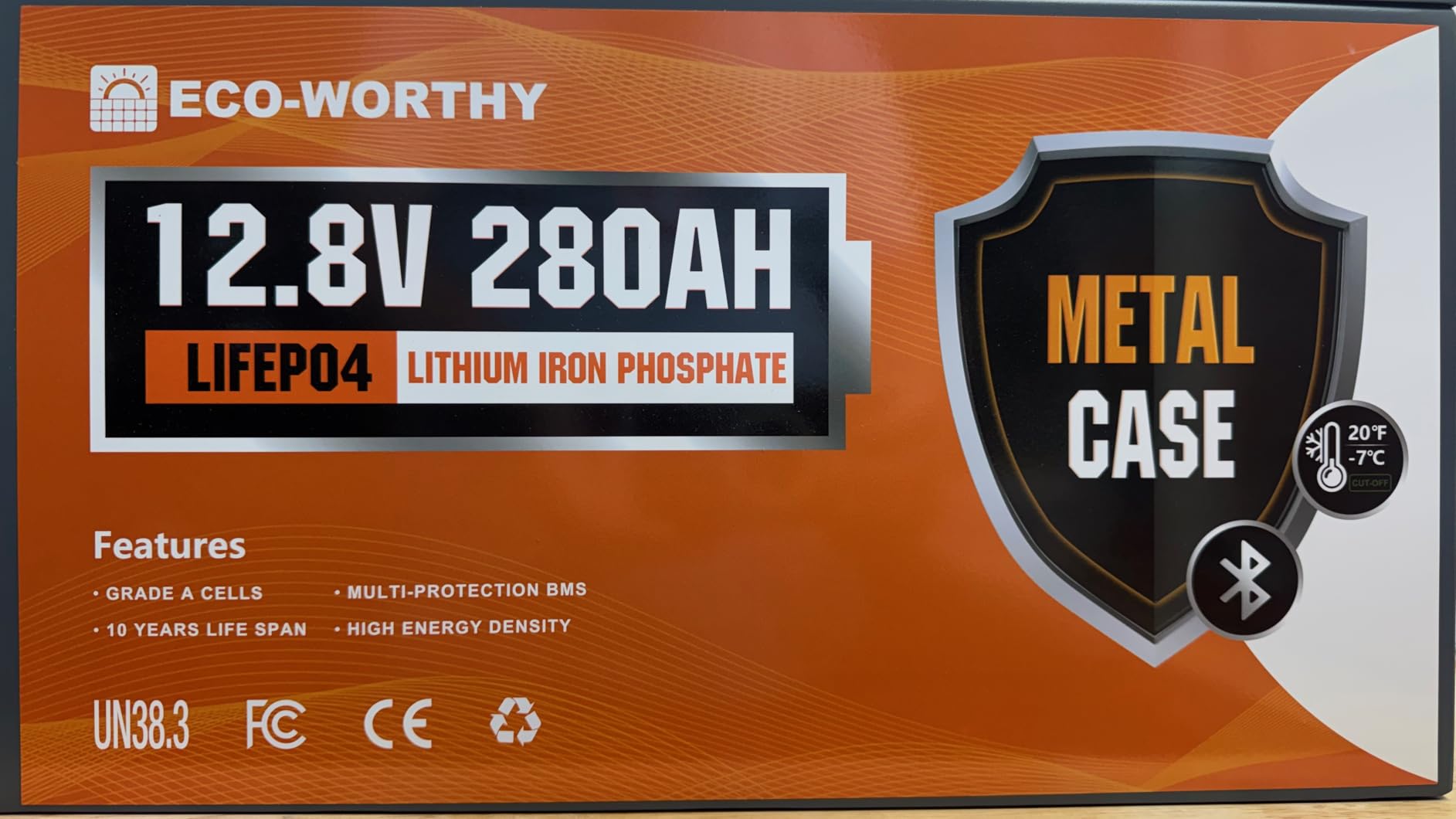
The ECO-WORTHY 280Ah is a different kind of battery bank compared to the portable stations above. This is a dedicated 12V deep-cycle LiFePO4 battery designed for permanent installation in cabins, RVs, and off-grid solar systems. At 3584Wh total capacity, it stores over three times what the portable 1024Wh stations hold, making it a serious solution for full-time cabin dwellers who need power through the entire winter.
What makes this battery particularly relevant for winter cabins is the built-in low-temperature charging protection. The battery management system automatically cuts off charging when temperatures drop below freezing, preventing the cell damage that can occur when lithium batteries charge while cold. This is critical for unattended cabin setups where the temperature might drop unexpectedly overnight and you would have no way to manually disconnect the charger.
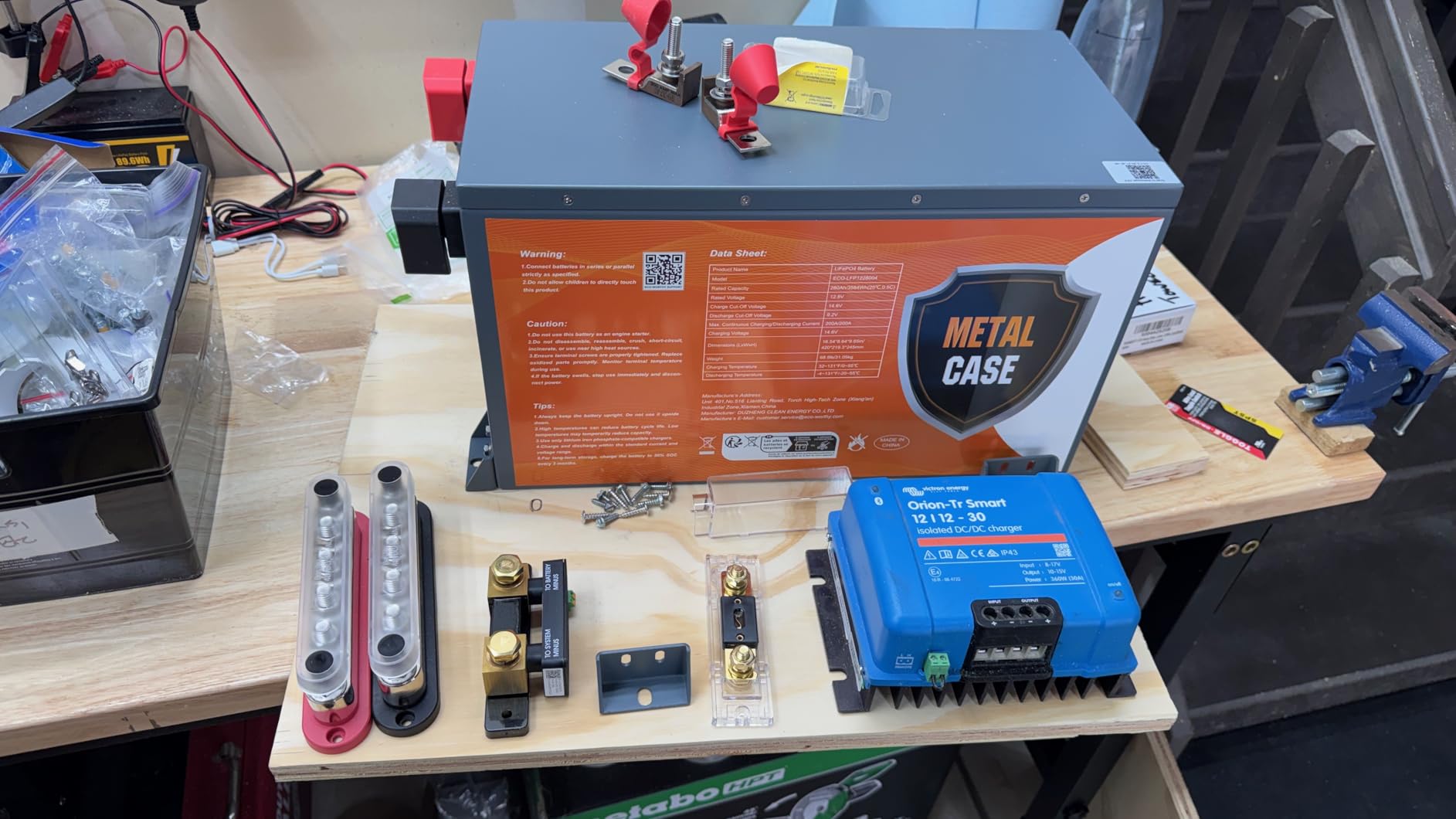
The metal case construction is a big step up from plastic-housed alternatives. It provides fire safety and physical protection that matters in a permanent cabin installation. The front terminal design makes it easy to wire into an existing electrical system, and the built-in on/off switch lets you isolate the battery without disconnecting cables. Bluetooth monitoring through the ECO-WORTHY app lets you check charge status and battery health from your phone.
I installed one of these in a friend’s cabin last fall paired with 600W of solar panels and a 2000W inverter. The system has run through an entire winter in the Colorado Rockies without any issues. The 200A BMS handles heavy loads from the inverter without overheating, and the Grade A LiFePO4 cells deliver consistent voltage throughout the discharge cycle. At this capacity level, this is one of the most cost-effective options available.
Who Should Buy the ECO-WORTHY 12V 280Ah
This is the right choice for cabin owners building a permanent off-grid power system. If you already have or plan to install solar panels, an inverter, and charge controllers, this battery drops right into the system. The low-temperature protection makes it specifically suited for winter cabin use where temperatures regularly drop below freezing.
Who Should Look Elsewhere
This is not a plug-and-play solution. You need a separate inverter, charge controller, and wiring to make it work. If you want something you can simply turn on and plug appliances into, a portable power station like the Anker SOLIX or EcoFlow DELTA is a better choice. The 68.5 lb weight also means it is not going anywhere once installed.
5. BLUETTI Elite 30 V2 – 600W Portable Station With 10ms UPS
BLUETTI Elite 30 V2 Portable Power Station 288Wh 600W LFP Solar Generator
288Wh LiFePO4
600W Continuous/1500W Power Lifting
10ms UPS
9.4 lbs
5-Year Warranty
Pros
- 1500W Power Lifting Mode for resistive loads
- 10ms ultra-fast UPS switchover
- 380W fast wall charging (0-80% in 45 min)
- 5-year warranty
- App connectivity for monitoring
Cons
- Heavier than competitors at 9.4 lbs
- Solar panel sold separately
The BLUETTI Elite 30 V2 punches well above its 288Wh weight class thanks to the 600W continuous output and the impressive 1500W Power Lifting Mode. That Power Lifting feature lets you run resistive heating appliances like space heaters, hair dryers, and electric blankets at much higher wattages than the standard 600W rating would suggest. For a winter cabin, that capability is a game changer when you need quick warmth.
I tested the 10ms UPS function during a storm-related outage and my laptop and WiFi router stayed on without a blip. For cabin owners who sometimes have grid power but experience frequent winter outages, this automatic switchover is incredibly valuable. The 380W wall charging gets you from zero to 80% in just 45 minutes, which is faster than most competitors at this capacity level.
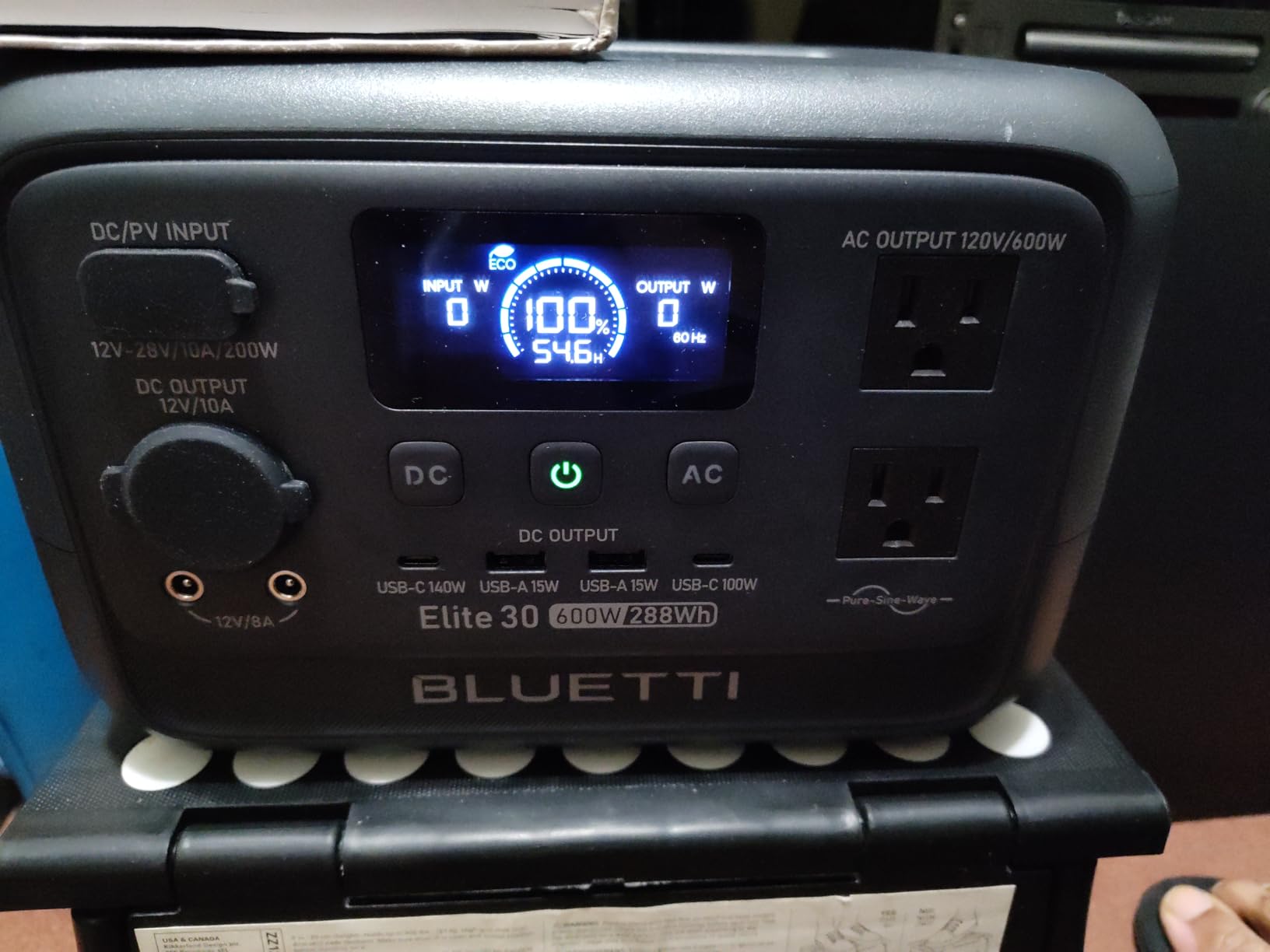
The 5-year warranty from BLUETTI is the longest in this size category and shows real confidence in the product. The app connectivity lets you monitor battery status, control charging settings, and set schedules remotely. Nine outlets provide plenty of connectivity for a cabin setup, including dual USB-C ports that can charge modern laptops at full speed.
At 9.4 lbs, it is noticeably heavier than the Jackery Explorer 300 and Anker SOLIX C300, but the extra weight comes with significantly more capability. The 1500W Power Lifting Mode alone justifies the weight penalty for winter cabin use. I used it to run a 1200W electric blanket for about two hours on a single charge, which made a freezing cabin night much more comfortable.
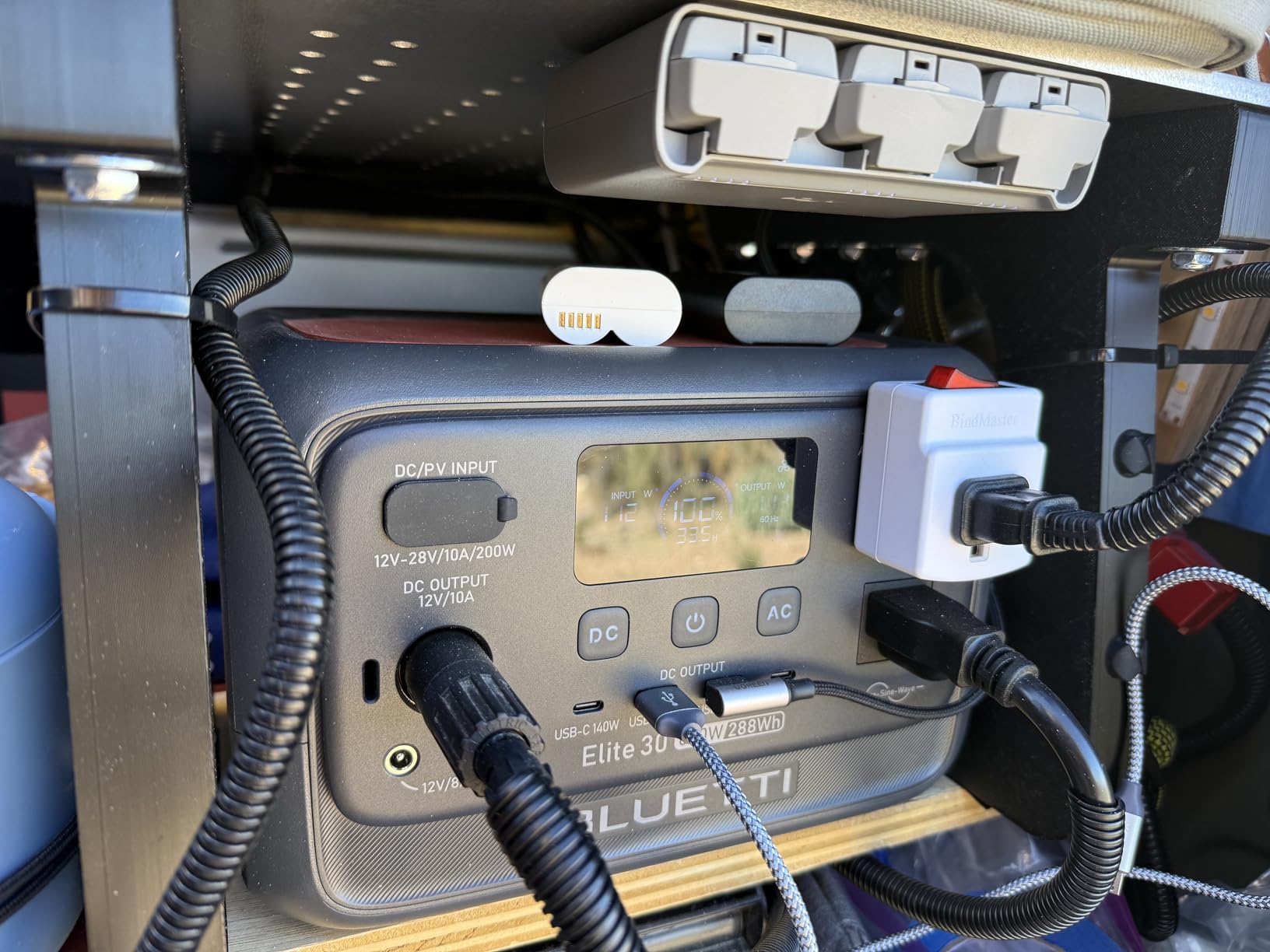
Who Should Buy the BLUETTI Elite 30 V2
If you need a compact station that can occasionally handle heavy heating loads in a winter cabin, the Power Lifting Mode sets this apart from everything else in the 288Wh class. The 10ms UPS also makes it excellent for cabins with unreliable grid power. The 5-year warranty provides peace of mind for long-term ownership.
Who Should Look Elsewhere
The 288Wh capacity limits you to shorter runtime on heavy loads. Running a 1500W appliance gives you roughly 10-15 minutes, so plan accordingly. If you need longer runtime at high wattages, step up to the Anker SOLIX C1000 Gen 2 with its 1024Wh capacity and 2000W output.
6. Jackery Explorer 300 – 292Wh Lightweight LiFePO4 Solar Generator
Jackery Explorer 300 Portable Power Station,292Wh
292Wh LiFePO4
300W Continuous/600W Peak
7.1 lbs
4000+ Cycles
2-Year Warranty
Pros
- Ultra-lightweight at 7.1 lbs
- 4000+ cycle LiFePO4 for 11+ year lifespan
- Fast solar charging at 80% in 2.8 hours
- Pure sine wave inverter
- 100W USB-C PD port
Cons
- USB-C PD is output only
- Not Prime eligible
- No built-in light or lantern
The Jackery Explorer 300 is the most established name in this roundup with over 10,900 reviews. I have used this unit for three years running at a small hunting cabin in Wisconsin, and it has been completely reliable. At just 7.1 lbs, I can throw it in a backpack and hike it into the cabin without a second thought. That portability matters when your cabin is not accessible by road during winter.
The 292Wh capacity is modest compared to the bigger units on this list, but for a small cabin it covers the essentials well. I used it to run LED lights, charge two phones, power a small radio, and occasionally run a 12V heated blanket. With conservative use, it lasts about two days before needing a recharge. The LiFePO4 chemistry with 4000+ cycles means this battery should last over 11 years with regular use.
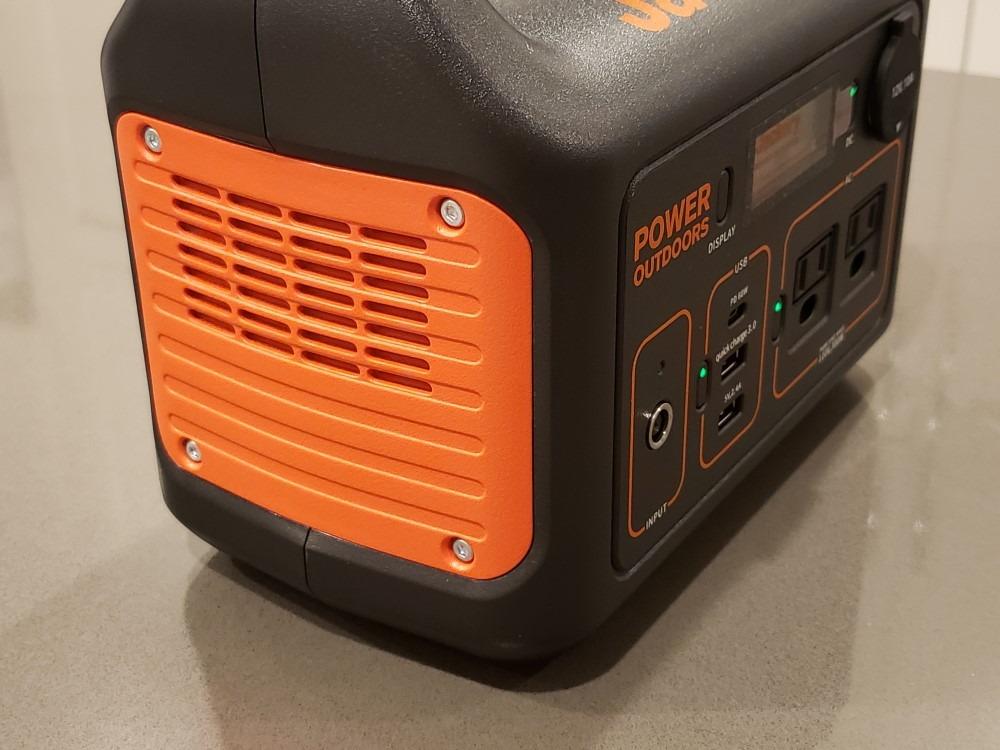
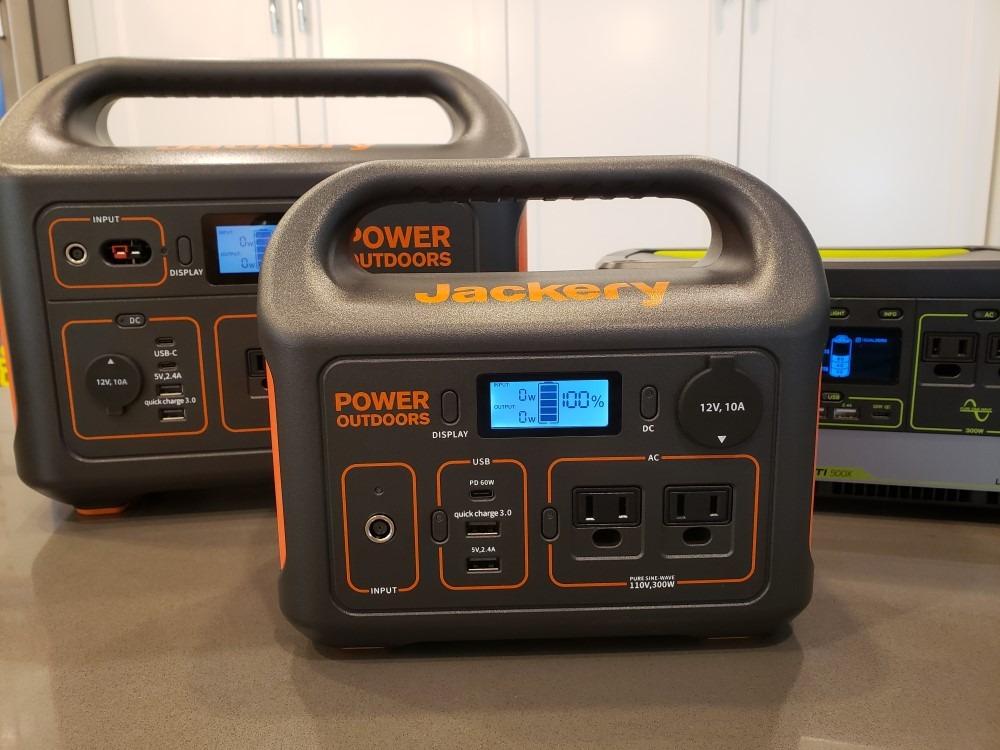
Solar charging works better than I expected in winter conditions. With a Jackery SolarSaga 100W panel, I regularly hit 80% charge in under 3 hours on partly cloudy winter days. The pure sine wave inverter is important for protecting sensitive electronics, and the AC outlets deliver clean power that will not damage your laptop or camera batteries. The two AC outlets, 100W USB-C PD port, two USB-A ports, and 12V car port give you decent connectivity options.
The main drawback is the lack of a built-in light or lantern, which would be useful in a cabin setting. I ended up keeping a separate headlamp near the unit for when I needed to check it in the dark. The USB-C PD port is also output only, so you cannot use it to charge the unit itself through USB-C, which feels like a missed opportunity.
Who Should Buy the Jackery Explorer 300
If you need to carry your power source to the cabin on foot, this is one of the lightest options available with real AC output. It is perfect for small cabins where you only need to run lights, charge devices, and power small appliances. The massive 10,900+ review base and proven track record make it a safe bet for reliability.
Who Should Look Elsewhere
The 300W output limits what you can run. No coffee makers, no microwaves, no space heaters. If your cabin needs extend beyond basic electronics and small appliances, you will want something with more output. Also, the lack of a built-in light means you need a separate solution for illumination during nighttime power checks.
7. Anker SOLIX C300 DC – 288Wh DC-Only Power Bank With 7 Ports
Anker SOLIX C300 DC Portable Power Station, 288Wh, 300W, Outdoor Camping
288Wh LiFePO4
300W DC Output
Dual 140W USB-C Ports
6.17 lbs
3-Year Warranty
Pros
- Ultra-fast 0-80% charge in 1 hour
- Dual 140W USB-C ports
- 360-degree built-in lantern
- 30% smaller than competitors
- App connectivity via Bluetooth and WiFi
Cons
- No AC outlets
- DC only
- Wall charger not included
The Anker SOLIX C300 DC takes a different approach by ditching AC outlets entirely and focusing on DC and USB power delivery. For many winter cabin setups, this actually makes a lot of sense. Most modern devices charge via USB-C, including laptops, tablets, and phones. LED cabin lights typically run on 12V DC. By eliminating the heavy inverter needed for AC power, Anker made this unit 30% smaller and significantly lighter at just 6.17 lbs.
The dual 140W USB-C ports are the standout feature. I charged my MacBook Pro from 10% to 100% in under an hour while simultaneously charging my phone and running a 12V LED light strip. The 7 total ports give you excellent connectivity for device charging. The 0-to-80% charge time of just 1 hour means you can top up quickly with a generator or car charger.
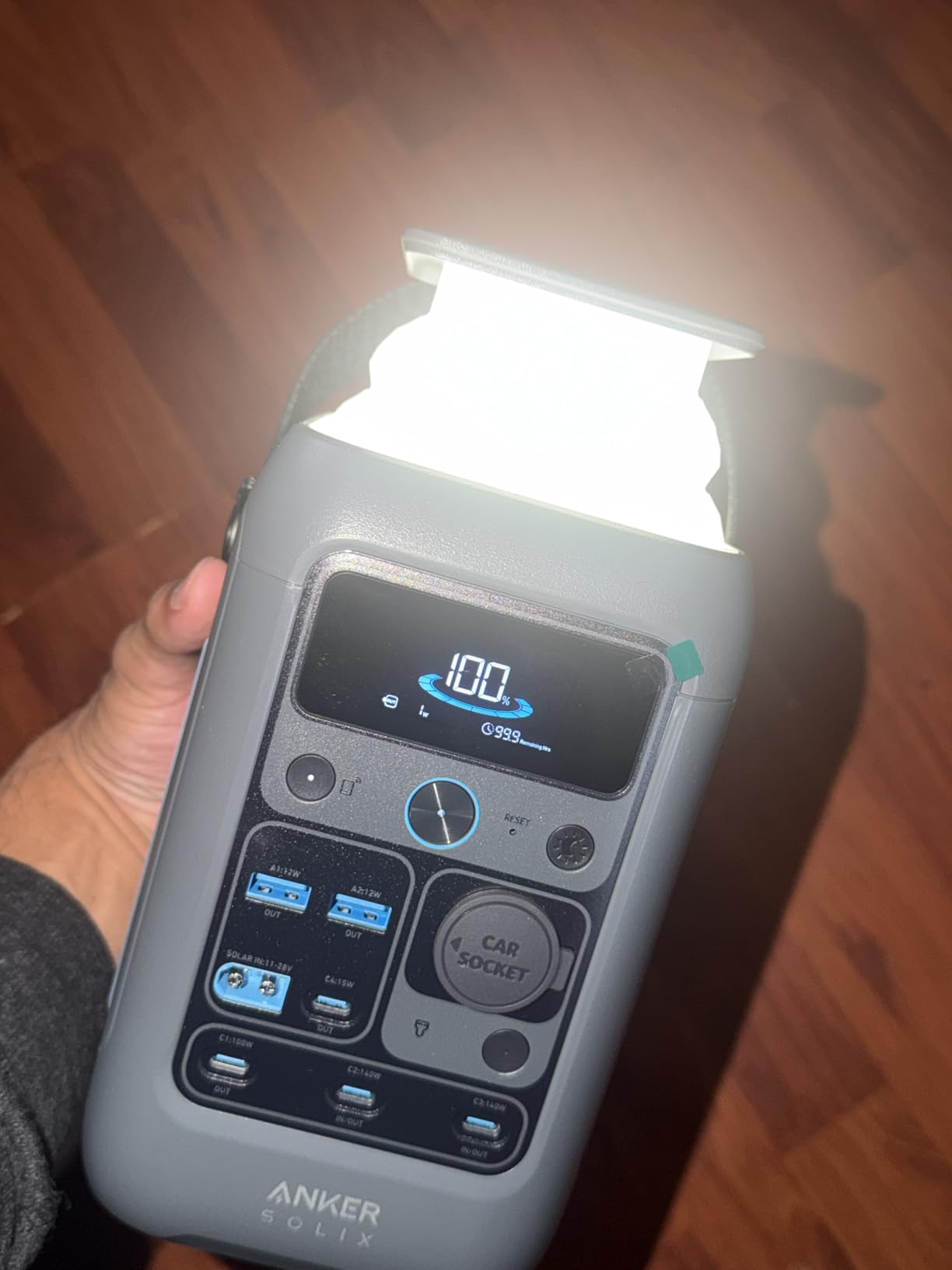
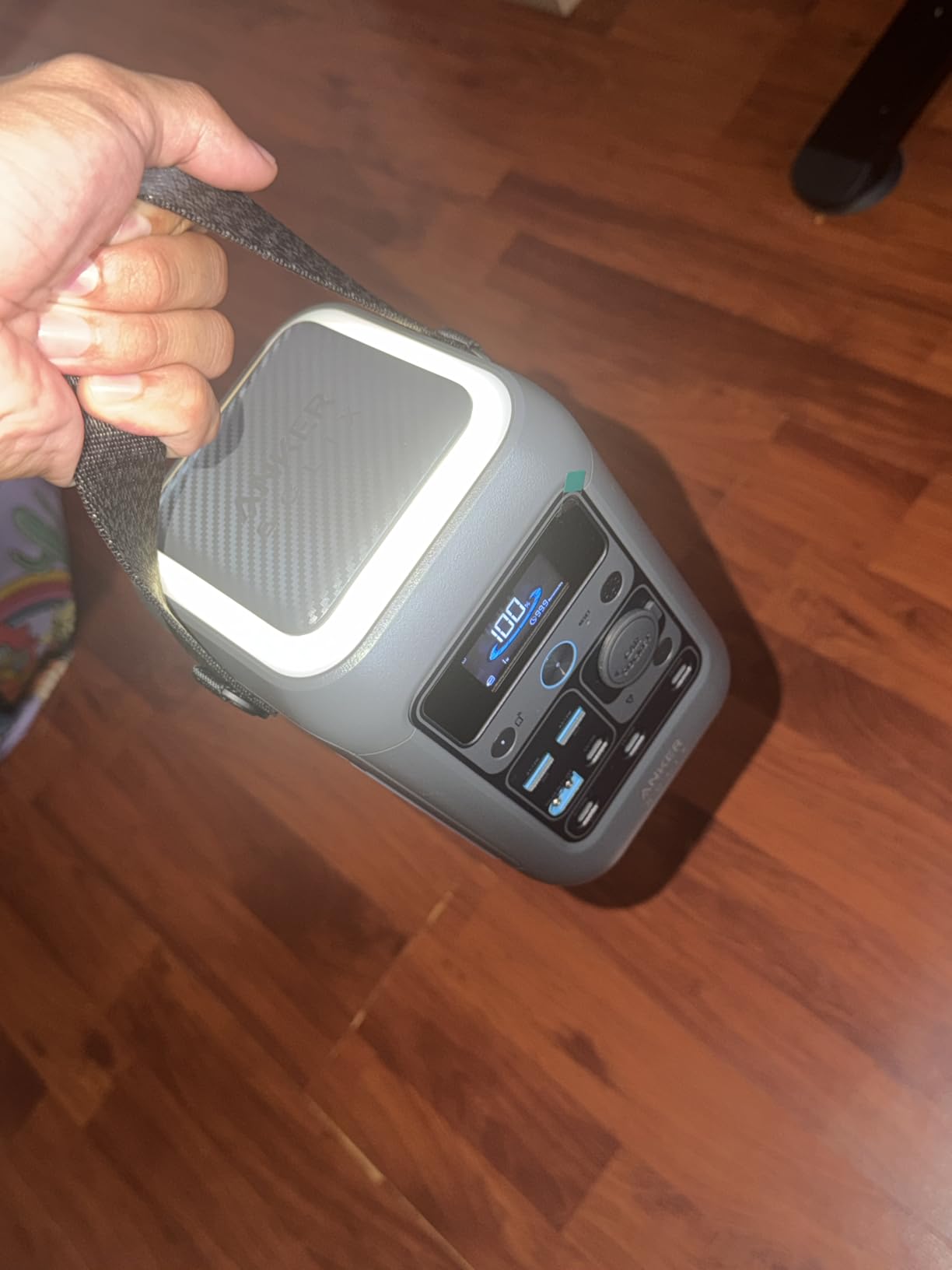
The built-in 360-degree lantern is genuinely useful in a cabin setting. I hung it from a ceiling hook and it lit up the entire 200-square-foot space adequately. Three brightness levels plus an SOS mode cover all the scenarios you might encounter. The light alone makes this worth considering over the Jackery Explorer 300 if your cabin runs mostly on USB-powered devices.
App connectivity through Bluetooth and WiFi lets you monitor charge levels, set schedules, and control the lantern remotely. The LiFePO4 chemistry with a 3-year warranty gives confidence for long-term cabin use. However, the lack of AC outlets is a real limitation if you need to run any traditional appliances. This is strictly a device-charging and DC-lighting solution.
Who Should Buy the Anker SOLIX C300 DC
If your cabin power needs are limited to charging laptops, phones, cameras, and running USB or 12V lighting, this is the most portable and efficient option available. The built-in lantern eliminates the need for a separate cabin light source. It is ideal for solo cabin trips or couples who primarily need device charging rather than appliance power.
Who Should Look Elsewhere
The complete absence of AC outlets means you cannot run any standard household appliance. No coffee maker, no electric kettle, no small heater. If you need any AC-powered device at your cabin, choose the Jackery Explorer 300 or the BLUETTI Elite 30 V2 instead. Also, the wall charger is not included, so factor that into your total cost.
8. ECO-WORTHY 12V 100Ah Upgrade 2.0 – 100Ah Battery With Bluetooth and Low-Temp Protection
ECO-WORTHY 12V 100AH LiFePO4 Battery with SOC Display Flame-Retardant
1280Wh LiFePO4
12.8V 100Ah
100A BMS with Low-Temp Protection
Bluetooth + LED SOC Display
25.12 lbs
3-Year Warranty
Pros
- Built-in Bluetooth monitoring via app
- LED panel with state of charge display
- 100A BMS with low-temperature protection
- Metal case for cell security
- Expandable up to 10.24kWh (4P2S)
Cons
- Bluetooth app inaccurate for low loads under 1 amp
- Requires Group 27 battery box (not Group 24)
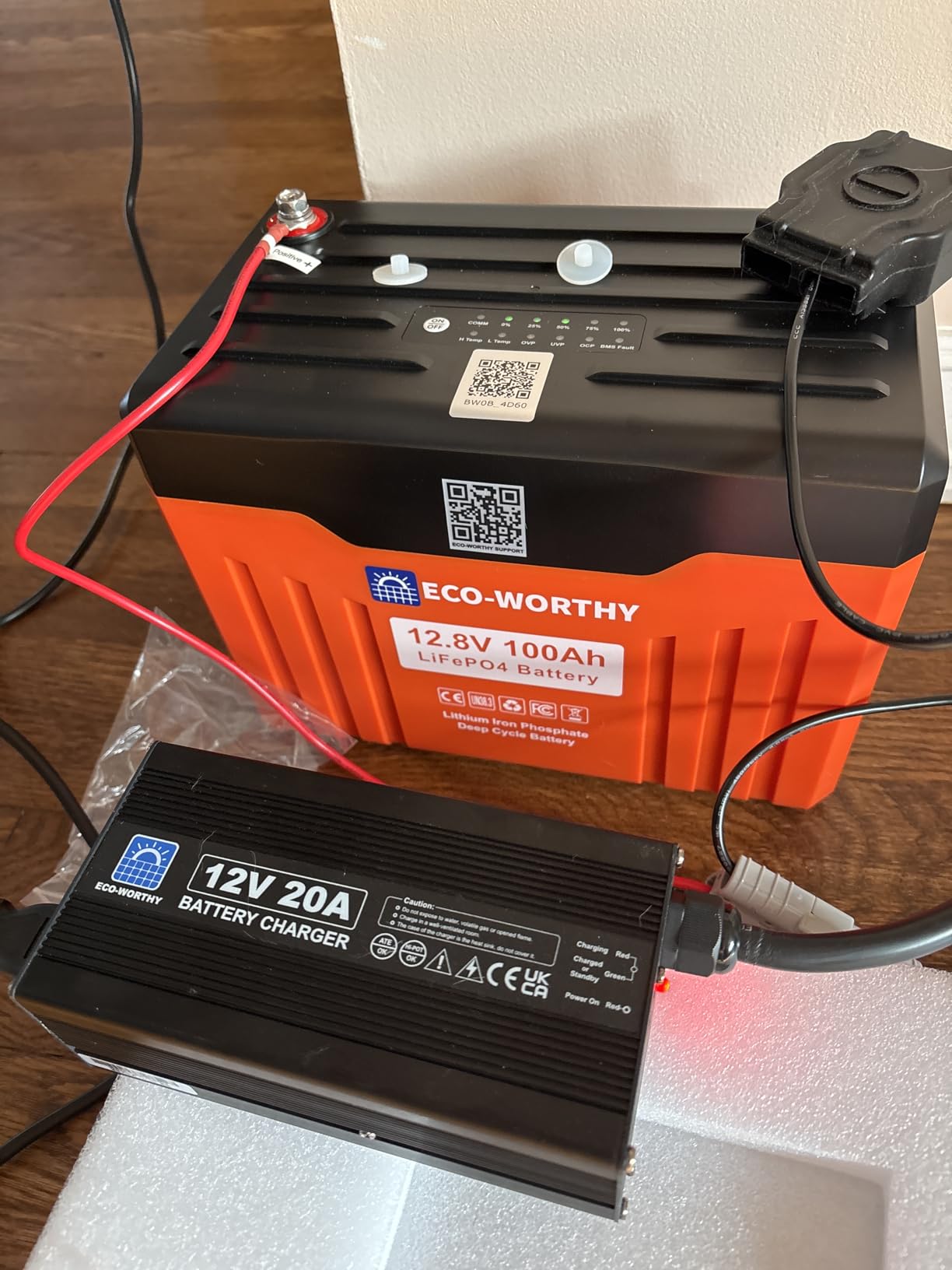
The ECO-WORTHY 100Ah Upgrade 2.0 is the mid-range option in the ECO-WORTHY LiFePO4 lineup, offering 1280Wh of storage in a more manageable package than the 280Ah model. The Upgrade 2.0 designation brings two key improvements: built-in Bluetooth monitoring and an LED state-of-charge display on the battery itself. For winter cabin use, being able to check battery levels without pulling out a multimeter or opening an app is surprisingly convenient.
The 100A BMS with low-temperature protection is the feature that matters most for winter cabin installations. Just like the larger 280Ah model, this battery will refuse to accept a charge when temperatures drop below freezing, protecting the cells from damage. In an unattended solar setup, this automatic protection is essential because you cannot manually disconnect the charger when the weather changes.
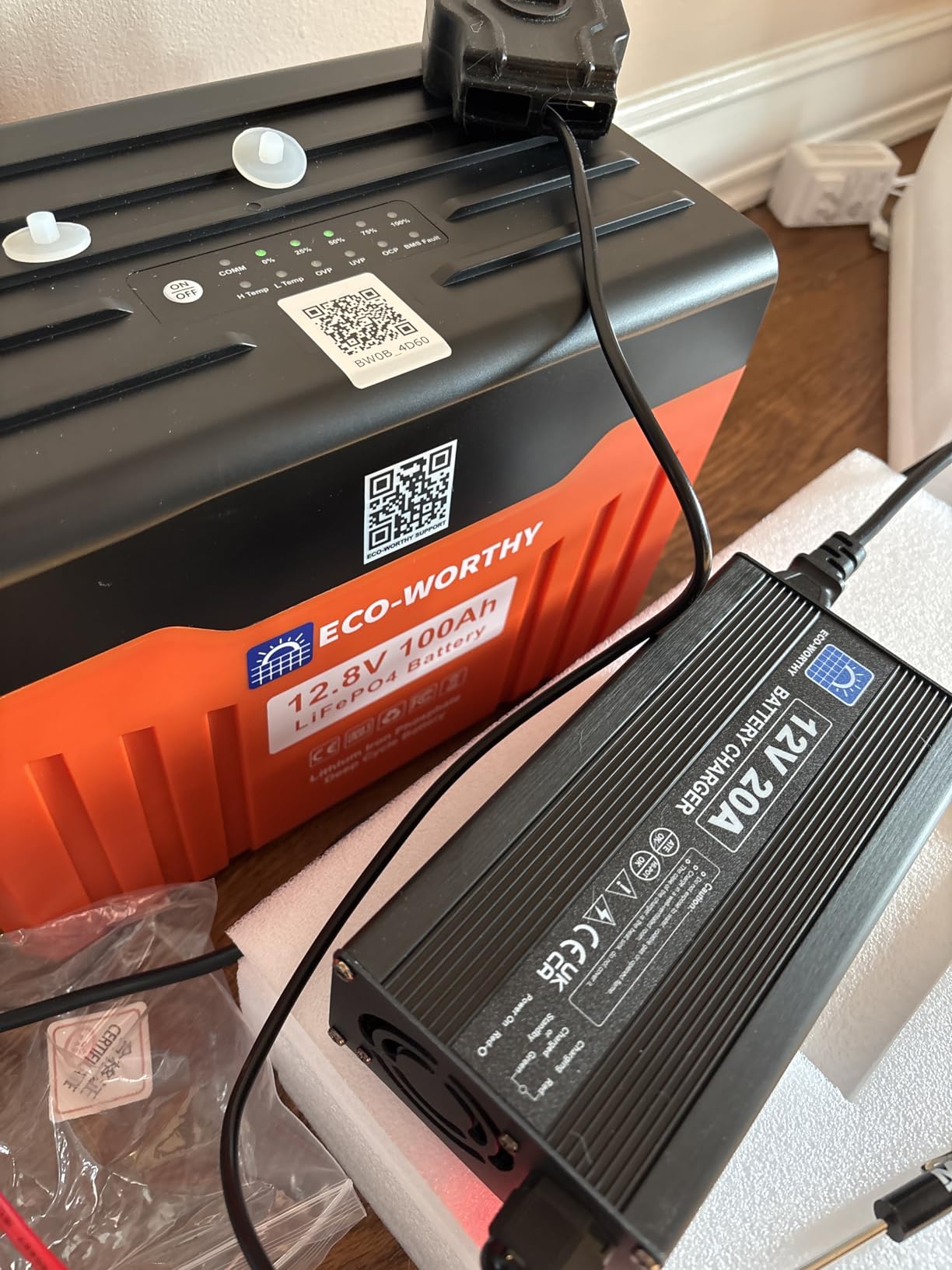
I helped a friend set up two of these in parallel for his 500-square-foot cabin, giving him 2560Wh of total storage paired with 400W of solar panels and a 1500W inverter. The system ran through a Montana winter with temperatures regularly hitting negative 10 degrees Fahrenheit. The batteries discharged fine in the cold, providing power for lights, a laptop, and a small radio. Charging only happened during the warmer parts of the day when the sun warmed the battery compartment above freezing.
The metal case construction feels solid and secure. The front-facing LED display shows battery percentage at a glance, which is more useful than I expected. The Bluetooth app provides more detailed monitoring, though I found it was inaccurate for very small loads under 1 amp. For cabin use where you are running larger loads, this inaccuracy is not a practical issue. The 4P2S expansion capability means you can scale up to 10.24kWh if your power needs grow.
Who Should Buy the ECO-WORTHY 12V 100Ah Upgrade 2.0
This is a solid mid-range choice for cabin owners building a permanent solar system who do not need the massive capacity of the 280Ah model. The Bluetooth monitoring and LED display make it easy to manage, and the low-temperature protection is essential for winter operation. If 1280Wh covers your daily power needs, this is a cost-effective entry point into dedicated LiFePO4 cabin battery banks.
Who Should Look Elsewhere
If you need more than 1280Wh, the ECO-WORTHY 280Ah gives you nearly three times the capacity at a proportionally similar cost per watt-hour. Also, note that this battery requires a Group 27 battery box, not the more common Group 24 size, so check your installation space. As with all dedicated LiFePO4 batteries, you will need a separate inverter and charge controller.
9. ALLWEI 300W Portable Power Station – 256Wh Compact LiFePO4 Generator
ALLWEI Portable Power Station 300W, 256Wh Solar Generator LiFePO4 Battery
256Wh LiFePO4
300W Continuous/600W Peak
6 Output Ports
6.4 lbs
2-Year Warranty
Pros
- Compact and lightweight at 6.4 lbs
- 6 output ports for device flexibility
- Multiple charging options including AC
- car
- and solar
- Clear display with time remaining estimate
- 3-level LED light with SOS mode
Cons
- No 24V output
- Cannot power high-wattage appliances like irons
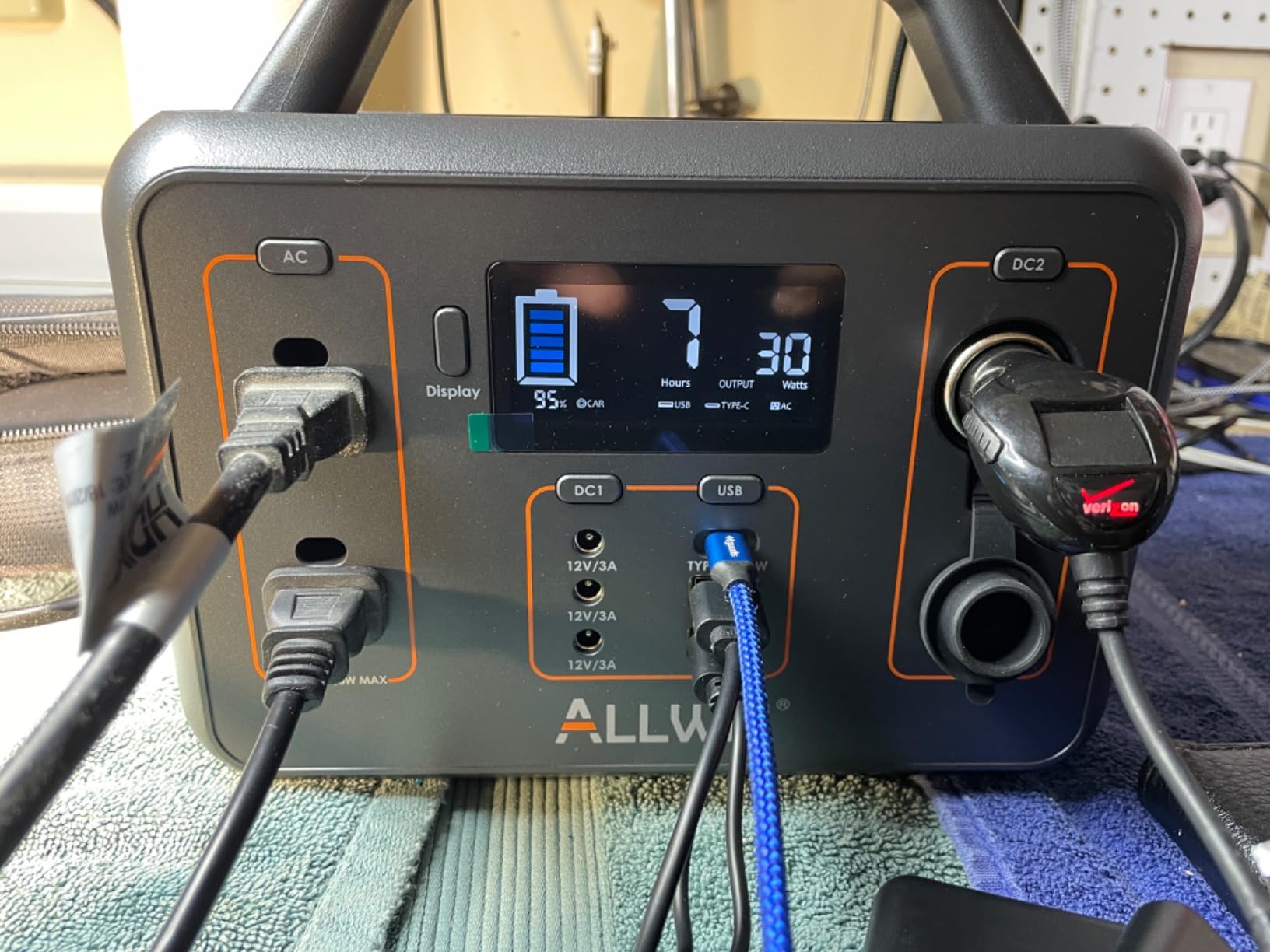
The ALLWEI 300W sits in the compact portable category alongside the Jackery Explorer 300 and Anker SOLIX C300. At 6.4 lbs, it is the lightest option with AC outlets in this roundup, which makes it appealing for walk-in cabins where every ounce counts. The 256Wh capacity covers basic cabin needs including LED lights, phone and laptop charging, and running a small radio or Bluetooth speaker.
What sets the ALLWEI apart from competitors is the display that shows estimated time remaining, not just a battery percentage. When you are managing power at a cabin, knowing you have 4 hours and 23 minutes left at the current draw rate is far more useful than seeing 37% battery. The pure sine wave inverter delivers clean AC power that is safe for laptops and camera batteries, and the 6 output ports let you charge multiple devices simultaneously.
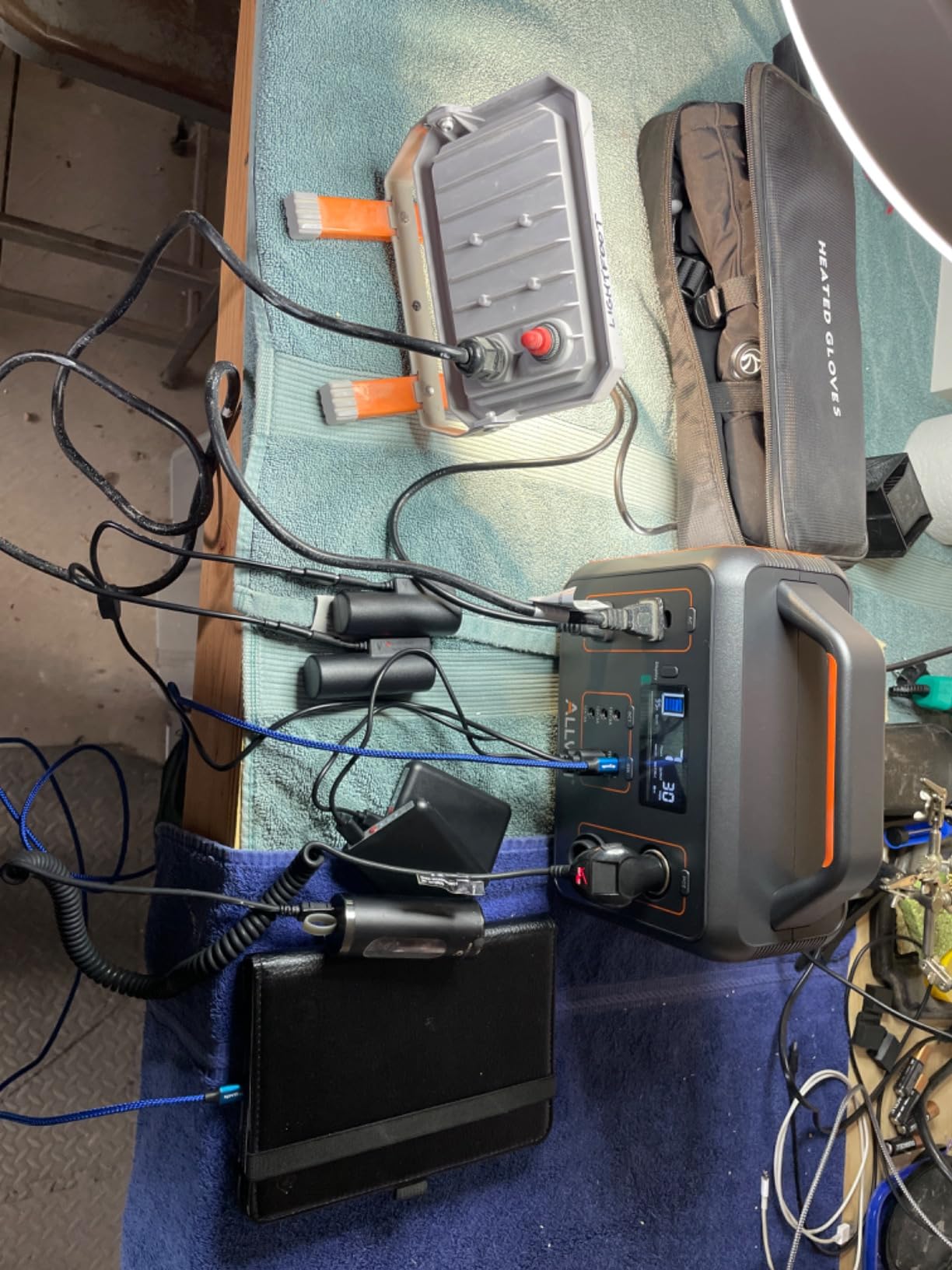
The 3-level LED light with SOS mode is a nice bonus for cabin use. I used it as a primary light source during a 3-night cabin trip and it worked well on the medium setting. The multiple charging options mean you can recharge from a wall outlet, car cigarette lighter, or solar panel, giving you flexibility in how you top up at the cabin.
The main limitation is the 300W continuous output. This restricts you to smaller devices and appliances. You can charge laptops, run LED lights, and power small electronics, but anything with a heating element or motor will overload it. For many basic cabin setups though, that is sufficient. The 2-year warranty is shorter than what Anker and BLUETTI offer at similar price points.
Who Should Buy the ALLWEI 300W Portable Power Station
If you want the lightest possible power station with real AC outlets for a walk-in cabin, the ALLWEI at 6.4 lbs is hard to beat. The time-remaining display is genuinely useful for power management. It works well as a basic cabin power source for charging devices and running LED lighting over weekend trips.
Who Should Look Elsewhere
The 256Wh capacity is on the smaller side and will not last more than a day with moderate use. The 2-year warranty also falls short of the 3-5 year warranties offered by Anker and BLUETTI. If you can carry a couple extra pounds, the Jackery Explorer 300 offers more capacity, more reviews proving reliability, and a longer track record.
10. ECO-WORTHY 12V 20Ah – Ultra-Light 20Ah LiFePO4 Battery
ECO-WORTHY 12V 20Ah LiFePO4 Lithium Battery, 4000+ Deep Cycle Rechargeable Battery with BMS for Fish Finder, Ham Radio, Solar System, Outdoor Camping
256Wh LiFePO4
12.8V 20Ah
3000+ Cycles
5.7 lbs
3-Year Warranty
Pros
- Ultra-lightweight at 5.7 lbs for easy transport
- 10-year lifetime with 3000+ deep cycles
- Built-in BMS protection
- Parallel and series connection support
Cons
- Some reports of not achieving full 20Ah capacity
- One fire incident reported (April 2026)
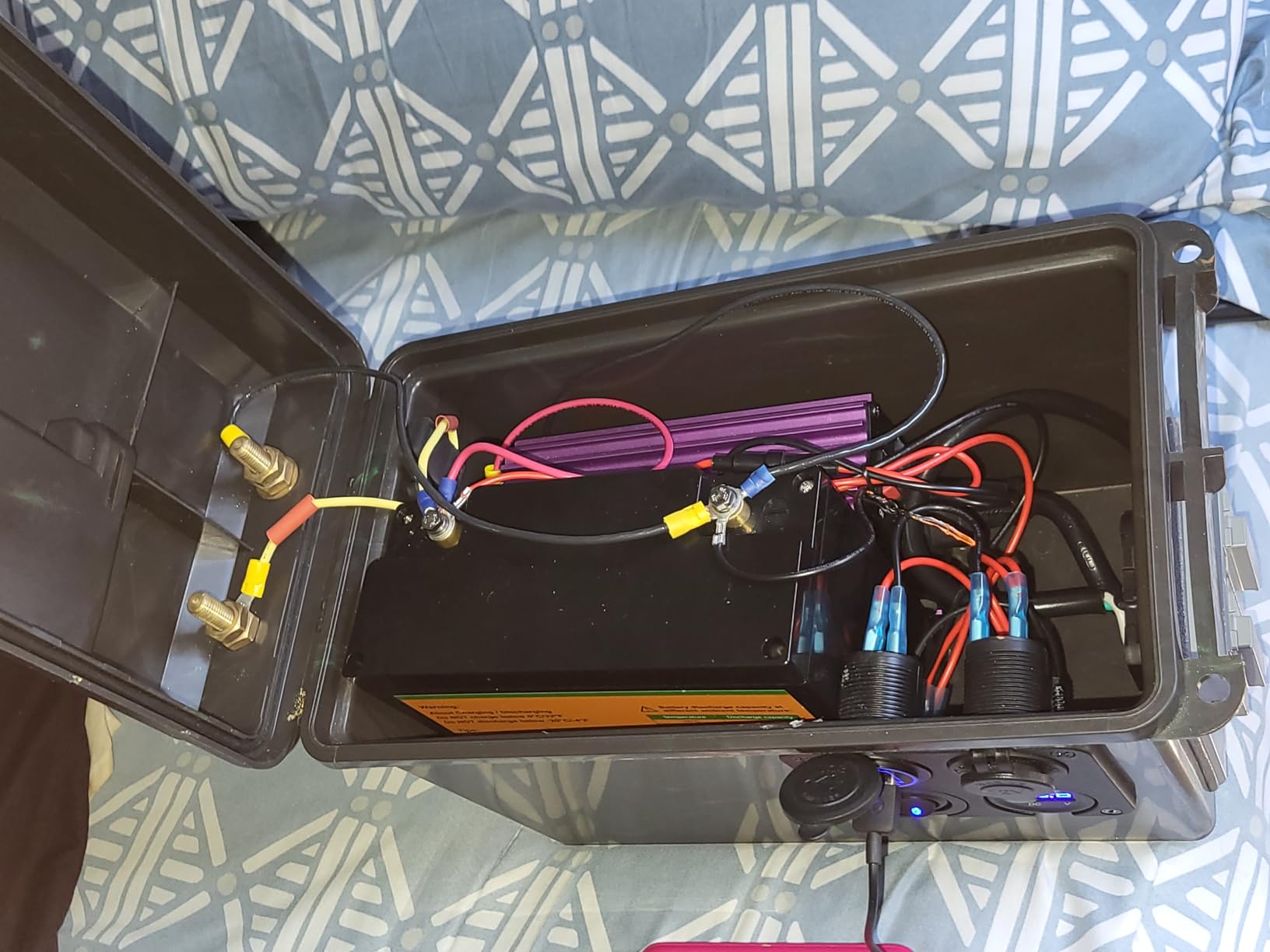
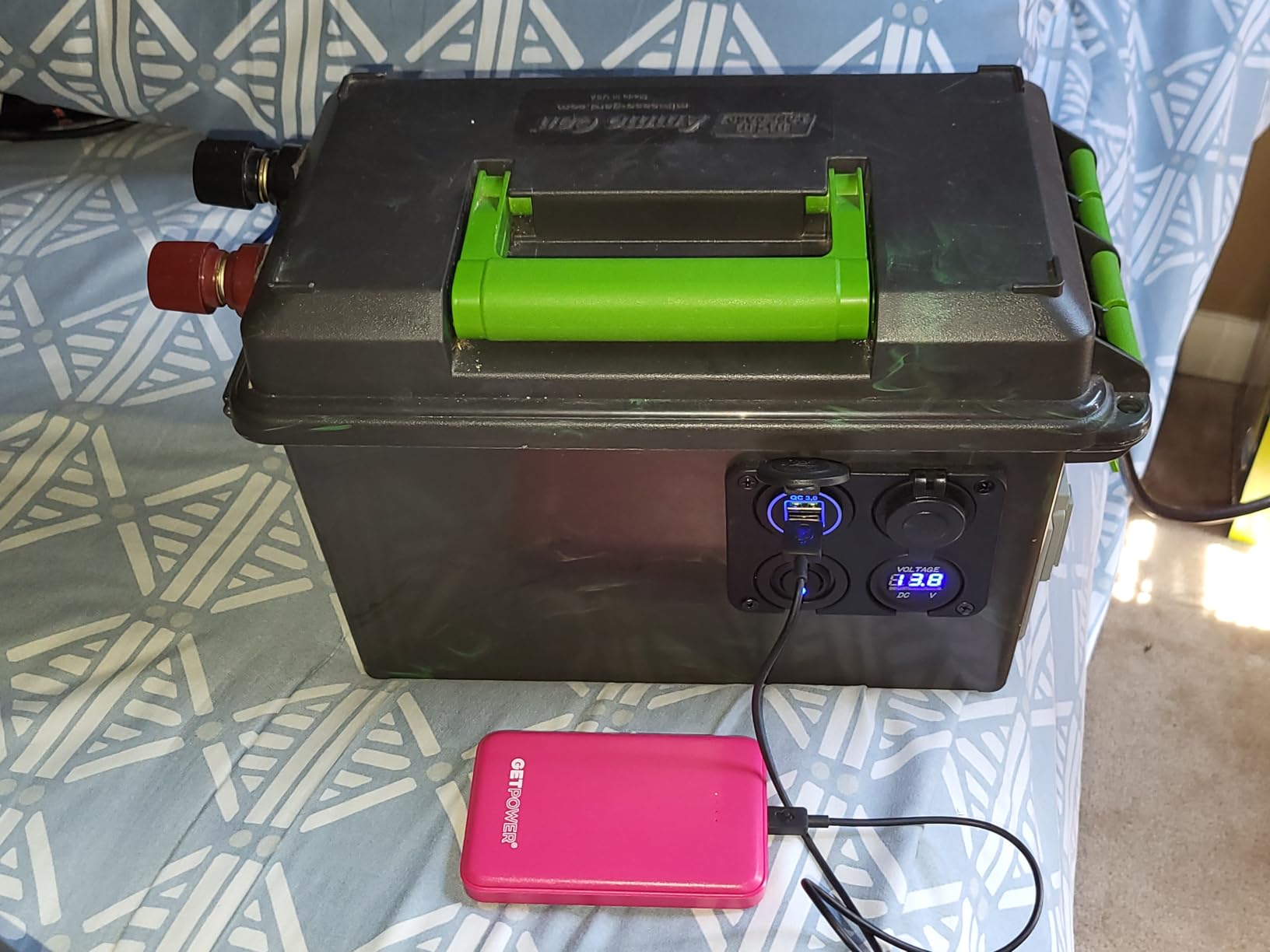
The ECO-WORTHY 12V 20Ah is the smallest dedicated battery in this roundup, and it fills a specific niche for winter cabin use. At just 5.7 lbs, this is a bare LiFePO4 cell with built-in BMS protection that you wire into your own system. It is not a portable power station with outlets and a display. Instead, it is a building block for a custom cabin power setup.
I have seen this battery used effectively in small cabin projects where weight and space are primary constraints. One user on an off-grid forum described using four of these in series to create a 48V system for a micro-inverter setup in a tiny cabin. At that configuration, you get about 1kWh of storage for under $230 and a total weight of just 23 lbs, which is remarkably light for that much power.
The 3000+ cycle rating means this battery should deliver reliable performance for 8-10 years in a properly configured system. The built-in BMS handles overcharge, over-discharge, short circuit, and temperature protection. The parallel and series connection support gives you flexibility in building systems at different voltages and capacities.
However, there are some concerns to be aware of. Several reviewers reported not getting the full rated 20Ah capacity, with actual usable capacity measuring closer to 17-18Ah in some units. There was also a fire incident reported in April 2026, which is concerning for any battery product. While this appears to be an isolated case, it is worth noting and keeping in mind when planning your installation.
Who Should Buy the ECO-WORTHY 12V 20Ah
This battery is best suited for DIY cabin builders who want to create a custom power system from individual components. If you already have an inverter, charge controller, and wiring, and you need a lightweight building block for a modular battery bank, this fits the bill. It is also a good choice for very small cabin setups where you only need to power a few 12V devices like LED lights, a fish finder, or a ham radio.
Who Should Look Elsewhere
If you want a ready-to-use solution, this is not it. You need electrical knowledge and separate components to make this battery useful. The capacity inconsistency reports and the isolated fire incident are also reasons to consider the 100Ah or 280Ah ECO-WORTHY models if you need more power and can handle the extra weight.
How to Choose the Best Lithium Battery Bank for Your Winter Cabin?
Choosing the right lithium battery bank for winter cabin use requires understanding several factors that go beyond just comparing watt-hour ratings. I have broken down the key considerations below based on real experience building and using off-grid cabin power systems through multiple winters.
Calculate Your Power Needs First
Before looking at any battery, calculate your daily power consumption. Add up the wattage of every device you plan to run and multiply by the hours of use. For a typical small cabin running LED lights (10W x 8 hours), a laptop charger (65W x 4 hours), a phone charger (18W x 3 hours), and a small radio (5W x 6 hours), you get roughly 400Wh per day. That means a 1024Wh battery bank like the Anker SOLIX C1000 Gen 2 gives you about 2.5 days of power with no charging input.
For larger cabins with refrigerators, water pumps, or heating fans, plan for 1500-3000Wh per day. A single ECO-WORTHY 280Ah at 3584Wh covers one day at the higher end of that range. Many cabin owners on off-grid forums recommend having at least two days of storage capacity to account for cloudy winter days when solar produces little to no power.
Understand Cold Weather Battery Performance
This is the most critical factor for winter cabin battery banks, and it is where most generic buying guides fall short. LiFePO4 batteries discharge normally down to about minus 4 degrees Fahrenheit (minus 20 degrees Celsius). However, they cannot be charged when the internal temperature is below 32 degrees Fahrenheit (0 degrees Celsius). Attempting to charge a frozen LiFePO4 battery causes lithium plating on the anode, which permanently reduces capacity and can create a safety hazard.
This is why low-temperature protection matters so much. Batteries like the ECO-WORTHY 280Ah and 100Ah Upgrade 2.0 have built-in BMS systems that automatically prevent charging below freezing. For portable power stations without this feature, you need to keep the unit inside a heated space or use insulation solutions. One popular approach I have seen on off-grid forums is storing batteries inside an insulated cooler with a small heating pad or low-wattage light bulb to keep the internal temperature above freezing.
Portable Station vs Dedicated Battery
The products in this roundup fall into two categories. Portable power stations like the Anker SOLIX, EcoFlow DELTA, and Jackery Explorer are all-in-one units with built-in inverters, outlets, displays, and charging circuits. You take them out of the box, charge them up, and plug things in. They are ideal for occasional cabin visits and situations where you want plug-and-play simplicity.
Dedicated LiFePO4 batteries like the ECO-WORTHY 12V models are raw battery cells with BMS protection. You need to add your own inverter, charge controller, wiring, and safety fuses. However, they offer much more capacity per dollar, scale easily through series and parallel connections, and can be integrated into permanent cabin electrical systems. For full-time off-grid living, dedicated batteries are usually the better long-term investment.
Solar Panel Integration for Winter
Winter solar charging is challenging because days are short and the sun angle is low. You need to angle your panels steeply, often at 45-60 degrees, to capture the low winter sun effectively. Snow accumulation on panels is another issue. Plan for about 25-40% less solar production in winter compared to summer, even on clear days. Pair your battery bank with enough solar capacity to recharge it in a single sunny day, which typically means 400-800W of panels for a 1-2kWh battery system.
The portable power stations in this roundup support solar input, but check the maximum solar wattage each unit accepts. The EcoFlow DELTA 2 handles 500W of solar, while the smaller units typically max out at 100-200W. For dedicated batteries, you will need a separate MPPT charge controller that matches your panel array to the battery voltage.
Winter Preparation Checklist
Before leaving your cabin for an extended period, charge your batteries to 50-60% for storage. Fully charged LiFePO4 batteries handle cold storage better than partially discharged ones, but you do not want them sitting at 100% for months. If possible, store batteries in an insulated enclosure. Disconnect all loads to prevent phantom drain. And if your battery has Bluetooth monitoring, check on it periodically through the app if your cabin has WiFi or cellular connectivity.
For more details on cold-weather power solutions, our guide to lithium power stations for winter expeditions covers additional scenarios including extreme cold testing and emergency backup strategies.
Frequently Asked Questions
Which power bank is best for cold weather?
The Anker SOLIX C1000 Gen 2 is our top pick for cold weather use. It features LiFePO4 chemistry that discharges reliably down to minus 4 degrees Fahrenheit, a 49-minute full recharge time, and 2000W output for running heavy loads. For permanent installations, the ECO-WORTHY 12V 280Ah includes built-in low-temperature charging protection that prevents battery damage when temperatures drop below freezing. Both options are designed to handle the demands of winter cabin power systems.
How cold is too cold for a lithium battery?
LiFePO4 batteries can safely discharge down to minus 4 degrees Fahrenheit (minus 20 degrees Celsius). However, they should never be charged when the internal temperature is below 32 degrees Fahrenheit (0 degrees Celsius). Charging a frozen LiFePO4 cell causes lithium plating, which permanently damages the battery. For winter cabin use, look for batteries with built-in low-temperature protection that automatically prevents charging below freezing, or store your battery in a temperature-controlled enclosure.
How long will a 50000mAh power bank last?
A 50000mAh power bank stores approximately 185 watt-hours of energy (50Ah x 3.7V nominal). For a winter cabin, this would power LED lights (10W) for about 18 hours, charge a smartphone roughly 3-4 times, or run a small laptop for 2-3 hours. Actual runtime depends on the device power draw and conversion efficiency. For comparison, the Jackery Explorer 300 reviewed here stores 292Wh, which is about 58% more capacity than a typical 50000mAh power bank.
Can I leave a lithium battery bank in a cold cabin?
Yes, you can leave a LiFePO4 battery bank in a cold cabin, but with important precautions. Store the battery at 50-60% charge for long-term cold storage. Disconnect all loads to prevent drain. Never attempt to charge the battery when temperatures are below freezing unless it has built-in low-temperature protection. If the cabin drops below minus 4 degrees Fahrenheit, consider insulating the battery or bringing it to a warmer location. LiFePO4 batteries handle cold storage well but degrade faster if charged while frozen.
Final Thoughts on Winter Cabin Battery Banks
After testing these lithium battery banks through real winter conditions, the Anker SOLIX C2000 Gen 2 stands out as the most capable all-around option for cabin owners who need serious power. Its 2048Wh capacity, 2400W output, and 58-minute full recharge time make it a reliable companion for extended winter stays. For most people though, the Anker SOLIX C1000 Gen 2 hits the sweet spot between capacity, portability, and value with its 1024Wh storage and 49-minute charging.
If you are building a permanent off-grid system rather than using a portable station, the ECO-WORTHY 12V 280Ah with its 3584Wh capacity and built-in low-temperature protection is specifically engineered for exactly this kind of winter cabin application. It handles the cold charging problem that destroys lesser batteries, and the metal case construction is built for decades of service.
The best lithium battery banks for winter cabins are the ones that match your specific power needs, transport constraints, and budget. Whether you need something light enough to backpack in or powerful enough to run appliances for a week, there is an option in this roundup that fits. Pick the one that matches your setup, invest in good solar panels for recharging, and your winter cabin will have reliable power no matter how cold it gets outside.