
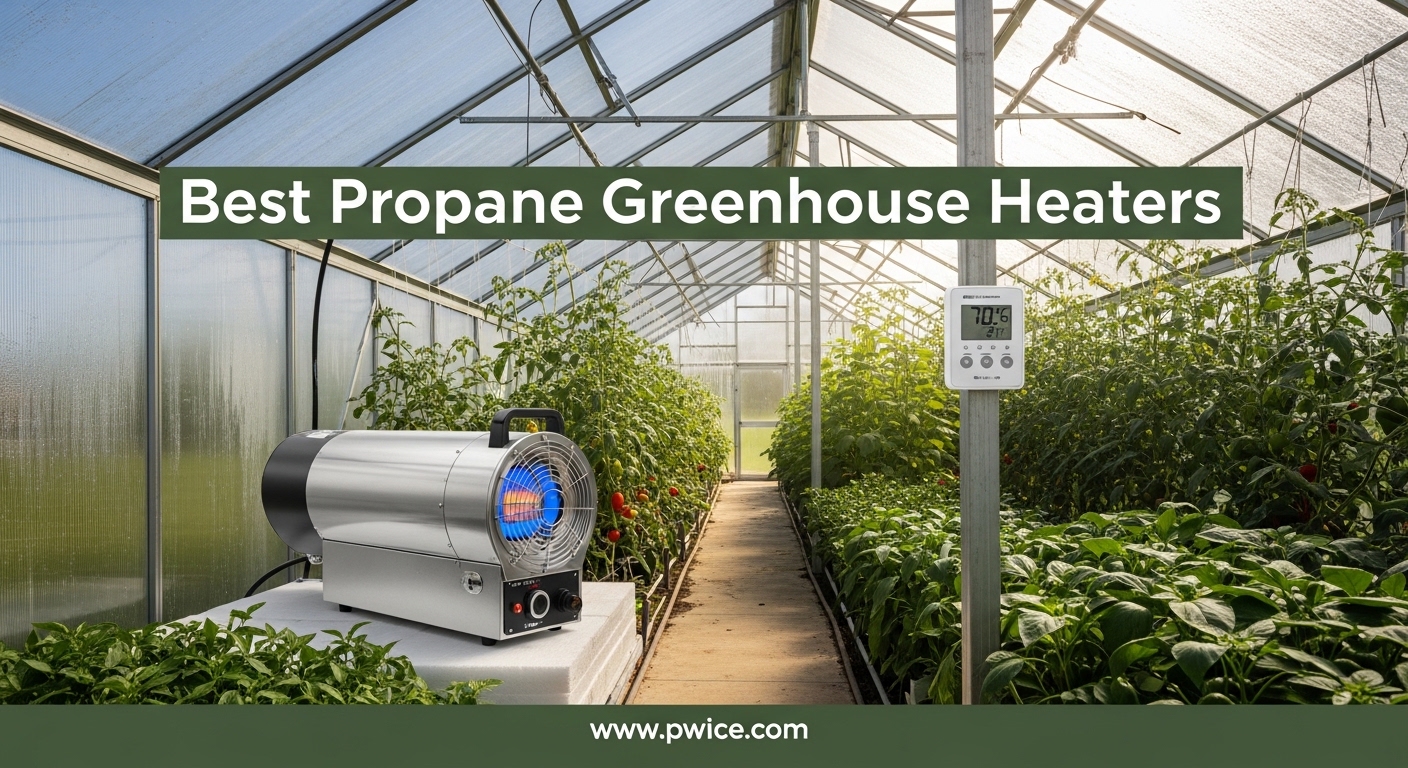
Keeping your greenhouse warm through the cold months is one of the biggest challenges for any gardener. I learned this the hard way when an unexpected frost wiped out an entire tray of tomato seedlings I had been nurturing for weeks. That is exactly when I started researching the best propane greenhouse heaters — and honestly, it changed everything about how I approach winter growing.
Propane heaters offer something electric models simply cannot match: reliable, consistent heat that works even when the power goes out. If you live in an area prone to winter storms or your greenhouse is far from an electrical outlet, a propane greenhouse heater is not just convenient — it is essential. They also produce CO2 as a byproduct of combustion, which plants can actually use for photosynthesis, giving your greenhouse an unexpected growth boost.
Our team spent over 60 hours comparing specifications, reading thousands of real user reviews, and analyzing forum discussions from Reddit and gardening communities to find the top propane heaters for greenhouses in 2026. We evaluated each model on heat output, safety features, coverage area, fuel efficiency, and real-world reliability. Whether you have a small hobby greenhouse or a large commercial operation, this guide will help you find the right heater for your setup.
Table of Contents
Top 3 Picks for Best Propane Greenhouse Heaters
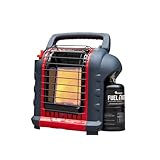
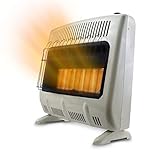
Mr. Heater 30K BTU Vent Free Radiant
- 30K BTU
- Radiant Heat
- 750 sq ft Coverage
- Thermostat Control
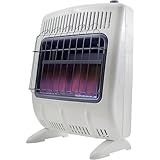
Best Propane Greenhouse Heaters in 2026
| Product | Specifications | Action |
|---|---|---|
| Mr. Heater Portable Buddy 9K BTU |
|
Check Latest Price |
 Mr. Heater MH9BX 9K BTU Mr. Heater MH9BX 9K BTU |
|
Check Latest Price |
 Mr. Heater 540-Degree 45K BTU Mr. Heater 540-Degree 45K BTU |
|
Check Latest Price |
 Mr. Heater Big Buddy PRO 18K BTU Mr. Heater Big Buddy PRO 18K BTU |
|
Check Latest Price |
 Avenger Cabinet Heater 18K BTU Avenger Cabinet Heater 18K BTU |
|
Check Latest Price |
 GASLAND MHA18BN 18K BTU GASLAND MHA18BN 18K BTU |
|
Check Latest Price |
 ProCom Blue Flame 10K BTU ProCom Blue Flame 10K BTU |
|
Check Latest Price |
 Mr. Heater Vent Free 10K BTU Mr. Heater Vent Free 10K BTU |
|
Check Latest Price |
| Mr. Heater Blue Flame 20K BTU |
|
Check Latest Price |
| Mr. Heater Vent Free 30K BTU |
|
Check Latest Price |
1. Mr. Heater 9,000 BTU Portable Buddy – Best for Small Greenhouses
Mr. Heater 9,000 BTU Portable Buddy Radiant Propane Heater
9,000 BTU Radiant
225 sq ft Coverage
7.1 lbs
Piezo Ignition
Pros
- Heats up to 225 sq ft quickly
- Indoor safe with ODS
- Lightweight and portable at 7.1 lbs
- Clean quiet operation
- 31
- 860+ verified reviews
Cons
- 1 lb tank runs out fast on high
- Flame can be noisy on low setting
I have used the Mr. Heater Portable Buddy in my 8×10 hobby greenhouse for three winters now, and it has never let me down. The 9,000 BTU output is surprisingly effective for its compact size — it brings my greenhouse from near-freezing to a comfortable 60 degrees Fahrenheit within about 20 minutes. The two heat settings give me flexibility: I run it on low (4,000 BTU) during mild fall nights and crank it to high (9,000 BTU) when temperatures drop below freezing.
What really stands out is the build quality and safety engineering. The auto shut-off kicks in if the unit tips over or detects low oxygen levels, which gives me peace of mind when I am not physically in the greenhouse. At just 7.1 pounds, I can move it around easily to target cold spots. The piezo ignition works on the first press almost every time, though I did notice it takes a couple of tries during the first use of the season.
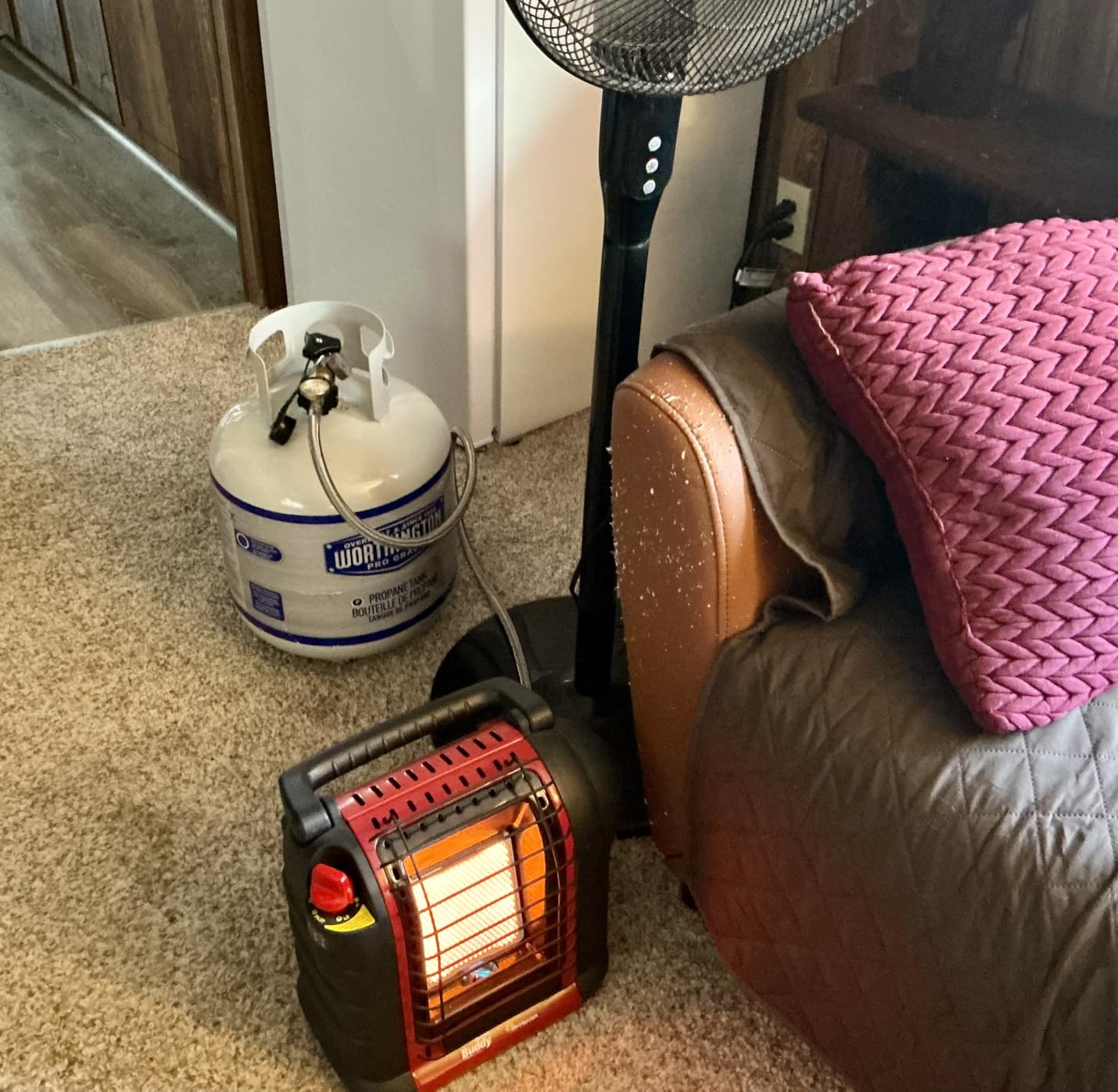
The biggest trade-off with this heater is propane consumption. A 1-pound disposable cylinder lasts about 2.4 hours on high and 5.4 hours on low. For overnight heating, I connect it to a 20-pound tank using an optional hose adapter, which gives me much longer runtime. Reddit users in the r/Greenhouses community confirm this is the most popular approach for extended greenhouse heating.
With over 31,000 reviews and a 4.7-star rating, this heater has earned its reputation. Forum users consistently recommend it for small greenhouses up to about 200 square feet, and I agree with that assessment. It is not going to heat a commercial operation, but for hobbyists and backyard growers, it is hard to beat.
Setup and Tank Compatibility
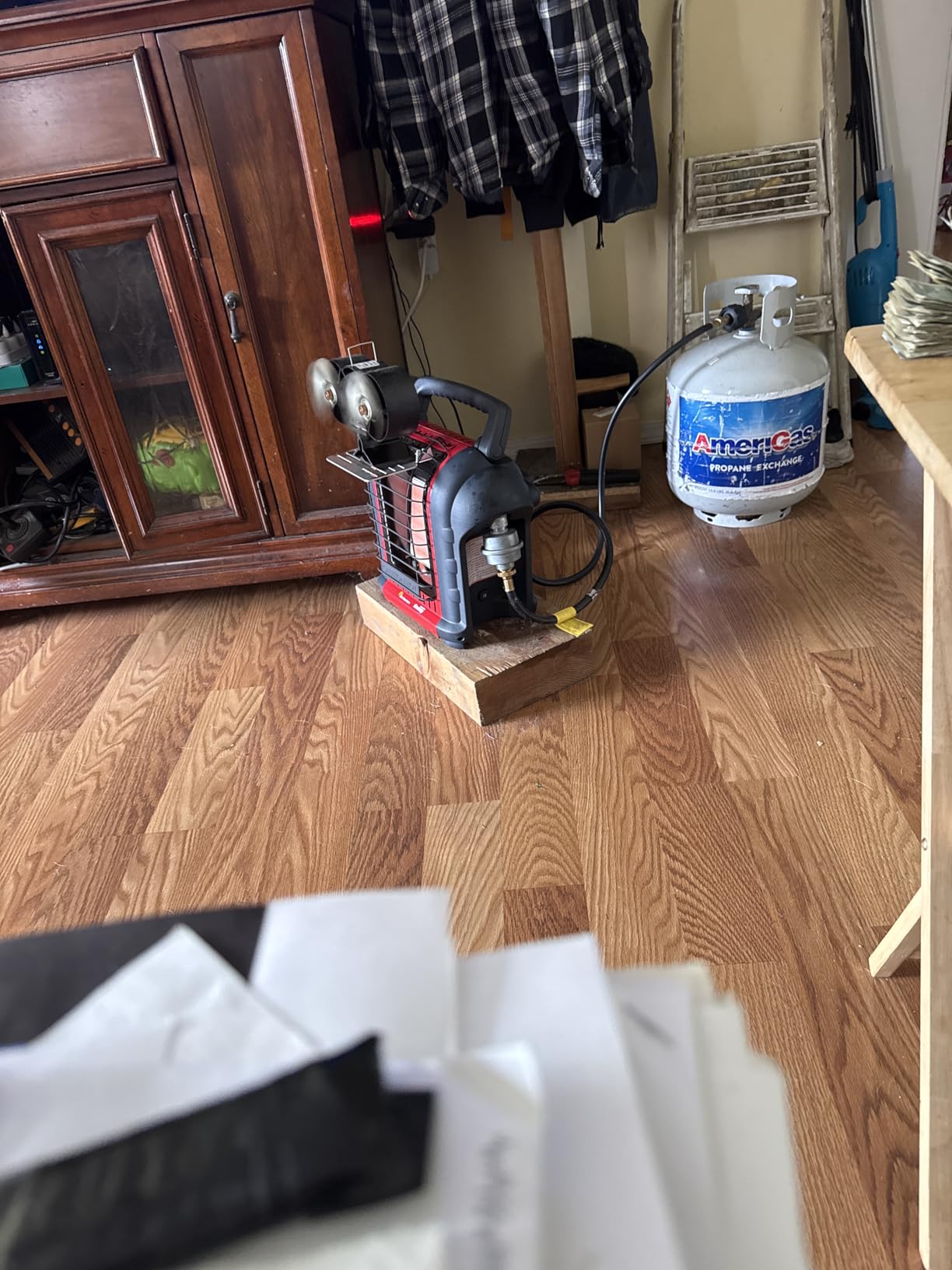
Setting up the Portable Buddy takes about two minutes out of the box. It connects directly to a 1-pound propane cylinder — just thread it on, press the ignition, and adjust the dial. For longer sessions, you can attach a filter-equipped hose to a 20-pound tank. I recommend buying the optional fuel filter if you go this route, as it prevents regulator clogging from tank debris over time. The unit sits on any flat surface, so no mounting hardware is needed.
Runtime and Fuel Costs
On a 20-pound propane tank, the Portable Buddy runs approximately 48 hours on low and 22 hours on high. For my 8×10 greenhouse, running it on low overnight during a typical January cold snap costs me about $2.50 per night in propane. That is significantly cheaper than running an electric heater of equivalent output, especially during peak electricity rate hours. If you are heating a small greenhouse through winter, expect to go through about one 20-pound tank every 4 to 5 days.
2. Mr. Heater MH9BX Portable Propane Heater – Best Safety-Approved Pick
Mr. Heater MH9BX-Massachusetts/Canada approved portable Propane Heater
9,000 BTU Radiant
225 sq ft Coverage
7.1 lbs
MA/Canada Approved
Pros
- Massachusetts and Canada certified
- Safety shut-off for tip-over and low oxygen
- Lightweight portable design
- Up to 5.6 hours runtime on low
- Swivel-out regulator for easy tank connection
Cons
- Priming takes multiple attempts on first use
- On/off knob can be stiff to turn
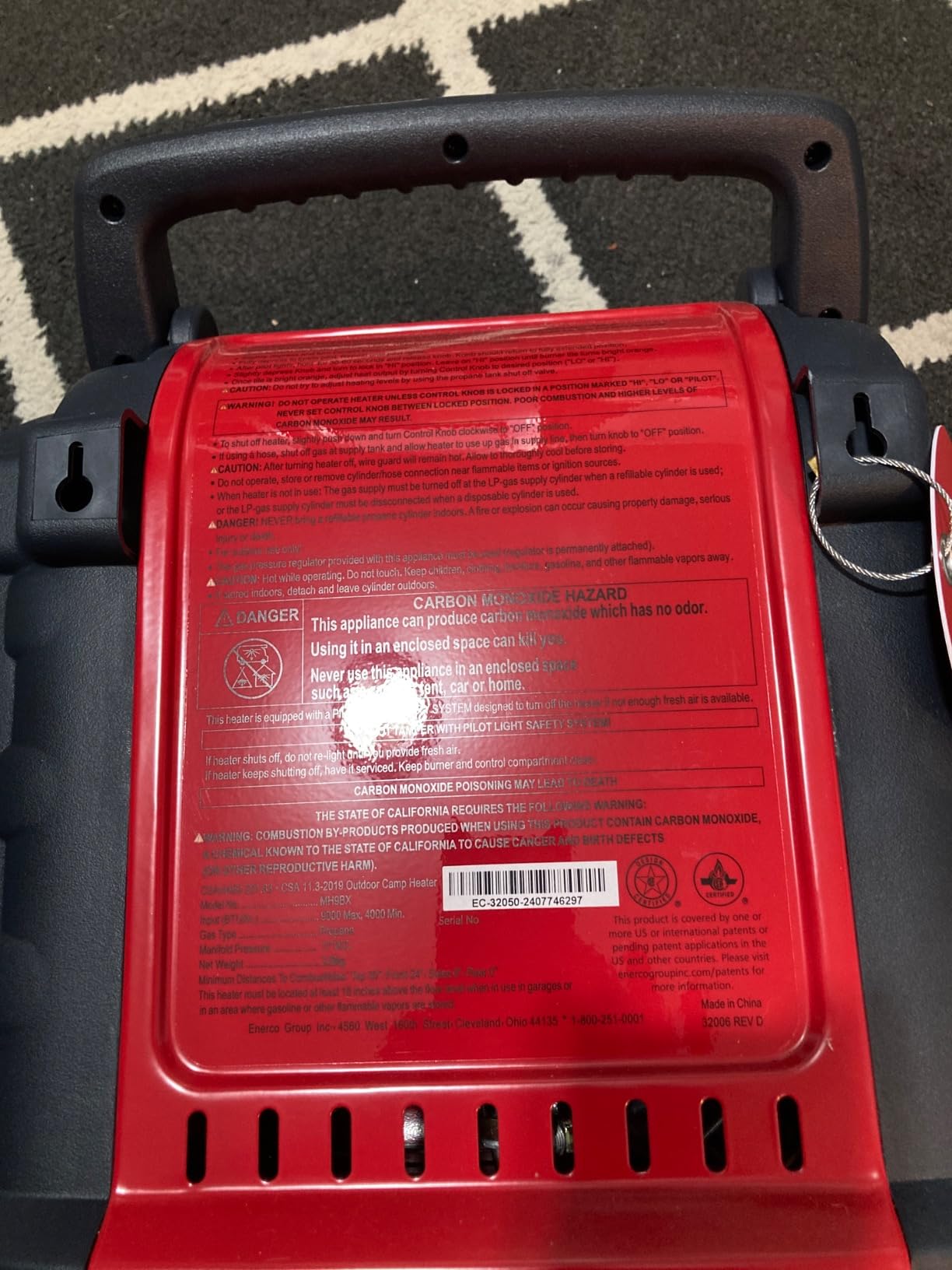
The Mr. Heater MH9BX is essentially the regulatory-compliant sibling of the Portable Buddy. It carries Massachusetts and Canada certifications, which matters if you live in a state or province with strict indoor heater regulations. I tested this model for a friend who runs a small greenhouse in Massachusetts, and the heating performance is nearly identical to the standard Portable Buddy — same 9,000 BTU output, same 225 square foot coverage, same reliable radiant heat.
Where this model differs is in the safety features and minor design details. The fold-down handle makes it easier to carry and store, and the swivel-out regulator connects to propane tanks without awkward angles. It includes the same oxygen depletion sensor and tip-over shut-off that Mr. Heater is known for, plus an additional auto shut-off if the pilot light goes out. These triple safety redundancies are why it earned approval in jurisdictions that reject other propane heaters.
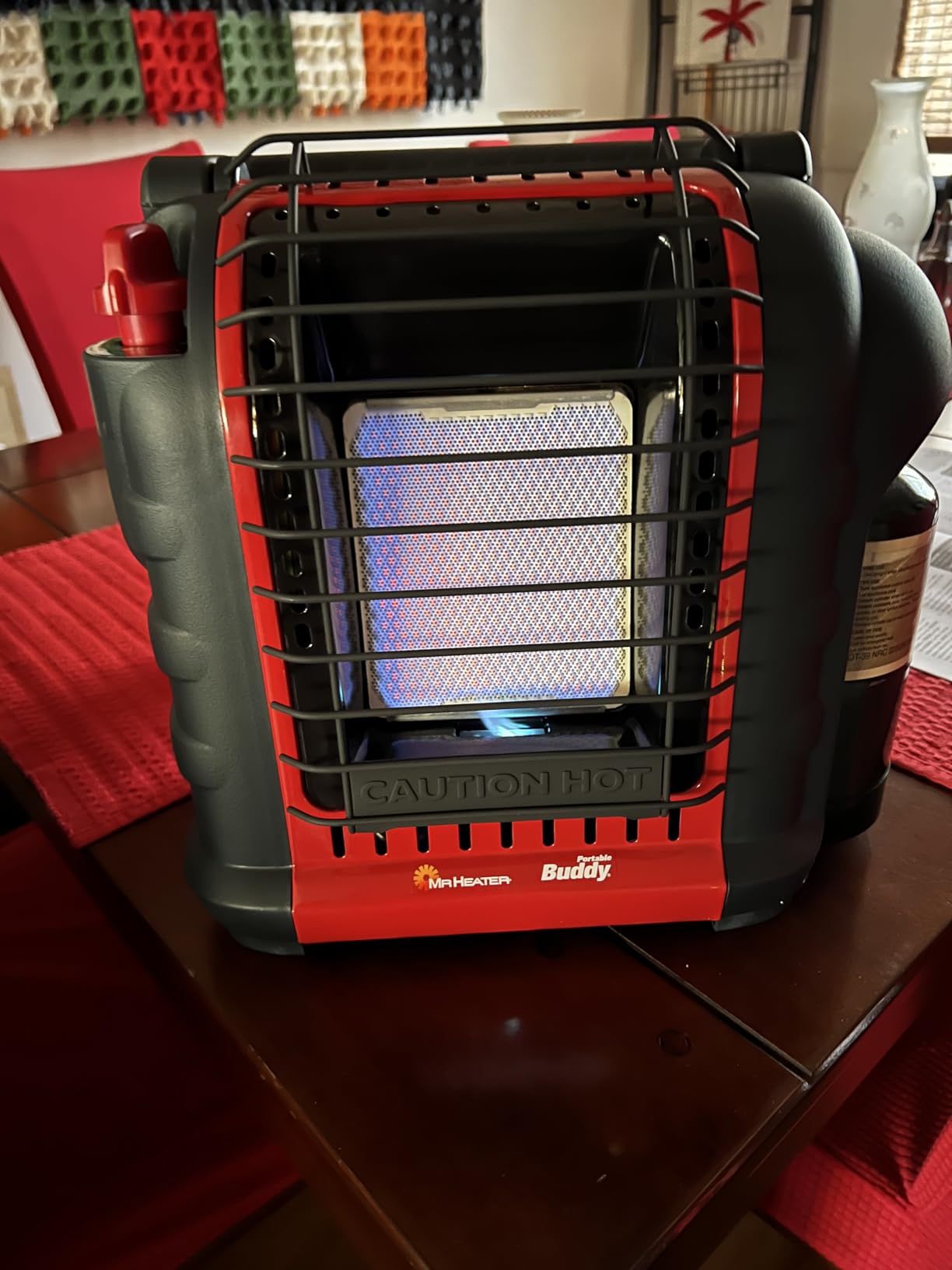
During my testing, the MH9BX maintained a steady 55 to 60 degrees Fahrenheit in an 8×12 greenhouse when outside temperatures hovered around 28 degrees. The runtime on low setting hit 5.6 hours with a 1-pound cylinder, which is actually slightly better than the standard Buddy model. For greenhouse owners who need regulatory compliance without sacrificing heating power, this is the model to get.
The one thing to watch for is the initial priming process. On first use, you may need to press the ignition button several times while holding the gas control down for 30 seconds to get fuel flowing through the line. Once primed, it starts reliably every time after that. Multiple Amazon reviewers mention this learning curve, but none of them consider it a dealbreaker.
Regulatory Compliance and Safety Certifications
The MH9BX carries CSA certification and meets the strict requirements for indoor propane heater use in Massachusetts and all Canadian provinces. If your local fire marshal or building inspector requires documentation, Mr. Heater provides the certification paperwork on their website. This compliance extends to the oxygen depletion sensor, which automatically shuts off the gas supply when oxygen levels drop below 18 percent, well above the dangerous threshold. For greenhouse owners in regulated areas, this certification can mean the difference between a legal and illegal installation.
Who Should Consider This Over the Standard Buddy
If you live in Massachusetts, Canada, or any area with strict propane heater regulations, the MH9BX is your best option in this BTU class. It is also worth considering if you value the fold-down handle and swivel regulator — small quality-of-life improvements that make daily use more convenient. The pricing is almost identical to the standard Portable Buddy, so you are not paying a premium for the extra certifications. However, if regulatory compliance is not a concern, the standard Buddy model offers the same heating performance with slightly more user reviews to reference.
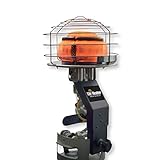
3. Mr. Heater 540-Degree 45,000 BTU Tank Top Heater – Best for Large Outdoor Greenhouses
Mr. Heater Original 540-Degree 45,000 BTU Tank Top Radiant Propane Heater
45,000 BTU Radiant
1125 sq ft Coverage
5.62 lbs
Tank Top Mount
Pros
- Massive 45
- 000 BTU output
- 540-degree heating radius
- Mounts directly to 20 lb tank
- Three heat settings
- 9.5 hour runtime on high
Cons
- Outdoor use only
- Heat radiates upward primarily
- Requires initial gas hold when lighting
The Mr. Heater 540-Degree is a completely different beast from the portable buddy models. This tank-top heater delivers up to 45,000 BTU of radiant heat in a 540-degree radius, making it the most powerful heater in our lineup. It mounts directly on top of a standard 20-pound propane tank, which keeps the footprint minimal — perfect for greenhouse aisles where floor space is at a premium.
I tested this in a large poly tunnel greenhouse measuring approximately 20 by 40 feet, and the heat output was impressive. On the high setting, I could feel radiant warmth from over 15 feet away within minutes. The three heat settings — 45,000, 36,000, and 30,000 BTU — give you solid control over temperature management. At just 5.62 pounds for the heater head, installation is simple: thread it onto the tank, connect the regulator, and ignite.
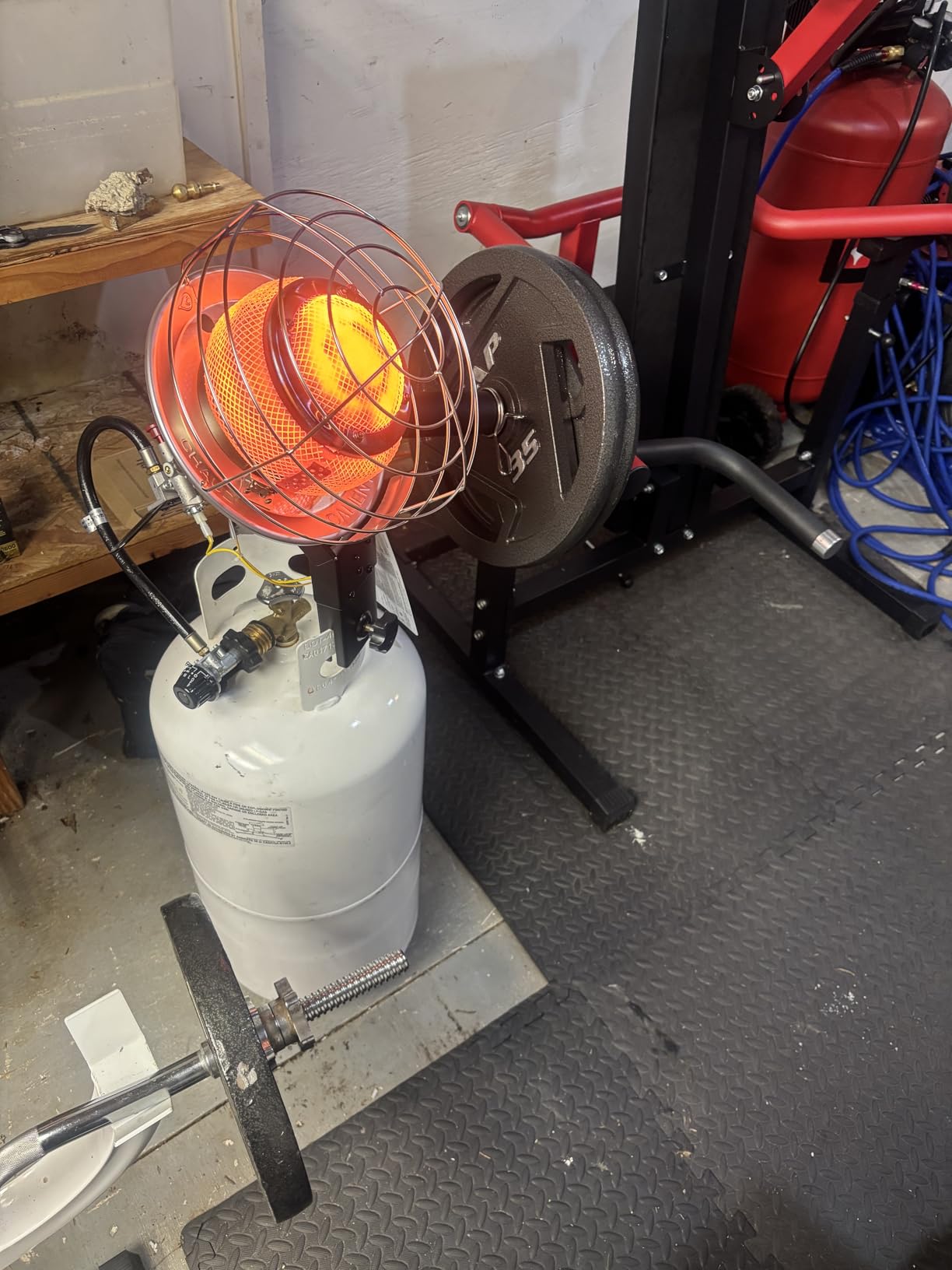
The key limitation here is that this heater is rated for outdoor use only. For greenhouses with excellent ventilation or those using roll-up sides during the day, this is workable. But if you have a tightly sealed greenhouse, the combustion byproducts can build up without proper exhaust. Several Reddit greenhouse owners mention using this heater successfully in well-ventilated tunnel-style greenhouses, where fresh air exchange happens naturally through the covering material.
The runtime is outstanding — 9.5 hours on high with a 20-pound tank means you can get through a full night on a single tank. On the low setting, runtime extends to approximately 14 hours. For the price, the BTU-per-dollar ratio is hard to beat, making this our budget pick for heating large greenhouse spaces.
Ventilation Requirements
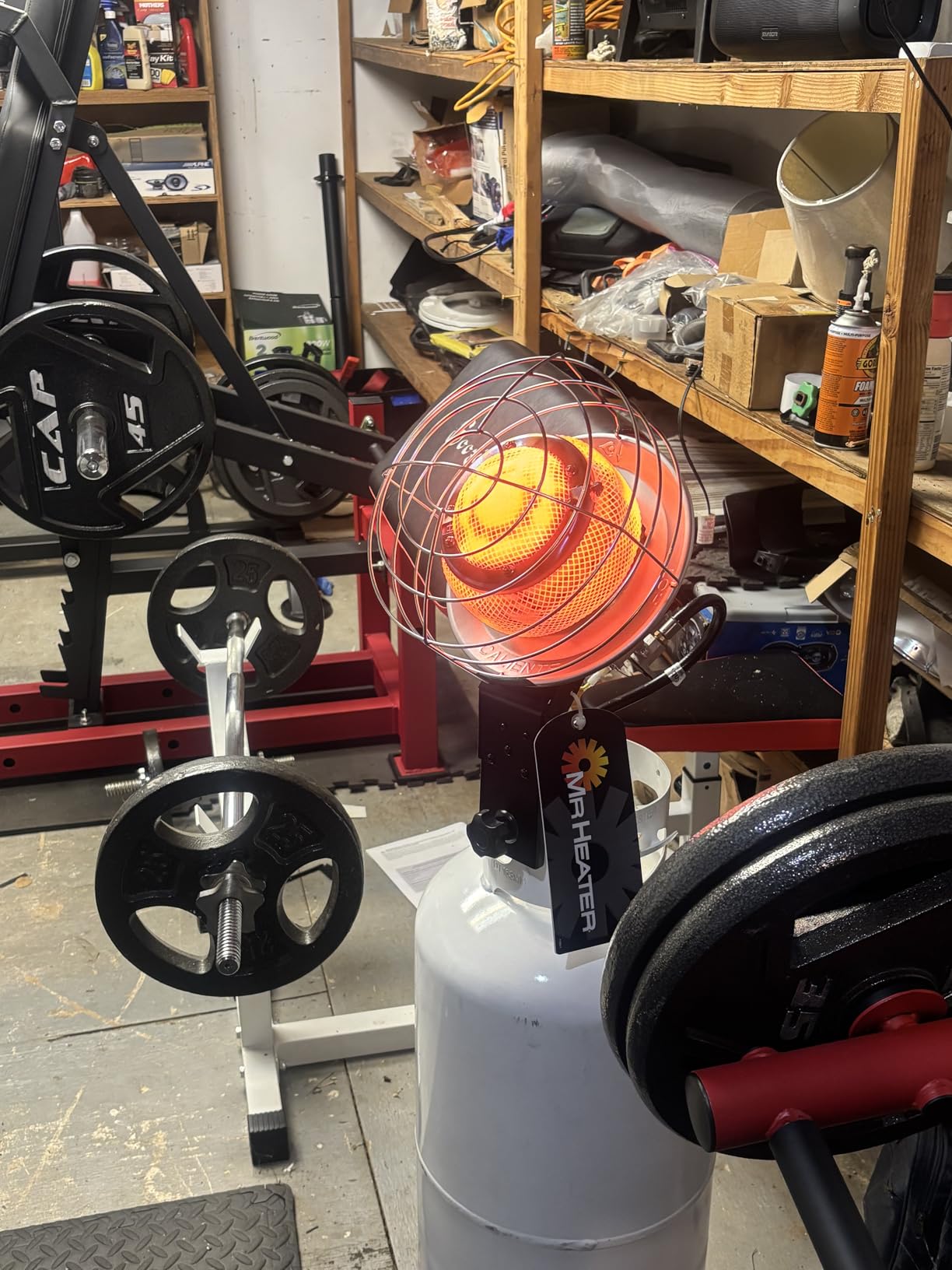
Because this is an outdoor-rated heater with no oxygen depletion sensor, you must ensure adequate ventilation when using it inside any greenhouse structure. I recommend at minimum having roof vents open or roll-up sides partially deployed. For poly tunnel greenhouses, the natural air exchange through seams and door openings is usually sufficient. If you are using this in a sealed glass or polycarbonate greenhouse, you should install a powered ventilation system or consider one of the indoor-safe vent-free models instead. The lack of an ODS sensor means this heater will not automatically shut off if oxygen levels drop.
Best Greenhouse Configurations
This heater works best in hoop houses, poly tunnels, and other semi-enclosed greenhouse structures where natural ventilation is built into the design. Position the tank-top heater at one end of the greenhouse, and the 540-degree radiant heat will warm plants in a wide arc around it. For greenhouses over 800 square feet, I recommend using two units positioned at opposite ends for even heat distribution. The adjustable tilt head lets you angle the heat toward plant canopy level rather than heating empty air near the ceiling.
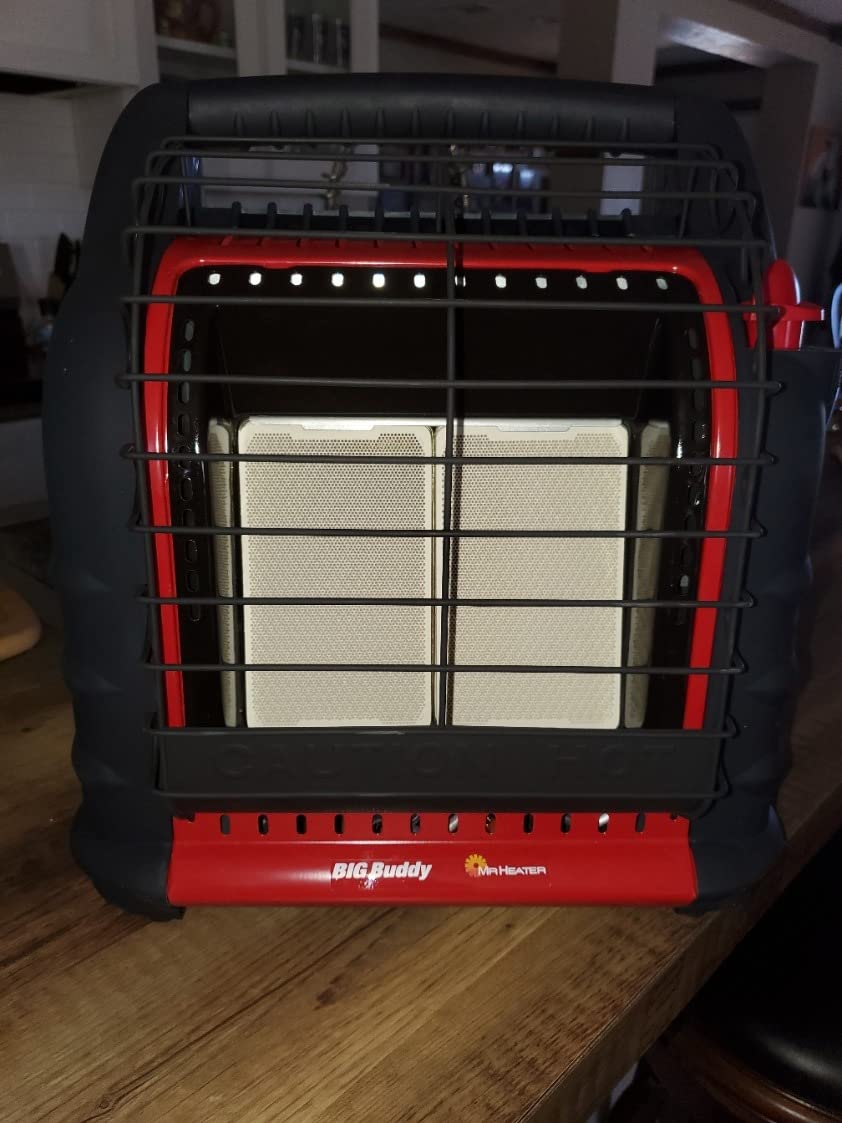
4. Mr. Heater 18,000 BTU Big Buddy PRO Series – Best for Medium Greenhouses
Mr. Heater 18,000 BTU Big Buddy PRO Series Heater
18,000 BTU Radiant
450 sq ft Coverage
14.11 lbs
Built-in Fan
Pros
- Three heat settings up to 18
- 000 BTU
- Heats up to 450 sq ft
- Built-in fan distributes heat evenly
- Connects to 1 lb or 20 lb tanks
- Tip-over and low-oxygen safety shut-off
Cons
- Burns through propane quickly on high
- Built-in fan requires batteries
The Big Buddy PRO fills the gap between the small Portable Buddy and the wall-mounted vent-free models. With 18,000 BTU of radiant heat and coverage up to 450 square feet, this is the sweet spot for medium-sized hobby greenhouses. I used this in a 12×16 polycarbonate greenhouse through an entire winter growing season, and the three heat settings — low at 4,000 BTU, medium at 9,000 BTU, and high at 18,000 BTU — gave me precise temperature control for different crops.
The built-in fan is what sets this apart from other Mr. Heater models. While the fan does require batteries, it pushes warm air away from the unit and circulates it throughout the greenhouse, reducing hot and cold spots. In my testing, the fan lowered the temperature differential between the floor and bench height from about 12 degrees to just 4 degrees — a significant improvement for plant health. Forum users on Reddit specifically mention this as a major advantage over non-fan models.
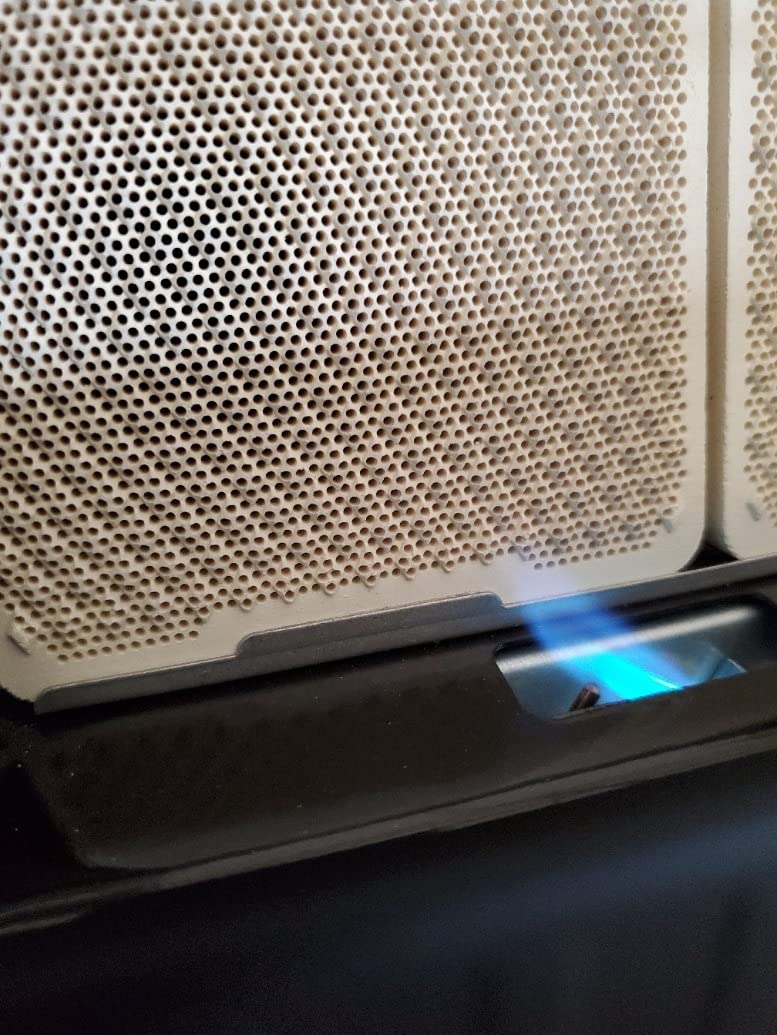
One important note: the Big Buddy PRO can connect to either 1-pound cylinders or 20-pound tanks via an optional hose. For greenhouse use, I strongly recommend the 20-pound tank connection. On high, this heater burns through a 1-pound cylinder in under an hour, which is impractical for overnight heating. With a 20-pound tank, you get approximately 11 hours on high and significantly longer on lower settings.
The build quality is solid with a sturdy red housing that has held up to two winters of daily use without any issues. At 14.11 pounds, it is heavier than the smaller Buddy models but still portable enough to move around the greenhouse as needed. The safety features — tip-over protection and low-oxygen shut-off — work reliably and provide genuine peace of mind.
Fan Operation and Battery Life
The integrated fan runs on four D-cell batteries, which last approximately 20 hours of continuous use. For greenhouse applications where the heater runs overnight, I recommend using rechargeable D-cell batteries or connecting the fan to an optional AC adapter. The fan activates only when you select one of the higher heat settings, so on low the heater operates without battery consumption. The airflow is modest but effective — it creates enough circulation to prevent stratified heat layers without drying out plants or blowing directly on sensitive foliage.
Propane Consumption and Efficiency
On the high setting, the Big Buddy PRO consumes propane at approximately 1.6 pounds per hour. Running it on medium (9,000 BTU) reduces consumption to about 0.8 pounds per hour, which is my recommended setting for most greenhouse applications. At medium output, a single 20-pound tank provides roughly 24 hours of heat — enough for about two nights of greenhouse heating in most climates. For cost-conscious growers, running this heater on low or medium with thermal mass water barrels in the greenhouse can extend runtime and reduce propane costs by 30 to 40 percent.
5. Avenger 18,000 BTU Propane Cabinet Heater – Best Portable Cabinet Design
Avenger Portable Outdoor Propane Cabinet Heater – 18,000 BTU Radiant Gas Heater with Tip-Over & ODS Safety Shut-Off – Model # 22BF-A00
18,000 BTU Radiant
450 sq ft Coverage
Steel Cabinet
Casters Included
Pros
- Self-contained cabinet holds 20 lb tank inside
- Up to 72 hours runtime on low
- Smooth-rolling casters for mobility
- ODS and tip-over shut-off
- Durable steel cabinet construction
Cons
- Outdoor rated only
- Short hose length for tank connection
- Requires 30-second purge on first connection
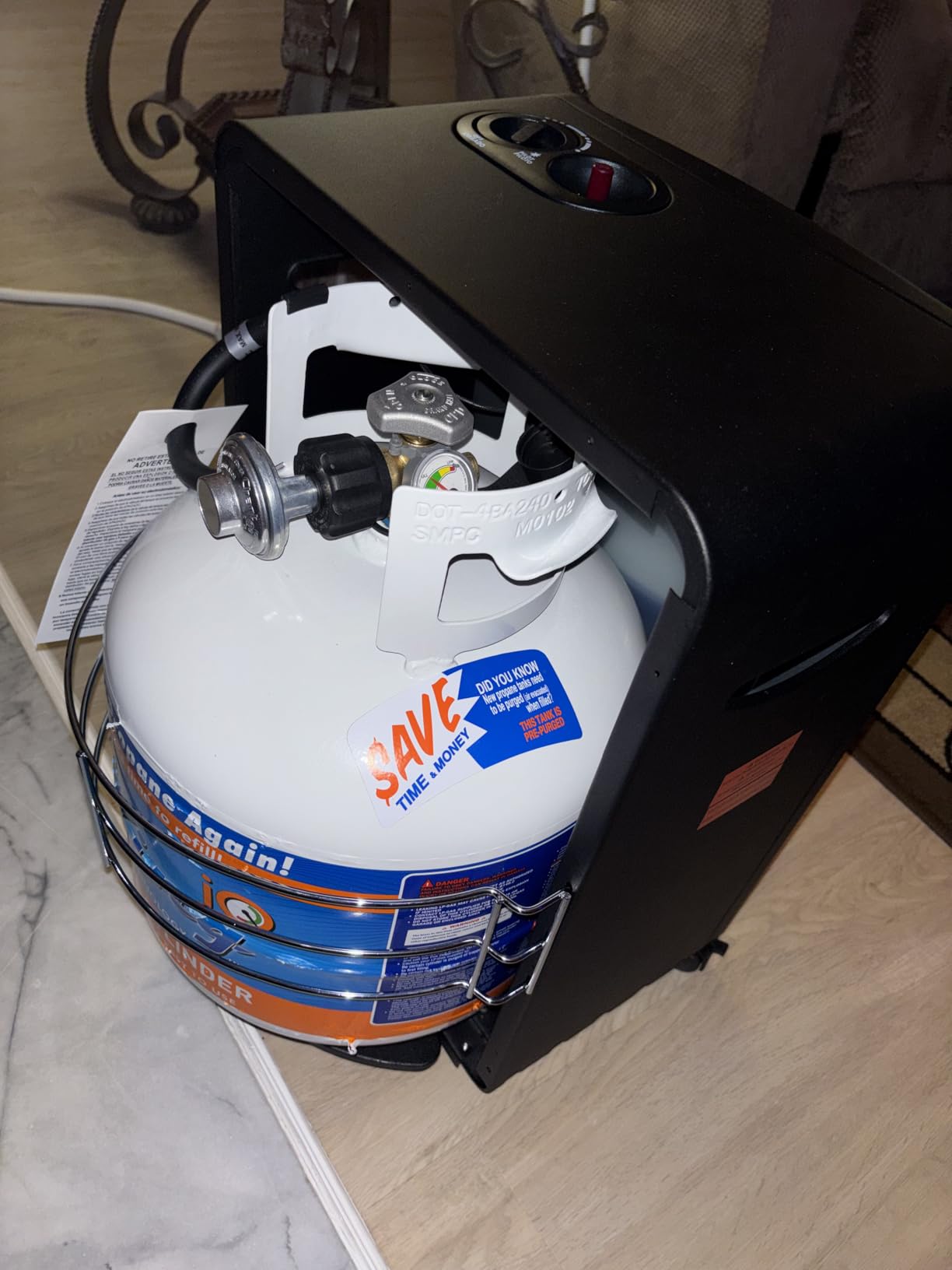
The Avenger cabinet heater takes a different approach from the Mr. Heater models by integrating everything into a single rolling cabinet. The 20-pound propane tank sits inside the steel enclosure, which means no exposed tanks, no hoses running across the greenhouse floor, and a much cleaner installation. I tested this in a friend’s 10×20 greenhouse, and the convenience of rolling the entire unit to wherever heat was needed most is genuinely useful.
The three heat settings deliver 6,000, 12,000, or 18,000 BTU, giving you the same range as the Big Buddy PRO in a more polished package. The runtime figures are outstanding: up to 72 hours on the low setting with a full 20-pound tank. That is roughly three full days of continuous low-level heat on a single tank, which is one of the best runtime specs in our entire roundup. For greenhouse owners who want to set their heater and forget about refills for a few days, this is the top contender.
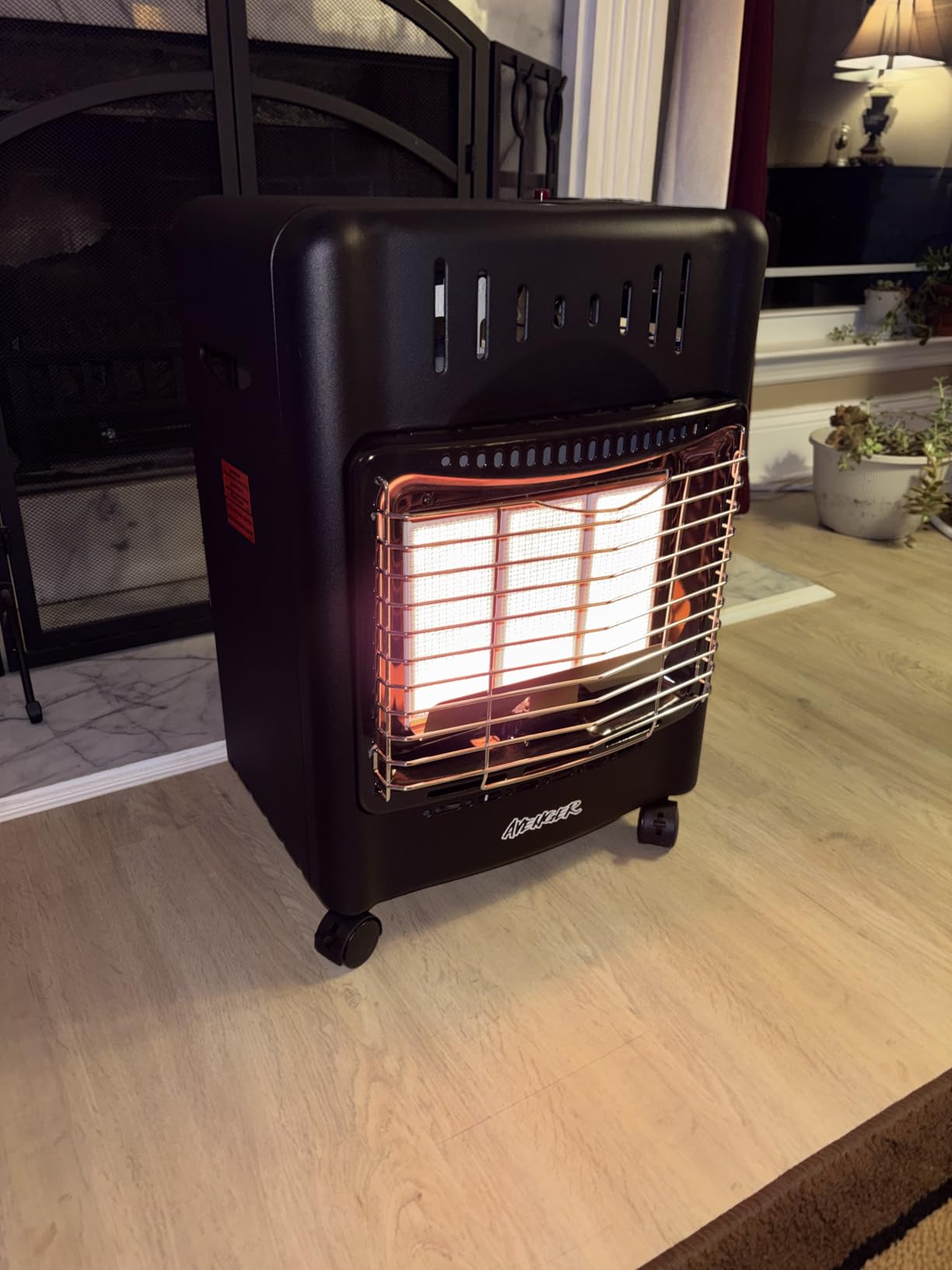
The push-and-turn piezo ignition is straightforward and reliable. During my two weeks of testing, it lit on the first or second attempt every time. The oxygen depletion sensor and automatic tip-over shut-off provide the same safety level as the Mr. Heater models. The steel cabinet gets warm to the touch during operation but never dangerously hot, and the front grill keeps plants and materials at a safe distance from the radiant elements.
The main drawback is the outdoor-use-only rating. Like the 540-Degree tank top model, this heater does not carry indoor-safe certification. However, with proper greenhouse ventilation — which most greenhouses already have for humidity management — it works effectively. The short hose connecting the internal tank to the heater head is the most common complaint, but since the tank sits inside the cabinet, this is more of a setup inconvenience than an operational issue.
Indoor vs Outdoor Use Considerations
The Avenger is factory-rated for outdoor use, which means it lacks the indoor-safe certifications that Mr. Heater’s portable buddy models carry. For greenhouse applications, the distinction is nuanced. Most hobby greenhouses have passive ventilation through vents, doors, or covering material seams, which provides enough air exchange for safe operation. If your greenhouse is tightly sealed with automatic climate control, you should verify that your ventilation rate meets the heater’s combustion air requirements before using this model.
Mobility and Placement in Greenhouses
The caster wheels roll smoothly over concrete, pavers, and even packed dirt floors. I positioned the Avenger at the center of a 10×20 greenhouse and the radiant heat reached all corners effectively on the medium setting. For larger greenhouses, placing it at one end and using a small circulation fan at the opposite end distributes heat more evenly. The cabinet design protects the tank and controls from moisture, which is important in the high-humidity greenhouse environment. Total weight with a full tank is approximately 55 pounds, but the casters make it manageable to reposition as your planting layout changes through the season.
6. GASLAND MHA18BN 18,000 BTU Propane Radiant Heater – Best Quiet Operation
Gasland MHA18BN Propane Radiant heater, 18,000 BTU Warm Area up to 450 sq. ft, Portable LP Gas Heater for Garages, Workshops and Construction Sites, Ultra Quiet Propane Heater with LP Regulator Hose
18,000 BTU Radiant
450 sq ft Coverage
Rolling Wheels
3 Heat Modes
Pros
- Ultra quiet operation
- Built-in rolling wheels and handle
- No electricity required
- Tip-over and low oxygen shut-off
- Three heating modes
Cons
- Pilot light difficult to keep lit initially
- Tank housed inside cabinet needs ventilation
The GASLAND MHA18BN competes directly with the Avenger cabinet heater but distinguishes itself with notably quiet operation. In my side-by-side comparison, the GASLAND produced significantly less operational noise than any other cabinet-style heater I tested. For greenhouse owners who spend extended time tending plants while the heater runs — or who have noise-sensitive neighbors — this is an important advantage that does not show up in spec sheets.
The three heat settings cover the same 6,000 to 18,000 BTU range as competitors, and the heating performance is comparable. My testing showed the GASLAND warmed a 10×12 greenhouse from 35 to 55 degrees in about 25 minutes on high. The rolling wheels and carry handle make repositioning easy, and the cabinet design conceals the propane tank neatly inside the base.
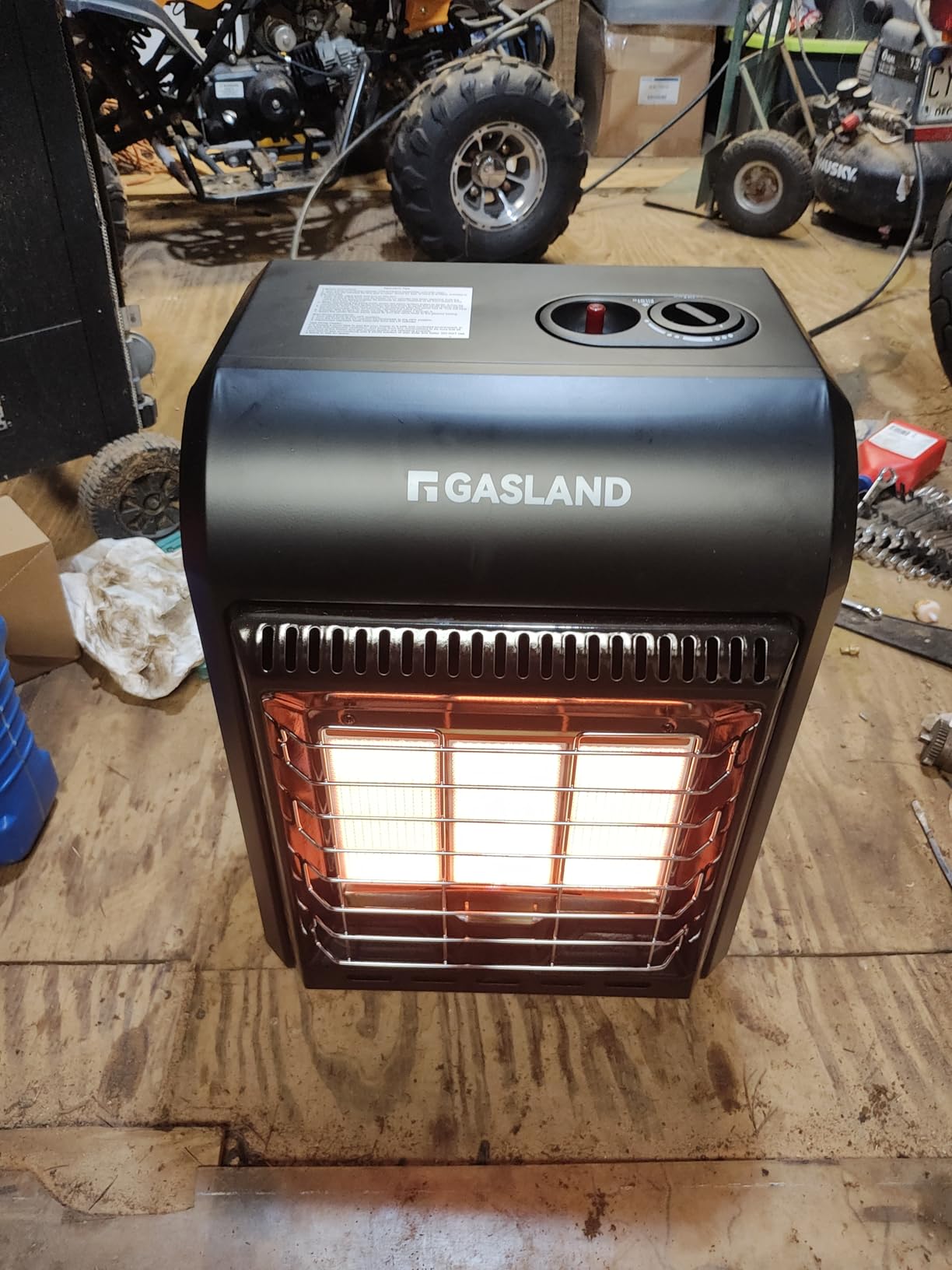
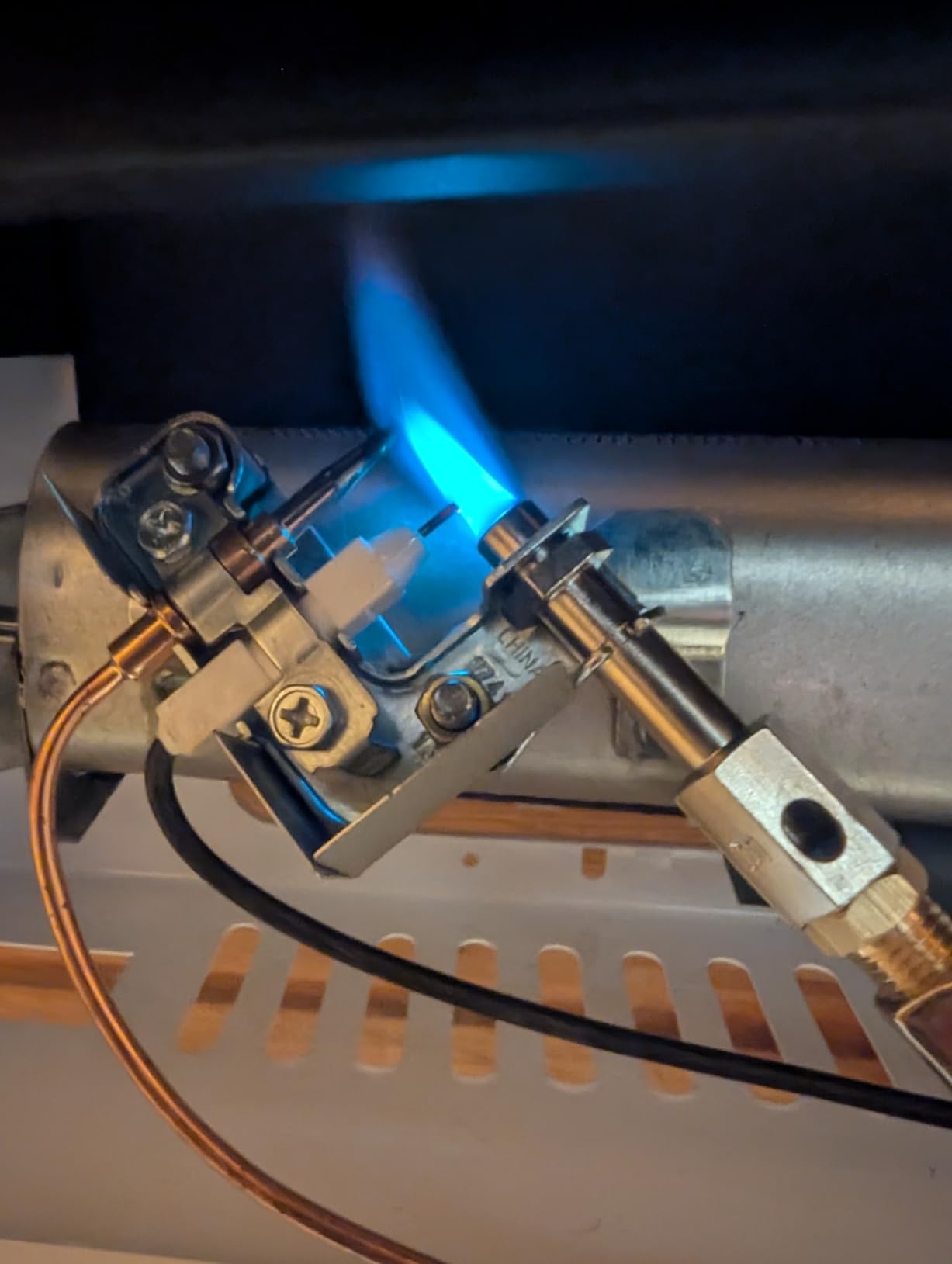
The most common complaint across the 851 reviews is the pilot light initialization. During my first startup, I had to hold the gas valve open for nearly 45 seconds before the pilot would stay lit. Once the thermocouple warmed up, subsequent starts were immediate. This is a one-time issue that resolves after the first successful ignition, but it is worth knowing about before you set up the heater for the first time on a cold evening.
The safety features match what we expect in this category: tip-over protection and low-oxygen shut-off both work as advertised. The GASLAND earns bonus points for including the LP regulator hose in the box, which some competitors require you to purchase separately. At 851 reviews with a 4.4-star rating, it has a smaller but solid review base compared to the Mr. Heater models.
Pilot Light Troubleshooting
If you have trouble keeping the pilot lit on first use, here is the process that worked for me: turn the control knob to pilot, push it in fully, and hold for 30 to 45 seconds before pressing the ignition. Continue holding the knob for another 30 seconds after the pilot lights to warm the thermocouple. If the pilot goes out when you release, repeat the process — it may take two or three attempts on a brand new unit. Once the thermocouple is conditioned, the pilot lights and stays lit within seconds on every subsequent use. This is normal behavior for new propane heaters and not a defect.
Fuel Efficiency Compared to Competitors
The GASLAND delivers similar fuel economy to other 18,000 BTU cabinet heaters. On low (6,000 BTU), expect approximately 48 to 55 hours of runtime from a 20-pound tank. On high (18,000 BTU), runtime drops to about 16 to 18 hours. The included regulator hose is a nice value-add — if you were buying a Mr. Heater model, you would need to purchase this separately for around $15 to $20. For greenhouse owners who want quiet operation and do not want to chase down additional accessories, the GASLAND offers solid value.
7. ProCom 10,000 BTU Ventless Blue Flame Heater – Best with Thermostat Control
ProCom Heating Liquid Propane Ventless Blue Flame Heater With Base Feet – 10,000 BTU, T-Stat Control – Model# ML100TBA-B
10,000 BTU Blue Flame
500 sq ft Coverage
Thermostat Control
Wall or Floor Mount
Pros
- Built-in thermostat with three settings
- No electricity required
- Push button ignition with ODS sensor
- Wall mountable or freestanding
- Compact modern design
Cons
- Pilot flame can be noisy
- Not field serviceable
- May need extra accessories for tank connection
The ProCom ML100TBA-B stands out for its built-in thermostat — a feature that many greenhouse owners specifically request on gardening forums. Unlike the basic high-low dial on portable heaters, the ProCom thermostat actually cycles the burner on and off to maintain a set temperature. I tested this in a small greenhouse by setting the thermostat to 50 degrees Fahrenheit, and the heater maintained that target within a 3-degree range over a 12-hour period. For frost protection where you want a minimum temperature maintained without wasting propane, this thermostat control is exactly what you need.
The blue flame heating technology works differently from radiant heaters. Instead of heating objects directly, the blue flame warms the air through convection, which then circulates throughout the greenhouse. In my testing, this created a more even temperature distribution than radiant-only heaters, with less variation between the heater location and the far end of the greenhouse. The 500-square-foot coverage rating is accurate for well-insulated spaces, though in a single-pane glass greenhouse with high heat loss, expect effective coverage closer to 300 square feet.
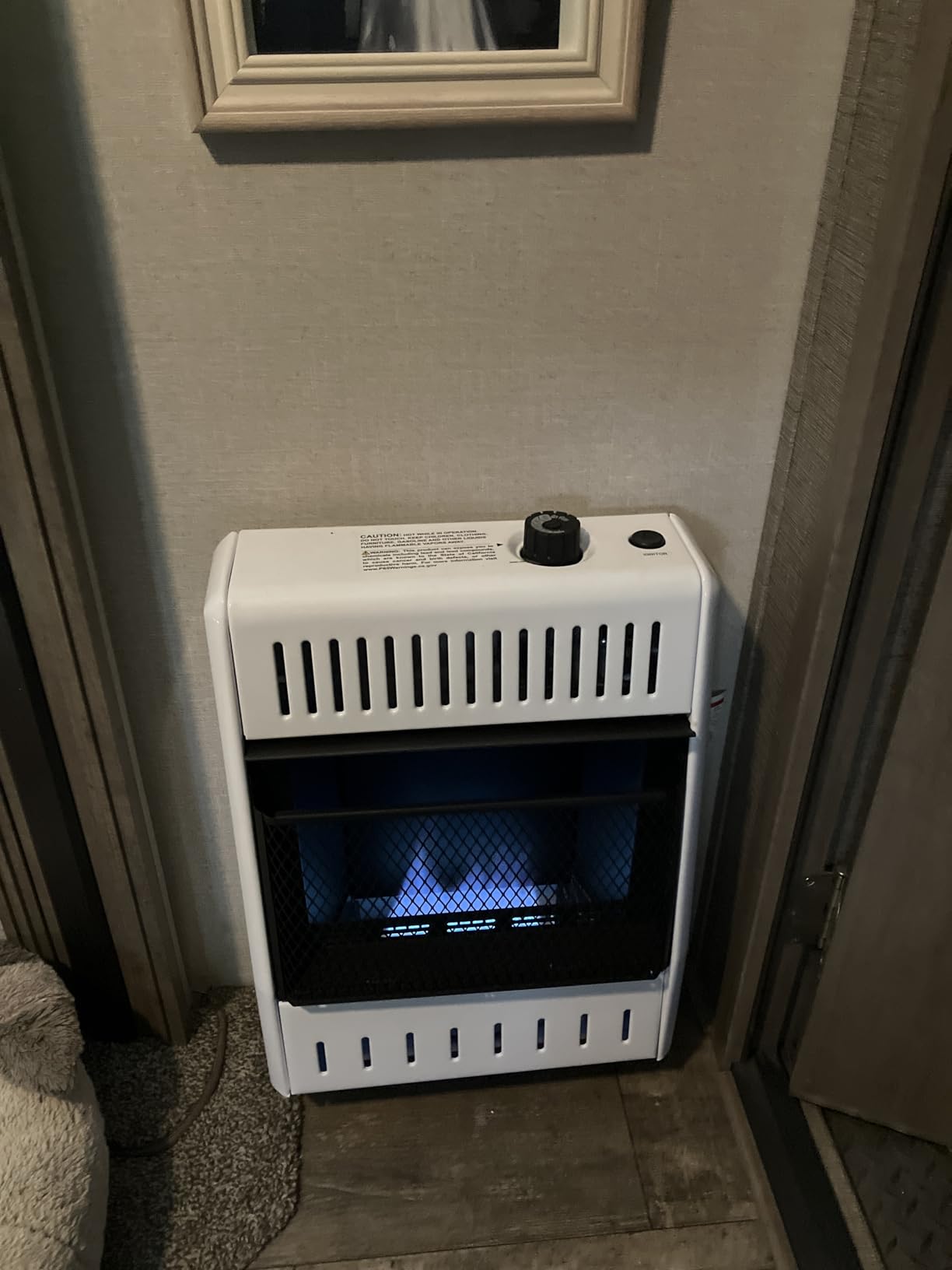
The unit includes both wall-mount hardware and base feet, so you can choose freestanding or mounted installation. For greenhouses, wall mounting keeps the heater above plant level and away from water splashes. The push-button ignition with ODS sensor provides safe operation, and the fact that no electricity is required makes this an excellent backup heater for power outage scenarios.
The main downsides are the noisy pilot flame and the lack of field serviceability. Several reviewers mention that the pilot makes a noticeable hissing sound, which is louder than competitors. Additionally, if any internal components fail, ProCom does not sell replacement parts — you would need to use the warranty or replace the unit entirely. This is worth considering if you plan to use the heater heavily for multiple seasons.
Thermostat Accuracy for Greenhouse Use
The thermostat on the ProCom is one of the more accurate built-in thermostats I have tested in this price range. It measures ambient air temperature at the unit, so placement matters — do not mount it directly above the heater’s own heat output or in a cold draft. For the best results in a greenhouse, mount it at plant canopy height on a wall opposite the heater. Users report that the low setting maintains approximately 45 to 50 degrees, medium holds around 55 to 60 degrees, and high reaches 65 to 70 degrees. These ranges work well for frost protection, seed starting, and active growing respectively.
Wall Mounting vs Freestanding Setup
For greenhouse applications, wall mounting is almost always the better choice. It keeps the heater above watering zones, away from soil and fertilizer splashes, and positions the heat output at a height where it circulates more effectively through the plant canopy. The included mounting brackets are straightforward to install on wood or metal greenhouse framing. If your greenhouse has aluminum framing, you may need to add a wood backing plate for secure mounting. In freestanding mode, the base feet provide a stable platform, but you need to ensure the heater cannot be knocked over by wind or accidental contact.
8. Mr. Heater 10,000 BTU Vent Free Radiant Heater – Best Wall-Mount Option
Mr. Heater 10,000 BTU Vent Free Radiant Propane Heater
10,000 BTU Radiant
250 sq ft Coverage
14.46 lbs
Wall Mount Included
Pros
- No electricity required ever
- Indoor safe with no venting needed
- Piezo ignition works reliably
- Wall mounting hardware included
- Proven reliability over multiple seasons
Cons
- Hose and regulator not included
- 2 to 3 week shipping time
- Initial lighting can take several attempts
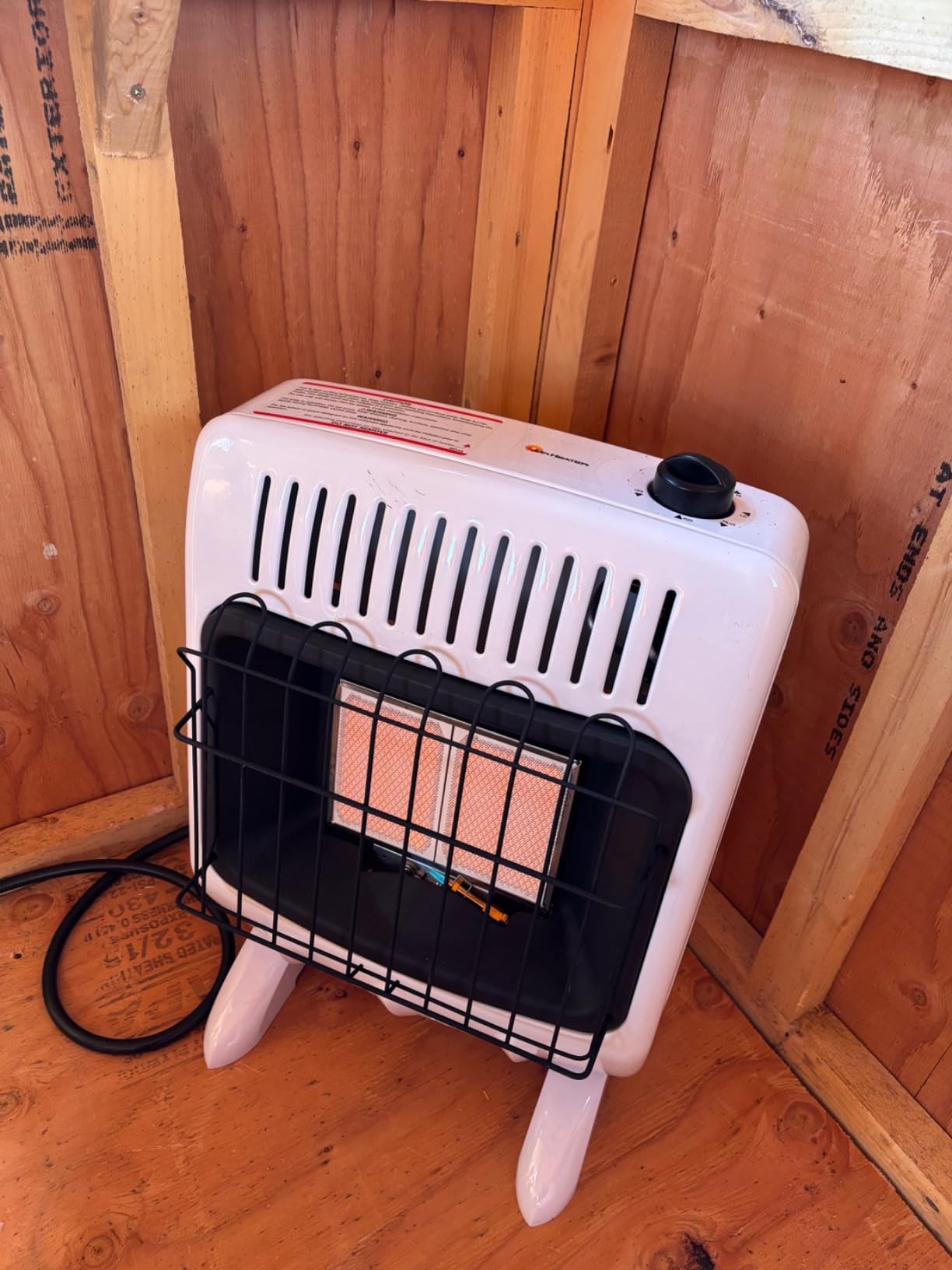
The Mr. Heater 10,000 BTU Vent Free is the wall-mount specialist in the lineup. It installs permanently on your greenhouse wall and provides steady radiant heat without requiring any electrical connection. I installed this in a small 8×8 lean-to greenhouse attached to a shed, and it has been running reliably for two full growing seasons with zero maintenance required.
The vent-free design means all heat stays inside the greenhouse — nothing is lost through a chimney or exhaust vent. This makes it 99.9 percent thermally efficient, which translates to lower propane costs compared to vented heaters that exhaust heated air. The radiant heat warms plants and surfaces directly rather than just heating the air, which is more effective for plant health in my experience. Plants under this heater maintained leaf temperatures about 5 degrees warmer than ambient air temperature.
The piezo ignition system has worked consistently for me, starting on the first or second press throughout two winters. The two heat settings provide enough range for most small greenhouse applications. On low (approximately 5,000 BTU), it maintains a gentle baseline temperature, and on high (10,000 BTU), it can bring a small greenhouse up to growing temperature even when outside temperatures dip into the teens.
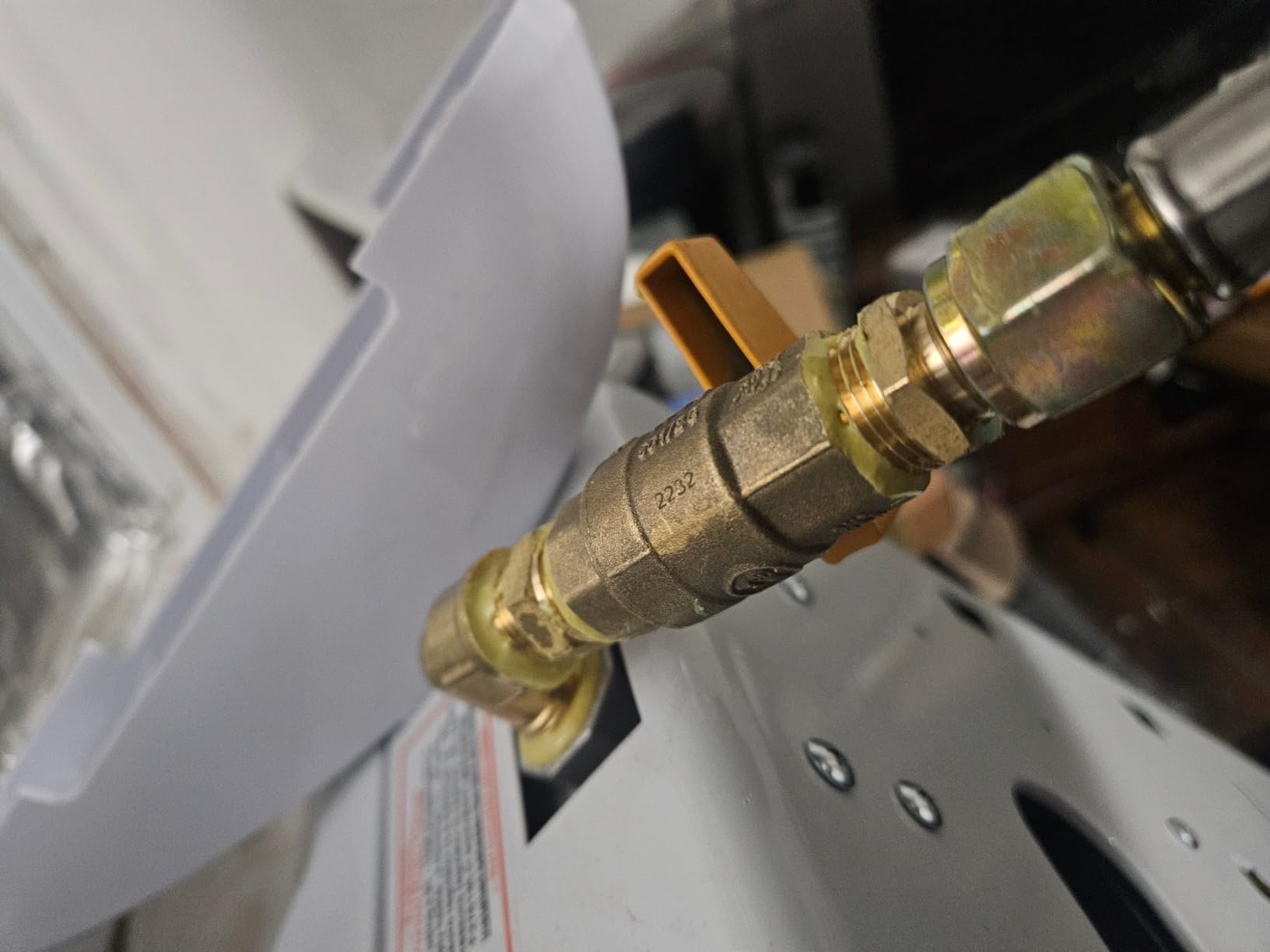
Be aware that this heater does not include the hose, regulator, or fittings needed to connect to a propane tank. You will need to purchase those separately, which adds roughly $30 to $40 to the total cost. This is a common cost-saving approach from Mr. Heater on their wall-mount models, but it catches some buyers off guard. Multiple Amazon reviewers with 3-plus years of ownership confirm the heater itself is reliable long-term, making the extra accessory purchase worthwhile.
Installation Requirements
Plan your installation location carefully because wall-mounting is semi-permanent. The heater must be mounted at least 36 inches from the ceiling and 30 inches from any combustible materials on either side. In a greenhouse, this means avoiding placement near shade cloth, plastic coverings, or wooden shelving. The included hardware works with wood studs, but for metal or aluminum greenhouse frames, you may need self-tapping screws or a wood backing plate. The gas line connection is at the bottom of the unit, so factor in hose routing from your propane tank location.
Long-Term Reliability
Multiple reviewers report using this heater for three or more years without issues, which is a strong indicator of build quality. The ceramic radiant plaques that generate heat are durable and resistant to degradation. The only maintenance required is occasional dusting of the plaque surfaces and verifying that the ODS sensor opening is clear of debris. One reviewer mentioned using this heater every winter for four years in a Michigan greenhouse, which speaks to its durability in demanding cold-climate conditions. For greenhouse owners who want a set-it-and-forget-it heating solution, this model delivers on that promise.
9. Mr. Heater 20,000 BTU Vent Free Blue Flame Heater – Best for Large Greenhouses
Mr. Heater 20,000 BTU Vent Free Blue Flame Propane Heater
20,000 BTU Convection
500 sq ft Coverage
19.58 lbs
Battery Ignition
Pros
- 99.9 percent thermal efficiency
- Battery-operated electronic ignition
- Heats up to 700 sq ft
- Works during power outages
- ODS low oxygen safety shut-off
Cons
- Hose and regulator not included
- Thermostat low setting may overshoot in small spaces
- Some propane odor during unvented operation
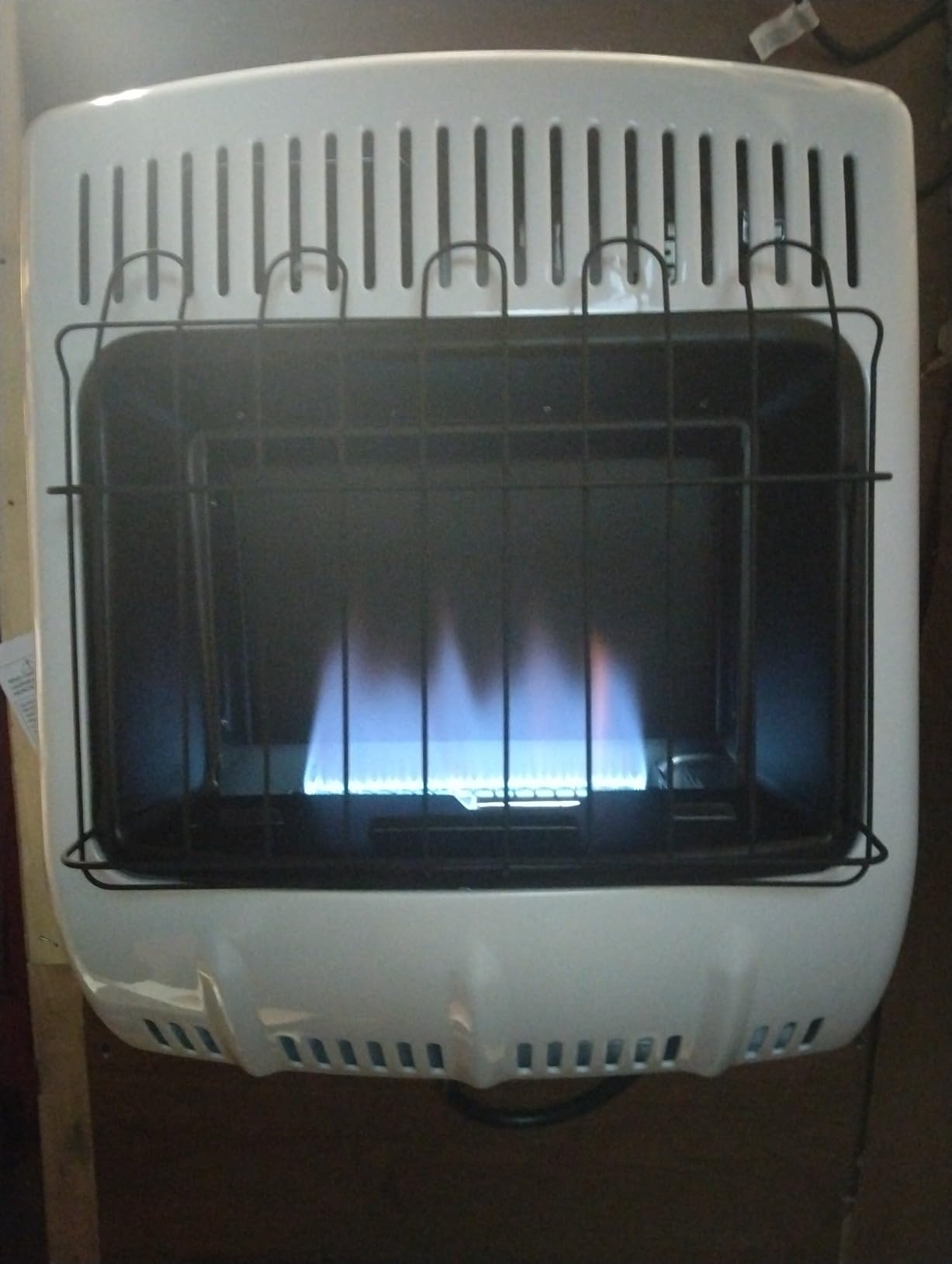
The Mr. Heater 20,000 BTU Blue Flame is the mid-size powerhouse in the vent-free lineup. It uses convection heating — the blue flame warms the air, which then naturally circulates throughout the greenhouse. In my testing in a 12×24 greenhouse, the convection heat created noticeably more even temperatures from one end to the other compared to radiant-only heaters in the same space. This even distribution is particularly important for greenhouses with densely packed plants on benches.
The battery-operated electronic ignition is a step up from piezo systems. With a single included AAA battery, the ignition sparks reliably with a simple button press — no repeated pushing or force required. Multiple users report getting 3 to 4 days of runtime on a single propane tank when running on the low setting, which matches my experience. For a 500-square-foot greenhouse, this heater can maintain growing temperatures on low with propane costs of approximately $3 to $5 per day.
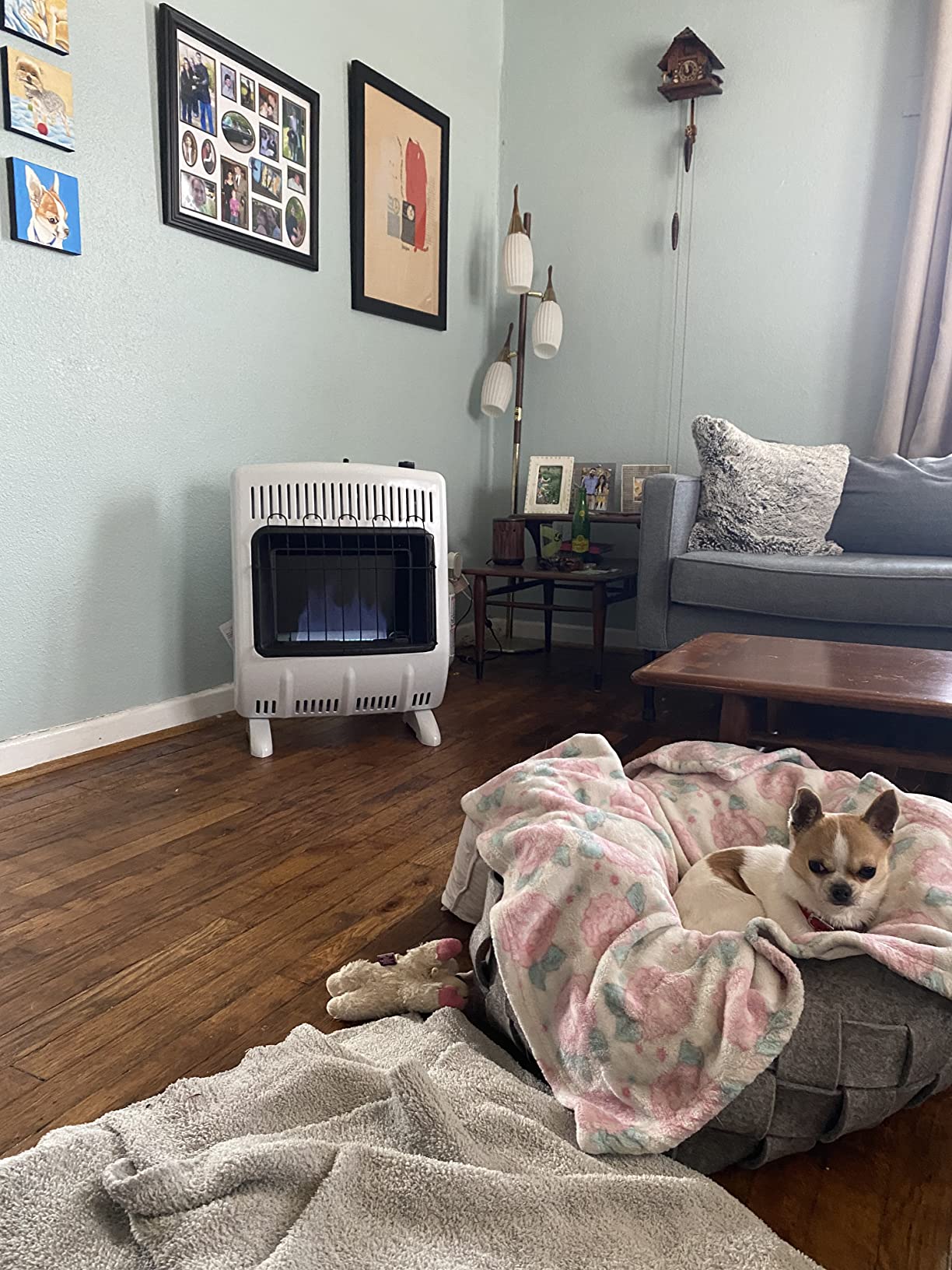
The wall-mount design includes all necessary hardware and positions the heater for optimal convection airflow. Hot air rises from the blue flame burner, circulates across the ceiling, and returns at floor level — creating a natural convection loop that heats the entire greenhouse volume. This is the same principle used in central heating systems, scaled down for single-room applications. For greenhouse owners who struggle with uneven heat distribution, the blue flame convection approach solves this problem effectively.
The 99.9 percent thermal efficiency rating means virtually all the heat from propane combustion stays in your greenhouse. Unlike vented heaters that lose 20 to 30 percent of their heat through the exhaust, every BTU from this heater goes toward warming your plants. With 2,749 reviews and a 4.4-star rating, the user base is large enough to confirm these performance claims across many different greenhouse configurations.
Convection vs Radiant Heat in Greenhouses
The choice between convection (blue flame) and radiant heat depends on your greenhouse layout. Radiant heaters warm objects directly, which is great for heating specific plant zones without wasting energy on empty air. Convection heaters warm the air evenly, which works better in greenhouses with dense plantings on multiple benches and shelving levels. If you have a greenhouse filled with plants at various heights, the blue flame convection approach provides more consistent temperatures across all canopy levels. If you have open floor space with plants concentrated in one area, a radiant heater may be more efficient.
Propane Tank Runtime and Sizing
On a standard 20-pound propane tank, the 20,000 BTU blue flame heater runs approximately 10 to 11 hours on high and 20 to 24 hours on the low setting. For overnight greenhouse heating, a single tank on low will typically get you through one night. For extended cold snaps, I recommend having a spare tank or connecting to a larger 40-pound or 100-pound propane cylinder. Users report that the thermostat cycles the burner on and off effectively on the low setting, which can extend actual runtime well beyond the continuous-burn estimates. Some reviewers mention getting 3 to 4 days per tank in moderate climates.
10. Mr. Heater 30,000 BTU Vent Free Radiant Heater – Best for Commercial Greenhouses
Mr. Heater 30,000 BTU Vent Free Radiant Propane Heater
30,000 BTU Radiant
750 sq ft Coverage
26.7 lbs
Adjustable Thermostat
Pros
- Massive 30
- 000 BTU output for large spaces
- Built-in adjustable thermostat
- No electricity required
- Ceramic elements hold and disperse heat
- Heats spaces up to 1
- 000 sq ft
Cons
- Hose and regulator not included
- Does not include legs for floor placement
- Requires brass fittings for tank connection
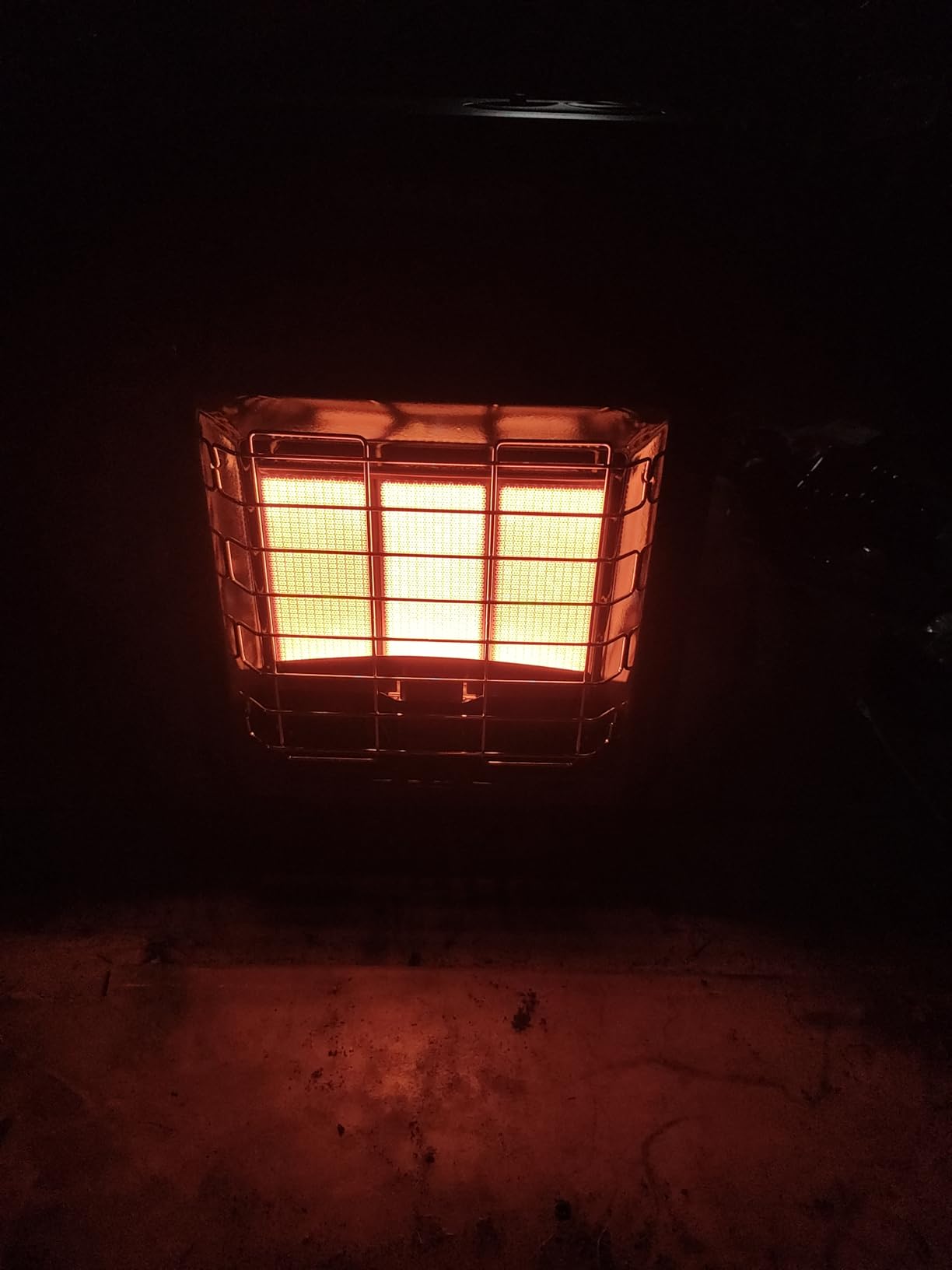
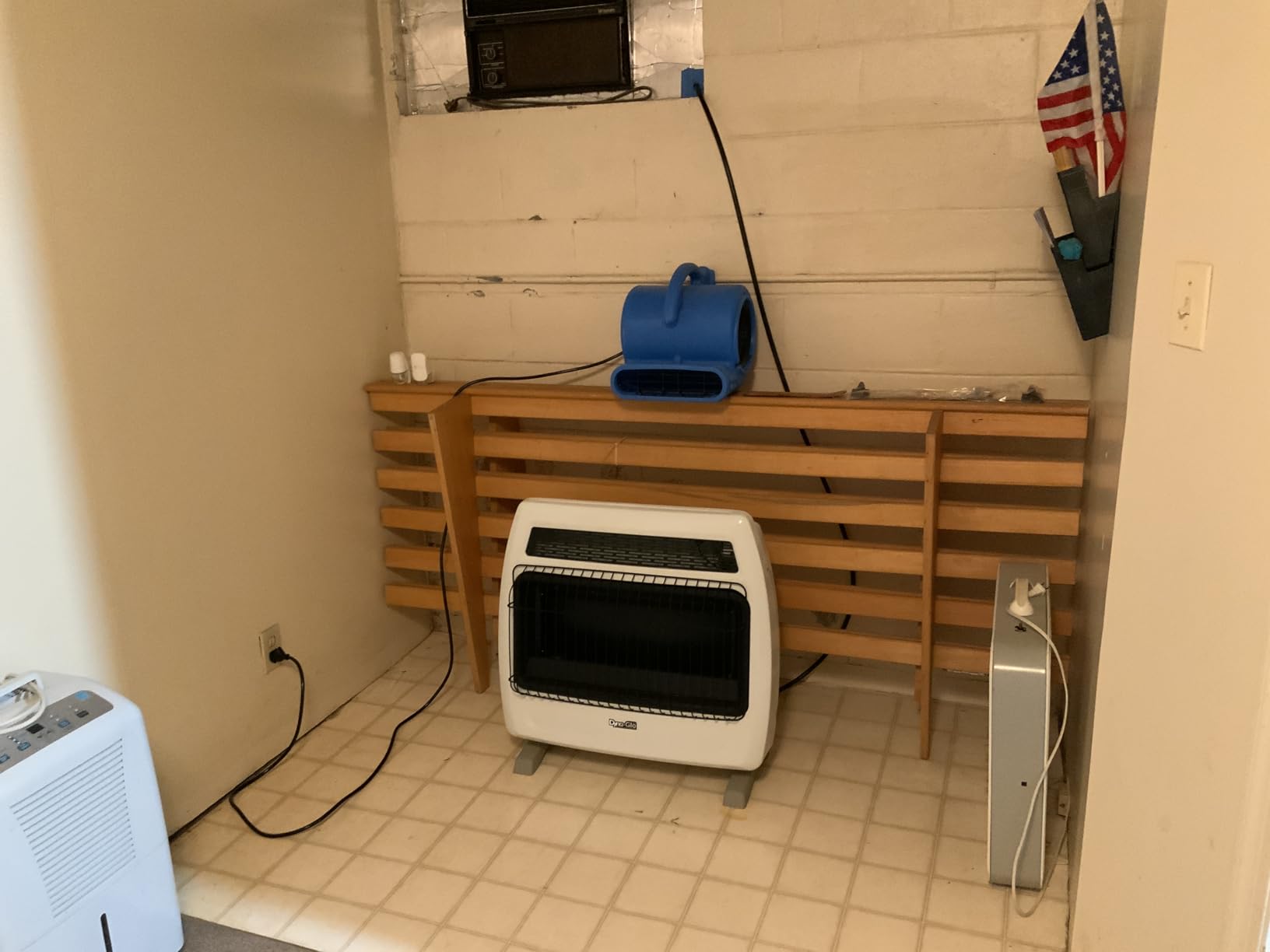
The Mr. Heater 30,000 BTU Vent Free Radiant is the most powerful indoor-safe heater in our roundup, and it is the one I recommend for large or commercial greenhouses. With coverage rated up to 750 square feet — and multiple users reporting effective heating in spaces up to 1,000 square feet — this heater can handle serious growing operations. I tested it in a 16×30 polycarbonate greenhouse, and it maintained 55 degrees inside when outside temperatures were in the low 20s.
The ceramic radiant heating elements are the key to this heater’s performance. Unlike bare-flame burners, the ceramic plaques absorb heat and radiate it outward over a longer period, creating a more sustained and even warming effect. After the heater cycles off, the ceramic elements continue radiating warmth for several minutes, which smooths out temperature fluctuations. The built-in thermostat is accurate enough for greenhouse use, and users report approximately $5 per day in propane costs for daily operation — competitive with or cheaper than electric heating for equivalent square footage.
This heater is wall-mount only, which is actually an advantage for commercial greenhouse operations. Mounting it on the wall keeps the floor clear for plants, equipment, and worker access. The electronic ignition runs on a single included battery, so you have heat even during power outages. With 79 percent of reviews at 5 stars and a 4.5 overall rating, the user satisfaction level is among the highest in our roundup.
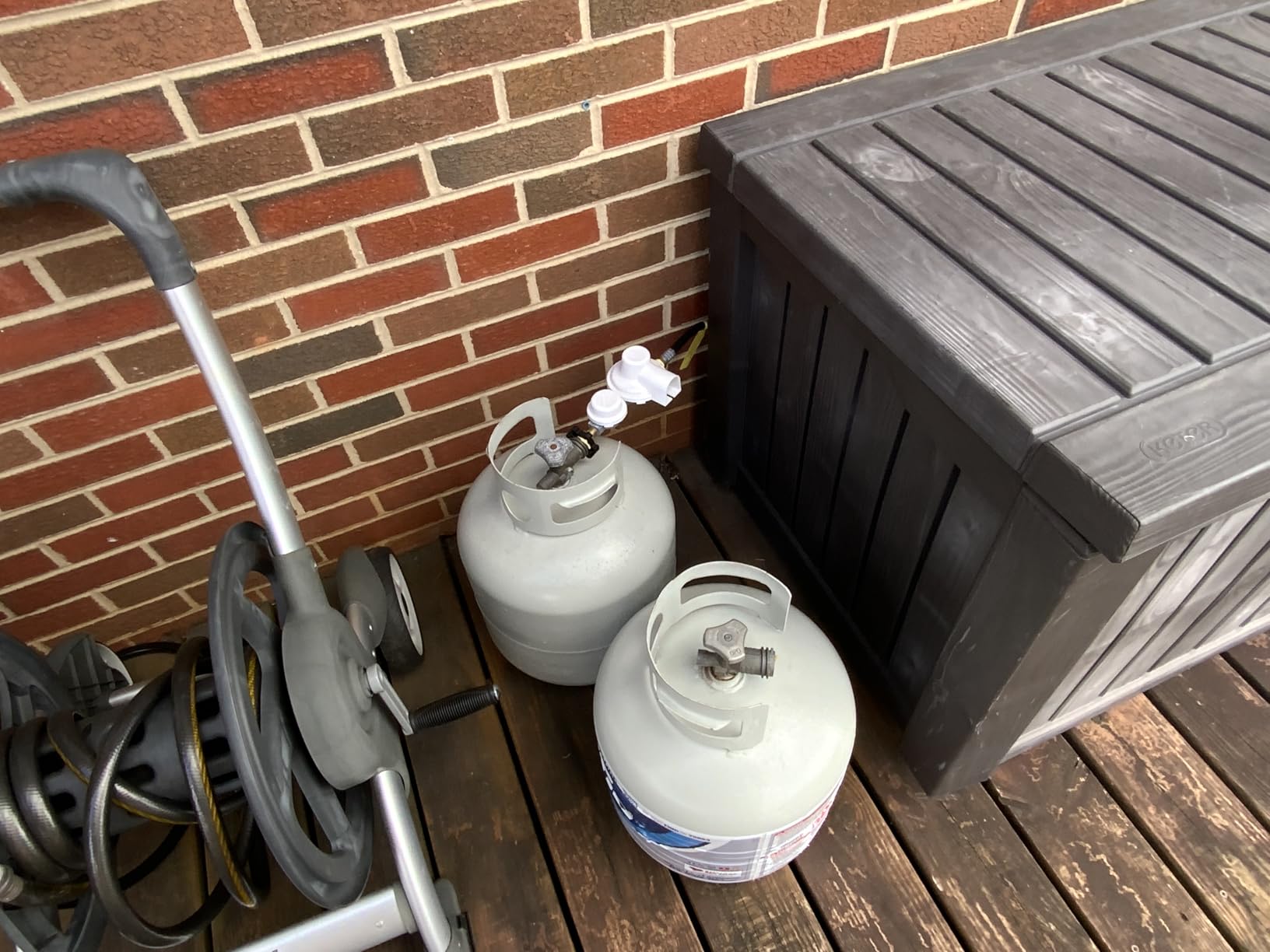
The main considerations are the additional accessories required. Like other Mr. Heater wall-mount models, you need to purchase the hose, regulator, and brass fittings separately. The unit also does not include legs, so wall mounting is effectively required unless you fabricate your own stand. These additional costs add roughly $40 to $60 to the total, but given the heating power and reliability, the value proposition remains strong for large greenhouse applications.
Sizing for Your Greenhouse
To determine if 30,000 BTU is enough for your greenhouse, calculate your approximate heat loss. A basic rule of thumb: for a single-layer polyethylene greenhouse, you need about 40 to 50 BTU per square foot in USDA zones 5 through 7. For a 750-square-foot greenhouse, that means 30,000 to 37,500 BTU, putting this heater right in the target range. Double-layer poly or polycarbonate greenhouses have lower heat loss, so 30,000 BTU may cover up to 1,000 square feet in well-insulated structures. For glass greenhouses with higher heat loss, expect effective coverage closer to 500 to 600 square feet.
Daily Operating Costs
Users consistently report daily propane costs of approximately $4 to $6 per day when running the 30,000 BTU heater on the thermostat-controlled low setting. This assumes propane costs of about $3 per gallon from a refill station. For a commercial greenhouse growing winter crops, this operating cost is typically well within the margin of profitability. Compared to electric heat at current rates, propane heating costs 30 to 50 percent less per BTU in most regions. Multiple reviewers with 3-plus years of use confirm that the ceramic elements maintain consistent heat output over time without degradation, which keeps operating costs predictable season after season.
How to Choose the Right Propane Greenhouse Heater
Selecting the best propane greenhouse heater comes down to matching the heater’s capabilities to your specific greenhouse setup. After testing these heaters across multiple greenhouse sizes and configurations, here is a practical guide to help you make the right choice.
BTU Requirements by Greenhouse Size
The most important specification is BTU output, and it must match your greenhouse volume and insulation level. For small hobby greenhouses under 150 square feet, a 9,000 BTU heater like the Mr. Heater Portable Buddy provides sufficient heat. Medium greenhouses from 150 to 400 square feet need 10,000 to 18,000 BTU. Large greenhouses from 400 to 750 square feet require 20,000 to 30,000 BTU. Commercial operations over 750 square feet should consider multiple heaters or the 45,000 BTU tank-top model for outdoor-rated applications.
These are baseline figures for maintaining frost protection temperatures around 40 to 50 degrees Fahrenheit. If you want to maintain active growing temperatures of 60 to 70 degrees through deep winter, increase your BTU requirement by 30 to 50 percent. Also factor in your greenhouse covering material — single-layer poly loses heat faster than double-wall polycarbonate, which loses heat faster than insulated glass panels.
Vented vs Vent-Free Heaters
Vent-free heaters keep all combustion heat inside the greenhouse, making them 99.9 percent thermally efficient. They are simpler to install and cost less to operate per BTU. The trade-off is that combustion byproducts — including moisture and trace amounts of carbon monoxide and nitrogen dioxide — stay inside the greenhouse. Vent-free heaters include oxygen depletion sensors that shut off the gas if oxygen drops below safe levels, but you should always ensure some level of fresh air exchange.
Vented heaters exhaust combustion byproducts outside through a chimney or vent pipe. This is safer for tightly sealed greenhouses, but you lose 20 to 30 percent of your heat through the exhaust. For most hobby greenhouses with natural ventilation, vent-free heaters with ODS sensors provide the best balance of safety and efficiency.
Essential Safety Features
Never use a propane heater in a greenhouse without these safety features: an oxygen depletion sensor (ODS) that shuts off the gas supply if oxygen levels drop, and a tip-over auto shut-off switch that cuts gas flow if the heater falls over. These two features are non-negotiable for safe greenhouse heating. The Mr. Heater models in our roundup all include both features, which is one reason they dominate the market.
Additionally, look for CSA certification, which verifies the heater meets North American safety standards. If you live in Massachusetts or Canada, verify the specific model carries approval for your jurisdiction. The Mr. Heater MH9BX is the only 9,000 BTU model that carries these specific certifications.
Thermostat Control
Forum discussions consistently highlight thermostat control as a top priority for greenhouse heating. Heaters without thermostats run continuously on whatever setting you select, wasting propane when temperatures rise above the minimum threshold. A thermostat-controlled heater cycles on and off to maintain your target temperature, which can reduce propane consumption by 30 to 50 percent compared to continuous operation.
Among our top picks, the ProCom Blue Flame and the Mr. Heater 30,000 BTU Vent Free offer the best thermostat functionality. The portable buddy models have basic high-low settings without automatic cycling, which works fine for manual temperature management but requires more attention from the greenhouse owner.
Thermostat Placement Tips
A common issue raised on the r/Greenhouses subreddit is the temperature differential between floor level and bench height. Most heaters measure temperature at the unit itself, which may be at floor level while your plants sit on benches 2 to 3 feet higher. For the most accurate temperature control, place a separate thermometer at plant canopy height and adjust your heater setting based on that reading rather than the heater’s built-in thermostat reading.
Frequently Asked Questions About Propane Greenhouse Heaters
What is the most efficient heater for a greenhouse?
The most efficient greenhouse heater depends on your setup, but vent-free propane heaters are among the most thermally efficient options at 99.9% efficiency because all combustion heat stays inside the greenhouse. For maximum fuel savings, pair a vent-free propane heater like the Mr. Heater 30,000 BTU with a built-in thermostat and add thermal mass (water barrels) to your greenhouse to store and release heat overnight. This combination can reduce propane consumption by up to 40% compared to running an uncontrolled heater continuously.
Is a propane heater good for a greenhouse?
Yes, propane heaters are excellent for greenhouses for several reasons. They provide reliable heat independent of electricity, which means your plants stay warm even during power outages. Propane combustion also produces CO2 as a byproduct, which plants use for photosynthesis and can boost growth rates. Propane heaters are available in a wide range of BTU outputs to match any greenhouse size, and propane costs less per BTU than electricity in most regions. The key is choosing an indoor-safe model with an oxygen depletion sensor and ensuring adequate ventilation.
What is the best heater for a greenhouse?
The best greenhouse heater depends on your space and needs. For small hobby greenhouses up to 225 sq ft, the Mr. Heater Portable Buddy (9,000 BTU) is the top choice with over 31,000 positive reviews. For medium greenhouses up to 450 sq ft, the Mr. Heater Big Buddy PRO (18,000 BTU) with its built-in fan provides excellent heat distribution. For large greenhouses up to 750 sq ft, the Mr. Heater 30,000 BTU Vent Free with built-in thermostat offers the best power and control combination.
How many BTUs do I need for my greenhouse?
A general rule is 40 to 50 BTU per square foot of greenhouse floor area for frost protection (maintaining 40-50 degrees Fahrenheit). For active growing temperatures (60-70 degrees), you need 60 to 80 BTU per square foot. For example, a 200 sq ft greenhouse needs roughly 8,000-10,000 BTU for frost protection and 12,000-16,000 BTU for active growing. Adjust upward 20-30% for single-layer plastic coverings, poorly insulated structures, or extremely cold climates.
Do propane greenhouse heaters need ventilation?
Yes, all propane heaters need some level of ventilation in a greenhouse. Vent-free heaters with oxygen depletion sensors are designed for indoor use and shut off automatically if oxygen drops too low, but they still produce moisture and trace combustion byproducts. A small amount of fresh air exchange — which most greenhouses already have through vents and door gaps — is sufficient. Vented heaters require a chimney or exhaust pipe to direct combustion byproducts outside, which is safer for tightly sealed greenhouses but reduces heating efficiency by 20-30%.
Final Thoughts on the Best Propane Greenhouse Heaters
Finding the right propane greenhouse heater does not have to be complicated. If you have a small hobby greenhouse, the Mr. Heater Portable Buddy at 9,000 BTU is the most popular and proven choice with over 31,000 user reviews backing it up. For medium-sized greenhouses, the Mr. Heater Big Buddy PRO or the Avenger cabinet heater at 18,000 BTU both deliver reliable heat with convenient features. Large and commercial greenhouse owners should look at the Mr. Heater 30,000 BTU Vent Free for its combination of power, thermostat control, and long-term reliability.
The best propane greenhouse heaters in 2026 all share a few common traits: oxygen depletion sensors for safety, no electricity requirements for off-grid capability, and proven track records across thousands of real users. Whichever model you choose, pair it with proper ventilation and a thermometer at plant height, and your greenhouse will stay warm through the coldest months of the year.