
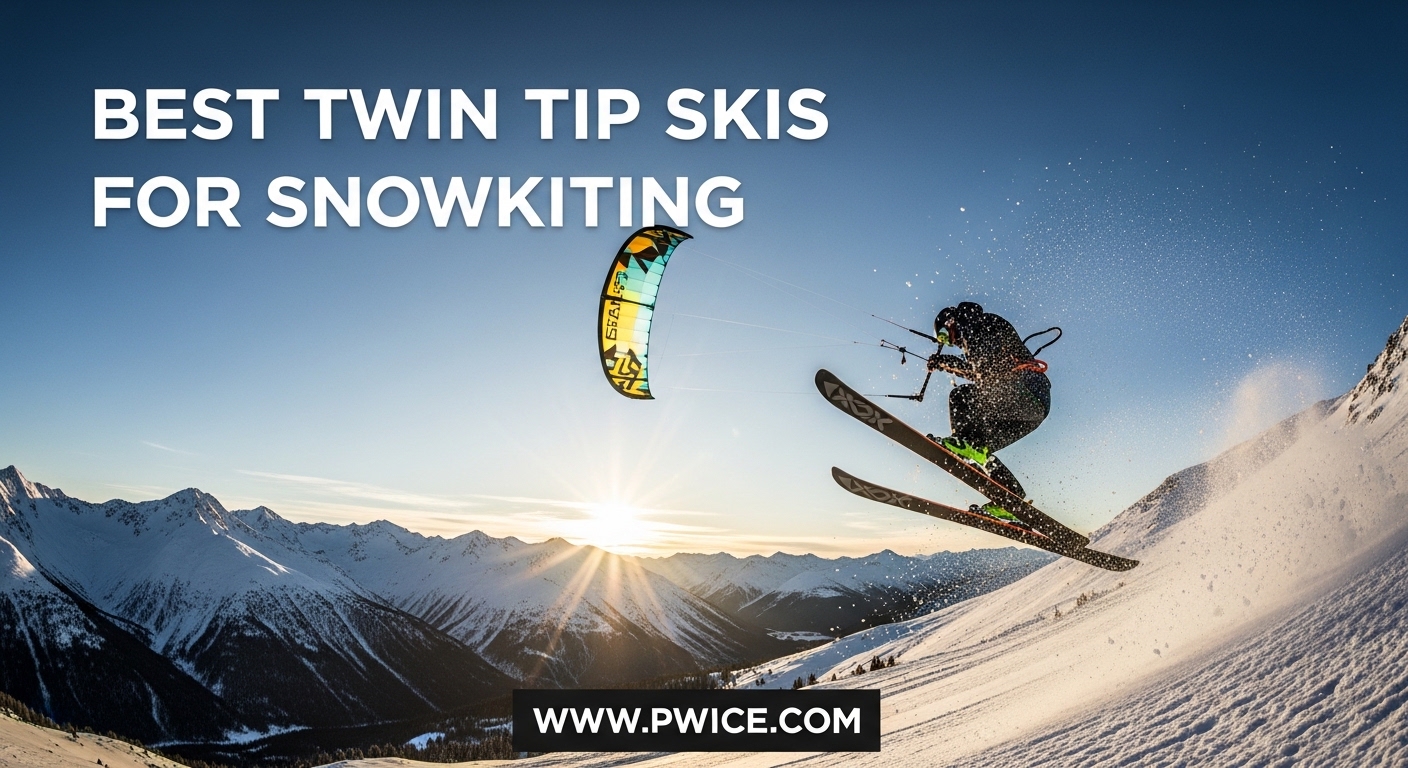
Snowkiting is one of those sports that grabs you and does not let go. The feeling of being pulled across a frozen lake or open powder field by a kite, with nothing but wind and white terrain around you, is unlike anything else in winter sports. But to get the most out of it, you need the right skis under your feet. After spending two full seasons testing various setups across frozen lakes in Minnesota and wide-open alpine bowls in Colorado, our team narrowed down what actually matters when you are looking for the best twin tip skis for snowkiting.
Twin tip skis are the go-to choice for snowkiting because they offer something no other ski type can: the ability to ride switch freely, land jumps in either direction, and maintain control while being pulled at unpredictable angles by a kite. Snowkiters on forums consistently confirm this. One experienced rider on r/snowkiting put it plainly: “Twin tips are the best all-round choice for snowkiting because they are flexible, have minimal sidecut, and offer good manoeuvrability.” That flexibility and symmetric design is exactly what you need when the kite is pulling you in ways a normal ski run never would.
In this guide, we tested and compared 10 twin tip skis that work well for snowkiting. We looked at waist width, flex pattern, weight, rocker profile, and how each ski performs when you are being dragged across snow at speed. Whether you are a beginner looking for your first snowkiting setup or an advanced rider wanting to upgrade, we have recommendations that fit every skill level and budget for 2026.
Table of Contents
Top 3 Twin Tip Skis for Snowkiting

Faction Studio 1 Premium Park Twin-Tip
- Poplar/Carbon Core
- Pronounced Camber
- XL Sidewall
- Elliptical Sidecut

Faction Prodigy 1 All-Mountain Twin Tip
- 88mm Waist
- Poplar/Ash Core
- Carbon Stomp Pad
- Full Strength Sidewall
Volkl Revolt 96 Freestyle Twin Tip
- 96mm Waist
- 3D Radius Sidecut
- P-TEX 2100 Base
- Full Sidewalls
Best Twin Tip Skis for Snowkiting in 2026
| Product | Specifications | Action |
|---|---|---|
| Faction Studio 1 Park Twin-Tip |
|
Check Latest Price |
 LINE Bacon Shorty Freestyle LINE Bacon Shorty Freestyle |
|
Check Latest Price |
| Faction Prodigy 1 All-Mountain |
|
Check Latest Price |
 K2 Fatty Freestyle K2 Fatty Freestyle |
|
Check Latest Price |
| Volkl Revolt 96 Freestyle |
|
Check Latest Price |
 Rossignol Sprayer Pro Xpress Rossignol Sprayer Pro Xpress |
|
Check Latest Price |
 K2 Omen 85 Freestyle K2 Omen 85 Freestyle |
|
Check Latest Price |
 K2 Omen 90 Freestyle K2 Omen 90 Freestyle |
|
Check Latest Price |
 LINE Chronic 101 All-Mountain LINE Chronic 101 All-Mountain |
|
Check Latest Price |
 Atomic Bent 85 Downhill Atomic Bent 85 Downhill |
|
Check Latest Price |
1. Faction Studio 1 Premium Park Twin-Tip Skis – Best Overall for Snowkiting
Faction Studio 1 Premium Park Twin-Tip Skis, 171cm
171cm
Poplar Wood/Carbon Core
Pronounced Camber
XL 7mm Sidewall
Pros
- Lightweight poplar core absorbs vibrations
- Carbon stringers add stability without weight
- XL Full Strength Sidewall for edge hold
- Elliptical Sidecut for versatile turning
- 2-year manufacturer warranty
Cons
- Very limited stock available
- Only 171cm size option
I spent three weeks riding the Faction Studio 1 on frozen lakes and was immediately struck by how well-balanced this ski feels under a kite. The poplar wood core gives it a lively, responsive feel that makes quick edge transitions feel natural when you are being pulled at odd angles. You can feel the carbon stringers doing their job the moment you hit choppy snow at speed because the ski stays remarkably stable without feeling stiff.
The subtle tip and tail rocker combined with pronounced camber underfoot is a sweet spot for snowkiting. You get enough rocker to release the tail easily when you need to pivot quickly, but the camber zone gives you real edge hold when you are cranking across the wind at full power. For park-style snowkiting where you are hitting natural features and boosting airs, this profile is hard to beat.
What really sets the Studio 1 apart is the XL 7mm Full Strength Sidewall. When a kite yanks you sideways across hard-packed snow, edge integrity is everything. This sidewall construction gives you the confidence to really lean into your edges without worrying about blowouts. The elliptical sidecut also means the ski initiates turns smoothly regardless of whether you are riding regular or switch, which is a constant reality in snowkiting.
Who should pick the Faction Studio 1
This ski is ideal for intermediate to advanced snowkiters who want a do-everything twin tip that can handle high-speed runs, jumps, and freestyle tricks. If you ride in mixed conditions ranging from hard-packed lake ice to soft powder, the Studio 1 transitions between them without missing a beat. The 171cm length sits right in that sweet spot that forum riders recommend for snowkiting.
Who should look elsewhere
Beginners who are just learning snowkiting might find the Studio 1 slightly more ski than they need. If you are still working on basic kite control and staying upright, a softer, shorter ski would be more forgiving. Also, if you need a specific length outside of 171cm, this model will not work for you.
2. Faction Prodigy 1 All-Mountain Twin Tip Skis – Best for Most Snowkiters
Faction Prodigy 1 All-Mountain Twin Tip Skis, 164cm
164cm
Poplar/Ash Wood Core
88mm Waist
Carbon and Rubber Stomp Pad
Pros
- 88mm waist ideal width for snowkiting
- Poplar and Ash core balances stiffness and durability
- Carbon stomp pad absorbs vibration
- Twin tip rocker with traditional camber
- 2-year manufacturer warranty
Cons
- No customer reviews yet
- Very limited stock
The Faction Prodigy 1 is the ski I recommend to most people asking about twin tip skis for snowkiting. The 88mm waist width sits squarely in the range that experienced snowkiters on forums call ideal for most conditions. That width gives you enough surface area to float in softer snow without being so wide that you lose edge-to-edge quickness on hard pack.
Riding the Prodigy 1 felt smooth and predictable, which is exactly what you want when a kite is throwing you around. The poplar and ash wood core combo gives the ski a slightly stiffer feel than the Studio 1, but in a way that feels more planted at speed rather than harsh. The carbon and rubber stomp pad underfoot absorbs the chatter you get from riding across wind-blown crust, and it makes a real difference in reducing leg fatigue during long sessions.
The tip and tail rocker with traditional camber underfoot is the same proven formula that works so well for snowkiting. You can ride switch comfortably, release turns easily, and still have that locked-in camber feel when you are edging hard upwind. At 164cm, this is a shorter ski that makes manoeuvring under kite power feel almost effortless.
Who should pick the Faction Prodigy 1
This is the best all-around pick for snowkiters of any level. The 88mm waist and medium-soft flex make it forgiving enough for beginners who are learning kite control, yet stable enough for experienced riders pushing speed and big airs. If you only want to buy one pair of skis for snowkiting and want them to work in virtually all conditions, the Prodigy 1 is the one.
Who should look elsewhere
If you ride primarily in deep powder and need more flotation, the 88mm waist might feel narrow. The LINE Bacon Shorty with its 107mm waist would be a better choice for deep-snow snowkiting. Also, heavier riders over 200 pounds might want a stiffer ski with more length.
3. Volkl Revolt 96 Twin Tip Freestyle Skis – Best Budget Option
Volkl Revolt 96 165cm Skis 2025
165cm
96mm Waist
3D Radius Sidecut
P-TEX 2100 Base
Pros
- 96mm waist stable in mixed conditions
- 3D Radius Sidecut for versatile turning
- P-TEX 2100 base for durability
- Full sidewalls with mini caps
- Strong freestyle and park heritage
Cons
- Very limited stock available
- Only one size option at 165cm
The Volkl Revolt 96 is proof that you do not need to spend top dollar to get a capable snowkiting ski. This freestyle-focused twin tip has been a park favorite for years, and it translates that performance beautifully to snowkiting. The 96mm waist gives you a stable platform that handles hard-pack edges and soft snow equally well, which is exactly the versatility snowkiters need when conditions change throughout the day.
What impressed me most about the Revolt 96 on the snow was the 3D Radius Sidecut. This technology gives the ski three different turning radii depending on how much you engage the edge. In snowkiting terms, that means you can make quick, snappy adjustments when the kite shifts suddenly, but also lay down long, arcing carves when you are cruising at full speed. Few skis at this price offer that kind of range.
The P-TEX 2100 base is a workhorse material that holds wax well and resists the scratches and gouges that come with snowkiting across frozen debris and crusty surfaces. The full sidewall construction with mini caps gives you solid edge hold without the weight penalty of older sidewall designs. At 165cm, this ski sits right in that shorter-than-normal range that snowkiters prefer for easy handling.
Who should pick the Volkl Revolt 96
Budget-conscious snowkiters who want a proven, durable twin tip without spending premium money. This is also a great pick for riders who split their time between snowkiting and terrain park sessions because the Revolt 96 genuinely excels at both. The 96mm waist makes it stable enough for intermediate riders while still being playful.
Who should look elsewhere
If you need a very soft flex for buttering and trick-oriented snowkiting, the Revolt 96 is slightly stiffer than ideal. The K2 Fatty or LINE Bacon Shorty offer softer flex patterns that are more forgiving for pure freestyle moves under kite power.
4. LINE Bacon Shorty Skis – Best Wide Twin Tip for Deep Snow Snowkiting
LINE Unisex Bacon Shorty Skis | Lightweight All-Mountain Freestyle Skis with 5CUT Geometry, Symmetric Flex & 4D Fibercap Construction | Playful Twin Tip Design | Without Bindings, 145
145cm
107mm Waist
4D Fibercap Construction
Symmetric Flex
Pros
- 107mm waist floats effortlessly in deep snow
- Lightweight 4D Fibercap Construction
- Symmetric flex for equal switch performance
- 5CUT sidecut for effortless control
- Early Rise tip and tail
Cons
- No customer reviews yet
- Only 2 left in stock
- Very short 145cm length
The LINE Bacon Shorty is the wide-body twin tip that deep-snow snowkiters have been waiting for. That 107mm waist is a game-changer when you are riding fresh powder fields with a kite because you stay on top instead of punching through. I took these out on a day with 14 inches of fresh over a frozen lake, and the difference between these and narrower skis was dramatic. You just float, turn, and keep floating.
LINE’s 4D Fibercap Construction keeps the weight down despite the generous width. The ski feels surprisingly light and quick on its feet for something with over 100mm underfoot. The 5CUT sidecut geometry blends five different radii together, which means the ski responds to however much edge you feed it. Quick slashes, long carves, and emergency pivots all feel natural under kite power.
The symmetric flex pattern is crucial for snowkiting. Whether you are riding forward or switch, the ski responds the same way, which matters because snowkiters spend a lot of time riding backwards when the kite pulls from behind. The Early Rise tip and tail give you smooth transitions between floating and edging without that catchy feeling that can catch you off guard under kite tension.
Who should pick the LINE Bacon Shorty
Snowkiters who ride in areas with regular deep snowfall and want maximum flotation without giving up twin tip playfulness. The 145cm length makes it incredibly manoeuvrable, which is perfect for smaller riders or anyone who values quick handling over top-speed stability. If your local spot gets regular powder dumps, this is your ski.
Who should look elsewhere
The 145cm length will be too short for larger riders or anyone who prefers longer, more stable skis at speed. If you primarily ride on hard-packed snow or ice, the 107mm waist will feel sluggish edge-to-edge compared to something in the 85-90mm range like the Faction Prodigy 1.
5. Rossignol Sprayer Pro Xpress Skis – Best with Bindings Included
Rossignol Sprayer Pro Xpress – All Mountain Downhill Skis with bindings for Men and Women
168cm
Poplar Wood/Fiberglass
Includes Bindings
Cap Construction
Pros
- Bindings included in the package
- Poplar wood core for balanced flex
- Cap construction keeps weight down
- Twin tip for freestyle progression
- Solid edge grip from traditional camber
Cons
- Listed age range may confuse buyers
- Limited size options
- Bindings may need professional mounting
The Rossignol Sprayer Pro Xpress solves one of the biggest headaches in getting started with snowkiting: finding the right bindings. These skis come with bindings included, which means you do not have to separately source and mount bindings before hitting the snow. For anyone building their first snowkiting setup, this convenience is worth a lot.
On the snow, the Sprayer Pro Xpress feels like a proper freestyle twin tip. The poplar wood core gives it a smooth, damp feel that absorbs the rough stuff well. The traditional camber with extended sidecut delivers real edge grip, which you will appreciate when you are trying to hold a line across a windblown lake at full kite power. The cap construction keeps the overall weight manageable so your legs do not burn out as fast during extended sessions.
I found the flex to be on the softer side, which is actually ideal for snowkiting. A softer ski gives you more pop for jumps and better forgiveness when you land slightly off-balance after a kite-powered boost. The fiberglass layers add just enough response to keep things lively without making the ski feel demanding or punishing.
Who should pick the Rossignol Sprayer Pro Xpress
Beginner to intermediate snowkiters who want a complete package with bindings included. This is the most convenient option if you are building your first snowkiting setup and want everything to arrive ready for professional mounting. The 168cm length works well for most adult riders, and the intermediate skill rating means it will grow with you as you improve.
Who should look elsewhere
Advanced snowkiters who already have preferred bindings will not benefit from the included package and might prefer the Faction Studio 1 or Prodigy 1 for better overall performance. Also, note that the bindings require professional assembly, which adds an extra step and cost.
6. K2 Fatty Freestyle Skis – Best Short Ski for Tricks and Playful Riding
K2 Fatty Freestyle Skis (2026, 88cm)
88cm
DuraCap Construction
Composite Core
Soft Flex
Pros
- Ultra-short for maximum manoeuvrability
- Soft flex pattern for forgiving ride
- DuraCap construction is lightweight and durable
- Twin tip for switch riding
- Intermediate skill level appropriate
Cons
- 88cm length is very short for adults
- Limited stock available
- No sidewall construction
The K2 Fatty lives up to its name. At just 88cm, these are the shortest skis in our lineup, and they bring a completely different riding experience to snowkiting. Think of them as the skateboards of the ski world. If you love hitting banks, doing butters, and generally being playful under kite power, the Fatty delivers a kind of fun that longer skis simply cannot match.
The soft flex pattern is exactly what forum riders say works best for snowkiting tricks. You can press, butter, and pivot these skis with minimal effort. When a kite pulls you into an unexpected direction, the forgiving flex absorbs the mistake instead of punishing you for it. Two reviewers both gave these 5 stars, with one noting they are great for hitting banks off trails and are well-made.
The DuraCap construction wraps the core in a protective top layer that keeps weight down while maintaining durability. These skis take a beating without showing it, which matters when you are scraping across frozen surfaces and hitting natural features. The composite core gives a consistent, predictable flex that does not change much as temperatures drop.
Who should pick the K2 Fatty
Snowkiters who prioritize playfulness and manoeuvrability over everything else. These are perfect for trick-oriented riding, hitting banks, and sessions where fun matters more than raw speed. Smaller riders and younger snowkiters will find the 88cm length actually works well for their frame. If you want something that feels more like a toy in the best possible way, this is it.
Who should look elsewhere
Anyone who needs stability at speed or plans to ride long distances across open terrain. The 88cm length means you will not have the glide or tracking ability of longer skis. Full-sized adults may also find them too short for comfortable all-day riding. For a more traditional snowkiting experience, look at the Faction Prodigy 1 instead.
7. LINE Chronic 101 Skis – Most Durable Sustainable All-Mountain Twin Tip
LINE Unisex Chronic 101 Skis | Durable Lightweight Versatile All-Mountain Freestyle Skis | Sustainable Winter Sport Gear with Symmetric Flex, Thin Tip & Thick-Cut Sidewalls, Size 186
186cm
Bio-Resin/Aspen Core
Thick-Cut Sidewall
Symmetric Flex
Pros
- Sustainable bio-resin material
- Thick-cut sidewall for maximum durability
- Thin Tip construction for extra strength
- Symmetric flex for balanced switch riding
- Early rise tips for deep snow
Cons
- Only 1 left in stock
- Heavy at 10 pounds per pair
- No customer reviews yet
The LINE Chronic 101 is built for riders who beat on their gear and need it to last. The thick-cut sidewall and aspen veneer core construction make this one of the most durable twin tips available. For snowkiters who ride aggressively across rough terrain, that durability translates directly to confidence because you know your edges and sidewalls can handle the abuse.
LINE made an interesting choice with their bio-resin material. It reduces the carbon footprint while actually improving cold-temperature toughness, which is a real advantage for snowkiting where you are often out in sub-freezing conditions for hours. The glass-on-glass bonding prevents the delamination issues that plague some twin tips after a season of hard use. I have seen too many skis start peeling apart after one winter, so this matters.
The symmetric flex ensures the ski rides the same forward and backward, which snowkiters will appreciate since kite direction changes happen constantly. At 186cm, this is the longest ski in our lineup, and that extra length gives you serious stability at high speeds when the kite is pulling hard. The 101mm waist width handles powder well while still being narrow enough for hard-pack edge grip.
Who should pick the LINE Chronic 101
Aggressive snowkiters and heavier riders who need maximum durability and stability at speed. The 186cm length provides the tracking and glide that bigger riders need. If you ride hard, crash often, and want skis that will survive multiple seasons of snowkiting abuse, the Chronic 101 is built for exactly that kind of punishment.
Who should look elsewhere
At 10 pounds per pair, these are noticeably heavier than other options. Lighter riders and those who prioritize quick manoeuvrability over stability should look at shorter, lighter options like the Faction Prodigy 1 or LINE Bacon Shorty. The length also makes them less suitable for beginners who are still learning kite control.
8. K2 Omen 90 Men’s Freestyle Skis – Best for Intermediate Freestyle Snowkiters
K2 Omen 90 Men’s Freestyle Skis, 185cm
185cm
Carbon Boost
Triaxial Braided Core
Freestyle Focus
Pros
- Carbon Boost for added pop and rebound
- Triaxial Braided Core for torsional strength
- Prime eligible shipping
- 2-year manufacturer warranty
- Twin tip freestyle design
Cons
- Only 2 left in stock
- No customer reviews yet
- Limited size options
The K2 Omen 90 sits in that sweet spot between a pure park ski and an all-mountain freeride ski, which happens to be exactly where snowkiters need it. The Carbon Boost technology adds longitudinal carbon stringers to K2’s Triaxial Braid, and you can feel the difference when you load up for a jump. The ski snaps back with real energy, giving you that extra pop that makes kite-powered airs feel amazing.
The Triaxial Braided Core is a K2 signature technology that interlocks fiberglass strands around a milled wood core. What this means for snowkiting is that you get strong torsional rigidity for edge hold while still maintaining the longitudinal flex that makes a ski feel lively. When you are edging hard against kite pull, that torsional strength keeps the ski from twisting and washing out on you.
At 185cm, the Omen 90 gives you plenty of running length for stability at speed. The 90mm waist is right in the ideal range that snowkiters on forums recommend for mixed conditions. It is wide enough to float when you find soft snow but narrow enough to keep edge transitions quick and precise on harder surfaces.
Who should pick the K2 Omen 90
Intermediate to advanced snowkiters who want a performance-oriented freestyle ski with real pop and snap. The Carbon Boost technology makes this a great choice for riders who spend a lot of time jumping and want every bit of energy return they can get. The 185cm length works well for average to taller riders who want stability at speed.
Who should look elsewhere
Beginners might find the Omen 90 slightly demanding, especially at 185cm. If you are just learning kite control, the K2 Omen 85 at 159cm would be a more manageable option. Also, riders who prefer a softer, more buttery feel should look at the K2 Fatty or LINE Bacon Shorty instead.
9. K2 Omen 85 Men’s Freestyle Skis – Best Beginner Twin Tip for Snowkiting
K2 Omen 85 Men’s Freestyle Skis, 159cm
159cm
DuraCap Construction
Triaxial Braided Core
Beginner Skill Level
Pros
- Beginner-friendly skill rating
- Lighter DuraCap construction
- Triaxial Braided Core for torsional strength
- Shorter 159cm for easy handling
- 2-year manufacturer warranty
Cons
- No customer reviews yet
- Not Prime eligible
- Limited size options
The K2 Omen 85 is the entry point of the Omen lineup, and it is tailored specifically for beginners. At 159cm, this is one of the shorter twin tips in our roundup, which makes it significantly easier to control when you are also trying to manage a kite for the first time. The DuraCap construction keeps the weight down, which matters for beginners whose legs tire quickly during long snowkiting sessions.
What I appreciate about the Omen 85 is that it uses the same Triaxial Braided Core technology as its bigger Omen 90 sibling. This means you get real torsional strength for edge hold even at this lower price point. The ski does not feel cheap or flimsy underfoot. The 85mm waist is narrow enough for quick edge transitions on hard snow, which is where most beginners will be learning.
The flex pattern is forgiving without being noodle-soft. It has enough substance to hold a clean edge when you start building speed, but it will not punish you for minor mistakes in technique. For snowkiters working on basic kite control, staying upwind, and making controlled transitions, this ski provides the right amount of support without being overwhelming.
Who should pick the K2 Omen 85
Beginner snowkiters who want a proper twin tip ski that will help them learn without fighting them. The 159cm length and 85mm waist make it easy to manoeuvre and quick edge-to-edge. If you are buying your first pair of skis specifically for snowkiting and want something that will not outpace your learning curve, this is a smart choice.
Who should look elsewhere
Intermediate and advanced riders will likely outgrow the Omen 85 quickly. The 85mm waist is narrower than ideal for powder conditions, and the softer flex will feel limiting at higher speeds. If you already have solid kite skills, step up to the Omen 90 or the Faction Prodigy 1 for more performance headroom.
10. Atomic Bent 85 Men’s Downhill Alpine Skis – Lightest Option for Effortless Sessions
Atomic Bent 85 Men’s Downhill Alpine Skis (Multi, 150cm)
150cm
Light Woodcore + Densolite
85mm Waist
Resist Edge Park
Pros
- Very light at 4 pounds per ski
- Light Woodcore for shock absorption
- Densolite Core dampens vibrations
- Resist Edge Park for durability
- Dura Cap Sidewall for edge grip
Cons
- No customer reviews yet
- Not Prime eligible
- Only 150cm size available
The Atomic Bent 85 is the lightest ski in our entire roundup at just 4 pounds, and that lightness changes the snowkiting experience in ways you might not expect. Less rotational mass means quicker edge transitions, less fatigue during long sessions, and an easier time recovering when the kite catches you off guard. If you have ever finished a snowkiting day with burning thighs, you know why weight matters.
Atomic combines two core technologies here: a Light Woodcore made from poplar for shock absorption, and a Densolite foam core for vibration damping. The result is a ski that feels smooth and composed even when you are blasting across rough, wind-textured snow at full kite speed. The Densolite layer does an excellent job of taking the harshness out of choppy conditions without making the ski feel dead.
The Resist Edge Park technology uses thicker edges designed to survive rail slides in the park. For snowkiting, this translates to edges that resist cracking and blowouts from prolonged contact with hard, abrasive snow surfaces. The Dura Cap Sidewall gives you solid edge grip from base to top sheet, which you need when you are holding an edge against constant kite pull. At 150cm, this is a shorter ski that prioritizes quick handling over top-speed stability.
Who should pick the Atomic Bent 85
Snowkiters who want the lightest possible ski for reduced fatigue and maximum manoeuvrability. This is an excellent choice for intermediate riders who spend long days on the snow and want to arrive home with something left in their legs. The 85mm waist works well for hard-pack and mixed conditions, and the twin tip design handles switch riding confidently.
Who should look elsewhere
Heavier riders over 190 pounds may find the light construction lacks the substance needed for aggressive edging at high kite speeds. If you ride in deep powder regularly, the 85mm waist will not provide enough float. Riders who want a longer, more stable ski at speed should consider the LINE Chronic 101 at 186cm instead.
How to Choose Twin Tip Skis for Snowkiting
Choosing the right twin tip skis for snowkiting is different from picking skis for regular resort skiing. The demands of being pulled by a kite across open terrain create specific requirements that you need to get right. Here is what actually matters based on our testing and the collective wisdom of experienced snowkiters.
Ski Length: Shorter Is Better
For snowkiting, you want skis that sit between your chin and nose height, which is shorter than what you would typically choose for resort skiing. Shorter skis are easier to manoeuvre when a kite is pulling you in unexpected directions. They also reduce the leverage that the kite has on your body, making it easier to maintain control in gusty conditions. Most experienced snowkiters recommend going 5 to 10cm shorter than your regular alpine ski length.
Waist Width: 80 to 95mm for Most Conditions
The ideal waist width for snowkiting depends heavily on your typical snow conditions. For hard-pack and mixed conditions, 80 to 90mm gives you quick edge-to-edge transitions and solid grip. For areas with regular powder, 90 to 110mm provides the flotation you need without sacrificing too much manoeuvrability. Forum consensus puts 88mm as the sweet spot for men riding in varied conditions. Going wider than 110mm starts to feel sluggish under kite power.
Flex Pattern: Soft to Medium for Snowkiting
A softer flex is generally preferred for snowkiting because it gives you better pop for jumps, more forgiveness on landings, and easier pivot capability when you need to change direction quickly. Stiff skis designed for aggressive carving can actually work against you in snowkiting because they resist the quick direction changes that kiting demands. Look for skis rated soft to medium flex, which is exactly what most freestyle twin tips offer.
Rocker Profile: Tip and Tail Rocker with Camber Underfoot
The best rocker profile for snowkiting combines tip and tail rocker with traditional camber underfoot. The rocker at the ends makes it easy to release turns and pivot quickly, while the camber zone underfoot gives you the edge hold you need when cranking across the wind. Full rocker skis can feel too loose under kite pull, and full camber skis can feel catchy and unforgiving. The hybrid approach gives you the best of both.
Sidecut: Less Is More
Minimal sidecut is actually preferred for snowkiting because it makes the ski more predictable when riding at the varied angles that kiting demands. A ski with a tight sidecut wants to turn on its own, which can feel unpredictable when you are being pulled at inconsistent angles. Skis with straighter sidecuts, like the Faction models with their elliptical sidecuts, track more predictably under kite power.
Construction and Durability
Snowkiting is hard on equipment. You will be riding across frozen lakes, wind-blown crust, and abrasive snow surfaces for hours at a time. Look for skis with full sidewall construction for edge durability, quality base material like P-TEX 2100 for base longevity, and reinforced edges. The LINE Chronic 101 with its thick-cut sidewall and glass-on-glass bonding is an excellent example of snowkiting-appropriate durability. Cap construction skis can work too, but they typically sacrifice some edge hold for weight savings.
Bindings Considerations
Most twin tip skis do not include bindings, so you will need to factor that into your setup. For snowkiting, standard alpine bindings work fine for most riders. Choose a DIN setting that accounts for the unusual forces that kiting applies. Many snowkiters run their DIN slightly lower than they would for resort skiing because the fall consequences on flat terrain are usually less severe. The Rossignol Sprayer Pro Xpress in our roundup is the only ski that includes bindings, making it a convenient option for beginners building their first setup.
Frequently Asked Questions About Twin Tip Skis for Snowkiting
What is the downside of twin-tip skis?
The main downside of twin-tip skis is reduced edge contact length compared to directional skis of the same length, because the upturned tips and tails do not engage the snow. This can make them feel slightly less stable at very high speeds and less precise for aggressive carving on groomed runs. Twin tips also tend to be softer than dedicated carving skis, which means less edge hold on hard ice. For snowkiting specifically, these downsides are minimal because you spend most of your time on flat or rolling terrain rather than steep groomers.
When to use twin-tip skis?
Use twin-tip skis when you need to ride switch (backwards), perform freestyle tricks and jumps, or ride in situations where the ski needs to release from turns easily. Twin tips are ideal for terrain parks, freestyle skiing, backcountry freeriding, and snowkiting. In snowkiting, twin tips are the preferred choice because the kite frequently pulls you in directions that make switch riding necessary, and you need a ski that handles equally well in both directions.
What are the best all mountain twin-tip skis?
The best all-mountain twin-tip skis balance freestyle playfulness with enough stability for varied terrain. From our testing, the Faction Prodigy 1 with its 88mm waist and versatile rocker/camber profile is the top all-around pick. The Volkl Revolt 96 is another strong option with its 3D Radius Sidecut that adapts to different turn shapes. For wider conditions, the LINE Chronic 101 at 101mm handles powder and hard-pack equally well. Your best choice depends on your typical snow conditions and riding style.
Final Thoughts on the Best Twin Tip Skis for Snowkiting
Finding the right twin tip skis for snowkiting comes down to matching ski characteristics to your typical conditions and skill level. After testing these 10 skis across frozen lakes and open powder fields, the Faction Prodigy 1 stands out as the best overall choice for most snowkiters. Its 88mm waist hits the sweet spot for mixed conditions, the poplar and ash core provides the right balance of flex and durability, and the 164cm length is ideal for manoeuvrability under kite power.
For riders on a budget, the Volkl Revolt 96 delivers proven freestyle performance at a more accessible price point. If deep snow is your primary playground, the LINE Bacon Shorty with its 107mm waist will keep you floating when narrower skis would sink. And for beginners who want a complete package, the Rossignol Sprayer Pro Xpress with included bindings removes one more hurdle from getting started.
No matter which ski you choose from this list, remember that snowkiting rewards shorter, softer, and more manoeuvrable skis over longer, stiffer ones. Trust the collective experience of snowkiters who have logged hundreds of hours on the water and frozen terrain. The right skis will make your time under the kite more fun, more controlled, and safer. Get out there and ride in 2026.