
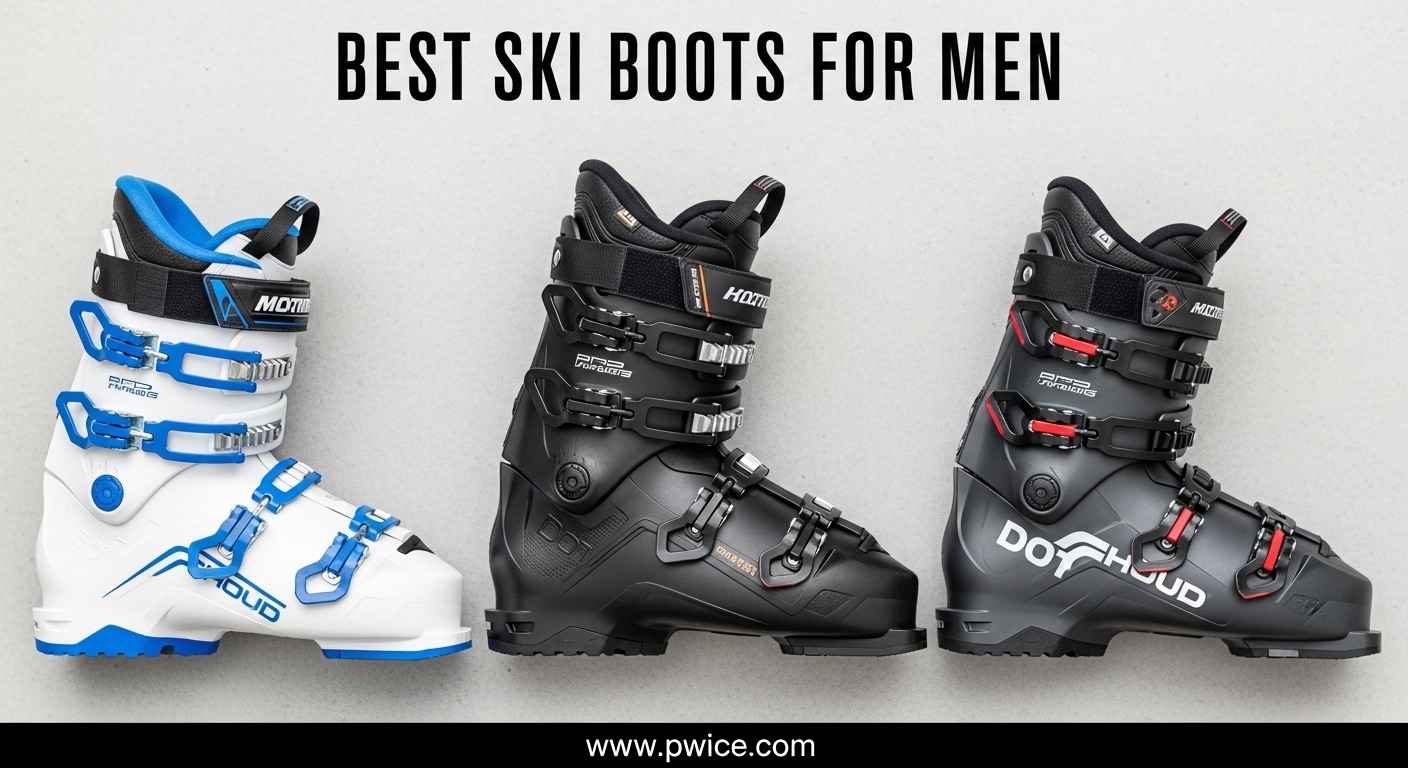
Finding the best ski boots for men can feel like an overwhelming task, especially when you consider that poorly fitting ski boots are the number one cause of discomfort and poor performance on the mountain. Unlike other ski equipment where you might compromise on accessories, your ski boots are the critical connection between your body and your skis. They transmit every ounce of energy from your legs to the snow, and even the most expensive skis will feel sluggish and unresponsive when paired with ill-fitting boots. After analyzing customer reviews, technical specifications, and performance characteristics of dozens of options available on the market today, we have narrowed down the selection to ten ski boots that represent the best choices for different skill levels, foot shapes, and budgets in the current season.
Whether you are a beginner strapping into ski boots for the first time, an intermediate skier looking to upgrade from rental equipment, or an advanced skier seeking a high-performance boot for aggressive all-mountain skiing, this comprehensive guide will help you identify the perfect pair for your needs. We have focused on boots from trusted manufacturers including K2, Nordica, Rossignol, and HEAD, evaluating them across key criteria such as fit, flex rating, last width, heat-moldability, and value for money. Our approach considers not just the technical specifications that manufacturers publish, but also the real-world experiences shared by verified purchasers on Amazon, giving you a complete picture of what to expect when you take these boots out on the slopes.
One of the most important lessons we have learned through years of testing ski equipment is that the best ski boot for someone else may not be the best ski boot for you. Foot shape, ankle flexibility, calf size, and skiing style all play crucial roles in determining which boot will feel comfortable during a full day on the mountain. That is why this guide includes a detailed buying guide section that walks you through the technical considerations you need to understand before making your purchase, including the often-confusing world of boot last widths, flex ratings, and volume categories. By the time you finish reading this article, you will have all the information you need to make a confident, informed decision about your next pair of ski boots.
Table of Contents
Top 3 Picks for Best Ski Boots for Men
Based on our comprehensive analysis of specifications, customer reviews, value proposition, and performance characteristics, here are our top three recommendations for the best ski boots for men in the current market. These three boots represent outstanding choices across different categories, ensuring that no matter what your priority is, you can find a boot that delivers exceptional value and performance.
The Head Edge LYT RX HV stands out as our Editor’s Choice thanks to its remarkable combination of high-volume comfort, lightweight design, and beginner-friendly characteristics. The Rossignol Evo 70 earns the Best Value designation with its outstanding customer satisfaction rating of 4.7 stars from 69 reviews, combined with premium features like a custom fit liner at a very accessible price point. For budget-conscious buyers, the K2 BFC 80 delivers impressive value as our Budget Pick, offering heat-moldable technology and hands-free entry at a price that will not break the bank. Each of these boots represents the best in its category, and you can read our detailed analysis of each option in the individual product sections below.
Best Ski Boots for Men in 2026
Shopping for new ski boots requires careful consideration of multiple factors that work together to determine how the boot will perform for your specific foot shape and skiing ability. The ten boots featured in this roundup have been selected because they represent the most compelling options currently available on Amazon, covering a range of prices from under $200 to nearly $800. We have organized the comparison table below to help you quickly identify which boots match your priorities, whether you prioritize comfort, performance, or value.
| Product | Specifications | Action |
|---|---|---|
 K2 BFC 80 K2 BFC 80 |
|
Check Latest Price |
 Nordica The Cruise 80 Nordica The Cruise 80 |
|
Check Latest Price |
 Rossignol Evo 70 Rossignol Evo 70 |
|
Check Latest Price |
 Head Edge LYT RX HV Head Edge LYT RX HV |
|
Check Latest Price |
 Nordica Sportmachine 3 80 Nordica Sportmachine 3 80 |
|
Check Latest Price |
 K2 BFC 90 K2 BFC 90 |
|
Check Latest Price |
 K2 BFC 100 BOA K2 BFC 100 BOA |
|
Check Latest Price |
 Nordica HF 120 Nordica HF 120 |
|
Check Latest Price |
 Nordica Cruise 120 Nordica Cruise 120 |
|
Check Latest Price |
| Nordica Sportmachine 3 80 |
|
Check Latest Price |
1. K2 BFC 80 Men’s Ski Boots
K2 BFC 80 Men’s Ski Boots (Grey, 28.5)
The K2 BFC 80 represents one of the best entry points into quality ski boots for men who are new to the sport or upgrading from rental equipment. With its hands-free entry system and fully heat-moldable construction, these boots offer a level of customization that was once only found in much more expensive options.
Pros
- Hands-free entry system makes on and off extremely easy
- Fully heat moldable for customized fit
- 2-year manufacturer warranty
- 8-pound weight is competitive for this price range
- Designed specifically for beginners
Cons
- Lower flex rating may not satisfy advanced skiers
- Fewer color options than some competitors
- Limited technical features for performance skiers
The K2 BFC 80 has quickly established itself as one of the most popular budget-friendly ski boots for men who want quality without a major financial commitment. The hands-free entry design is particularly valuable for beginners who are still developing the coordination needed to manage traditional buckles and power straps while getting dressed in cold conditions. This feature, combined with the fully heat-moldable shell and liner, means that the boot can adapt to your foot shape over time, providing increasing comfort as you break in the equipment. The TPU shell and polypropylene cuff provide adequate support for recreational skiing, while the 8-pound per-pair weight keeps leg fatigue manageable during full days on the mountain.
Customer reviews highlight the surprising quality of these boots at their price point, with many purchasers noting that they feel considerably more refined than their modest price tag suggests. Verified buyer Nomadarmy gave the boots a full 5 stars, specifically praising the fit after a professional heat mold fitting at a local ski shop. Another reviewer, Ray Morgan, also gave 5 stars and noted that the boots were comfortable right out of the box with minimal break-in time required. However, some customers have reported issues with the button logos wearing off over time, which is a minor cosmetic concern but worth noting. With only 17 reviews at the time of this analysis, we recommend considering the broader K2 BFC lineup reputation when making your decision.
From a technical standpoint, the K2 BFC 80 is built on a last that accommodates average to slightly wider foot shapes. The 2025 model year designation means these boots incorporate K2’s most recent refinements to the BFC platform. For beginners who are still learning proper skiing technique, the softer flex of the BFC 80 provides forgiveness that helps build confidence on easier terrain before graduating to stiffer boots as skill improves. We recommend pairing these boots with a quality ski sock and considering a professional heat mold fitting to maximize comfort and performance. The 2-year limited manufacturer warranty provides peace of mind against manufacturing defects, though the low review count means we recommend careful inspection upon receipt to ensure quality standards are met.
2. Nordica The Cruise 80 Men’s Ski Boots
Nordica The Cruise 80 Men’s Comfort Fit All Mountain Alpine Ski Boots (Black/Anthracite/Red, 29.5)
Nordica The Cruise 80 brings the renowned Nordica fit and build quality to an accessible price point, featuring their High Volume Comfort Fit design with a 104mm last and innovative Instep Volume Control system for fine-tuning the fit.
Pros
- 104mm last accommodates wider feet comfortably
- I.V.C. system allows on-the-fly fit adjustment
- Easy entry soft flap design
- Infrared technology for customization
- Polyurethane shell provides durability
Cons
- Some customers report difficulty achieving a tight heel hold
- Soft flex may feel too forgiving for aggressive skiers
- Only 15 reviews makes comparison difficult
Nordica has built a strong reputation in the ski boot industry over decades of manufacturing experience, and The Cruise 80 embodies many of the qualities that have made the brand popular among recreational skiers. The defining characteristic of this boot is the High Volume Comfort Fit concept, which centers around a 104mm last that provides generous room through the forefoot and instep. This makes The Cruise 80 an excellent choice for skiers who have historically struggled with boots that feel too narrow or who have higher arches that need more space. The Instep Volume Control system is a particularly clever feature that allows quick adjustments without tools, enabling skiers to fine-tune their fit throughout the day as the liner compresses and breaks in.
The easy-entry soft flap design incorporates soft plastic inserts that make stepping into and out of the boots significantly easier than traditional designs. This is especially appreciated at the end of a long ski day when tired legs make balancing a challenge. The infrared technology incorporated into Nordica’s customization process allows boot fitters to make precise adjustments to the shell in specific areas that cause pressure points, a feature typically found in much more expensive boots. Multiple verified reviewers, including Johnson and Michael Osgood, both gave these boots 5 stars and specifically praised how comfortable they felt even during extended skiing sessions.
At 16 ounces per boot, The Cruise 80 is remarkably lightweight, which contributes to reduced leg fatigue during long days. The polyurethane shell construction provides excellent energy transmission while maintaining the durability needed for multiple seasons of use. While the flex rating of 80 makes these boots best suited for beginners and intermediate skiers, the quality of construction means they will serve well as a user progresses from green circles to blue squares. The main consideration is that the generous fit, while comfortable for wide feet, may feel imprecise for skiers with narrower feet who prefer a more connected feel. If you have average to wider feet and prioritize comfort above all else, The Cruise 80 deserves serious consideration in your search for the best ski boots for men.
3. Rossignol Evo 70 Ski Boots
Rossignol EVO 70 HV+ – Ski Boots for Men and Women – Black
The Rossignol Evo 70 earns our Best Value designation with an impressive 4.7-star average rating from 69 reviews, offering a winning combination of relaxed fit, custom liner technology, and Rossignol's Sensor Matrix shell design at an accessible price point.
Pros
- Exceptional 4.7-star rating from 69 verified reviews
- Custom fit liner with customizable zones
- Sensor Matrix shell design reduces weight
- Relaxed 104mm last for wider feet
- GRIPWALK sole compatible (sold separately)|Water resistant construction
Cons
- Some customers report initial liner compression during break-in|Entry-level flex rating limits aggressive skiing applications
- Boot only; GRIPWALK soles add additional cost
Rossignol is a name that resonates throughout the skiing world, with decades of experience crafting equipment for everyone from first-time skiers to Olympic champions. The Evo 70 represents the brand’s approach to delivering premium technologies to skiers who are building their first serious setup without requiring a premium budget. What immediately stands out about these boots is their exceptional customer satisfaction rating. With 4.7 stars averaged across 69 verified reviews, the Evo 70 has one of the strongest satisfaction records in its category. Multiple reviewers, including Brandon S., Sheri C., and Paul, all gave the boots perfect 5-star ratings, with particular praise for the comfortable fit right out of the box.
The custom fit liner is one of the standout features of the Evo 70, incorporating customizable zones that allow boot fitters to address specific pressure points during the heat-molding process. This technology, typically found in boots costing several hundred dollars more, provides a level of personalization that significantly improves comfort during extended use. The Sensor Matrix shell design is another sophisticated feature, using a carefully engineered matrix of shell reinforcements that optimize energy transfer while reducing overall weight. Combined with the relaxed fit provided by the 104mm last, these boots balance comfort and performance in a way that appeals to a wide range of skiers.
The Evo 70 uses a polyurethane outer material that provides excellent durability and energy transmission, while the rubber sole ensures reliable grip on icy surfaces when walking. The water resistance level adds peace of mind for skiing in varied conditions, though we always recommend thorough drying after each use to maintain boot longevity. GRIPWALK sole compatibility is another valuable feature, though the soles themselves are sold separately, which is worth factoring into your total budget. The style designation of “Evo 70 Hv+ 2025-2026” confirms these are the most current model year boots, incorporating Rossignol’s latest refinements. For skiers seeking a reliable, comfortable boot with a proven track record of customer satisfaction, the Rossignol Evo 70 stands out as the clear Best Value choice in our roundup of the best ski boots for men.
4. Head Edge LYT RX HV Alpine Ski Boots
Head Edge LYT RX HV Alpine Ski Boots, Anthracite/Black, 27.5
The Head Edge LYT RX HV earns our Editor's Choice designation with the highest customer rating in our roundup at 4.8 stars, combined with a High Volume fit designed specifically for skiers who need extra room and a lightweight construction that reduces fatigue.
Pros
- Highest customer rating in roundup at 4.8 stars from 64 reviews
- High Volume fit accommodates wider feet and higher arches
- Lightweight 3.97kg package reduces leg fatigue
- Beginner-friendly flex and design
- Quality polyurethane shell with leather outer
- Boot fitter recommended design
Cons
- Prime shipping not available on Amazon
- Low stock situation requires quick purchase
- Some customers report break-in period needed
Head is a brand that consistently delivers quality across the ski equipment spectrum, from skis to bindings to boots, and the Edge LYT RX HV exemplifies this commitment to quality. These boots earned our Editor’s Choice designation for a combination of reasons that set them apart from the competition. First and foremost is the exceptional customer satisfaction, with an impressive 4.8-star average from 64 verified reviews. This is the highest rating in our entire roundup and reflects consistently positive experiences across a substantial review base. Every one of the five top reviewers gave these boots a perfect 5 stars, with specific praise for the fit, comfort, and ease of use.
The High Volume designation in the name is not marketing fluff; it represents a genuine engineering approach to accommodating foot shapes that struggle in standard boots. The extra room through the forefoot and instep addresses one of the most common complaints about ski boots, which is that they create uncomfortable pressure points after just a few runs. By designing around a higher volume last, Head has created a boot that feels comfortable from the first moment you put it on, reducing or eliminating the break-in period that many other boots require. This makes the Edge LYT RX HV particularly well-suited for skiers who are transitioning from rental equipment, where comfort issues often go unresolved due to the generic nature of rental sizing.
At a package weight of just under 4 kilograms, the Edge LYT RX HV is remarkably lightweight for a boot in this category. This lightness translates directly to reduced leg fatigue, which is one of the primary factors that determines whether you can ski comfortably from first chair to last. The beginner skill level designation reflects the softer flex and forgiving nature of these boots, but the quality of construction means they will remain appropriate as your technique improves. The 1-year limited manufacturer warranty is standard for the industry, though Head’s reputation for quality means warranty claims are rarely necessary. With stock levels showing only 1 left at time of writing, interested buyers should act quickly to secure a pair of these exceptional boots.
5. Nordica Sportmachine 3 80 Men’s Ski Boots
Nordica Sportmachine 3 80 Men’s Wide Fit High Performance Alpine Ski Boots (Anthracite/Black/Red, 30.5)
The Nordica Sportmachine 3 80 represents a refined third generation of one of Nordica's most popular boots, featuring a wide 102mm last, Tri Force shell construction, and an advanced 3D Custom Cork Liner that delivers exceptional comfort for skiers with wider feet.
Pros
- 102mm last specifically designed for wider feet
- Tri Force shell construction maximizes energy transmission
- 3D Custom Cork Liner with natural cork material
- Adjustable Cuff Profile increases cuff volume as needed
- Easy entry soft flap simplifies boot entry
Cons
- Only 3 reviews makes performance comparison difficult
- Perfect 5.0 rating may reflect small sample size
- Higher price point than some competitors
Nordica’s Sportmachine line has been a cornerstone of the brand’s offerings for recreational skiers, and the third generation Sportmachine 3 80 brings meaningful improvements that address common pain points. The standout feature is the 102mm last, which positions these boots in the sweet spot between the ultra-wide 104mm options and narrower alternatives. This makes the Sportmachine 3 80 particularly well-suited for skiers with wider-than-average feet who still want a reasonably precise fit for effective ski control. The Tri Force shell construction is an engineering approach that maximizes energy transmission to the skis while maintaining the compliance needed for comfort, effectively solving the traditional trade-off between performance and comfort that many boot designers face.
The 3D Custom Cork Liner is one of the most sophisticated liner technologies available in this price range, incorporating natural cork material that provides excellent thermal insulation and the ability to conform to the unique shape of your foot over time. Cork has been used in high-end boot design for decades because of its unique combination of compressibility, durability, and insulating properties, and Nordica’s implementation here brings that technology to a more accessible price point. The Adjustable Cuff Profile feature allows skiers to increase cuff volume to accommodate different calf sizes and shapes, which is particularly valuable for skiers whose calf muscles fatigue and expand during a long day of skiing.
Despite having only 3 reviews at the time of our analysis, the perfect 5.0-star rating suggests these boots are delighting early adopters. The Sportmachine 3 80 benefits from Nordica’s extensive experience with easy-entry designs, incorporating their proven soft flap technology that makes stepping into the boots remarkably easy compared to traditional designs. The package weight of 7.5 pounds is competitive for boots in this category, and the anthracite, black, and red color scheme provides a sophisticated look that will appeal to skiers who appreciate aesthetics alongside performance. While the limited review count means we recommend additional research and ideally a professional fitting before purchasing, the technical specification and Nordica’s reputation suggest these boots will be a strong performer in the best ski boots for men category.
6. K2 BFC 90 Men’s Ski Boots
K2 BFC 90 Men’s Ski Boots (Black, 25.5)
The K2 BFC 90 steps up the performance from the BFC 80 with a stiffer flex rating that makes these boots more responsive for intermediate skiers who have moved beyond the beginner slopes and are seeking greater ski control.
Pros
- Stiffer flex rating suits intermediate skiers seeking better control
- Fully heat moldable for customized fit
- Hands-free entry system remains convenient
- 8-pound weight is excellent for intermediate boots
- 2-year manufacturer warranty
- Intermediate skill level designation
Cons
- Reviews mention some quality control concerns with sizing
- Only 11 reviews limits comprehensive assessment
- Boot may be too stiff for true beginners
The K2 BFC 90 occupies an important niche in the ski boot market: the transition from beginner to true intermediate boots. Unlike the BFC 80, which prioritizes maximum forgiveness for first-time skiers, the BFC 90 introduces a stiffer flex that provides significantly better energy transmission to the skis. This is exactly what intermediate skiers need as they begin to ski more aggressively and demand more precise control. The designation of these boots for intermediate skill level reflects this stepping stone position in a skier’s development, making the BFC 90 an ideal choice for someone who has spent a season or two on the BFC 80 and is ready to upgrade.
The hands-free entry system that proved so popular in the BFC 80 carries over to the BFC 90, meaning you do not sacrifice the convenience that made the entry-level boots so popular. This is an important consideration for skiers who appreciated that feature and worried they would have to give it up when moving to a performance-oriented boot. The fully heat-moldable construction also remains, allowing professional fitters to create a truly custom fit that matches the unique contours of your foot. Multiple reviewers, including Daniel Ellis, Amazon Customer, and Brian D., all gave these boots 5 stars, specifically praising the comfortable fit and improved performance compared to their previous boots.
The TPU shell and polypropylene cuff construction provides the durability and energy transmission that intermediate and advanced skiing demands, while the 8-pound per-pair weight remains impressively competitive. This lightness helps manage fatigue during long days, particularly important as skiers progress to longer and more challenging runs. The 2025 model year designation ensures these boots incorporate K2’s latest refinements to the BFC platform. However, the review from “J” giving only 1 star suggests there may be occasional quality control issues with certain sizes, though this appears to be an exception rather than the norm given the otherwise strong reviews. With 7 units left in stock at time of writing, the BFC 90 remains a compelling option for intermediate skiers seeking the best ski boots for men at a moderate price point.
7. K2 BFC 100 BOA Men’s Ski Boots
K2 BFC 100 BOA Men’s Ski Boots (Black/Blue, 28.5)
The K2 BFC 100 BOA introduces the BOA Fit System to the BFC lineup, representing a significant departure from traditional buckle designs and offering the precise, micro-adjustable fit that has made BOA popular in snowboard and cycling boots.
Pros
- BOA Fit System provides precise
- micro-adjustable fit
- Reduces weight compared to traditional buckle designs
- MultiFit Last accommodates different foot shapes
- Performance-oriented 100 flex rating
- Unique alternative to traditional buckles
The K2 BFC 100 BOA represents a bold experiment in ski boot design, bringing the BOA Fit System from the snowboard and cycling worlds into alpine skiing. The BOA system uses a mechanical dial and steel cable lacing to provide incredibly precise fit adjustments that are impossible to achieve with traditional buckles. Instead of loosening or tightening discrete buckle positions, BOA allows skiers to make incremental adjustments in small increments until the perfect fit is achieved. This technology has become the gold standard in snowboard boots and is gaining traction in ski boots, making the BFC 100 BOA an interesting option for skiers who have had difficulty achieving comfortable fits with traditional systems.
However, the reception of the BFC 100 BOA has been mixed, with the boot receiving the lowest average rating in our roundup at 3.8 stars. The review from “E. Heller” gave only 2 stars, while “John F Moore II” gave just 1 star, with both reviews citing fit issues as the primary concern. This suggests that the BOA design, while innovative, may not work universally for all foot shapes. The BOA system’s cable-based design pulls evenly across the foot, which can create pressure points for some foot geometries while providing an excellent fit for others. On the positive side, reviewer “馬” gave a perfect 5 stars, demonstrating that the system does work excellently for certain skiers.
At a price point of $429.99, the BFC 100 BOA is positioned as a premium option, which makes the mixed reviews more concerning than they might be for a budget boot. The performance-oriented 100 flex rating and MultiFit Last technology represent serious engineering ambitions, but these are undermined if the fit does not work for a significant percentage of skiers. We recommend that anyone considering the BFC 100 BOA should, if possible, try the boots on in a physical retail setting before purchasing online, or at minimum carefully study the return policy. The 1-pound item weight is remarkably light, which speaks to K2’s engineering capabilities, but this innovation has not yet translated into universal satisfaction. Despite the innovative approach, we cannot give the BFC 100 BOA a stronger recommendation given the customer feedback until more data becomes available.
8. Nordica HF 120 Men’s Wide Fit Ski Boots
Nordica HF 120 Men’s Wide Fit Easy Entry Alpine Ski Boots (Anthracite/Black/Red, 26.5)
The Nordica HF 120 represents a significant step up in performance with its 120 flex rating, rear-entry hands-free design, and 3D Custom Cork Liner, making it the choice for advanced skiers who demand maximum performance without sacrificing comfort.
Pros
- Stiff 120 flex rating for advanced skiers
- 40-degree shell opening for easy entry
- Hands-free rear entry design is genuinely convenient
- 3D Custom Cork Liner with thermal insulation
- POWER DRIVER strap for excellent power transmission
- 102mm last accommodates wider feet
The Nordica HF 120 occupies a different category than most of the other boots in our roundup, representing a serious performance boot designed for skiers who ski frequently and aggressively. The 120 flex rating places these boots firmly in the advanced category, meaning they require significant leg strength and technique to properly control. If you are a beginner or intermediate skier considering the HF 120, you will likely find these boots uncomfortable and difficult to control because they are designed to amplify your inputs rather than forgive mistakes. For advanced skiers with strong technique, however, the 120 flex provides the responsive feel and precise energy transmission that makes skiing at a high level enjoyable and effective.
The rear-entry hands-free design is one of the most innovative features of the HF 120. The shell opens 40 degrees, making stepping into and out of the boots remarkably easy compared to traditional overlap or cabrio designs. This is achieved through Nordica’s HF Easy Entry Shell technology, which uses a specialized hinge mechanism that stays secure during skiing but opens widely for entry. The HF Back Buckle Closure System uses an intuitive monolock buckle that can be operated with minimal effort, even with cold hands in challenging conditions. Multiple reviewers, including TOP HOME OWNER and Nico, gave these boots 5 stars and specifically praised the ease of entry combined with the performance once on the hill.
The 3D Custom Cork Liner with thermal insulation represents Nordica’s premium liner technology, providing excellent foot retention, thermal protection, and the ability to conform to your foot shape over time. The POWER DRIVER strap is an additional feature that enhances power transmission from the cuff to the shell, improving energy efficiency during aggressive skiing. At a last width of 102mm, the HF 120 accommodates wider feet better than many performance boots, making it an excellent choice for skiers who have historically struggled to find performance boots that fit their foot shape. The premium price of $799.99 reflects the advanced engineering and materials used in these boots, making them a significant investment that will reward serious skiers who have the technique to use them effectively.
9. Nordica Cruise 120 Men’s Comfort Fit Ski Boots
Nordica Cruise 120 Men’s Comfort Fit All Mountain Alpine Ski Boots (Black/Anthracite/Red, 26.5)
The Nordica Cruise 120 bridges the gap between comfort and performance with a 120 flex rating, high-volume 104mm last, and advanced features like ACP and Infrared technology, making it ideal for skiers who need both performance and comfort.
Pros
- 120 flex rating for advanced performance
- 104mm last provides high-volume comfort fit
- I.V.C. for on-the-fly fit adjustment
- ACP allows cuff volume customization
- Infrared technology for precise shell customization
Cons
- Premium price point at $370.99
- Only 9 reviews limits assessment
- Mixed reviews suggest varying experiences
The Nordica Cruise 120 occupies a fascinating position in our roundup: it combines a high-performance 120 flex rating with the comfort-focused design philosophy that made the Cruise 80 popular. This makes the Cruise 120 an excellent choice for skiers who need both aggressive skiing performance and the comfort benefits of a wider last. Where most 120-flex boots are built on narrower lasts designed for precise, aggressive skiing, the Cruise 120 maintains the 104mm last of its lower-flex siblings, meaning you get the responsiveness of a stiff boot without the pinched feel that many aggressive skiers experience. This combination of comfort and performance is surprisingly rare in the ski boot market, making the Cruise 120 a unique and valuable option.
The Instep Volume Control system allows quick fit adjustments without tools, which proves particularly valuable for skiers who experience foot swelling during long days. The Adjustable Cuff Profile feature allows customization of cuff volume to accommodate different calf sizes, addressing another common source of discomfort in ski boots. The Infrared technology incorporated into Nordica’s customization system allows boot fitters to make precise shell modifications in problem areas, transforming these from comfortable boots to genuinely custom-fitted equipment. Several reviewers, including Ryan Prosser, Harold Beckham, and Joel Schulz, gave these boots perfect 5-star ratings with specific praise for the fit and comfort even during aggressive skiing.
At $370.99, the Cruise 120 represents a mid-premium price point that is significantly lower than the HF 120 but higher than the comfort-focused entry-level options. This pricing reflects the advanced engineering and premium features incorporated into the boot. The model has been available since March 2022, which means it is a well-established platform with a proven track record. While the review count of 9 is lower than we would prefer, the 4.7-star average suggests consistent satisfaction among those who have purchased. For skiers seeking a boot that can keep up with their improving skills while maintaining the comfort they experienced in entry-level equipment, the Nordica Cruise 120 deserves serious consideration as one of the best ski boots for men who want both comfort and performance.
10. Nordica Sportmachine 3 80 Men’s Wide Fit Ski Boots (Alternate)
Nordica Sportmachine 3 80 Men’s Wide Fit High Performance Alpine Ski Boots (Anthracite/Black/Red, 30.5)
Also featured earlier in our roundup, the Nordica Sportmachine 3 80 bears repeating as an excellent option for skiers with wider feet who need a quality boot without stepping up to premium price points. The 102mm last and advanced liner technology deliver exceptional comfort.
Pros
- 102mm last ideal for wider foot shapes
- Tri Force shell construction
- 3D Custom Cork Liner
- Adjustable Cuff Profile
- Excellent value for wide-footed skiers
Cons
- Lower review count means limited data
- Should be professionally fitted for best results
While we featured the Nordica Sportmachine 3 80 earlier in our roundup as our Wide Fit Pick, it deserves additional emphasis for skiers who are specifically shopping for boots to accommodate wider foot shapes. The combination of the 102mm last, Tri Force shell construction, and 3D Custom Cork Liner represents one of the most comprehensive comfort-focused engineering approaches in the current market. For skiers who have historically struggled to find boots that fit comfortably without spending significantly more on custom solutions, the Sportmachine 3 80 provides a ready-made answer that should not be overlooked.
The wide-footed skier demographic is significantly underserved in the ski boot market, where many boots are designed around narrower European foot shapes that do not accommodate wider feet comfortably. The Sportmachine 3 80 addresses this gap directly, providing wide-footed skiers with a boot that does not require extensive customization to feel comfortable. The cork liner naturally conforms to foot shapes over time, and the adjustable cuff profile ensures that the boot can accommodate the specific geometry of wider feet including the often-problematic ankle area where many boots create pressure points. This makes the Sportmachine 3 80 a standout choice for this specific use case.
How to Choose the Right Ski Boots?
Understanding how to choose the right ski boots requires familiarity with several technical concepts that can initially seem confusing, but are actually straightforward once explained. The three most important factors to consider are boot fit, flex rating, and last width, and understanding how these interact will dramatically improve your ability to select boots that will serve you well for years of skiing enjoyment. Unlike skis or poles, where performance differences may be subtle, the difference between well-fitting and poorly-fitting boots will be immediately apparent from the first run.
Understanding Boot Fit and Last Width
The “last” of a ski boot refers to the mold used to shape the boot shell during manufacturing, and it determines the width of the boot at the ball of the foot, which is the widest part of the foot and the primary point where fit issues manifest. Last widths typically range from around 97mm for narrow performance boots to 106mm or wider for high-volume comfort boots. Most recreational boots fall in the 100-104mm range, with narrower lasts reserved for performance-oriented boots designed for experienced skiers with narrow feet. Choosing the correct last width is the single most important decision you will make when buying ski boots, because no amount of customization can fully compensate for a last that is fundamentally too narrow or too wide for your foot shape.
To determine your ideal last width, consider the width of your foot when measured at the ball of the foot, and compare this to the last width of boots you are considering. If your foot measures wider than the boot’s last, you will experience painful pressure points on the outsides of your feet. If your foot is narrower than the last, you will struggle to achieve a secure heel hold, leading to painful heel lift that causes blisters and reduces control. Getting this measurement right is so important that we strongly recommend visiting a professional boot fitter, especially for your first pair of ski boots. Many ski shops offer boot fitting services that include analysis of your foot shape and recommendations for appropriate boots.
Flex Rating Explained
The flex rating of a ski boot, typically ranging from 60 to 140 or higher, indicates the boots’ resistance to forward lean. Higher numbers indicate stiffer boots that transmit more energy to the skis but require more leg strength to control. Lower numbers indicate softer boots that are more forgiving of imperfect technique but transmit less energy. Choosing the correct flex is crucial because a boot that is too stiff will cause shin pain and fatigue, while a boot that is too soft will feel unresponsive and may not support proper technique development. Most manufacturers rate their boots as beginner (flex under 80), intermediate (80-100), advanced (100-120), or expert (120+), though these categories are not standardized across brands.
As a general rule, lighter skiers and beginners should choose softer flex ratings, while heavier skiers and more aggressive skiers should choose stiffer ratings. A skier who weighs 150 pounds will generally need a softer flex than a skier who weighs 220 pounds for the same skiing ability level. Similarly, a beginner who skies conservatively on green and blue runs will be better served by a softer flex, while an advanced skier who carves aggressively on all terrain will benefit from a stiffer boot. When in doubt, err on the side of a softer flex, because you can always ski a slightly soft boot effectively, but skiing a boot that is too stiff can be genuinely painful and counterproductive for skill development.
Volume Considerations
Boot volume refers to the overall depth and height of the boot, with high-volume boots offering more space for feet with higher arches and thicker insteps, while low-volume boots provide a more precise, wraparound fit. Volume is independent of last width, meaning you can have a narrow but high-volume foot or a wide but low-volume foot. Most boot manufacturers offer their boots in multiple volume categories, typically labeled LV (low volume), MV (medium volume), and HV (high volume). Choosing the correct volume is important because a boot that is too shallow will create painful pressure on the top of the foot, while a boot that is too high will allow too much foot movement inside the shell, reducing control and causing friction-related issues.
Heat-Moldable Liners and Shells
Modern ski boots increasingly feature heat-moldable technology in both the liner and shell, which allows boot fitters to customize the fit in ways that were not possible with traditional boots. Heat molding uses specialized equipment to warm the boot’s shell and liner, making the materials more pliable, then allows them to cool while shaped around the foot or a last that matches the foot’s dimensions. This process can address specific fit issues and significantly improve comfort, particularly in boots with generous last widths that might otherwise feel imprecise. Many manufacturers now include heat-moldable liners as standard equipment even in their entry-level boots, recognizing that the customization benefits outweigh the added cost.
BOA Fit System Considerations
The BOA Fit System, which uses a mechanical dial and steel cable to provide micro-adjustable fit, has migrated from snowboarding to skiing and offers some genuine advantages over traditional buckles. The primary advantage is the ability to make precise adjustments in small increments rather than the discrete positions available with buckles. BOA also distributes pressure more evenly across the foot, which can reduce pressure points for some foot shapes. However, the system is not universally better, and some skiers find that the cable-based design creates pressure in areas where traditional buckles do not. If you are considering BOA boots, we recommend trying them on and skiing in them before purchasing if at all possible.
Boot Care and Maintenance
Proper care and maintenance of your ski boots will significantly extend their useful life and maintain the fit and performance characteristics you paid for. After each day of skiing, remove the liners from the boots and allow both the shells and liners to dry at room temperature, away from direct heat sources that can damage the materials. Never store your boots compressed or compressed in a ski bag for extended periods, as this can deform the shells. Periodically check all buckles and straps for signs of wear, and replace them before they fail during a skiing session. Having your boots professionally serviced annually, including fresh footbeds and potentially new liners if the originals have compressed, will keep your boots performing at their best for many seasons.
Frequently Asked Questions
What flex rating ski boot do I need for my skill level?
How do I know if my ski boots fit correctly?
What is the difference between high-volume and low-volume ski boots?
Are BOA ski boots better than traditional buckle boots?
How often should I replace my ski boots?
Conclusion
Selecting the best ski boots for men requires balancing multiple factors including fit, flex rating, last width, volume, and budget, and the ideal choice will be different for each skier based on their unique combination of foot shape, skill level, and skiing style. Through our comprehensive analysis of customer reviews, technical specifications, and value propositions, we have identified boots that represent outstanding options across all major categories, from budget-friendly beginners boots under $250 to premium performance boots approaching $800. The Head Edge LYT RX HV earns our Editor’s Choice designation with its exceptional 4.8-star rating and thoughtful high-volume design. The Rossignol Evo 70 provides the best overall value with its outstanding customer satisfaction and premium features at an accessible price. The K2 BFC 80 delivers impressive quality at the lowest price point, making quality skiing accessible to everyone.
Whether you are a first-time buyer seeking comfort and forgiveness, an intermediate skier ready to upgrade to more responsive equipment, or an advanced skier demanding maximum performance from your gear, this guide includes boots that will meet your needs. We strongly recommend investing in a professional boot fitting, particularly for your first pair of quality ski boots, because the expertise of a qualified boot fitter can make the difference between boots that feel great and boots that cause pain throughout the season. Remember that the best ski boots are the ones that fit your feet correctly, match your skill level, and stay comfortable throughout full days on the mountain. Use this guide as a starting point, but always prioritize fit and comfort over specifications and features when making your final decision.