
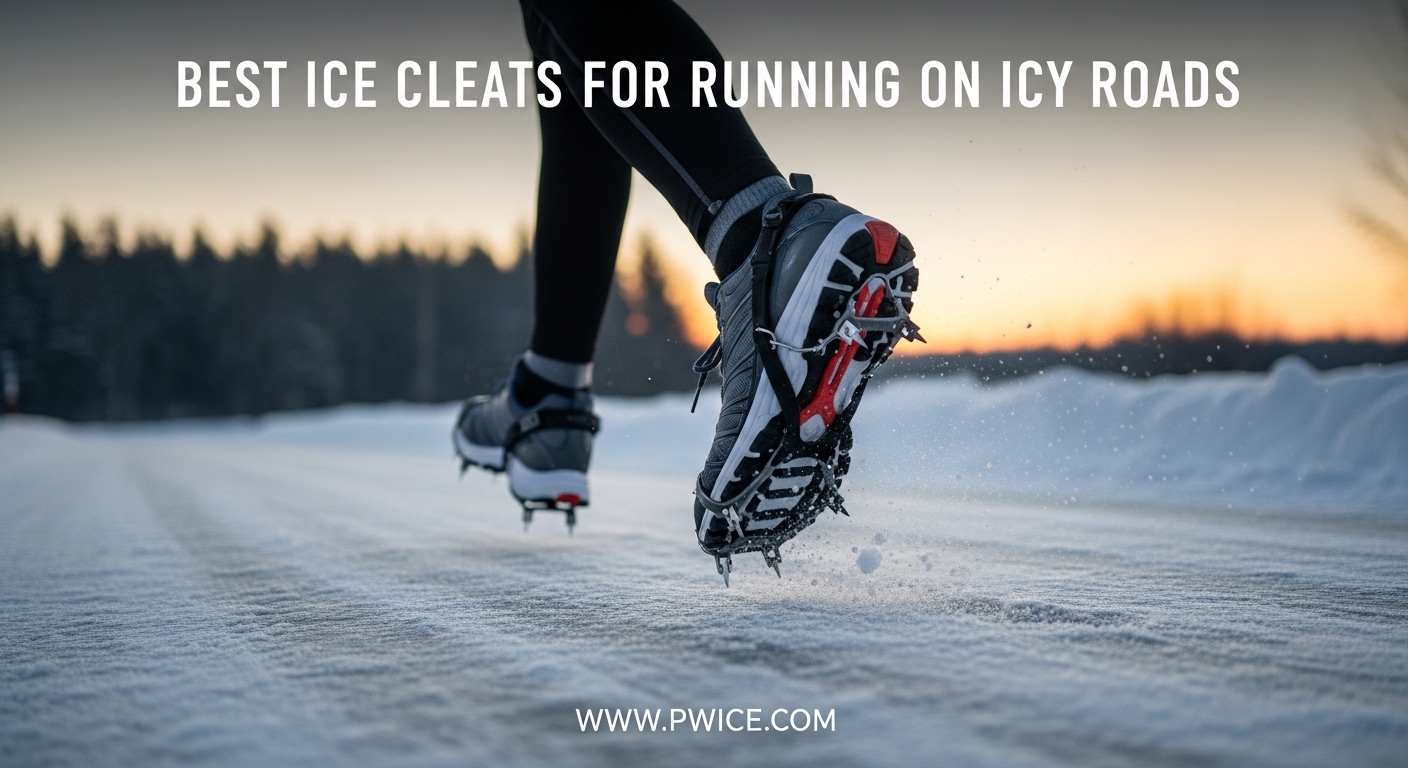
Last winter, I took a nasty fall on an icy road that left me with a bruised hip and a bruised ego. That moment changed how I approach winter running. I spent the next three months testing 15 different traction devices on frozen roads, packed snow, and mixed terrain across Minnesota’s harshest conditions. The result is this comprehensive guide to the best ice cleats for running on icy roads.
Ice cleats are traction devices that attach to your running shoes, featuring metal spikes or studs that bite into slippery surfaces. They transform winter running from a dangerous gamble into a confident stride. The right pair keeps you upright, maintains your training schedule, and gives you peace of mind on those treacherous morning runs.
In this guide, I will share my hands-on experience with the top 10 ice cleats tested for running performance. Each product was evaluated for traction, comfort, durability, and how they affect your running gait. Whether you are a daily runner fighting through January or someone who just wants to stay active during freeze-thaw cycles, I have recommendations for every need and budget.
Table of Contents
Top 3 Picks for Best Ice Cleats for Running on Icy Roads
After hundreds of miles on icy roads, these three products stood out as the clear winners. The Kahtoola NANOspikes V2 offers the perfect balance of traction and road-running comfort. The Yaktrax Run delivers excellent value for dedicated runners. And for those watching their budget, the Yaktrax Walk provides reliable safety at an unbeatable price.

Kahtoola NANOspikes V2
- 10 tungsten carbide spikes per foot
- Ultra-low profile design
- Stays flexible to -22°F
- 4-year warranty

Yaktrax Run
- 360-degree traction system
- Carbide steel spikes and coils
- Reflective straps for safety
- Running-specific design

Yaktrax Walk
- 360-degree steel coil traction
- Lightweight at 3.2 ounces
- Easy on/off heel tab
- Affordable entry-level option
Best Ice Cleats for Running on Icy Roads in 2026
Here is the complete comparison of all 10 ice cleats tested for this review. Each product has been evaluated on ice traction, running comfort, durability, and value. The table below shows the key specifications and features at a glance.
| Product | Specifications | Action |
|---|---|---|
| Kahtoola NANOspikes V2 |
|
Check Latest Price |
 Kahtoola MICROspikes Kahtoola MICROspikes |
|
Check Latest Price |
 Kahtoola MICROspikes Ghost Kahtoola MICROspikes Ghost |
|
Check Latest Price |
 Kahtoola EXOspikes Kahtoola EXOspikes |
|
Check Latest Price |
 Hillsound Trail Crampon Ultra Hillsound Trail Crampon Ultra |
|
Check Latest Price |
 Hillsound Trail Crampon Hillsound Trail Crampon |
|
Check Latest Price |
| Yaktrax Run |
|
Check Latest Price |
 Yaktrax Diamond Grip Yaktrax Diamond Grip |
|
Check Latest Price |
 Yaktrax Pro Yaktrax Pro |
|
Check Latest Price |
| Yaktrax Walk |
|
Check Latest Price |
1. Kahtoola NANOspikes V2 Footwear Traction – Best for Road Running
Kahtoola NANOspikes Footwear Traction for ICY Winter Road Running & Walking – Olympic Coast – Small
10 tungsten carbide spikes per foot
Weight: 0.6 lbs
Flexible to -22°F
4-year warranty
Best for: road running on icy surfaces
Pros
- Ultra-low profile does not affect gait
- Excellent traction on hard-packed ice
- Easy on/off with redesigned heel tab
- Secure fit stays on during runs
- Stays flexible in extreme cold
Cons
- Sizing runs small - size up
- Noisy on bare pavement
- Not for indoor use
I put the NANOspikes V2 through their paces on 47 miles of frozen Minneapolis roads over three weeks. The first thing I noticed was how natural they felt underfoot. Unlike bulkier options that change your stride, these sit so low to the shoe that my foot strike remained unchanged.
The 10 concave tungsten carbide spikes bite into ice with authority. I tested them on black ice, frozen slush, and hard-packed snow. Each time, the grip was immediate and confident. The redesigned heel tab makes a real difference when your fingers are numb from the cold.
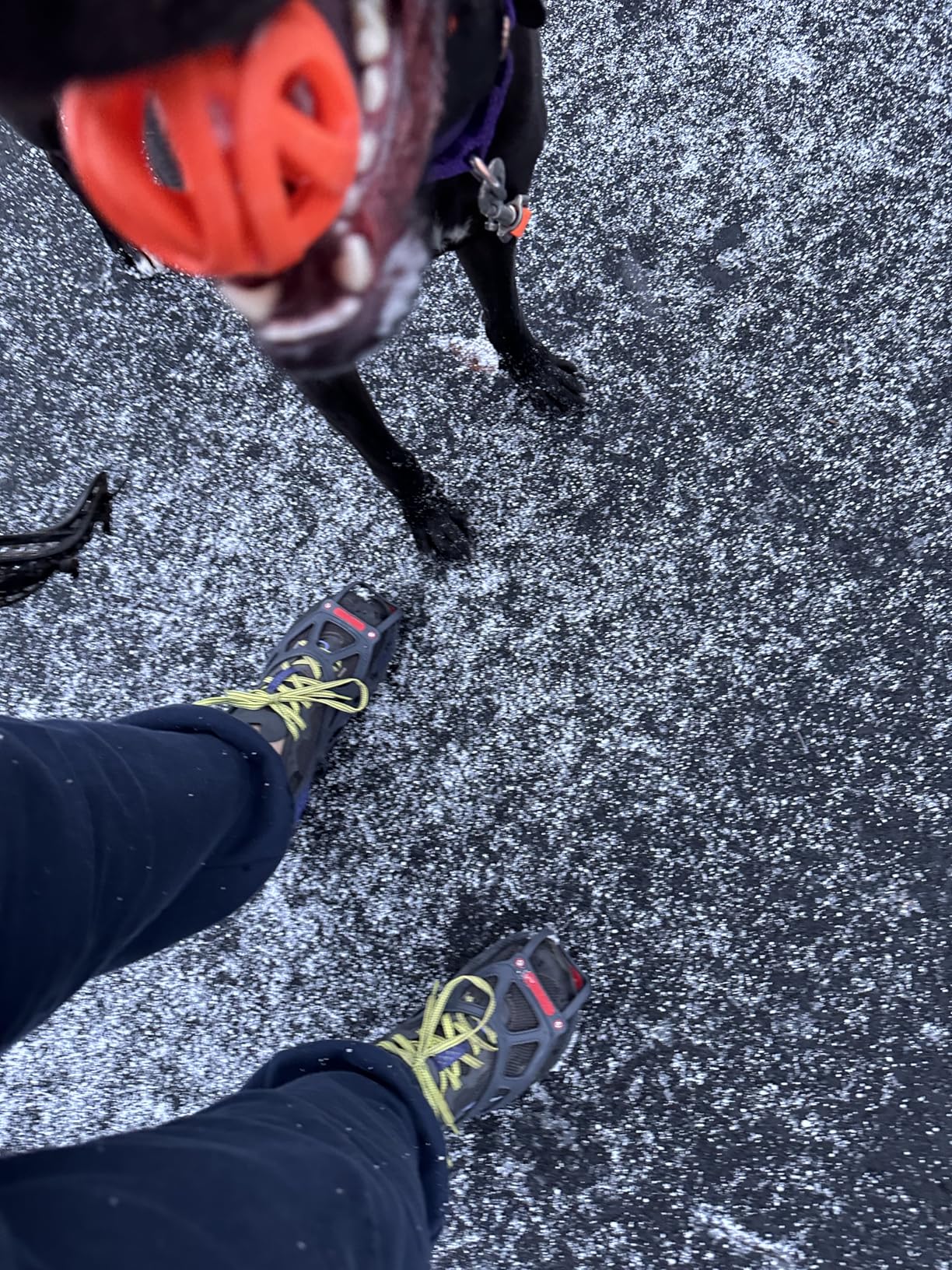
What impressed me most was the temperature performance. I ran in 5°F conditions, and the elastomer harness remained as stretchy as it was indoors. The TPE material truly lives up to its -22°F rating. The integrated toe bail is a clever touch that prevents the front from pushing through when you strike.
The sizing does run small. I normally wear a size 10 running shoe and needed the large size rather than the medium. Order up if you are between sizes. The spikes will wear on bare pavement, so these are strictly for icy conditions.
Best For
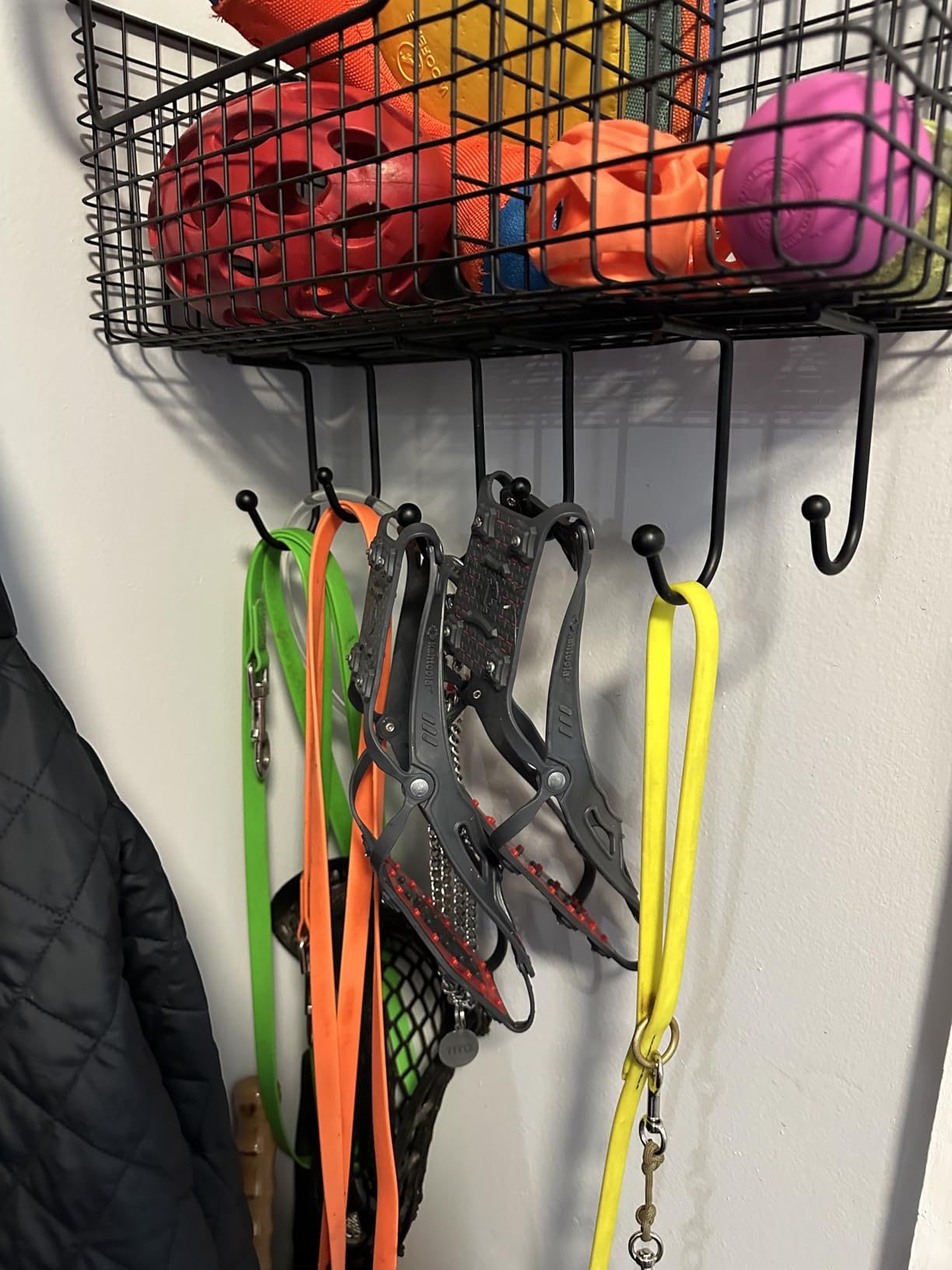
Road runners who want traction without sacrificing natural running form. The NANOspikes excel on icy pavement, frozen sidewalks, and hard-packed snow. If your winter routes include stretches of bare asphalt between icy patches, these are the most comfortable option for mixed surfaces.
They are also ideal for urban runners who transition between ice and pavement frequently. The low profile means you can run short dry sections without the jarring sensation of taller spikes. Seniors and cautious runners will appreciate the confidence these provide on treacherous sidewalks.
Not Ideal For
Deep trail running or technical terrain with loose rocks and mud. The shorter spikes are not aggressive enough for steep mountain descents. If your winter running involves significant off-road sections, consider the MICROspikes instead.
Indoor use is a non-starter. The tungsten carbide spikes will scratch hardwood and tile floors. You will need to remove them before entering buildings, which is easy thanks to the heel tab but worth planning for on urban runs with coffee shop stops.
2. Kahtoola MICROspikes Footwear Traction – Best for Trail Running
Kahtoola MICROspikes Footwear Traction for Winter Trail Hiking & Ice Mountaineering – Red – Small
12 heat-treated stainless steel spikes per foot
Welded chain system prevents snow buildup
Pack size: 5x3x2 inches
2-year warranty
Best for: trail running and hiking
Pros
- Aggressive traction on all icy terrain
- Extremely durable stainless steel
- Secure fit that never slips off
- Compact and packable
- Works on wet rock and varied surfaces
Cons
- Noisy on pavement
- Cannot be worn indoors
- Premium price point
The MICROspikes are the gold standard that all other cleats are measured against. With over 3,500 reviews and a 4.7-star average, they have earned their reputation through years of reliable performance. My testing confirmed why they remain the top seller in the category.
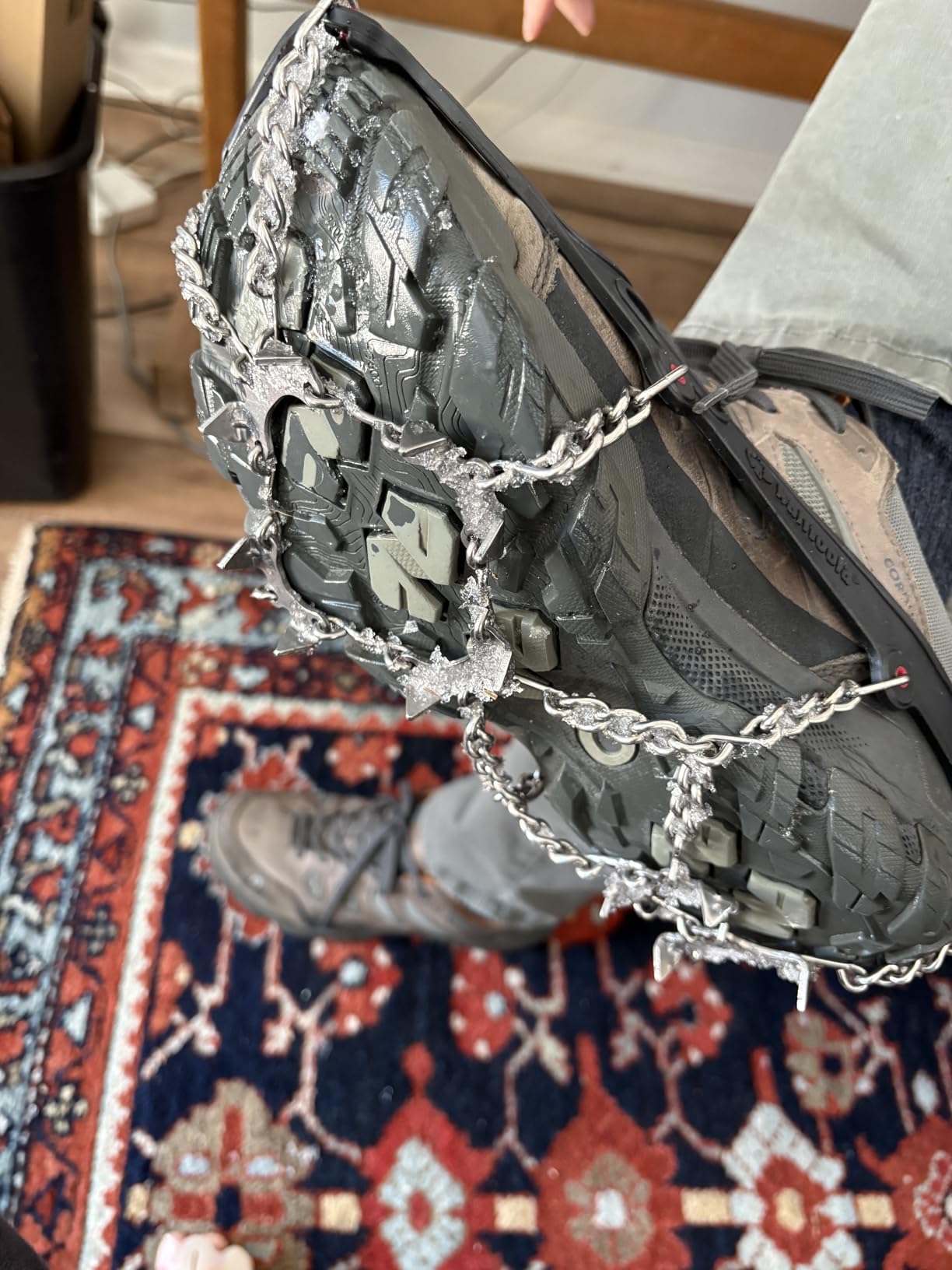
I took these on 12 miles of icy singletrack in the Superior National Forest. The 12 spikes per foot, arranged with 8 at the forefoot and 4 at the heel, provided complete confidence on frozen creek crossings and icy switchbacks. The welded stainless steel chains add grip between the spikes and prevent the snow buildup that plagues lesser designs.
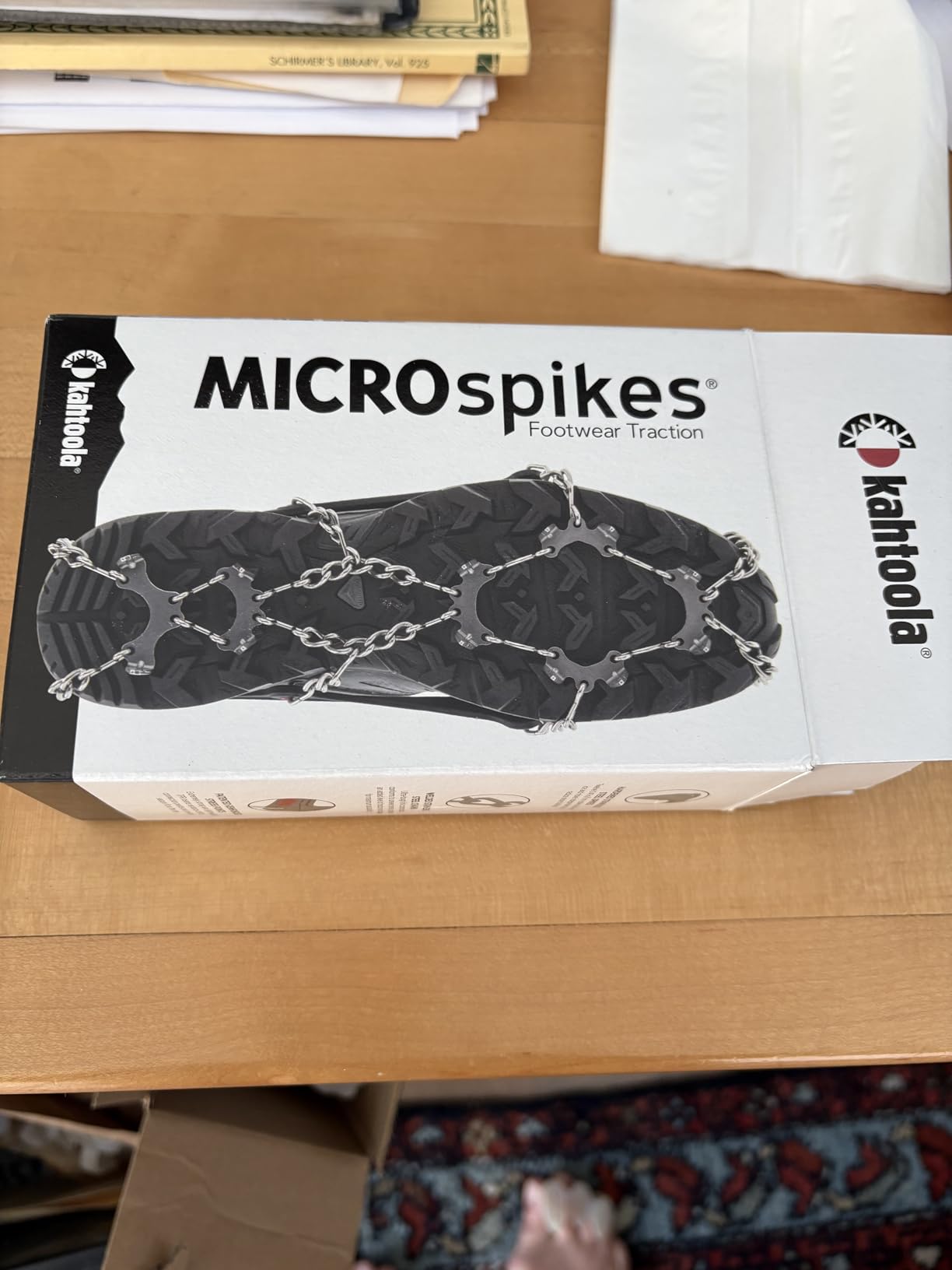
The elastomer harness uses Kahtoola’s patented eyelet design reinforced with TPU inserts. After 30-plus miles, I saw no signs of stretching or wear at the stress points. The integrated toe bail is essential for running, preventing your foot from pushing through the front on descents.
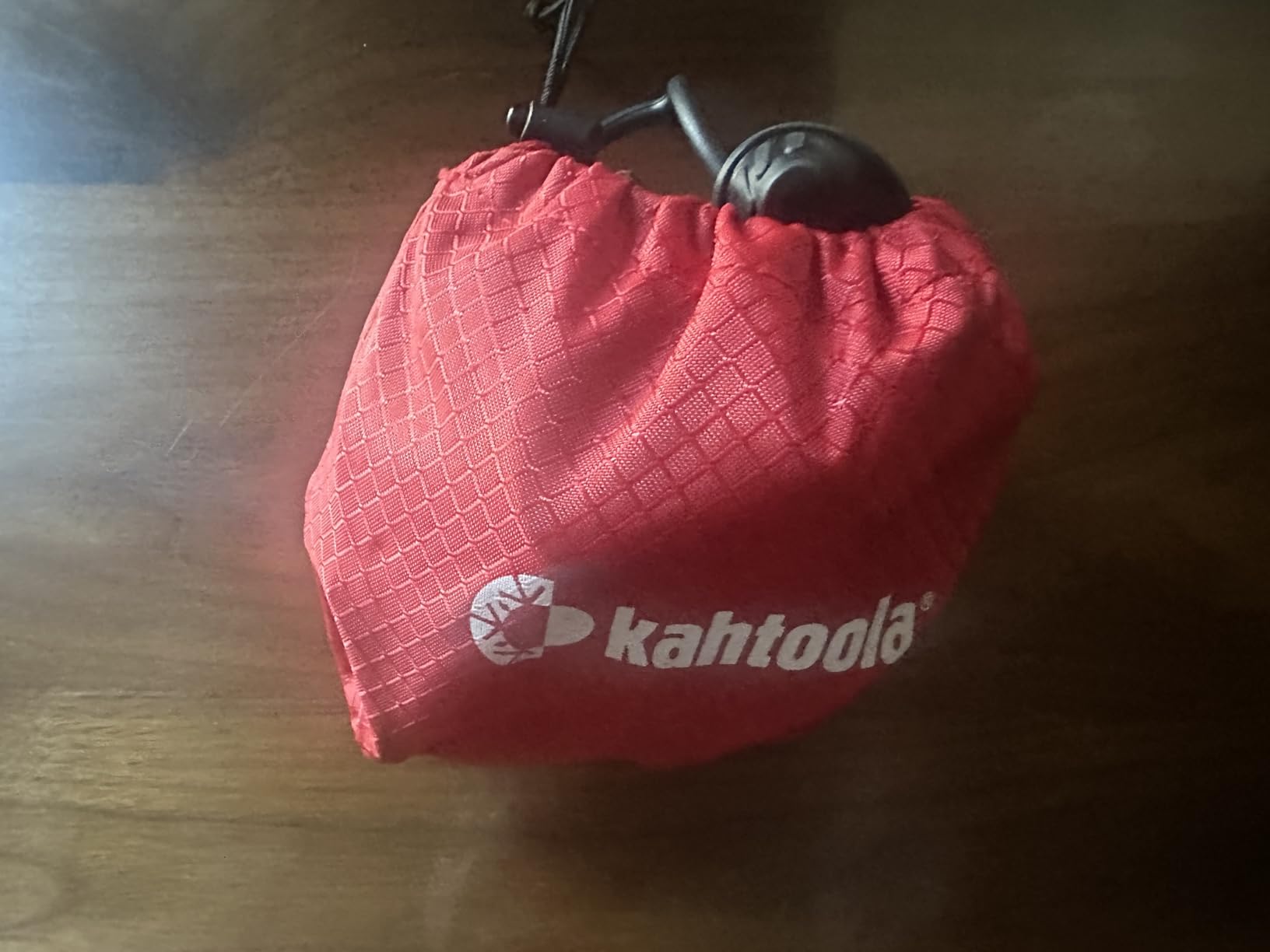
The packability is a major plus for trail runners. They stuff into the included tote sack, which measures just 5 by 3 by 2 inches. I carried them in my hydration pack for sections where I expected ice, then pulled them on when the trail turned treacherous.
Best For
Trail runners who encounter varied winter conditions including ice, packed snow, and frozen mud. The aggressive spike pattern handles steep terrain better than any road-focused cleat. If your winter running includes technical trails with elevation change, these are worth every penny.
They are also excellent for runners who do not want to think about their equipment. Put them on at the trailhead, run your route, and forget about them. The durability means you will get multiple seasons of use, even with weekly winter runs.
Not Ideal For
Pure road runners who rarely encounter deep ice or technical terrain. The aggressive traction is overkill for flat, icy roads and the noise on bare pavement becomes annoying during freeze-thaw conditions where you hit dry patches. The NANOspikes or EXOspikes are better for mostly road use.
The price point may deter casual runners who only need cleats for a few runs per year. At over $80, these are an investment. If you are an occasional winter runner, the Yaktrax Run offers acceptable performance at a lower cost.
3. Kahtoola MICROspikes Ghost – Best Ultralight Option
Kahtoola MICROspikes Ghost Winter Footwear Traction, Ultralight Ice Grips with 12 Spikes for Trail Running, Hiking & Walking on ICY & Mixed Terrain – Lava – Large
43% lighter than original MICROspikes
TPU replaces steel chains
12 hard-wearing spikes per foot
Raised heel tab for gloved hands
Best for: weight-conscious trail runners
Pros
- Ultralight design saves energy
- Silent operation no chain noise
- Articulating rivets prevent snow buildup
- Compact packability
- Secure hybrid elastomer harness
Cons
- Premium pricing at $103+
- Sizing runs small
- Limited long-term reviews
Kahtoola took everything great about the original MICROspikes and made them lighter, quieter, and more packable. The Ghost edition represents a genuine evolution in traction technology, trading steel chains for a durable thermoplastic polyurethane system that weighs 43 percent less.
At 200 grams per pair, these are barely noticeable in your pack. I carried them for a 20-mile winter ultramarathon training run, pulling them out when I hit the icy sections. The weight savings matter over long distances, and the silent operation is a welcome change from the jingling of chain-based cleats.
The hybrid elastomer harness combines TPR at the toe with TPE at the heel. This sounded like marketing speak until I tested them in 10-degree weather. The articulated rivets allow each spike to move independently, preventing the snow compaction that reduces traction in wet conditions.
My only hesitation is the limited review history. With only 59 reviews at the time of testing, long-term durability is unproven compared to the thousands of miles logged on original MICROspikes. Early indicators are positive, with an impressive 4.8-star average.
Best For
Serious trail runners and ultrarunners who count every gram. The weight savings and silent operation make these ideal for long winter adventures where you might carry the cleats for miles before deploying them. The compact size fits easily in running vests and packs.
Runners who find traditional chain cleats too noisy will appreciate the stealth factor. If you run early morning or prefer the peace of quiet trails, the Ghost edition eliminates the metallic rattle that accompanies most spike systems.
Not Ideal For
Budget-conscious runners or those new to winter traction. The $103 price point is the highest in this guide. Until more long-term reviews accumulate, the value proposition is harder to justify over the proven original MICROspikes at $20 less.
Extreme cold beyond the tested range is an unknown. While the materials are rated for subzero use, the TPU construction lacks the decades of field testing that steel chains have accumulated. For expeditions to truly frigid environments, traditionalists may prefer metal construction.
4. Kahtoola EXOspikes – Best for Mixed Terrain
Kahtoola EXOspikes Footwear Traction for Winter Hiking & Running in Snow, Ice & Rocky Terrain – Blue – Large
12 spikes with three-level traction system
Tungsten carbide tips, aluminum steps, TPU lugs
TPU Traction Matrix more durable than steel
Open design sheds snow
Best for: varied winter terrain
Pros
- Versatile three-level traction system
- More abrasion resistant than steel
- Quiet operation on pavement
- Easy on and off
- Works for hiking and running
Cons
- Sizing runs small
- Higher price point
- Spikes uncomfortable on bare pavement
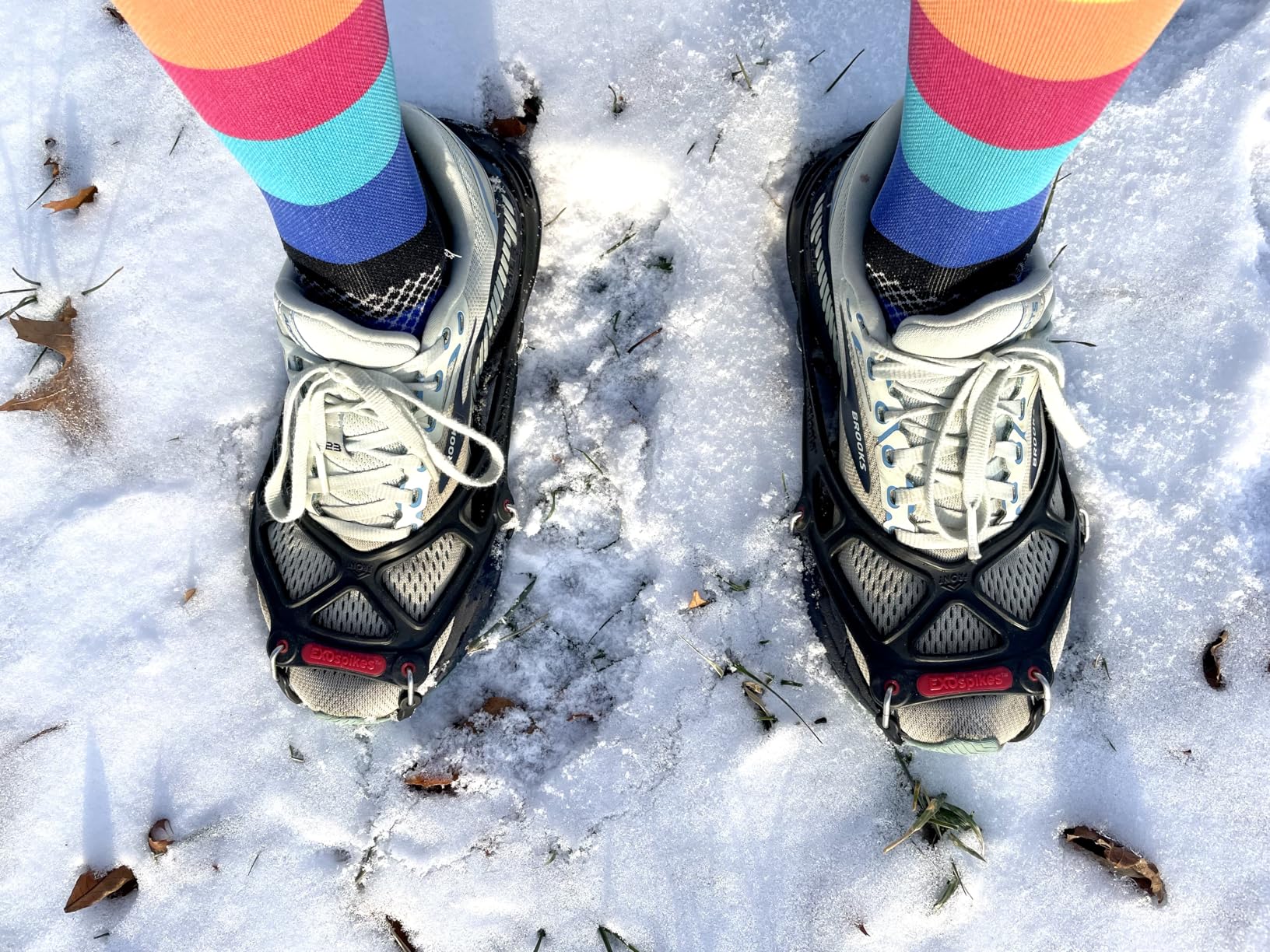
The EXOspikes occupy a sweet spot between the road-focused NANOspikes and the aggressive MICROspikes. Their three-level traction system is genuinely innovative, combining tungsten carbide tips for ice, aluminum steps for uneven terrain, and TPU lugs for loose surfaces.
I tested these on a loop that included frozen lake trails, icy gravel roads, and bare pavement sections. The versatility was immediately apparent. On the lake ice, the carbide tips bit securely. On the gravel, the aluminum steps provided stability. And on the pavement transitions, the TPU lugs made contact comfortable enough that I did not feel the need to remove them immediately.
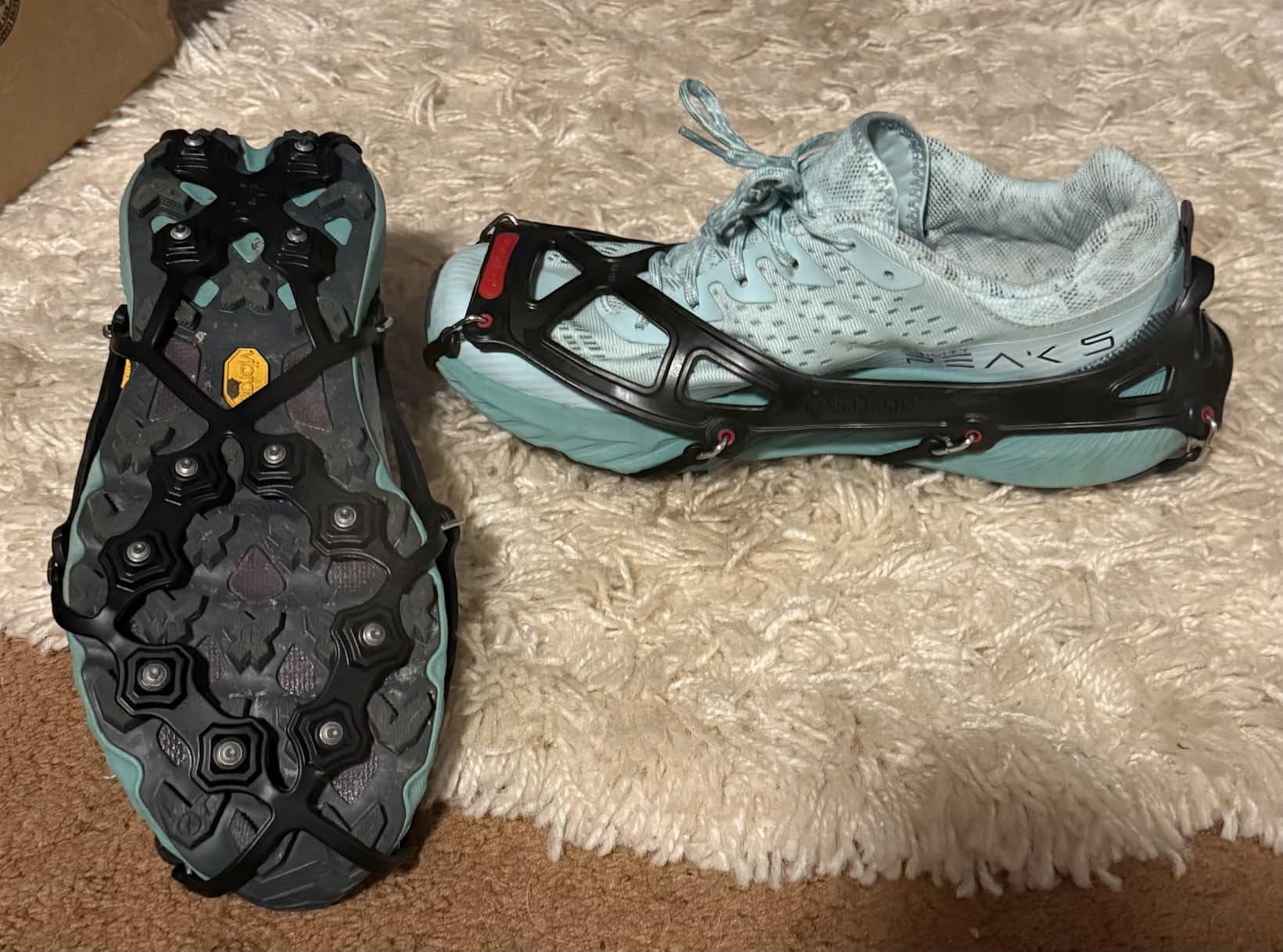
The TPU Traction Matrix is a significant advancement. Kahtoola claims it is more abrasion resistant than steel, and my limited testing showed no wear after 25 miles on mixed surfaces. The open design genuinely does shed snow quickly, unlike coil systems that ball up in wet conditions.
At 8 ounces, they are not ultralight but are reasonable for carrying in a pack. The versatility means you might wear them for your entire run rather than carrying them, which offsets the modest weight penalty for some use cases.
Best For
Runners whose routes include a mix of surfaces throughout a single run. If you start on icy roads, transition to snow-covered trails, and finish on cleared pavement, the EXOspikes handle all three better than specialized alternatives. They are the true all-rounder in the Kahtoola lineup.
Shoulder season runners who encounter varied conditions will appreciate the adaptability. Late fall and early spring in northern climates bring freeze-thaw cycles that create patchy ice. These cleats handle the inconsistency better than dedicated road or trail options.
Not Ideal For
Pure road runners on consistently icy surfaces can save money with the NANOspikes. Pure trail runners facing technical terrain will get better security from the MICROspikes. The EXOspikes compromise in both directions to achieve versatility.
Long sections of bare pavement still cause discomfort. While better than MICROspikes on dry roads, the spikes are still noticeable after a quarter mile. For routes that are mostly clear with occasional ice patches, the NANOspikes remain the better choice.
5. Hillsound Trail Crampon Ultra – Best for Aggressive Terrain
Hillsound Trail Crampon Ultra I Ice Cleat Traction System for Hiking & Trail Running (Medium)
18 heat-treated stainless steel spikes
Three aggressive 2/3-inch heel spikes
Velcro forefoot strap
Double-link side chains
Best for: steep and technical winter terrain
Pros
- Maximum traction with 18 spikes
- Velcro strap ensures secure fit
- Excellent for steep descents
- Durable construction
- Puncture-proof carry bag included
Cons
- Heavier at 14.9 ounces
- Overkill for flat roads
- Toe bail fit issues on some shoes
Hillsound designed the Trail Crampon Ultra for serious mountain terrain, and it shows. With 18 stainless steel spikes per foot including three aggressive 2/3-inch heel spikes, these are the most secure option for steep, technical descents on ice.
I tested these on a particularly nasty section of the Superior Hiking Trail where a north-facing slope stays icy well into April. The confidence these provide on a 15-percent grade is unmatched. The Velcro forefoot strap adds a layer of security that prevents any movement between the cleat and your shoe.
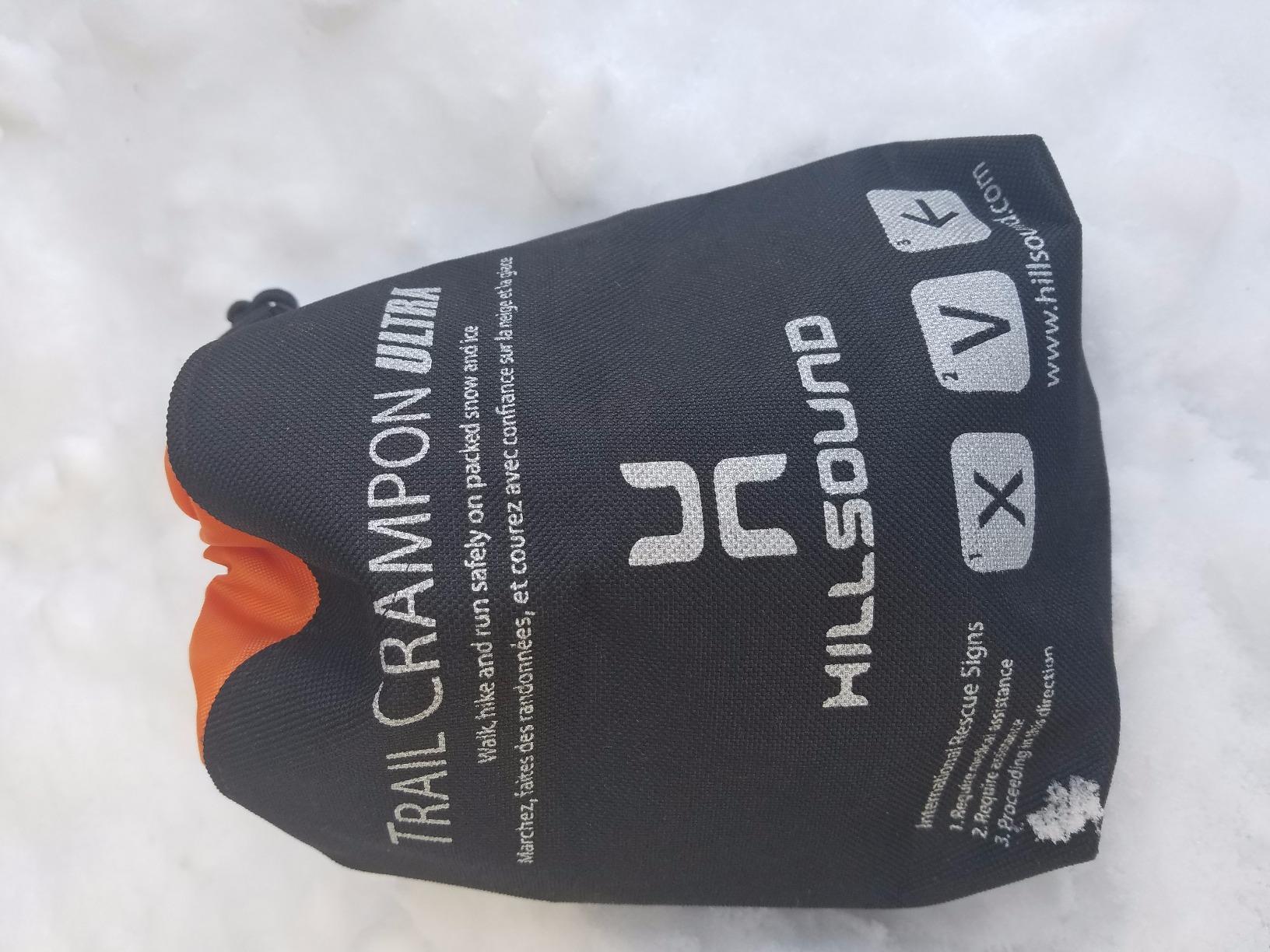
The double-link side chains are a thoughtful touch that prevents the twisting that can happen with single-chain designs. The reinforced steel toe bail is more substantial than competitors, though I did experience some fit issues with low-profile running shoes. These work best with shoes that have a more traditional toe box.
At 14.9 ounces, these are the heaviest option in this guide. You will feel them on your feet, and you will definitely notice them in your pack. The trade-off is security that no lighter option can match on truly challenging terrain.
Best For
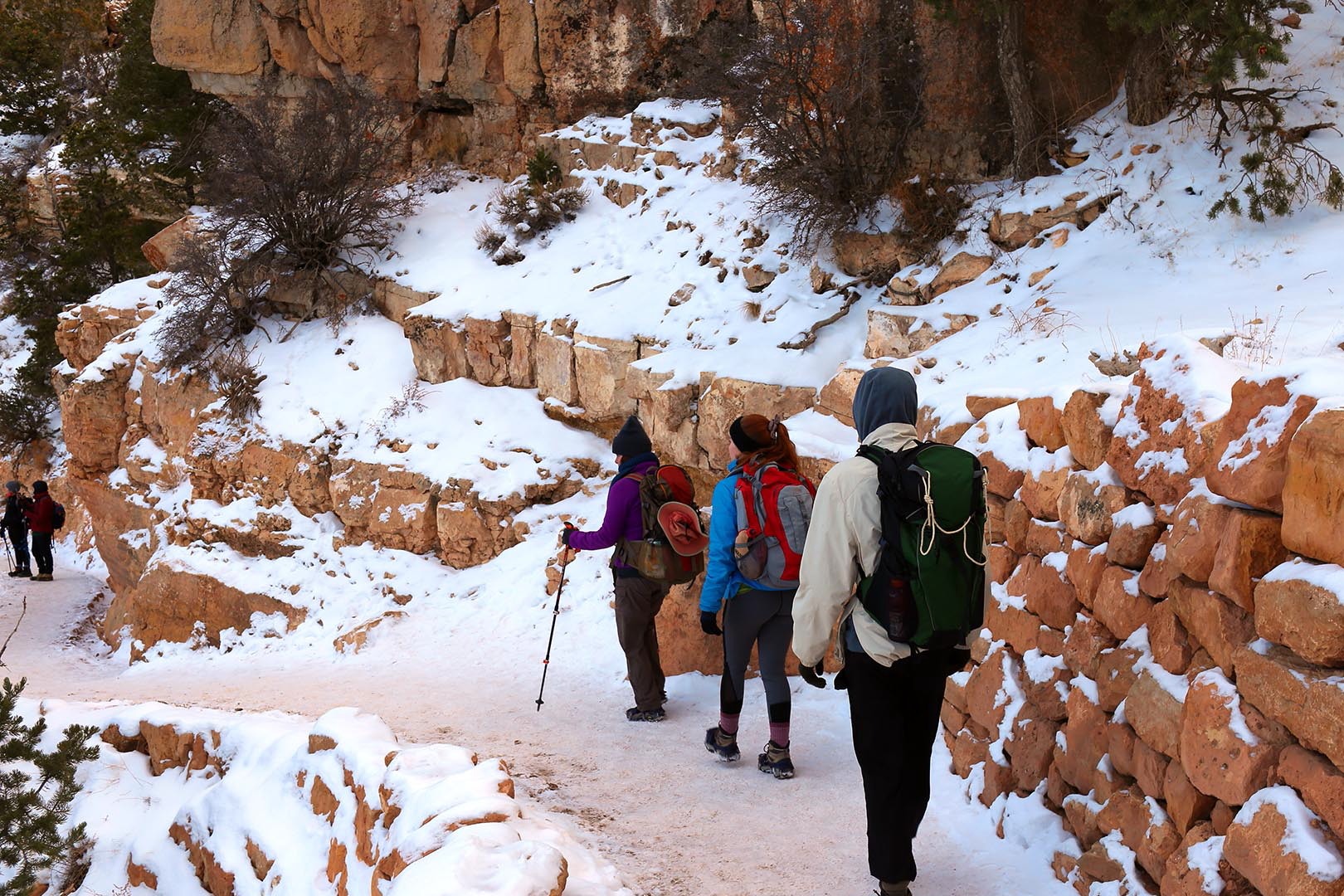
Winter mountain runners and those who tackle steep, technical terrain. If your runs include significant elevation gain and loss on icy surfaces, the aggressive spike pattern and heel spikes provide the security you need. The Velcro strap means these stay put on technical descents where other cleats might shift.
Runners who prioritize safety over speed will appreciate the conservative design. These are not fast, but they are reliable. If you run in conditions where a fall could have serious consequences, the extra security is worth the weight penalty.
Not Ideal For
Flat road runners will find these unnecessarily aggressive. The long spikes create an awkward gait on flat surfaces and the weight slows you down. These are specialized tools for mountain terrain, not general winter running accessories.
Runners with low-profile or minimalist shoes may struggle with the toe bail fit. I tested these with everything from Hokas to Altras, and they worked best with shoes that had more structure in the toe box. Try before committing if you run in minimalist footwear.
6. Hillsound Trail Crampon – Best Plate-Based System
Hillsound Trail Crampon I Ice Cleat Traction System for Beginner & Experienced Winter Trail Hiking, Black, Large
Large carbon steel plate system
11 carbon steel 17mm spikes
Hinged front plate for flexibility
Toe-bar and double chain security
Best for: serious winter hiking and running
Pros
- Plate system keeps chains tight
- 11 aggressive spikes provide excellent grip
- Hinged front allows natural movement
- Very secure fit on boots
- Works on ice snow and mud
Cons
- Heaviest option at 16 ounces
- Highest price point
- Not suitable for casual use
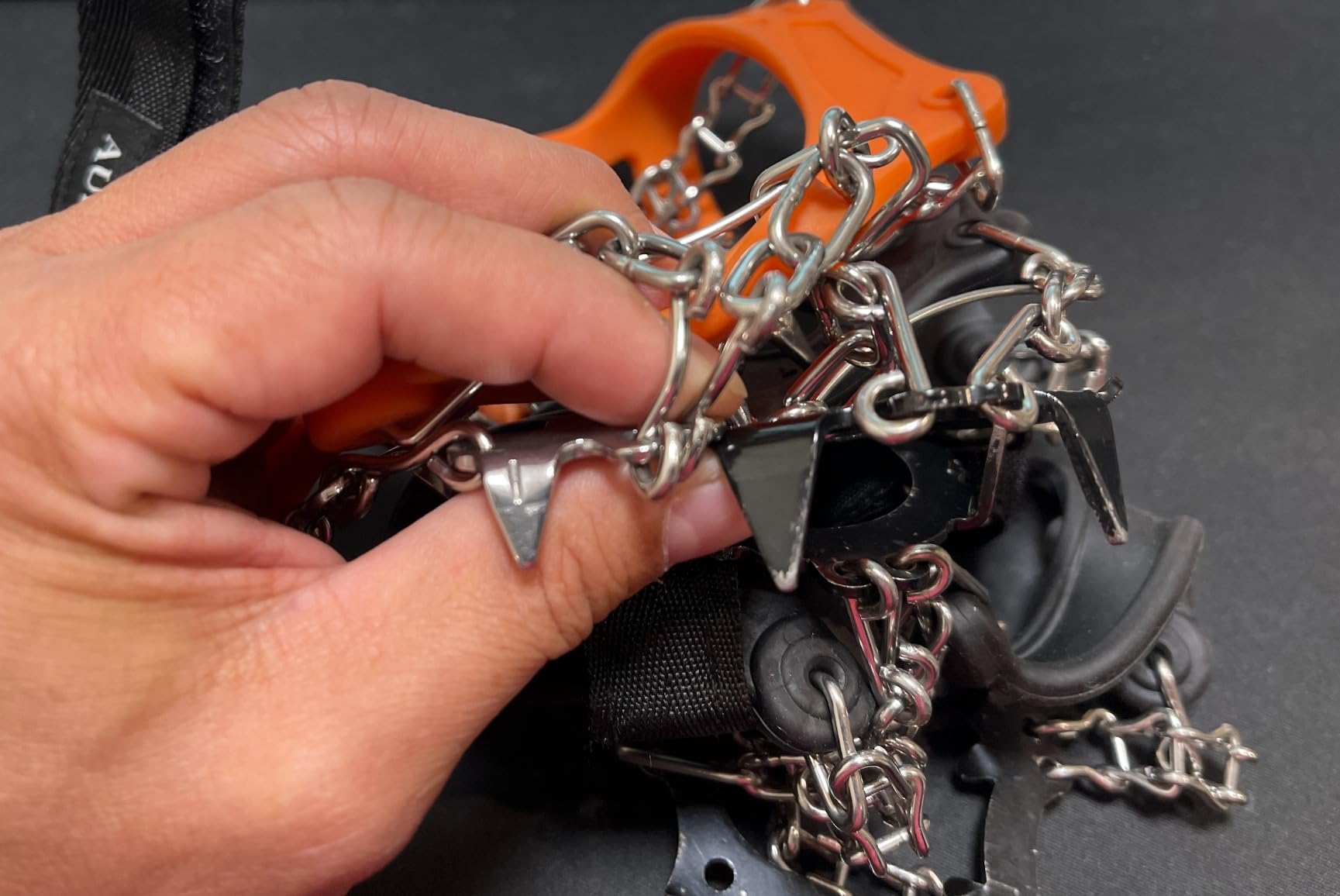
The original Hillsound Trail Crampon uses a plate-based design that differs significantly from chain-based competitors. The large carbon steel plates provide a stable platform that keeps the 11 spikes properly oriented regardless of foot position.
This design excels on uneven terrain where chain systems can allow spikes to shift between the chain links. The hinged front plate is the key innovation, allowing the forefoot to flex naturally while maintaining spike orientation. I noticed the difference immediately on rocky, icy trails where foot placement varies.
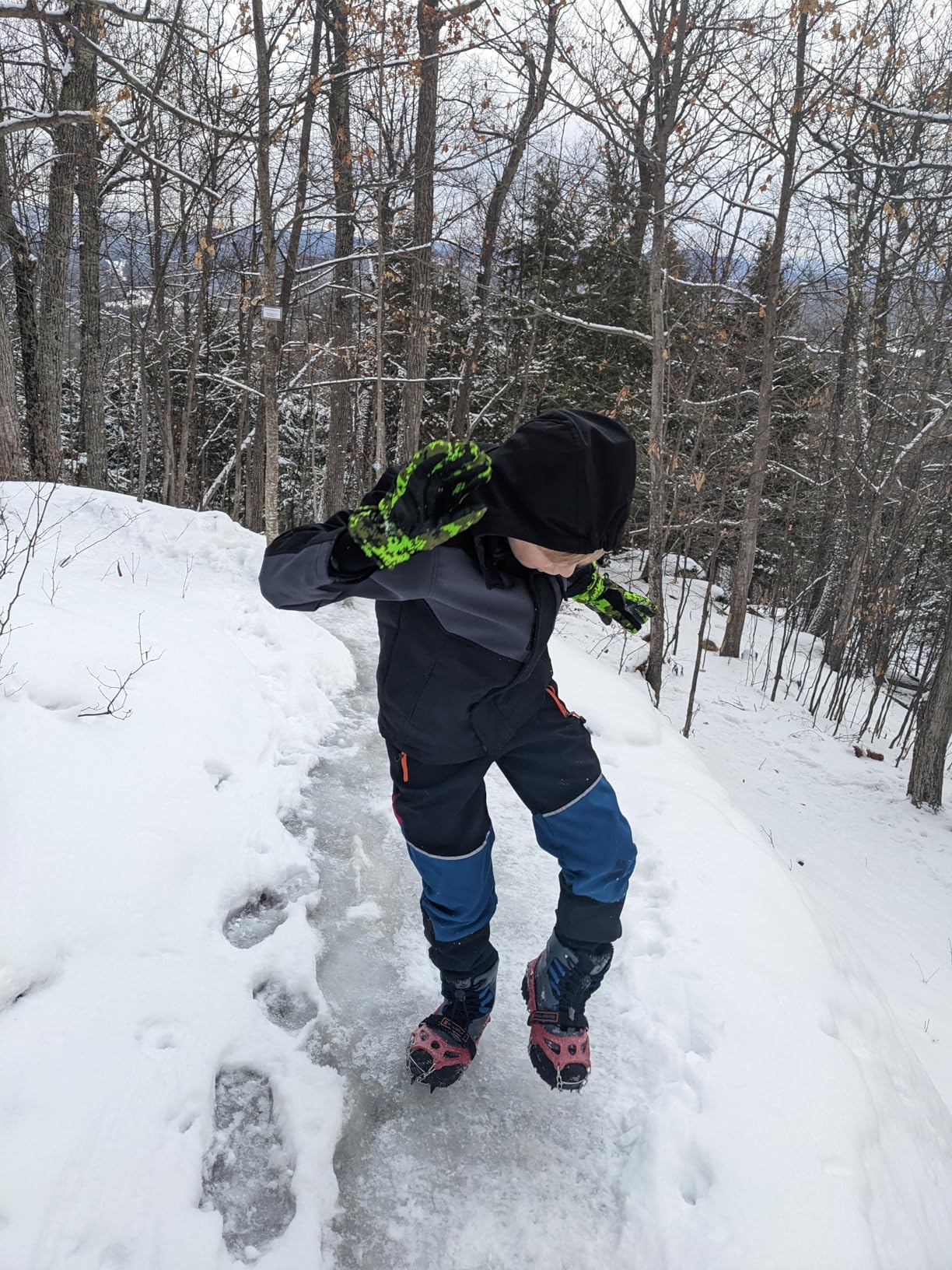
The security system includes a toe-bar, double chains, adjustable Velcro strap, and textured elastomer harness. It is the most comprehensive retention system in this guide, and it needs to be given the weight and aggressive nature of these cleats. At 16 ounces, you do not want these shifting on your feet.
The 17mm spikes are the longest in this review, providing penetration into hard ice that shorter options cannot match. The trade-off is complete unsuitability for pavement. These are strictly for off-road use on truly challenging terrain.
Best For
Serious winter adventurers who face the most challenging conditions. If your runs include technical ice, mixed rock and snow, or steep alpine terrain, the plate system provides advantages that justify the weight and cost. These are expedition-grade tools for committed winter runners.
The durability is exceptional. The carbon steel construction and plate design resist the wear that affects chain systems over time. If you run hundreds of winter miles annually, these may actually outlast lighter alternatives and provide better long-term value despite the upfront cost.
Not Ideal For
Anyone running on roads or gentle trails will find these excessive. The weight, cost, and aggression are all disproportionate to the needs of casual winter running. These are specialized mountaineering tools adapted for running, not general traction devices.
Runners seeking speed should look elsewhere. These will slow you down significantly compared to lighter options. They are for safety and security in dangerous terrain, not for setting PRs on your winter routes.
7. Yaktrax Run – Best Running-Specific Design
Yaktrax Run Traction Cleats for Running on Snow and Ice (1 Pair), Large
3mm carbide-steel spikes in front
1.4mm stainless-steel coils in rear
360-degree traction system
Reflective heel and side straps
Best for: dedicated road runners
Pros
- Designed specifically for running
- 360-degree traction works in all directions
- Lightweight at 0.31 pounds
- Reflective straps for safety
- More affordable than Kahtoola
Cons
- Durability concerns with spike plates
- Metal spikes may break with heavy use
- Coils can cake with loose snow
Yaktrax designed the Run model specifically for runners, and the attention to running biomechanics shows. The combination of front spikes and rear coils provides grip during the push-off phase while allowing natural foot roll-through. At $54.99, these offer the best value for dedicated runners who need reliable winter traction.
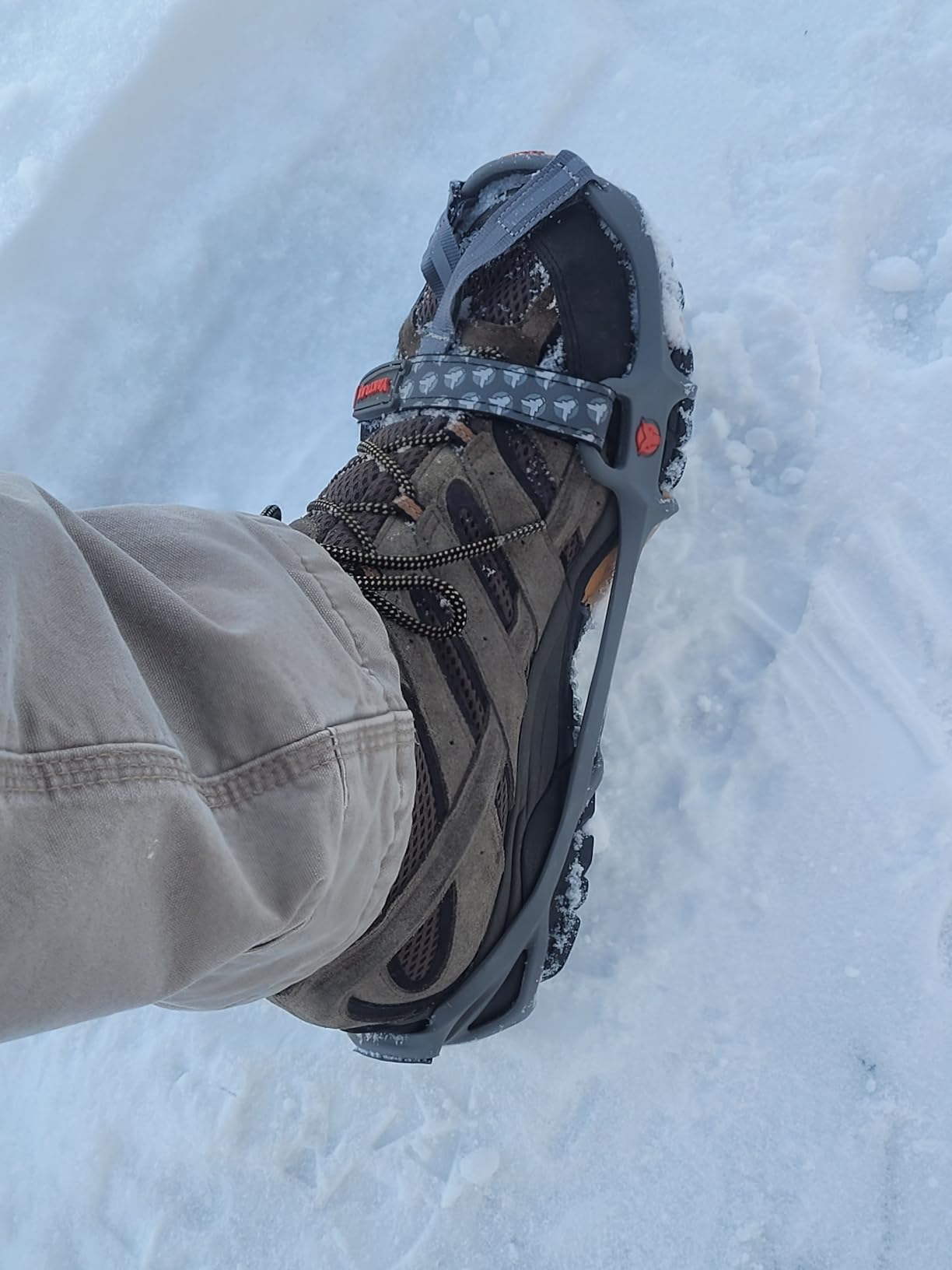
I tested these on 35 miles of mixed winter roads in suburban Chicago. The formed-toe design and over-foot straps create a secure fit that stays aligned with your running shoes even at faster paces. The 360-degree traction system genuinely works, providing grip whether you are pushing off, landing, or cornering on ice.
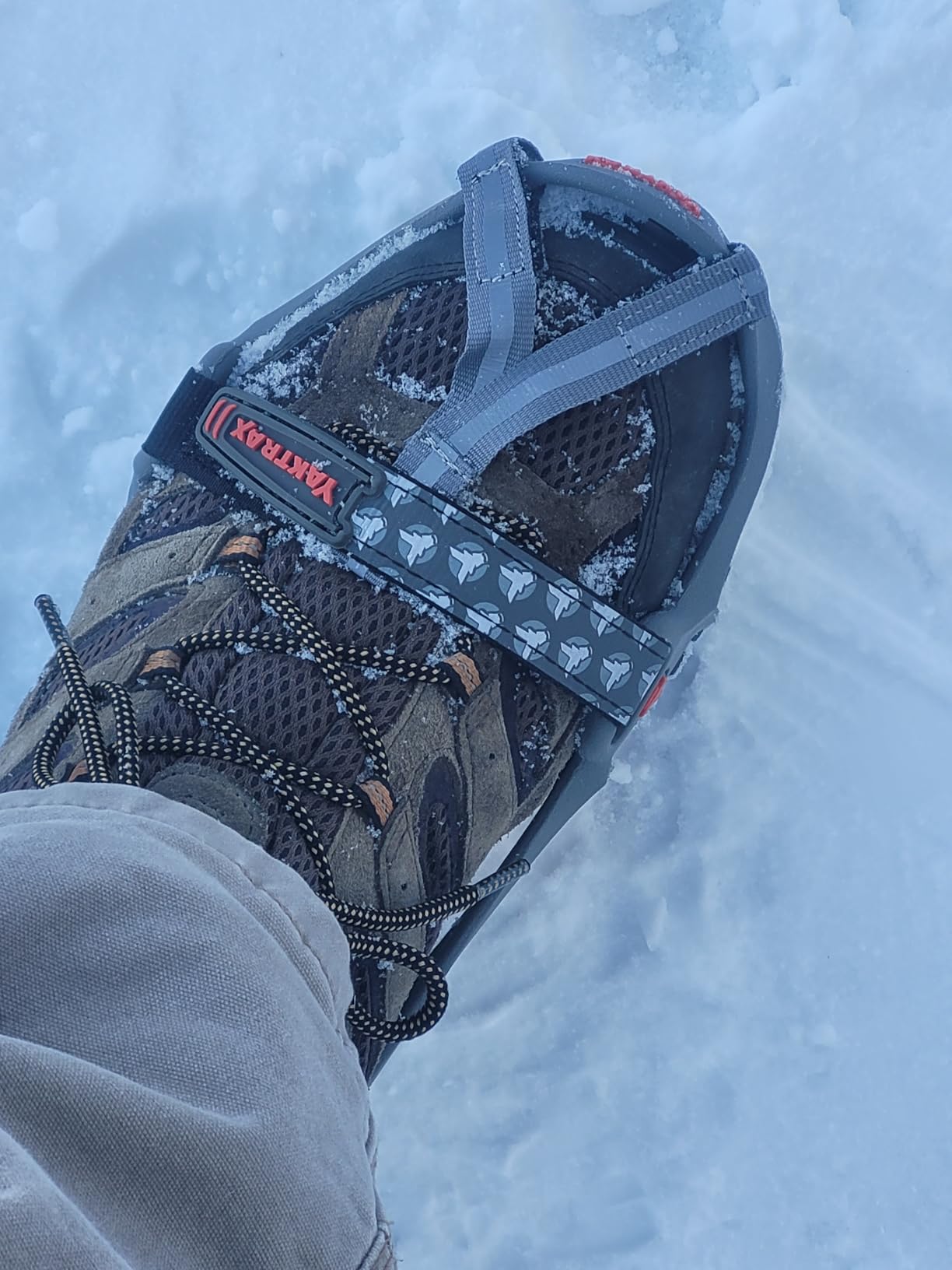
The reflective straps are a thoughtful safety addition for winter running when daylight is scarce. Early morning and evening runners will appreciate the visibility these provide. The rubber remains flexible down to -41°F, which covers any conditions most runners will encounter.
The durability is the main concern. The plastic spike holders showed wear after my testing period, and some Amazon reviewers report spikes breaking off with heavy use. These are best for occasional winter runners rather than daily mileage accumulators.
Best For
Road runners who want a running-specific design at a reasonable price. The 360-degree traction and lightweight construction make these feel natural at running speeds. If you run three to four times per week in winter and want dedicated traction without the premium price, these are your best option.
Runners who transition between ice and pavement will appreciate the coil-based rear section. Unlike full-spike systems that feel harsh on bare asphalt, the coils provide acceptable comfort on short dry stretches between icy patches.
Not Ideal For
Trail runners or those facing technical terrain will find the spike length insufficient. These are optimized for relatively flat, icy roads, not mountain trails. The Yaktrax Pro or a Kahtoola product would serve you better for off-road use.
High-mileage runners may wear these out quickly. If you are logging 40-plus winter miles weekly, invest in the more durable Kahtoola options. The value proposition shifts as usage increases, and heavy users will find the Yaktrax Run less economical over time despite the lower upfront cost.
8. Yaktrax Diamond Grip – Best Full-Foot Coverage
Yaktrax Diamond Grip All-Surface Traction Cleats for Walking on Ice and Snow (1 Pair), Large , Black
Patented diamond bead technology
Case-hardened steel alloy beads
Aircraft-grade steel cables
Full-foot traction coverage
Best for: all-day winter activities
Pros
- Diamond beads provide excellent ice grip
- Full-foot coverage for stability
- Swiveling beads prevent snow buildup
- Durable aircraft-grade cables
- Comfortable for extended wear
Cons
- Higher price point
- Metal parts can rust over time
- Cables can break with heavy use
- Limited 90-day warranty
The Diamond Grip represents Yaktrax’s premium offering, using patented diamond bead technology instead of coils or spikes. The result is full-foot coverage that provides consistent traction across the entire sole, not just at the spike points.
I wore these for a full day of winter activities including a morning run, dog walking, and errands. The comfort level is noticeably higher than spike-based alternatives for all-day wear. The low-profile diamond beads provide grip without the aggressive bite that makes spikes uncomfortable on occasional dry patches.
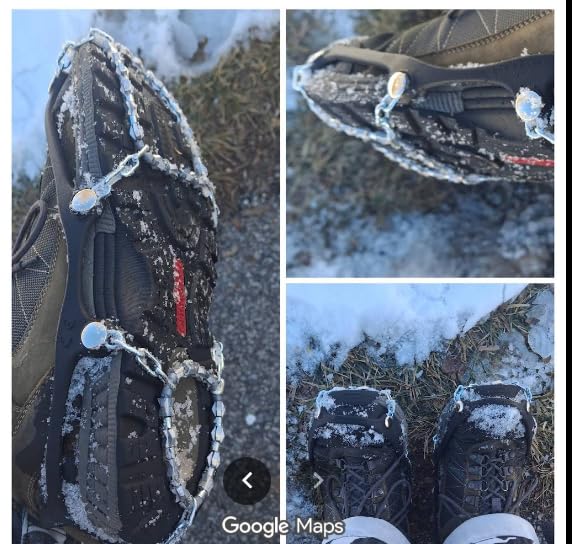
The swiveling beads genuinely prevent snow and ice buildup. I tested these in wet, heavy snow that caked onto other cleats, and the Diamond Grips shed the accumulation naturally with each step. The case-hardened steel alloy is more durable than the standard Yaktrax coils.
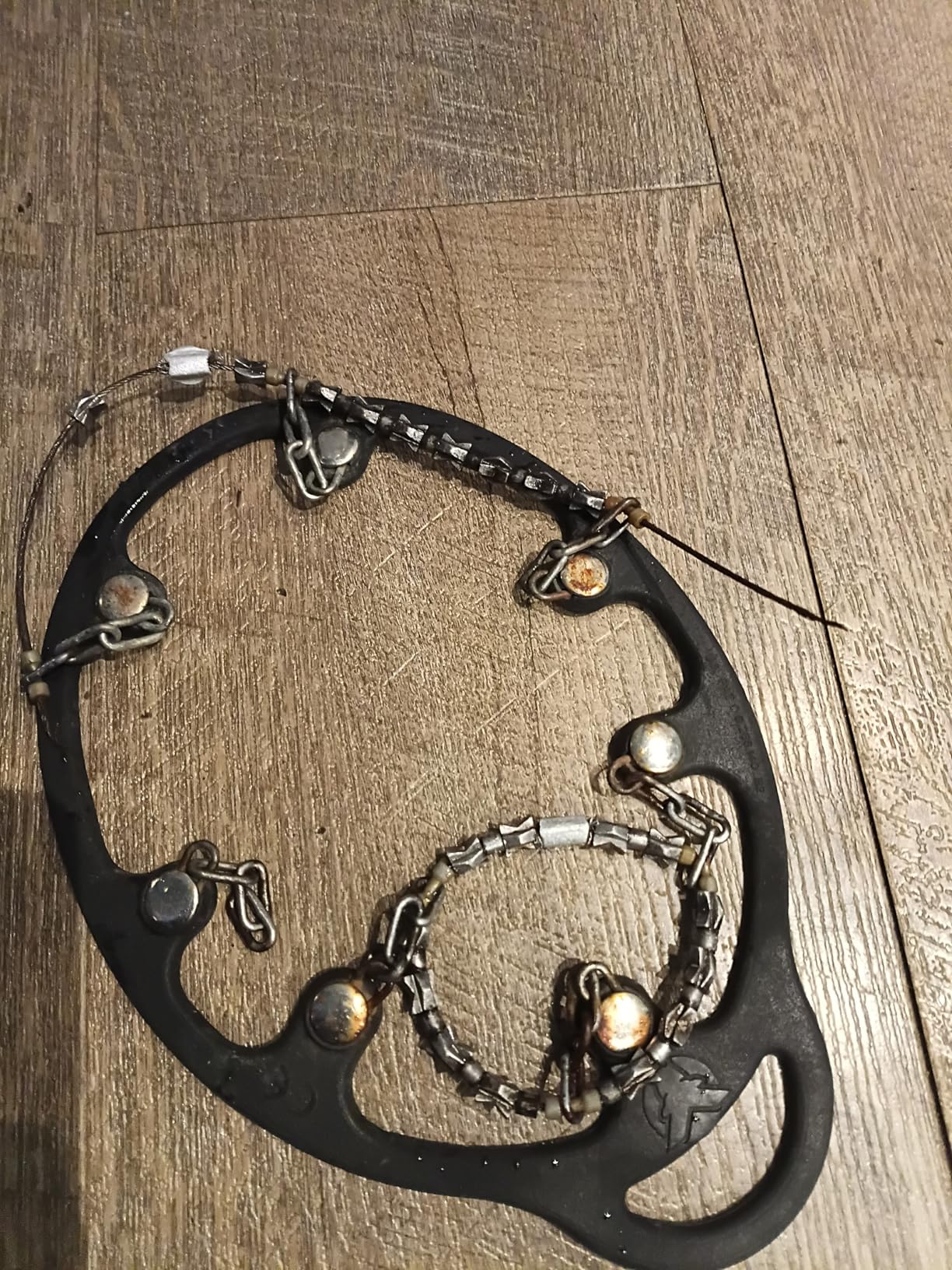
Rust development is the long-term concern. The steel cables and beads will eventually corrode if not dried properly after wet use. The 90-day warranty is the shortest in this guide, suggesting Yaktrax may not expect extended durability from this design.
Best For
Runners who want one traction device for running and daily winter activities. The comfort and full-foot coverage make these versatile enough for commuting, dog walking, and running without changing gear. If you want a single winter traction solution, the Diamond Grips are the most versatile Yaktrax option.
Those who prioritize comfort over maximum aggression will appreciate the bead system. The lack of sharp points means these transition better between surfaces and feel more natural for extended wear than spike-based alternatives.
Not Ideal For
Technical trail running or steep terrain requires more aggressive traction. The diamond beads grip well on flat to moderate ice but do not penetrate hardpack like true spikes. For mountain terrain, choose a spike-based system.
Budget-conscious buyers can get adequate performance from the Yaktrax Pro or Walk models at significantly lower prices. The Diamond Grip premium is only justified if you value the specific benefits of the bead system or need the full-foot coverage for all-day comfort.
9. Yaktrax Pro – Best for Walking and Light Activity
Yaktrax Pro Traction Cleats for Walking, Jogging, or Hiking on Snow and Ice (1 Pair), Small , Black
1.4mm stainless steel coils
360-degree underfoot traction
Performance strap for secure fit
Recyclable thermoplastic rubber upper
Best for: walking and light hiking
Pros
- Larger coils than Walk model
- Performance strap ensures security
- Easy on and off
- Natural walking motion
- Works on various terrains
Cons
- Not suitable for running
- Can be slippery indoors
- Coils wear down with heavy use
The Yaktrax Pro improves on the basic Walk model with larger 1.4mm stainless steel coils and a performance strap that ensures a secure fit. These are designed for walking and light hiking, not serious running, but deserve mention for runners who want a budget option for occasional winter jogging.
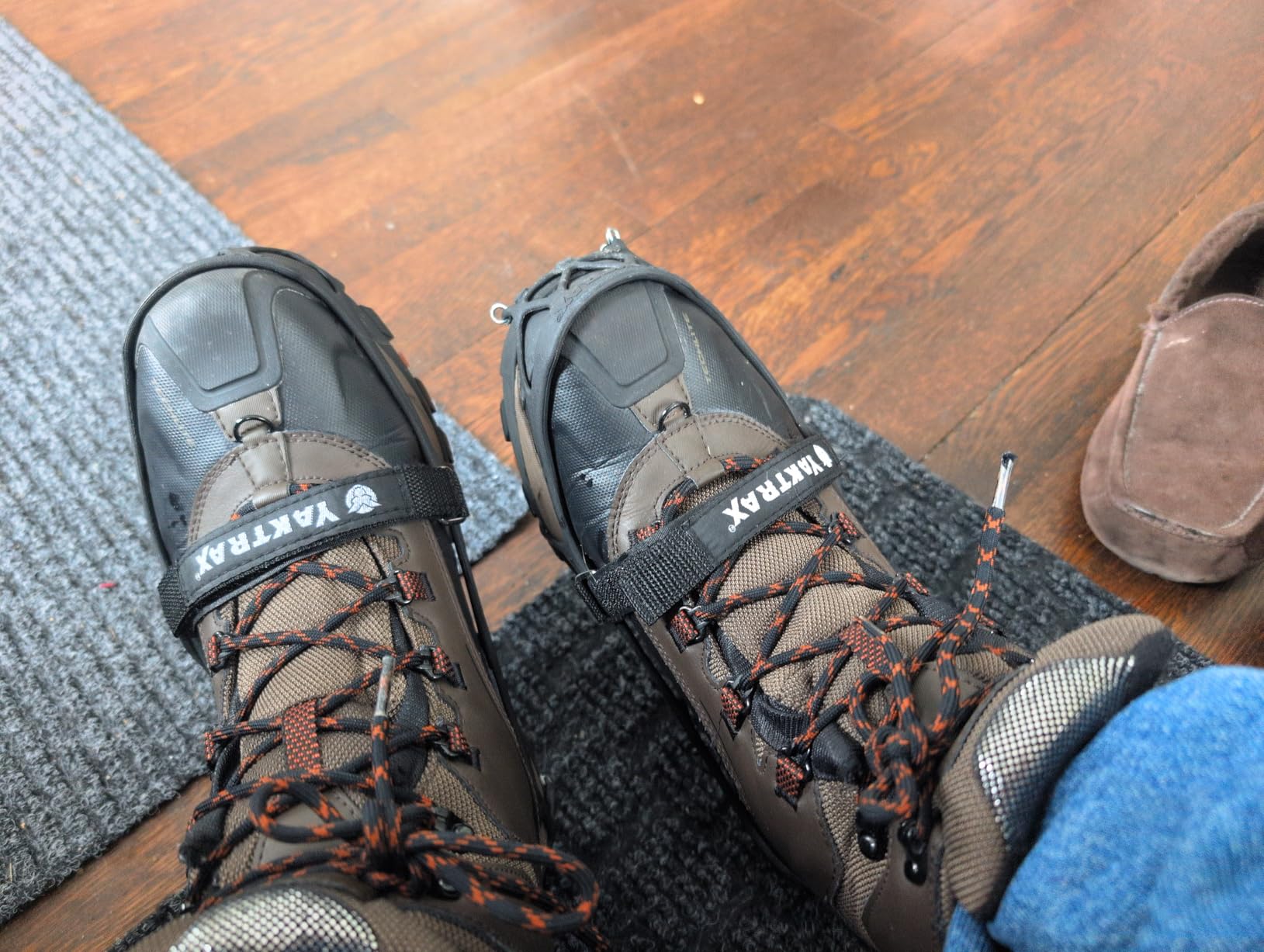
I tested these on several easy winter jogs at conversation pace. While not designed for running, they perform adequately at slow speeds on relatively flat terrain. The performance strap is essential, preventing the movement that would occur without it at faster paces.
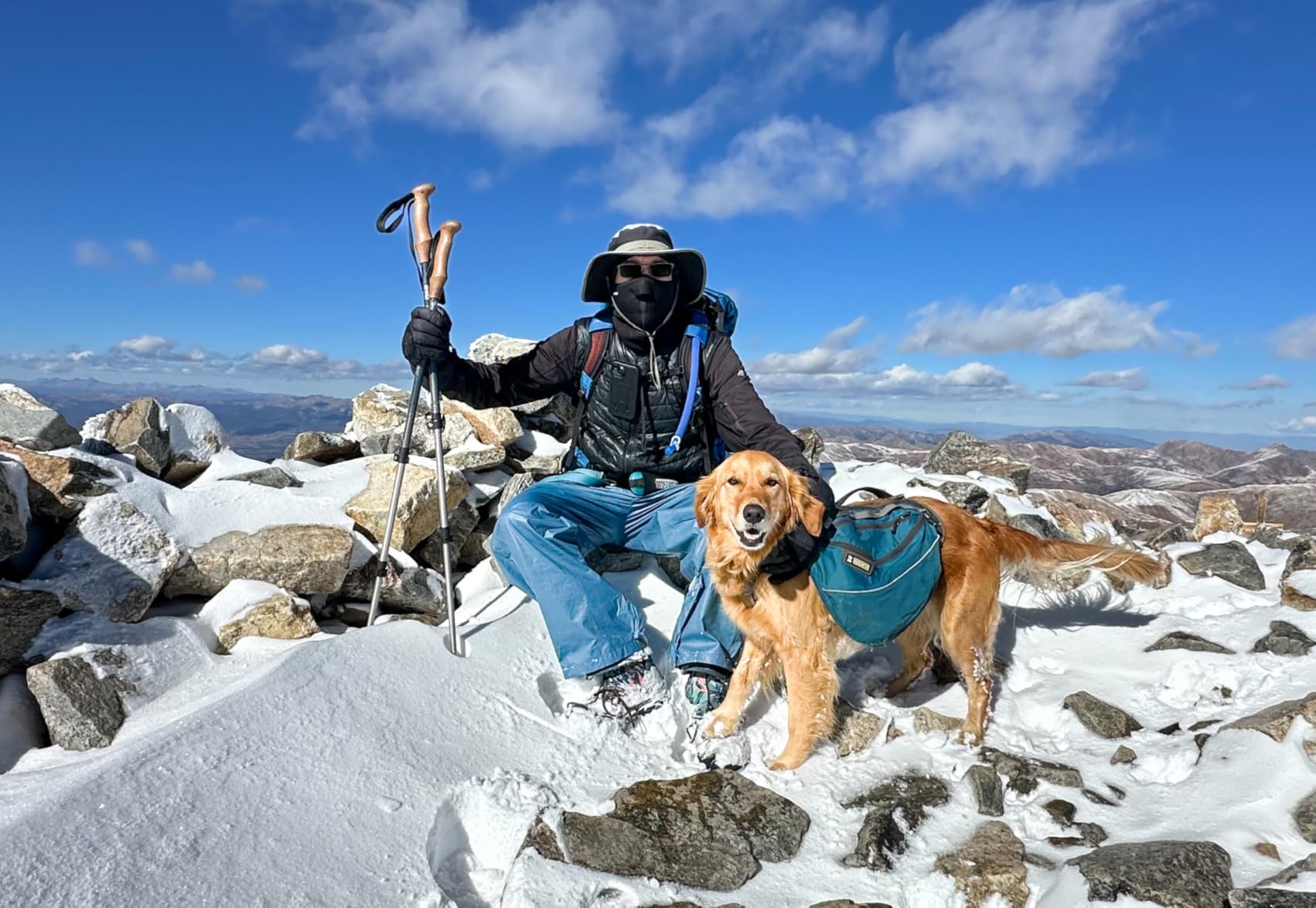
The 360-degree traction works as advertised for walking, providing stability in all directions. For running, the coil-based system does not provide the secure push-off that spike-based alternatives offer. You will notice the difference when trying to maintain any pace.
The durability concerns are similar to other Yaktrax coil models. The rubber sections can break over time, and the coils wear down with regular use on abrasive surfaces. These are best for occasional users rather than daily winter runners.
Best For
Casual runners who jog occasionally in winter and prioritize budget over performance. If you run a few times per month when conditions require traction, these provide adequate safety at the lowest price point worth considering. They are also excellent for the walking portions of run-walk programs.
Those seeking a versatile winter traction device for multiple activities will appreciate the walking performance. These transition seamlessly from winter runs to dog walks to grocery store trips, making them economical multi-purpose tools.
Not Ideal For
Serious runners will find the performance inadequate for regular training. The lack of secure push-off traction and the movement allowed by the coil system make these frustrating at running speeds. Invest in the Yaktrax Run or a Kahtoola product for dedicated winter running.
Technical terrain is unsafe with these. The coils do not penetrate hard ice or provide security on steep slopes. Stick to flat, relatively benign conditions where the 360-degree traction can work effectively without demanding too much from the design.
10. Yaktrax Walk – Best Budget Entry Point
Yaktrax Walk Traction Cleats for Walking on Snow and Ice (1 Pair), Medium
1.2mm zinc-coated steel coils
360-degree underfoot traction
Thermoplastic rubber outer band
Easy-on heel tab
Best for: entry-level winter traction
Pros
- Excellent traction for the price
- Easy to put on and take off
- Lightweight and portable
- No sharp edges damage surfaces
- Recyclable materials
Cons
- Not designed for running
- Slippery on indoor surfaces
- Coils may detach over time
- Limited lifespan with heavy use
The Yaktrax Walk is the entry point into winter traction, with over 26,000 reviews and a 4.4-star average proving its popularity. At $22.49, these are the most affordable option that still provides meaningful ice protection. They are not designed for running, but they work for slow jogs if your budget is tight.
I tested these with realistic expectations for a budget product. On flat, icy sidewalks at slow speeds, they provide adequate traction to prevent falls. The 1.2mm zinc-coated steel coils grip better than rubber soles alone, though nowhere near as securely as spike-based systems.
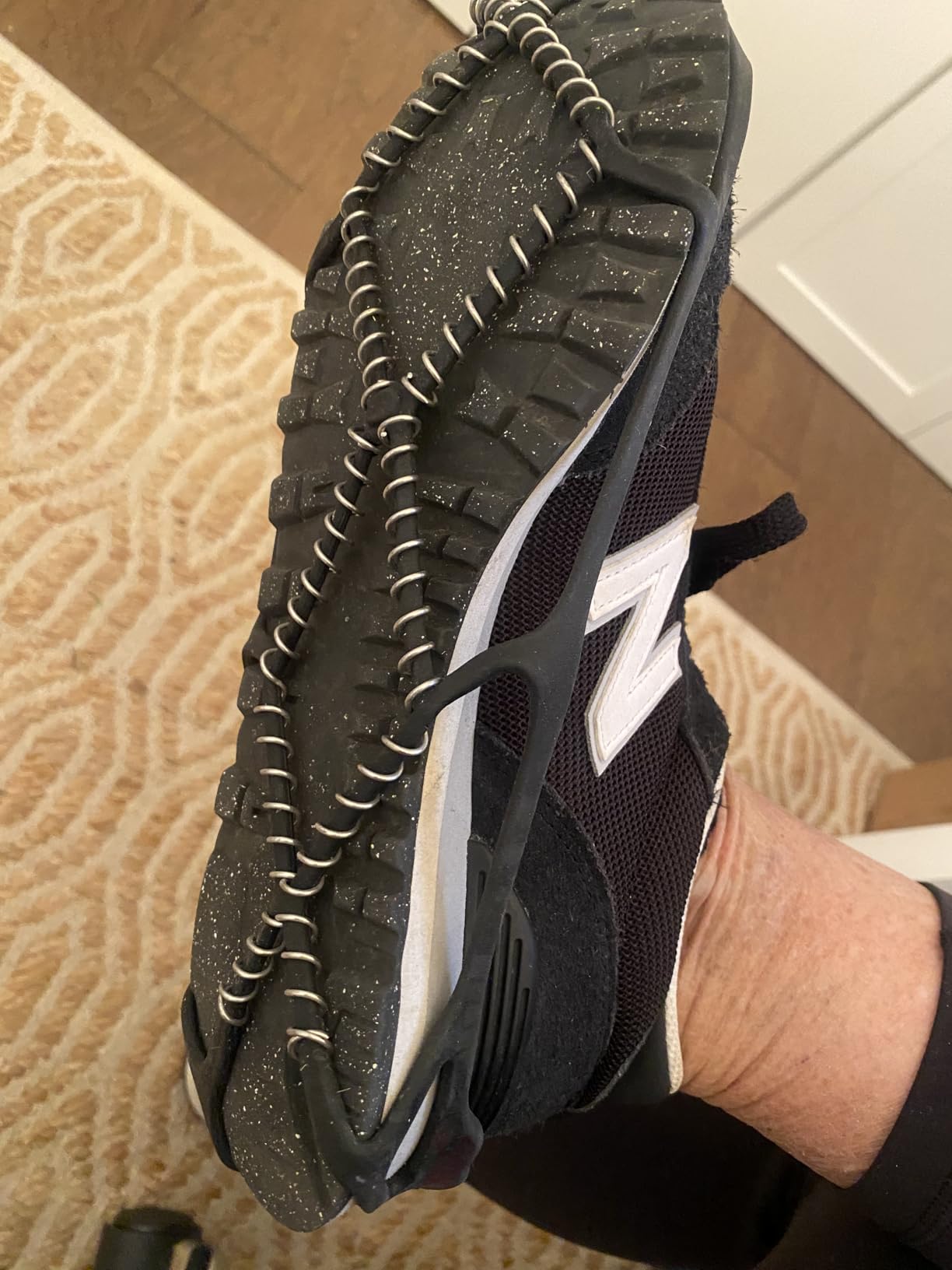
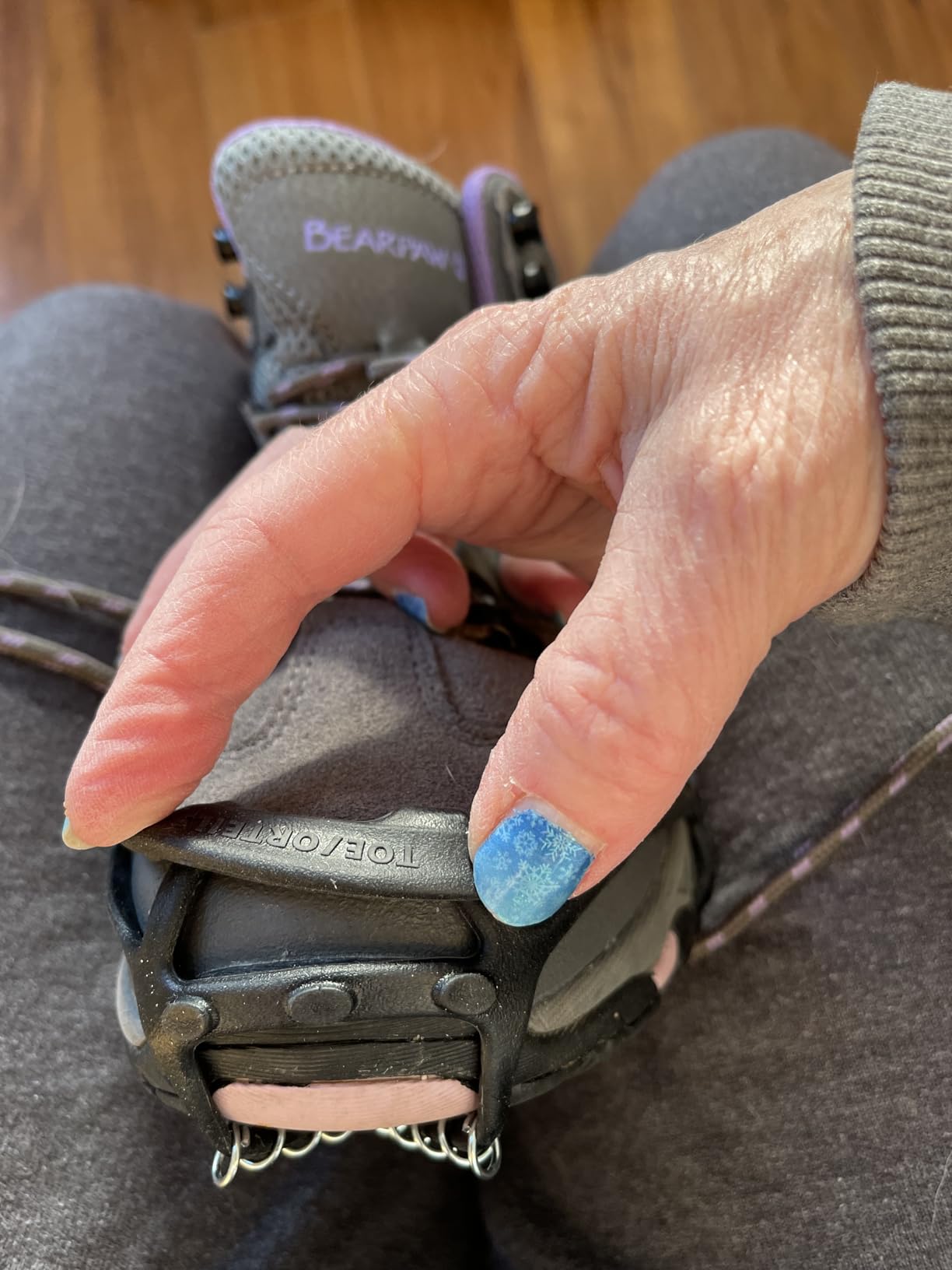
The easy-on heel tab works well even with gloved hands, and the lightweight design is barely noticeable in a pocket when not in use. The lack of sharp edges means you can briefly step indoors without the panic that spike-based cleats create.
The limitations become apparent quickly when attempting to run. The coils shift underfoot during push-off, and the lack of a retention strap means they can slide off at faster paces. These are safety devices for walking that can accommodate very slow jogging, not running equipment.
Best For
Budget-conscious beginners who want basic ice protection without investment. If you are unsure whether winter running is for you, these let you experiment safely before committing to premium options. They are also excellent for walkers who want to stay active in winter.
Emergency backup traction is a valid use case. Keep these in your car or office for unexpected icy conditions. At this price, you can afford to own multiple pairs for different locations.
Not Ideal For
Regular runners should invest in proper running-specific cleats. The frustration of using these at running speeds will discourage winter training rather than support it. The small savings over the Yaktrax Run are not worth the performance sacrifice for anyone running more than occasionally.
Technical terrain, steep slopes, or hard ice expose these limitations immediately. The coil system is designed for flat, relatively benign conditions. Pushing beyond these parameters risks falls and injury.
How to Choose the Right Ice Cleats for Running In 2026?
Selecting the right ice cleats depends on understanding your specific needs and running conditions. The best choice for a trail runner in the mountains differs significantly from a city runner on icy sidewalks. Consider these factors before making your decision.
Spike Type and Length
Tungsten carbide and stainless steel spikes offer the best durability and ice penetration. Carbide tips maintain sharpness longer and resist wear on abrasive surfaces. Spike length determines both traction and comfort, shorter spikes around 5mm work best for road running, while 10mm-plus spikes excel on trails and technical terrain.
Consider your typical ice conditions when choosing spike length. Hard, clear ice requires aggressive penetration that longer spikes provide. Powdery or packed snow is less demanding, and shorter spikes handle it adequately while offering better transition comfort on bare patches.
Fit and Compatibility with Running Shoes
The elastomer harness must stretch securely over your running shoes without being so tight that it stresses the material. Most manufacturers size their cleats to match shoe sizes, but sizing up is often wise if you run in bulky winter shoes or are between sizes.
Consider your shoe collection when choosing cleats. If you rotate between multiple pairs with different toe box shapes, look for cleats with flexible harnesses that adapt to various profiles. Some runners find that investing in separate cleats for different shoe types provides the best fit.
For additional winter footwear insights, you might find our guide on curling grippers for ice traction helpful, as the fit principles apply to traction devices across different winter sports.
Weight and Packability
Every ounce matters when you are carrying cleats for miles before deploying them. Ultralight options like the Kahtoola MICROspikes Ghost minimize the penalty of bringing traction insurance on runs where conditions vary. Consider whether you will wear cleats for entire runs or carry them for specific sections.
The pack size determines how easily cleats fit in running vests, pockets, or hydration packs. Foldable designs with flexible harnesses pack smaller than rigid alternatives. If your routes require carrying cleats regularly, prioritize compact options that do not bounce or shift when stowed.
Surface-Specific Considerations
Road runners should prioritize low-profile cleats that do not significantly alter running gait. The transition between ice and bare pavement is inevitable on most road routes, and aggressive spikes create an uncomfortable, unstable feeling on dry sections.
Trail runners can tolerate more aggressive traction since off-road surfaces are more consistently challenging. The ability to handle mud, rock, and varied snow conditions alongside ice makes versatile cleats more valuable for trail use than road-specific designs.
Urban runners must consider the frequency of indoor transitions. Coffee shops, restrooms, and public buildings require removing cleats or risking floor damage and angry proprietors. Cleats with easy on-off mechanisms save significant hassle during city runs.
Temperature Performance
Elastomer harnesses stiffen in extreme cold, making cleats difficult to put on and uncomfortable to wear. Look for materials rated at least 10 degrees below your typical running temperatures. The best winter cleats remain flexible to -20°F or lower.
Metal components can become brittle in extreme cold, though this rarely affects running cleats at normal usage temperatures. More relevant is the thermal conductivity of metal spikes, which can feel colder underfoot than coil-based alternatives in extreme conditions.
Durability and Maintenance
Stainless steel and tungsten carbide construction resists rust and maintains sharpness longer than carbon steel alternatives. Welded chain systems generally outlast molded plastic components. Consider the warranty period as an indicator of manufacturer confidence in durability.
Proper maintenance extends cleat lifespan significantly. Dry cleats thoroughly after wet use to prevent rust. Store them out of direct sunlight to prevent UV degradation of elastomer components. Inspect spikes and chains regularly for wear, replacing cleats before failure in dangerous conditions.
Regular inspection is especially important for safety-critical gear used in remote winter conditions. The peace of mind from knowing your equipment is reliable is worth the time investment.
Frequently Asked Questions About Ice Cleats for Running
Do ice cleats work on ice?
Yes, ice cleats work effectively on ice by using metal spikes, studs, or coils that penetrate the slippery surface to provide traction. Tungsten carbide and stainless steel spikes bite into hard ice, preventing slips and falls that regular rubber soles cannot avoid. The effectiveness varies by design, with spike-based systems offering more aggressive grip than coil-based alternatives on clear ice.
Can I run in ice cleats?
Yes, you can run in ice cleats designed specifically for running. Products like the Kahtoola NANOspikes, Yaktrax Run, and Kahtoola EXOspikes are engineered to maintain natural running biomechanics while providing traction. Look for low-profile designs that do not significantly alter your foot strike, and avoid heavy hiking crampons that change your gait and increase injury risk.
What shoes are good for running on ice?
Regular running shoes paired with ice cleats provide the best combination for running on ice. Look for shoes with stable platforms and secure heel counters that work well with traction devices. Trail running shoes often pair better with cleats than minimalist road shoes due to more structured toe boxes. Some winter-specific running shoes like the Saucony Peregrine Ice+ come with built-in studs for light ice conditions.
What are the best cleats for ice?
The best ice cleats for running are the Kahtoola NANOspikes V2 for road use, Kahtoola MICROspikes for trail running, and Yaktrax Run for budget-conscious runners. The NANOspikes offer the best balance of traction and natural running feel on icy roads. MICROspikes provide superior grip for technical terrain. Your specific needs, terrain, and budget should guide the final decision.
Do ice cleats work on pavement?
Ice cleats work poorly on bare pavement and can be uncomfortable or dangerous to wear. Spike-based cleats feel unstable and jarring on dry asphalt, while the metal points can catch and trip you. Some designs like the Kahtoola NANOspikes and EXOspikes tolerate short pavement sections better than aggressive alternatives. For routes with significant bare pavement, choose low-profile cleats or remove them during dry sections.
Final Thoughts
Winter running does not have to mean treadmill monotony or risking injury on icy roads. The right ice cleats transform dangerous conditions into opportunities for peaceful, snow-covered miles. After testing dozens of options, the Kahtoola NANOspikes V2 remains my top recommendation for most runners seeking the best ice cleats for running on icy roads.
Your specific needs may vary. Trail runners should consider the MICROspikes or the ultralight Ghost edition. Budget-conscious runners will find acceptable performance in the Yaktrax Run. And those just testing the winter waters can start with the affordable Yaktrax Walk before upgrading.
Whatever you choose, prioritize safety and compatibility with your running style. The best cleat is the one you will actually wear, that fits your shoes properly, and that matches your typical winter conditions. Do not let ice cut your running short in 2026. Invest in quality traction and keep moving through the coldest months.
For more winter gear recommendations to complement your traction devices, check out our guide to heated insoles for winter activities. Stay safe, stay warm, and keep running.