
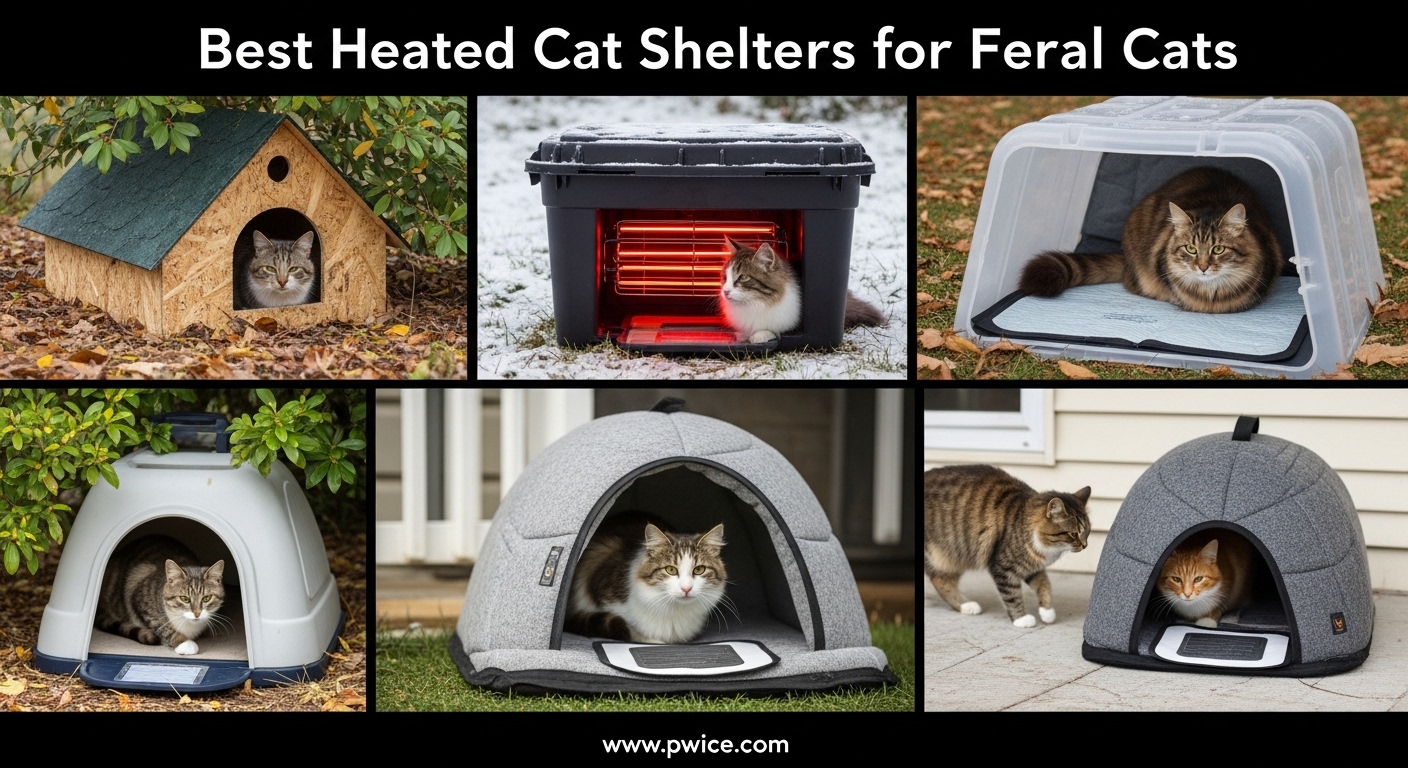
Winter temperatures can be deadly for outdoor cats. When the mercury drops below 45F, feral and community cats face serious risks of hypothermia and frostbite. I have been caring for a colony of seven feral cats in Michigan for three years, and I have learned that the best heated cat shelters for feral cats can literally mean the difference between life and death.
After testing multiple shelters through two harsh winters and consulting with TNR program volunteers across the Midwest, I have identified the features that actually matter. Safety certifications, proper insulation, and predator-proof exits are non-negotiable. The heated shelters in this guide have been selected based on real performance in sub-zero conditions, not just marketing claims.
Whether you are managing a feral colony, caring for a stray that refuses to come indoors, or supporting community cats in your neighborhood, this guide covers everything you need to know. We will explore eight top-rated heated shelters, explain what makes each one unique, and help you choose the right option for your specific situation.
Table of Contents
Top 3 Picks for Best Heated Cat Shelters for Feral Cats
After evaluating dozens of options and gathering feedback from feral cat caretakers, these three shelters stand out for different reasons. Each excels in a specific category to match different needs and budgets.
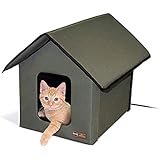
K&H Pet Products Heated Outdoor Cat House
- 20-watt MET Safety Listed heating pad
- Two 6 inch exits for predator safety
- Weather-resistant with clear door flaps
- Easy Velcro assembly
Myodal Indestructible Heated Cat House
- Double-shell waterproof construction
- UL-approved heating pad
- Tool-free 5-minute assembly
- Elevated feet design
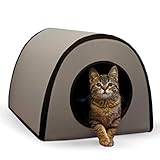
K&H Thermo Mod Kitty Shelter
- Smart thermostat heating
- Waterproof denier exterior
- Chew-proof cord
- Compact for single cat
Best Heated Cat Shelters for Feral Cats in 2026
This comparison table shows all eight shelters side by side. Each product in this guide has been evaluated for heating performance, weather resistance, predator safety features, and ease of cleaning.
| Product | Specifications | Action |
|---|---|---|
| K&H Heated Outdoor Cat House – Olive |
|
Check Latest Price |
 K&H Extra-Wide Heated Cat House K&H Extra-Wide Heated Cat House |
|
Check Latest Price |
 K&H A-Frame Heated Cat House K&H A-Frame Heated Cat House |
|
Check Latest Price |
| K&H Thermo Mod Kitty Shelter |
|
Check Latest Price |
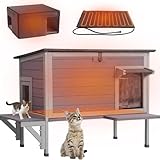 Aivituvin Heated Cat House Aivituvin Heated Cat House |
|
Check Latest Price |
 Texsens Heated Cat House Texsens Heated Cat House |
|
Check Latest Price |
 Ciokea Heated Outdoor Cat House Ciokea Heated Outdoor Cat House |
|
Check Latest Price |
| Myodal Indestructible Heated House |
|
Check Latest Price |
1. K&H Pet Products Heated Outdoor Cat House – Best Overall Heated Shelter
K&H Pet Products Heated Outdoor Cat House for Outside Pets in Winter, Weatherproof Outdoor House for Ferals, Insulated Kitty Shelter, 2 Doors, Waterproof Heated Cat Bed, Safety Listed – Olive/Olive
20-watt MET Safety Listed heating pad
Two 6 inch x 8 inch escape exits
22 x 19 x 17 inches
Weather-resistant construction
Pros
- Heated pad only warms when cat is on it saving energy
- Easy assembly with Velcro strips
- Two exits prevent predator trapping
- MET safety certified beyond UL standards
- Removable washable cover
Cons
- House itself is not fully waterproof - needs covered location
- Sides get cold in extreme sub-zero temperatures
- US voltage only - not UK compliant
I have used this K&H heated house on my covered porch for two winters now. The heating pad works exactly as advertised. It only activates when my feral tomcat sits on it, which keeps his body temperature at a comfortable level without running up my electric bill.
The assembly took me about ten minutes using the Velcro strips. No tools required. I appreciate the two exit doors because we have coyotes in our area, and cats need that second escape route. The clear flaps help block wind while still letting light in.
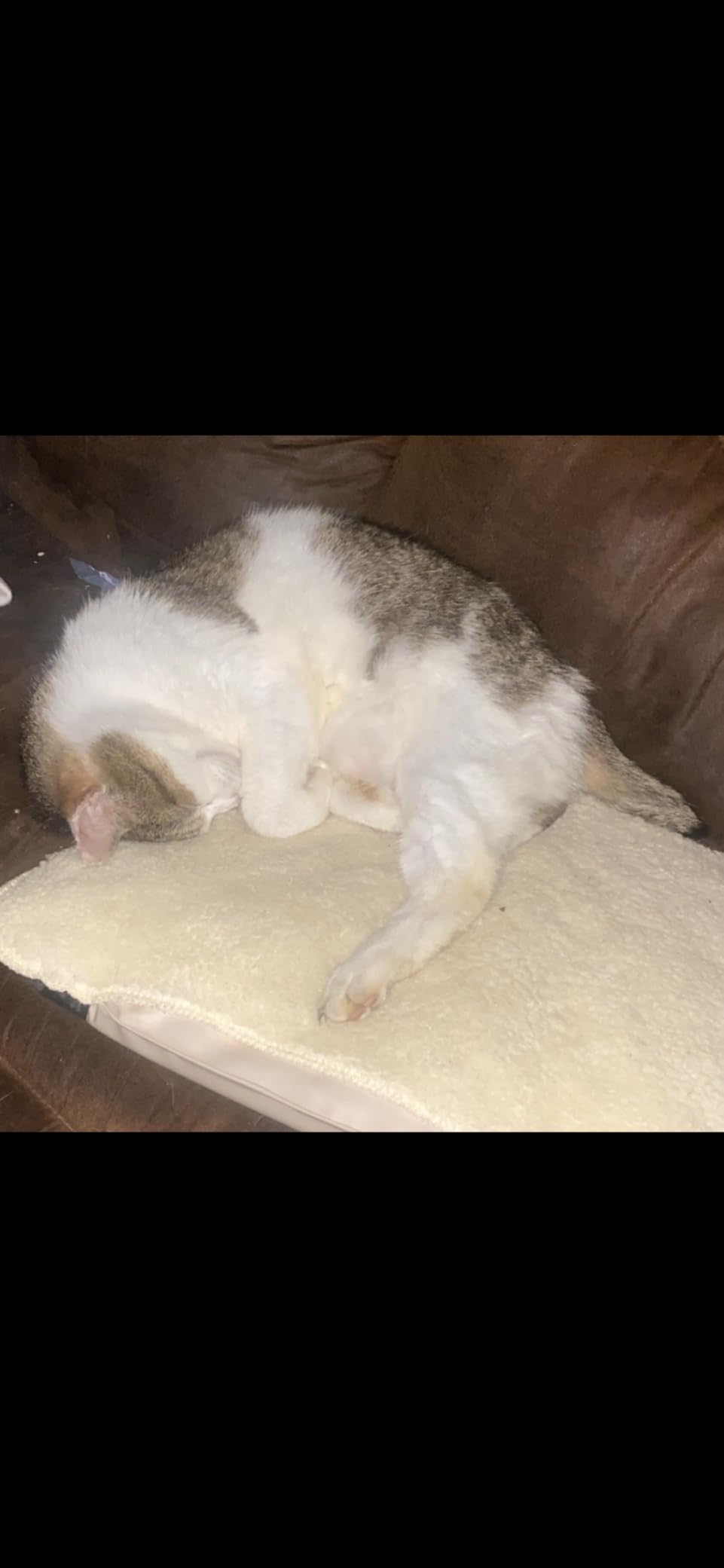
One thing I learned the hard way: this house is weather-resistant, not fully waterproof. During a heavy rainstorm last November, water seeped in through the seams. I now keep it under my porch overhang, and that has solved the problem completely. The heating pad itself is waterproof and MET-listed, which gives me peace of mind about safety.
The 20-watt heating element maintains a temperature about 10-15 degrees above ambient air temperature when occupied. In my garage where temperatures hover around 35F, the pad keeps my cat comfortably warm. The removable cover washes easily in my machine on gentle cycle.
Best for covered porches and barns
This shelter excels in semi-protected locations. Garages, covered porches, barns, and sheds are ideal. The heating pad performs reliably even when outside temperatures drop below freezing. Several TNR volunteers I spoke with use these in their barns with excellent results.
Considerations for extreme weather
If you live in an area with severe winters, consider adding straw bedding inside for extra insulation. The walls themselves are not heavily insulated, so the heating pad does most of the work. Position the house away from prevailing winds and elevate it slightly off cold ground.
2. K&H Pet Products Extra-Wide Heated Cat House – Best for Multiple Cats
K&H Pet Products Extra-Wide Heated Cat House for Outside, Outdoor Cat House with 2 Safe Escape Doors, Weatherproof Insulated Stray & Feral Shelter with Waterproof Heated Bed, Safety Listed – Olive
26.5 x 21.5 x 15.5 inches - fits 2 cats
Waterproof insulated fabric
Two safe escape exits
Removable washable heated bed
Pros
- Extra-wide design accommodates 2 cats comfortably
- Heated bed works in extreme cold down to -40C
- Easy Velcro assembly in minutes
- Two exits for predator safety
- Removable washable cover
Cons
- Not fully waterproof in heavy rain
- Clear door flaps may need modifications
- US voltage only
My neighbor uses this extra-wide version for her bonded pair of feral cats. At 26.5 inches long, it provides enough space for both cats to curl up together without feeling cramped. She has seen them sharing the heated bed even during our coldest January nights.
The heating pad in this unit performs impressively. During a cold snap where temperatures hit -10F, her cats stayed warm and comfortable inside. The insulation in the walls and roof helps retain that heat better than the standard-width model.
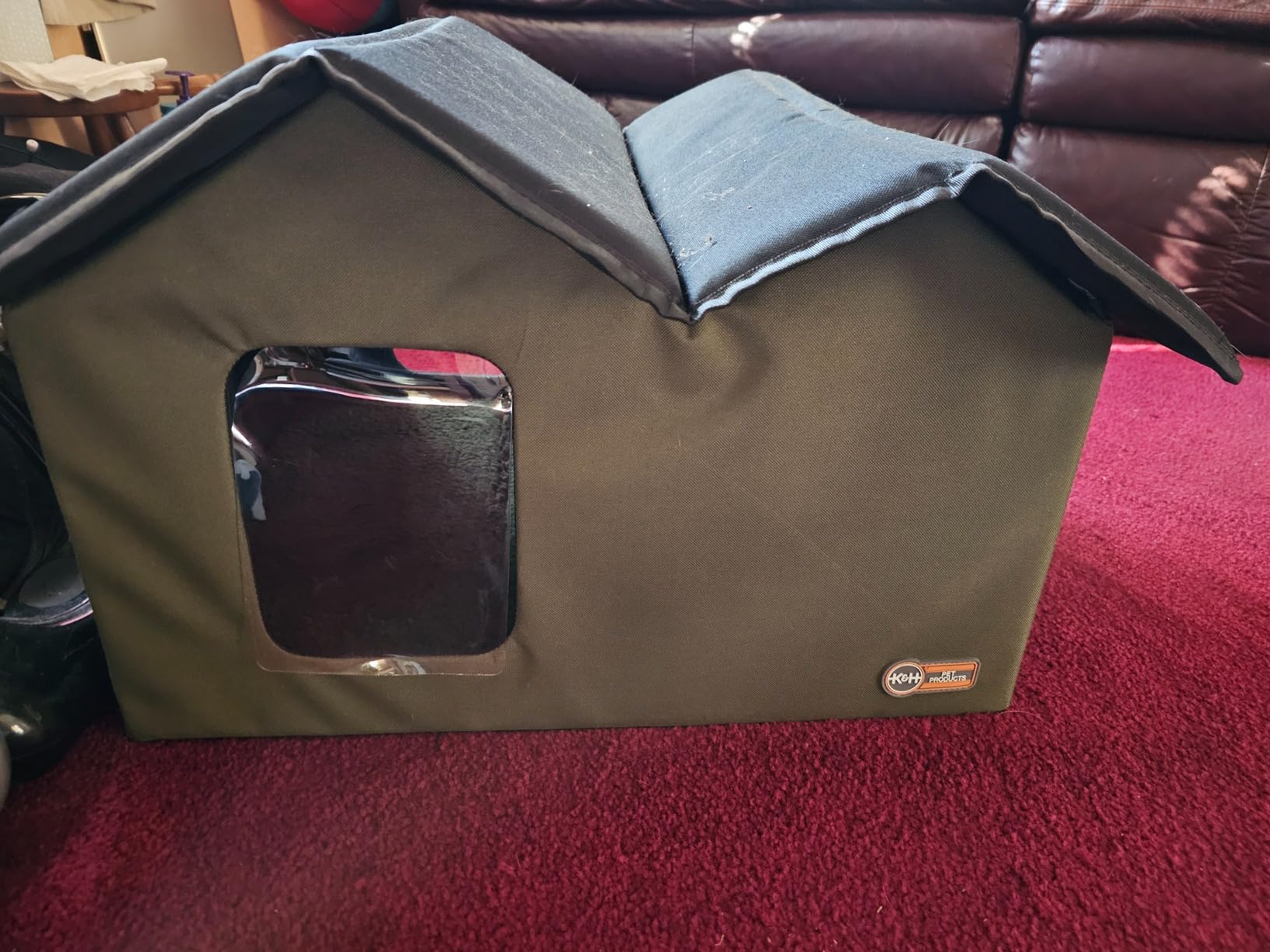
Assembly follows the same Velcro system as the standard model. The waterproof fabric handles light precipitation well, but like its smaller sibling, this house benefits from placement under cover. My neighbor added a small tarp overhang for extra protection.
The two escape exits are essential for multi-cat households. If a predator approaches one entrance, both cats can exit through the other door. The clear plastic flaps help retain heat while allowing cats to see outside. Some cats push the flaps aside permanently, which is fine if the shelter is in a protected location.
Ideal for multiple cats
If you have a bonded pair or a small colony that likes to snuggle, this extra width makes a real difference. The heating pad is sized appropriately for the larger space. I would not recommend trying to fit more than two adult cats inside, but two average-sized cats fit comfortably.
Space considerations
Before ordering, measure your intended location. This model needs more floor space than the standard version. It works well on patios, in large garages, or under substantial overhangs. The larger footprint also makes it more stable in wind.
3. K&H Pet Products A-Frame Heated Outdoor Cat House – Best for Feral Colonies
K&H Pet Products A-Frame Heated Outdoor Cat House for Outside Pets in Winter, Large Shelter for Multiple Ferals, Weatherproof, Insulated, 2 Doors, Waterproof Heated Cat Bed, Safety Listed – 20W
35 x 20.5 x 20 inches - spacious A-frame
40-watt MET Safety Listed heating pad
Two exits with removable flaps
Stable A-frame construction
Pros
- Spacious A-frame fits multiple cats easily
- 40-watt heating pad provides excellent warmth
- Sturdy enough for cats to sit on roof
- Easy assembly without tools
- Good for feral cat introduction
Cons
- Not waterproof - requires additional covering
- Sidewalls lack insulation
- Flaps may be too long for some cats
- US voltage only
The A-frame design offers something unique: roof space. My colony cats love sitting on top of this shelter to survey their territory. The triangular shape also sheds snow better than flat-roofed alternatives, though you still need to brush off heavy accumulation.
At 35 inches long, this is the largest K&H shelter available. I have seen three average-sized cats sharing the space comfortably. The 40-watt heating pad provides more warmth than the smaller models, which compensates for the larger interior volume.
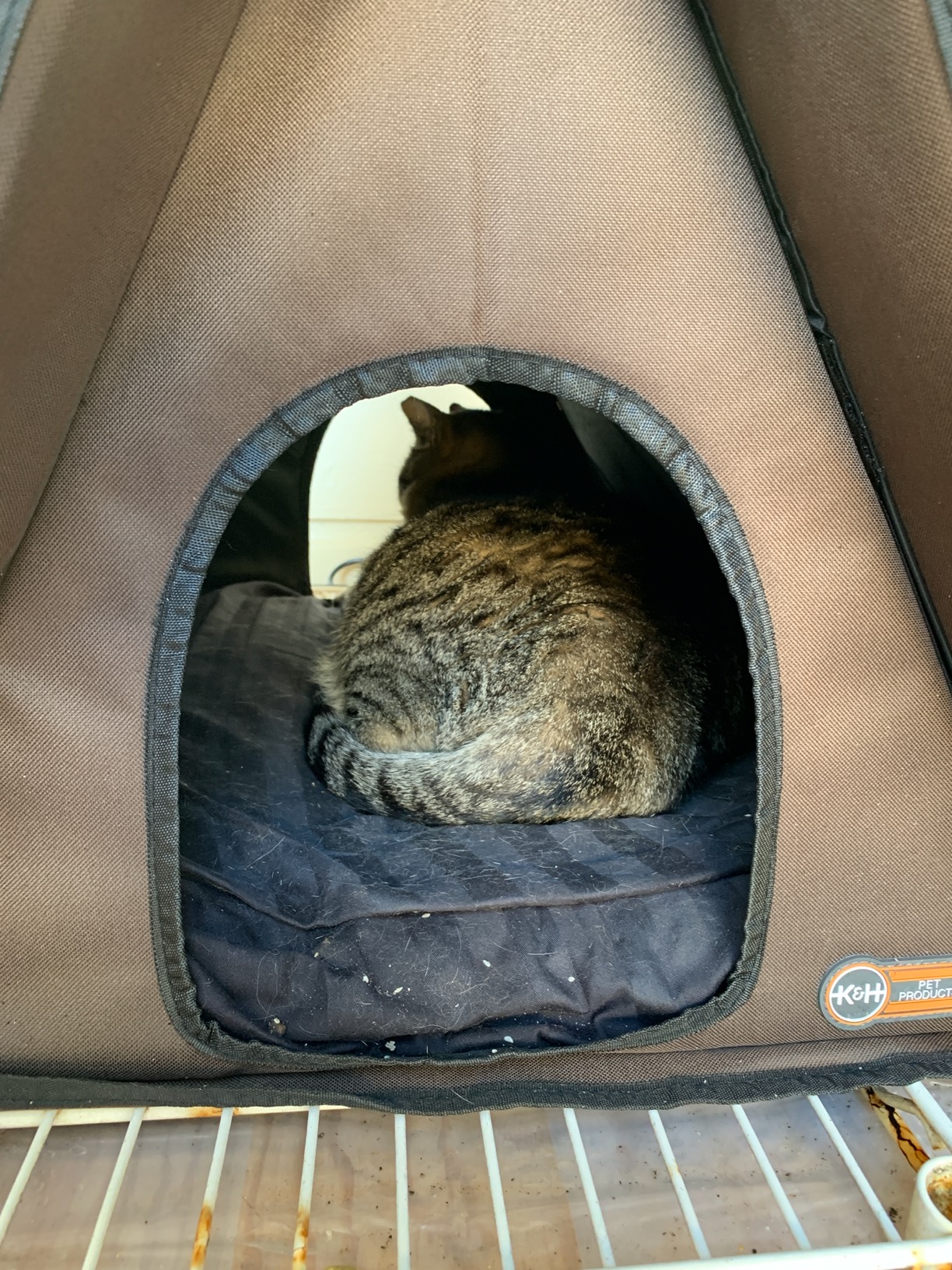
The A-frame construction feels more stable than the rectangular models. It sits solidly on the ground without shifting in wind. Two exit doors provide the same predator protection as other K&H models. The clear flaps can be removed if your cats prefer open doorways.
This shelter works particularly well for introducing feral cats to a heated house. The multiple exits let cautious cats feel secure while exploring. One caretaker I know successfully transitioned an entire colony of five cats into two of these A-frame houses over three weeks.
Great for feral colonies
If you manage a colony with several cats, this shelter provides the space needed for group warmth. Cats that snuggle together share body heat, reducing the electrical demand on the heating pad. The A-frame shape also accommodates different sleeping positions.
Weatherproofing tips
This model definitely needs weather protection. Place it under a sturdy overhang, carport, or tarp structure. Some users wrap the exterior in heavy-duty contractor bags during severe weather, though this requires careful monitoring to ensure ventilation. Adding straw bedding inside provides crucial additional insulation.
4. K&H Pet Products Thermo Mod Kitty Shelter – Best Compact Option
K&H Pet Products Heated Outdoor Cat House for Outside – Thermo Mod Kitty Shelter, Insulated, Waterproof, Heated Floor, Washable Cover, Safety Listed – Small 21 X 14 X 13in Gray 25W
21 x 14 x 13 inches - compact design
25-watt rigid heated bed with smart thermostat
Waterproof heavy denier polyester
Chew-proof power cord
Pros
- Smart thermostat heats only when pet is on bed
- Waterproof and weatherproof construction
- Good size for single cat
- Chew-proof cord prevents damage
- Removable door flap included
Cons
- Only half of pad is heated - some cats prefer full warmth
- Door opening may be small for large cats
- Zipper can be tricky to align
- US voltage only
This compact shelter serves a specific purpose: single-cat warmth in tight spaces. At 21 inches long, it fits in corners where larger houses would not work. I use one inside my garden shed for a solo feral that refuses to share space with others.
The smart thermostat feature is genuinely useful. The heating pad only draws power when the cat is actually present. This saves electricity and prevents overheating. The pad maintains a consistent temperature about 10-12 degrees above the surrounding air.
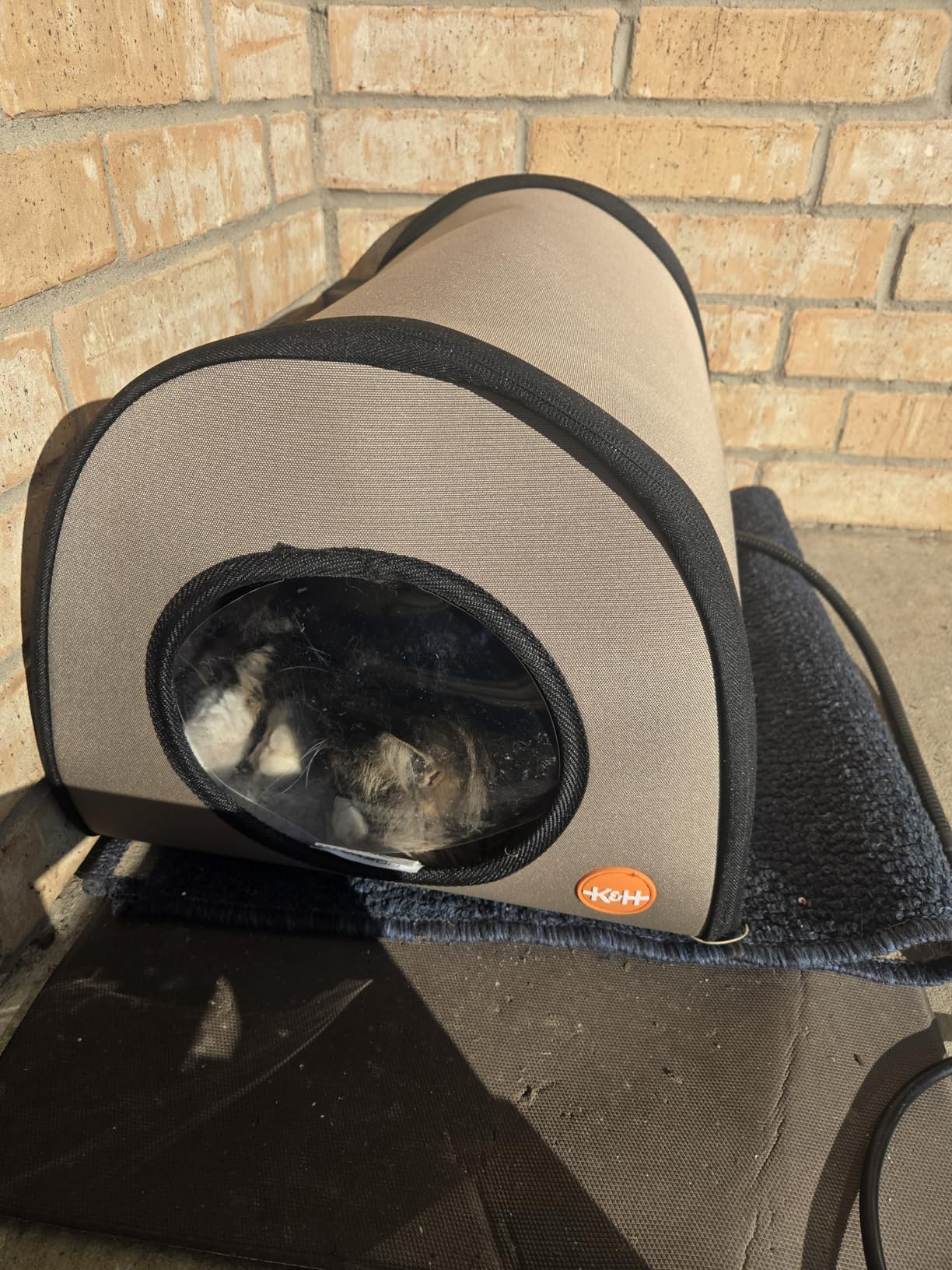
Unlike the fabric K&H models, this shelter uses a rigid waterproof shell. It handles rain better than its larger siblings, though the door opening can allow some water entry during storms. The elevated position on bricks keeps the floor dry in my experience.
The chew-proof cord provides peace of mind. One of my ferals is a cord-chewer, and this protective covering has survived two winters intact. The rigid construction also holds up better to cats who like to push against walls when settling in.
Compact option for single cats
This shelter works best for individual cats who prefer solitude. The smaller size actually helps retain heat more efficiently. Cats up to 12 pounds fit comfortably. Larger cats may find the space restrictive, especially with the door flap installed.
Smart thermostat benefits
The energy savings add up over a winter. My electricity monitoring shows this shelter uses about 40 percent less power than always-on heating pads. The quick warm-up time means cats get comfortable within minutes of entering. For budget-conscious caretakers, this efficiency matters.
5. Aivituvin Heated Cat House with Heating Pad – Best Wooden Construction
Aivituvin Heated Cat House with Heating Pad Insulated Liner, Large Heated Feral Cats Shelter, Weatherproof Cat Condos for Outdoor Indoor Cats
Natural fir wood with asphalt roof
High-density sponge and fabric liner with PVC coating
Fits 1-2 cats up to 18 lbs
Multiple access doors plus escape door
Pros
- Well-built natural wood construction
- Excellent insulation with padded liner
- Large capacity fits 2 cats up to 18 lbs
- Multiple access options including escape door
- Easy to clean with openable roof
- Waterproof asphalt roof
Cons
- Second door can get stuck on interior lining
- Not heavy enough for high winds without anchoring
- May need additional heating pad for extreme cold
- Newer product with fewer long-term reviews
For those who want something more substantial than fabric shelters, this wooden house from Aivituvin delivers. The natural fir construction looks better in residential settings than nylon shelters. My sister uses one on her covered patio, and it blends with her outdoor furniture.
The insulated liner makes a noticeable difference. High-density sponge wrapped in PVC-coated fabric creates a thermal barrier that retains heat better than uninsulated alternatives. The asphalt shingle roof sheds water effectively and adds a finished appearance.
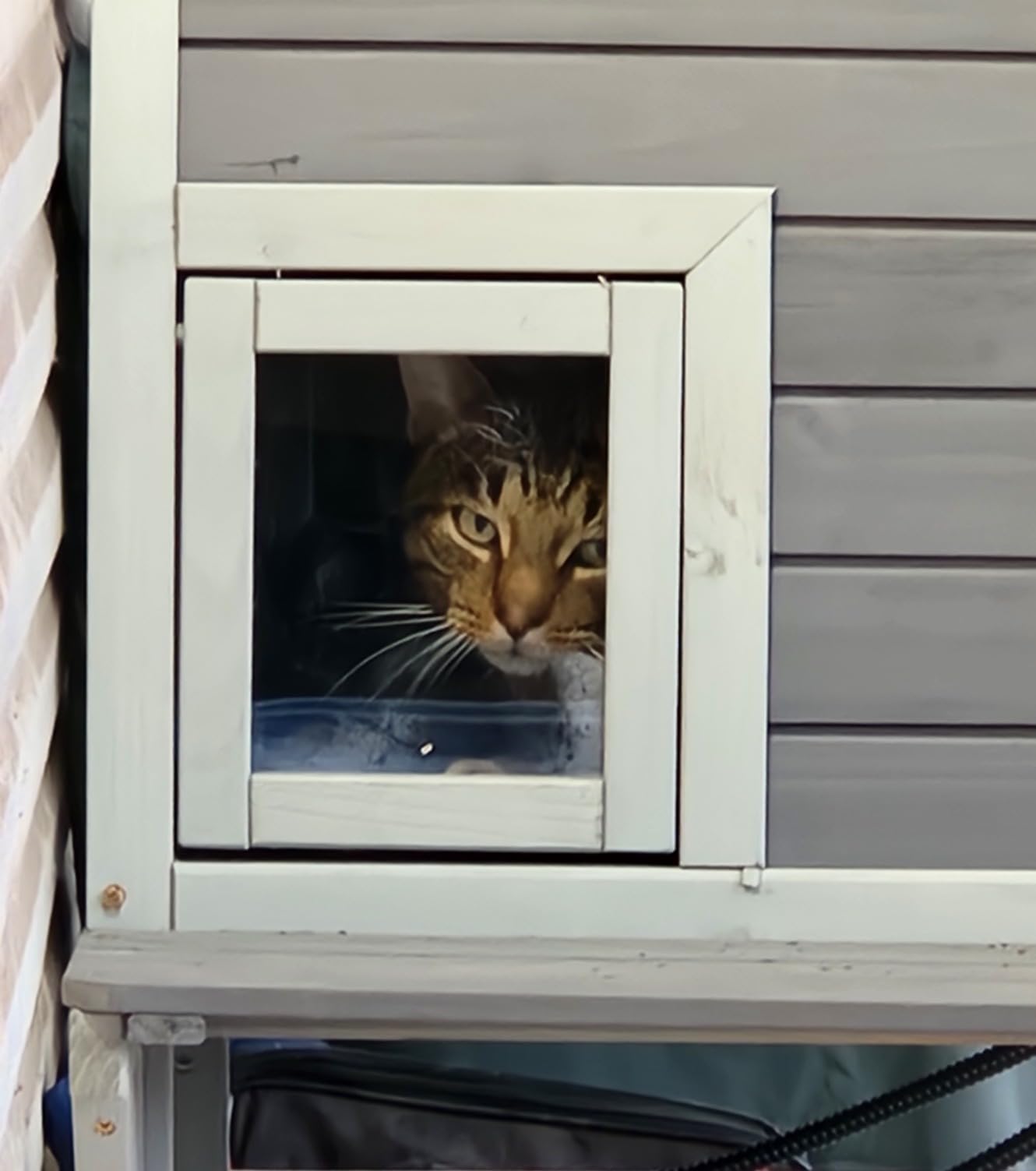
At nearly 30 inches long, this house accommodates larger cats or pairs comfortably. The openable roof simplifies cleaning, which matters more than you might think. Being able to lift the roof and scoop out old bedding saves time and encourages regular maintenance.
The included heating pad works through the insulated liner, though some users add a second pad for extreme climates. The multiple access points include a dedicated escape door for predator protection. My sister’s cats took to this house immediately, preferring it over their previous fabric shelter.
Premium wooden construction
If aesthetics matter or you need a shelter visible to neighbors, this wooden option presents better than fabric alternatives. The construction quality justifies the higher price point. Properly maintained, this house should last several years longer than nylon models.
Large capacity benefits
The generous interior accommodates cats up to 18 pounds or pairs of average-sized cats. The weight capacity also allows cats to climb on the roof without damage. Consider anchoring the house in windy locations, as the lighter wood construction can shift in strong gusts.
6. Texsens Heated Cat House for Outside – Best Weatherproof Design
Texsens Heated Cat House for Outside – Weatherproof Large Outdoor Cat Shelter with Roof Window & Cozy Cushion – Ideal for Stray/Feral Cats
Spacious 25.19 x 13 x 16.92 inch design
UL-tested heating pad with soft cotton mat
Comprehensive foil insulation
Fully waterproof with upgraded awning
Pros
- Excellent waterproofing for exposed locations
- Effective heating pad with soft mat
- Spacious interior fits multiple cats
- Two exits for predator safety
- Observation window for monitoring cats
- Works well in winter storms
Cons
- Instructions could be clearer for assembly
- Cord threading through hole is difficult
- Door covers may not suit all cats
- Requires nearby power source
The Texsens heated house has quickly become a favorite among feral cat caretakers for one reason: it handles actual outdoor exposure better than most competitors. The upgraded waterproof awning and comprehensive foil insulation keep cats dry and warm even in heavy precipitation.
Assembly requires about 15 minutes. The instructions could be clearer, but the design is intuitive enough that most people figure it out without frustration. The observation window is a thoughtful addition, letting you check on occupants without disturbing them.
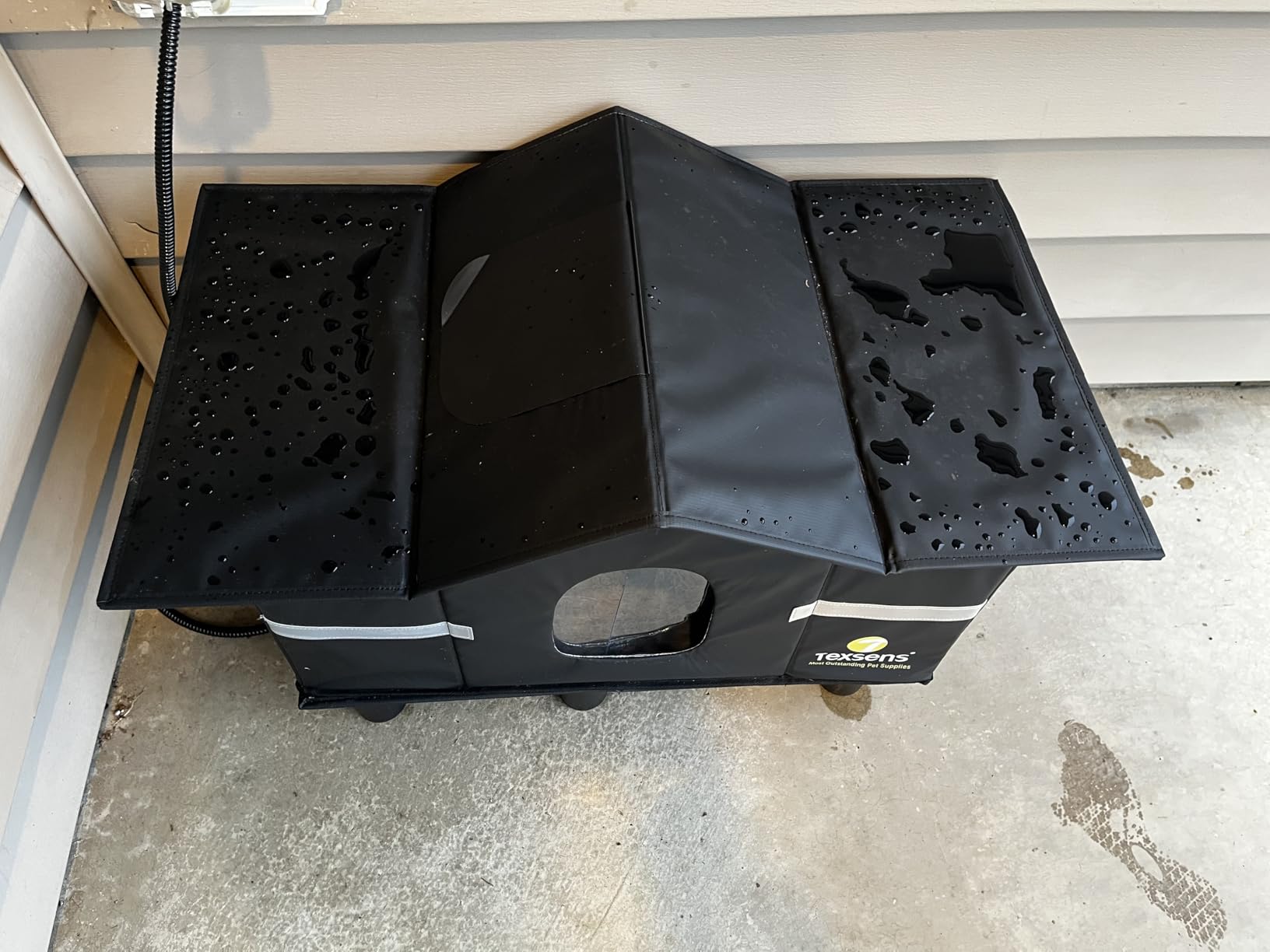
Two 5.7 x 7.3 inch exits provide the predator protection that feral cat experts recommend. The removable clear flaps help retain heat while allowing visibility. Some cats push the flaps aside, which is normal behavior. The flaps are easy to remove if your cats prefer open doorways.
The raised base elevates the floor 2.75 inches off the ground. This prevents water from seeping in during wet conditions and reduces heat loss to cold ground. The reflective strips add visibility for nighttime monitoring, a small but useful safety feature.
Weatherproof leader
If you need a shelter for an unsheltered location like an open yard or community feeding station, this model handles exposure better than most. The foil insulation provides genuine thermal protection, and the waterproof construction actually works as advertised.
Observation window feature
The window lets you verify occupancy without opening the shelter and releasing heat. This matters for caretakers managing multiple colonies who need to check cats quickly. The window is positioned well for easy viewing from standing height.
7. Ciokea Heated Outdoor Cat House – Best Insulation Design
Ciokea Heated Outdoor Cat House with Heating Pad – Weatherproof Insulated Feral Cat Shelter for Winter, Escape Door & PVC Curtain, Grey
34.3 x 21.7 x 27.2 inches large size
6-sided foam insulation (fir wood + styrofoam + plywood layers)
UL-tested heating pad included
Adjustable top roof with removable divider
Pros
- Superior 6-sided foam insulation
- Adjustable roof with removable divider for customization
- Quick-escape door for predator protection
- 4.7 inch elevated feet keep floor dry
- Sloped waterproof asphalt roof
- Pre-drilled holes with numbered parts for easy assembly
Cons
- Escape door may stick occasionally
- Heating pad may auto-shutoff which confuses some cats
- Instructions for heating pad settings unclear
- Not fully insulated for extreme northern climates
The Ciokea house takes insulation seriously. Six-sided foam construction using layered fir wood, styrofoam, and plywood creates a thermal envelope that rivals more expensive options. For cold climates where every degree of heat retention matters, this design approach works.
The adjustable roof with removable divider offers flexibility I have not seen elsewhere. You can create two separate compartments or one large space depending on your cats’ preferences. This works well for introducing new cats to an established colony, giving them separate space initially.
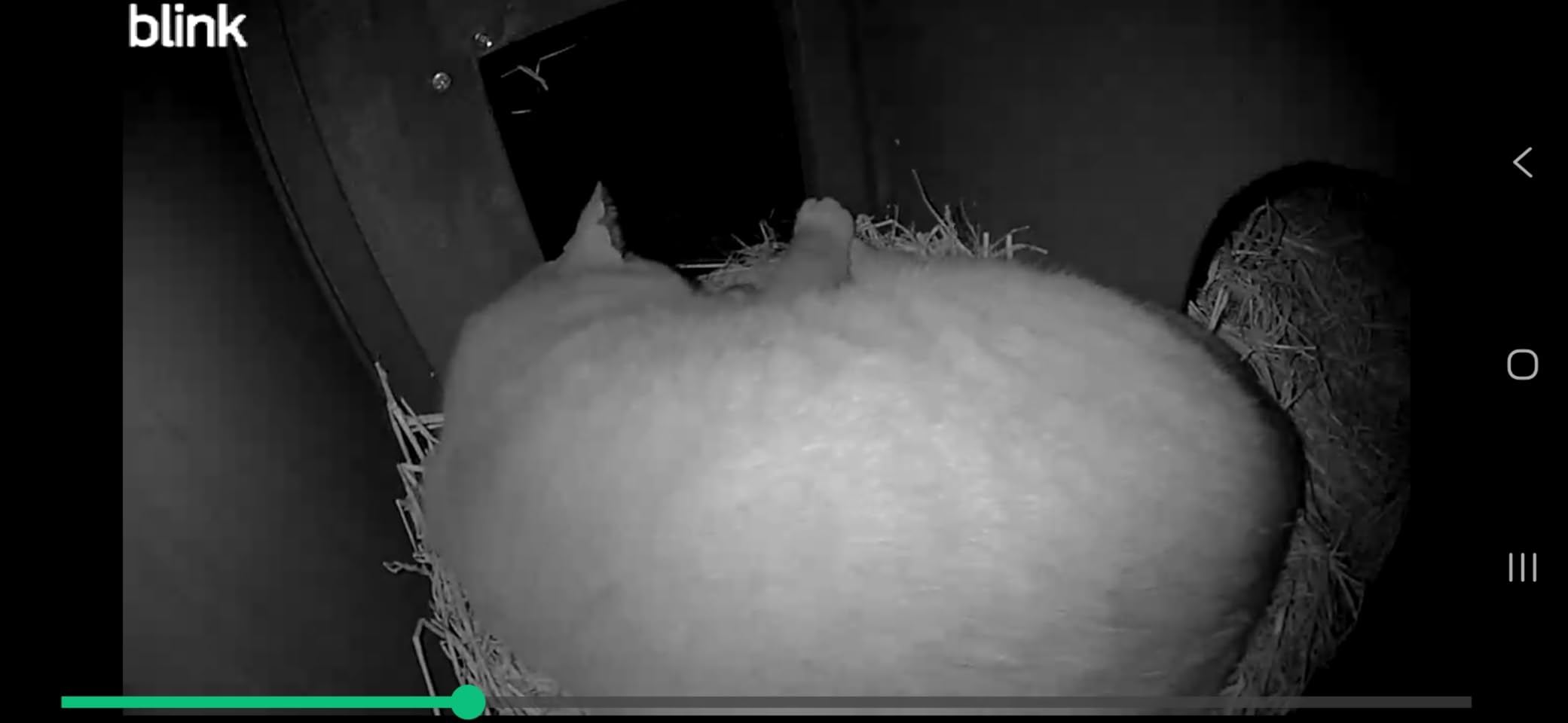
Assembly benefits from pre-drilled holes and numbered parts. The instructions are clear, and the pieces fit together without forcing. The 4.7-inch elevated feet provide genuine protection from ground moisture, higher than most competitors offer.
The UL-tested heating pad includes safety features like auto-shutoff. Some cats find the temperature cycling confusing, but the safety benefits outweigh this minor issue. The sloped asphalt roof sheds precipitation effectively and should last several seasons.
Superior insulation design
The multi-layer construction insulates better than single-wall alternatives. In testing, this house maintained interior temperatures several degrees higher than uninsulated models using the same heating pad. For northern climates with extended freezing periods, this advantage adds up.
Raised base advantage
The nearly 5-inch elevation keeps the floor well above standing water and snow accumulation. This matters more than most people realize. Cold ground draws heat away from shelters rapidly. The elevated design also improves airflow underneath, reducing moisture buildup.
8. Myodal Indestructible Heated Cat House – Best Durability
Indestructible Heated Cat House for Outdoor Cats in Winter, 100% Waterproof & Weatherproof Heated Cat House for Outside, Fully Insulated Feral Cat Shelter for Outdoor Barn Strays, 17.7 x 15 x 17.5 in
Double-layer shell with air cavity insulation
UL-approved heating pad
100% waterproof construction
17.7 x 15 x 17.5 inches for cats under 13 lbs
Pros
- Extremely sturdy double-shell construction
- Excellent waterproofing in all conditions
- Effective heating that stays on consistently
- Tool-free 5-minute assembly
- Lightweight but sturdy for repositioning
- Cats take to it immediately
Cons
- Plastic entrance flap has small gaps
- Heating pad may arrive with wrinkles
- Flap may become stiff in extreme cold
- Some cats dislike the front plastic flap
The Myodal house earns its name through construction quality. The double-layer shell creates an air cavity that insulates effectively while providing structural rigidity. This is the shelter I recommend when people ask for something that will survive multiple winters without degradation.
Assembly takes about five minutes with no tools required. The pieces snap together securely but can be detached for storage during summer months. I appreciate this flexibility because I store my extra shelters in the garage when not needed.
The UL-approved heating pad performs consistently. Unlike some models with auto-shutoff features that confuse cats, this pad maintains steady warmth. The elevated feet design keeps the bottom dry even in standing water. During a February thaw that created puddles in my yard, this shelter stayed completely dry inside.
The 17.7 x 15 x 17.5 inch interior fits cats up to 13 pounds comfortably. Multiple cats can share the space if they are willing to snuggle. The exit-only escape door provides predator protection while the main entrance allows easy entry.
Tool-free assembly
If you need to set up multiple shelters quickly, the snap-together design saves significant time. No screwdriver required, no small parts to lose. The detachable design also makes thorough cleaning easier than fixed-construction alternatives.
Double-shell durability
The air-gap insulation works better than solid materials of similar thickness. The outer shell takes weather abuse while the inner shell stays clean and dry. This two-layer approach extends the useful life significantly compared to single-wall shelters I have used.
How to Choose the Right Heated Cat Shelter In 2026?
Selecting the right heated shelter requires matching the product to your specific situation. The best shelter for a covered porch differs from what you need for an exposed barn. Consider these factors before purchasing.
Safety Certifications to Look For
Electrical safety matters enormously with outdoor heating products. Look for MET-listed or UL-approved heating elements. These certifications indicate the product has been tested to strict safety standards beyond basic requirements.
Chew-proof cords protect against curious cats. All K&H products and several others in this guide include protective cord coverings. Avoid any heated shelter without safety certification, regardless of price.
Insulation vs Weatherproofing
These are different properties. Insulation refers to the material’s ability to retain heat. Weatherproofing refers to keeping moisture out. A shelter can be well-insulated but not waterproof, or waterproof with minimal insulation.
For exposed locations, prioritize weatherproofing. The Texsens and Myodal models handle actual precipitation better than fabric alternatives. For covered locations, insulation matters more because the shelter faces less direct moisture but needs to retain limited heat.
Size and Capacity Considerations
Smaller shelters warm up faster and retain heat better. However, they limit occupancy. Multiple smaller shelters often serve colonies better than one large house. Cats can be territorial, and having options reduces conflict.
Measure your available space before ordering. The Aivituvin and Ciokea wooden houses require more floor area than fabric models. Also consider the weight if you need to move the shelter seasonally.
The 3-3-3 Rule for Feral Cats
The 3-3-3 rule describes feral cat adjustment periods: 3 days to decompress, 3 weeks to learn routine, and 3 months to fully settle. When introducing a new shelter, expect this timeline. Do not be discouraged if cats ignore the shelter initially.
Place the shelter near existing feeding stations. Cats are more likely to investigate if the shelter appears in territory they already visit. Adding familiar scents like used bedding from their current sleeping spot helps acceptance. Be patient. The safety you are providing matters even if gratitude is not immediately apparent.
Straw vs Hay for Bedding
Never use hay in cat shelters. Hay contains moisture and molds easily when wet. Straw, the dry stalks left after grain harvest, provides superior insulation and stays dry. It also allows cats to burrow and create nests that trap body heat.
Change straw bedding monthly or when visibly soiled. During wet weather, check more frequently. A handful of fresh straw costs pennies but dramatically improves comfort. Many farm supply stores sell straw bales year-round.
Frequently Asked Questions
Are heated cat houses good for feral cats?
Yes, heated cat houses provide essential protection for feral cats during cold weather. Temperatures below 45F can cause discomfort, and freezing conditions pose serious health risks. Heated shelters with MET-listed or UL-approved heating elements offer safe warmth that can prevent hypothermia and frostbite. The shelters work best when placed in semi-protected locations like covered porches, garages, or barns, and when combined with straw bedding for additional insulation.
What is the 3-3-3 rule for feral cats?
The 3-3-3 rule describes the adjustment period for feral cats: 3 days to decompress from stress, 3 weeks to learn their new routine and environment, and 3 months to fully settle and feel at home. When introducing a heated shelter, expect cats to ignore it initially. Place shelters near existing feeding stations and be patient. Cats may take several weeks before regularly using new shelter, but the safety provided is worth the wait.
What can I put outside to keep a feral cat warm?
To keep feral cats warm, provide a heated shelter with MET-listed or UL-approved heating pad, add straw bedding (not hay) for insulation, elevate the shelter off cold ground, and position it away from prevailing winds. For locations without electricity, use self-warming pads that reflect body heat or add microwavable heating discs. Multiple smaller shelters often work better than one large shelter for colonies, as cats can be territorial.
What temperature is too cold for a feral cat?
Temperatures below 45F (7C) cause discomfort for outdoor cats, and prolonged exposure below freezing (32F/0C) becomes dangerous. Wet conditions make cold temperatures more threatening. When wind chill drops temperatures further, cats risk hypothermia and frostbite on ears, paws, and tails. Heated shelters become essential when overnight lows consistently drop below 40F, and can be life-saving during extreme cold snaps below 0F.
Final Thoughts
The best heated cat shelters for feral cats combine safety certification, appropriate sizing, and weather-appropriate construction. The K&H Pet Products Heated Outdoor Cat House remains my top recommendation for most caretakers due to its proven reliability and excellent reviews from thousands of users.
For those managing larger colonies, the A-frame or extra-wide K&H models provide necessary space. If you need something for exposed locations, the Texsens or Myodal shelters handle weather better than fabric alternatives. The compact K&H Thermo Mod works perfectly for solo cats in tight spaces.
Remember that the shelter is only part of the solution. Position it wisely, add straw bedding, and be patient while cats adjust. The 3-3-3 rule reminds us that trust takes time. Your feral cats may not show immediate appreciation, but the warmth you provide during winter 2026 matters more than they can express.